Free Printable Biological Classification Worksheets for Year 3
Explore Year 3 biological classification worksheets and printables that help students learn to categorize living things through engaging practice problems, complete with answer keys and free PDF downloads.
Explore printable Biological Classification worksheets for Year 3
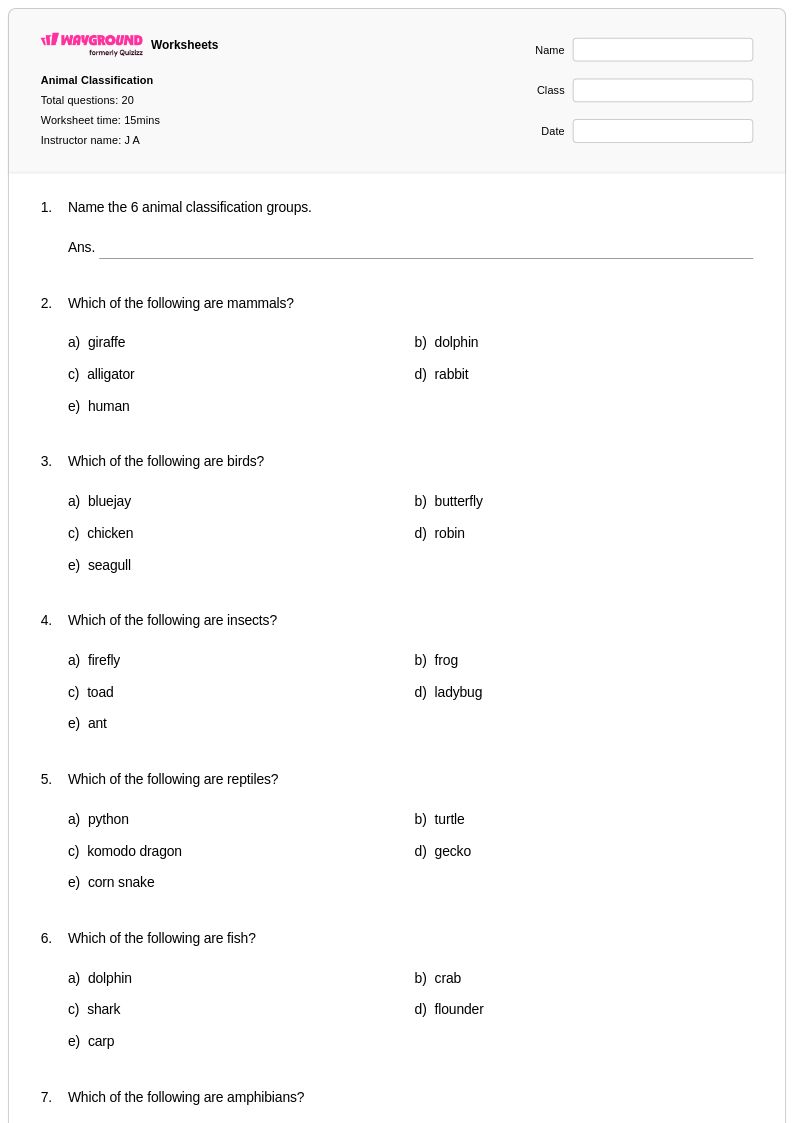
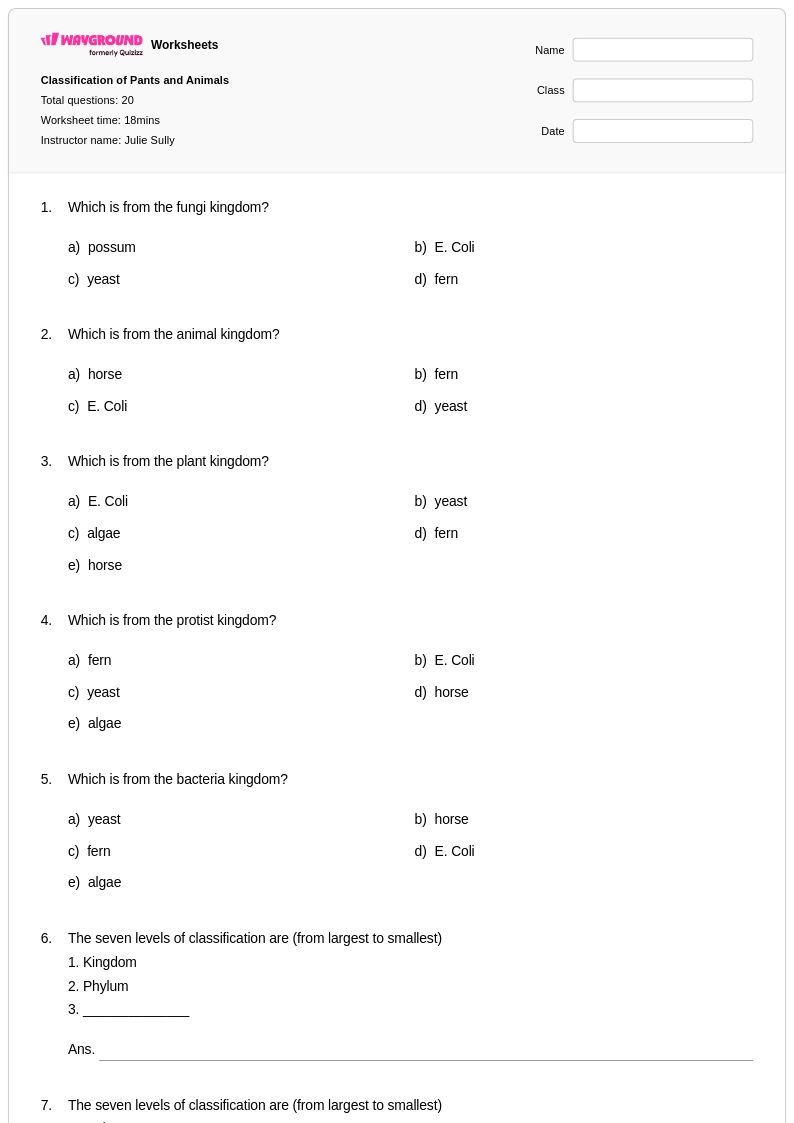
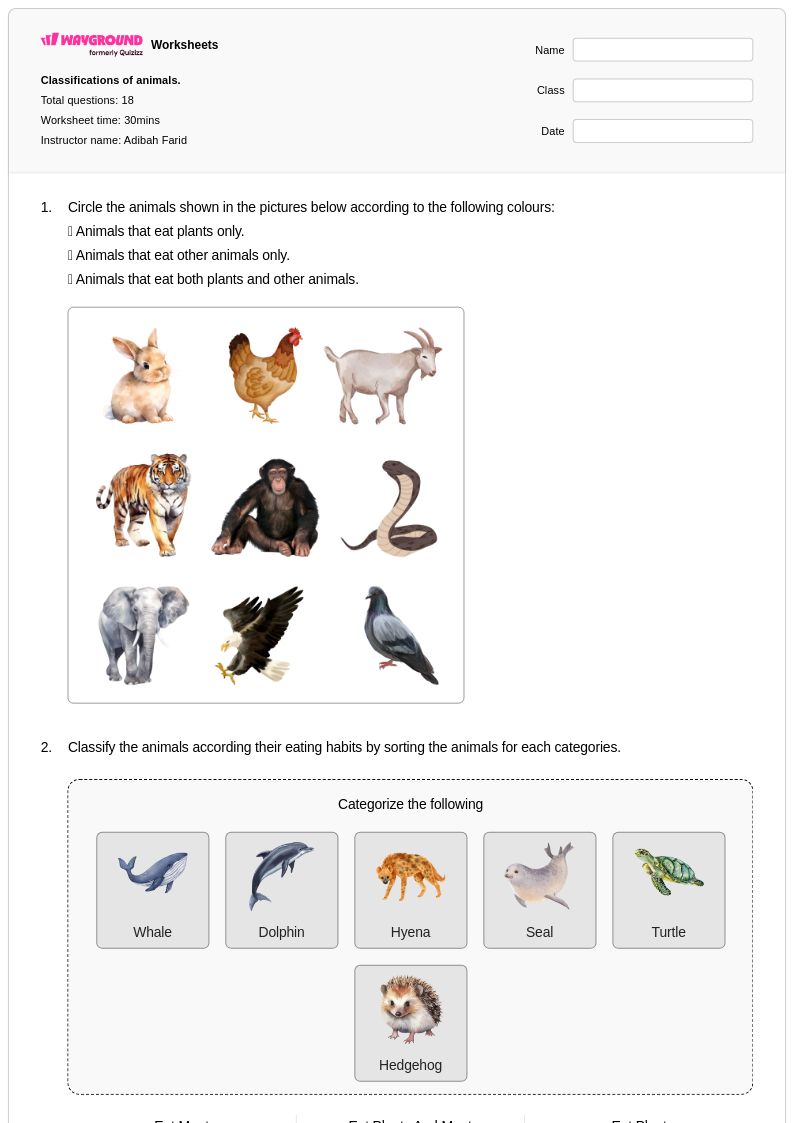
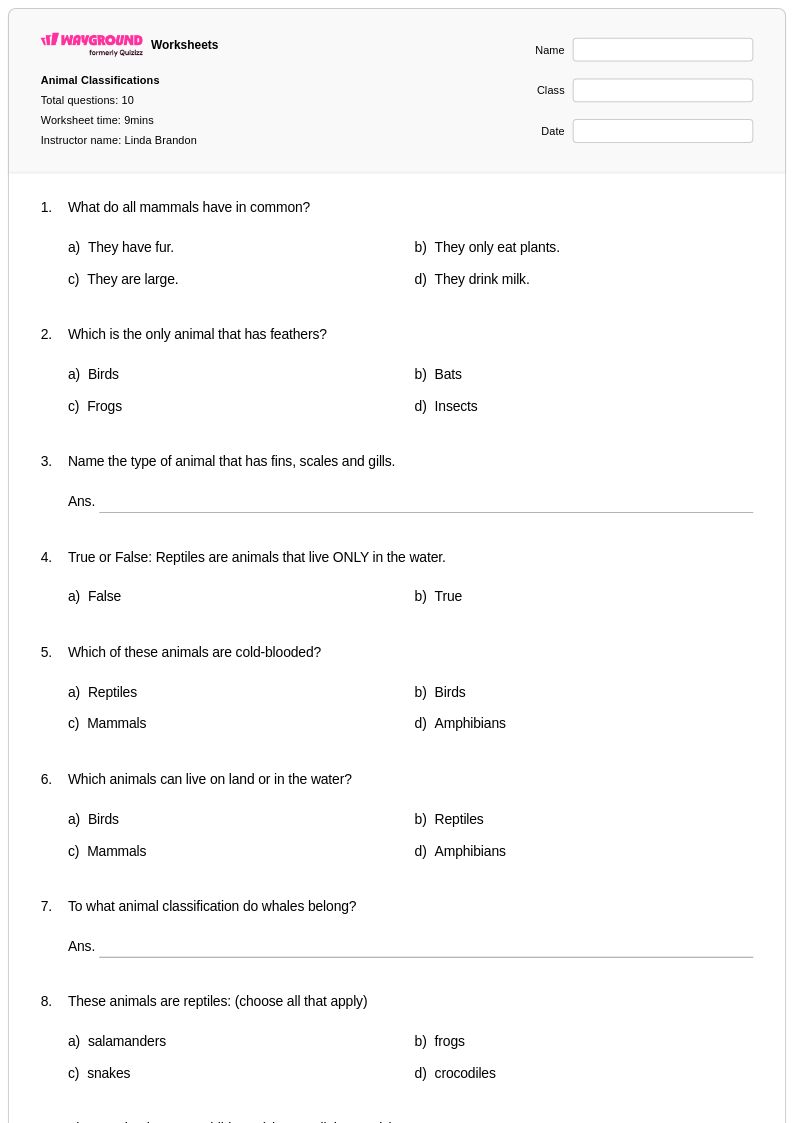
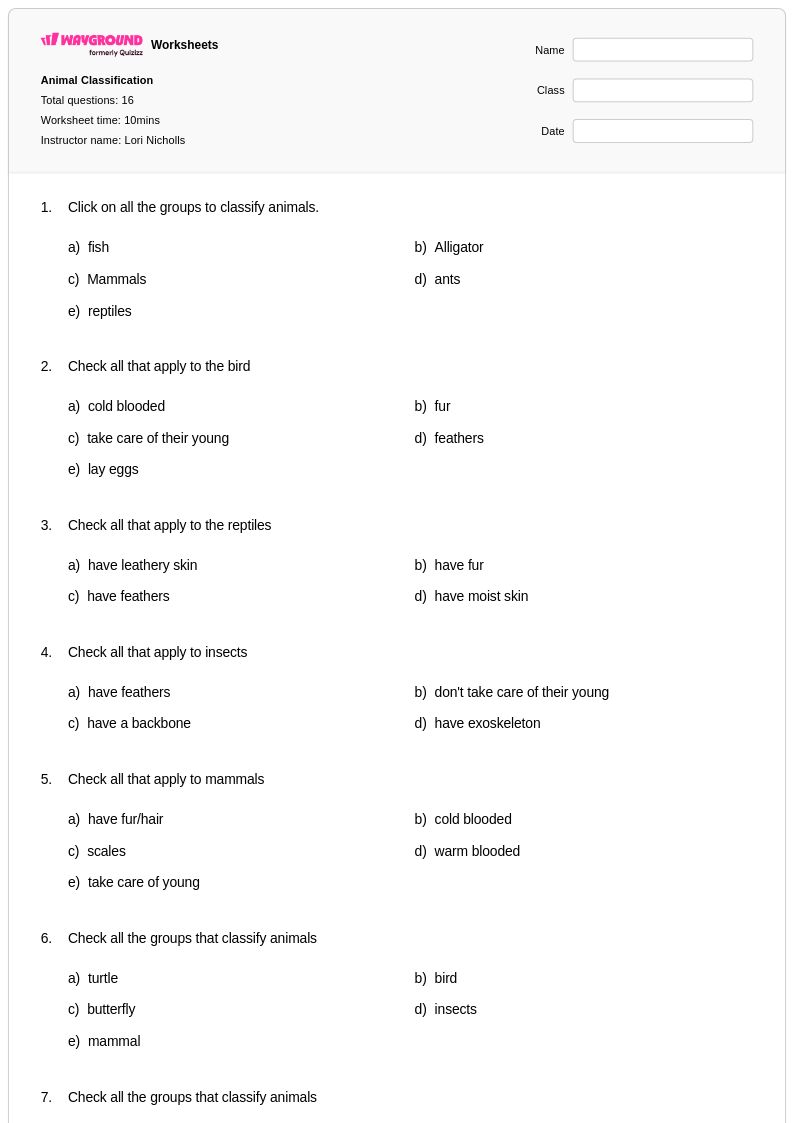
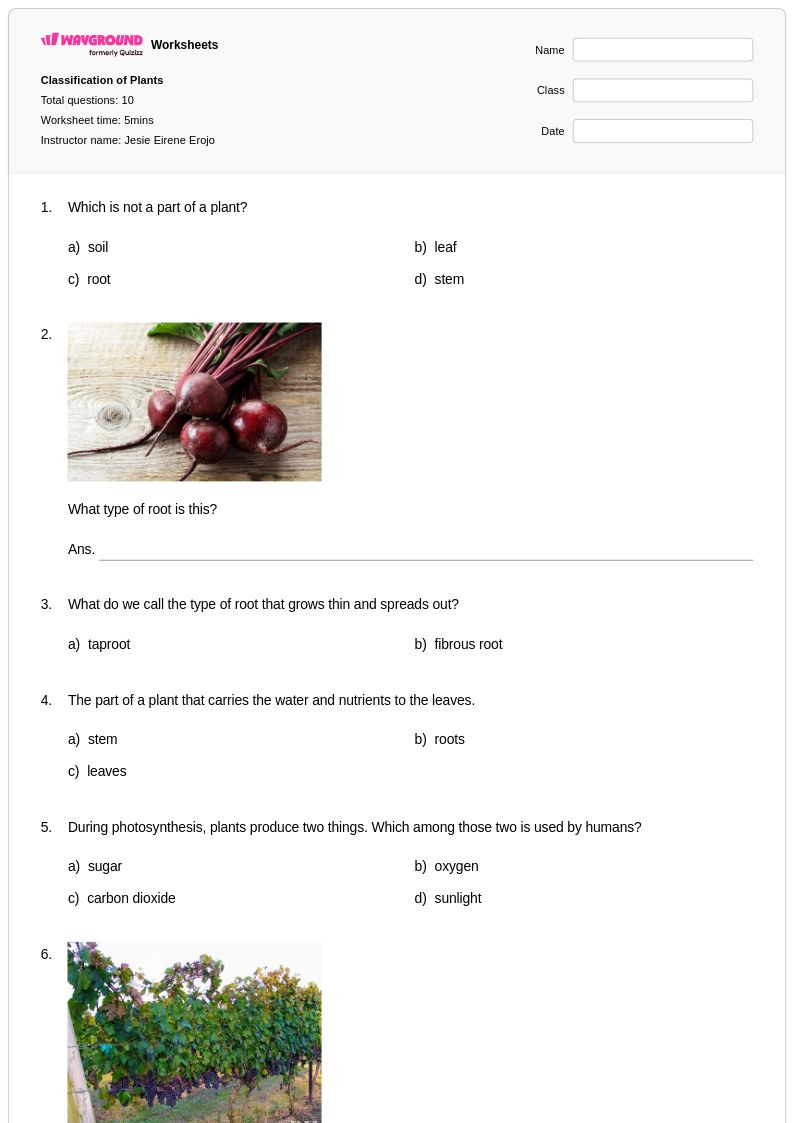
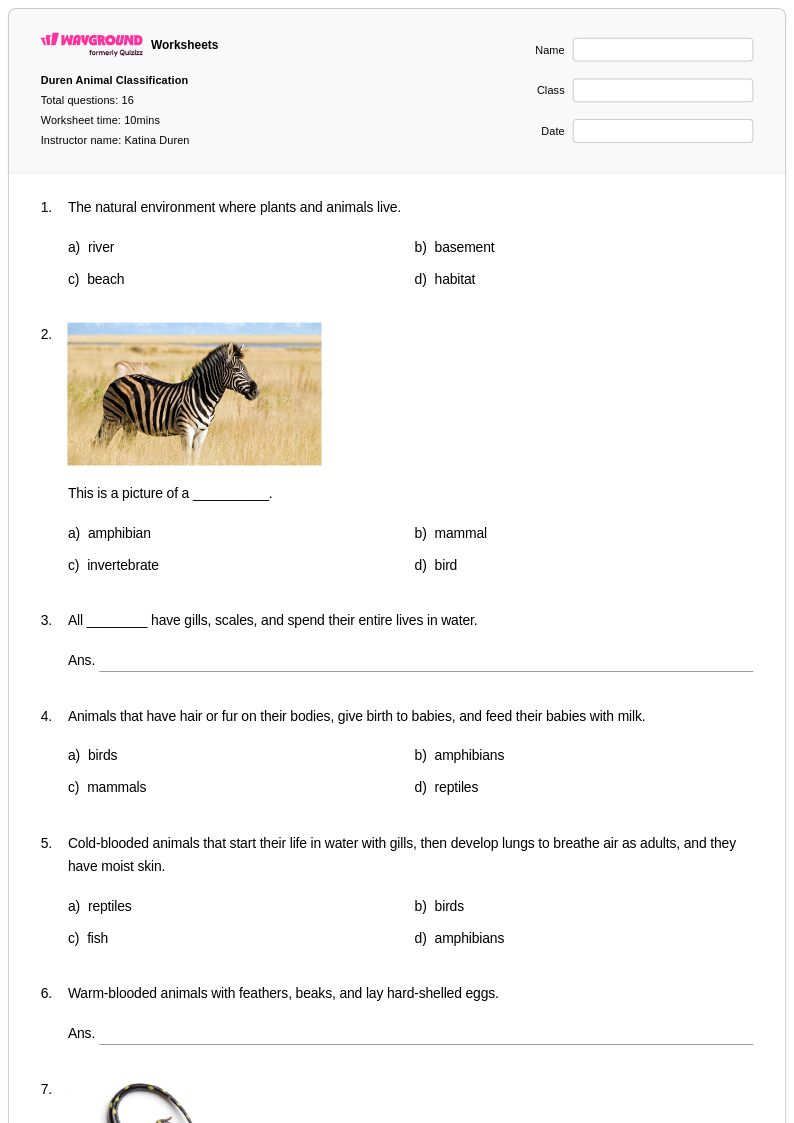
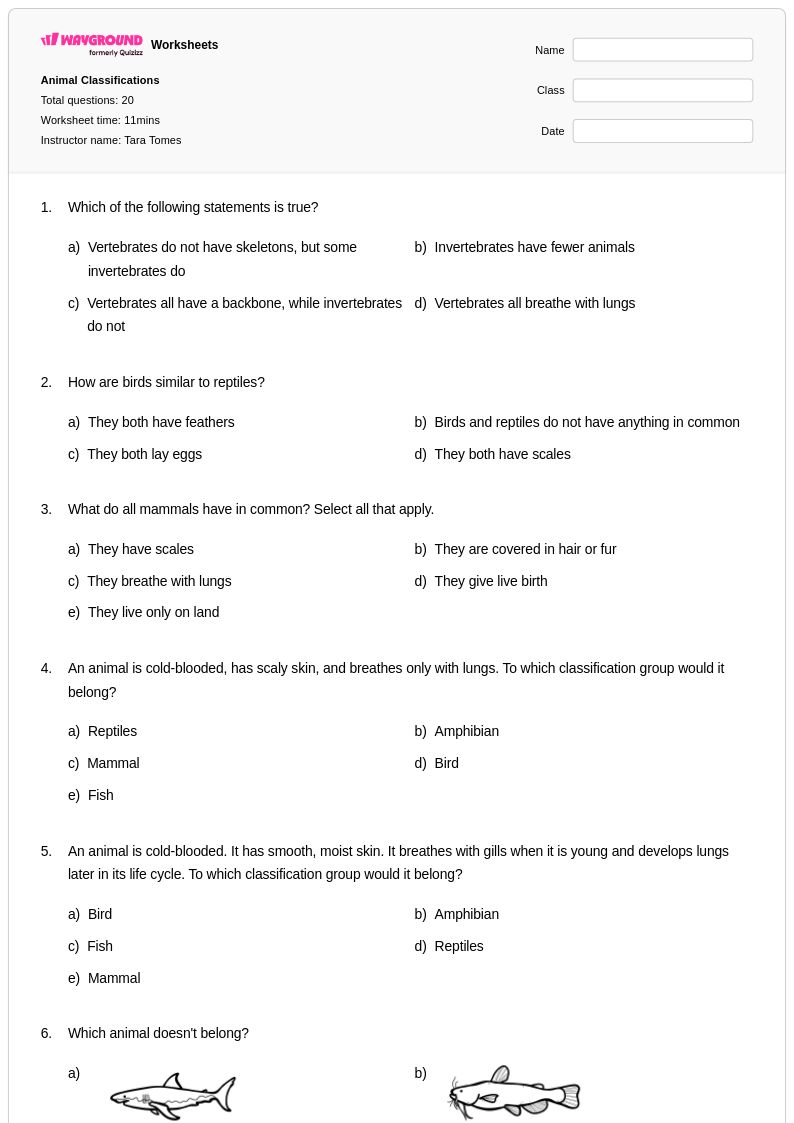
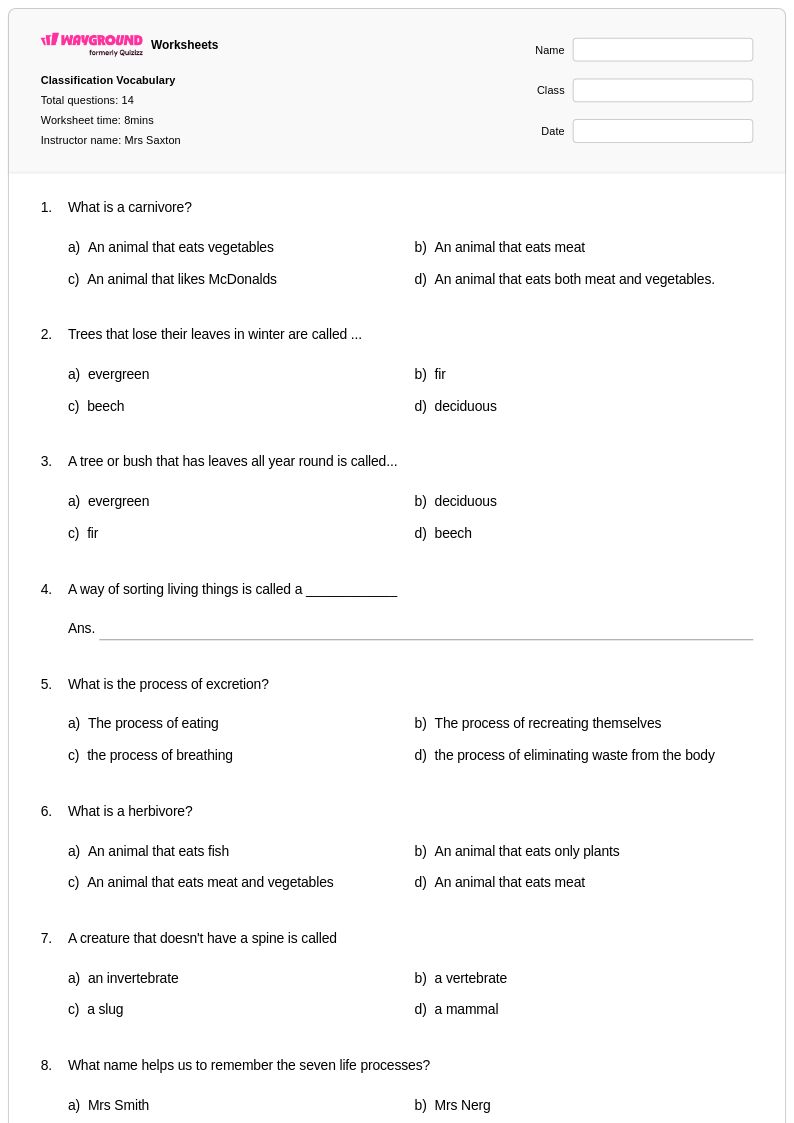
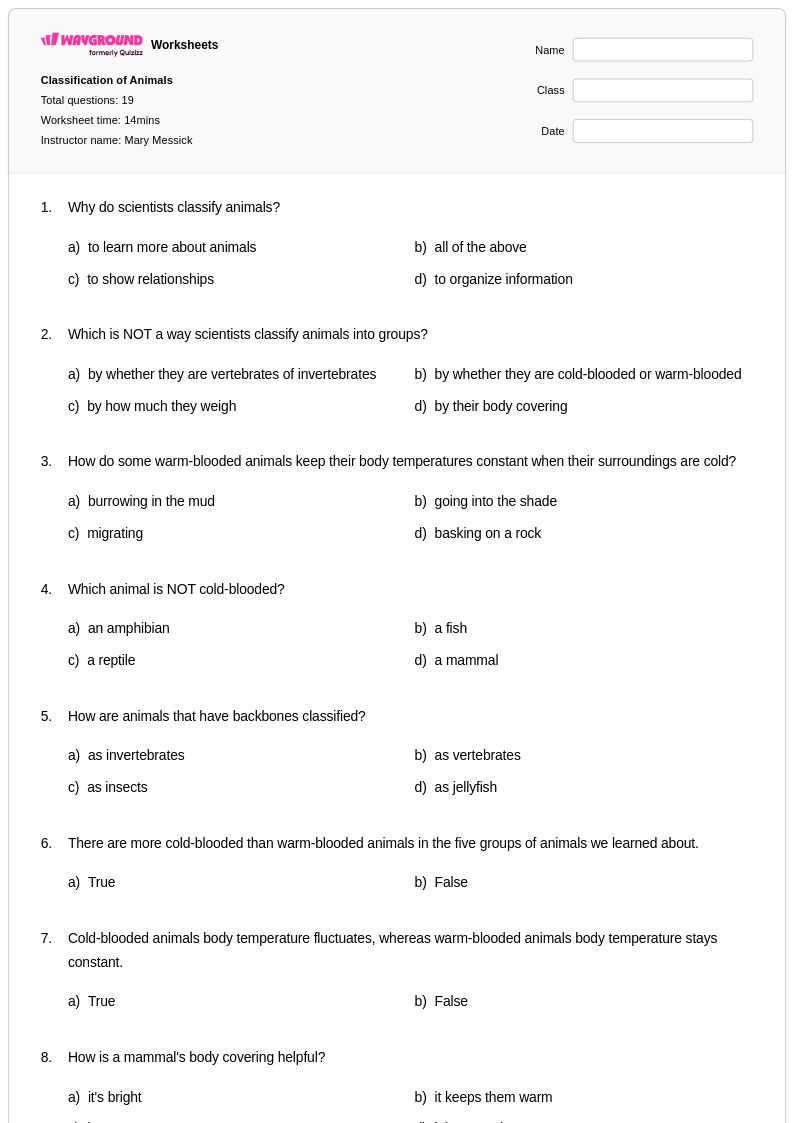
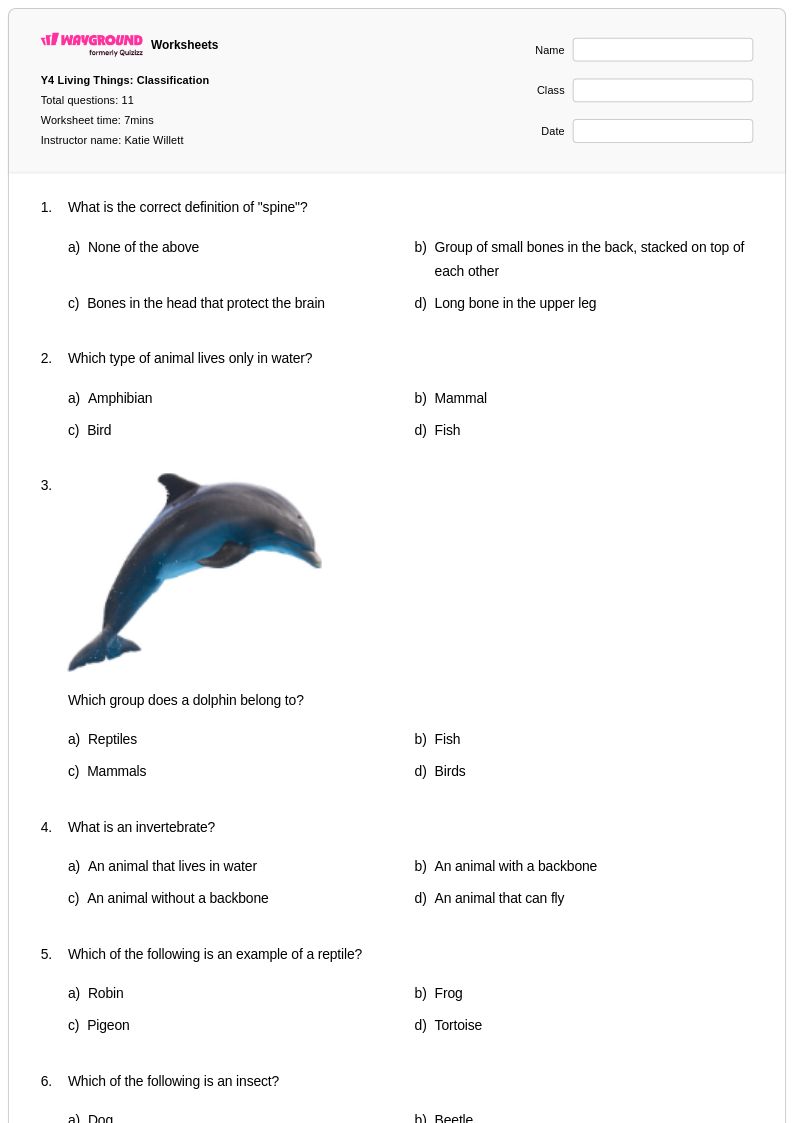
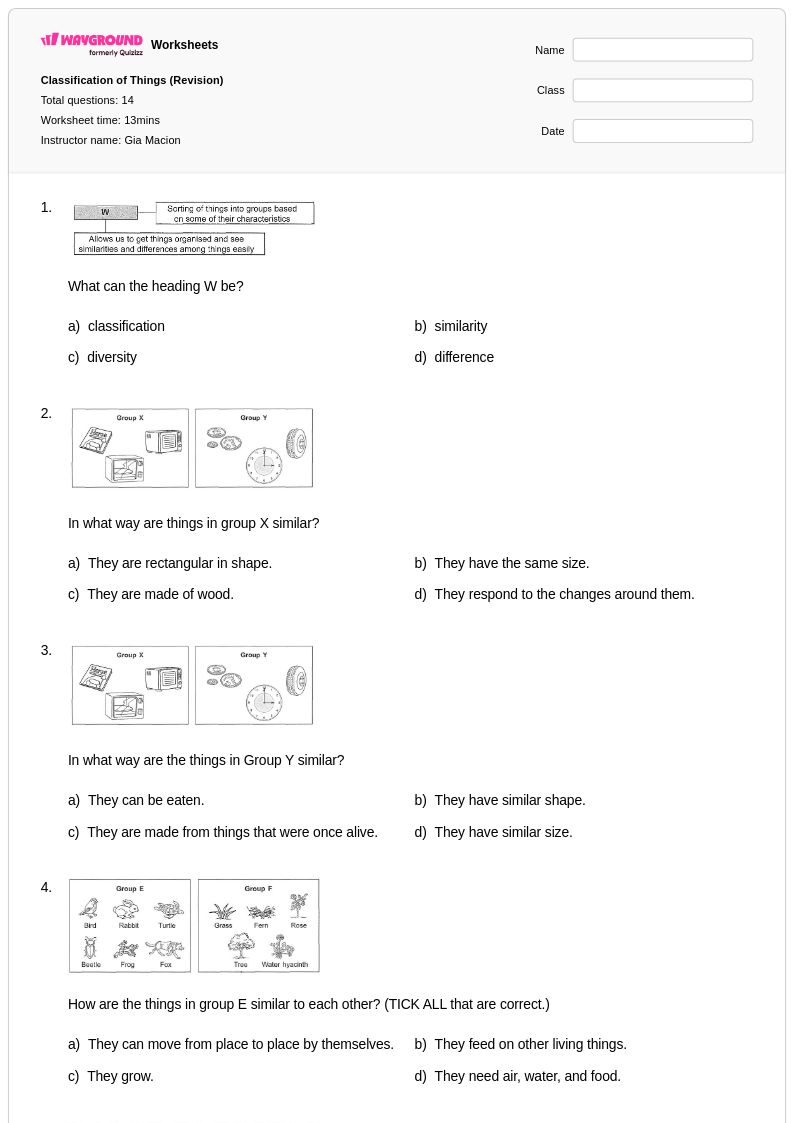
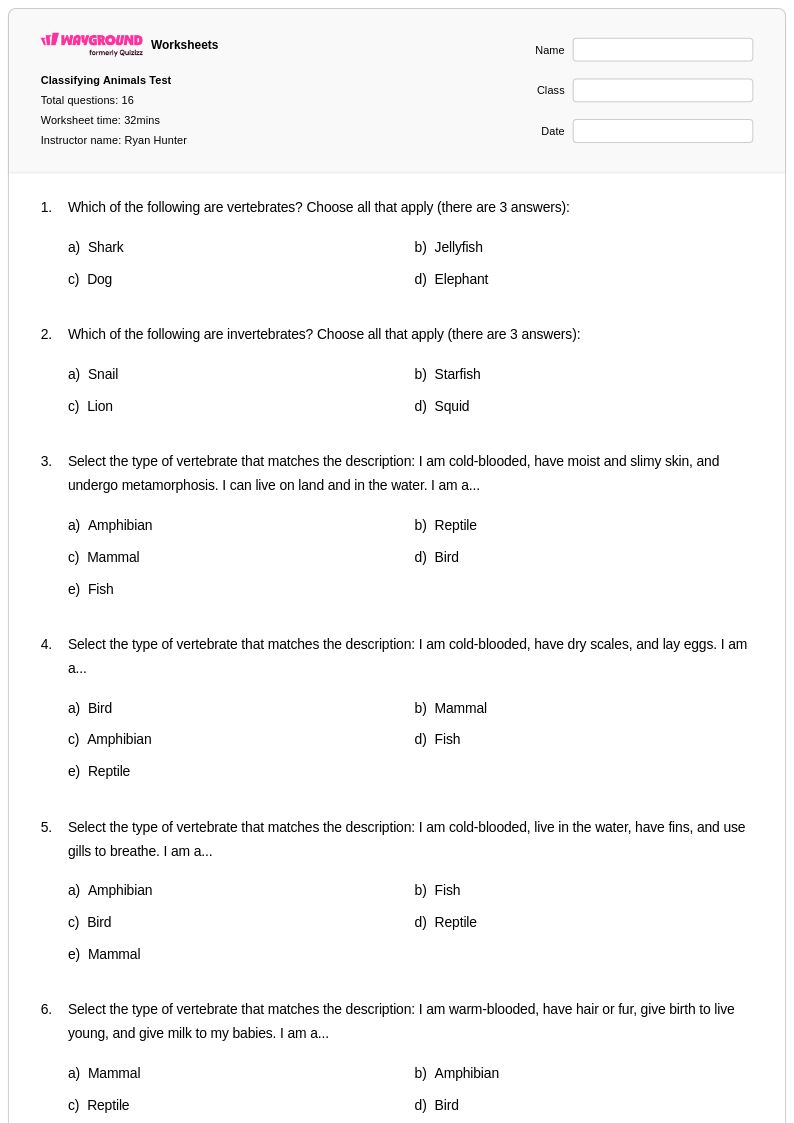
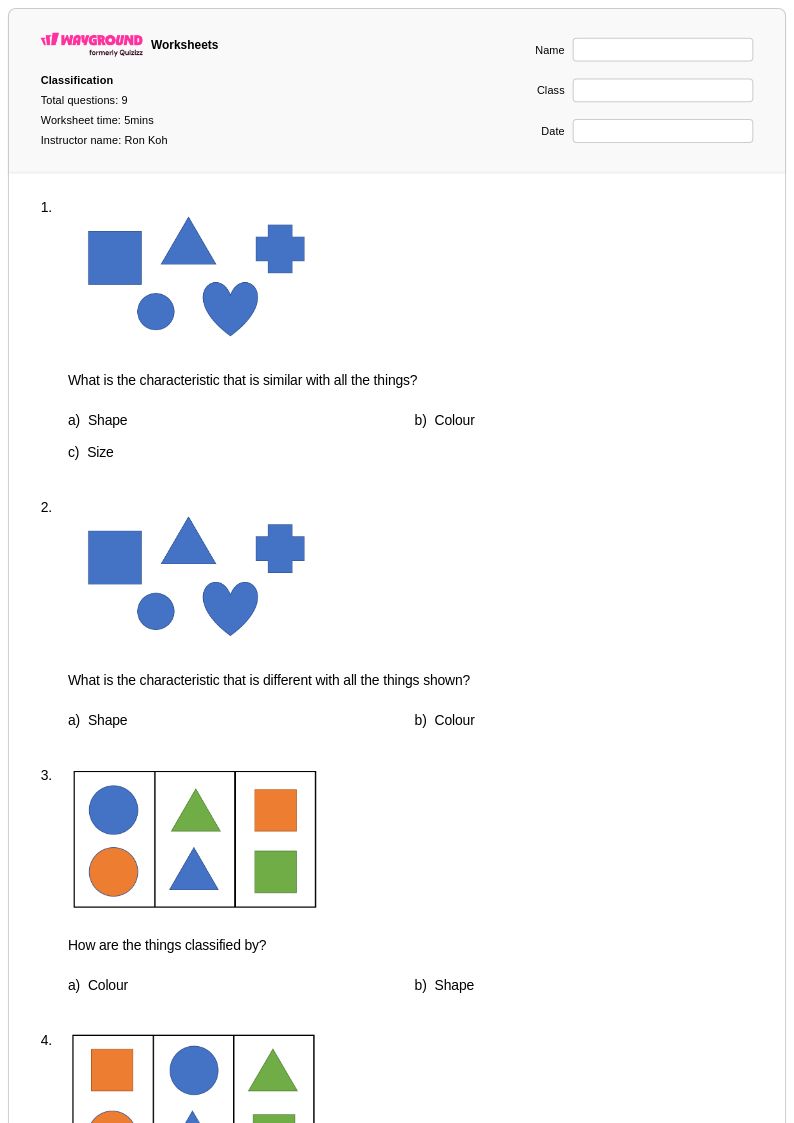
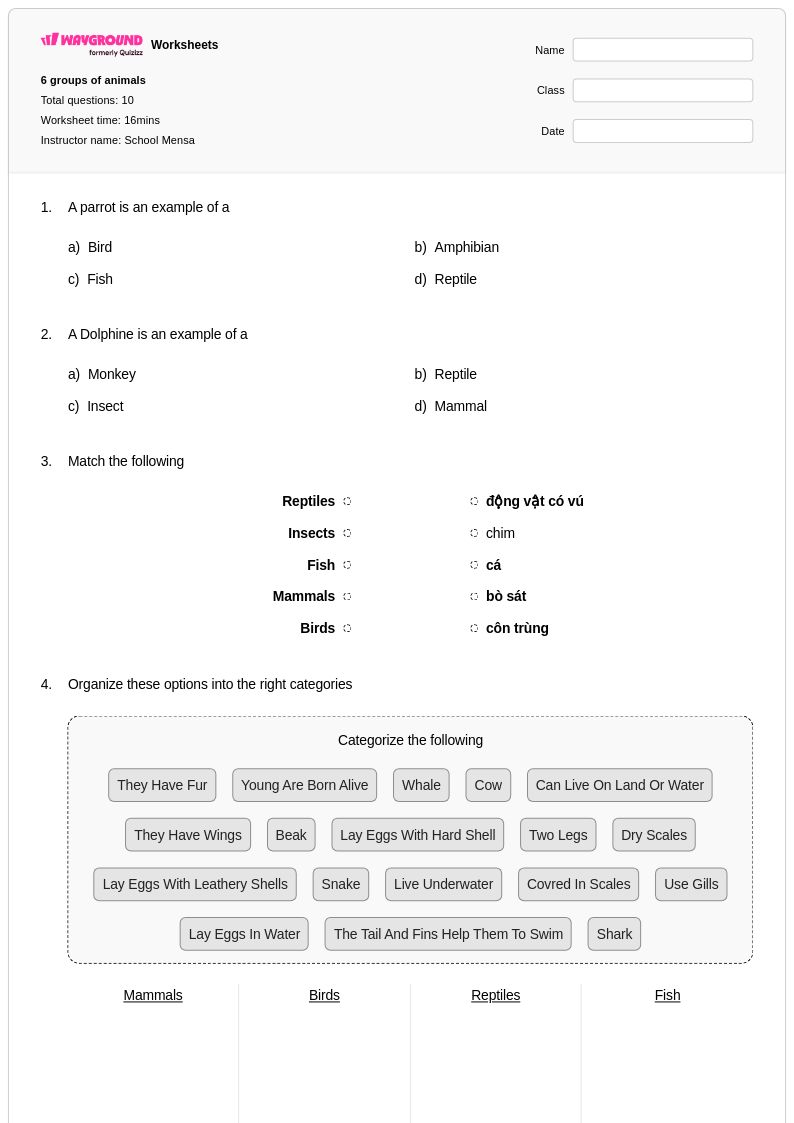
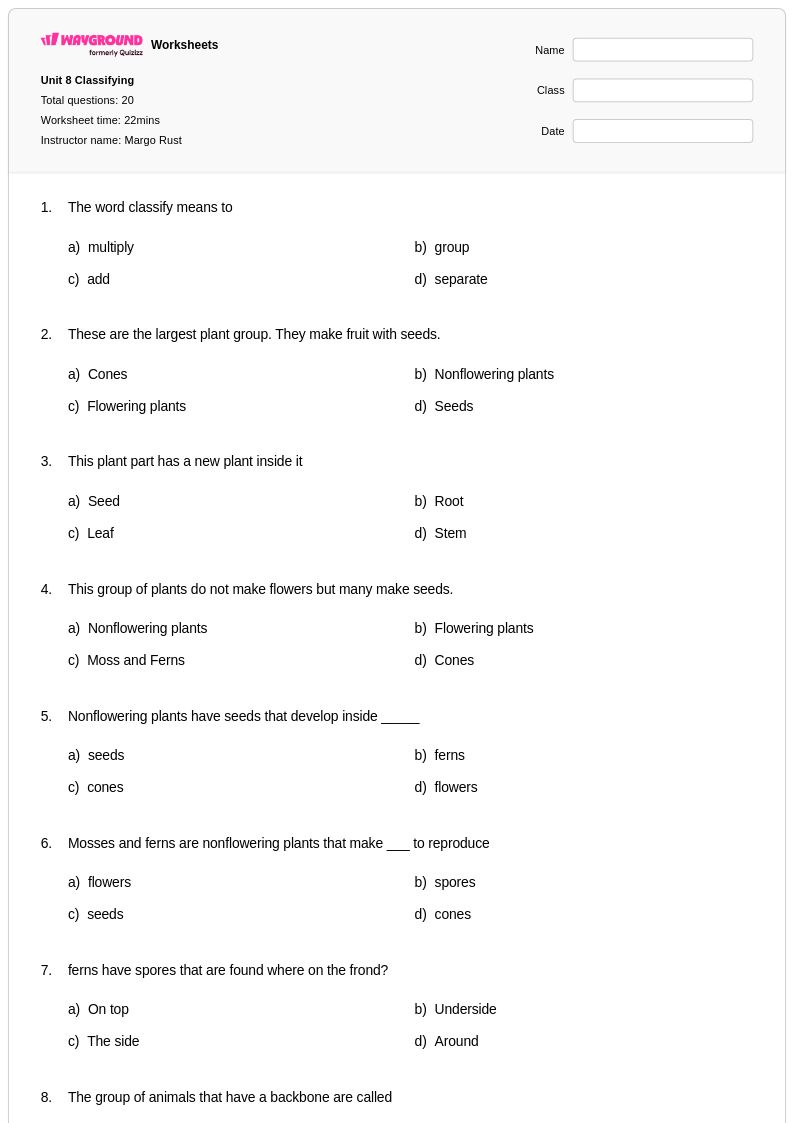
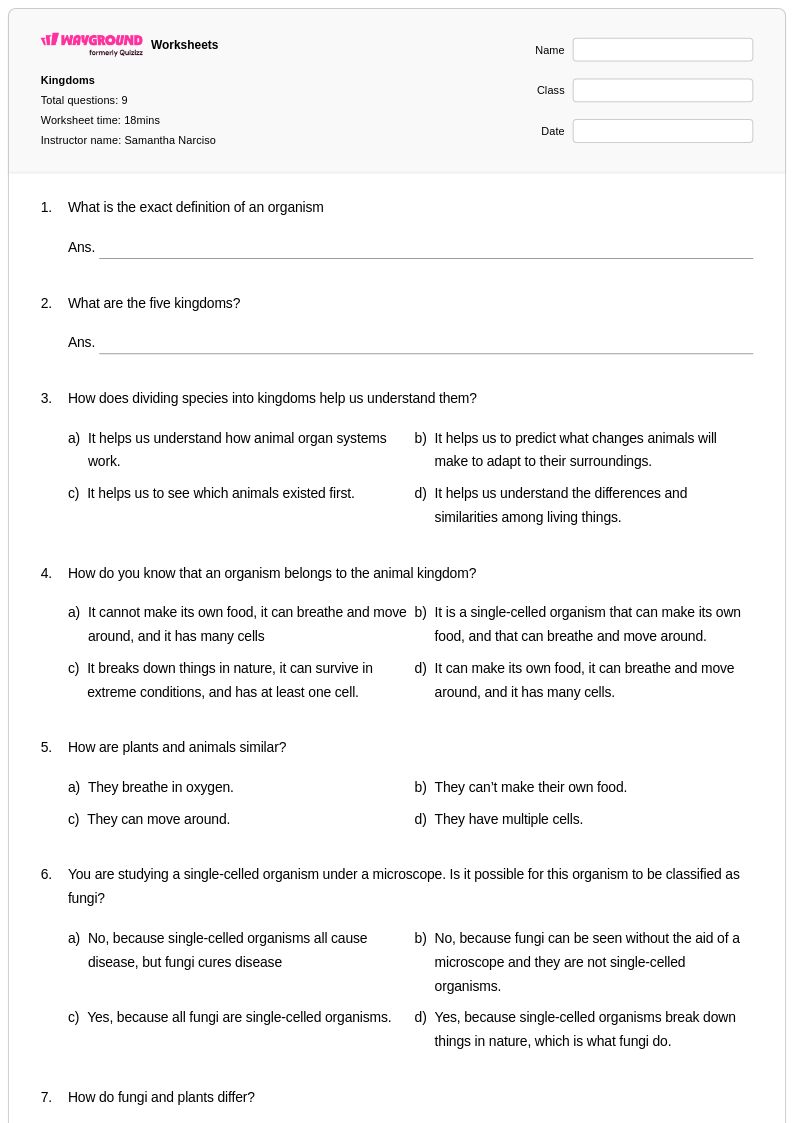
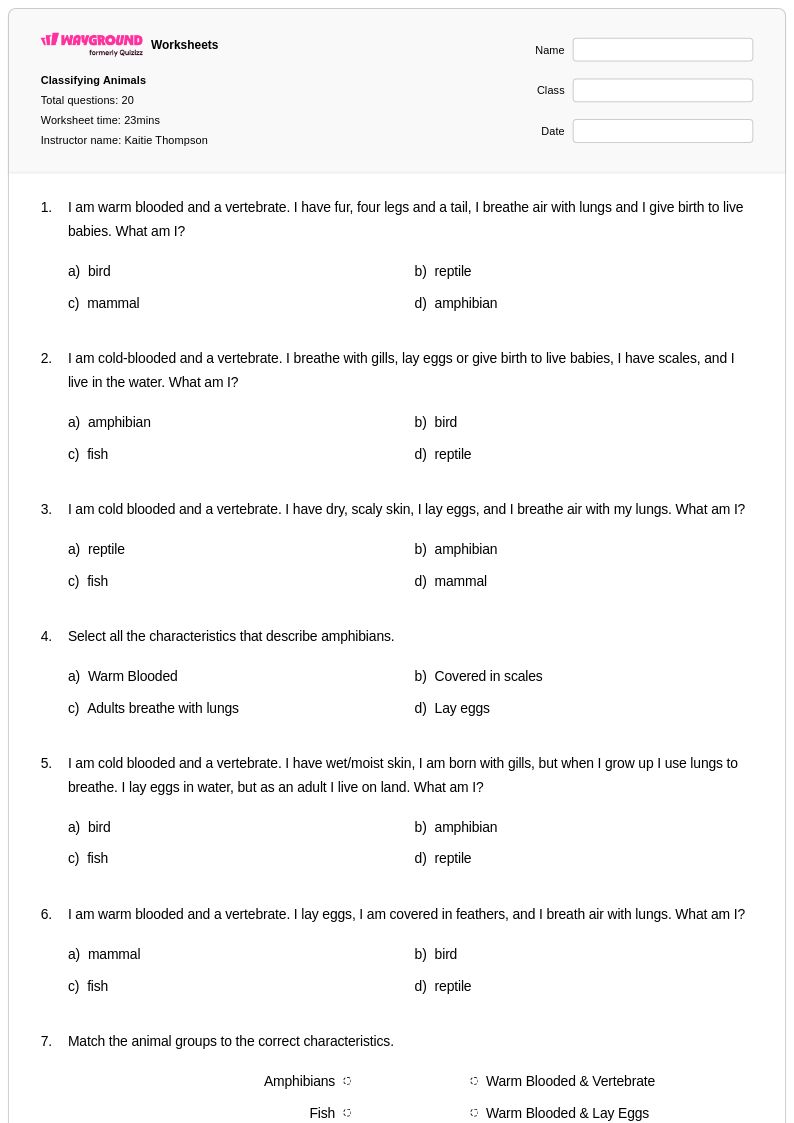
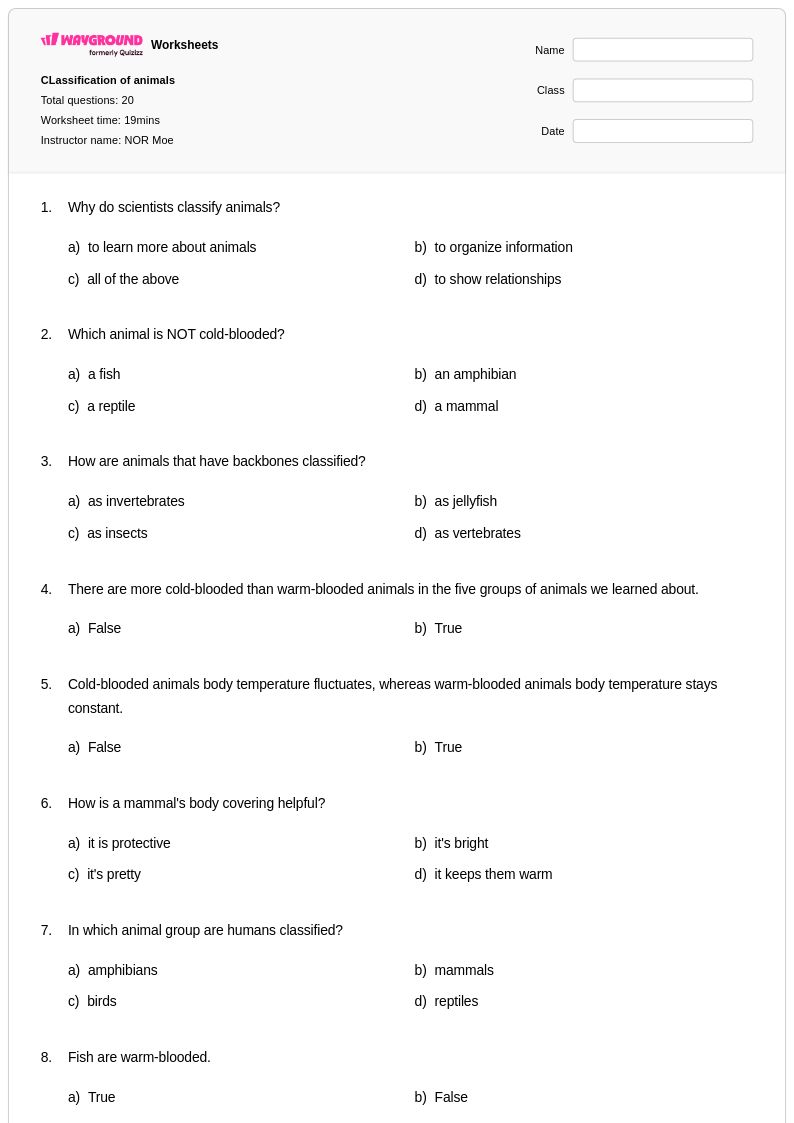
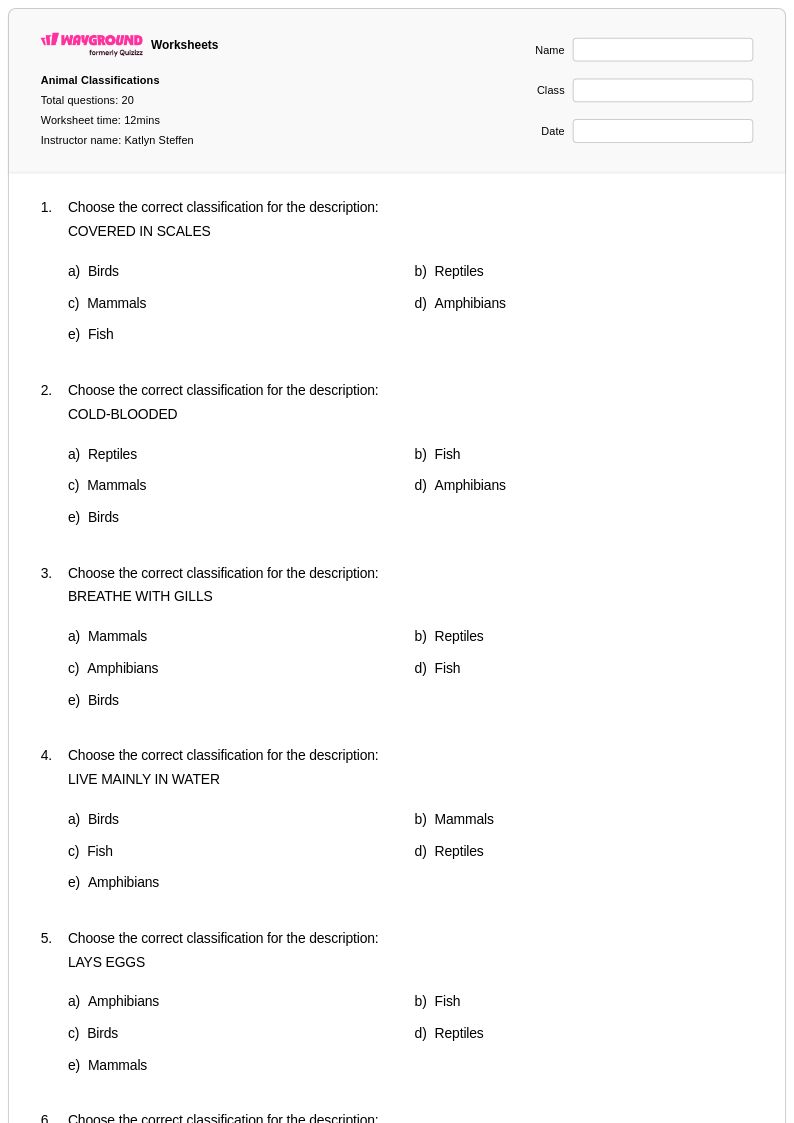
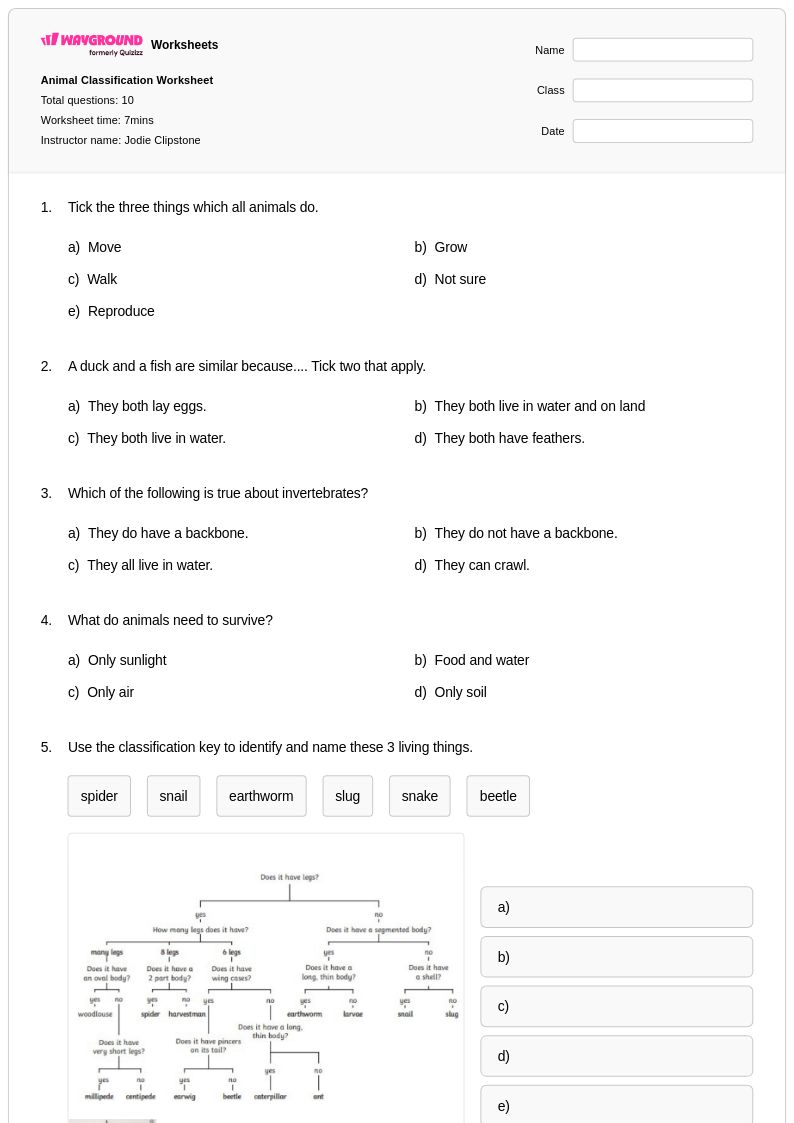
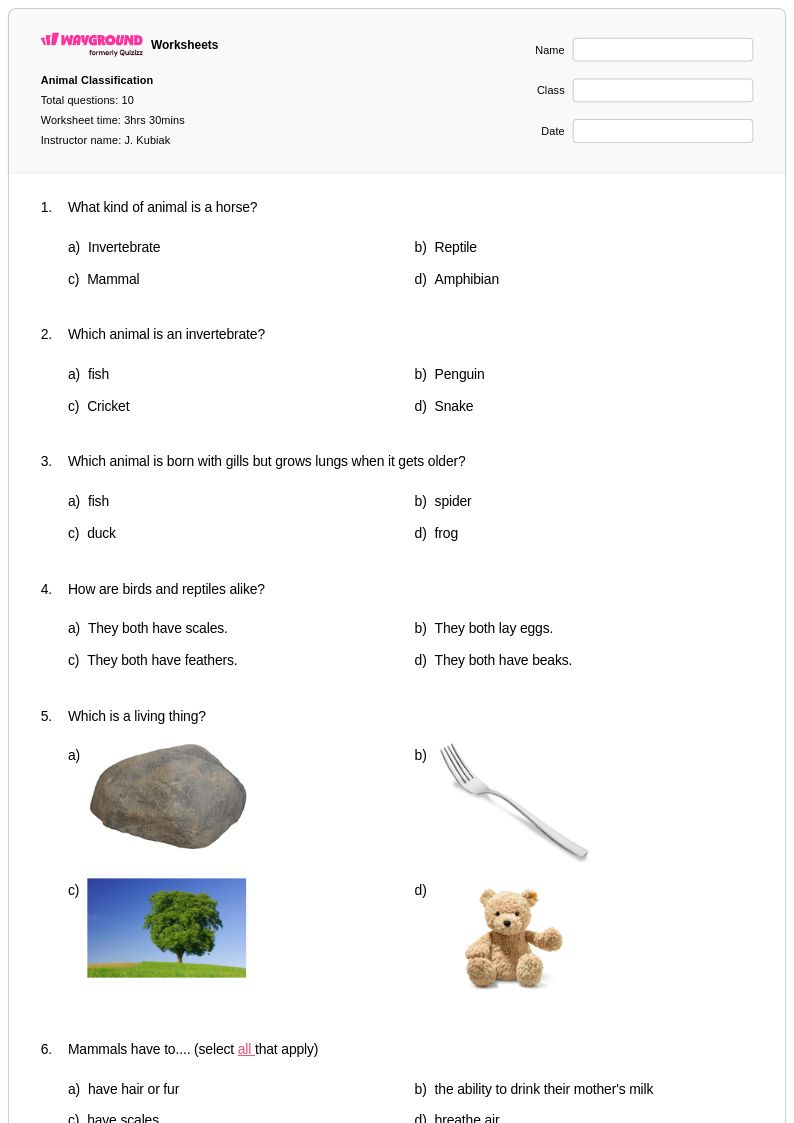
Biological classification worksheets for Year 3 through Wayground (formerly Quizizz) introduce young learners to the fundamental science of organizing living things into groups based on shared characteristics. These educational resources help students develop critical thinking skills as they learn to identify similarities and differences between plants, animals, and other organisms, building a foundation for understanding how scientists categorize the natural world. The worksheets strengthen observation skills, pattern recognition, and logical reasoning through engaging practice problems that challenge students to sort organisms by features like body covering, habitat, diet, and physical structure. Teachers can access comprehensive answer keys and free printable pdf resources that support both classroom instruction and independent practice, ensuring students master essential classification concepts.
Wayground's extensive collection includes millions of teacher-created biological classification resources specifically designed for Year 3 learners, offering educators powerful search and filtering tools to locate materials that align with curriculum standards and individual classroom needs. The platform supports effective differentiation through customizable worksheets that can be modified for various learning levels, from remediation activities for struggling students to enrichment challenges for advanced learners. Teachers benefit from flexible formatting options, including both printable pdf versions for traditional paper-and-pencil work and digital formats for interactive learning experiences. These comprehensive tools streamline lesson planning while providing targeted skill practice opportunities that help students build confidence in scientific classification concepts through systematic, scaffolded learning experiences.
FAQs
How do I teach biological classification to middle or high school students?
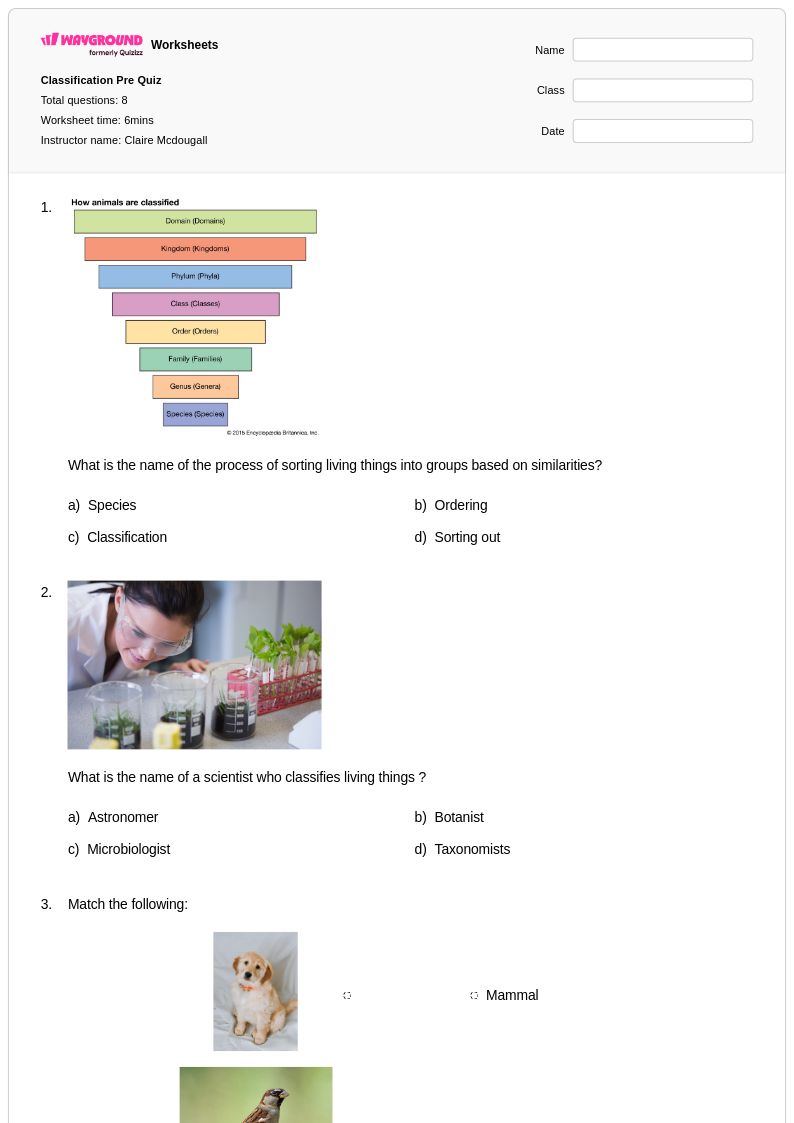
Start by anchoring the lesson in the Linnaean hierarchy — Domain, Kingdom, Phylum, Class, Order, Family, Genus, Species — using familiar organisms students can sort and compare. From there, introduce binomial nomenclature and phylogenetic trees to show how classification reflects evolutionary relationships, not just surface-level similarities. Hands-on activities like dichotomous key exercises and comparative anatomy tasks help students move from memorization to genuine taxonomic reasoning.
What worksheets or exercises help students practice biological classification?
Effective practice materials for biological classification include dichotomous key activities, cladogram construction exercises, and sorting tasks that challenge students to group organisms by shared derived characteristics. Binomial nomenclature practice and phylogenetic tree interpretation problems develop both procedural fluency and conceptual understanding. Worksheets that use real-world examples — such as distinguishing prokaryotes from eukaryotes or comparing morphological traits across taxa — give students meaningful context for applying classification principles.
What mistakes do students commonly make when learning taxonomy and biological classification?
One of the most persistent misconceptions is that classification is based solely on physical appearance, leading students to group organisms like dolphins with fish rather than with mammals. Students also frequently confuse the direction of taxonomic hierarchy, misremembering whether Kingdom or Species is the broadest category. When working with cladograms, a common error is misreading shared derived characteristics as evidence of direct ancestry rather than common descent, which distorts students' understanding of phylogenetic relationships.
How can I use biological classification worksheets to differentiate instruction for different skill levels?
For struggling learners, begin with worksheets that focus on the Linnaean hierarchy using familiar organisms and simplified dichotomous keys before introducing cladistic analysis. Advanced students benefit from phylogenetic tree construction, molecular phylogeny comparisons, and open-ended tasks that require them to defend classification decisions using evidence. On Wayground, teachers can apply accommodations such as read aloud support, reduced answer choices, and extended time to individual students, so differentiation happens at the student level without disrupting the rest of the class.
How do I use biological classification worksheets from Wayground in my classroom?
Biological classification worksheets on Wayground are available as printable PDFs for traditional classroom use and in digital formats for technology-integrated instruction, including the option to host them as an interactive quiz directly on the platform. Each worksheet includes a complete answer key, making them practical for independent practice, guided review, or formative assessment. Teachers can assign digital versions for homework or remote learning and use printable versions for in-class activities without any additional preparation.
How do I teach students to read and interpret a phylogenetic tree?
Teach students to read phylogenetic trees from the base outward, identifying branch points as common ancestors and branches as lineages that diverged from that ancestor. Emphasize that the horizontal distance between tips does not indicate relatedness — only the pattern of shared branch points matters. A common and useful classroom strategy is to have students map shared derived characteristics onto a cladogram themselves, which reinforces why modern classification prioritizes evolutionary history over morphological similarity alone.