Free Printable Prefix Suffix Worksheets for Year 3
Master Year 3 biology prefix and suffix concepts with Wayground's free printable worksheets and practice problems, complete with answer keys to help students understand scientific vocabulary building through engaging PDF activities.
Explore printable Prefix Suffix worksheets for Year 3
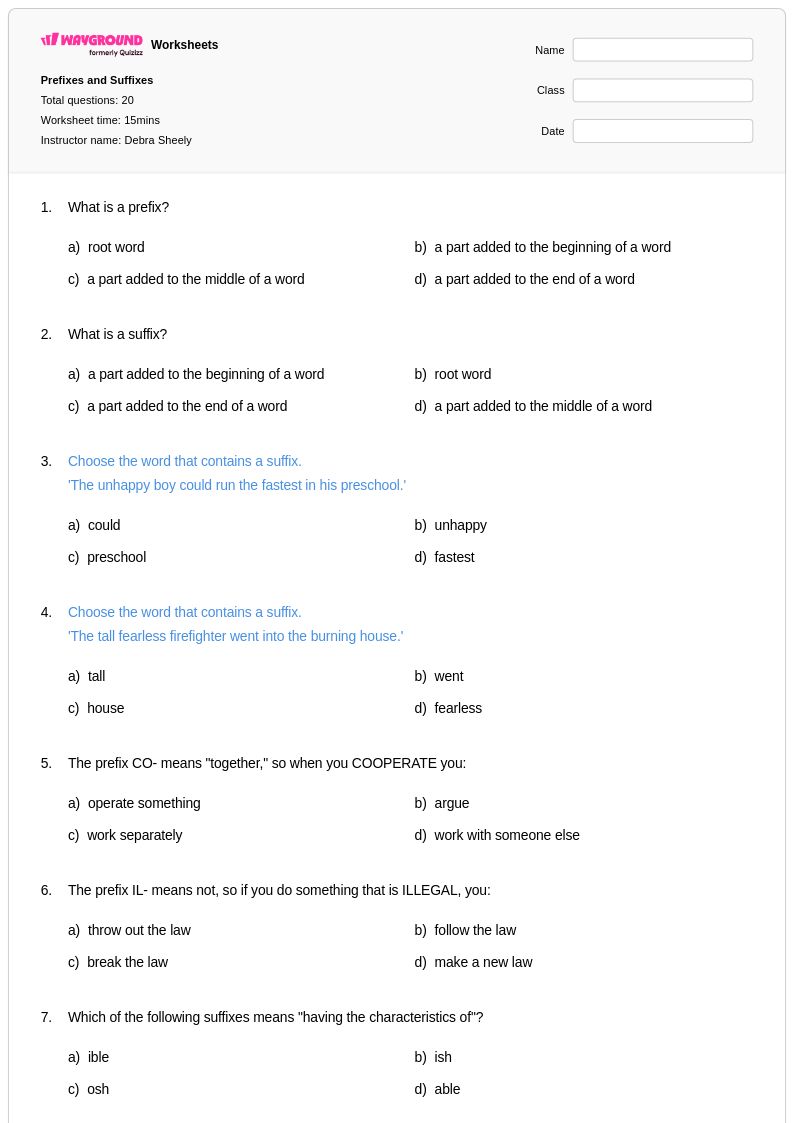
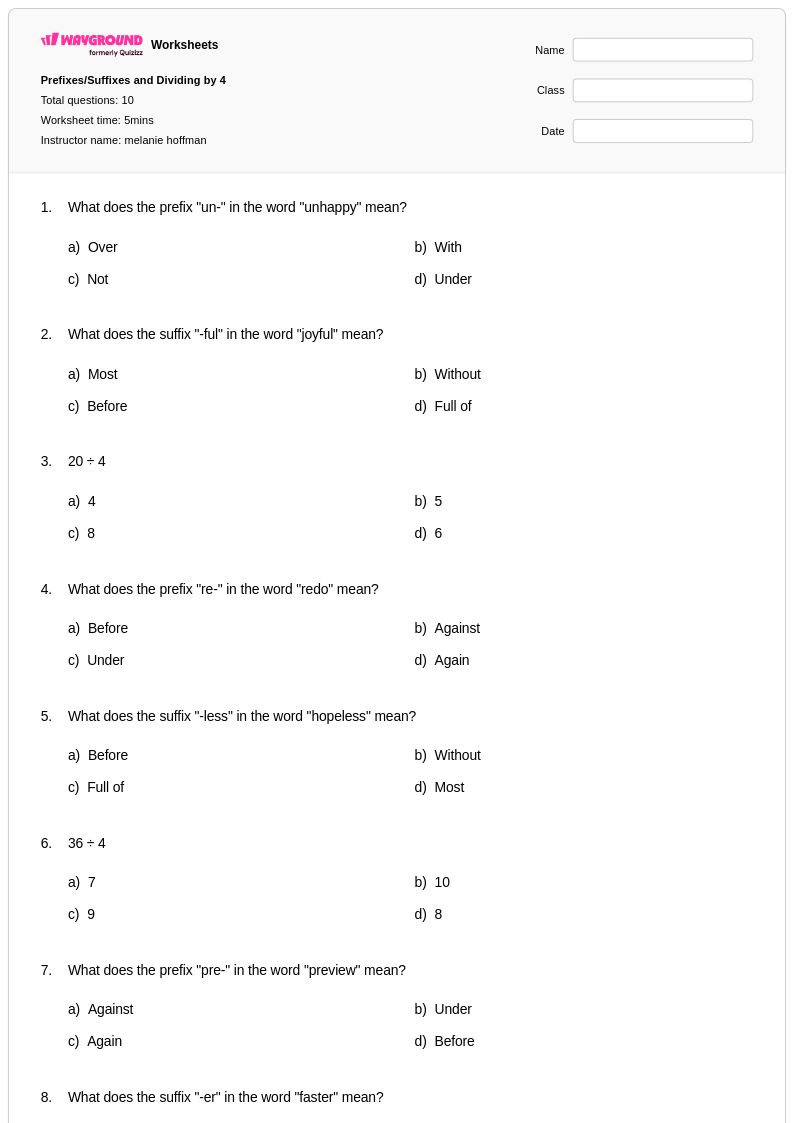
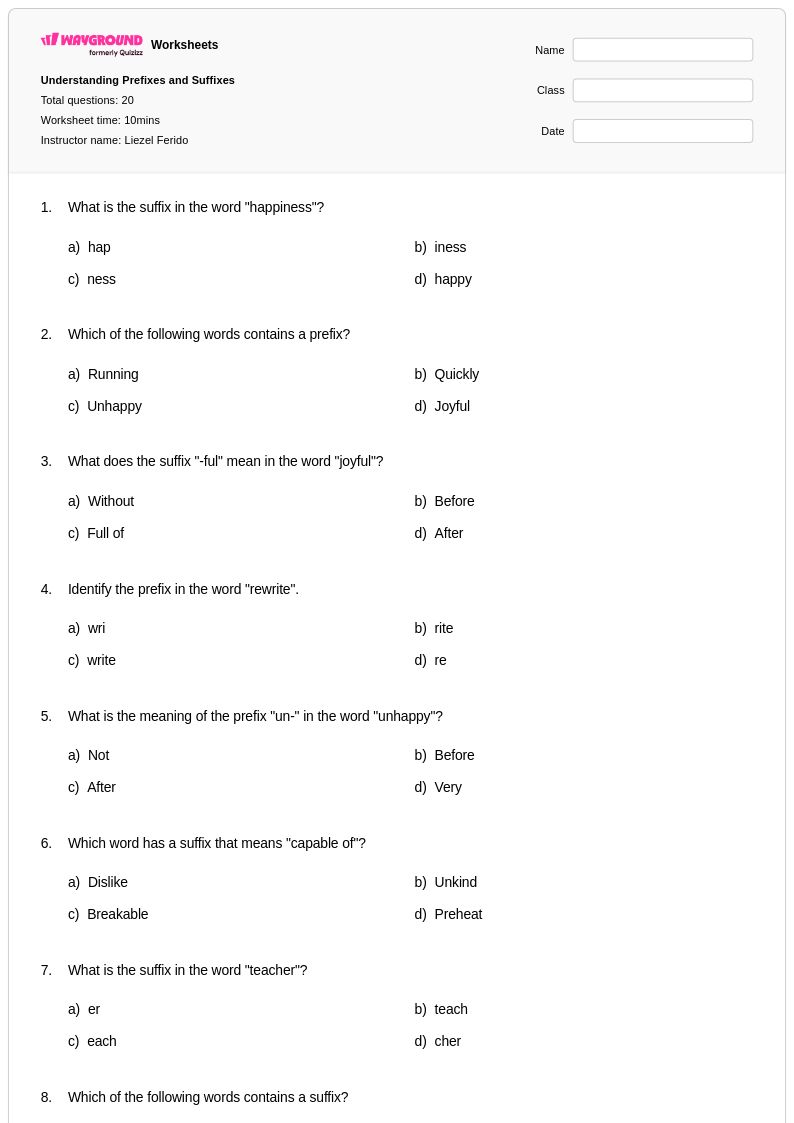
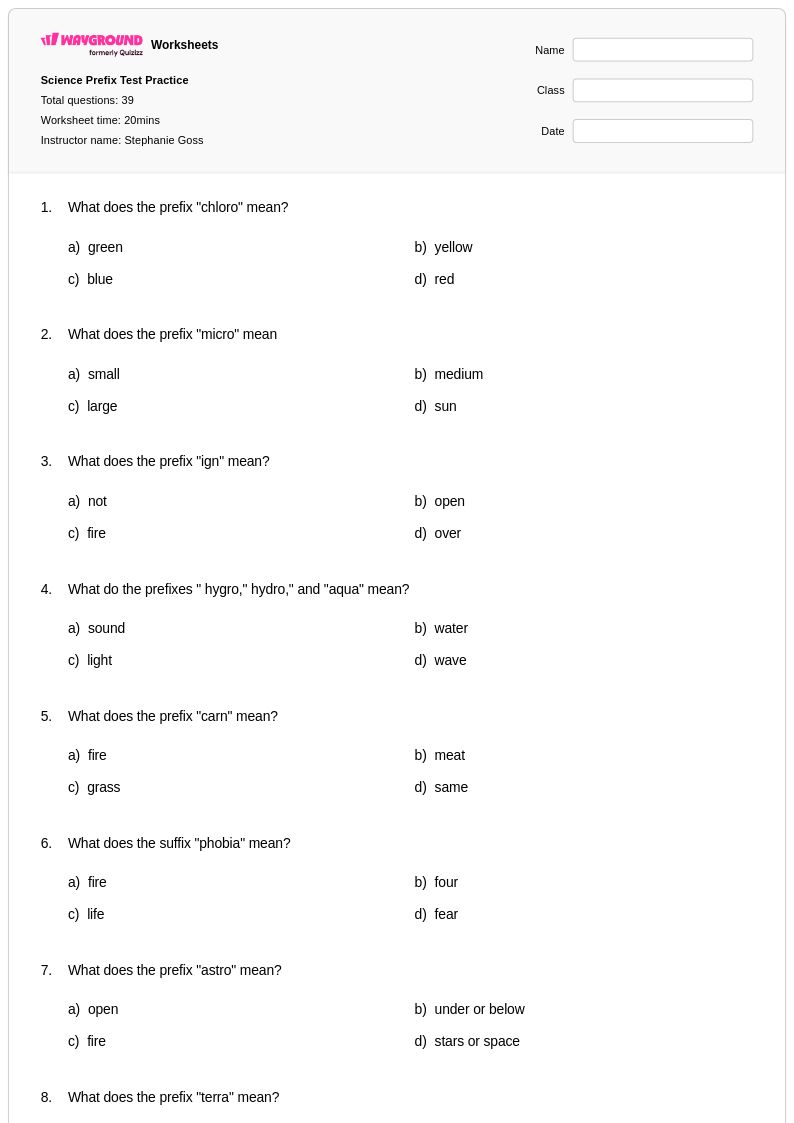
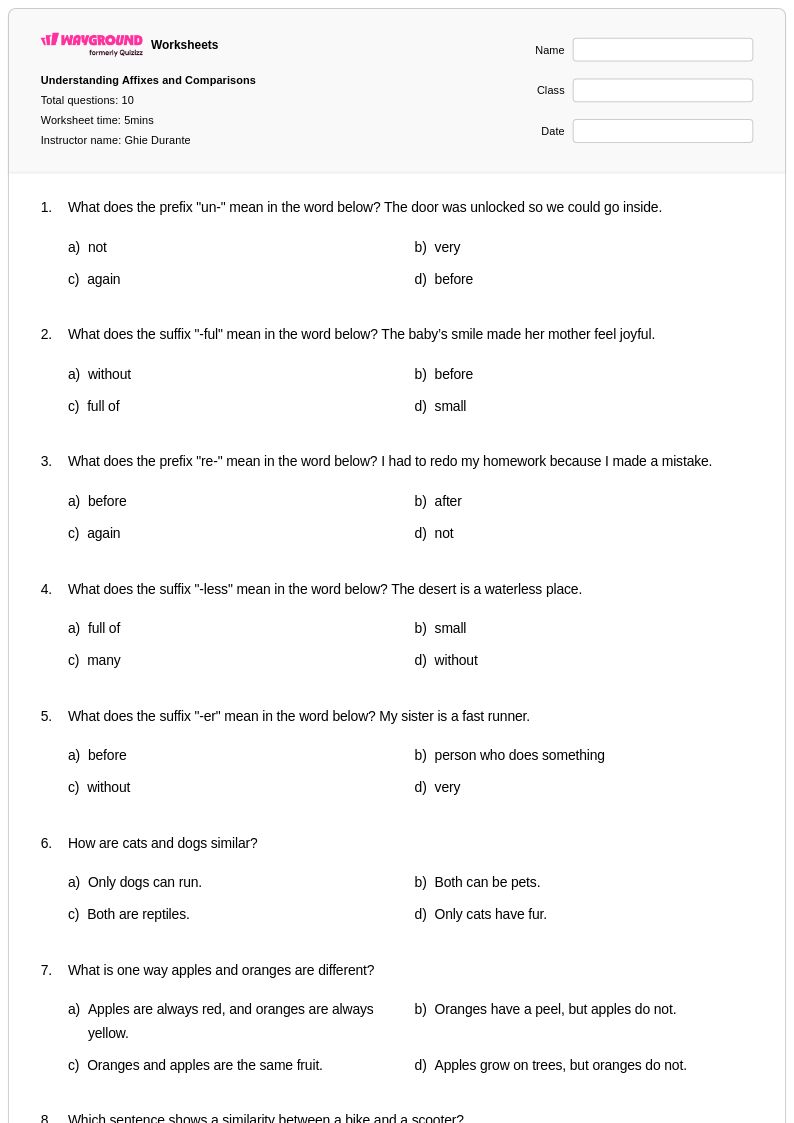
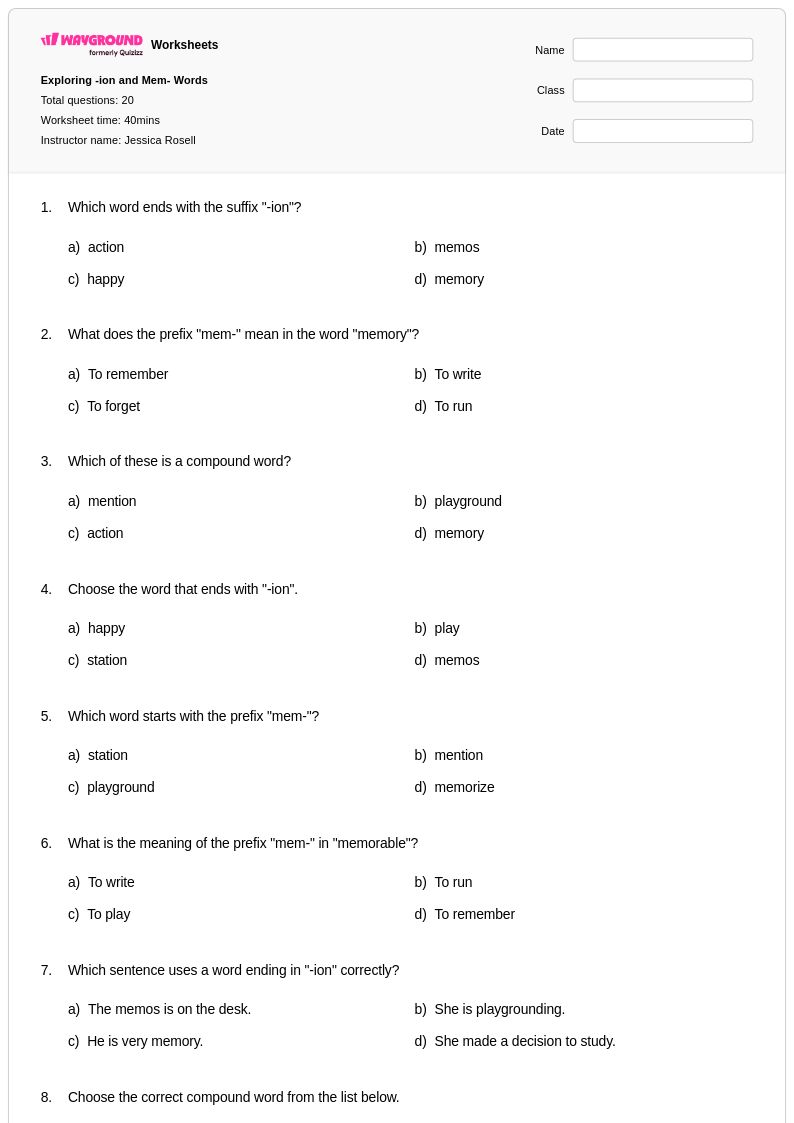
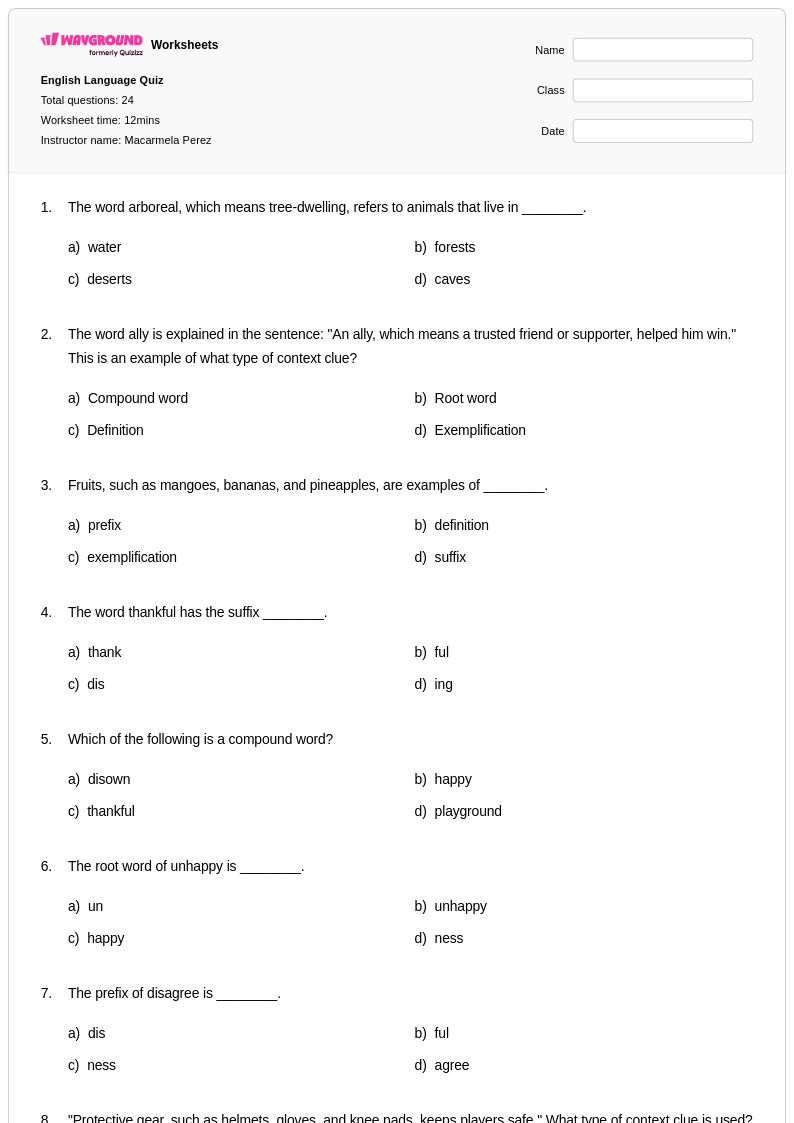
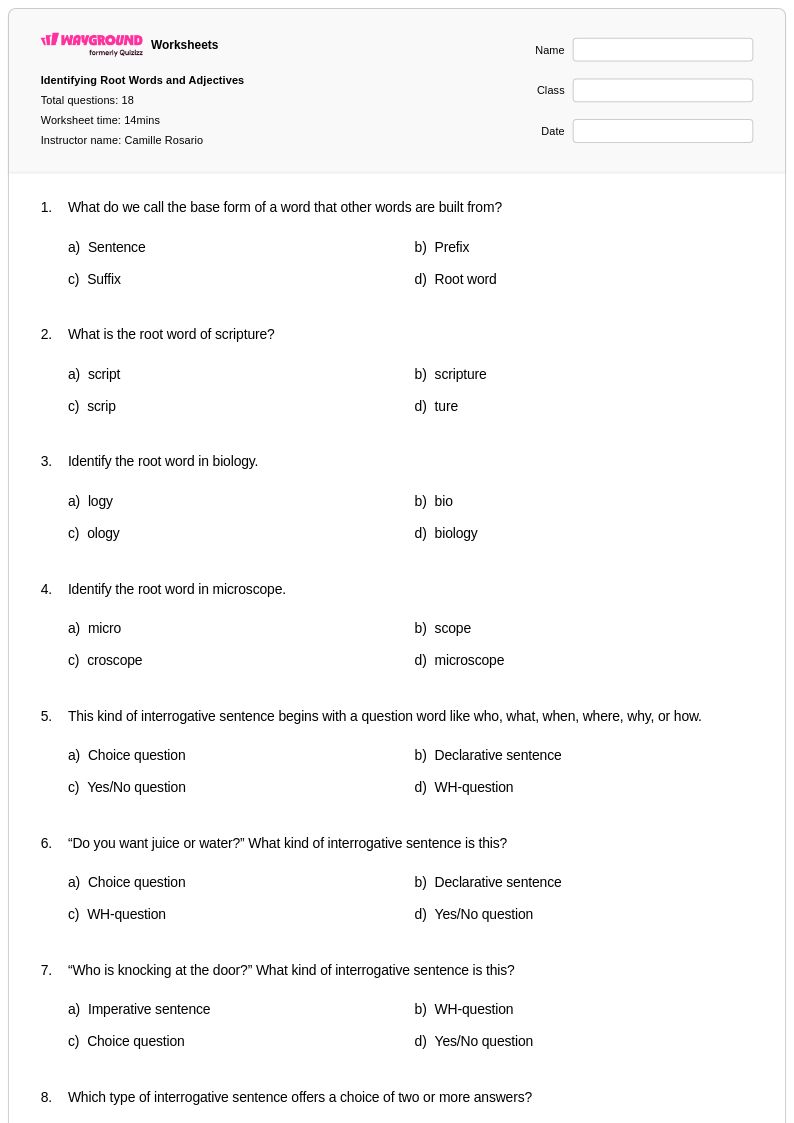
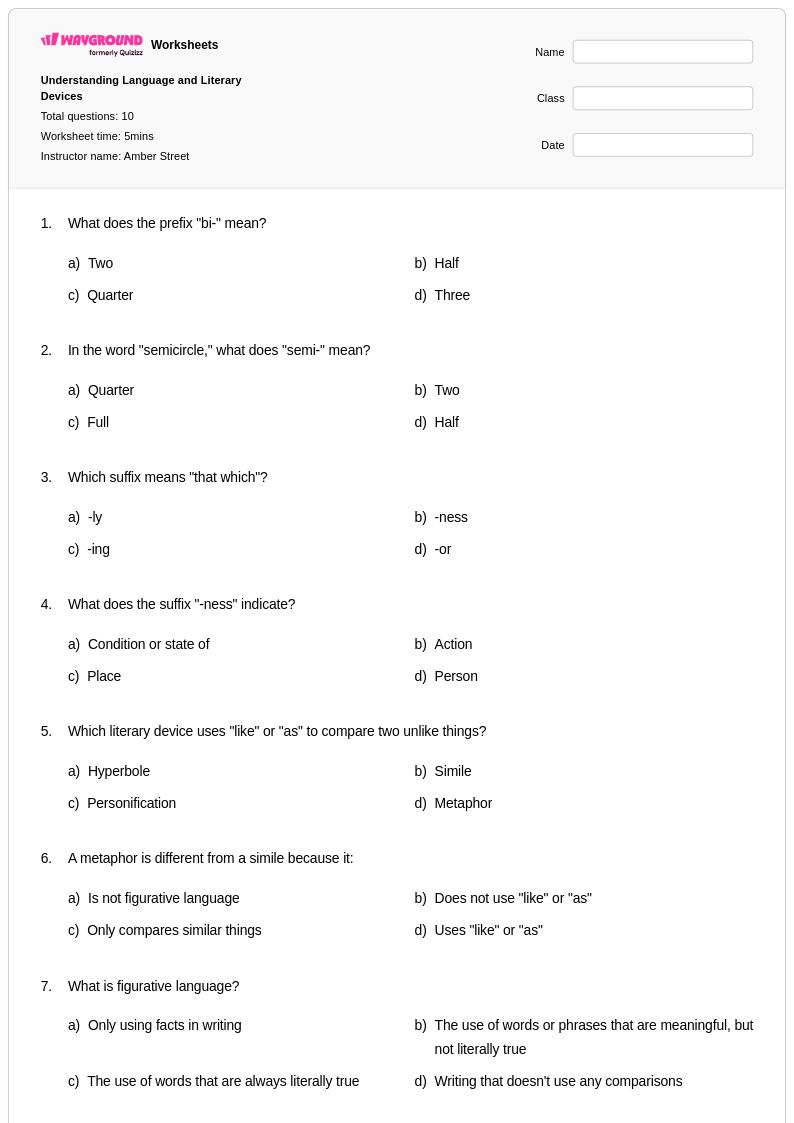
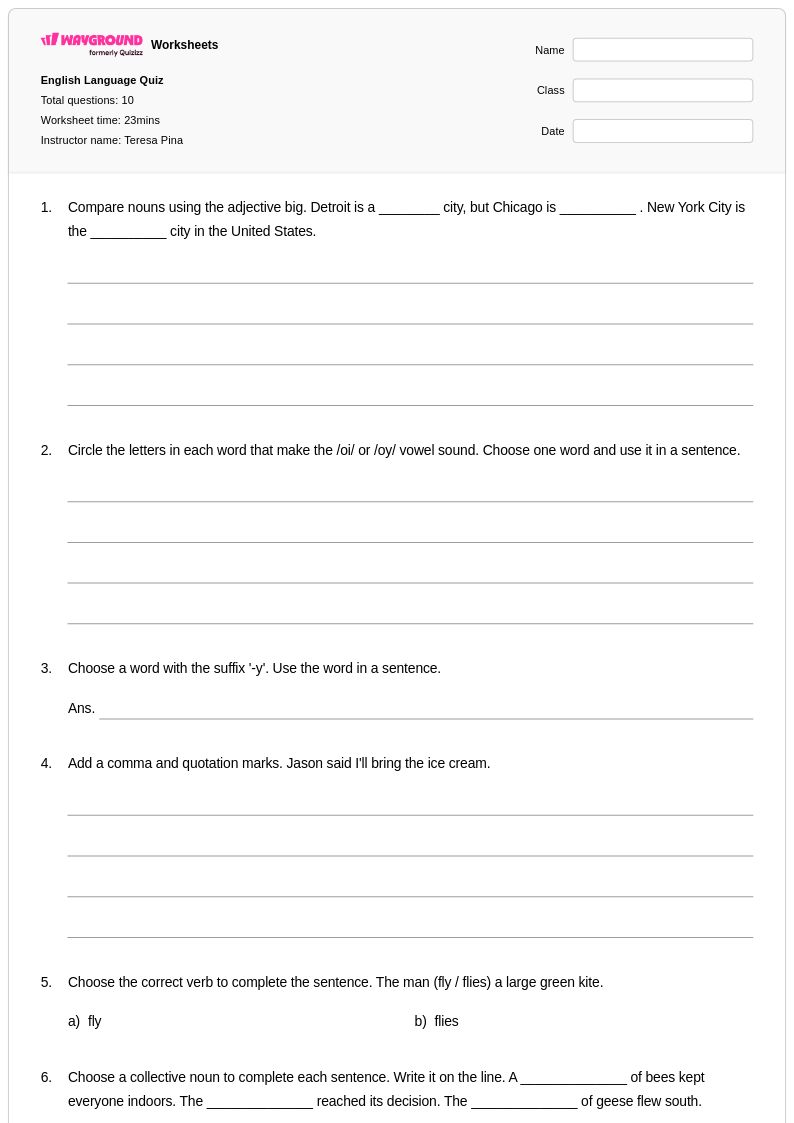
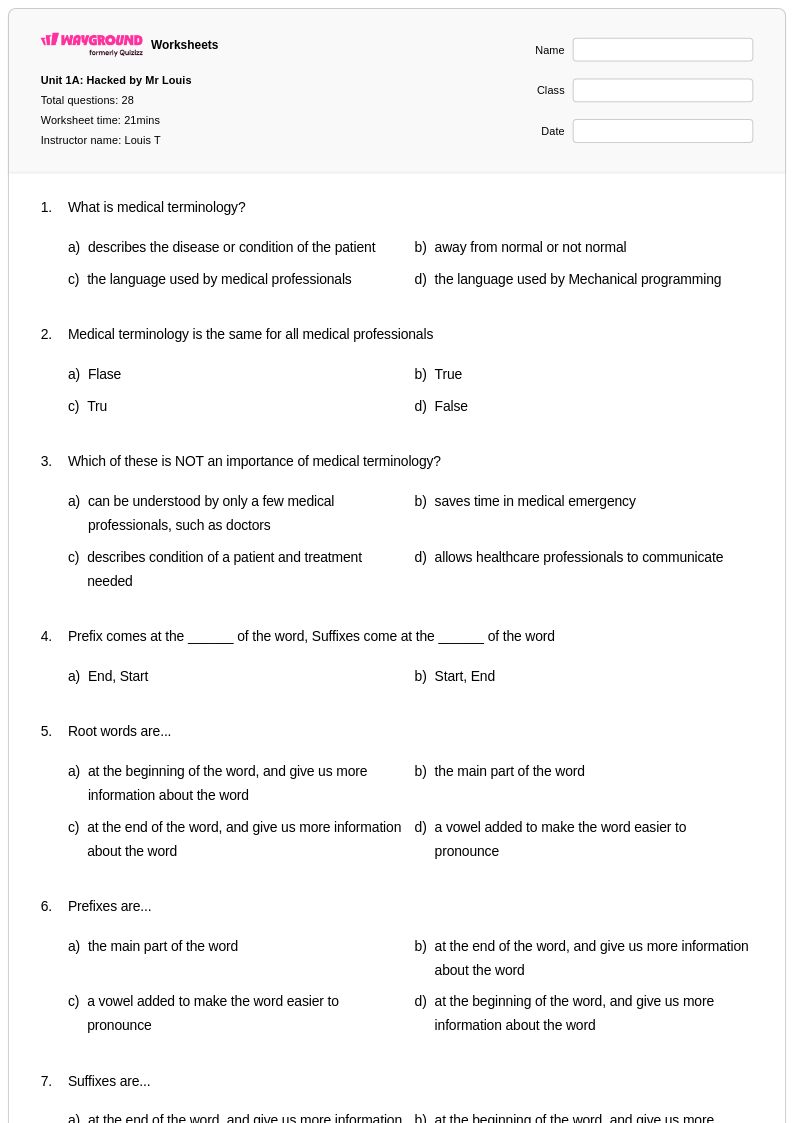
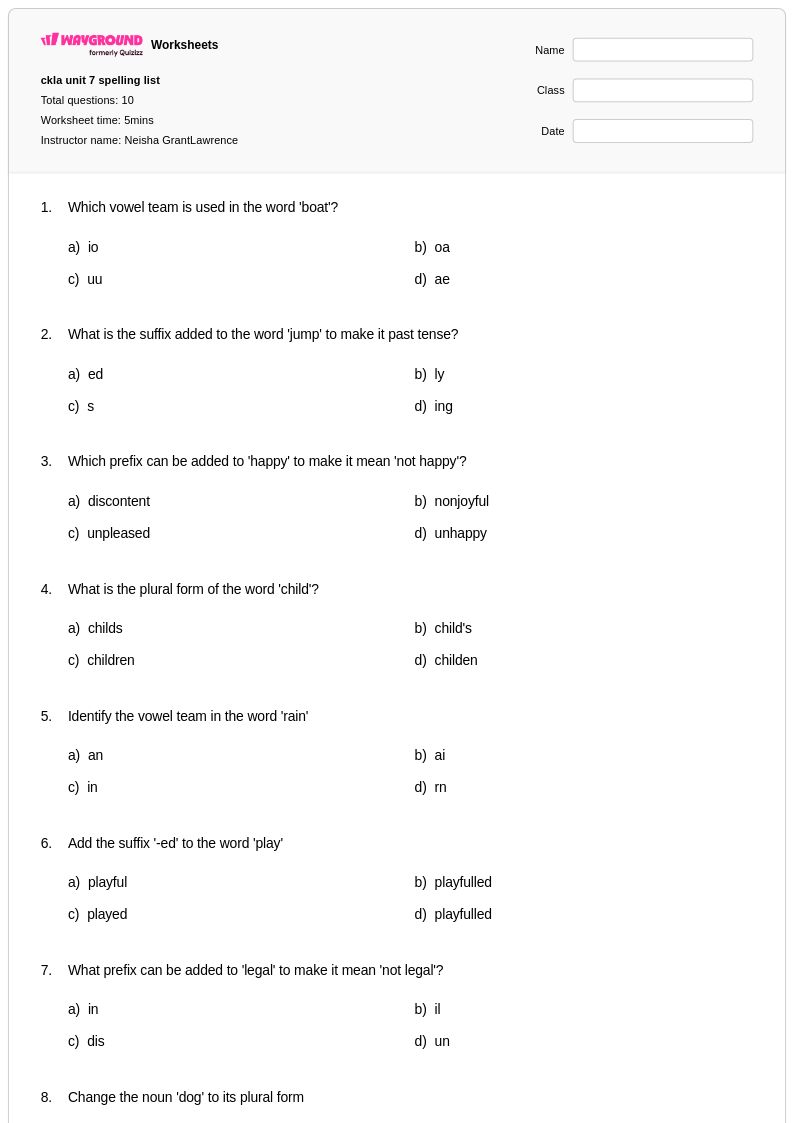
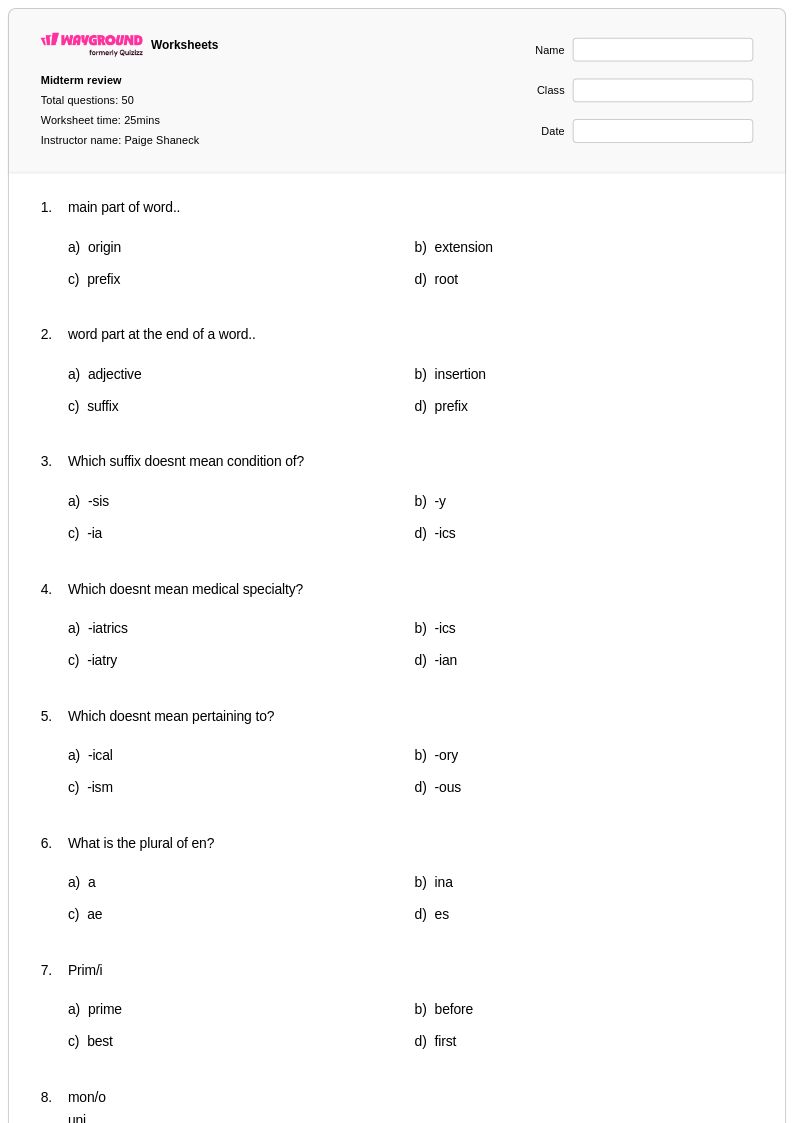
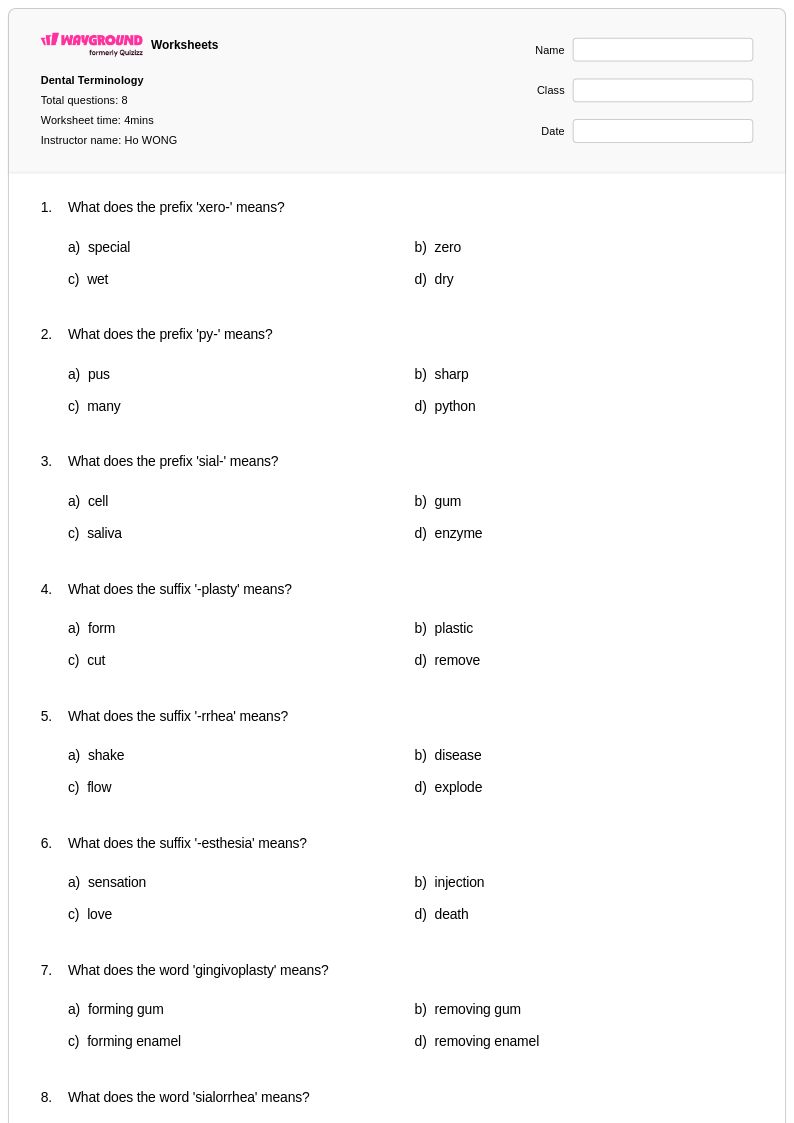
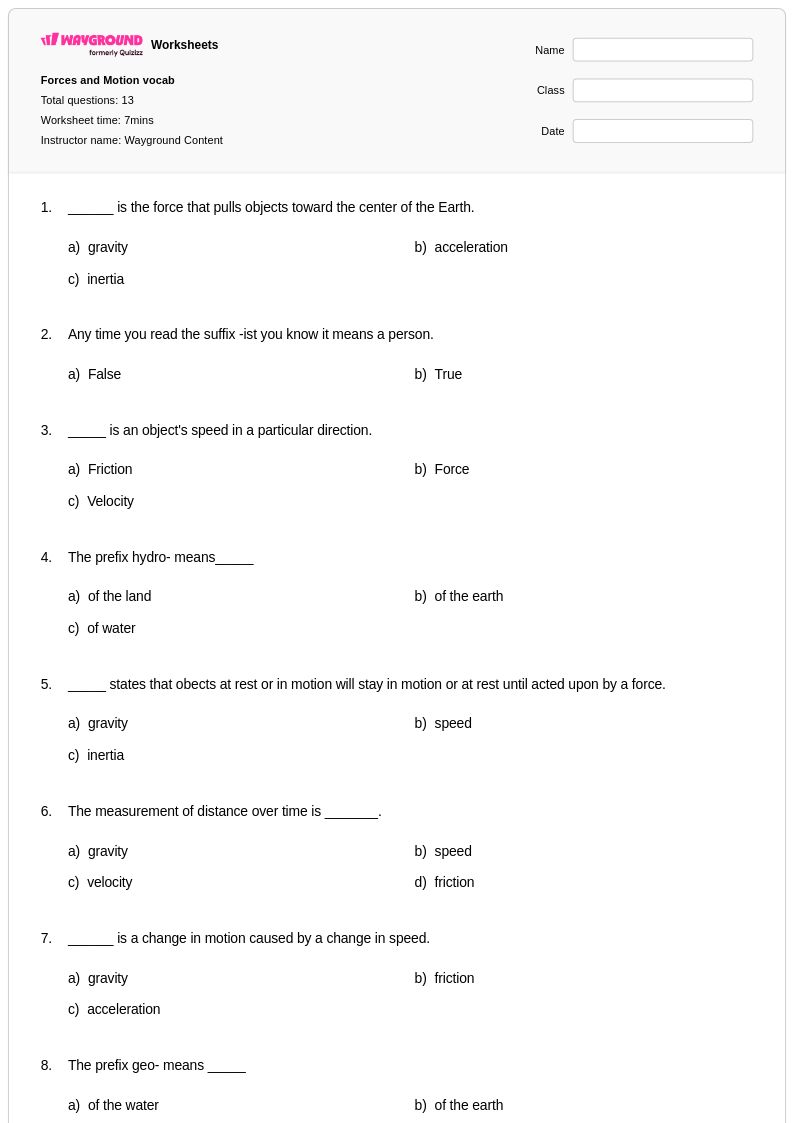
Prefix and suffix worksheets for Year 3 students available through Wayground (formerly Quizizz) provide essential foundation-building practice in understanding how word parts affect meaning in biological and scientific contexts. These carefully designed worksheets help young learners identify common prefixes like "un-", "re-", and "pre-" alongside suffixes such as "-ing", "-ed", and "-er" as they appear in science vocabulary. Students develop critical reading comprehension skills while building their scientific vocabulary through engaging practice problems that demonstrate how these word parts change meaning. Each worksheet collection includes comprehensive answer keys and is available as free printables in convenient PDF format, making it easy for educators to provide consistent skill reinforcement both in classroom settings and for independent study.
Wayground's extensive library supports teachers with millions of educator-created prefix and suffix worksheet resources specifically tailored for Year 3 science instruction. The platform's robust search and filtering capabilities allow teachers to quickly locate materials that align with curriculum standards while offering differentiation tools to meet diverse learning needs within the classroom. Teachers can customize existing worksheets or create new variations to target specific skill gaps, whether for remediation support or enrichment activities for advanced learners. The flexible format options include both printable PDF versions for traditional paper-and-pencil work and digital formats for interactive learning experiences, enabling seamless integration into any lesson planning approach while ensuring students receive adequate practice with these fundamental language arts skills in scientific contexts.
FAQs
How do I teach biology prefixes and suffixes effectively?
The most effective approach is to teach biological prefixes and suffixes systematically rather than asking students to memorize isolated vocabulary words. Begin with high-frequency roots like 'bio-', 'photo-', and 'hydro-', then introduce suffixes such as '-osis', '-genesis', and '-phage' in context. Having students deconstruct real biological terms they encounter in reading reinforces transfer and retention across units like genetics, ecology, and human anatomy.
What exercises help students practice biology prefix and suffix recognition?
Effective practice exercises include word deconstruction tasks where students break complex biological terms into prefix, root, and suffix components, as well as meaning-construction activities where students infer definitions of unfamiliar terms using known parts. Fill-in-the-blank problems with scientific vocabulary and matching exercises that pair word parts with their meanings are also highly useful. These exercise types build the habit of analytical reading that students need for advanced biology coursework.
What mistakes do students commonly make when learning biological prefixes and suffixes?
A common error is treating prefix and suffix knowledge as purely memorization rather than a decoding strategy, which means students often fail to apply it when encountering unfamiliar terms. Students also frequently confuse prefixes with similar sounds but different meanings, such as 'hyper-' and 'hypo-', or 'macro-' and 'micro-'. Another misconception is assuming a single meaning for suffixes that shift meaning based on context, such as '-logy' (study of) versus '-ology' in compound forms.
How do I differentiate prefix and suffix instruction for students at different levels?
For struggling learners, focus on a smaller set of the most frequently occurring biological prefixes and suffixes and provide word banks during practice tasks to reduce cognitive load. On Wayground, teachers can apply accommodations such as reduced answer choices for individual students and enable the Read Aloud feature so scientific terms are read aloud during digital practice. Advanced students can be challenged with open-ended tasks requiring them to construct novel biological terms and explain their meaning using known word parts.
How can I use Wayground's prefix and suffix worksheets in my classroom?
Wayground's biology prefix and suffix worksheets are available as printable PDFs for traditional classroom use and in digital formats for technology-integrated environments, giving teachers flexibility for in-class practice, homework, and assessment prep. Teachers can also host the worksheets as a live quiz on Wayground, making them suitable for whole-class review sessions or formative assessment. Complete answer keys are included with every worksheet, supporting both teacher-led instruction and independent student self-assessment.