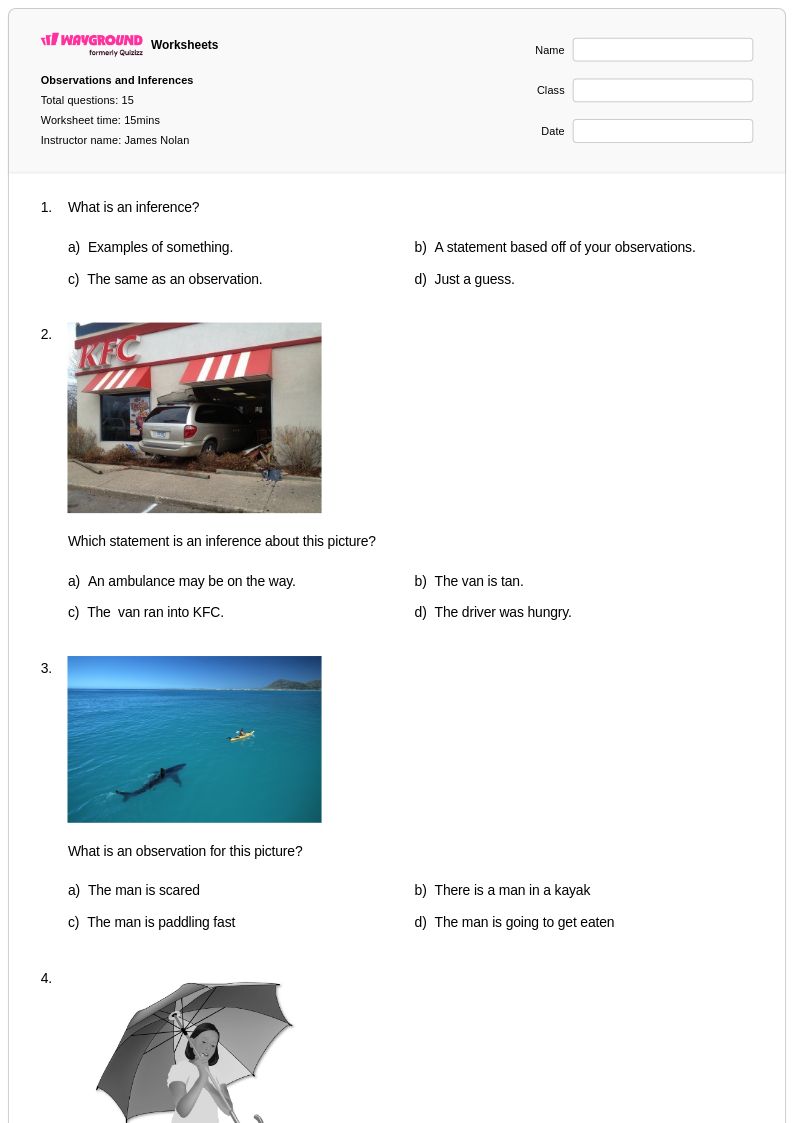
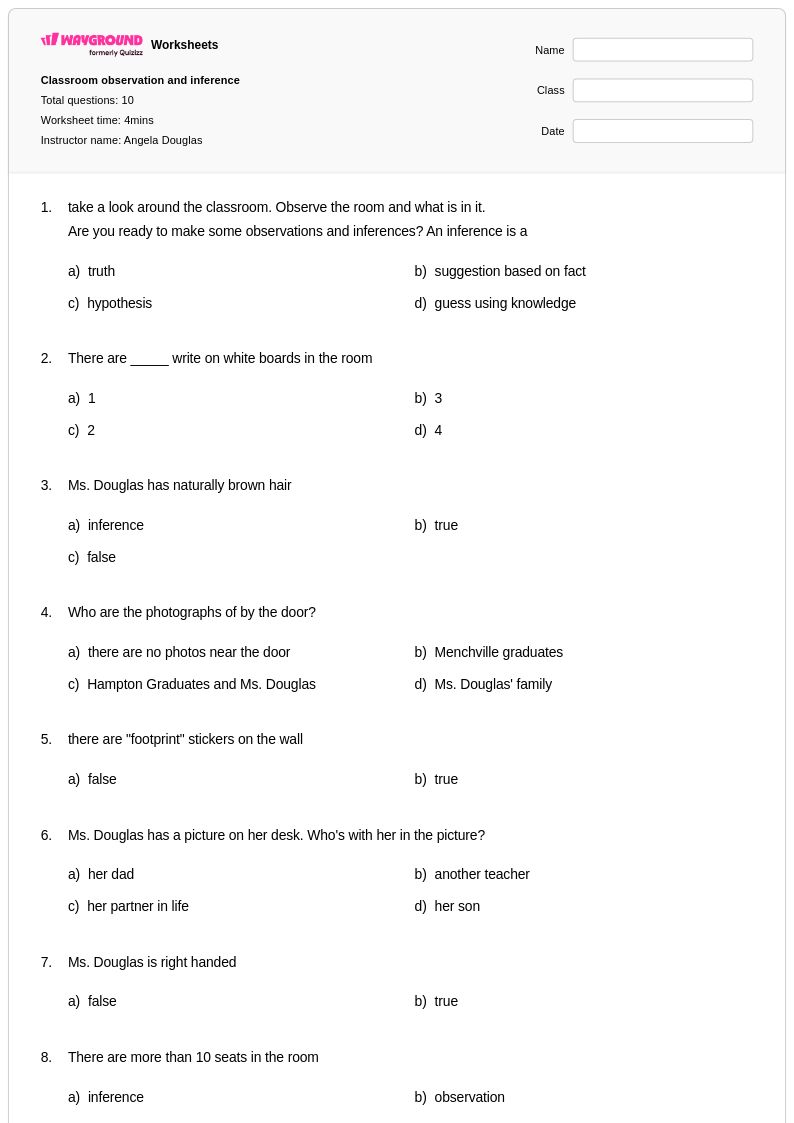
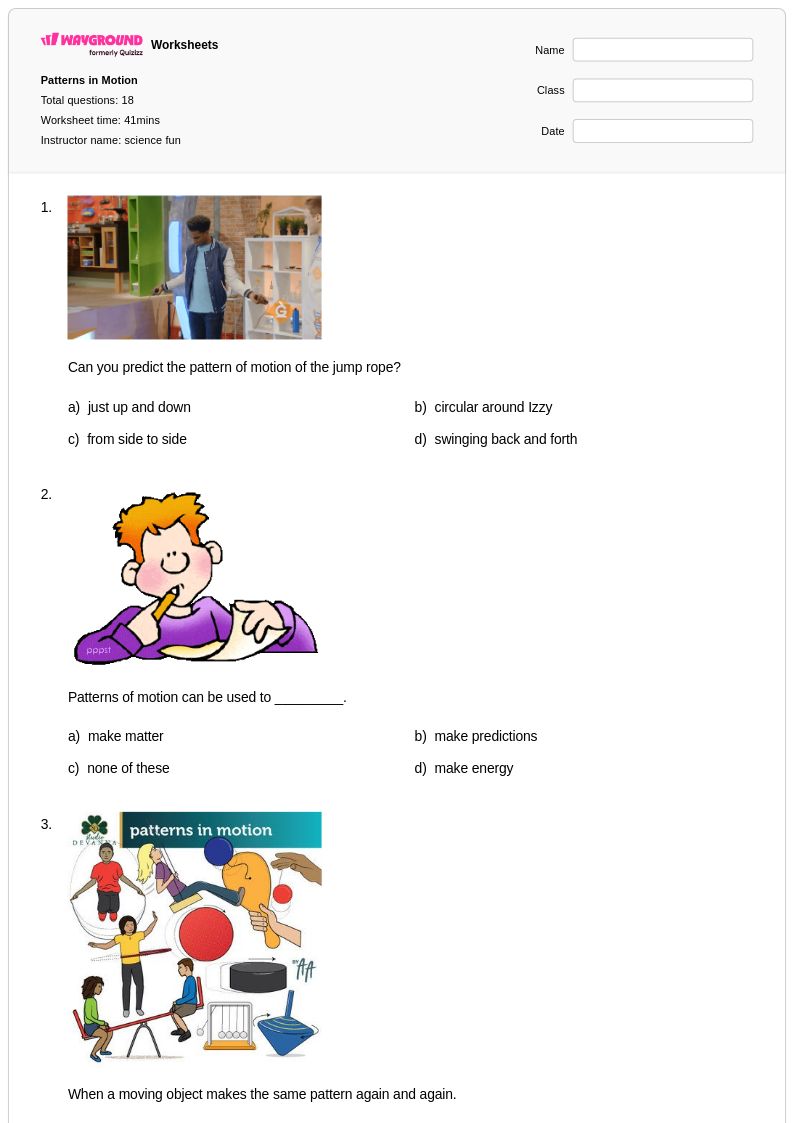
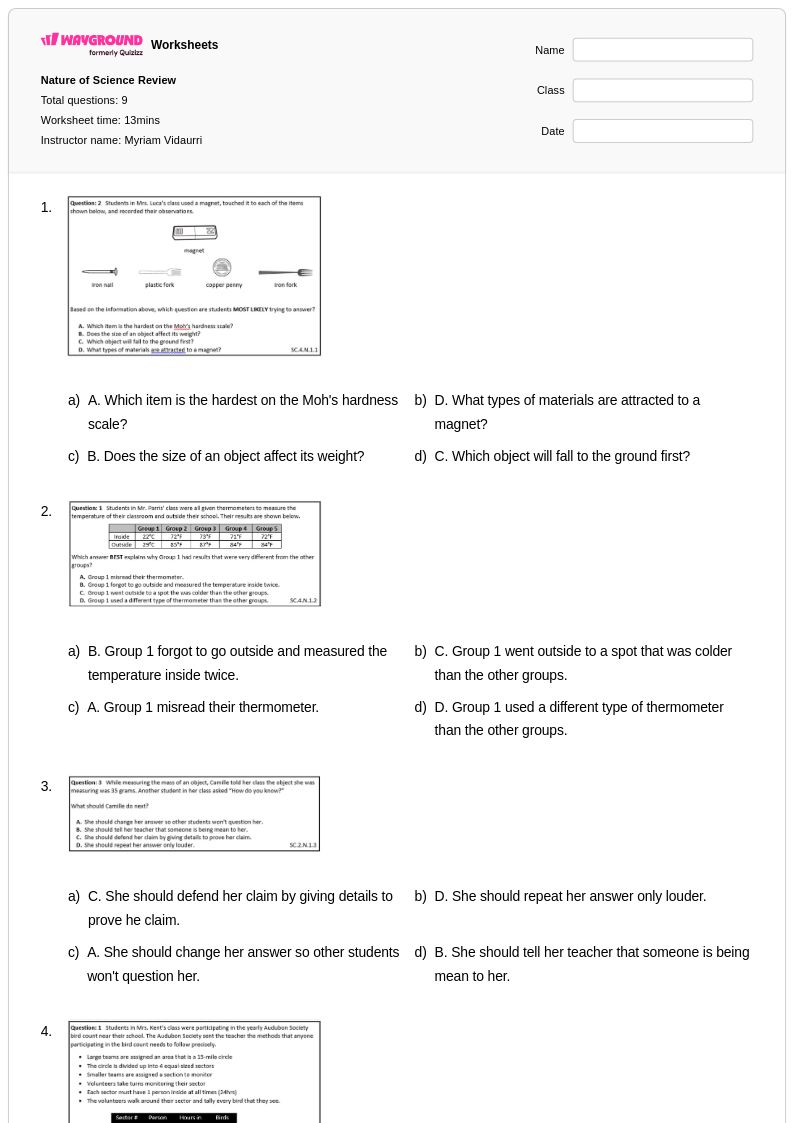
Free Printable Slide Observation Worksheets for Year 3
Free Year 3 slide observation worksheets and printables help students develop microscopy skills through hands-on practice problems, complete with answer keys and PDF downloads for effective biology learning.
Explore printable Slide Observation worksheets for Year 3
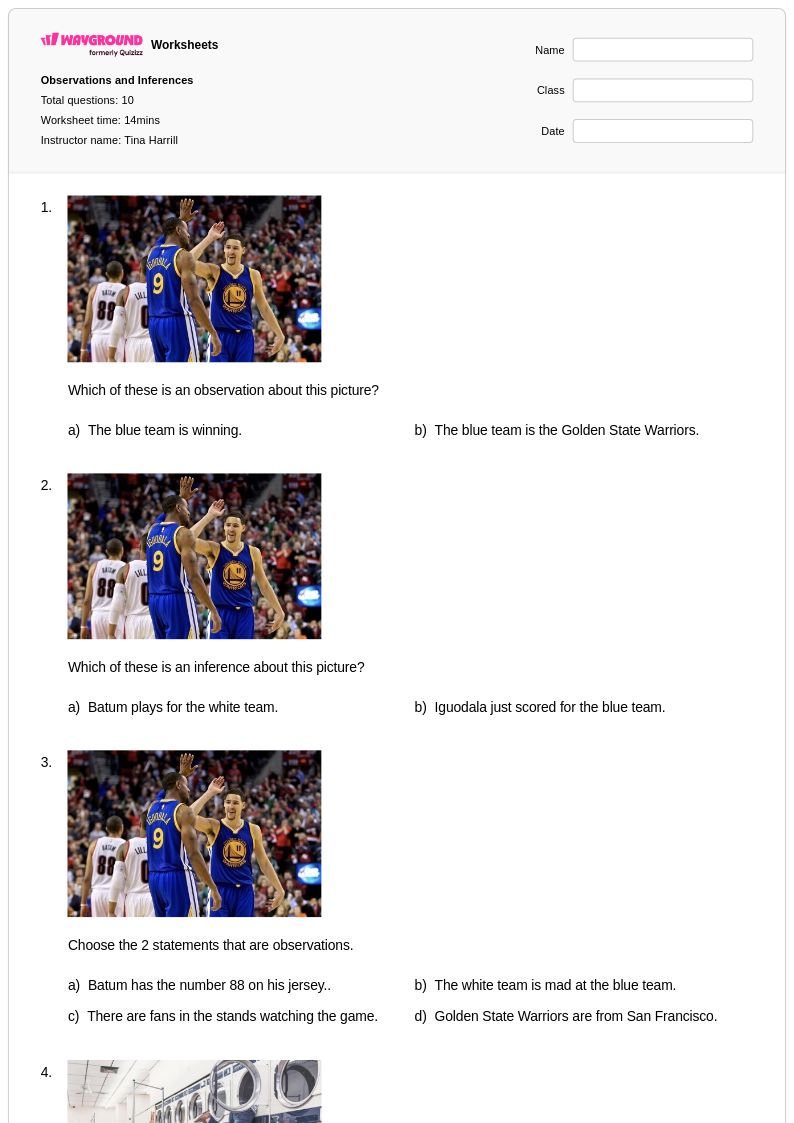
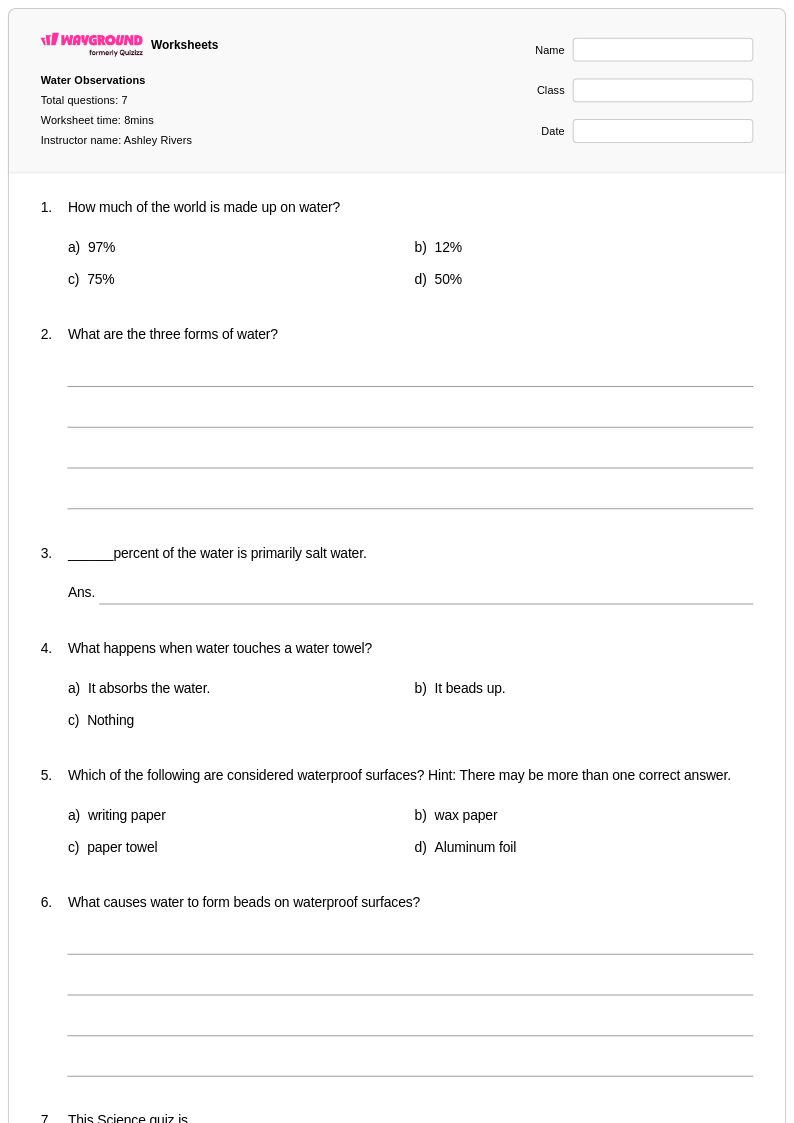
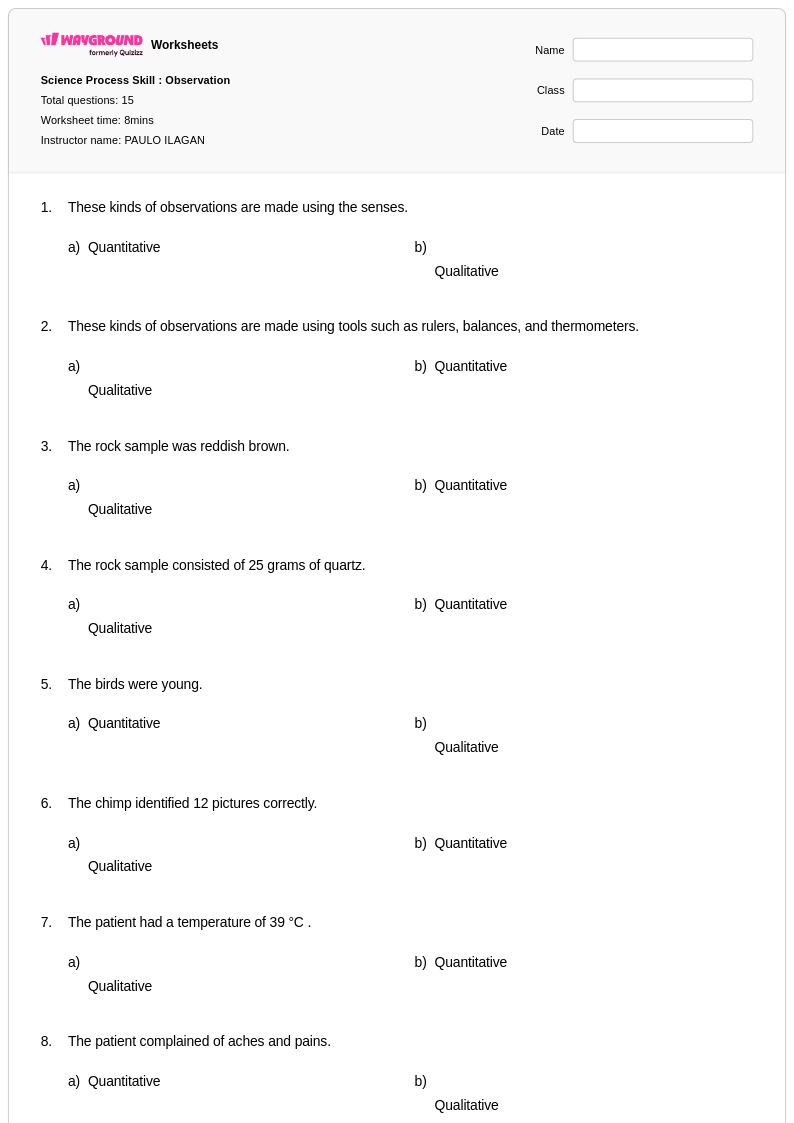
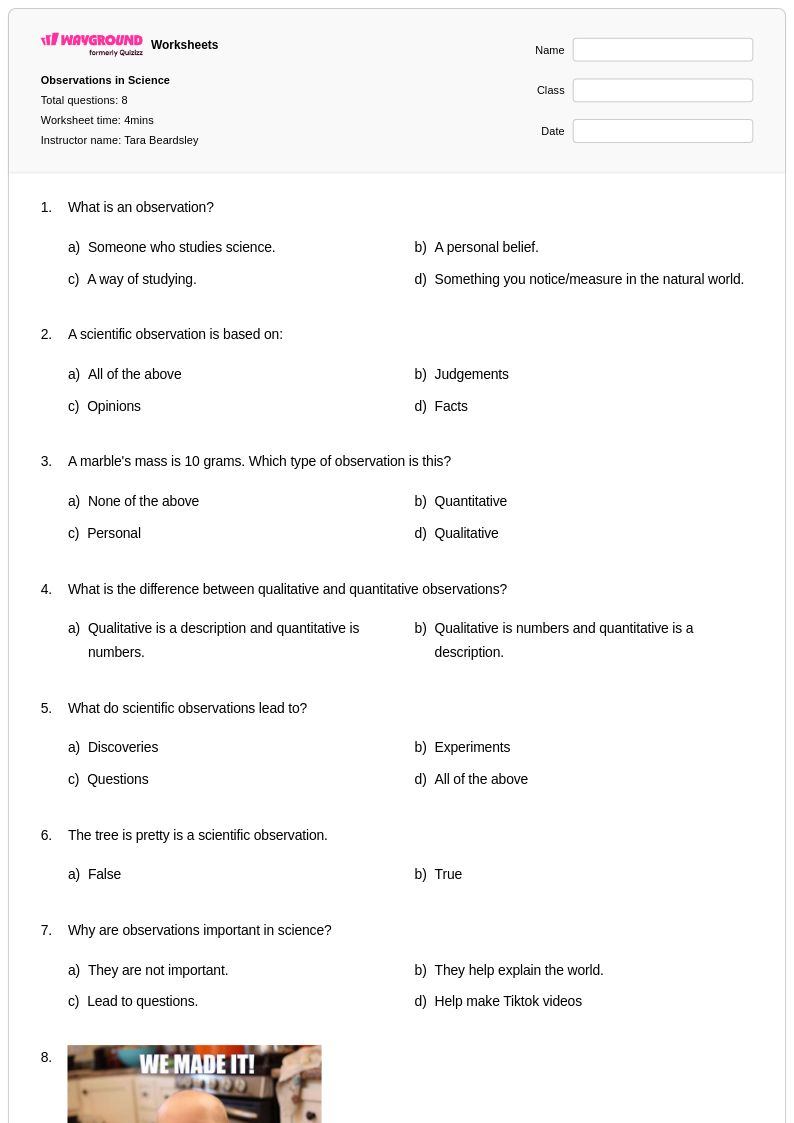
Slide observation worksheets for Year 3 students available through Wayground (formerly Quizizz) provide essential hands-on learning experiences that introduce young scientists to the fundamental skill of microscopic examination. These carefully crafted educational resources guide third-grade students through the process of observing prepared slides, documenting their findings, and developing critical observation skills that form the foundation of scientific inquiry. The worksheets feature age-appropriate practice problems that encourage students to identify structures, compare different specimens, and record detailed observations using both drawings and written descriptions. Each printable resource includes comprehensive answer keys that support both independent learning and teacher-guided instruction, while the free pdf format ensures accessibility for diverse classroom environments and home learning situations.
Wayground (formerly Quizizz) empowers educators with an extensive collection of millions of teacher-created slide observation worksheets specifically designed to meet Year 3 science learning objectives and curriculum standards. The platform's robust search and filtering capabilities allow teachers to quickly locate materials that align with their specific lesson plans, whether focusing on plant cells, animal tissues, or basic microorganism identification. Advanced differentiation tools enable instructors to customize worksheets for varying skill levels within their classrooms, supporting both remediation for struggling learners and enrichment opportunities for advanced students. Available in both printable and digital formats, including downloadable pdf versions, these resources seamlessly integrate into any teaching environment while providing flexible options for skill practice, formative assessment, and lesson planning across diverse educational settings.
FAQs
How do I teach slide observation and microscopy techniques in a biology class?
Effective slide observation instruction begins with teaching students the parts and proper handling of a microscope before introducing prepared slides. Start with simple, low-magnification specimens like pond water or plant cells, then progress to more complex tissue preparations as students build confidence. Pairing hands-on lab work with structured observation worksheets helps students develop consistent documentation habits, including accurate labeled drawings and written descriptions of what they see.
What exercises help students practice microscopy and slide observation skills?
Practice exercises that require students to identify and label cellular structures from microscopic images reinforce both vocabulary and visual recognition skills. Comparing two specimen types side by side, such as plant and animal cells, pushes students to analyze differences rather than passively record. Worksheets that include structured drawing prompts and written response questions are particularly effective because they require students to translate what they observe into scientific documentation.
What common mistakes do students make when observing and documenting microscope slides?
One of the most frequent errors is focusing at too high a magnification before locating the specimen at low power, which causes students to miss the field of view entirely. Students also commonly confuse artifacts, such as air bubbles or debris on the slide, with actual cellular structures. In documentation, they tend to draw what they expect to see rather than what is actually visible, which is why worksheets that prompt specific observations and labeled diagrams are valuable tools for building accurate recording habits.
How do I use slide observation worksheets in my biology classroom?
Slide observation worksheets are available as printable PDFs for traditional lab settings where students work directly alongside a microscope, and in digital formats for technology-integrated environments where image-based observation activities can be completed on a device. On Wayground, teachers can also host these worksheets as a quiz, making them suitable for formative assessment after a lab session. The included answer keys allow for immediate feedback, whether the worksheet is used as a guided lab activity, independent practice, or homework assignment.
How can I differentiate slide observation activities for students at different skill levels?
For students who are newer to microscopy, scaffolding observation tasks by providing partially labeled diagrams or a word bank of cellular structures reduces cognitive load while still building core skills. More advanced students benefit from open-ended analysis prompts that ask them to connect microscopic structures to broader biological functions. Wayground's accommodation tools also allow teachers to enable features like read aloud for individual students or adjust how questions are presented, so the same worksheet can serve a range of learners without requiring entirely separate materials.
How do I connect slide observation activities to broader biology curriculum standards?
Slide observation is a foundational lab skill that directly supports curriculum standards around cell theory, the scientific method, and biological investigation. When students identify organelles in a cheek cell slide or distinguish between prokaryotic and eukaryotic cells, they are applying conceptual knowledge in a practical context. Structuring observation worksheets around specific curriculum objectives, such as identifying the function of a cell membrane or comparing tissue types, ensures lab time is contributing to measurable learning outcomes rather than procedural practice alone.