Explore Wayground's free Year 3 body systems worksheets and printables that help students learn about different organ systems through engaging practice problems and activities with complete answer keys.
Explore printable Body Systems worksheets for Year 3
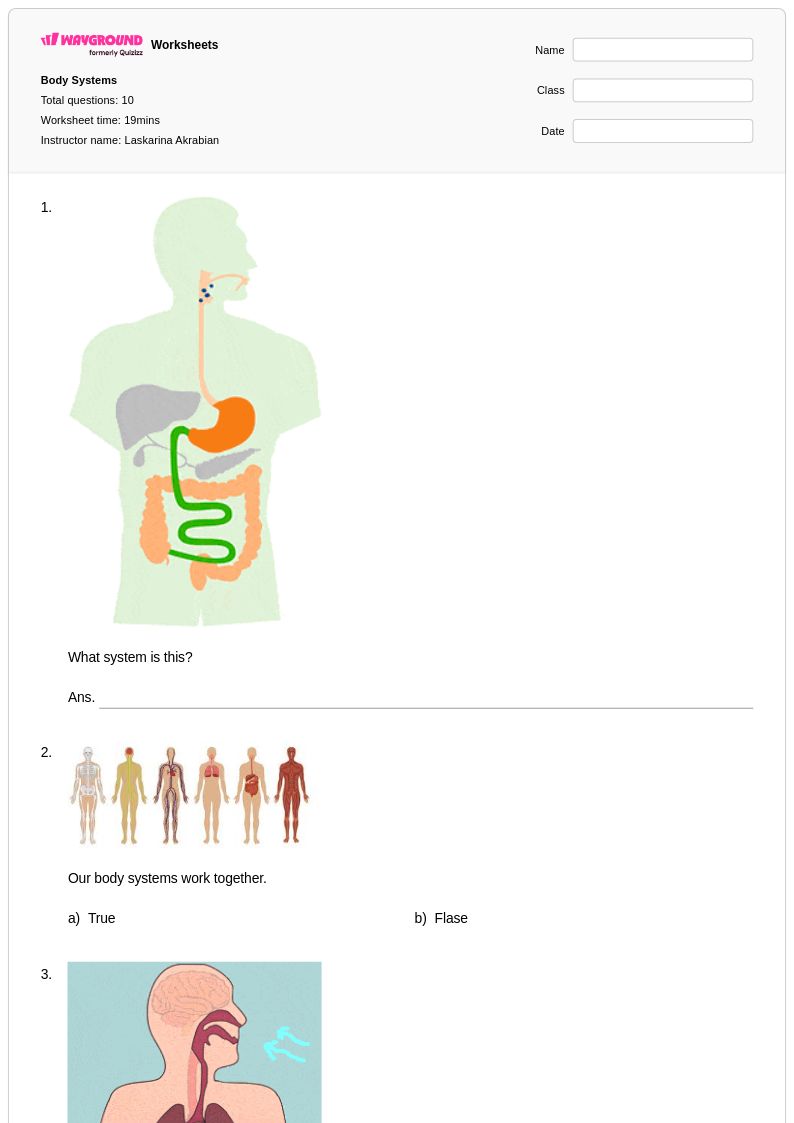
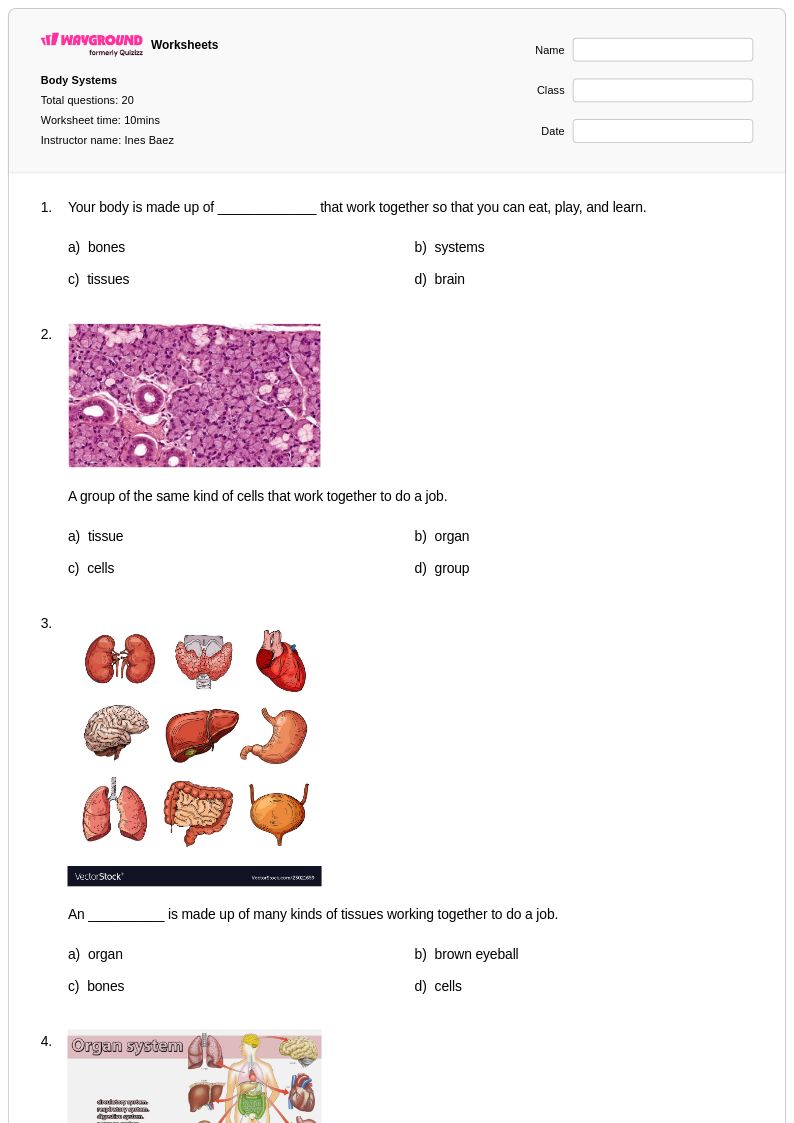
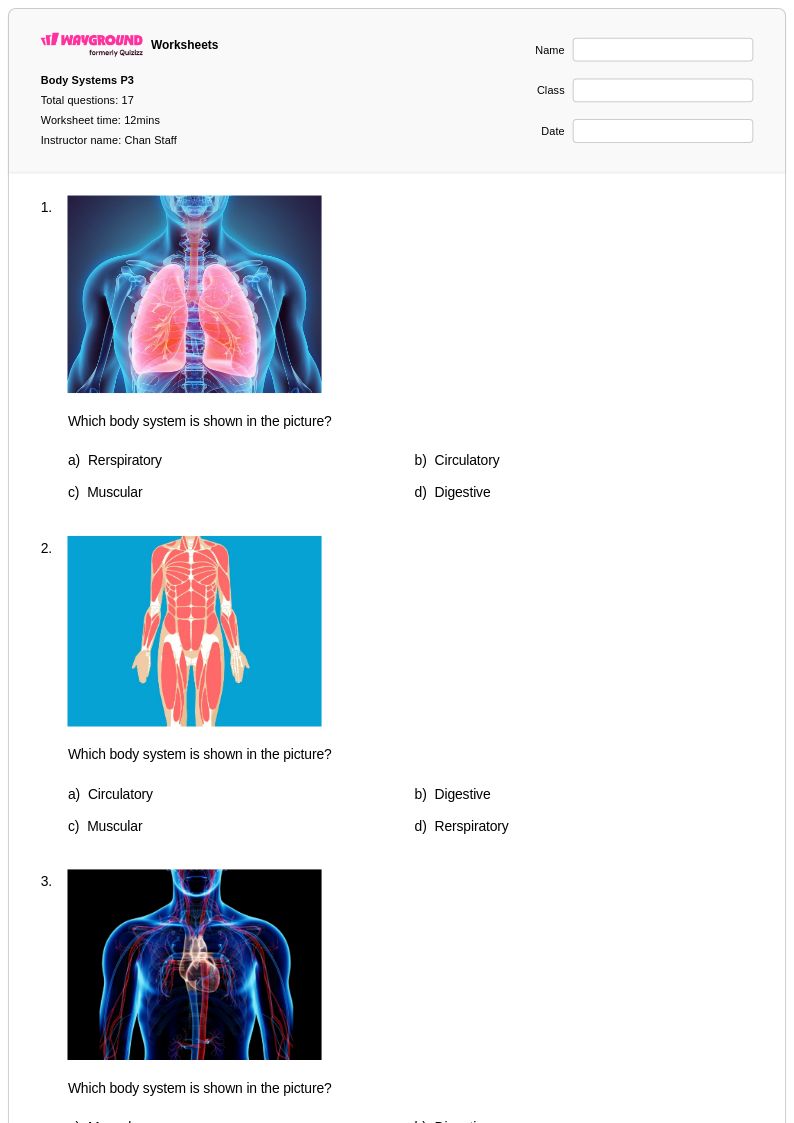
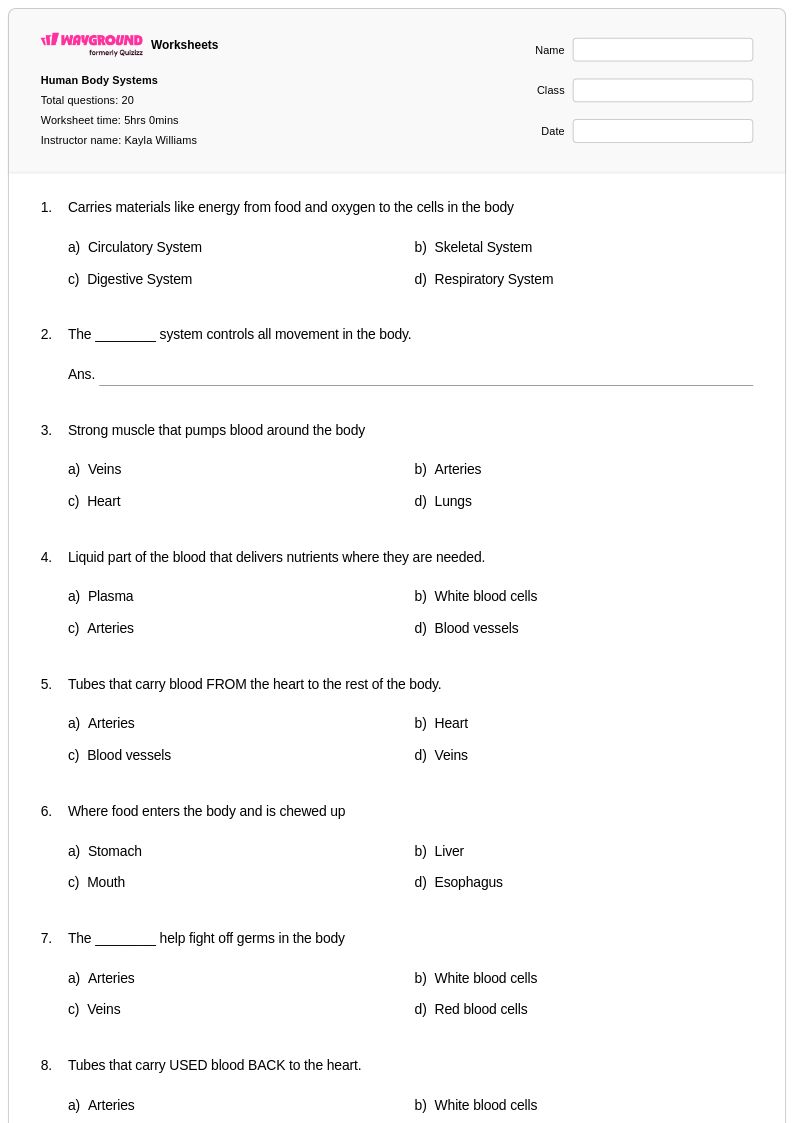
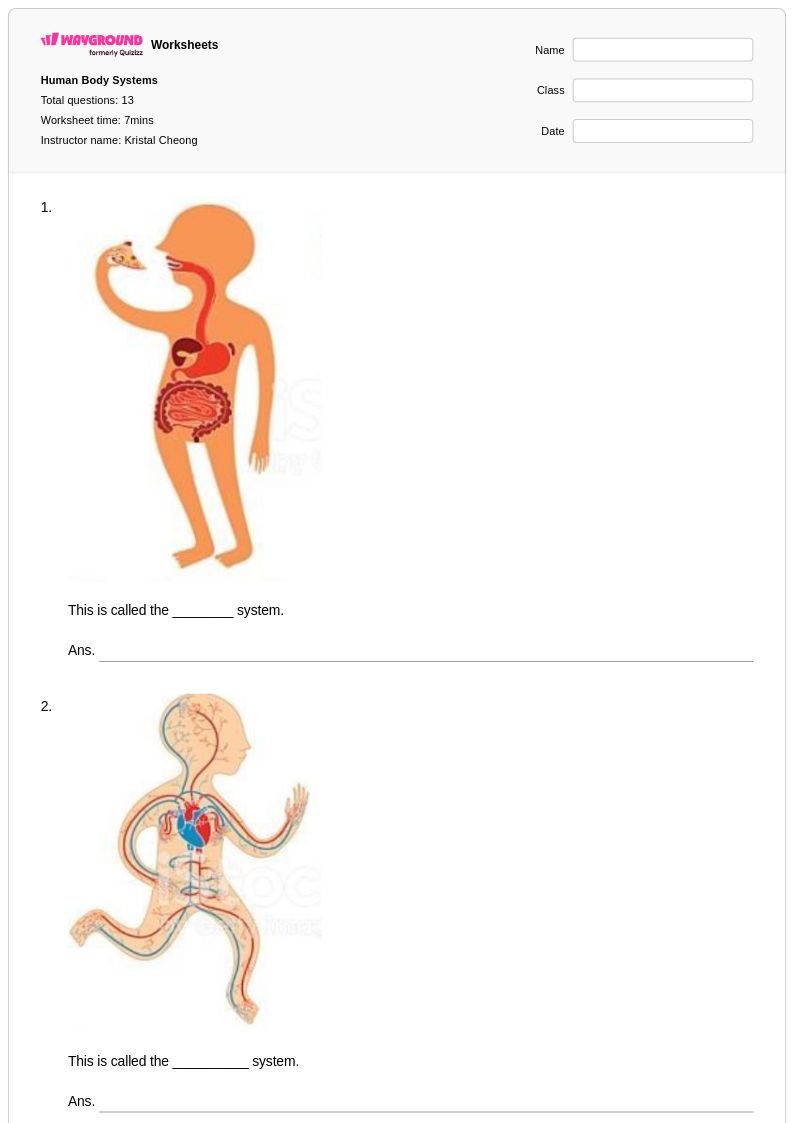
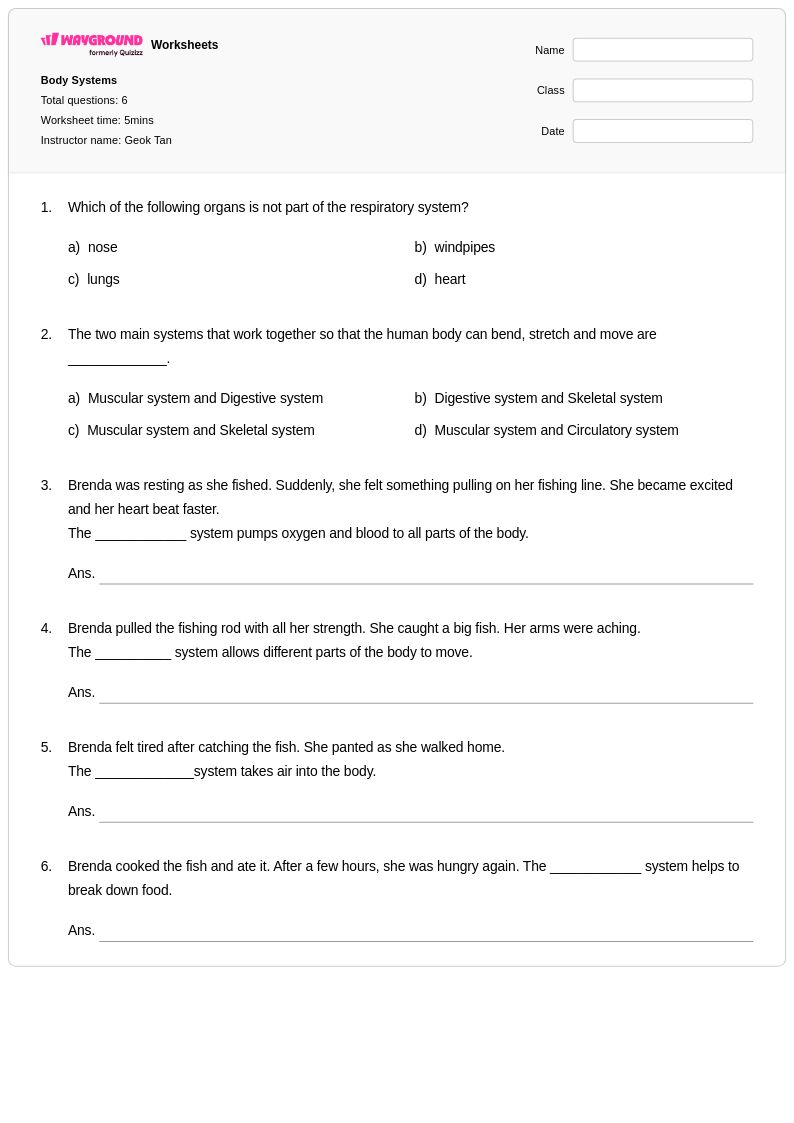
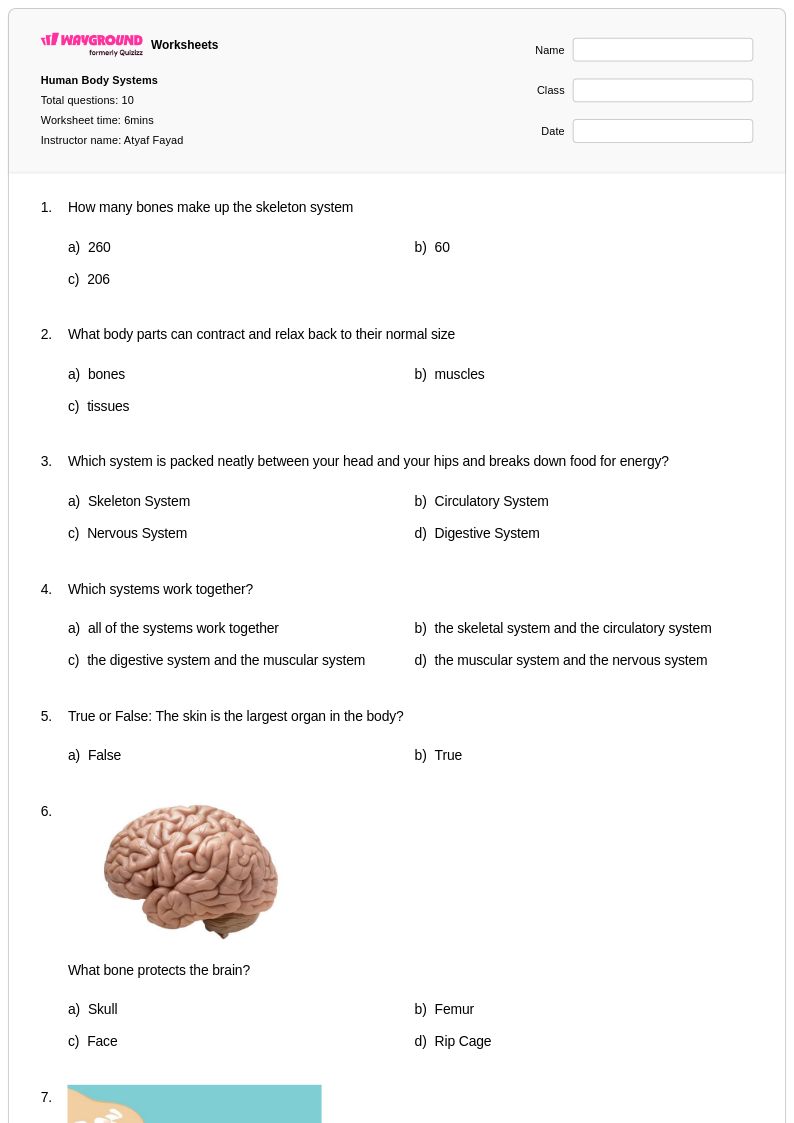
Year 3 body systems worksheets available through Wayground (formerly Quizizz) provide young learners with age-appropriate materials to explore the fundamental structures and functions of the human body. These carefully designed educational resources help third-grade students develop essential scientific observation skills while building foundational knowledge about major body systems including the skeletal, muscular, digestive, and circulatory systems. The worksheets strengthen critical thinking abilities through engaging practice problems that encourage students to identify body parts, understand basic system functions, and make connections between structure and purpose. Teachers can access comprehensive materials including detailed answer keys and printable pdf formats that support both classroom instruction and independent practice, ensuring students receive the free, high-quality resources they need to master elementary body systems concepts.
Wayground (formerly Quizizz) empowers educators with an extensive collection of millions of teacher-created resources specifically designed for elementary science instruction, offering robust search and filtering capabilities that help teachers quickly locate appropriate body systems materials for their Year 3 classrooms. The platform's standards-aligned content supports systematic curriculum planning while providing differentiation tools that accommodate diverse learning needs and abilities within the same classroom. Teachers benefit from flexible customization options that allow them to modify existing worksheets or create targeted materials for remediation and enrichment activities, ensuring every student receives appropriate challenge levels. Available in both printable and digital formats including downloadable pdf versions, these comprehensive worksheet collections streamline lesson planning while providing reliable resources for skill practice, formative assessment, and reinforcement of key body systems concepts throughout the academic year.
FAQs
How do I teach body systems to middle school students?
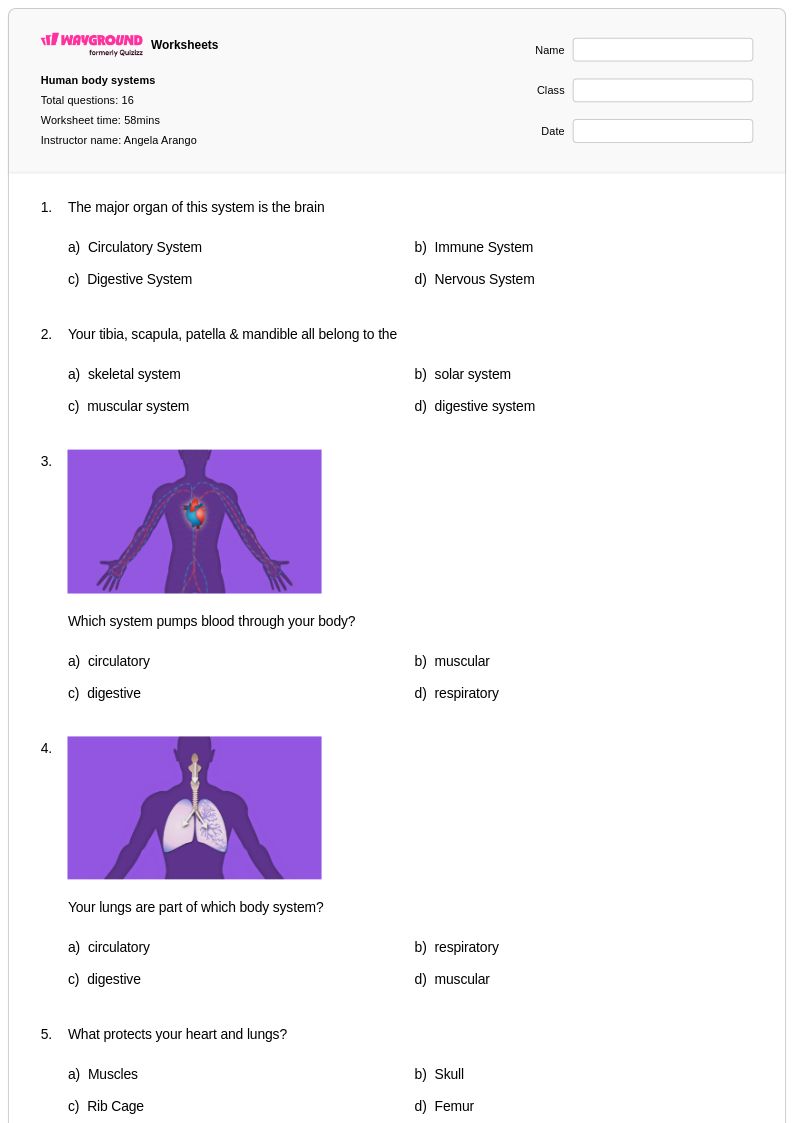
Start by establishing that the body is organized into systems, each with a specific function, before showing how those systems interact to maintain homeostasis. Use visual aids such as diagrams of the circulatory and respiratory systems to help students trace pathways of substances like oxygen and blood through the body. Anchor each system to a real-world function — for example, connecting the excretory system to waste removal — so students build conceptual understanding before moving to memorization.
What types of practice exercises help students learn body systems?
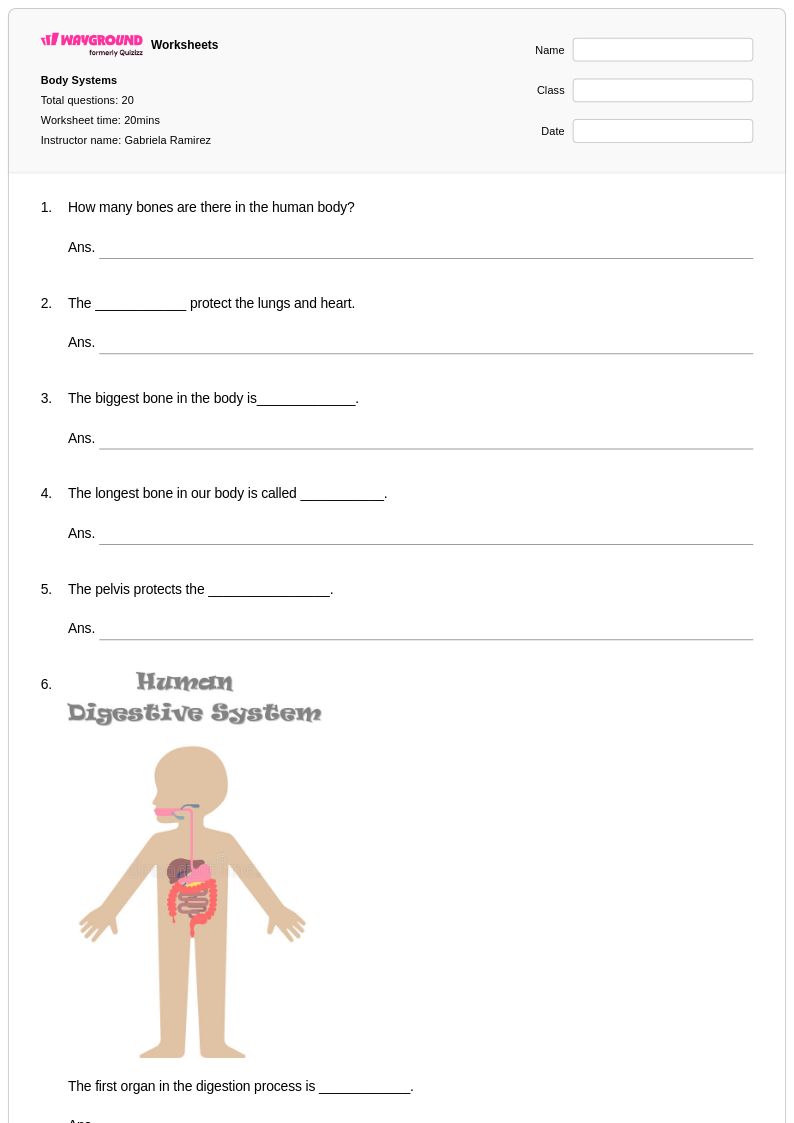
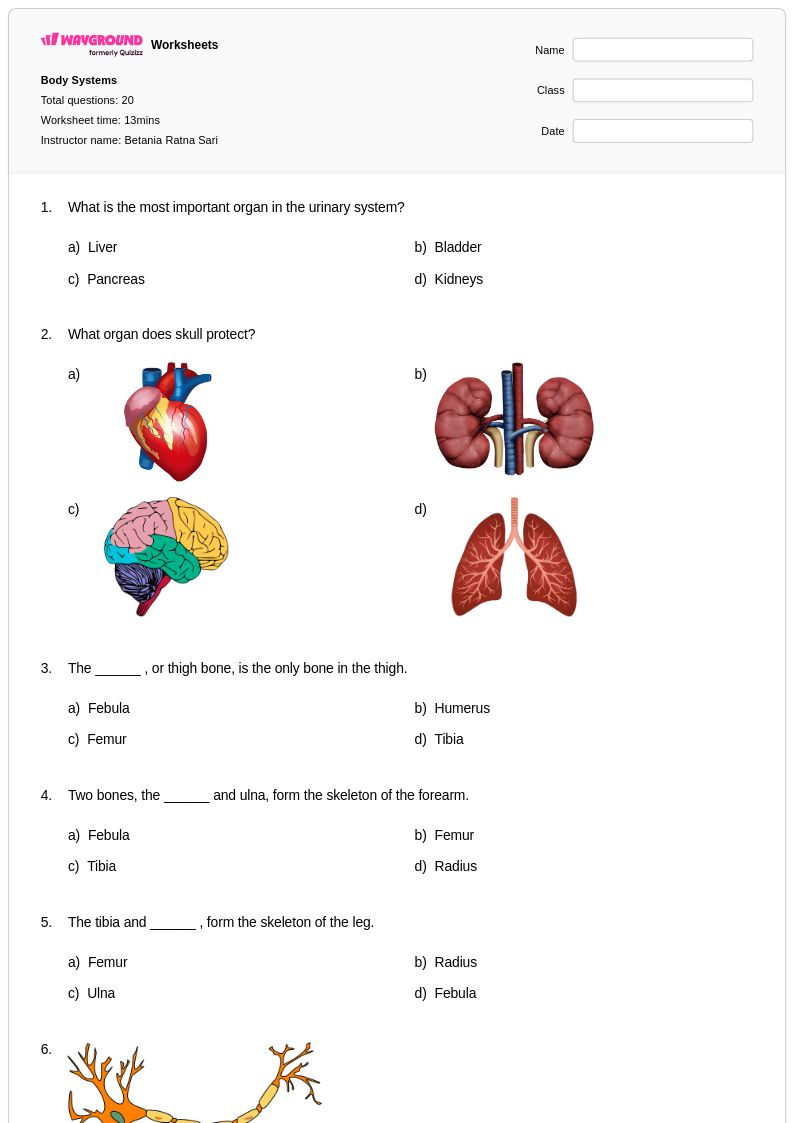
Effective practice exercises for body systems include labeling diagrams of organ structures, tracing the pathway of a substance (such as food through the digestive system or oxygen through the respiratory system), and analyzing scenarios where one system disruption affects another. Matching activities that pair organs with their functions and short-answer problems that ask students to explain how systems interact to maintain homeostasis reinforce both recall and critical thinking.
What are the most common mistakes students make when studying body systems?
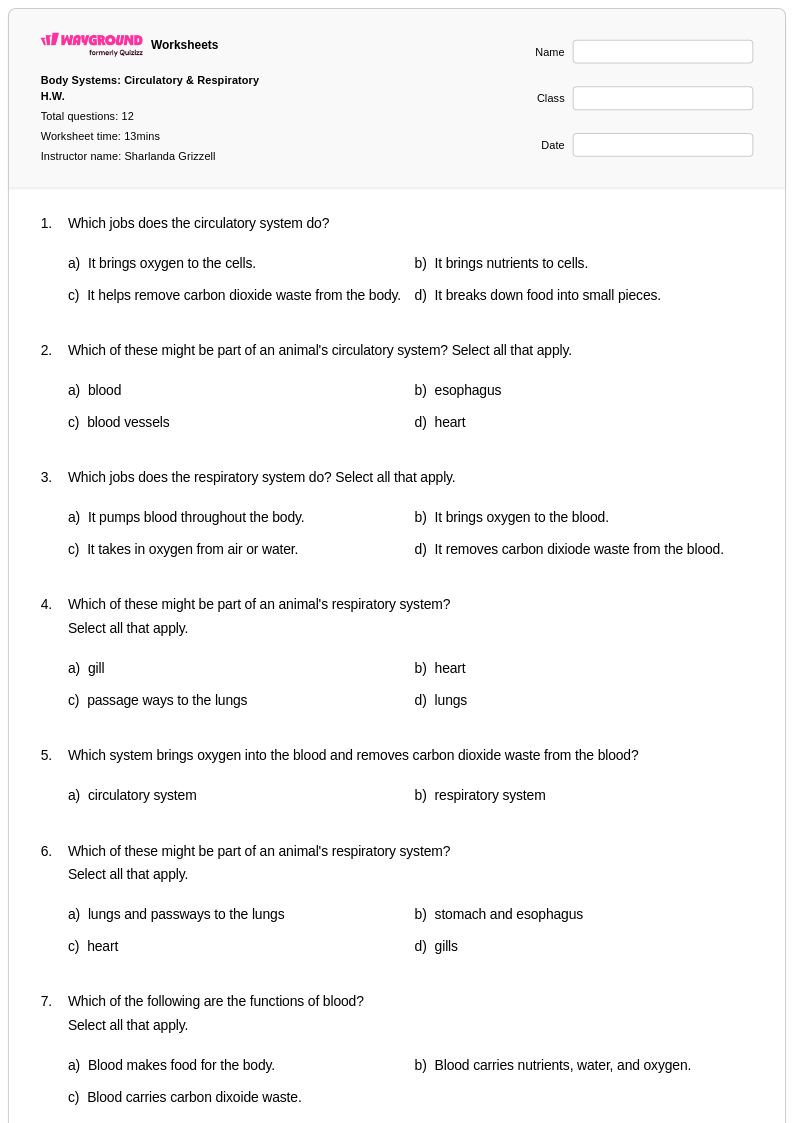
Students frequently treat each body system as isolated rather than understanding that systems are interdependent — for example, failing to connect how the circulatory system delivers oxygen processed by the respiratory system. Another common error is confusing the functions of similar organs, such as conflating the roles of veins and arteries or the small and large intestines. Students also tend to memorize organ names without understanding the physiological processes those organs carry out.
How can I assess whether students understand how body systems interact?
Scenario-based questions are among the most effective assessment tools for body systems — for example, asking students to explain what happens to the muscular system when the circulatory system fails to deliver adequate oxygen. Questions that require students to trace a substance through multiple systems, or to predict the downstream effects of a disruption in one system, reveal whether students have moved beyond surface-level memorization to genuine systems thinking.
How do I use Wayground's body systems worksheets in my classroom?
Wayground's body systems worksheets are available as printable PDFs for traditional classroom use and in digital formats for technology-integrated or online learning environments, including the option to host them as a quiz directly on Wayground. Teachers can use the platform's search and filtering tools to locate worksheets aligned to specific standards or organ systems, and differentiation settings allow individual accommodations such as read aloud, extended time, or reduced answer choices for students who need additional support.
How do I differentiate body systems instruction for students at different skill levels?
For students who are struggling, focus on single-system function before introducing system interactions, and use simplified diagrams with fewer labeled structures. For advanced students, assign tasks that require cross-system analysis, such as explaining how the nervous, muscular, and skeletal systems coordinate movement. On Wayground, teachers can apply individual accommodations — including read aloud, extended time, and reduced answer choices — to specific students without affecting the experience of the rest of the class.