Free Printable Bone Density Worksheets for Year 12
Year 12 bone density worksheets from Wayground help students master skeletal system concepts through comprehensive printables, practice problems, and answer keys that explore calcium metabolism, osteoporosis, and bone health factors.
Explore printable Bone Density worksheets for Year 12
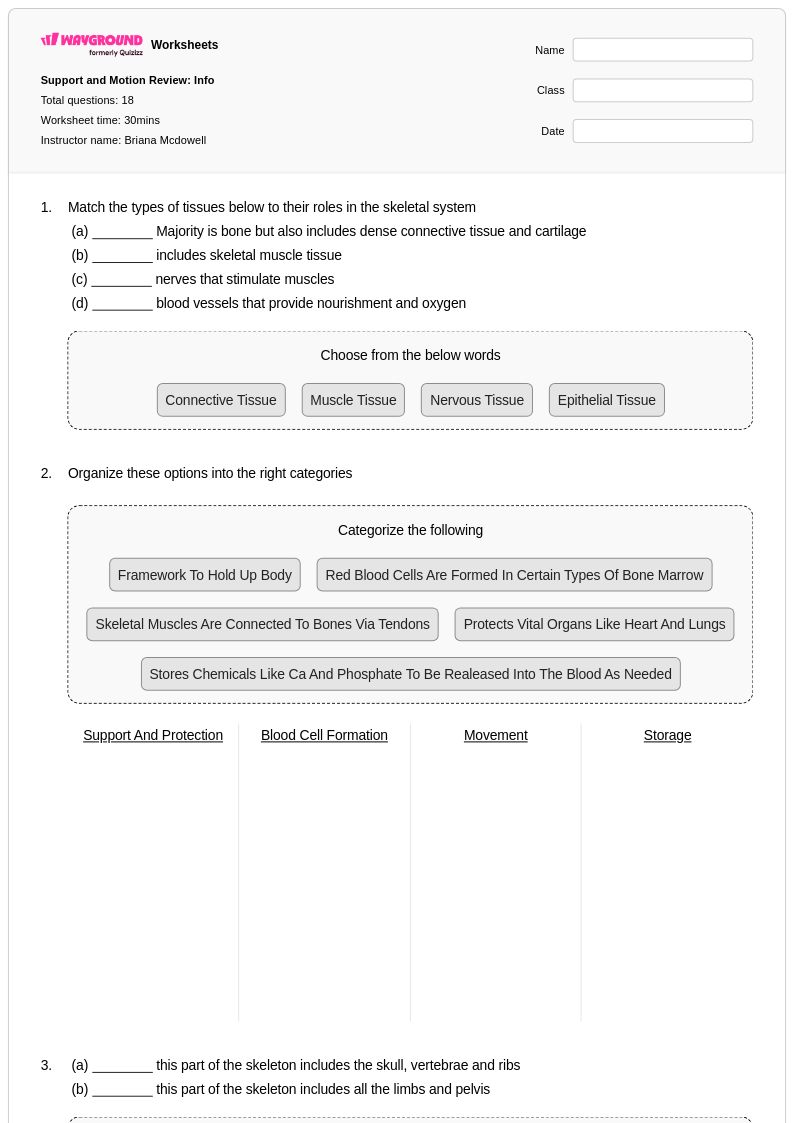
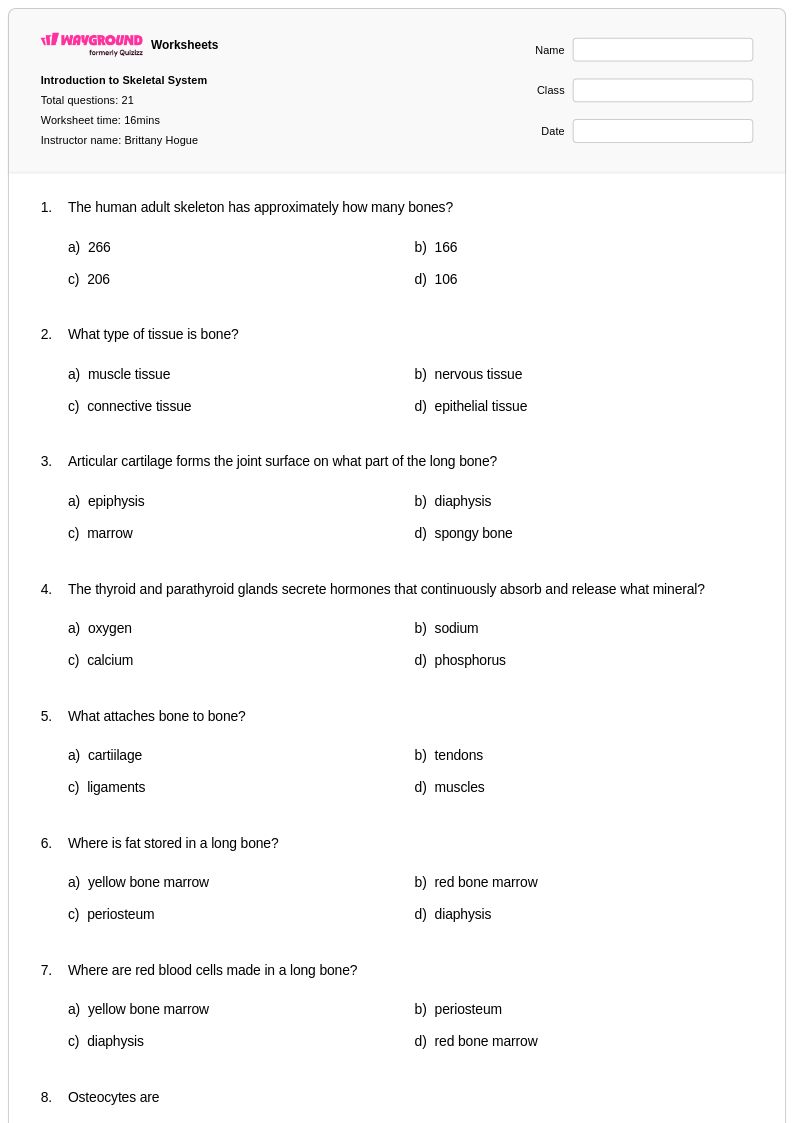
Bone density worksheets for Year 12 biology provide comprehensive practice materials that help students master the complex physiological processes governing skeletal health and mineral homeostasis. These educational resources from Wayground (formerly Quizizz) focus on critical concepts including osteoblast and osteoclast function, calcium and phosphorus metabolism, hormonal regulation through parathyroid hormone and calcitonin, and the relationship between bone remodeling and aging. Students engage with practice problems that challenge them to analyze bone mineral density measurements, interpret DEXA scan results, and evaluate risk factors for osteoporosis and other bone disorders. Each worksheet includes detailed answer keys that support independent learning and provide clear explanations of complex biochemical pathways, while free printable pdf formats ensure accessibility for diverse classroom environments and study preferences.
Wayground (formerly Quizizz) empowers educators with millions of teacher-created bone density resources that streamline lesson planning and enhance student comprehension of skeletal physiology. The platform's advanced search and filtering capabilities allow teachers to quickly locate worksheets aligned with specific biology standards and learning objectives, while differentiation tools enable customization for students with varying academic needs and learning styles. These comprehensive worksheet collections support both remediation for struggling learners and enrichment opportunities for advanced students, with flexible digital and printable pdf formats that accommodate different classroom technologies and teaching approaches. Teachers benefit from seamless integration of these materials into existing curriculum frameworks, enabling targeted skill practice in areas such as endocrine system interactions, bone tissue composition, and the physiological factors that influence peak bone mass achievement during adolescence.
FAQs
How do I teach bone density to high school biology students?
Teaching bone density effectively starts with grounding students in the cellular mechanics behind it: osteoblasts build bone matrix while osteoclasts break it down, and the balance between these processes determines overall bone strength. From there, connect the biology to real-world factors students can relate to, such as calcium intake, weight-bearing exercise, hormonal changes during puberty and menopause, and the long-term effects of aging. Using data from DEXA scan readings or bone mineral density charts helps students apply analytical thinking to a concrete health context, making the concept more meaningful than textbook definitions alone.
What practice exercises help students understand bone density?
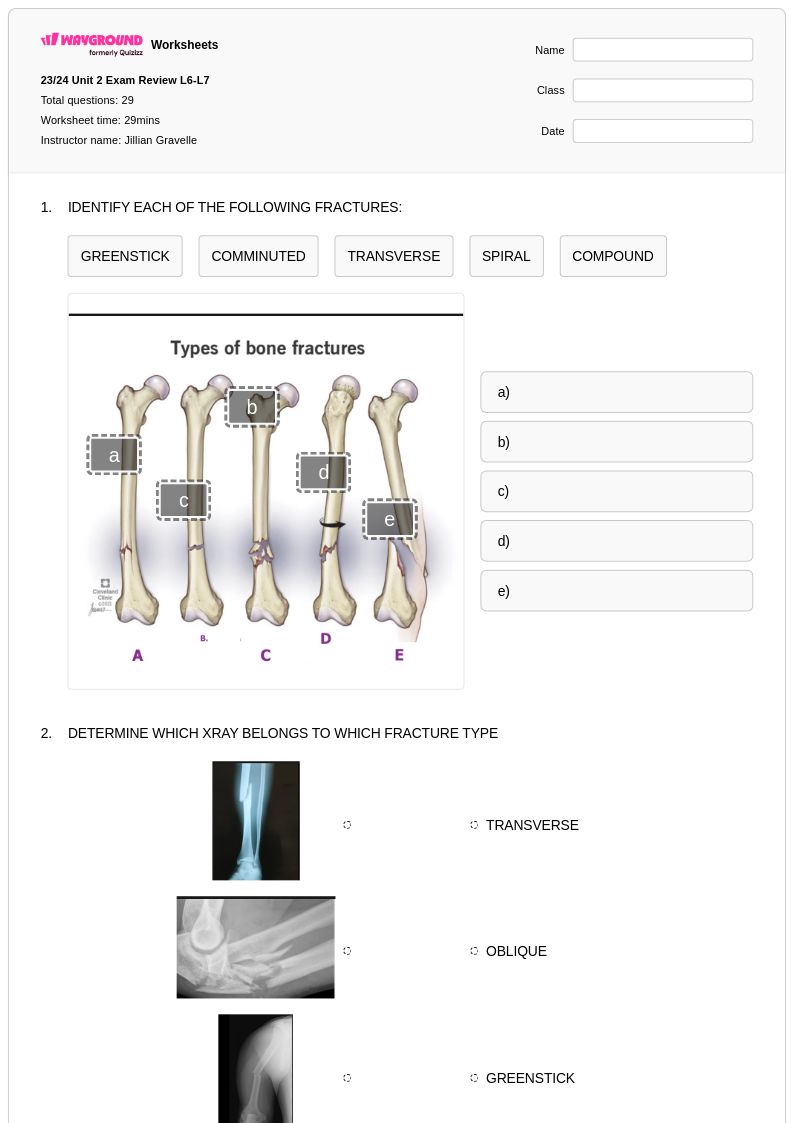
Effective practice exercises for bone density include data interpretation tasks using DEXA scan results and T-score or Z-score comparisons, which build students' ability to read and reason from real diagnostic outputs. Problem sets that ask students to predict how changes in calcium absorption, hormones, or physical activity will affect bone mass over time reinforce the cause-and-effect relationships central to this topic. Case study scenarios, such as analyzing a patient's risk for osteoporosis based on lifestyle and lab values, push students to apply their knowledge analytically rather than recall it passively.
What mistakes do students commonly make when learning about bone density?
One of the most common misconceptions is that bones are static structures, leading students to underestimate how continuously active bone remodeling is throughout life. Students also frequently confuse bone density with bone strength, not recognizing that mineral content, collagen quality, and structural geometry all contribute to how well a bone resists fracture. Another common error is conflating calcium consumption with calcium absorption, missing the role of vitamin D, hormonal status, and gut health in determining how much dietary calcium actually reaches the skeleton.
How do diet and exercise affect bone density, and how can I teach this?
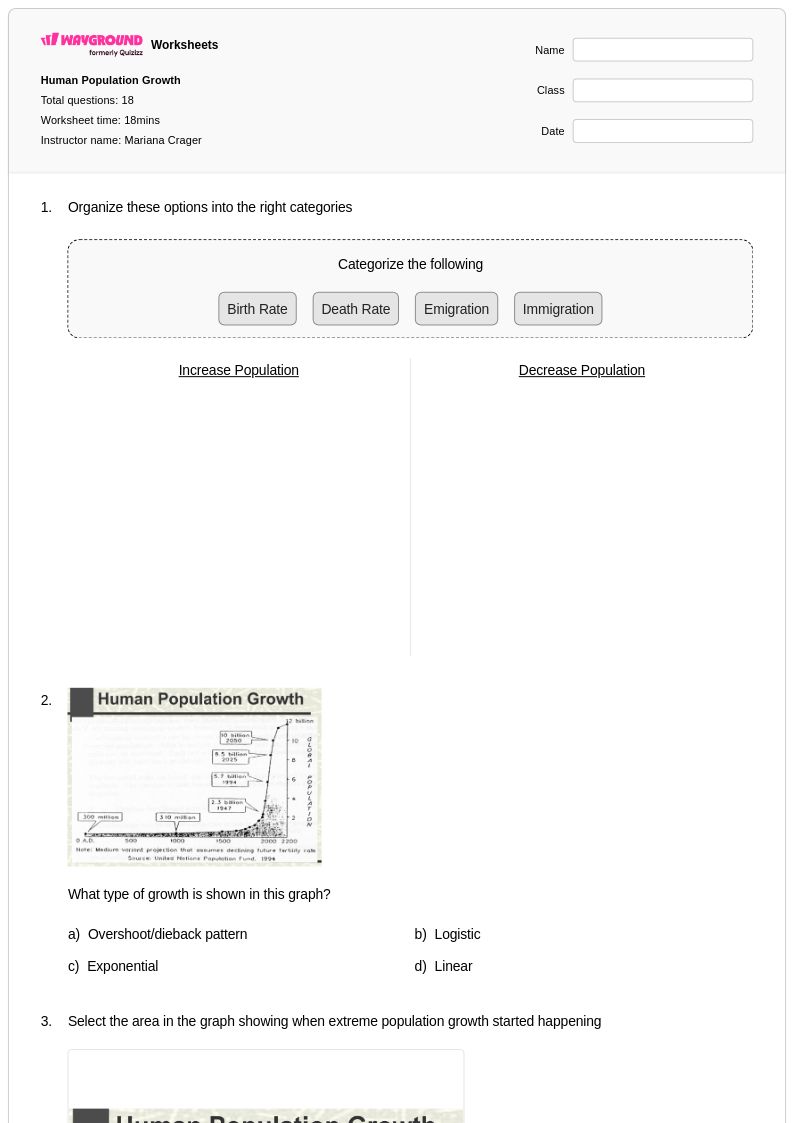
Bone density is directly influenced by calcium and vitamin D intake, which provide the raw mineral content for bone matrix, and by weight-bearing physical activity, which stimulates osteoblast activity and bone formation. Teaching this connection works well through comparative analysis tasks where students examine how different dietary and exercise profiles affect peak bone mass and the rate of bone loss in later life. Graphing exercises that show bone mineral density trajectories across age groups, and across populations with different lifestyle factors, help students see these relationships as dynamic and evidence-based rather than abstract.
How can I use bone density worksheets in my classroom?
Bone density worksheets on Wayground are available as printable PDFs for traditional classroom use and in digital formats for technology-integrated or remote learning environments, including the option to host them as a quiz directly on Wayground. Each worksheet includes a complete answer key, so teachers can use them for guided practice, independent review, homework, or formative assessment without additional preparation. For students who need accommodations, Wayground's platform supports features such as extended time, read-aloud functionality, reduced answer choices, and adjustable reading modes, all configurable per student without disrupting the rest of the class.
How is bone density measured, and should students know this for biology class?
Bone density is most commonly measured using dual-energy X-ray absorptiometry, known as a DEXA scan, which quantifies bone mineral density at sites like the hip and lumbar spine and compares results to population norms using T-scores and Z-scores. For biology courses that include skeletal health, osteoporosis, or health science applications, understanding how DEXA scans work and how to interpret their outputs is a valuable analytical skill. Introducing students to real or simulated DEXA data in worksheets bridges the gap between biological concepts and clinical practice, which is especially relevant in anatomy, physiology, and health science courses.