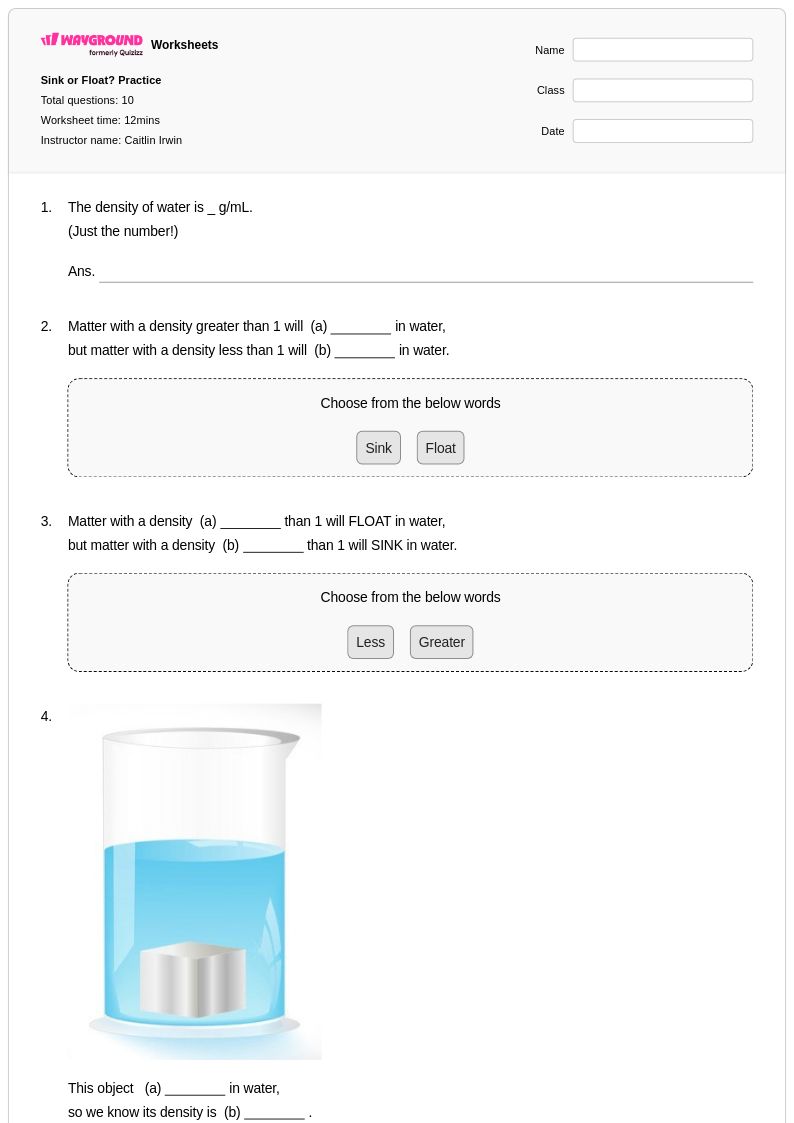
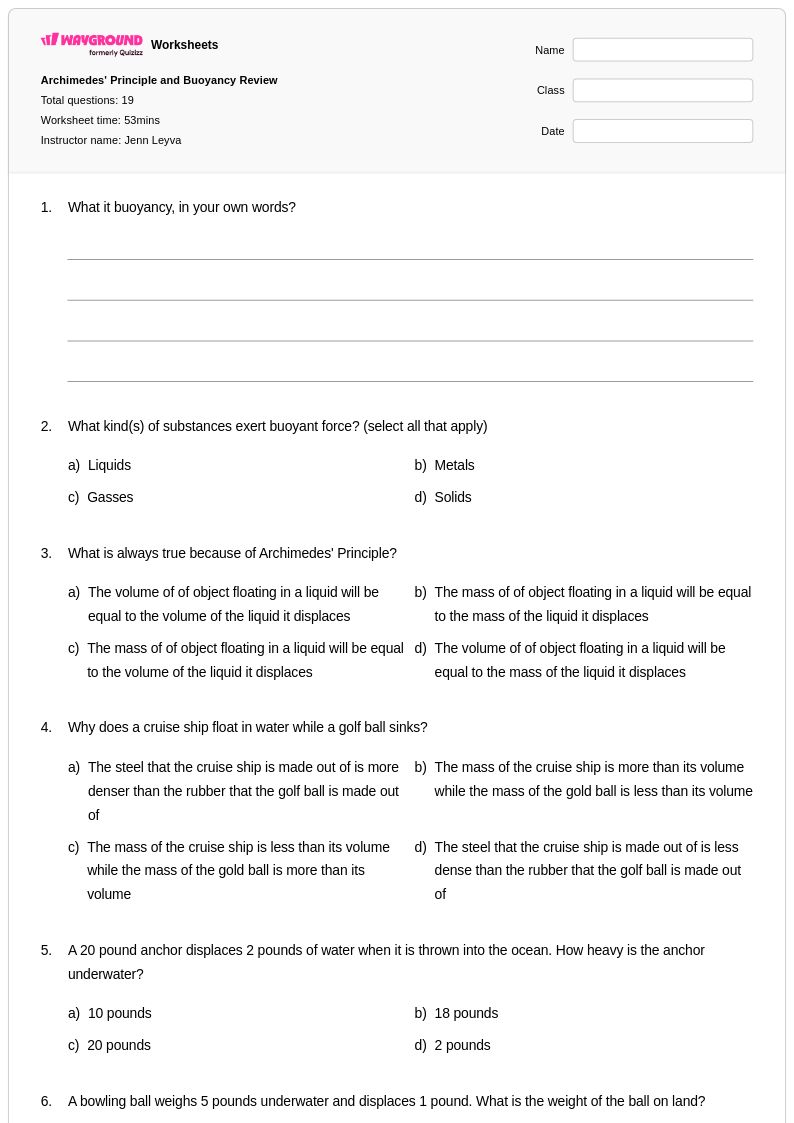
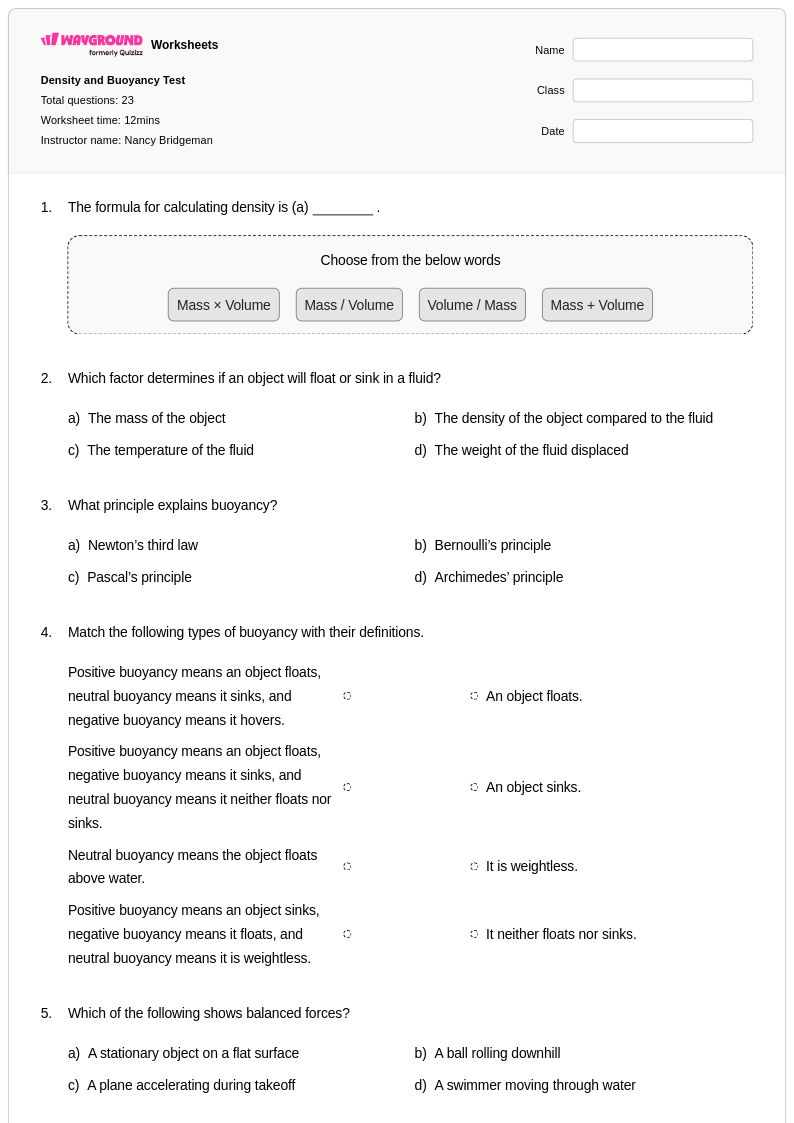
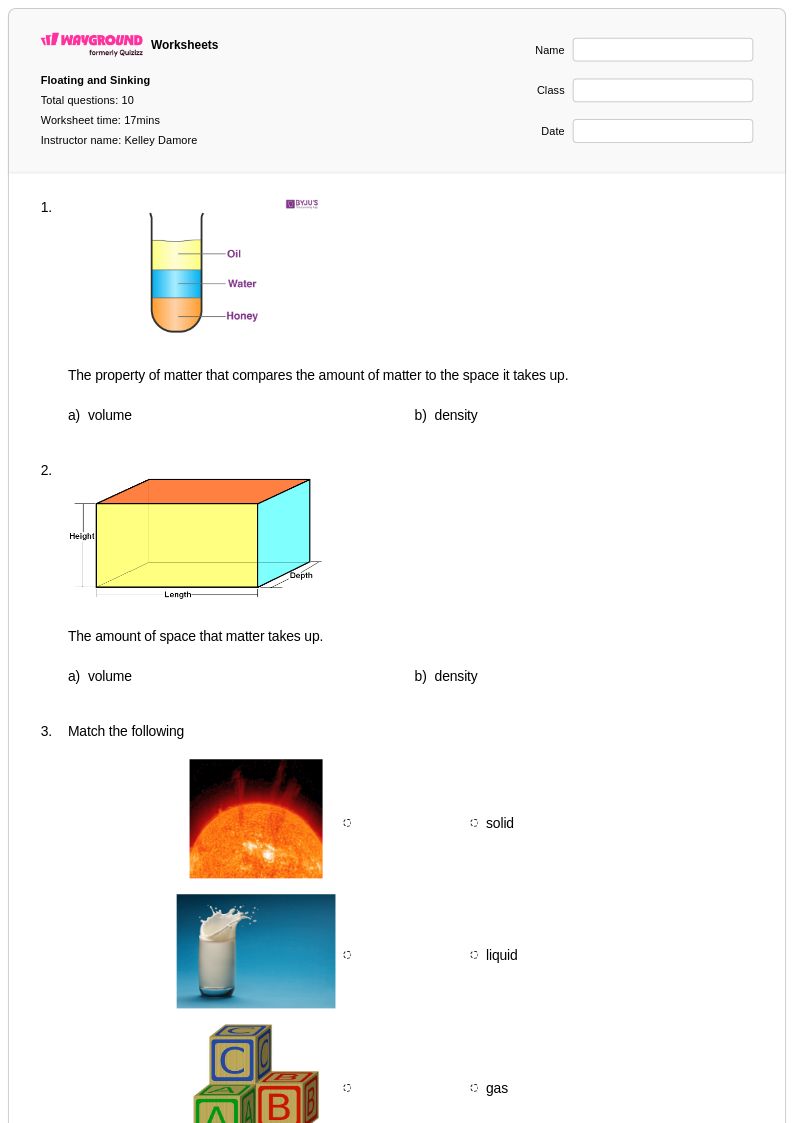
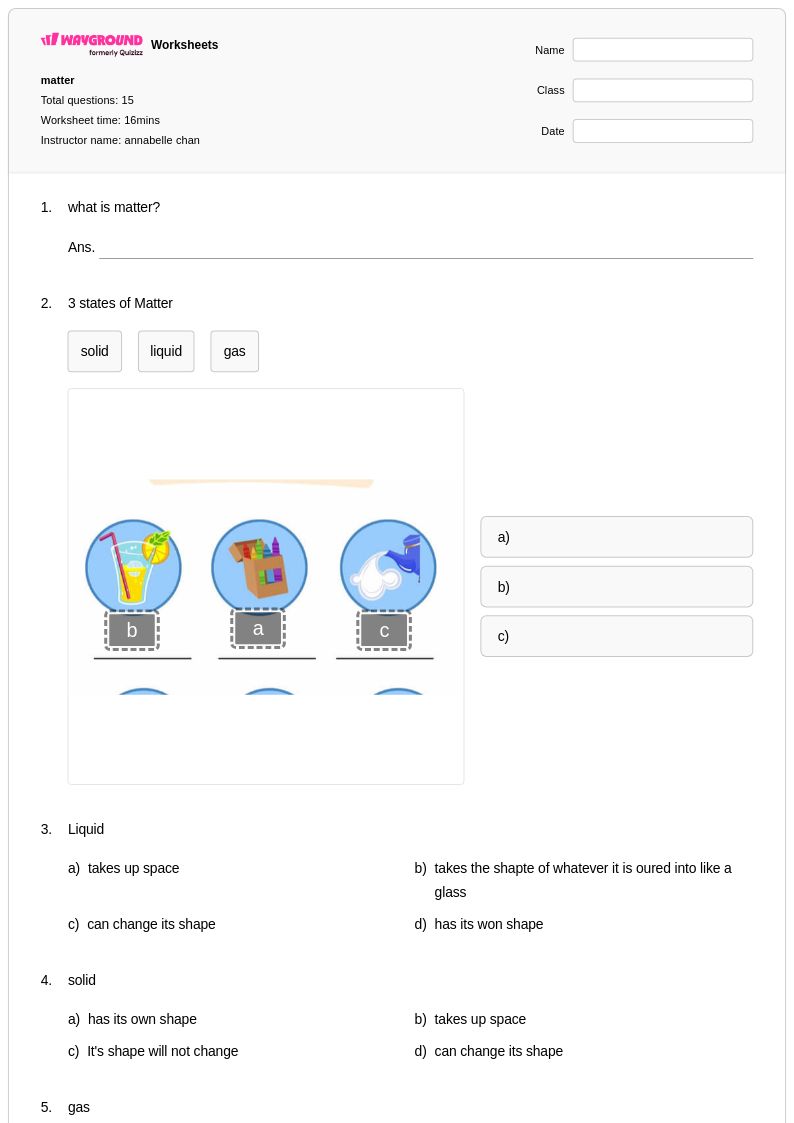
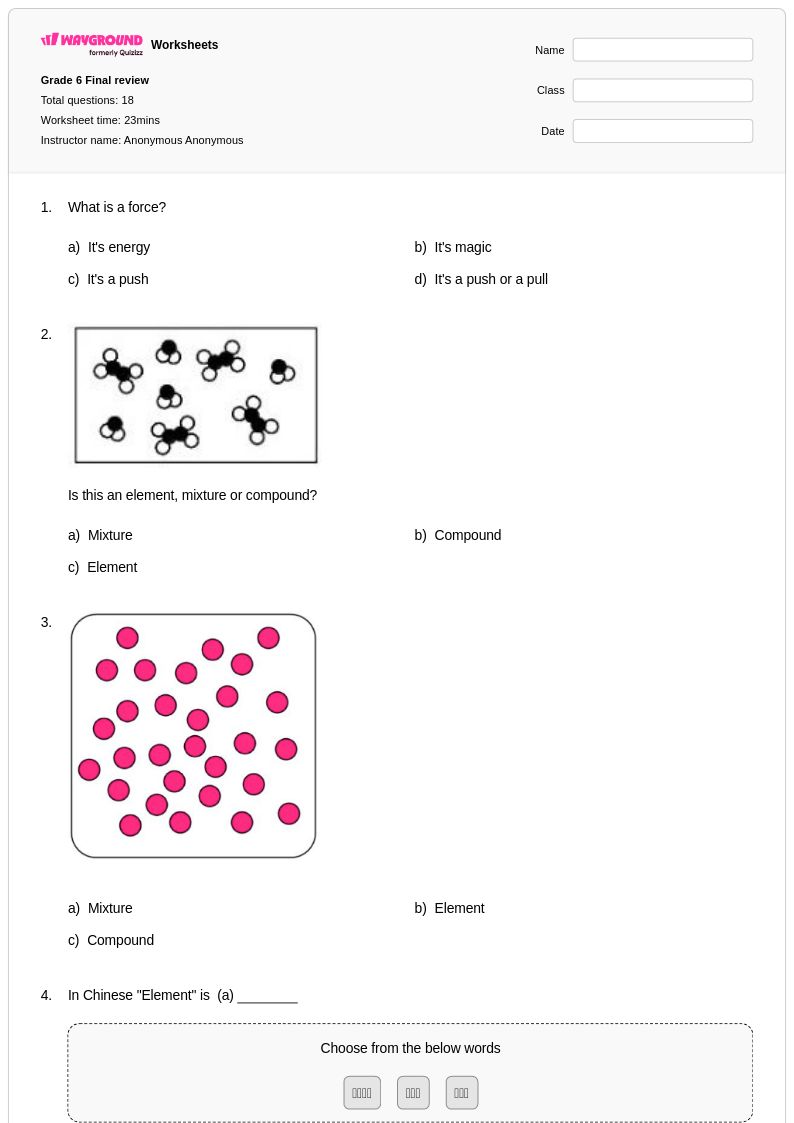
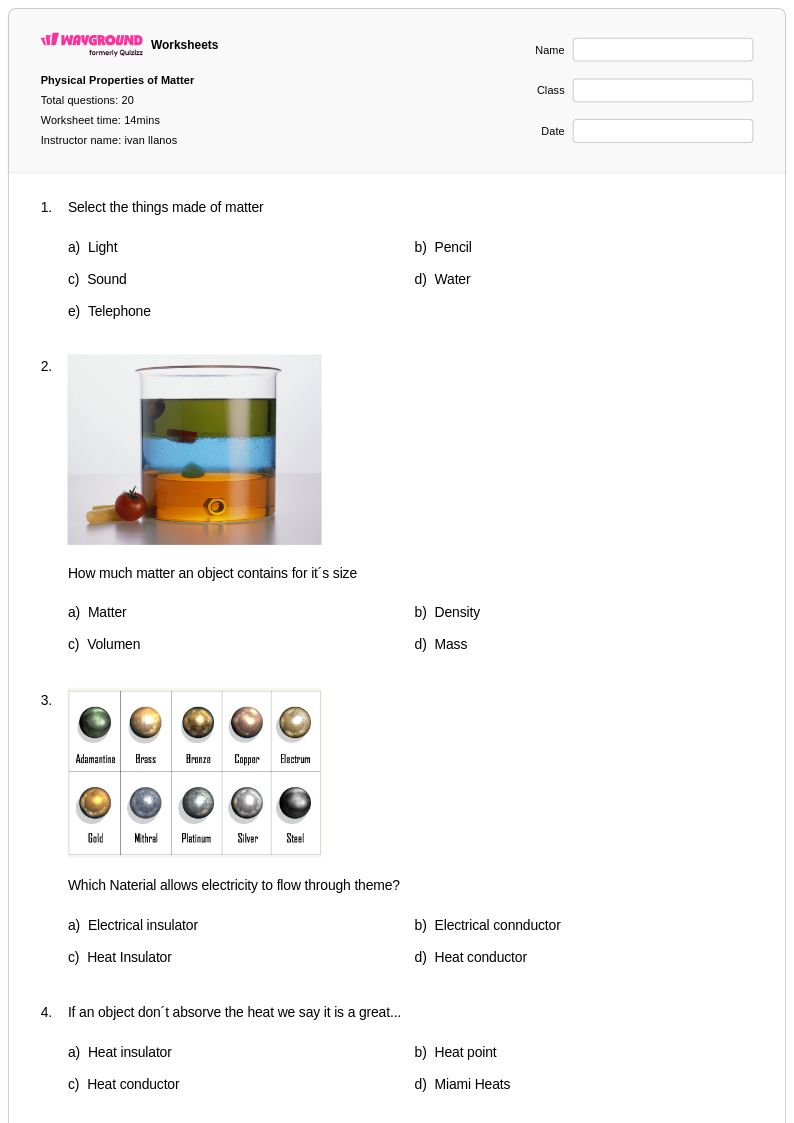
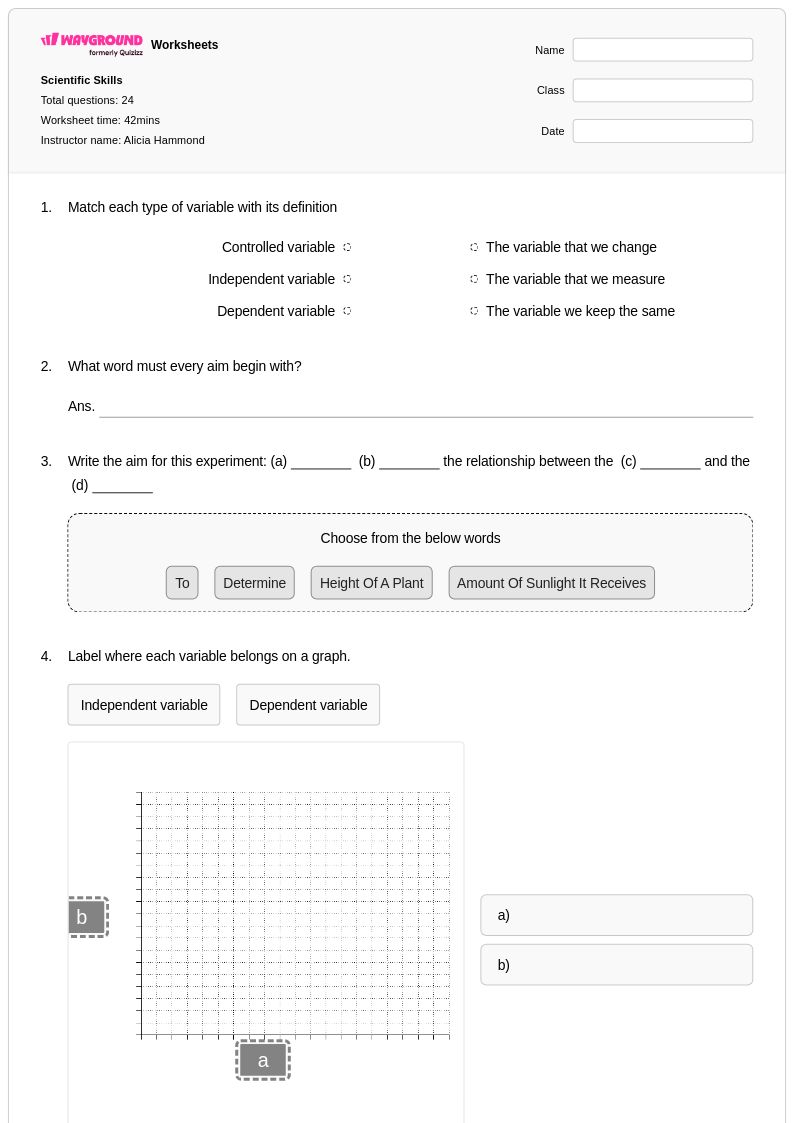
Discover free buoyancy worksheets and printables that help students master floating and sinking principles through engaging practice problems with complete answer keys available as downloadable PDFs.
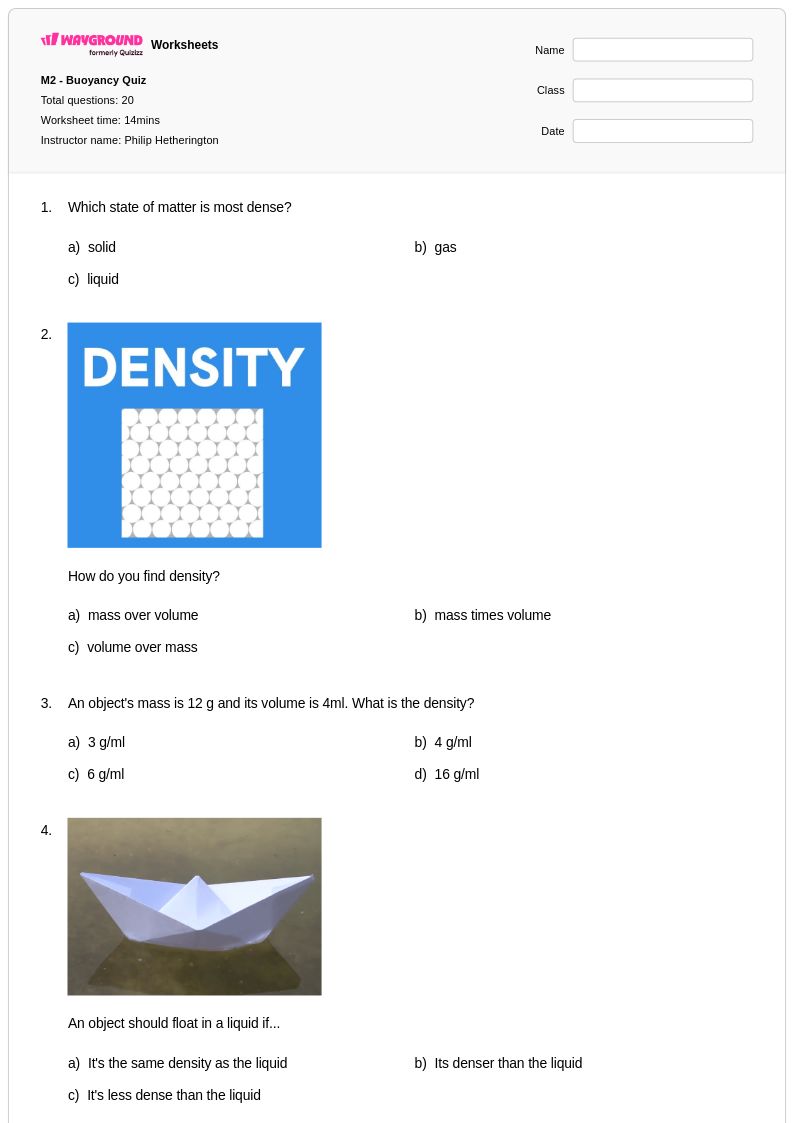
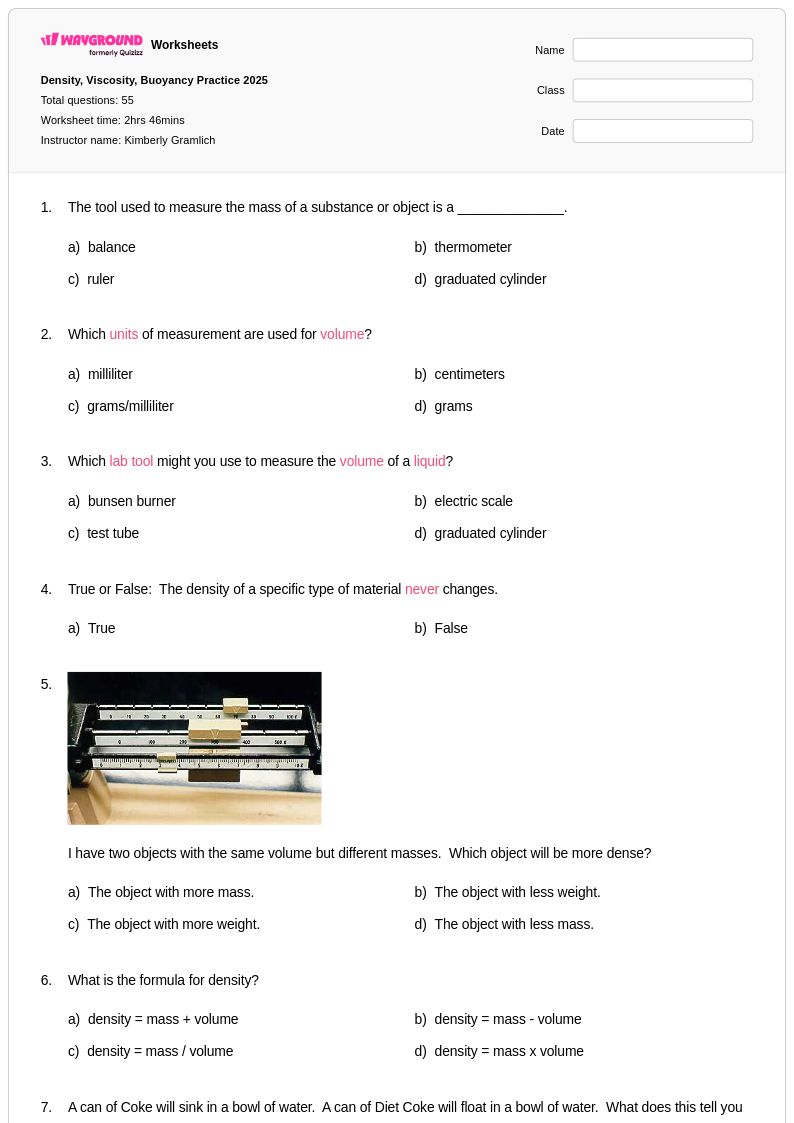
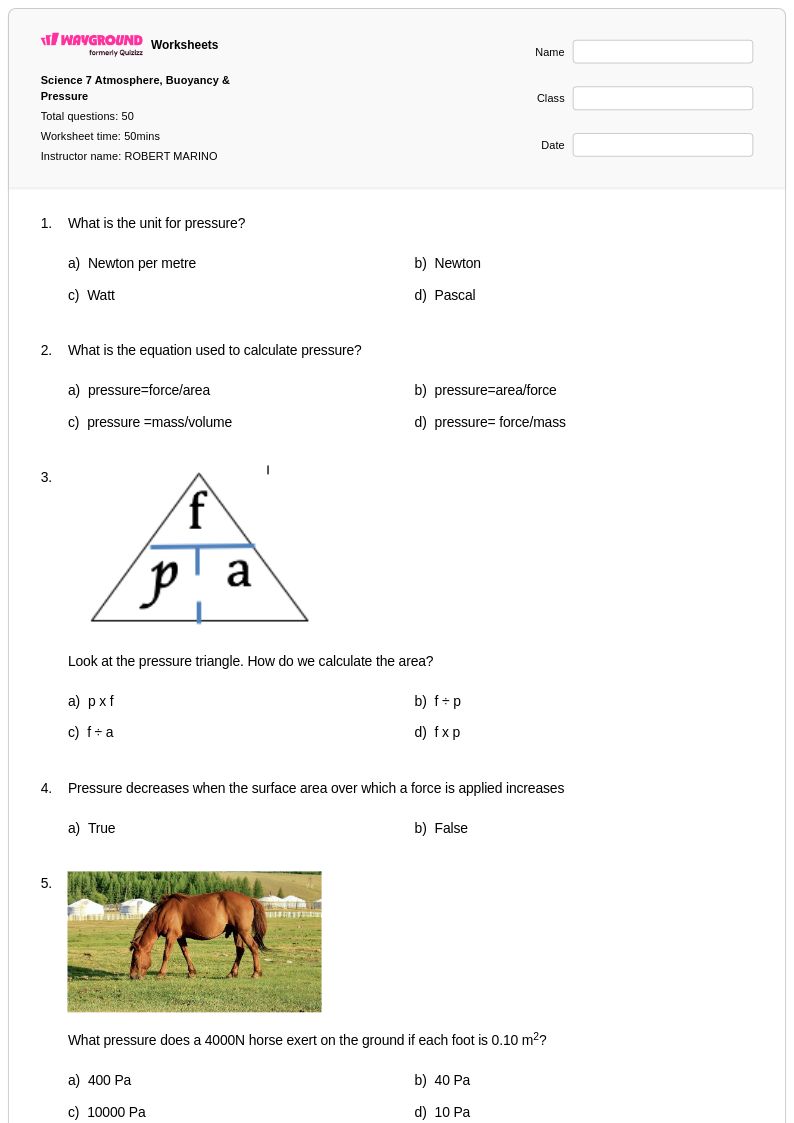
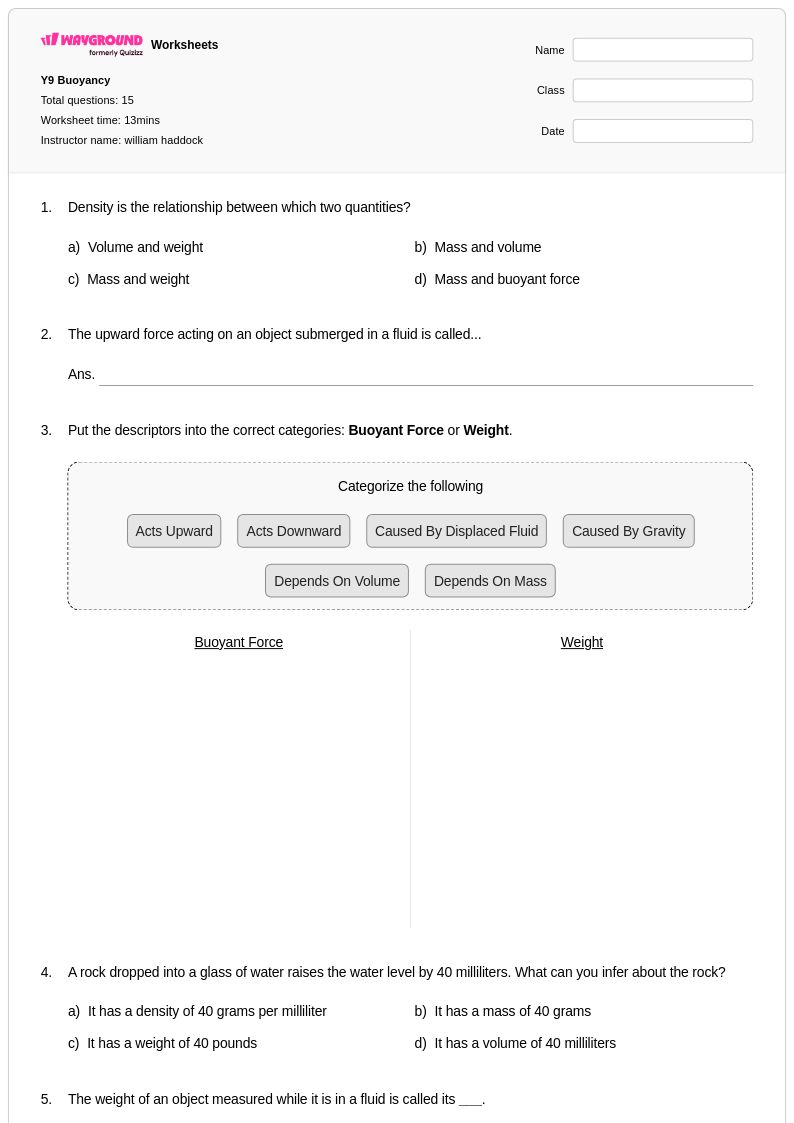
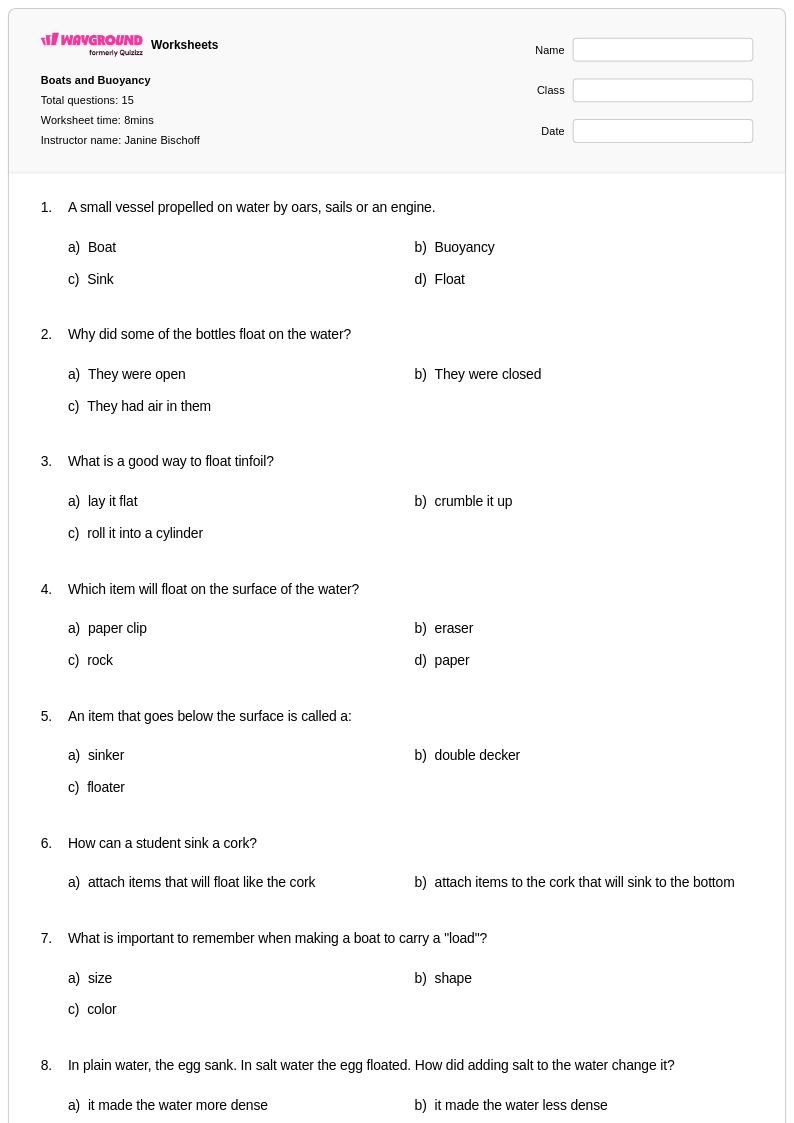
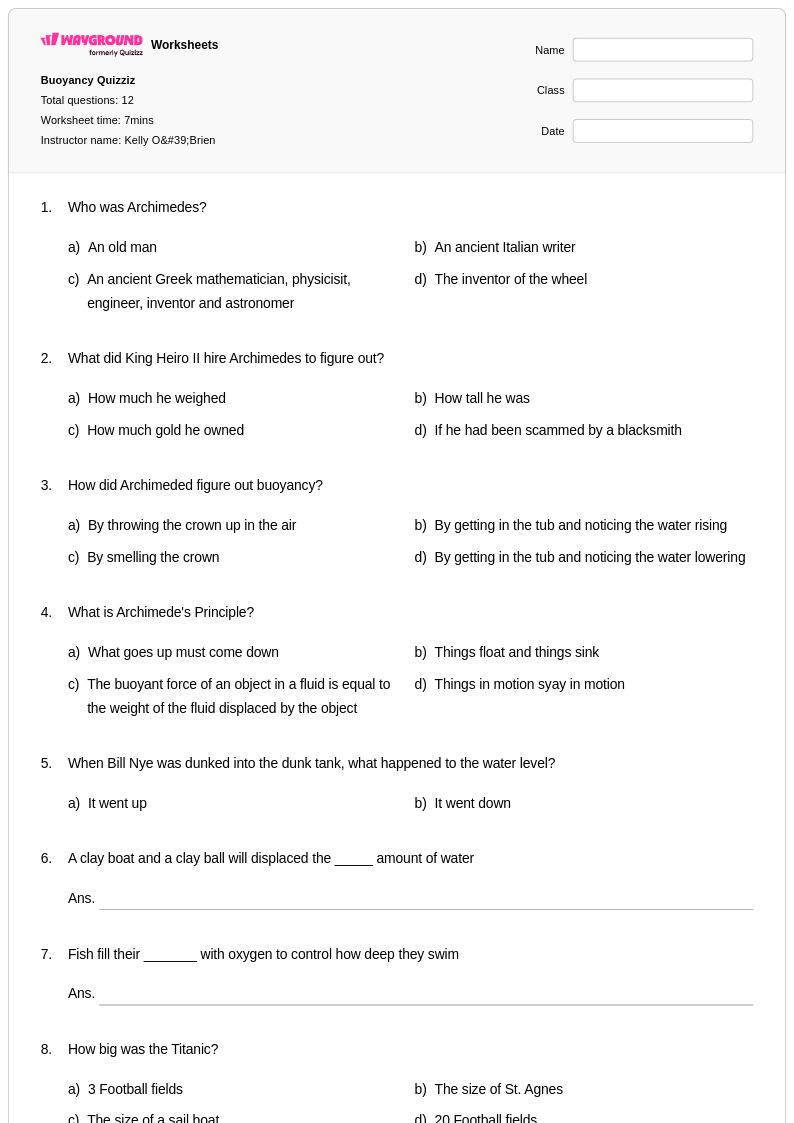
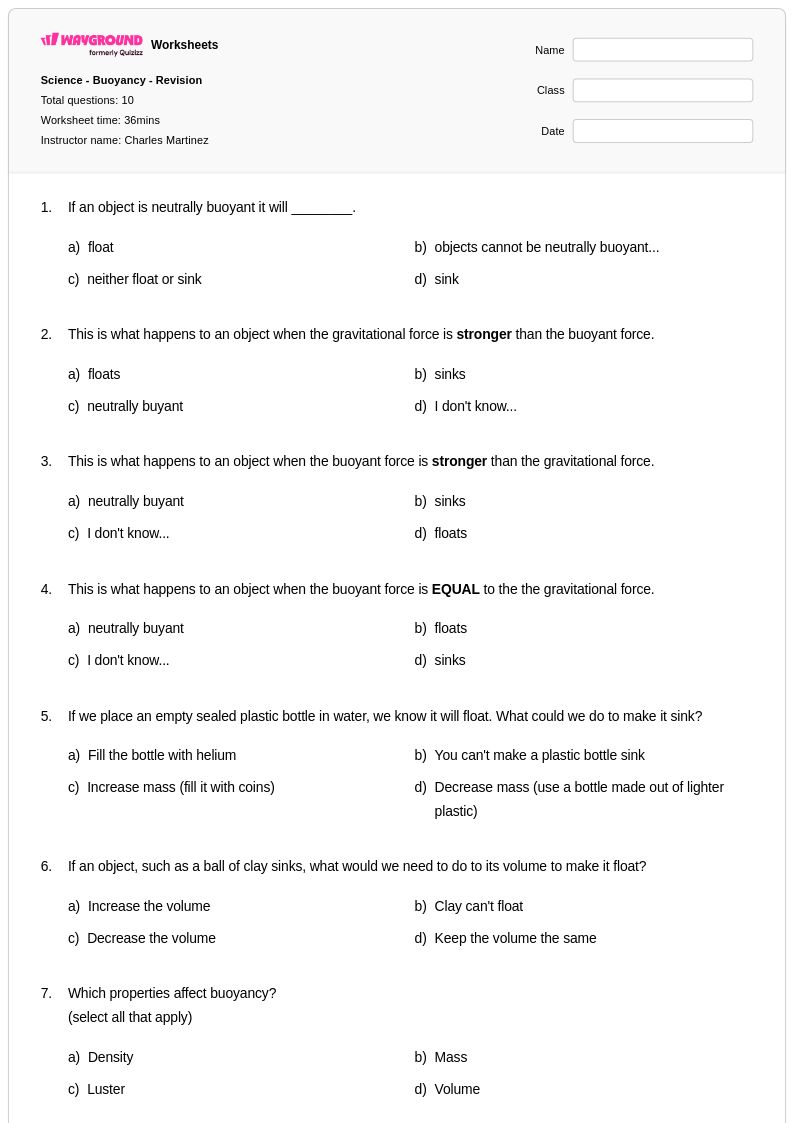
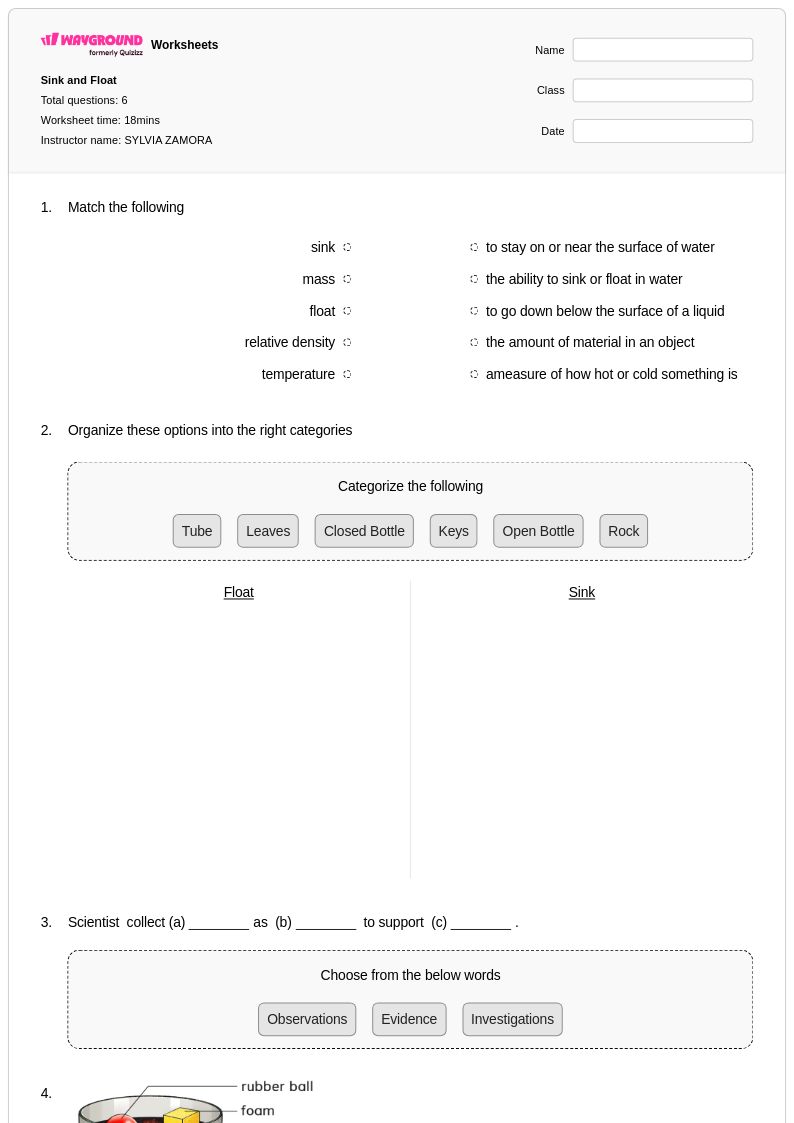
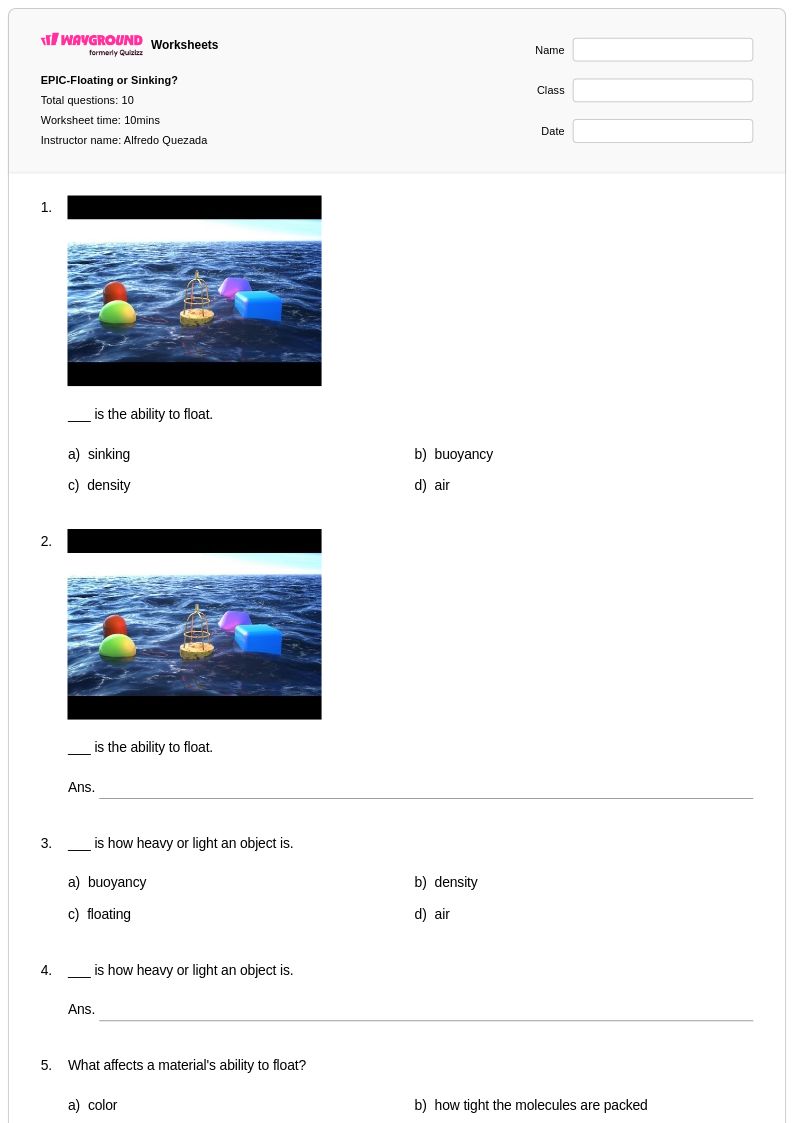
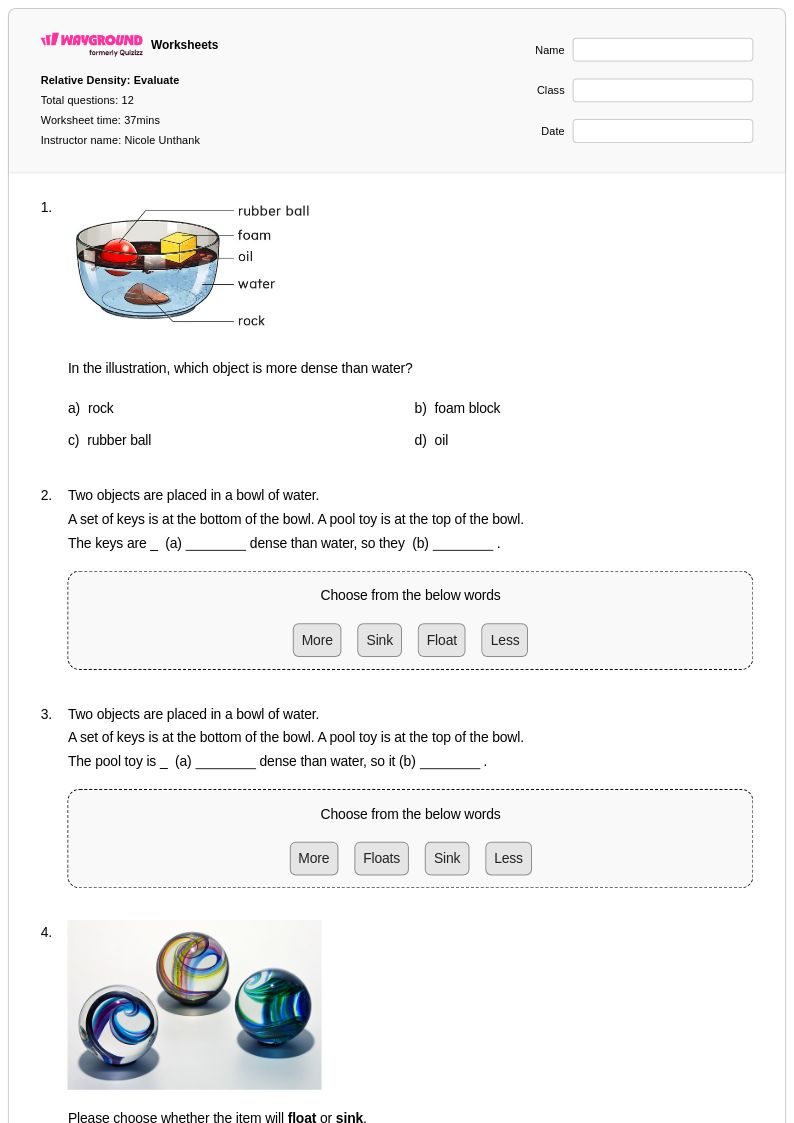
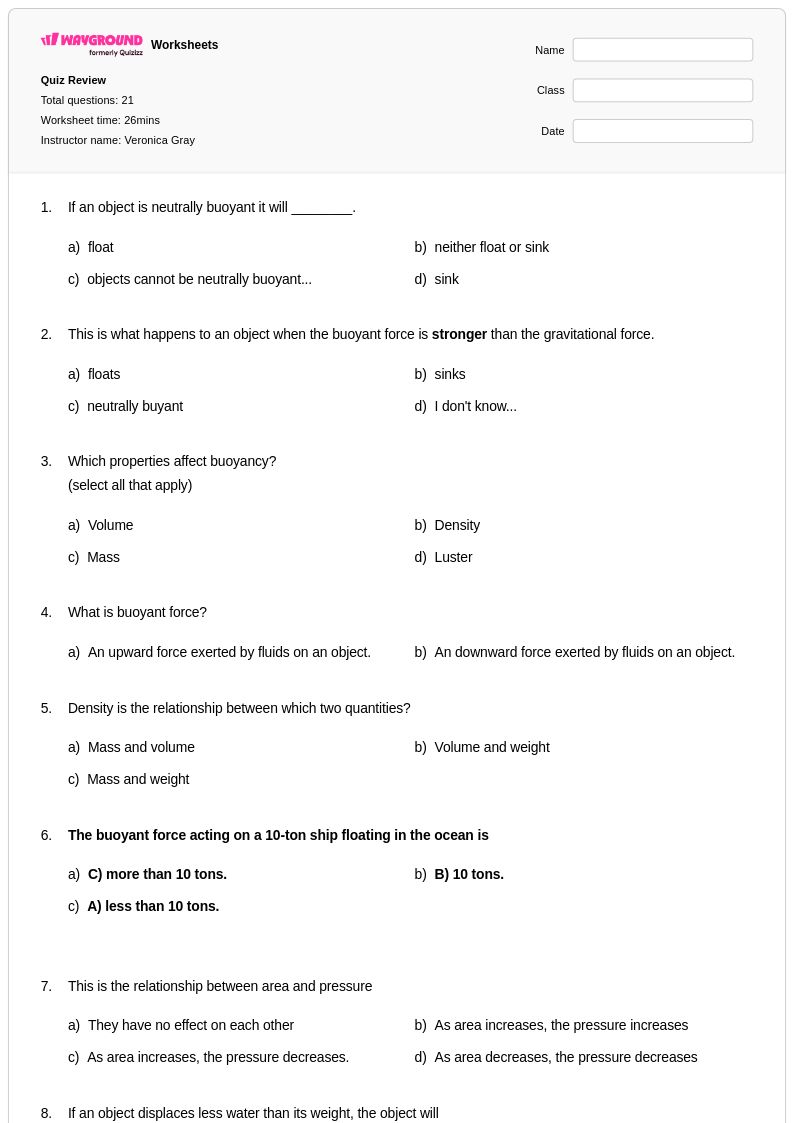
Buoyancy worksheets available through Wayground (formerly Quizizz) provide comprehensive practice materials that help students master this fundamental principle of physical science. These expertly crafted resources guide learners through the scientific concepts behind why objects float or sink, exploring Archimedes' principle, fluid displacement, and the relationship between density and buoyant force. Students engage with practice problems that challenge them to calculate buoyant forces, predict object behavior in various fluids, and analyze real-world applications from ship design to hot air balloons. Each worksheet includes detailed answer keys that support independent learning and self-assessment, while the free printable format ensures accessibility for diverse classroom environments and home study sessions.
Wayground (formerly Quizizz) empowers educators with an extensive collection of millions of teacher-created buoyancy resources that streamline lesson planning and enhance student understanding. The platform's robust search and filtering capabilities allow teachers to quickly locate worksheets aligned with specific learning standards and grade-appropriate content, while differentiation tools enable customization for varying skill levels within the same classroom. These versatile materials are available in both printable pdf formats for traditional classroom use and digital formats for interactive learning experiences. Teachers utilize these comprehensive worksheet collections for targeted skill practice, remediation support for struggling students, and enrichment opportunities for advanced learners, ensuring that every student develops a solid foundation in buoyancy principles and their practical applications in physical science.
FAQs
How do I teach buoyancy to students?
Start by grounding students in Archimedes' principle: an object submerged in a fluid experiences an upward force equal to the weight of the fluid it displaces. From there, connect buoyant force to density by comparing the density of the object to the density of the fluid. Hands-on demonstrations using water tanks and everyday objects help students observe floating and sinking before moving to calculations. Once the conceptual foundation is solid, introduce real-world applications like ship design and hot air balloons to show buoyancy in context.
What exercises help students practice buoyancy concepts?
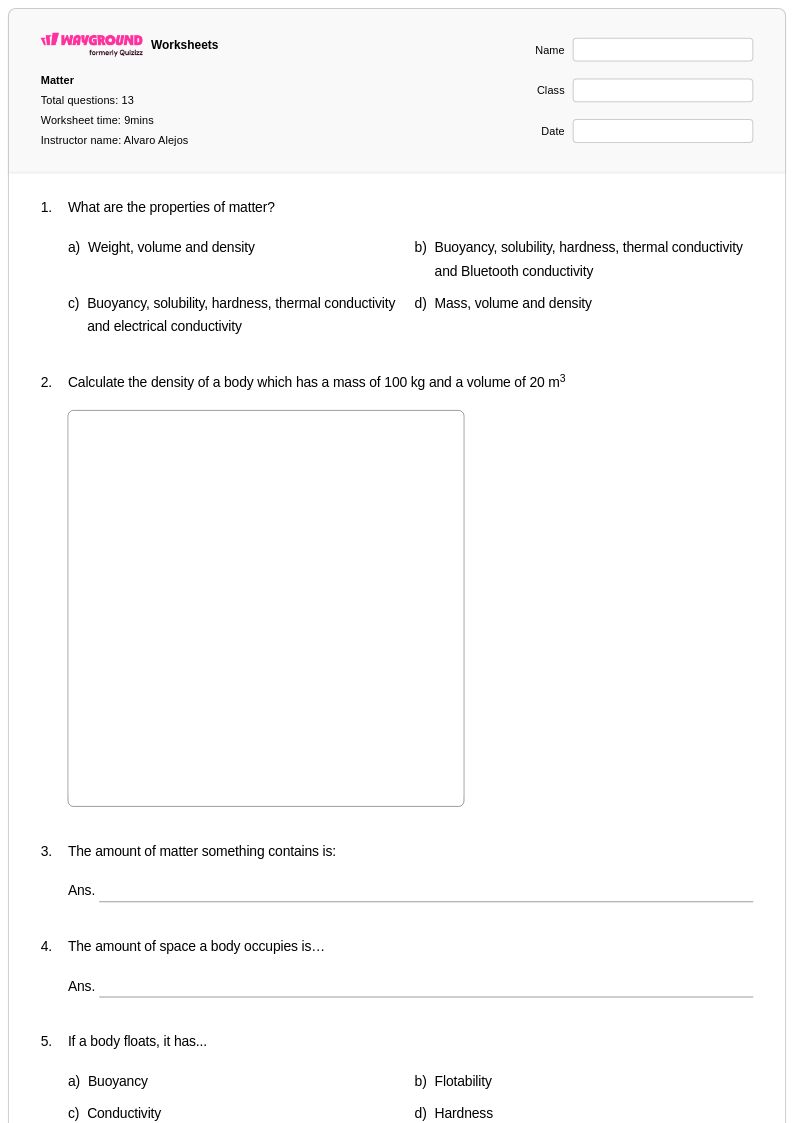
Effective practice exercises include calculating the buoyant force on objects of known volume and fluid density, predicting whether an object will float or sink based on comparative densities, and analyzing fluid displacement scenarios. Problems that vary the fluid type — water, saltwater, oil — push students to generalize the principle rather than memorize a single formula. Worked examples followed by independent practice problems with answer keys allow students to self-correct and build confidence.
What mistakes do students commonly make when learning about buoyancy?
The most common misconception is that heavier objects always sink — students often conflate mass with density, ignoring the role of volume. Another frequent error is confusing the weight of the object with the buoyant force, rather than understanding that buoyant force equals the weight of the displaced fluid, not the object itself. Students also struggle with multi-fluid scenarios, assuming buoyancy behaves the same in all liquids regardless of fluid density.
How do I differentiate buoyancy instruction for students at different skill levels?
For students who need support, reduce the complexity of problems by providing density values and fluid displacement directly, removing the multi-step calculation load. Advanced learners can be challenged with problems involving irregular shapes, multiple fluids, or engineering design scenarios like calculating the minimum hull volume for a vessel. On Wayground, teachers can apply accommodations such as reduced answer choices and read-aloud support to individual students, while the rest of the class works with default settings — keeping differentiation seamless and unobtrusive.
How can I use Wayground buoyancy worksheets in my classroom?
Wayground buoyancy worksheets are available as printable PDFs for traditional classroom use and in digital formats for technology-integrated environments, giving teachers flexibility based on their setup. In digital mode, teachers can host the worksheet as a quiz on Wayground, enabling real-time tracking of student responses. The included answer keys make them practical for independent practice, exit tickets, homework, or remediation sessions without requiring additional teacher preparation.