Free Printable Cell Division Worksheets for Year 12
Year 12 cell division worksheets with printables and answer keys help students master mitosis, meiosis, and chromosome behavior through comprehensive practice problems and free PDF resources available on Wayground.
Explore printable Cell Division worksheets for Year 12
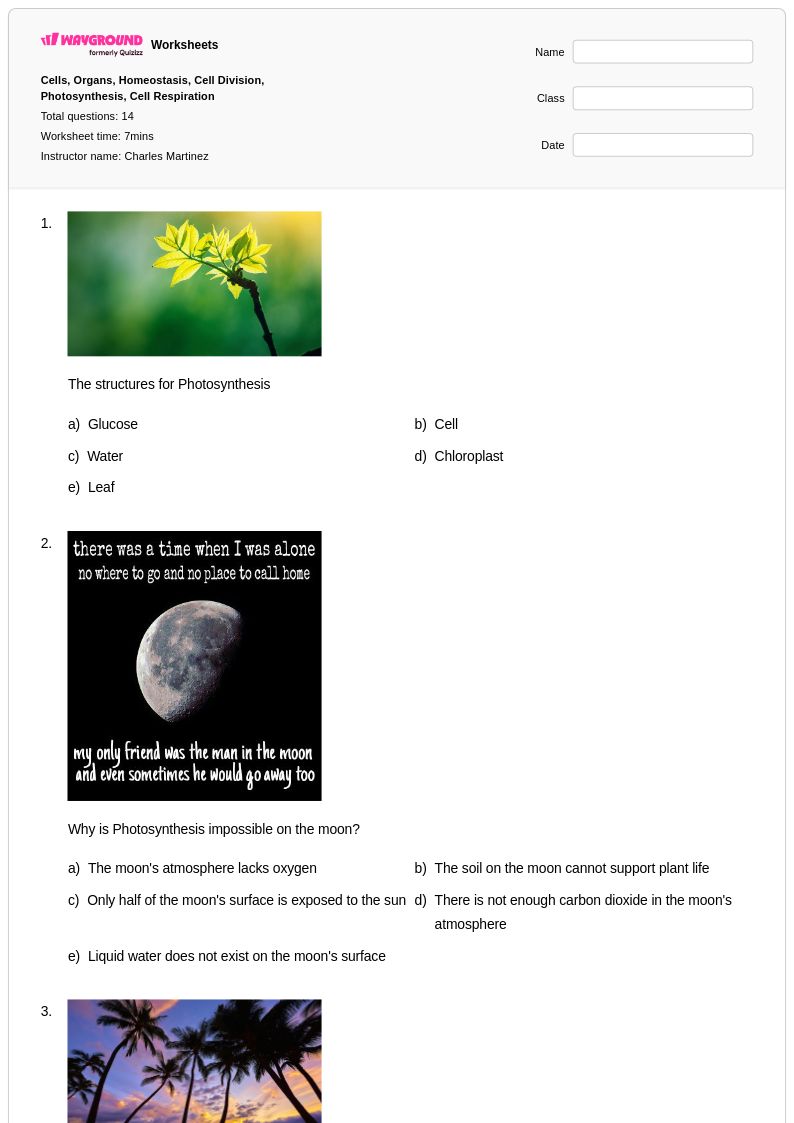
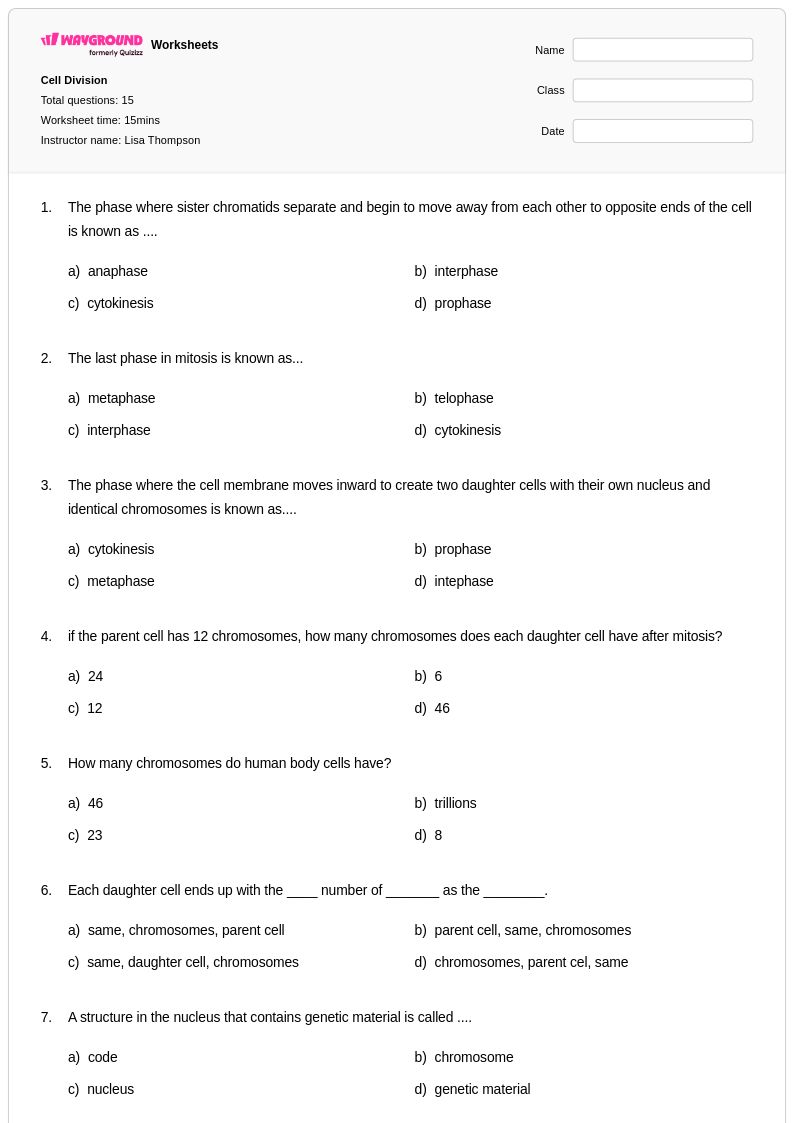
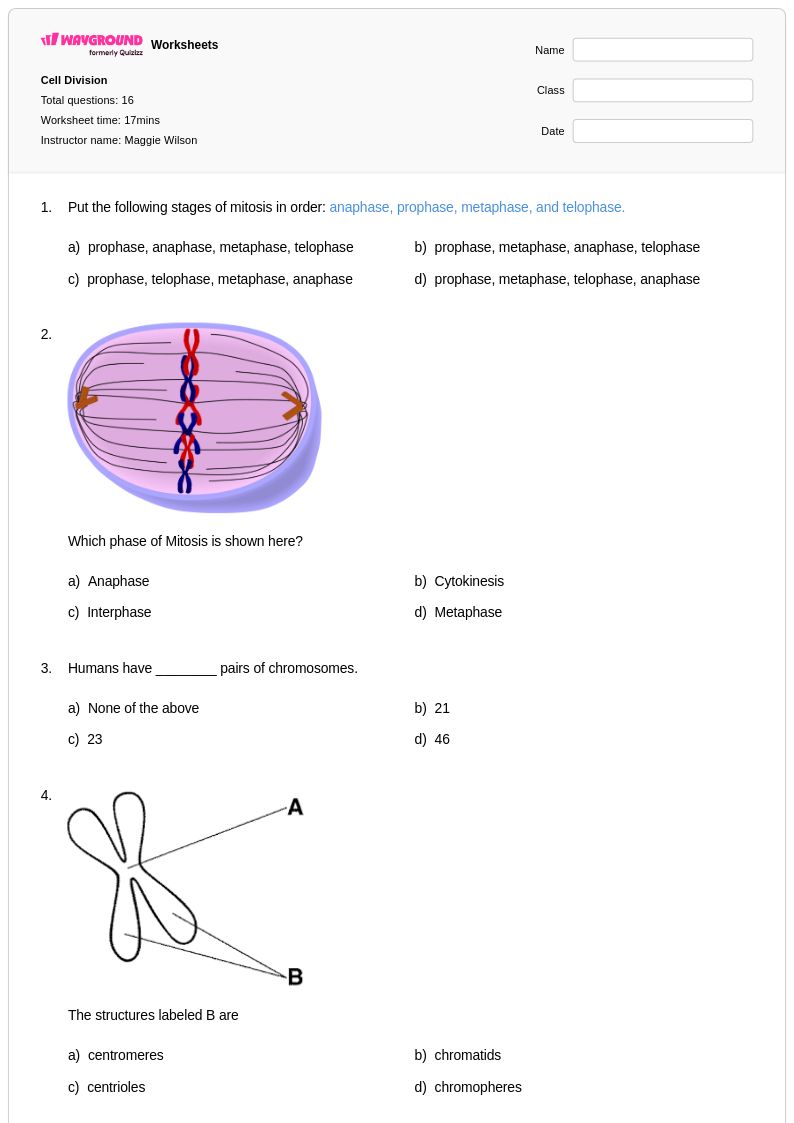
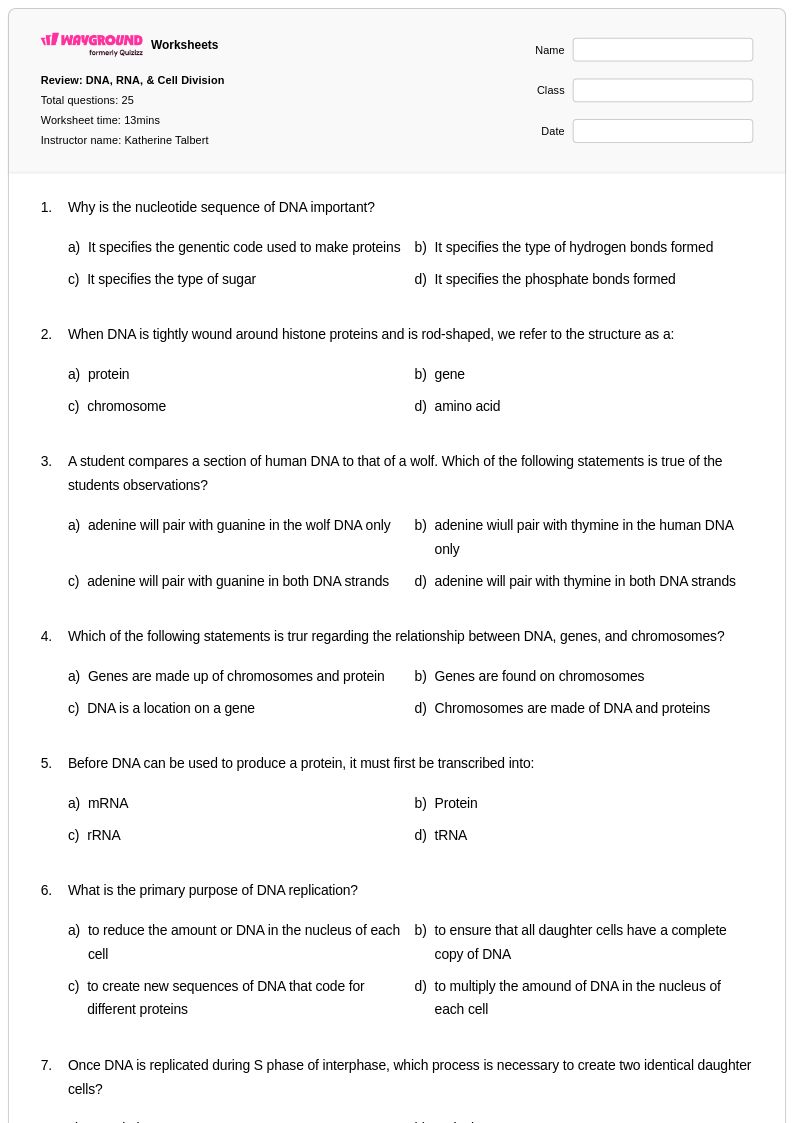
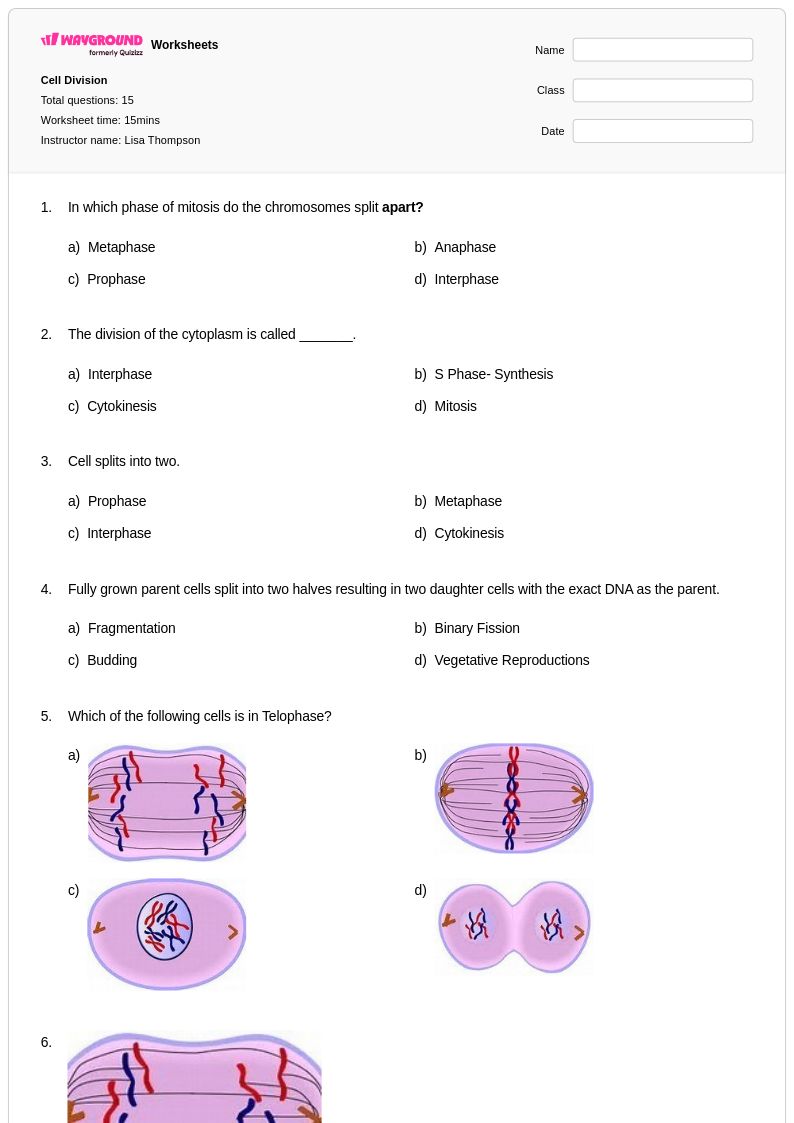
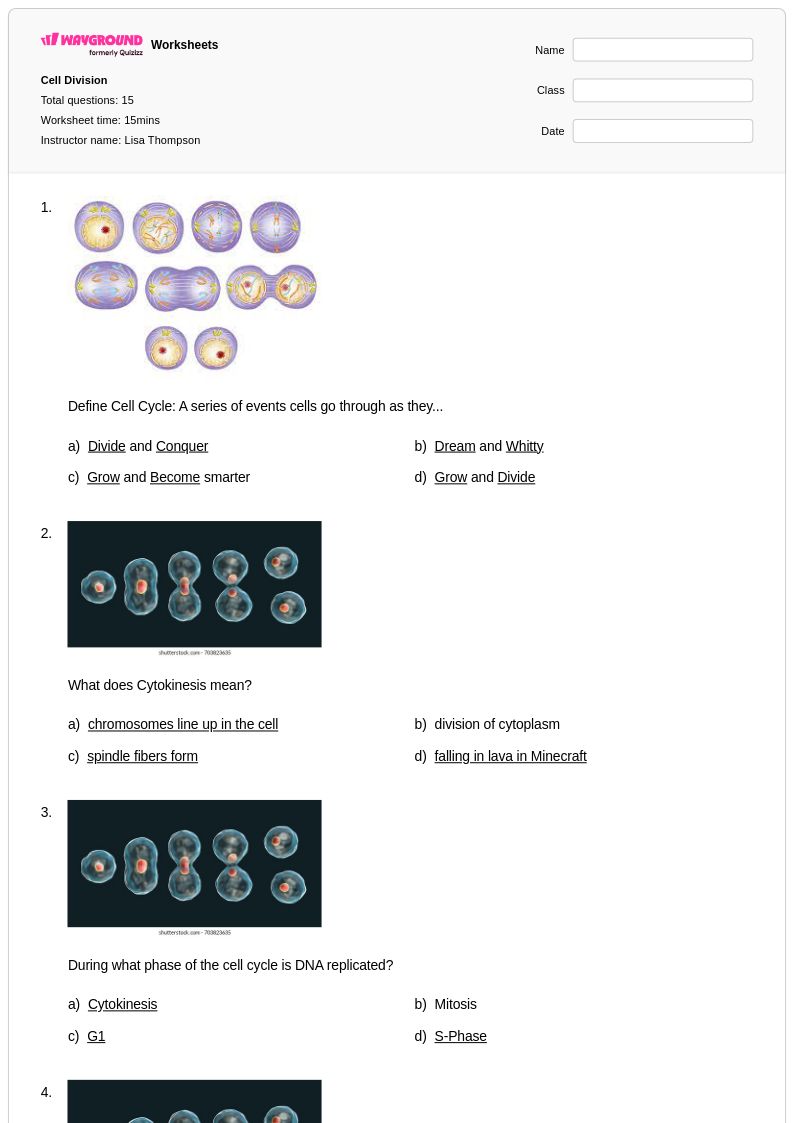
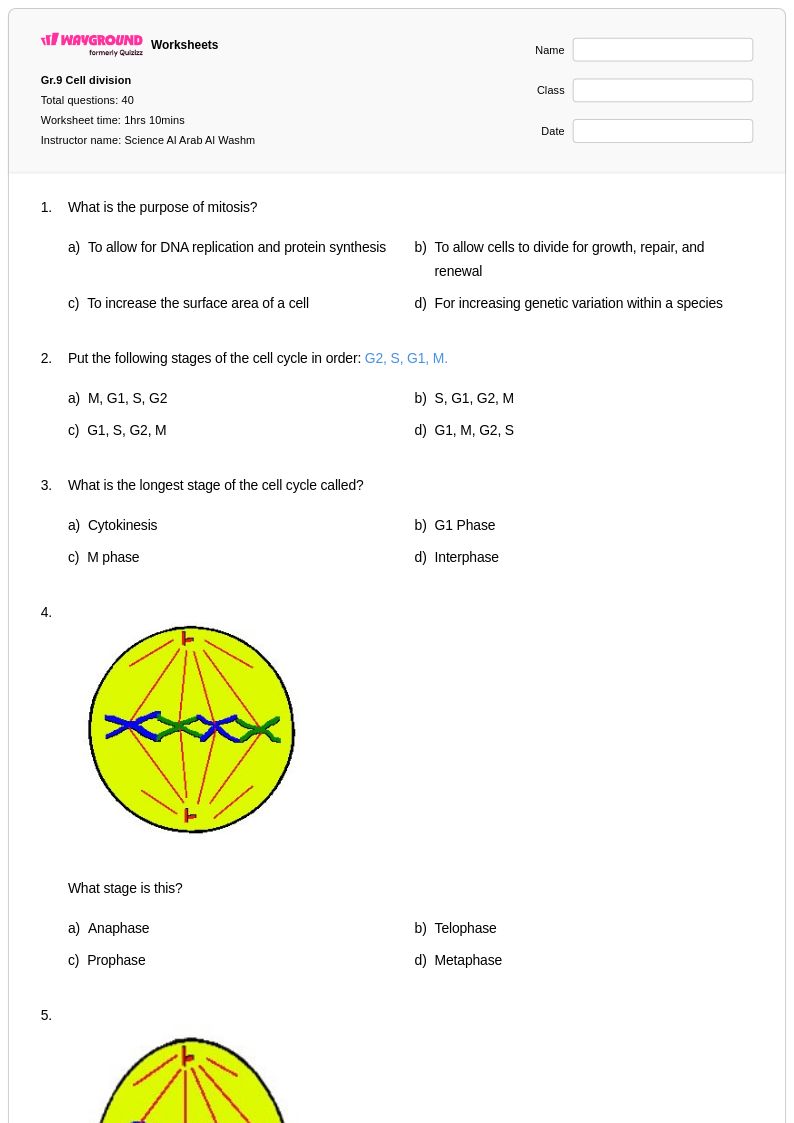
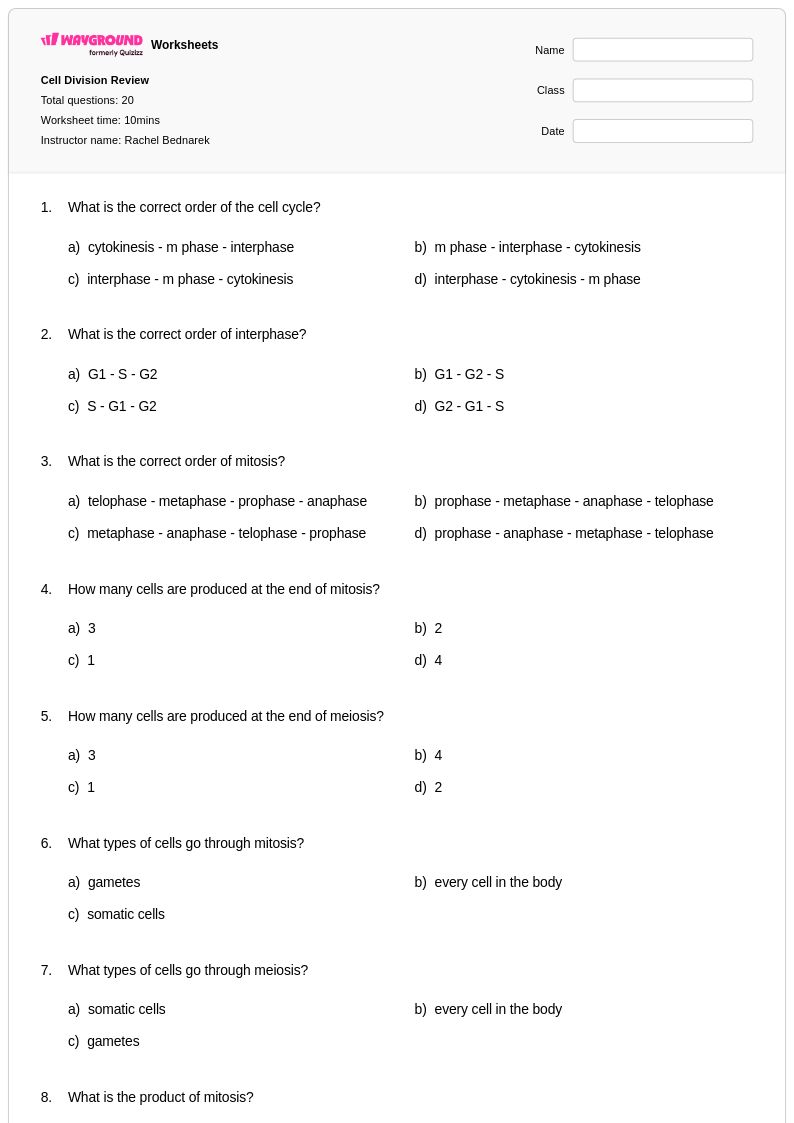
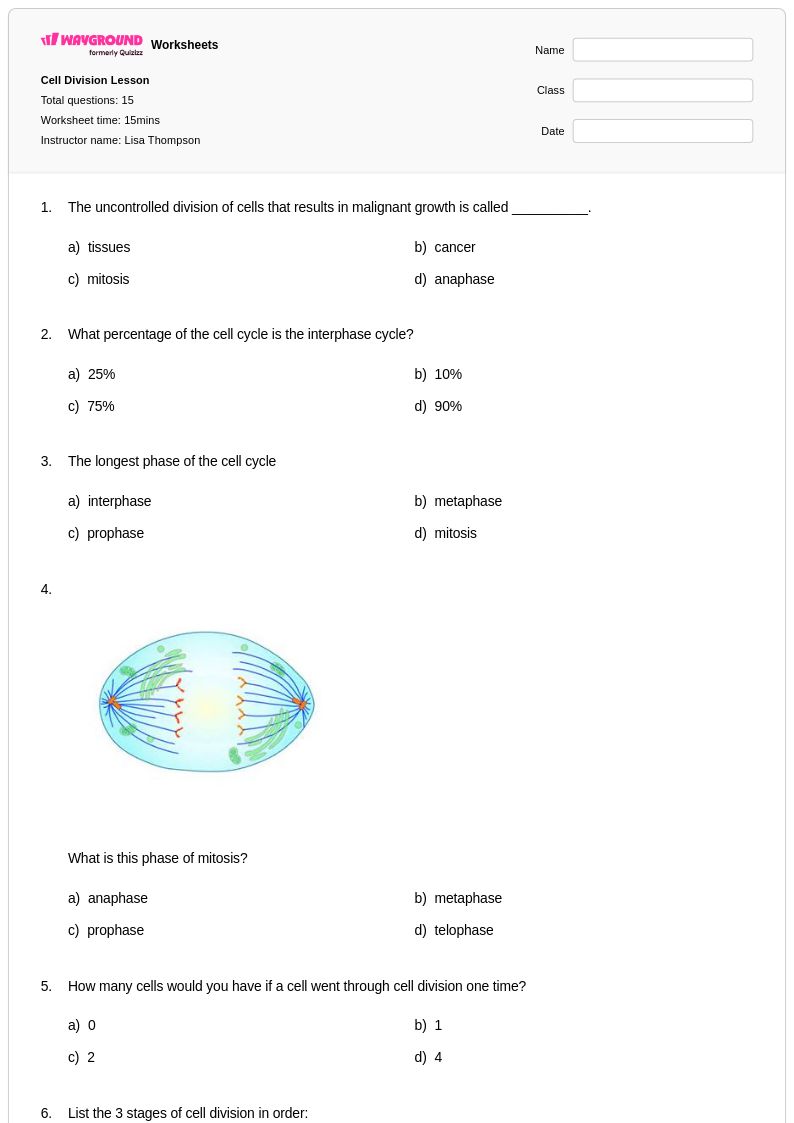
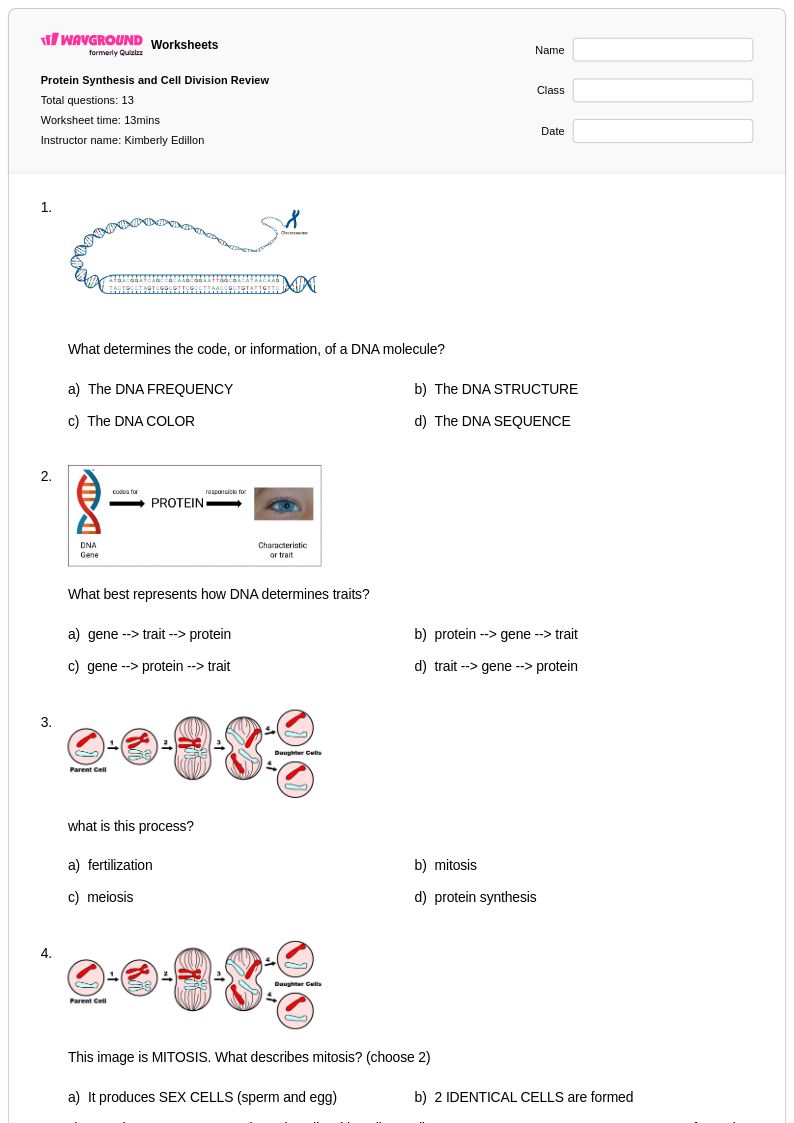
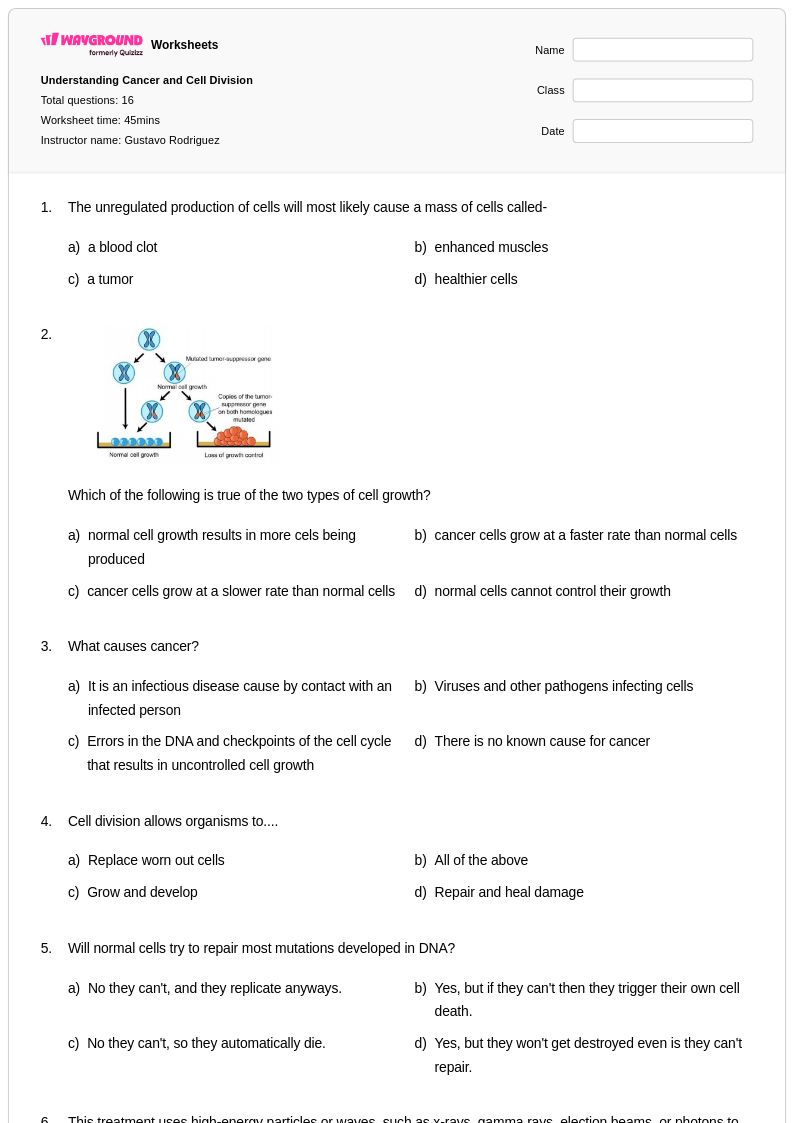
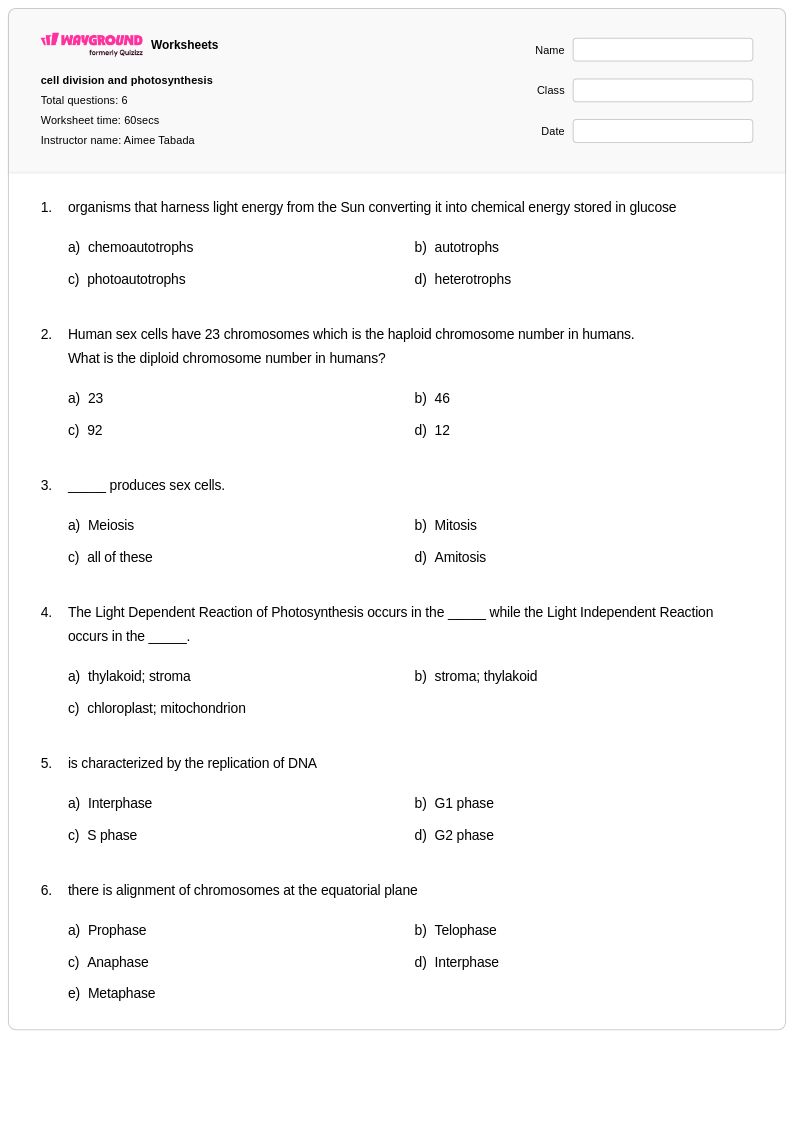
Cell division worksheets for Year 12 students available through Wayground (formerly Quizizz) provide comprehensive coverage of mitosis and meiosis, the fundamental processes that govern cellular reproduction and genetic inheritance. These expertly designed worksheets strengthen students' understanding of chromosome behavior, spindle formation, cytokinesis, and the critical differences between somatic and gametic cell division. Students engage with detailed practice problems that require them to identify cell cycle phases, analyze karyotypes, and predict outcomes of chromosomal abnormalities, while accompanying answer keys enable immediate feedback and self-assessment. The printable pdf format ensures accessibility for both classroom instruction and independent study, with free resources covering topics from DNA replication checkpoints to crossing over mechanisms that occur during prophase I of meiosis.
Wayground (formerly Quizizz) supports biology educators with an extensive collection of millions of teacher-created cell division resources that can be easily searched and filtered by specific learning objectives and curriculum standards. Teachers benefit from robust differentiation tools that allow customization of worksheet complexity, enabling them to address diverse learning needs within their Year 12 classrooms through targeted remediation for struggling students and enrichment activities for advanced learners. The platform's flexible format options include both digital interactive worksheets and traditional printable pdf versions, facilitating seamless integration into various instructional approaches whether for lesson planning, homework assignments, or assessment preparation. Standards alignment features ensure that cell division content meets state and national biology curriculum requirements, while the comprehensive search functionality helps educators quickly locate specific resources covering topics from cell cycle regulation to the molecular mechanisms underlying chromosomal segregation errors.
FAQs
How do I teach cell division to high school biology students?
Start by grounding students in the cell cycle before introducing mitosis and meiosis as distinct but related processes. Use diagrams to walk through each phase sequentially, emphasizing what is happening to chromosomes at each stage. Connecting mitosis to growth and repair, and meiosis to sexual reproduction and genetic variation, gives students a functional framework that prevents the two processes from blurring together. Comparing diploid and haploid cell formation side by side is especially effective for clarifying where the two pathways diverge.
What exercises help students practice identifying phases of mitosis and meiosis?
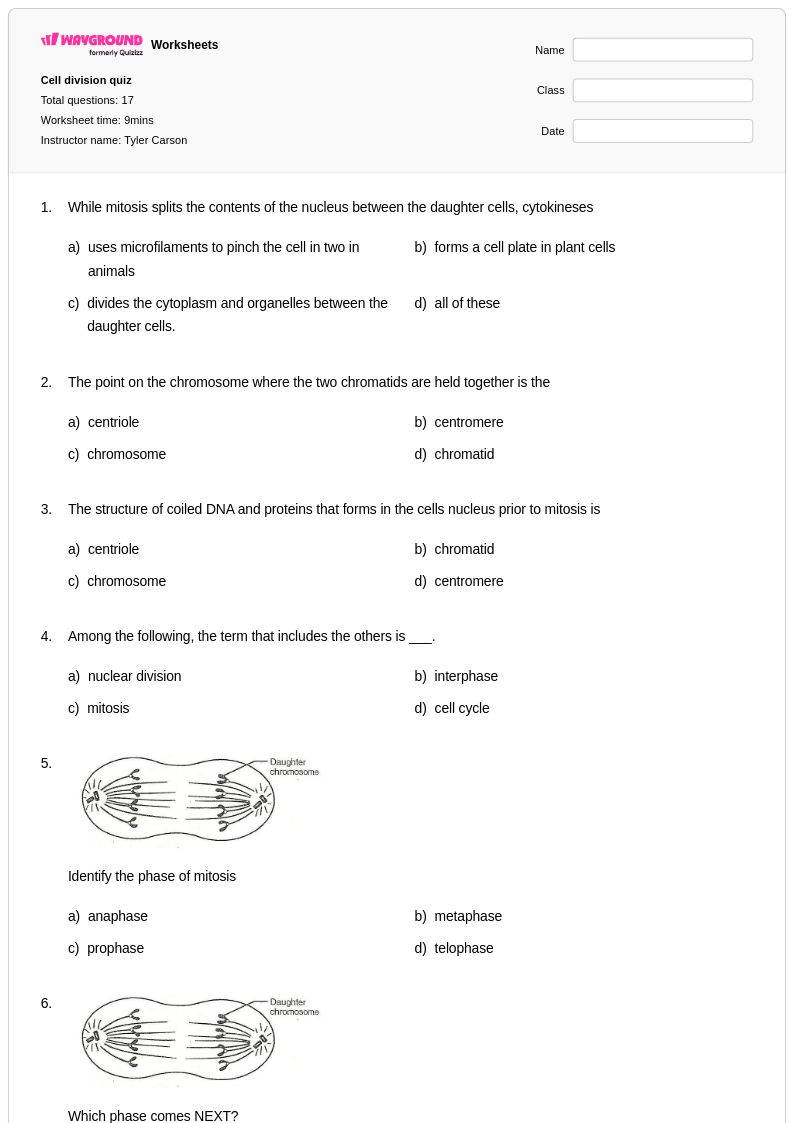
Phase identification exercises that pair unlabeled diagrams with matching tasks are highly effective for building visual recognition of mitosis and meiosis stages. Practice problems that ask students to sequence events, describe chromosome behavior at each phase, and distinguish between mitosis I and meiosis II reinforce conceptual accuracy. Comparing somatic and reproductive cell formation in the same worksheet helps students actively contrast the two processes rather than memorizing them in isolation.
What are the most common mistakes students make when learning about meiosis?
The most frequent error is confusing meiosis I and meiosis II, particularly failing to recognize that homologous chromosomes separate in meiosis I while sister chromatids separate in meiosis II. Students also commonly misapply the terms diploid and haploid, especially after crossing over occurs. Nondisjunction is another consistent trouble spot, as students struggle to trace how errors during cell division lead to specific chromosomal abnormalities in offspring.
How can I help students understand crossing over and independent assortment?
Crossing over and independent assortment are best taught through concrete visual models before moving to abstract problems. Have students physically manipulate chromosome pairs to simulate crossing over during prophase I, then show how independent assortment during metaphase I multiplies genetic combinations. Follow-up practice problems that ask students to predict genetic outcomes or explain why offspring vary genetically from parents reinforce why these mechanisms matter beyond just naming them on a test.
How do I use Wayground's cell division worksheets in my classroom?
Wayground's cell division worksheets are available as printable PDFs for traditional classroom use and in digital formats for technology-integrated environments, making them flexible for in-person, hybrid, or remote instruction. Teachers can also host worksheets directly as a quiz on Wayground, enabling real-time student responses and streamlined grading. Each worksheet includes a complete answer key, which supports both teacher-led review and independent student self-checking after practice.
How can I differentiate cell division instruction for students at different levels?
For students who are struggling, focus first on mitosis with clear phase diagrams and basic vocabulary before introducing meiosis. Advanced students benefit from problems involving nondisjunction, crossing over frequencies, and the genetic consequences of errors in cell division. On Wayground, teachers can apply accommodations such as read aloud support, reduced answer choices, and extended time to individual students, allowing the same worksheet to serve multiple learner profiles without singling anyone out.