
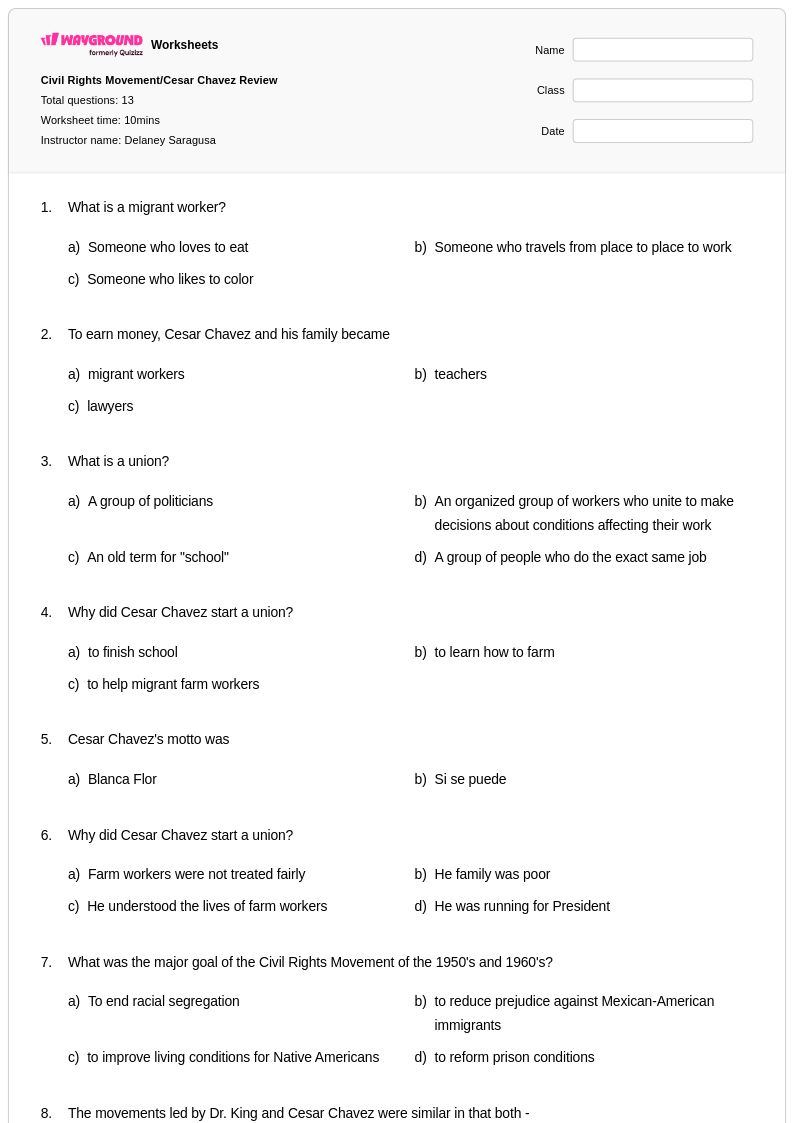
13 Q
5th
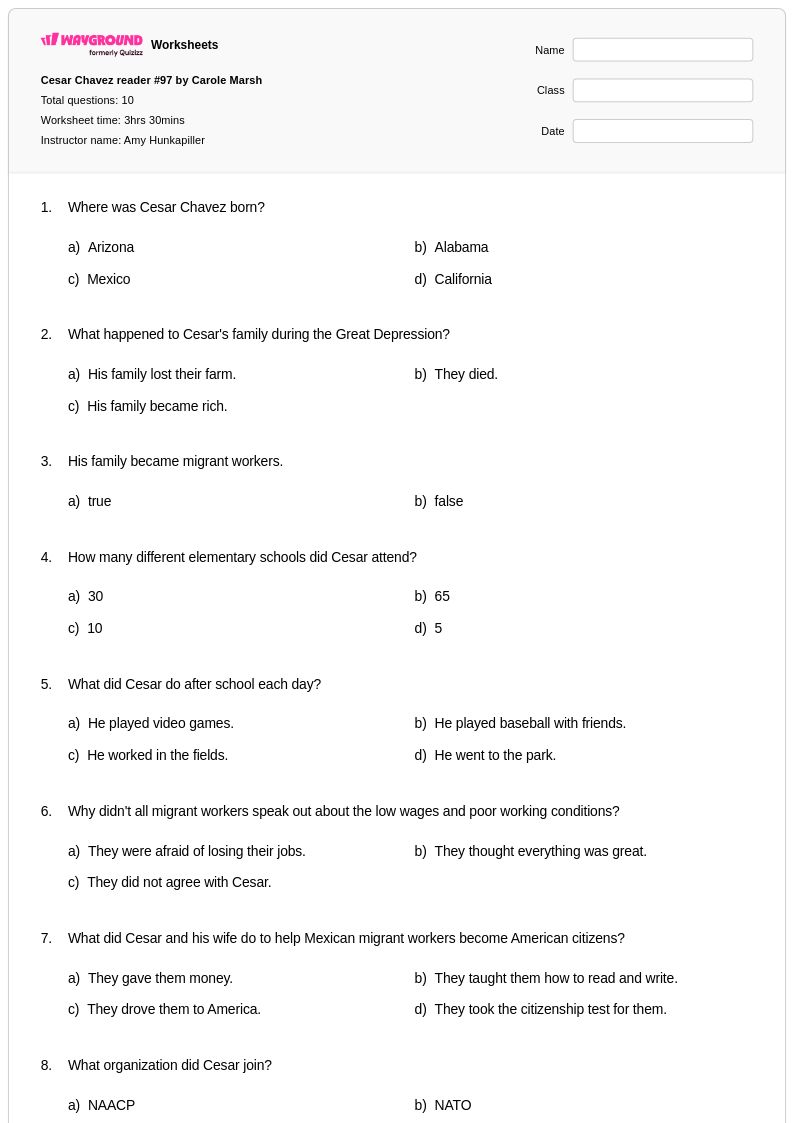
10 Q
5th
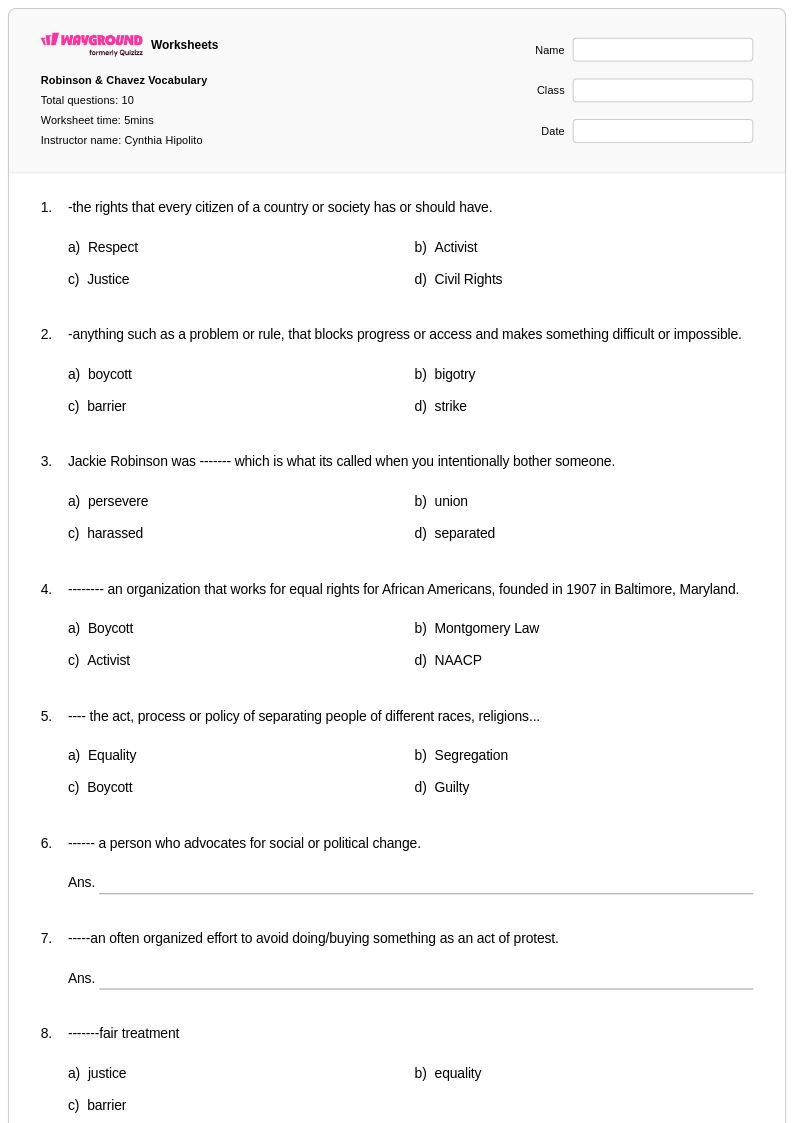
10 Q
5th
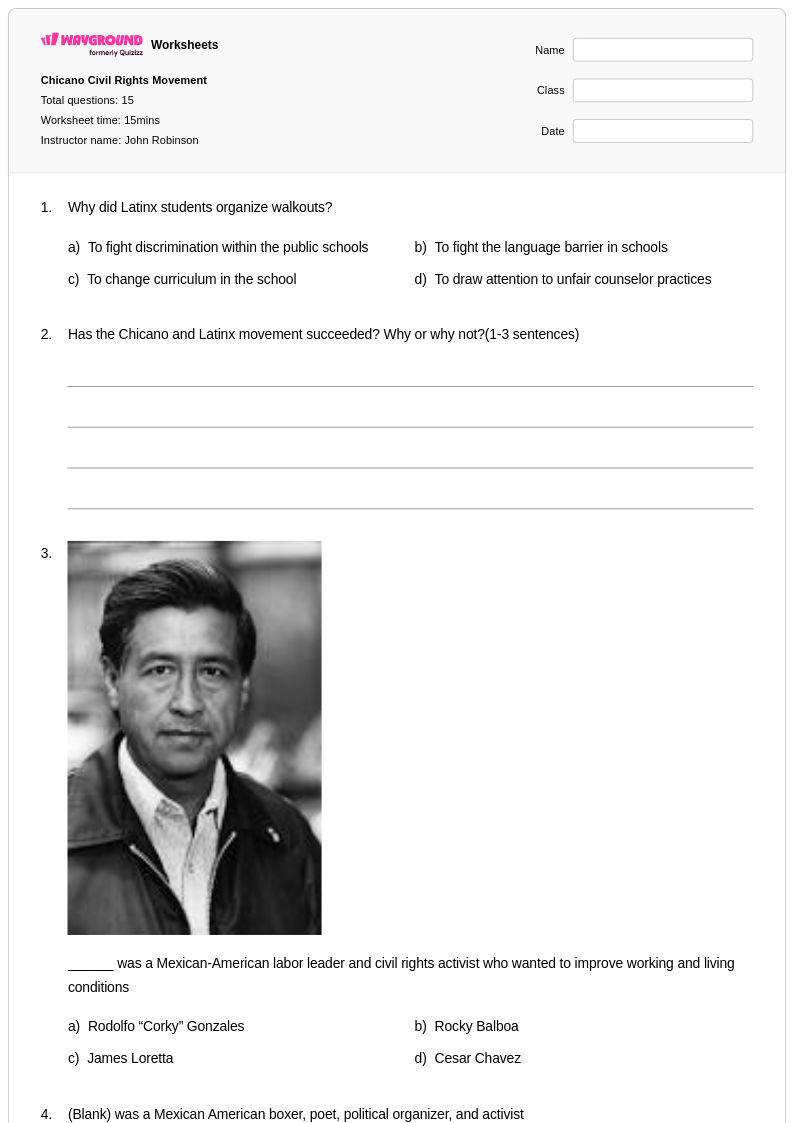
15 Q
11th - Uni
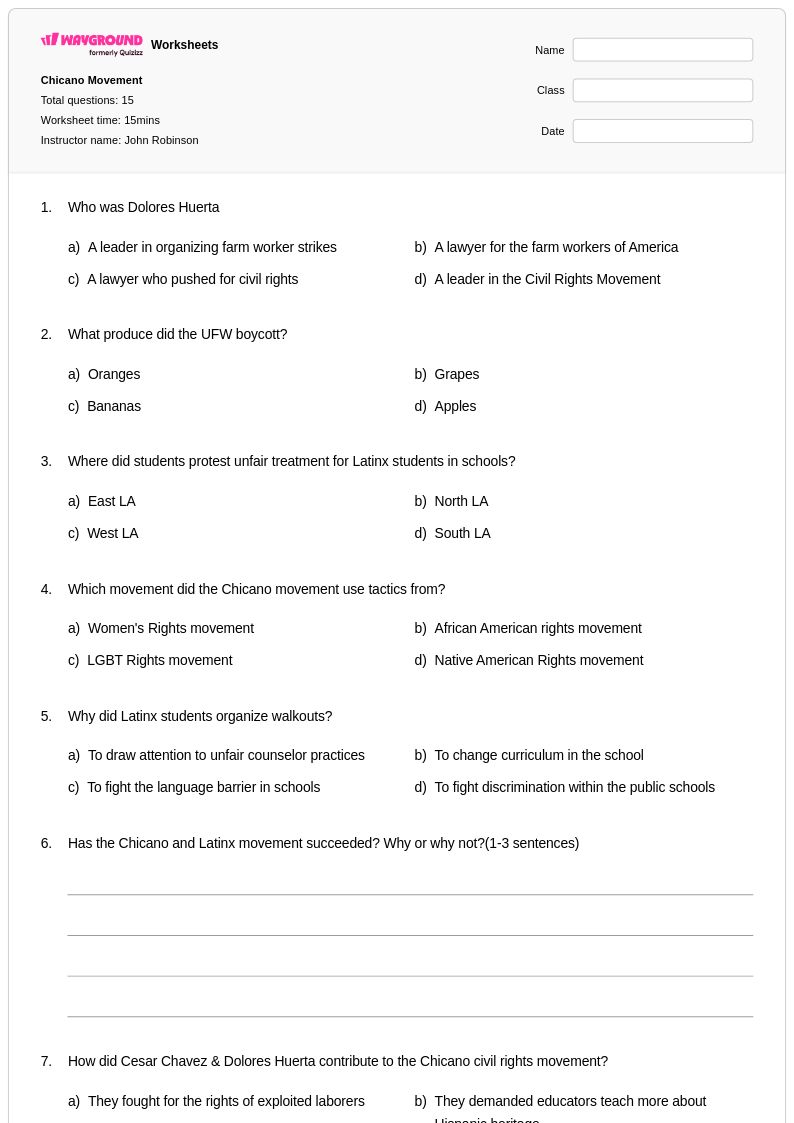
15 Q
11th - Uni
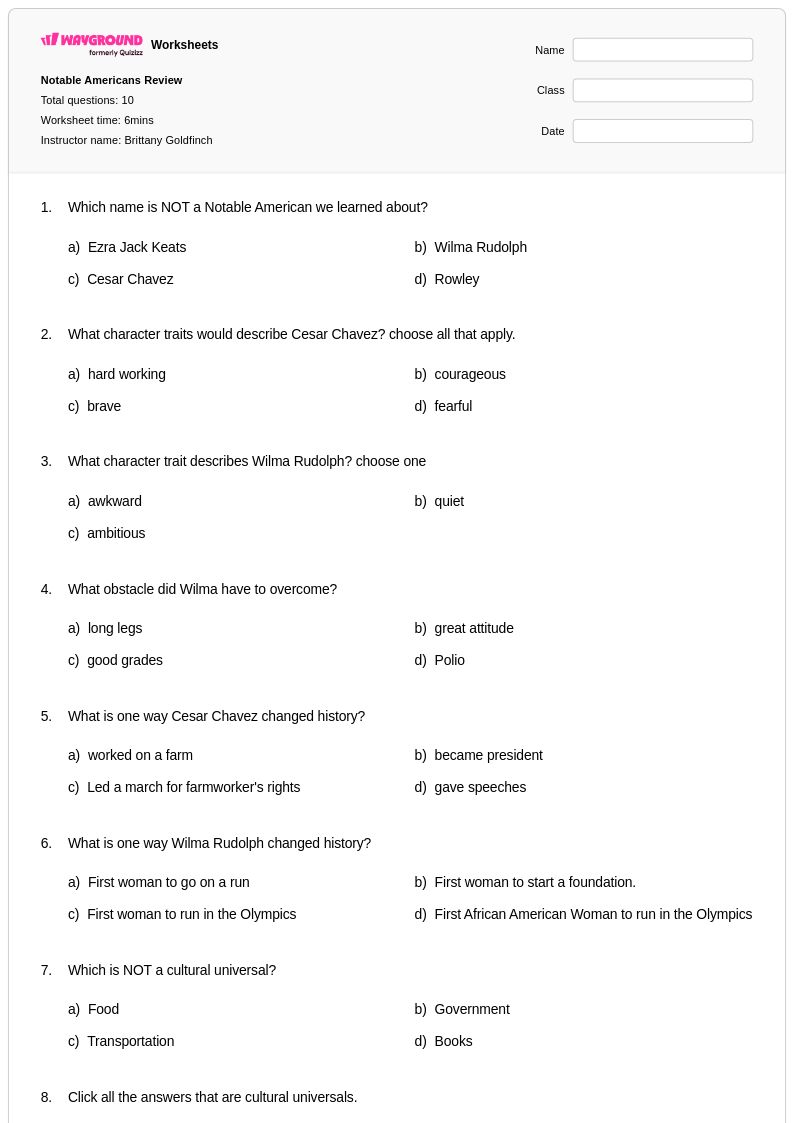
10 Q
3rd
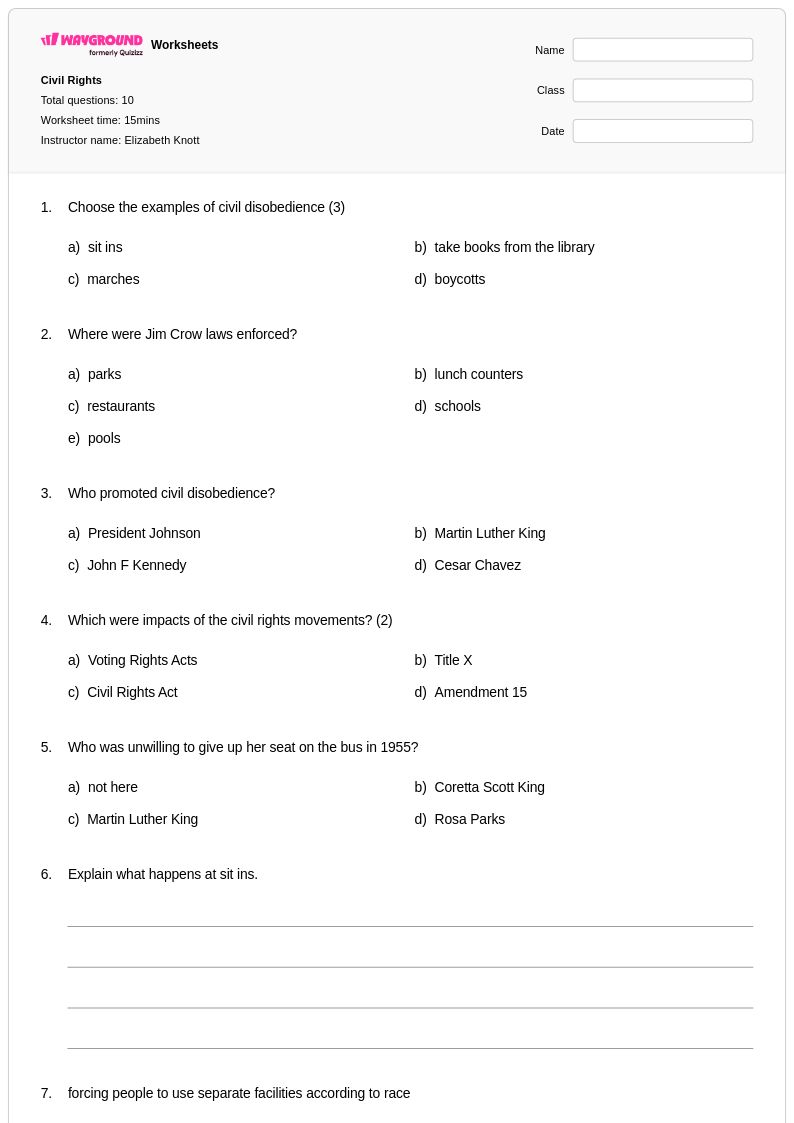
10 Q
5th
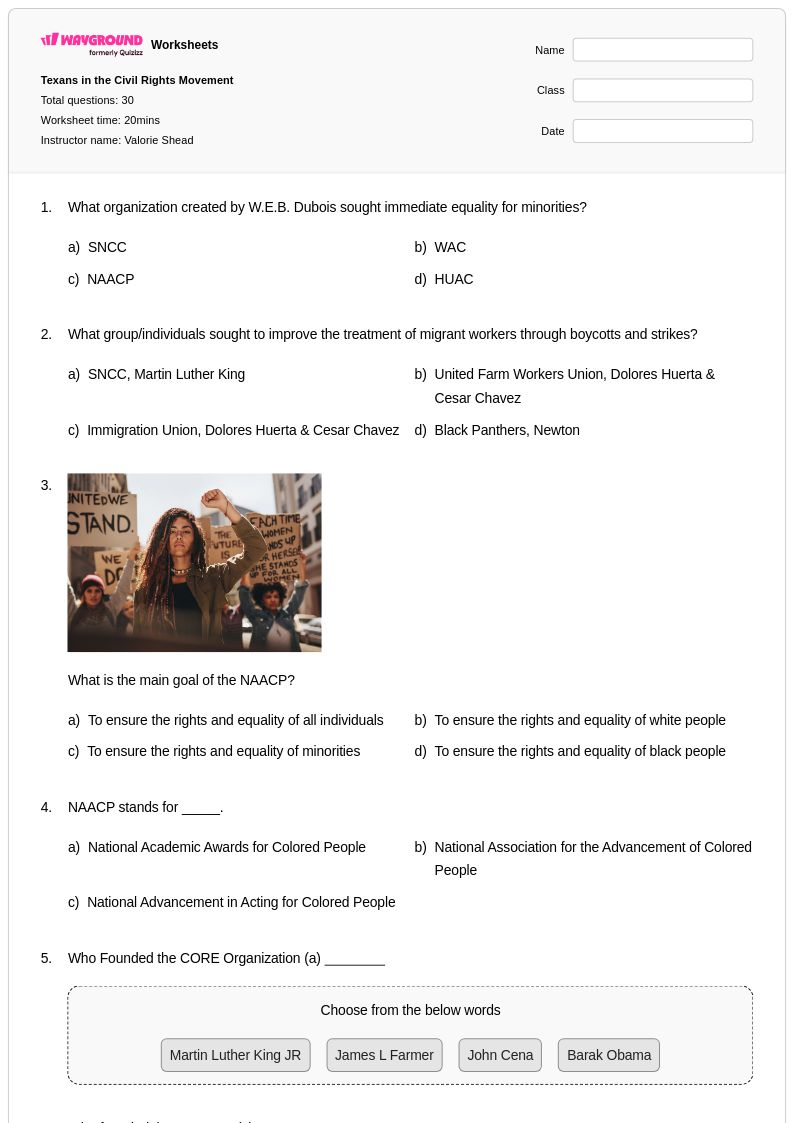
30 Q
7th
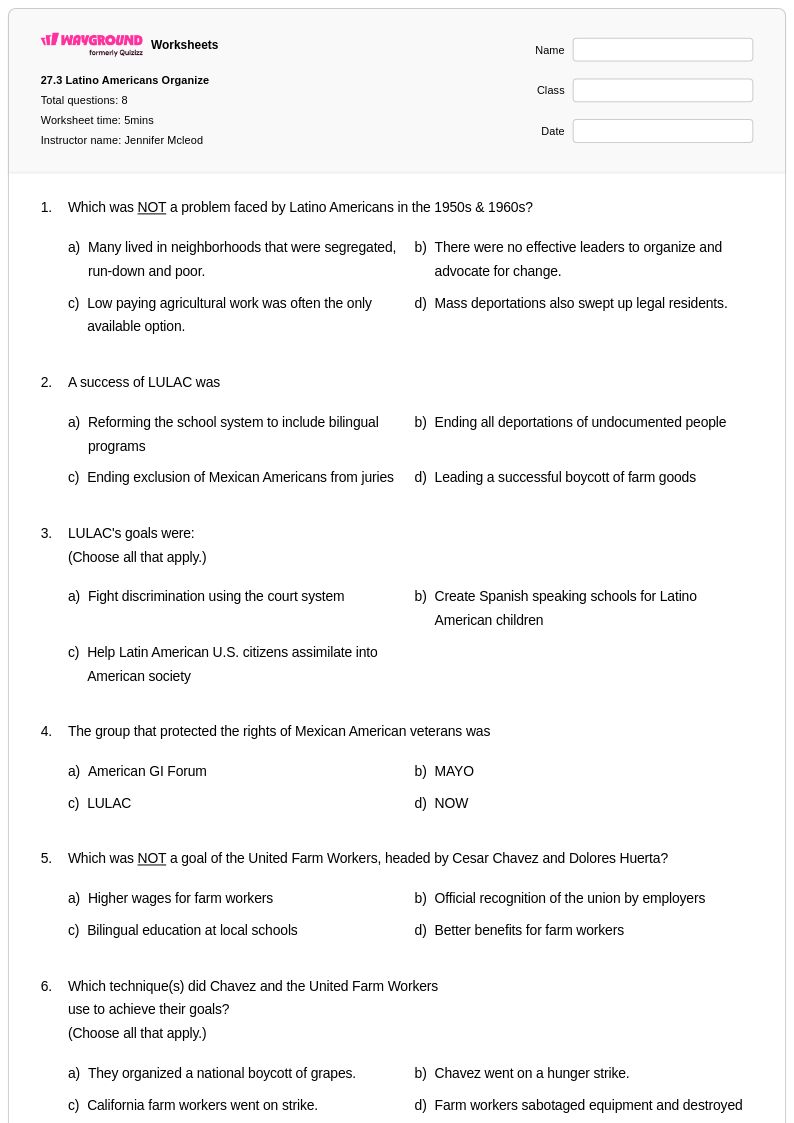
8 Q
10th
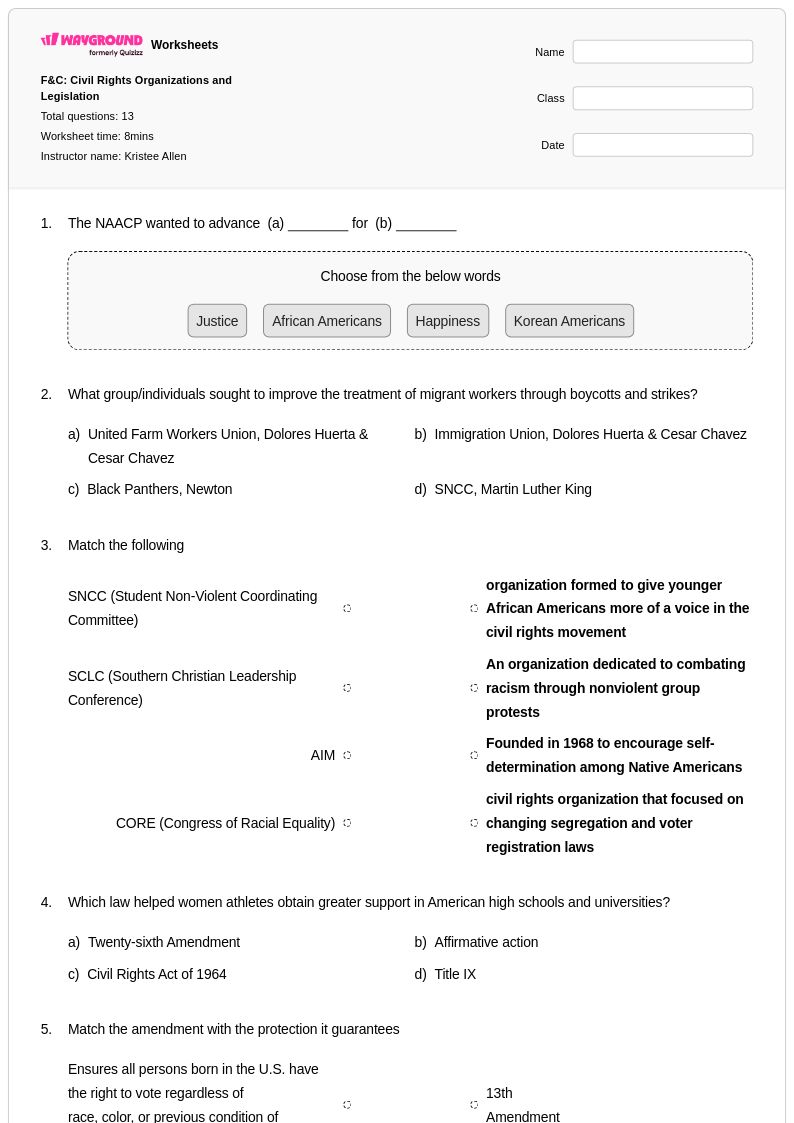
13 Q
9th - 12th
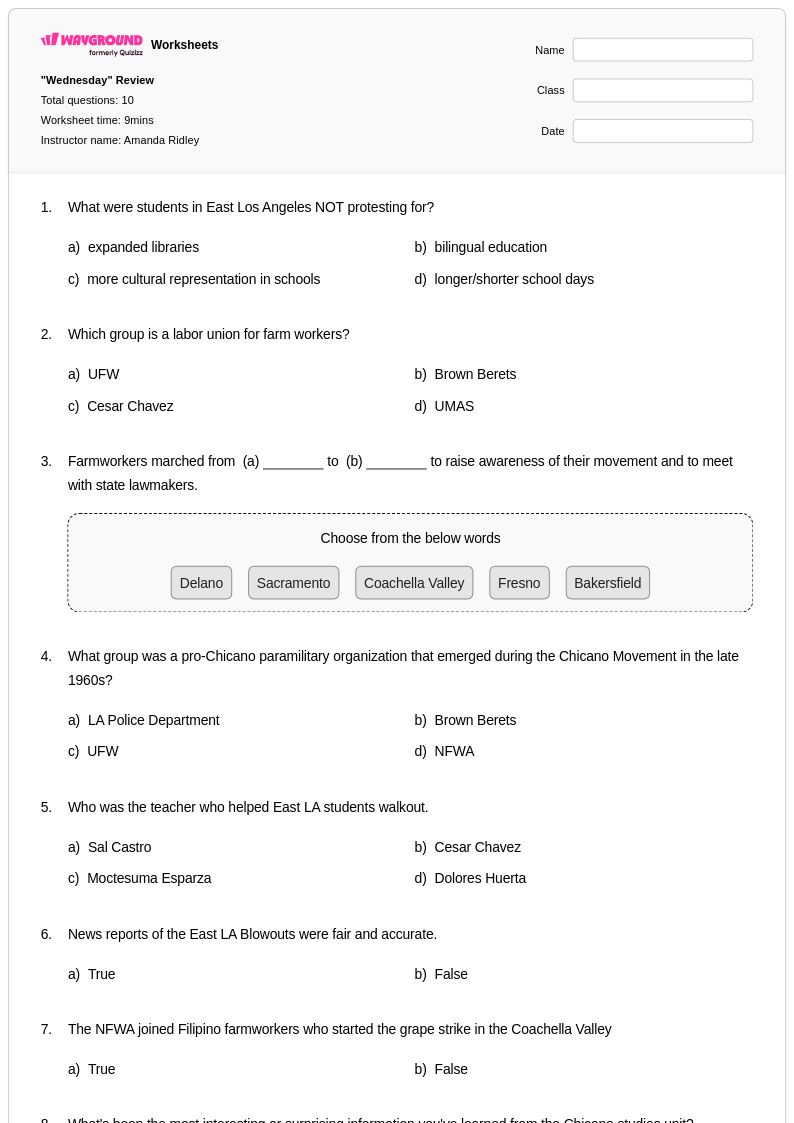
10 Q
9th
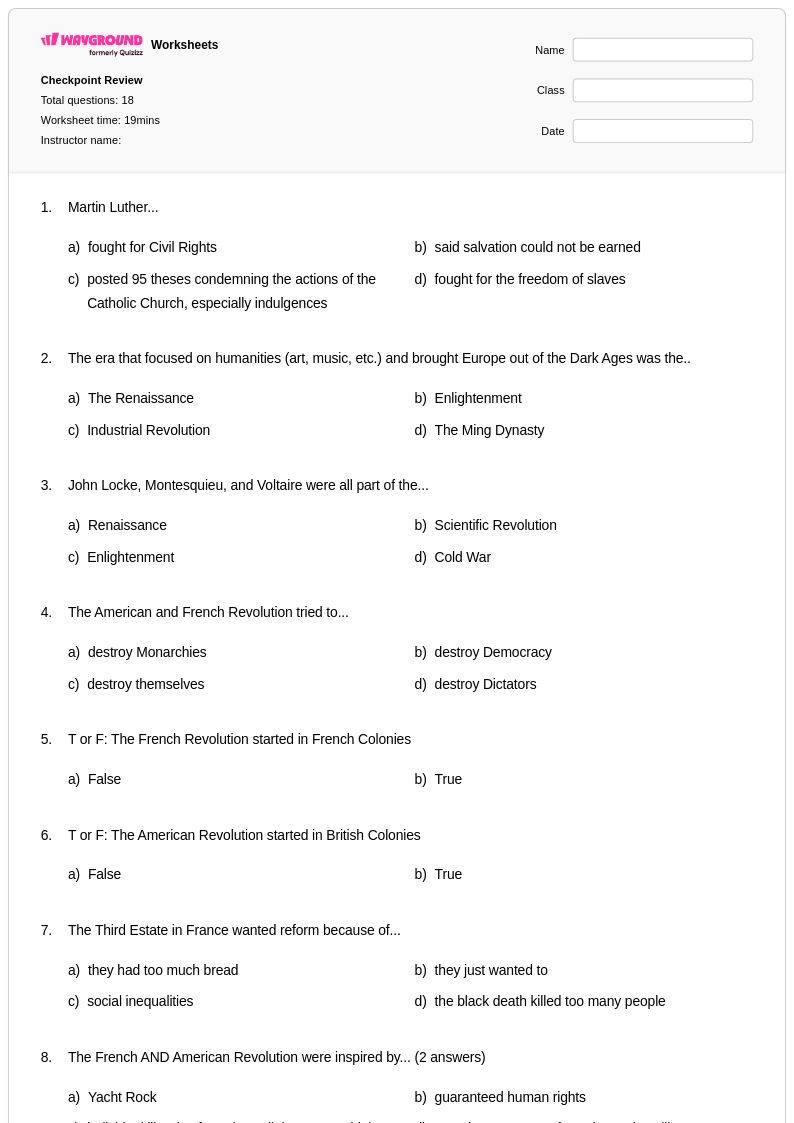
18 Q
10th
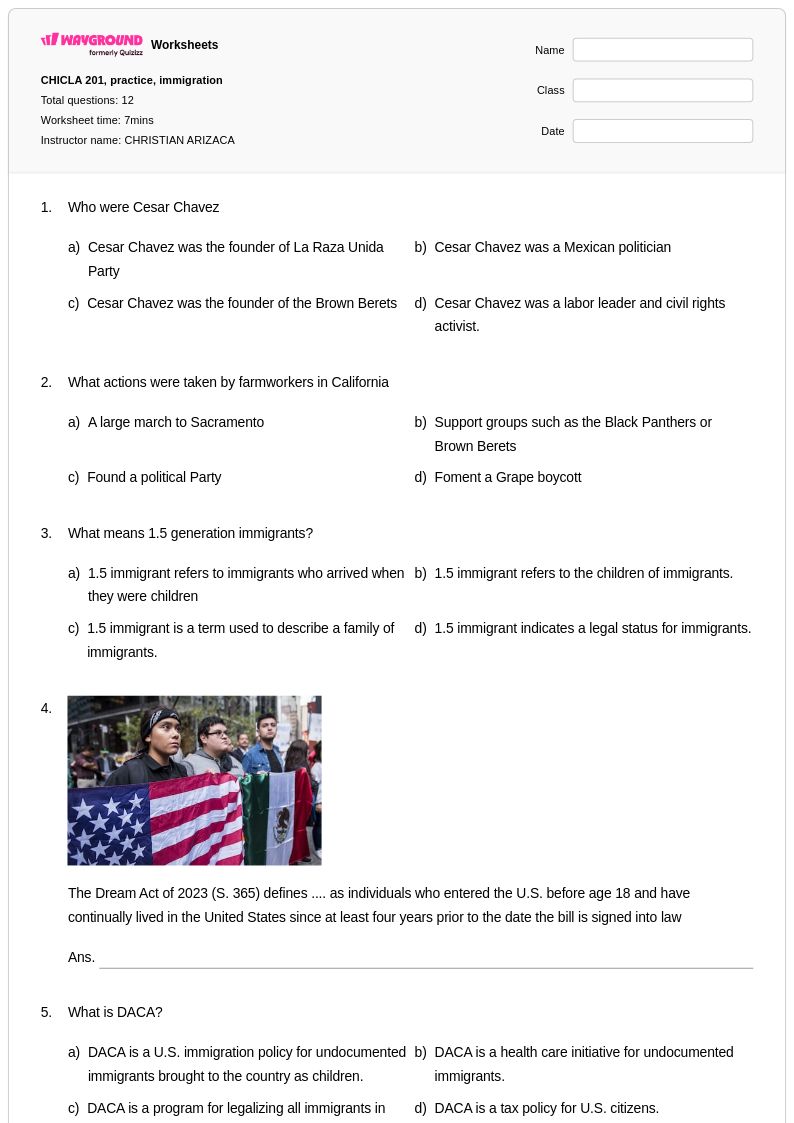
12 Q
Uni
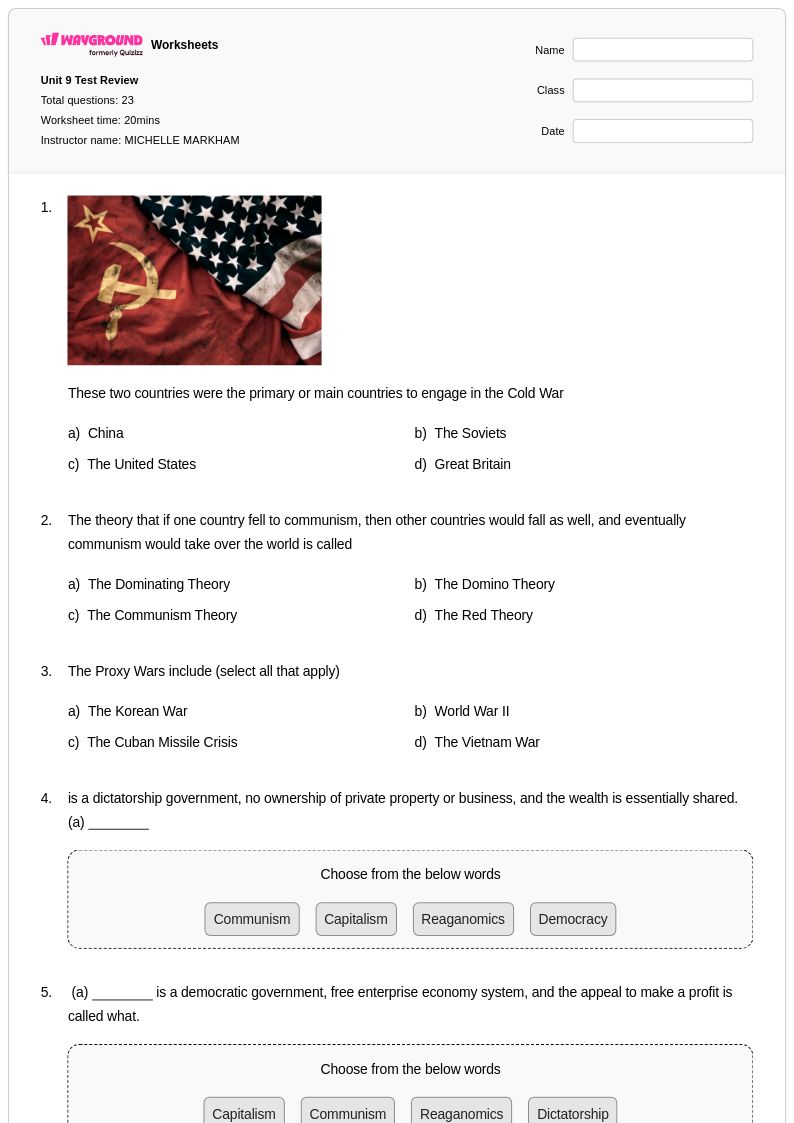
23 Q
7th
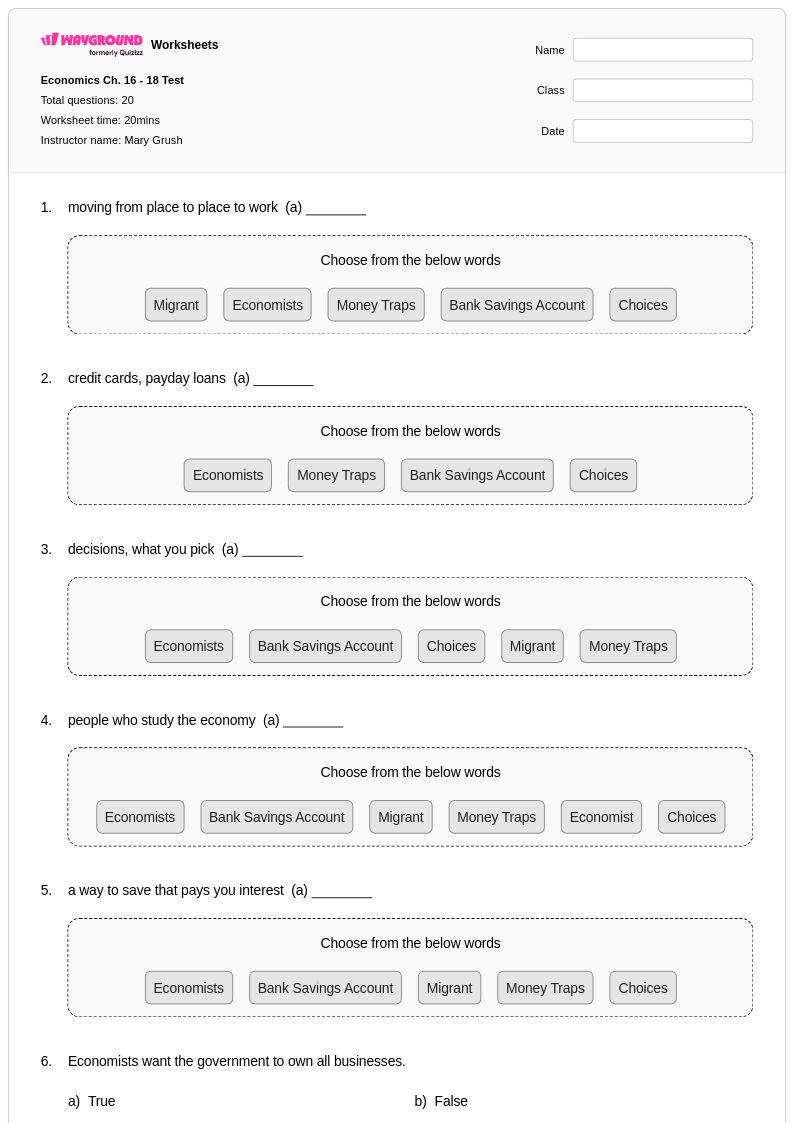
20 Q
12th
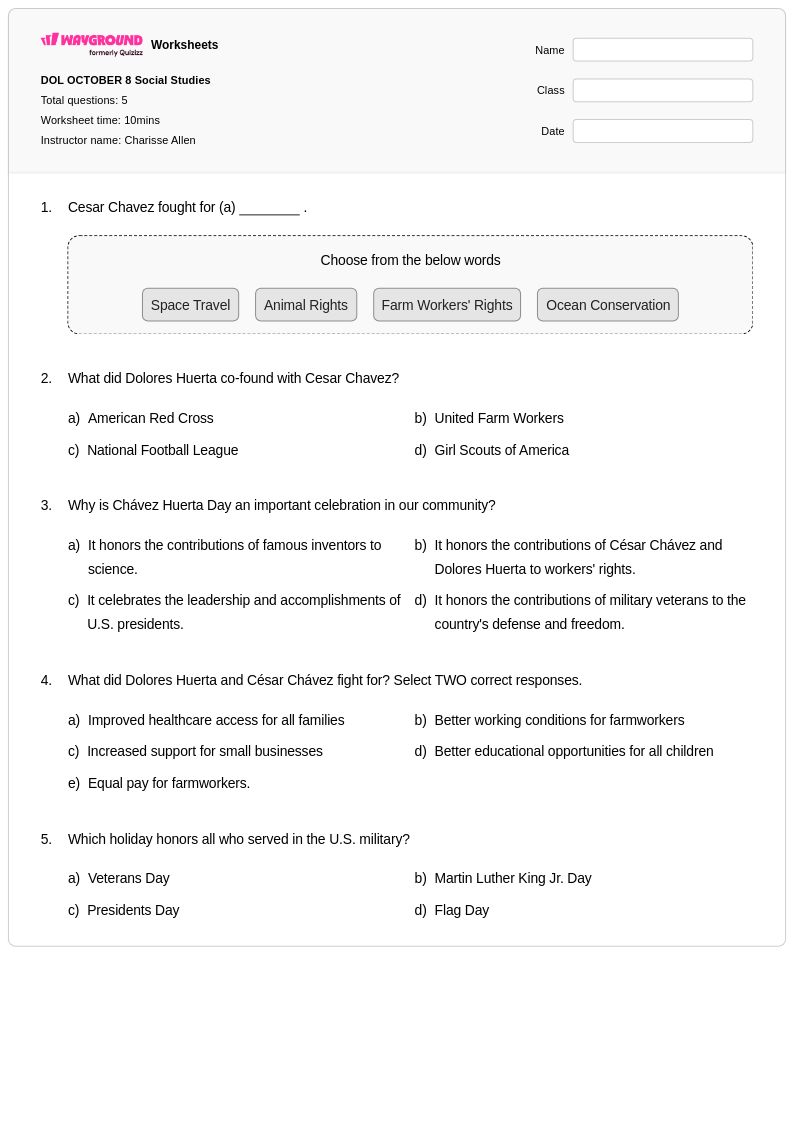
5 Q
2nd
13 Q
3rd
25 Q
11th - Uni
10 Q
3rd
21 Q
2nd
10 Q
3rd
24 Q
12th
19 Q
2nd
15 Q
3rd
Explore Worksheets by Subjects
Explore printable Cesar Chavez worksheets
Cesar Chavez worksheets available through Wayground (formerly Quizizz) provide students with comprehensive educational materials that explore the life, achievements, and lasting impact of this influential civil rights leader and labor organizer. These carefully crafted worksheets strengthen critical thinking skills as students analyze Chavez's role in founding the United Farm Workers union, his commitment to nonviolent protest methods, and his dedication to improving working conditions for agricultural laborers. The collection includes engaging practice problems that encourage students to examine primary sources, timeline activities that trace key events in Chavez's activism, and analytical exercises that connect his work to broader themes of social justice and community organizing. Teachers can access these resources as free printables with accompanying answer keys, making it simple to incorporate meaningful lessons about civil rights history into their curriculum while supporting diverse learning styles through varied question formats and pdf accessibility.
Wayground (formerly Quizizz) empowers educators with an extensive library of millions of teacher-created resources focused on Cesar Chavez and civil rights education, featuring robust search and filtering capabilities that allow instructors to quickly locate materials aligned with specific learning standards and grade-level requirements. The platform's differentiation tools enable teachers to customize worksheets for students with varying ability levels, while flexible formatting options provide both printable pdf versions for traditional classroom use and digital formats for technology-integrated learning environments. These comprehensive features streamline lesson planning by offering ready-to-use materials for introducing new concepts, provide targeted resources for remediation when students need additional support understanding civil rights movements, and supply enriching content for advanced learners ready to explore deeper connections between historical activism and contemporary social issues. The platform's organized approach to worksheet distribution ensures that educators can efficiently locate, adapt, and implement high-quality materials that reinforce essential skills in historical analysis, reading comprehension, and civic engagement.
FAQs
How do I teach Cesar Chavez to elementary and middle school students?
What kinds of activities help students understand Cesar Chavez's impact?
What misconceptions do students commonly have about Cesar Chavez?
How can I connect Cesar Chavez's story to broader civil rights history in my curriculum?
How do I use Cesar Chavez worksheets from Wayground in my classroom?
How do I support different reading levels when teaching about Cesar Chavez?