
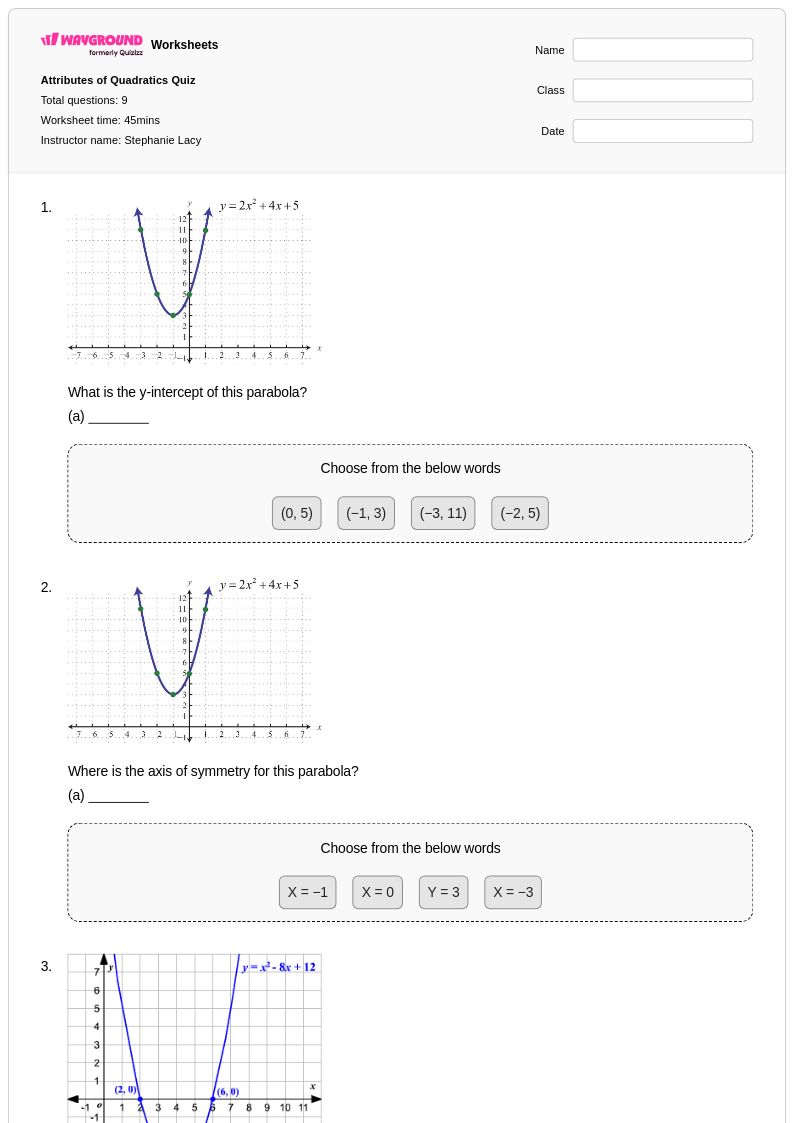
9 Q
9th - 12th
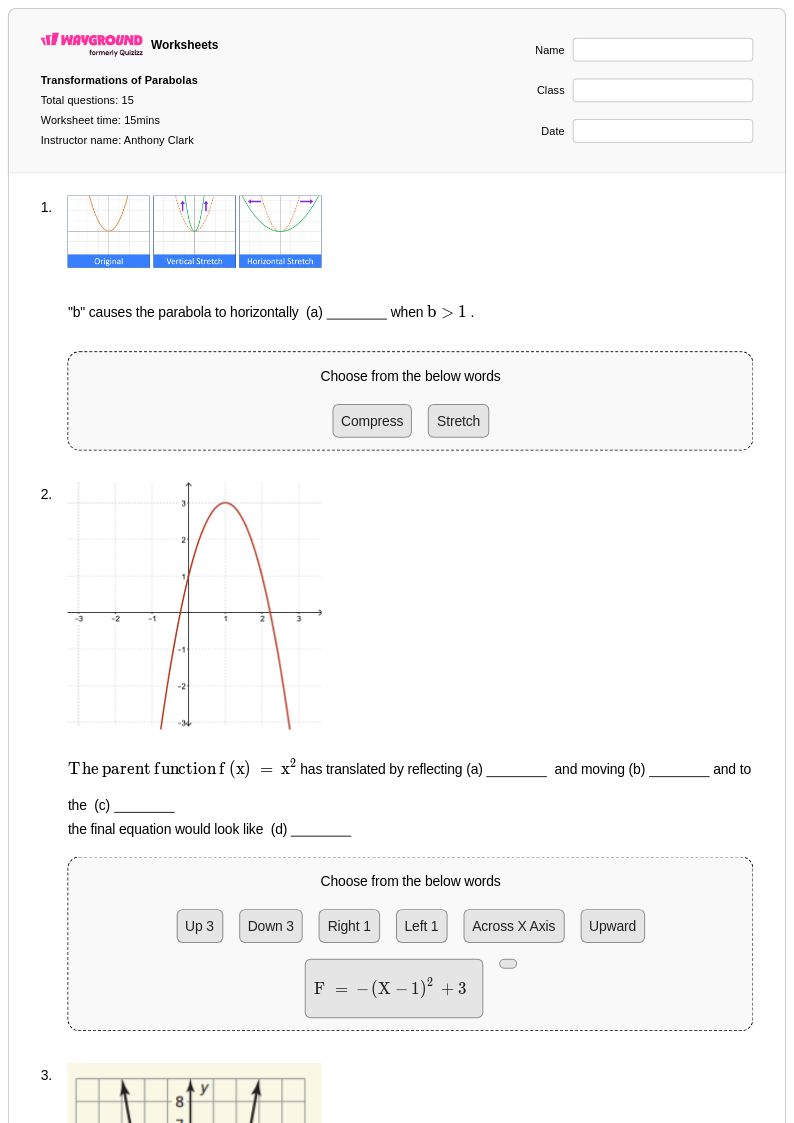
15 Q
9th - Uni
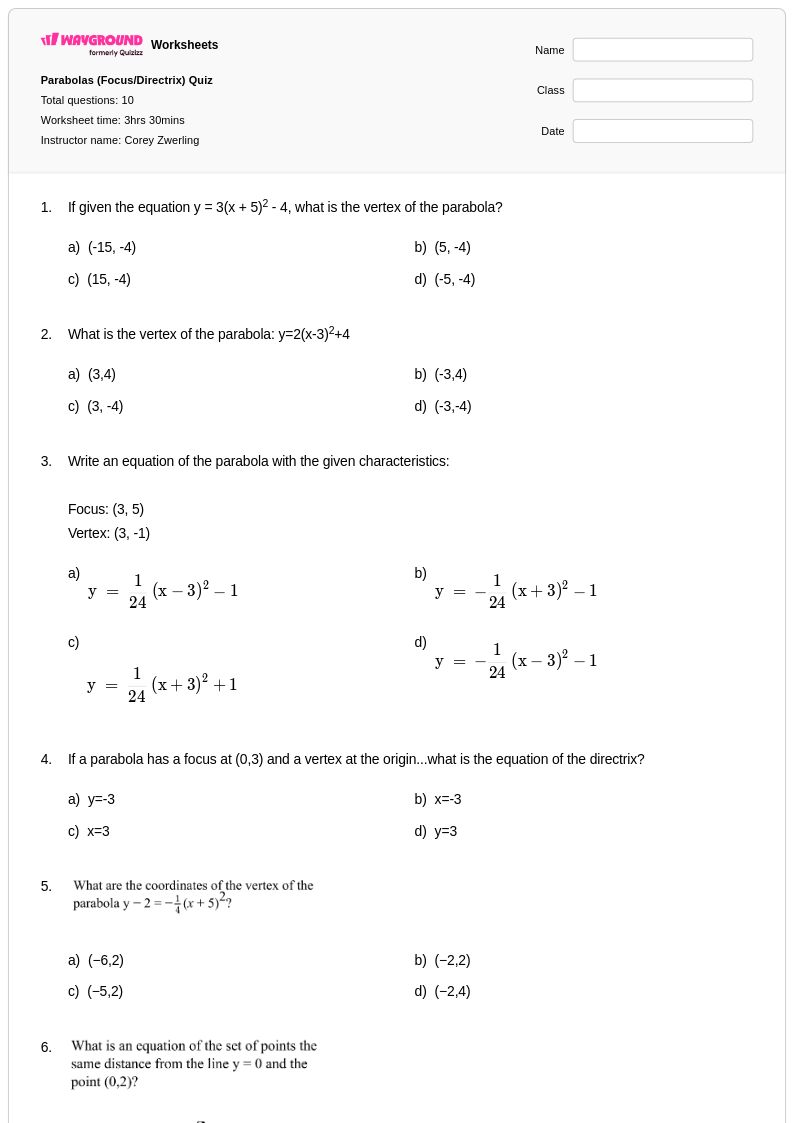
10 Q
11th
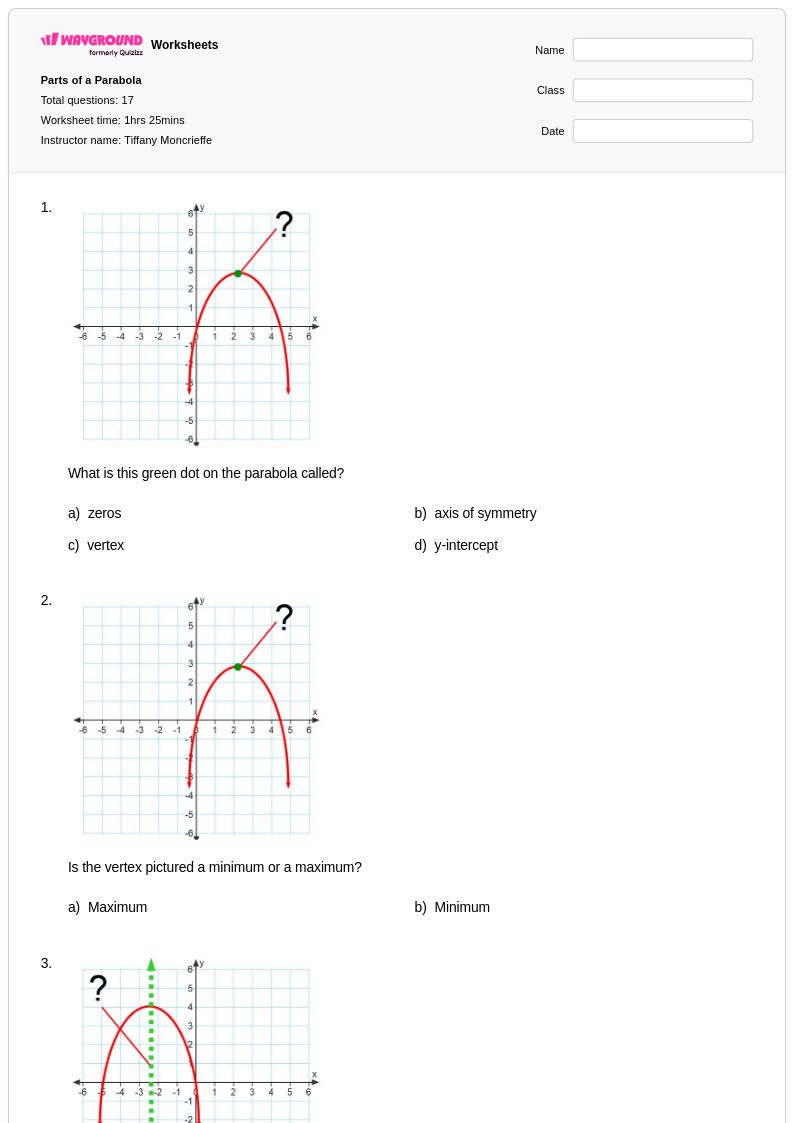
17 Q
9th - 12th
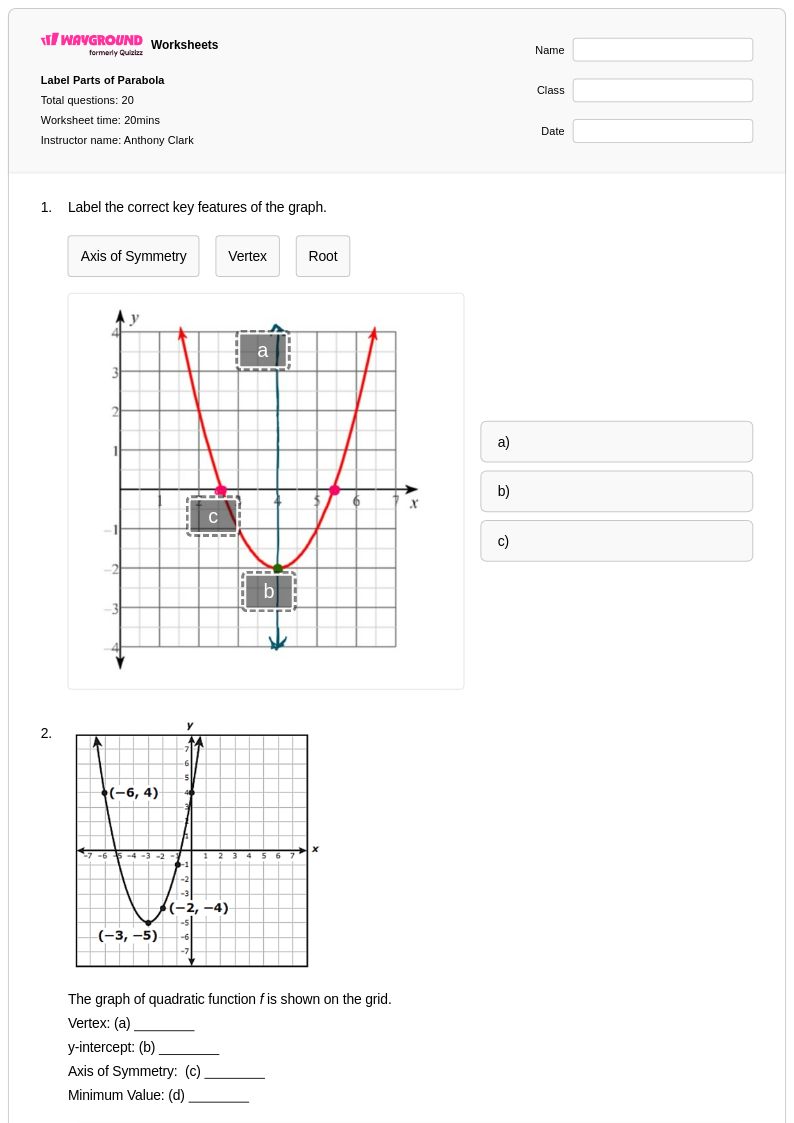
20 Q
9th - Uni
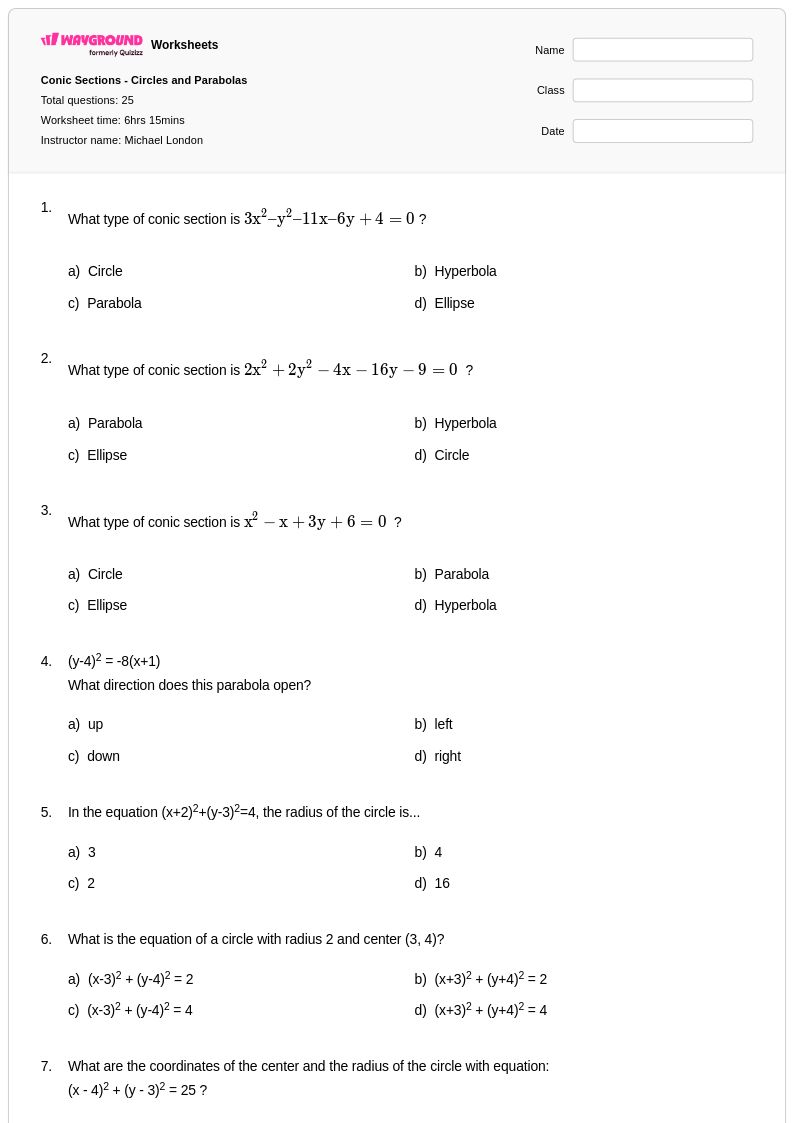
25 Q
10th - 12th
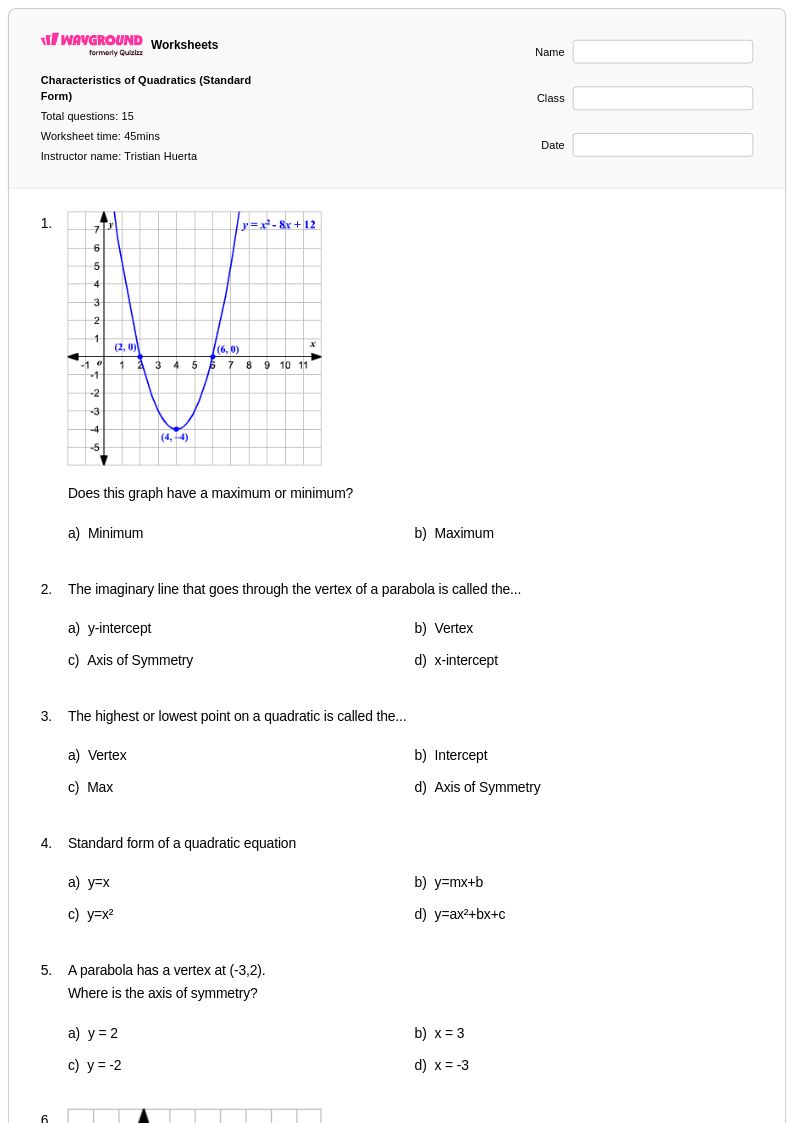
15 Q
9th - 11th
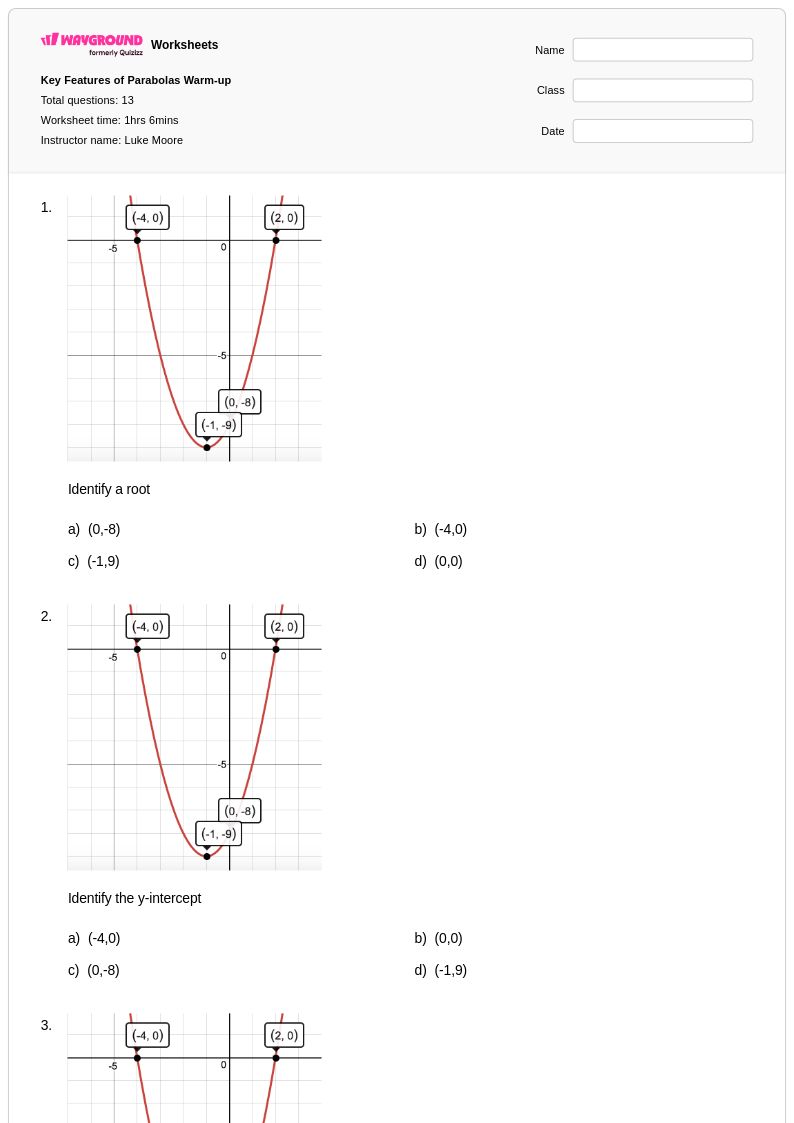
13 Q
9th - 12th
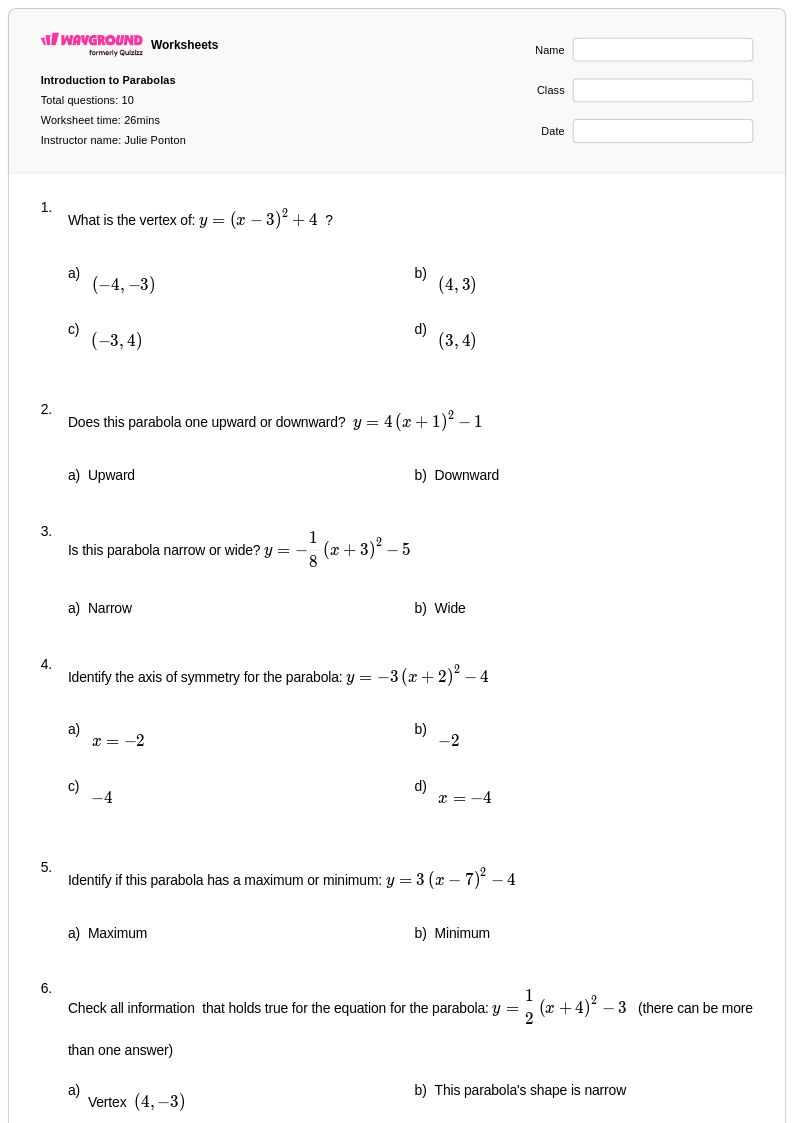
10 Q
9th - 12th
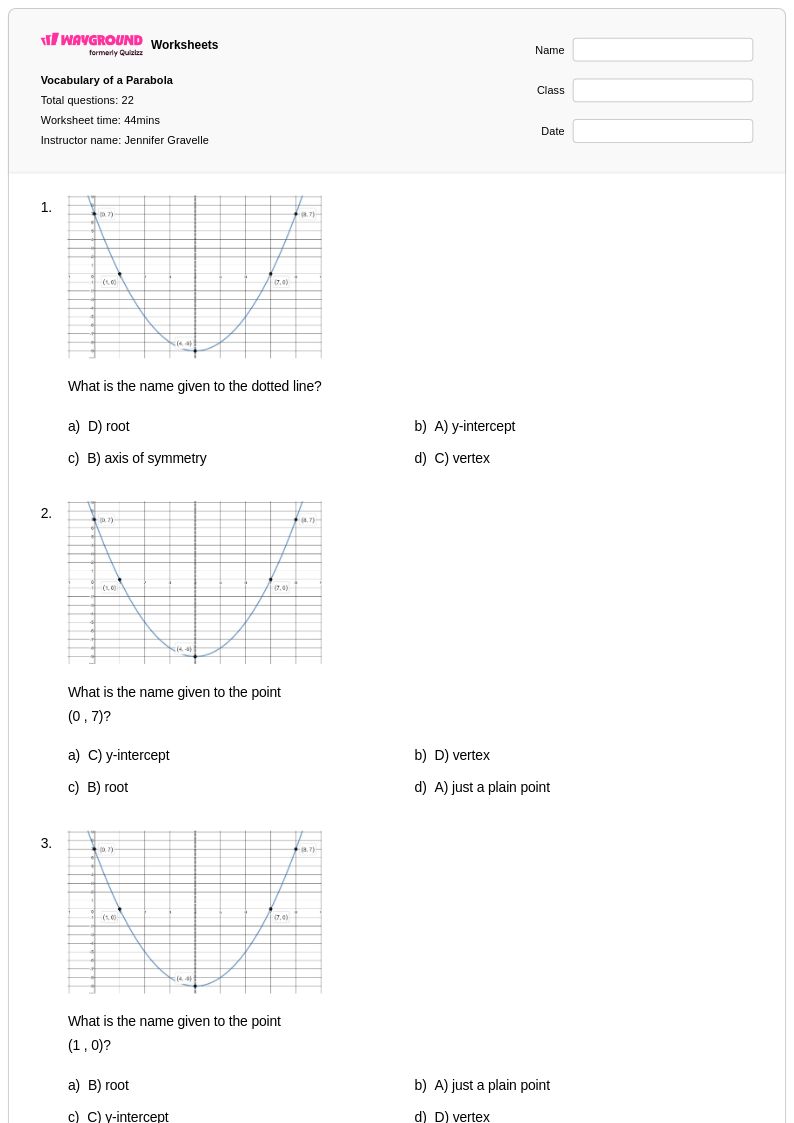
22 Q
9th - 12th
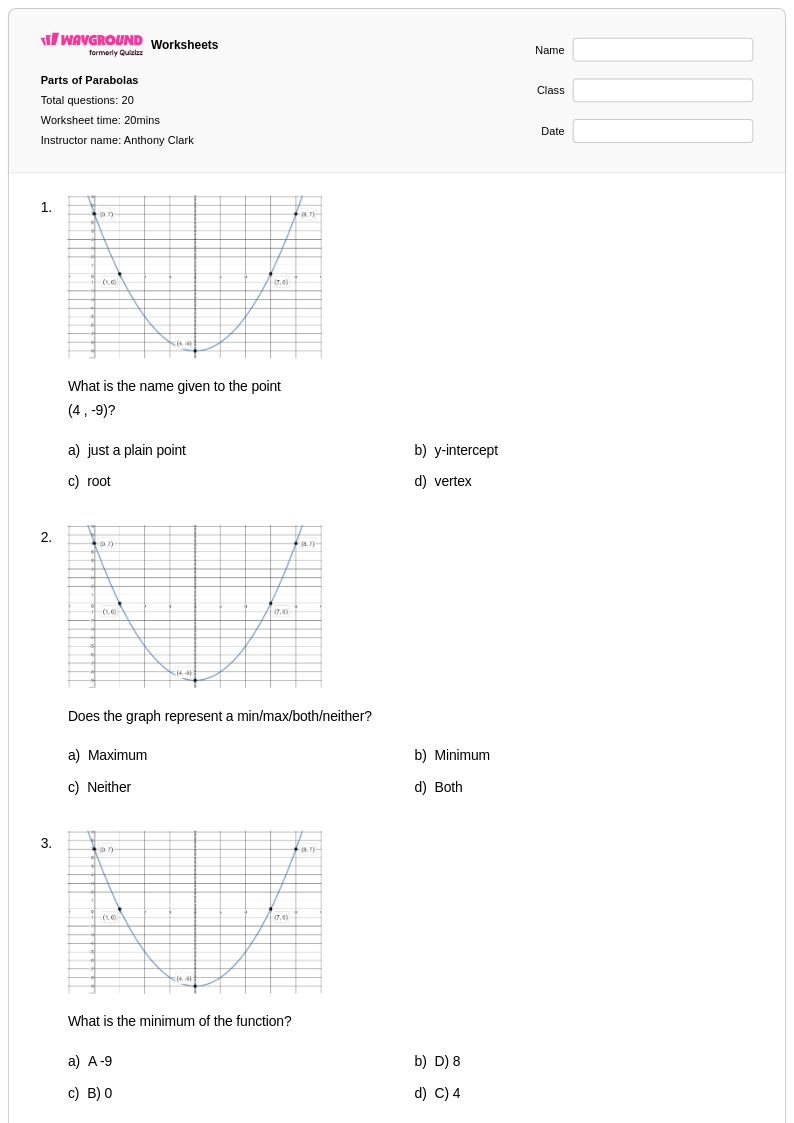
20 Q
9th - Uni
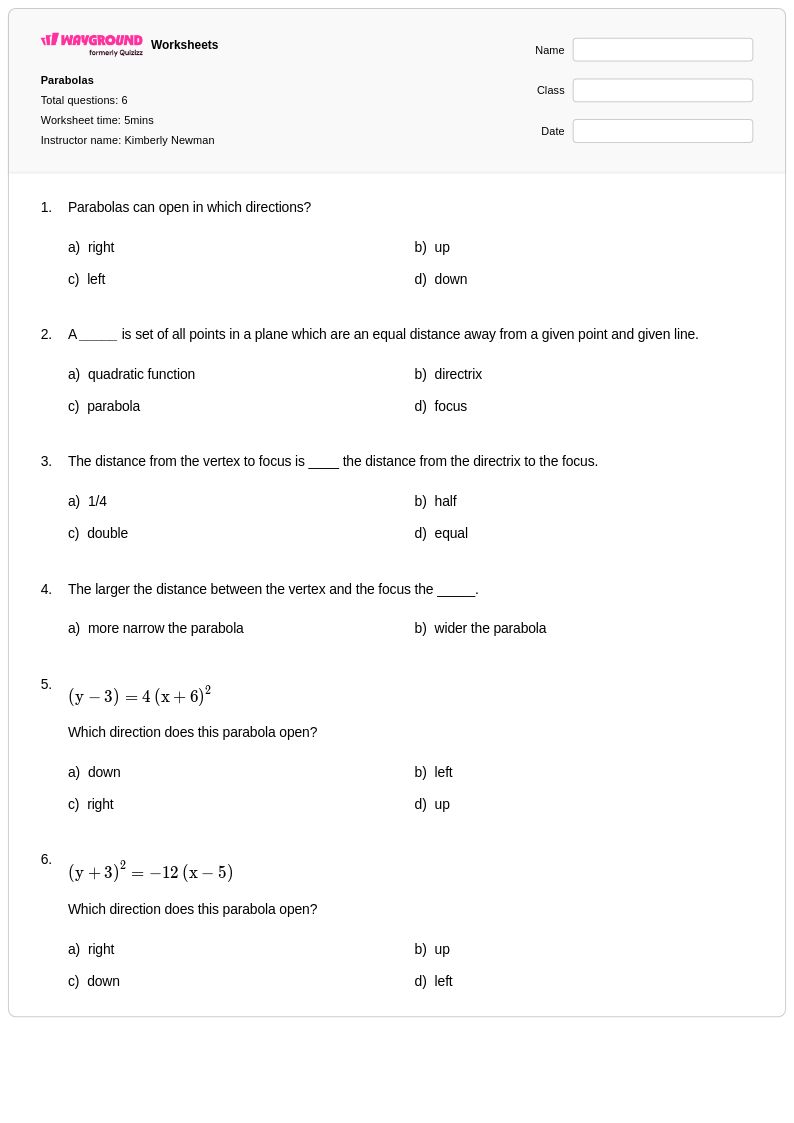
6 Q
9th - 12th
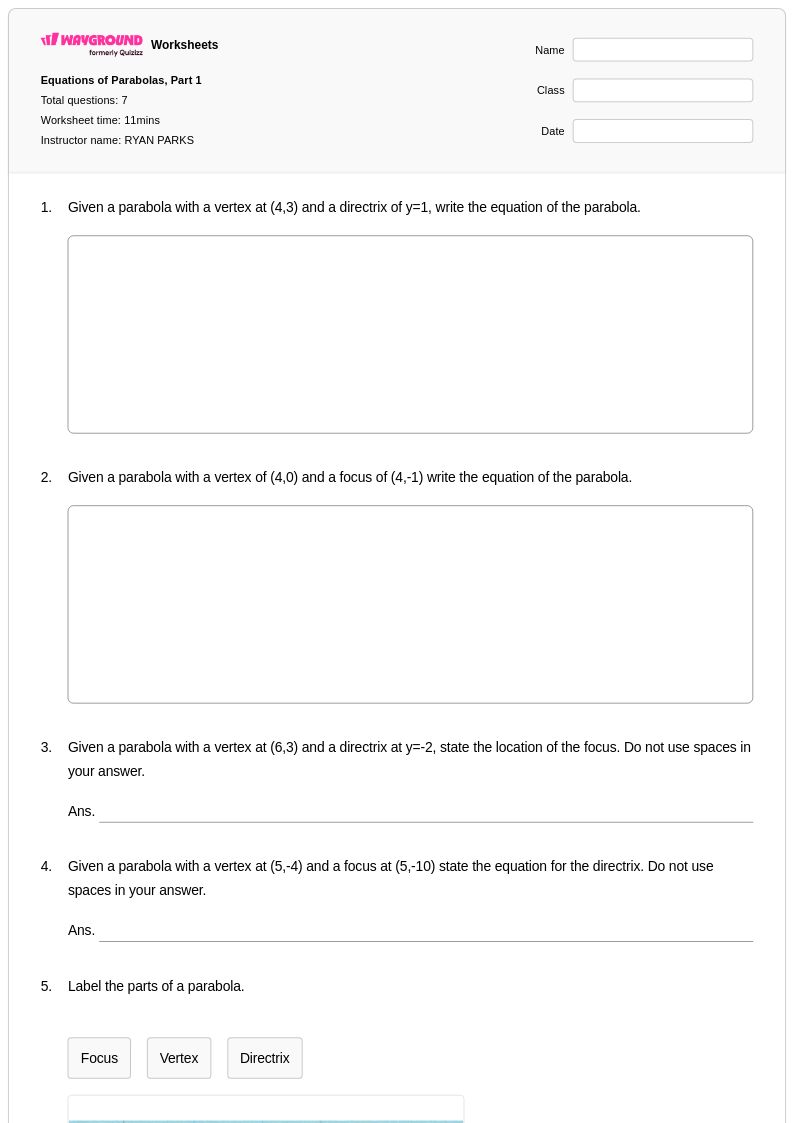
7 Q
9th - 12th
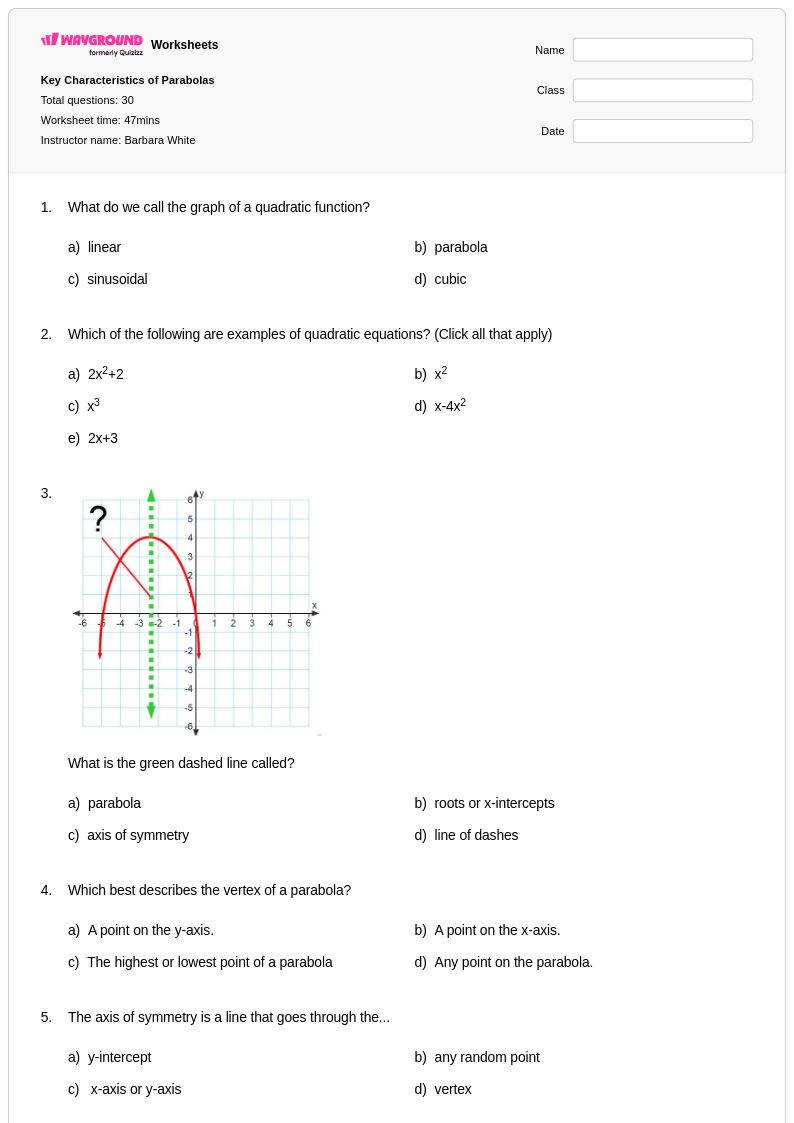
30 Q
9th - 12th
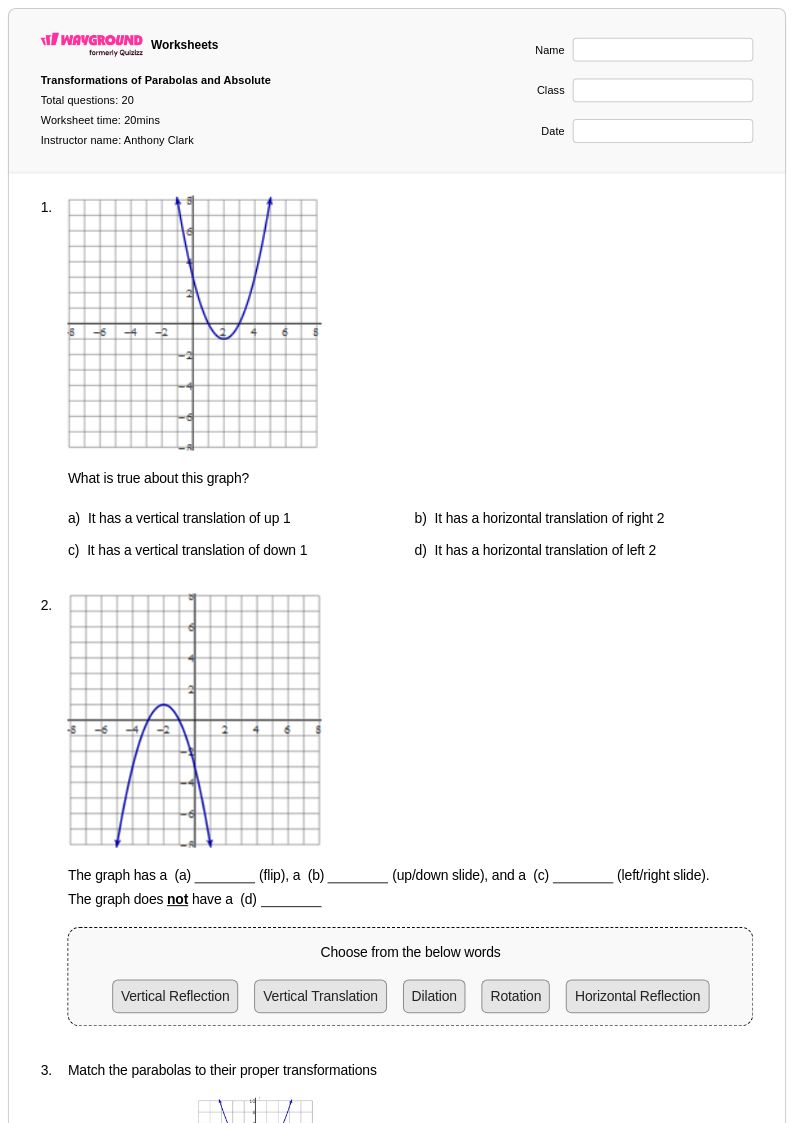
20 Q
10th - Uni
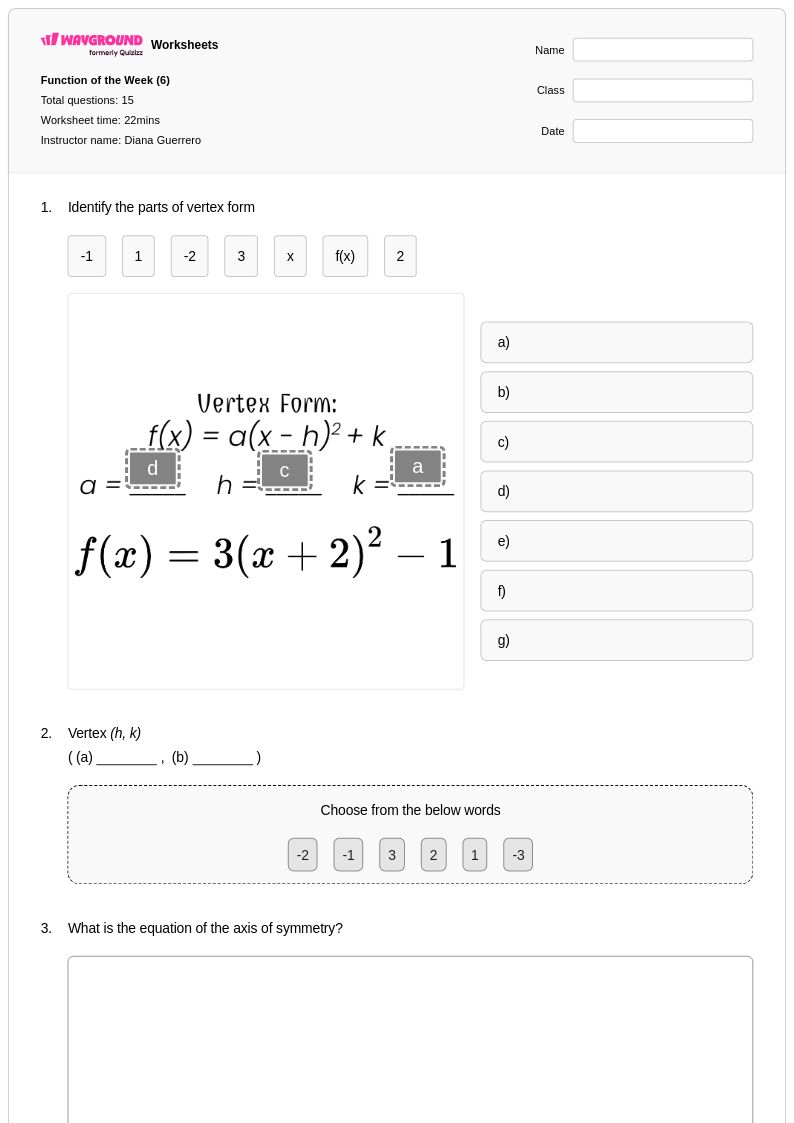
15 Q
9th - 12th
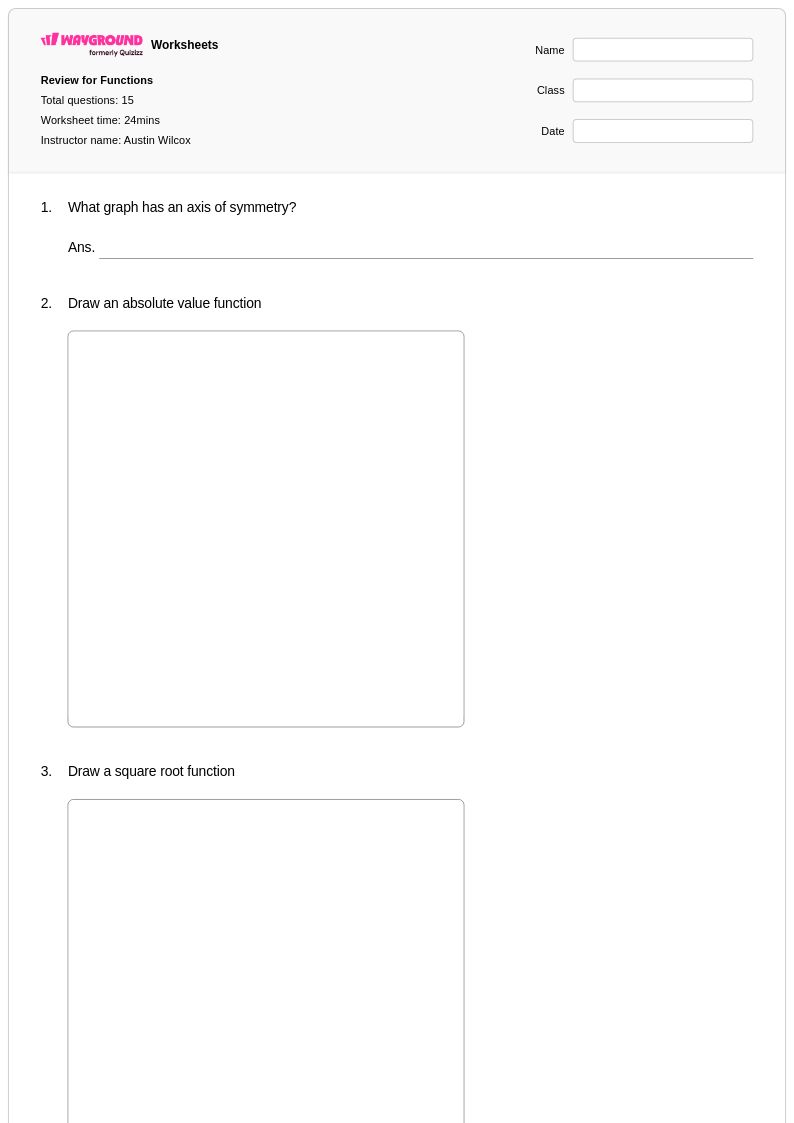
15 Q
9th - Uni
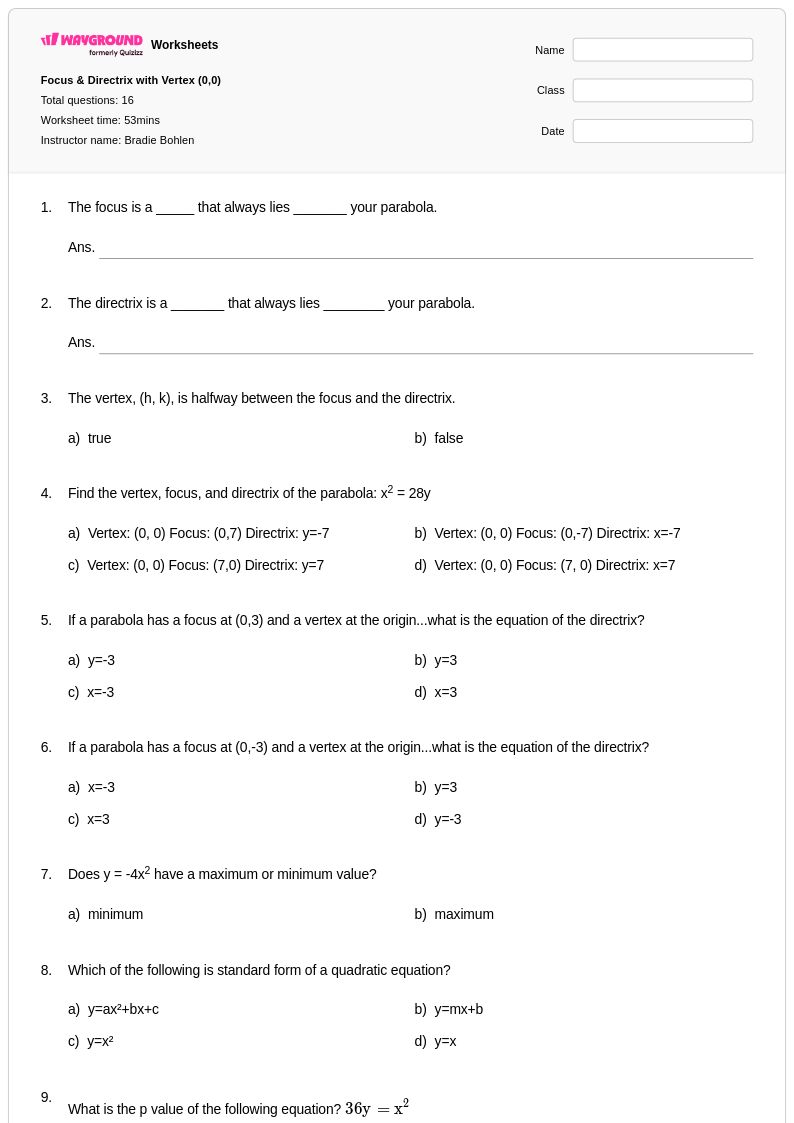
16 Q
11th
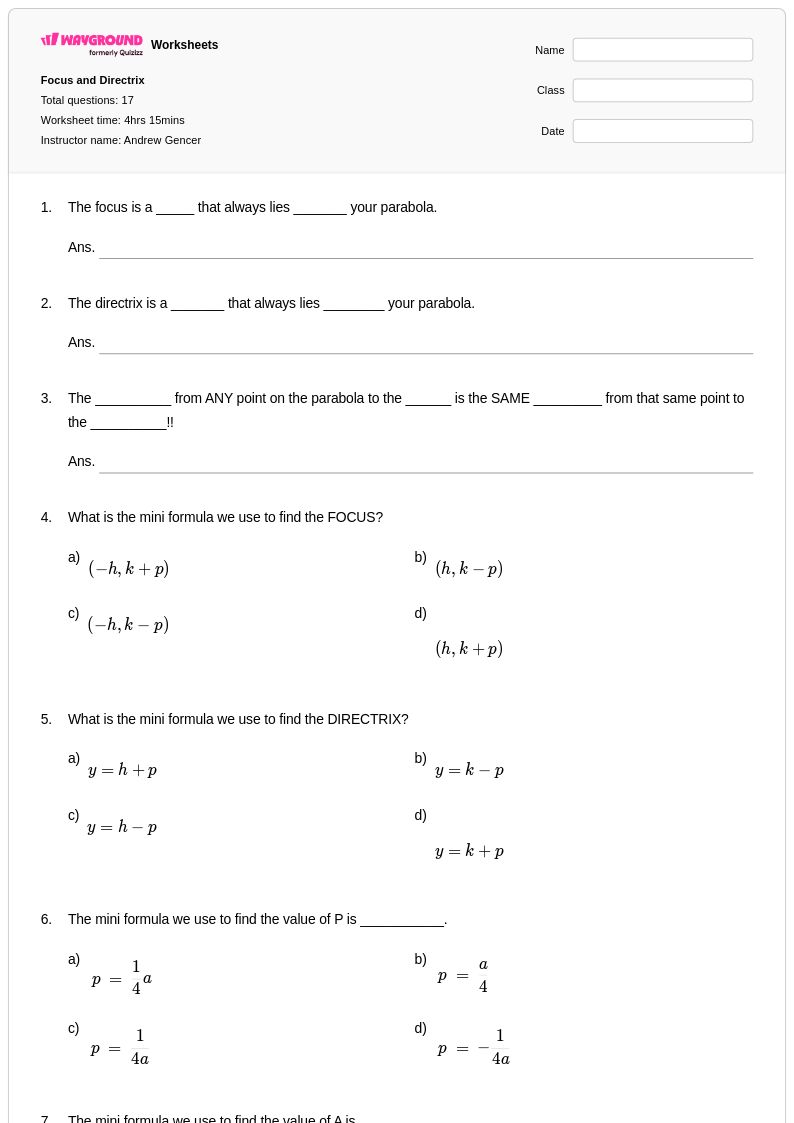
17 Q
9th - 12th
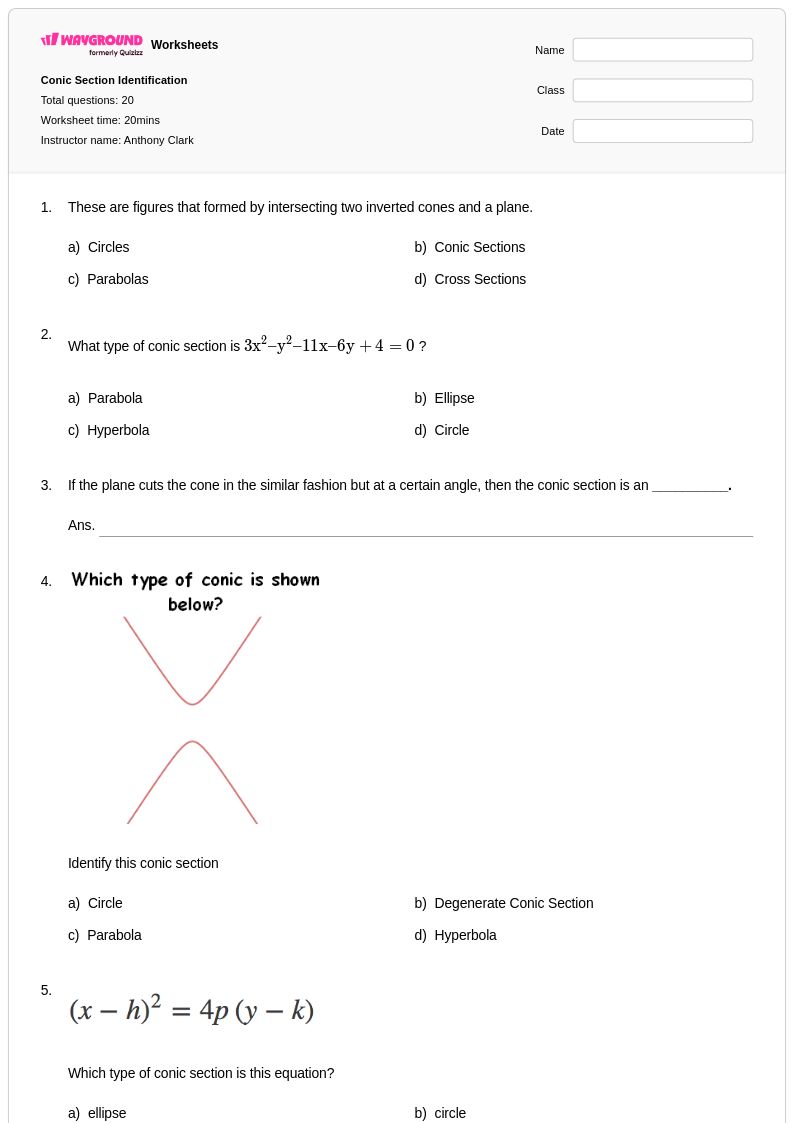
20 Q
11th - Uni
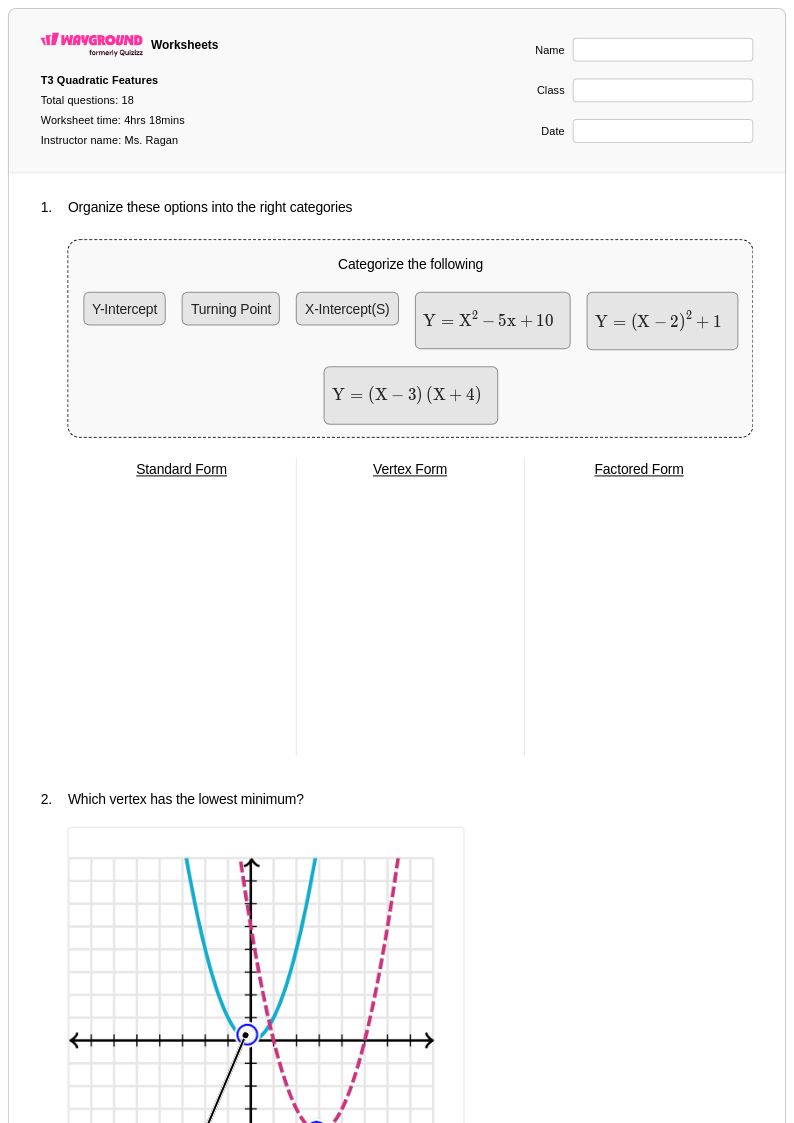
18 Q
9th - 12th
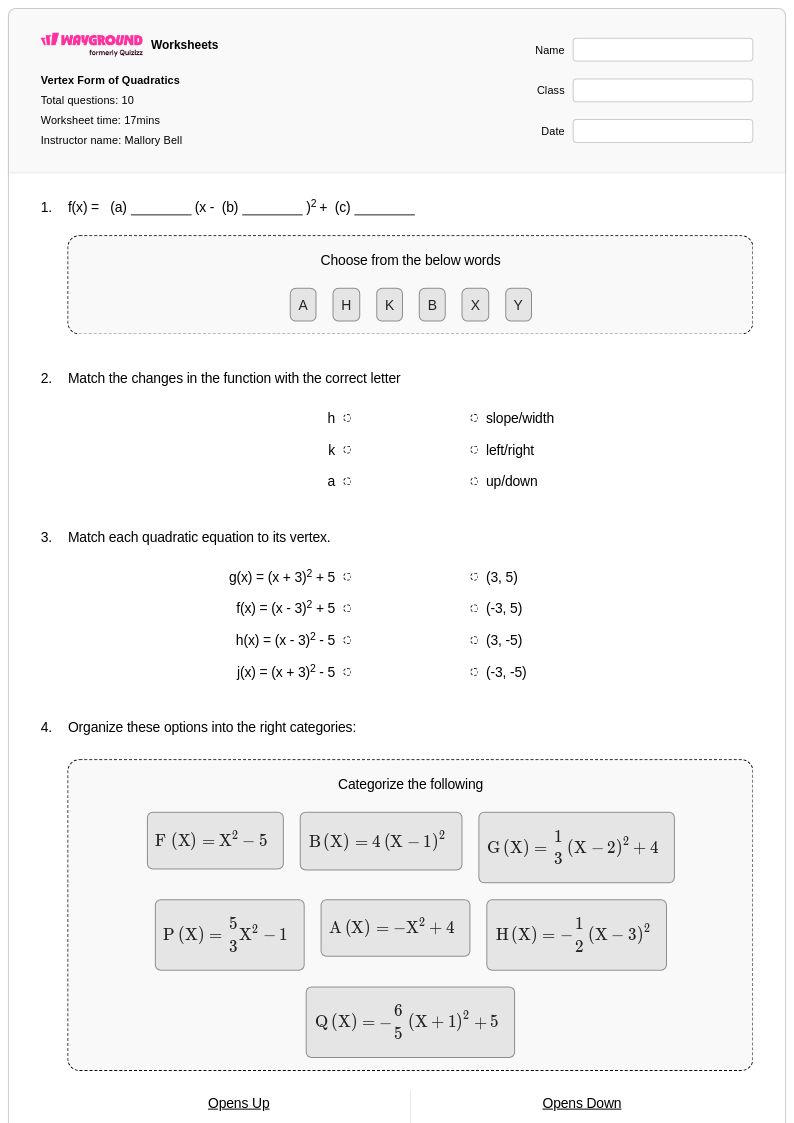
10 Q
9th - 12th
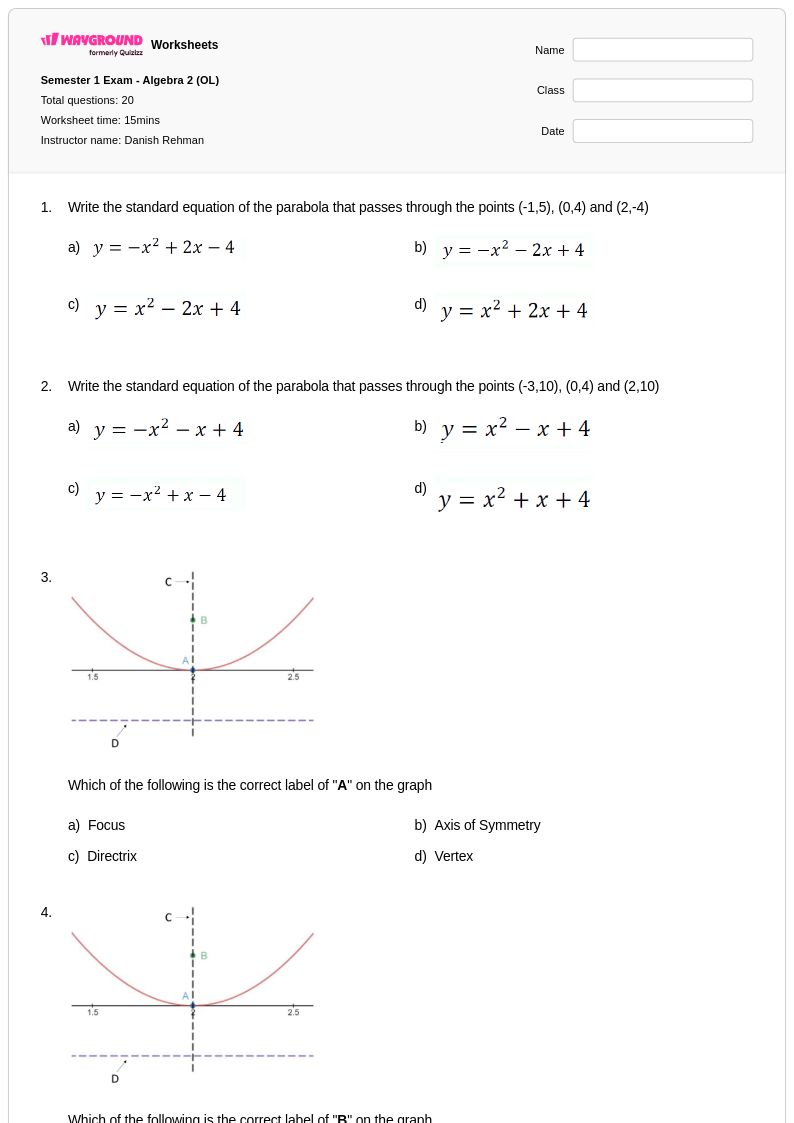
20 Q
11th
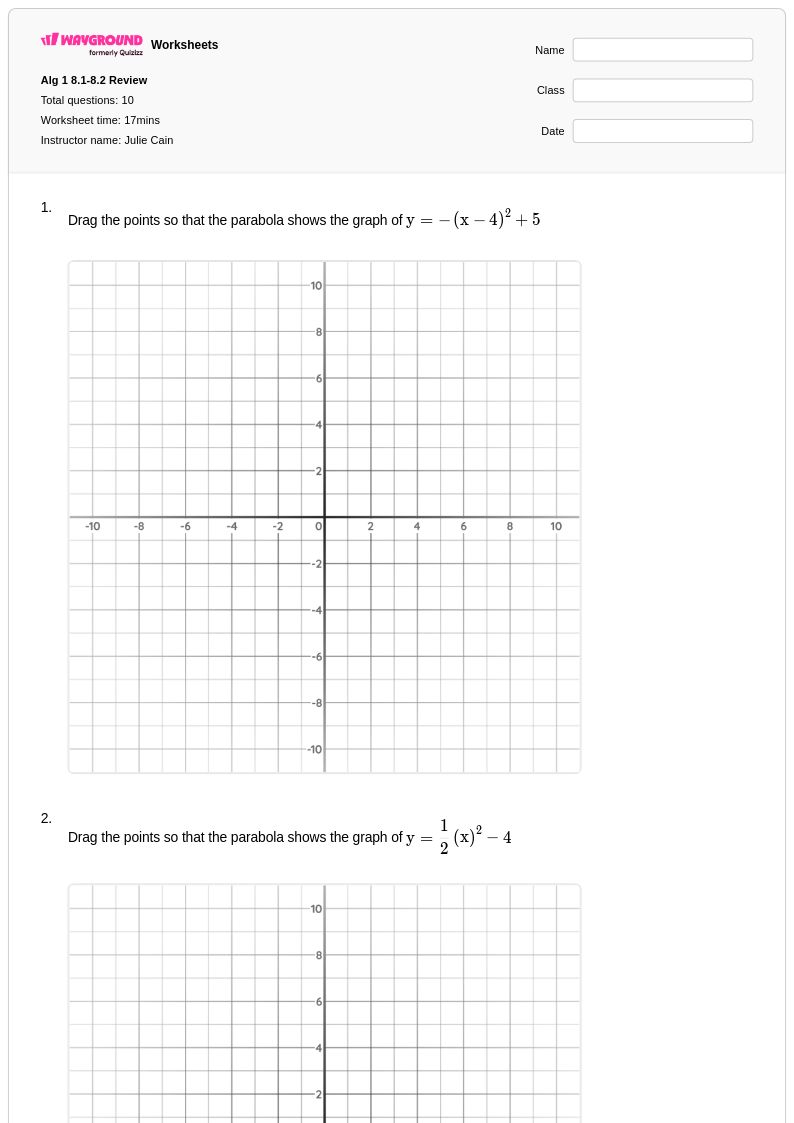
10 Q
9th - 12th
Explore Characteristics of Parabolas Worksheets by Grades
Explore Other Subject Worksheets for year 11
Explore printable Characteristics of Parabolas worksheets for Year 11
Characteristics of parabolas worksheets for Year 11 students provide essential practice for mastering one of algebra's most fundamental concepts. These comprehensive resources help students develop proficiency in identifying key features including vertex, axis of symmetry, direction of opening, focus, and directrix while strengthening their understanding of quadratic functions in standard and vertex forms. Through carefully structured practice problems, students learn to analyze parabolic graphs, determine domain and range, and connect algebraic representations with visual interpretations. These printables offer systematic skill-building opportunities with corresponding answer keys that enable independent learning and self-assessment, making them invaluable free resources for reinforcing classroom instruction and preparing students for advanced mathematical concepts.
Wayground, formerly Quizizz, supports mathematics educators with an extensive collection of teacher-created worksheets focusing on parabola characteristics and related Year 11 algebra concepts. The platform houses millions of educational resources with robust search and filtering capabilities that allow teachers to locate materials perfectly aligned with curriculum standards and student needs. These versatile tools support differentiated instruction through customizable content that can be adapted for remediation, standard practice, or enrichment activities. Available in both digital and printable pdf formats, these worksheets integrate seamlessly into lesson planning while providing flexibility for various teaching environments. Teachers can efficiently scaffold student learning by selecting from multiple difficulty levels and problem types, ensuring comprehensive coverage of parabolic properties and their real-world applications.