Free Printable Checking Account Management Worksheets for Year 9
Year 9 checking account management worksheets provide comprehensive practice problems and printables to help students master essential banking skills, featuring free PDF resources with detailed answer keys for effective financial literacy learning.
Explore printable Checking Account Management worksheets for Year 9
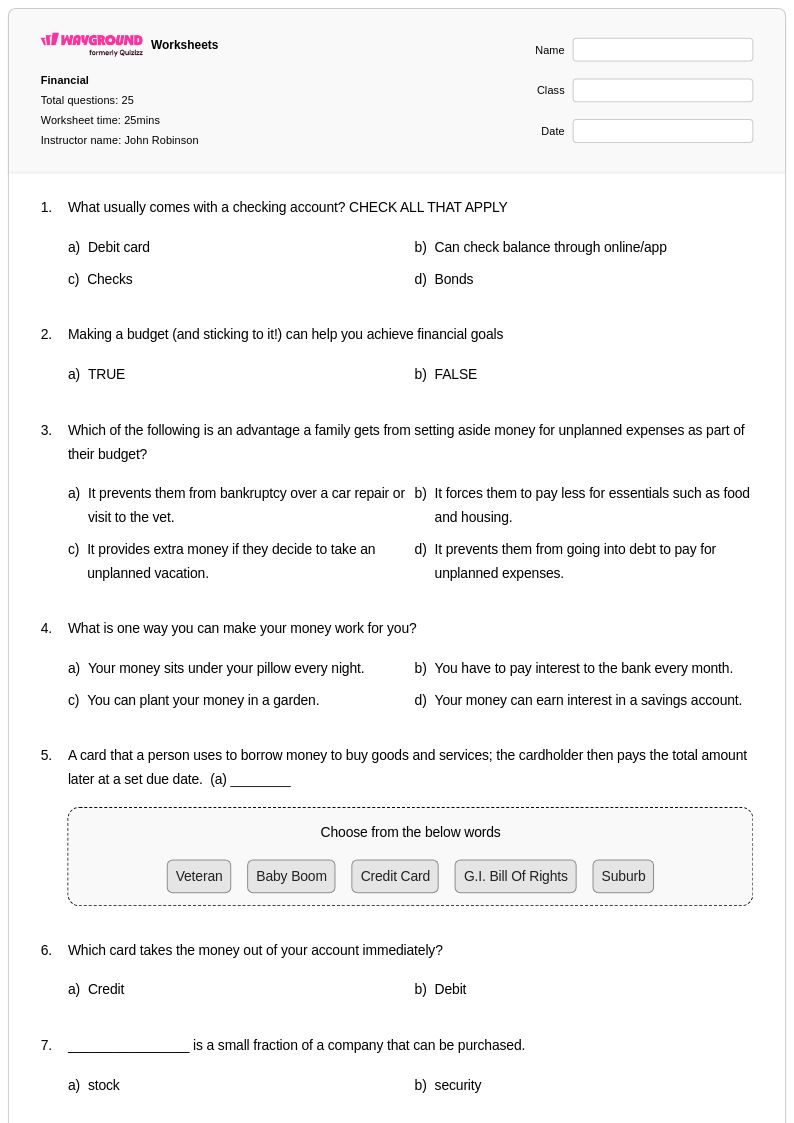
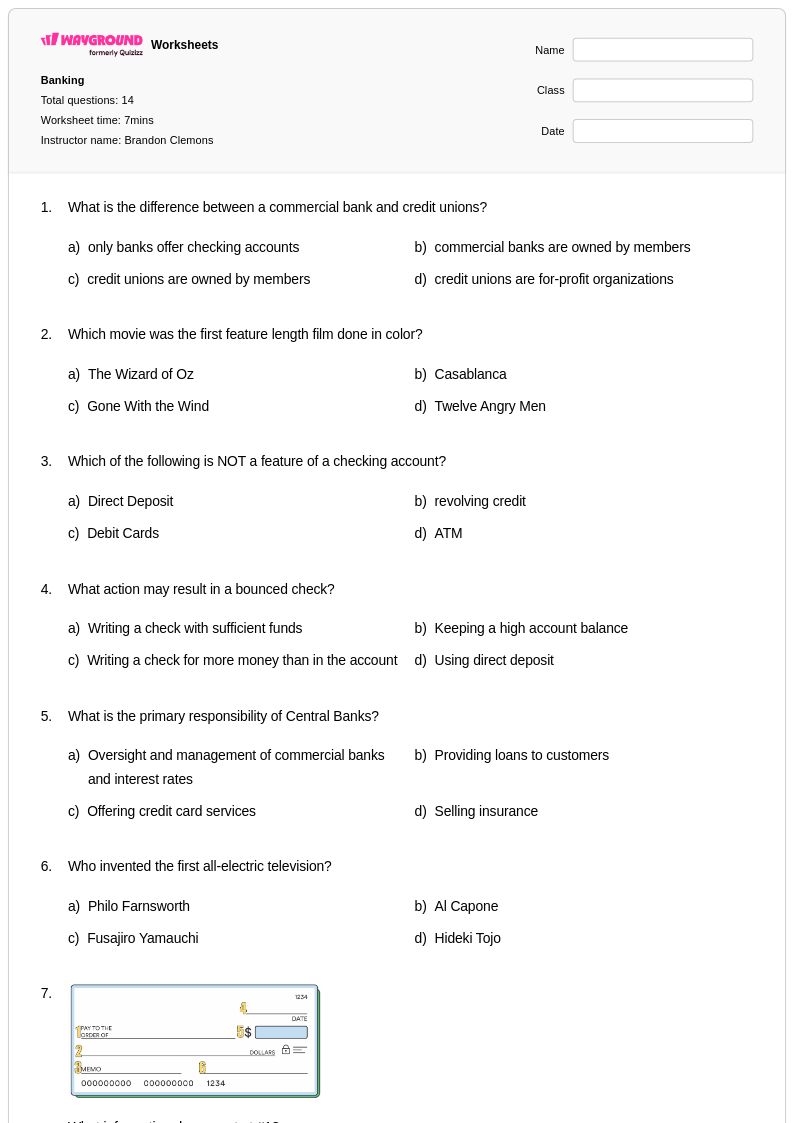
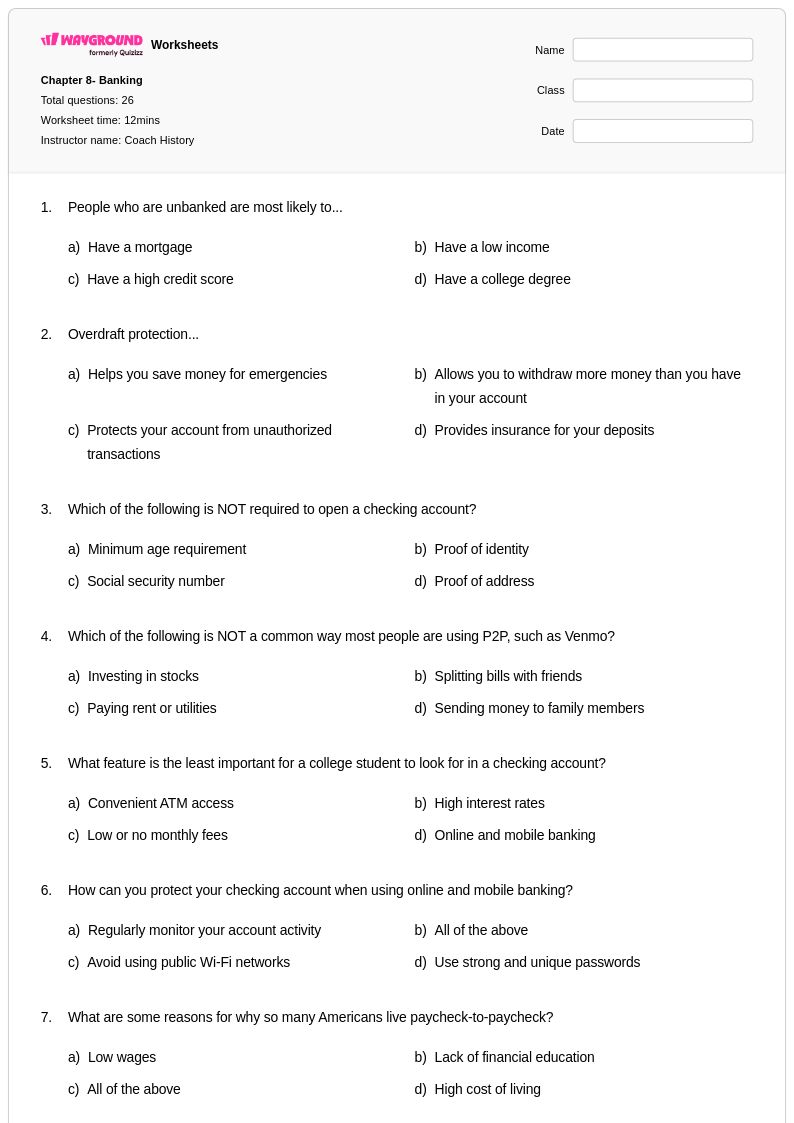
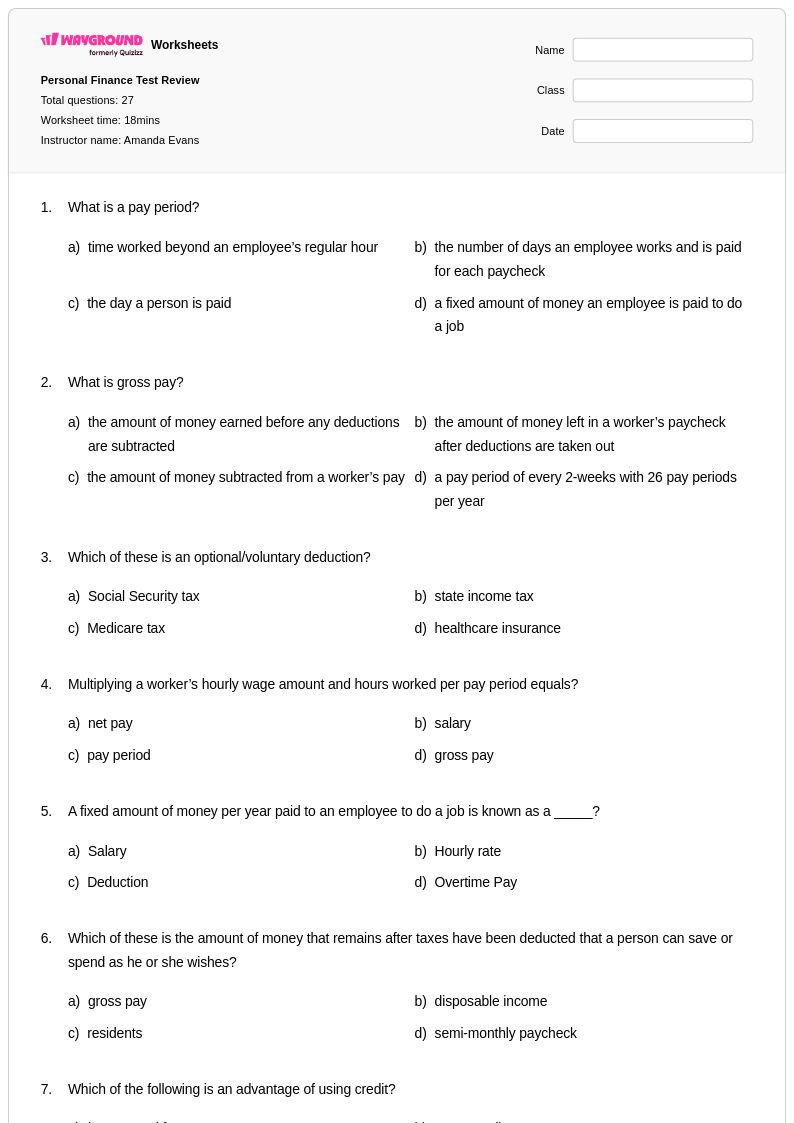
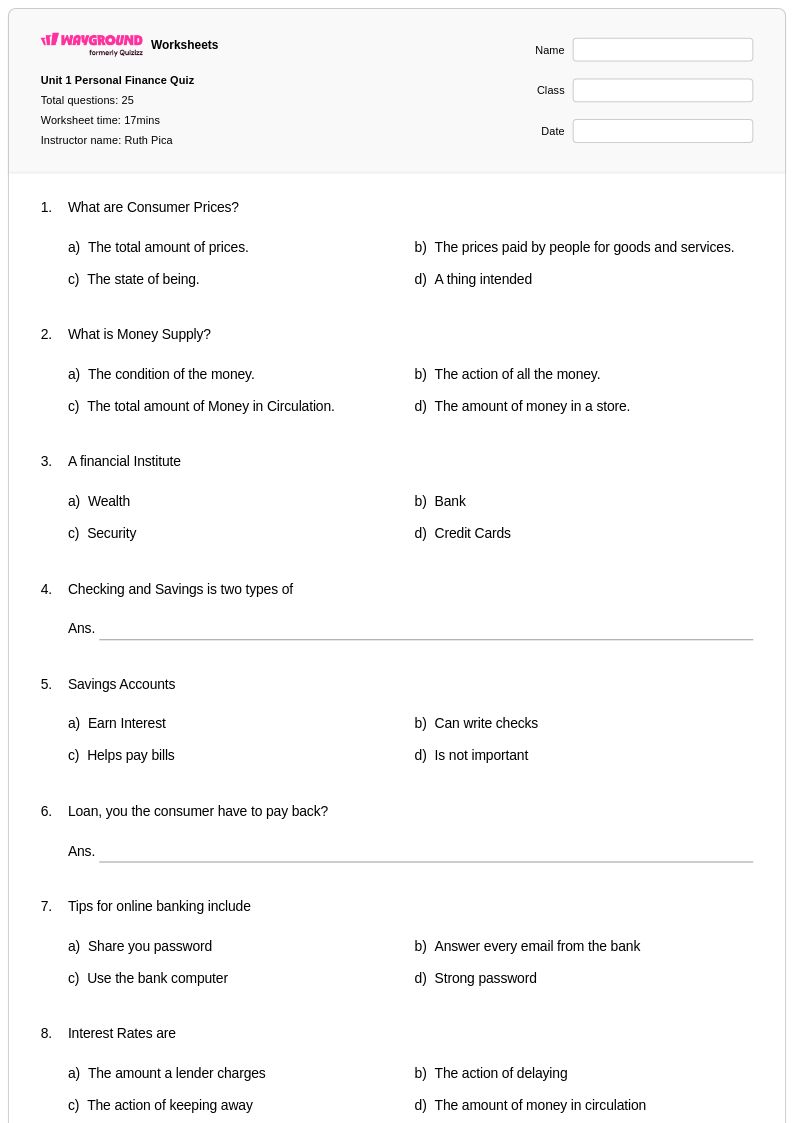
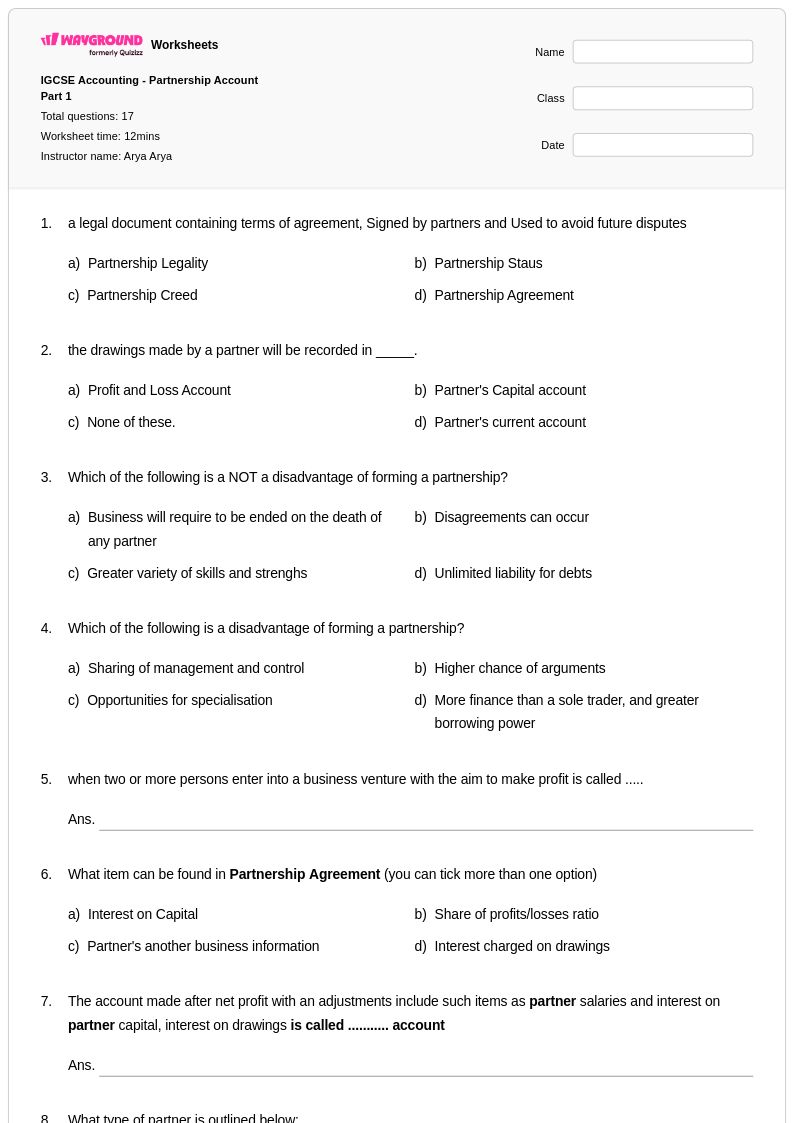
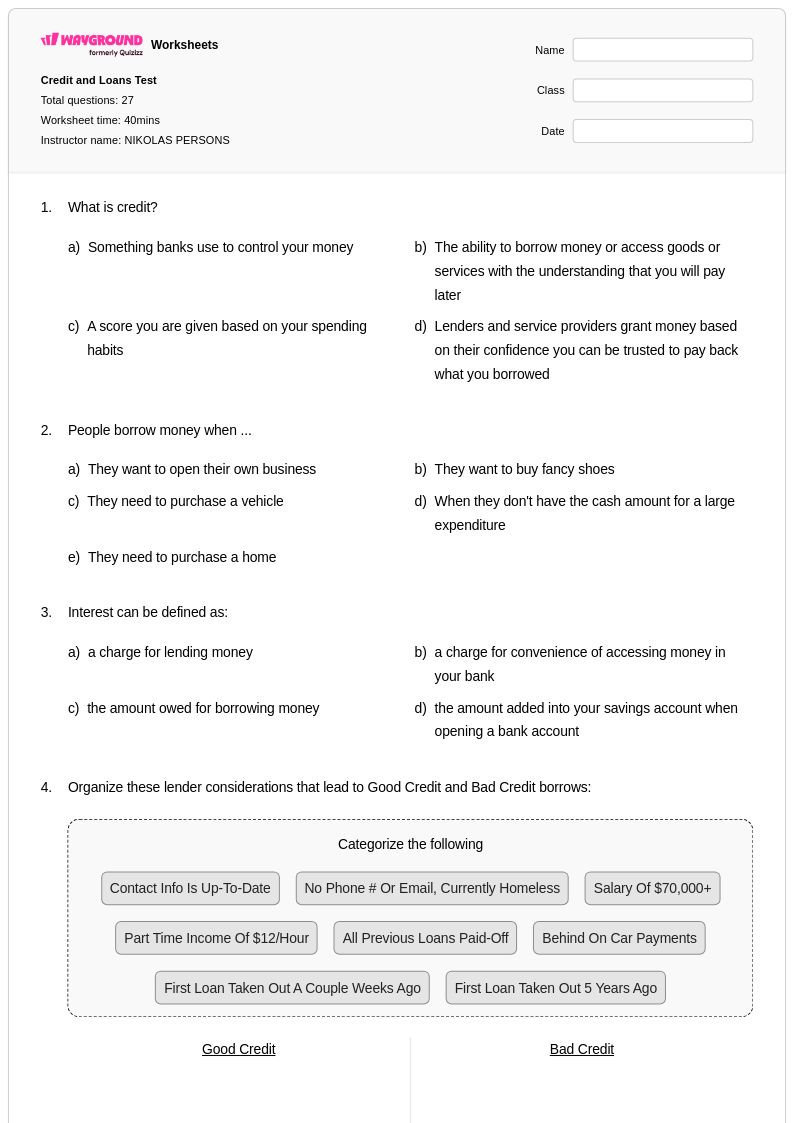
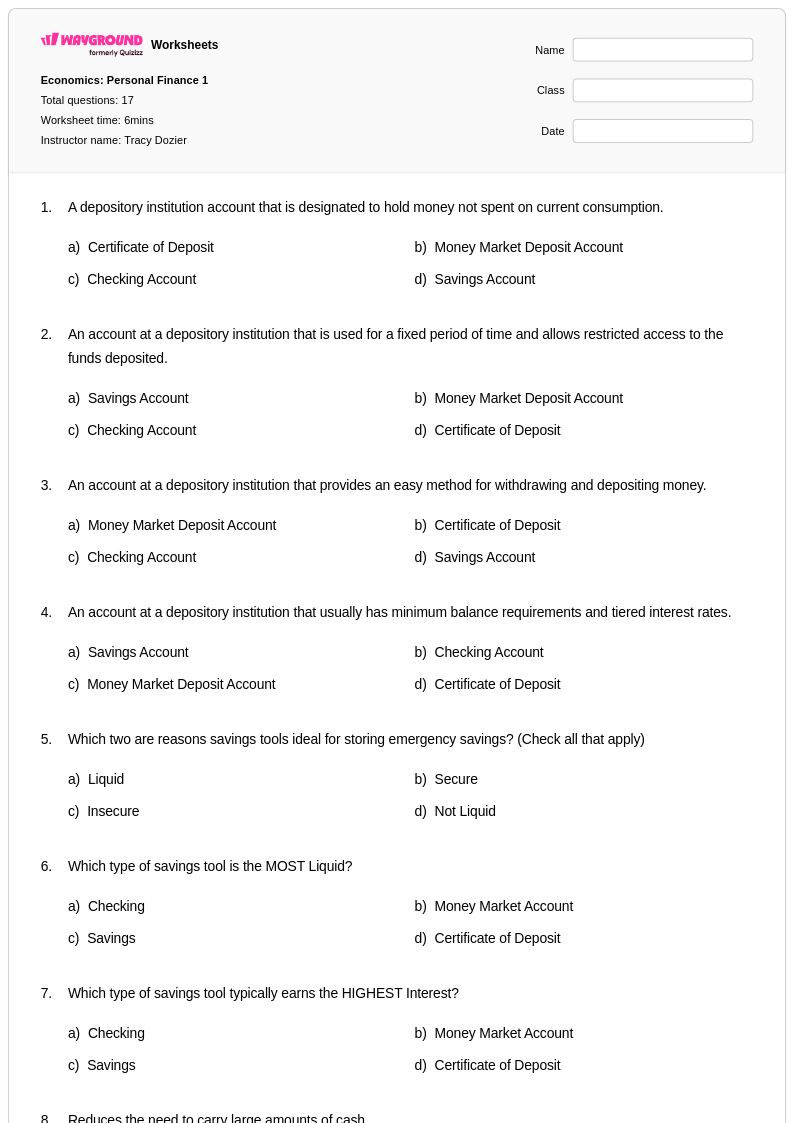
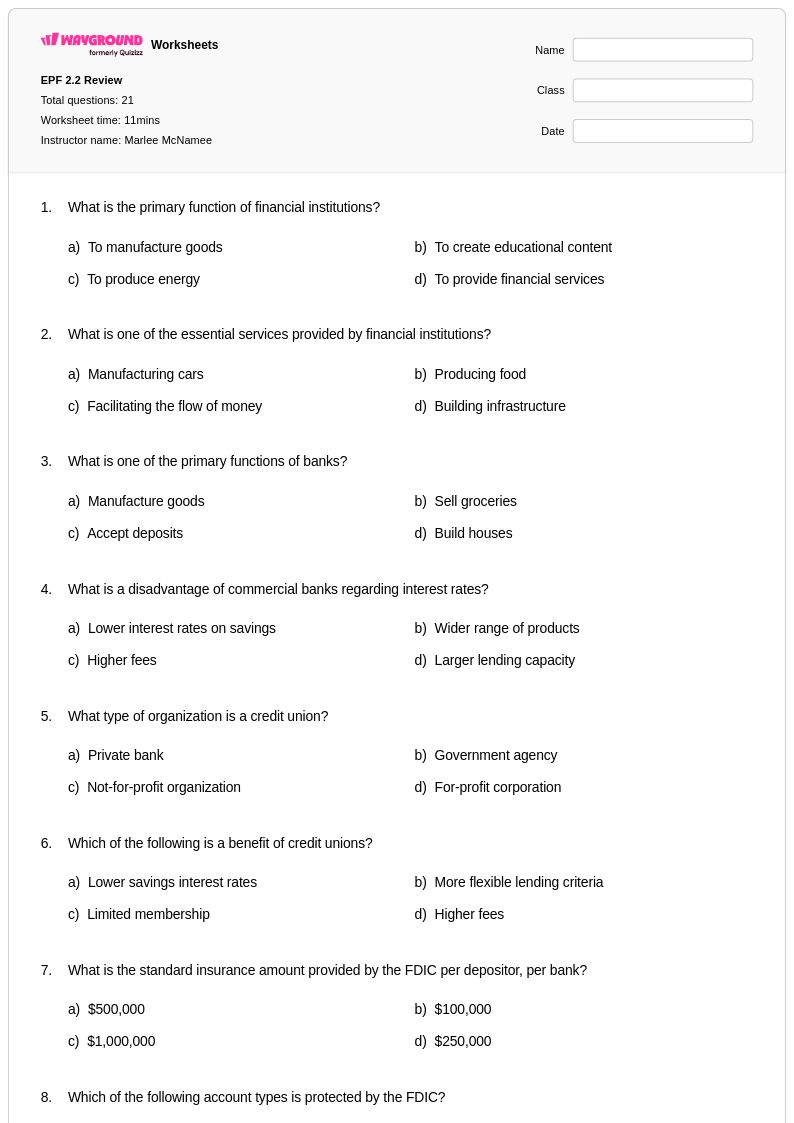
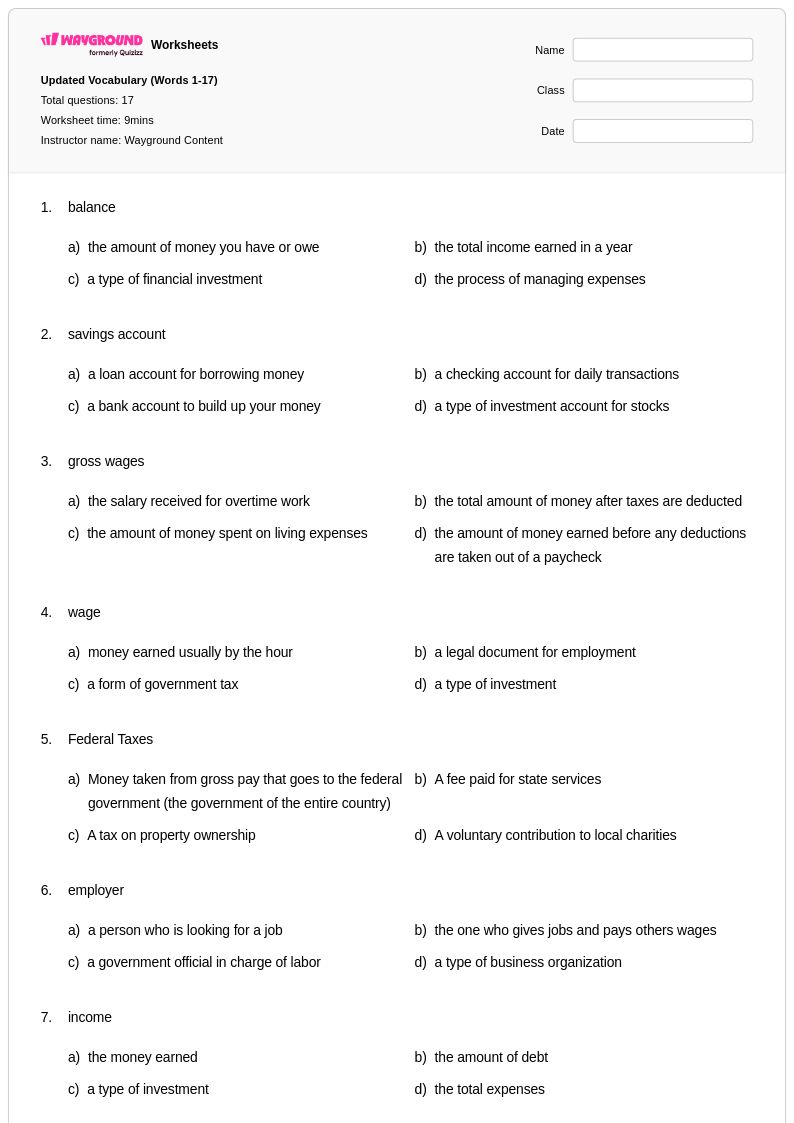
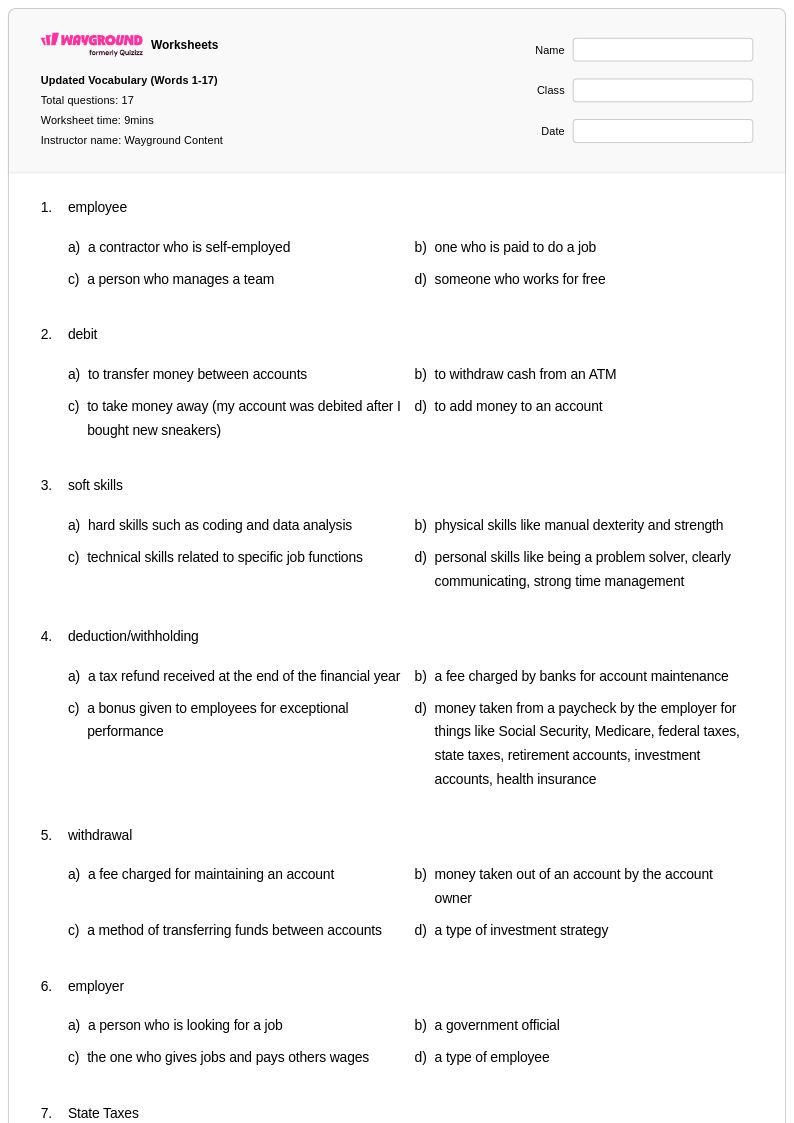
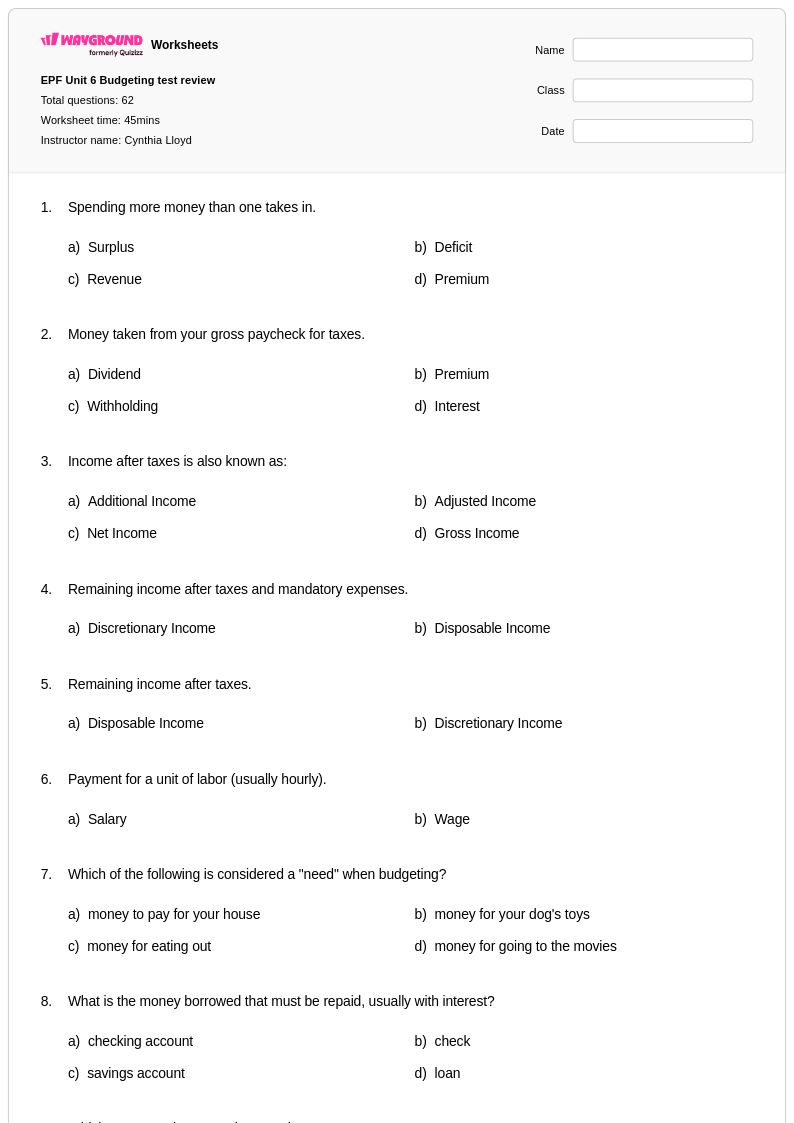
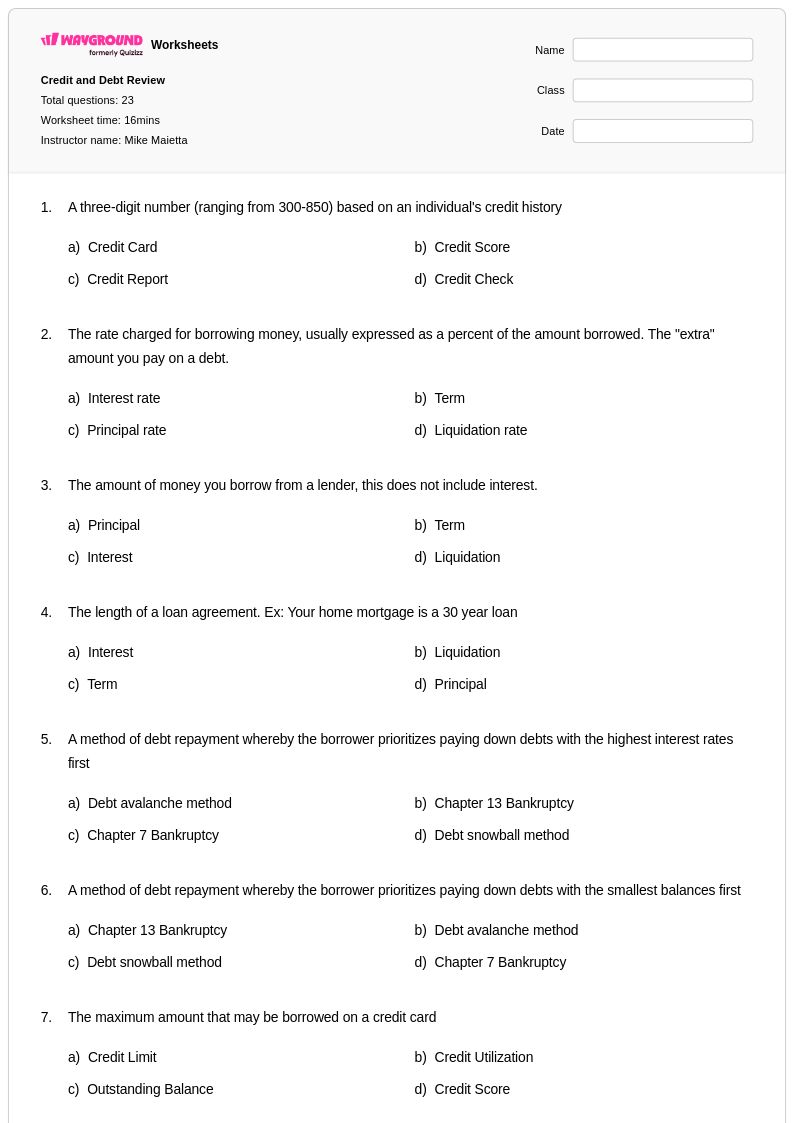
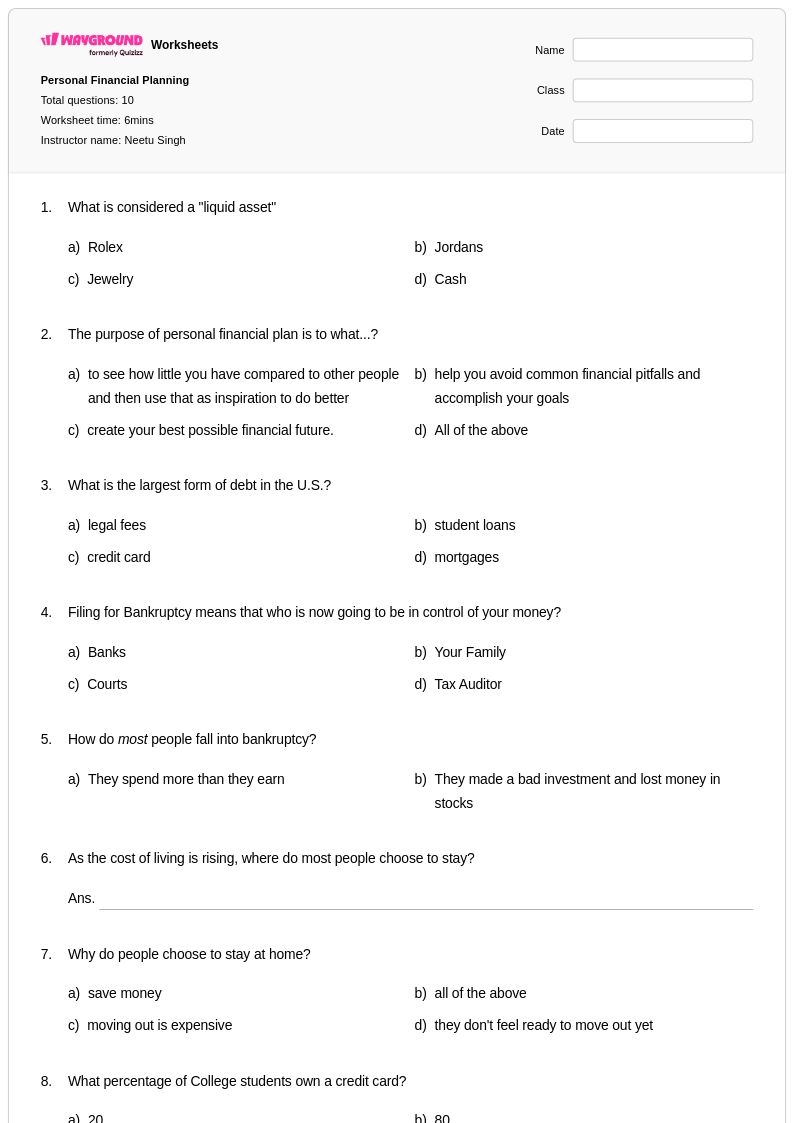
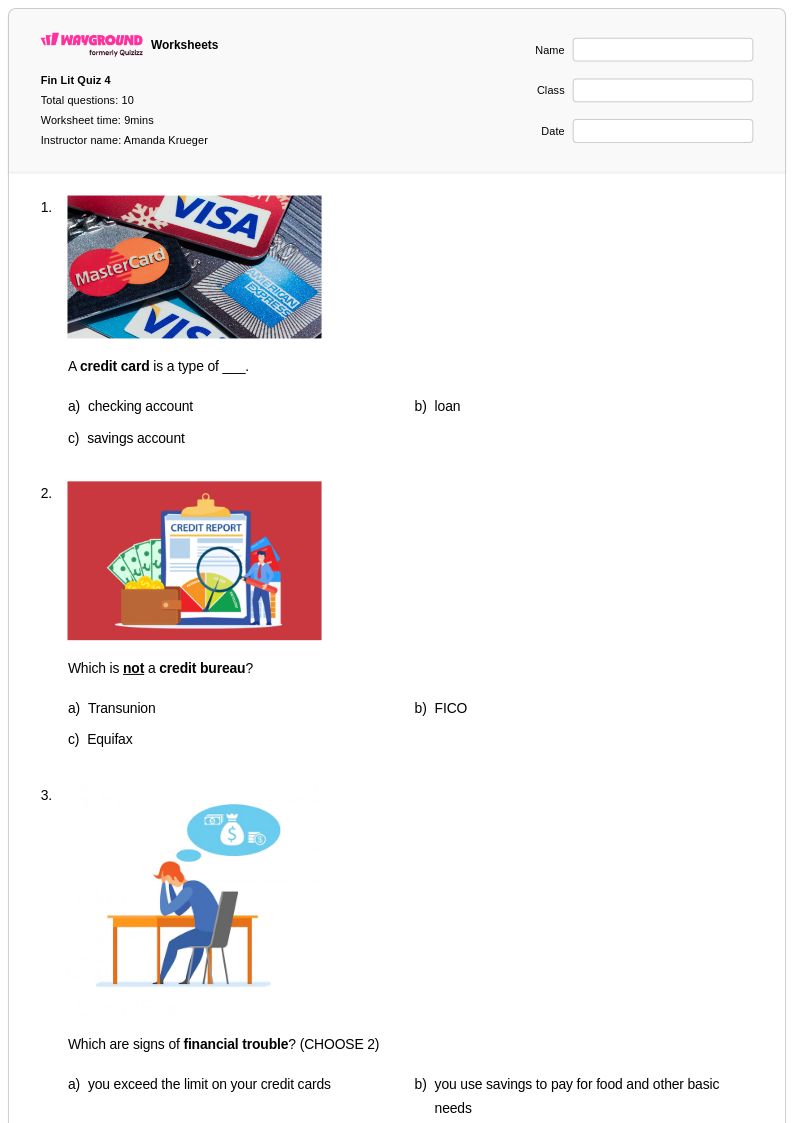
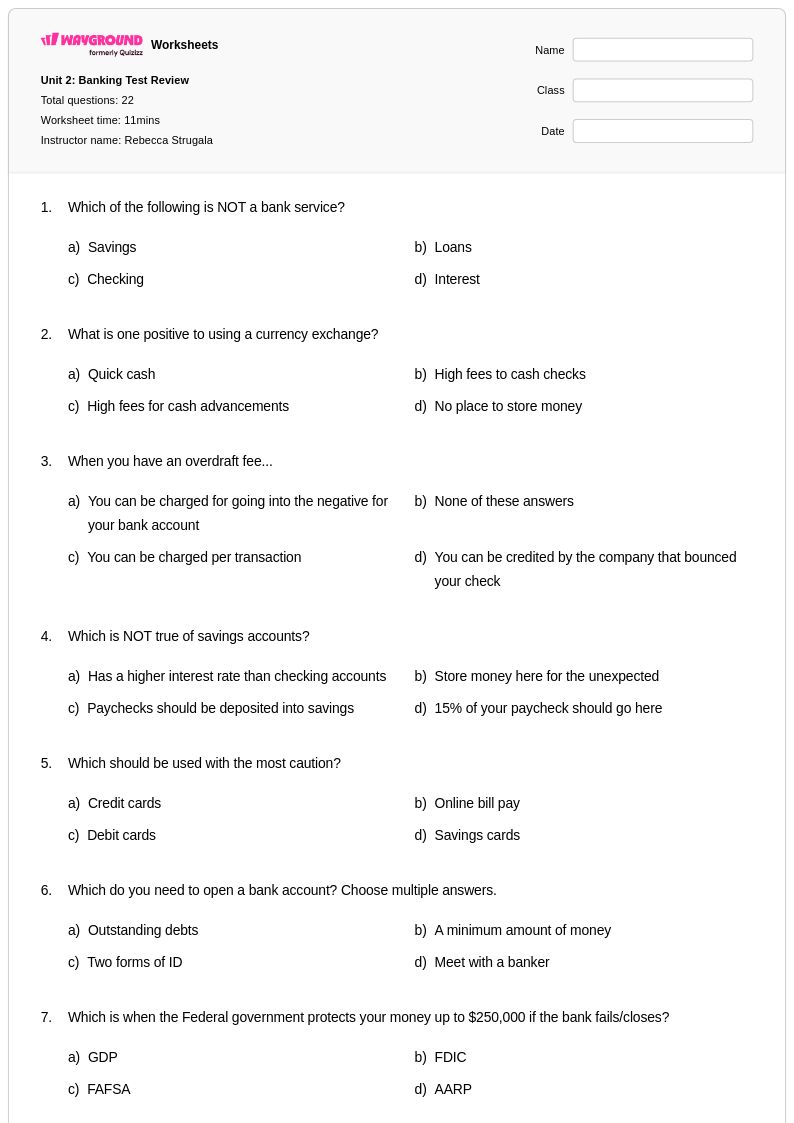
Checking account management worksheets for Year 9 students available through Wayground (formerly Quizizz) provide comprehensive practice in essential personal finance skills that form the foundation of economic literacy. These carefully designed educational resources guide ninth-grade learners through the practical aspects of maintaining a checking account, including balancing checkbooks, understanding bank statements, calculating fees and interest, and tracking deposits and withdrawals. The worksheets strengthen critical thinking abilities as students work through realistic scenarios involving overdraft protection, automatic payments, and reconciling account discrepancies. Each printable resource includes detailed answer keys that enable both independent study and classroom instruction, while the free practice problems range from basic transaction recording to complex multi-step financial calculations that prepare students for real-world banking responsibilities.
Wayground (formerly Quizizz) empowers educators with an extensive collection of teacher-created checking account management resources that seamlessly integrate into Year 9 social studies and economics curricula. The platform's millions of educational materials feature robust search and filtering capabilities that allow instructors to quickly locate worksheets aligned with specific learning standards and objectives. Teachers benefit from comprehensive differentiation tools that accommodate diverse learning styles and ability levels, enabling effective remediation for struggling students and enrichment opportunities for advanced learners. The flexible customization options support both printable pdf formats for traditional classroom use and digital formats for technology-enhanced instruction, making lesson planning more efficient while providing multiple pathways for students to develop proficiency in personal financial management and economic decision-making skills.
FAQs
How do I teach checking account management to students who have never had a bank account?
Start with the anatomy of a check and a sample bank statement before moving into transactions. Use simulated scenarios where students track deposits, withdrawals, and fees in a mock register so they build the habit of recording every transaction. Connecting each concept to a real-world situation — like what happens when you forget to log a debit card purchase — helps students internalize why accurate record-keeping matters before they ever open an account.
What exercises help students practice balancing a checking account?
The most effective practice involves giving students a starting balance, a sequence of deposits and withdrawals, and at least one banking fee, then asking them to reconcile their register against a mock monthly statement. This mirrors exactly what students will encounter in real life. Worksheets that include overdraft scenarios are especially valuable because they require students to track a negative balance and calculate the resulting penalty fees, reinforcing the real cost of poor account management.
What mistakes do students commonly make when learning to balance a checking account?
The most common error is failing to subtract fees — monthly maintenance charges, ATM fees, and overdraft penalties — from the running balance. Students also frequently add a deposit before it clears or confuse debits and credits, flipping the sign and throwing off every subsequent calculation. A targeted practice problem that isolates fee calculation before combining it with full register reconciliation helps students correct these patterns before they become habits.
How can I differentiate checking account management instruction for students at different skill levels?
For students who are still building number sense, start with registers that have only two or three transactions and no fees before introducing complexity. More advanced students can work through multi-week statements that include automatic payments, interest, and overdraft charges. On Wayground, teachers can apply accommodations such as read aloud for students who need audio support, reduced answer choices to lower cognitive load, or extended time — all configurable per student without notifying the rest of the class.
How do I use Wayground's checking account management worksheets in my classroom?
Wayground's checking account management worksheets are available as printable PDFs, making them easy to assign as in-class practice or homework, and in digital formats for technology-integrated classrooms. Teachers can also host the material as a quiz directly on Wayground, turning a worksheet into an interactive, self-paced assessment. Answer keys are included with each resource, so students can check their own work during independent practice or teachers can use them for quick grading.
How do I connect checking account management to broader personal finance or economics units?
Checking account management is the operational foundation of personal finance — students who can't balance an account will struggle to execute any budget, savings plan, or debt repayment strategy. Sequence it before budgeting units so students understand cash flow mechanics first, then revisit it during savings lessons to contrast checking and savings account roles. Using real-world banking scenarios in worksheets keeps the connection to broader economic decision-making explicit throughout the unit.