Free Printable Classifying Angles Worksheets for Year 3
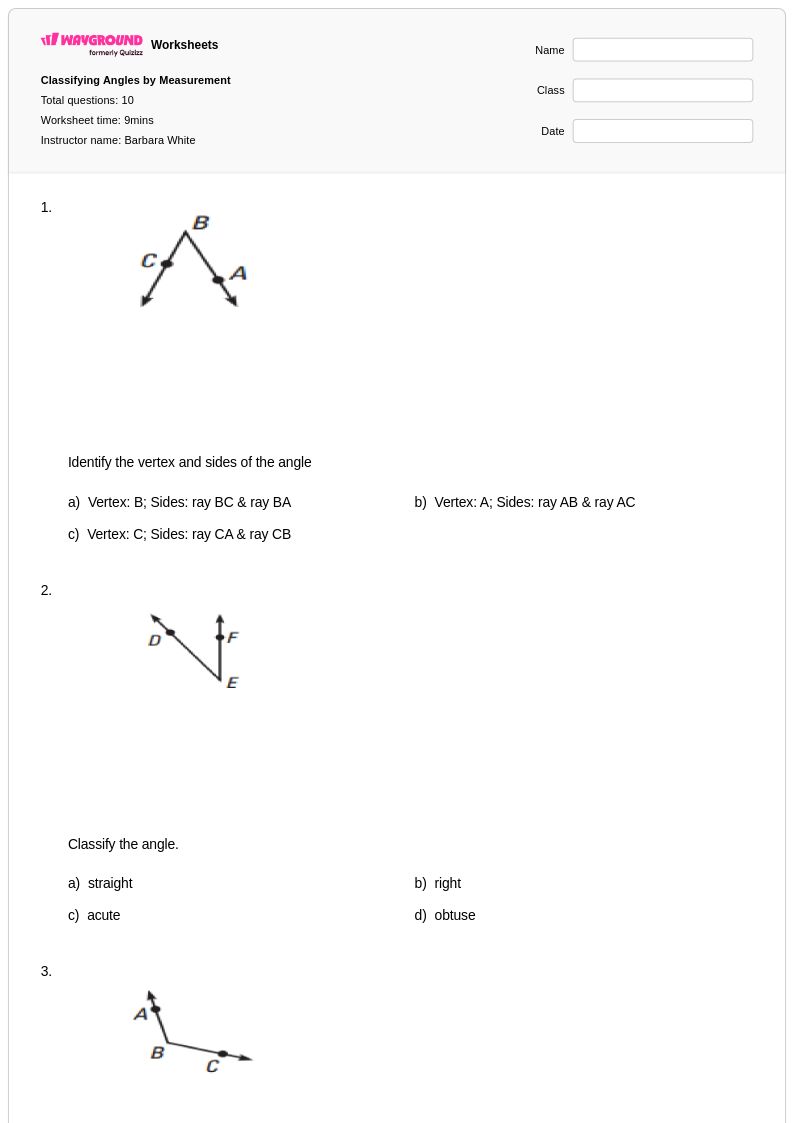
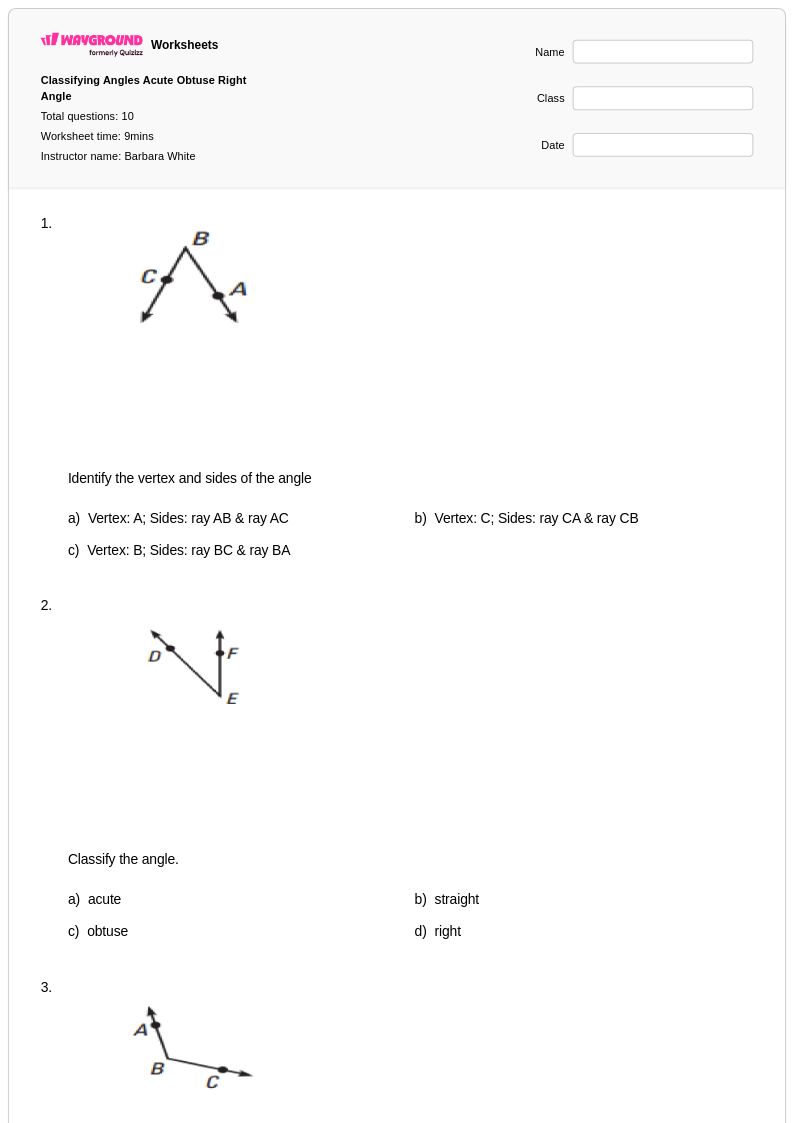
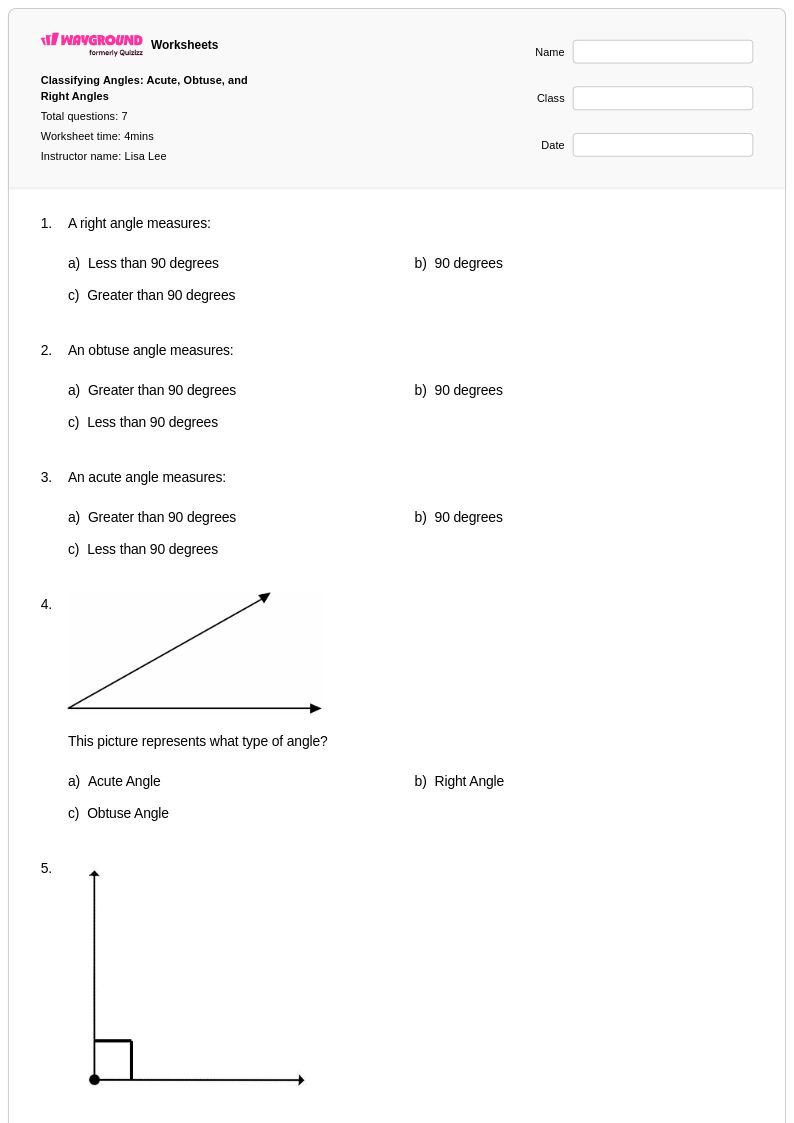
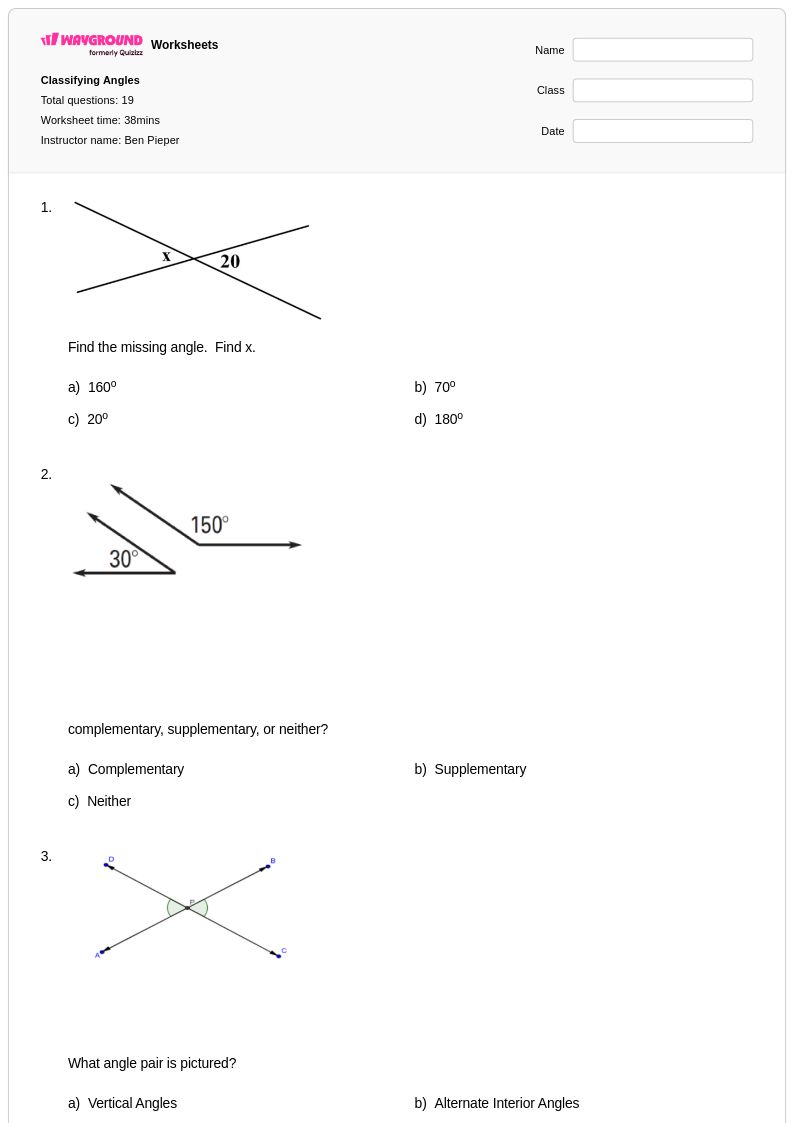
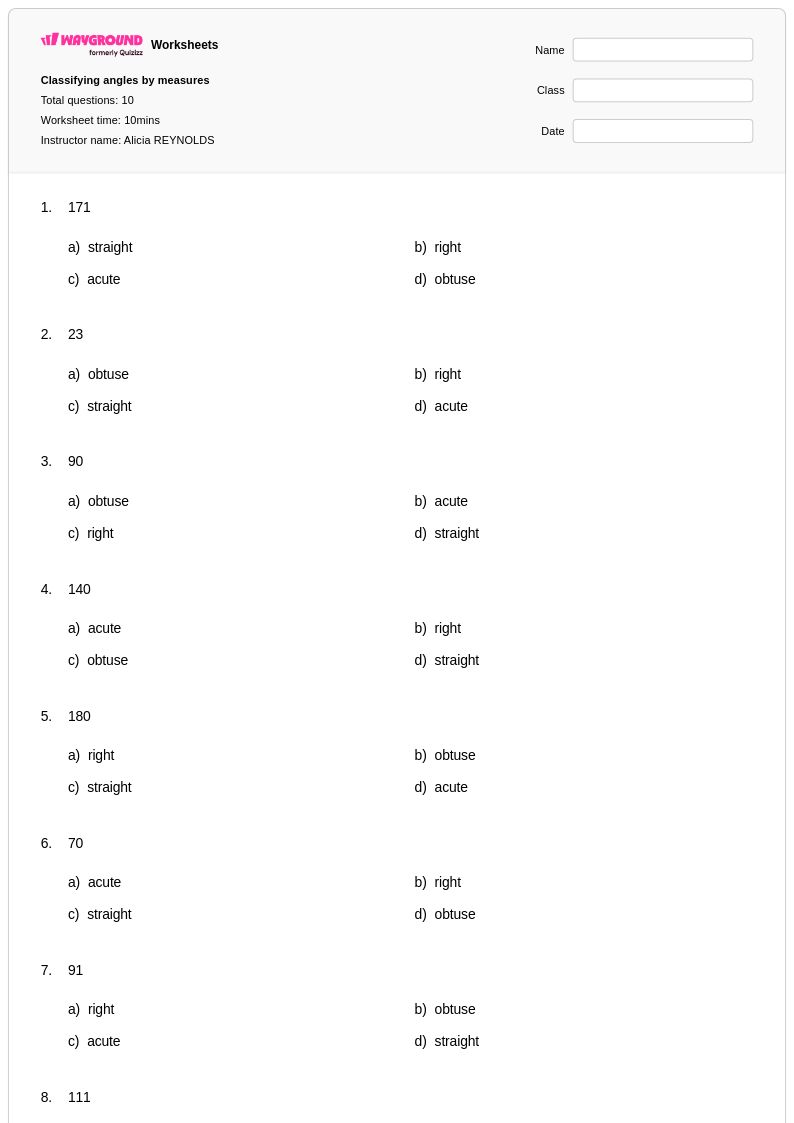
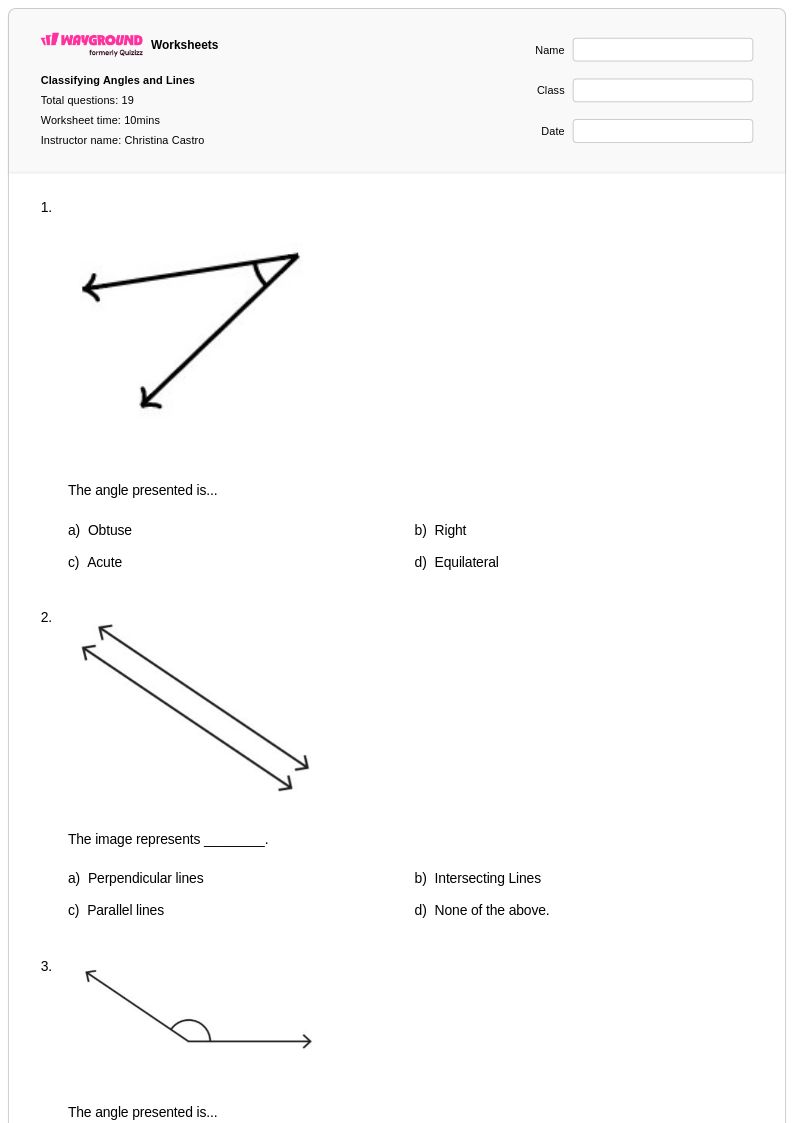
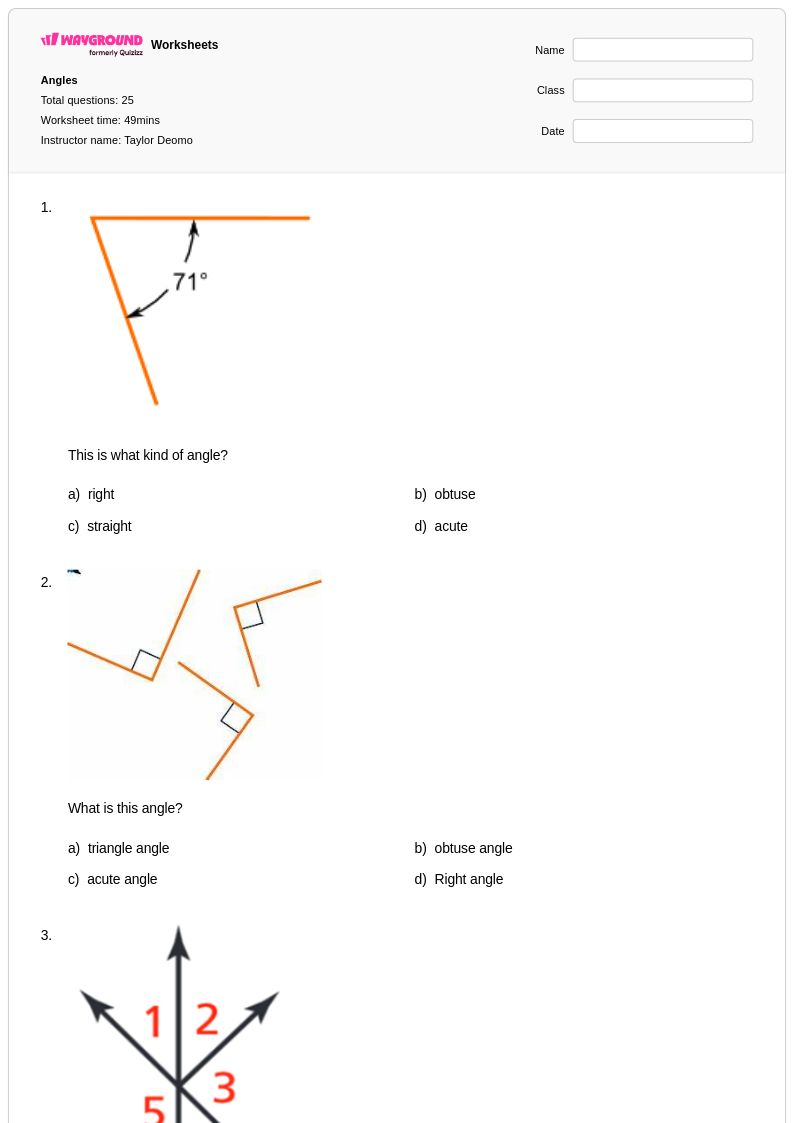
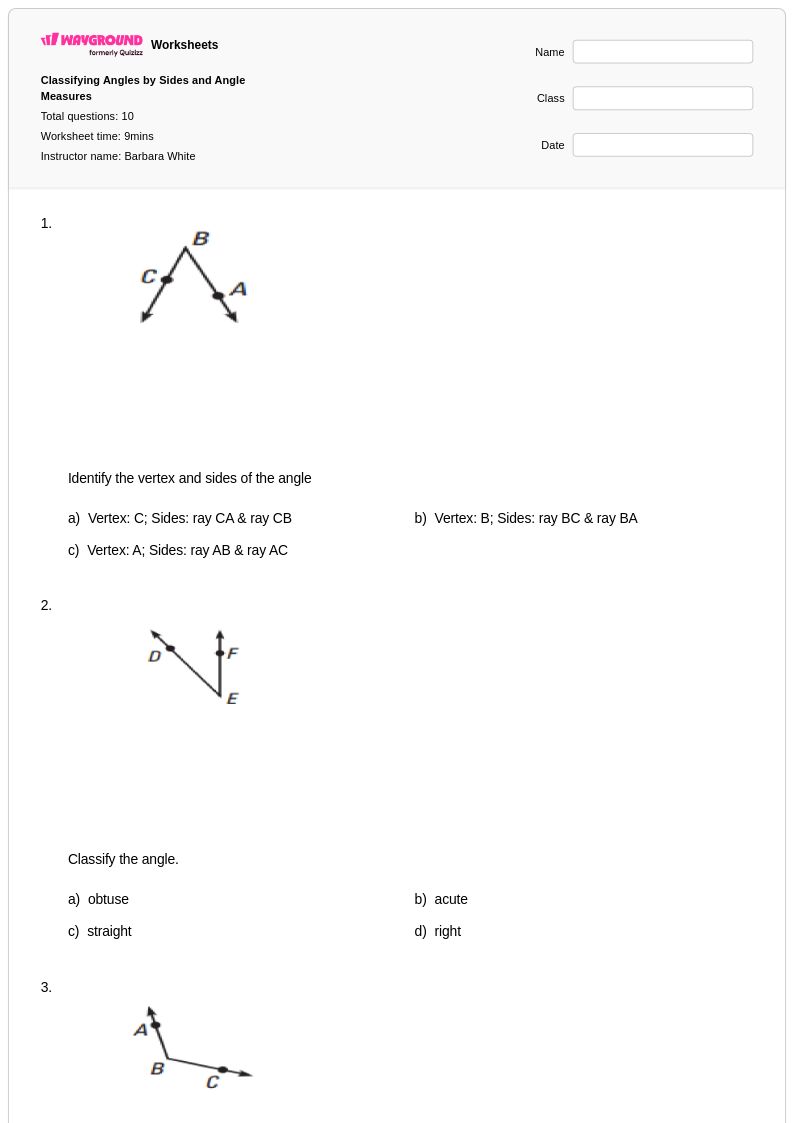
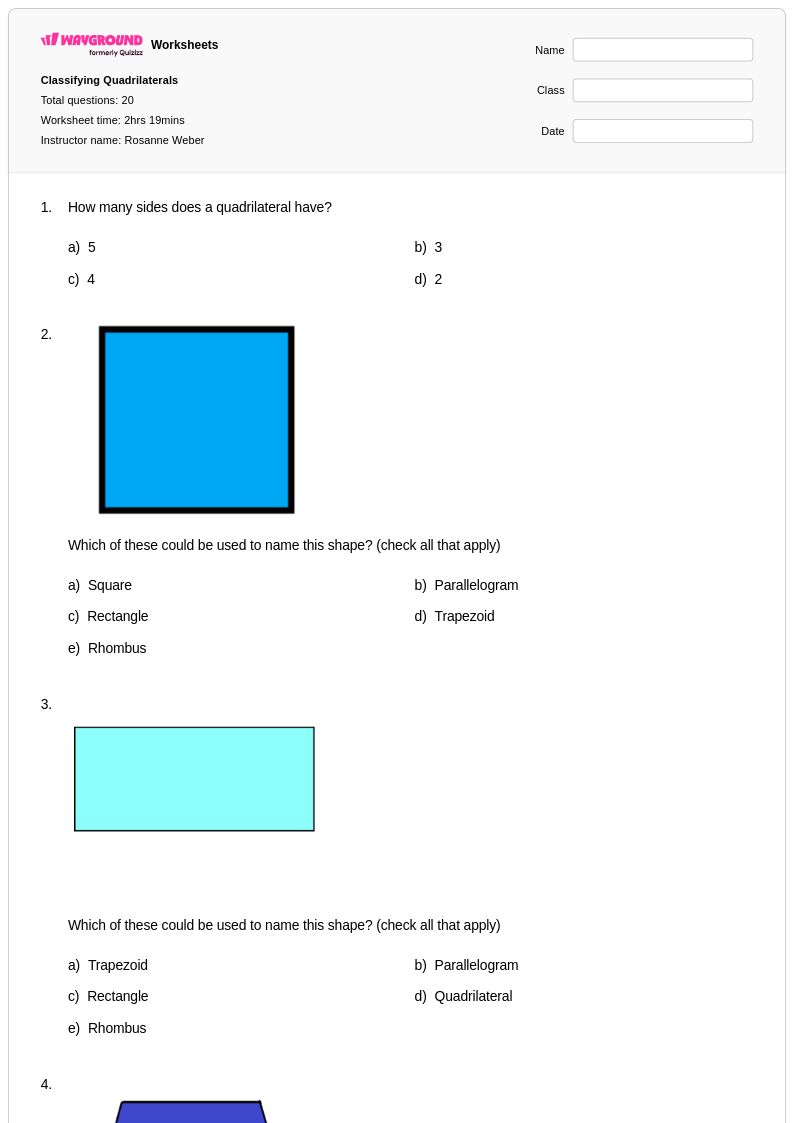
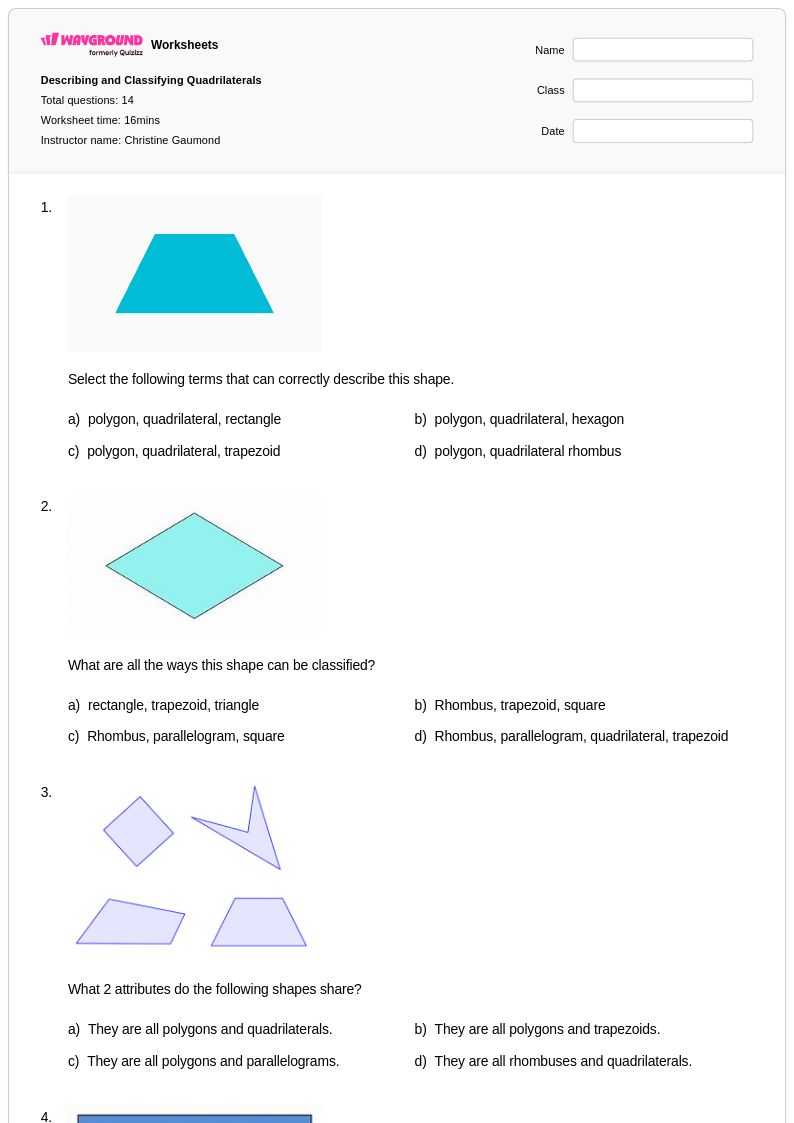
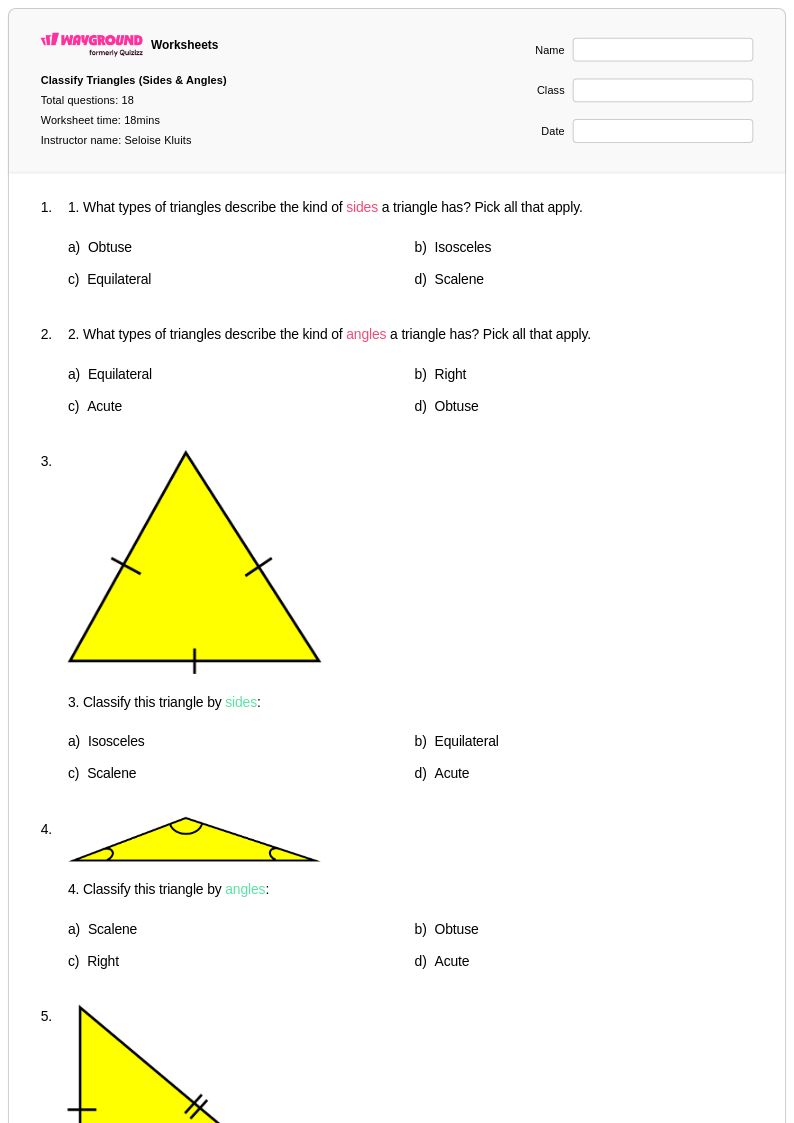
Wayground's free Year 3 classifying angles worksheets provide printable PDF practice problems with answer keys to help students learn to identify and categorize different types of angles.
Explore printable Classifying Angles worksheets for Year 3
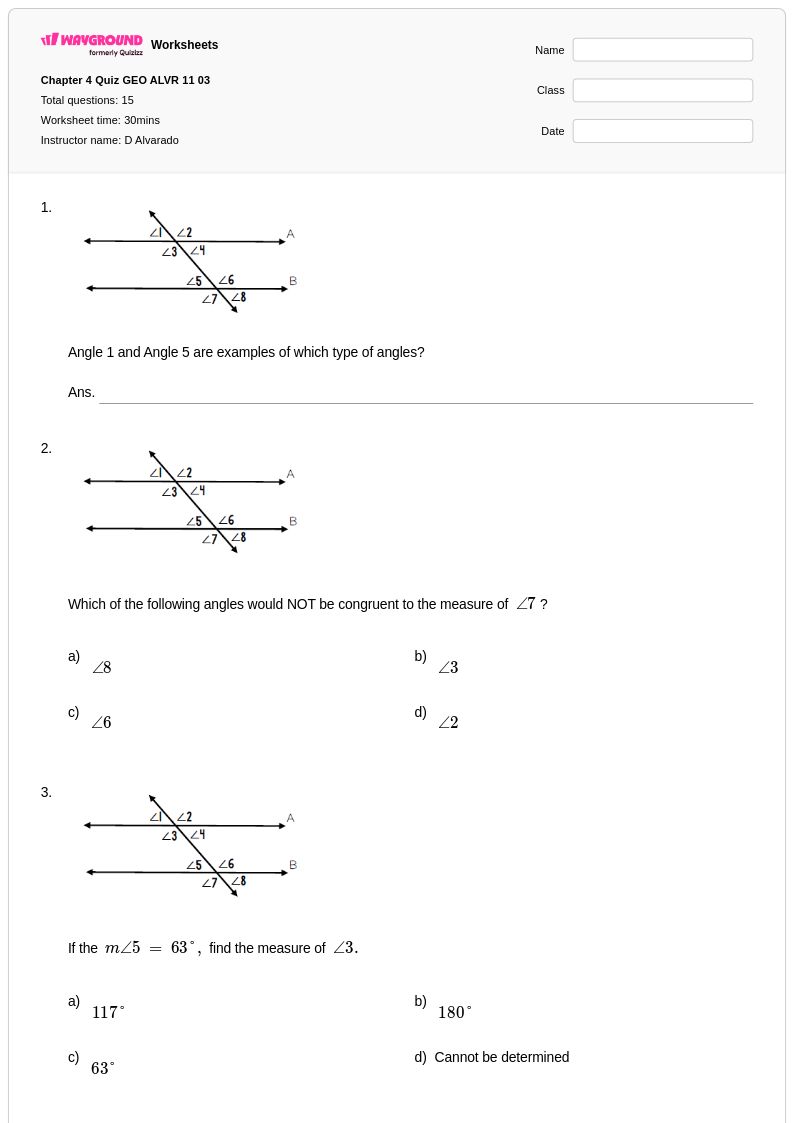
Classifying angles worksheets for Year 3 students available through Wayground (formerly Quizizz) provide foundational geometry practice that builds essential spatial reasoning skills. These comprehensive printables help young learners identify and categorize right angles, acute angles, and obtuse angles through engaging visual exercises and hands-on practice problems. The worksheets strengthen students' ability to recognize angle relationships in everyday objects and geometric shapes, developing critical mathematical thinking that supports more advanced geometry concepts. Each free resource includes detailed answer keys and structured activities that guide third graders through the systematic process of angle classification, ensuring they master this fundamental skill through repeated practice and visual reinforcement.
Wayground (formerly Quizizz) empowers educators with millions of teacher-created classifying angles resources specifically designed for Year 3 mathematics instruction. The platform's robust search and filtering capabilities allow teachers to quickly locate standards-aligned worksheets that match their specific curriculum requirements and student needs. Advanced differentiation tools enable customization of content difficulty and format, while flexible pdf and digital options support both traditional classroom instruction and modern learning environments. These comprehensive features streamline lesson planning and provide targeted resources for remediation, enrichment, and daily skill practice, ensuring that teachers can effectively address diverse learning styles and academic levels when teaching angle classification concepts to third-grade students.
FAQs
How do I teach classifying angles to third graders?
Start by helping students find right angles in squares, rectangles, classroom objects, and folded paper. Use the right angle as a visual benchmark so students can describe smaller openings as acute and larger openings as obtuse before introducing more formal measurement.
What classifying angles exercises work well for Grade 3?
Third graders benefit from circling right angles, sorting pictured angles into acute, right, and obtuse groups, and finding angle types in familiar objects and geometric shapes. Tracing or constructing angles adds hands-on reinforcement and builds spatial reasoning alongside vocabulary.
What mistakes do Grade 3 students make when classifying angles?
Third graders may focus on ray length, the angle's orientation, or the overall shape instead of the opening between the rays. Rotating the same angle and comparing it with a square corner helps students see that its classification does not change when its position changes.
How can I use Grade 3 classifying angles worksheets on Wayground?
Wayground worksheets are available as printable PDFs and in digital formats, allowing teachers to host a worksheet as a digital quiz or print and assign it on paper. Every worksheet includes a complete answer key, and teachers can grade physical submissions by scanning or capturing student work with the Wayground for Teachers app.
How does classifying angles fit into the Common Core progression for Grade 3?
Common Core geometry in the elementary grades builds from analyzing shape attributes toward formal angle measurement and classification in the next stage of instruction. Grade 3 work with corners, right-angle benchmarks, and comparisons among angle openings provides useful preparation for that progression without requiring students to depend on protractors.
How can I differentiate Grade 3 classifying angles practice?
For students needing support, use clear visuals, familiar objects, and right-angle corner guides; for students ready for enrichment, include rotated angles and figures containing several angle types. Wayground can provide extended time, Read Aloud, reduced answer choices, and reading mode, while worksheet versions can use larger text, wider spacing, a dyslexia-friendly font, or translation.
What grade do students learn to classify angles?
Students commonly begin informal angle recognition in Grade 3 by identifying right angles and comparing other openings with them. Formal angle measurement and systematic classification are typically developed more fully in Grade 4, making Grade 3 practice an important conceptual foundation.