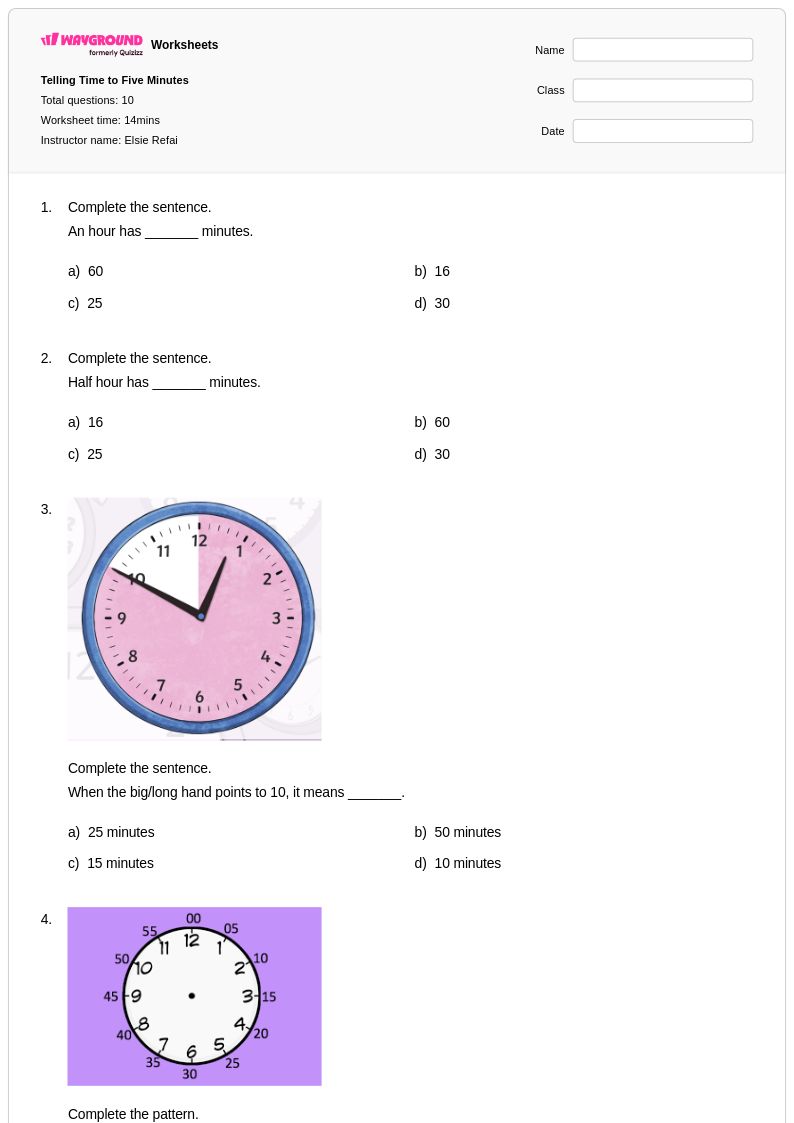
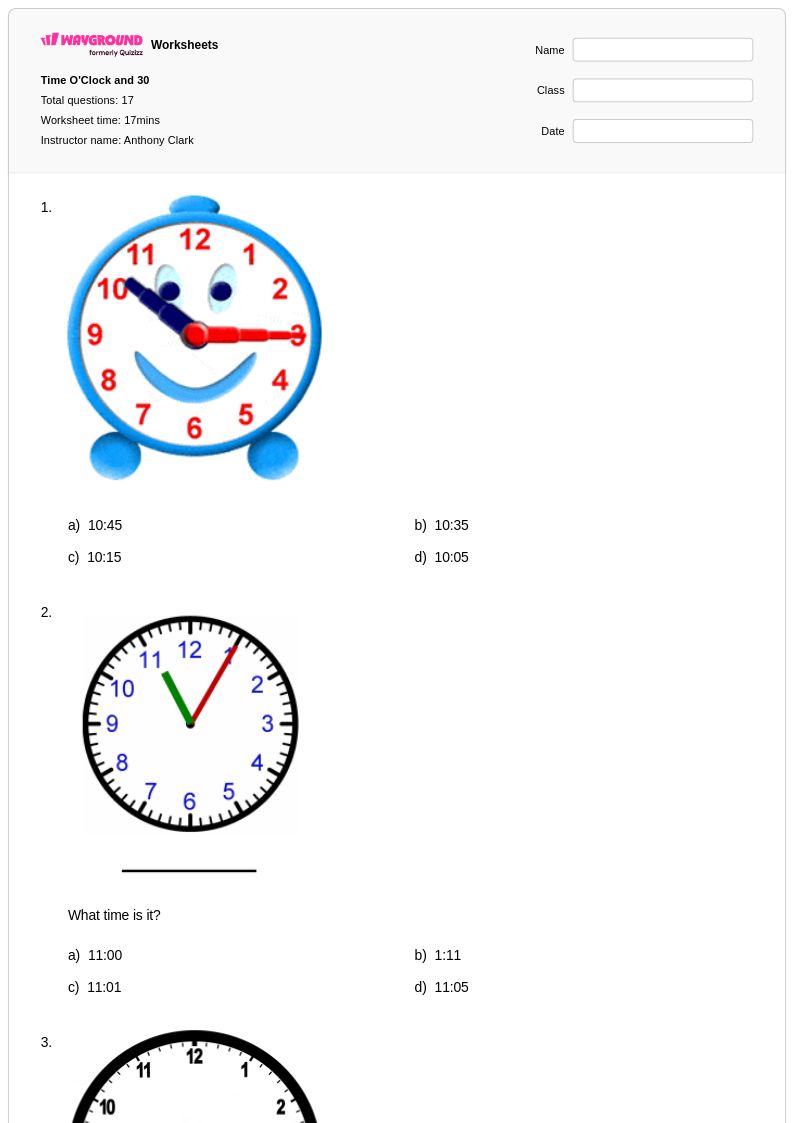
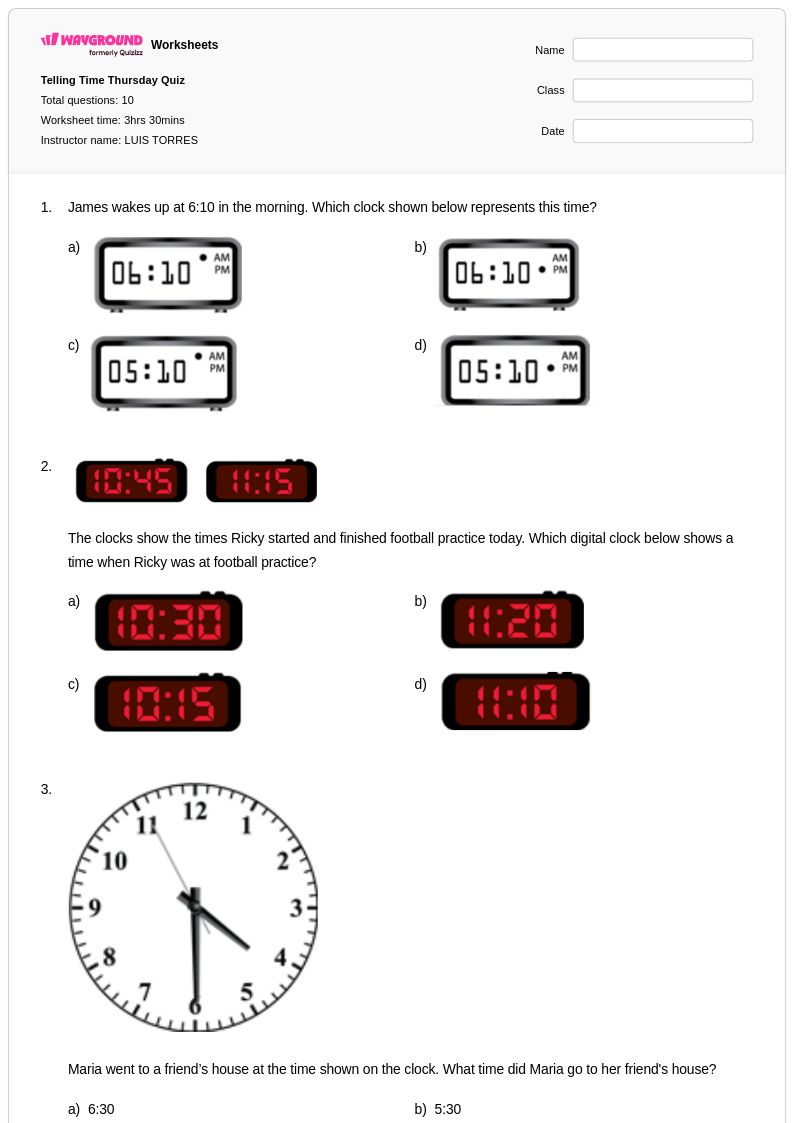
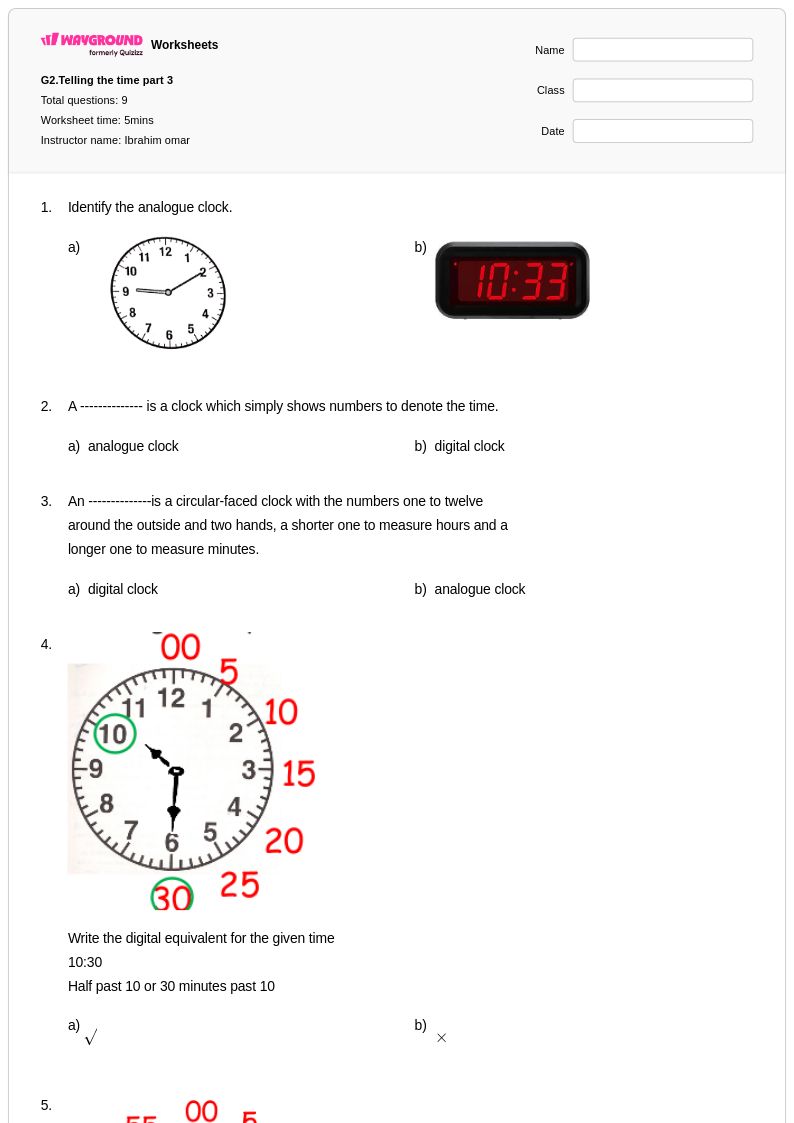
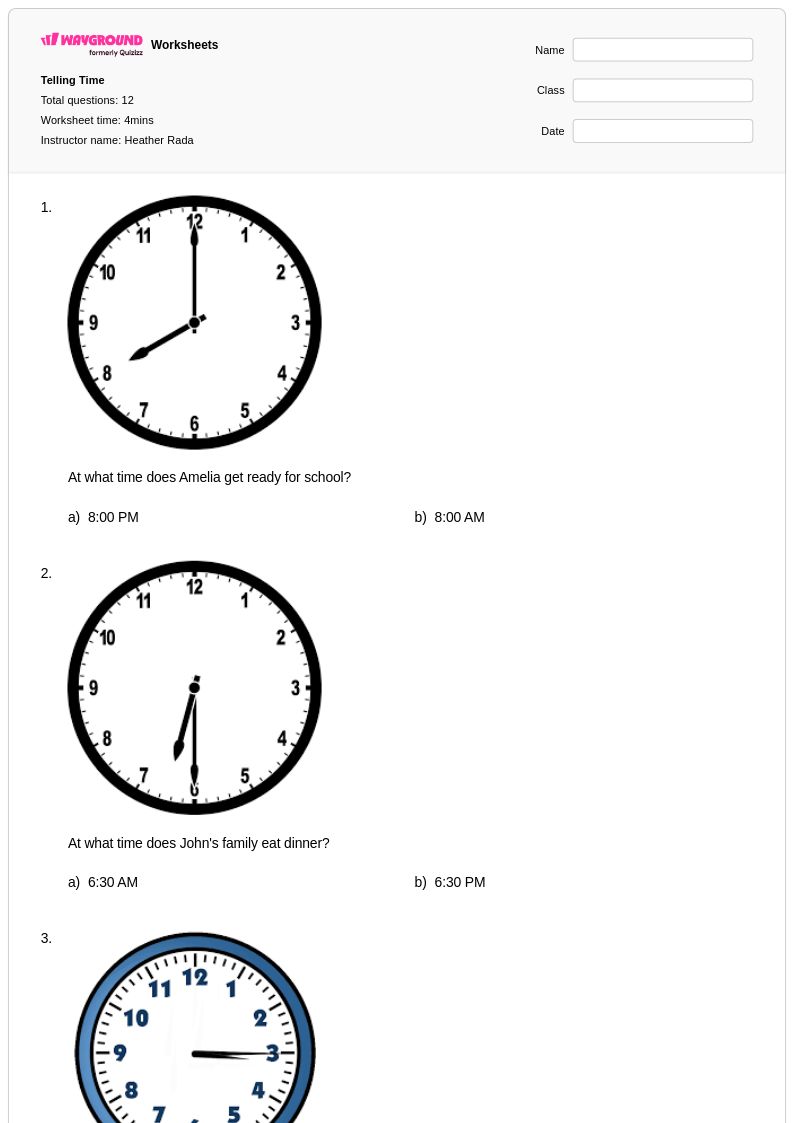
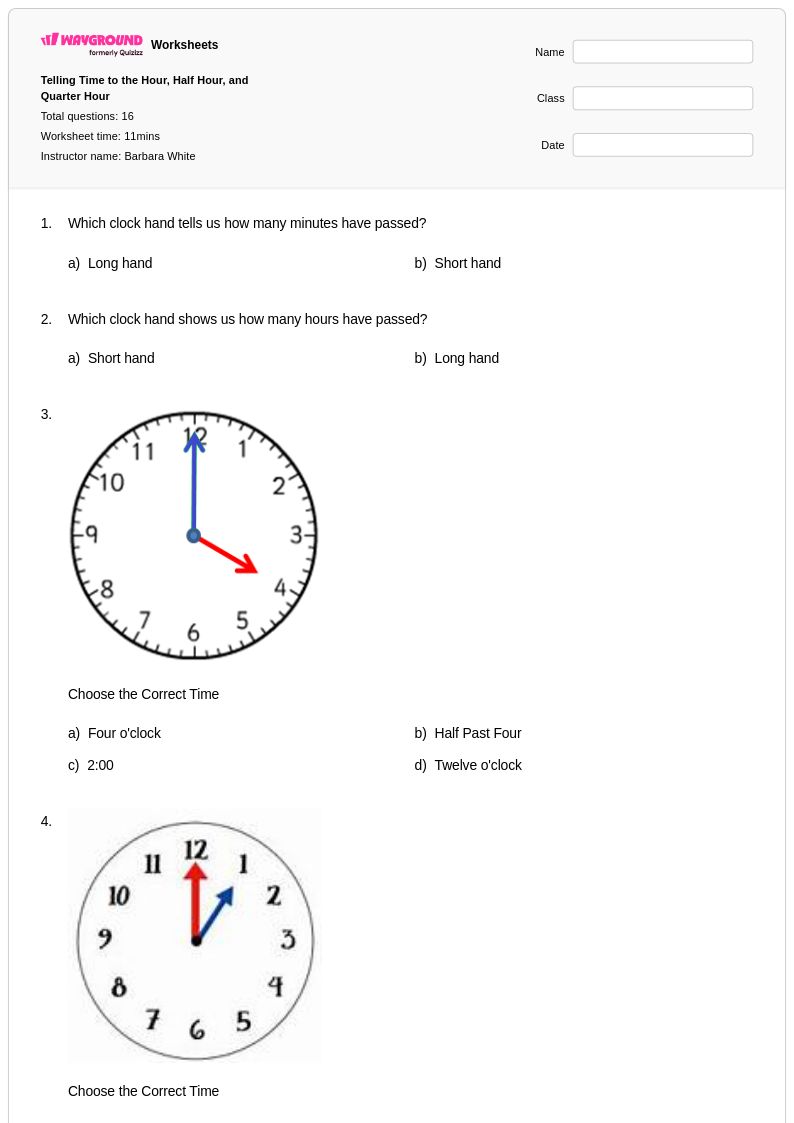
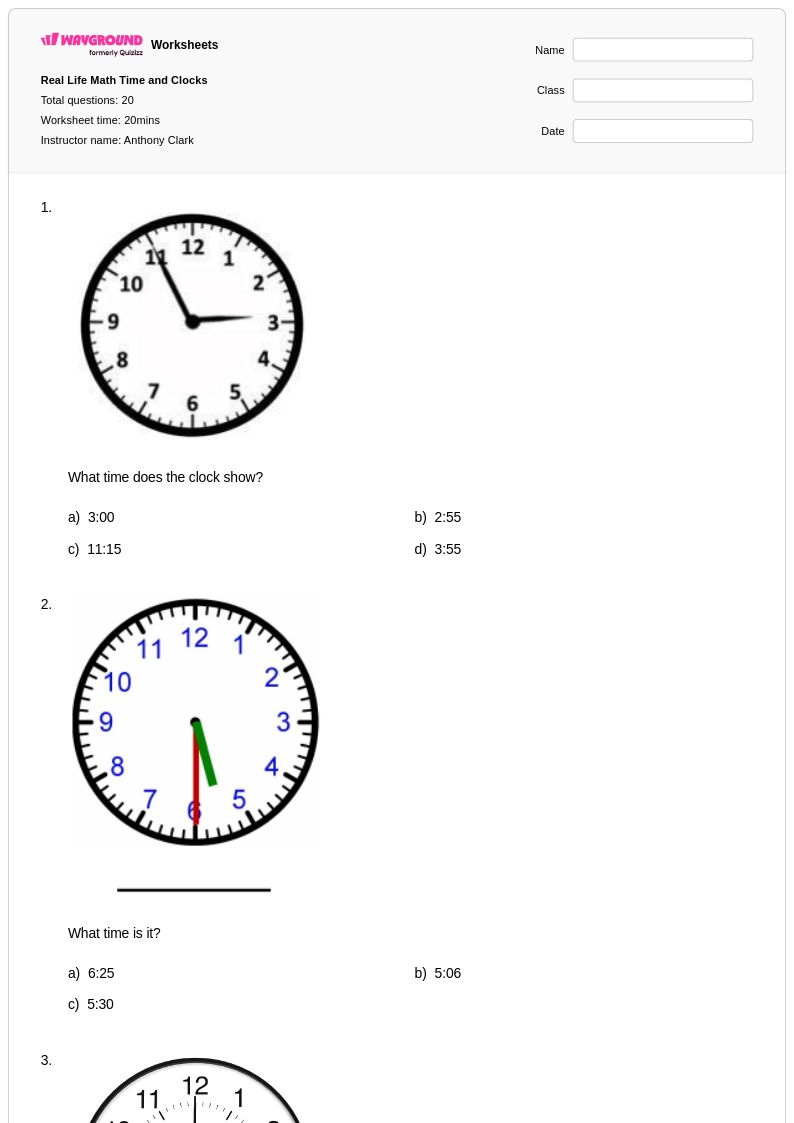
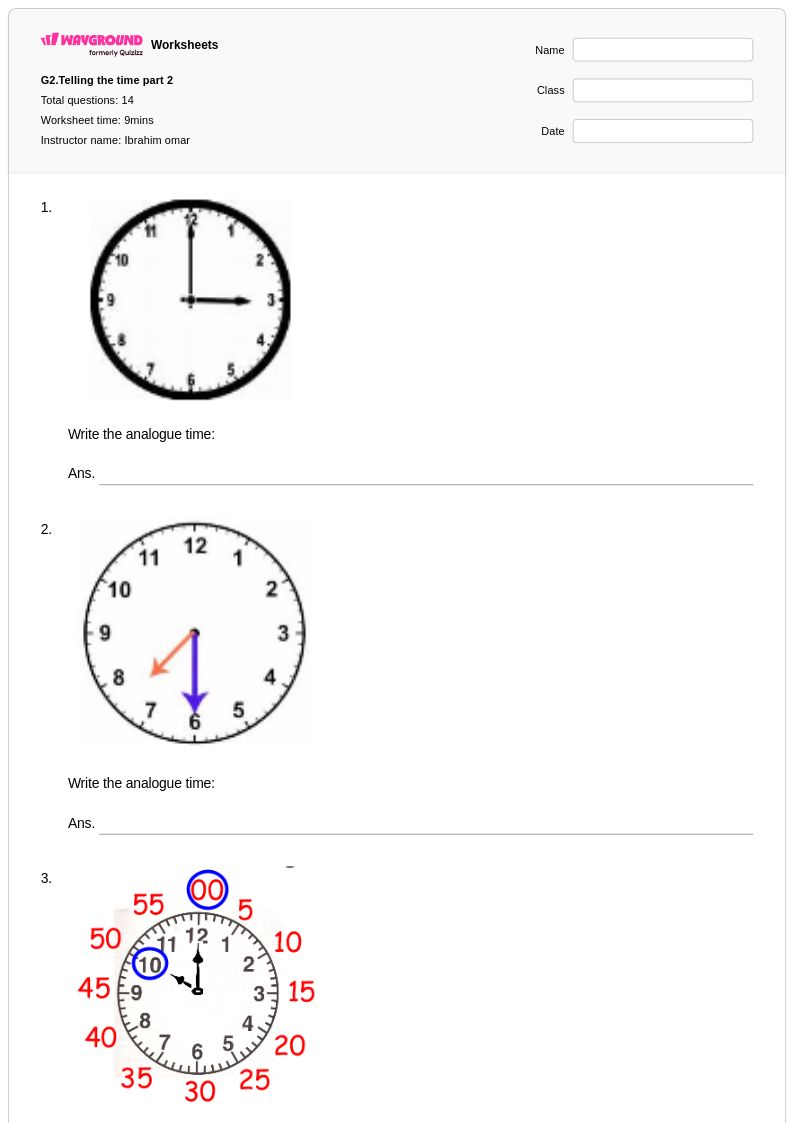
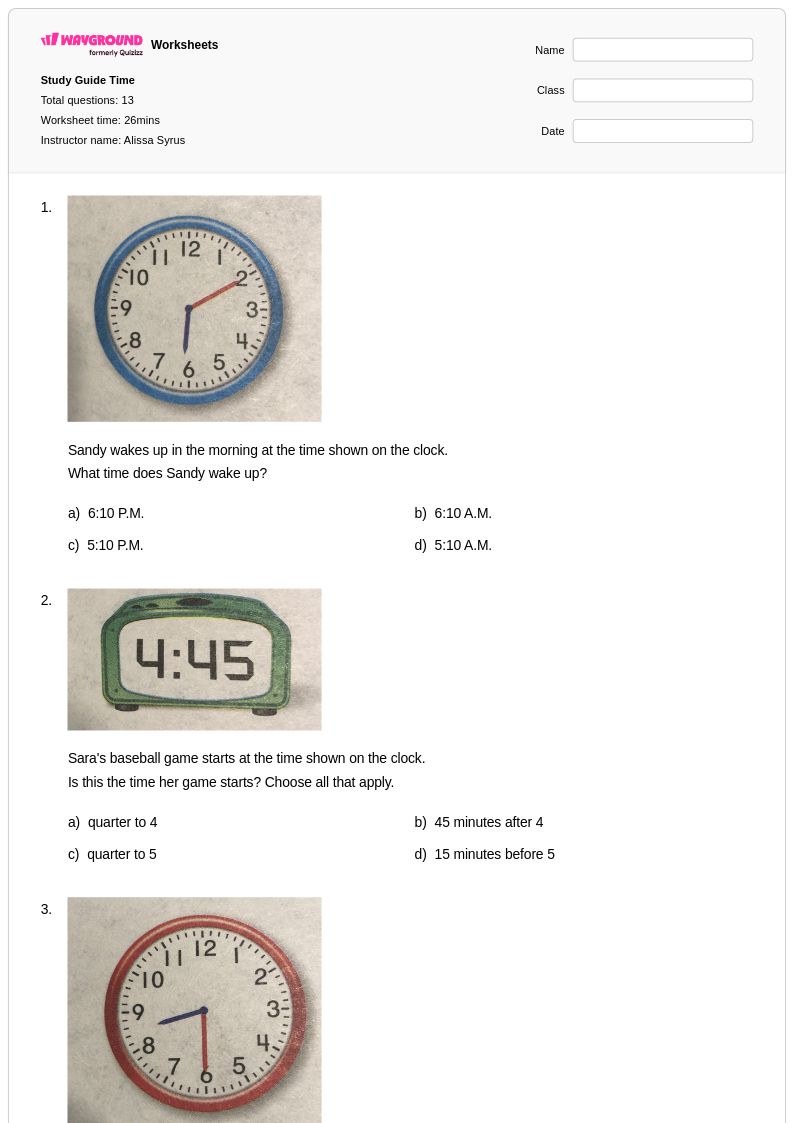
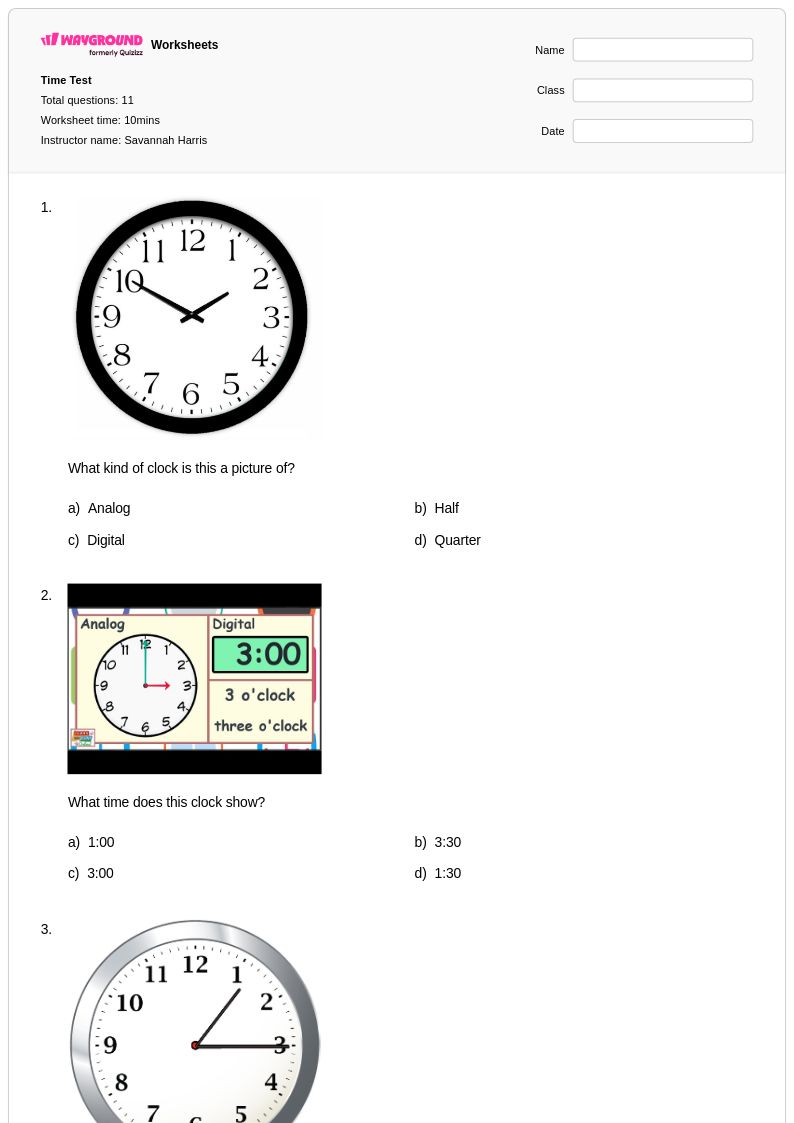
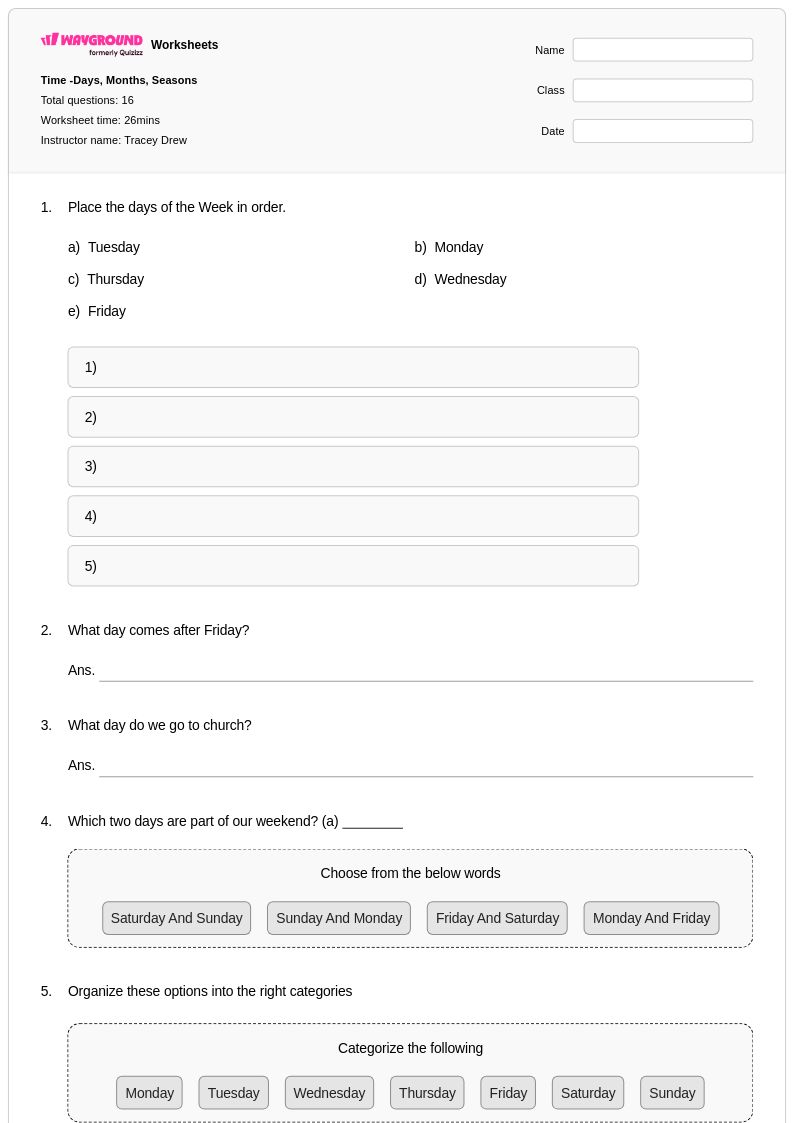
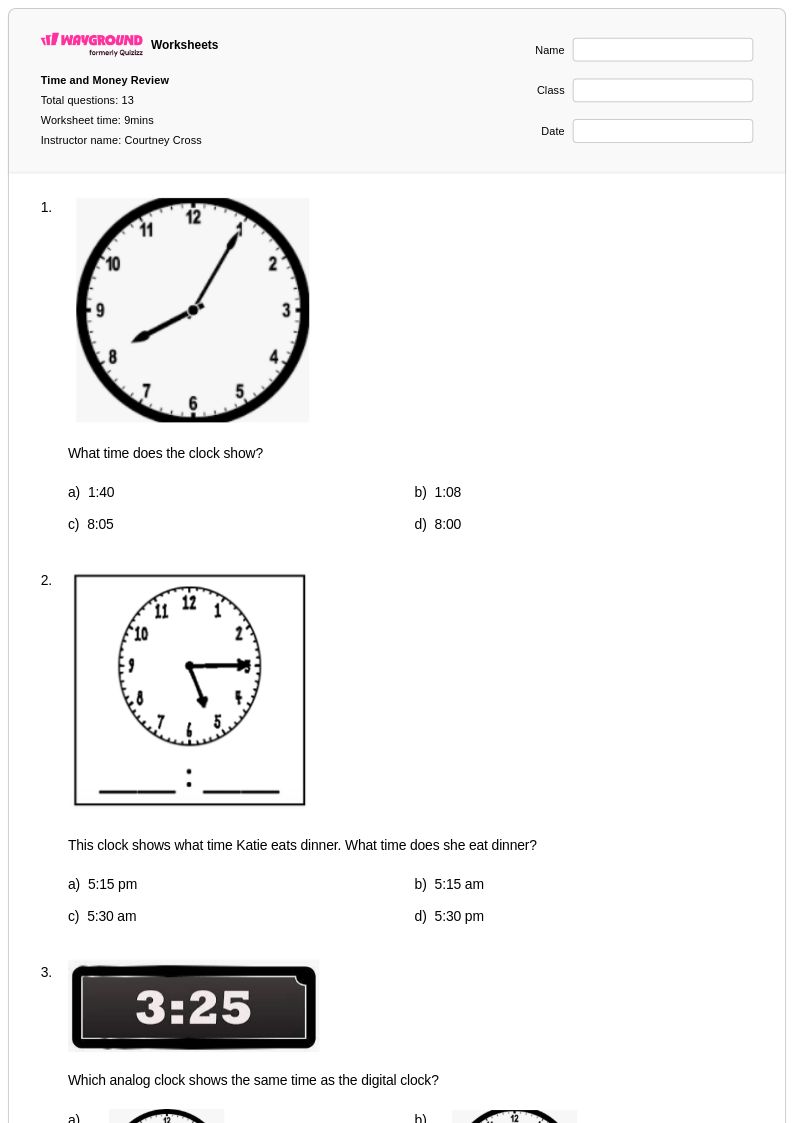
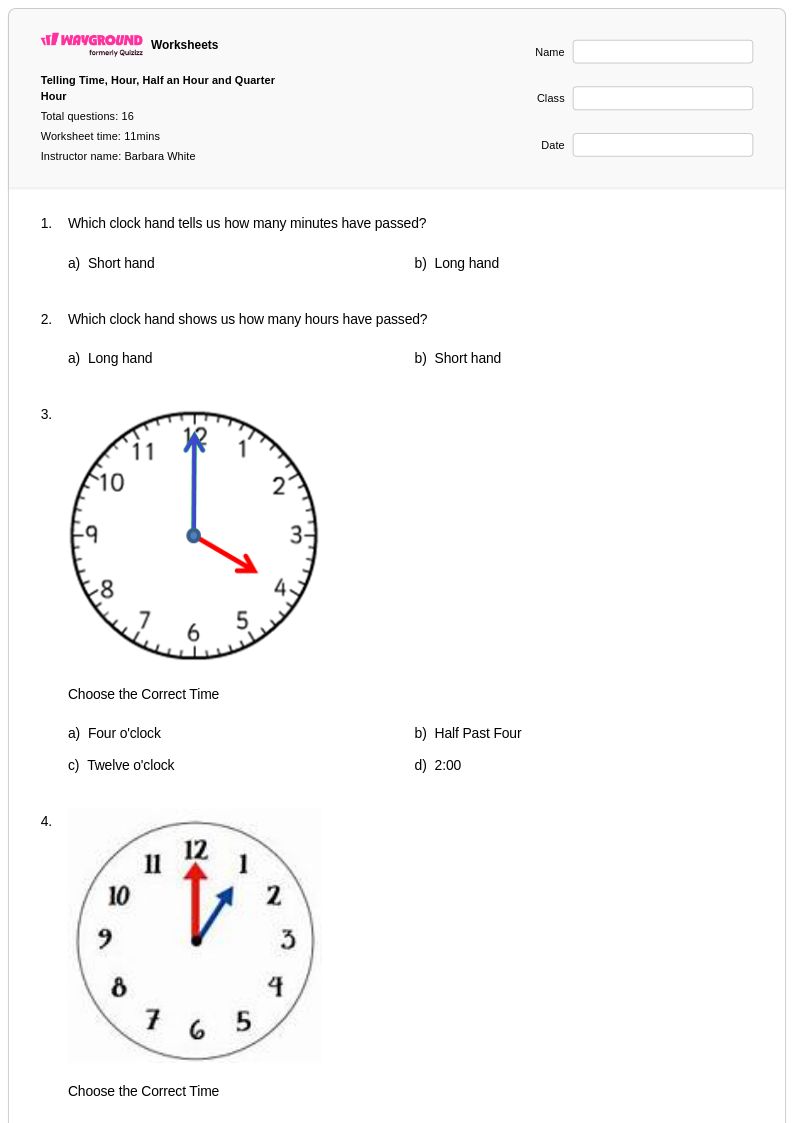
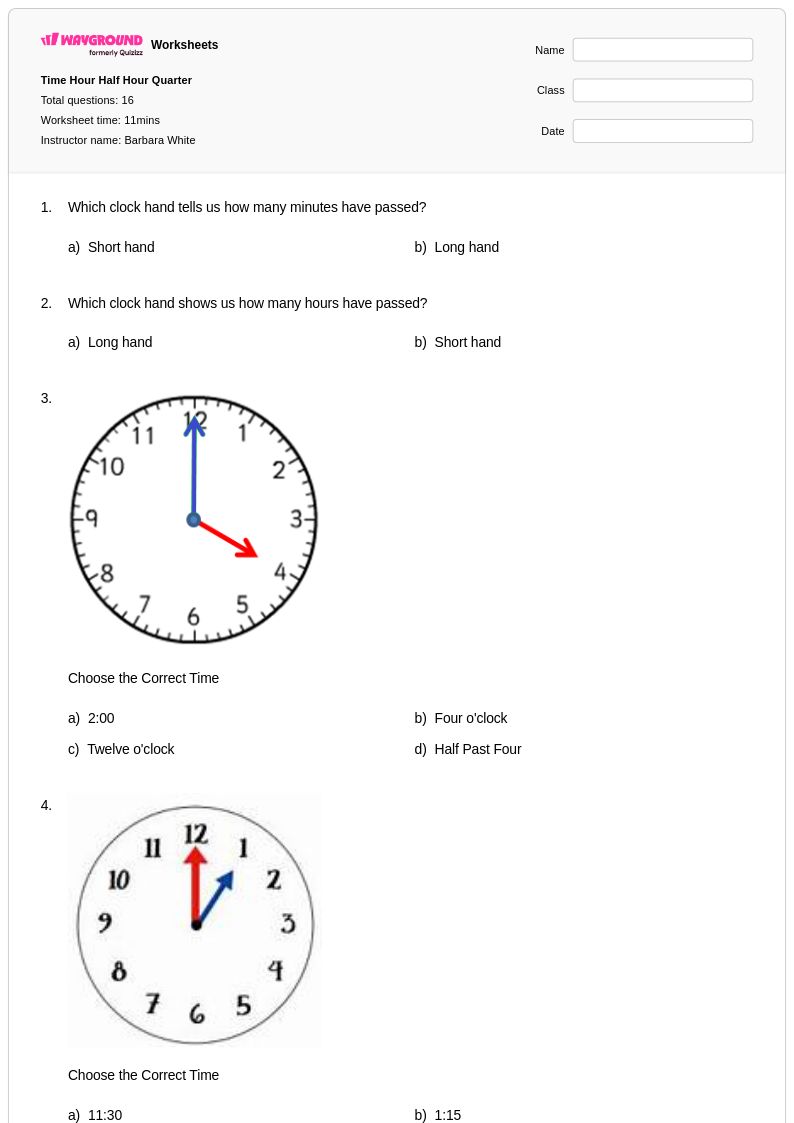
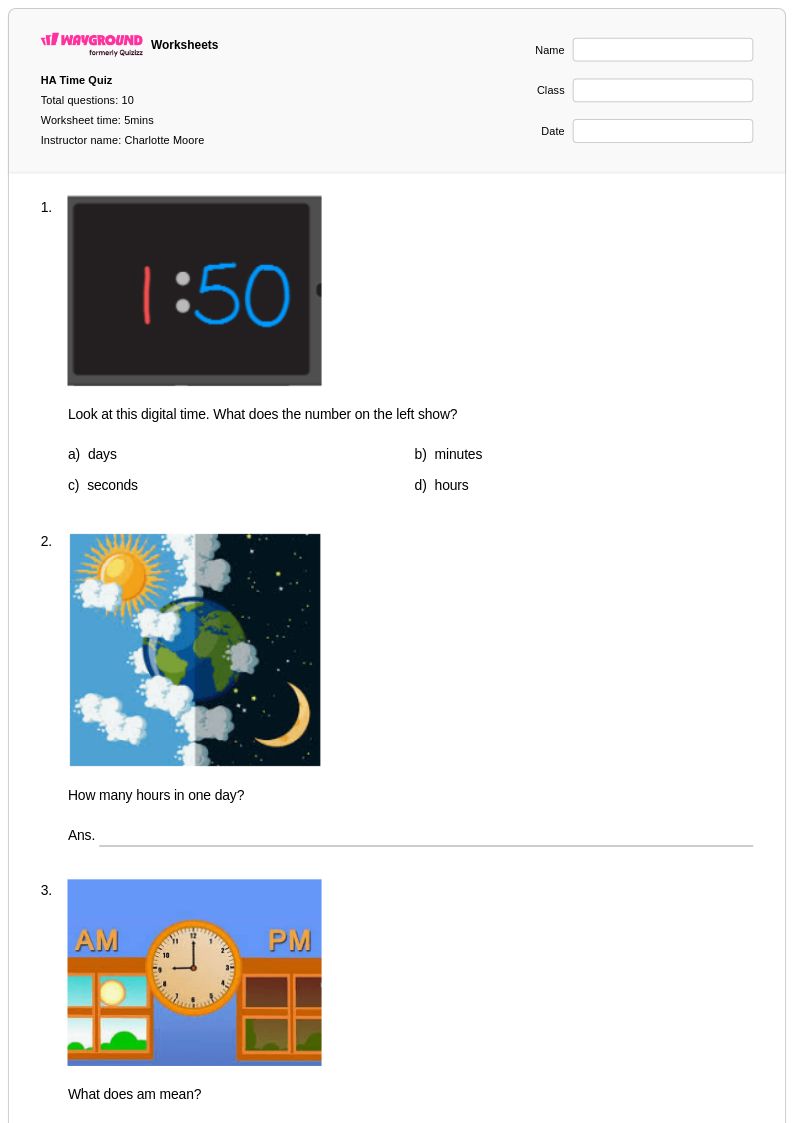
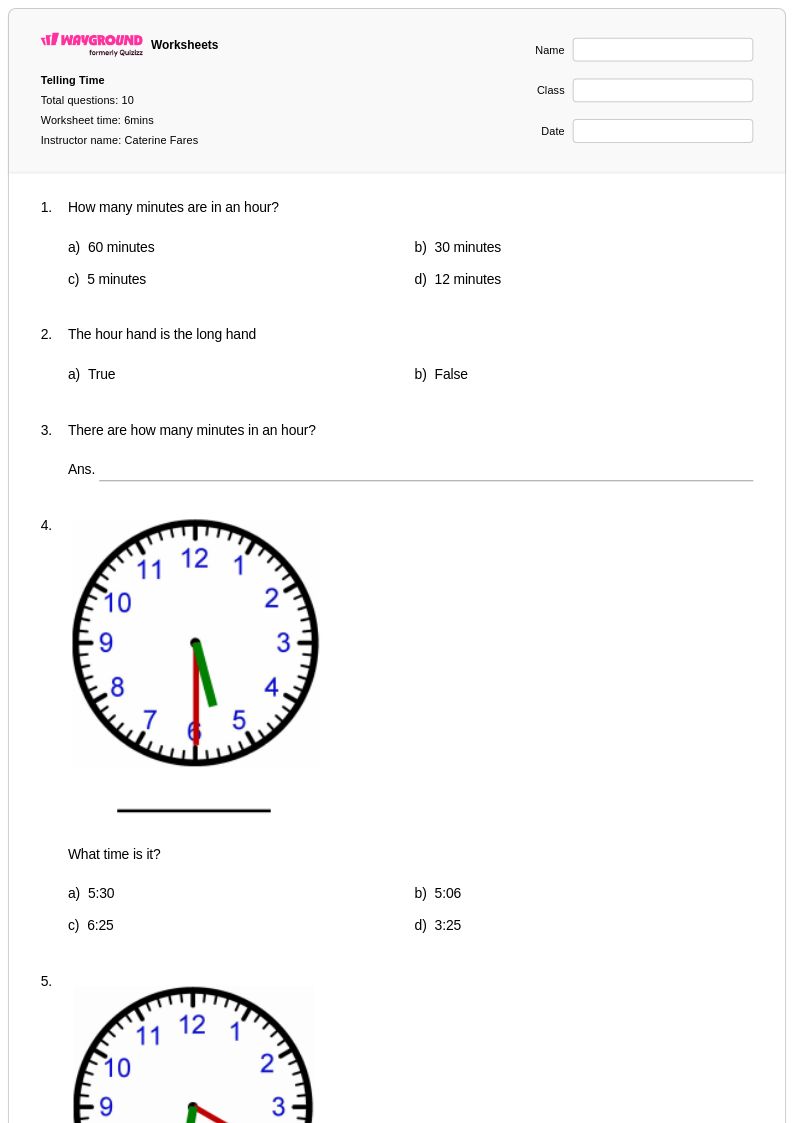
Free Year 2 digital time worksheets and printables help students master reading clocks with digital displays through engaging practice problems, complete with answer keys for effective learning assessment.
Explore printable Digital Time worksheets for Year 2
Digital time worksheets for Year 2 students available through Wayground (formerly Quizizz) provide essential practice for developing fundamental time-reading skills using digital clock formats. These comprehensive worksheets focus on helping young learners recognize and interpret time displayed on digital clocks, moving beyond analog clock reading to understand the numerical representation of hours and minutes. Students work through carefully structured practice problems that build their ability to read digital time displays accurately, understand the relationship between hours and minutes, and connect digital time representations to their daily activities and schedules. The collection includes free printables with complete answer keys, allowing teachers to easily assess student progress and identify areas requiring additional support, while pdf formats ensure consistent formatting and easy distribution for both classroom and home use.
Wayground (formerly Quizizz) supports educators with millions of teacher-created digital time resources that can be easily searched and filtered to match specific Year 2 learning objectives and standards alignment requirements. The platform's robust differentiation tools enable teachers to customize worksheets based on individual student needs, whether providing remediation for struggling learners or enrichment activities for advanced students ready to tackle more complex time concepts. Teachers can access these resources in both printable and digital formats, including downloadable pdf versions, making lesson planning more efficient and flexible for various classroom environments. The extensive collection allows educators to provide consistent skill practice throughout the school year, supporting students as they progress from basic digital time recognition to more sophisticated understanding of time relationships and daily time management concepts.
FAQs
How do I teach second graders to read digital time to the nearest five minutes?
Second graders already know hours and half-hours, so build from there by introducing the five-minute counting pattern around the clock face. Have students count by fives from 0 to 55 before connecting those counts to the minute values on a digital display. Then practice reading times like 2:15, 2:20, and 2:45 by name, "two fifteen," "quarter past two," "quarter to three", so students learn that the same digital time has multiple valid spoken forms.
What practice exercises work best for Grade 2 digital time?
At this level, the most productive exercises are: reading a digital display and writing the time in words, matching digital times to analog clocks showing the same time, and ordering a set of digital times from earliest to latest. That last type is underused but highly effective — it forces students to compare both the hour and minute values, which surfaces place-value confusion quickly.
What mistakes do second graders make when reading digital time?
Two errors dominate. First, students read 3:05 as "three five" instead of "three oh five" — the leading zero trips them up. Second, when comparing times, they focus only on the minute value and ignore the hour, deciding that 4:50 comes after 5:10 because 50 is greater than 10. Both errors point to the same underlying issue: students aren't yet reading the display as two distinct, ordered values.
How do I use Wayground's Grade 2 digital time worksheets in my classroom?
You can host any worksheet as a digital quiz on Wayground for device-based practice, or download the PDF and print it for paper work — both formats include a complete answer key. When you go the printable route, the Wayground for Teachers app lets you scan student submissions to grade them without entering scores by hand, which saves real time when you're running the worksheet as a timed math center.
Is five-minute digital time reading part of the Common Core Grade 2 standards?
Yes. Common Core explicitly expects second graders to tell and write time from analog and digital clocks to the nearest five minutes, using AM and PM. This is a direct extension of the first-grade standard, which covered only hours and half-hours. Mastering five-minute intervals in second grade sets students up for the third-grade work of solving elapsed-time word problems.
How can I support second graders who are still struggling with basic digital time reading?
For students who haven't yet solidified hour and half-hour reading from first grade, pull Grade 1 worksheets from Wayground's library as a quick remediation step before moving to five-minute intervals. Within the platform, the Read Aloud accommodation helps students who are strong with numbers but still developing reading fluency — it removes the text barrier so the time concept itself is what's being assessed.