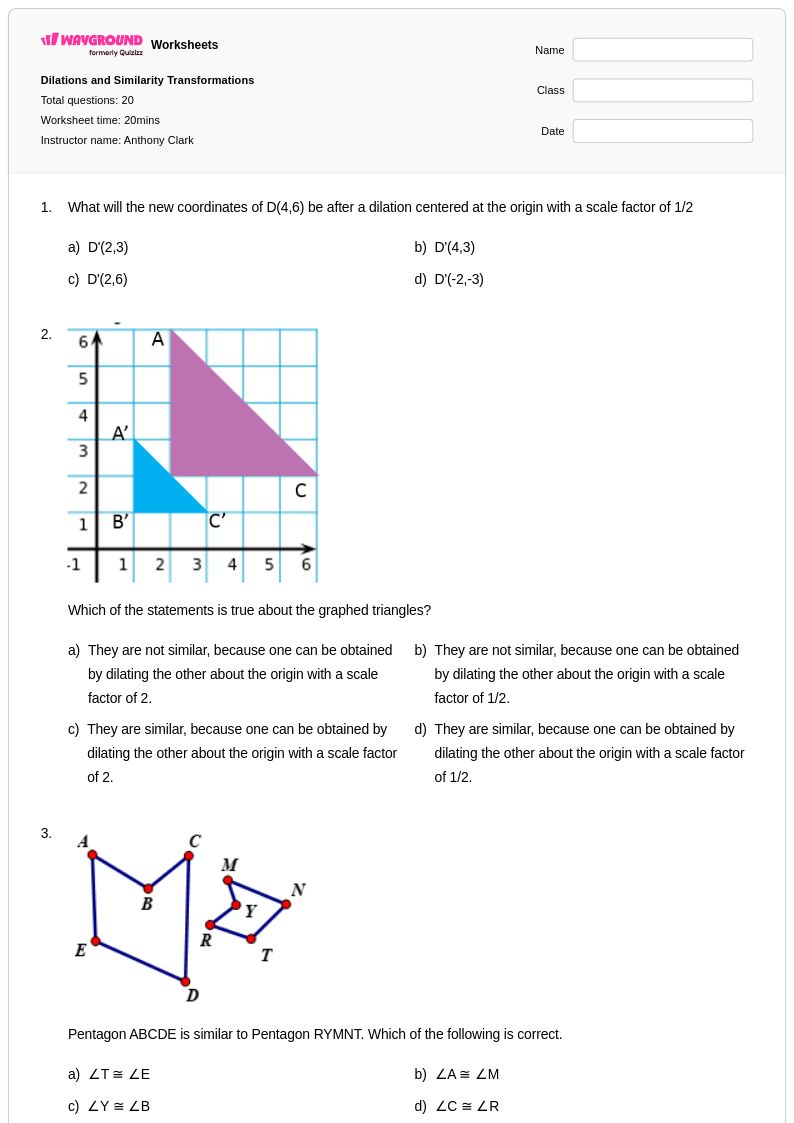
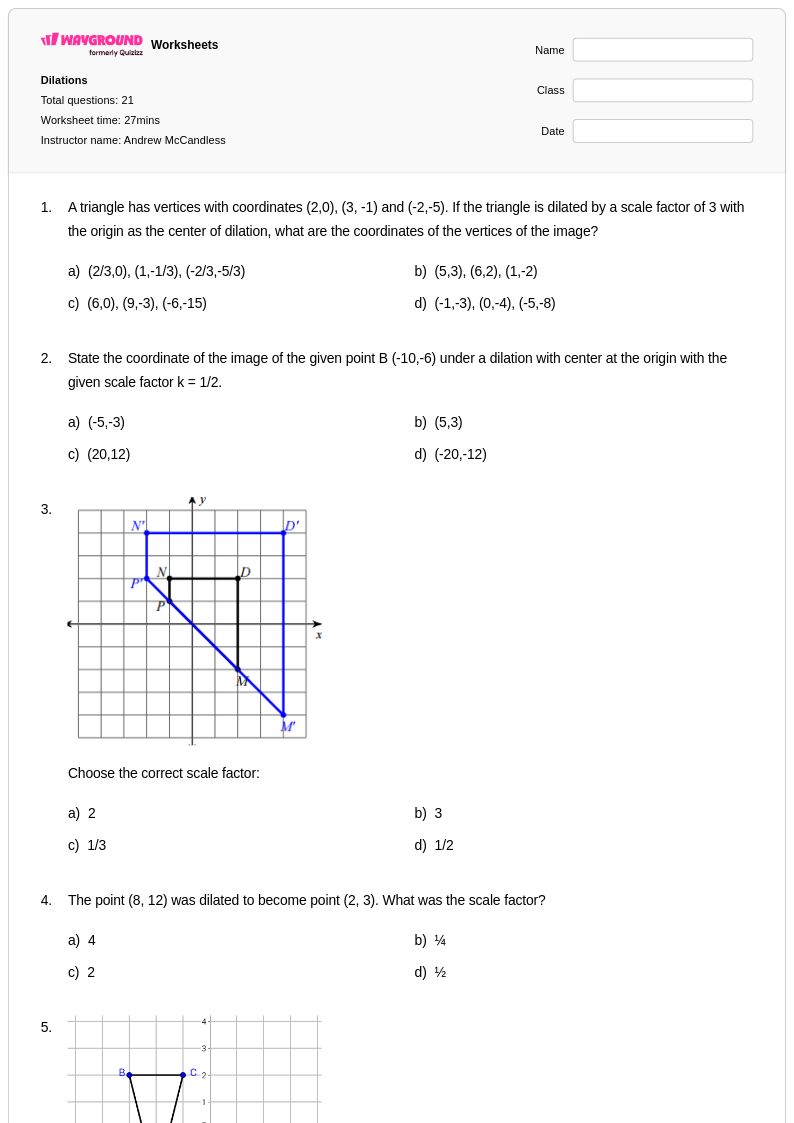
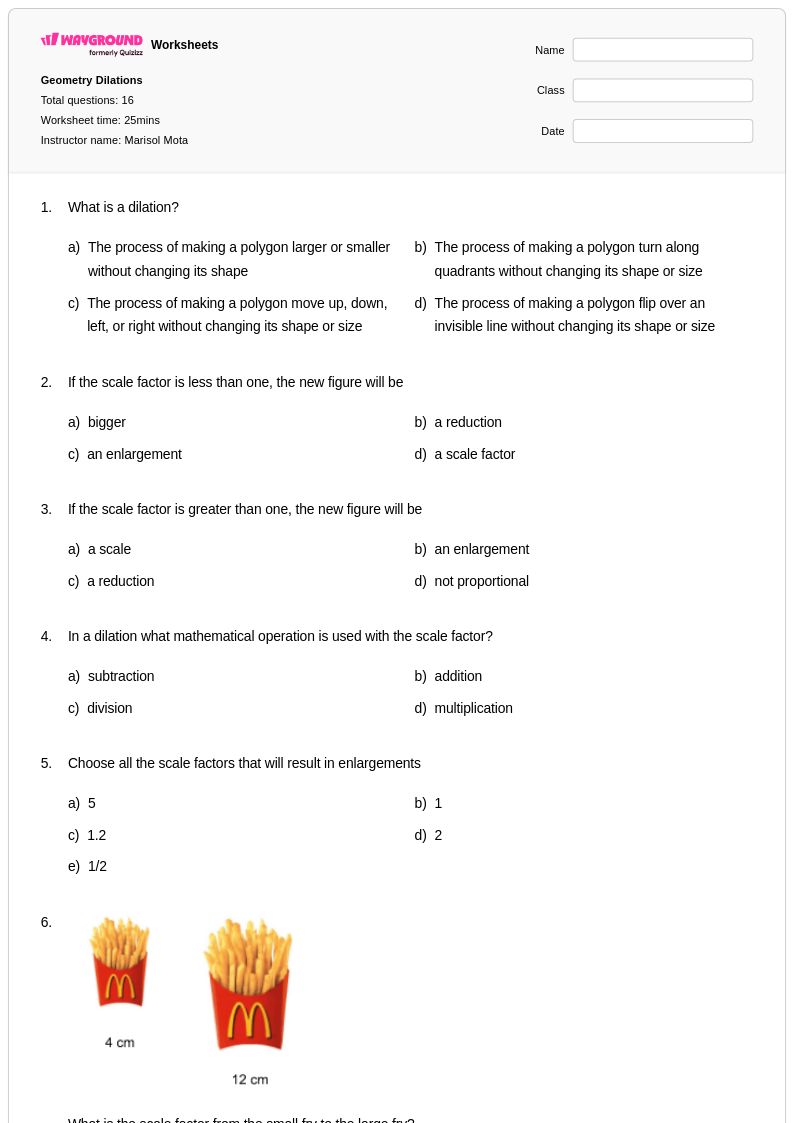
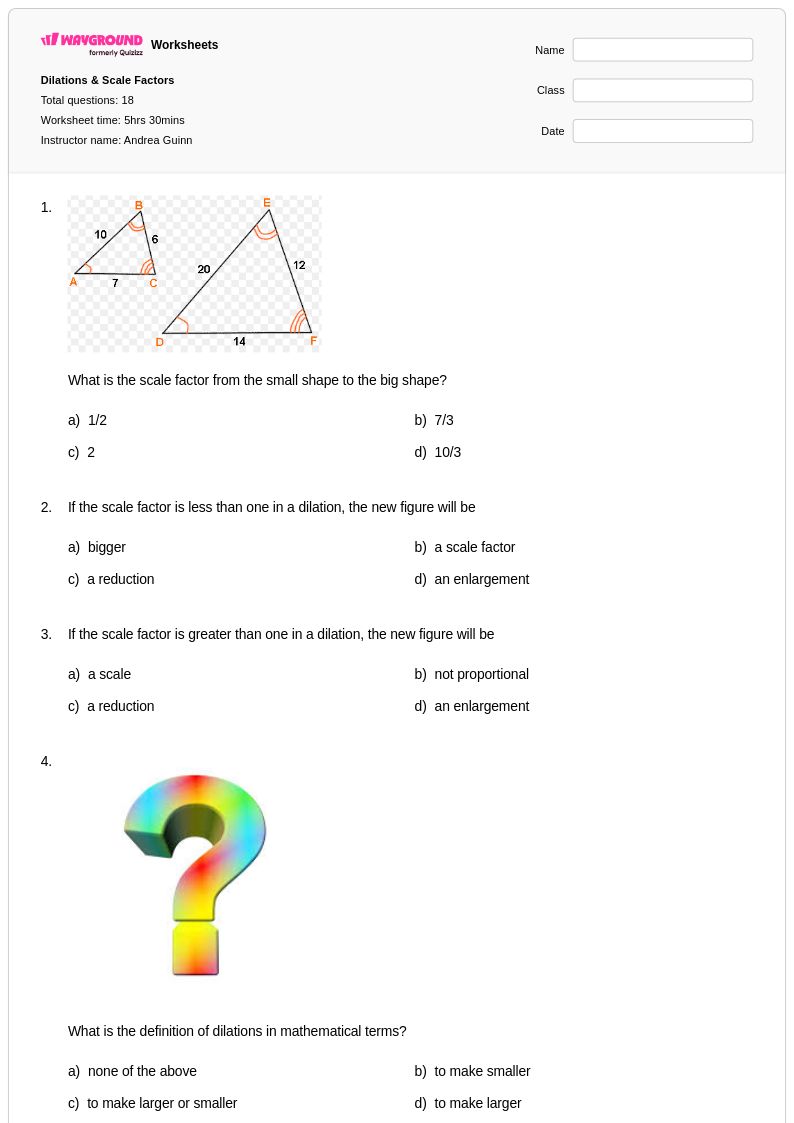
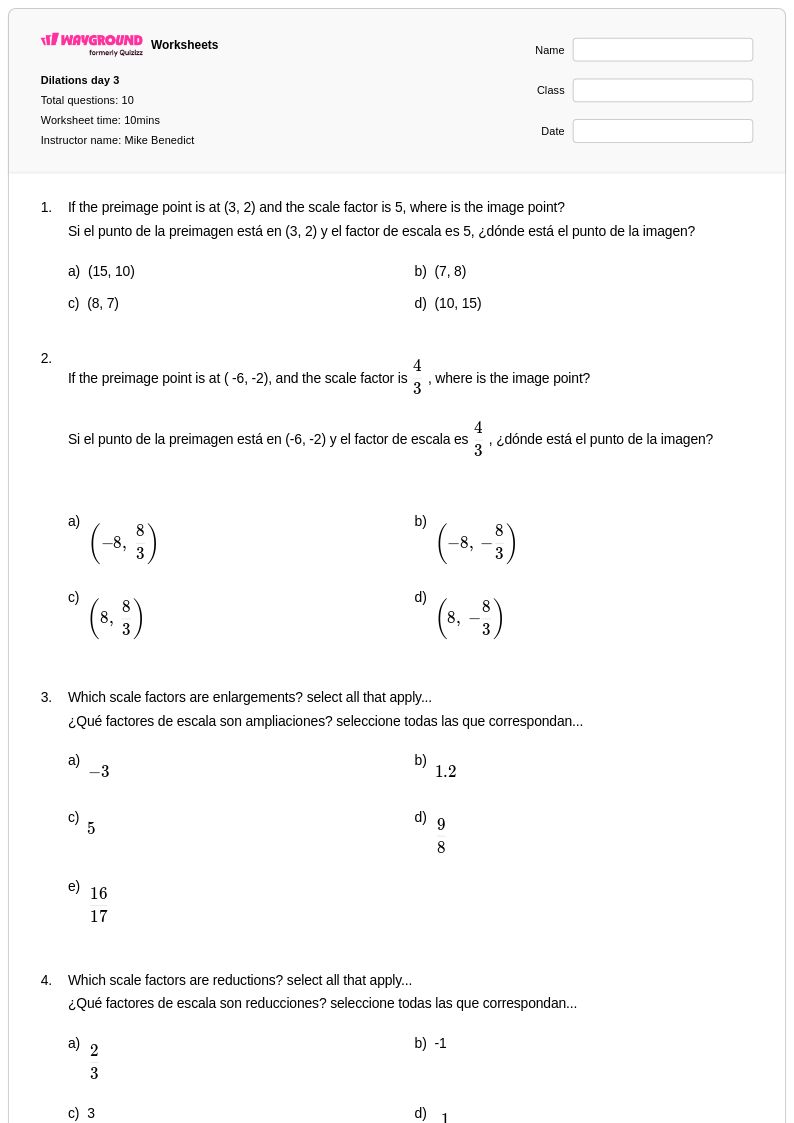
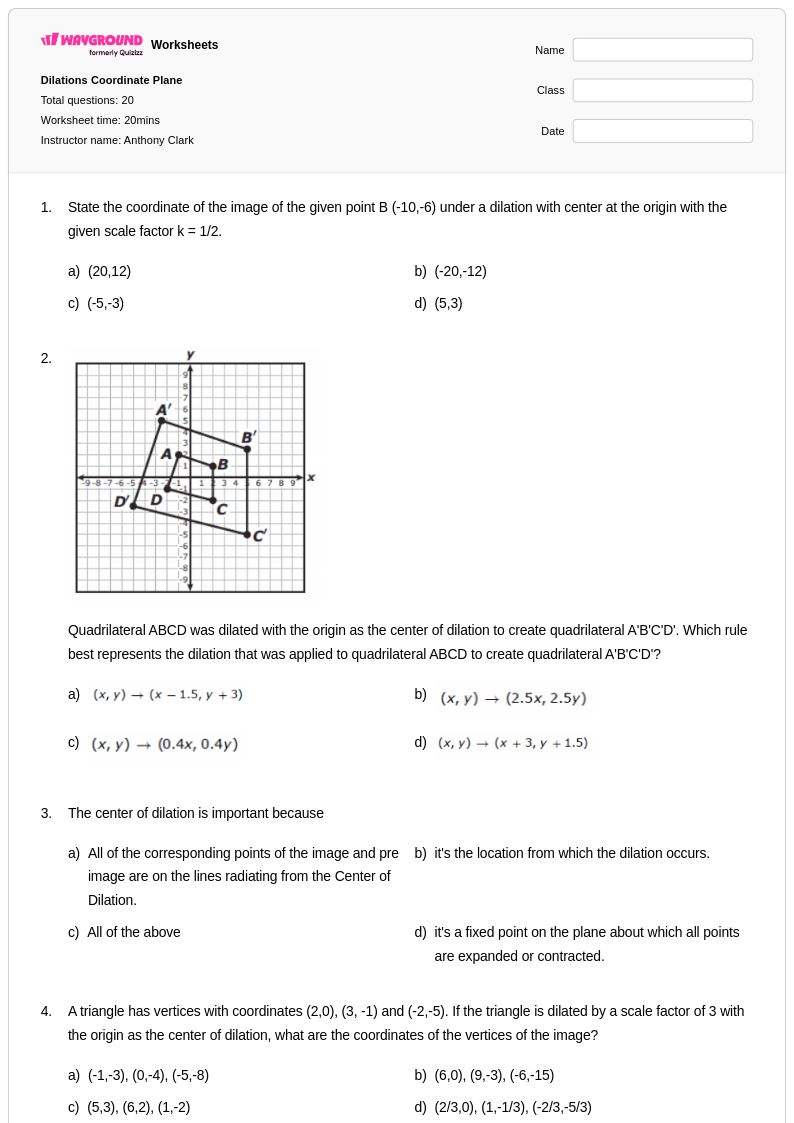
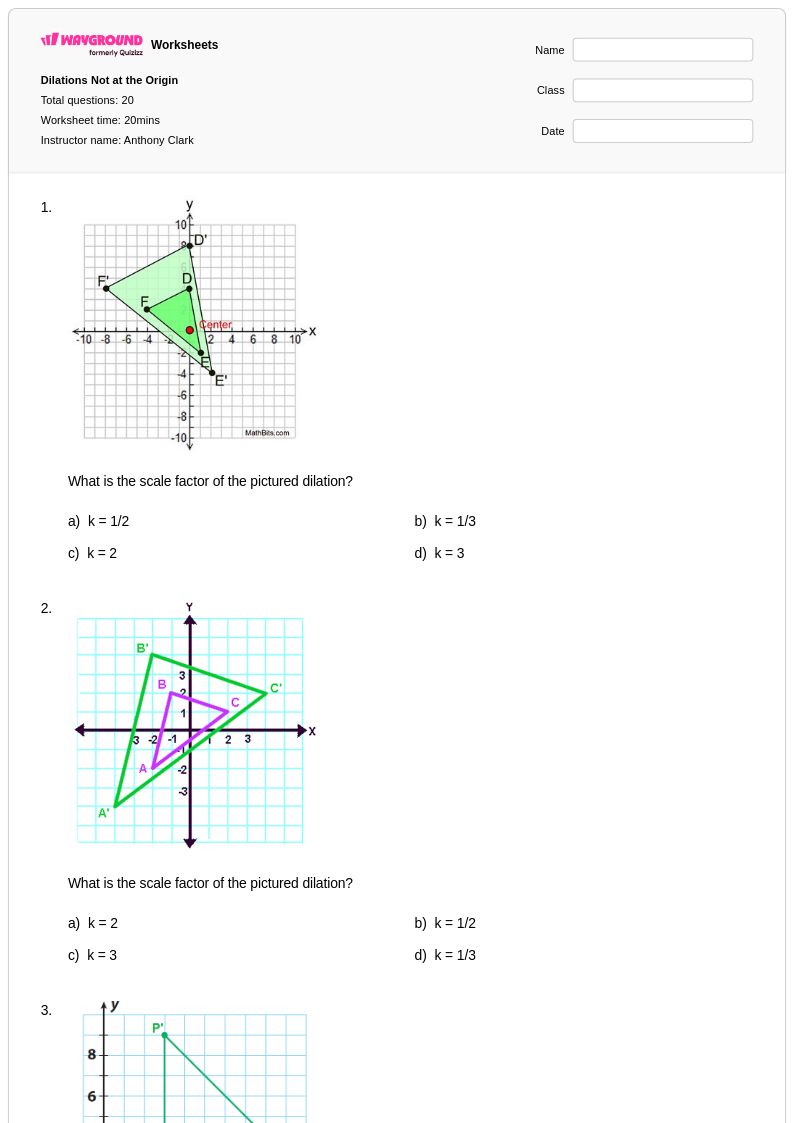
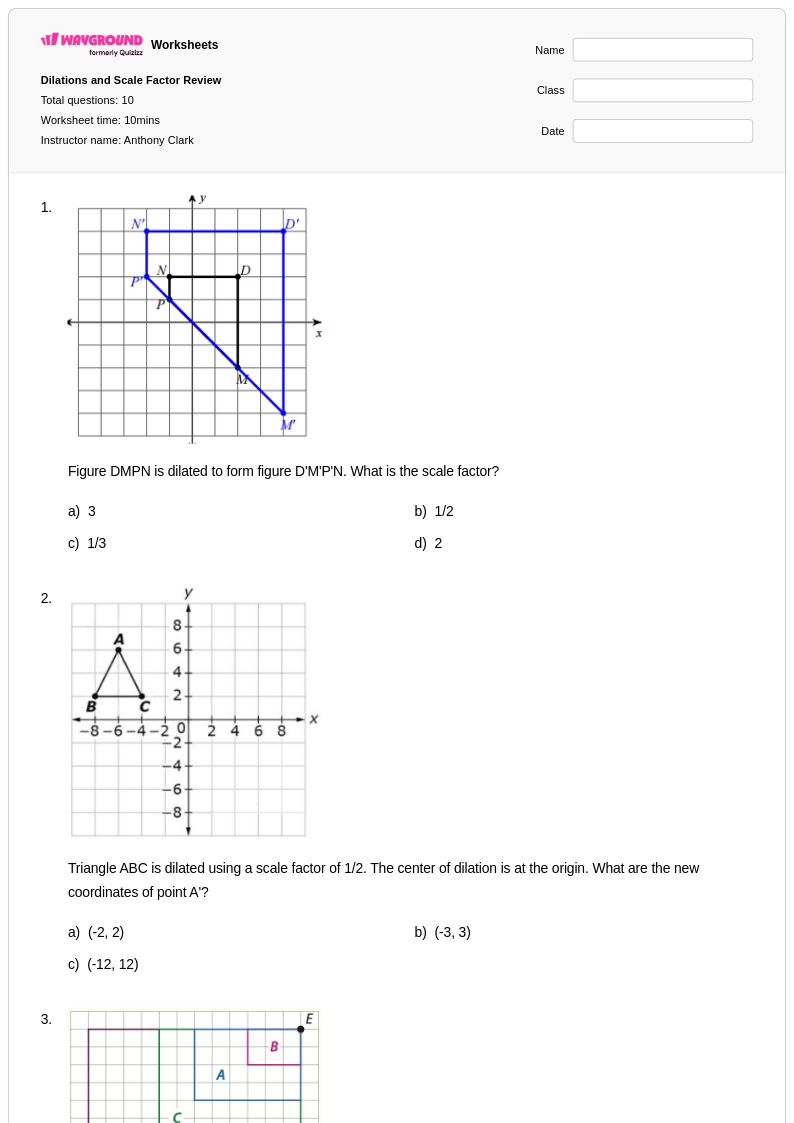
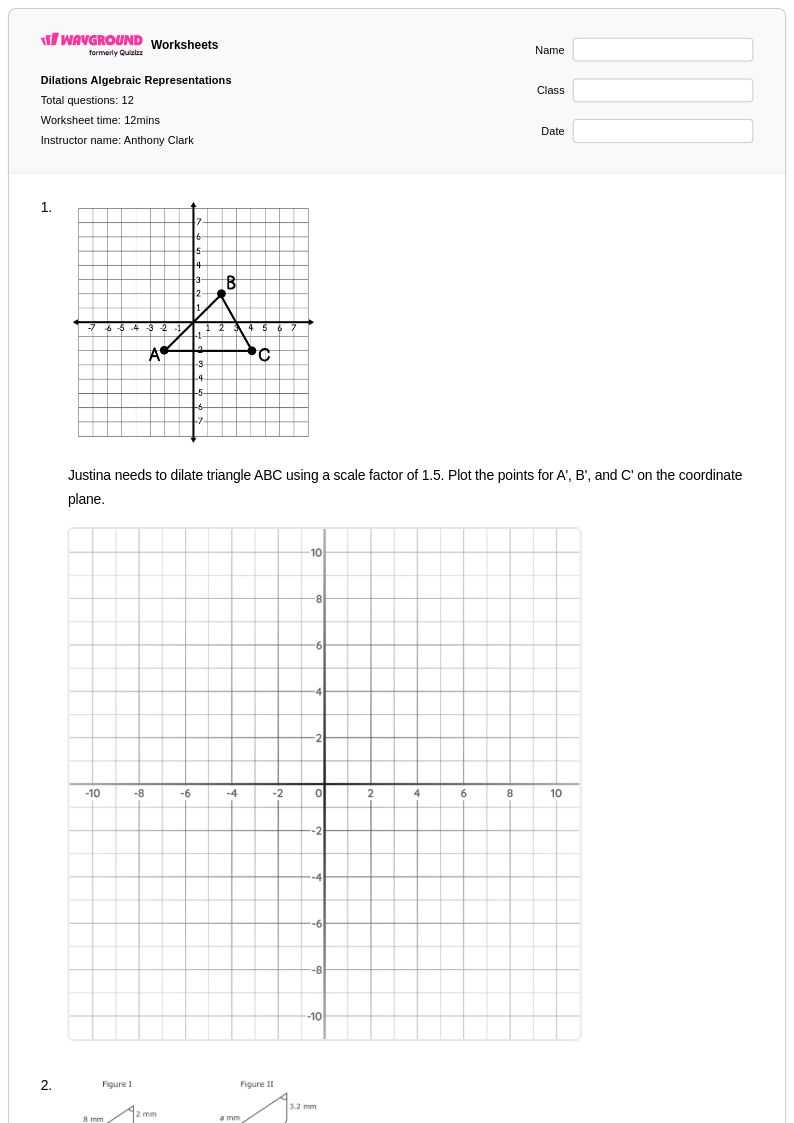
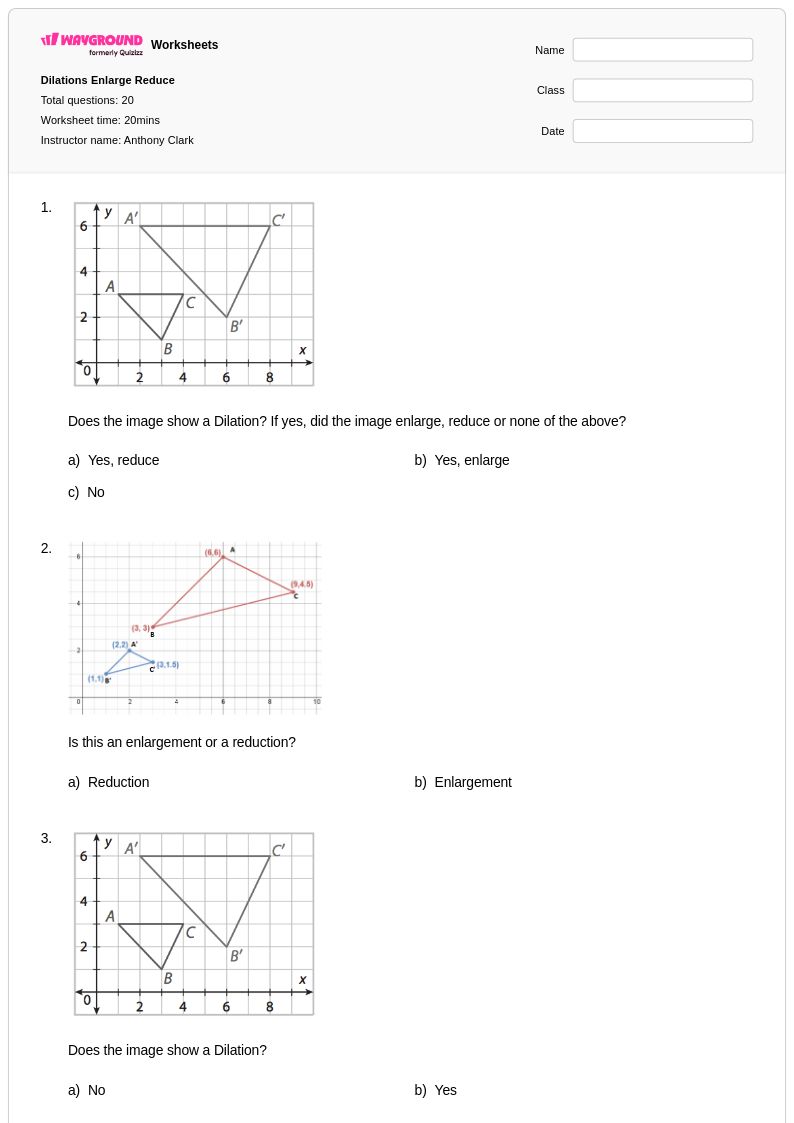
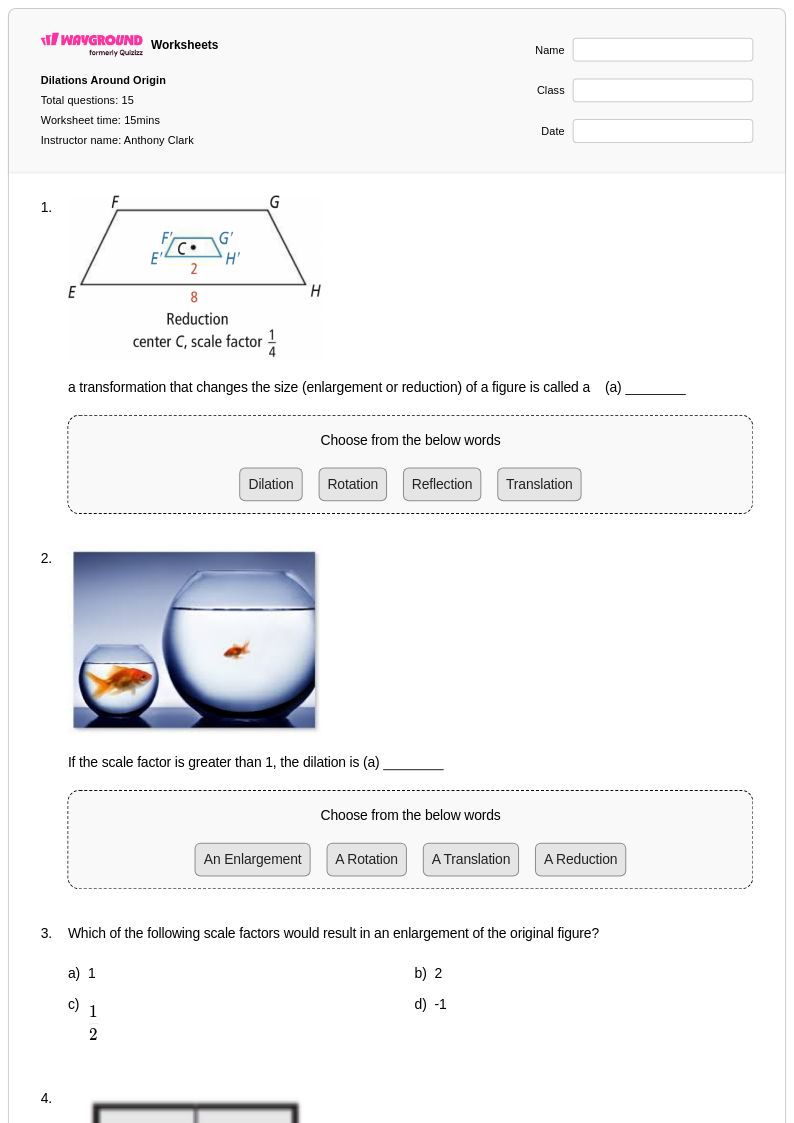
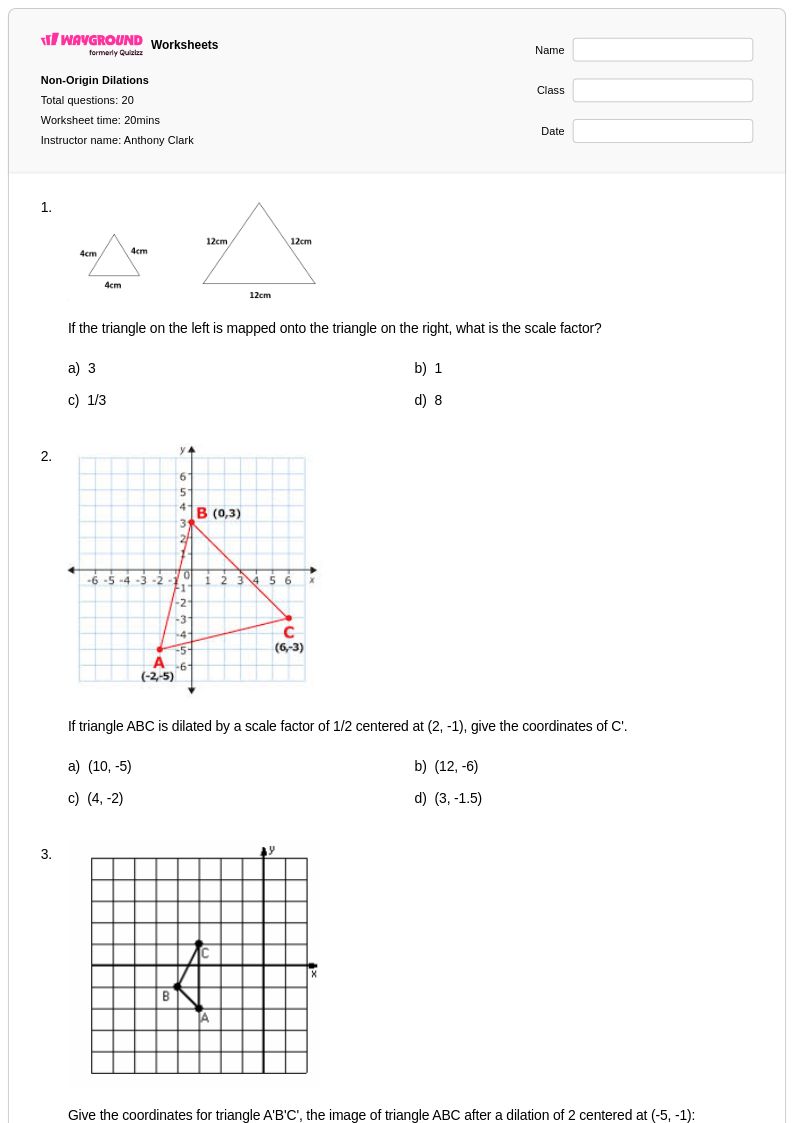
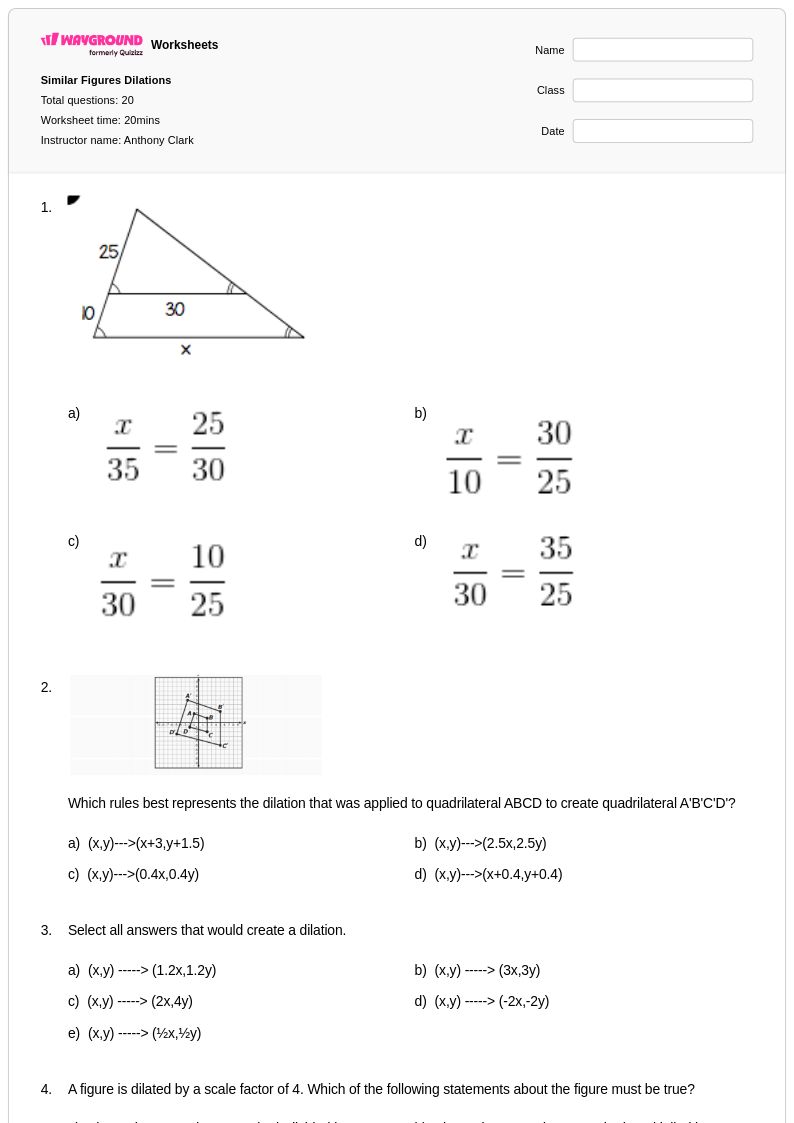
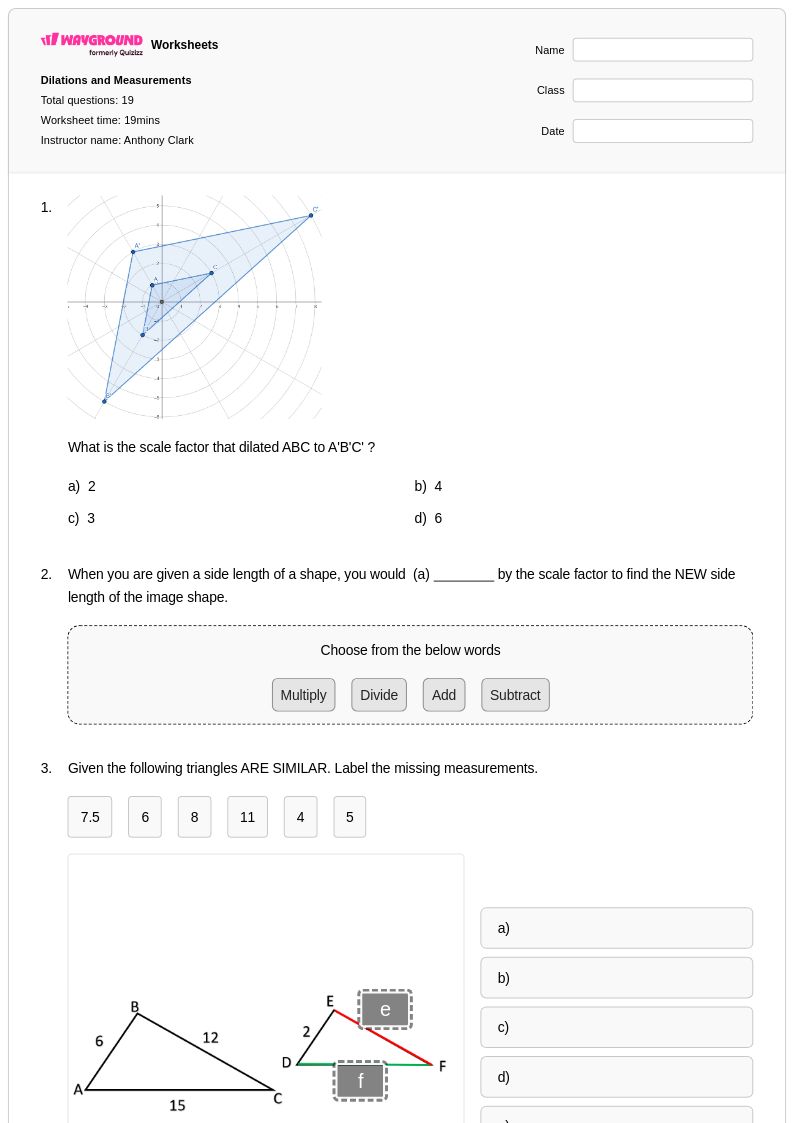
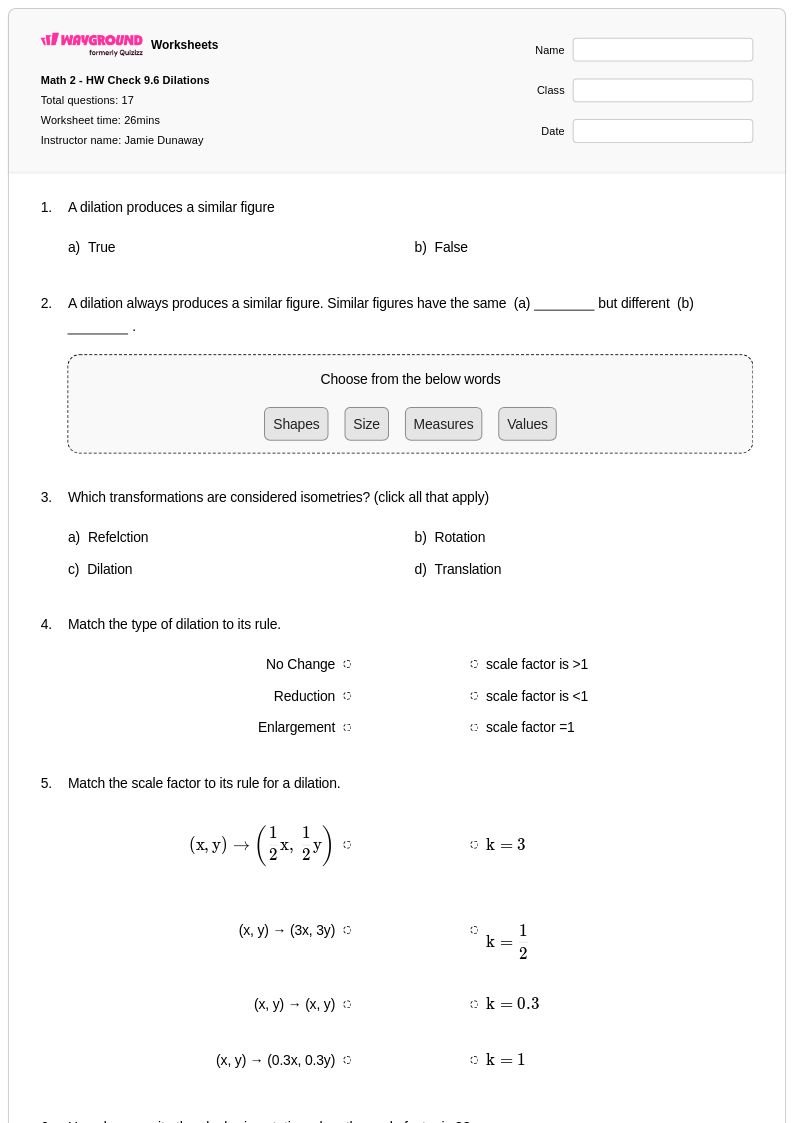
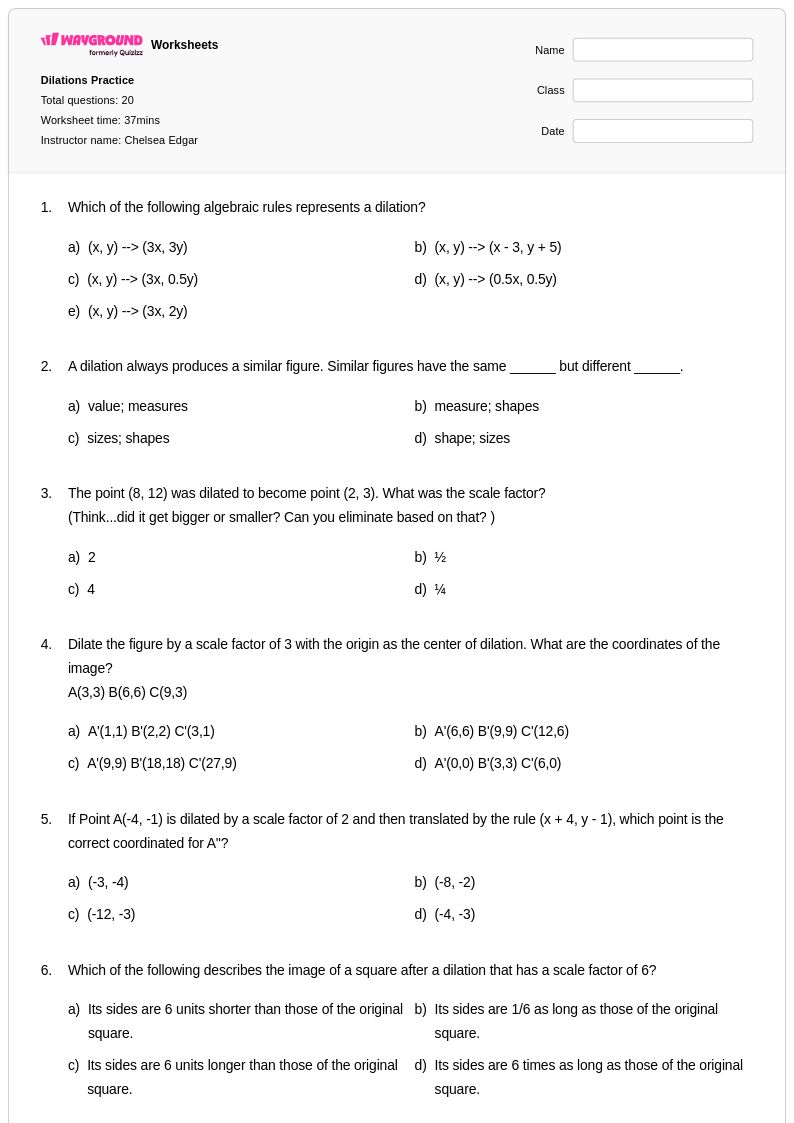
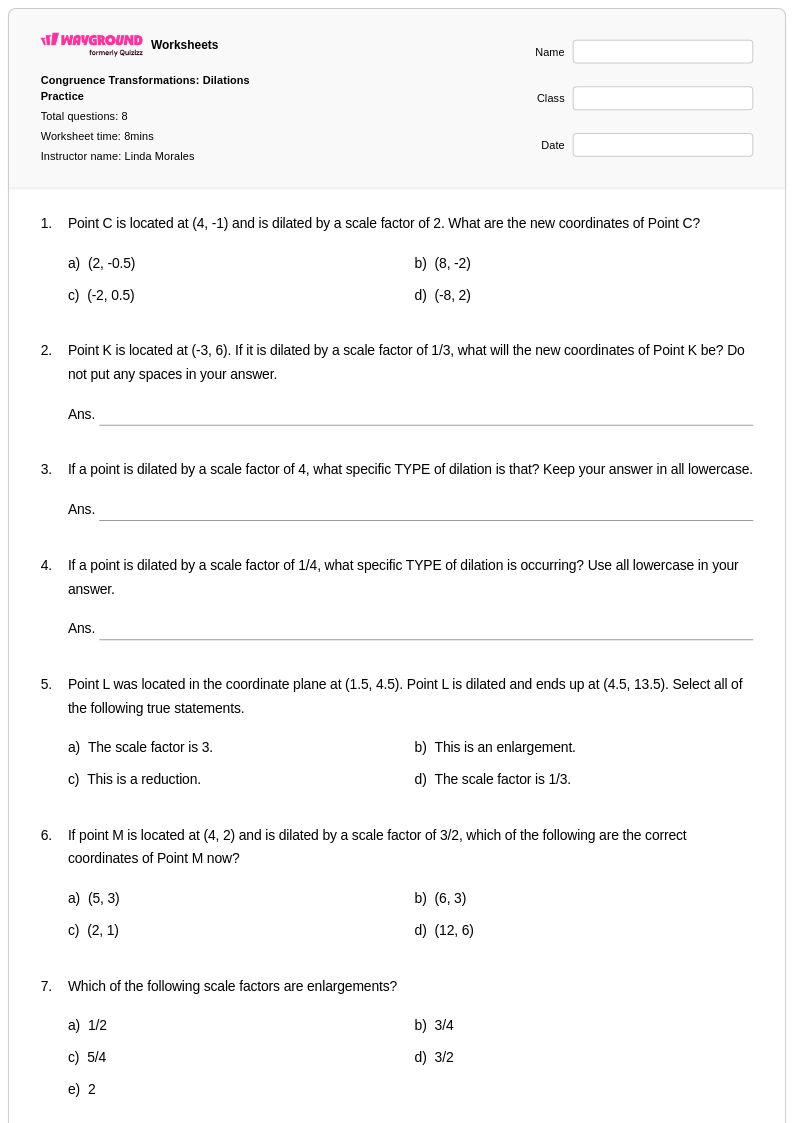
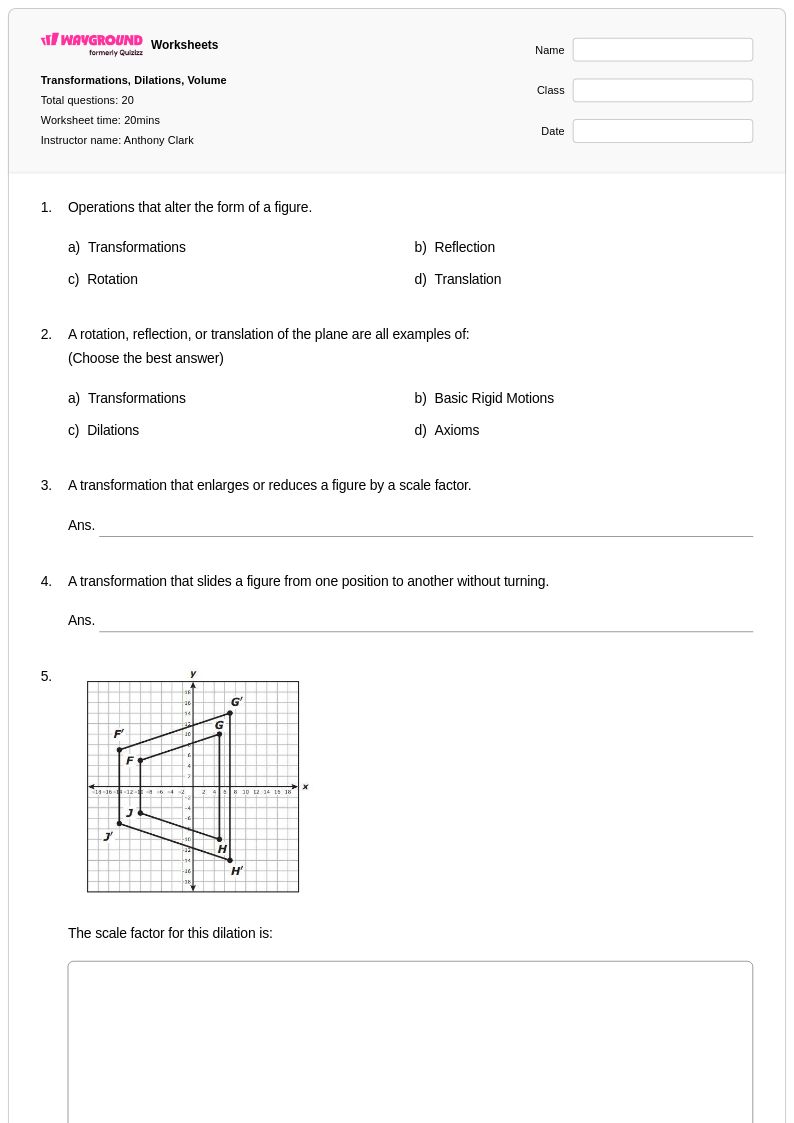
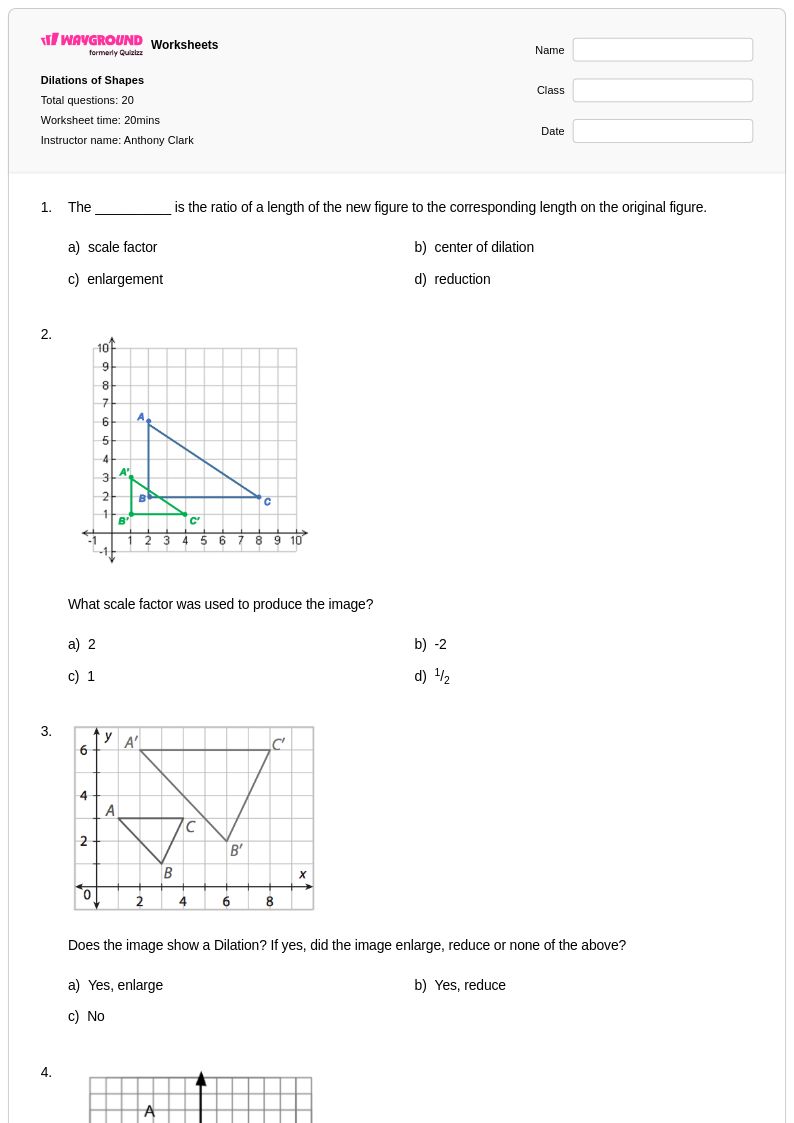
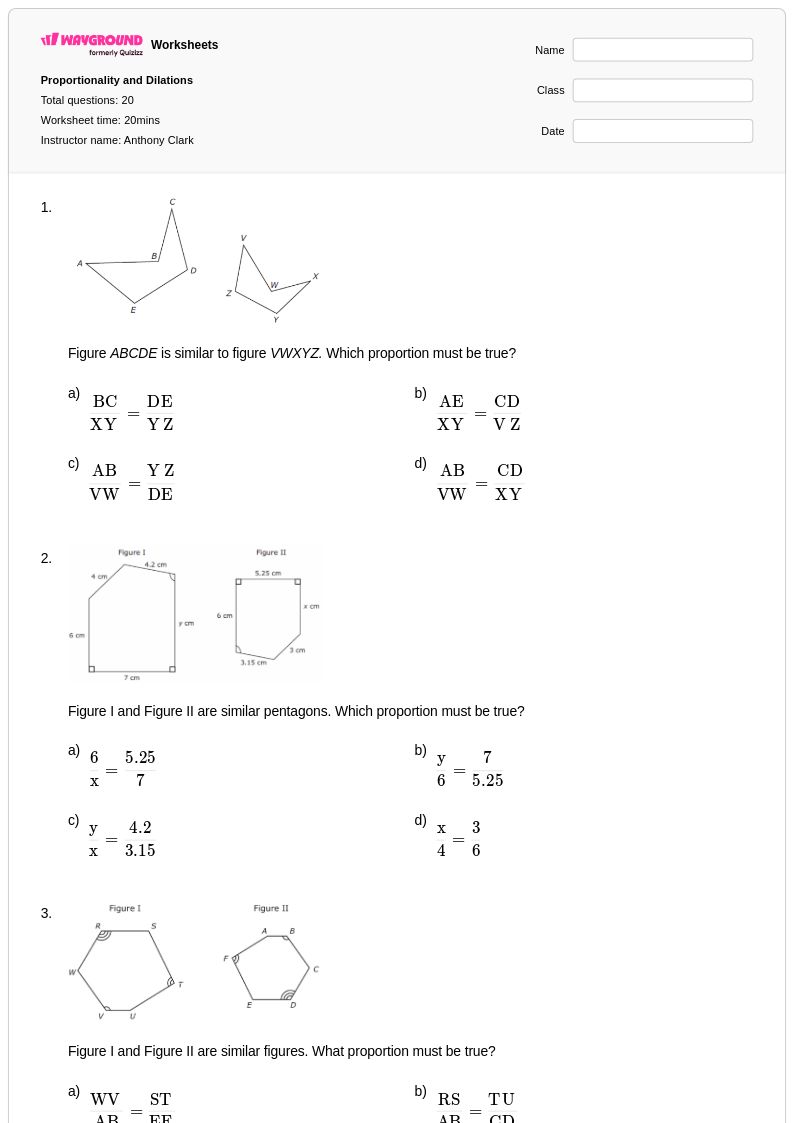
Enhance Year 9 students' understanding of dilations with Wayground's comprehensive collection of free worksheets, featuring engaging practice problems, printable PDFs, and detailed answer keys to master transformation concepts.
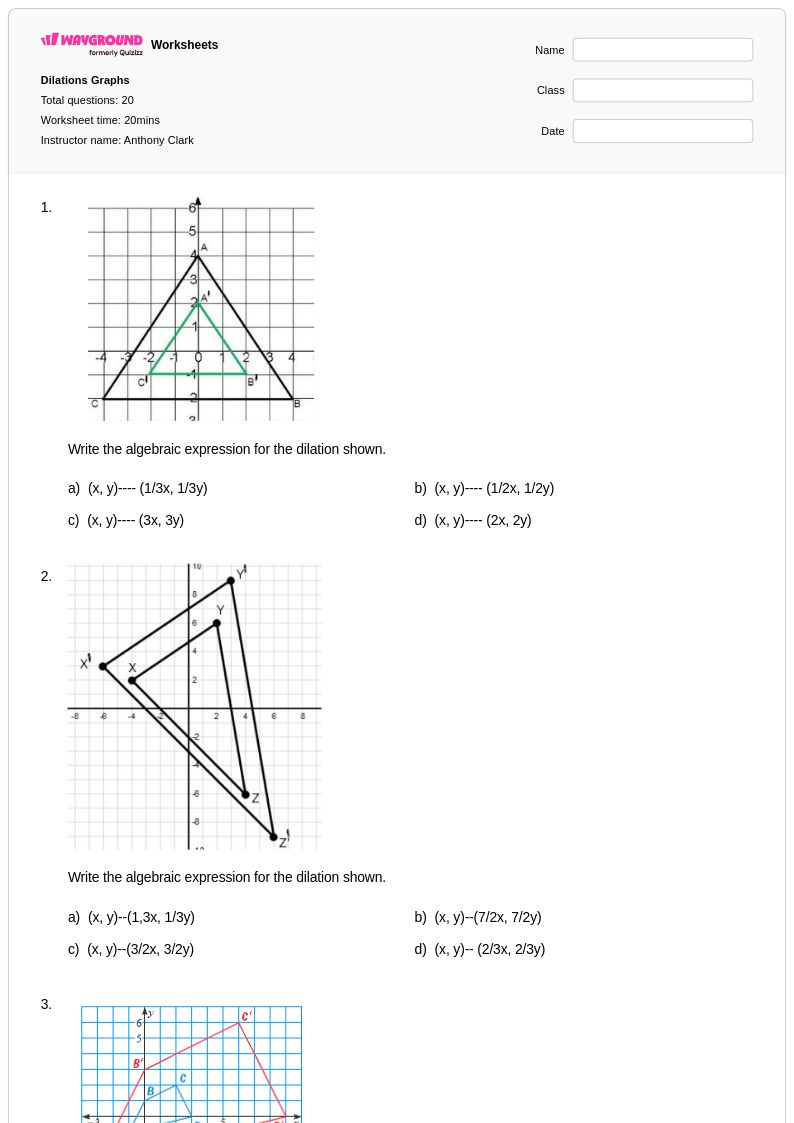
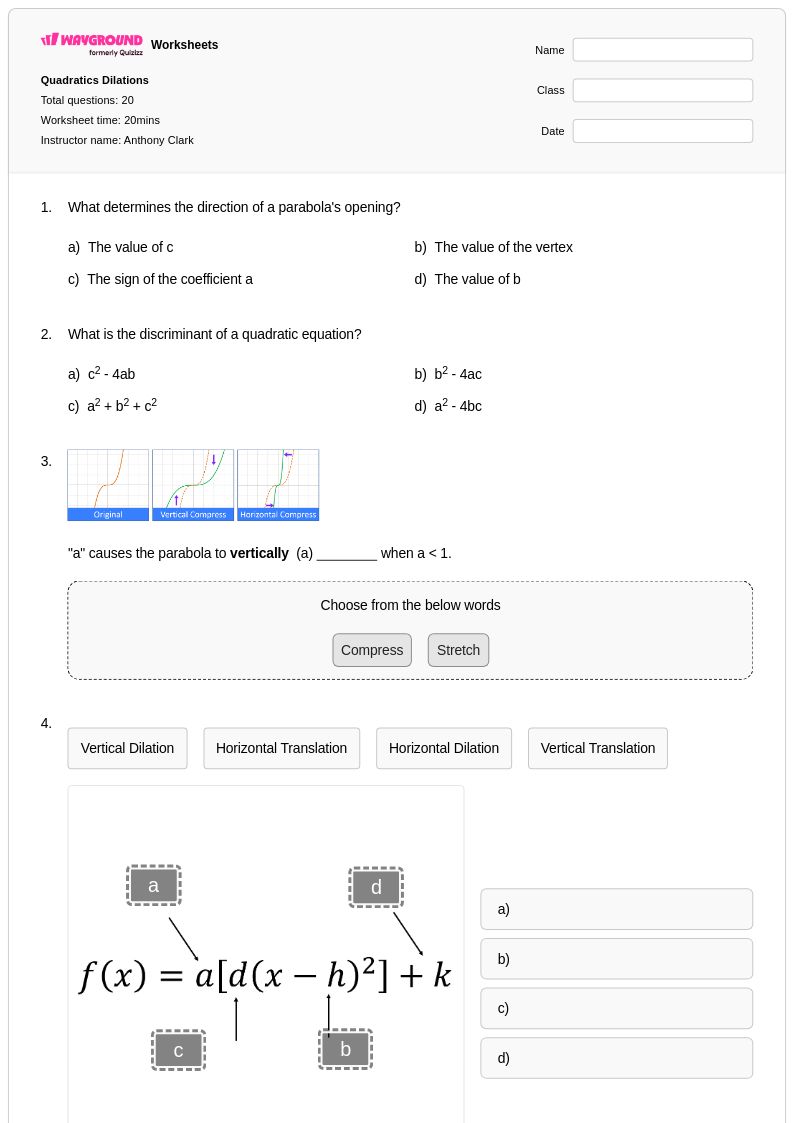
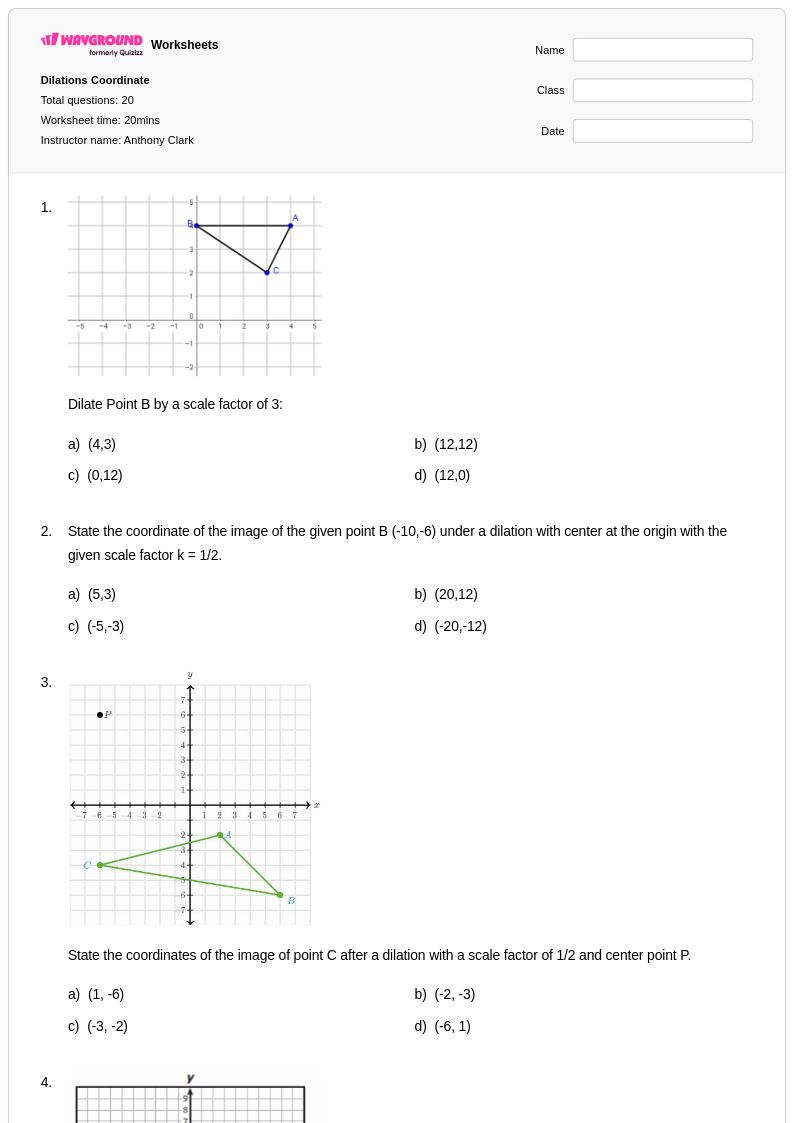
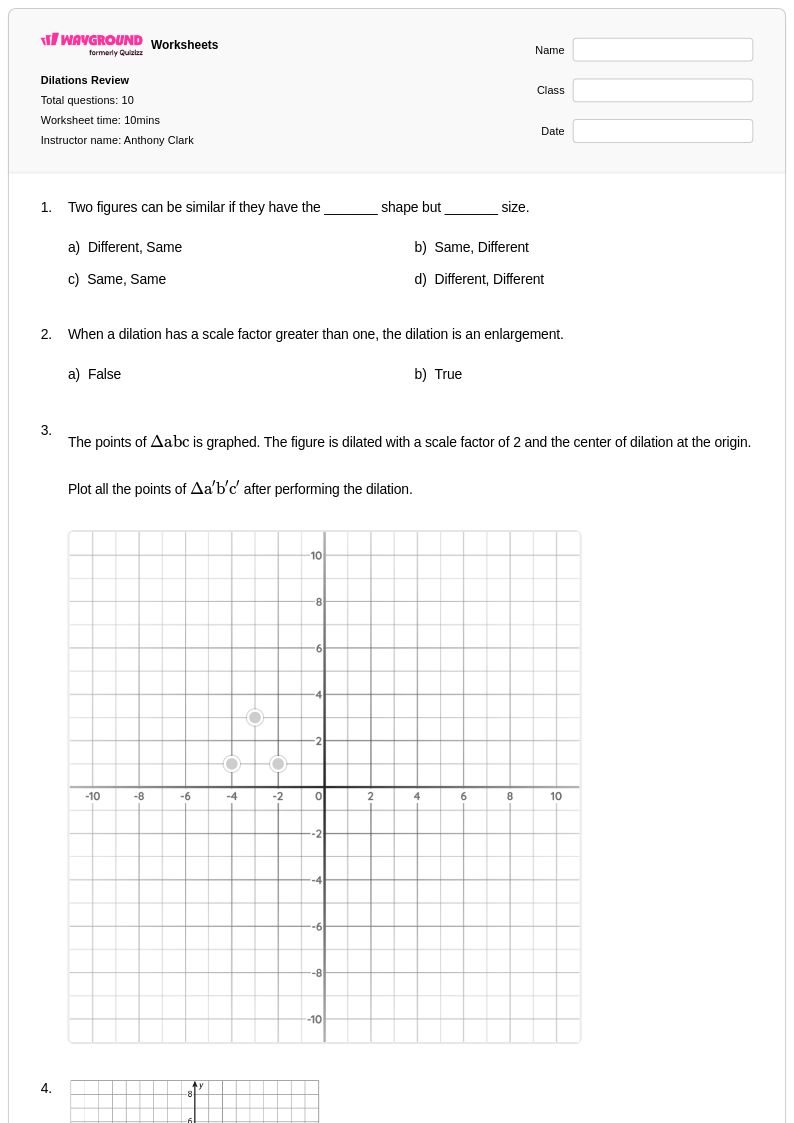
Year 9 dilations worksheets available through Wayground (formerly Quizizz) provide comprehensive practice in understanding how geometric figures change size while maintaining their shape and proportional relationships. These expertly designed resources strengthen students' abilities to perform dilations using various scale factors, identify centers of dilation, and analyze the effects of enlargements and reductions on coordinate planes. The worksheets systematically build conceptual understanding through carefully sequenced practice problems that progress from basic scalar multiplication to complex multi-step transformations involving dilations combined with other geometric transformations. Each worksheet includes detailed answer keys and is available as free printable pdfs, making them accessible resources for both classroom instruction and independent study.
Wayground's extensive collection supports mathematics teachers with millions of teacher-created dilation worksheets that can be easily located through robust search and filtering capabilities aligned to state and national geometry standards. The platform's differentiation tools enable educators to customize worksheet difficulty levels and problem types to meet diverse learning needs, whether for remediation of foundational scaling concepts or enrichment activities involving advanced coordinate geometry applications. Teachers can seamlessly integrate these resources into their transformation unit planning, selecting from both printable pdf formats for traditional paper-and-pencil work and digital versions for technology-enhanced learning environments. This flexibility allows for targeted skill practice sessions, formative assessment opportunities, and comprehensive review materials that reinforce students' mastery of dilation properties and their geometric reasoning abilities.
FAQs
How do I teach dilations in 9th grade geometry?
By 9th grade, dilations move into formal proof territory. Students should be able to prove that a dilation maps a line to a parallel line (unless the line passes through the center), and use that to establish the AA similarity criterion for triangles. The coordinate plane work from middle school is assumed — the 9th grade focus is on reasoning about why dilations preserve angle measure and produce proportional side lengths, not just demonstrating that they do. Start with the properties, then build toward using dilations as a proof tool for similarity.
What exercises help 9th graders practice dilations?
At this level, effective practice goes beyond plotting dilated figures. Students should work on: identifying the dilation that maps one figure onto another (finding both the center and scale factor), combining dilations with other transformations in multi-step problems, and applying dilation properties to similarity proofs. The Wayground Grade 9 worksheets progress from scalar multiplication through complex multi-step transformations, giving students practice at both the procedural and conceptual levels.
What mistakes do 9th graders make with dilations?
The most common gap at this level is procedural fluency masking conceptual weakness — students can plot a dilation correctly but can't explain why the image is similar to the pre-image or identify the center of dilation from two given figures. A second issue is errors in multi-step transformation problems where students apply the dilation and a rotation or reflection in the wrong order. Problems that ask students to work backwards (given the image and scale factor, find the original) are good diagnostics for both.
How do I use Wayground's Grade 9 dilations worksheets?
You can host these as a digital quiz on Wayground for real-time visibility into student performance, or download the PDF and assign it on paper — both formats include a complete answer key. The digital format works well for formative checks mid-unit; the printable version suits in-class practice or assessments where you want students off devices. If you collect paper submissions, the Wayground for Teachers app lets you scan and grade student work directly.
How do dilations fit into the high school geometry progression?
In high school geometry, Common Core positions dilations as the foundation for the entire similarity strand. Students use dilations to define similarity transformations, prove the triangle similarity theorems (AA, SAS, SSS), and establish properties of similar figures. This is a significant conceptual shift from middle school, where similarity was mostly observational. Dilation fluency also supports later work in trigonometry, where similar right triangles underpin the definitions of sine, cosine, and tangent — so gaps here tend to surface again in trig.
How can I differentiate dilation practice for 9th graders with different readiness levels?
For students still consolidating the coordinate mechanics, Wayground lets you generate an alternate version of the same worksheet with larger font or wider spacing, which reduces visual clutter on complex coordinate grid problems. The Read Aloud accommodation helps students who struggle with multi-part written instructions focus on the geometry itself. Students who are ready for more challenge can be directed to the multi-step transformation problems in the collection without any scaffolding adjustments — all from the same worksheet set.