
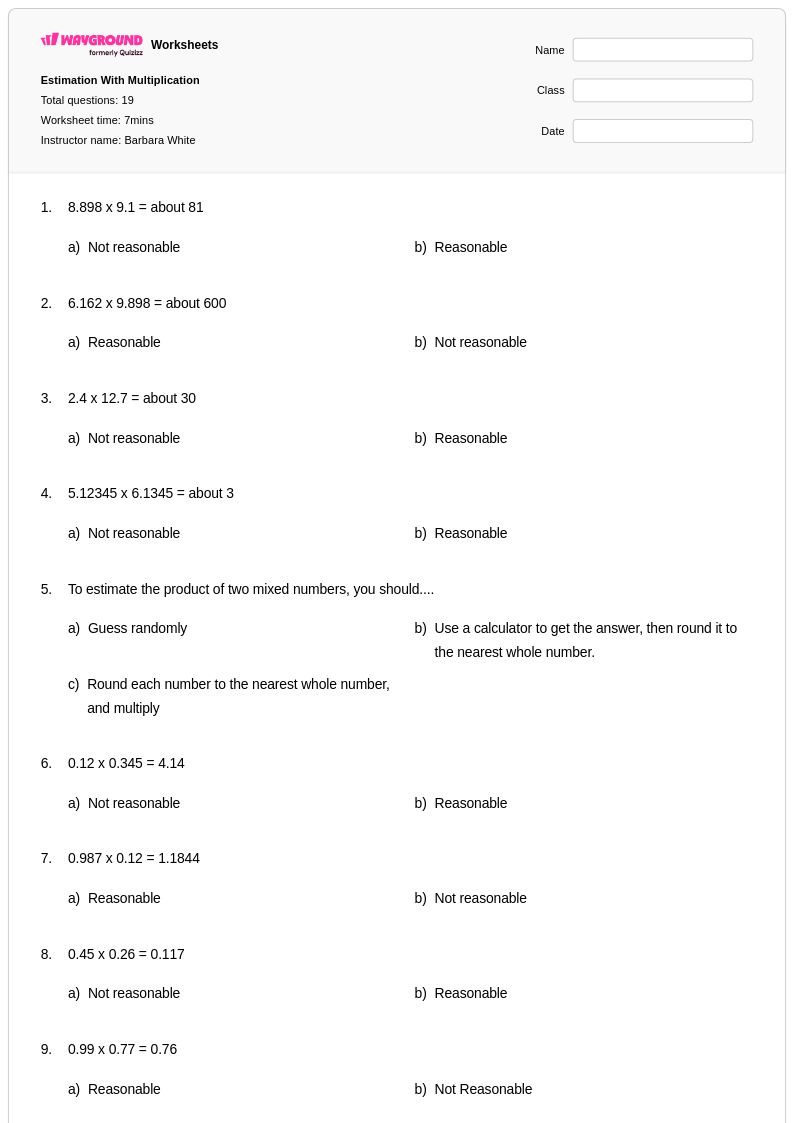
19 Q
6th
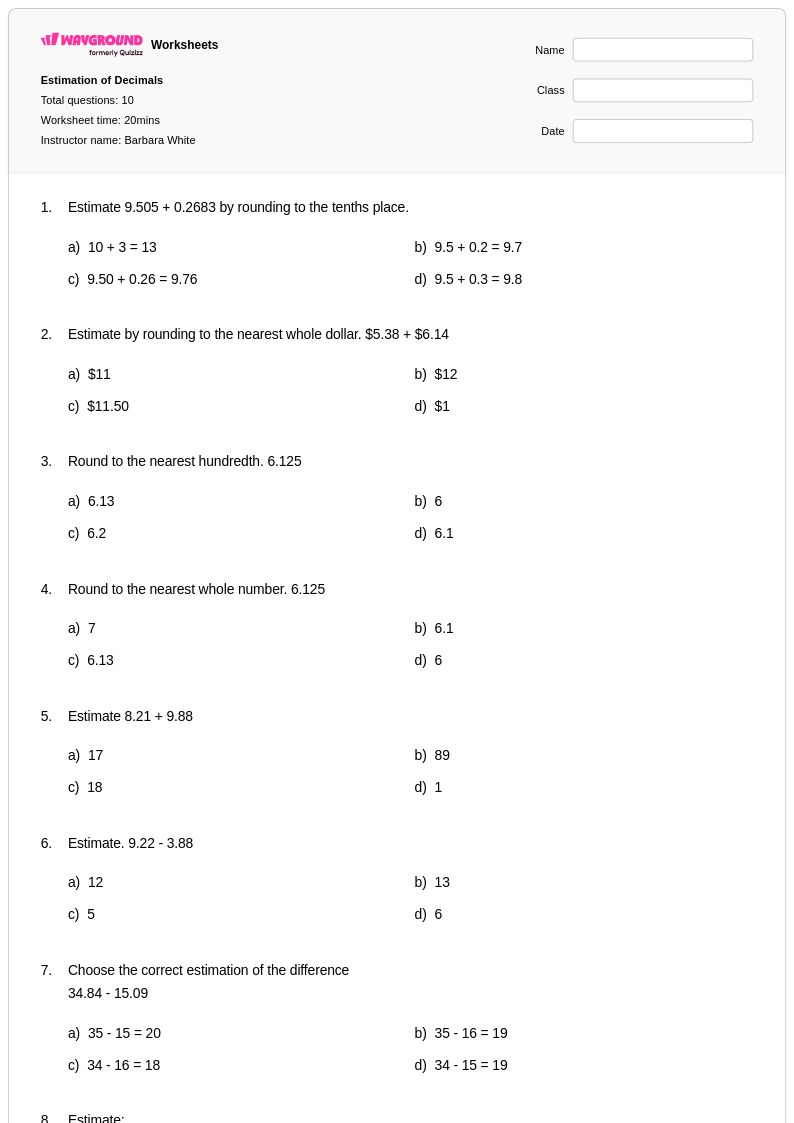
10 Q
6th
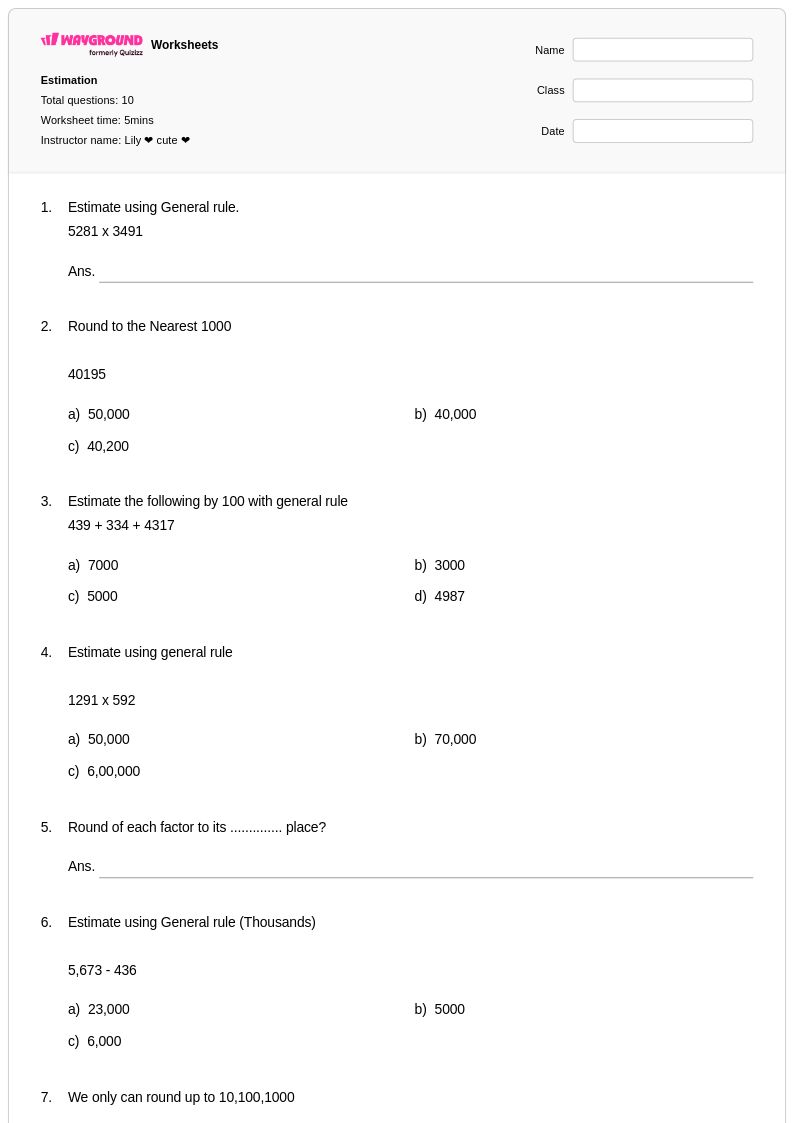
10 Q
6th
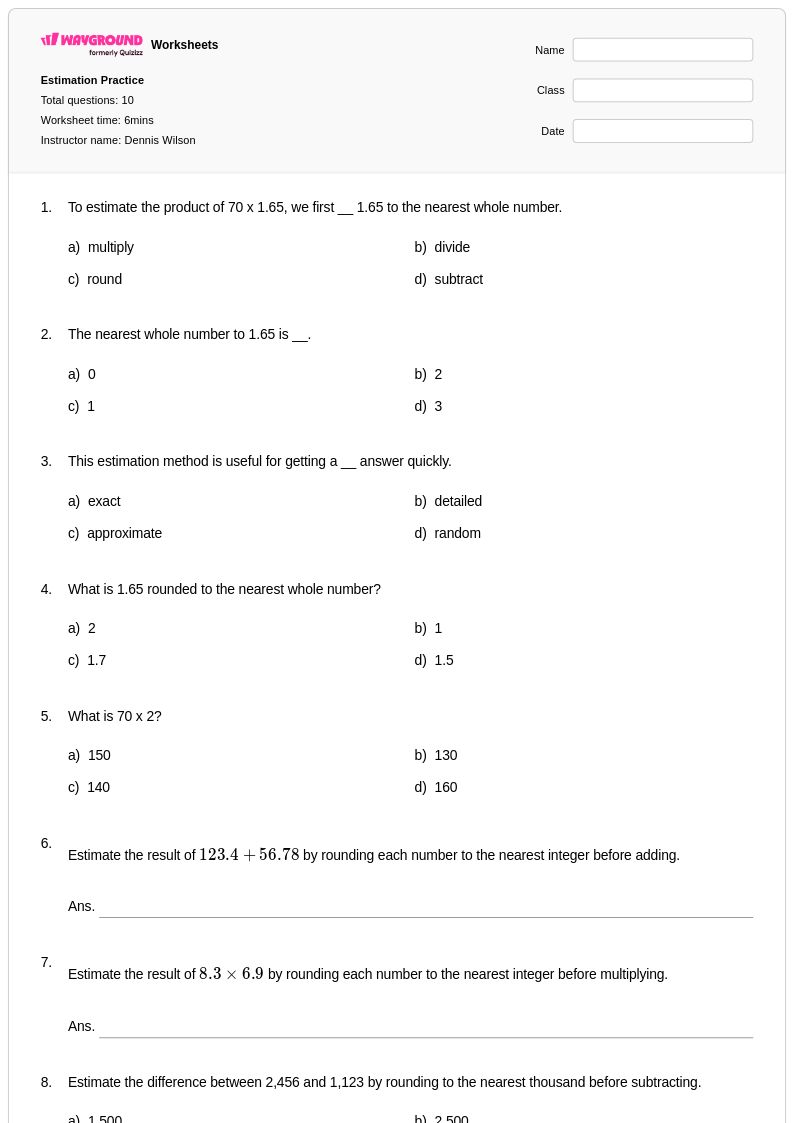
10 Q
6th - Uni
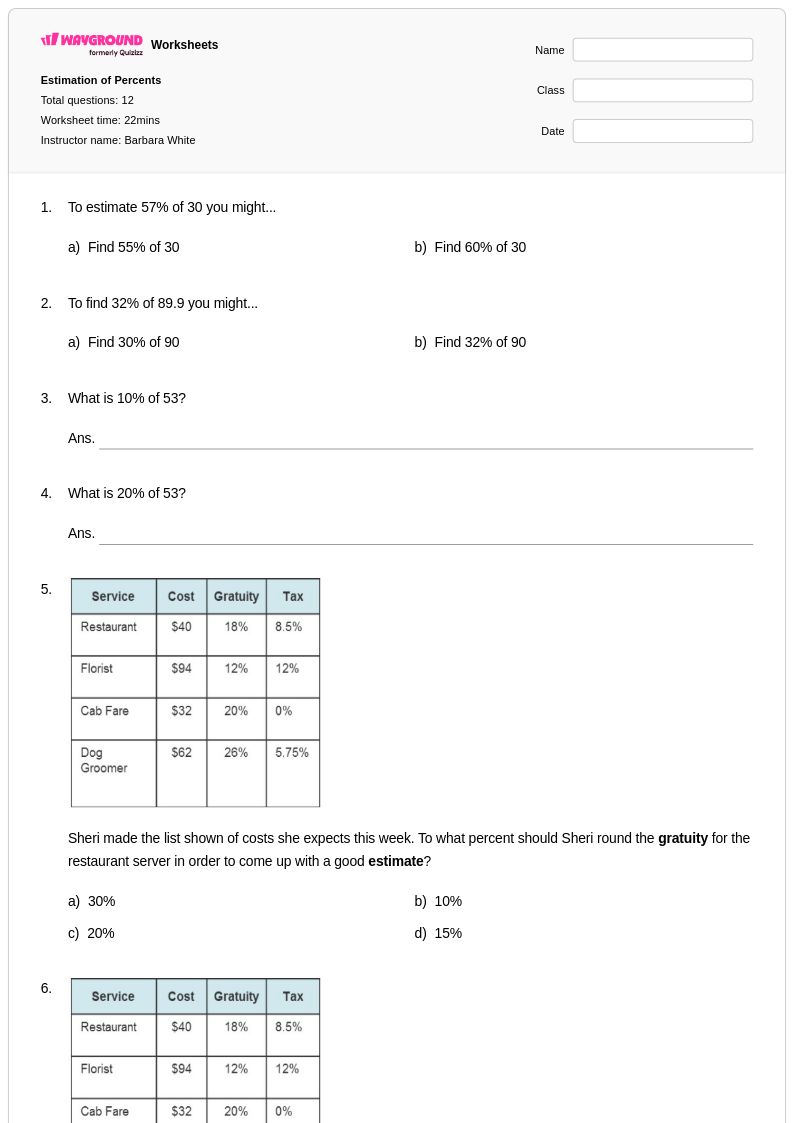
12 Q
6th - 8th
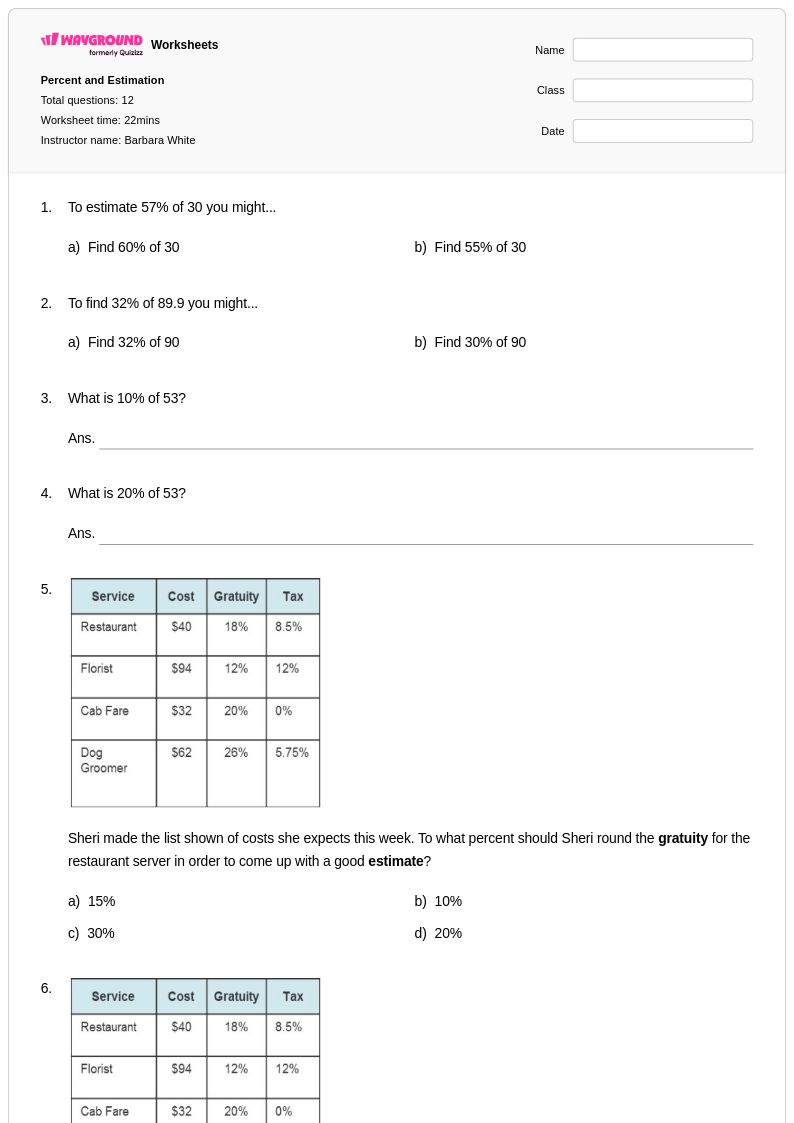
12 Q
6th - 8th
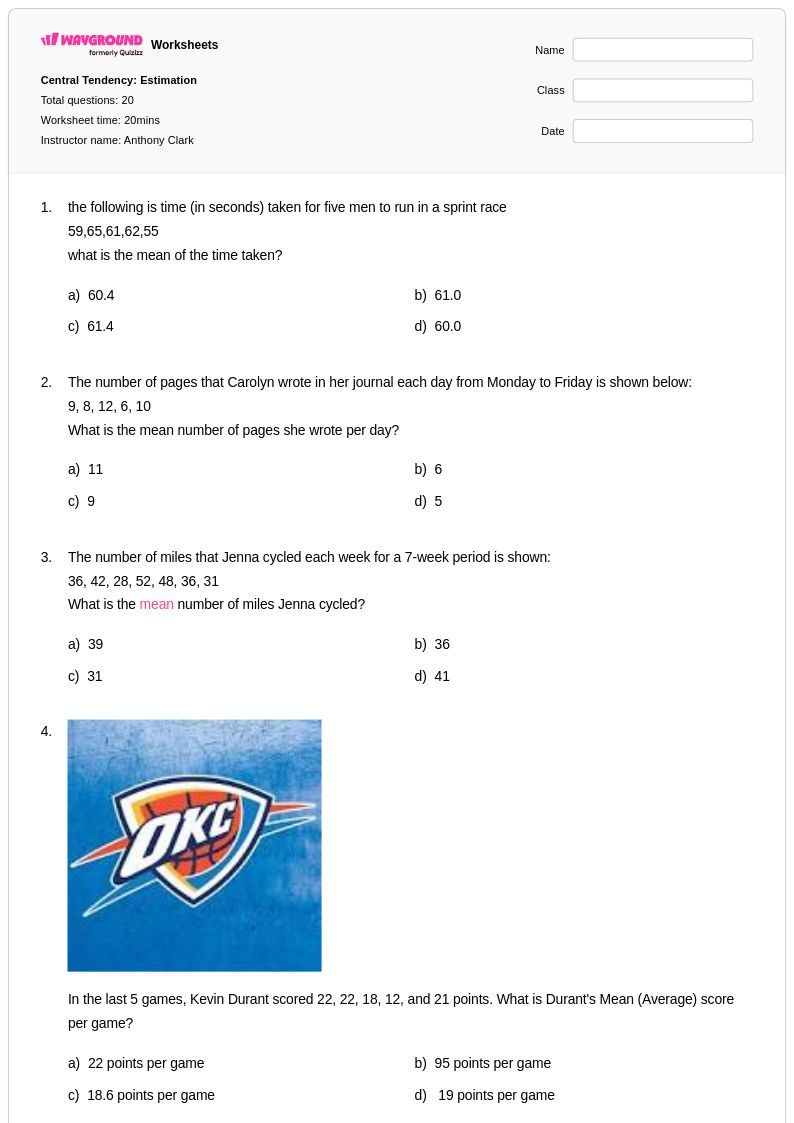
20 Q
6th - Uni
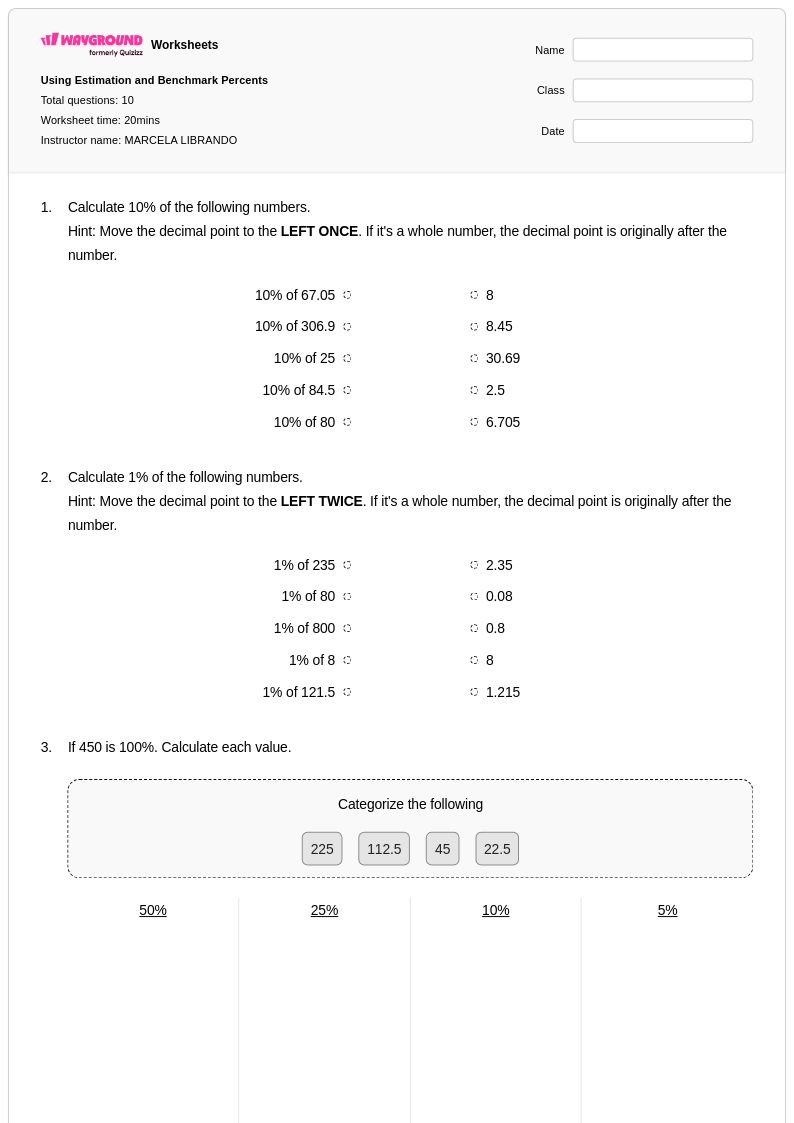
10 Q
6th
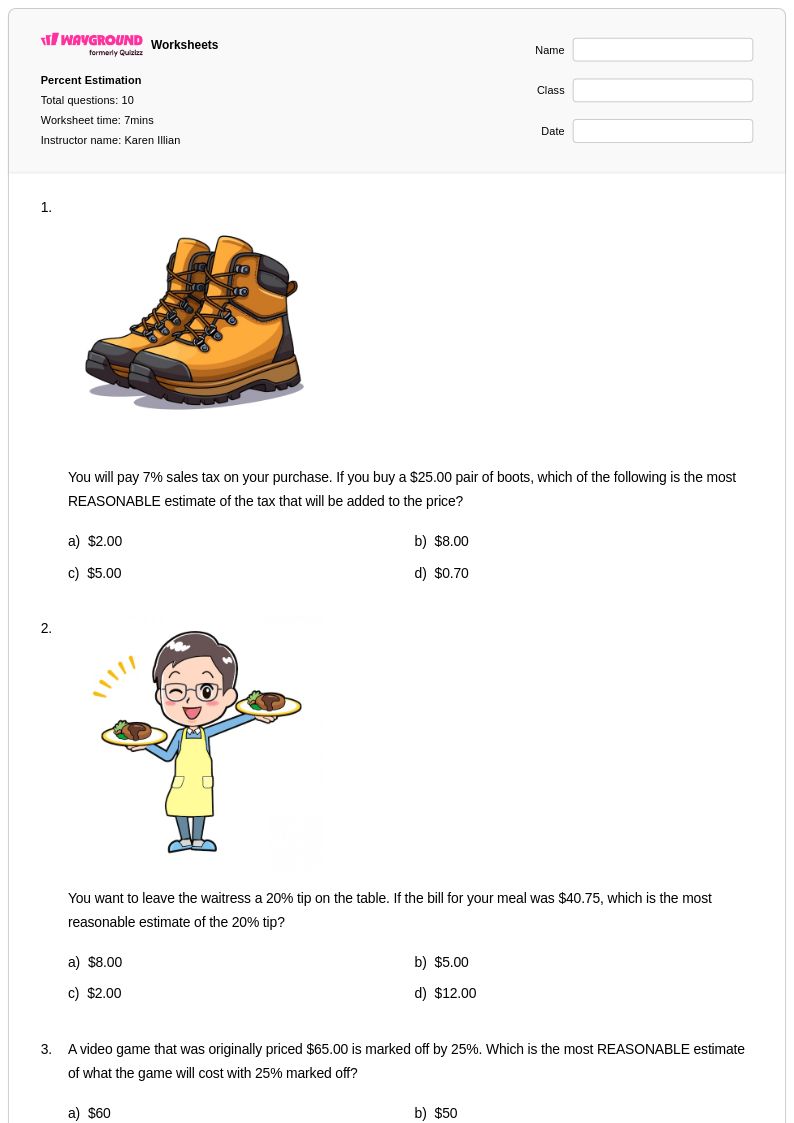
10 Q
6th
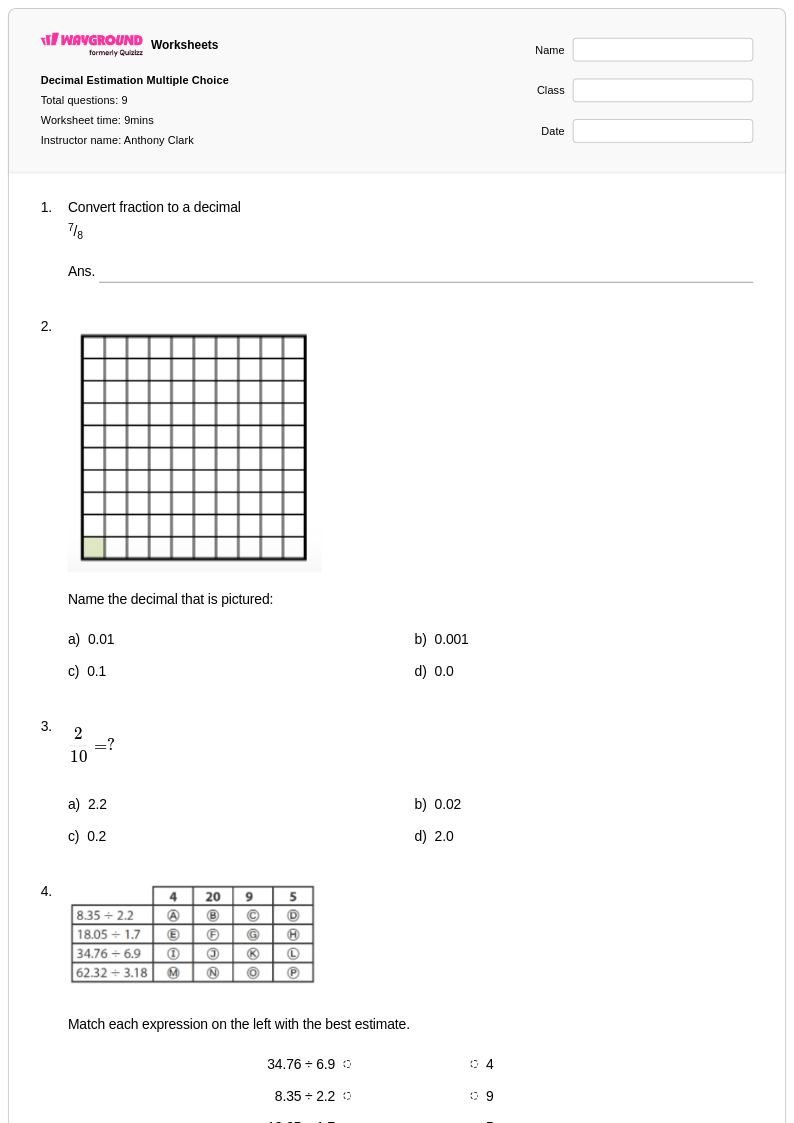
9 Q
6th - Uni
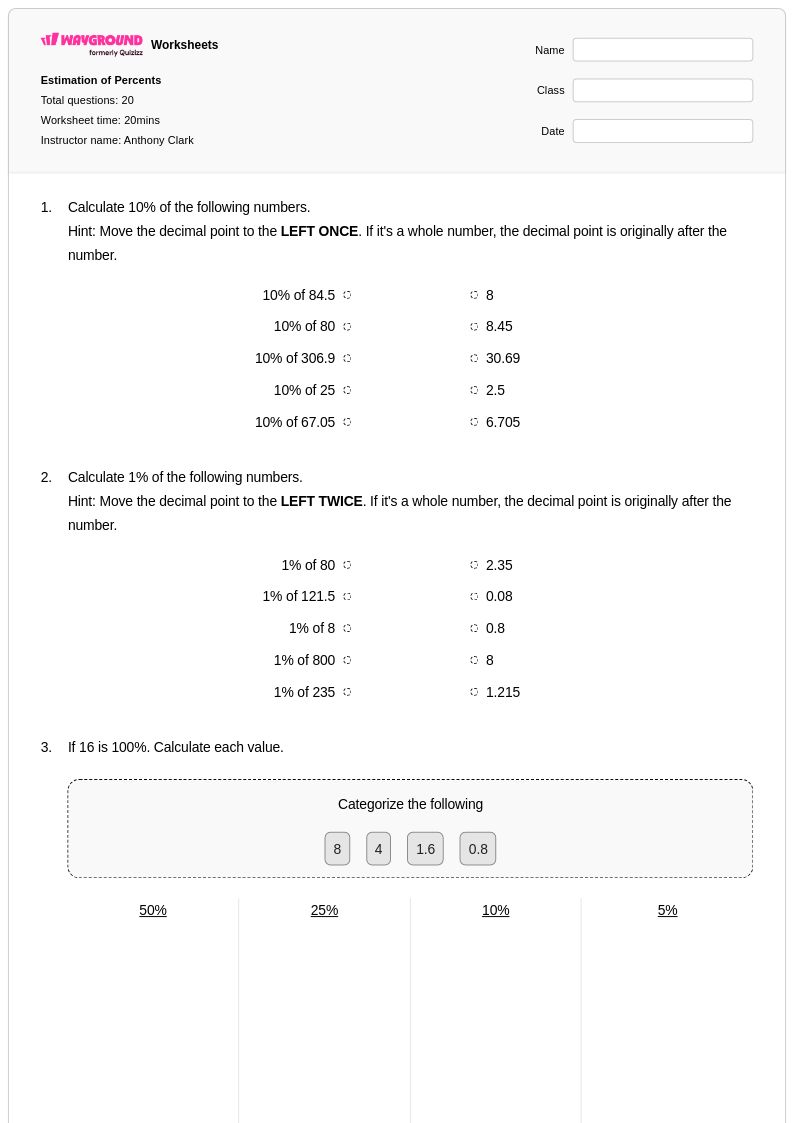
20 Q
6th - Uni
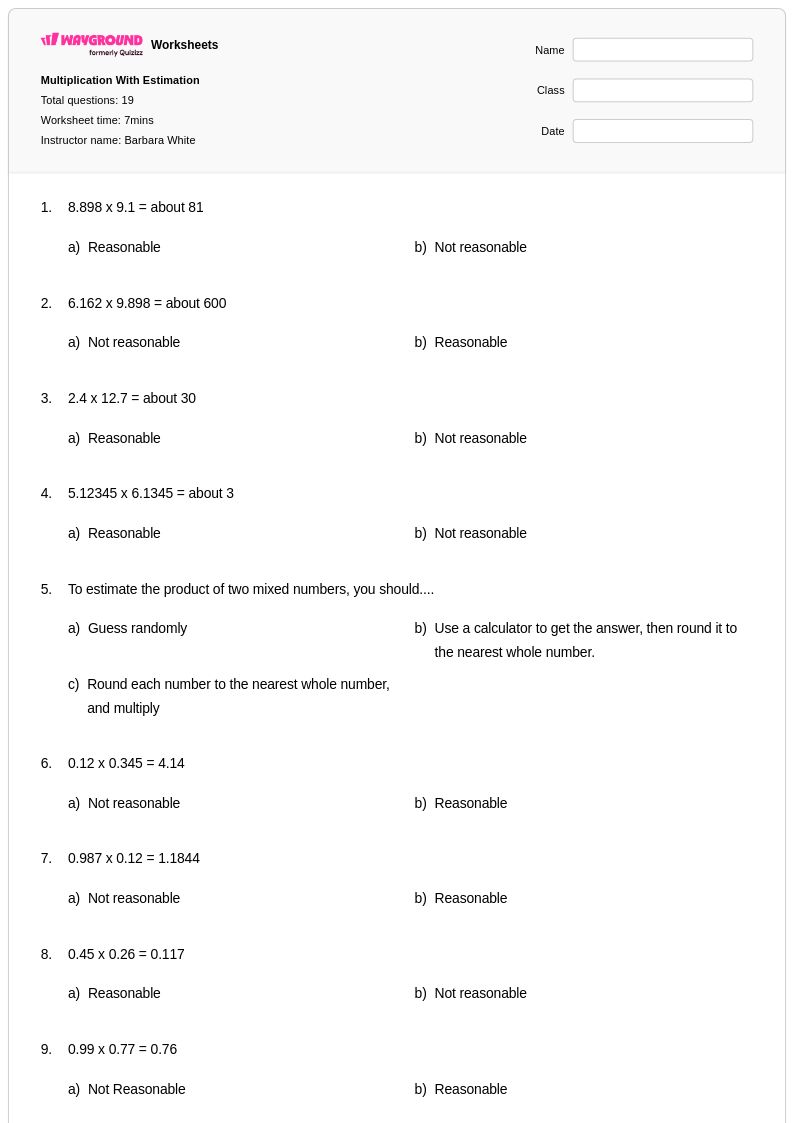
19 Q
6th
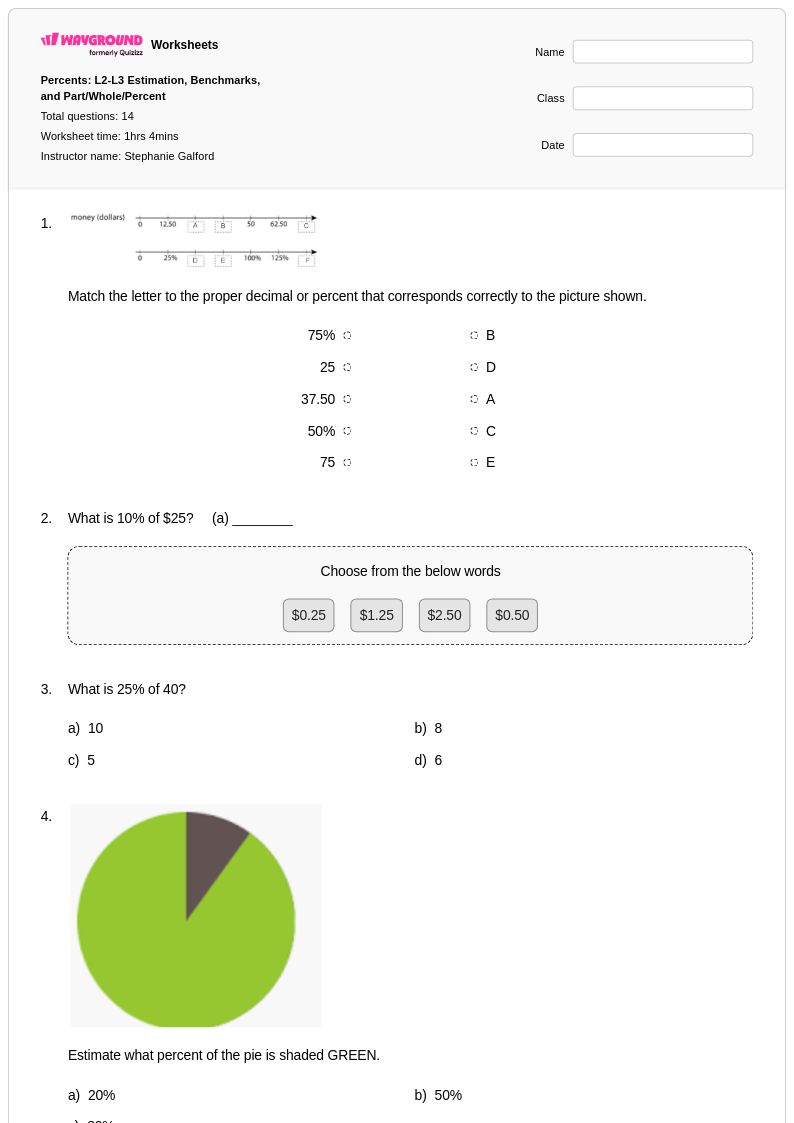
14 Q
6th
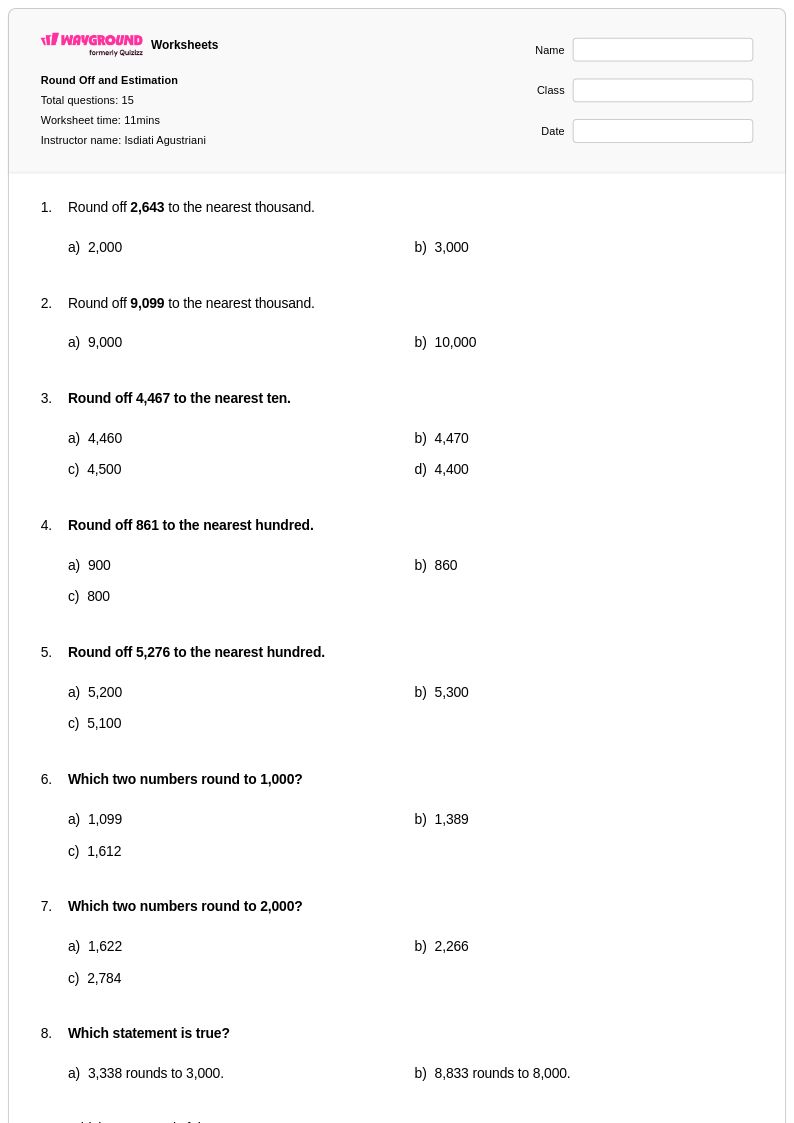
15 Q
5th - 6th
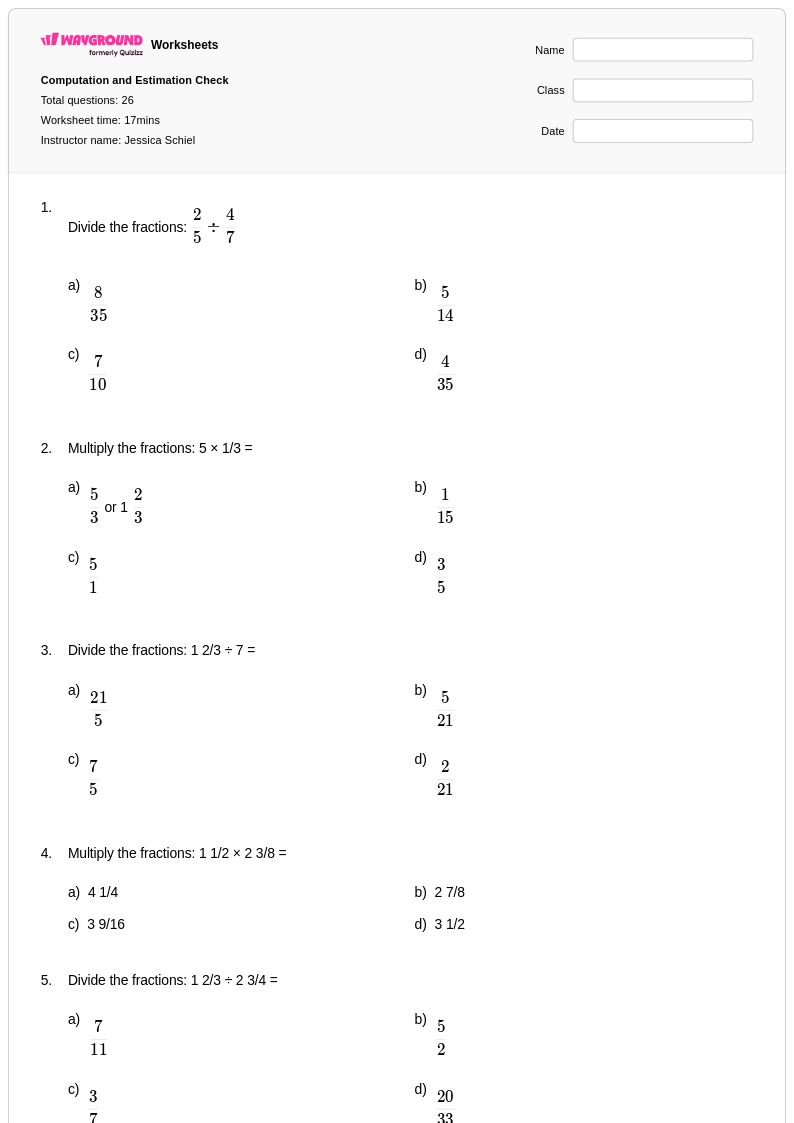
20 Q
6th
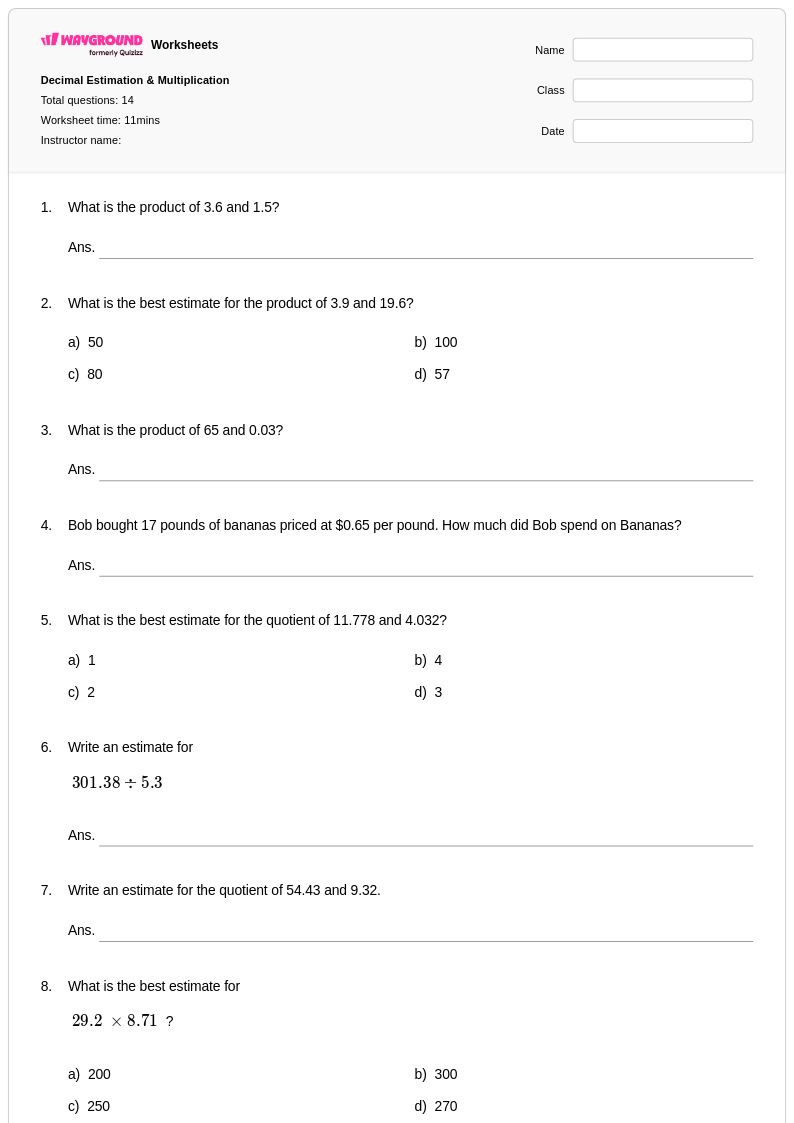
14 Q
6th
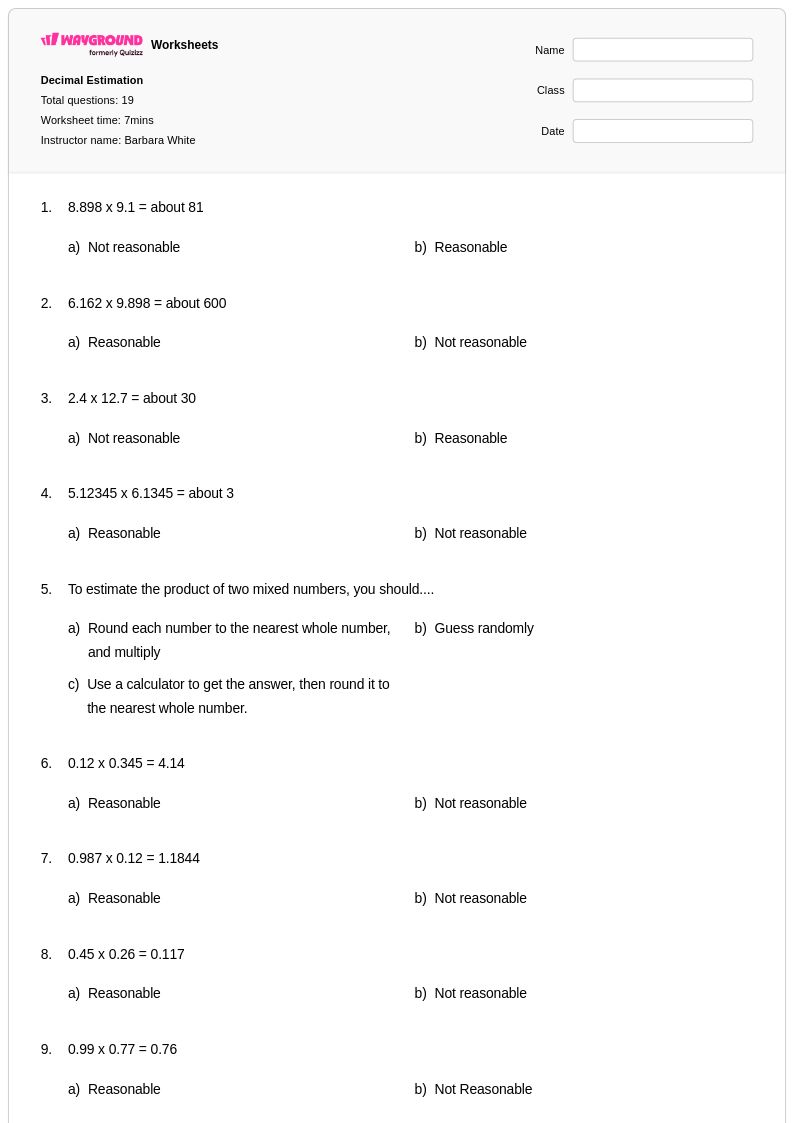
19 Q
6th
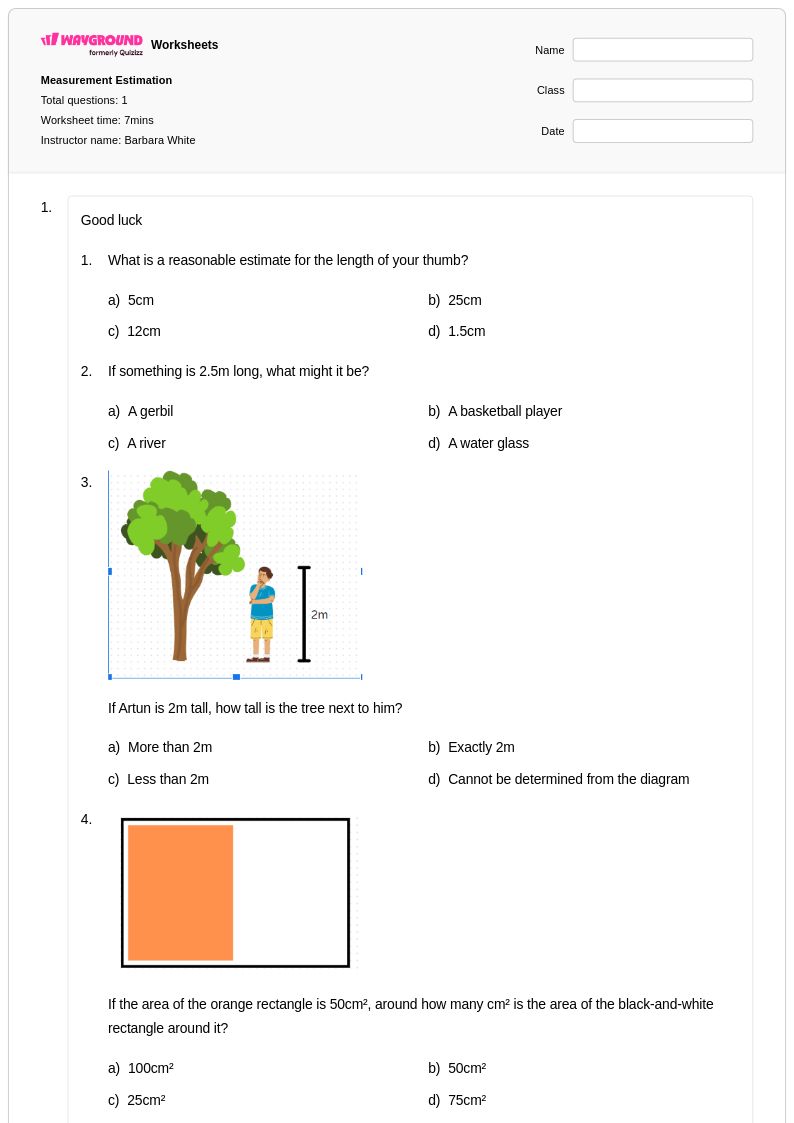
10 Q
6th
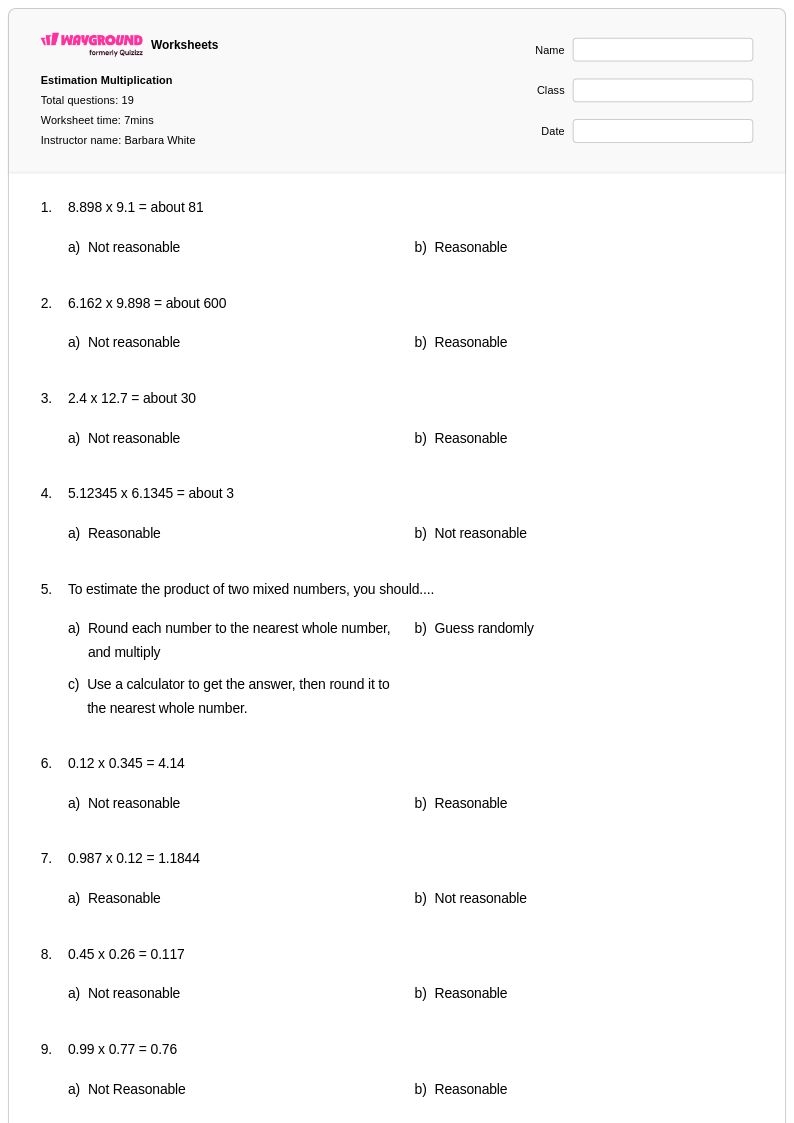
19 Q
6th
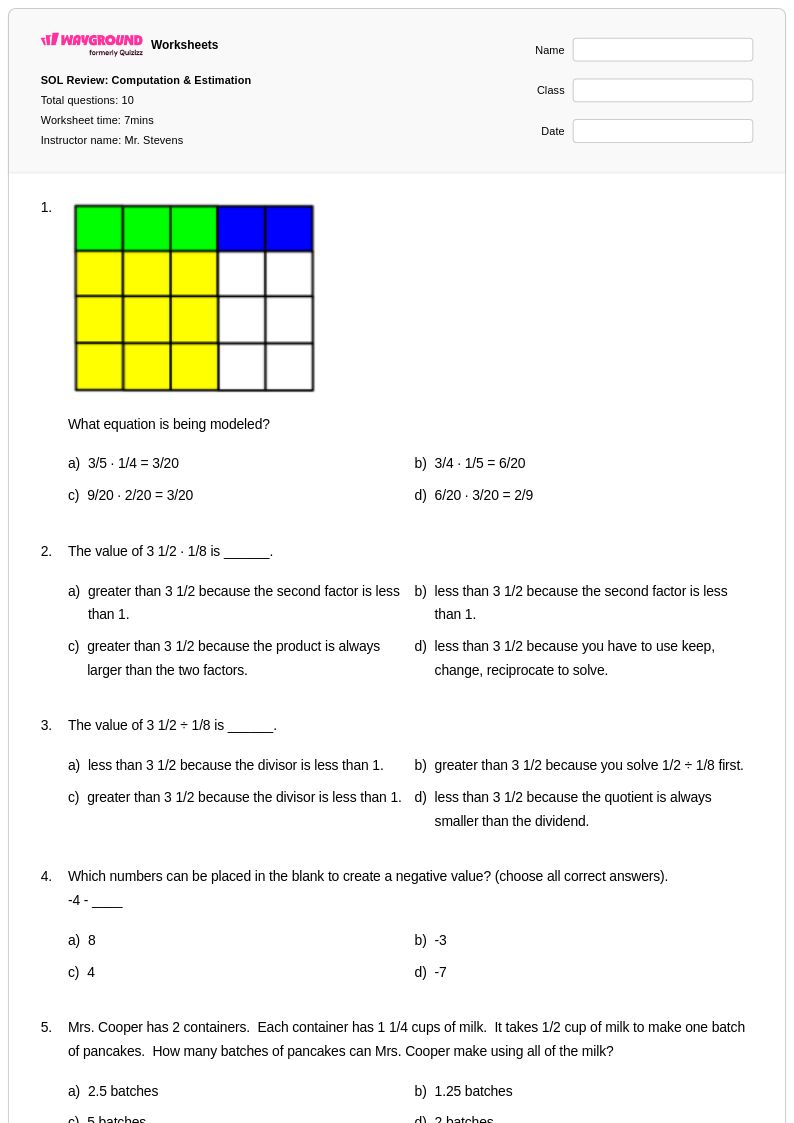
10 Q
6th - Uni
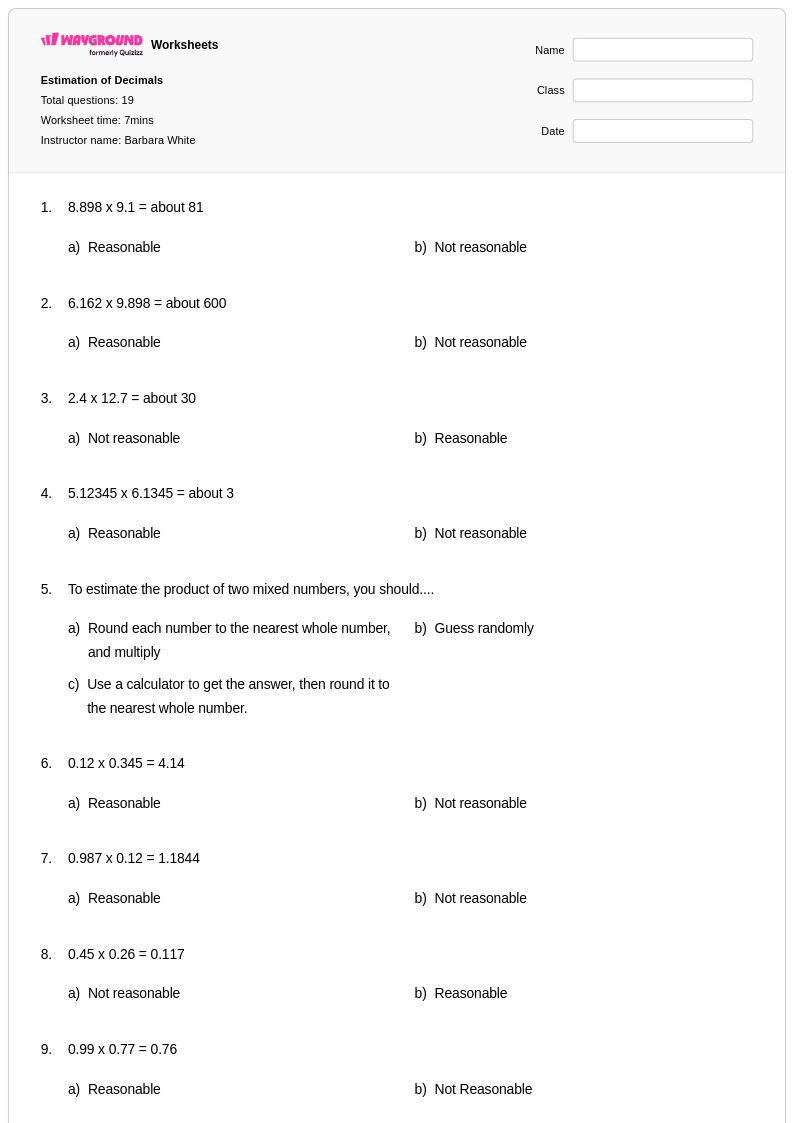
19 Q
6th
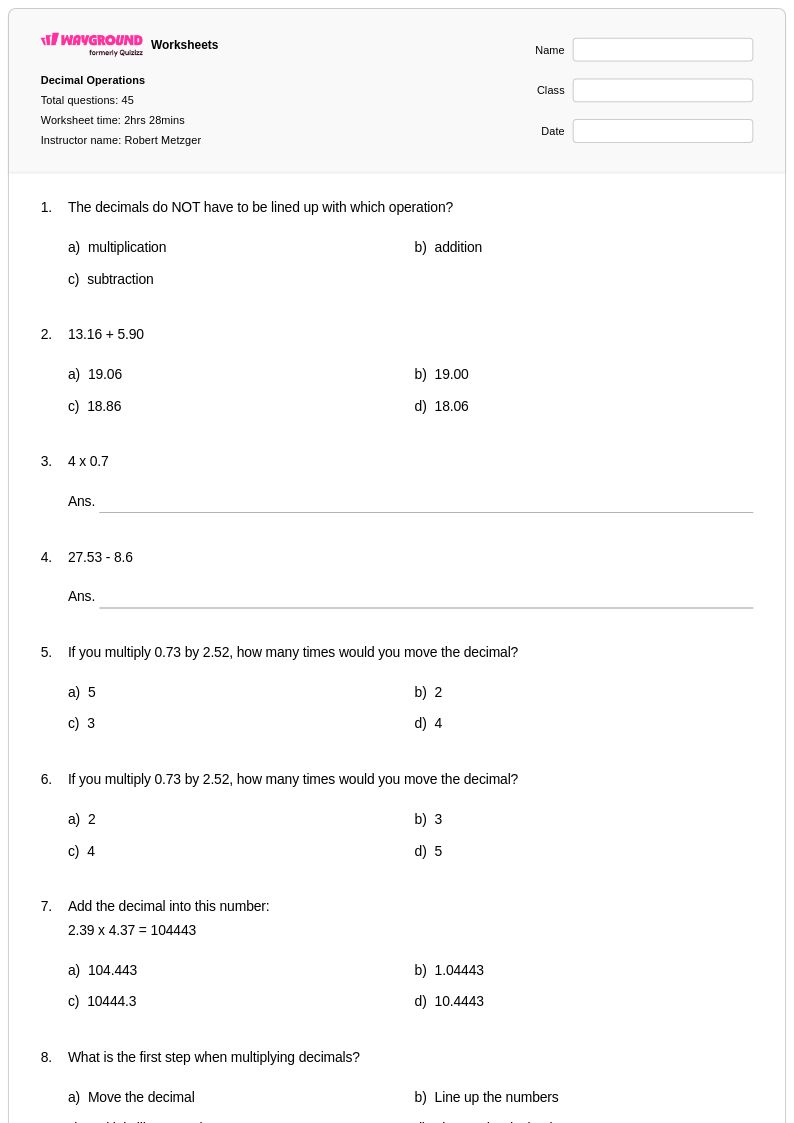
45 Q
6th
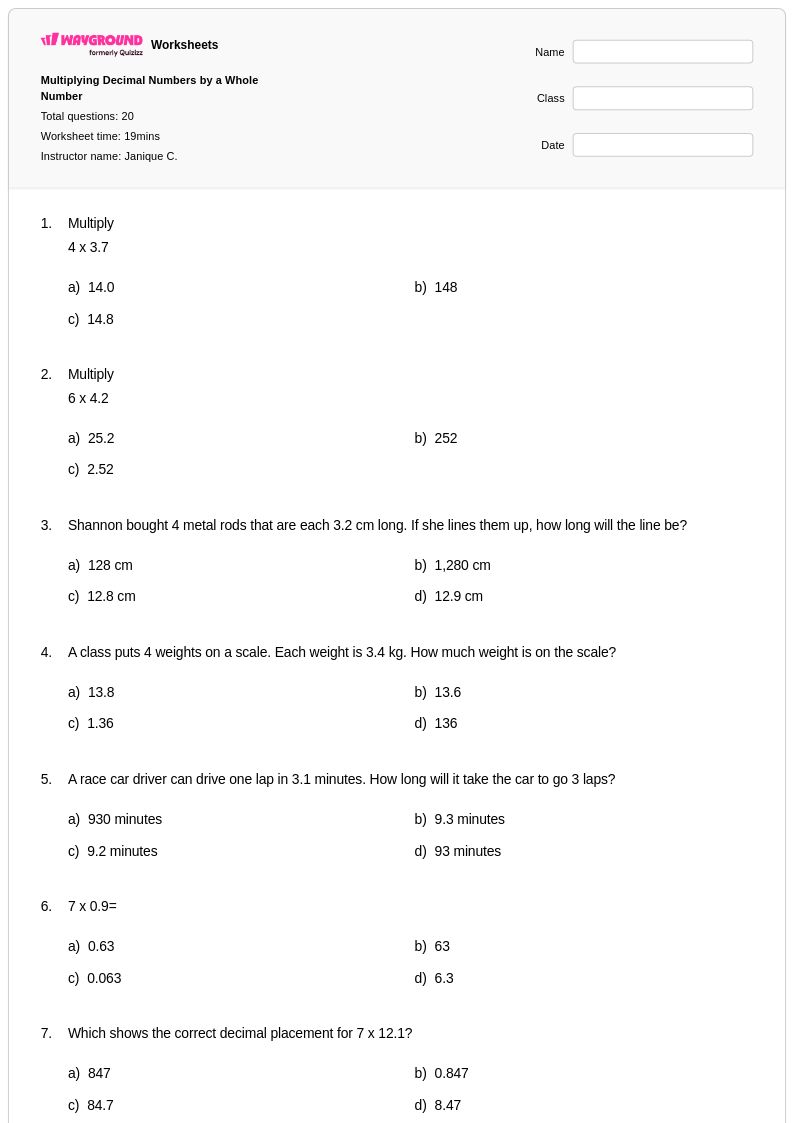
20 Q
6th
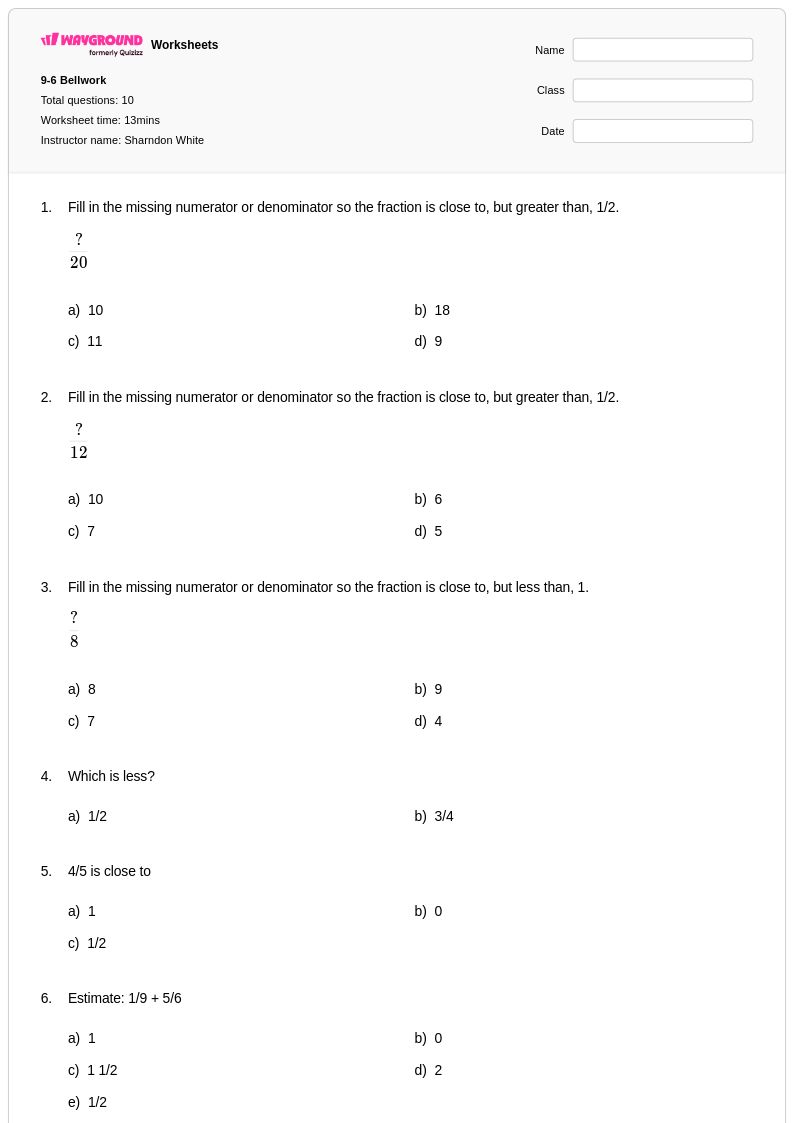
10 Q
6th
Explore Estimation Worksheets by Grades
Explore Other Subject Worksheets for year 6
Explore printable Estimation worksheets for Year 6
Estimation worksheets for Year 6 mathematics provide students with essential practice in developing number sense through strategic approximation techniques. These comprehensive resources available through Wayground (formerly Quizizz) focus on building students' ability to make reasonable estimates with whole numbers, decimals, and fractions while strengthening their understanding of place value, rounding, and mental math strategies. The free printable worksheets include diverse practice problems that challenge students to estimate sums, differences, products, and quotients, helping them develop computational fluency and mathematical reasoning skills. Each worksheet comes with a detailed answer key and is available in convenient PDF format, making it easy for educators to implement targeted practice sessions that build confidence in mathematical approximation and prepare students for more advanced mathematical concepts.
Wayground (formerly Quizizz) supports mathematics educators with an extensive collection of teacher-created estimation resources designed specifically for Year 6 classrooms. The platform's millions of worksheets feature robust search and filtering capabilities that allow teachers to quickly locate materials aligned with specific learning standards and differentiated for various skill levels. Teachers can customize these digital and printable resources to meet individual student needs, whether for remediation support, skill practice, or enrichment activities. The flexible format options enable seamless integration into lesson planning, homework assignments, and assessment preparation, while the comprehensive collection ensures educators have access to varied problem types that reinforce estimation strategies across different mathematical contexts and real-world applications.
FAQs
How do I teach estimation in Grade 6?
What exercises help sixth graders improve estimation skills?
Why do Grade 6 students get unreasonable estimates?
How can I use a Grade 6 estimation worksheet in class?
How does Grade 6 estimation fit the Common Core math sequence?
How can I support sixth graders who struggle with estimation?
What grade is estimation with fractions and decimals taught?