Free Printable Female Reproductive System Worksheets for Year 10
Explore Wayground's comprehensive Year 10 female reproductive system worksheets featuring free printables, practice problems, and answer keys to help students master reproductive anatomy, hormonal cycles, and biological processes.
Explore printable Female Reproductive System worksheets for Year 10
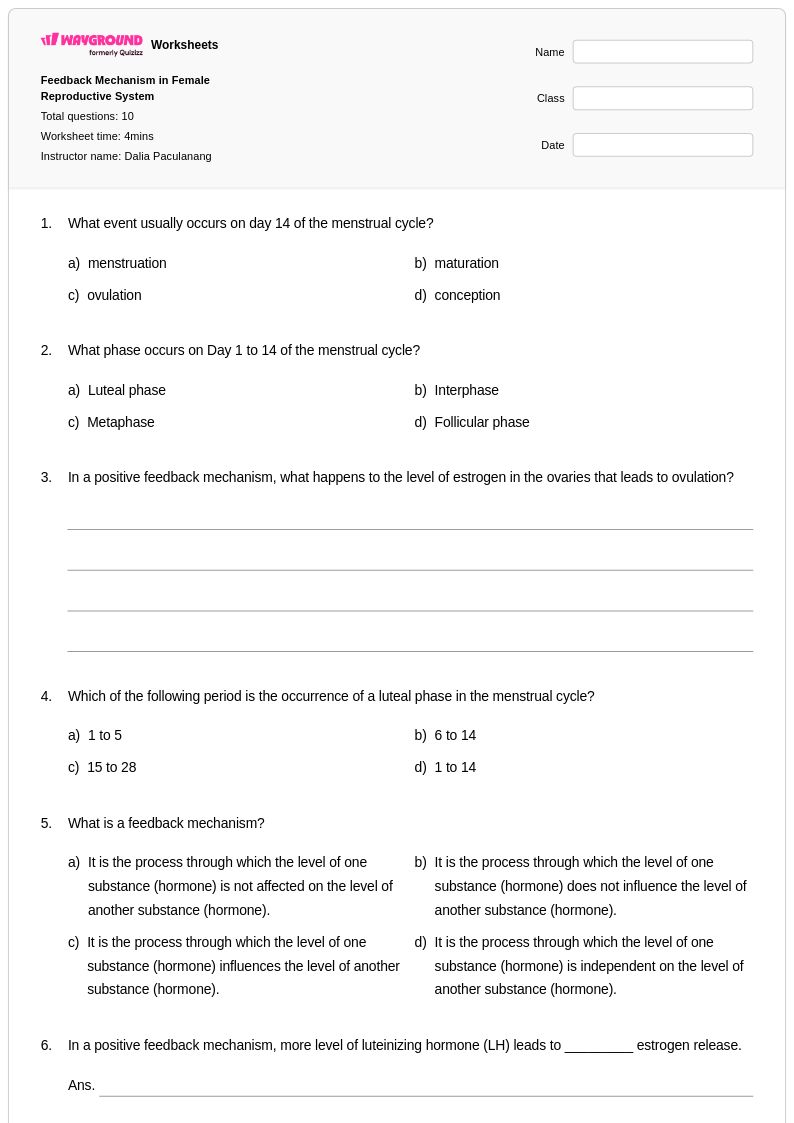
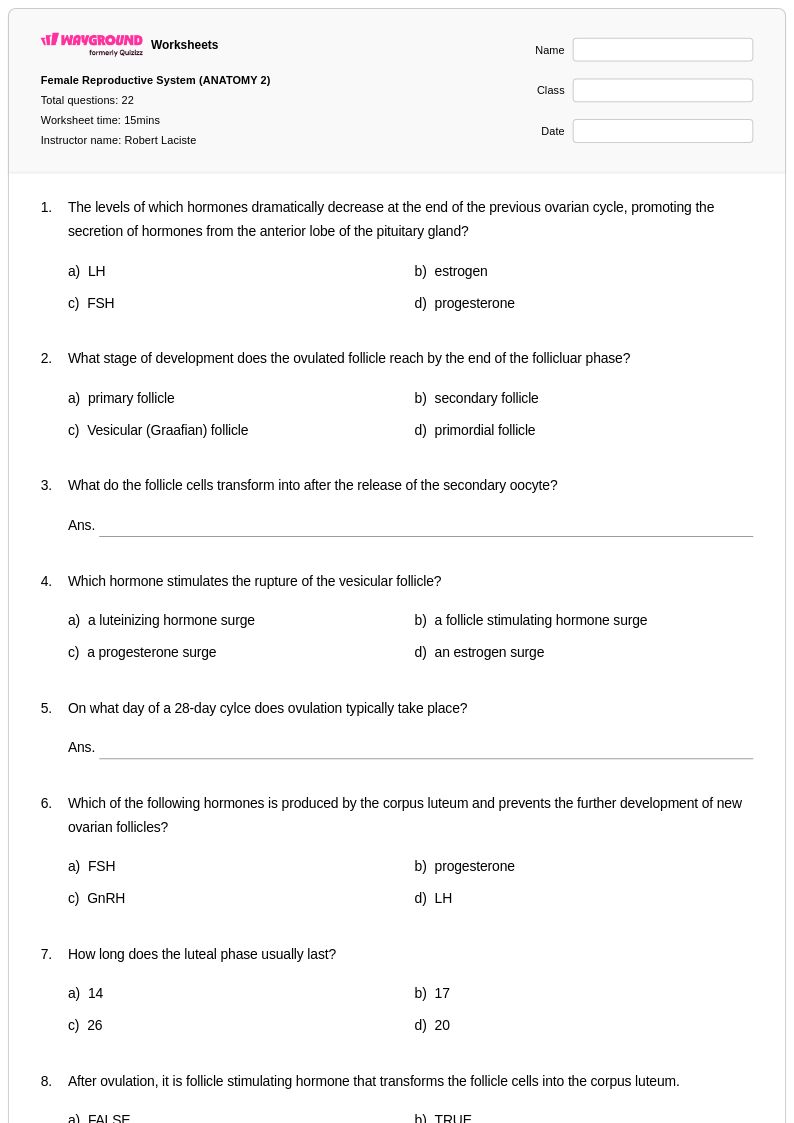
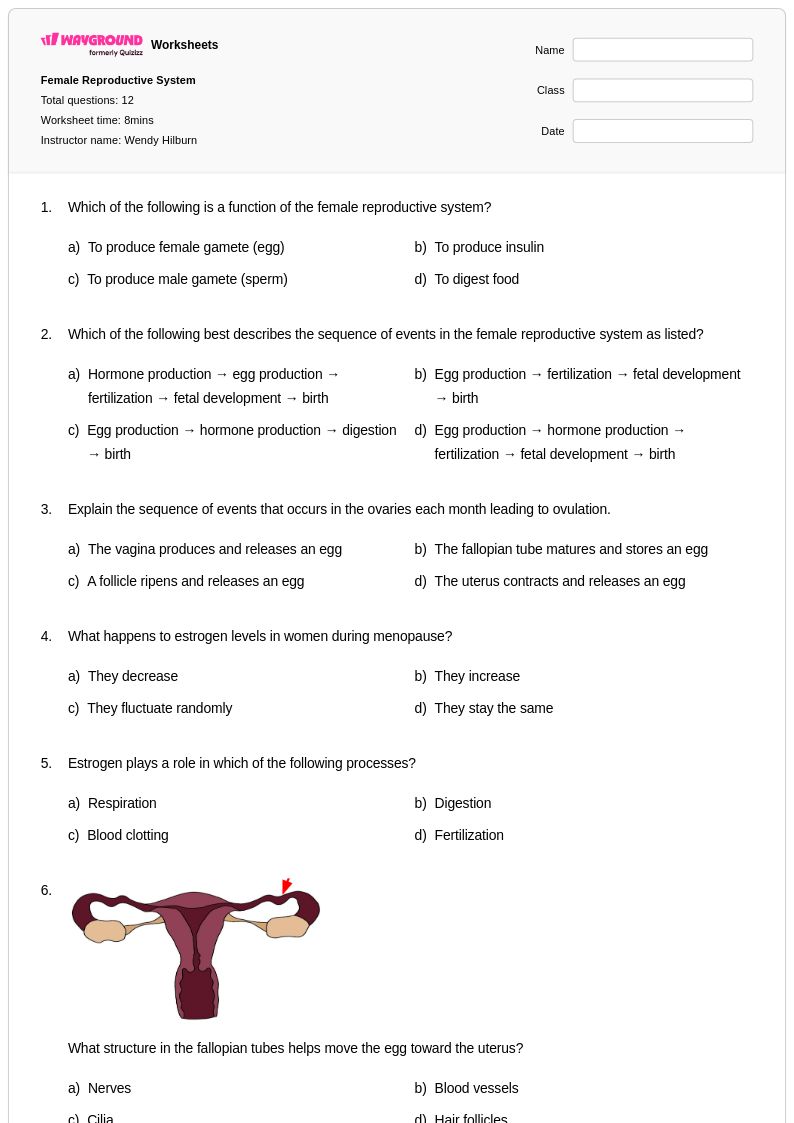
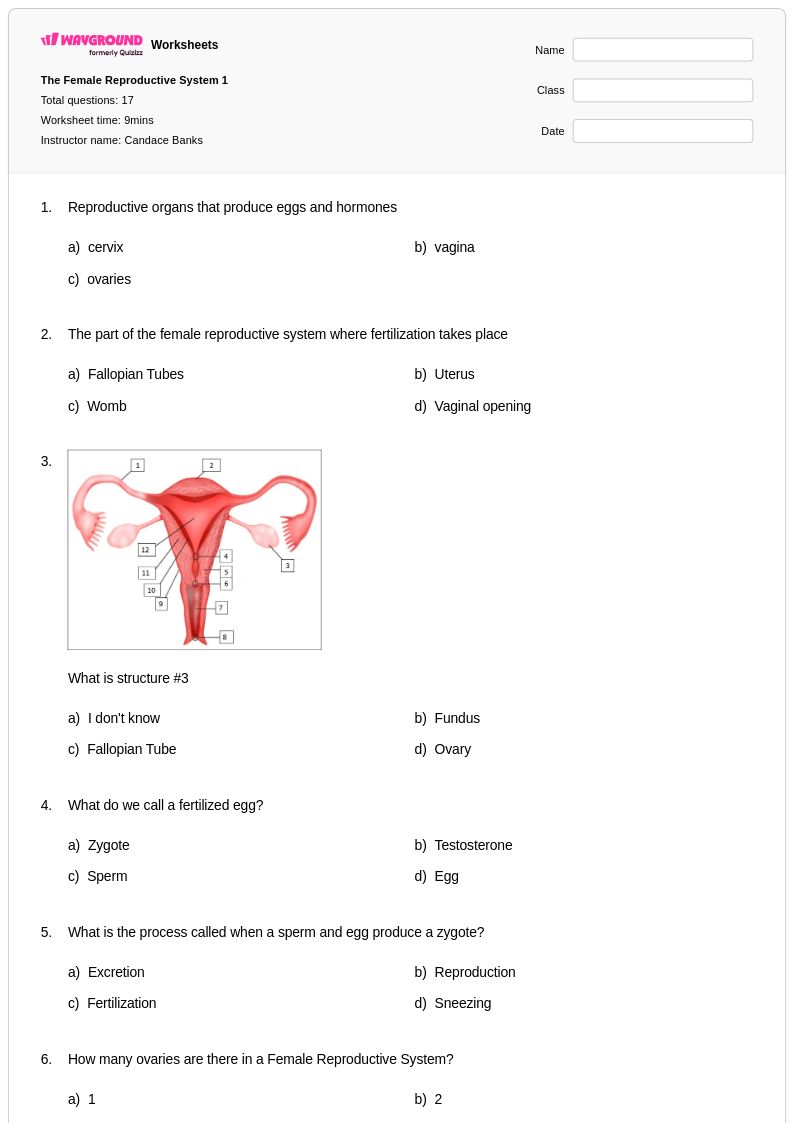
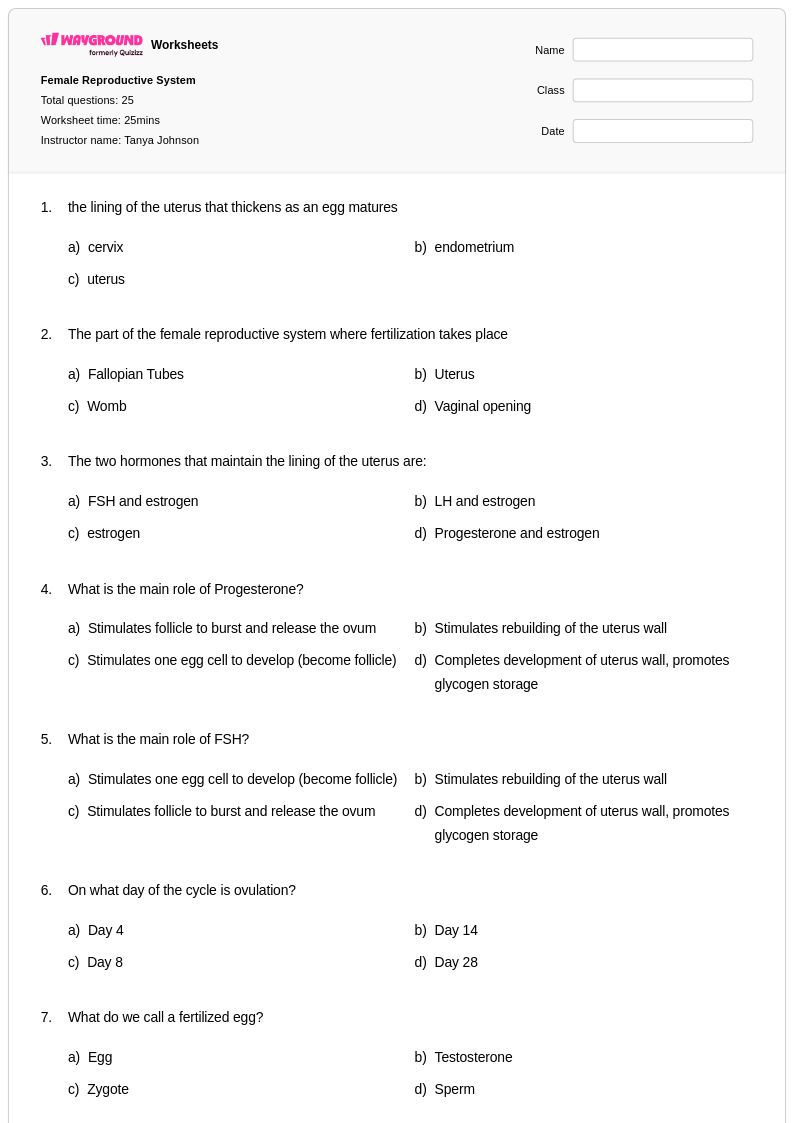
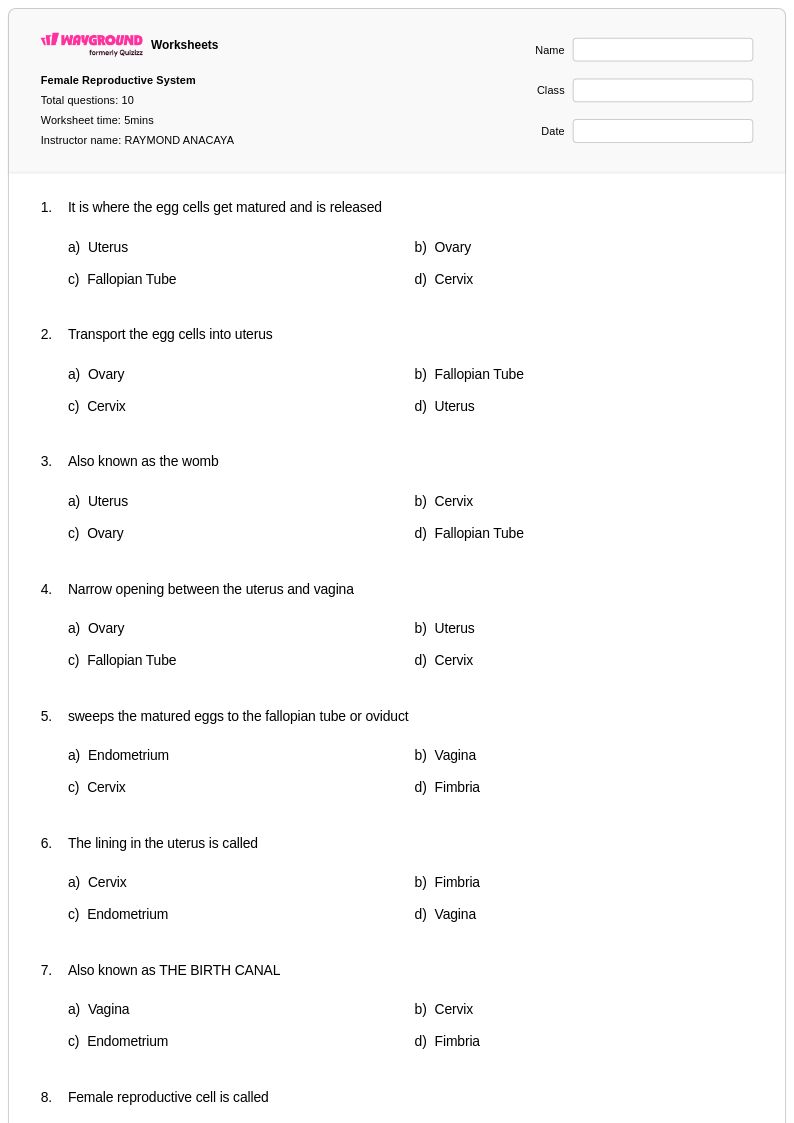
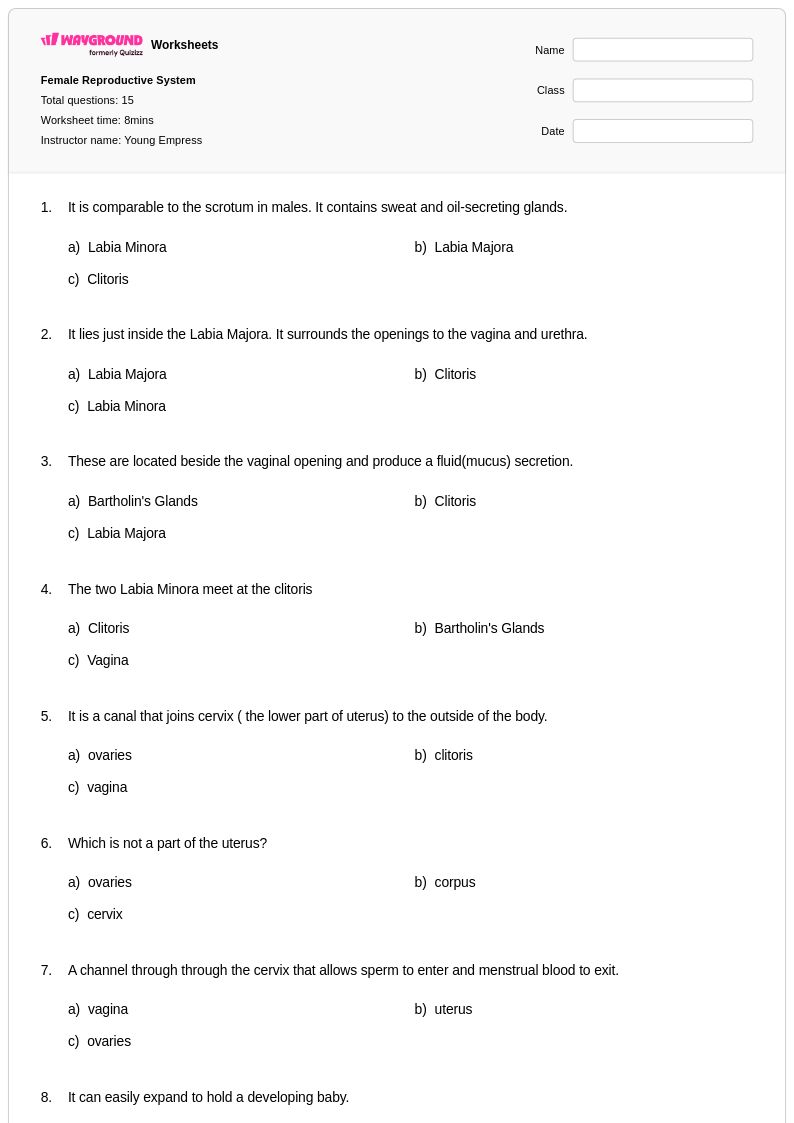
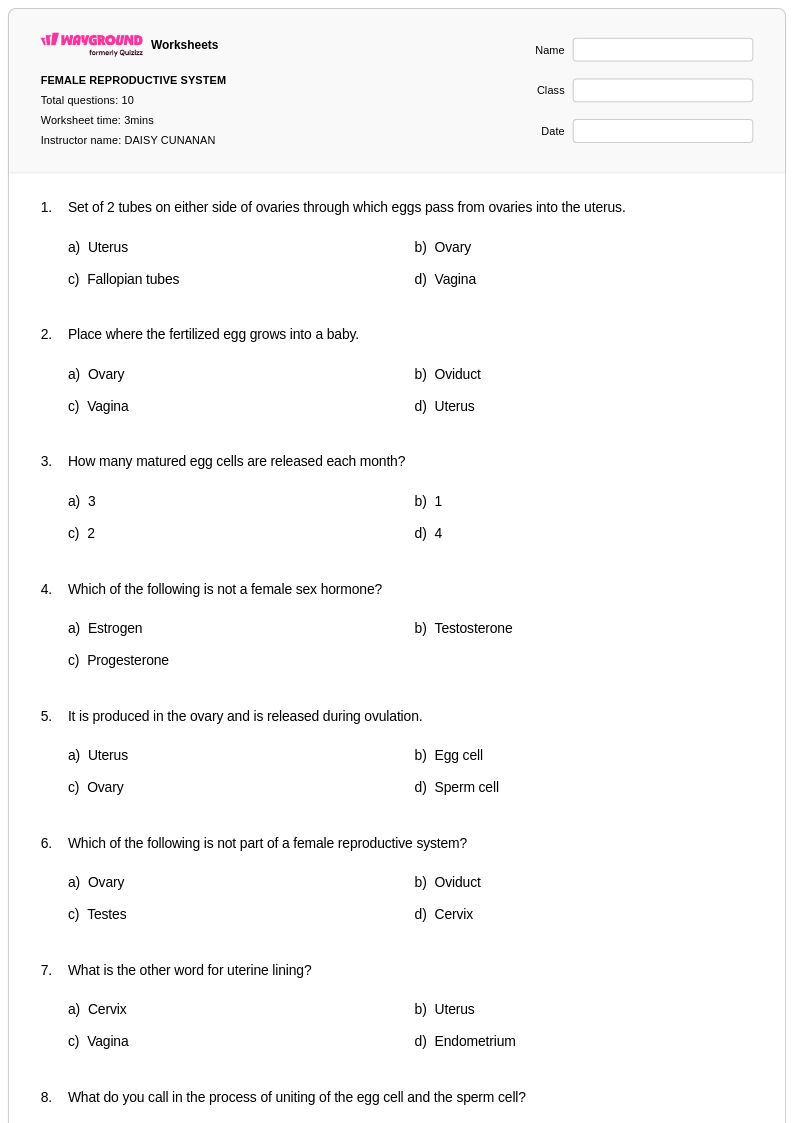
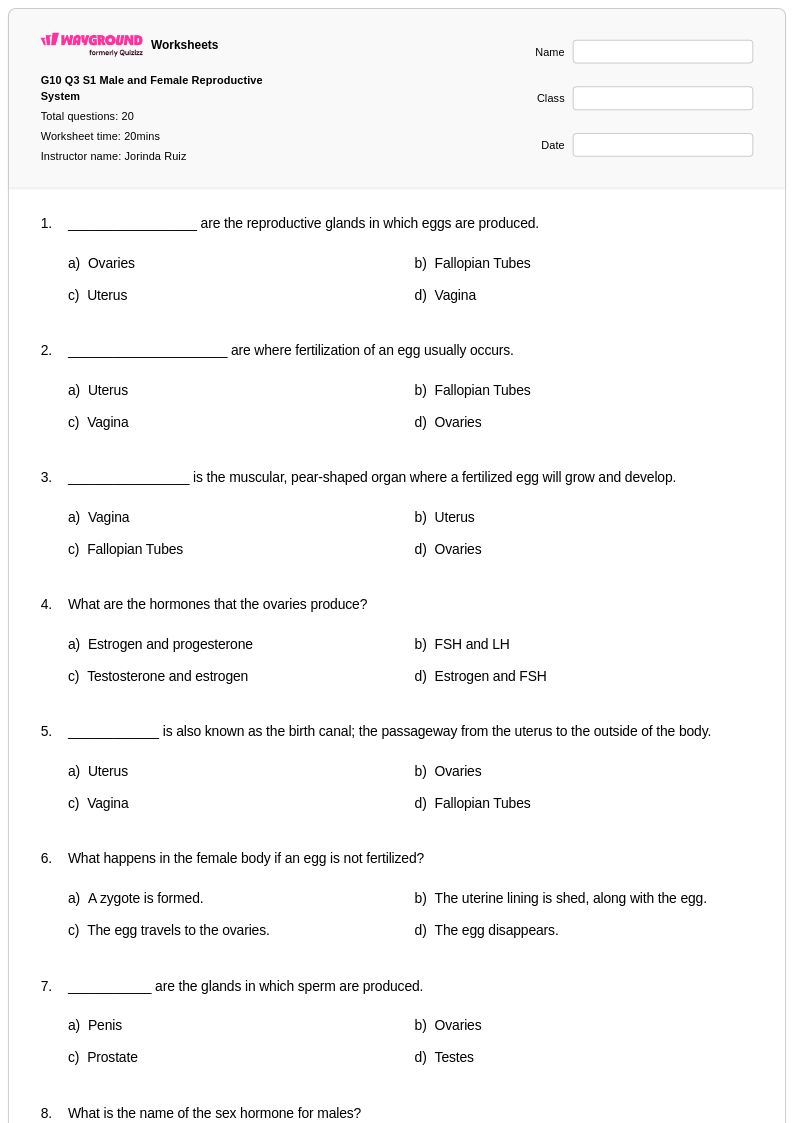
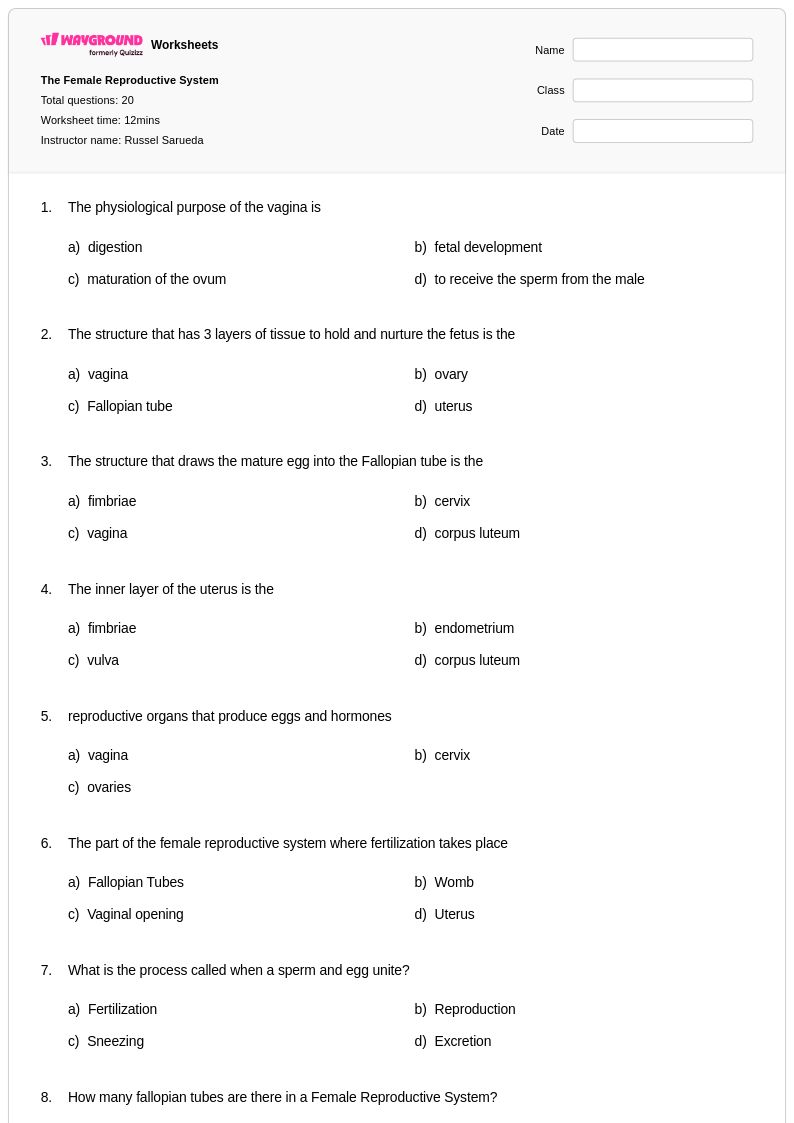
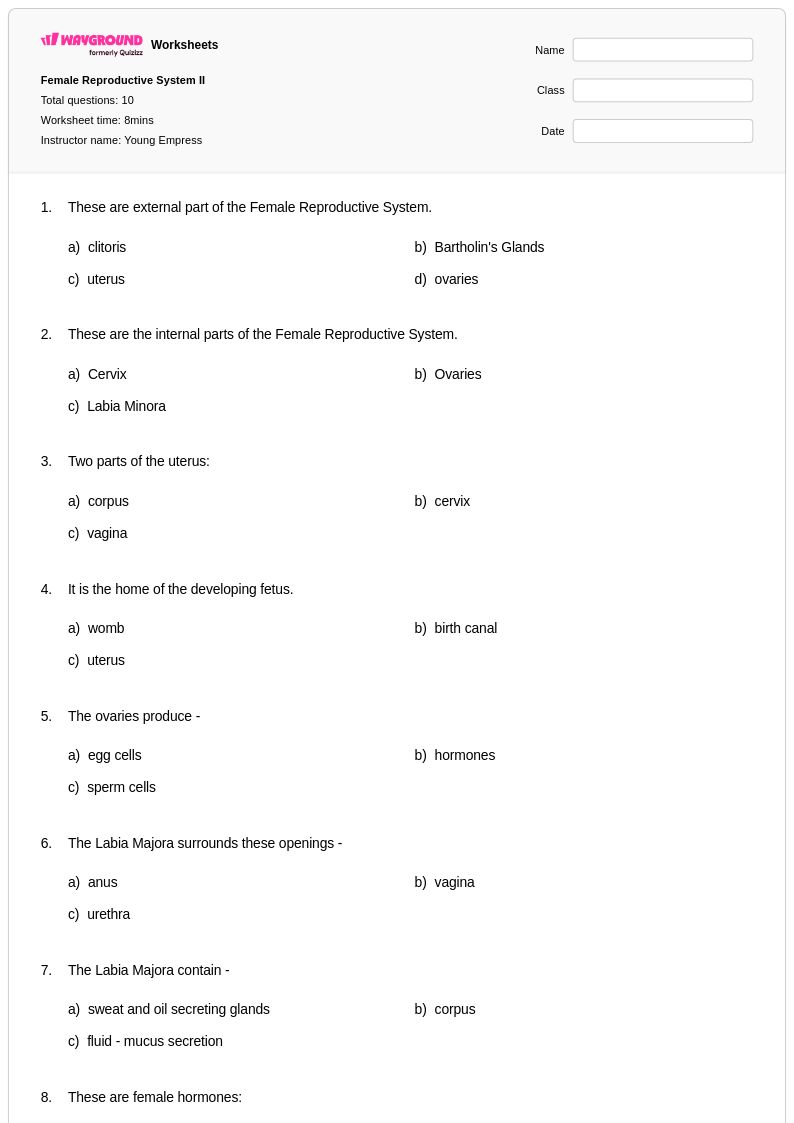
Female reproductive system worksheets for Year 10 students through Wayground (formerly Quizizz) provide comprehensive coverage of the anatomical structures, physiological processes, and hormonal regulation that govern reproduction in females. These educational resources strengthen students' understanding of complex biological concepts including ovarian and uterine cycles, hormone interactions between the hypothalamus, pituitary gland, and reproductive organs, and the intricate processes of ovulation, fertilization, and embryonic development. The practice problems within these worksheets challenge students to identify reproductive structures, analyze hormone level fluctuations throughout the menstrual cycle, and explain the mechanisms underlying fertility and pregnancy. Each worksheet includes detailed answer keys that support independent learning, while the free printables and pdf formats ensure accessibility for diverse classroom environments and study preferences.
Wayground (formerly Quizizz) empowers educators with millions of teacher-created resources specifically designed for Year 10 female reproductive system instruction, featuring robust search and filtering capabilities that allow teachers to locate materials aligned with state science standards and curriculum requirements. The platform's differentiation tools enable instructors to customize worksheets based on individual student needs, supporting both remediation for struggling learners and enrichment opportunities for advanced students. Teachers can seamlessly integrate these resources into lesson planning by selecting from printable pdf formats for traditional classroom use or digital formats for interactive learning experiences. This flexibility facilitates targeted skill practice in reproductive biology while providing educators with comprehensive assessment tools to monitor student progress in understanding complex physiological processes and anatomical relationships within the female reproductive system.
FAQs
How do I teach the female reproductive system in a science class?
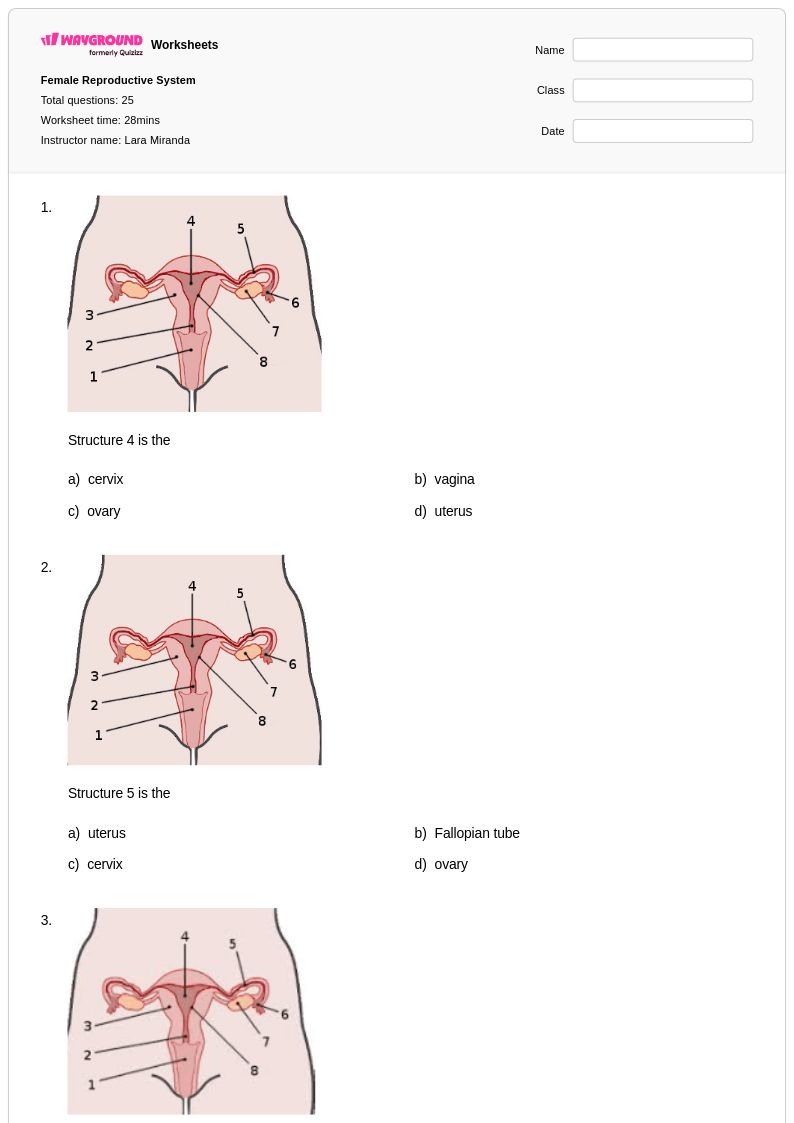
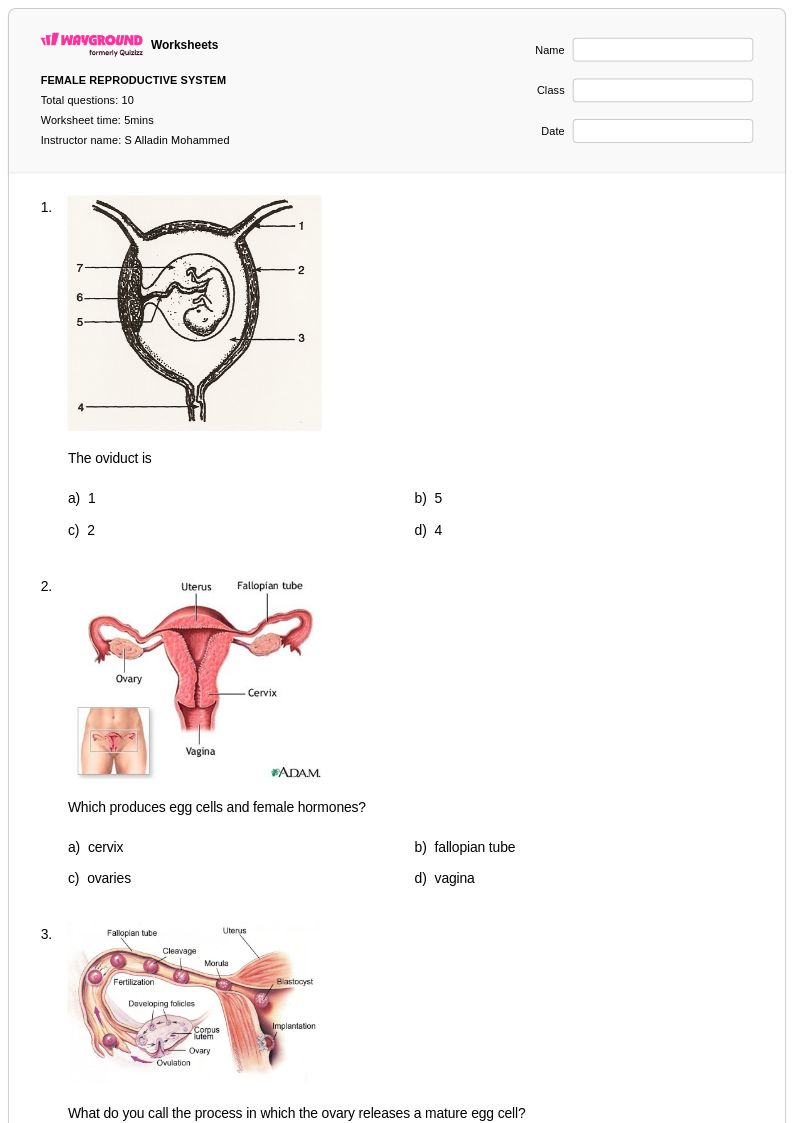
Teaching the female reproductive system effectively starts with building anatomical vocabulary before moving to physiological processes. Begin with labeled diagram activities covering structures like the ovaries, fallopian tubes, uterus, and external genitalia, then layer in the menstrual cycle, hormone regulation, and fertilization as connected processes. Using visual aids alongside structured practice problems helps students see how structure and function relate, which is essential for understanding reproductive biology at a conceptual level.
What exercises help students practice identifying female reproductive system structures?
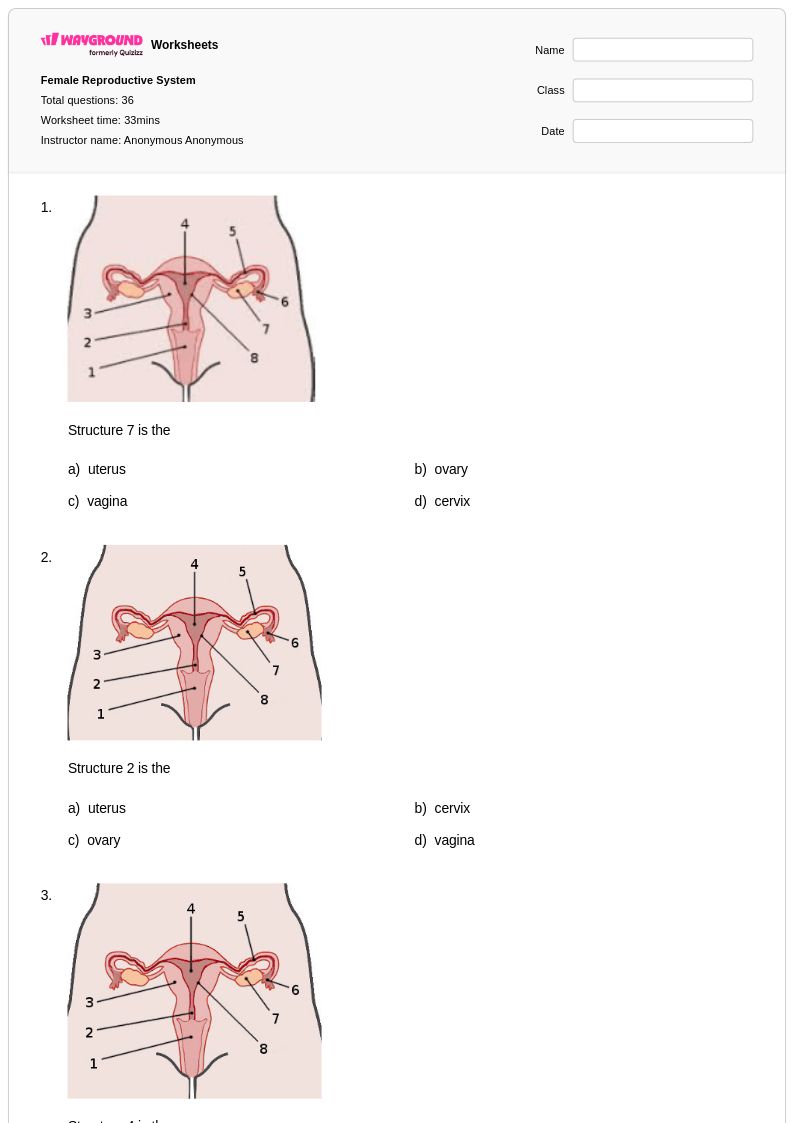
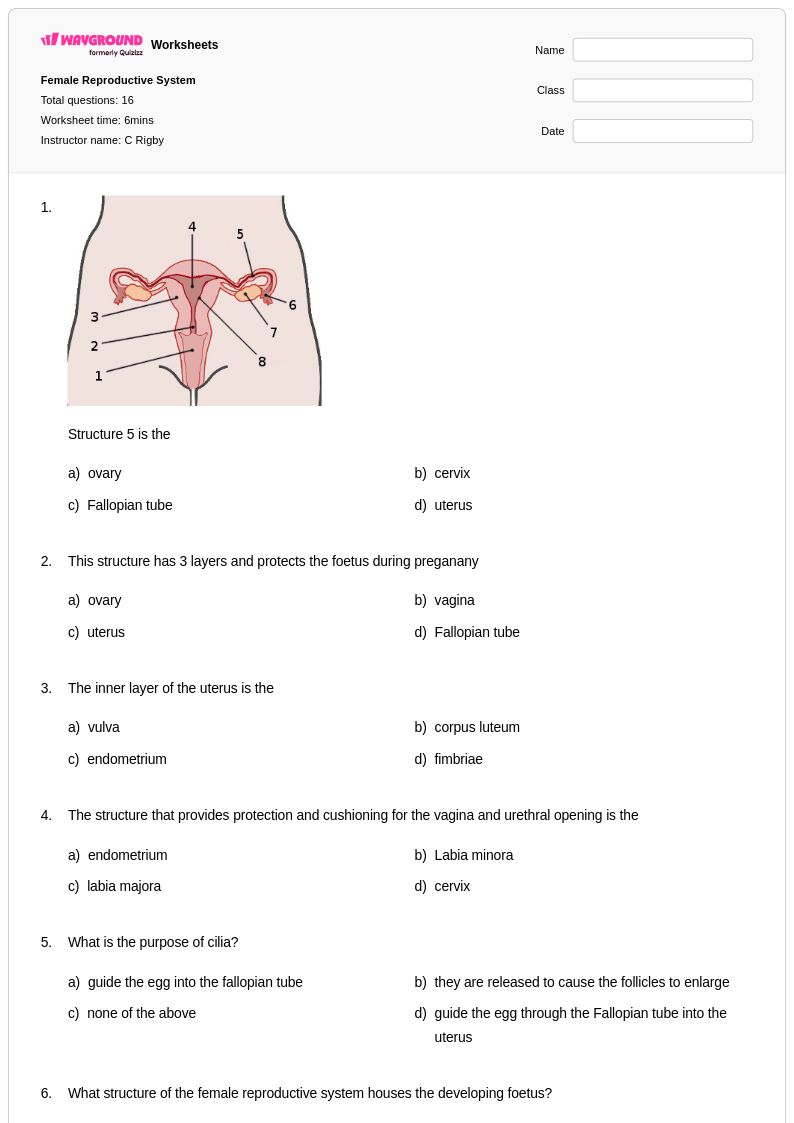
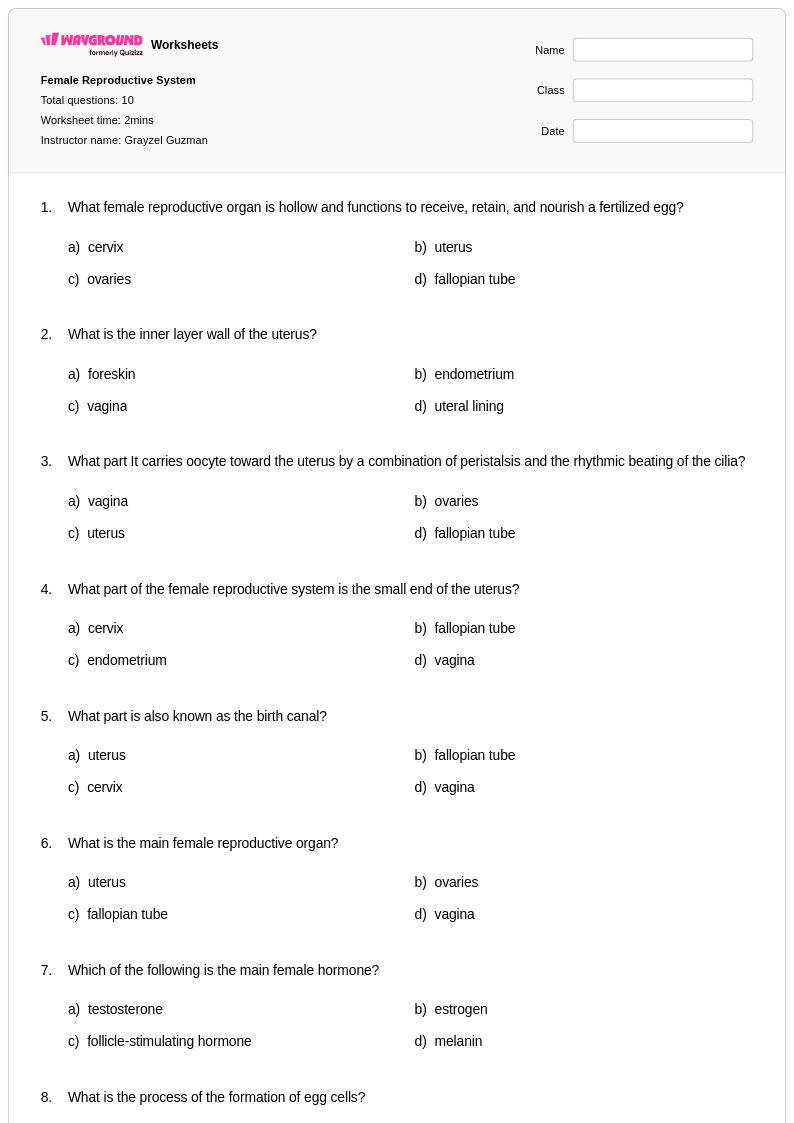
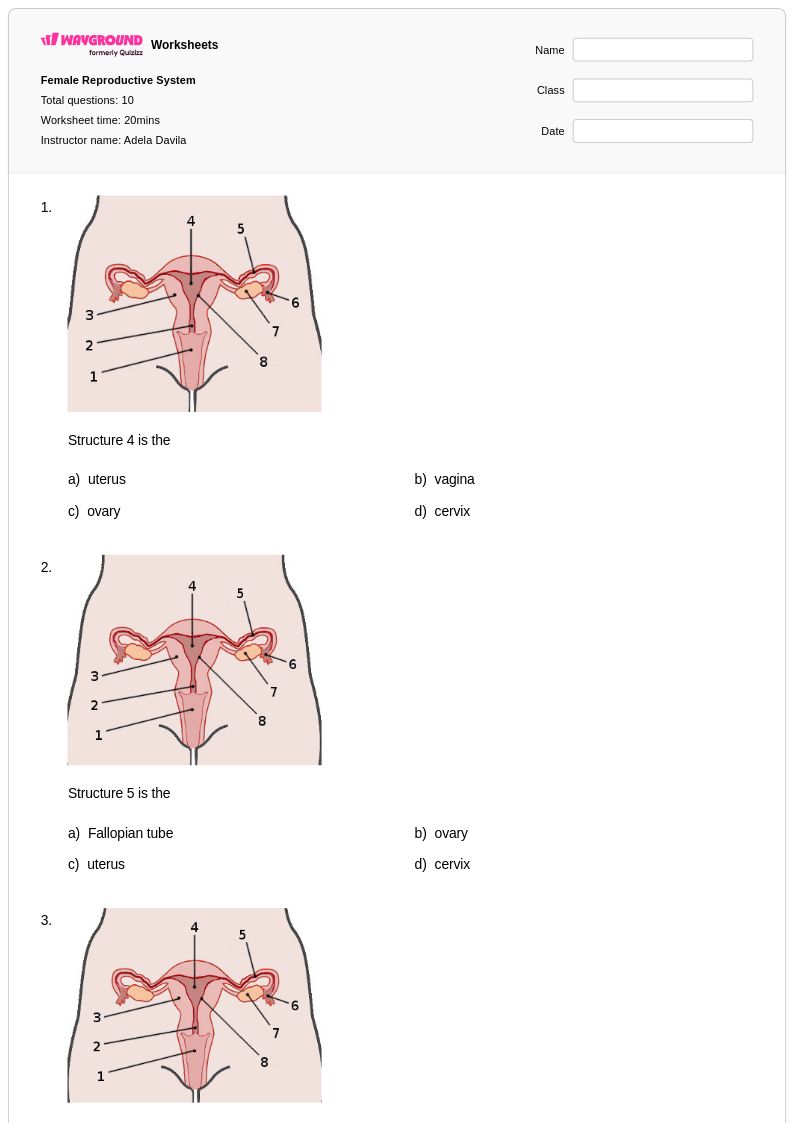
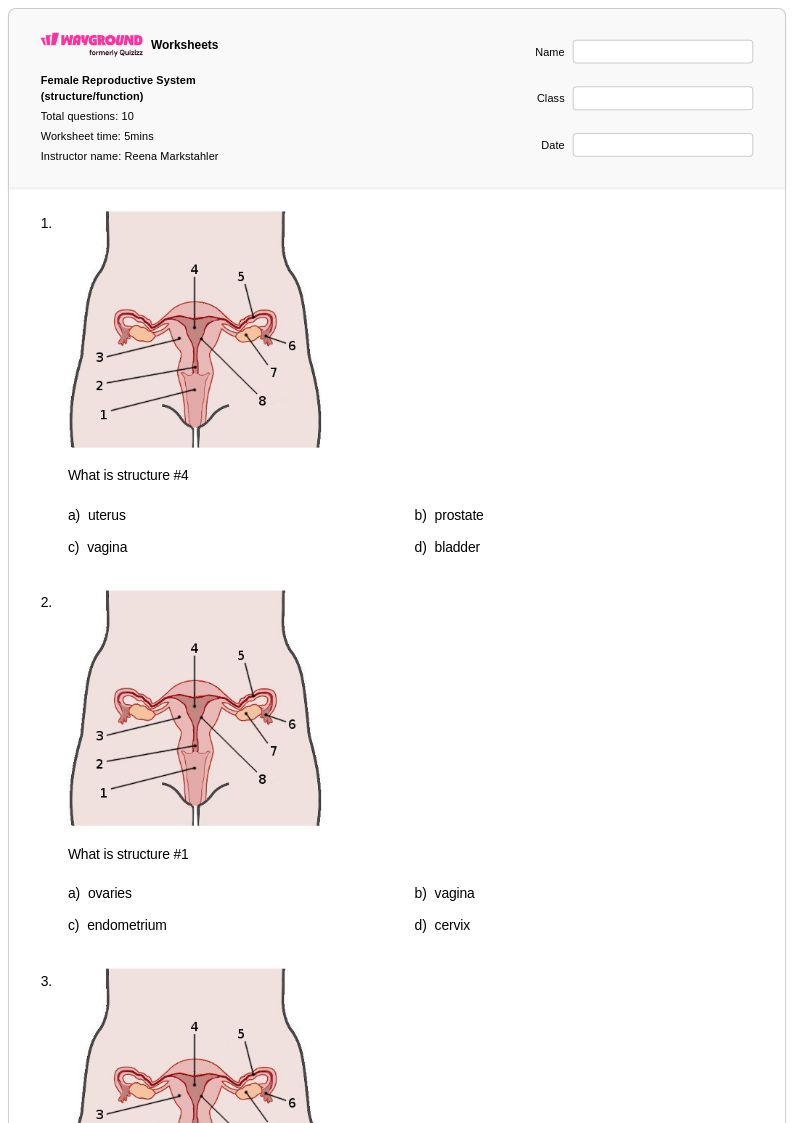
Diagram labeling exercises are among the most effective tools for helping students identify and remember anatomical structures in the female reproductive system. Worksheets that ask students to label and describe the function of each structure — such as the ovaries, fallopian tubes, cervix, and uterus — reinforce both recall and comprehension. Pairing these with process-based questions about the menstrual cycle phases or fertilization pathway deepens understanding beyond simple memorization.
What common mistakes do students make when learning about the female reproductive system?
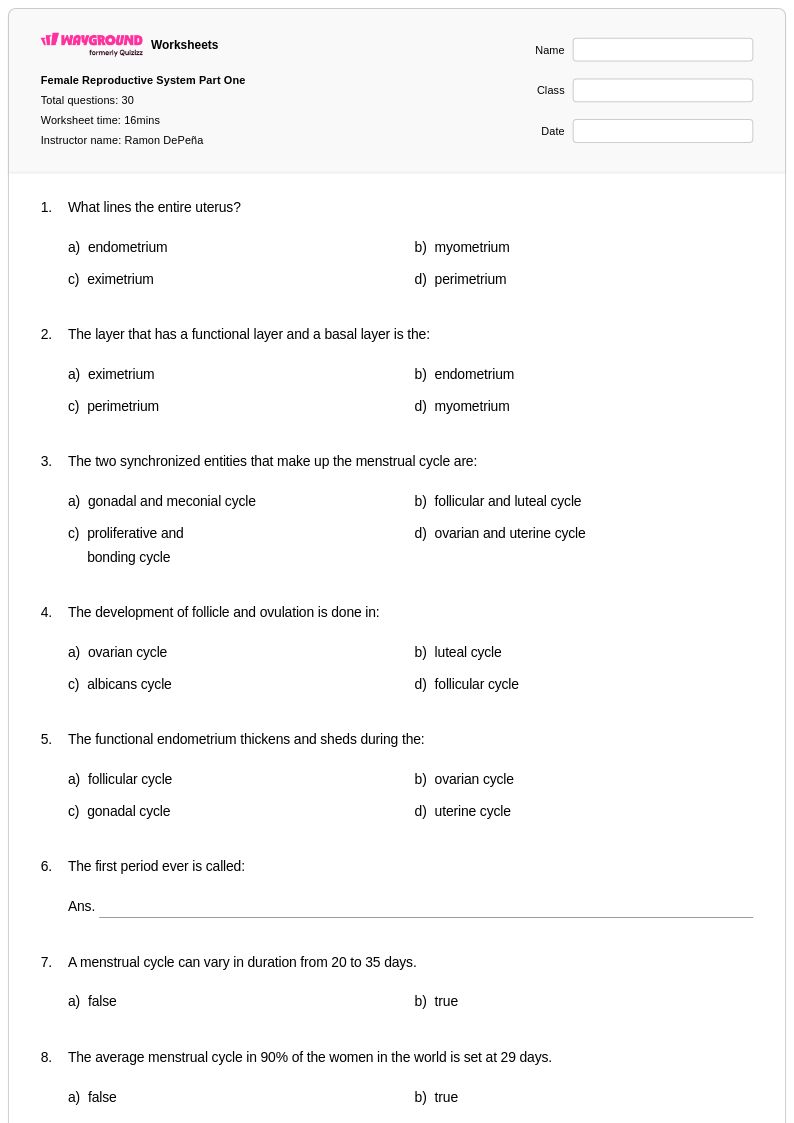
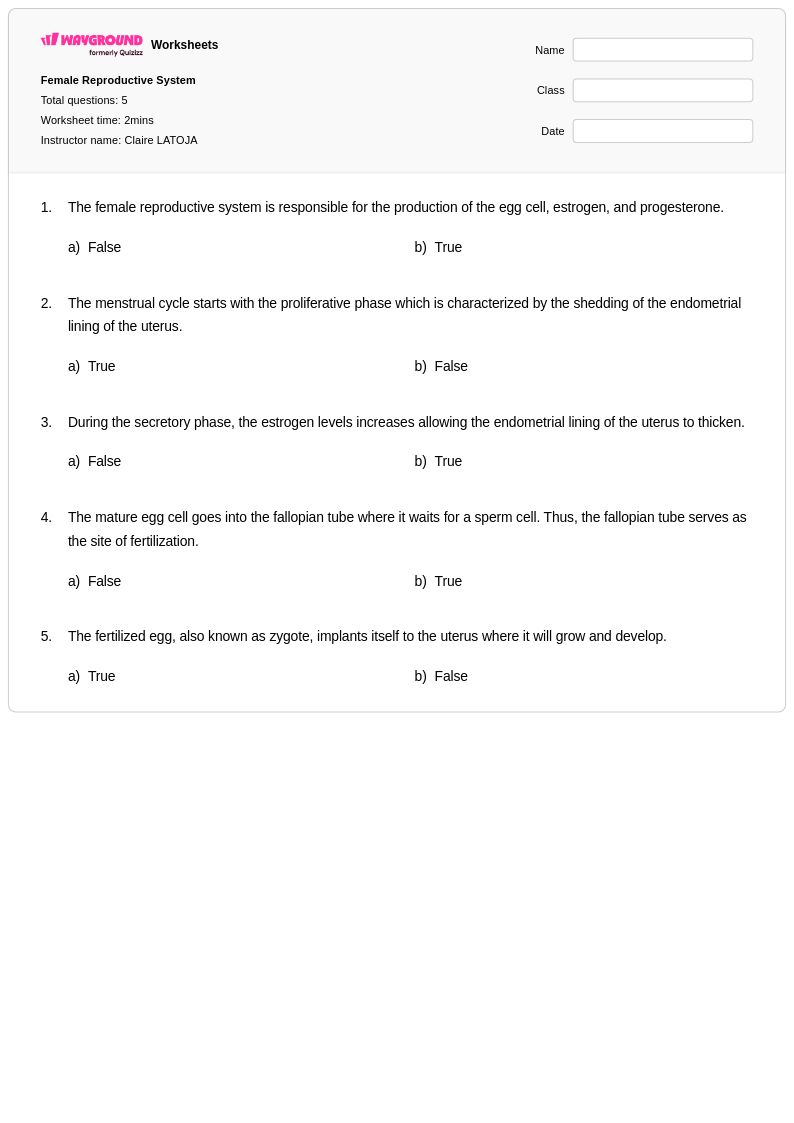
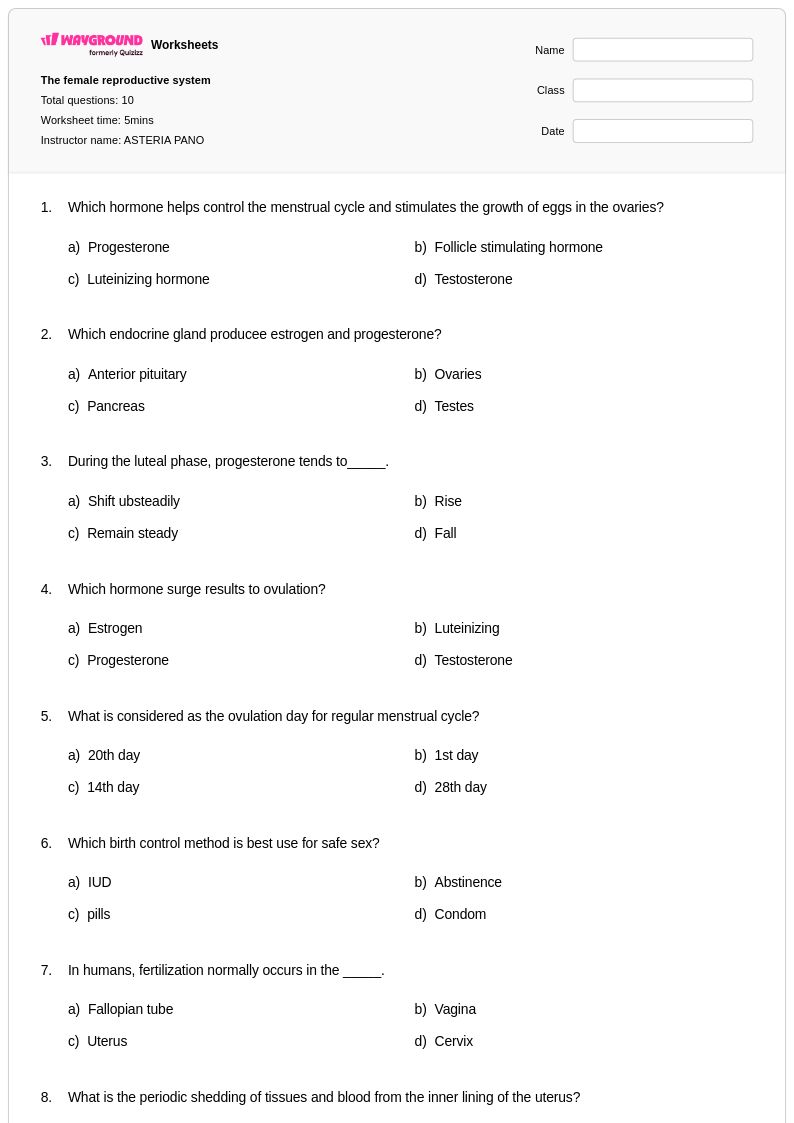
Students frequently confuse the sequence and hormonal triggers of the menstrual cycle phases, often conflating ovulation with menstruation or misattributing which hormones drive each stage. Another common error is treating anatomical structures as isolated parts rather than understanding how they function together as a system. Targeted practice problems that require students to trace a process from start to finish — such as the path of an egg from ovulation to fertilization — help correct these misconceptions directly.
How do I use female reproductive system worksheets in my classroom?
Female reproductive system worksheets on Wayground are available as printable PDFs for traditional classroom use and in digital formats for technology-integrated instruction, including the option to host them as a quiz directly on Wayground. Teachers can use printable versions for independent practice, homework, or in-class guided work, while digital formats support remote learning and real-time student feedback. Each worksheet includes a complete answer key, making them practical tools for both formative assessment and self-directed study.
How can I support students who struggle with reproductive biology vocabulary?
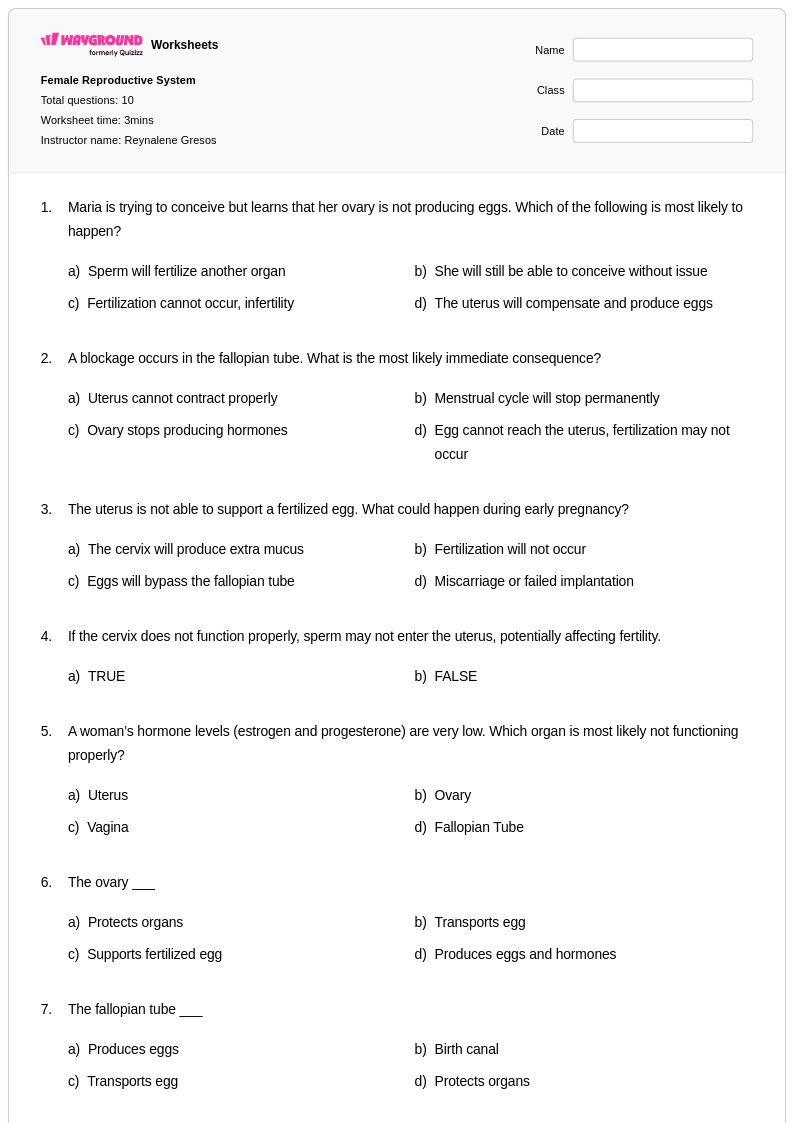
Building scientific vocabulary explicitly is key for students who struggle with reproductive biology content. Worksheets that integrate vocabulary practice alongside diagram and process questions help students encounter terms like 'endometrium,' 'corpus luteum,' and 'follicle' in meaningful context rather than in isolation. On Wayground, teachers can also enable the Read Aloud accommodation for students who benefit from hearing question text read to them, reducing language barriers without removing academic rigor.
How do I differentiate female reproductive system instruction for students at different levels?
Differentiation in reproductive biology instruction works best when teachers can adjust both content complexity and scaffolding level without creating entirely separate lesson plans. Wayground's differentiation tools allow teachers to customize worksheet difficulty and content focus, so struggling students can work on foundational anatomical identification while advanced learners tackle hormone regulation pathways and physiological analysis. Accommodations like reduced answer choices and extended time can be applied to individual students, keeping the class working on the same topic with appropriately adjusted support.