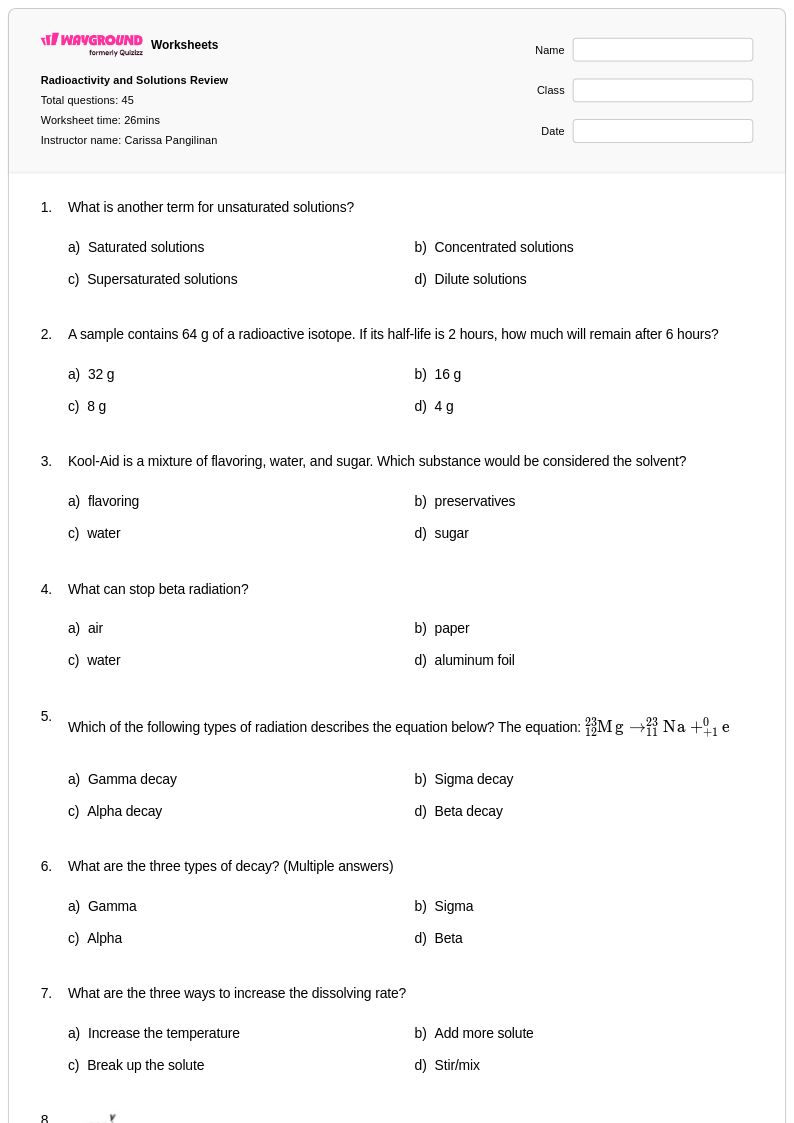
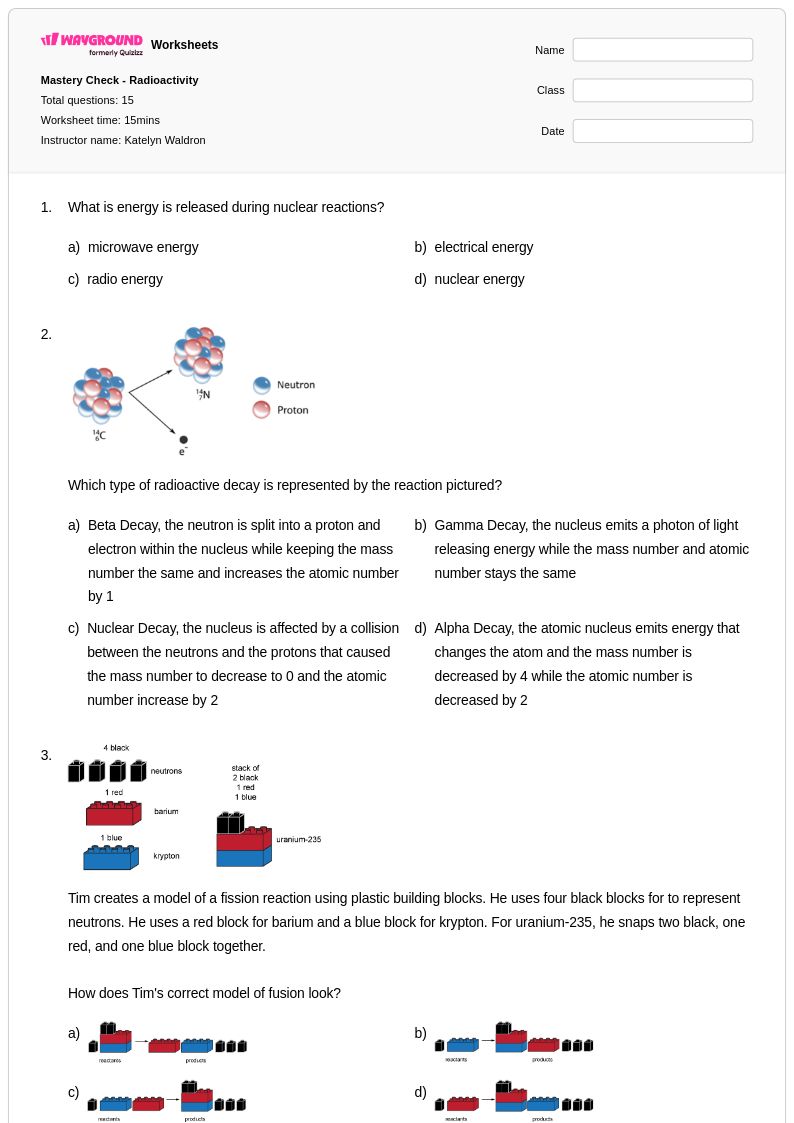
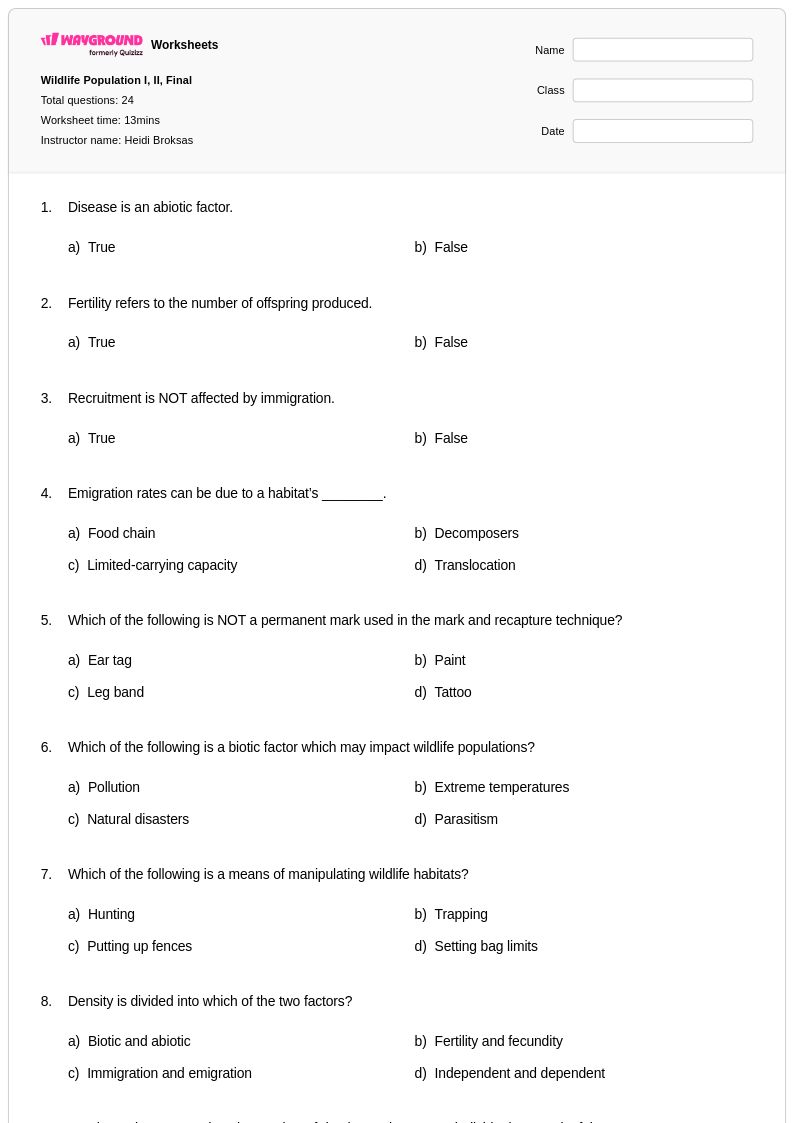
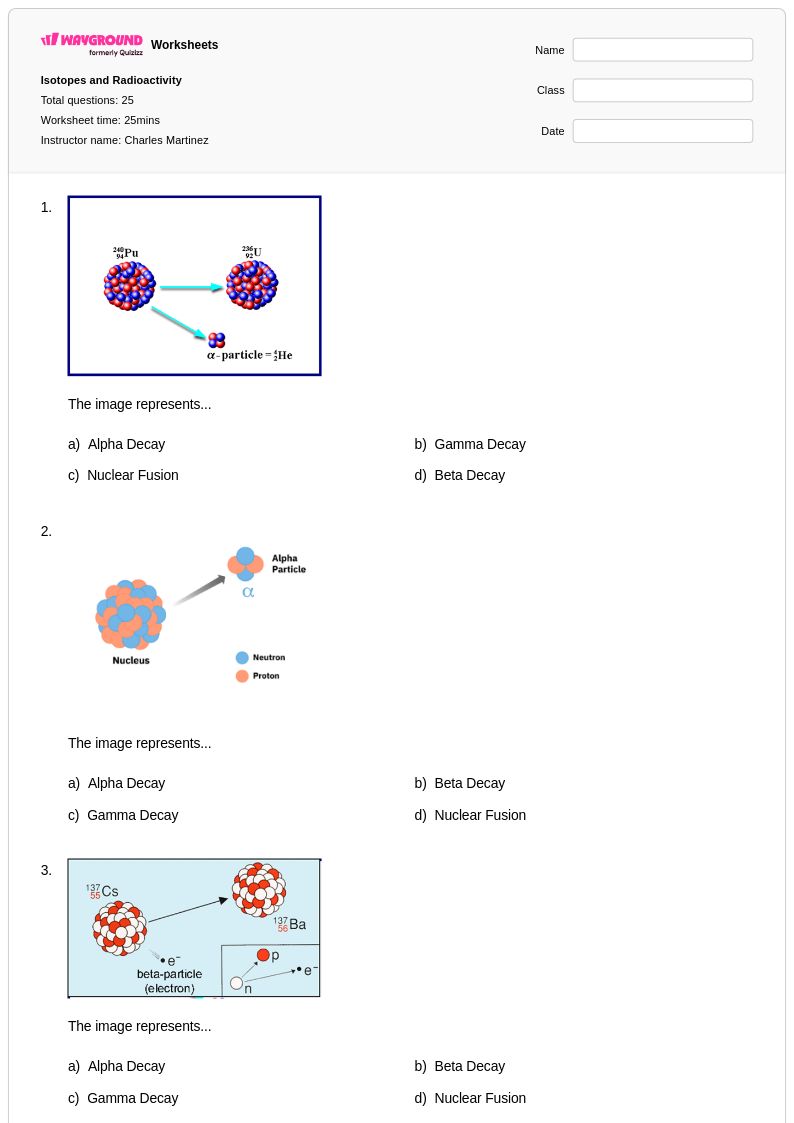
Free Printable Radioactivity and Wildlife Worksheets for Year 10
Explore Wayground's free Year 10 radioactivity and wildlife biology worksheets with printable PDFs, practice problems, and answer keys to help students understand how radiation affects ecosystems and animal populations.
Explore printable Radioactivity and Wildlife worksheets for Year 10
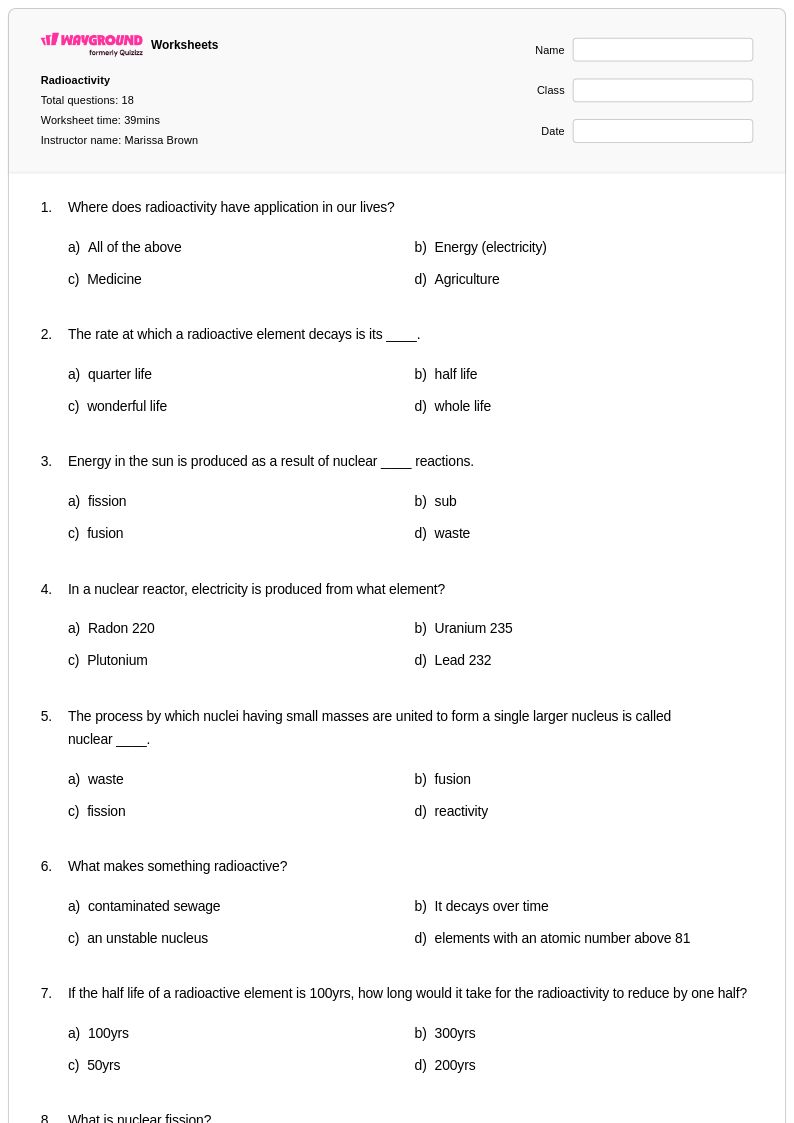
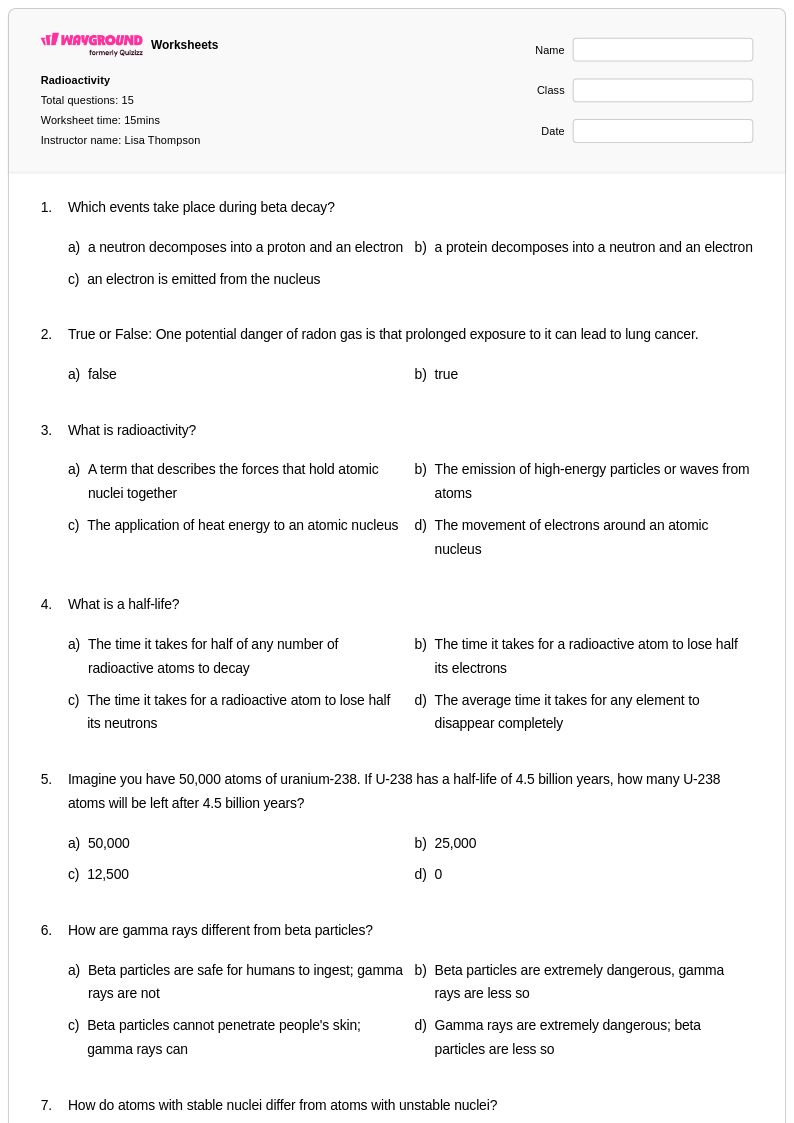
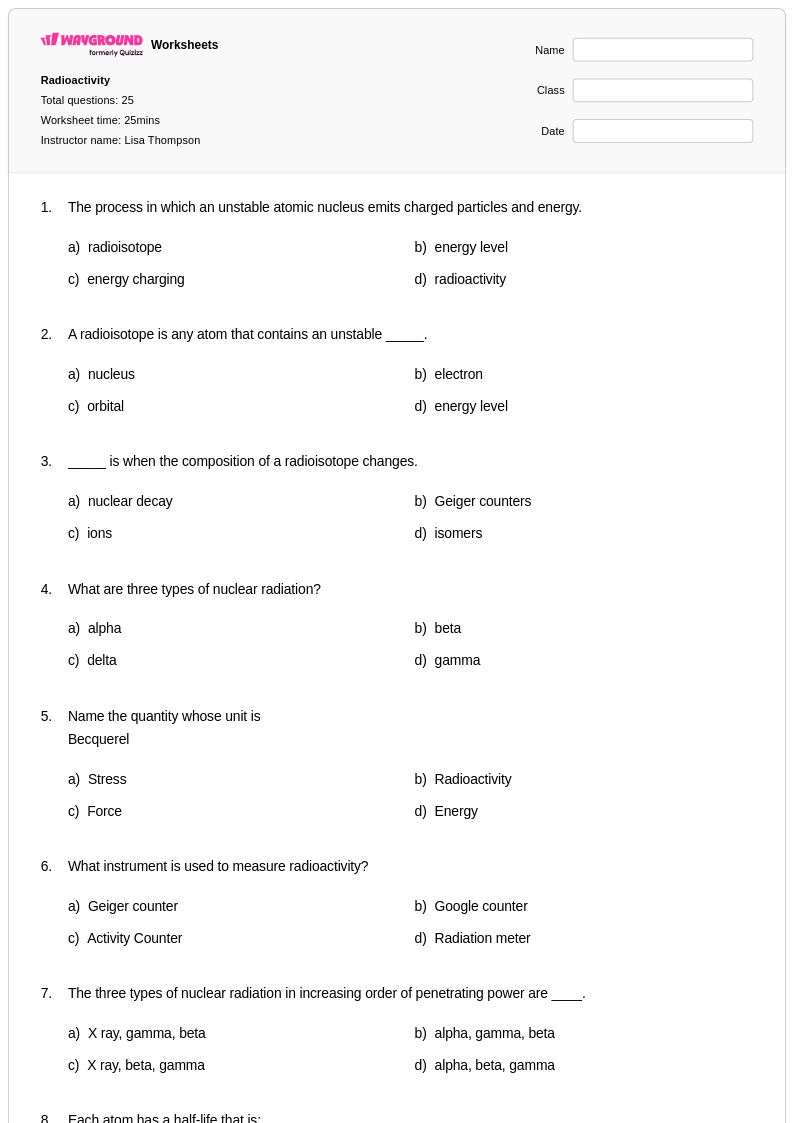
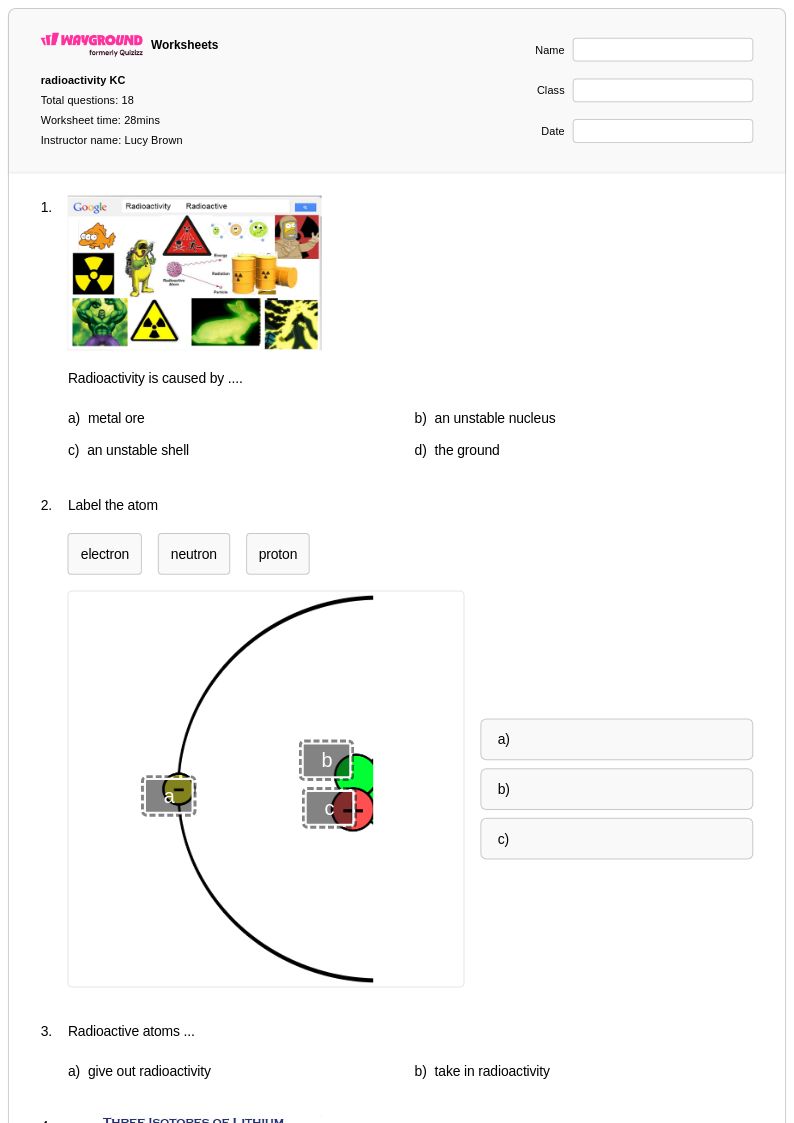
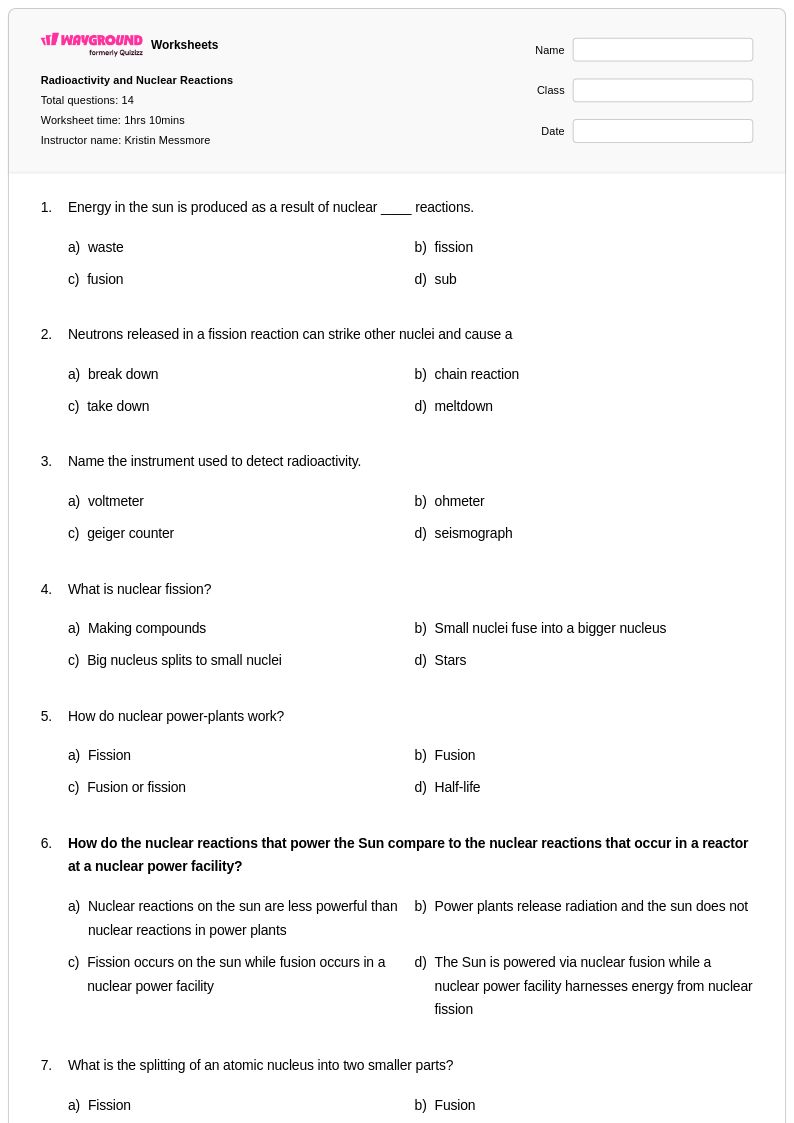
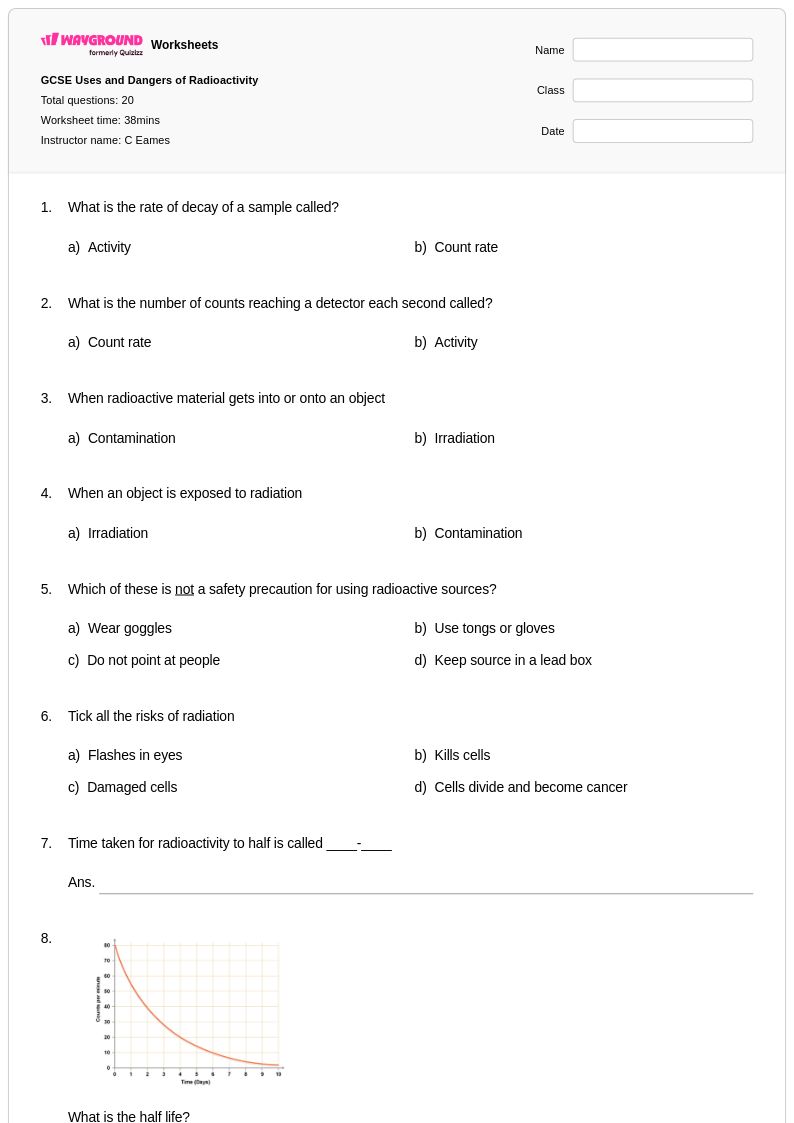
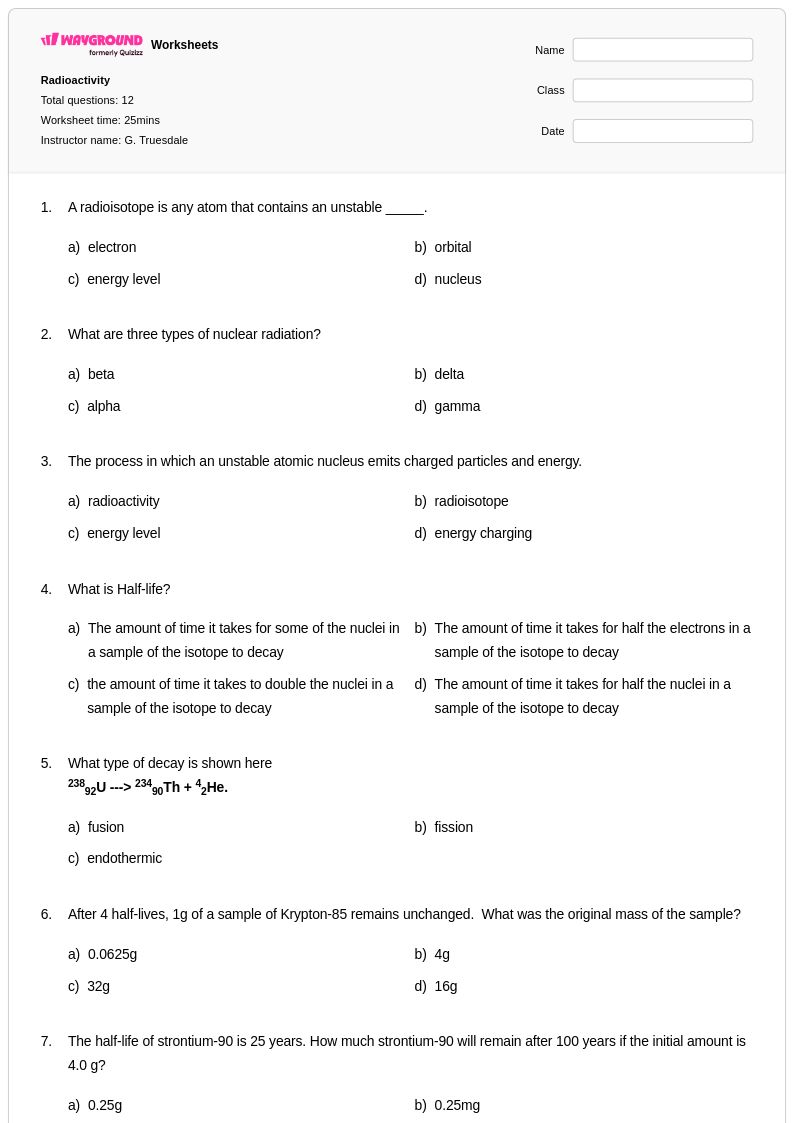
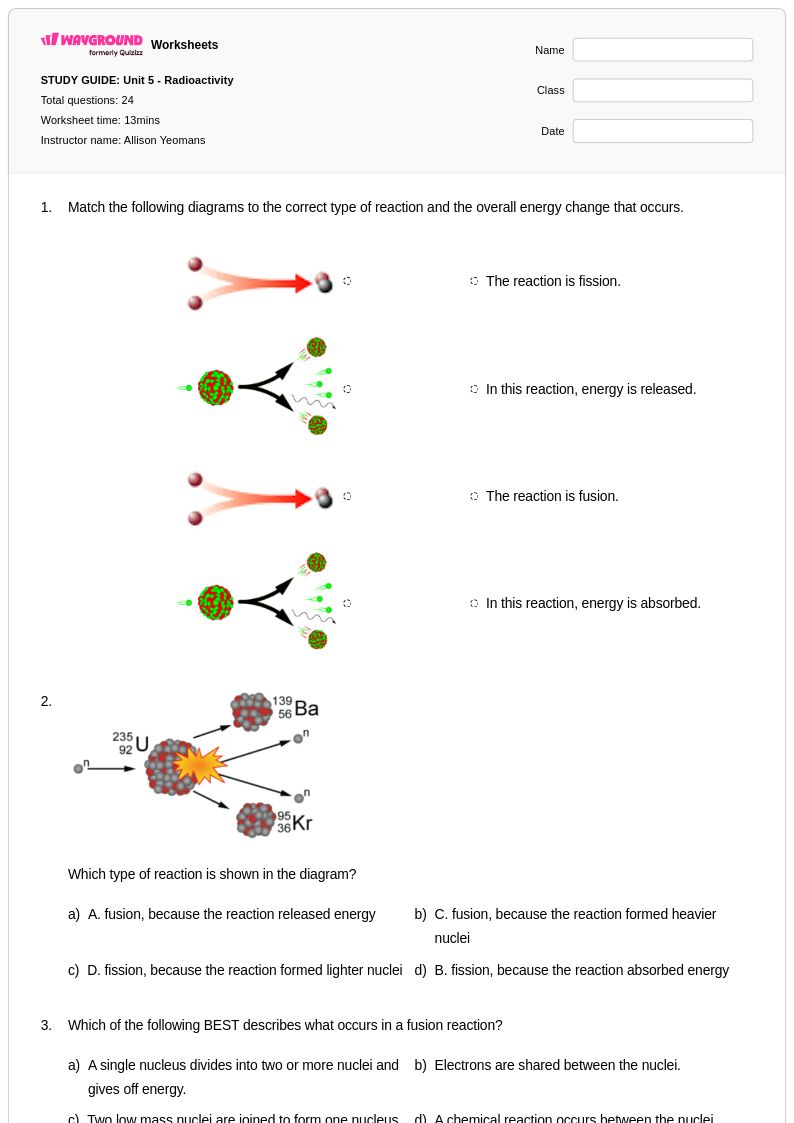
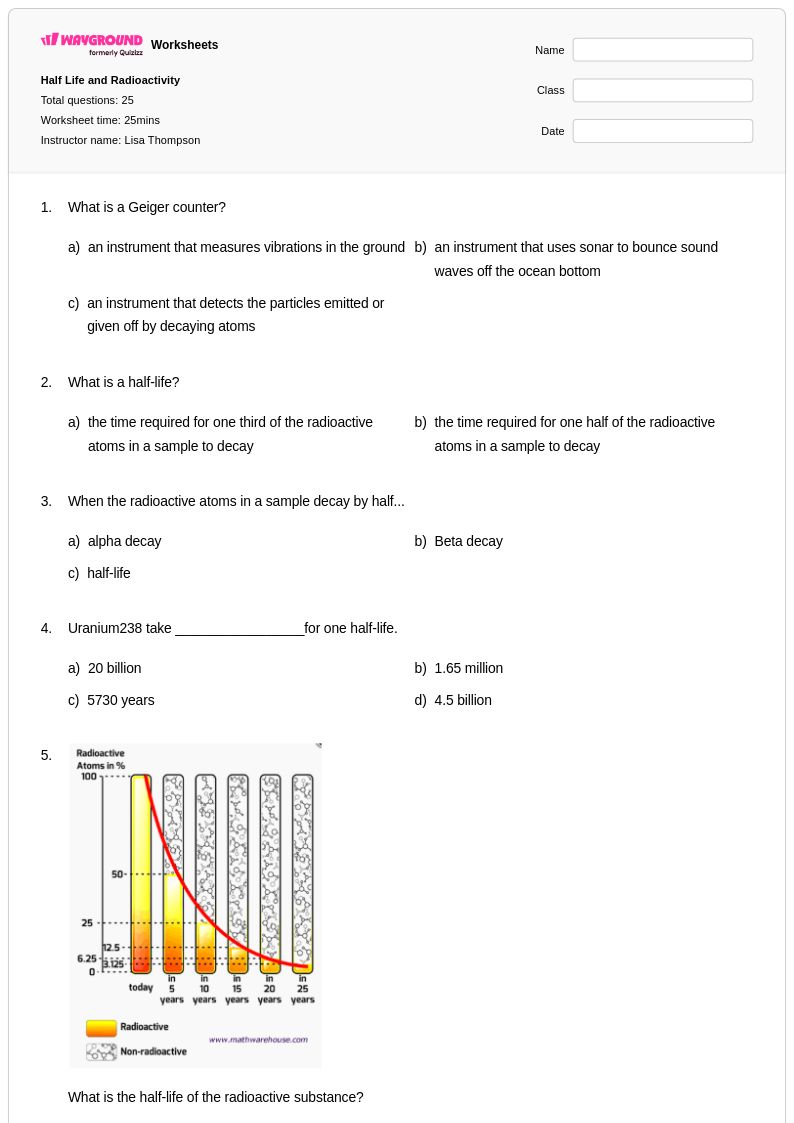
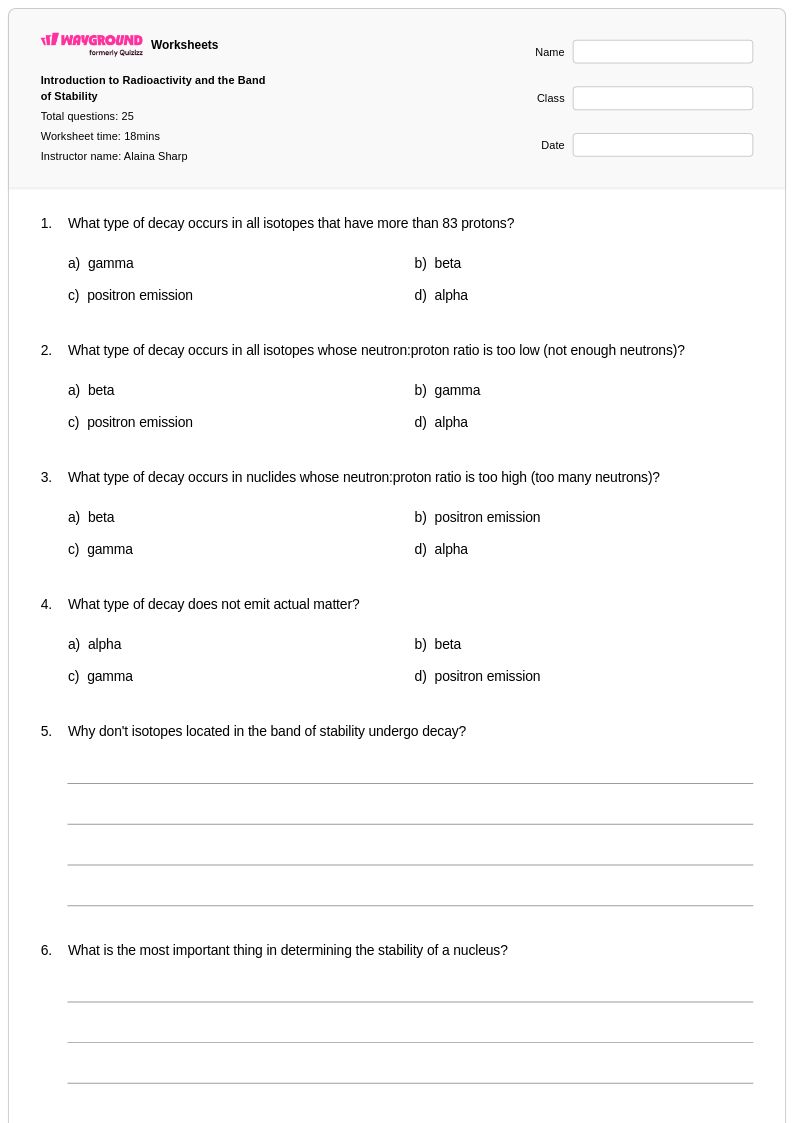
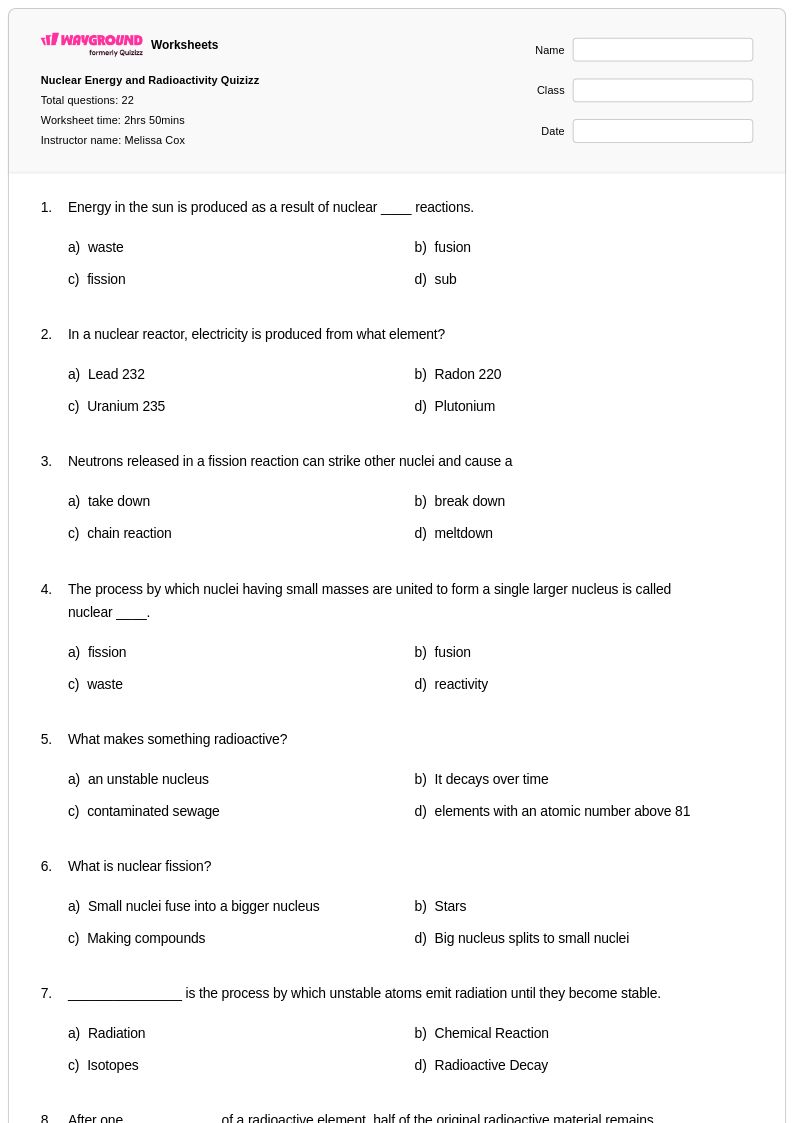
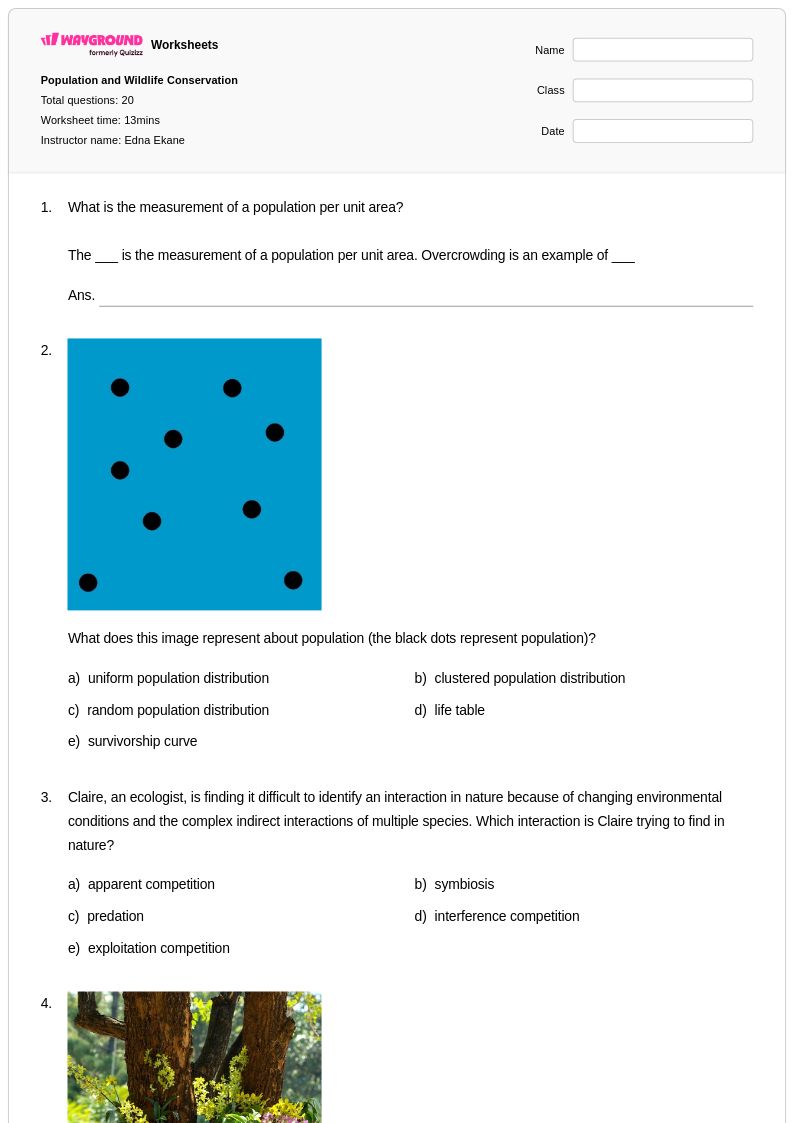
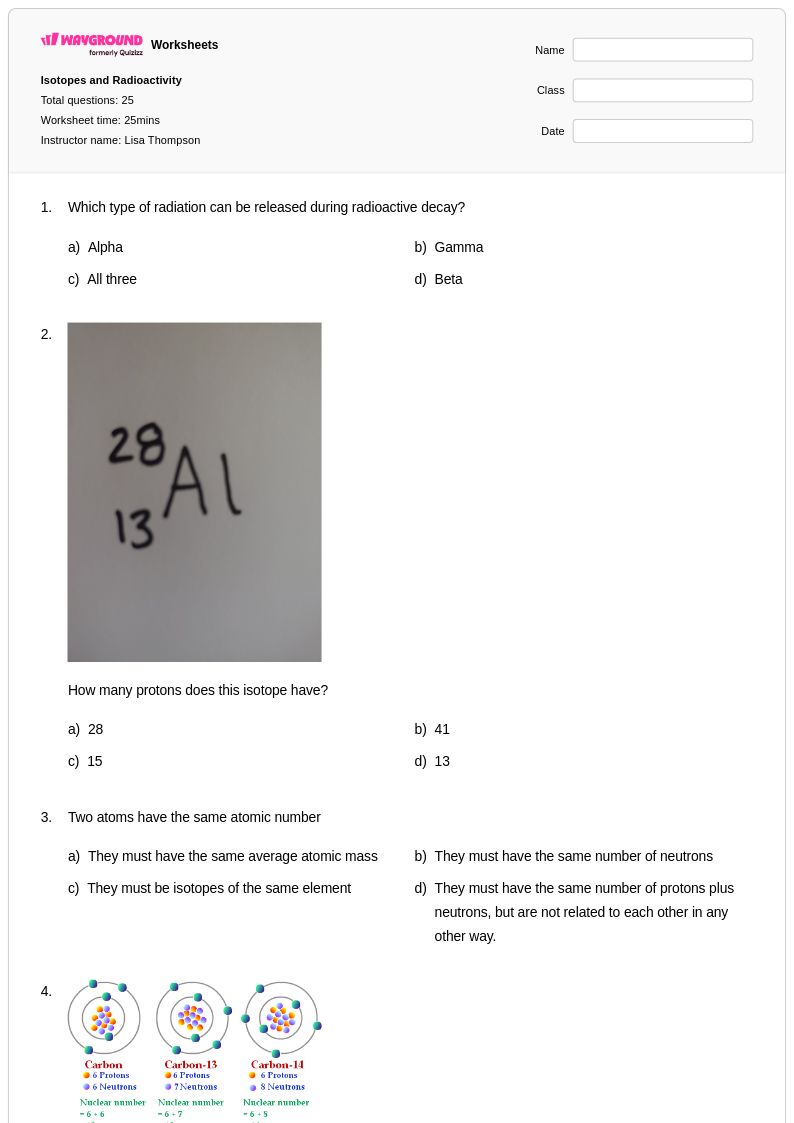
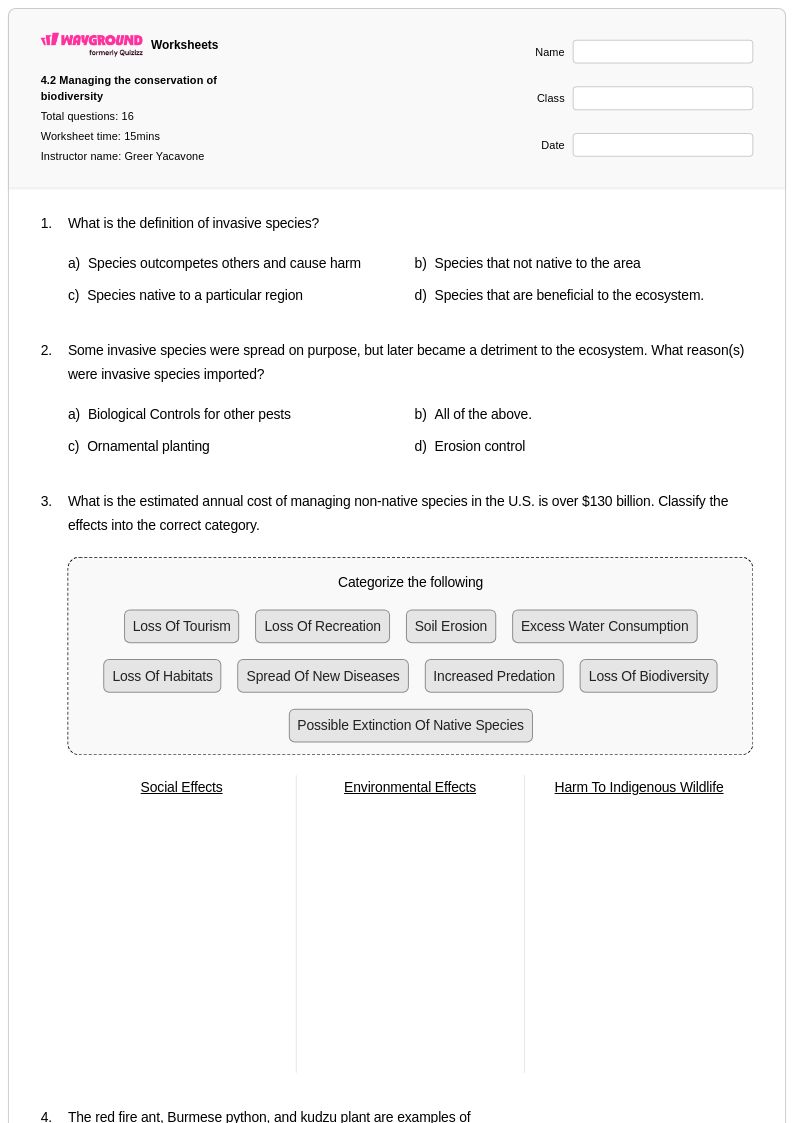
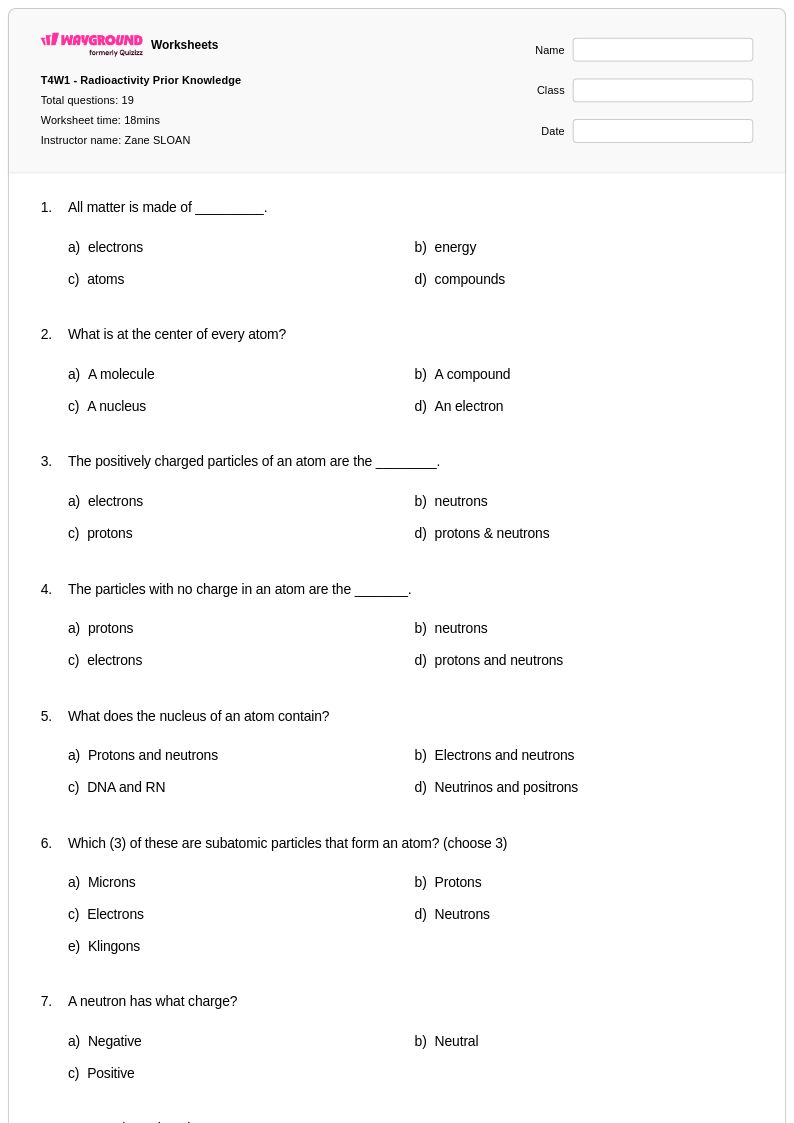
Radioactivity and wildlife worksheets for Year 10 students available through Wayground (formerly Quizizz) provide comprehensive resources that explore the complex interactions between radioactive materials and biological systems in natural environments. These expertly designed worksheets strengthen critical thinking skills by guiding students through practice problems that examine how radioactive isotopes affect animal populations, food chains, and ecosystem dynamics. Students engage with real-world scenarios involving radioactive contamination, bioaccumulation patterns, and the long-term effects of radiation exposure on wildlife populations. Each worksheet collection includes detailed answer keys and is available as free printables in pdf format, allowing educators to seamlessly integrate these resources into their biology curriculum while reinforcing essential concepts about radiation biology and environmental science.
Wayground (formerly Quizizz) supports biology educators with an extensive collection of millions of teacher-created resources specifically focused on radioactivity and wildlife concepts for Year 10 learners. The platform's robust search and filtering capabilities enable teachers to quickly locate worksheets that align with specific curriculum standards and learning objectives, while differentiation tools allow for customization based on individual student needs and proficiency levels. These versatile resources are available in both printable and digital formats, including downloadable pdf versions, making them ideal for classroom instruction, homework assignments, remediation support, and enrichment activities. Teachers can efficiently plan lessons that address varying skill levels, provide targeted practice for struggling students, and offer advanced challenges for high achievers, all while ensuring comprehensive coverage of how radioactive substances impact wildlife populations and ecological relationships.
FAQs
How do I teach students about the effects of radioactivity on wildlife?
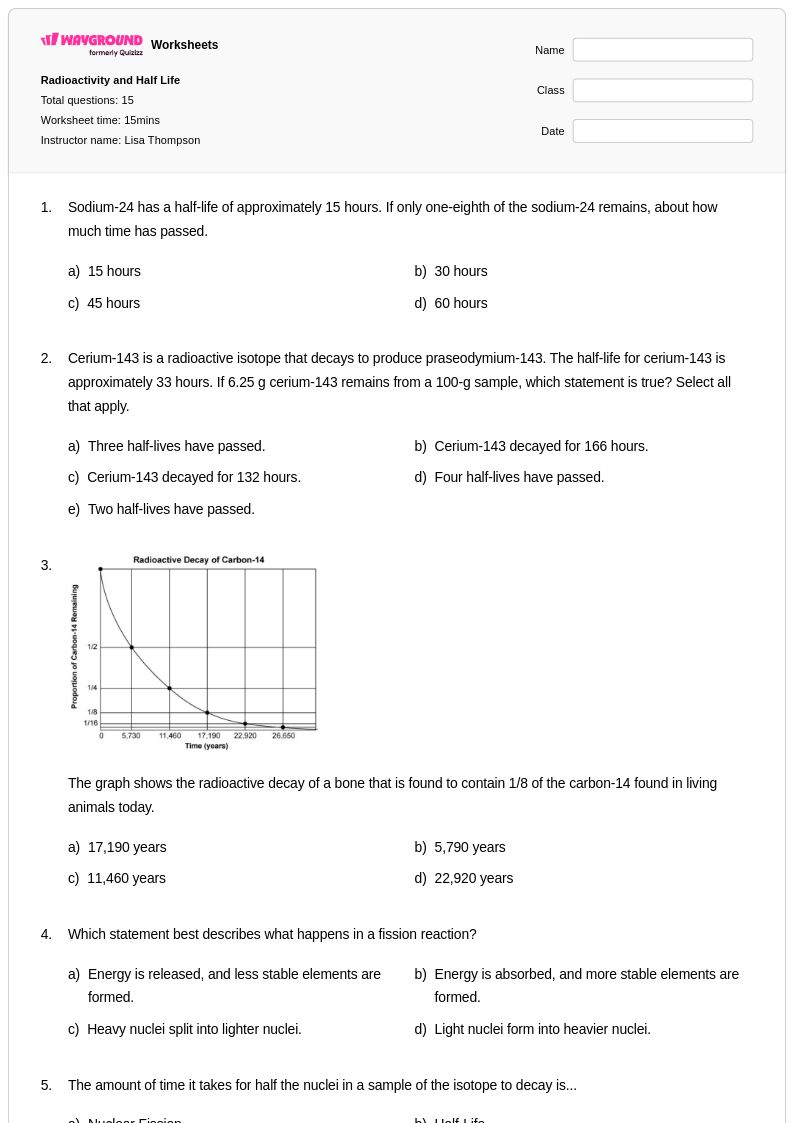
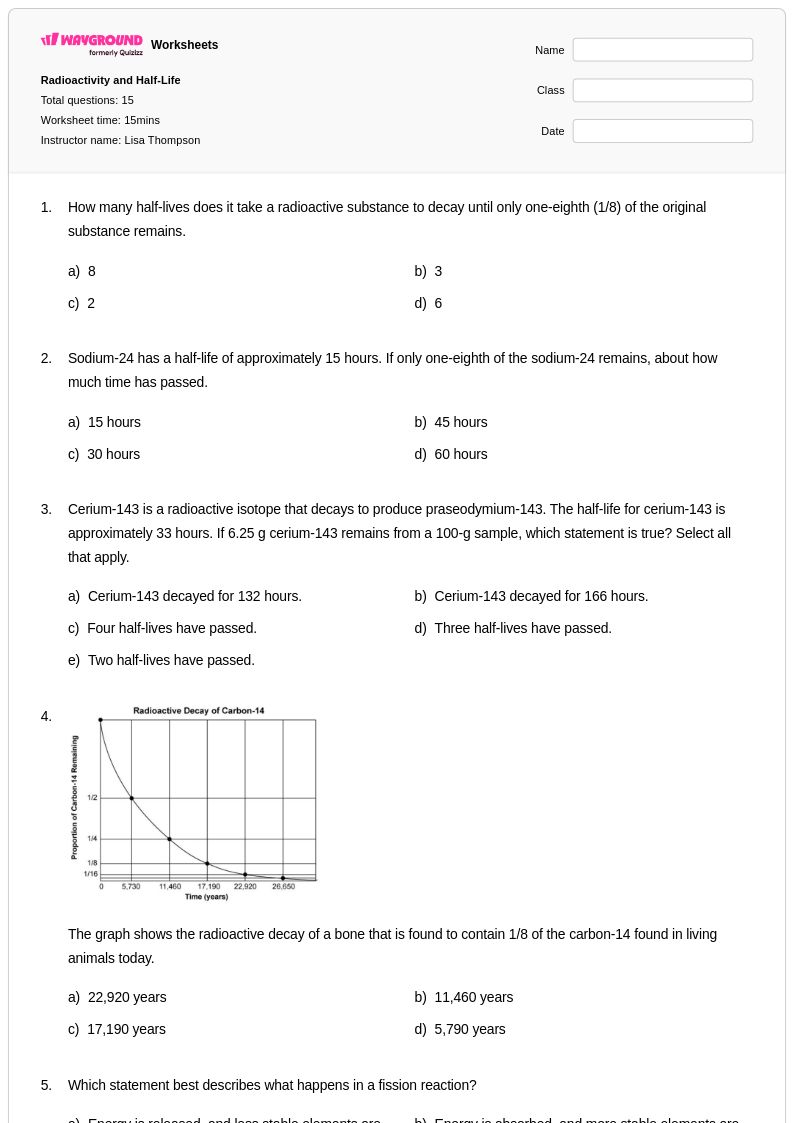
Start with foundational concepts like ionizing radiation and half-life before connecting them to biological impact at the cellular level. Use real-world case studies such as the Chernobyl exclusion zone or Fukushima marine ecosystems to ground abstract radiation concepts in observable ecological consequences. Connecting radiation physics to population dynamics and genetic diversity helps students see radioactivity as an environmental science issue, not just a chemistry topic.
What practice exercises help students understand how radiation affects ecosystems?
Effective practice should move students from identifying radiation sources to analyzing ecosystem-wide consequences, including bioaccumulation through food chains and long-term effects on genetic diversity. Problems that ask students to interpret data from real nuclear accident case studies, such as changes in wildlife population size or species distribution, build analytical skills alongside content knowledge. Worksheets that sequence problems from cellular damage to population-level outcomes reinforce the multi-scale nature of radiation effects.
What misconceptions do students commonly have about radioactivity and wildlife?
A common misconception is that radiation exposure always causes immediate, visible harm — students often overlook chronic low-dose effects on reproduction, immune function, and genetic mutation rates over generations. Students also frequently confuse bioaccumulation with biomagnification, missing how radioactive isotopes concentrate at higher trophic levels. Another error is treating all radiation types as equally harmful regardless of exposure pathway, tissue type, or organism life stage.
How can I use case studies like Chernobyl in a radioactivity and wildlife lesson?
Chernobyl provides a longitudinal dataset that allows students to examine both short-term mortality events and multi-decade recovery patterns across species, making it ideal for teaching ecological resilience alongside radiation harm. Teachers can assign structured analysis tasks that have students compare predator-prey dynamics, reproductive success rates, or mutation frequencies before and after the 1986 accident. This approach teaches radiation ecology while also building data literacy and scientific reasoning skills.
How do I use Wayground's radioactivity and wildlife worksheets in my classroom?
Wayground's radioactivity and wildlife worksheets are available as printable PDFs for traditional classroom use and in digital formats for technology-integrated learning environments, giving teachers flexibility across instructional settings. Each worksheet includes a detailed answer key, making them practical for guided instruction, independent practice, or homework assignments. Teachers can also host worksheets as a quiz directly on Wayground, enabling real-time student response tracking within the same platform.
How do I differentiate radioactivity and wildlife content for students at different skill levels?
For students who need support, focus on concrete cause-and-effect relationships — radiation damages DNA, which disrupts reproduction, which reduces population size — before introducing nuance around dose-response curves or isotope-specific pathways. Advanced students can engage with primary research data, such as dosimetry studies from contaminated habitats, and evaluate competing hypotheses about wildlife adaptation to chronic radiation exposure. On Wayground, teachers can apply accommodations like reduced answer choices or read-aloud support to individual students without disrupting the experience for the rest of the class.