Free Printable Sexual Reproduction Worksheets for Year 10
Explore Wayground's free Year 10 sexual reproduction worksheets and printables that help students master key biology concepts through engaging practice problems and comprehensive answer keys in convenient PDF format.
Explore printable Sexual Reproduction worksheets for Year 10
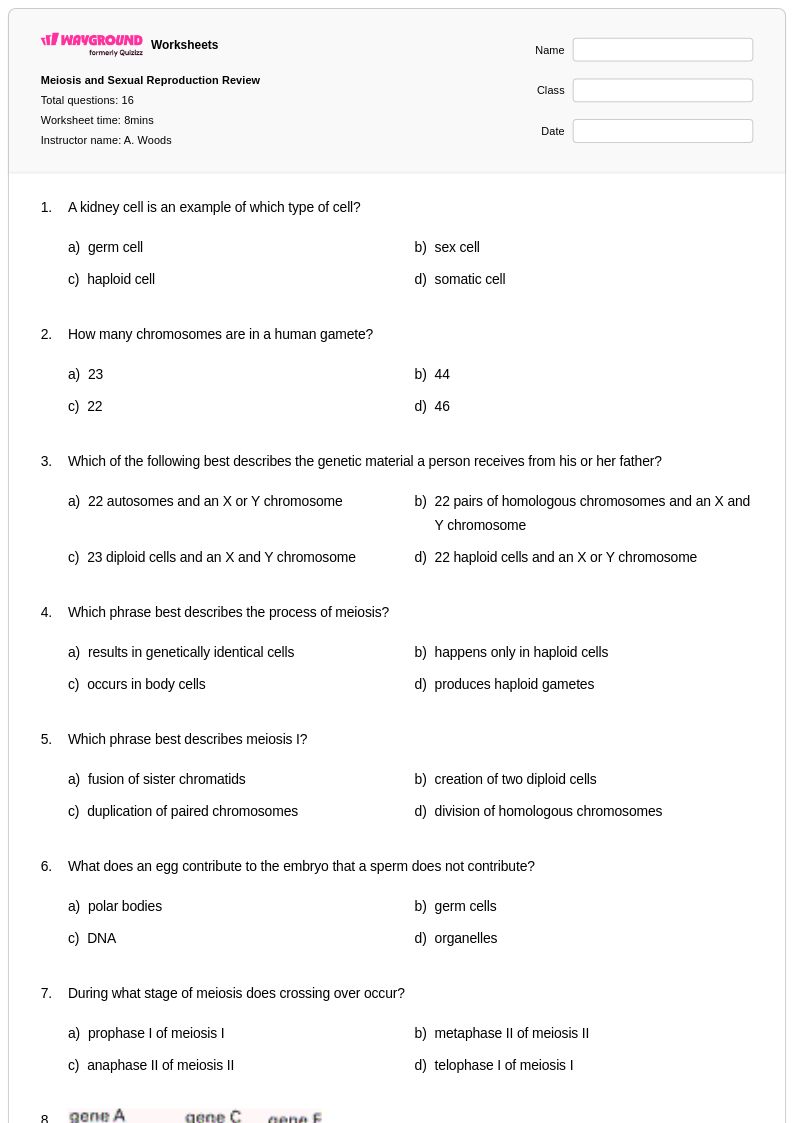
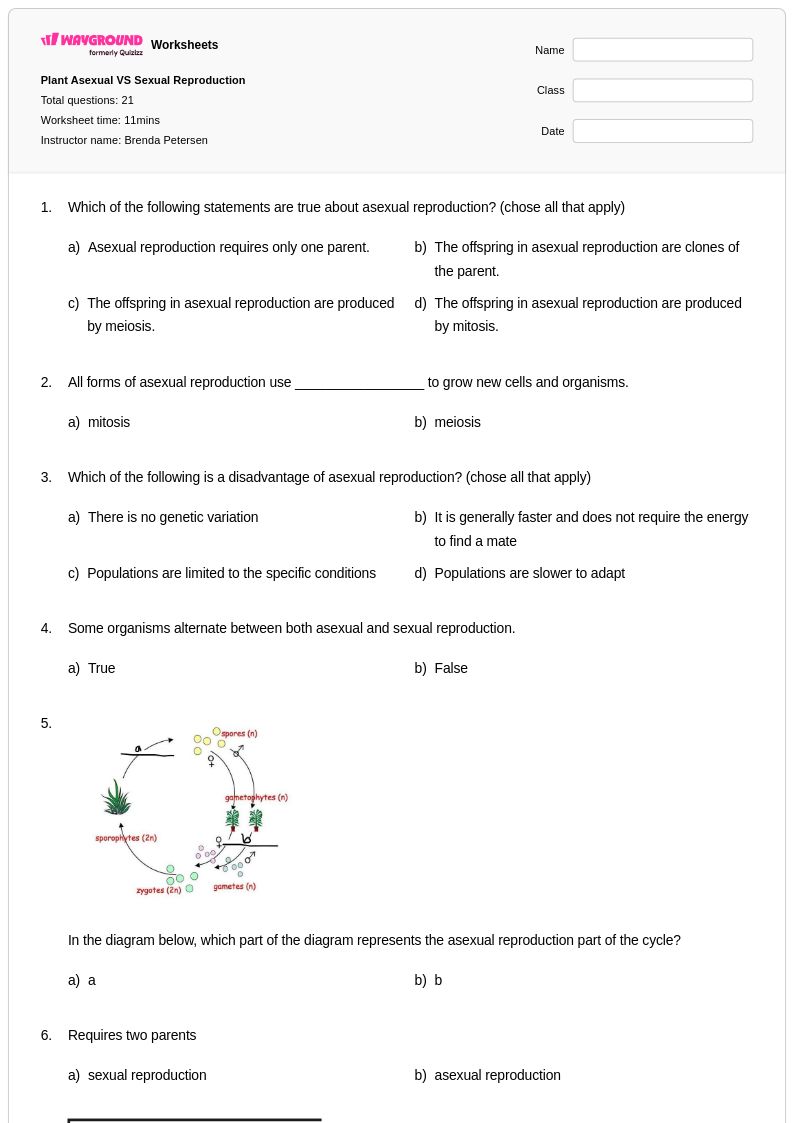
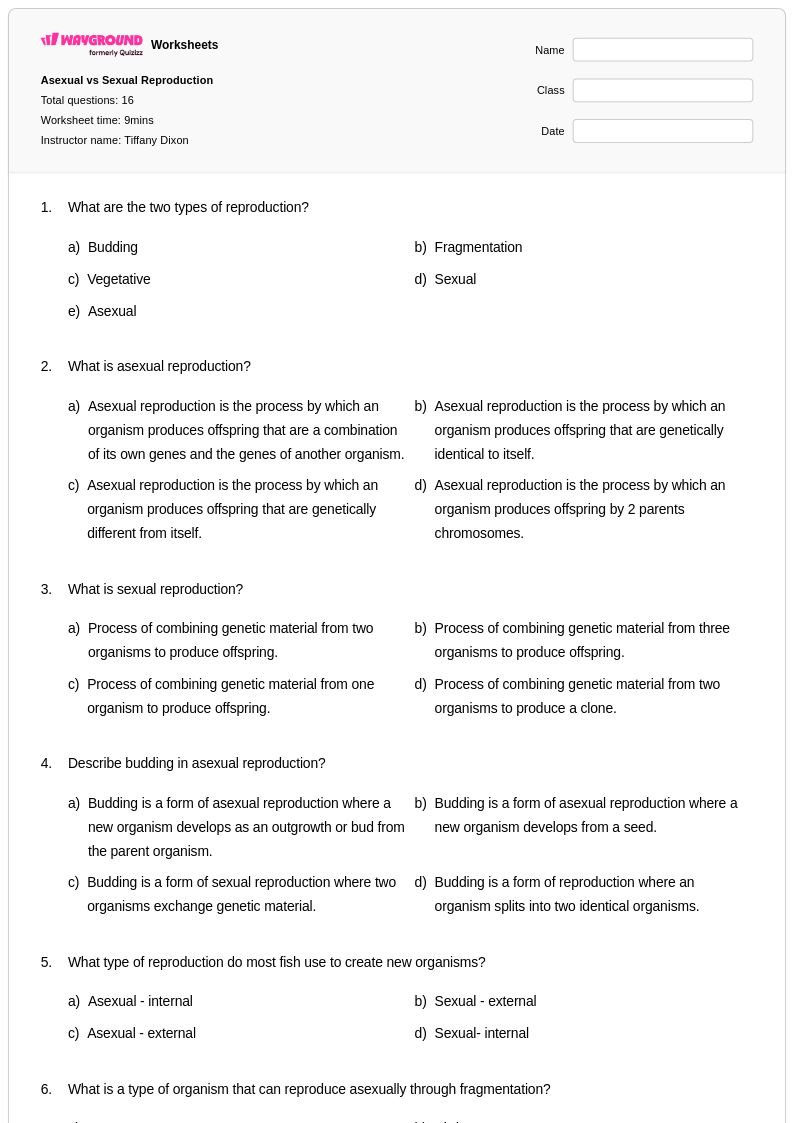
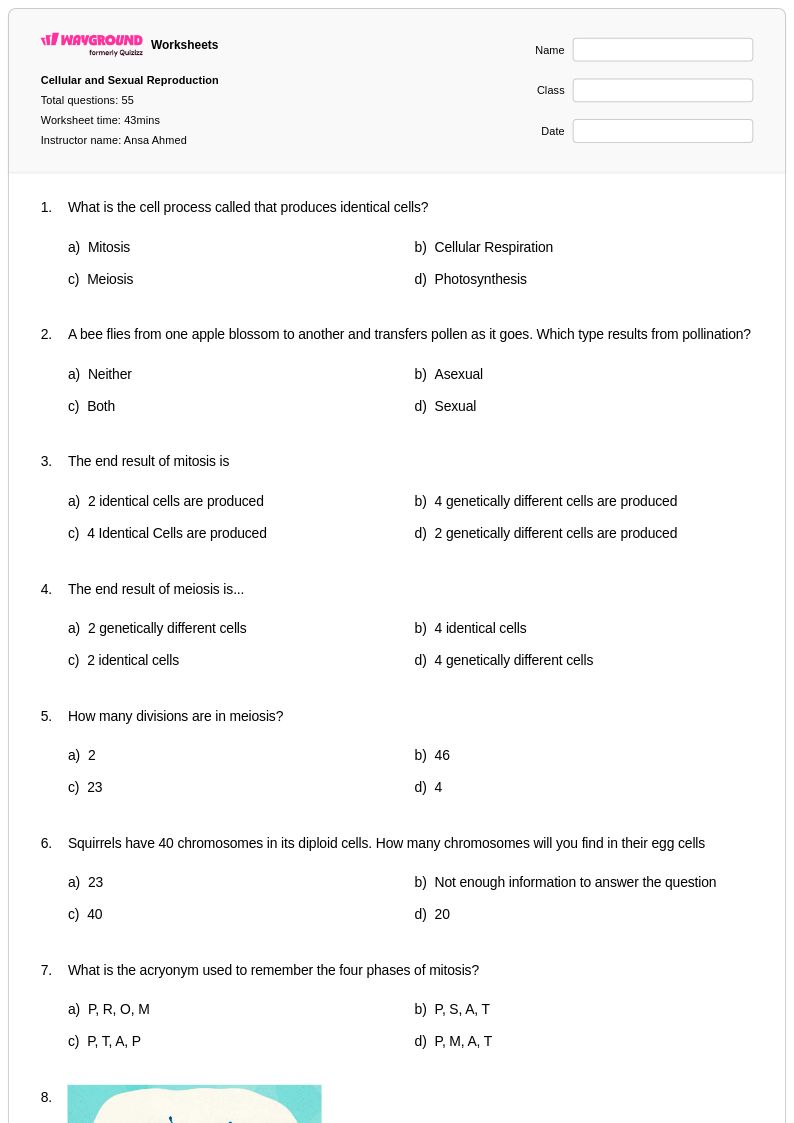
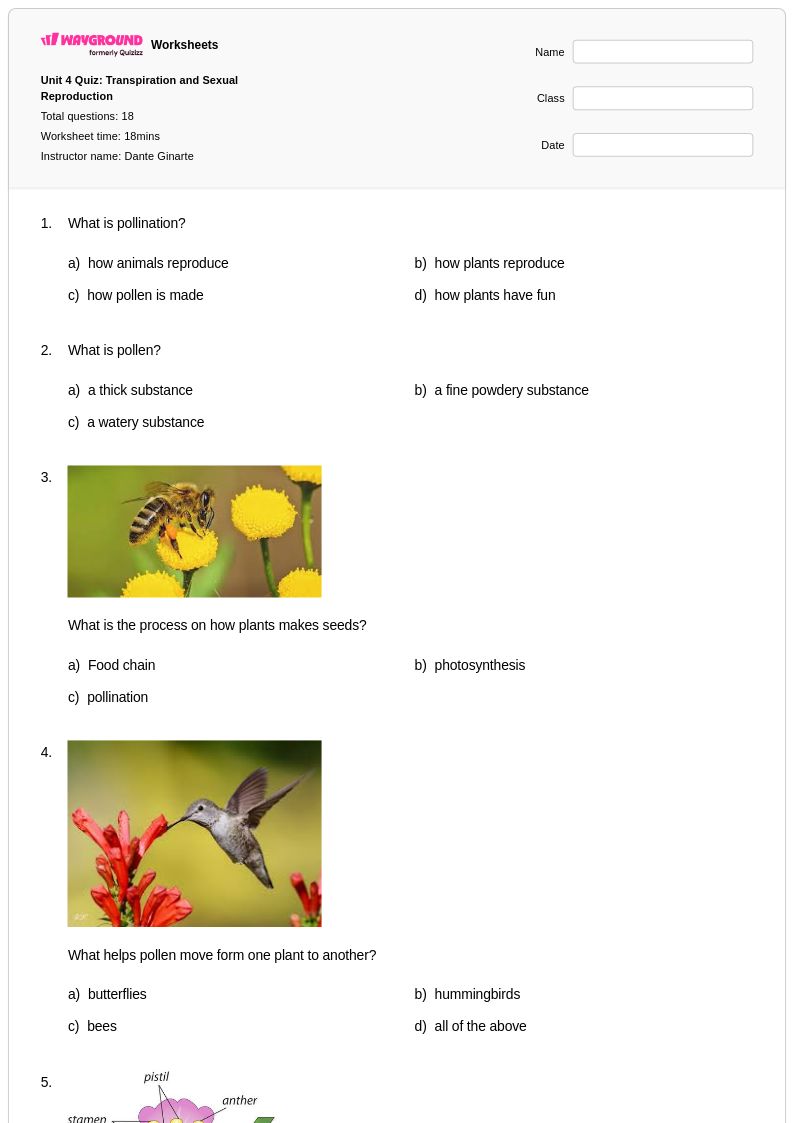
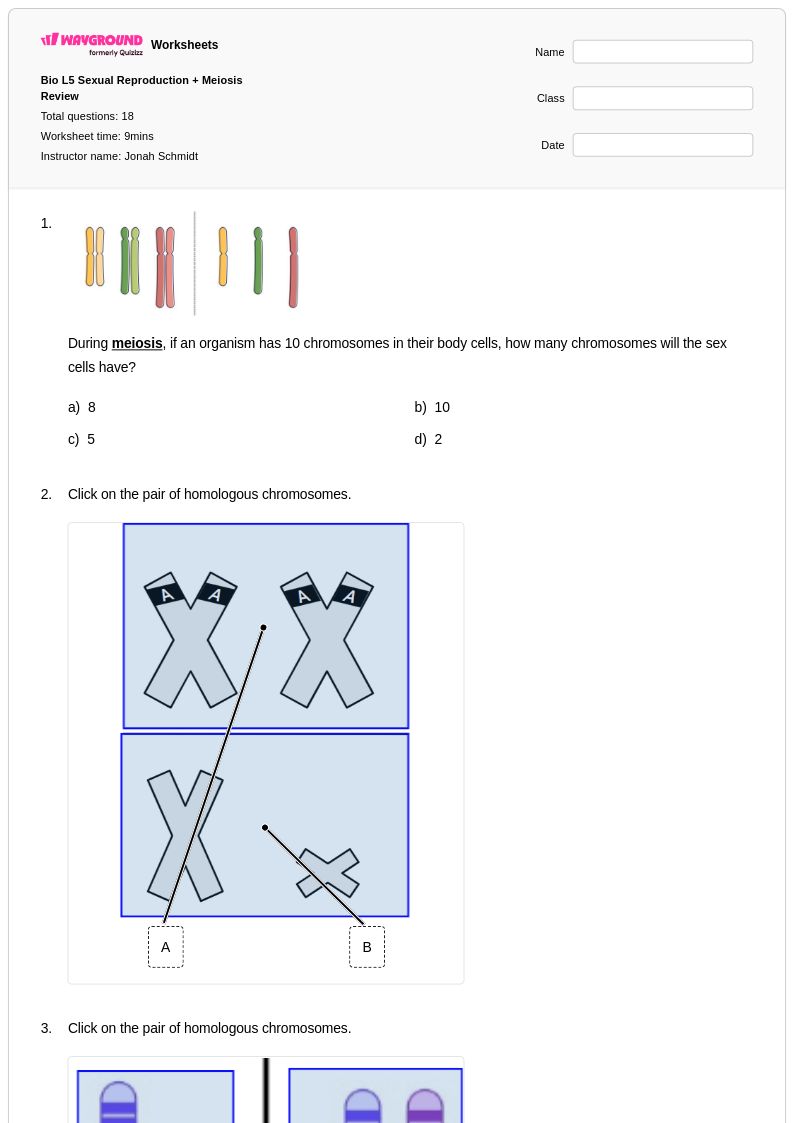
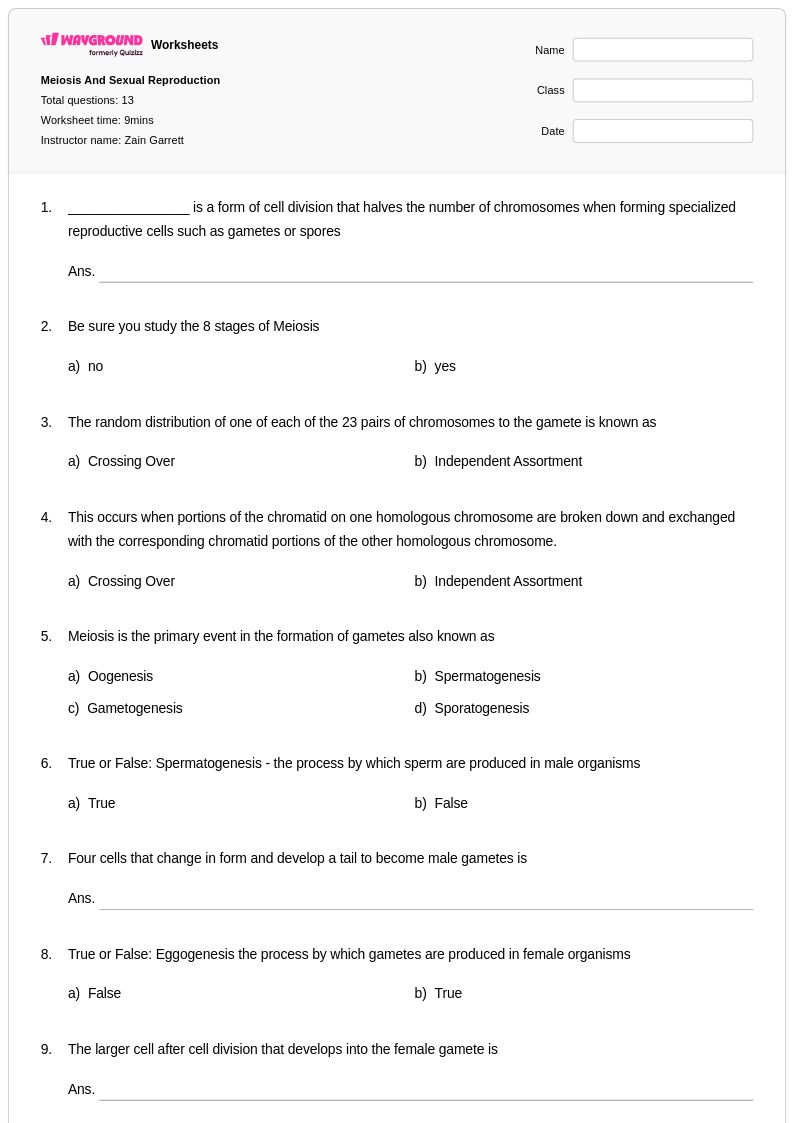
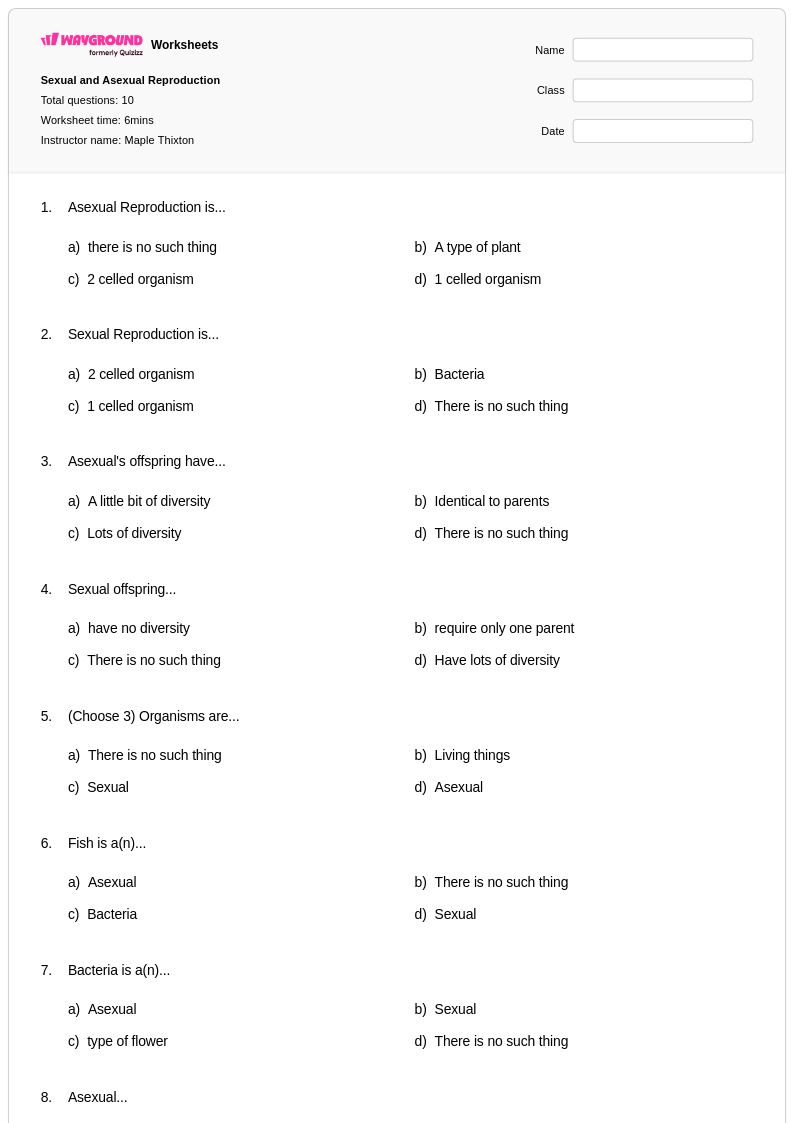
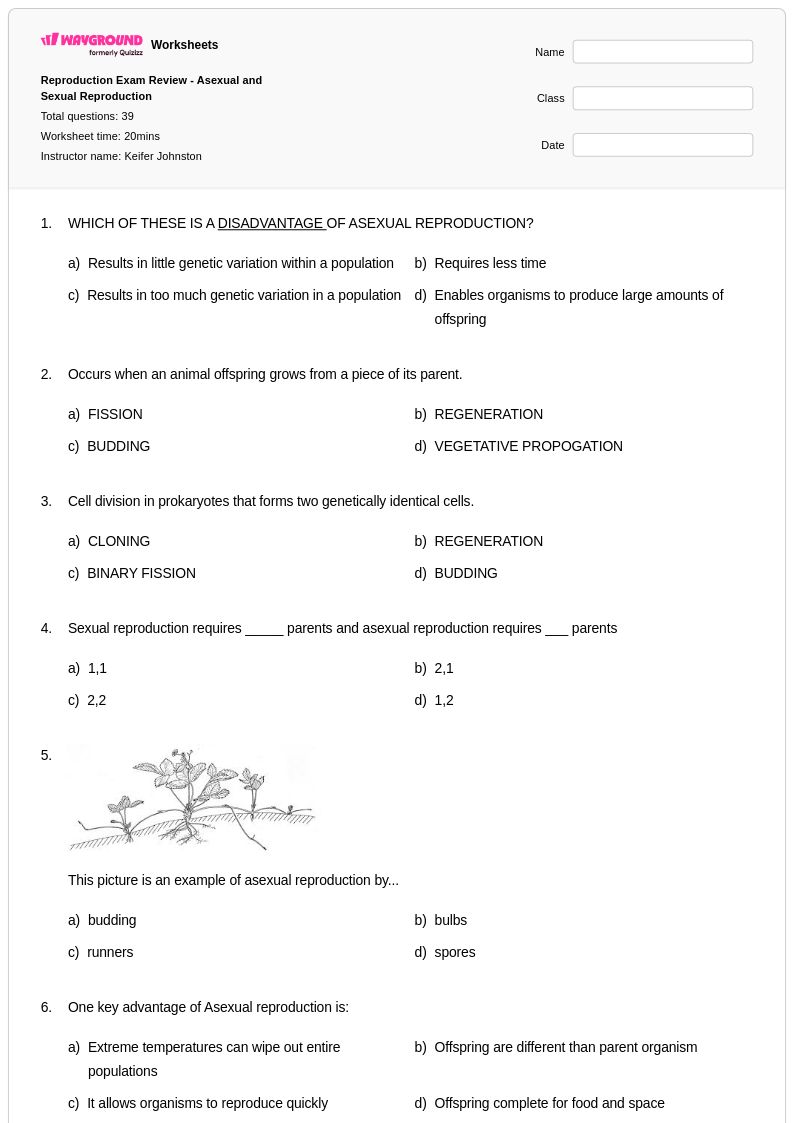
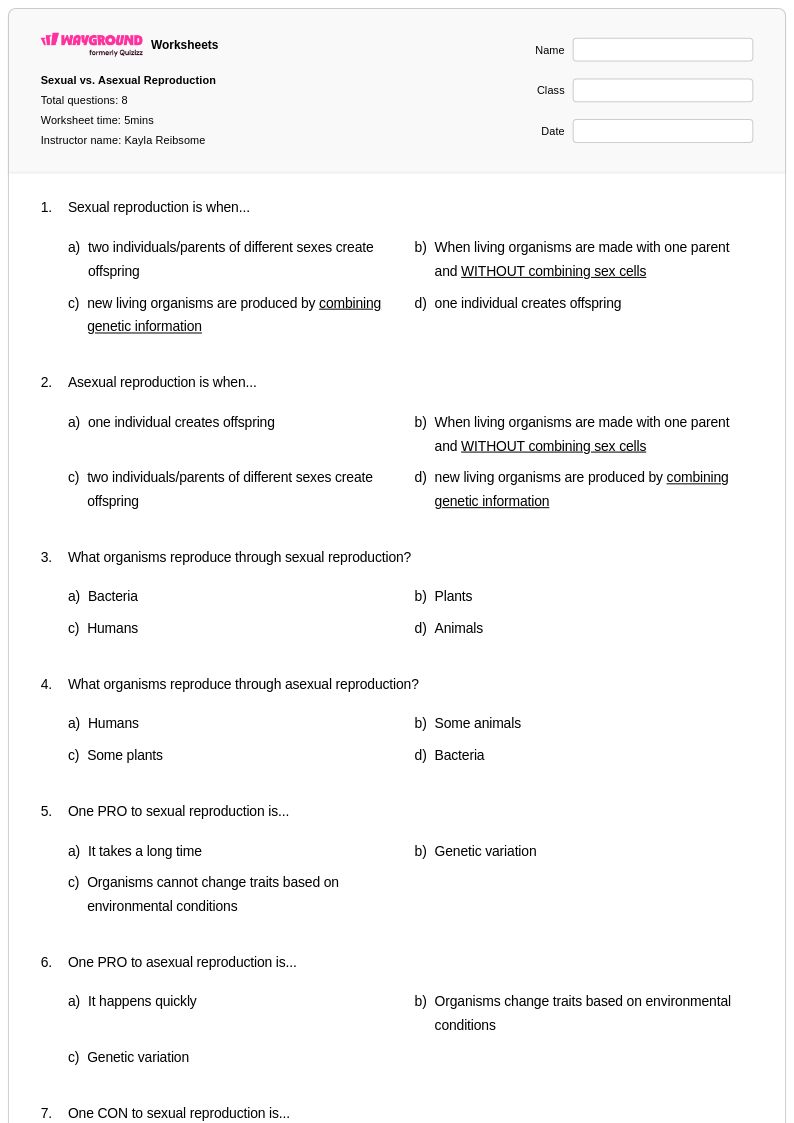
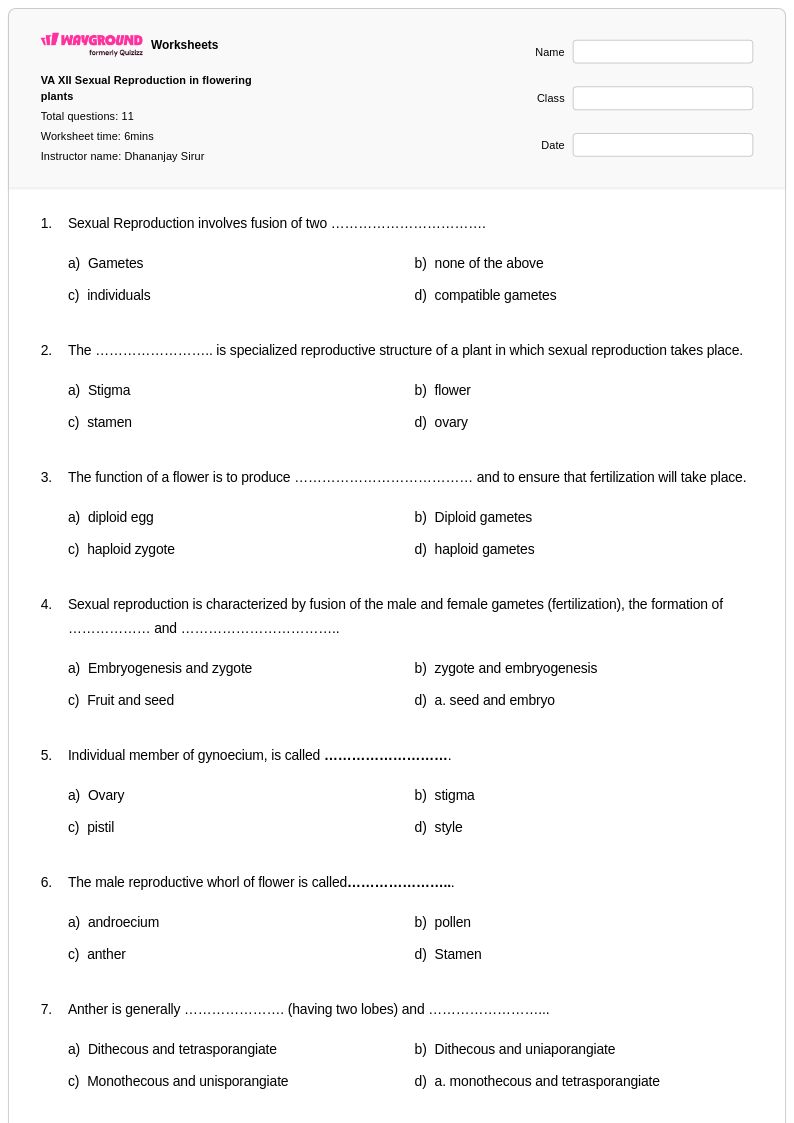
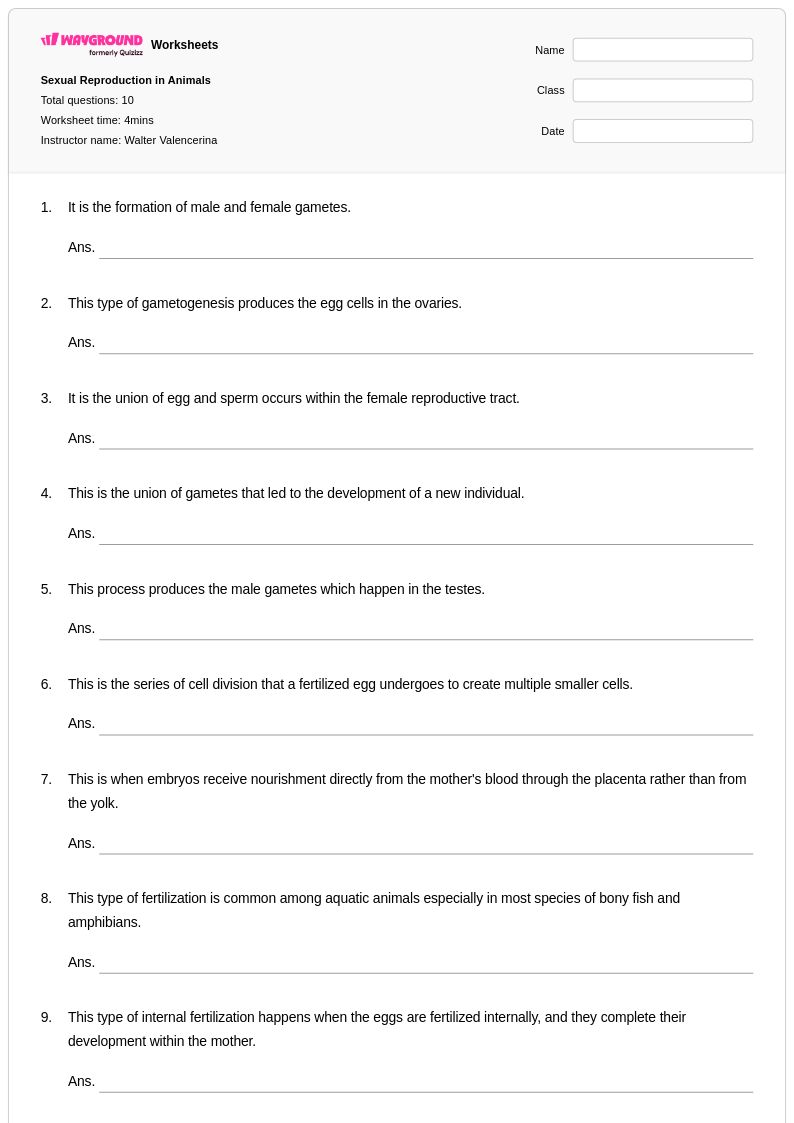
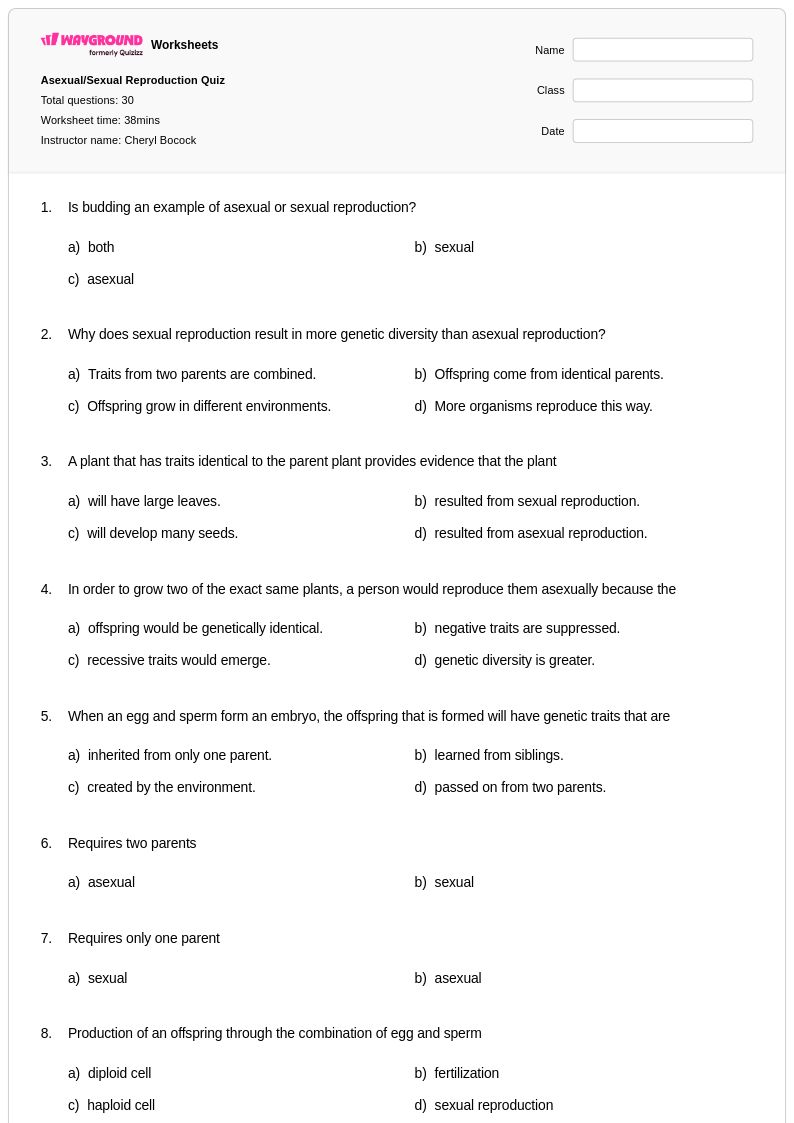
Sexual reproduction worksheets for Year 10 students available through Wayground (formerly Quizizz) provide comprehensive coverage of this fundamental biological process that ensures genetic diversity and species continuation. These expertly designed resources strengthen students' understanding of meiosis, gamete formation, fertilization mechanisms, and the advantages of sexual versus asexual reproduction across different organisms. Students engage with practice problems that explore chromosomal behavior during sexual reproduction, genetic recombination, and the role of reproductive structures in plants and animals. Each worksheet collection includes detailed answer keys that support independent learning and self-assessment, while the free printables in pdf format make these valuable resources accessible for both classroom instruction and home study.
Wayground's extensive library of teacher-created sexual reproduction worksheets draws from millions of educational resources, offering educators powerful search and filtering capabilities to locate materials perfectly aligned with Year 10 biology standards and curriculum requirements. The platform's differentiation tools enable teachers to customize worksheets based on individual student needs, supporting both remediation for struggling learners and enrichment opportunities for advanced students. These flexible resources are available in both printable pdf formats for traditional paper-based activities and digital formats for interactive online learning environments. Teachers can efficiently plan comprehensive lessons covering sexual reproduction concepts while utilizing these varied materials for targeted skill practice, formative assessment, and reinforcement of complex biological processes throughout their instructional sequence.
FAQs
How do I teach sexual reproduction in biology class?
Teaching sexual reproduction effectively starts with grounding students in cell division, specifically meiosis, before introducing gamete formation, fertilization, and genetic variation. Use comparative diagrams that contrast sexual and asexual reproduction to help students understand why genetic recombination offers evolutionary advantages. Building from chromosomal behavior outward, toward concepts like genetic diversity and reproductive strategies across species, gives students a coherent framework rather than isolated facts.
What worksheets or exercises help students practice sexual reproduction concepts?
Practice problems that ask students to trace chromosomal behavior through meiosis, identify stages of gamete formation, and analyze fertilization outcomes are particularly effective for reinforcing sexual reproduction concepts. Comparison exercises that contrast sexual and asexual reproduction, alongside problems on genetic recombination and inheritance patterns, help students connect cellular processes to broader evolutionary significance. Worksheets that integrate multiple concepts, such as linking meiosis to genetic variation, push students toward deeper understanding rather than rote memorization.
What are the most common misconceptions students have about sexual reproduction?
A frequent misconception is that sexual reproduction simply means 'two parents,' without students understanding the cellular mechanisms, specifically meiosis and the halving of chromosome number, that make it work. Students often confuse meiosis with mitosis, incorrectly applying cell division rules from one process to the other. Another common error is assuming all organisms reproduce sexually in the same way, overlooking the diversity of reproductive strategies across species and the distinction between internal and external fertilization.
How do I use Wayground's sexual reproduction worksheets in my classroom?
Wayground's sexual reproduction worksheets are available as printable PDFs for traditional classroom use and in digital formats for technology-integrated environments, including the option to host them as a quiz directly on Wayground. This flexibility makes them suitable for in-class instruction, homework assignments, and independent practice. All worksheets include answer keys, supporting self-assessment and reducing grading time for teachers.
How can I differentiate sexual reproduction instruction for students at different ability levels?
For struggling students, focus first on the vocabulary and visual stages of meiosis before introducing abstract concepts like genetic recombination and chromosomal crossover. Advanced learners can be challenged with problems that require them to compare reproductive strategies across different species or analyze the evolutionary trade-offs between sexual and asexual reproduction. On Wayground, teachers can apply individual accommodations such as read aloud support, reduced answer choices, and extended time to specific students, ensuring all learners can engage with the material without disrupting the rest of the class.
How is sexual reproduction different from asexual reproduction, and how do I explain this to students?
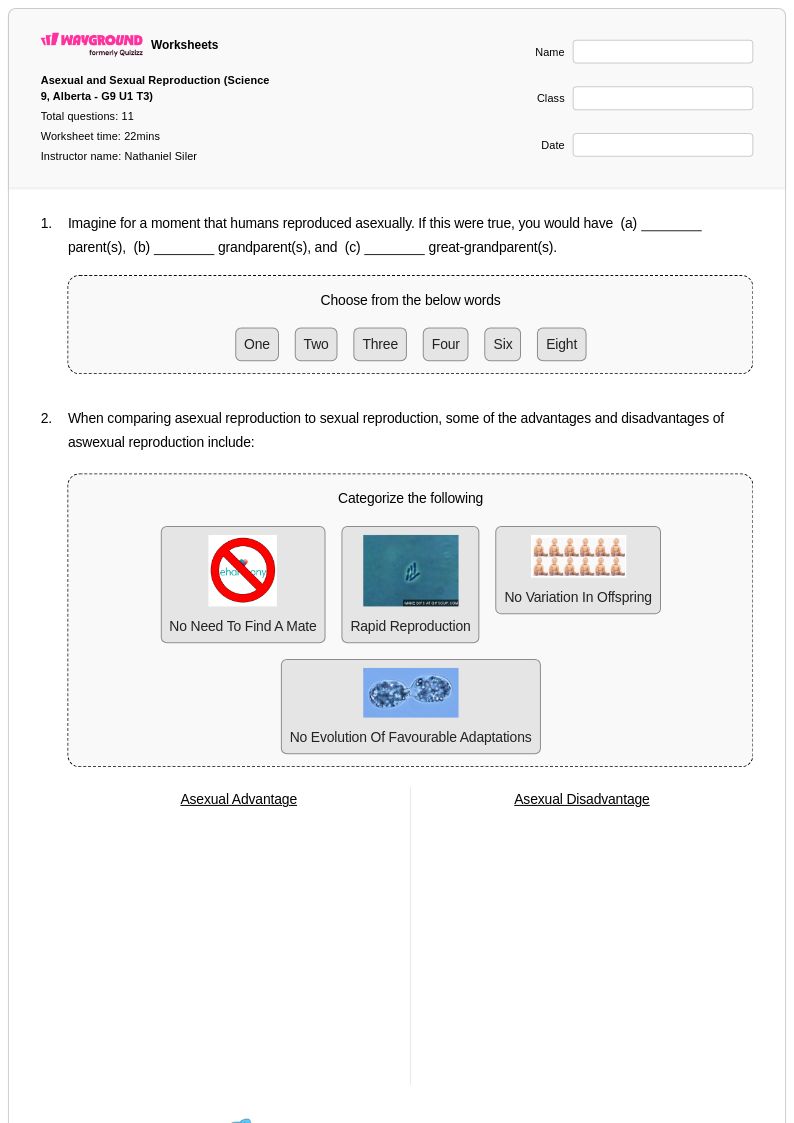
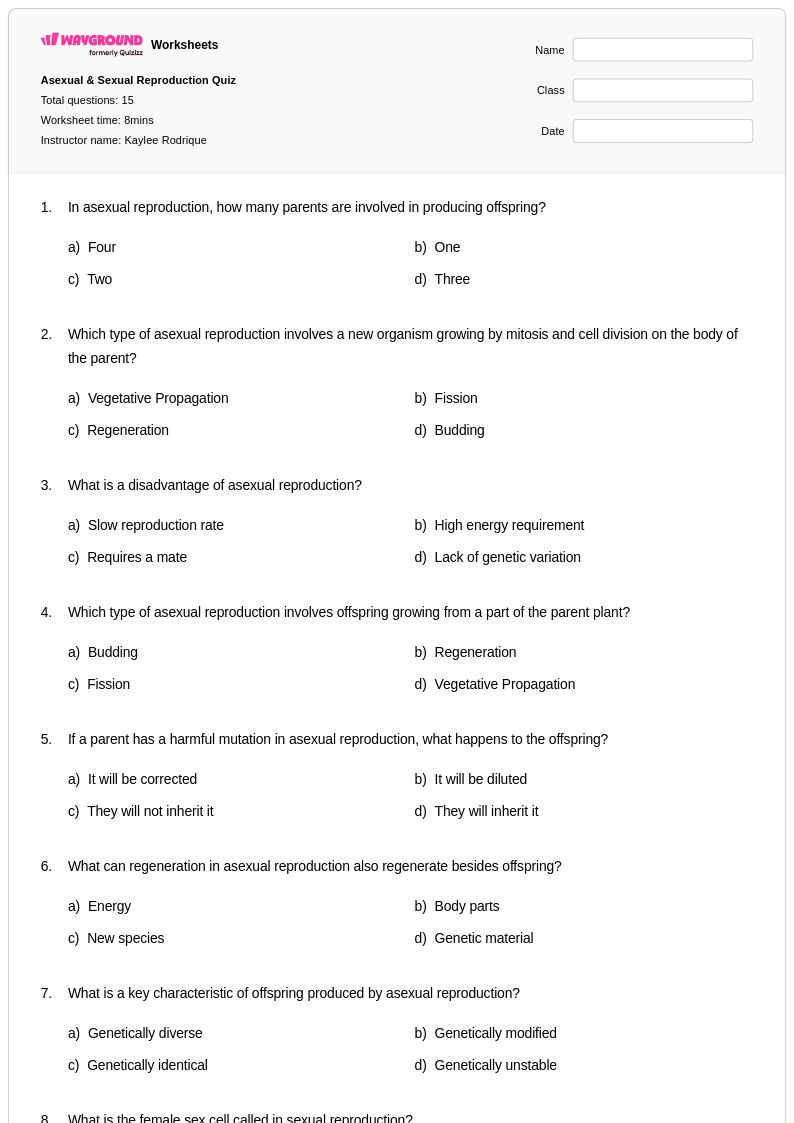
Sexual reproduction involves the fusion of two gametes, each carrying half the parent's chromosomes, producing offspring with a unique genetic combination distinct from either parent. Asexual reproduction, by contrast, produces genetically identical offspring from a single parent without gamete fusion. When explaining this to students, emphasizing the role of meiosis in sexual reproduction, and the genetic variation it generates, helps them understand why sexual reproduction is favored in changing environments despite its higher biological cost.