Free Printable Lymphatic System Worksheets for Year 10
Year 10 Biology worksheets and printables help students master the lymphatic system through comprehensive practice problems, free PDF resources, and detailed answer keys for effective learning.
Explore printable Lymphatic System worksheets for Year 10
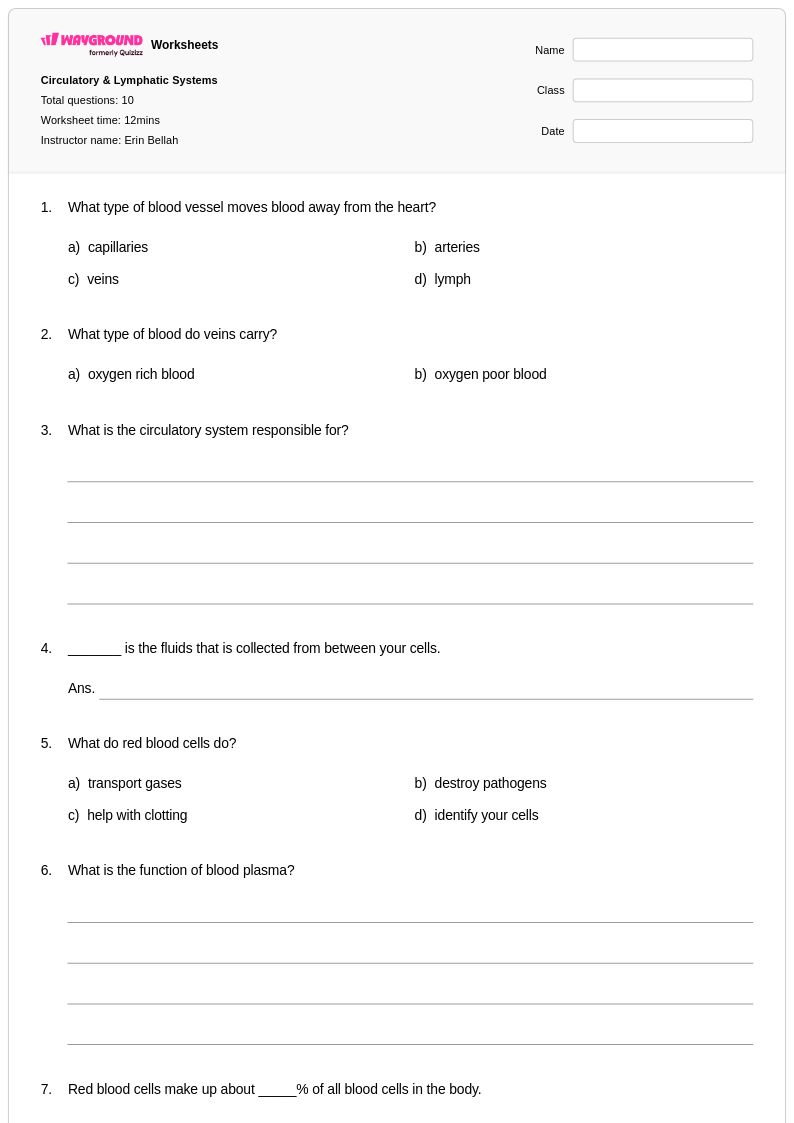
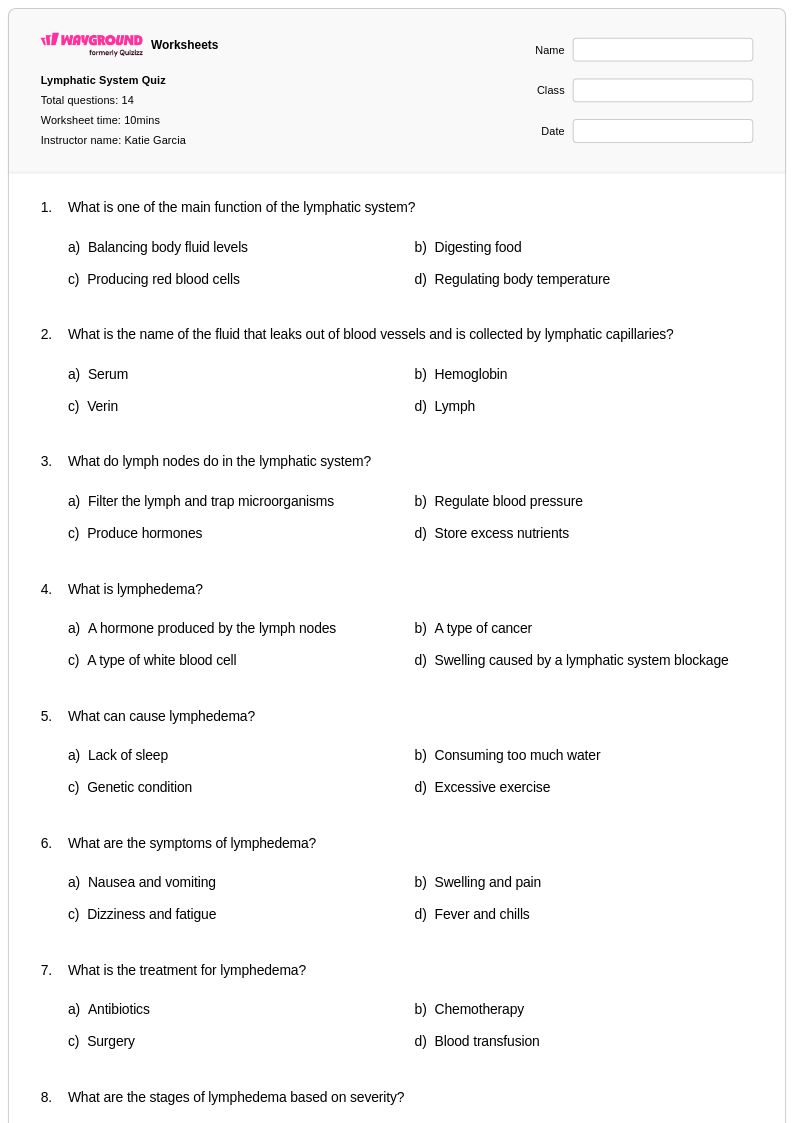
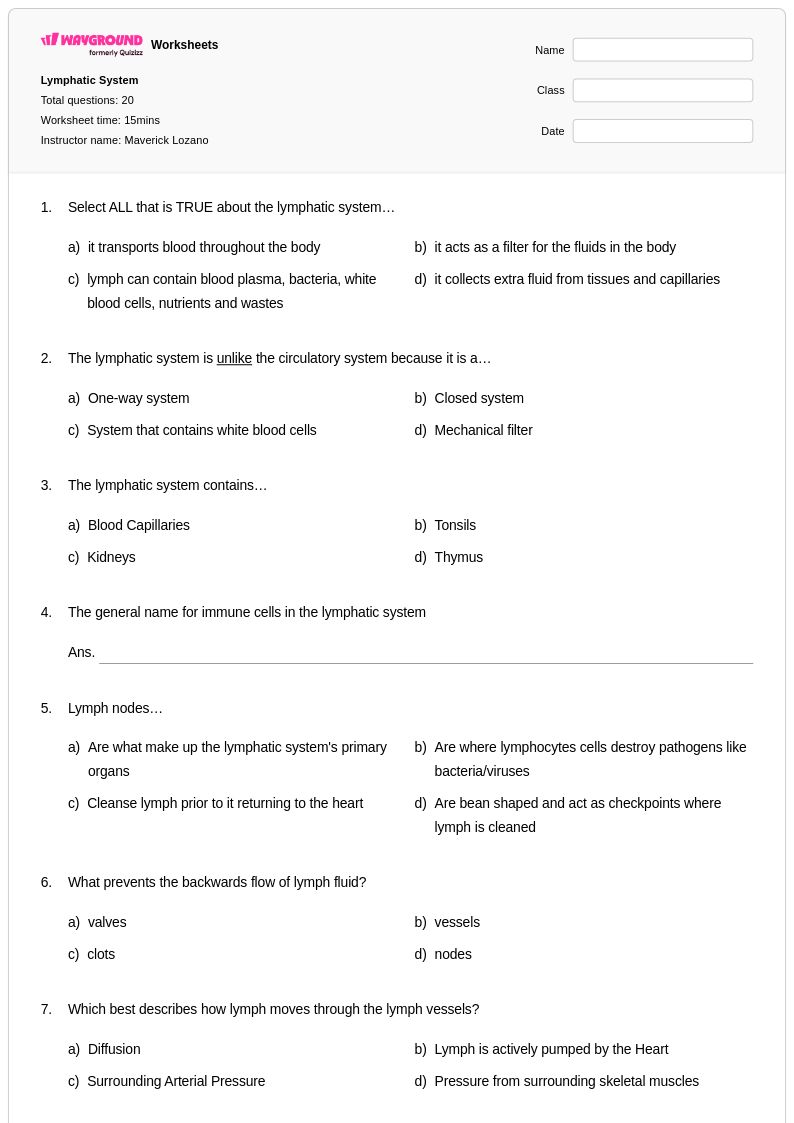
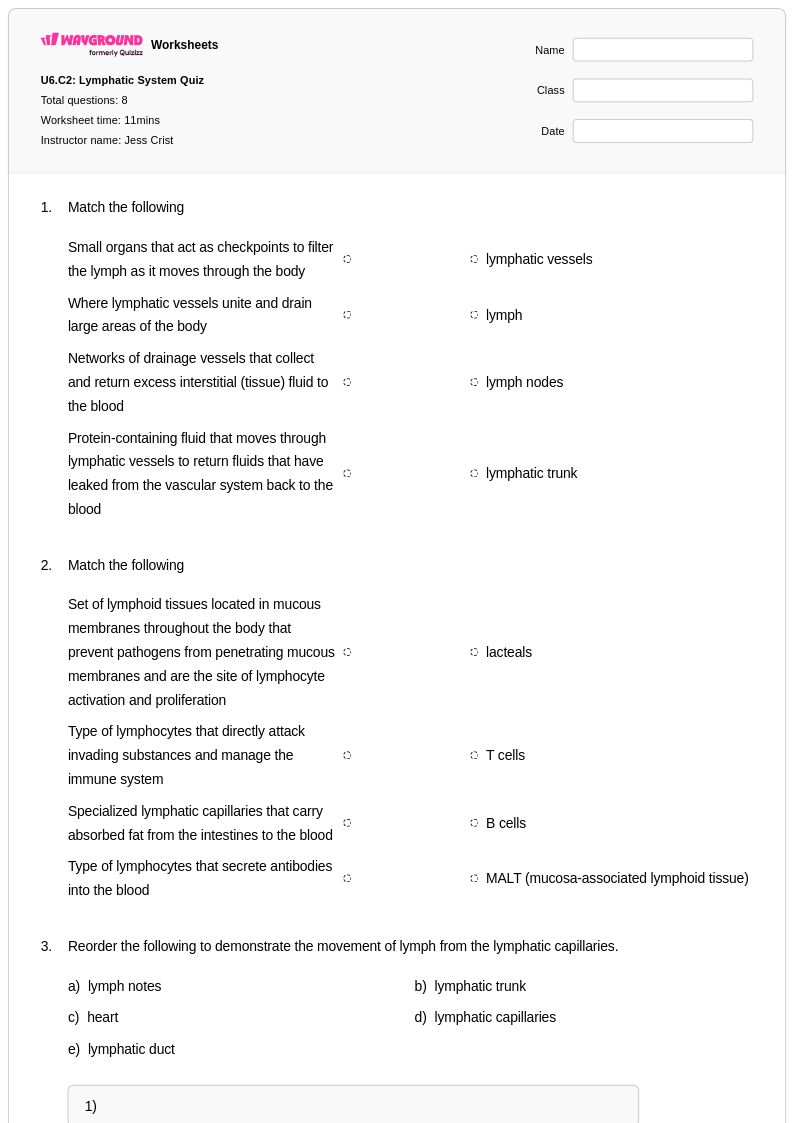
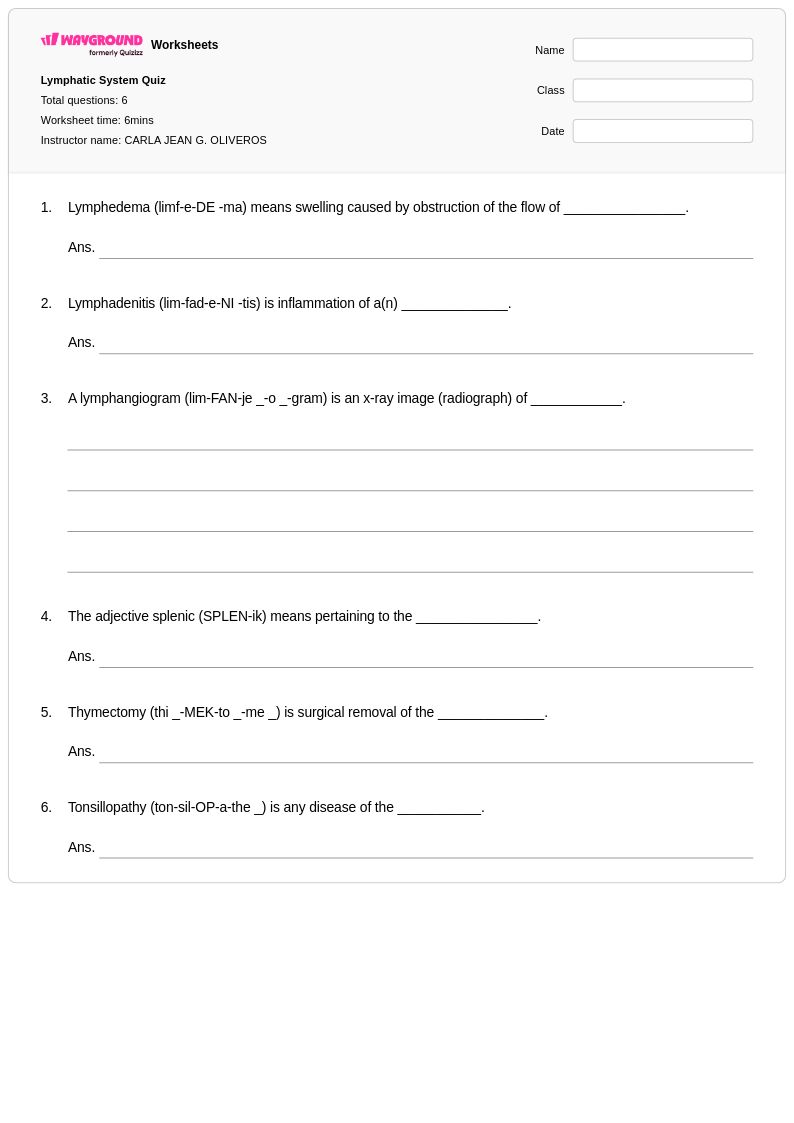
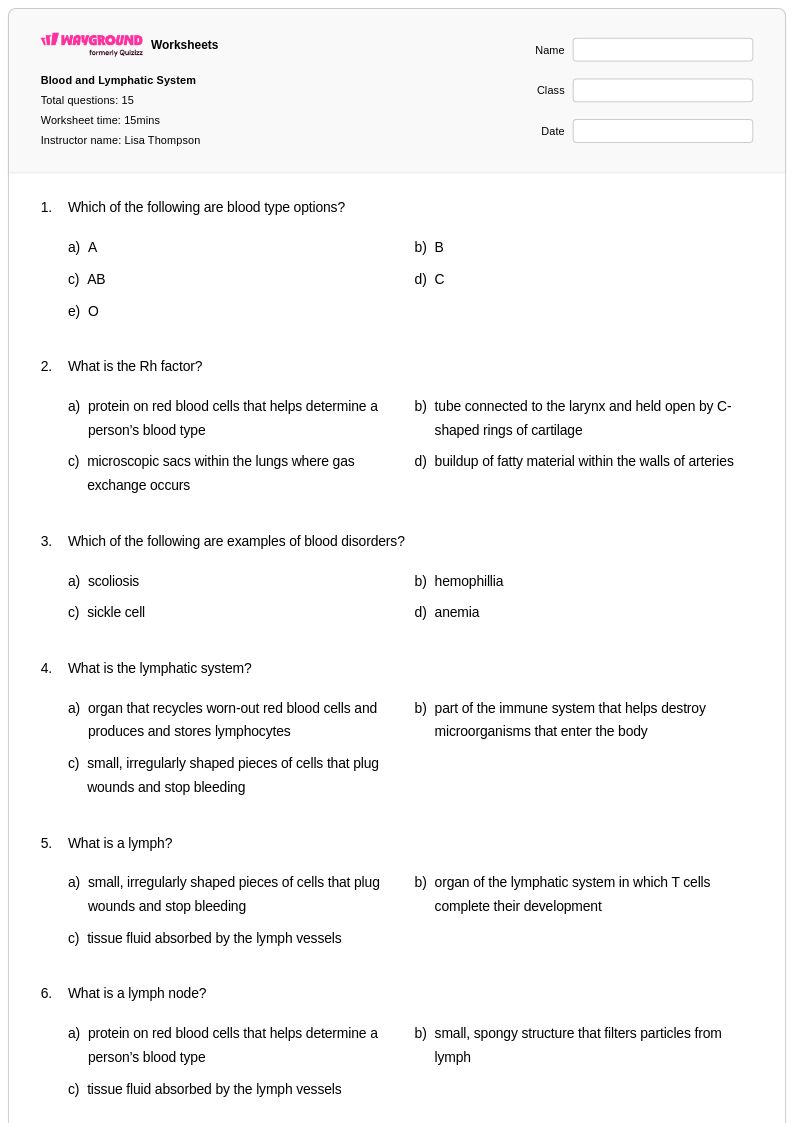
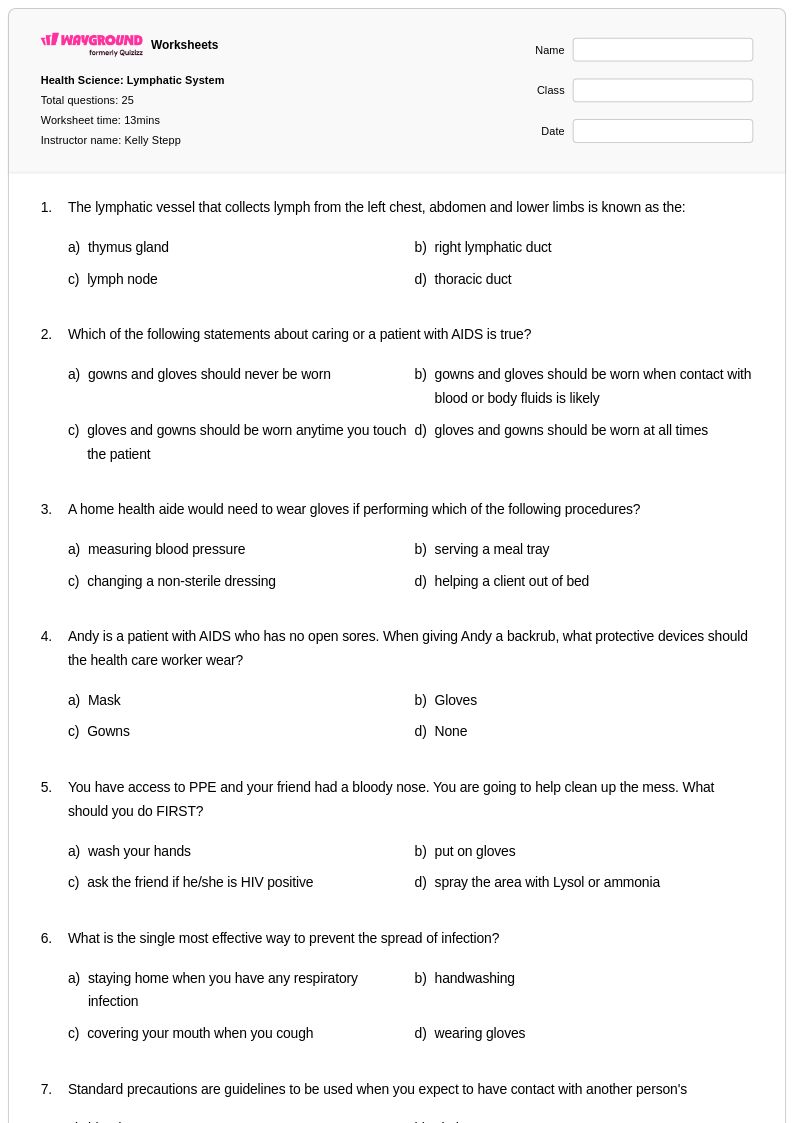
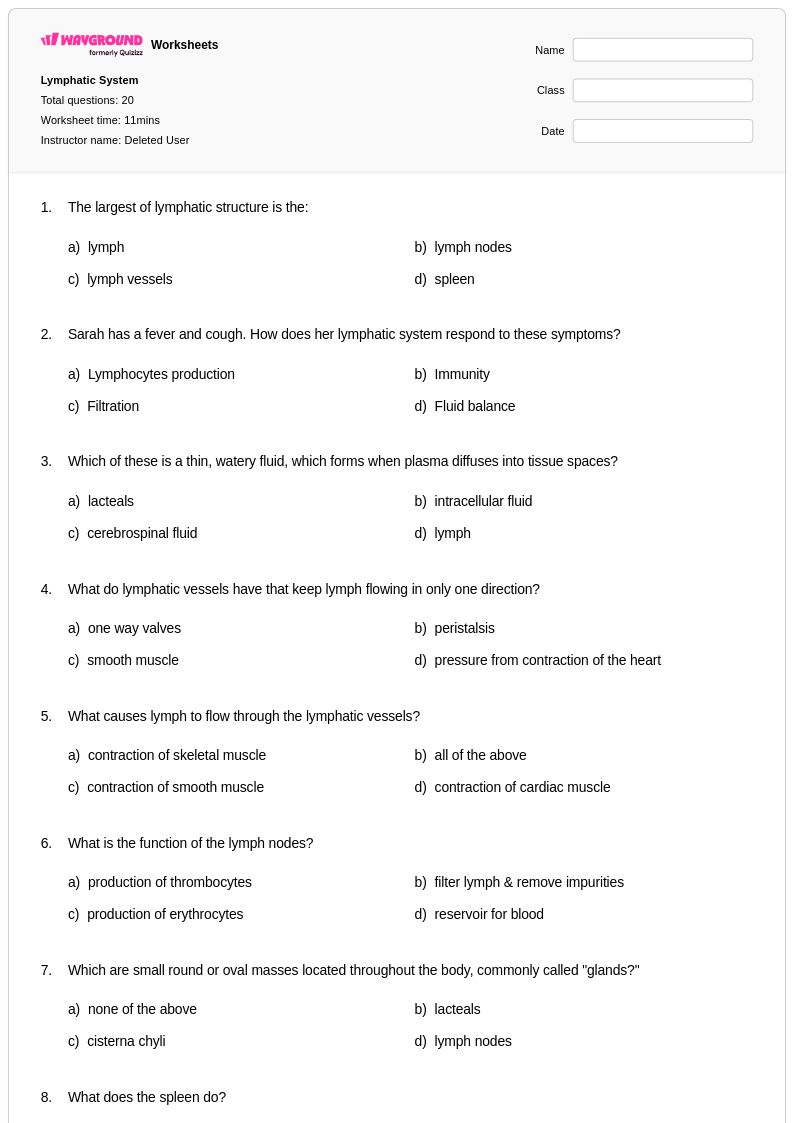
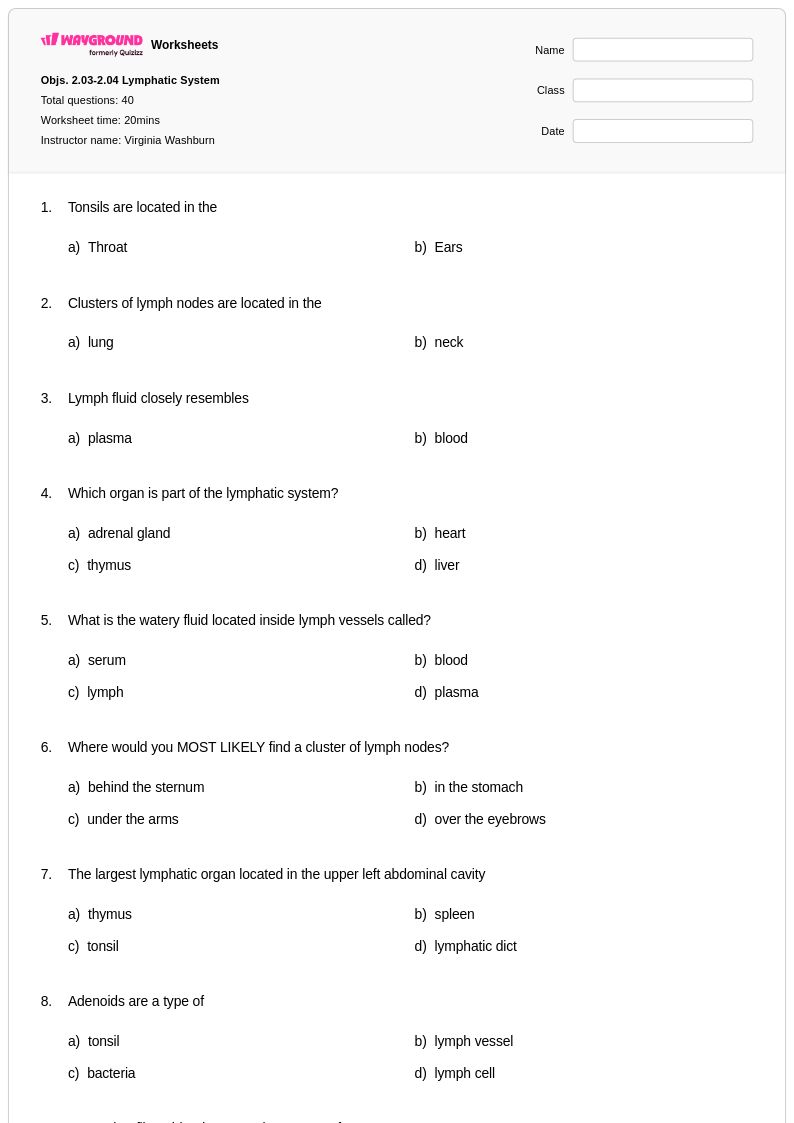
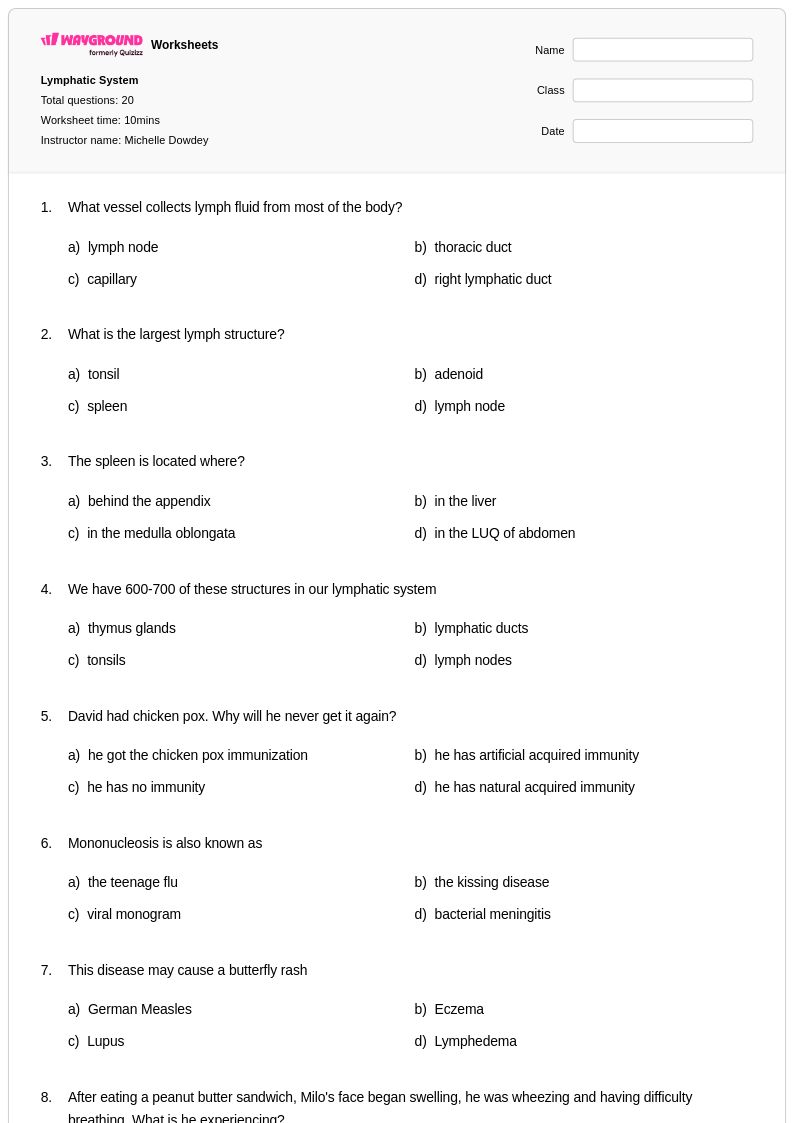
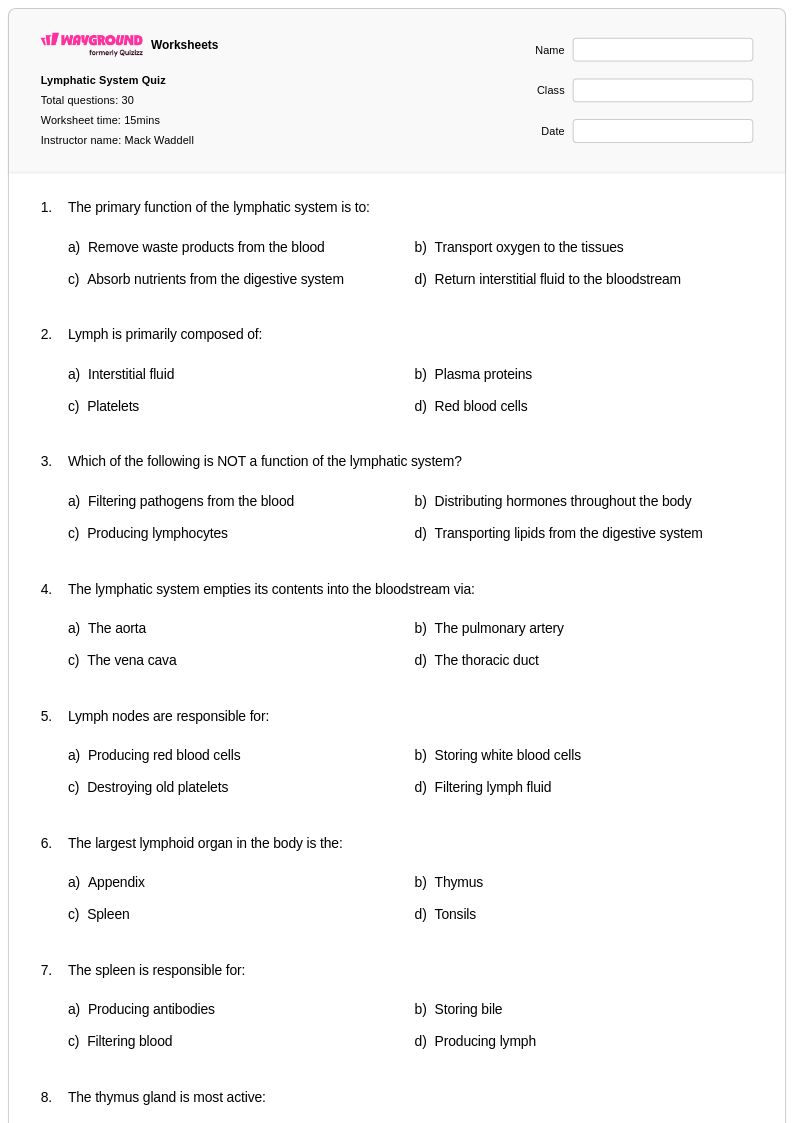
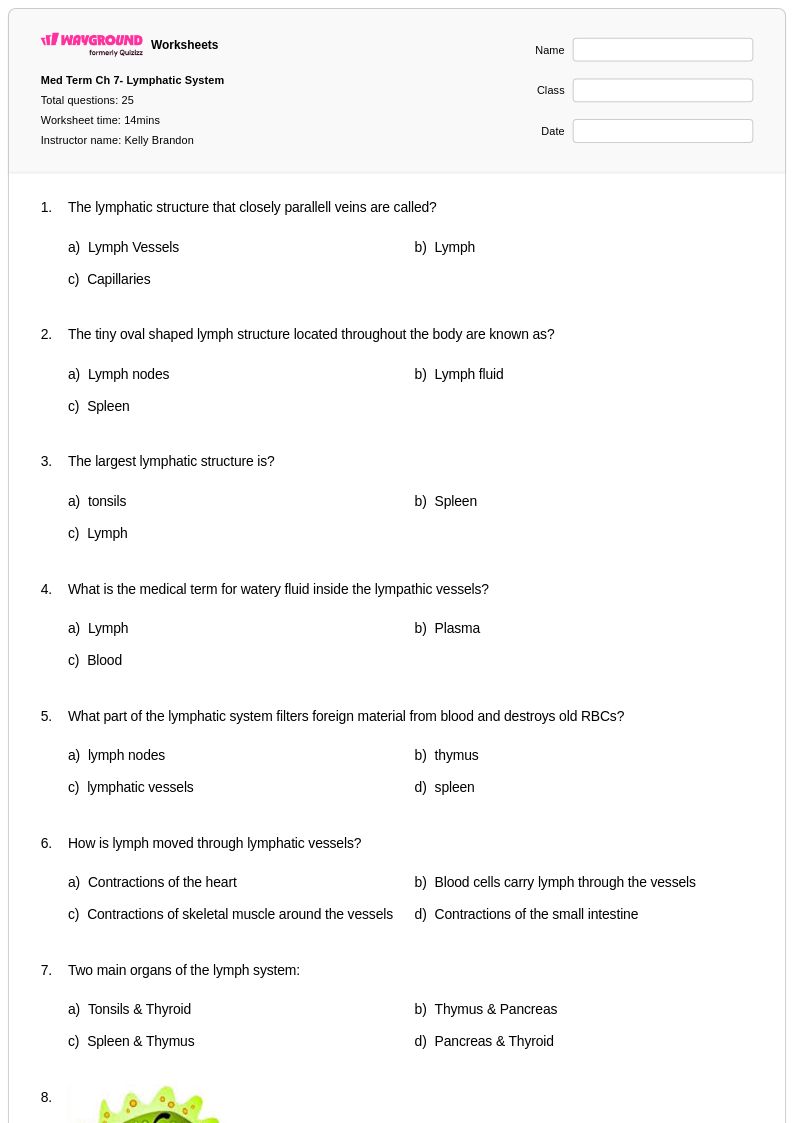
Lymphatic system worksheets for Year 10 biology students available through Wayground (formerly Quizizz) provide comprehensive coverage of this critical component of the immune and circulatory systems. These educational resources strengthen students' understanding of lymphatic anatomy, including lymph nodes, vessels, and organs like the spleen and thymus, while developing their ability to trace lymph circulation pathways and analyze immune responses. The practice problems within these worksheets challenge students to identify lymphatic structures in diagrams, explain the relationship between the lymphatic and cardiovascular systems, and evaluate how lymphocytes and other immune cells function within lymphatic tissues. Each worksheet includes a detailed answer key to support independent learning and comes in convenient pdf format as free printables that teachers can easily distribute for classroom activities or homework assignments.
Wayground (formerly Quizizz) supports biology educators with an extensive collection of teacher-created lymphatic system resources drawn from millions of available materials that can be searched and filtered by specific learning objectives and curriculum standards. The platform's differentiation tools allow teachers to customize worksheet difficulty levels to accommodate diverse learning needs, while the flexible format options include both printable pdf versions and interactive digital alternatives that can be adapted for various instructional settings. These comprehensive resources streamline lesson planning by providing ready-to-use materials for skill practice, remediation sessions for students who need additional support with complex immunological concepts, and enrichment activities that challenge advanced learners to explore connections between lymphatic function and disease prevention. The standards-aligned content ensures that Year 10 biology teachers can confidently integrate these worksheets into their existing curriculum while meeting educational benchmarks for human body systems instruction.
FAQs
How do I teach the lymphatic system to students?
Teaching the lymphatic system effectively starts with grounding students in its two core functions: fluid balance and immune defense. Begin with lymphatic anatomy, including lymph nodes, vessels, and organs like the spleen and thymus, before moving into how lymph fluid is collected and returned to circulation. Connecting lymphatic function to the cardiovascular and immune systems helps students see it as an integrated network rather than an isolated topic, which deepens comprehension and retention.
What exercises help students practice lymphatic system concepts?
Effective practice activities for the lymphatic system include labeling diagrams of lymph node locations and lymphatic vessels, tracing lymph flow pathways from interstitial fluid back to the bloodstream, and matching lymphatic organs to their specific immune functions. Scenario-based questions, such as explaining what happens when lymph nodes become swollen during infection, push students to apply their understanding rather than simply recall facts. These exercise types mirror the kind of analytical thinking expected on biology assessments.
What mistakes do students commonly make when learning about the lymphatic system?
One of the most common misconceptions is that the lymphatic system is simply a waste-removal system, when in fact it plays a central role in immune surveillance and the transport of immune cells. Students also frequently confuse lymph with blood, not recognizing that lymph is derived from interstitial fluid and lacks red blood cells. Another common error is misidentifying lymph flow direction or failing to understand that lymph moves through a one-way valve system driven by skeletal muscle contractions, not a pump like the heart.
How do I use lymphatic system worksheets in my classroom?
Lymphatic system worksheets on Wayground are available as printable PDFs for traditional classroom use and in digital formats for technology-integrated learning environments, including the option to host them as a quiz directly on Wayground. Printable versions work well for guided note-taking, lab stations, or take-home review, while digital formats allow for immediate auto-grading and real-time progress monitoring. Wayground also supports student-level accommodations such as read aloud, extended time, and reduced answer choices, making it straightforward to differentiate for students with varying learning needs.
How does the lymphatic system connect to the immune system, and how do I explain this to students?
The lymphatic system is structurally inseparable from immune function: lymph nodes filter pathogens from lymph fluid, while lymphocytes produced and matured in lymphatic organs like the thymus and bone marrow circulate through lymphatic vessels to mount immune responses. A useful classroom approach is to walk students through what happens during an infection, tracing how antigens enter tissue, get picked up by lymph, travel to lymph nodes, and trigger an adaptive immune response. This narrative arc makes the system's role concrete and easier to remember than isolated vocabulary definitions.
How do I differentiate lymphatic system instruction for students at different ability levels?
For students who need support, focus first on visual identification tasks, such as labeling major lymphatic organs and coloring lymph flow diagrams, before introducing functional concepts. Advanced students can be challenged with analysis questions that require them to explain how lymphatic dysfunction, such as lymphedema or compromised immune response, results from structural failure. On Wayground, teachers can apply accommodations including reduced answer choices and read aloud to individual students without disrupting the rest of the class, allowing one assignment to serve the full range of learners.