Free Printable Sliding Filament Theory Worksheets for Year 10
Year 10 sliding filament theory worksheets from Wayground help students master muscle contraction mechanisms through comprehensive printables, practice problems, and answer keys in downloadable PDF format.
Explore printable Sliding Filament Theory worksheets for Year 10
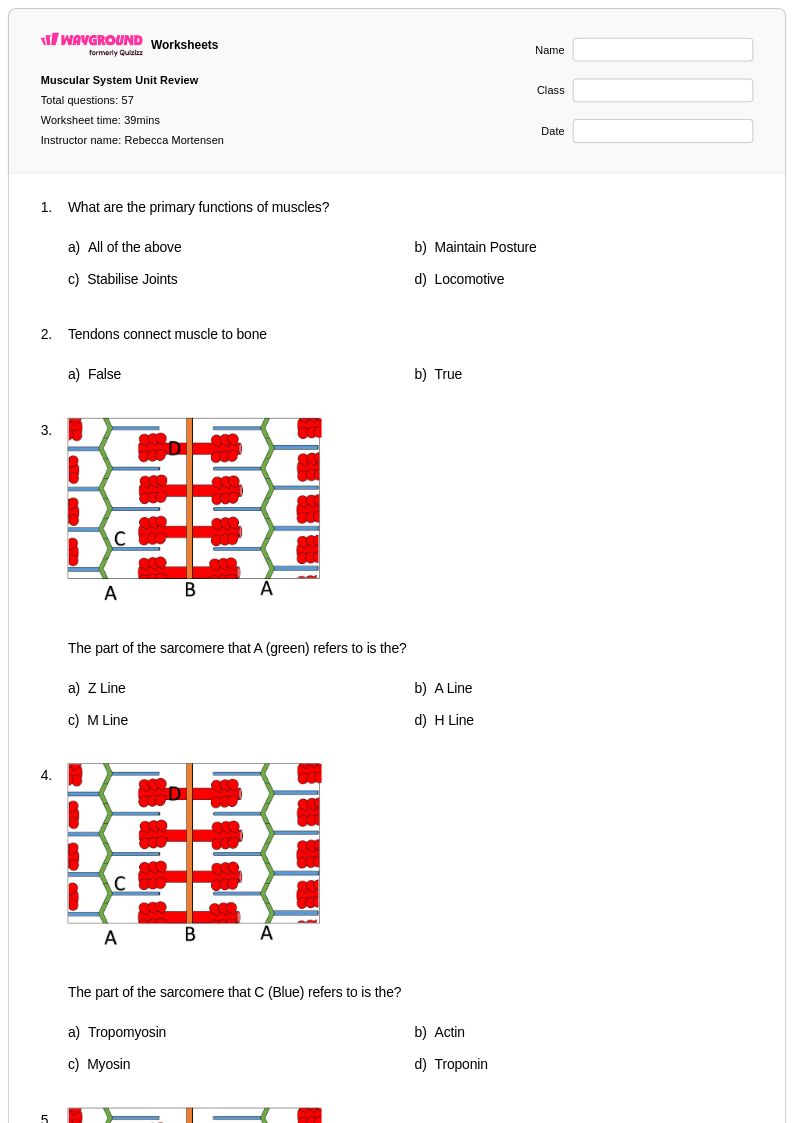
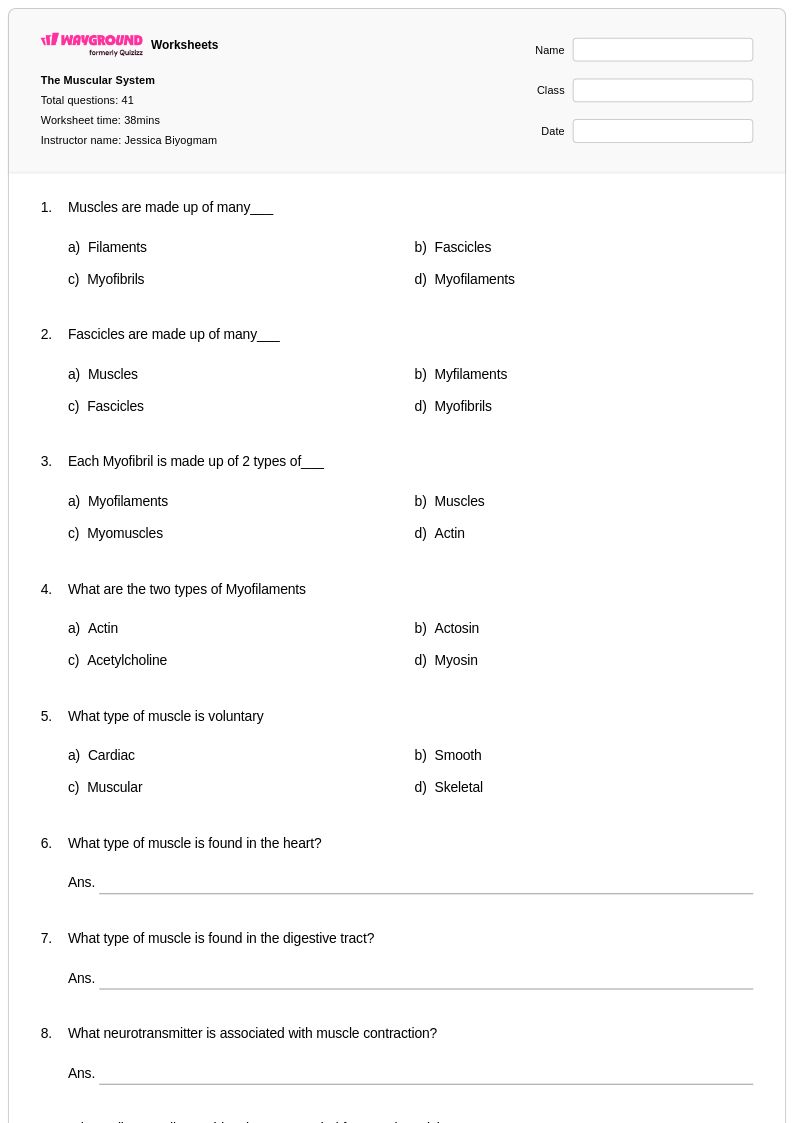
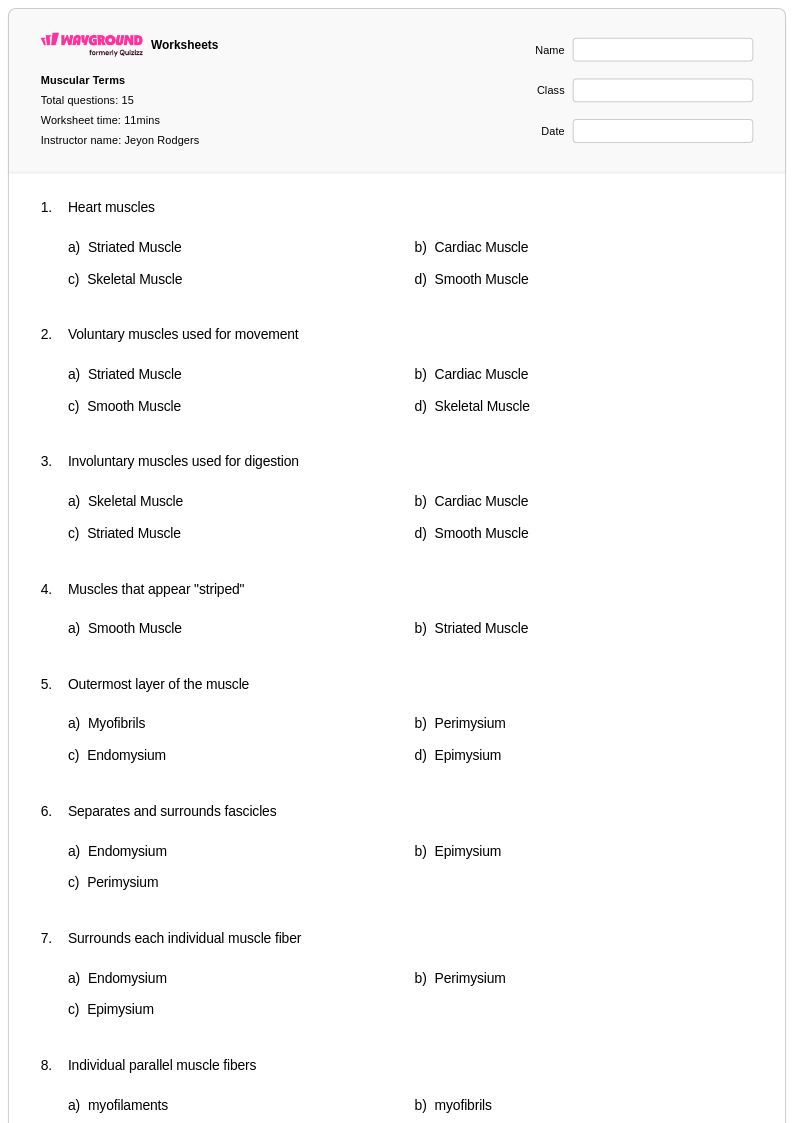
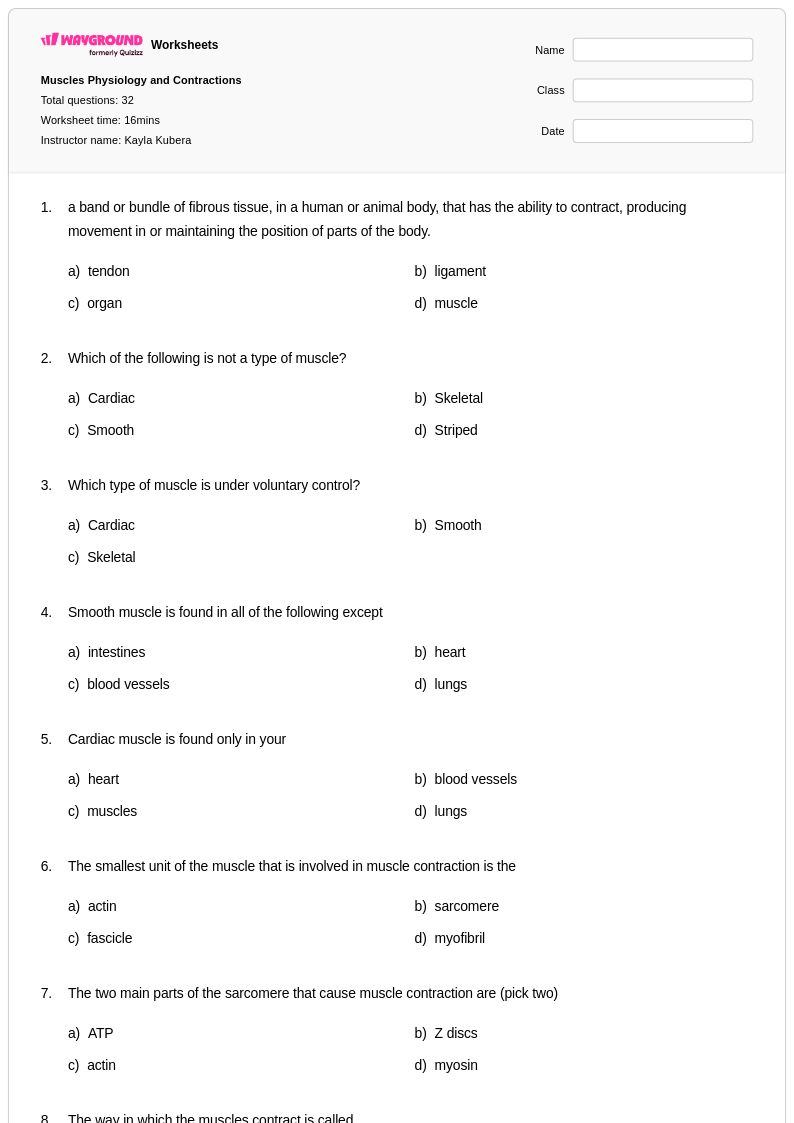
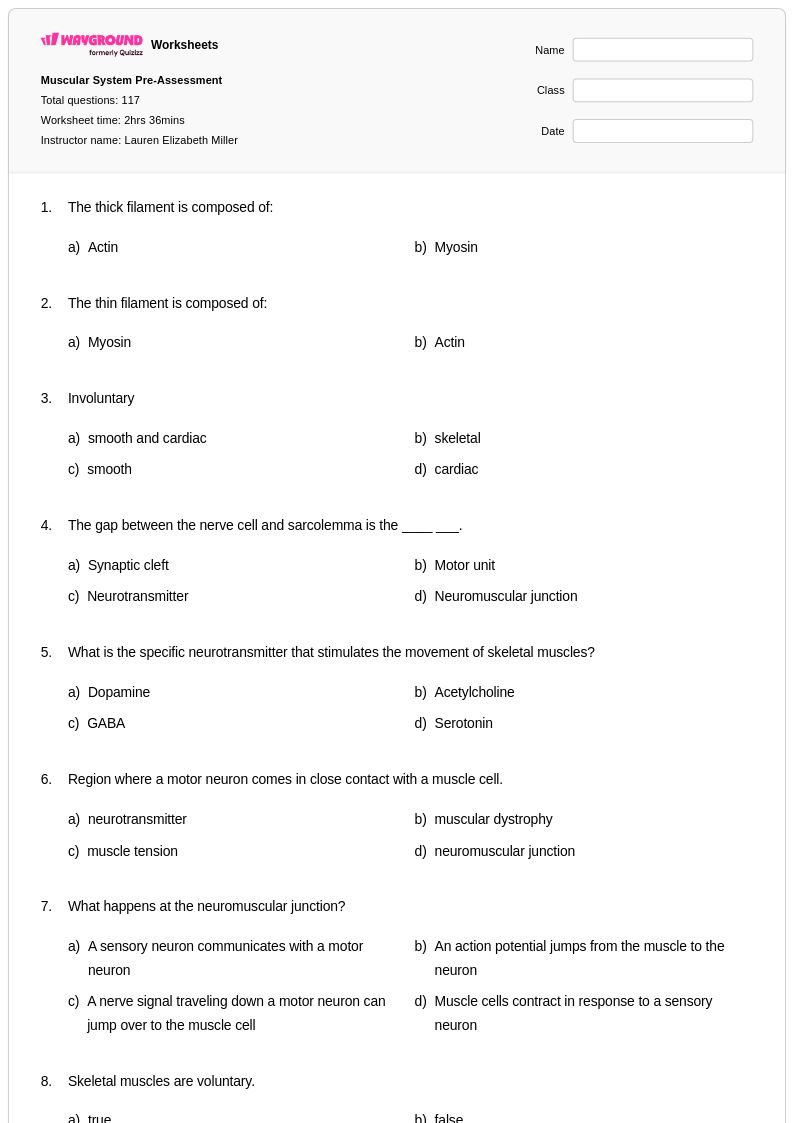
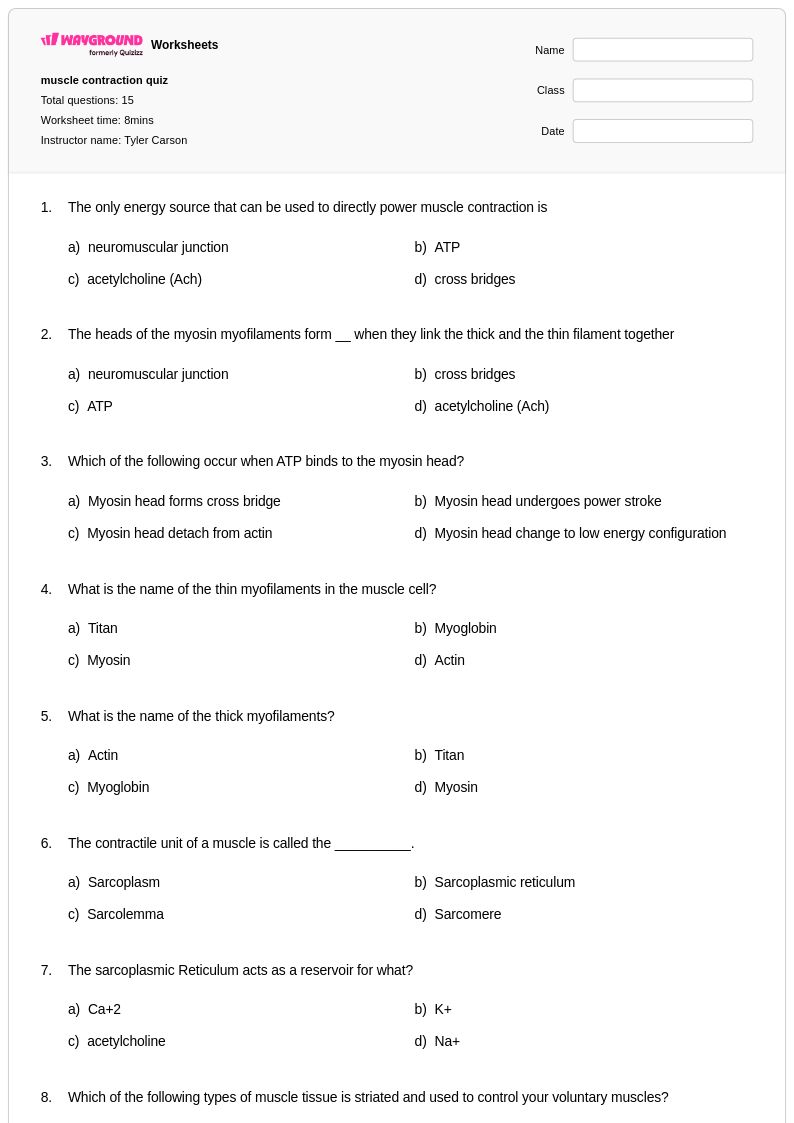
Sliding Filament Theory worksheets for Year 10 students available through Wayground (formerly Quizizz) provide comprehensive coverage of muscle contraction mechanisms at the molecular level. These expertly designed resources help students master the intricate process by which actin and myosin filaments interact to produce muscle movement, strengthening critical skills in cellular biology, protein structure analysis, and physiological processes. The worksheet collections include detailed practice problems that guide students through sarcomere organization, cross-bridge cycling, and the role of calcium ions in muscle contraction, while comprehensive answer keys enable both independent study and teacher-guided instruction. Free printable materials and pdf formats ensure accessibility for diverse classroom environments, allowing students to repeatedly practice identifying key structures like the A-band, I-band, and Z-discs while analyzing how these components change during muscle contraction and relaxation cycles.
Wayground (formerly Quizizz) empowers educators with millions of teacher-created resources specifically targeting Sliding Filament Theory concepts, supported by robust search and filtering capabilities that allow precise alignment with curriculum standards and learning objectives. The platform's differentiation tools enable teachers to customize worksheets for varying ability levels within Year 10 classrooms, while flexible formatting options including both printable and digital pdf versions accommodate different instructional approaches and student needs. These comprehensive collections facilitate effective lesson planning by providing ready-to-use materials for initial concept introduction, targeted remediation for struggling learners, and enrichment activities for advanced students, ensuring that all learners can develop a thorough understanding of how molecular interactions drive macroscopic muscle function through systematic skill practice and assessment.
FAQs
How do I teach sliding filament theory to biology students?
Start by grounding students in sarcomere anatomy before introducing the molecular mechanics of contraction. Teaching the cross-bridge cycle in sequential steps, with clear attention to the roles of calcium ions, ATP, actin, and myosin, helps students build a mental model before applying it to whole-muscle function. Diagrams and labeling activities are especially effective because the theory is inherently visual, and students need repeated exposure to the spatial relationships between thick and thin filaments before the concept solidifies.
What exercises help students practice sliding filament theory?
Practice exercises that work best include cross-bridge cycle diagramming, protein identification tasks, and sequencing activities where students order the steps of contraction from neural stimulus to filament sliding. Having students explain why filaments slide without shortening in length is a high-value critical thinking task that reveals whether they truly understand the mechanism rather than just memorizing terms. Practice problems that incorporate calcium ion signaling and ATP hydrolysis add an important biochemical layer to reinforce the full process.
What misconceptions do students commonly have about sliding filament theory?
The most persistent misconception is that actin and myosin filaments physically shorten during contraction rather than sliding past each other. Students also frequently confuse the role of calcium ions, mistakenly treating it as a direct energy source rather than a regulatory trigger that exposes binding sites on actin. Another common error is conflating the cross-bridge cycle with muscle relaxation, so explicitly distinguishing the active and passive phases of the cycle helps prevent this confusion.
How can I use a sliding filament theory worksheet in my biology class?
Sliding filament theory worksheets on Wayground are available as printable PDFs for traditional classroom use and in digital formats for technology-integrated or remote learning environments, including the option to host them as a quiz directly on Wayground. In practice, teachers use these materials for initial concept introduction, targeted remediation, enrichment for advanced learners, and ongoing review that builds mastery of muscle physiology over time. The included answer keys make them practical for both guided instruction and independent student practice.
How does ATP function in the sliding filament theory of muscle contraction?
ATP serves two distinct roles in the sliding filament theory. First, ATP hydrolysis provides the energy that drives the power stroke, causing the myosin head to pull the actin filament toward the center of the sarcomere. Second, ATP binding to the myosin head is what allows it to detach from actin after the power stroke, which means that without ATP, myosin remains locked to actin in a state called rigor. This is why clarifying that ATP enables both movement and detachment is critical for student understanding.
How do I differentiate sliding filament theory instruction for students at different levels?
For students who need additional support, reducing the complexity of tasks to focus on identifying the key proteins and sequencing the major steps of contraction provides a manageable entry point. Advanced learners can be challenged to connect sarcomere-level mechanics to whole-muscle force production or to analyze how ATP depletion affects contraction at the molecular level. On Wayground, teachers can apply individual accommodations such as read aloud and reduced answer choices to specific students, allowing the same worksheet to serve diverse learners simultaneously without disrupting the rest of the class.