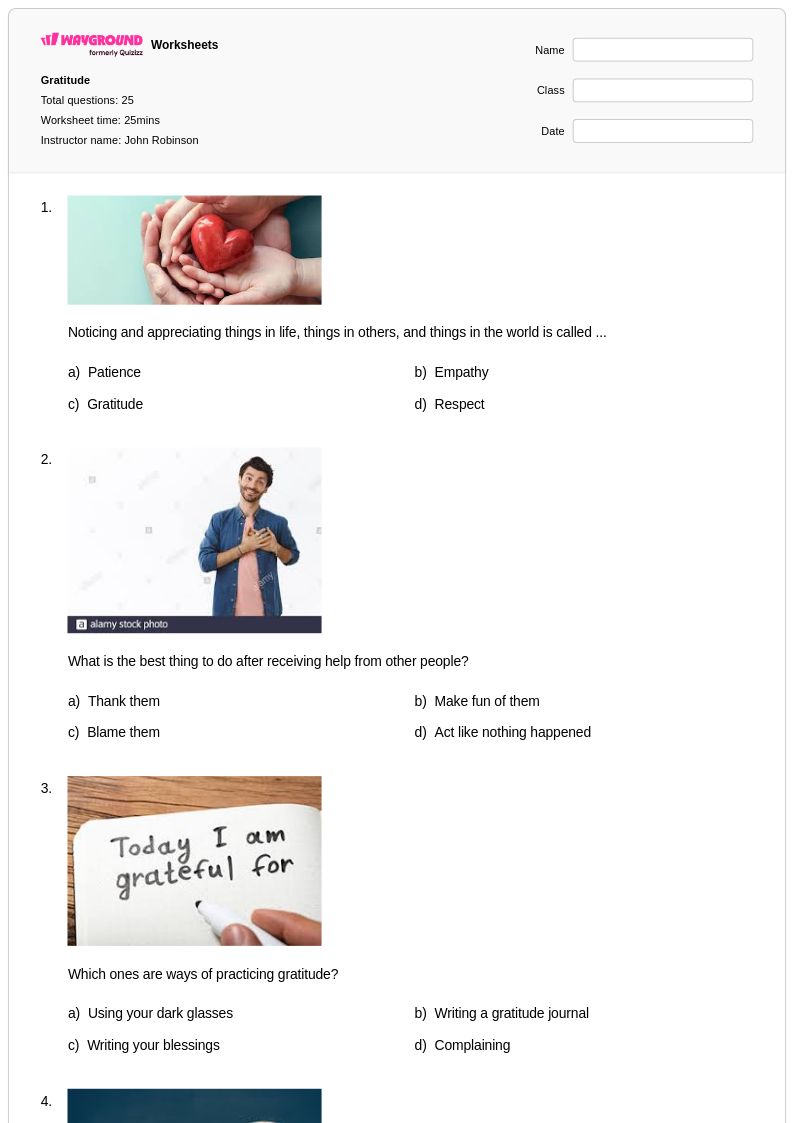
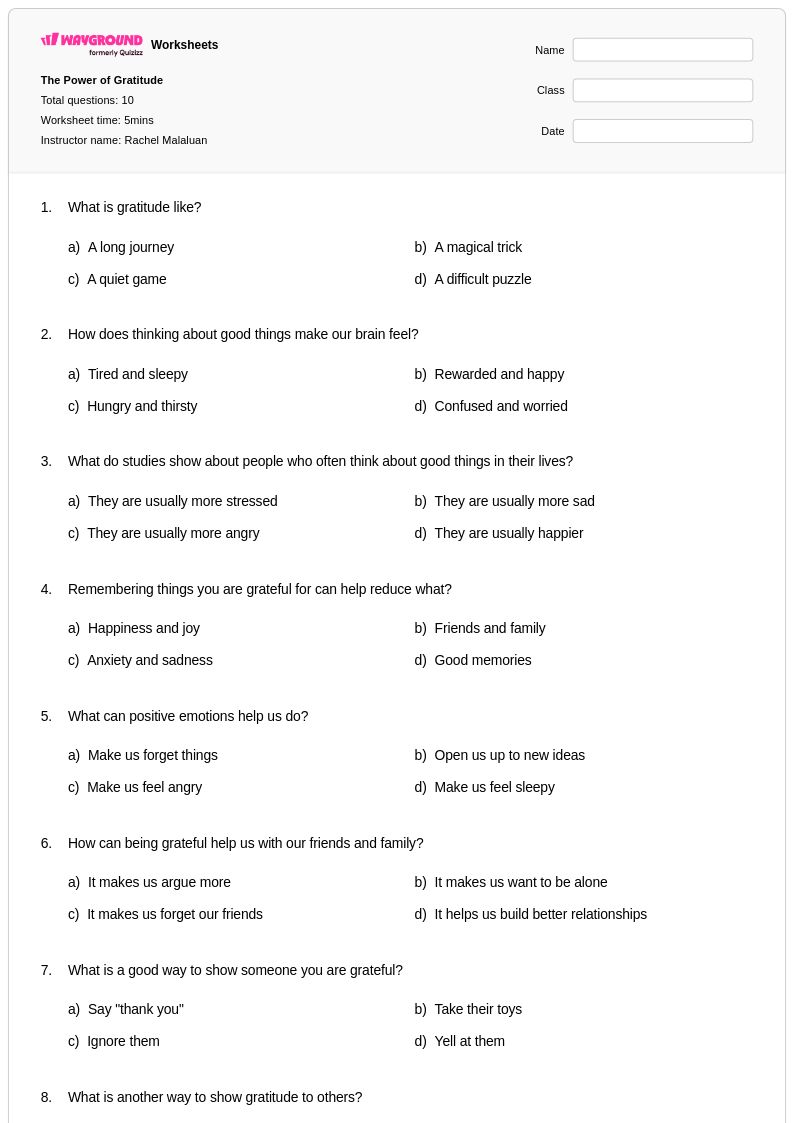
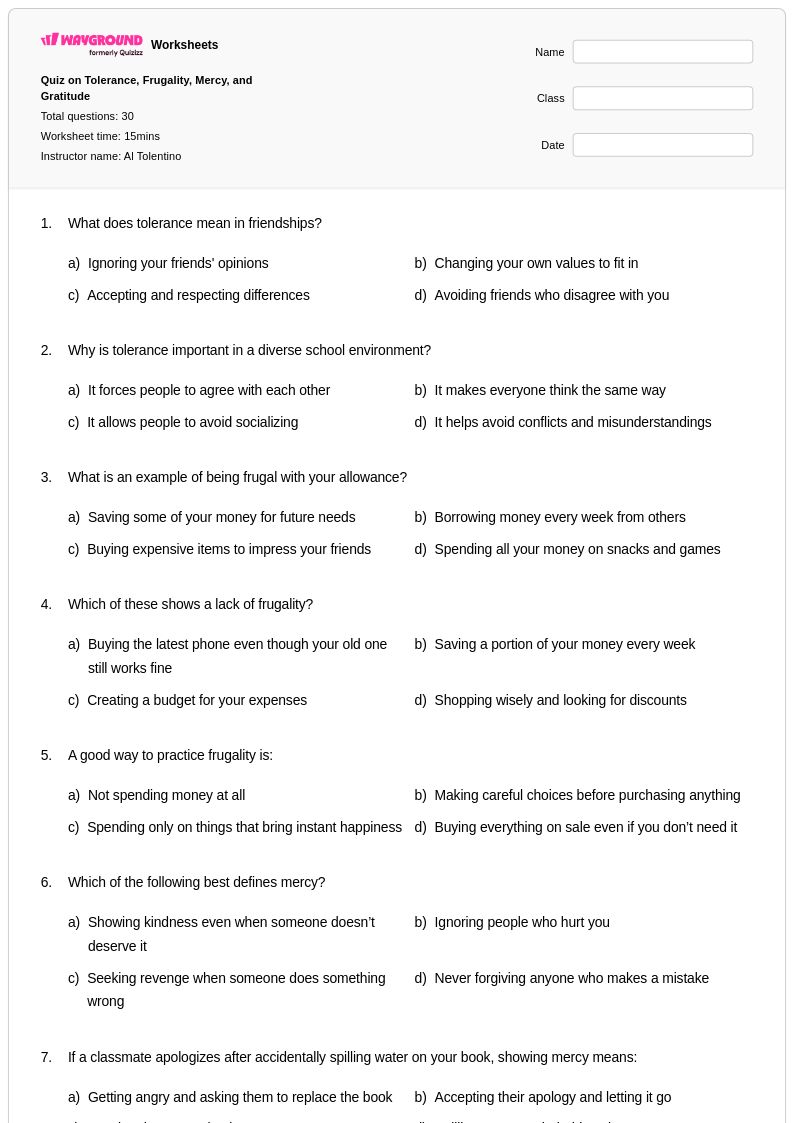
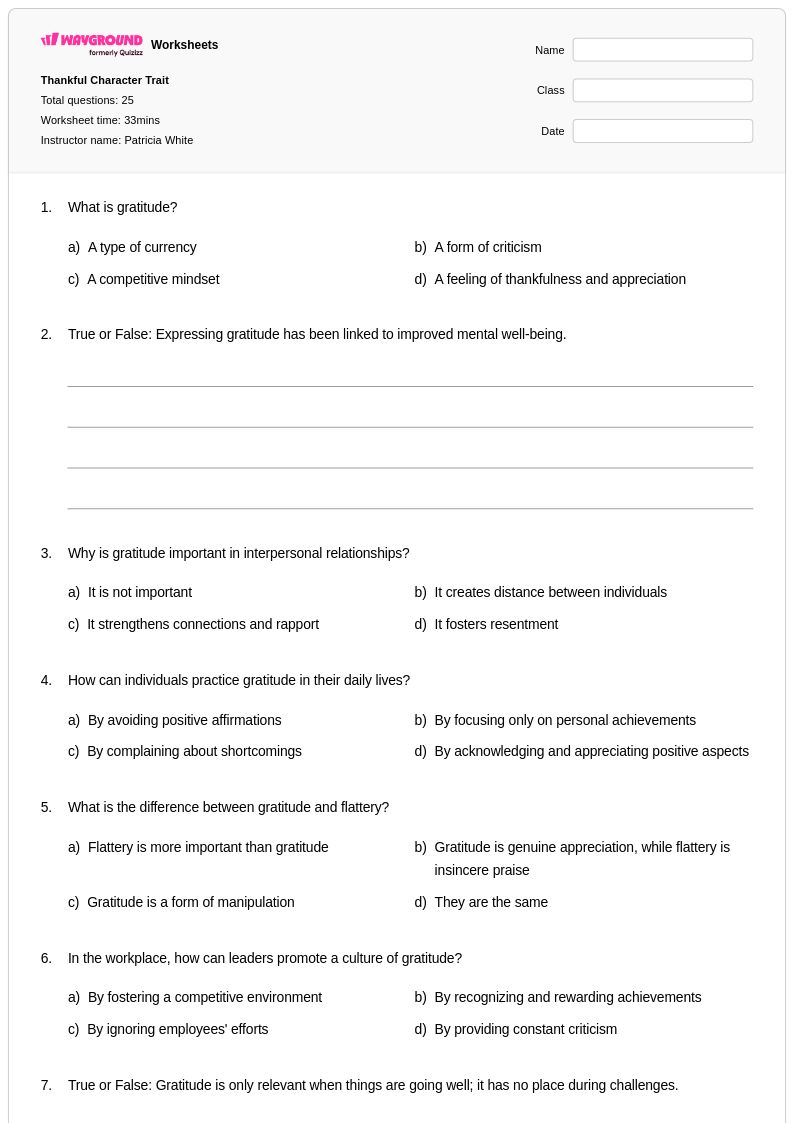
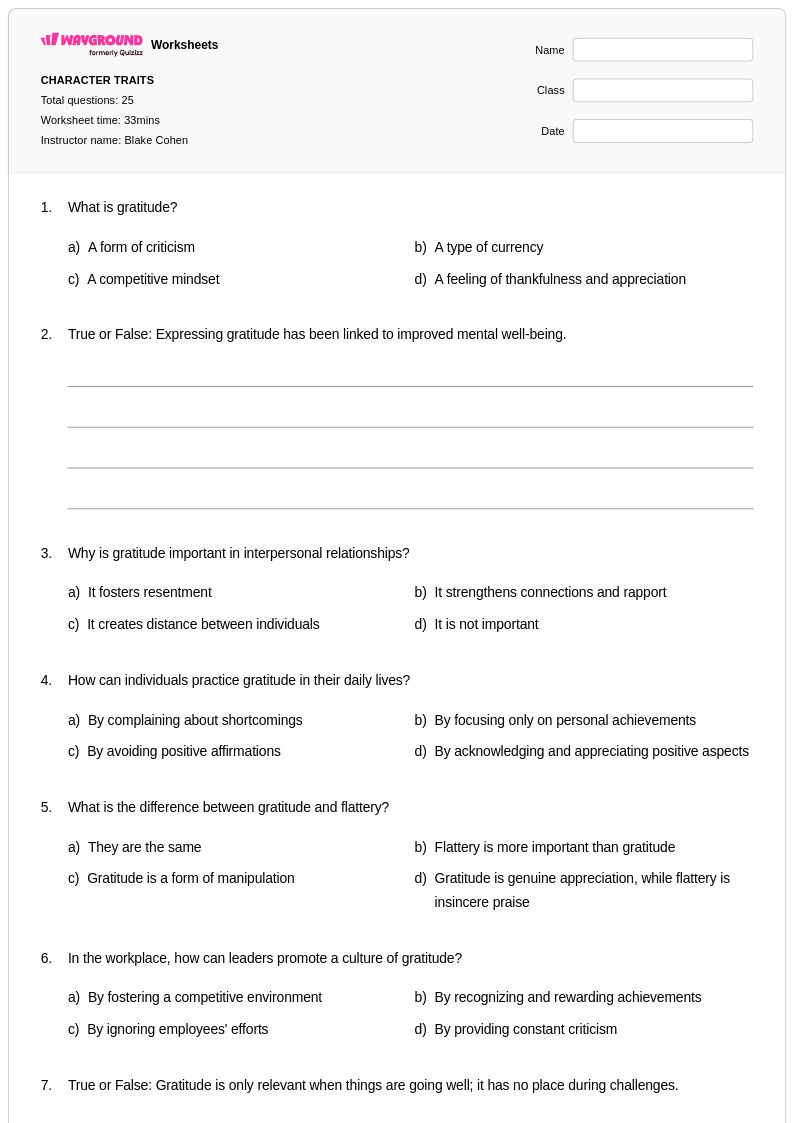
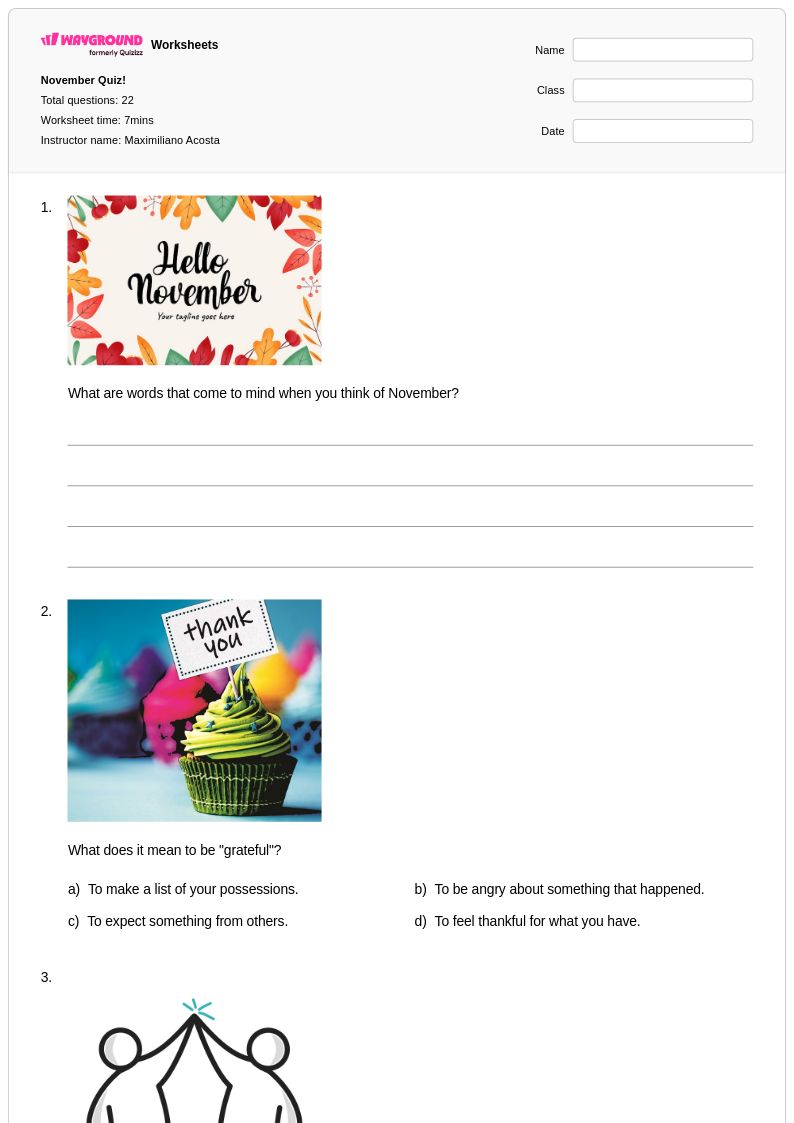
Discover free Year 7 gratitude worksheets and printables that help students develop appreciation skills through engaging practice problems and activities, complete with answer keys and downloadable PDFs.
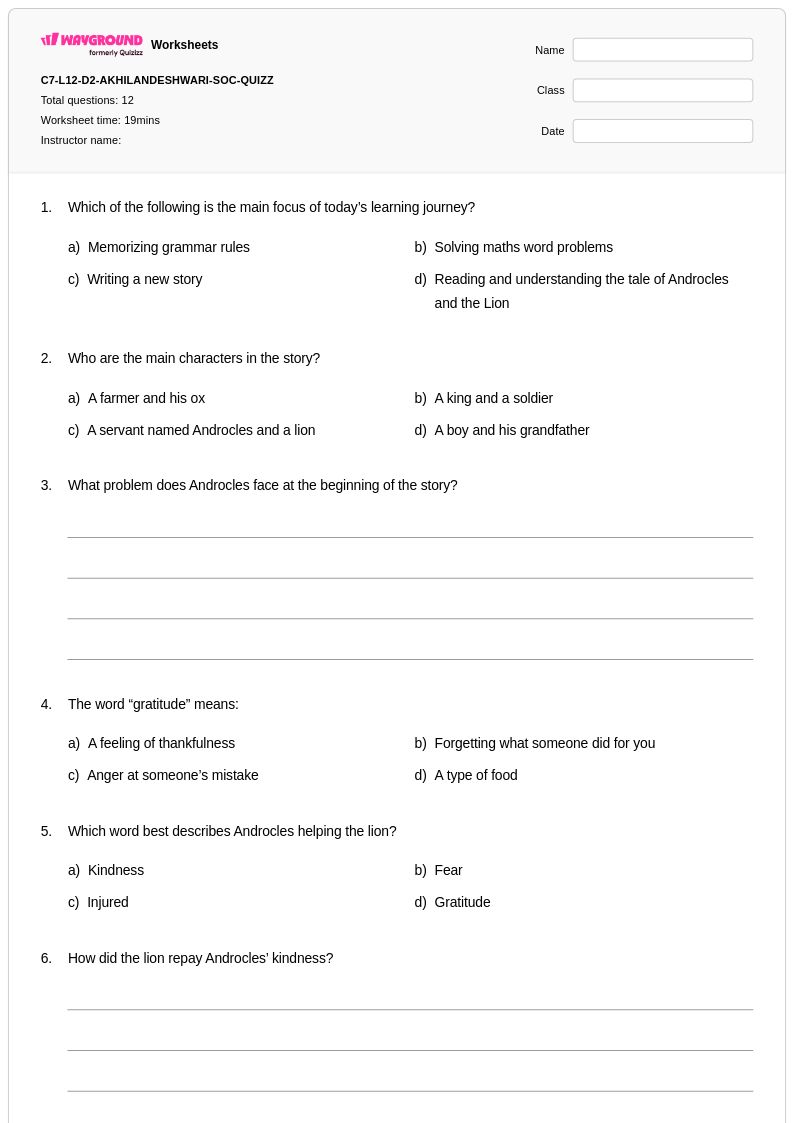
Year 7 gratitude worksheets available through Wayground (formerly Quizizz) provide comprehensive resources for developing emotional intelligence and positive social interactions in middle school students. These carefully designed educational materials focus on helping seventh graders understand the psychological and social benefits of expressing appreciation, recognize opportunities for gratitude in daily life, and practice effective ways to communicate thankfulness to others. The worksheets strengthen critical social skills including empathy, perspective-taking, and relationship building while incorporating evidence-based gratitude practices that support both individual well-being and classroom community development. Teachers can access free printables with complete answer keys, structured practice problems that guide students through gratitude reflection exercises, and pdf resources that seamlessly integrate gratitude instruction into social studies curriculum frameworks.
Wayground (formerly Quizizz) supports educators with an extensive collection of teacher-created gratitude worksheets, drawing from millions of high-quality resources specifically designed for middle school social skills instruction. The platform's robust search and filtering capabilities allow teachers to quickly locate materials aligned with social-emotional learning standards and differentiate instruction based on individual student needs and learning styles. These customizable worksheet collections are available in both printable and digital pdf formats, enabling flexible implementation whether for classroom instruction, homework assignments, or independent practice sessions. Teachers can effectively use these resources for lesson planning, targeted remediation for students developing social awareness, enrichment activities for advanced learners, and consistent skill practice that reinforces gratitude concepts throughout the academic year while building stronger classroom communities and positive peer relationships.
FAQs
How do I teach gratitude to students in a meaningful way?
Teaching gratitude effectively goes beyond saying 'thank you' — it involves helping students recognize positive experiences, understand how appreciation affects relationships, and develop consistent habits of reflection. Effective classroom strategies include gratitude journaling, writing thank-you messages to peers or community members, and discussing cultural traditions of appreciation. Pairing structured reflection activities with real-world practice helps students internalize gratitude as a social-emotional skill rather than a surface-level courtesy.
What types of activities help students practice gratitude?
Activities that build gratitude skills include identifying specific moments of thankfulness from daily life, writing personalized thank-you notes, and reflecting on how appreciation influences personal relationships and community connections. Structured worksheets that prompt students to articulate what they are grateful for and why are especially effective because they develop both emotional awareness and written expression. Repeated, low-stakes practice through these activities helps students build gratitude as a habitual mindset rather than an occasional response.
What common mistakes do students make when learning about gratitude?
A frequent misconception is that gratitude is only expressed in response to gifts or major events, rather than recognizing everyday positive experiences and relationships. Students also tend to write generic statements like 'I am thankful for my family' without articulating the specific reasons or impacts behind their appreciation, which limits the depth of their reflection. Guiding students to be specific — naming a person, action, or moment and explaining its effect — develops far richer emotional awareness.
How can I use gratitude worksheets to support social-emotional learning in my classroom?
Gratitude worksheets function as structured SEL tools that give students a guided framework for reflection, which is especially useful for students who struggle to articulate emotions independently. They can be used during whole-group lessons to introduce the concept, as independent practice for individual reflection, or as targeted support for students who need additional development in emotional awareness skills. Because gratitude connects directly to relationship-building and community, these activities integrate naturally into broader SEL curricula.
How do I use Wayground's gratitude worksheets in my class?
Wayground's gratitude worksheets are available as printable PDFs for traditional classroom use and in digital formats for technology-integrated learning environments, giving teachers flexibility in how they assign and collect student work. You can also host the worksheets as a quiz directly on Wayground, enabling real-time participation and streamlined review. Each worksheet includes a complete answer key, supporting both independent student work and teacher-guided instruction.
How can I differentiate gratitude activities for students with different learning needs?
Differentiation for gratitude activities can include adjusting the complexity of reflection prompts, providing sentence starters for students who need scaffolding, or offering extended time for students who require additional processing. On Wayground, teachers can enable accommodations such as read aloud for students who benefit from audio support, reduced answer choices to lower cognitive load, and adjustable font sizes through reading mode — all configurable per individual student without notifying the rest of the class.