
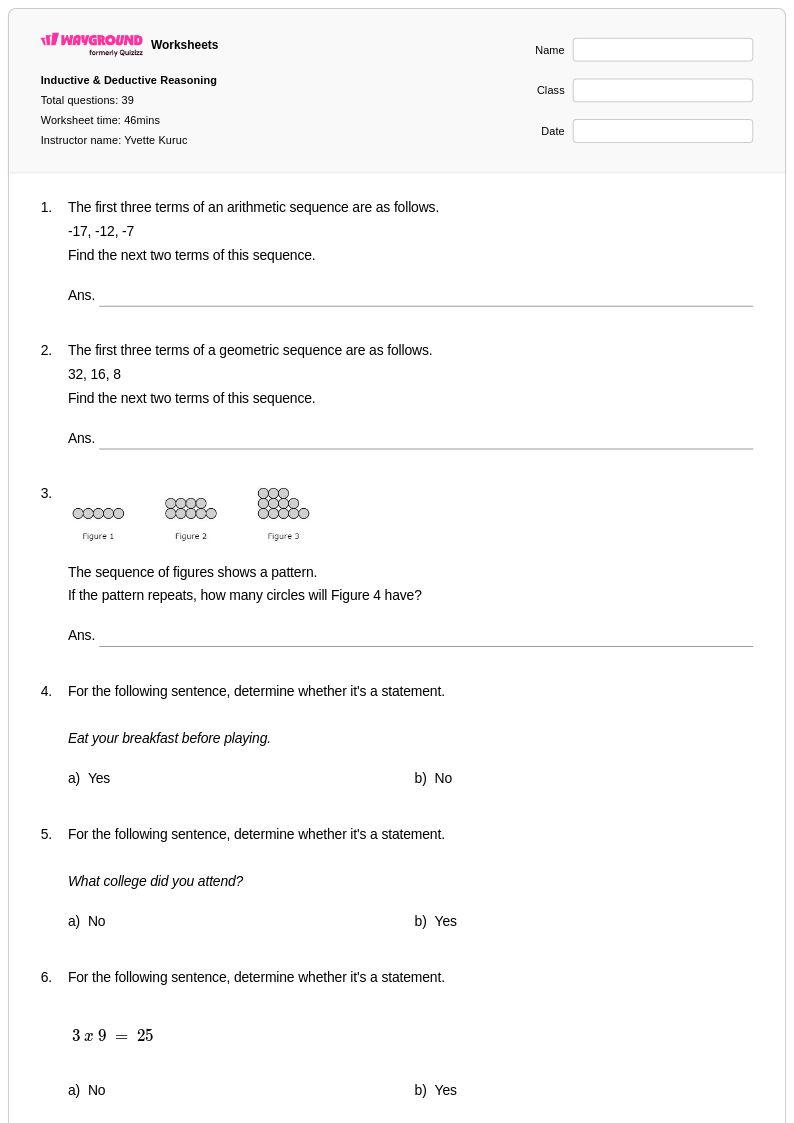
39 Q
6th - 11th
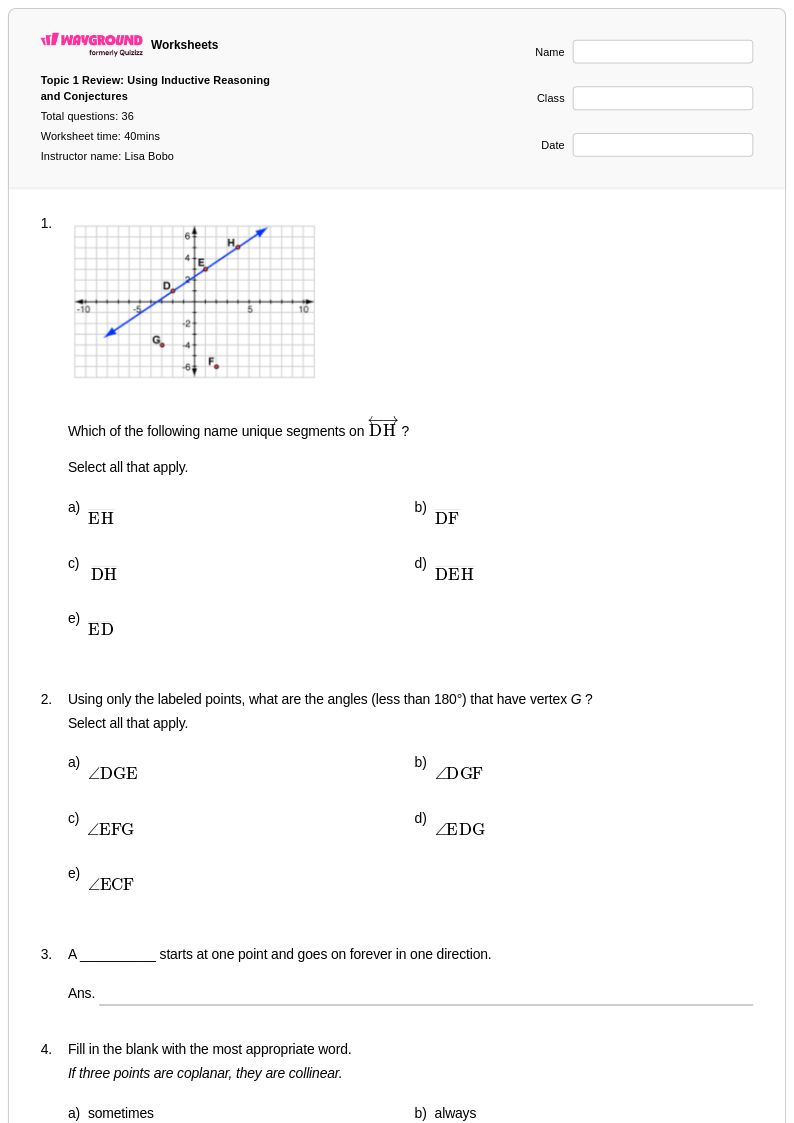
36 Q
9th - 12th
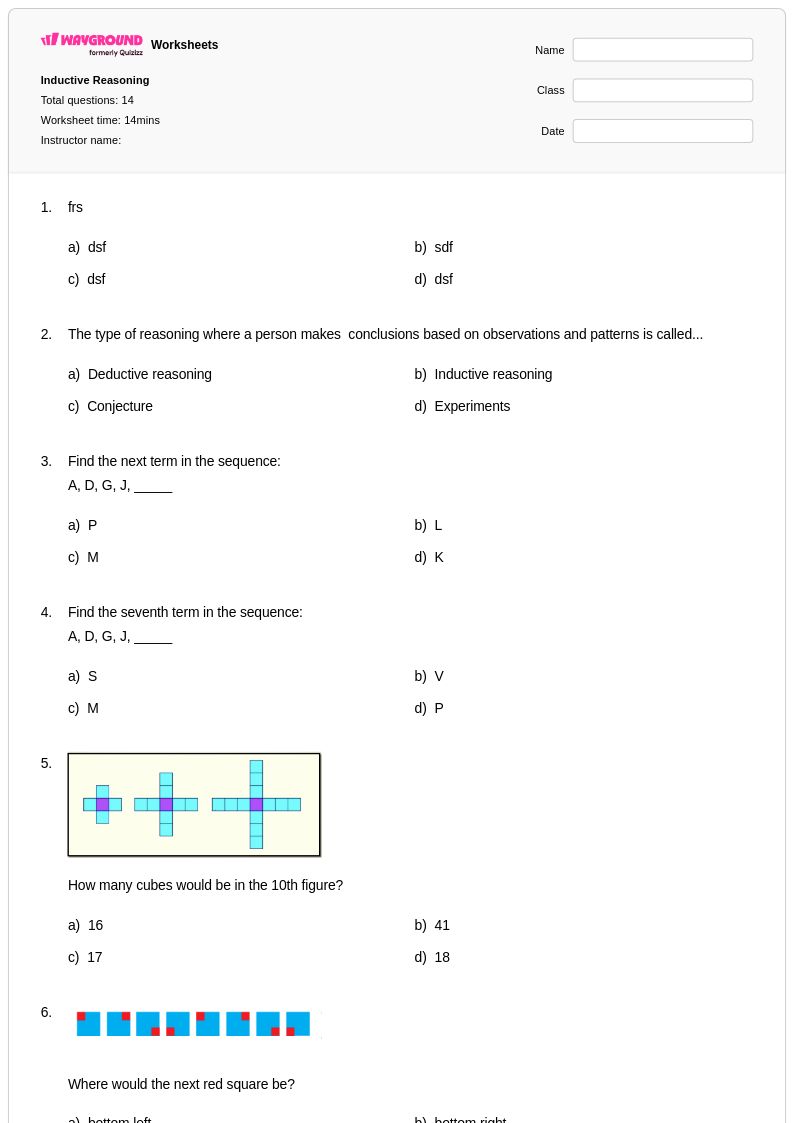
14 Q
10th - 11th
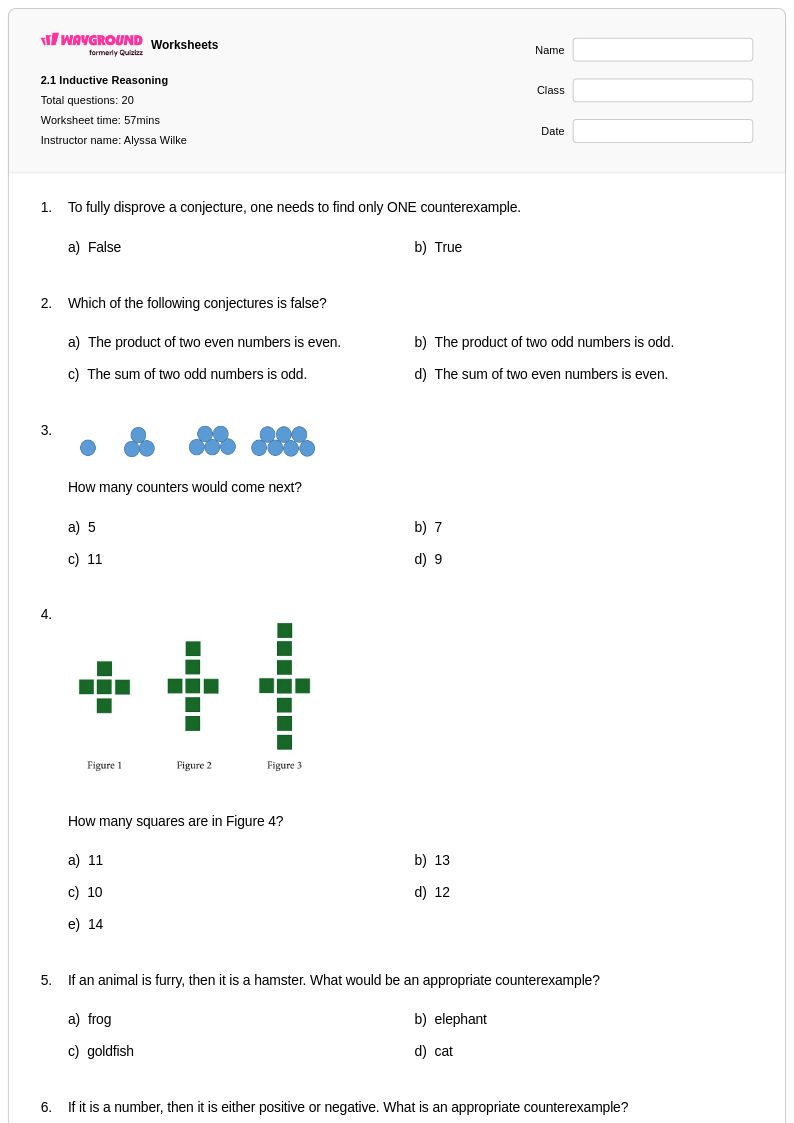
20 Q
10th - Uni
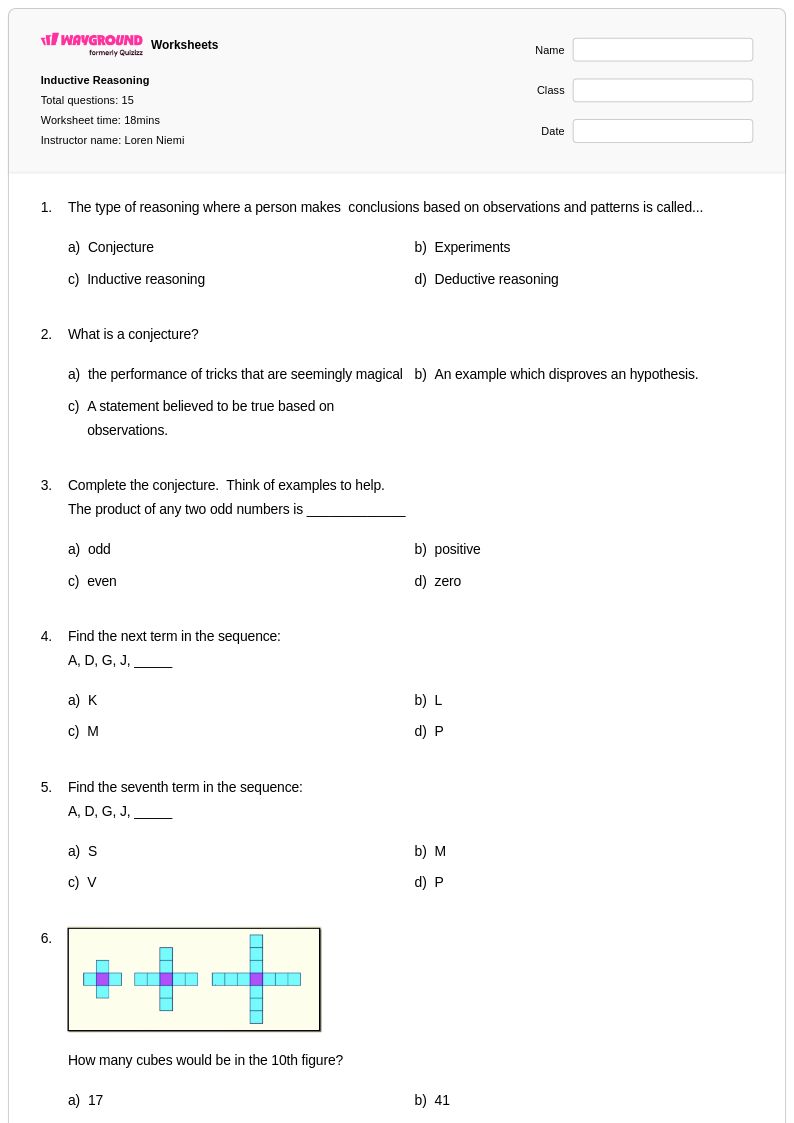
15 Q
9th - 12th
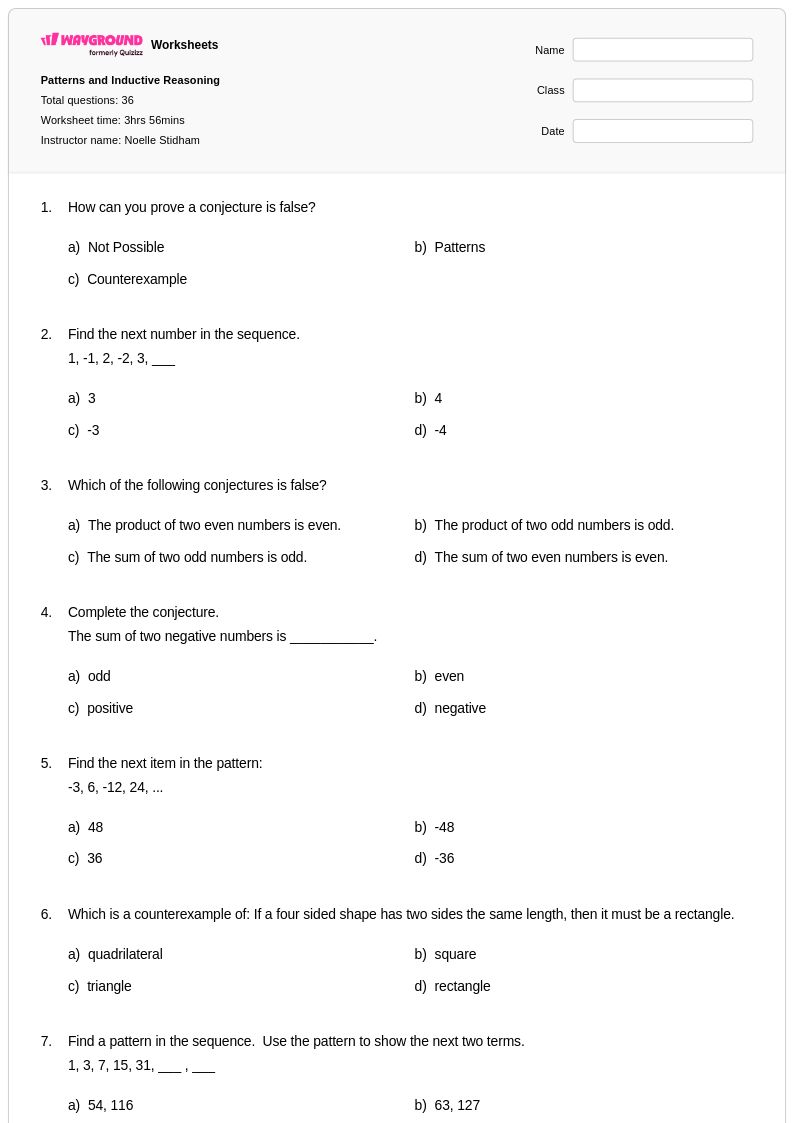
36 Q
11th
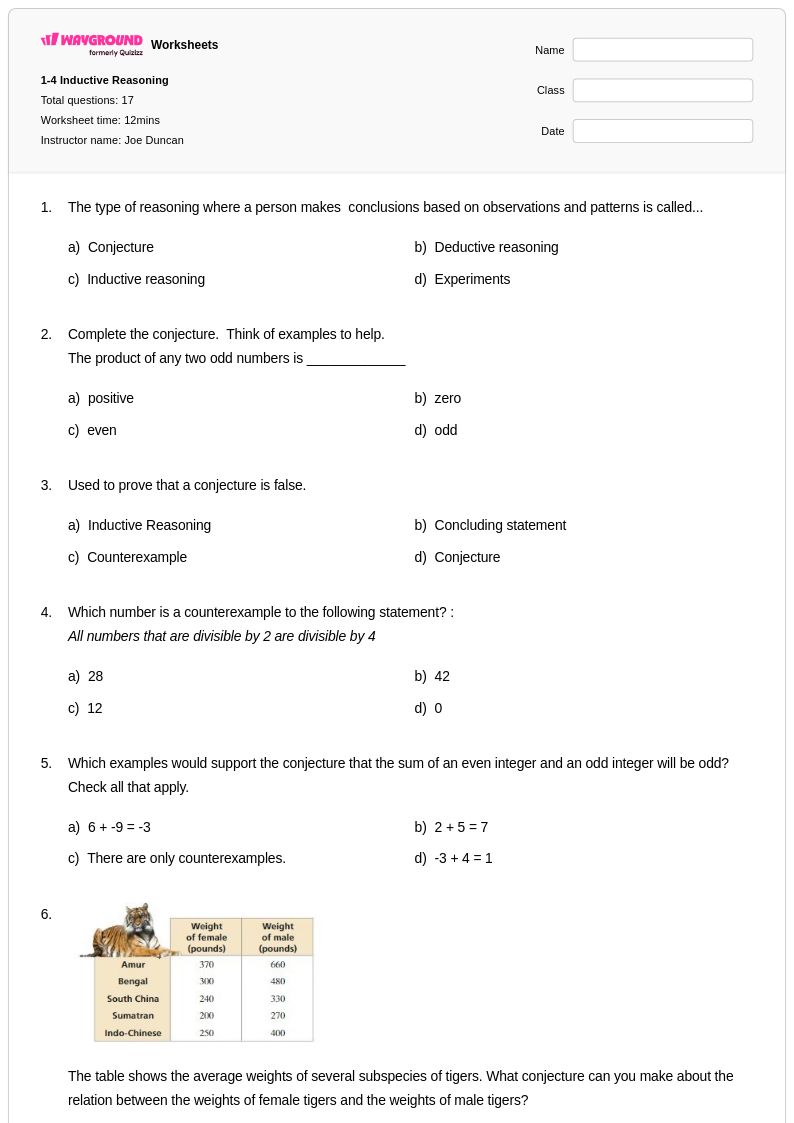
17 Q
9th - 12th
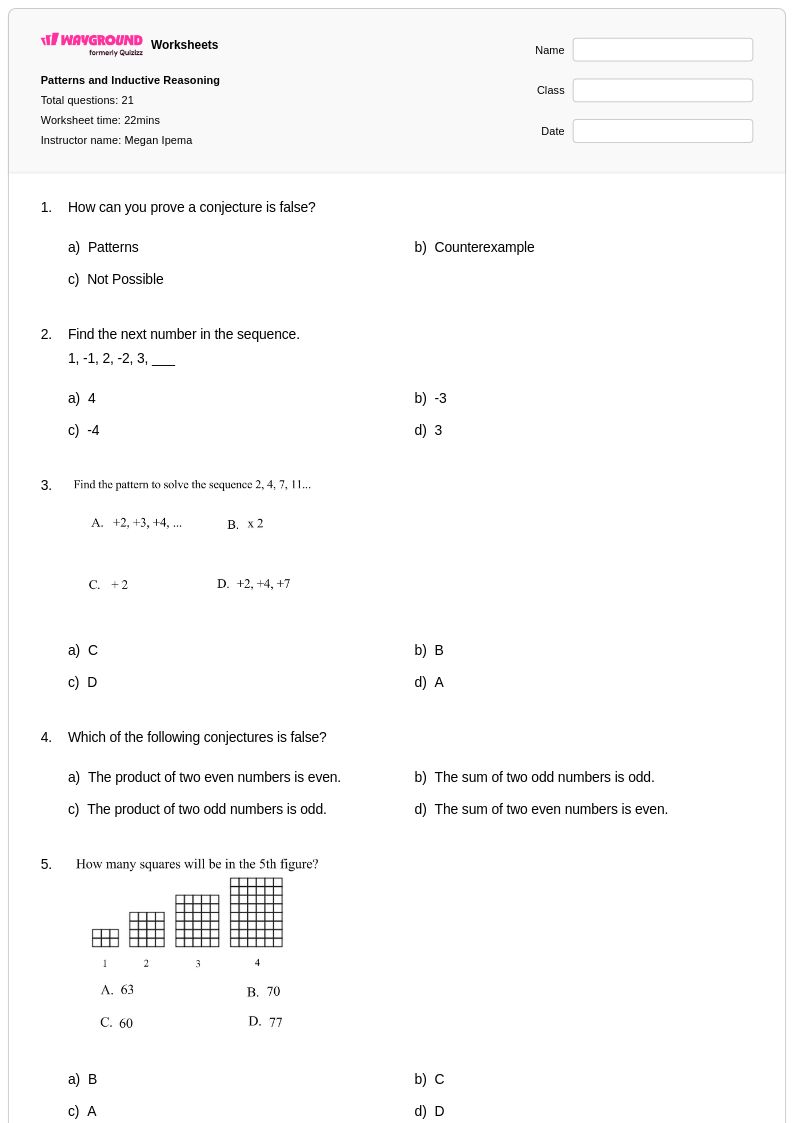
21 Q
9th - 12th
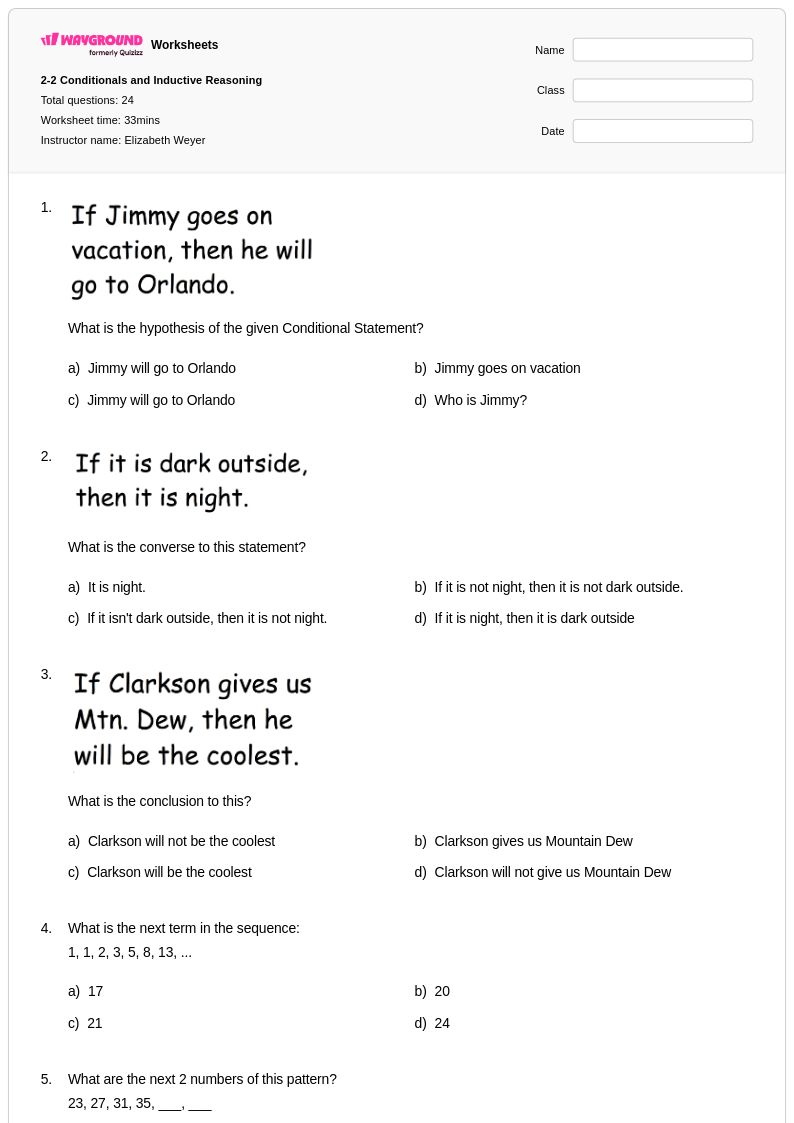
24 Q
8th - 11th
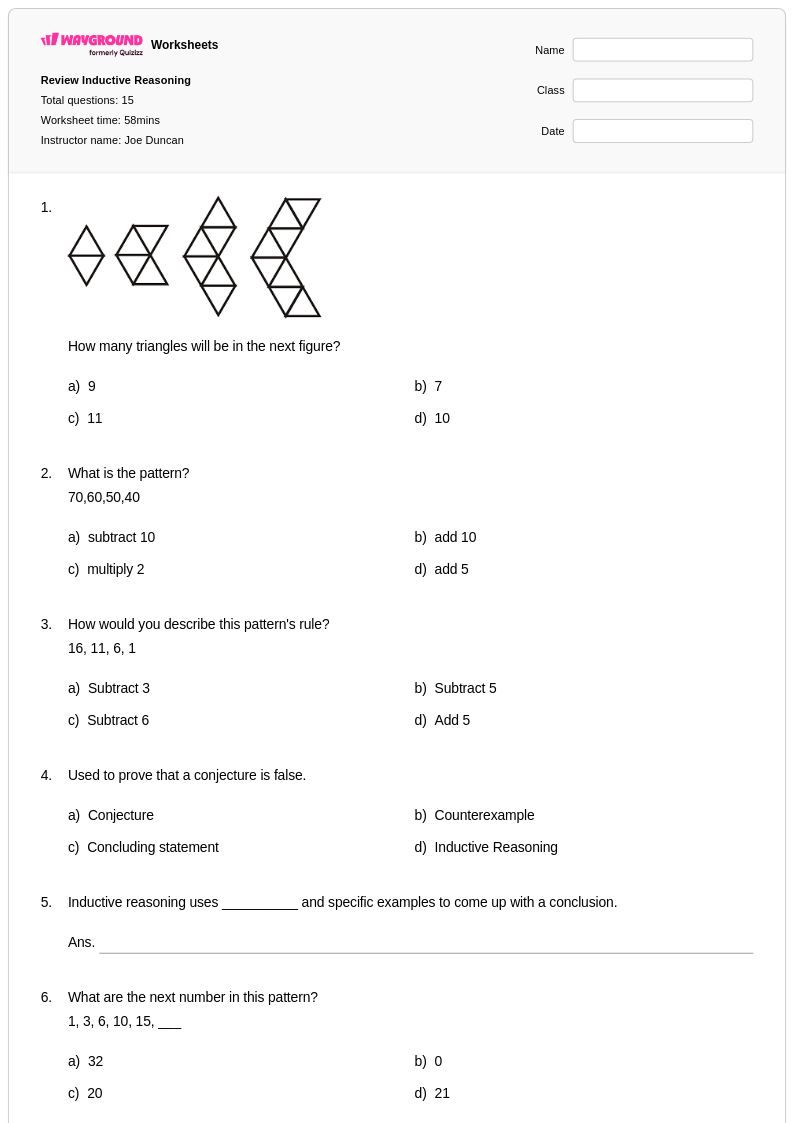
15 Q
9th - 12th
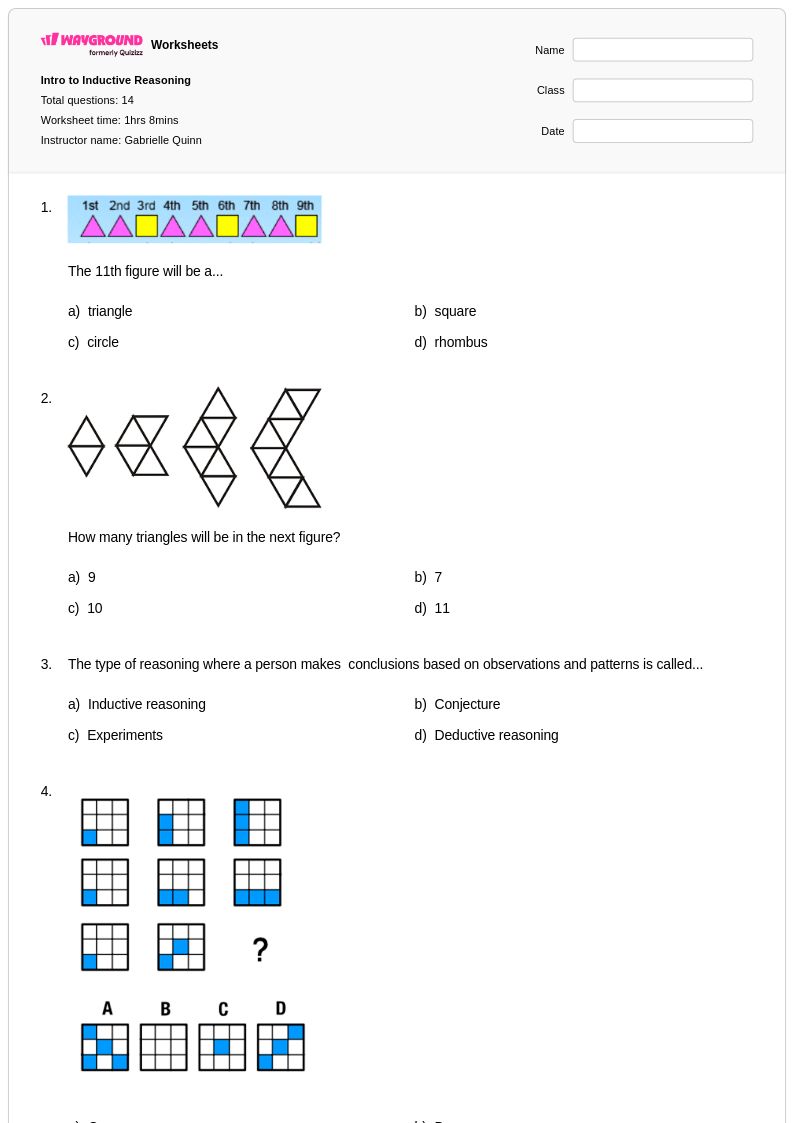
14 Q
9th - 12th
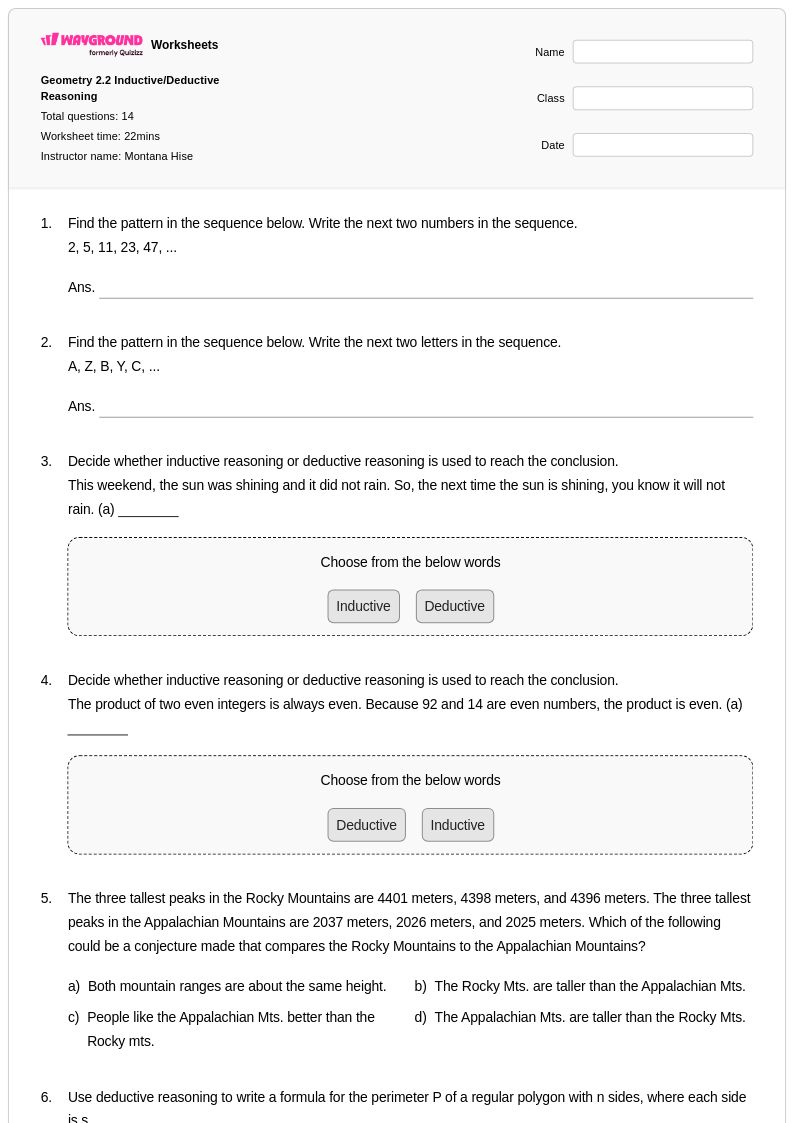
14 Q
9th - 12th
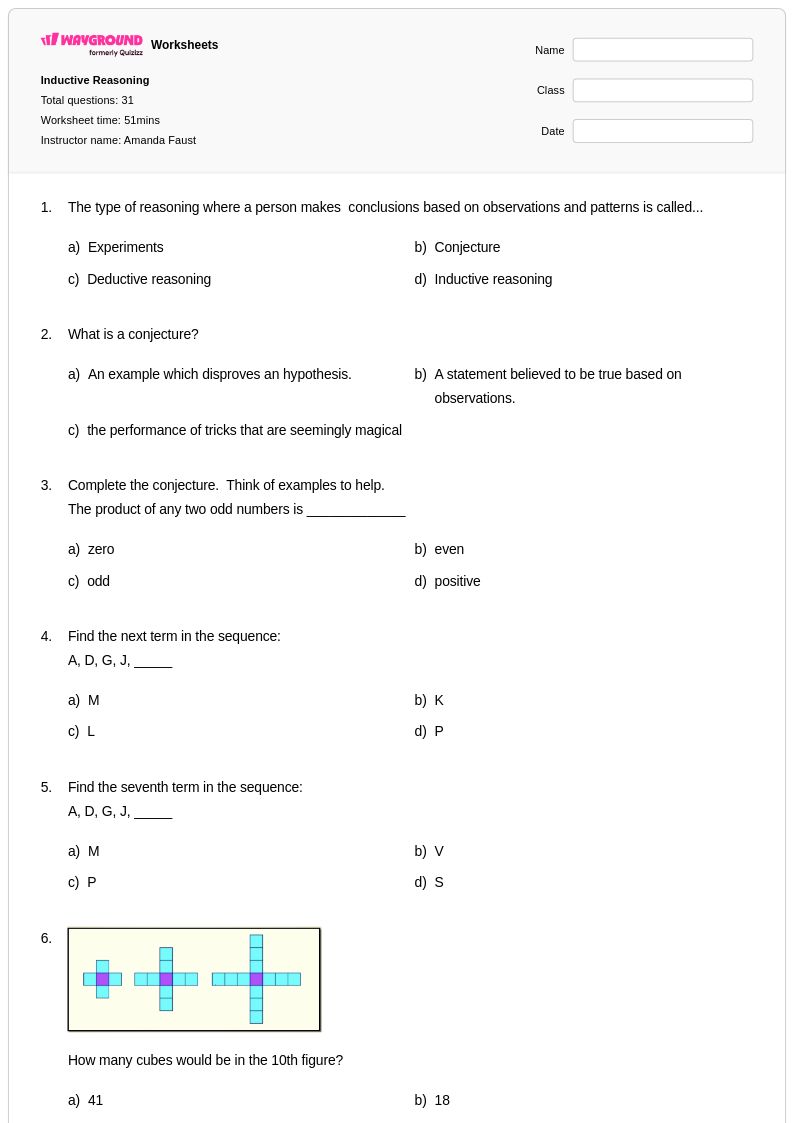
31 Q
9th - 12th
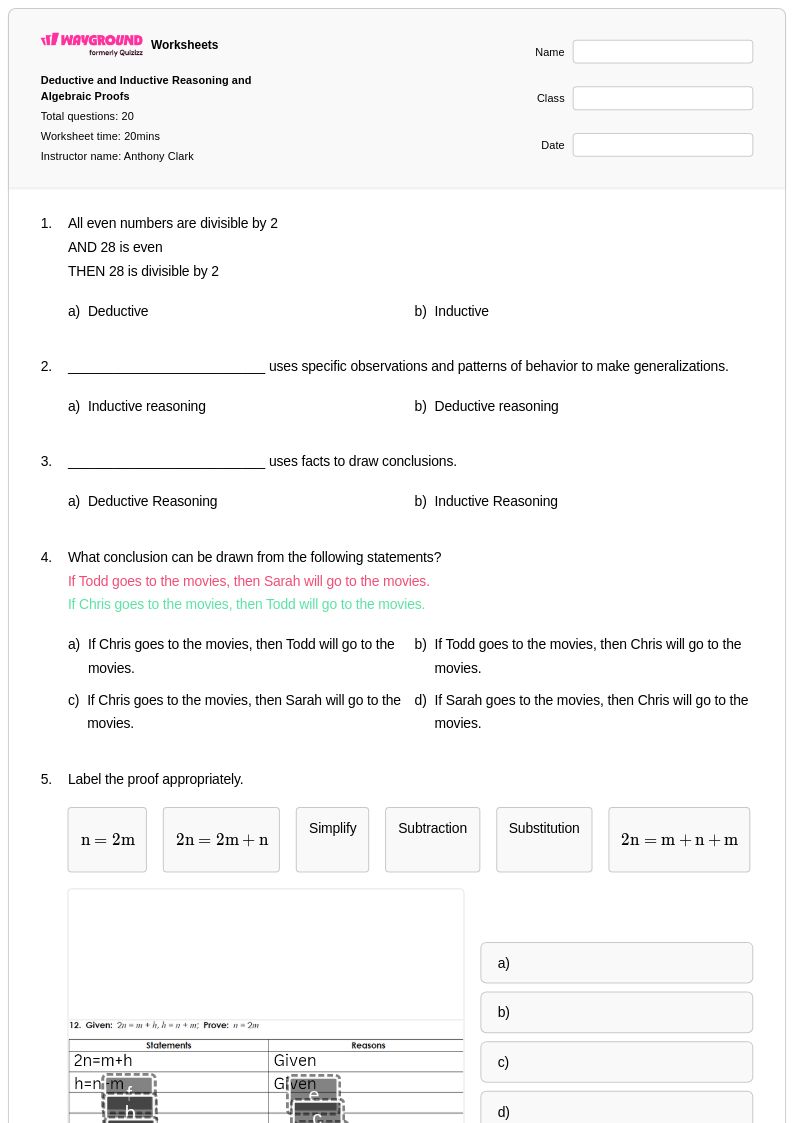
20 Q
10th - Uni
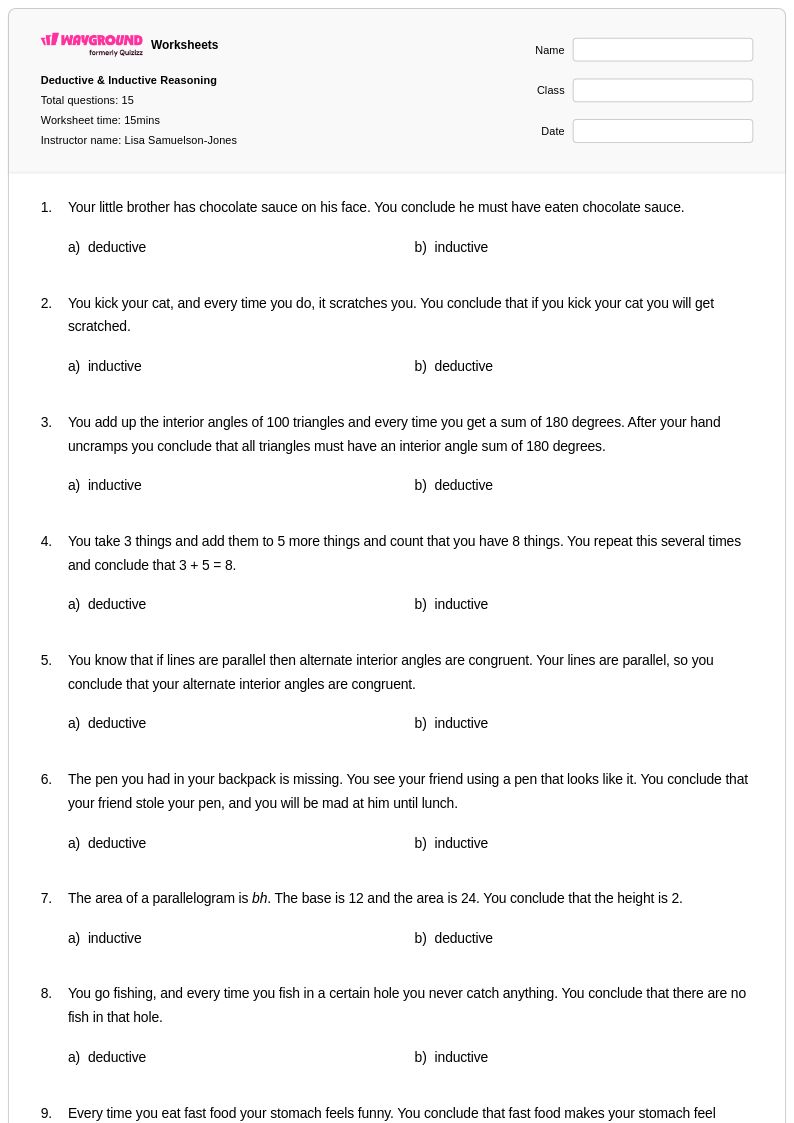
15 Q
9th - 12th
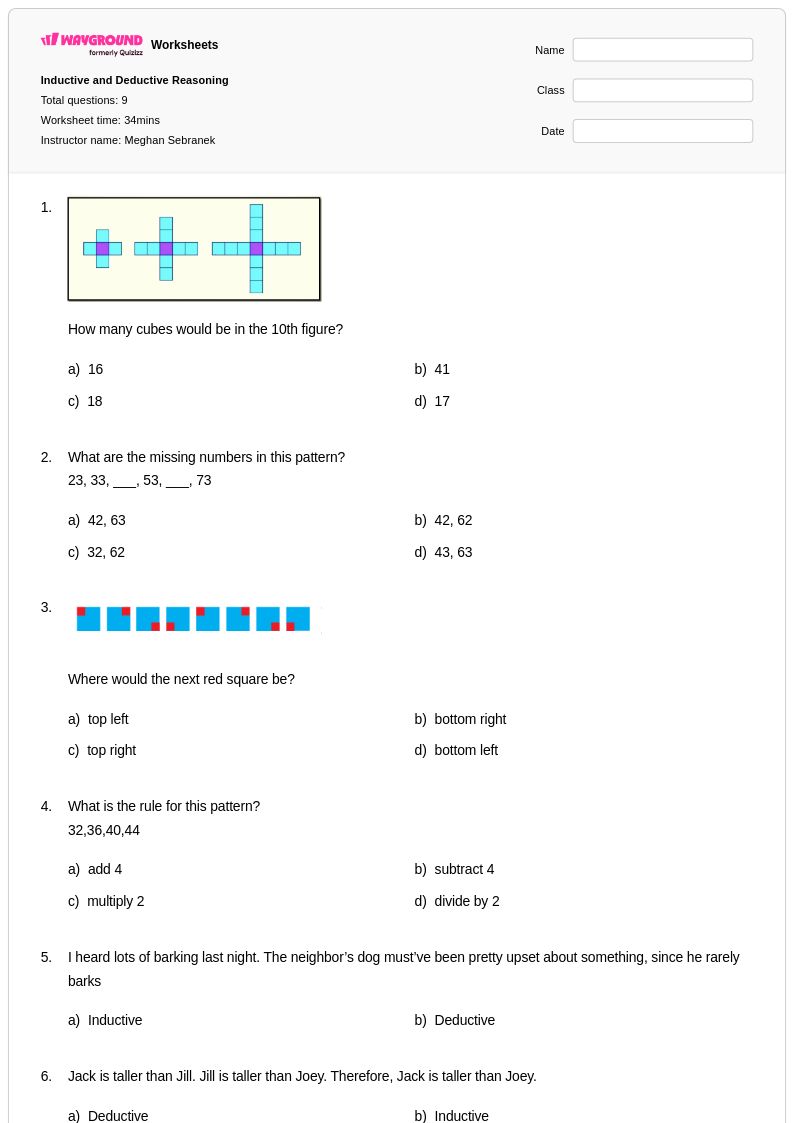
9 Q
11th
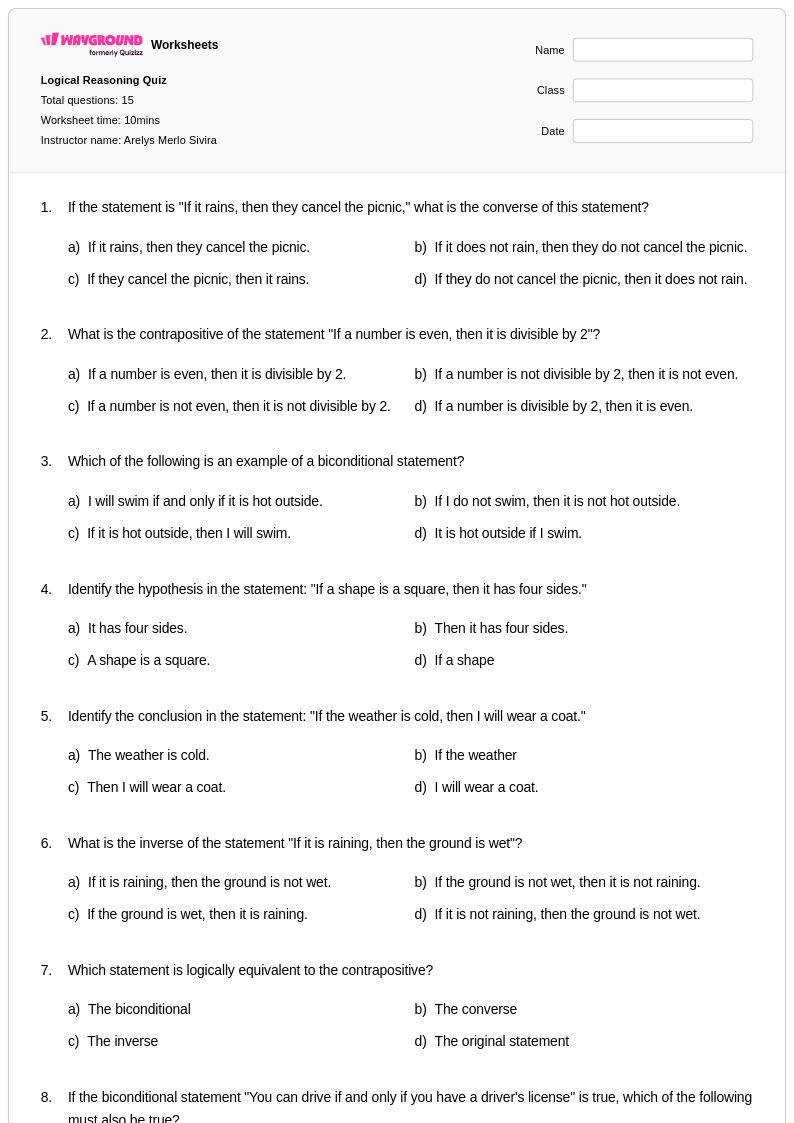
15 Q
11th
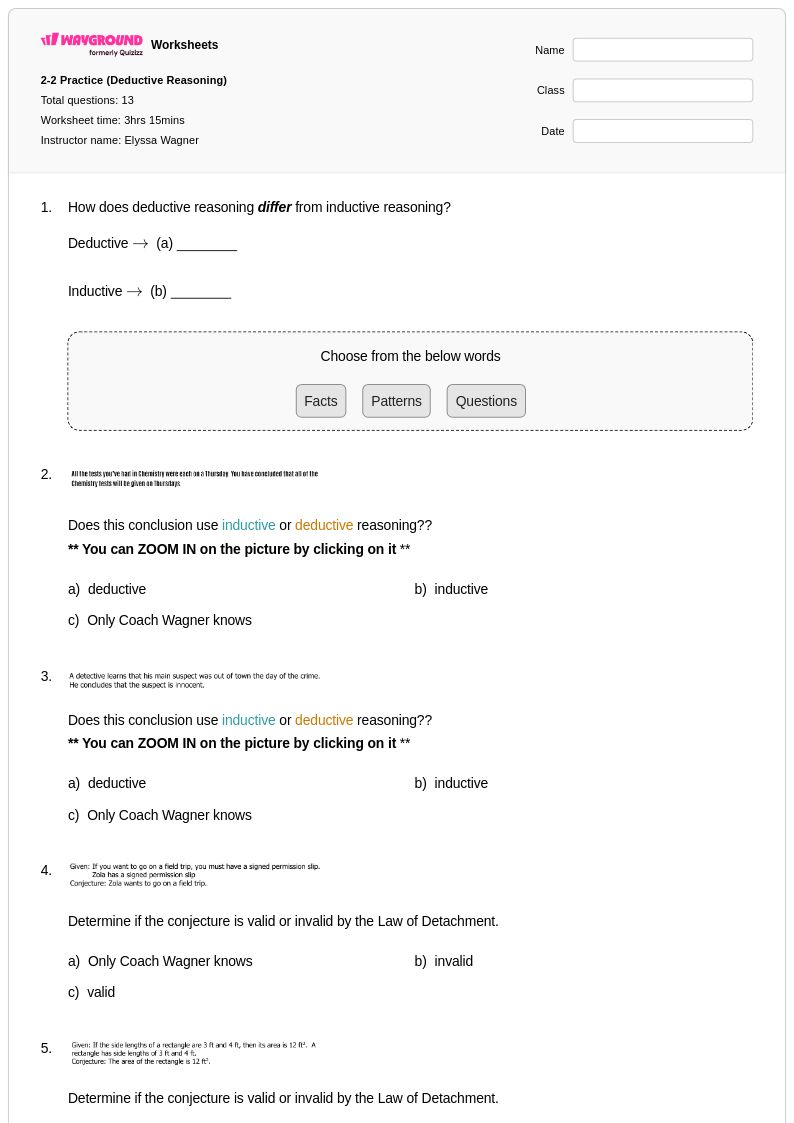
13 Q
9th - 12th
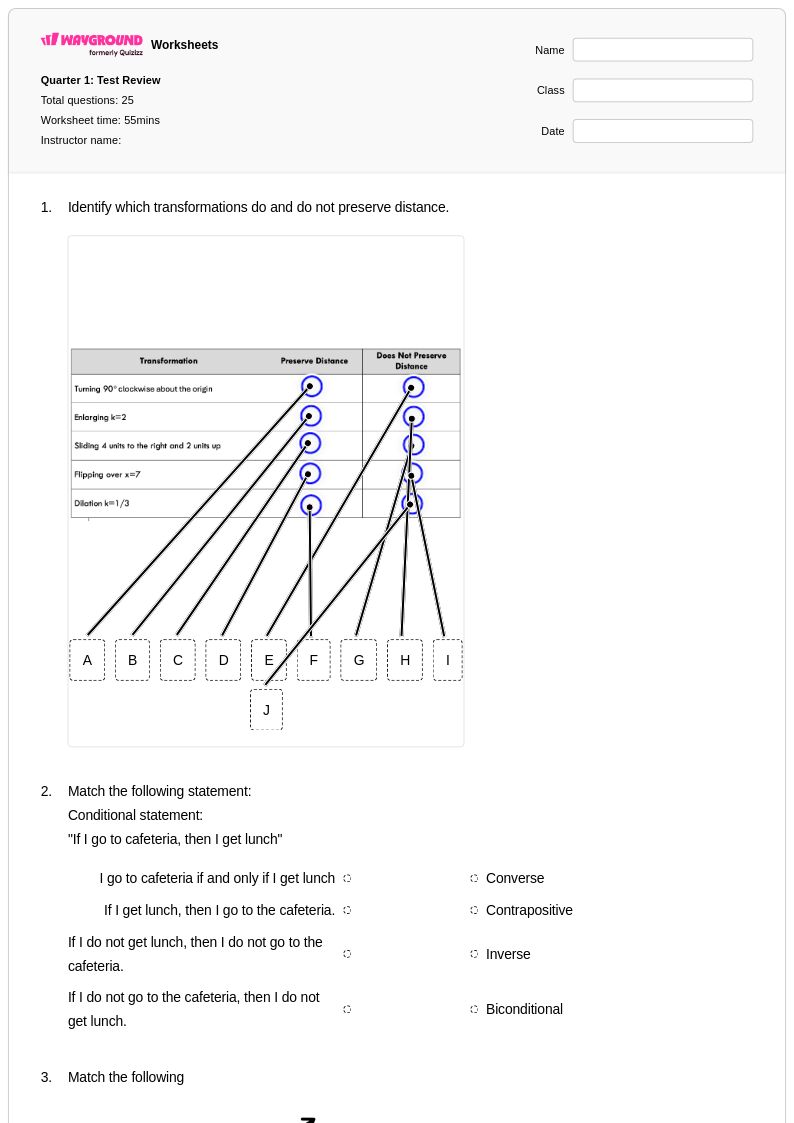
25 Q
9th - 12th
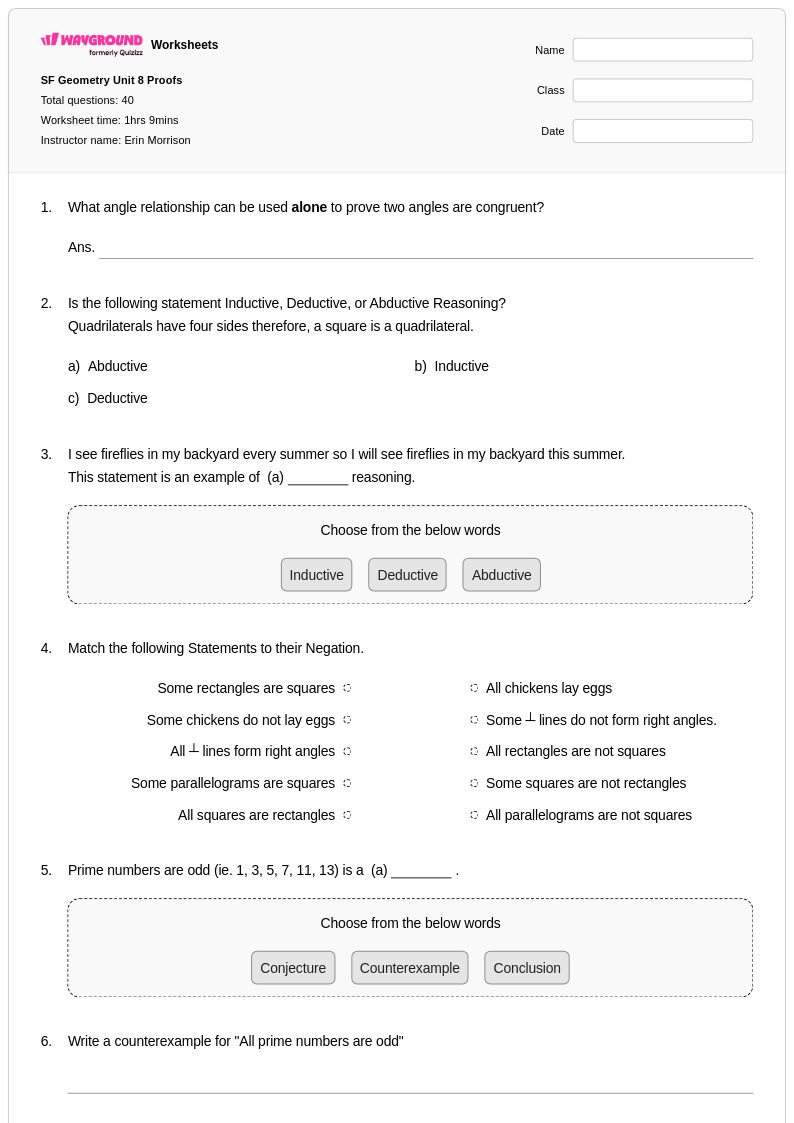
40 Q
9th - 12th
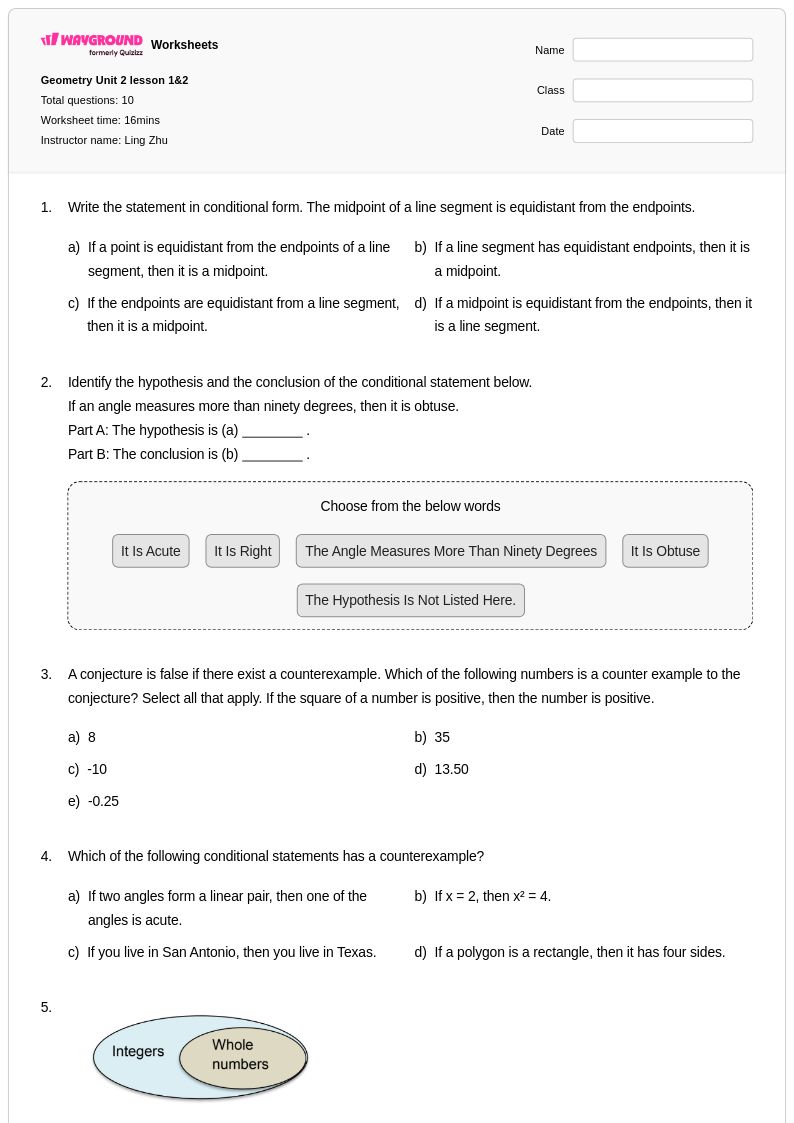
10 Q
8th - Uni
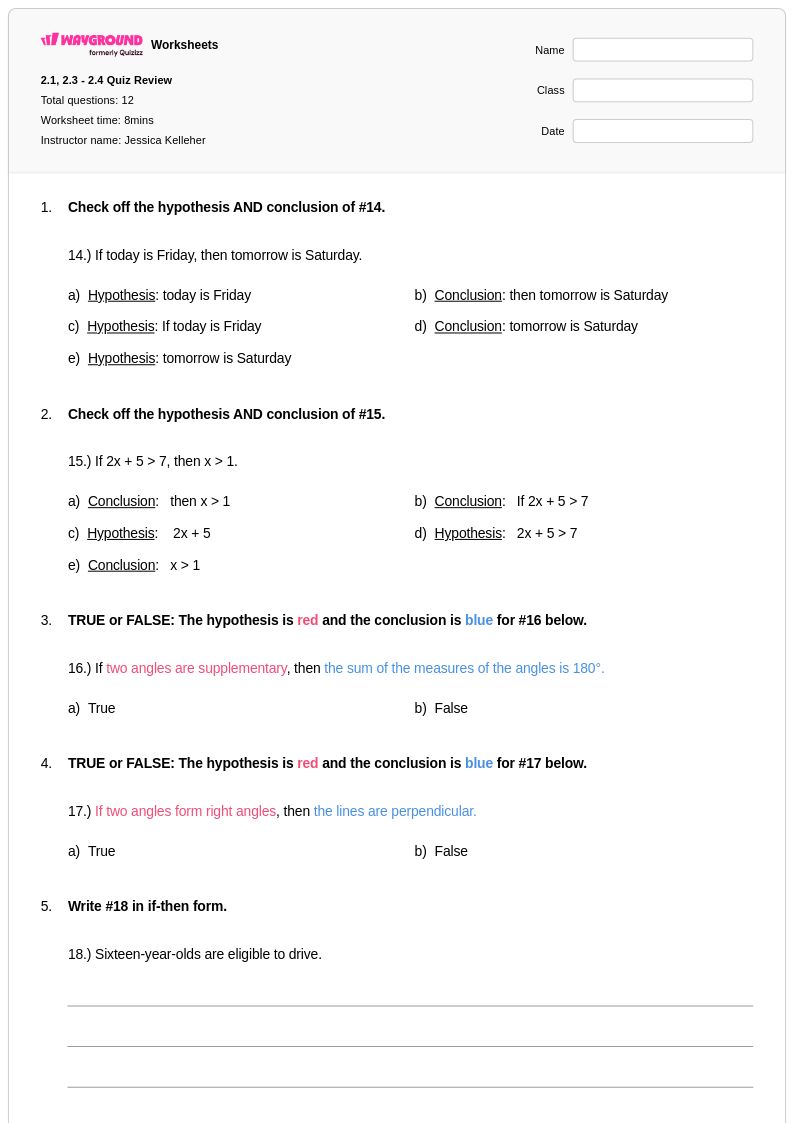
12 Q
9th - 12th
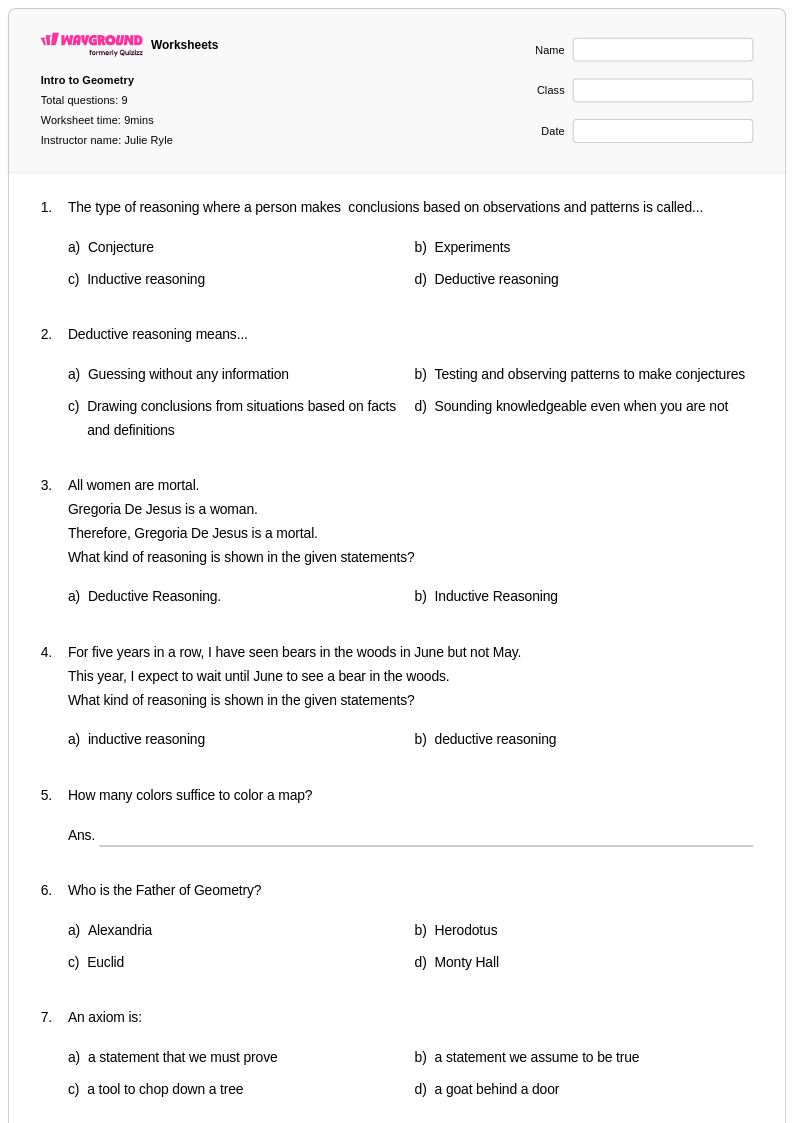
9 Q
9th - 12th
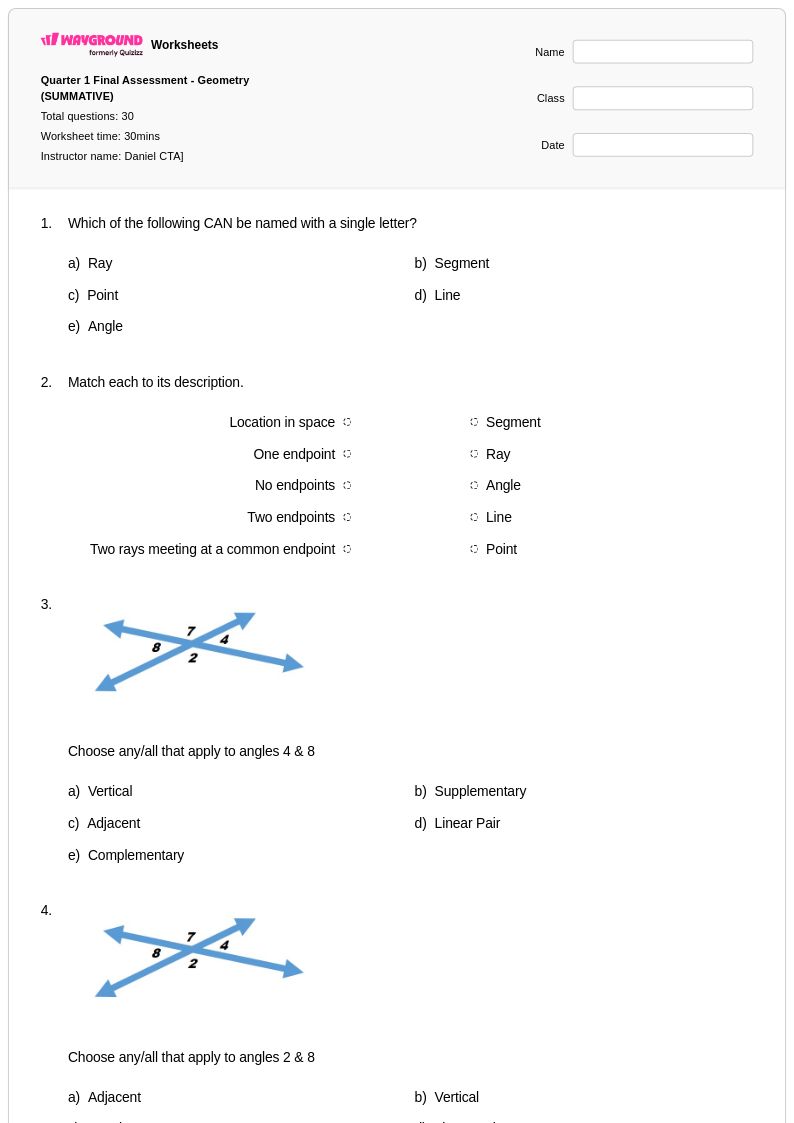
30 Q
9th - 12th
Explore Other Subject Worksheets for year 11
Explore printable Inductive Reasoning worksheets for Year 11
Inductive reasoning worksheets for Year 11 mathematics provide students with essential practice in recognizing patterns, making conjectures, and developing logical thinking skills that form the foundation of advanced algebraic concepts. These comprehensive worksheet collections available through Wayground focus on helping students identify sequences, analyze mathematical relationships, and draw reasonable conclusions from observed data and examples. Students work through carefully structured practice problems that challenge them to recognize arithmetic and geometric patterns, formulate hypotheses about mathematical relationships, and understand the distinction between inductive and deductive reasoning approaches. Each worksheet includes detailed answer keys and explanations, making these free printables valuable resources for both independent study and classroom instruction, while building critical thinking abilities essential for success in higher-level mathematics.
Wayground's extensive collection of teacher-created inductive reasoning worksheets offers educators millions of high-quality resources designed to support diverse learning needs in Year 11 mathematics classrooms. The platform's robust search and filtering capabilities allow teachers to quickly locate materials aligned with specific curriculum standards and learning objectives, while built-in differentiation tools enable customization for students at varying skill levels. These flexible worksheet collections are available in both printable pdf formats and interactive digital versions, making them ideal for hybrid learning environments and accommodating different teaching preferences. Teachers can seamlessly integrate these resources into their lesson planning for skill practice, targeted remediation of logical reasoning gaps, or enrichment activities that challenge advanced learners to explore more complex pattern recognition and conjecture-making scenarios.
FAQs
How do I teach inductive reasoning to Grade 11 students?
What are good inductive reasoning exercises for Grade 11?
What misconceptions do Grade 11 students have about inductive reasoning?
How should I use these Grade 11 inductive reasoning worksheets?
Does Grade 11 inductive reasoning practice support Common Core math?
How can I support mixed-ability students with inductive reasoning worksheets?
Is inductive reasoning appropriate for Grade 11 math?