Explore Wayground's comprehensive collection of Year 12 infinitives worksheets with printables, practice problems, and answer keys to help students master this essential verbal form in English grammar.
Explore printable Infinitives worksheets for Year 12
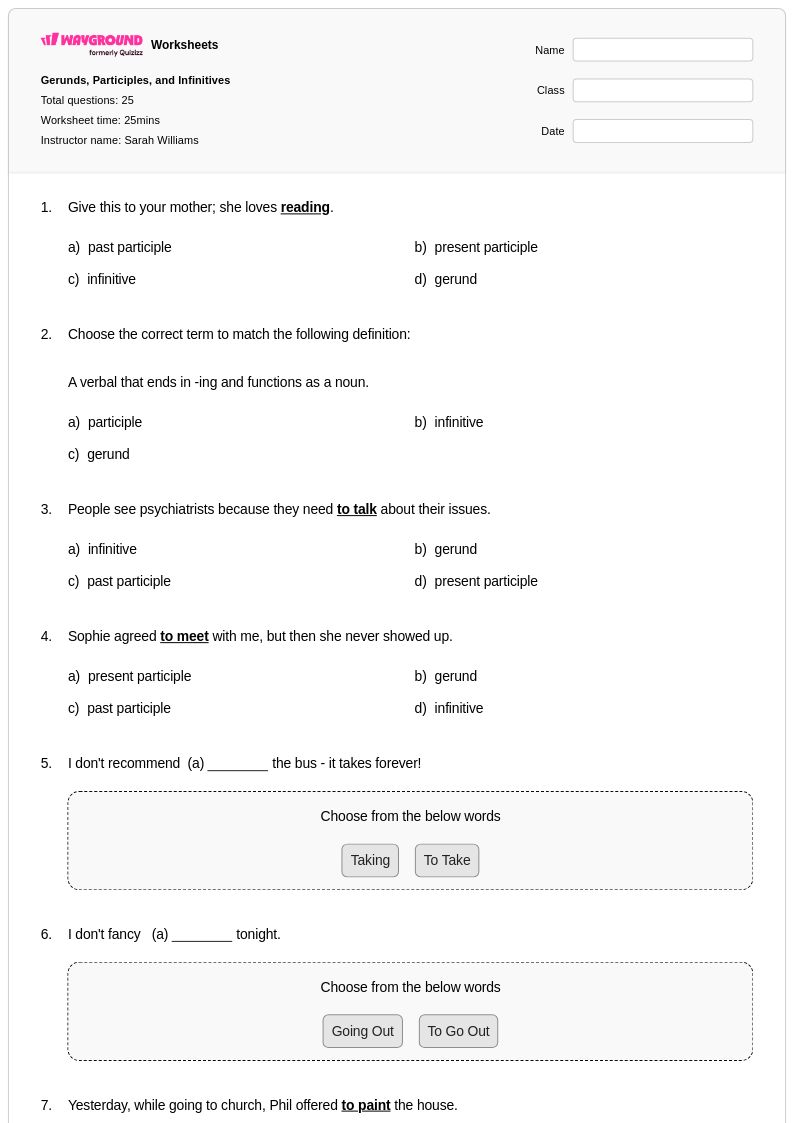
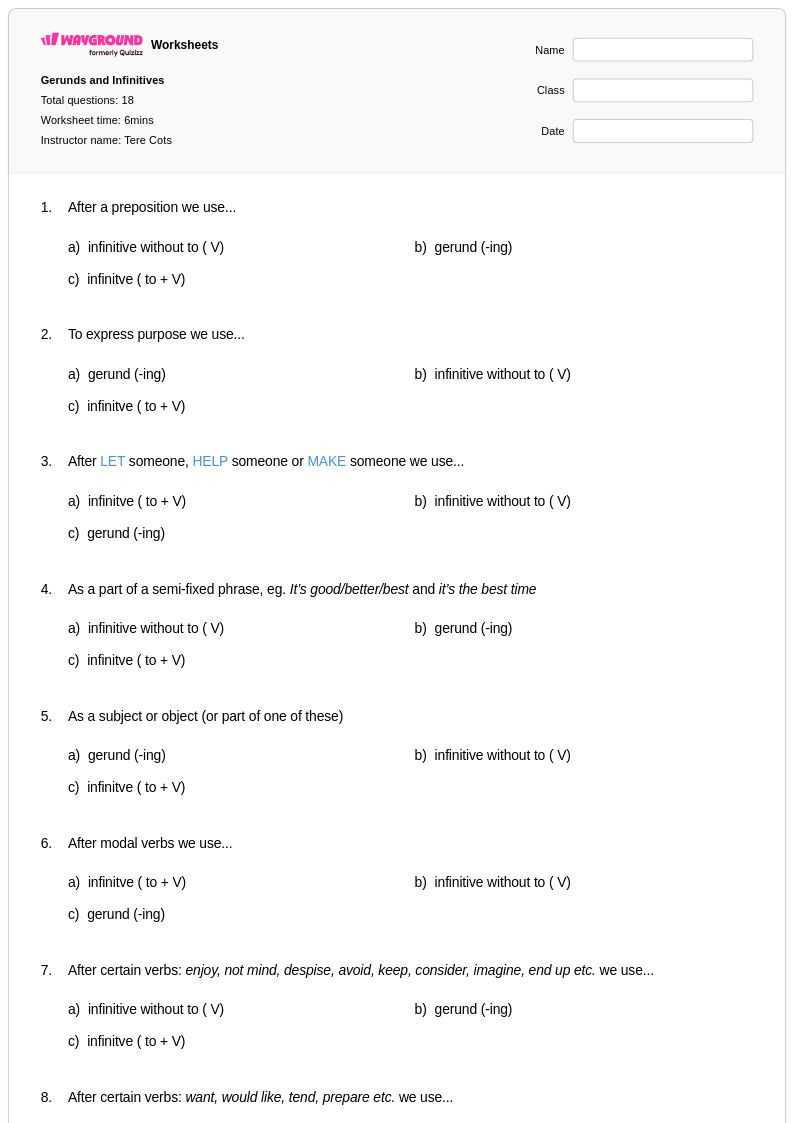
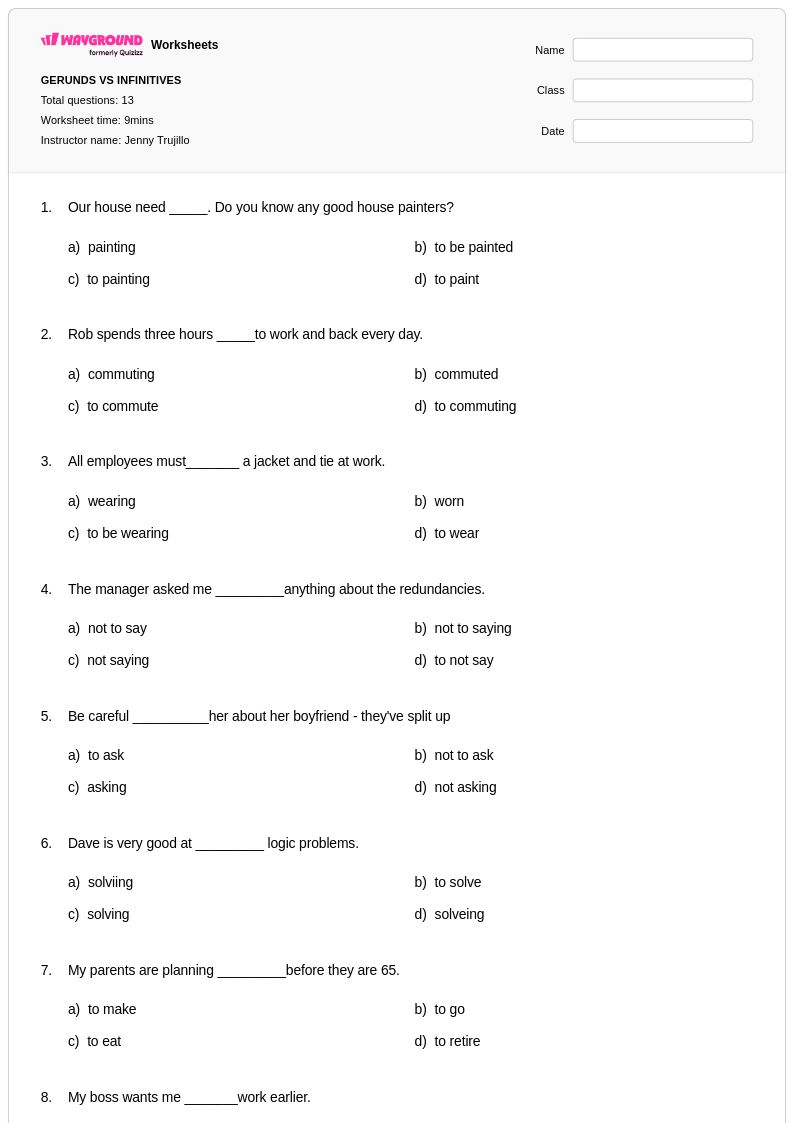
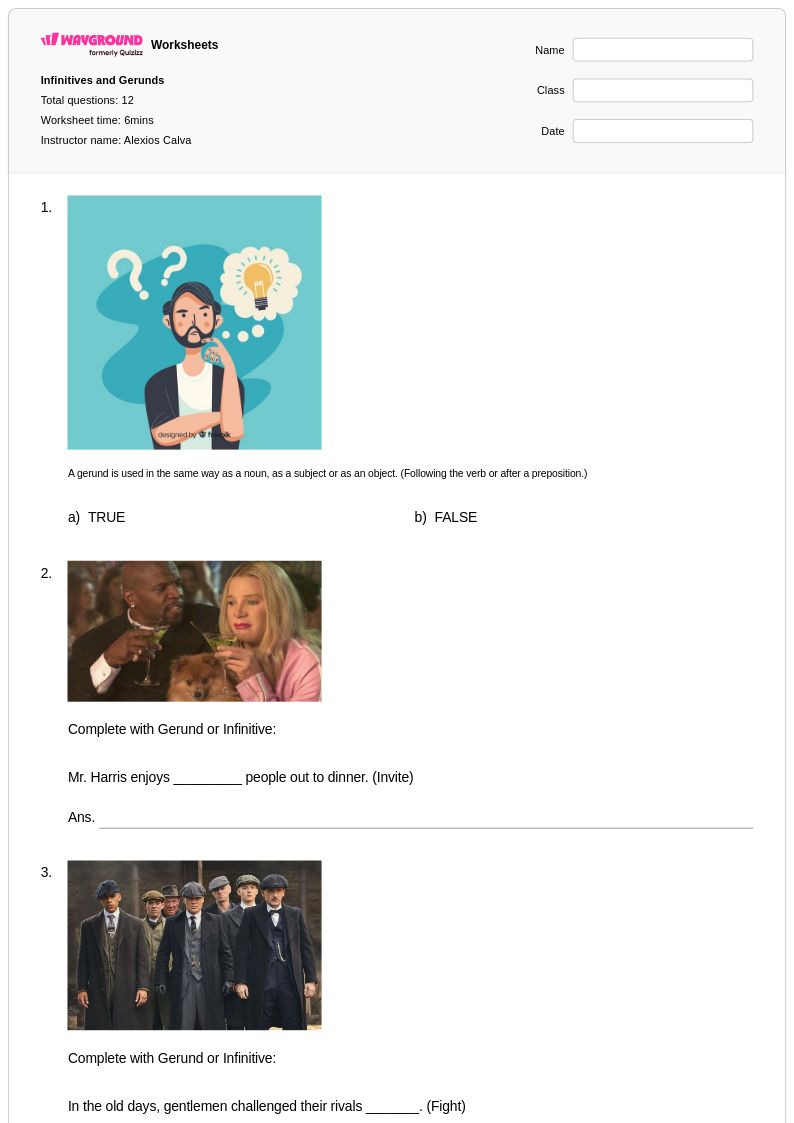
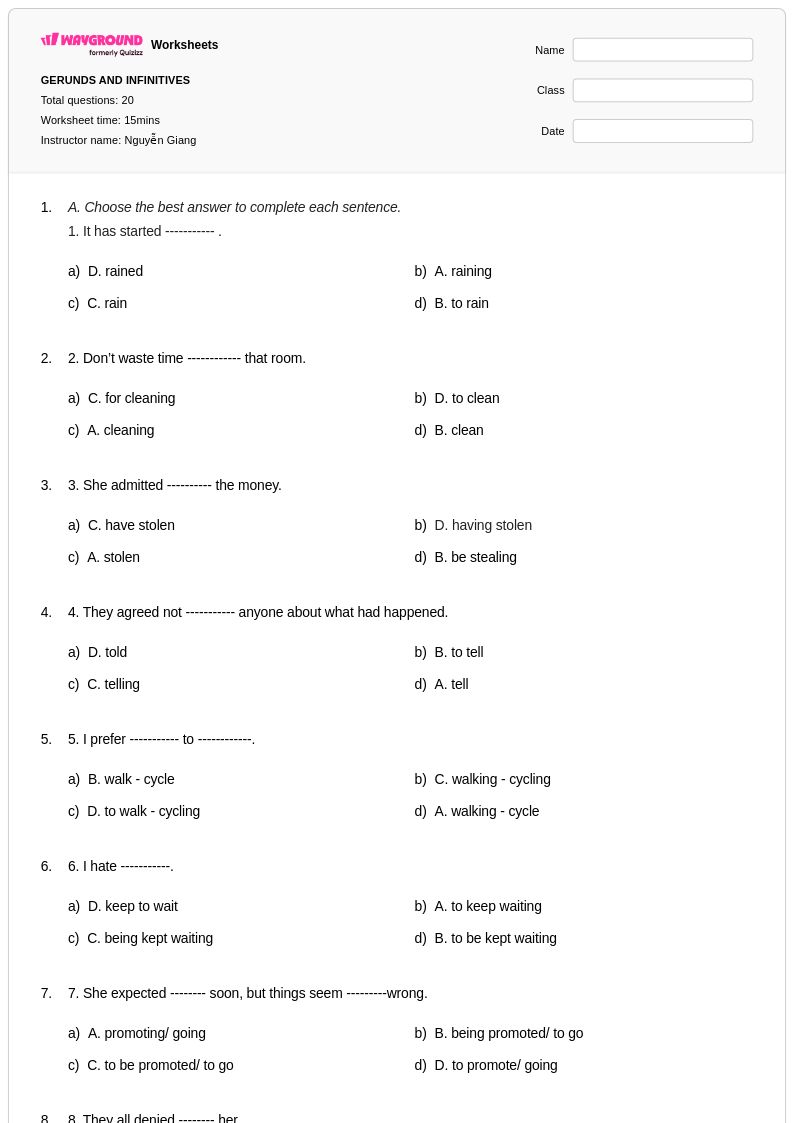
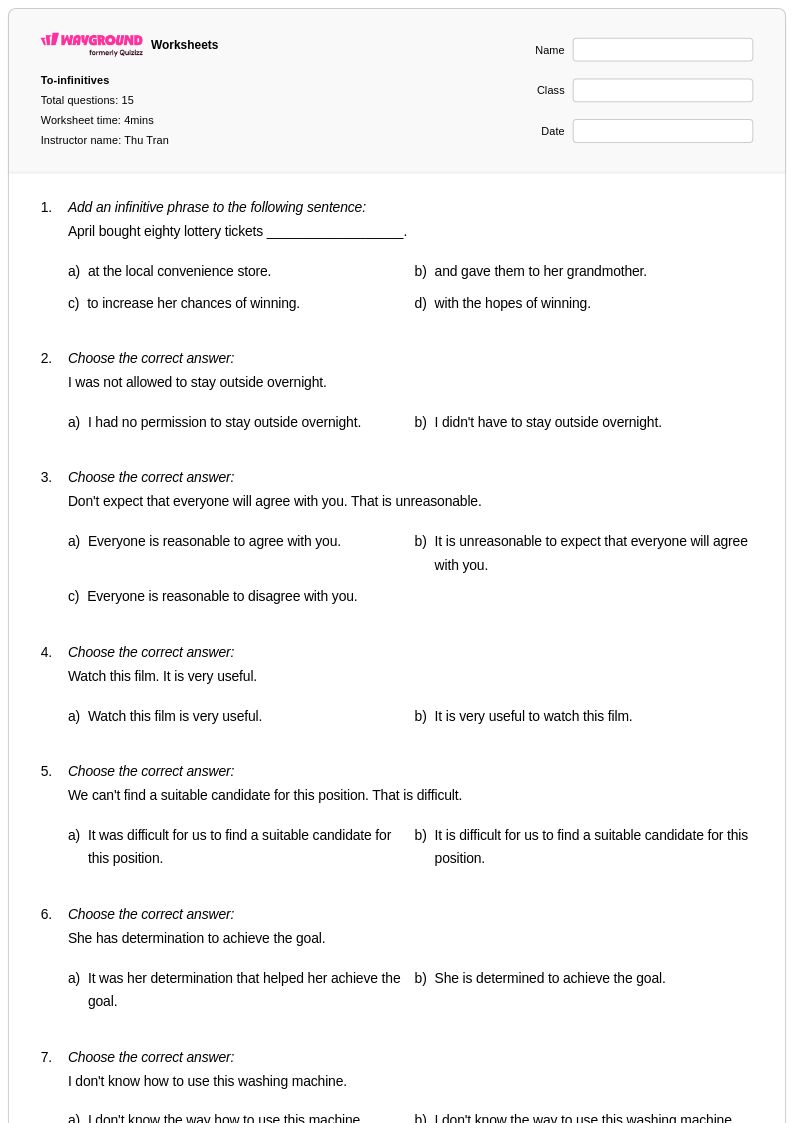
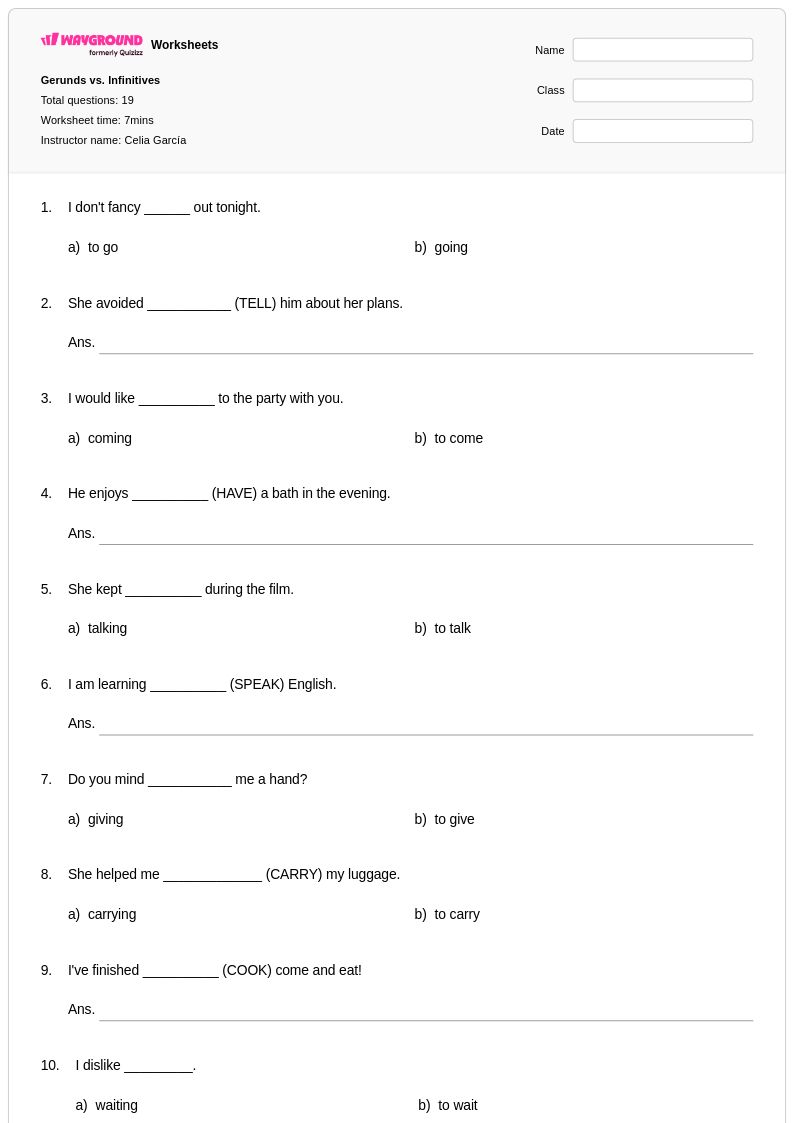
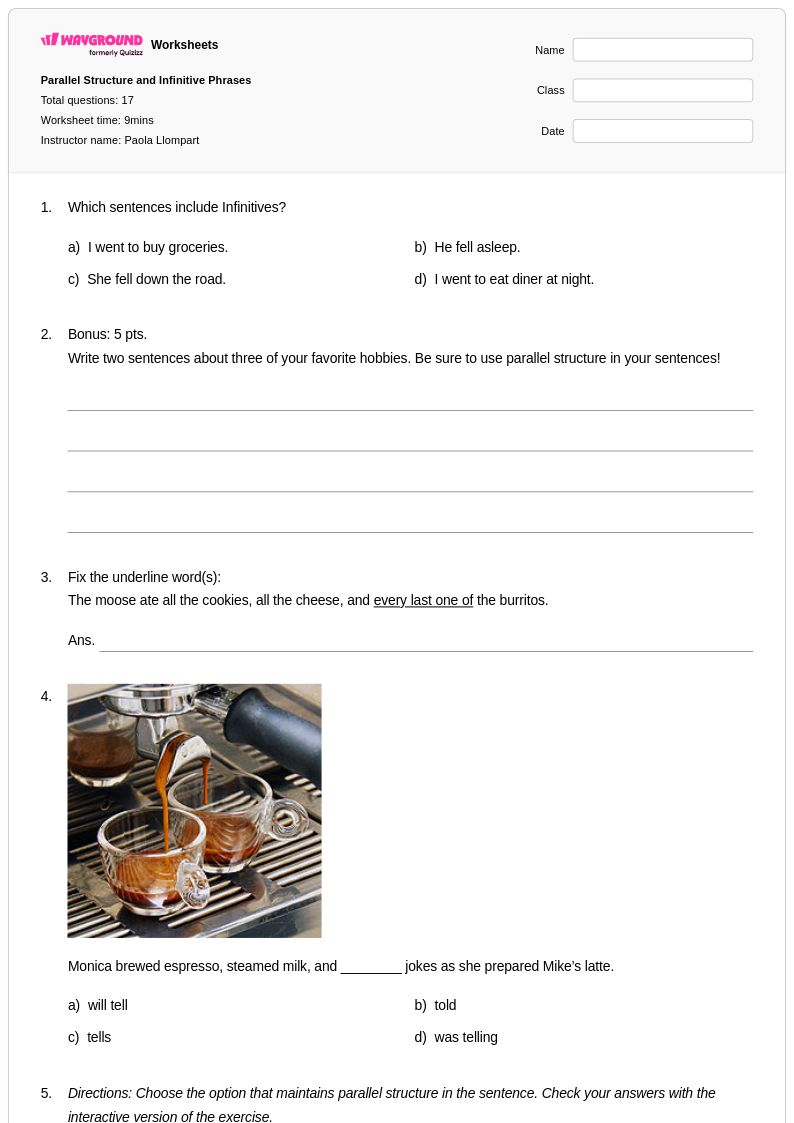
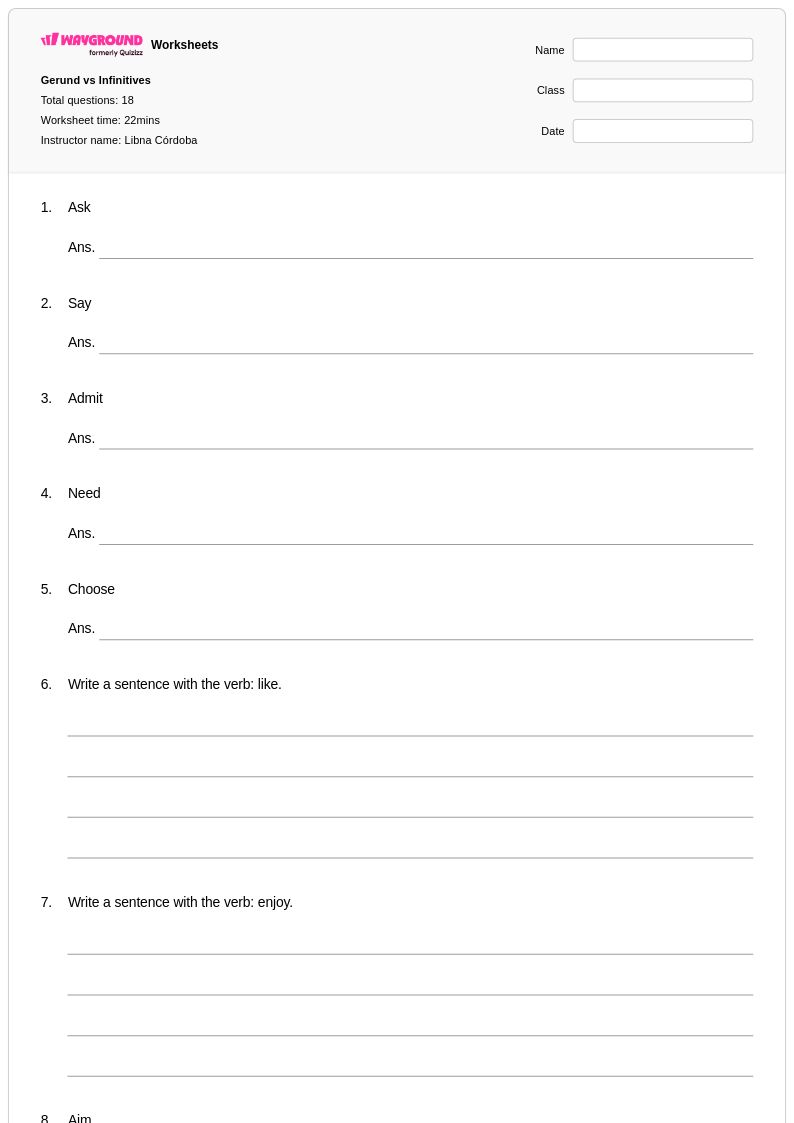
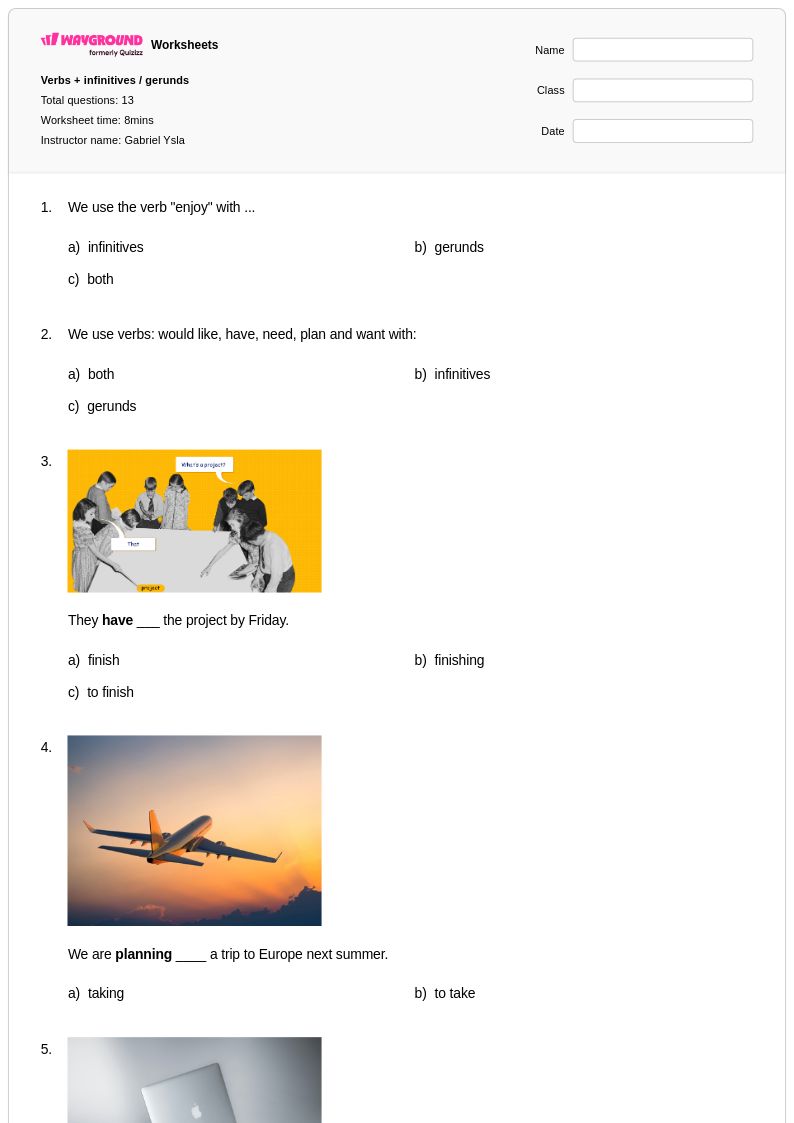
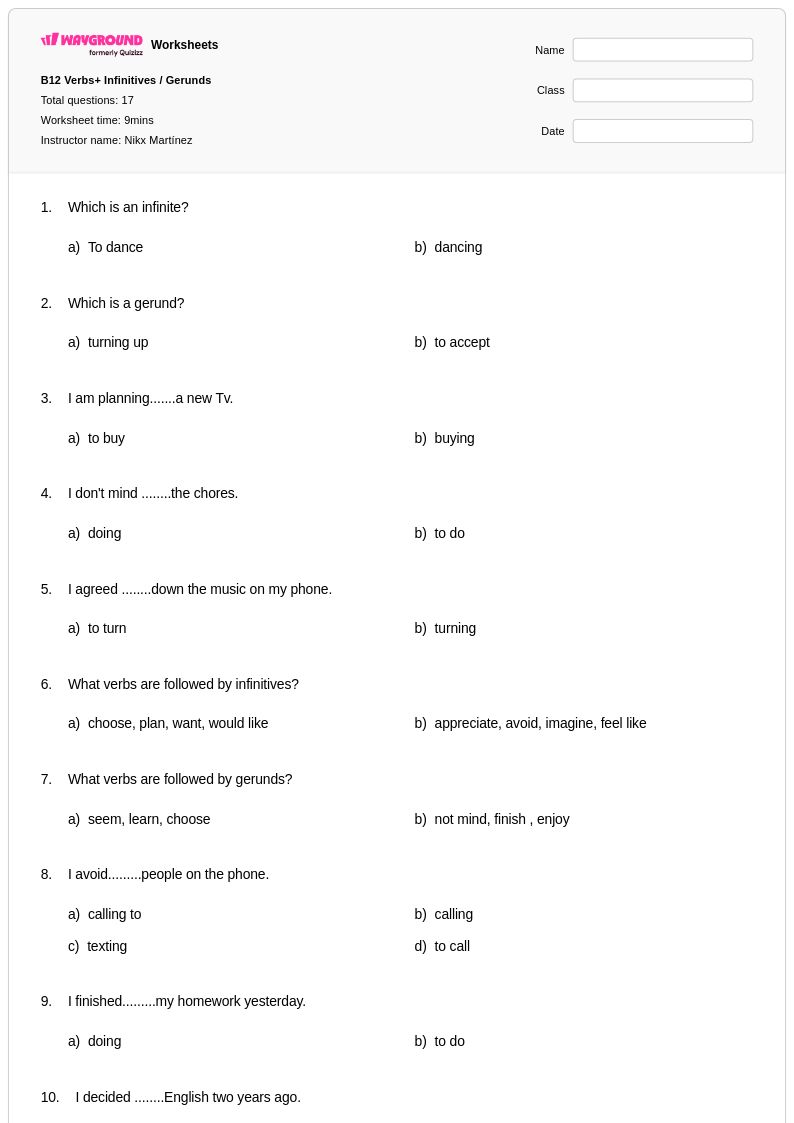
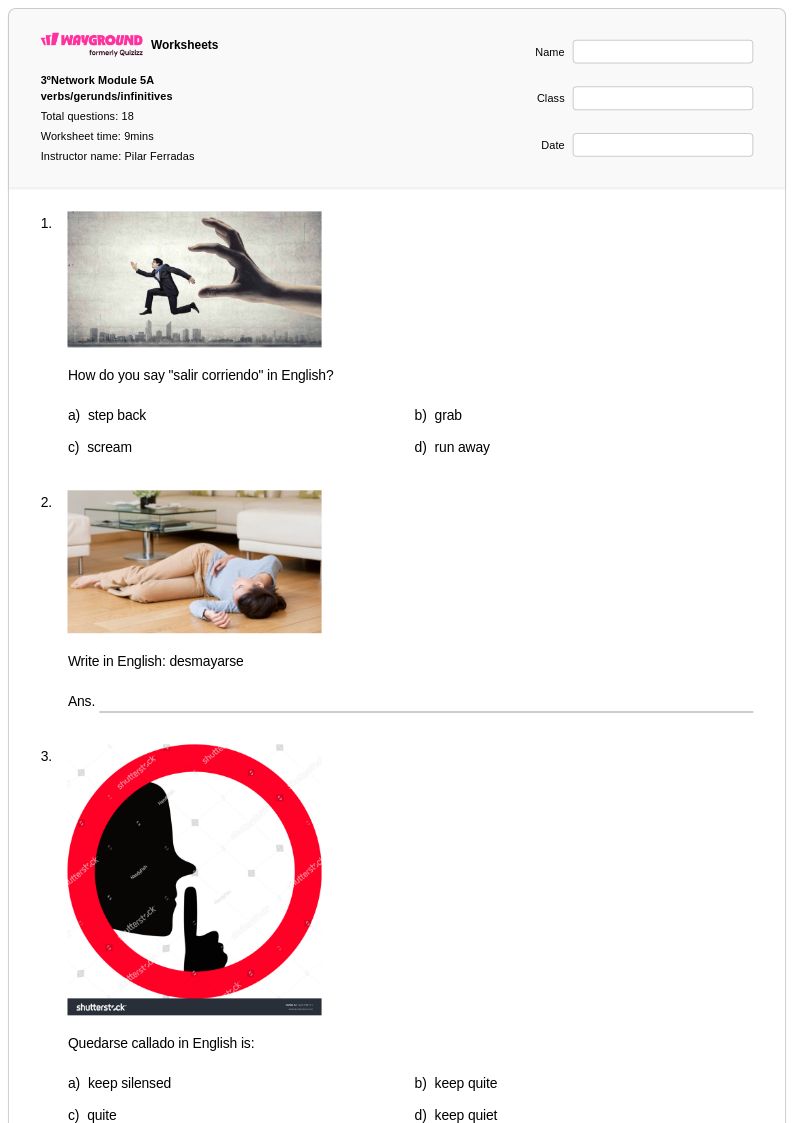
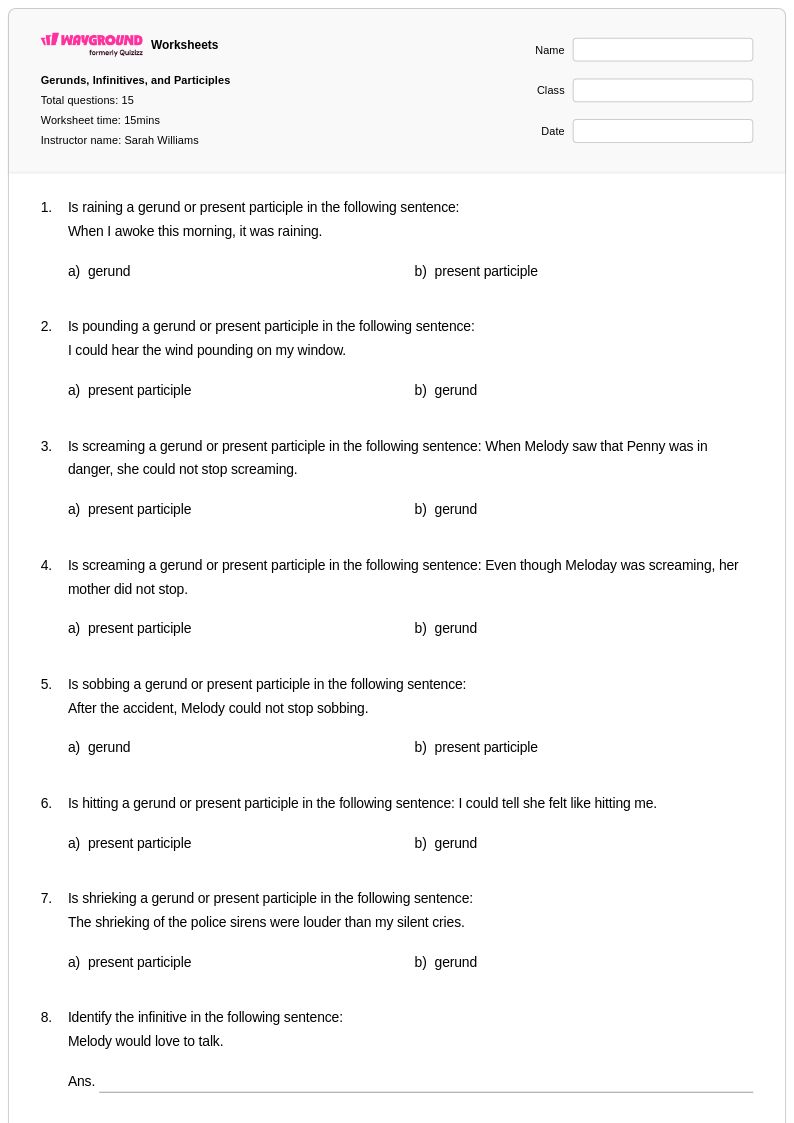
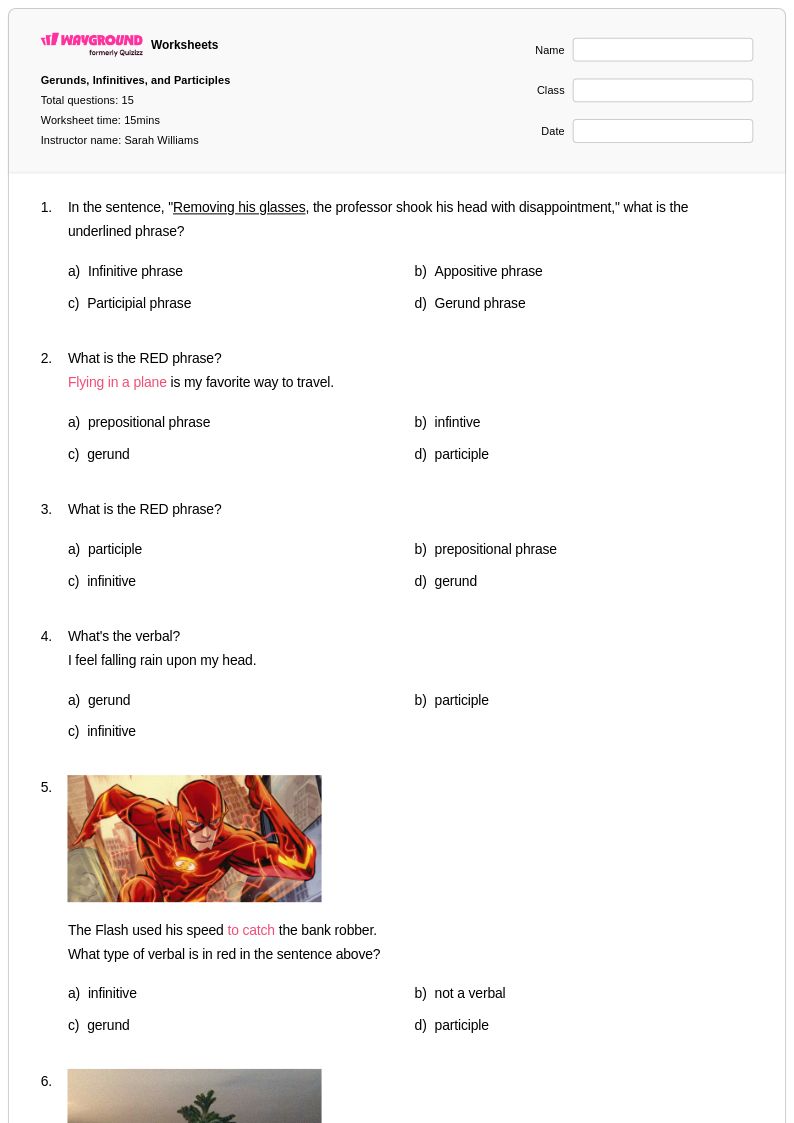
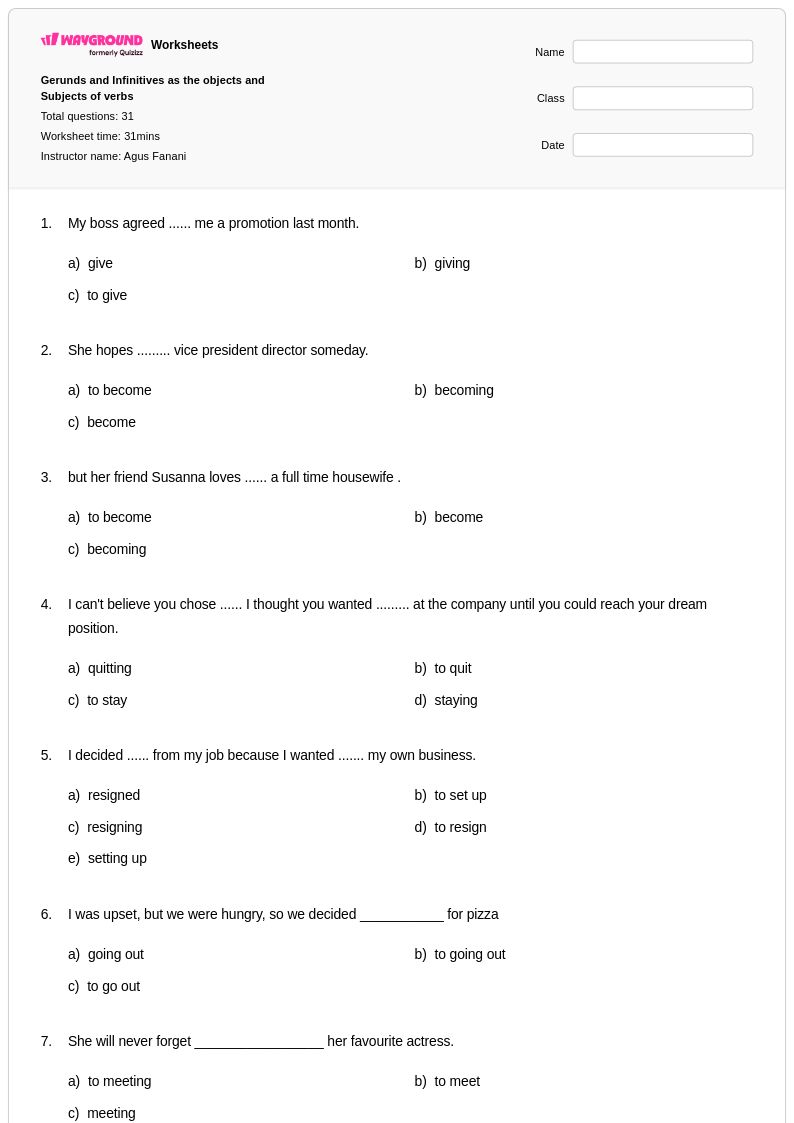
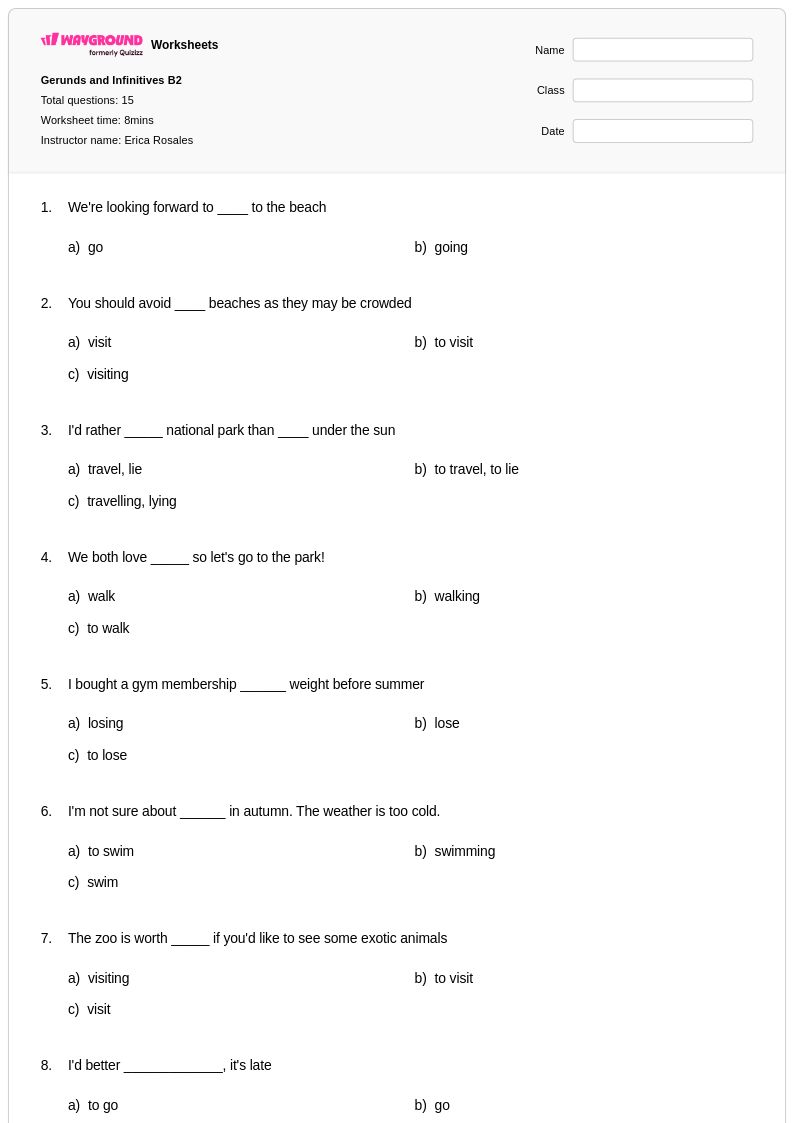
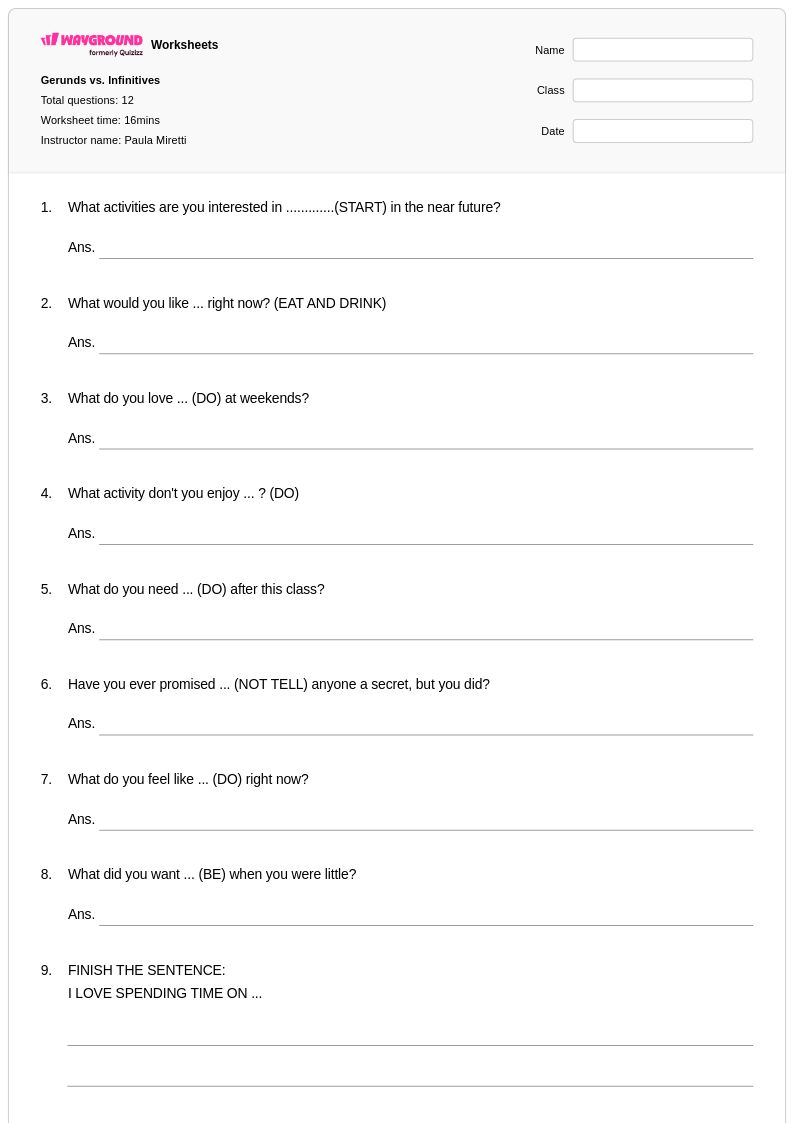
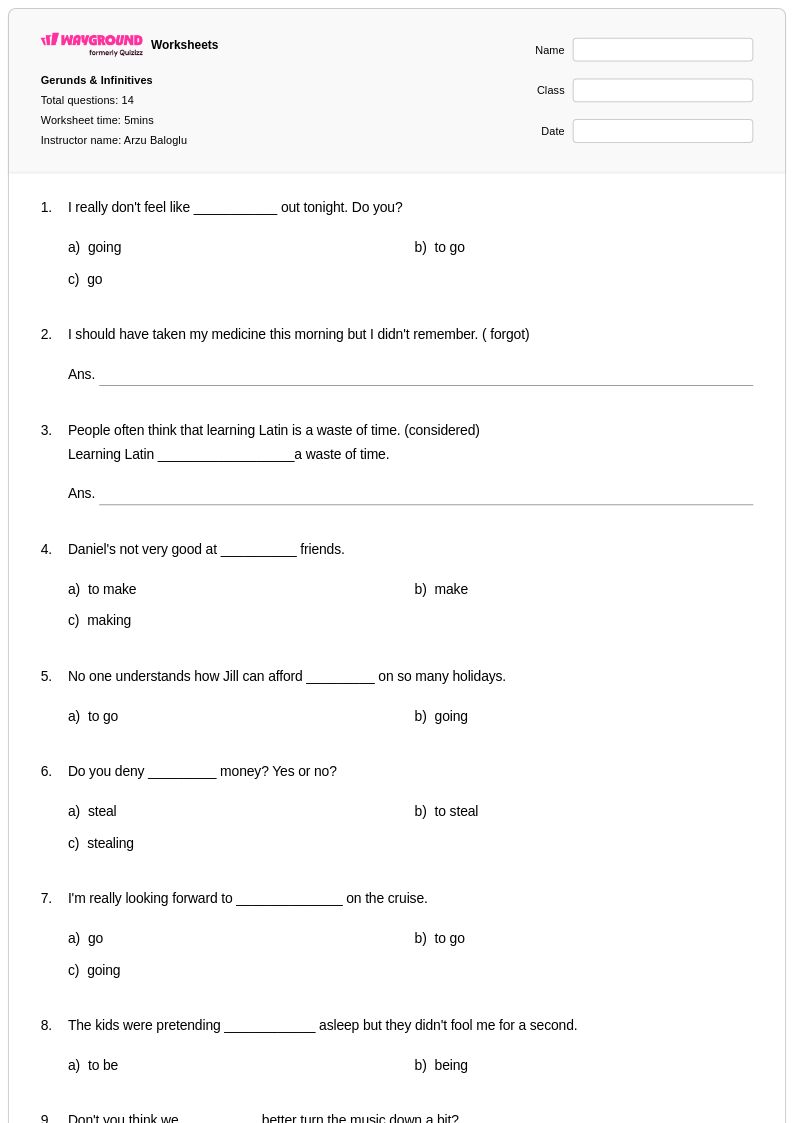
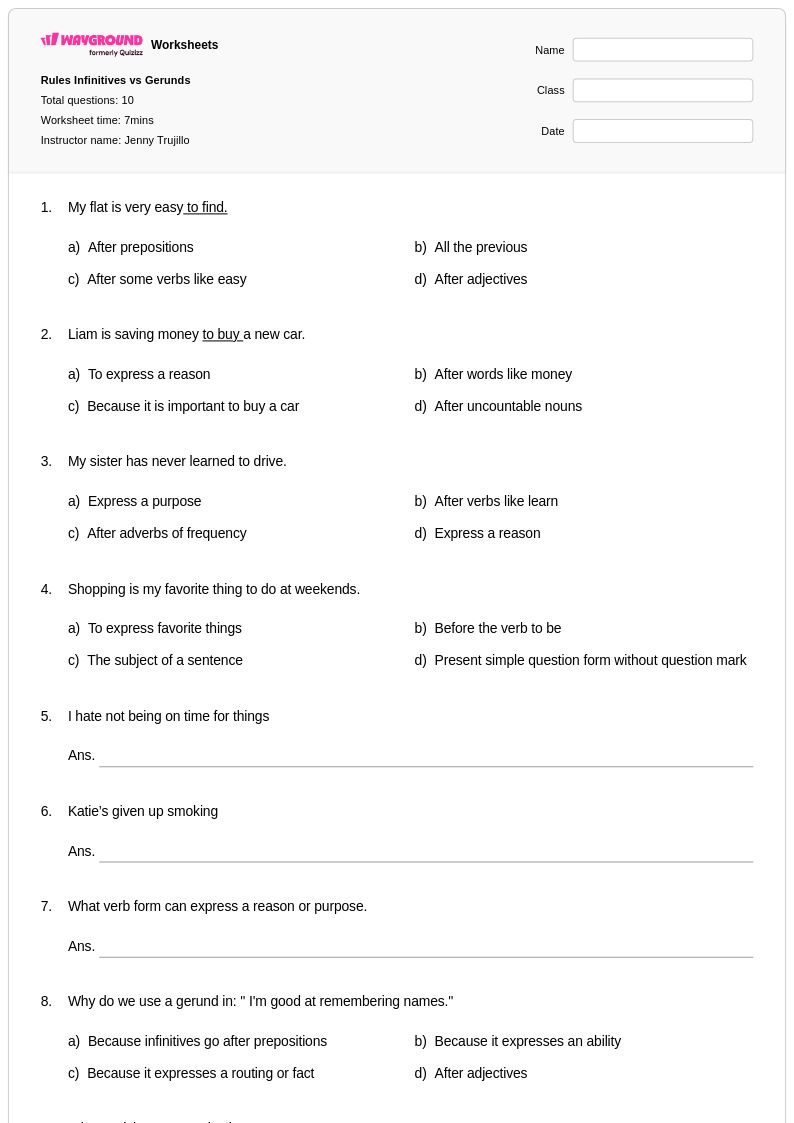
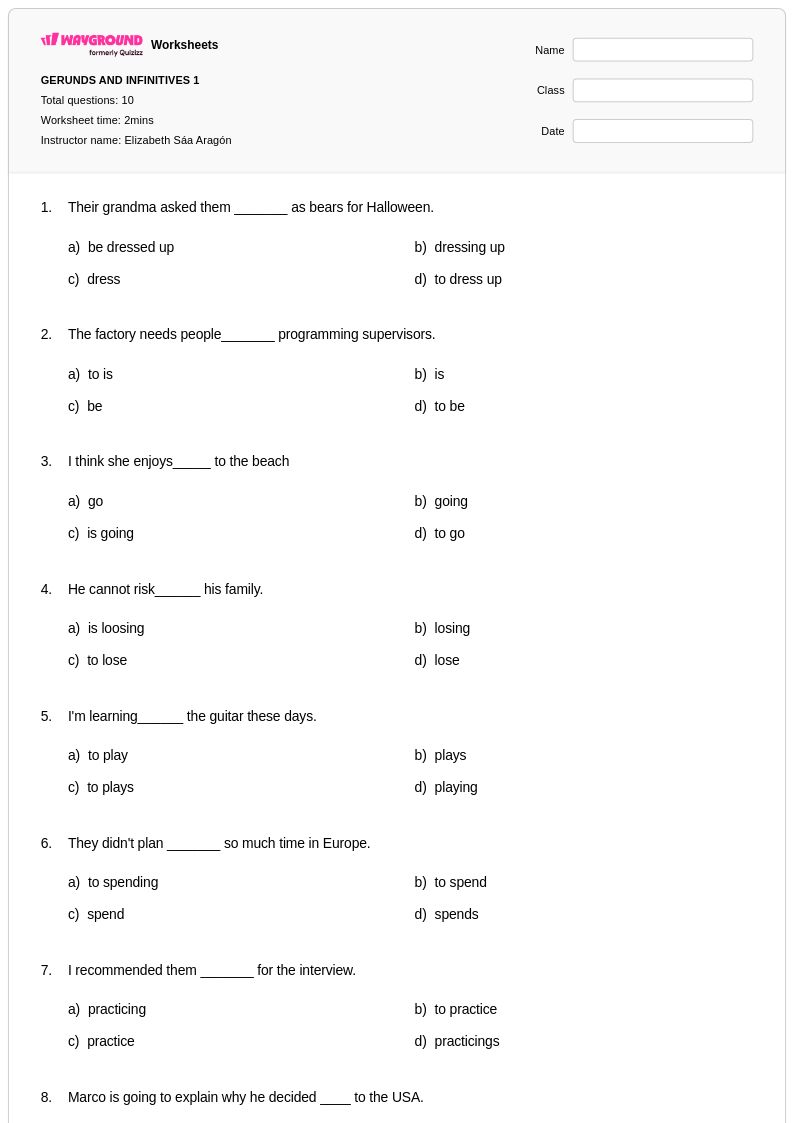
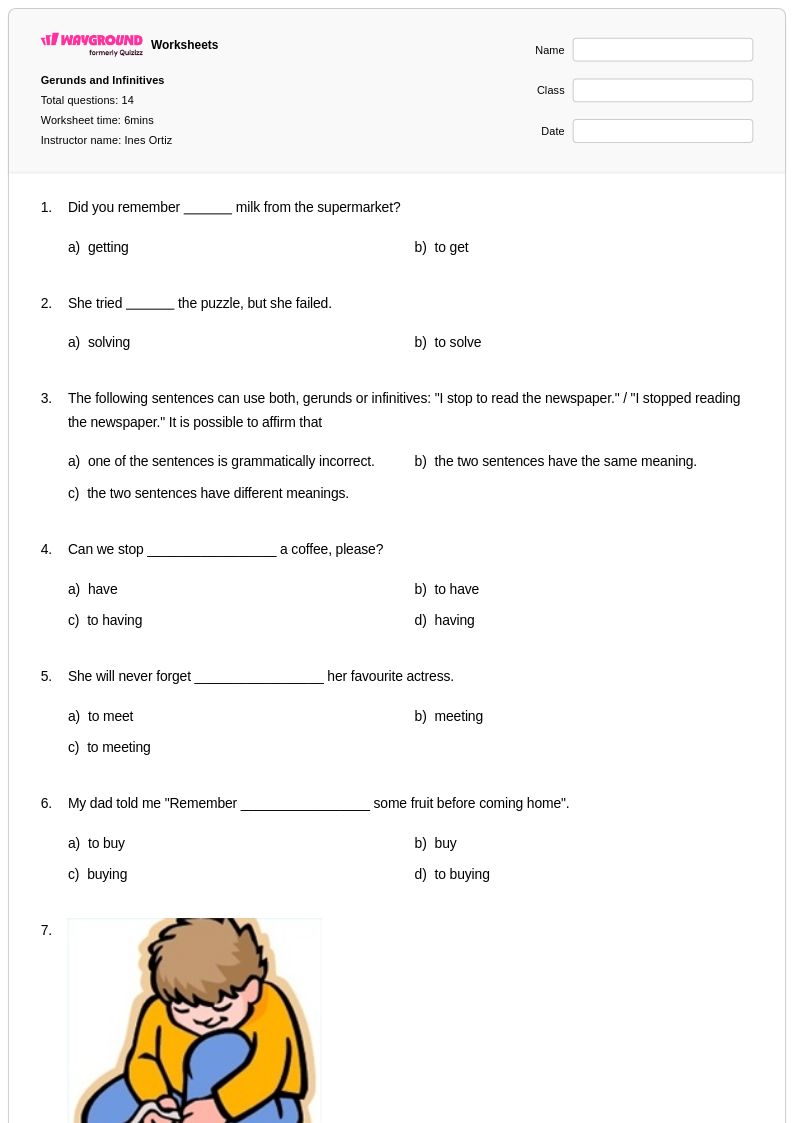
Infinitives worksheets for Year 12 students available through Wayground (formerly Quizizz) provide comprehensive practice with this essential verbal form that functions as nouns, adjectives, and adverbs within complex sentence structures. These carefully designed educational resources help students master the identification and proper usage of infinitives in both their base form and split constructions, while strengthening critical thinking skills needed for advanced literary analysis and sophisticated writing. The collection includes diverse practice problems that challenge students to recognize infinitive phrases, distinguish between infinitives and prepositional phrases beginning with "to," and analyze how infinitives function grammatically within sentences. Each worksheet comes with a detailed answer key to support independent learning and self-assessment, and teachers can access these materials as free printables in convenient pdf format for seamless classroom integration.
Wayground (formerly Quizizz) empowers educators with an extensive library of millions of teacher-created infinitive worksheets specifically curated for Year 12 English instruction, featuring robust search and filtering capabilities that allow teachers to locate materials perfectly aligned with their curriculum standards and learning objectives. The platform's differentiation tools enable instructors to customize worksheet difficulty levels and content focus areas, ensuring that both struggling students and advanced learners receive appropriate challenges for their skill development. Teachers can utilize these resources in both printable and digital formats, making them ideal for traditional classroom instruction, homework assignments, targeted remediation sessions, and enrichment activities that extend beyond basic grammar instruction into sophisticated literary analysis. The comprehensive collection streamlines lesson planning while providing the flexibility needed to address individual student needs and support various learning styles throughout the academic year.
FAQs
How do I teach infinitives to students who confuse them with prepositional phrases?
The most effective approach is to teach students a substitution test: if you can replace 'to' with 'in order to' and the sentence still makes sense, the phrase is likely an infinitive. For prepositional phrases, the word following 'to' is always a noun or pronoun, never a verb. Using side-by-side sentence comparisons — such as 'She went to the store' versus 'She wanted to run' — helps students internalize this distinction quickly.
What are the three main functions of infinitives in a sentence?
Infinitives can function as nouns, adjectives, or adverbs in a sentence. As a noun, an infinitive can serve as the subject, object, or complement (e.g., 'To read is relaxing'). As an adjective, it modifies a noun (e.g., 'She needed a book to read'), and as an adverb, it modifies a verb or adjective (e.g., 'He studied hard to pass'). Teaching students to identify each function strengthens their overall sentence analysis skills.
What exercises help students practice identifying and using infinitives correctly?
Effective practice exercises include underlining infinitives in authentic sentences, classifying their grammatical function (noun, adjective, or adverb), rewriting sentences to incorporate infinitive phrases, and correcting misidentified examples that include prepositional phrases starting with 'to.' Progressing from recognition tasks to original sentence construction ensures students move beyond rote identification toward confident, accurate usage in their own writing.
What mistakes do students commonly make when working with infinitives?
The most common error is confusing infinitives with prepositional phrases — students see 'to' and assume a noun follows rather than checking for a base verb. Students also frequently struggle with split infinitives, either avoiding them unnecessarily or using them without awareness. A third persistent error is misidentifying the function of an infinitive within a sentence, particularly distinguishing adverbial infinitives from adjectival ones.
How can I use Wayground's infinitives worksheets in my classroom?
Wayground's infinitives worksheets are available as printable PDFs for traditional classroom use and in digital formats for technology-integrated environments, giving you flexibility depending on your instructional context. You can also host them as a quiz directly on Wayground, which allows for interactive student engagement and streamlined grading. All worksheets include complete answer keys, making them ready to use for direct instruction, independent practice, homework, or targeted grammar remediation.
How do I differentiate infinitives instruction for students at different proficiency levels?
For students who need additional support, start with recognition-only tasks using simple, high-frequency sentences before moving to function-identification or construction activities. On Wayground, teachers can apply accommodations such as reduced answer choices to decrease cognitive load for struggling learners, or enable Read Aloud so students can hear sentence examples read to them. Advanced students benefit from tasks that require them to write original sentences using infinitives in all three grammatical functions, then peer-edit for correct usage.