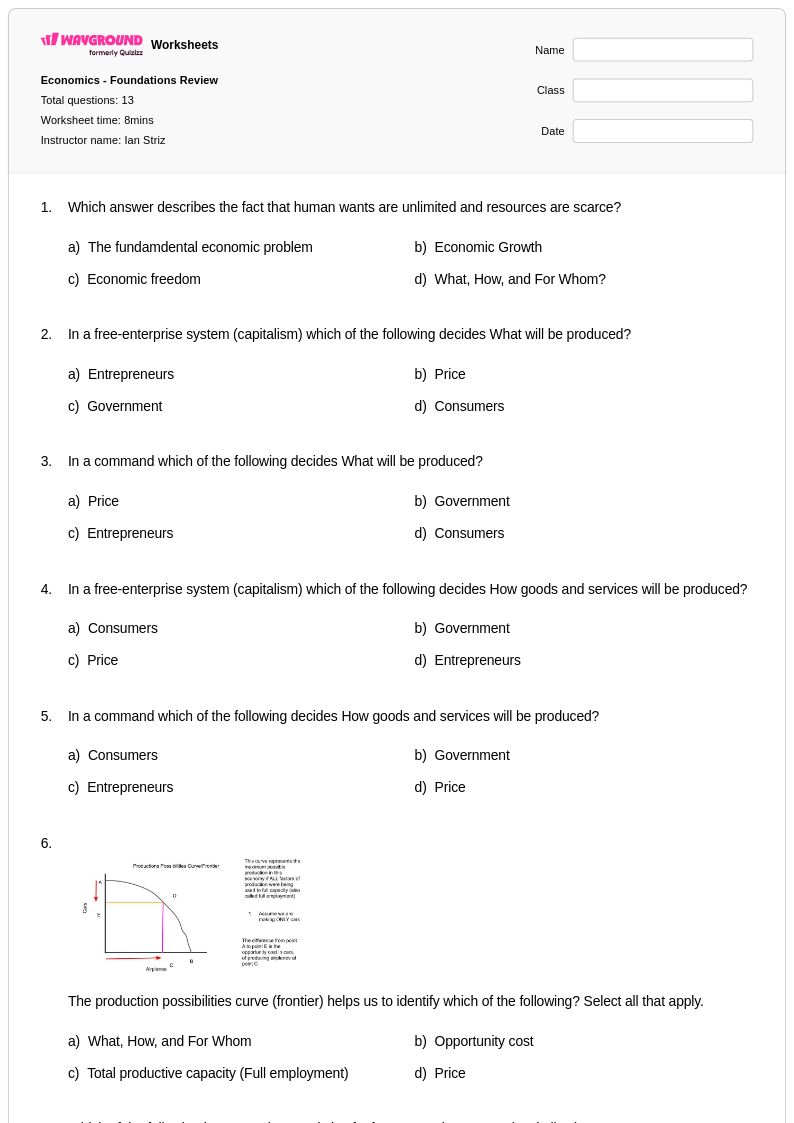
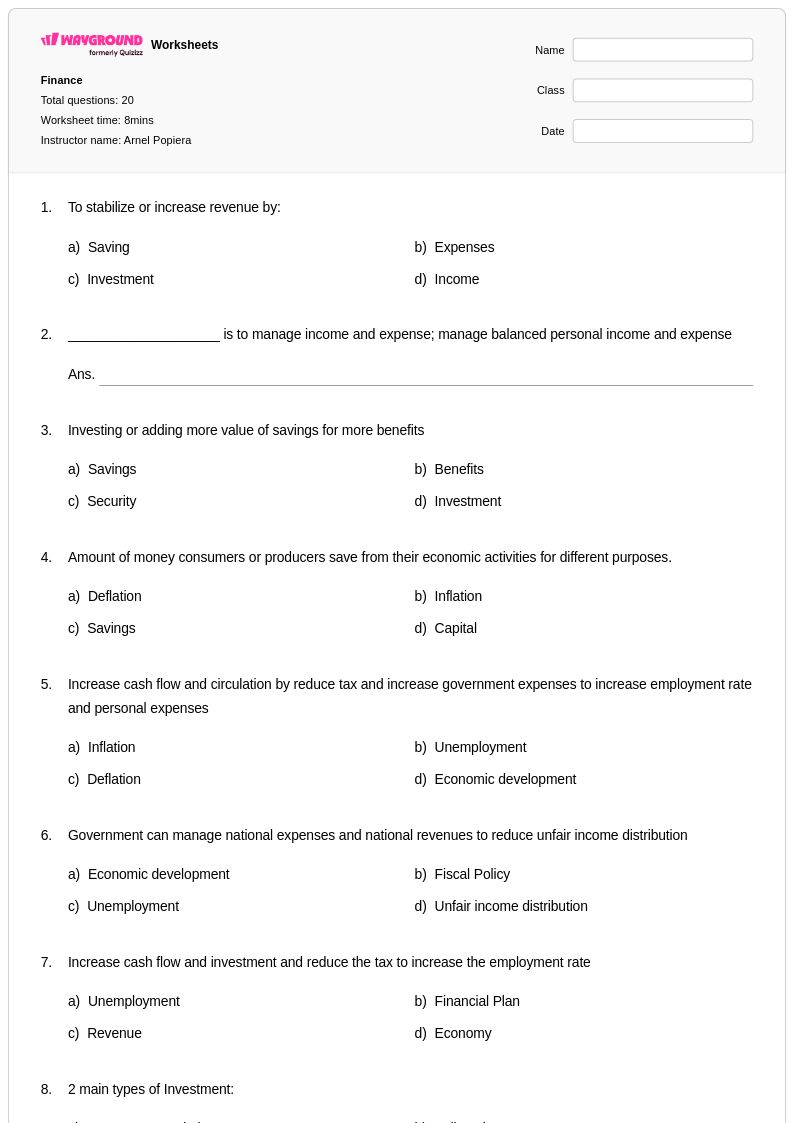
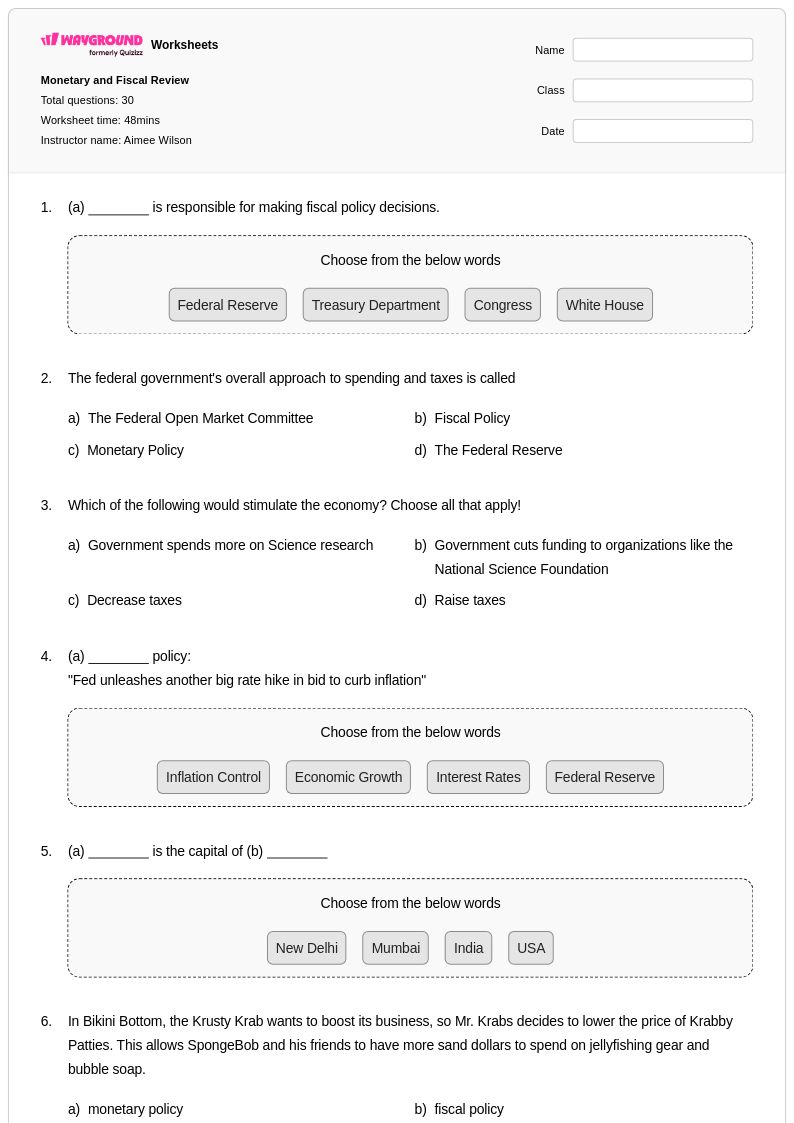
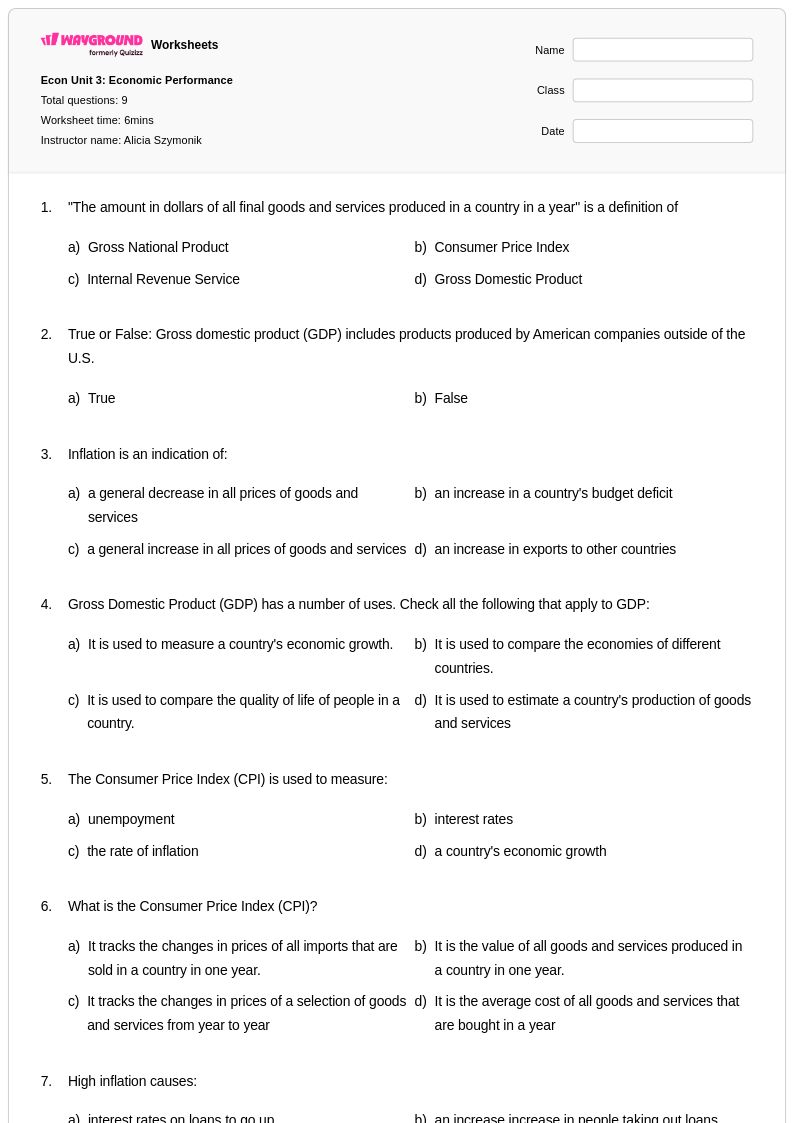
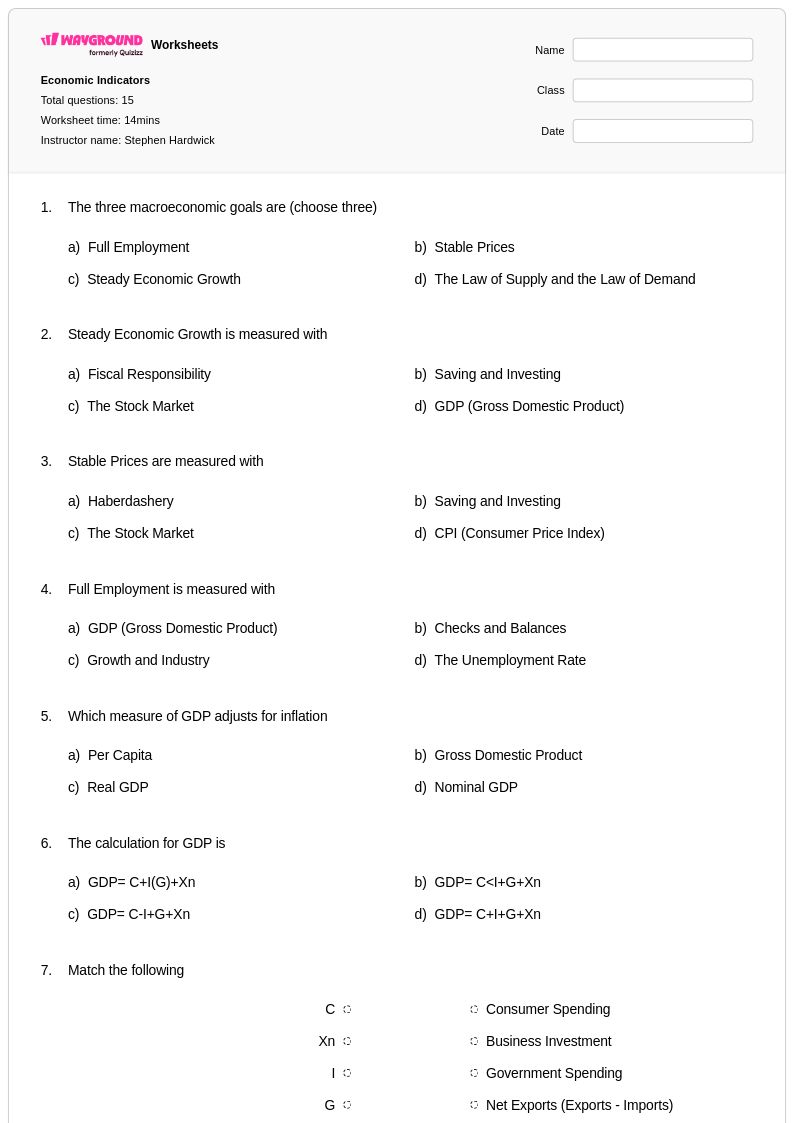
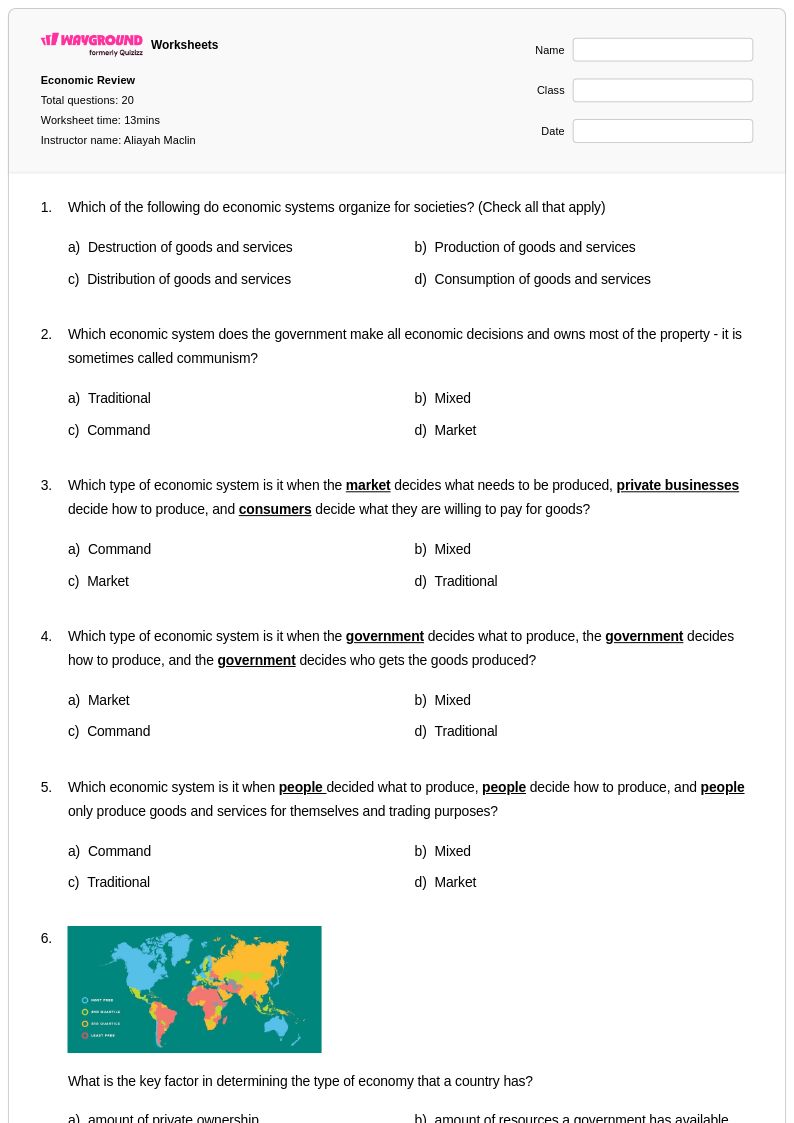
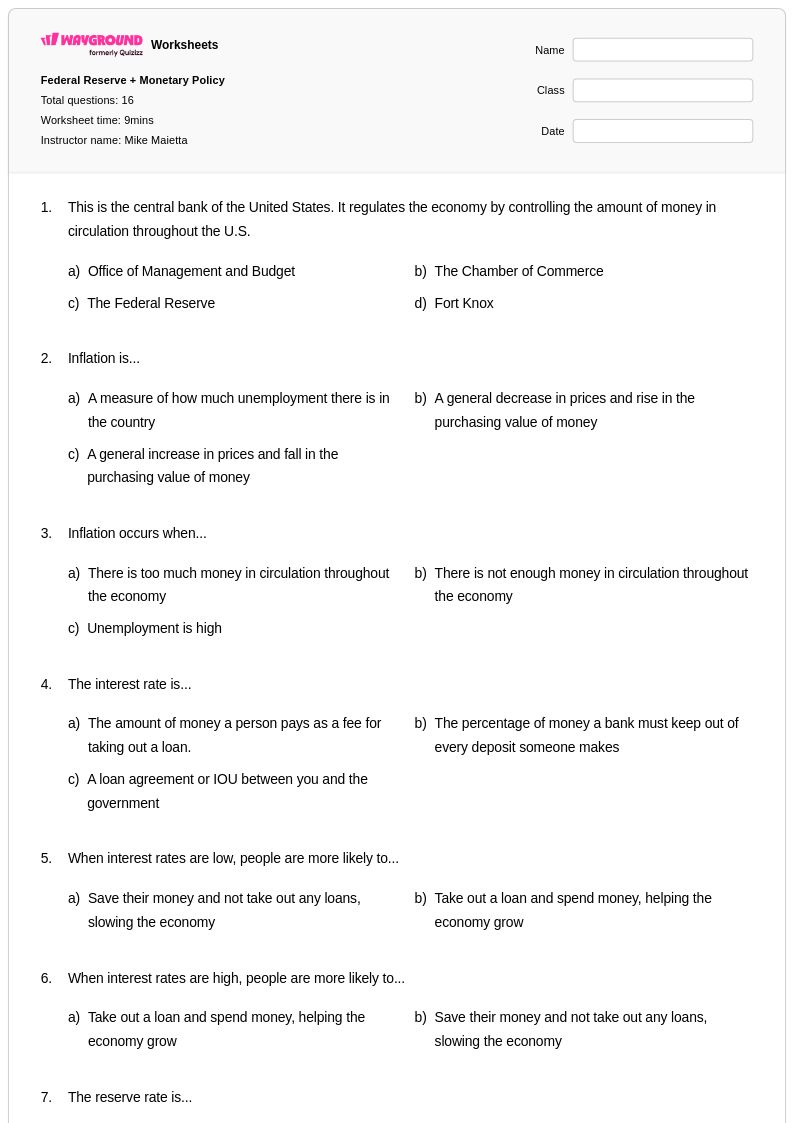
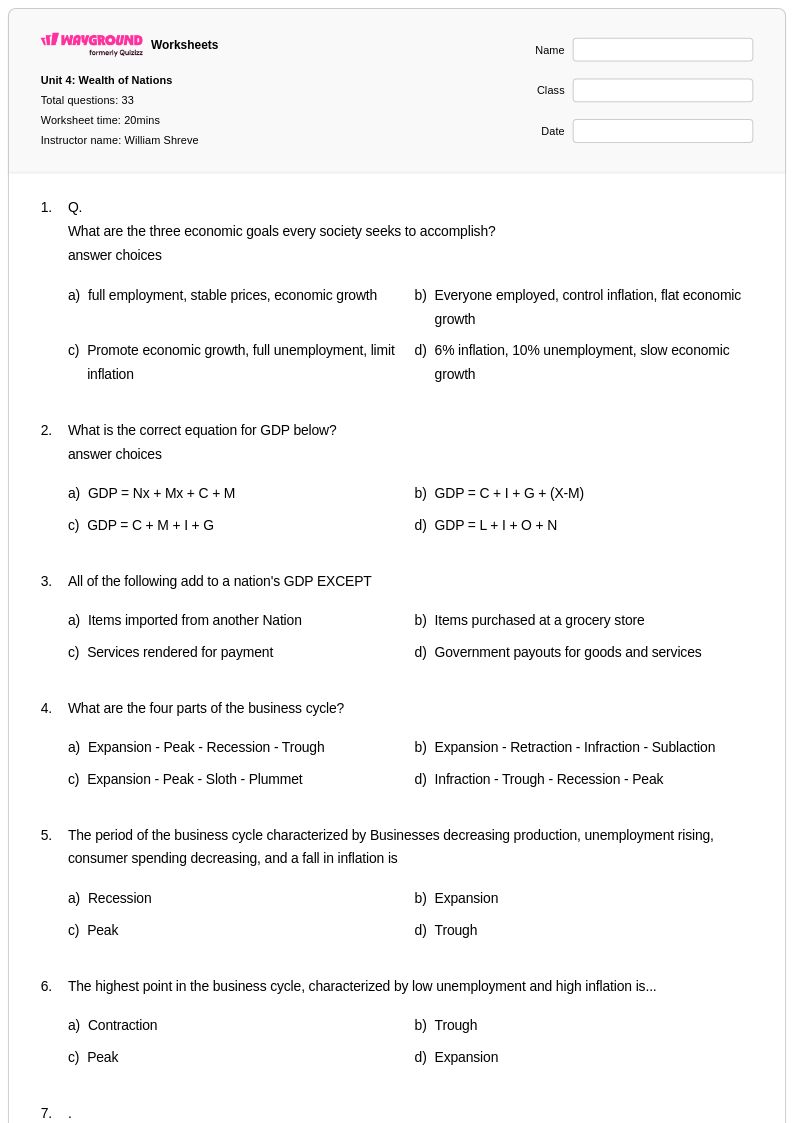
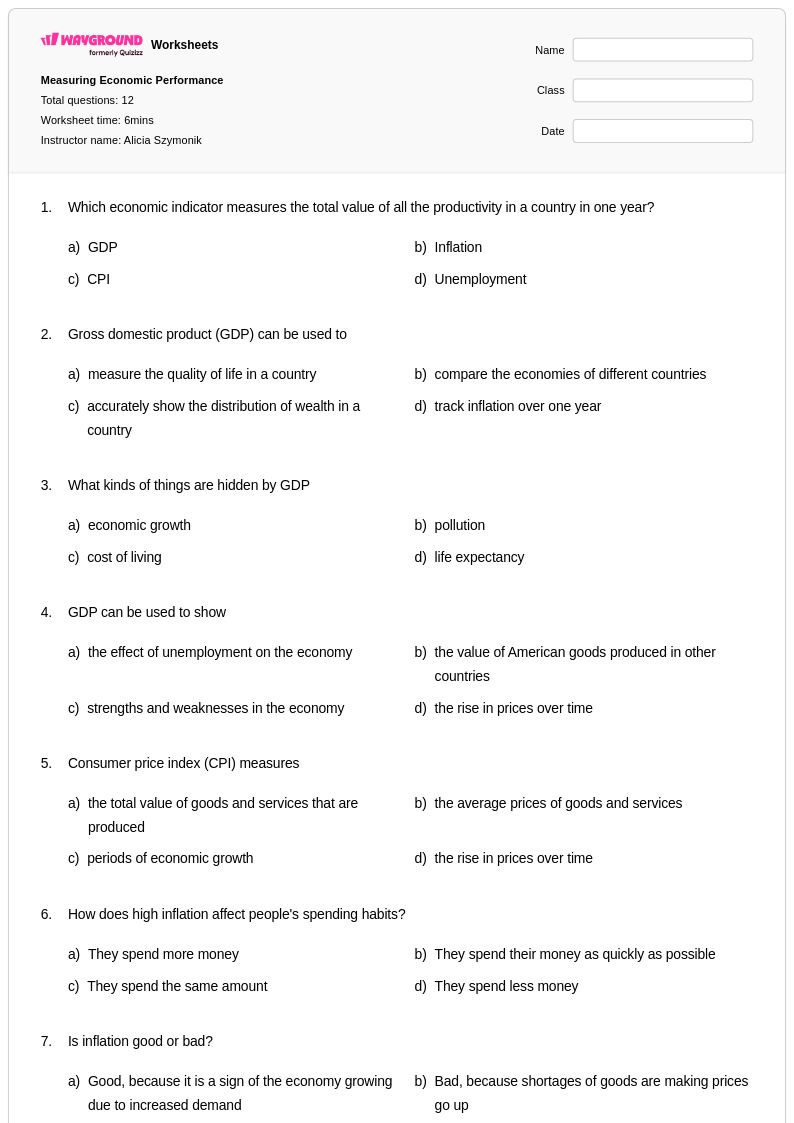
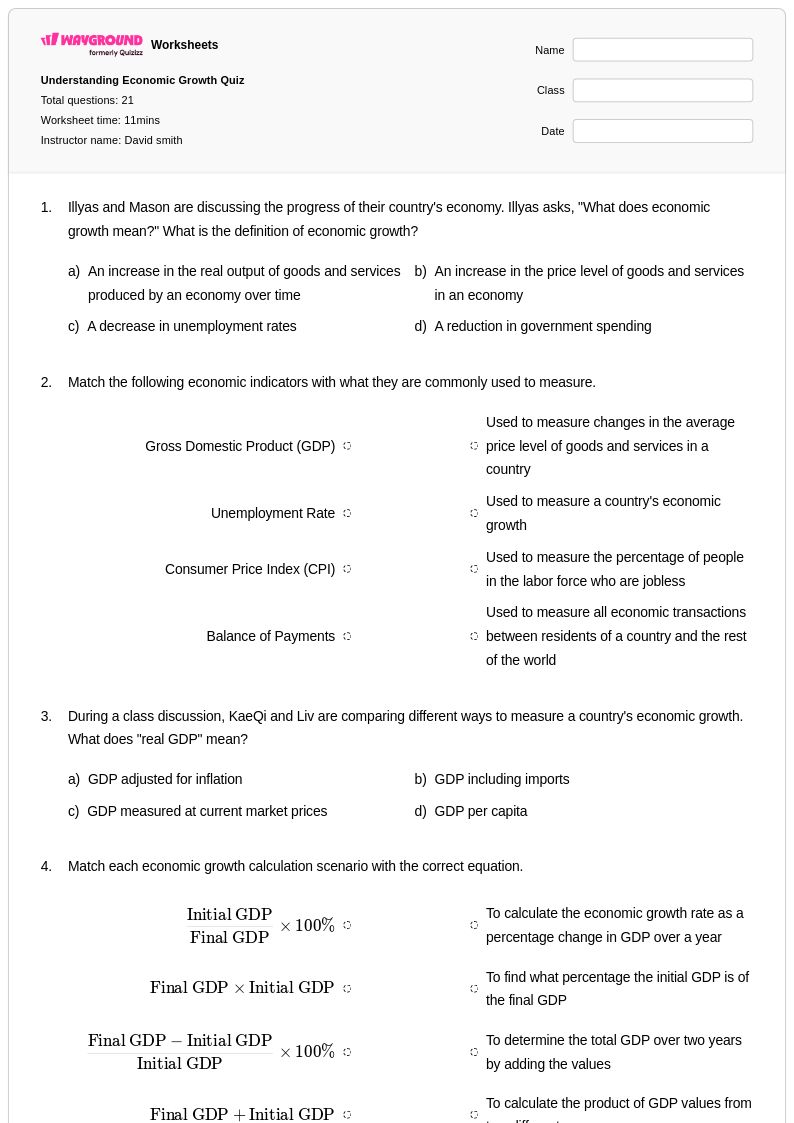
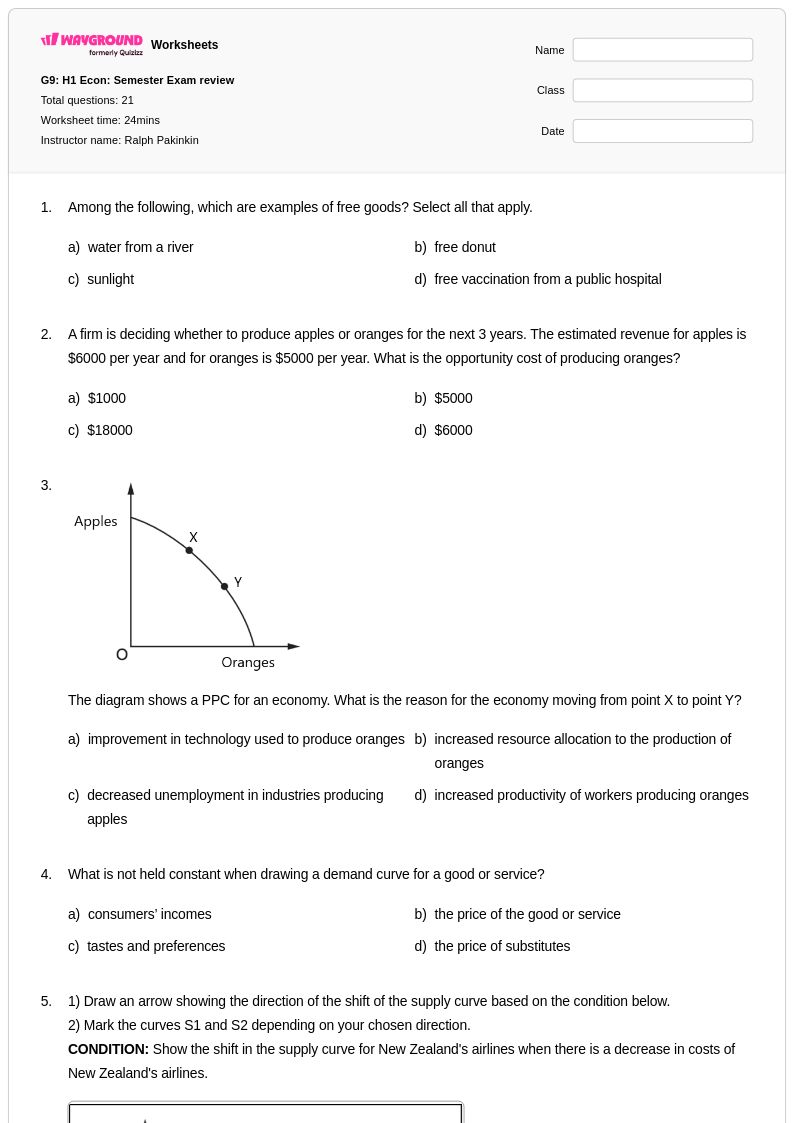
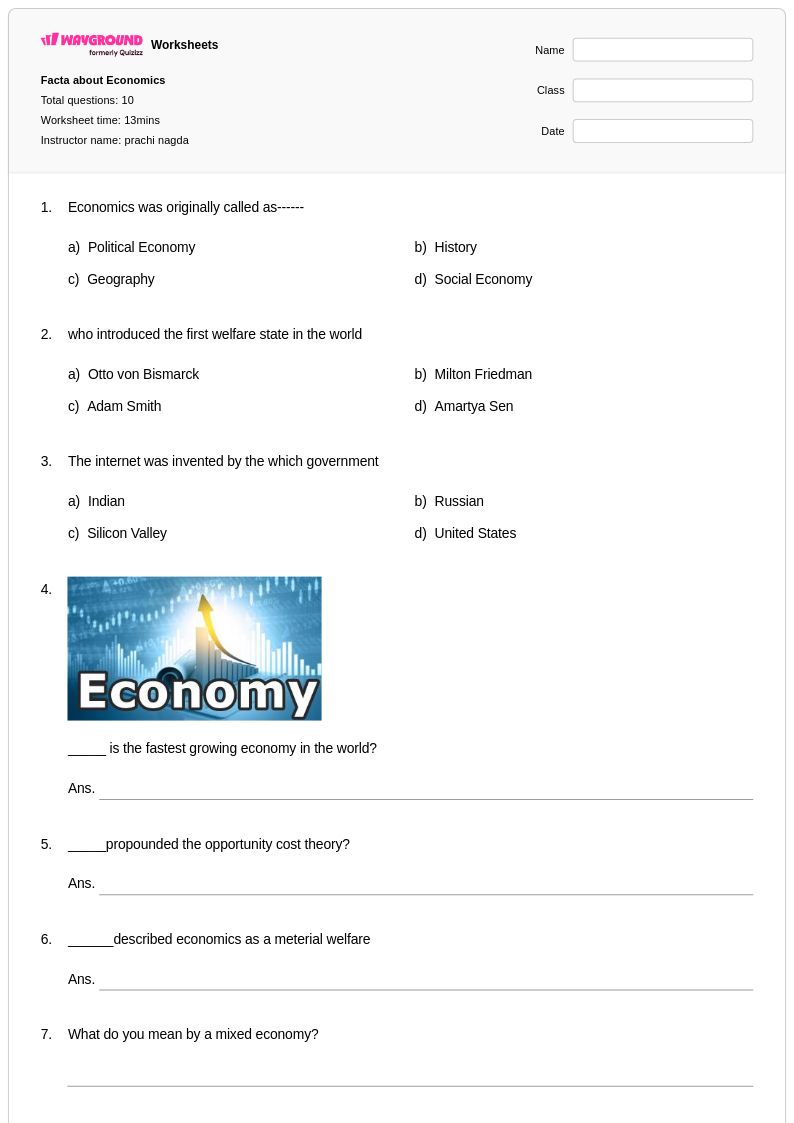
Free Year 9 inflation worksheets and printables help students master economic concepts through engaging practice problems, with comprehensive answer keys and downloadable PDFs available from Wayground's social studies collection.
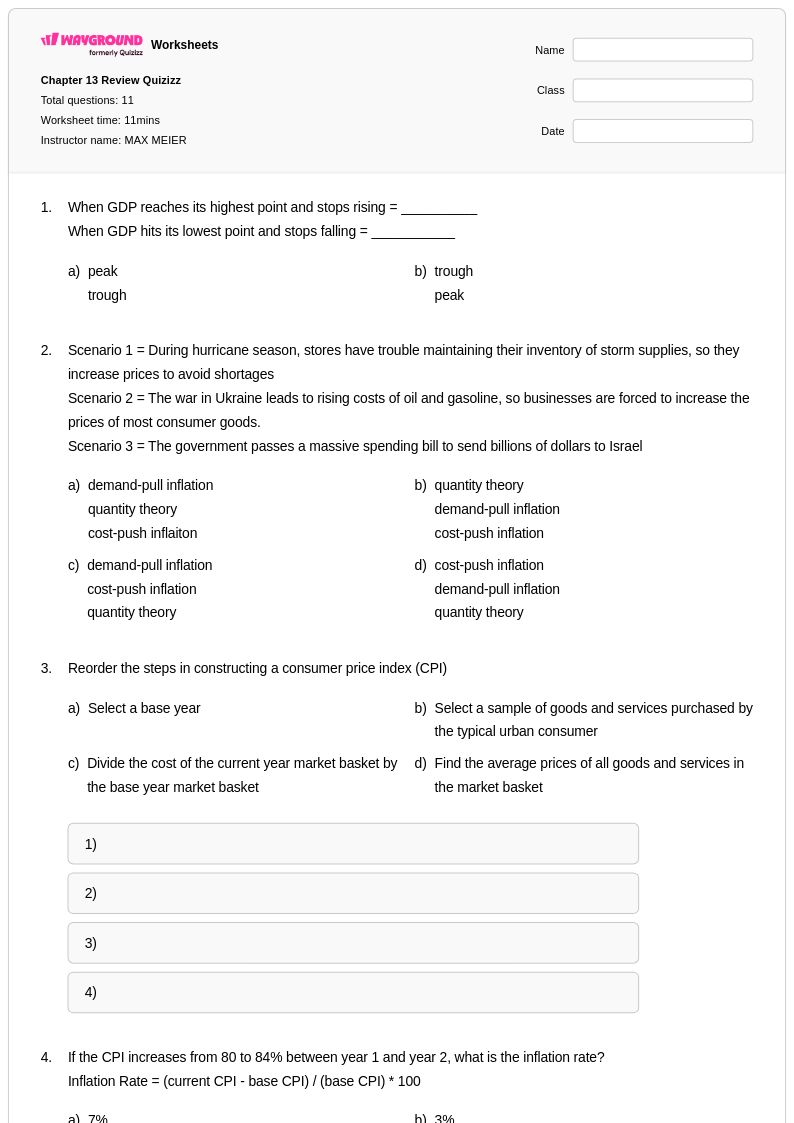
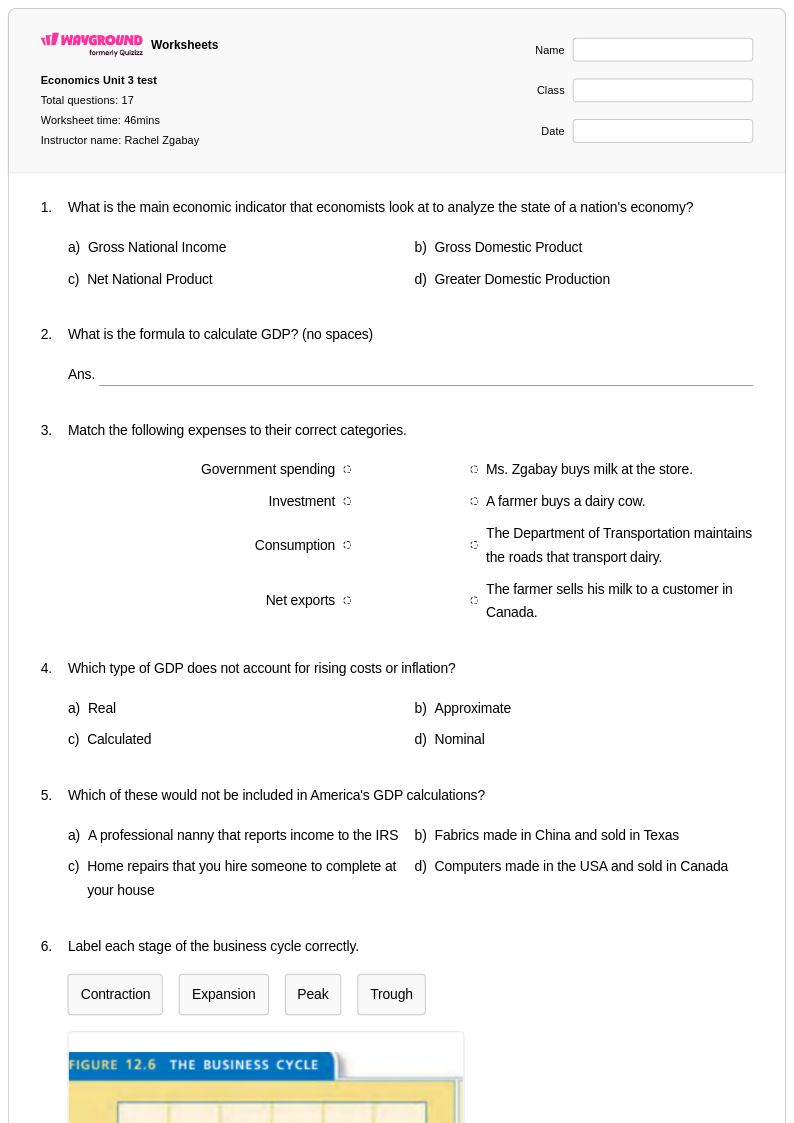
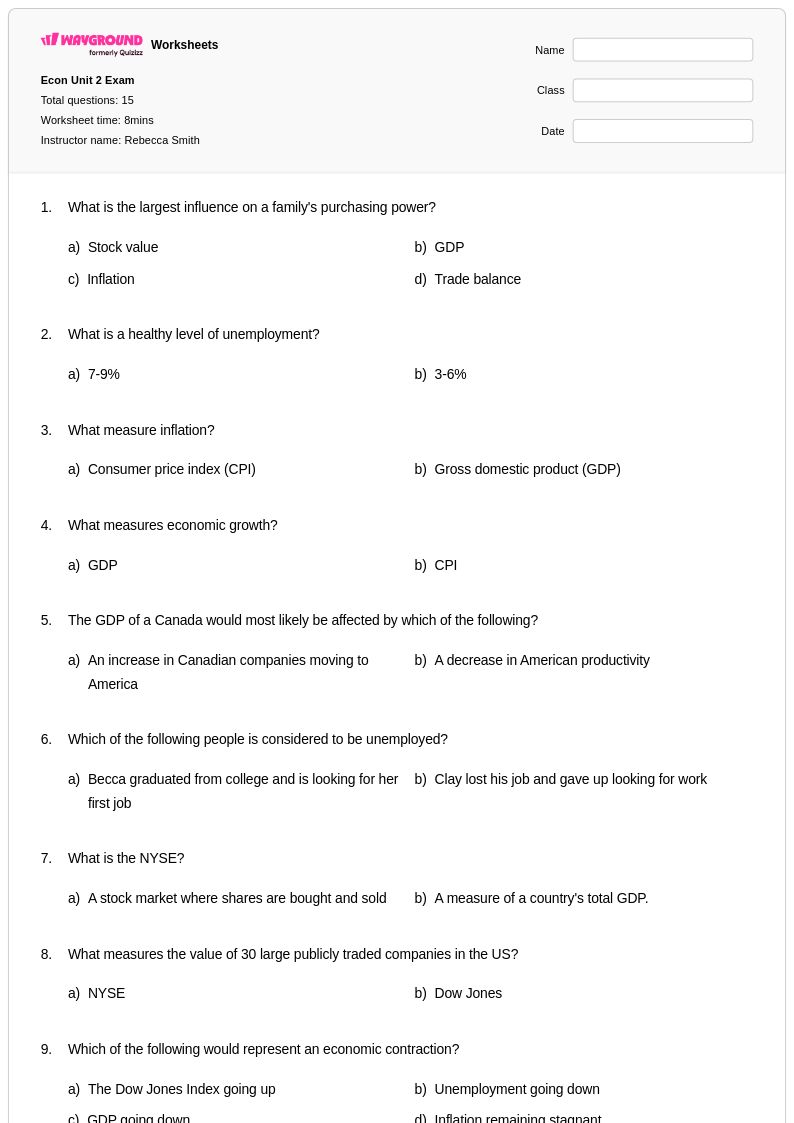
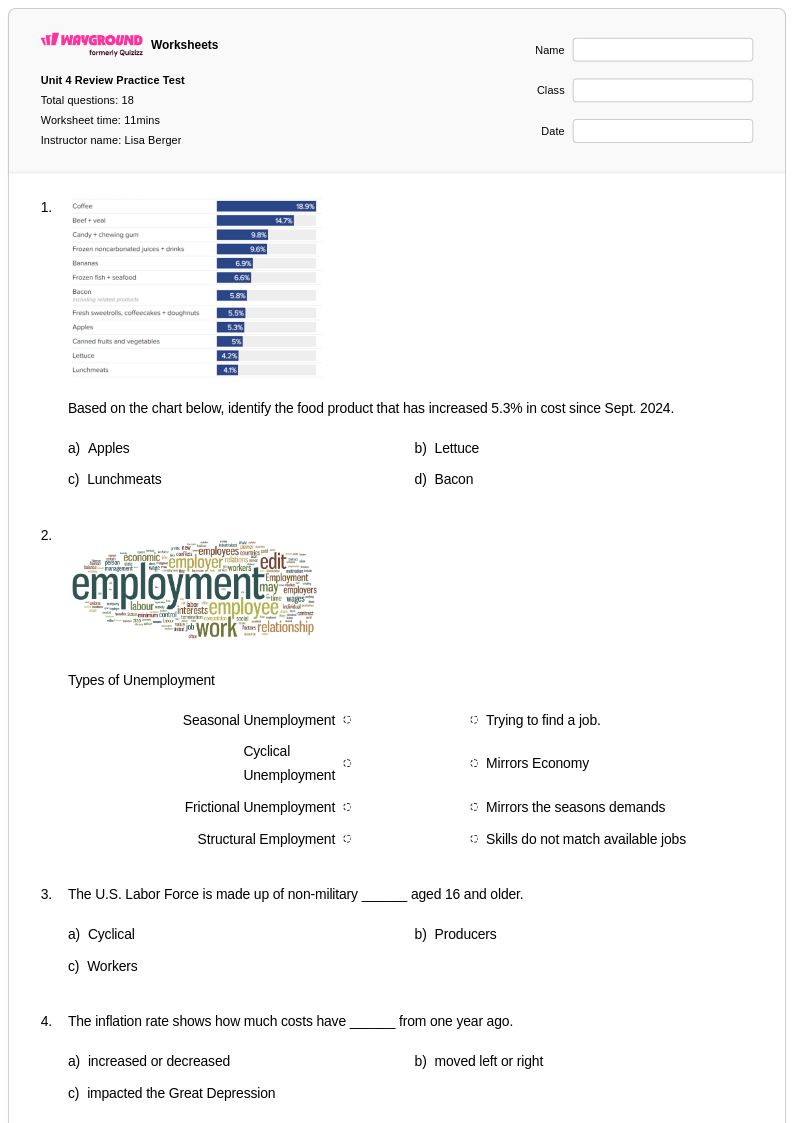
Inflation worksheets for Year 9 students available through Wayground provide comprehensive coverage of this fundamental economic concept, helping students understand how rising prices affect purchasing power, economic stability, and personal financial decisions. These expertly designed resources strengthen critical thinking skills as students analyze real-world scenarios involving cost of living changes, wage adjustments, and monetary policy impacts. The collection includes practice problems that challenge students to calculate inflation rates, interpret economic data, and evaluate the effects of inflation on different demographic groups. Each worksheet comes with a detailed answer key to support independent learning and self-assessment, while the free printables in convenient pdf format make these valuable educational resources easily accessible for classroom instruction and homework assignments.
Wayground's extensive platform, featuring millions of teacher-created resources, empowers educators to locate high-quality inflation worksheets through robust search and filtering capabilities that align with curriculum standards and specific learning objectives. Teachers can customize these materials to meet diverse classroom needs, whether providing remediation for struggling students or offering enrichment opportunities for advanced learners who need deeper economic analysis challenges. The platform's flexible format options, including both digital and printable pdf versions, accommodate various teaching styles and classroom technology setups. This comprehensive collection supports effective lesson planning by offering differentiated materials that help students master inflation concepts through targeted skill practice, while the standards-aligned content ensures seamless integration with existing Year 9 social studies curricula focused on economic literacy and financial understanding.
FAQs
How do I teach inflation to high school economics students?
Start by grounding students in the concept of purchasing power before introducing price indices like the CPI. Use real-world examples such as historical gas prices or grocery cost comparisons over time to make abstract economic forces tangible. From there, introduce the two primary causes — demand-pull and cost-push inflation — and connect them to current events students recognize. Structured practice problems that ask students to calculate inflation rates and interpret their effects on different income groups help solidify the concept.
What exercises help students practice calculating inflation rates?
The most effective exercises ask students to calculate percent change in price levels using CPI data across two time periods, then interpret what those changes mean for consumer purchasing power. Scenario-based problems — such as comparing the cost of a fixed basket of goods over time — are particularly effective because they mirror the actual methodology used by economists. Practice sets should also include questions on how inflation interacts with interest rates and wages so students develop a fuller economic picture.
What misconceptions do students commonly have about inflation?
A frequent misconception is that inflation means all prices rise equally and simultaneously, when in reality it describes an average increase across a basket of goods, with some sectors rising faster than others. Students also often conflate inflation with a general indicator of economic health, not recognizing that moderate inflation is considered normal while hyperinflation signals severe instability. Another common error is assuming that rising prices always harm everyone equally, which overlooks how inflation affects fixed-income earners, debtors, and creditors very differently.
How do I differentiate inflation instruction for students at different skill levels?
For introductory learners, focus on the definition of inflation, simple CPI calculations, and relatable real-world examples before introducing policy implications. Advanced students can engage with the relationship between inflation and monetary policy, including how central banks use interest rate adjustments to control price levels. On Wayground, teachers can apply accommodations such as reduced answer choices to decrease cognitive load for struggling learners, while advanced students receive standard or extended problem sets — all without other students being notified of individual adjustments.
How can I use Wayground's inflation worksheets in my classroom?
Wayground's inflation worksheets are available as printable PDFs for traditional classroom use and in digital formats for technology-integrated learning environments, including the option to host them as a quiz directly on Wayground. Teachers can use them as standalone practice sessions, formative assessments, or supplementary homework aligned to specific standards. The included answer keys support both teacher-led correction and independent student review, making them flexible enough for in-class instruction, flipped learning, or sub plans.
How does inflation connect to other economics topics students need to know?
Inflation is deeply interconnected with monetary policy, interest rates, unemployment, and fiscal policy, making it a pivotal concept in any economics curriculum. Understanding inflation is a prerequisite for grasping why central banks raise or lower interest rates, how the Phillips Curve describes the trade-off between inflation and unemployment, and why governments monitor GDP growth carefully. Teaching inflation well creates a foundation that makes subsequent units on macroeconomics significantly more accessible.