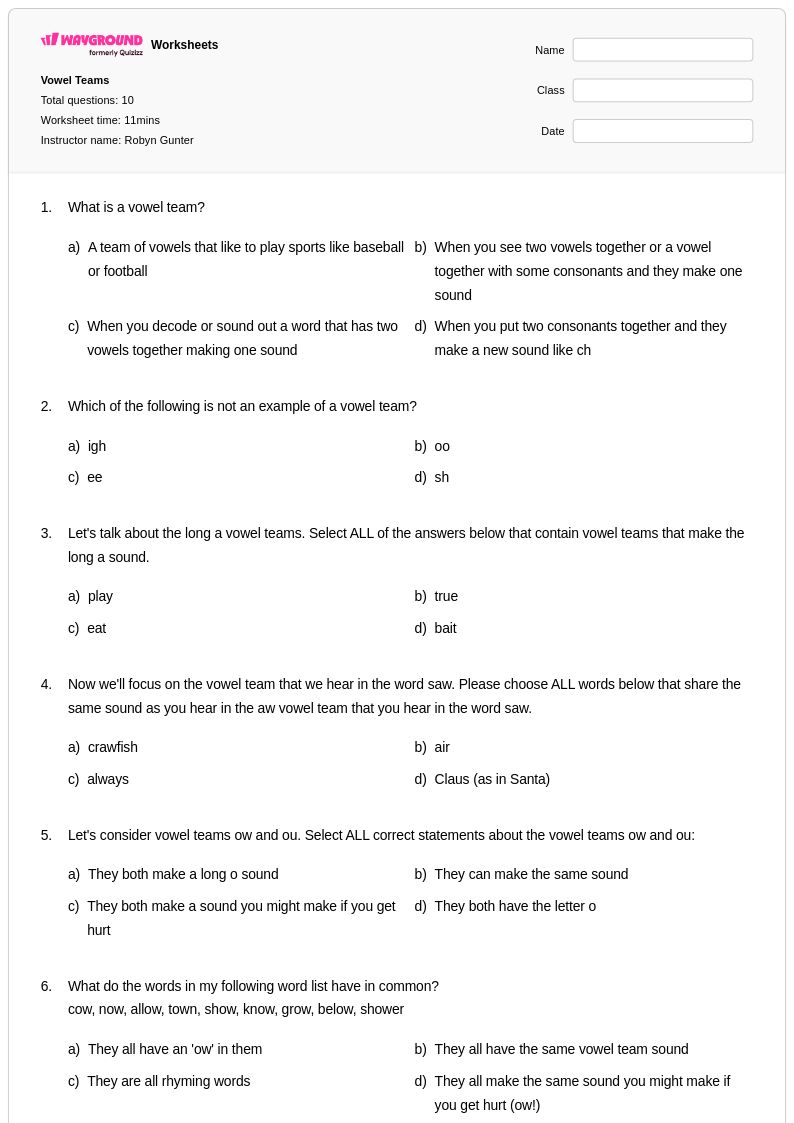
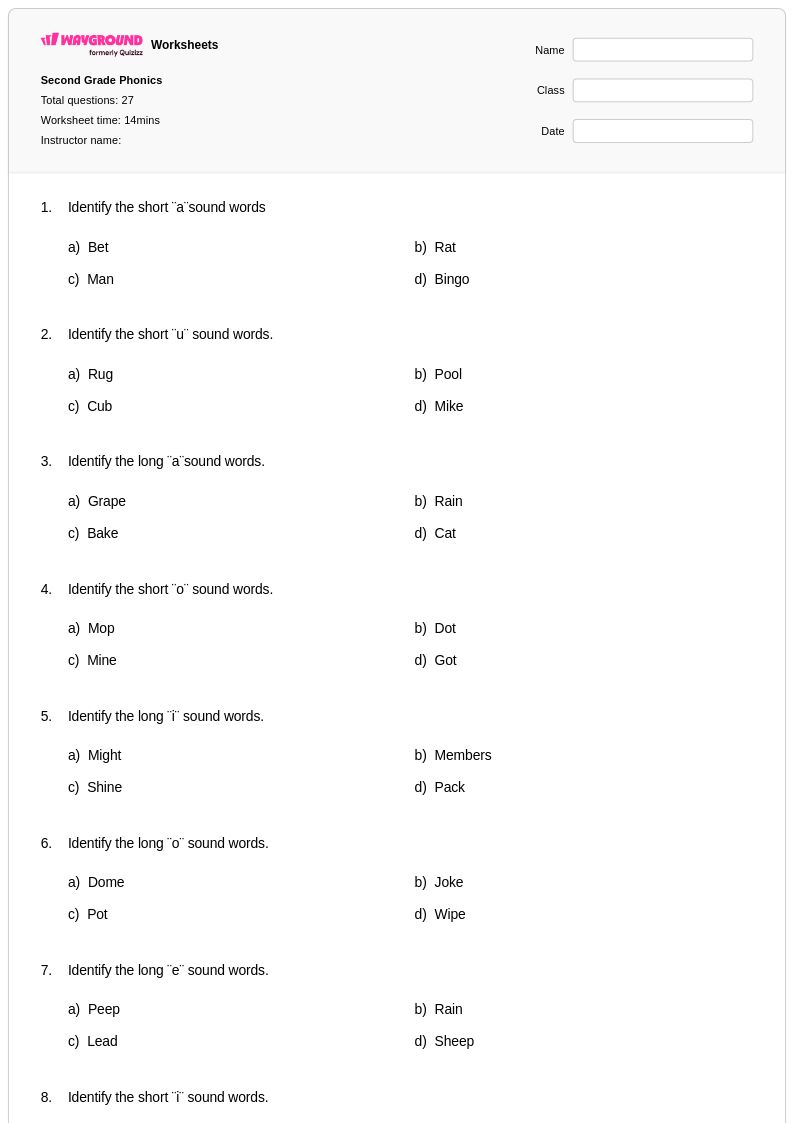
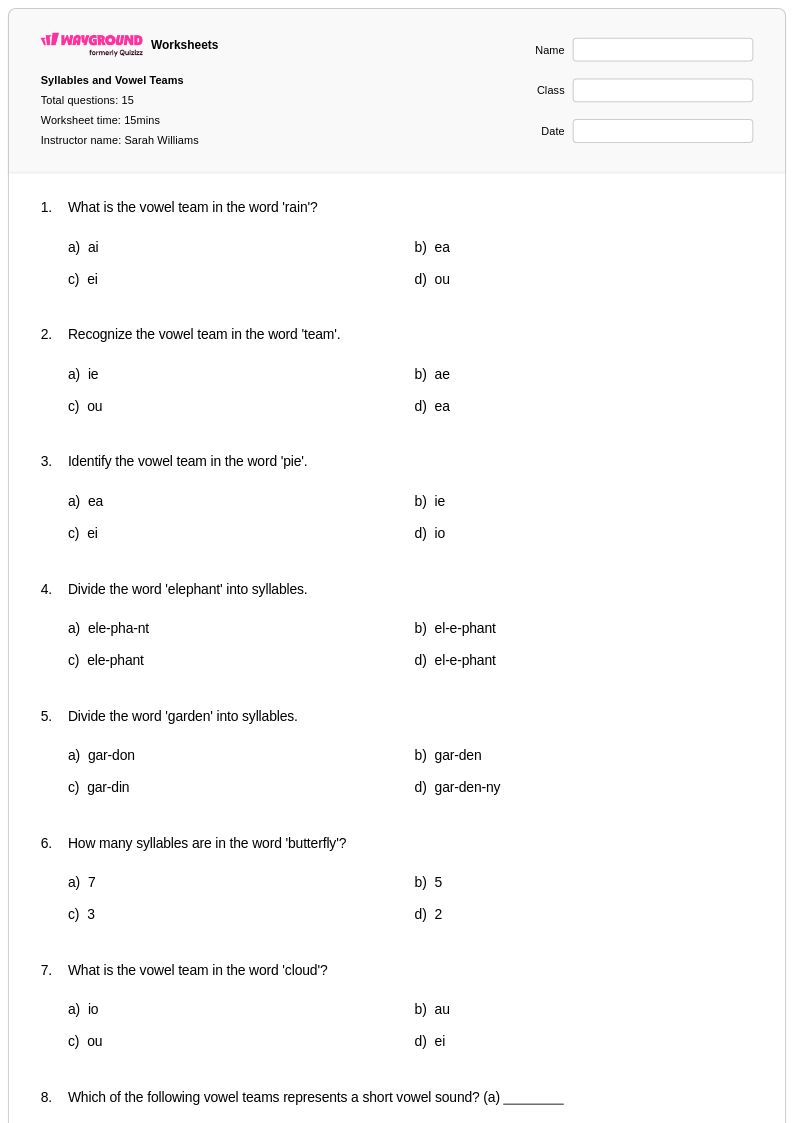
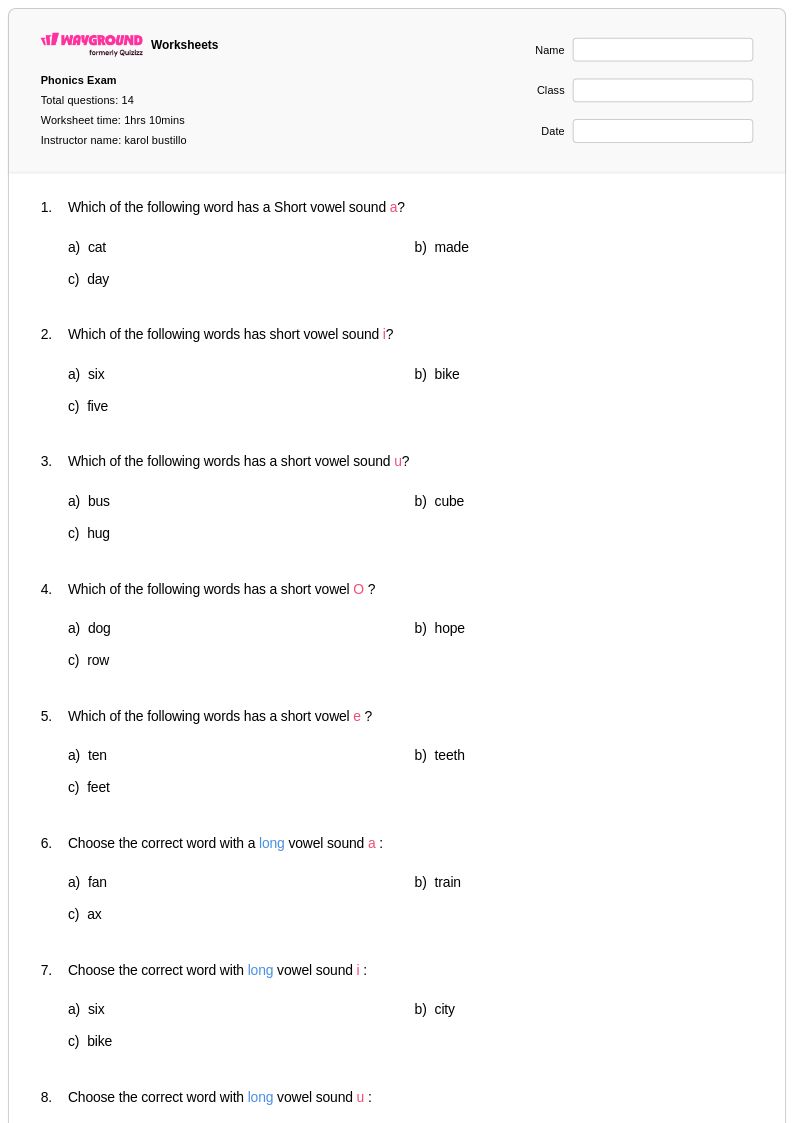
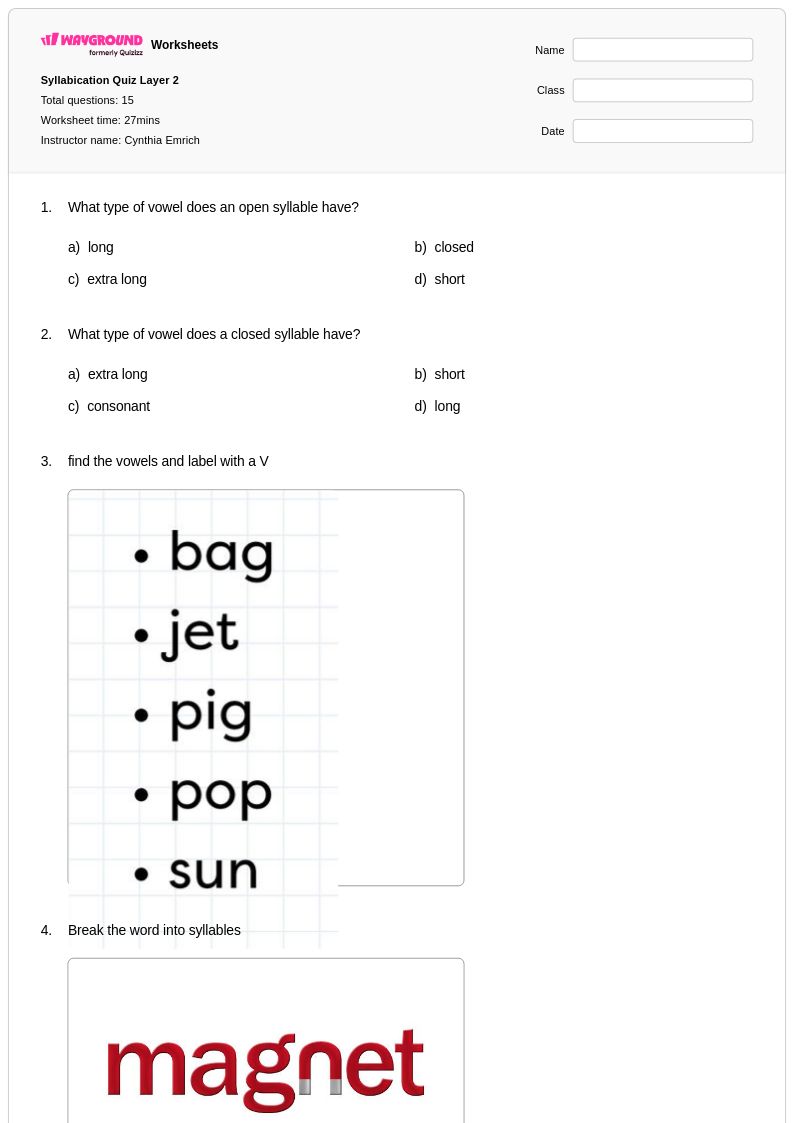
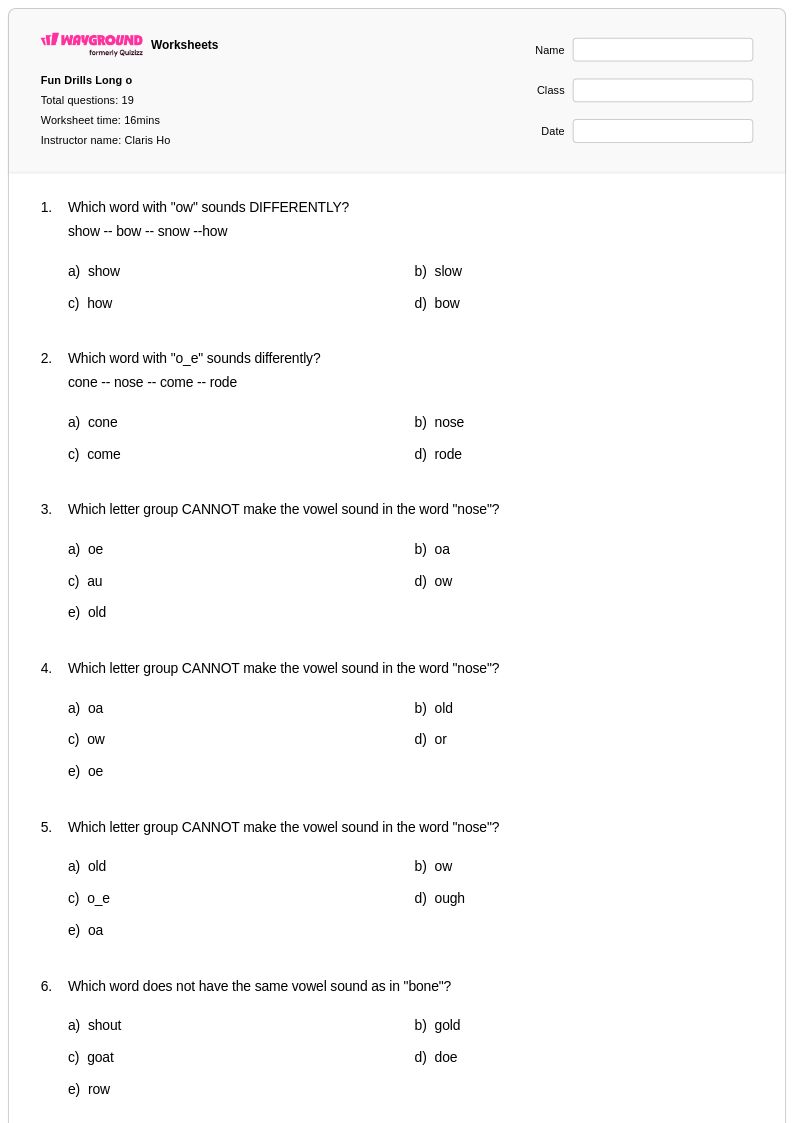
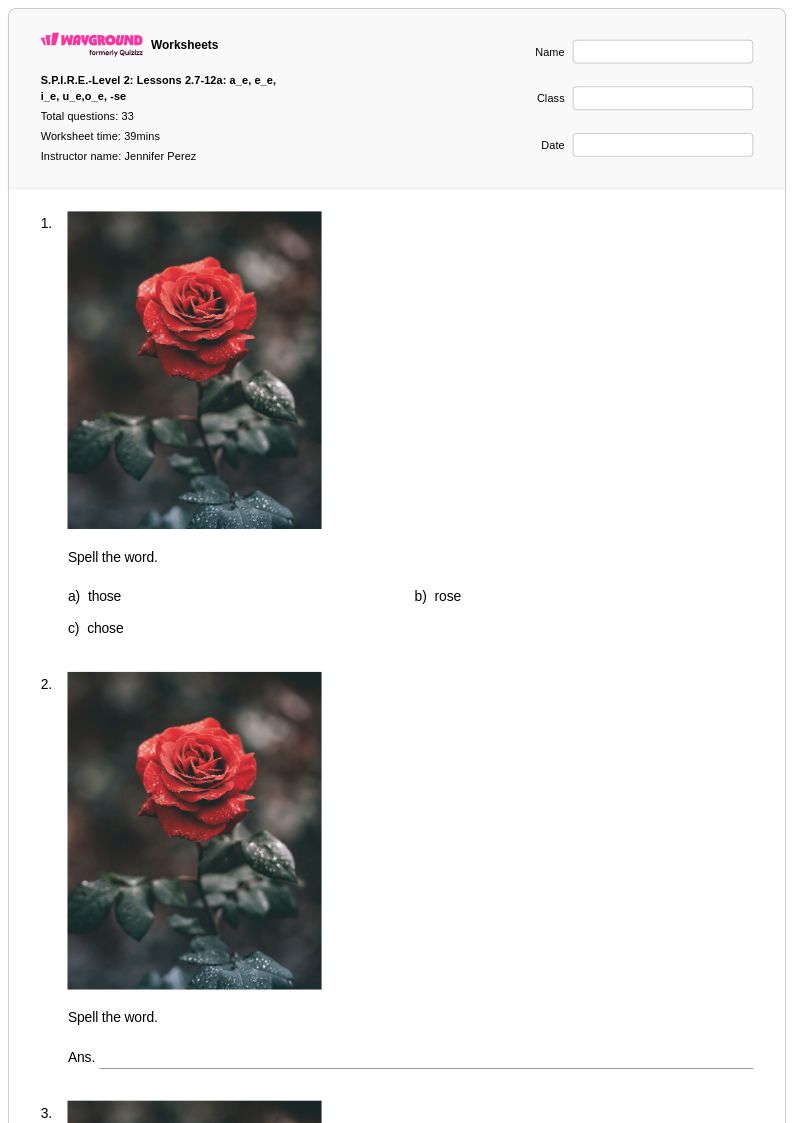
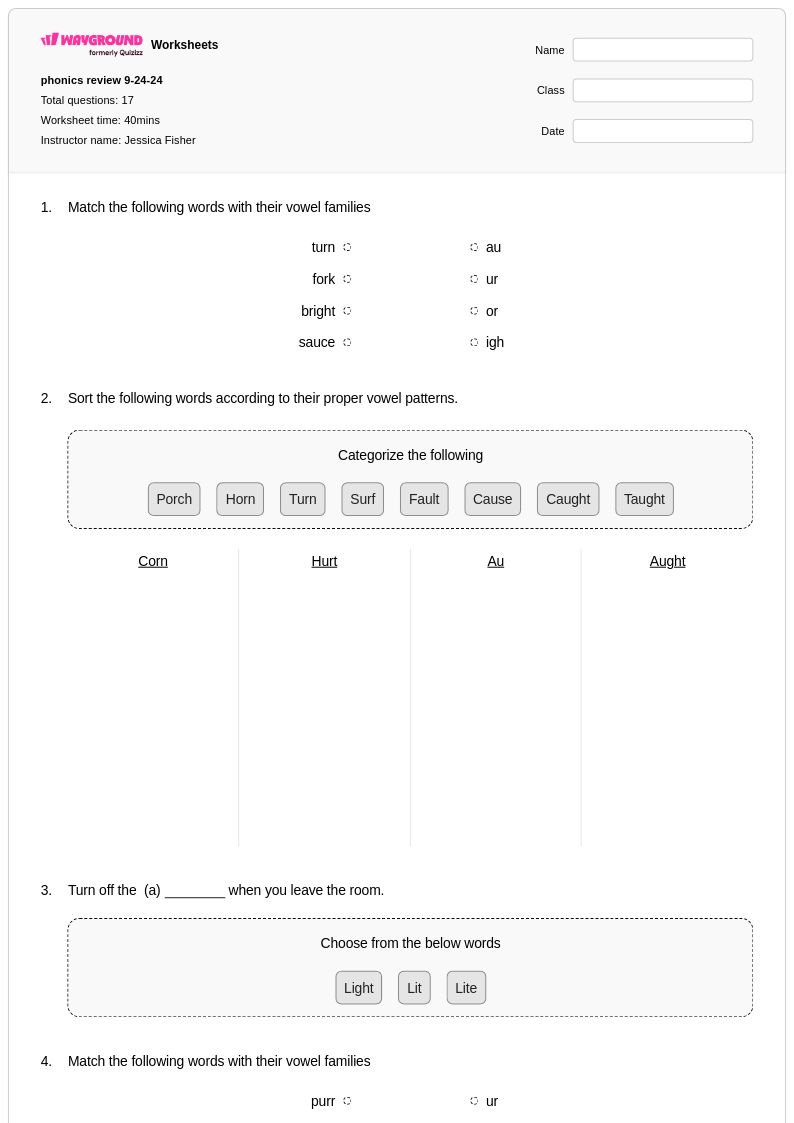
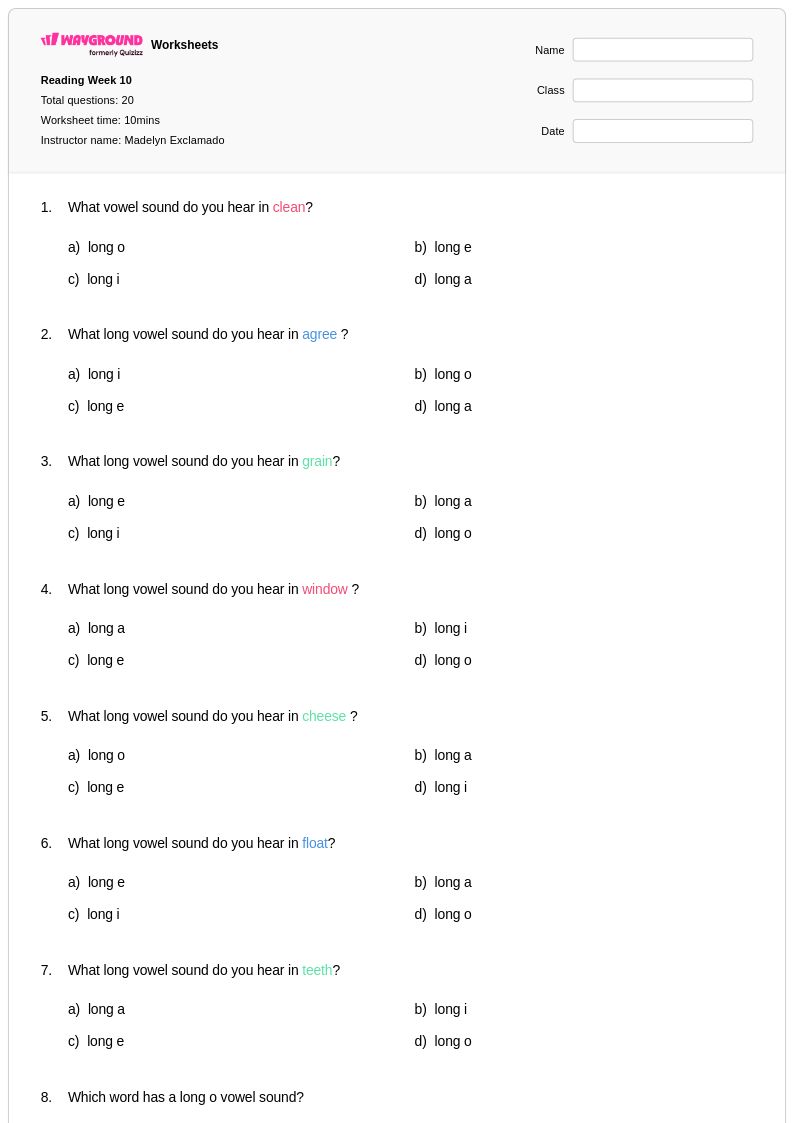
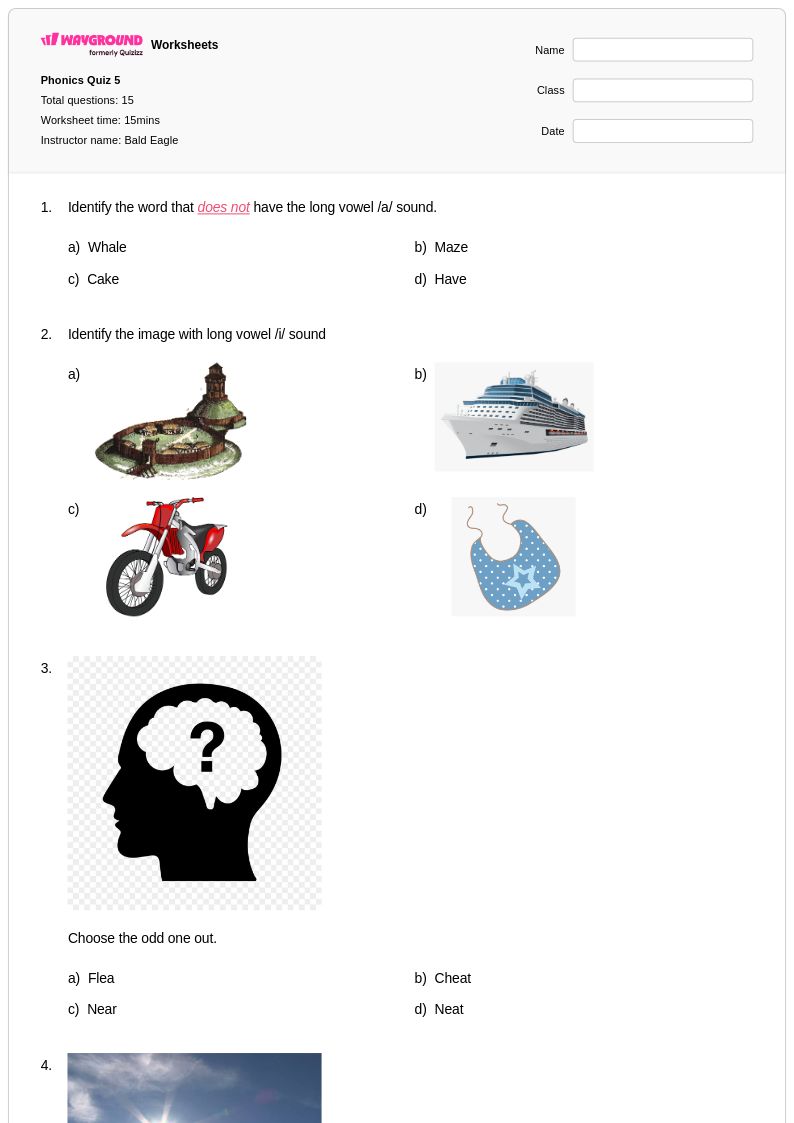
Explore our free Year 3 long vowel E worksheets and printables that help students master phonics through engaging practice problems, complete with answer keys and downloadable PDF formats.
Explore printable Long Vowel E worksheets for Year 3
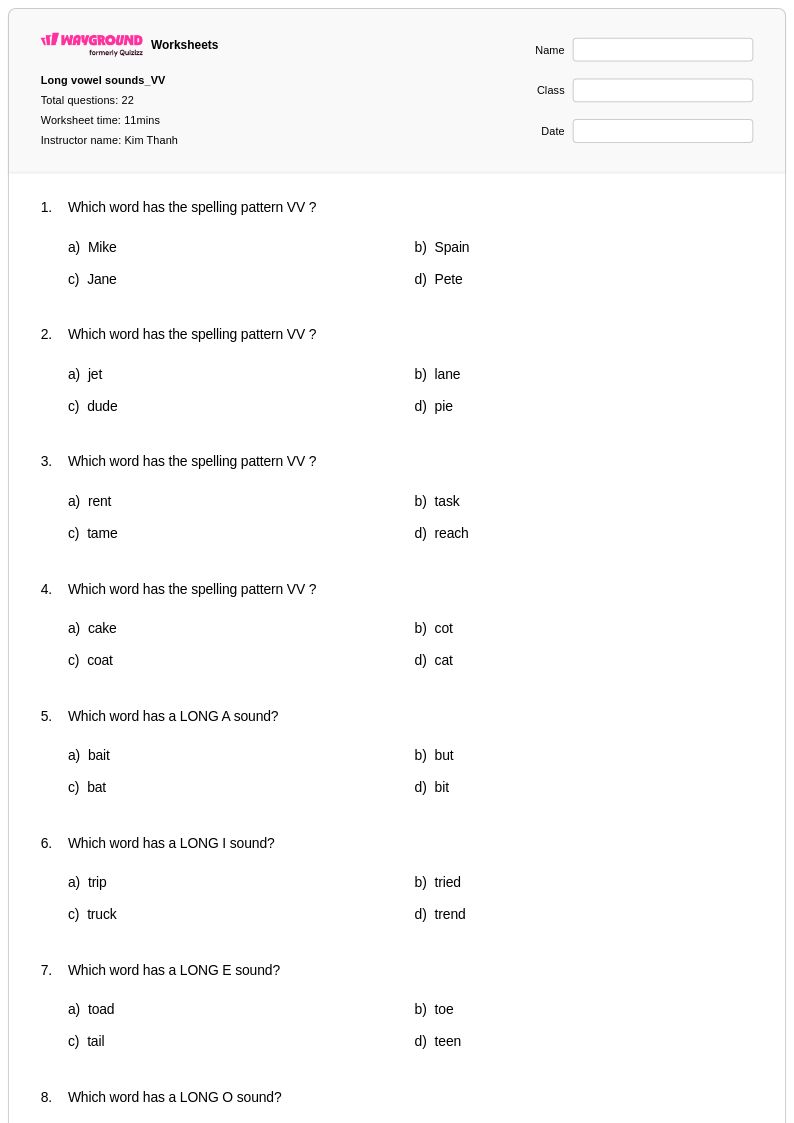
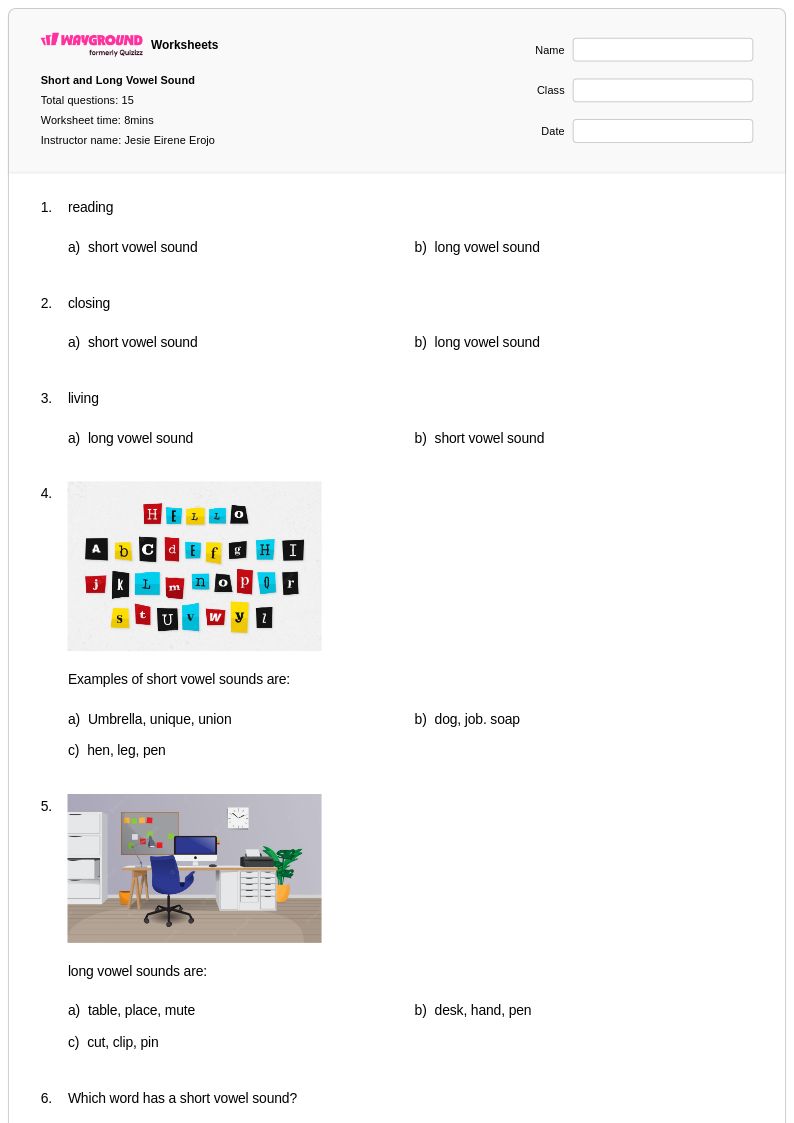
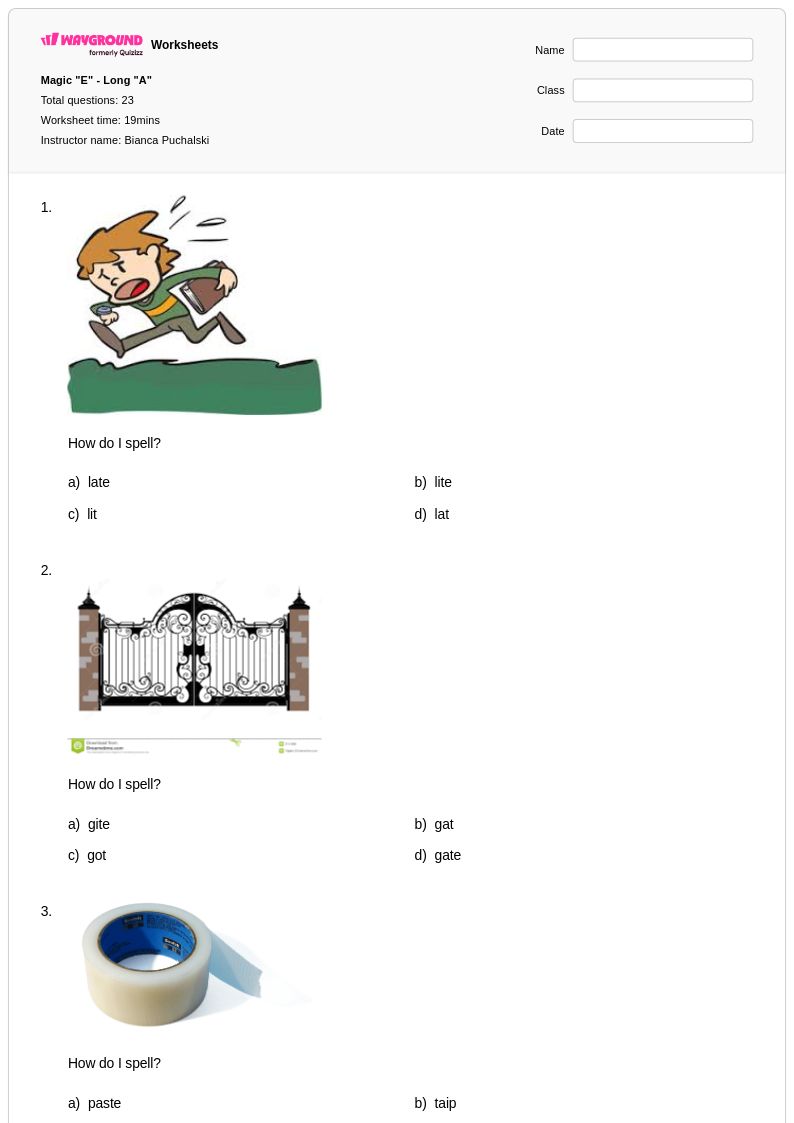
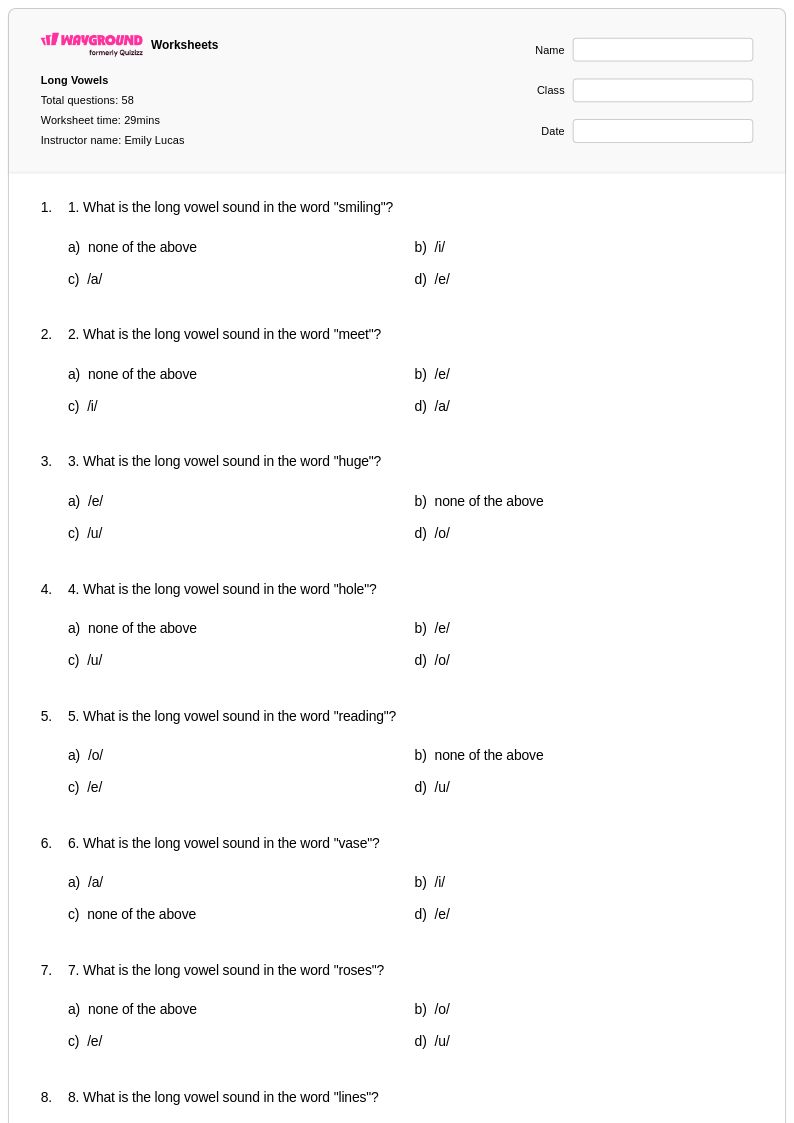
Long Vowel E worksheets for Year 3 students available through Wayground (formerly Quizizz) provide comprehensive practice with one of the most essential phonics patterns in elementary reading instruction. These carefully designed resources help third-grade learners master the various spellings and pronunciations of the long E sound, including common patterns like "ee" in "tree," "ea" in "beach," "ie" in "field," and the silent E rule in words like "Pete." Each worksheet collection strengthens decoding skills, spelling accuracy, and reading fluency through systematic practice problems that progress from simple word recognition to complex sentence application. Teachers can access complete answer keys and printable pdf formats for seamless classroom integration, while the free resources ensure that all educators have access to high-quality phonics instruction materials that support independent practice and skill reinforcement.
Wayground's extensive library contains millions of teacher-created Long Vowel E resources specifically tailored for Year 3 phonics instruction, offering educators unparalleled flexibility in planning differentiated lessons. The platform's robust search and filtering capabilities allow teachers to quickly locate worksheets aligned with specific standards and learning objectives, while built-in differentiation tools enable customization for students at varying skill levels. Whether delivered in printable pdf format for traditional paper-and-pencil practice or through digital interactive formats, these resources support both remediation for struggling readers and enrichment opportunities for advanced learners. The comprehensive collection streamlines lesson planning by providing ready-to-use materials for whole group instruction, small group interventions, homework assignments, and assessment preparation, ensuring that teachers can effectively address the diverse phonics needs within their Year 3 classrooms while maintaining consistent skill practice across multiple learning contexts.
FAQs
How do I teach the long vowel E sound to early readers?
Teaching long vowel E effectively means addressing all of its common spelling patterns explicitly and systematically. Introduce one pattern at a time, such as 'ee' in 'street' or 'ea' in 'beach,' and use word sorting activities to help students distinguish between patterns. Connecting each spelling to high-frequency anchor words builds automaticity, and regular repeated reading of decodable texts reinforces recognition in context.
What are the different spellings of the long E sound students need to learn?
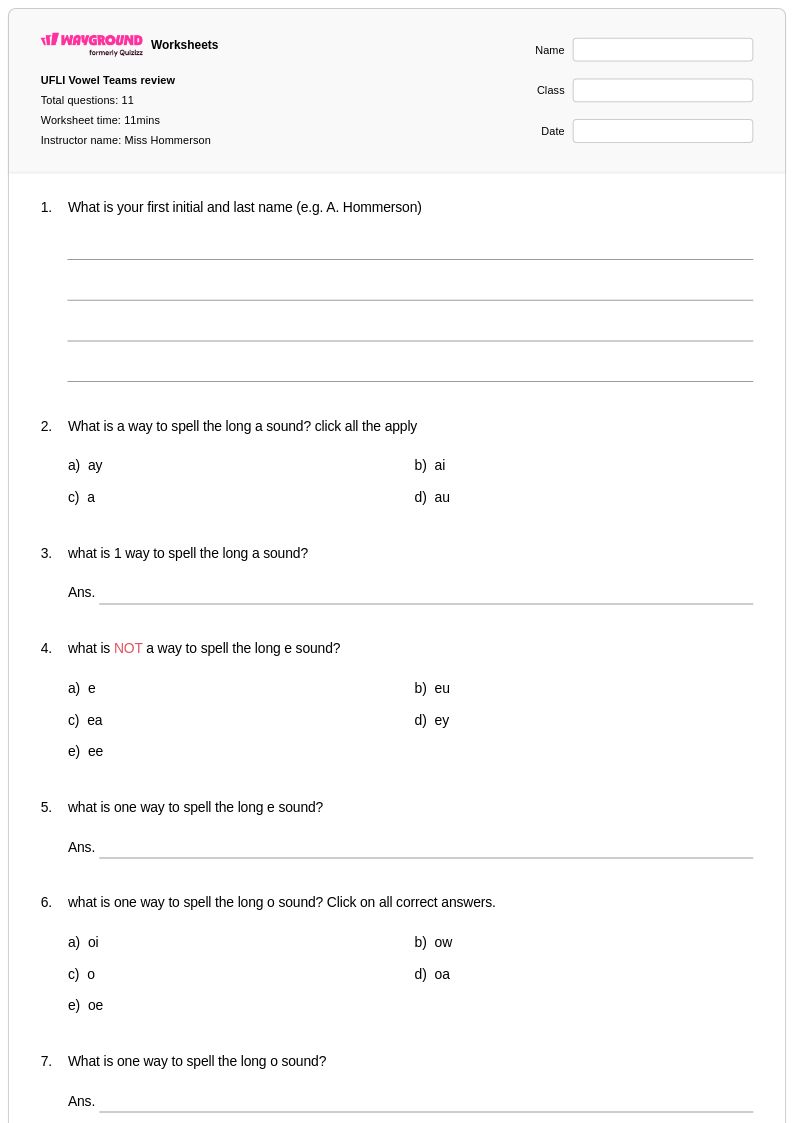
The long E sound appears in several spelling patterns that students must learn to recognize and decode: 'e_e' as in 'theme,' 'ee' as in 'street,' 'ea' as in 'beach,' 'ei' as in 'receive,' and 'y' as in 'happy.' Because each pattern appears in high-frequency words, students need explicit instruction and practice with all five rather than treating long E as a single rule.
What exercises help students practice long vowel E words?
Effective practice for long vowel E includes word sorting by spelling pattern, fill-in-the-blank sentence exercises, spelling assessments, and reading passages that embed long E words in context. Combining these activity types ensures students practice both decoding and encoding the sound, which strengthens phonics skills from multiple angles. Worksheets that mix reading and spelling tasks within the same set give teachers efficient, all-in-one practice resources.
What mistakes do students commonly make with the long vowel E sound?
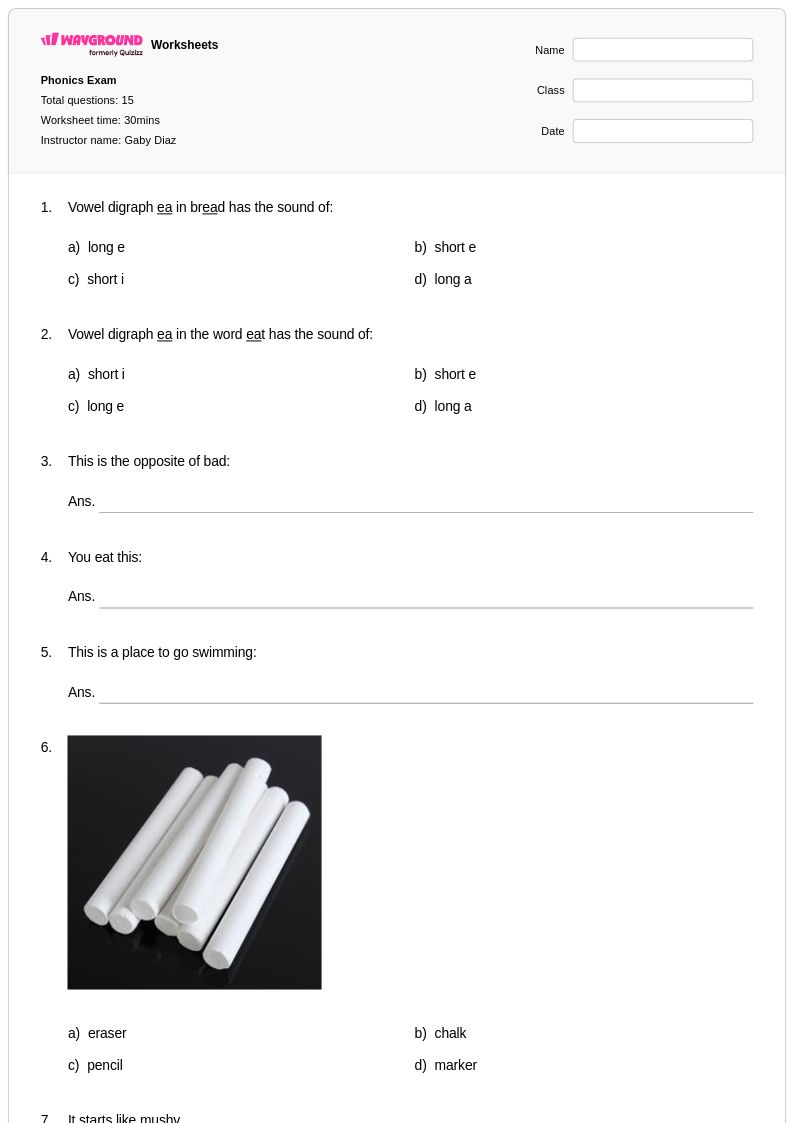
The most common error students make is confusing 'ea' words, since 'ea' can represent both the long E sound (as in 'beach') and the short E sound (as in 'bread'). Students also frequently overgeneralize one spelling pattern, writing 'ee' where 'ea' is correct or vice versa. Targeted word sorting and pattern-comparison exercises are particularly effective at addressing these confusions before they become ingrained habits.
How can I use long vowel E worksheets to assess student progress?
Long vowel E worksheets with answer keys make it straightforward to run both formative checks and summative assessments on phonics progress. Formative use might mean spot-checking fill-in-the-blank exercises after a lesson, while spelling assessments provide summative data on whether students can encode the patterns independently. Tracking which specific spelling patterns a student consistently misses allows for precise, targeted reteaching rather than broad re-instruction.
How do I use Wayground's long vowel E worksheets in my classroom?
Wayground's long vowel E worksheets are available as printable PDFs for traditional classroom use and in digital formats for technology-integrated or remote learning environments. Teachers can also host the worksheets as an interactive quiz directly on Wayground, giving students immediate engagement and making progress easy to monitor. The included answer keys reduce grading time, and the availability of both formats means the same resource works equally well as a whole-class activity, a homework assignment, or a small-group intervention.