
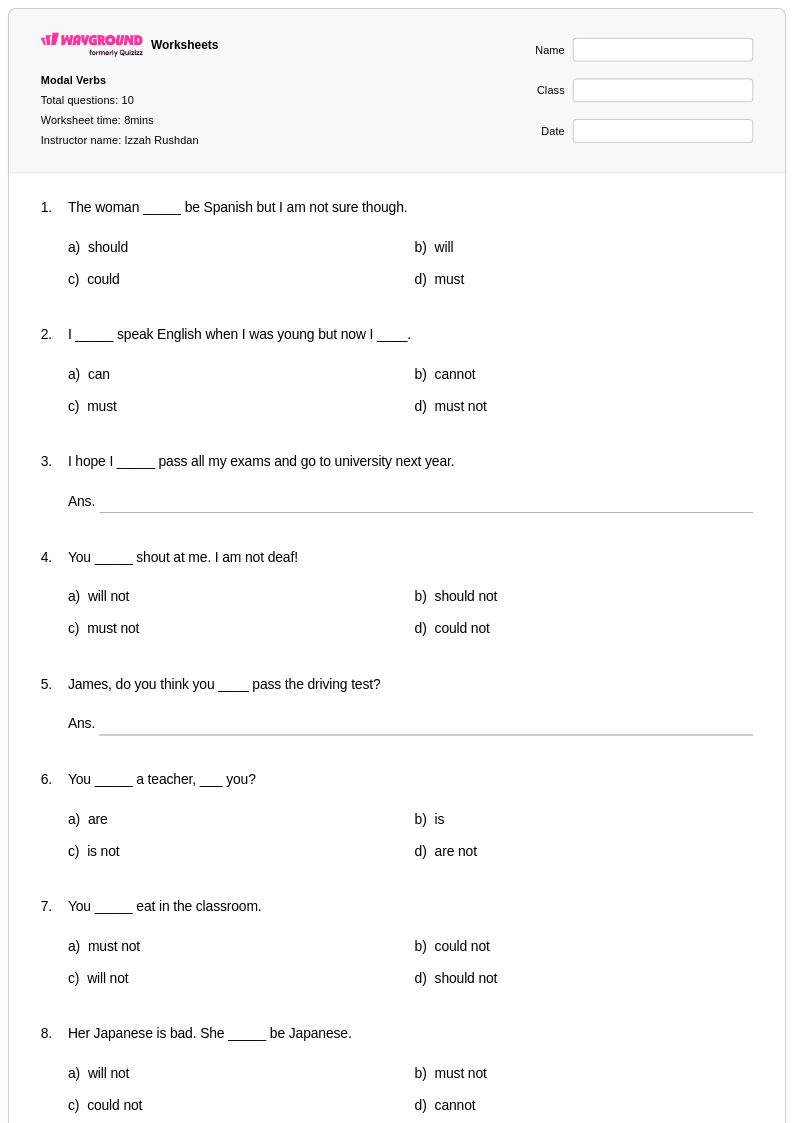
10 Q
10th - 12th
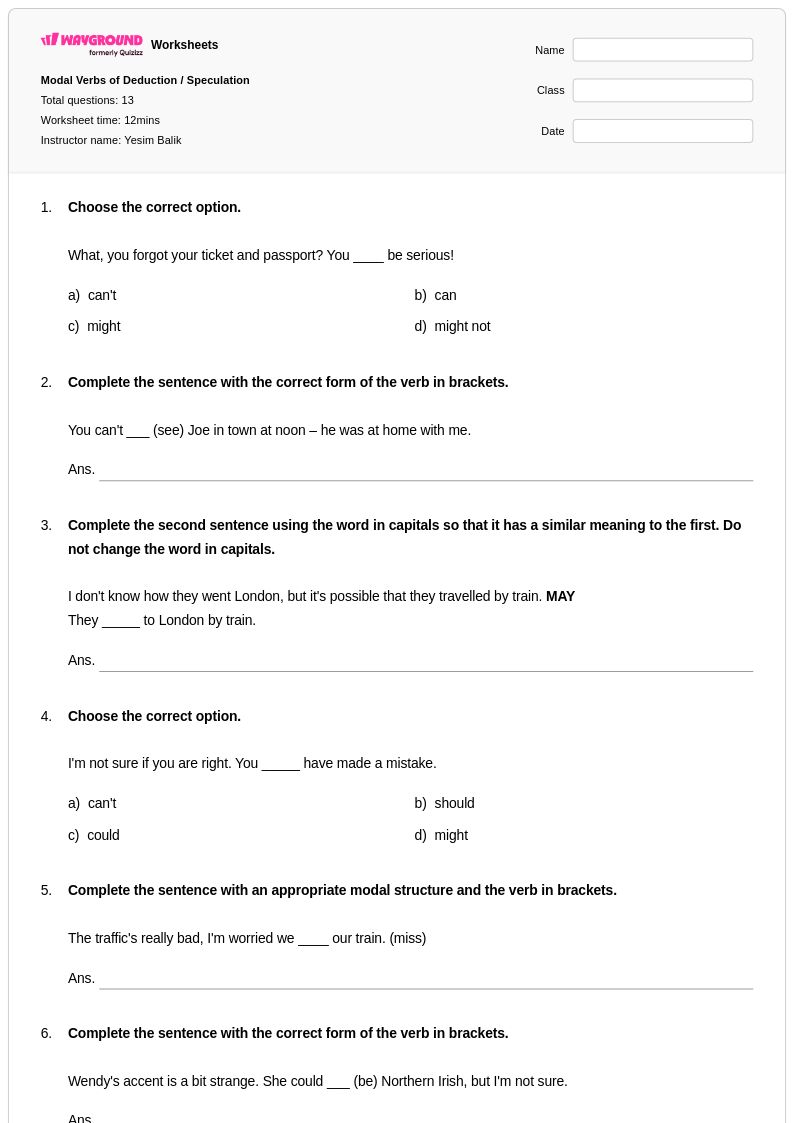
13 Q
10th - Uni
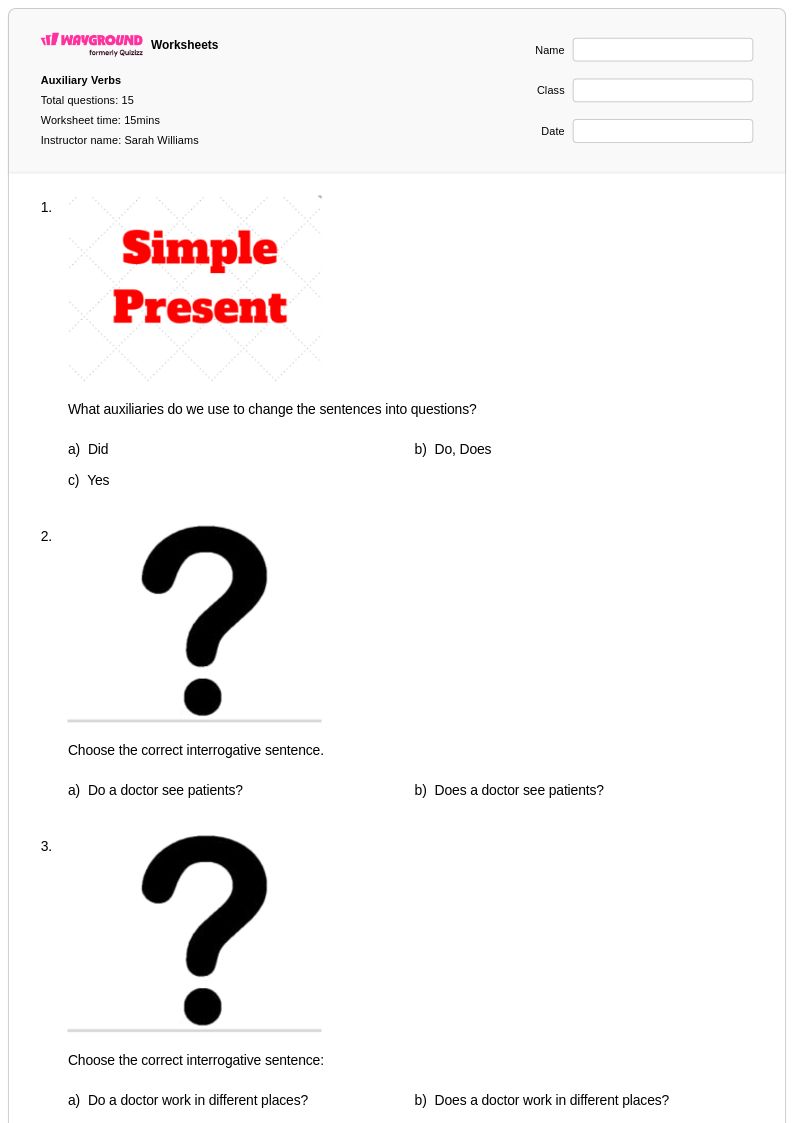
15 Q
4th - Uni
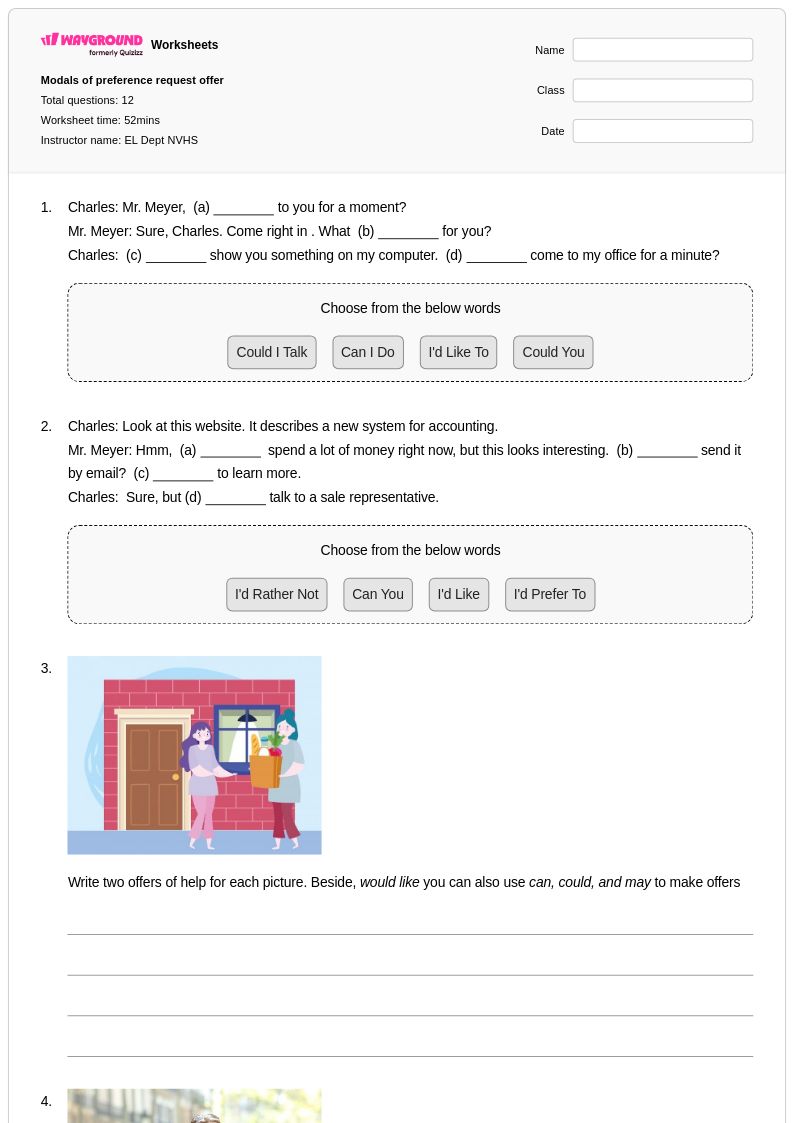
12 Q
9th - 12th
10 Q
11th - Uni
10 Q
9th - Uni
10 Q
9th - 12th

10 Q
12th
11 Q
10th - Uni

48 Q
12th
10 Q
6th - Uni
10 Q
9th - 12th

20 Q
12th - Uni

19 Q
9th - 12th
11 Q
9th - Uni
10 Q
9th - 12th

10 Q
12th
17 Q
9th - Uni

20 Q
12th
10 Q
9th - 12th
15 Q
9th - 12th
17 Q
10th - 12th

18 Q
12th

10 Q
12th
Explore Other Subject Worksheets for year 12
Explore printable Modal Auxiliaries worksheets for Year 12
Modal auxiliaries worksheets for Year 12 students available through Wayground (formerly Quizizz) provide comprehensive practice with these essential helping verbs that express possibility, necessity, permission, and ability. These advanced grammar resources challenge students to master the nuanced differences between modal verbs such as can, could, may, might, must, shall, should, will, and would in complex sentence structures and varied contexts. The worksheets strengthen critical language skills including understanding modal meanings in academic writing, recognizing subtle distinctions in formality and politeness, and applying appropriate modals for hypothetical situations and conditional statements. Each practice problem set includes detailed answer keys and is available as free printables in convenient pdf format, making it easy for educators to integrate modal auxiliary instruction into their grammar and mechanics curriculum.
Wayground (formerly Quizizz) supports English teachers with an extensive collection of millions of teacher-created modal auxiliary resources specifically designed for Year 12 grammar instruction. The platform's robust search and filtering capabilities allow educators to quickly locate worksheets aligned with language arts standards and differentiate instruction based on individual student needs. Teachers can customize these digital and printable materials to focus on specific modal functions, from expressing degrees of certainty to conveying polite requests and obligations. The flexible pdf format enables seamless integration into both classroom instruction and remote learning environments, while the comprehensive scope of available materials supports targeted skill practice, remediation for struggling students, and enrichment opportunities for advanced learners seeking to refine their understanding of sophisticated modal auxiliary usage.