
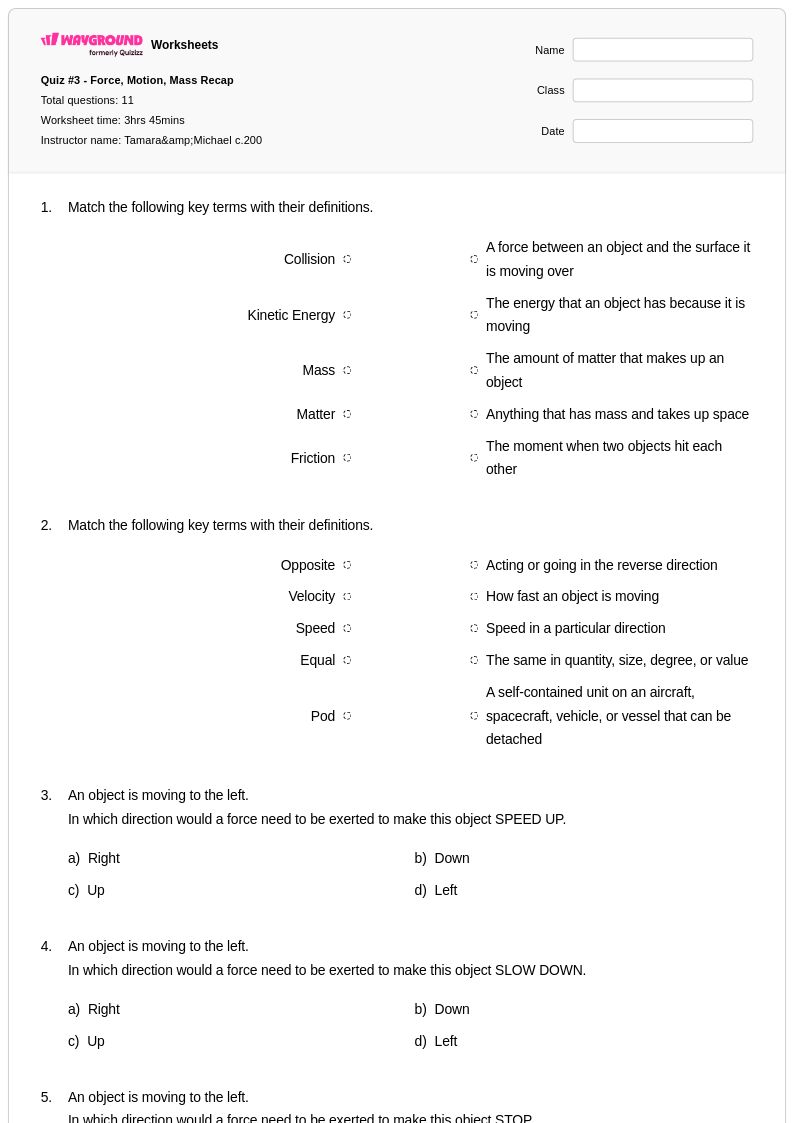
11 T
7th - 8th
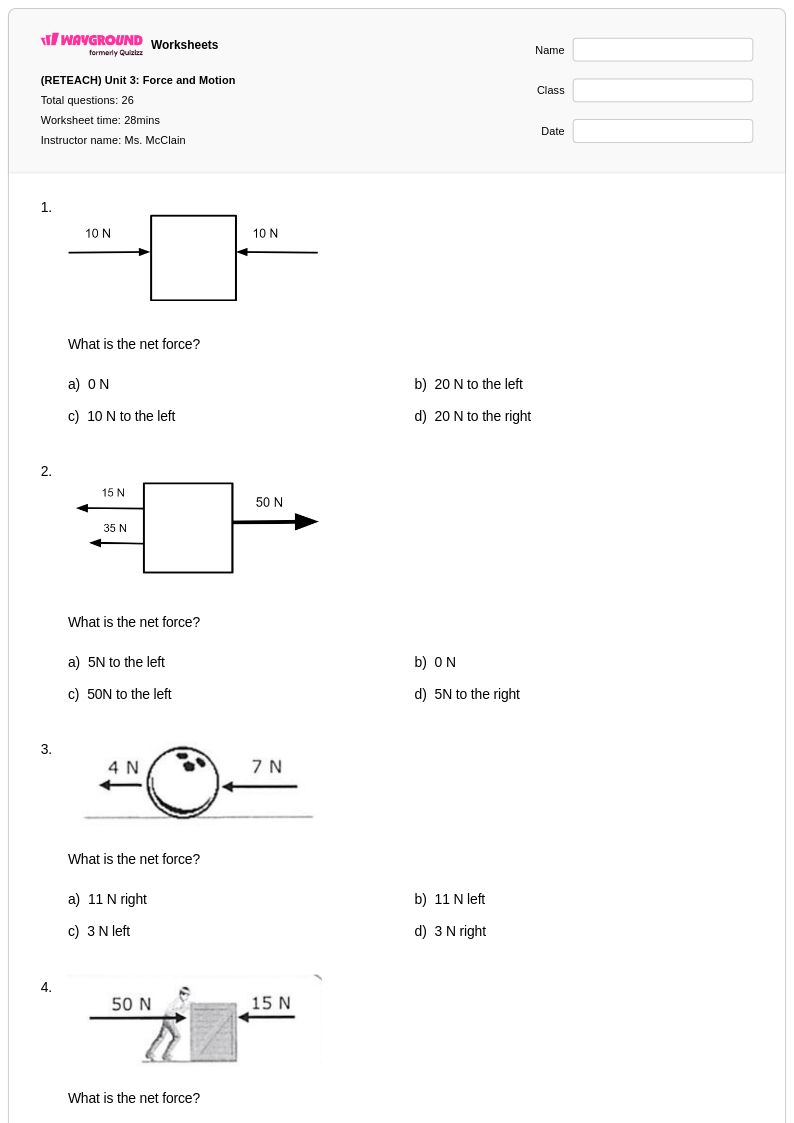
26 T
7th
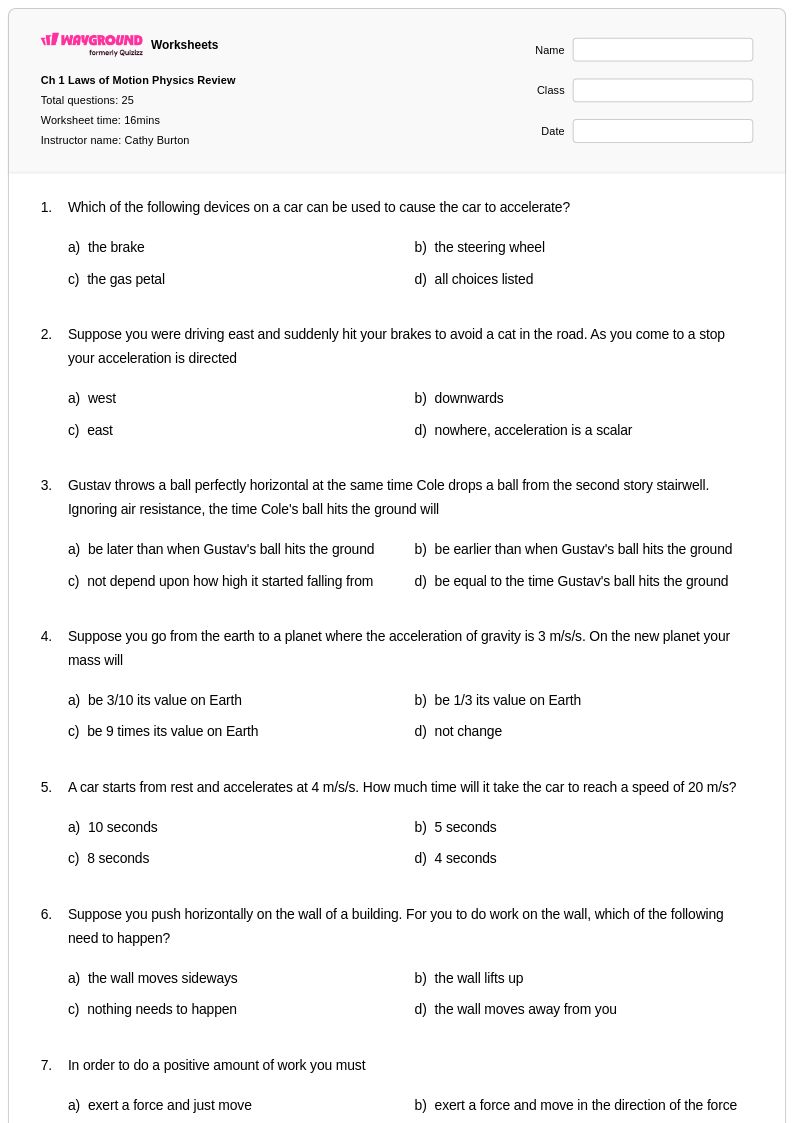
25 T
7th - 9th
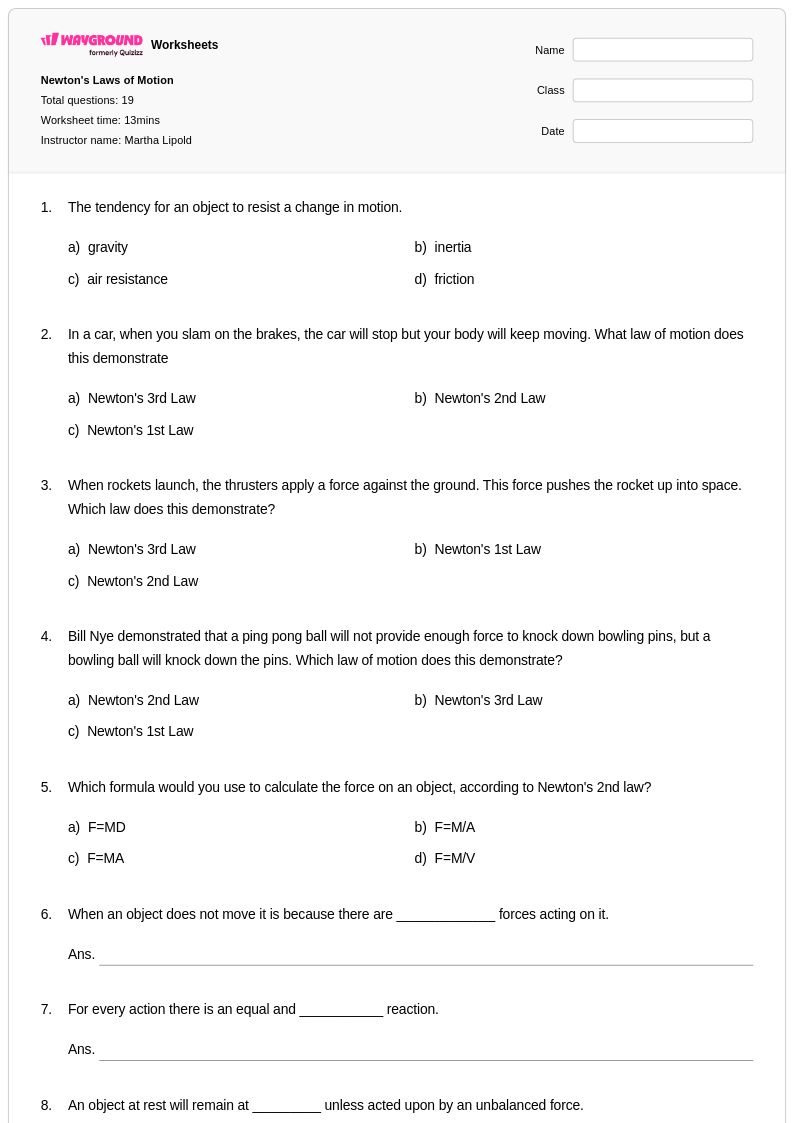
19 T
6th - 8th
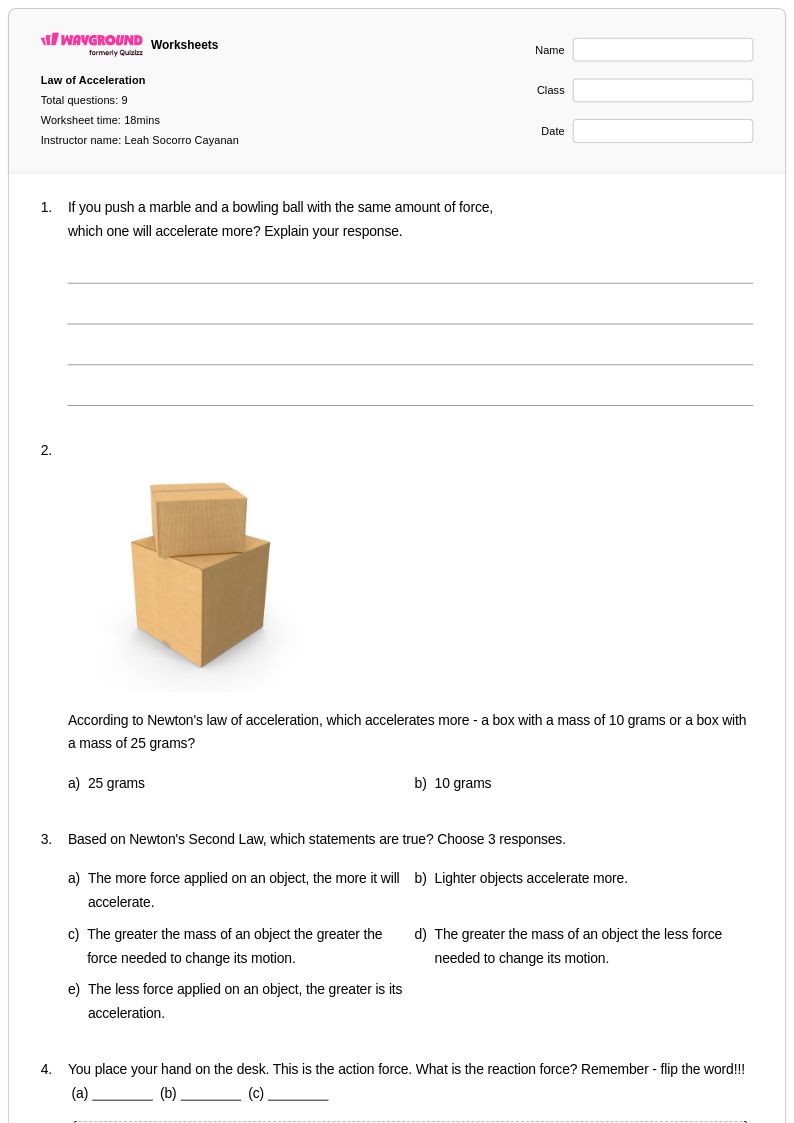
9 T
6th - 8th
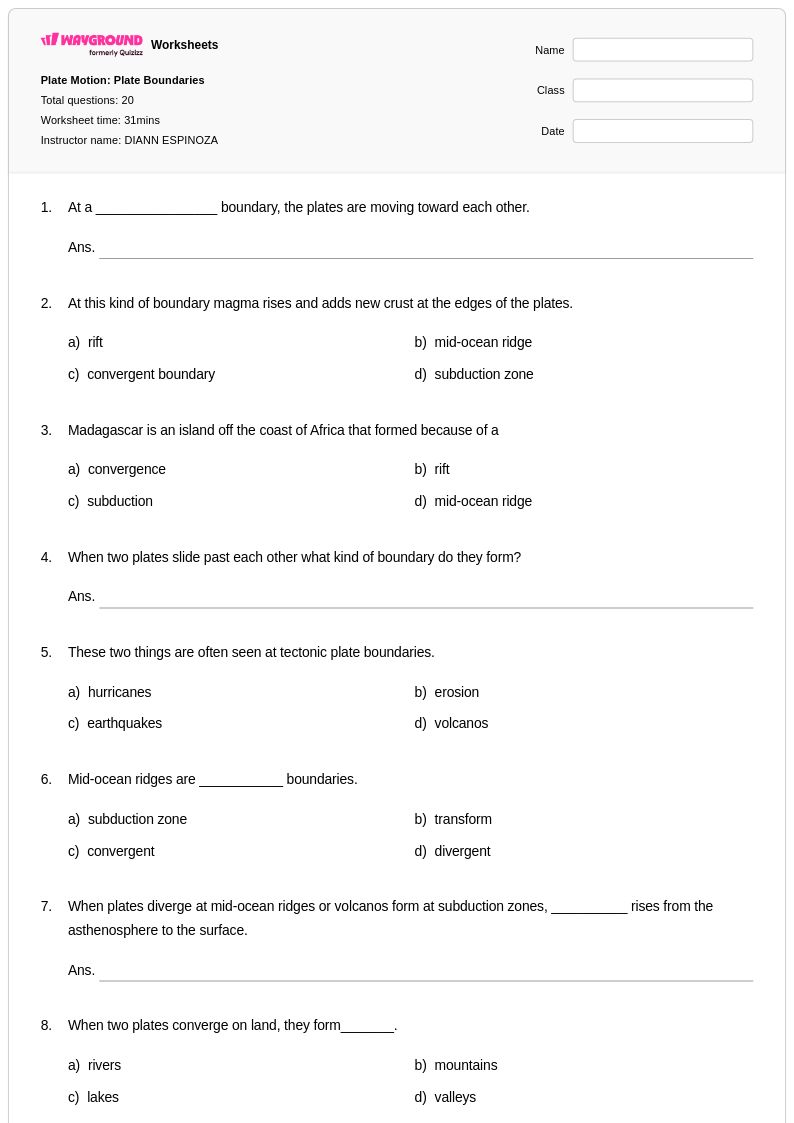
20 T
7th
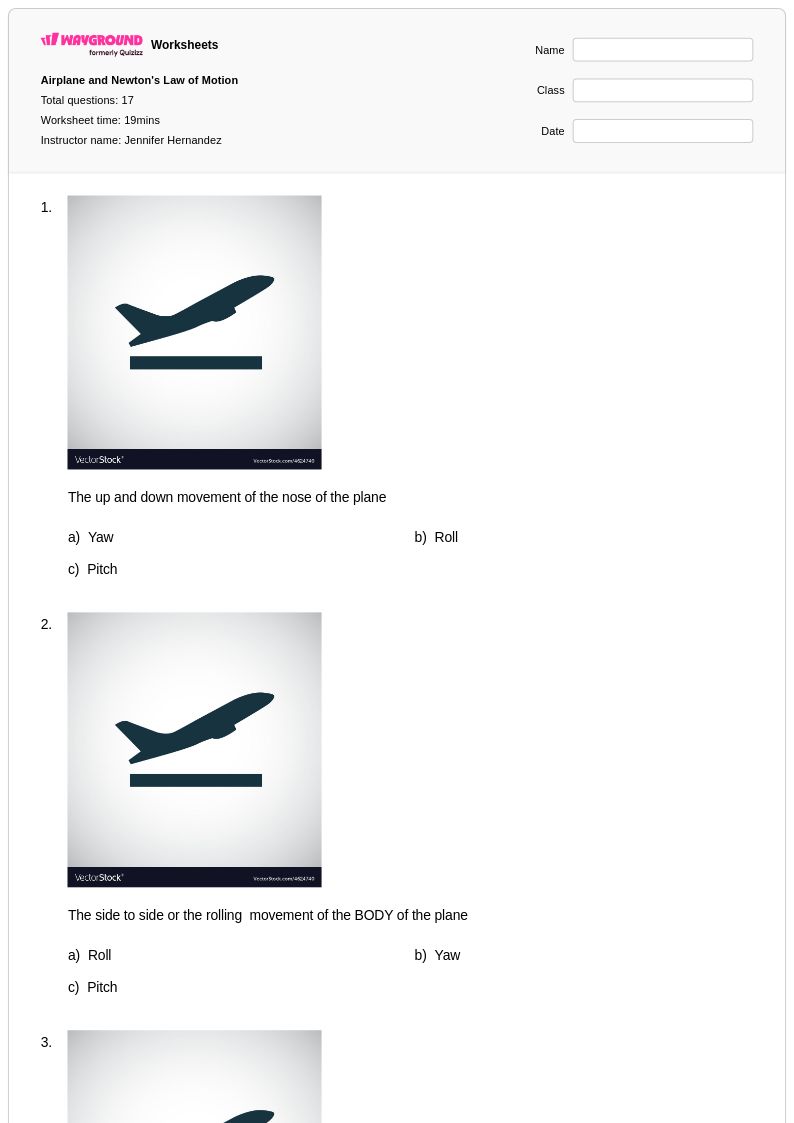
17 T
6th - 8th
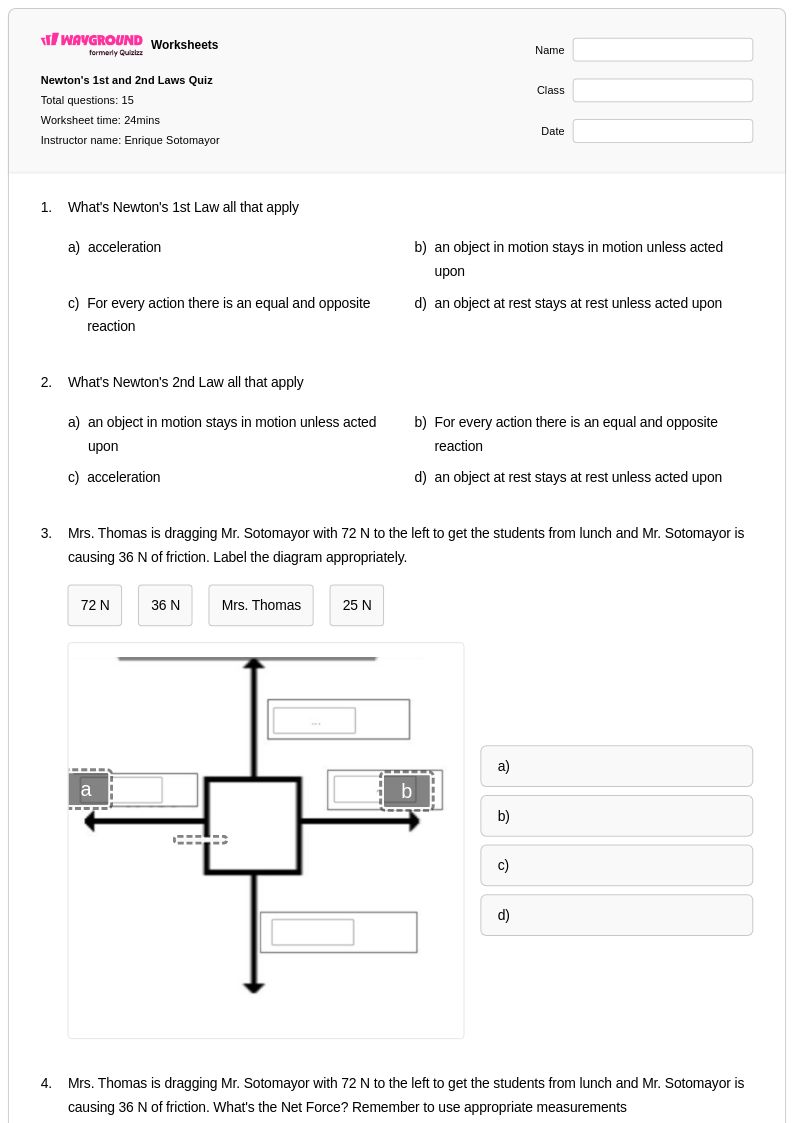
15 T
7th
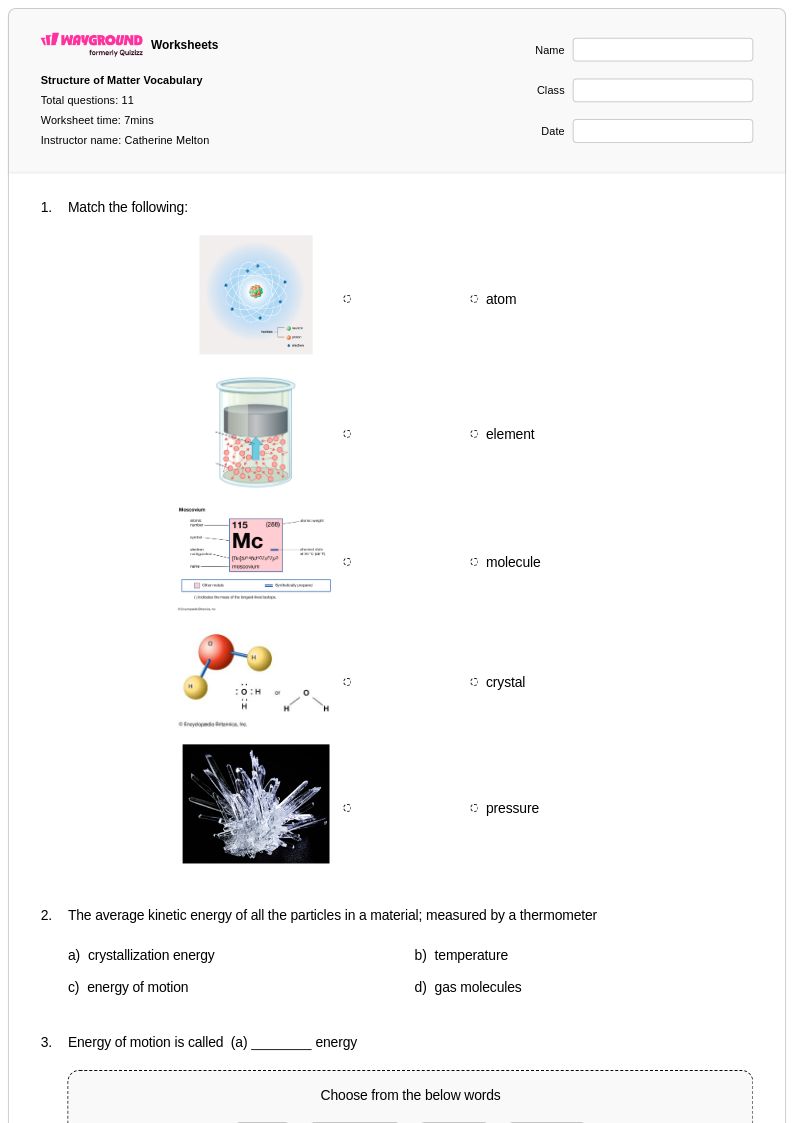
11 T
7th
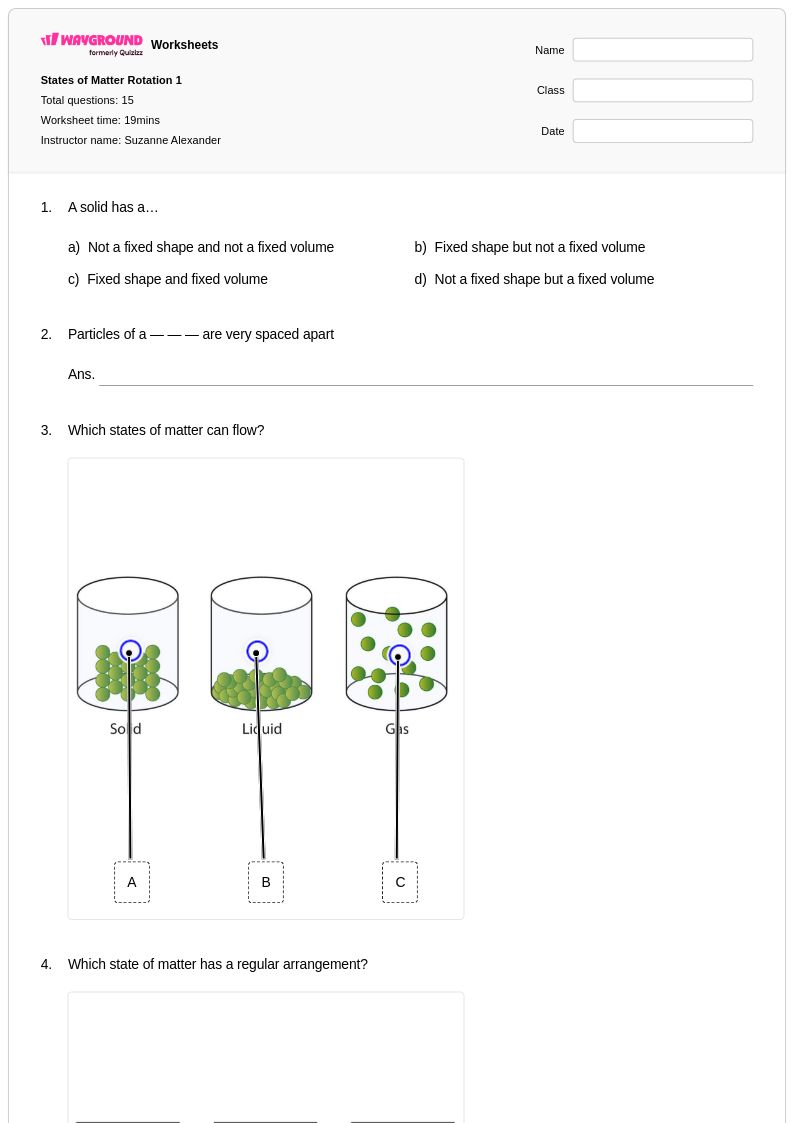
15 T
7th
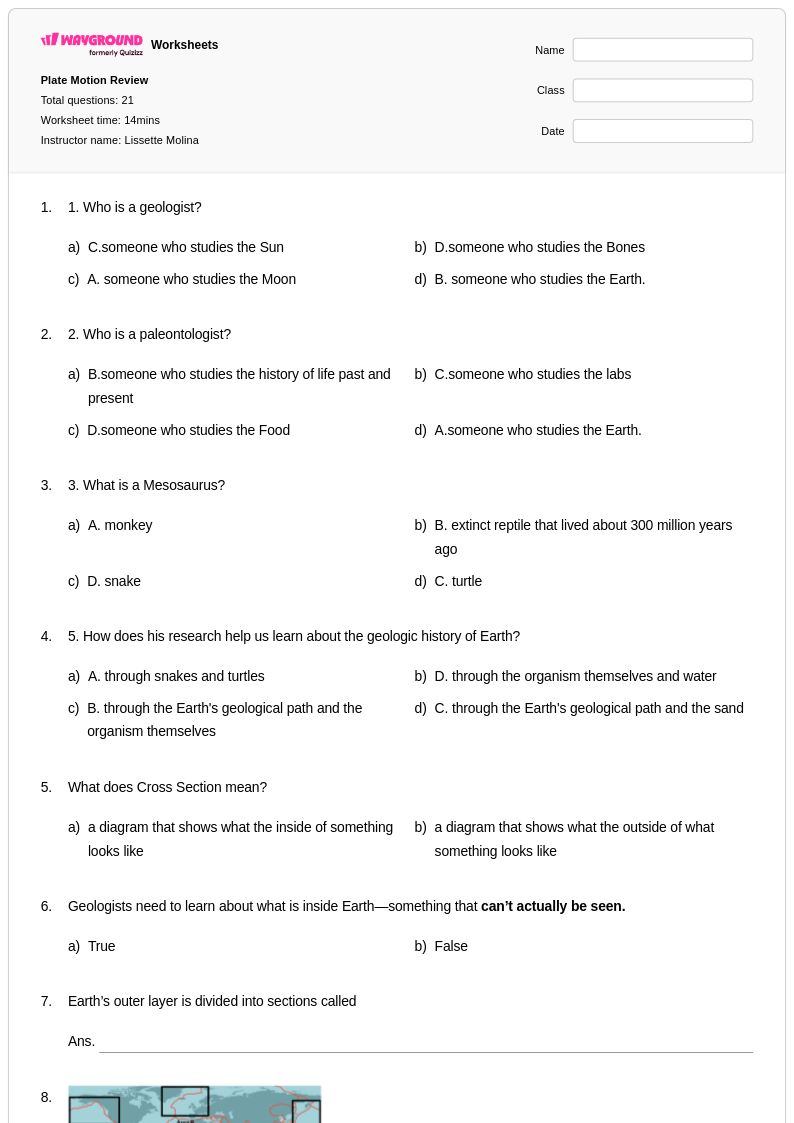
21 T
7th
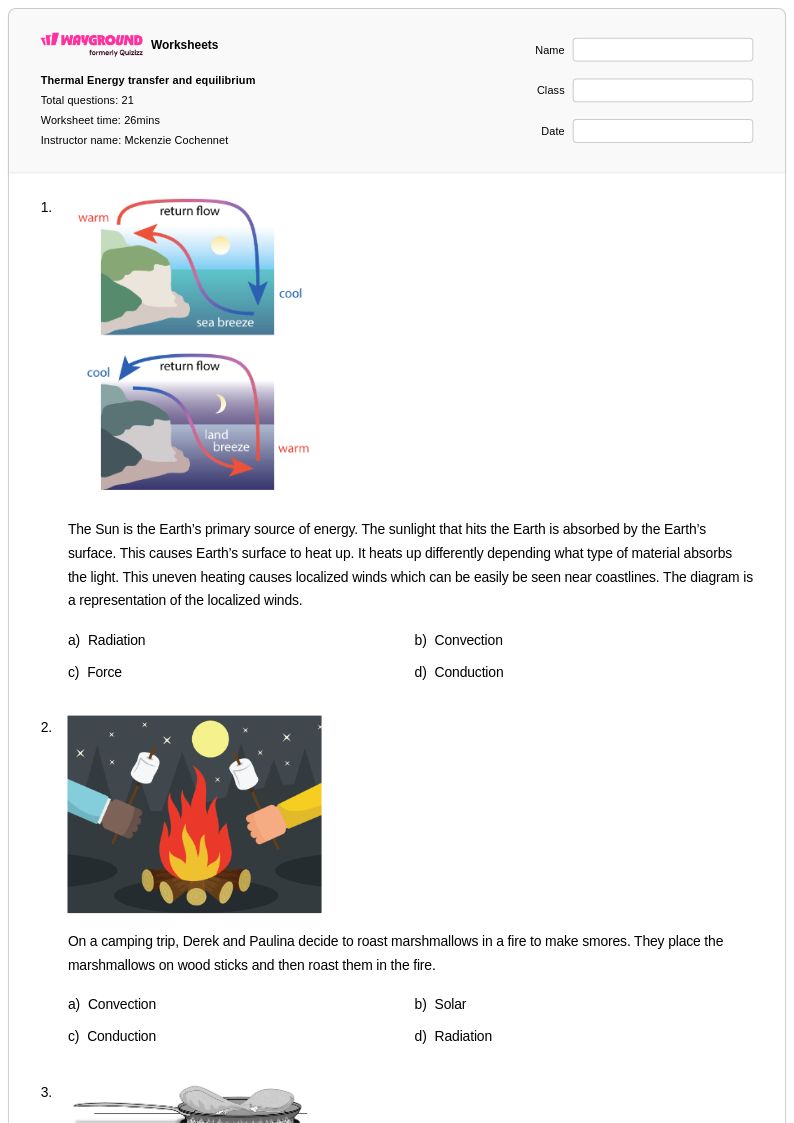
21 T
7th
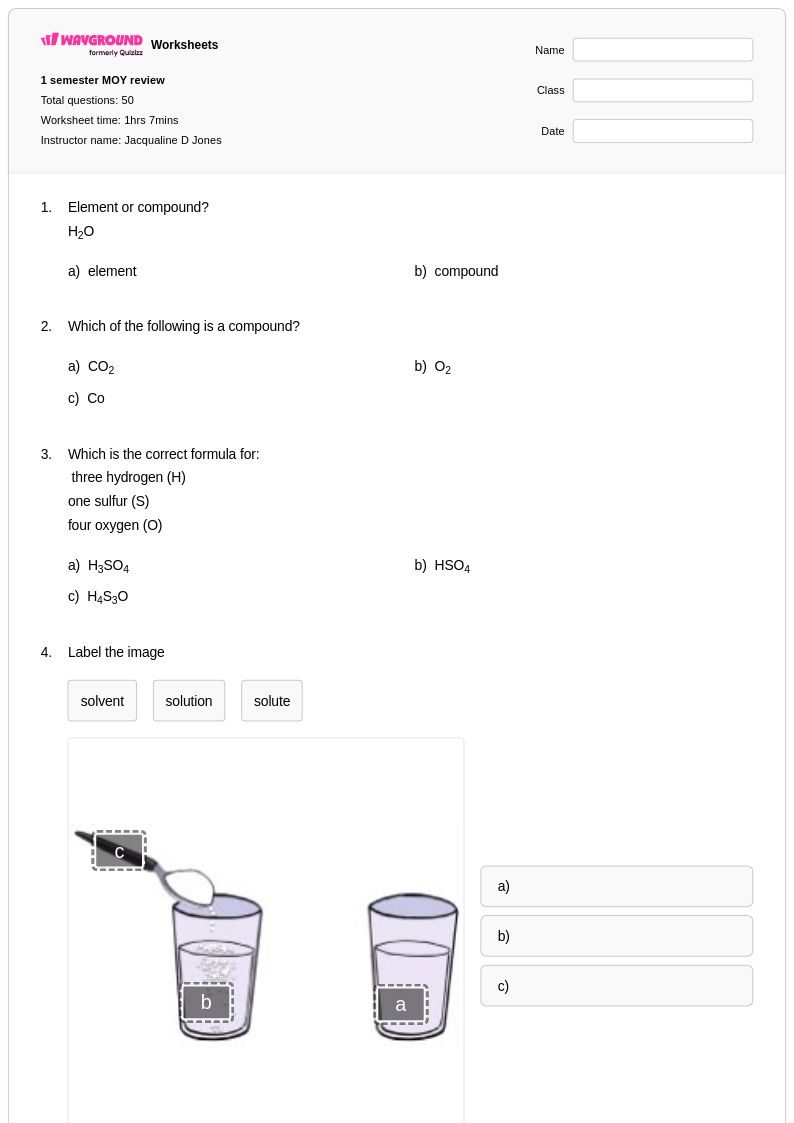
50 T
7th
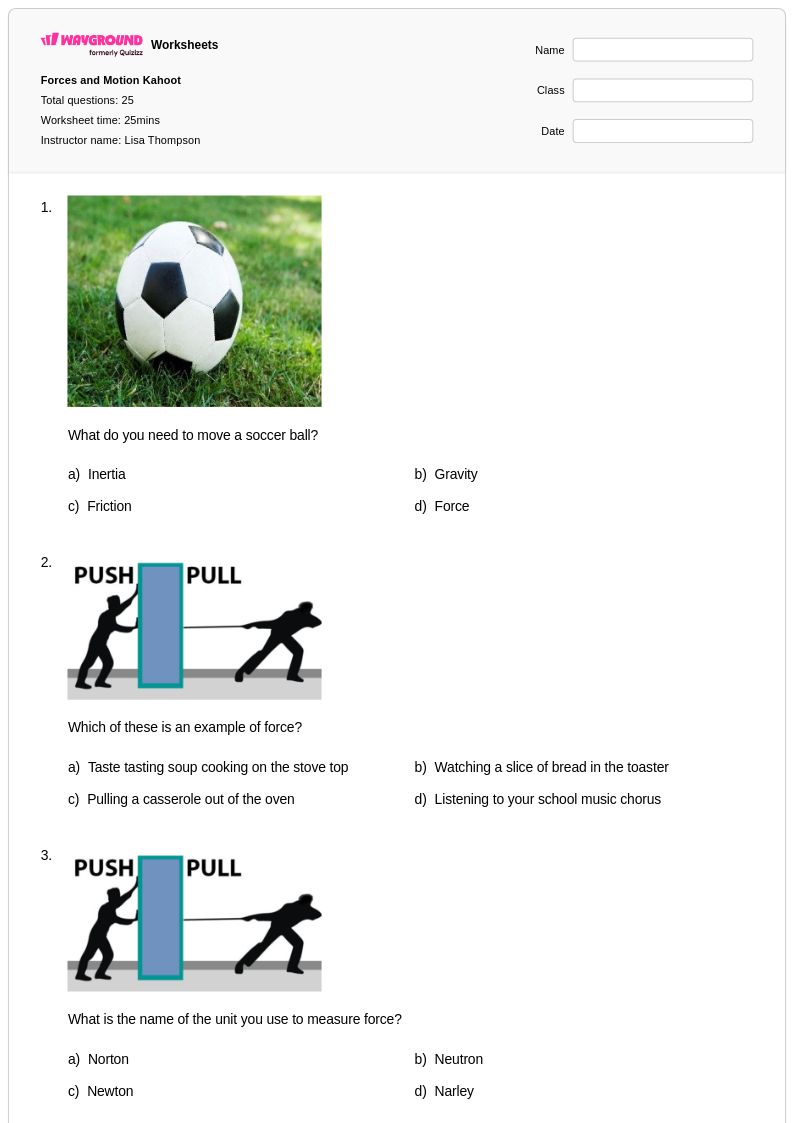
25 T
6th - Uni

34 T
7th
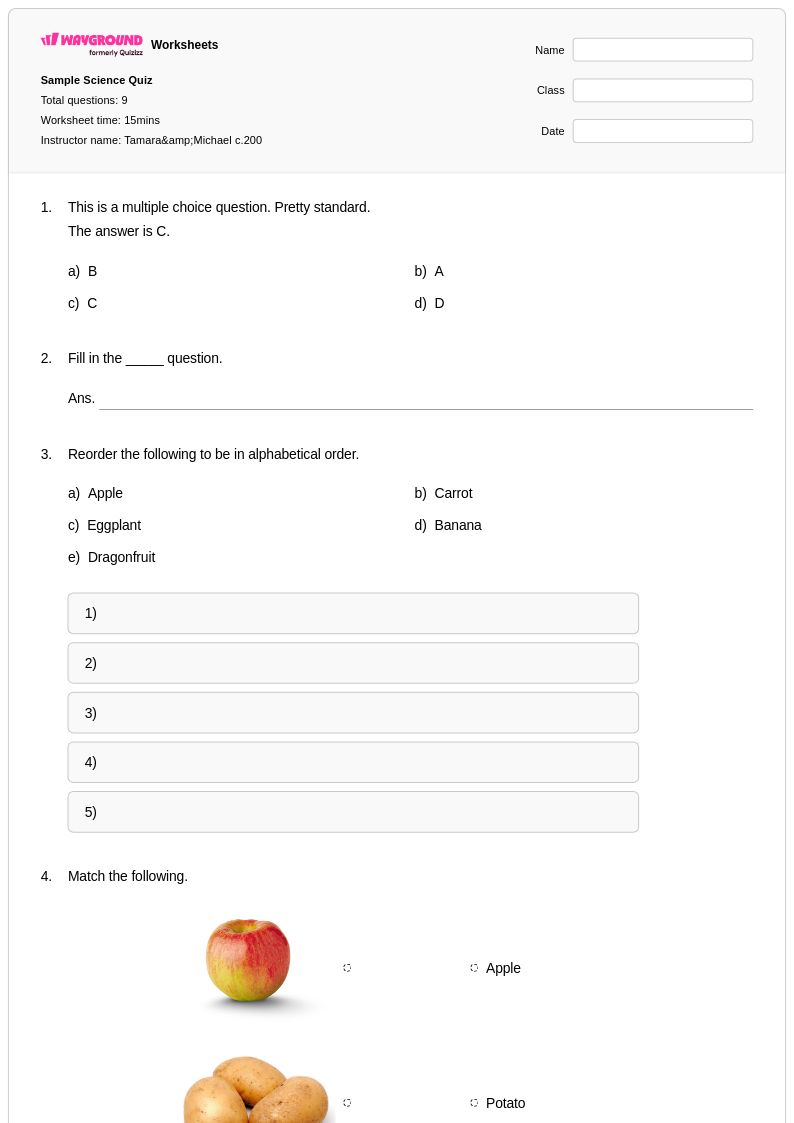
9 T
7th
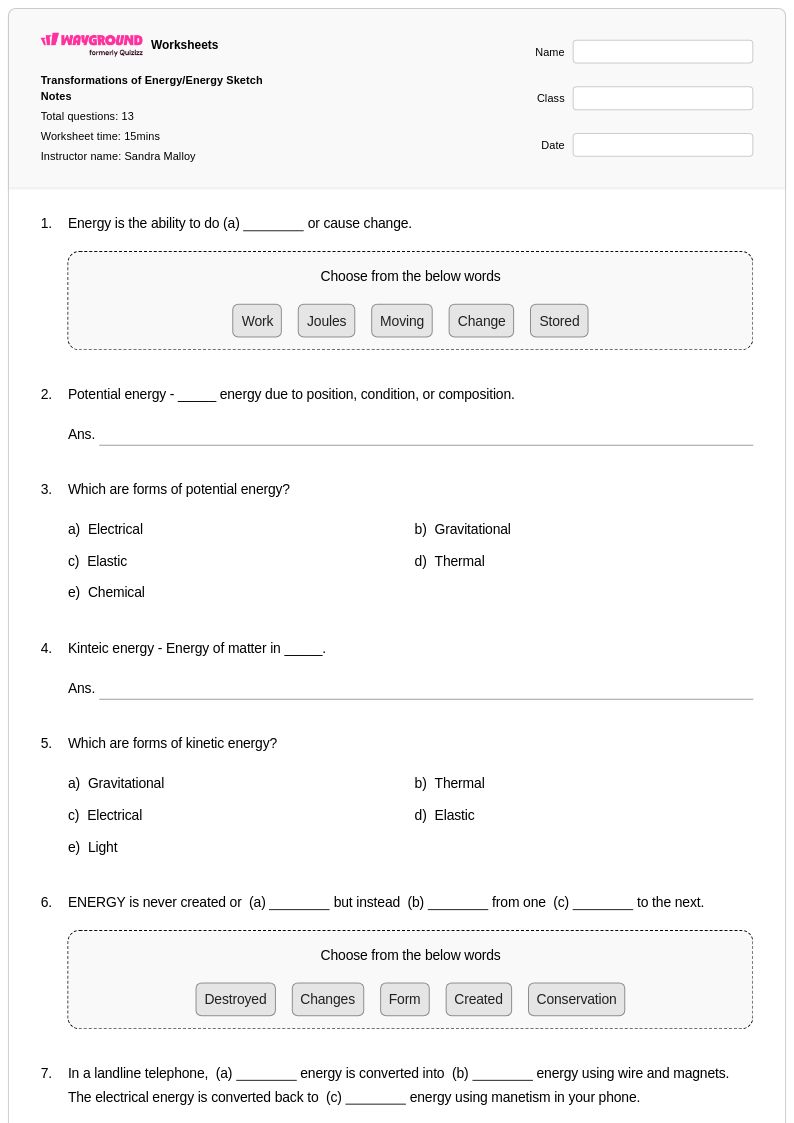
13 T
7th
10 T
7th - 8th
16 T
7th
13 T
7th
22 T
6th - Uni
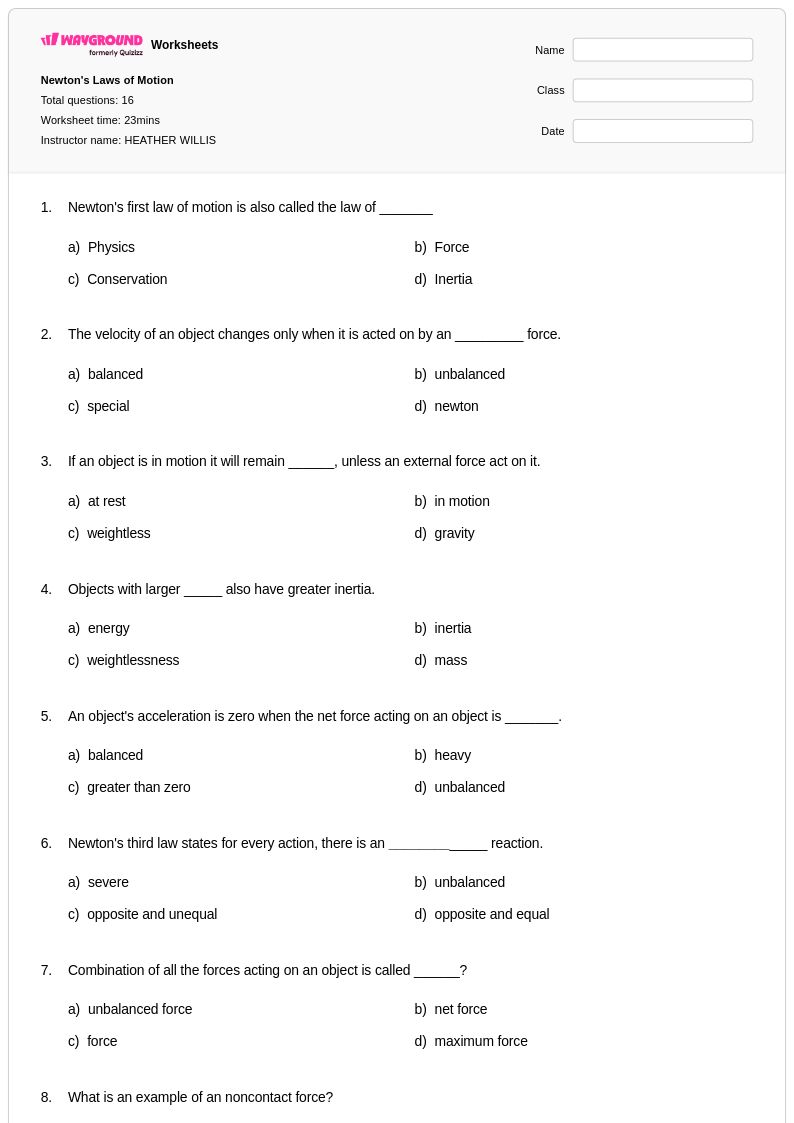
16 T
7th
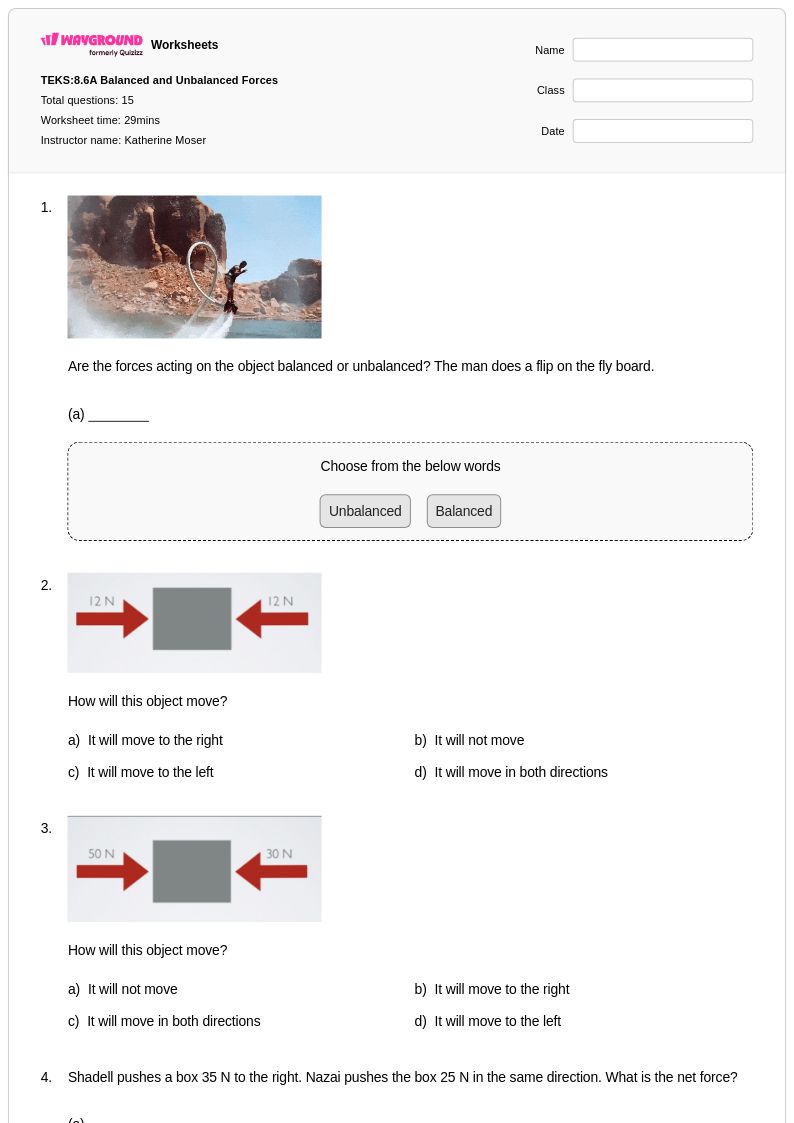
15 T
7th
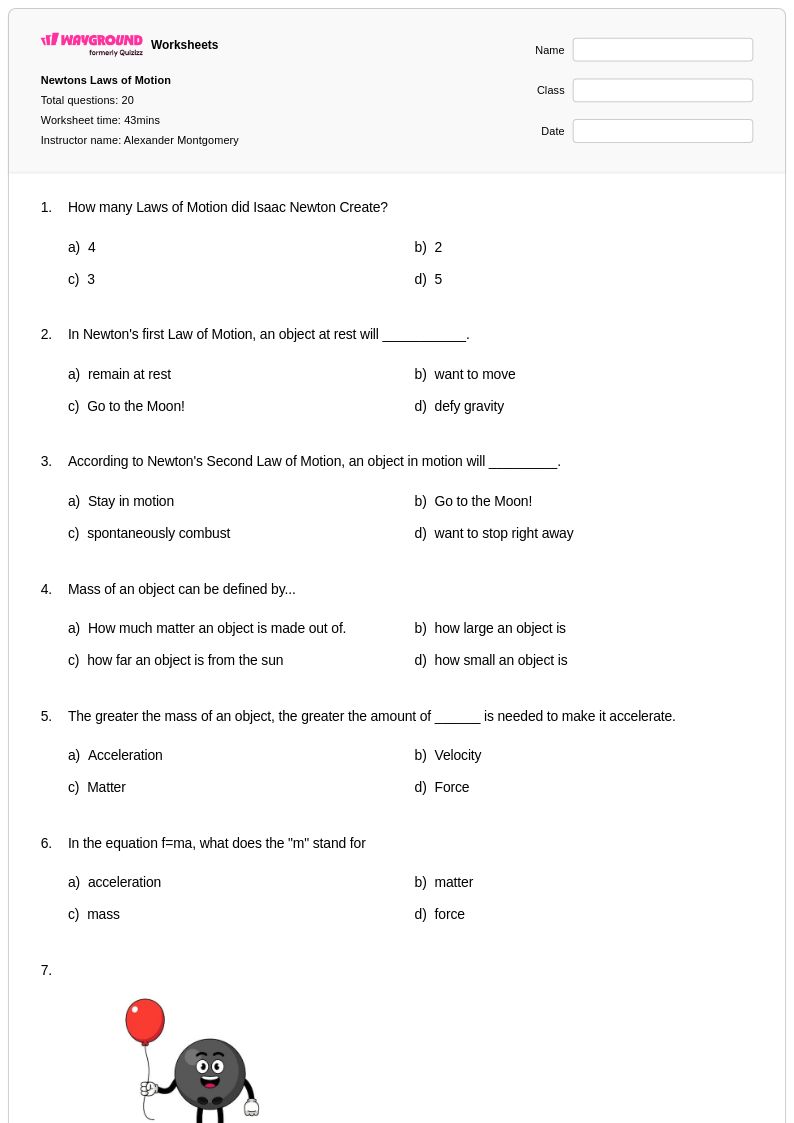
20 T
7th
Jelajahi Multiple Representations of Motion Lembar Kerja berdasarkan Nilai
Jelajahi Lembar Kerja Mata Pelajaran Lainnya untuk year 7
Explore printable Multiple Representations of Motion worksheets for Year 7
Multiple representations of motion worksheets for Year 7 physics provide students with comprehensive practice in analyzing and interpreting movement through various formats including graphs, equations, diagrams, and data tables. These educational resources strengthen critical thinking skills by requiring students to translate between different scientific representations such as position-time graphs, velocity-time graphs, motion maps, and mathematical descriptions of moving objects. Through Wayground's extensive collection of free printables and practice problems, seventh-grade students develop proficiency in reading motion graphs, calculating speed and velocity, interpreting distance versus displacement, and connecting mathematical relationships to real-world scenarios. Each worksheet includes detailed answer keys that support both independent study and classroom instruction, while pdf formats ensure easy distribution and consistent formatting across different learning environments.
Wayground's platform, formerly Quizizz, empowers educators with access to millions of teacher-created resources specifically designed for multiple representations of motion instruction at the Year 7 level. The comprehensive search and filtering capabilities allow teachers to quickly locate worksheets that align with specific learning standards and accommodate diverse student needs through built-in differentiation tools. These customizable resources are available in both printable and digital formats, including downloadable pdf files that facilitate seamless lesson planning and implementation. Teachers can effectively use these materials for initial concept introduction, targeted remediation for struggling learners, enrichment activities for advanced students, and ongoing skill practice throughout their physics units, ensuring that all students master the essential ability to interpret and create multiple representations of motion phenomena.