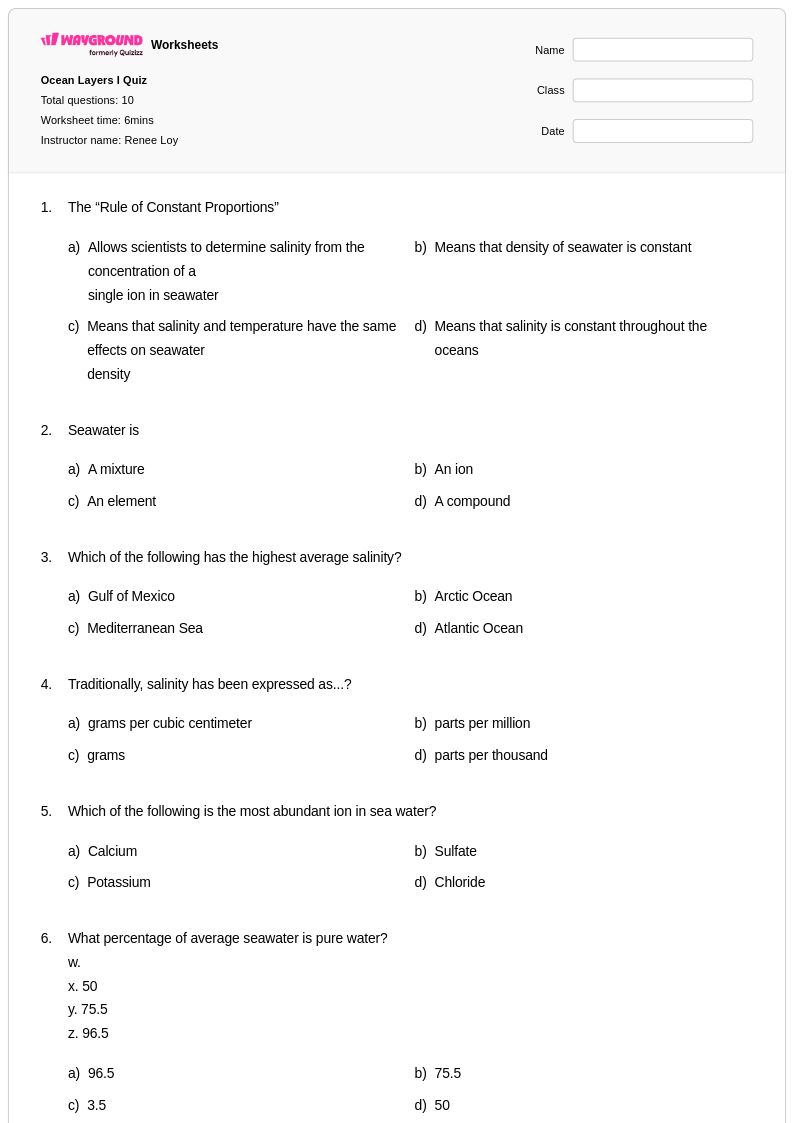
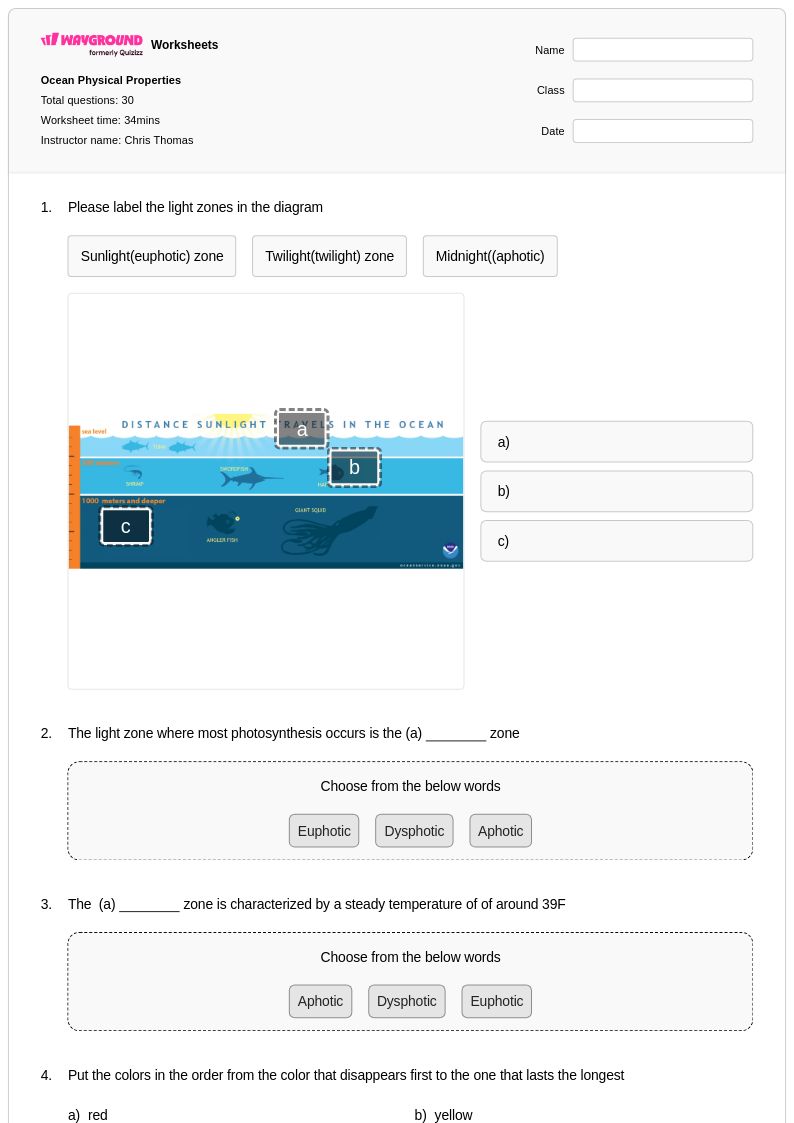
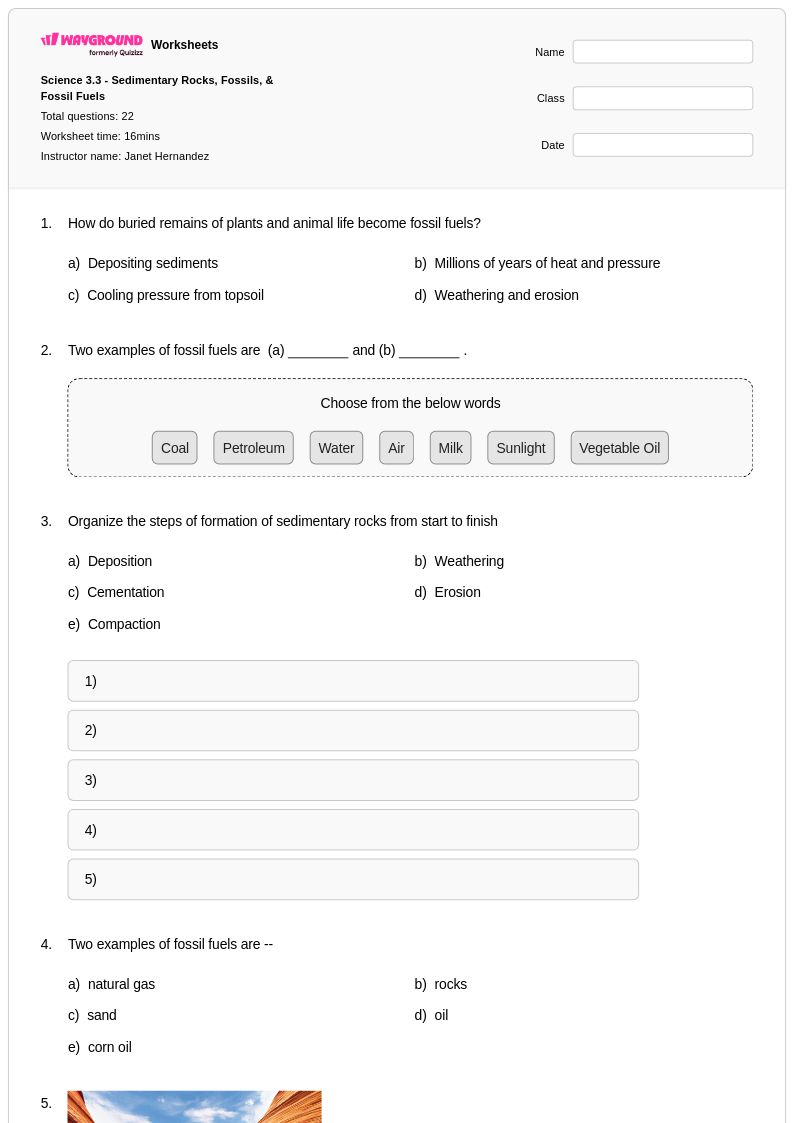
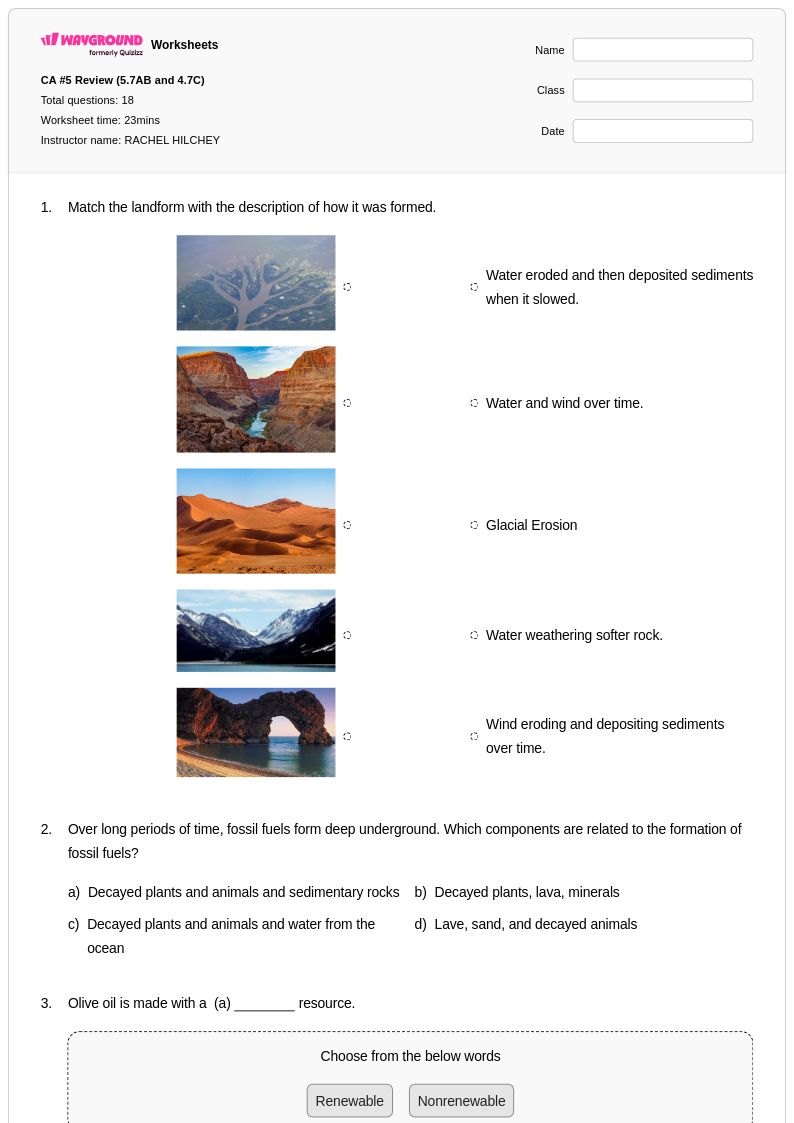
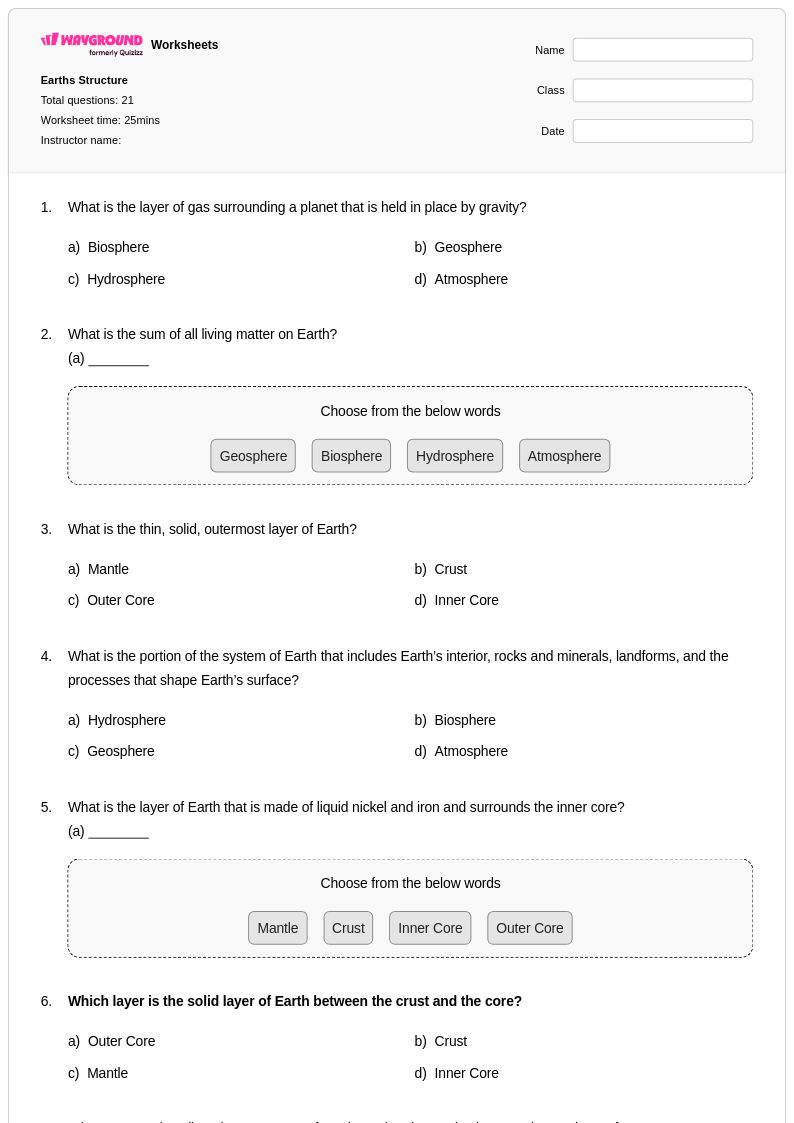
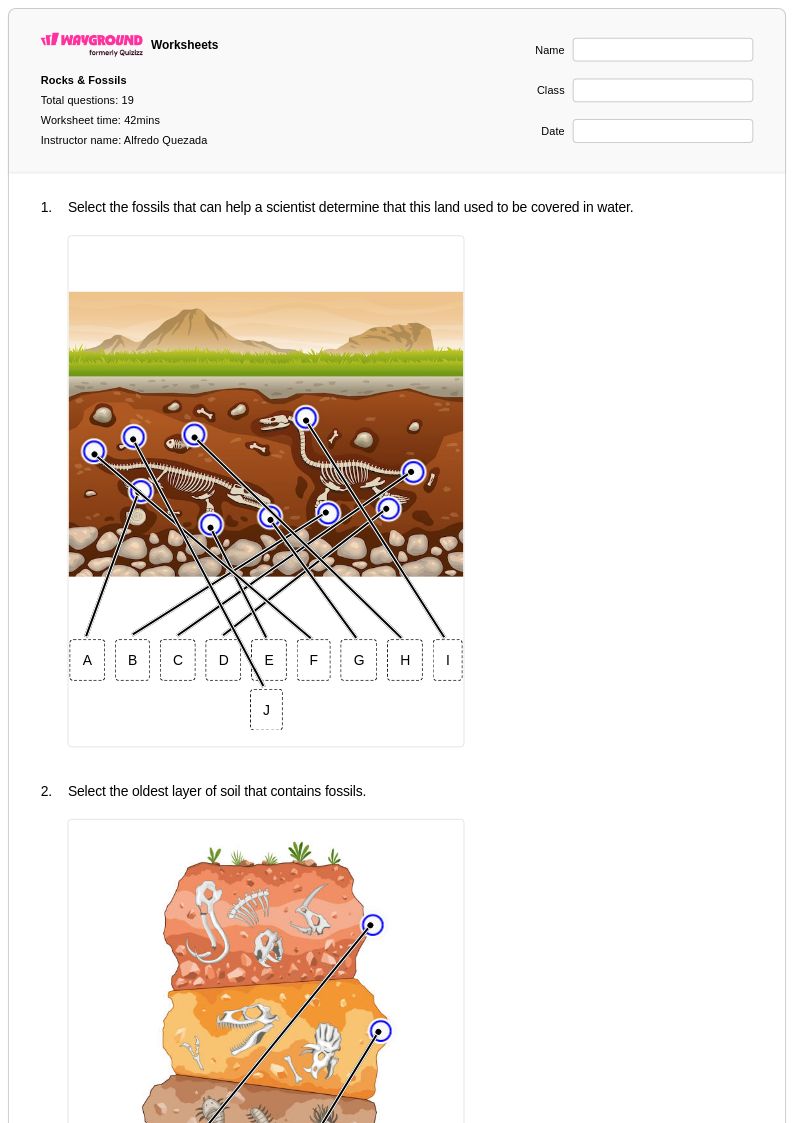
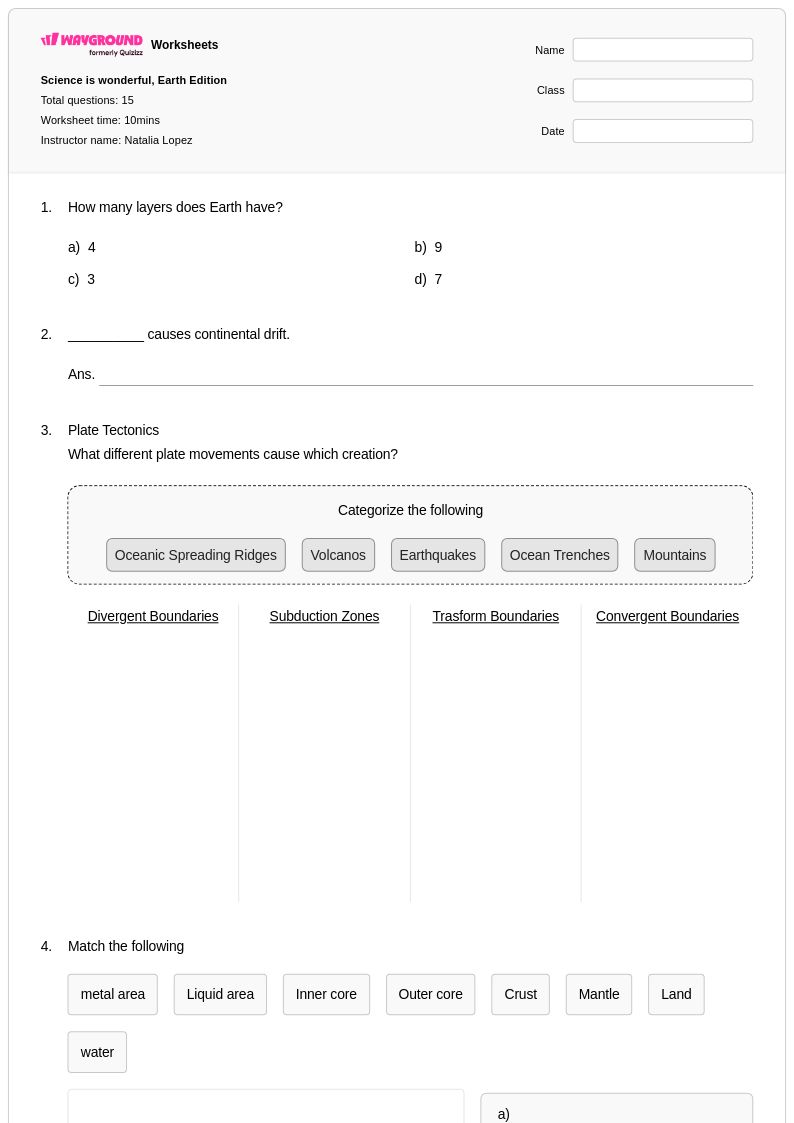
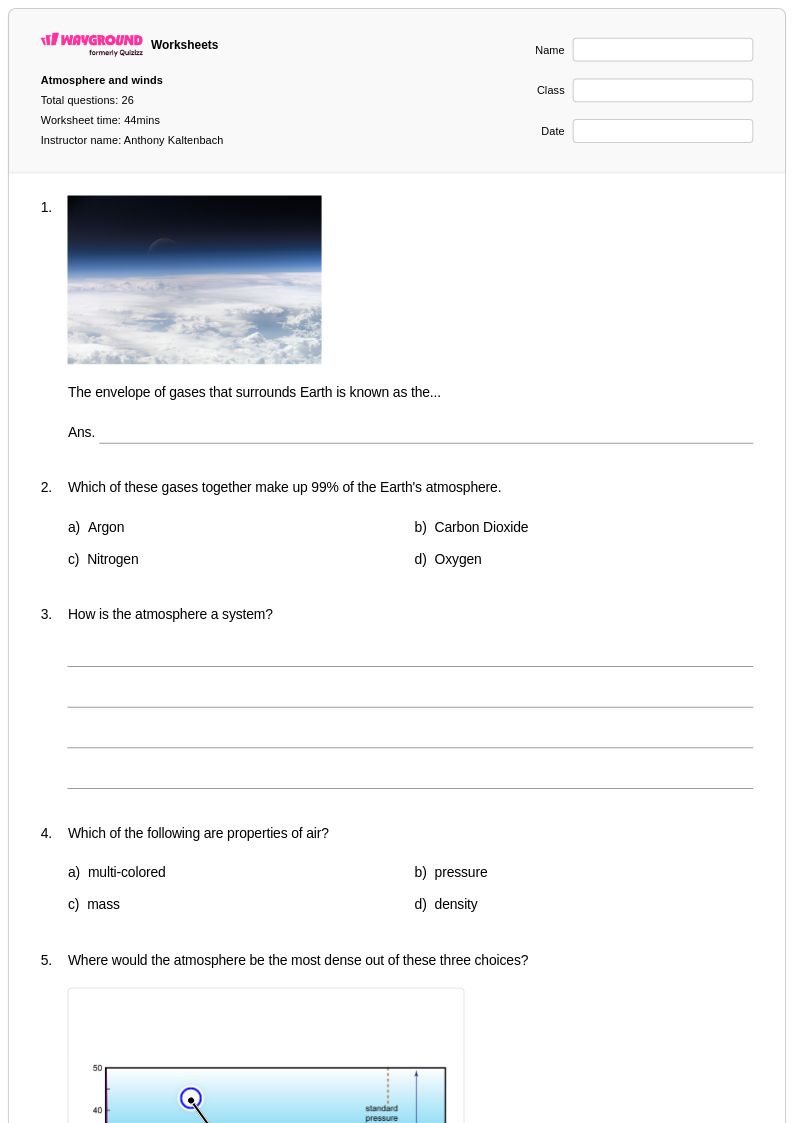
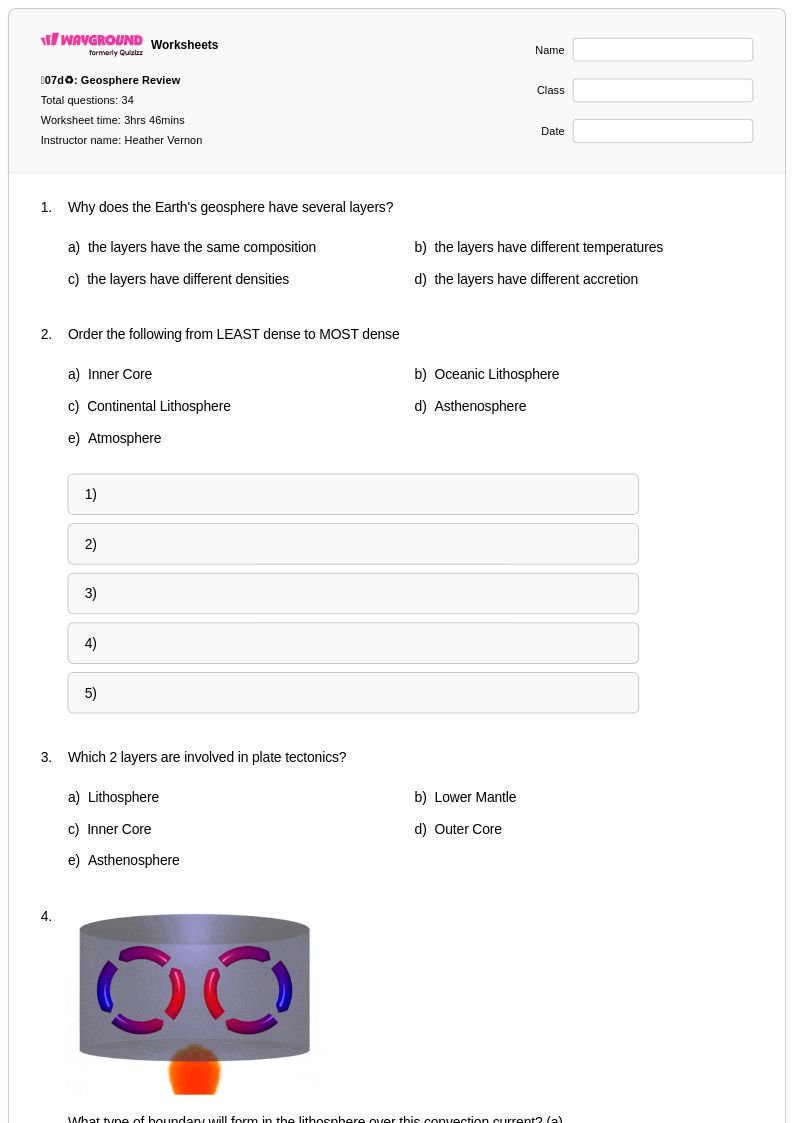
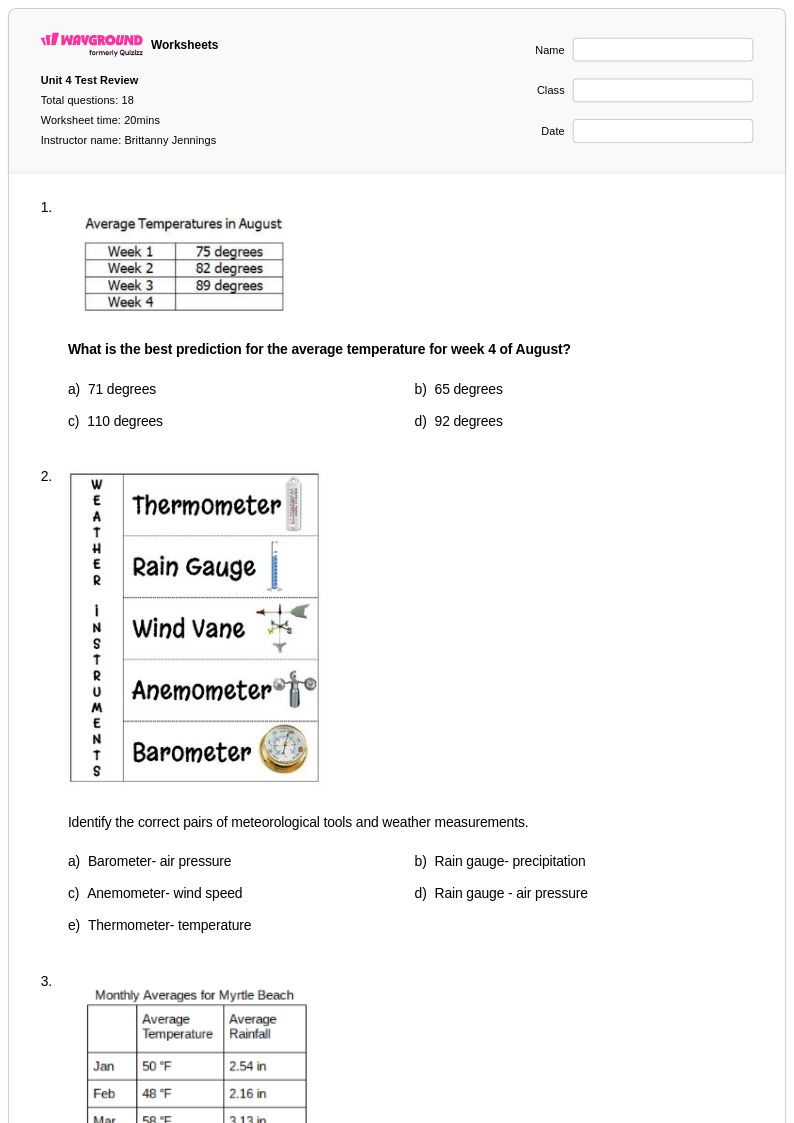
Explore Wayground's free ocean layers worksheets and printables that help students understand the distinct zones of marine environments through engaging practice problems and comprehensive answer keys.
Ocean layers worksheets available through Wayground (formerly Quizizz) provide comprehensive educational resources that help students explore the distinct zones of marine environments, from the sunlit epipelagic zone to the mysterious hadal zone. These expertly crafted materials strengthen critical scientific skills including data interpretation, marine ecosystem analysis, and understanding of how physical properties like temperature, pressure, and light penetration change with depth. Students engage with practice problems that examine the unique characteristics of each oceanic layer, including the organisms that inhabit these zones and their specialized adaptations. The collection includes diverse formats with detailed answer keys, making these free printables valuable tools for both guided instruction and independent study as students master concepts related to ocean stratification and marine biodiversity.
Wayground (formerly Quizizz) supports educators with millions of teacher-created ocean layers resources that feature robust search and filtering capabilities, enabling quick access to materials aligned with specific learning standards and objectives. The platform's differentiation tools allow teachers to customize worksheets for varied ability levels, while flexible formatting options provide both printable pdf versions and interactive digital formats to accommodate different classroom environments. These comprehensive features streamline lesson planning and provide targeted resources for remediation when students struggle with complex oceanographic concepts, enrichment activities for advanced learners ready to explore deeper marine science topics, and systematic skill practice that reinforces understanding of ocean zone characteristics, pressure relationships, and the interconnected nature of marine ecosystems across different depths.
FAQs
How do I teach ocean layers to students?
Start by establishing the concept of stratification — that the ocean is divided into distinct zones based on depth, light penetration, temperature, and pressure. Introduce each zone in order from surface to seafloor: epipelagic, mesopelagic, bathypelagic, abyssopelagic, and hadal. Use visual diagrams and have students compare how physical conditions change with depth before connecting those conditions to the organisms that live in each zone. Anchoring each zone to a memorable organism or adaptation helps students retain the distinctions between layers.
What exercises help students practice identifying ocean zones?
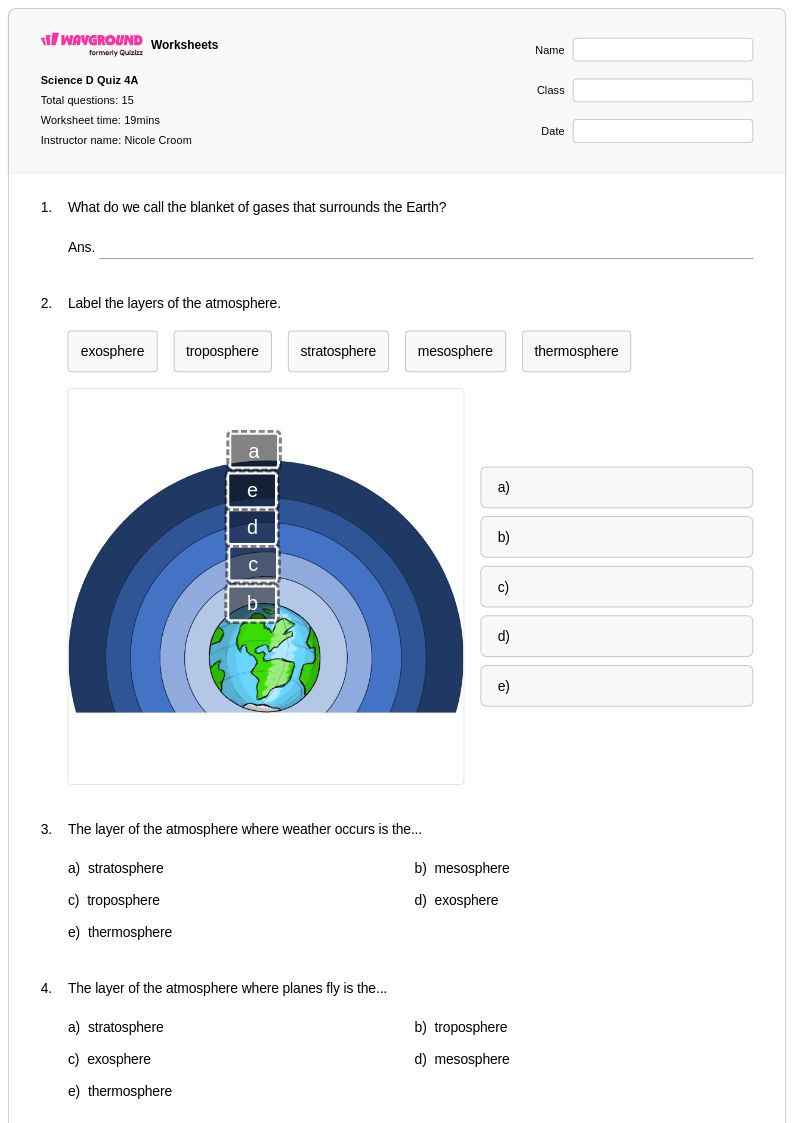
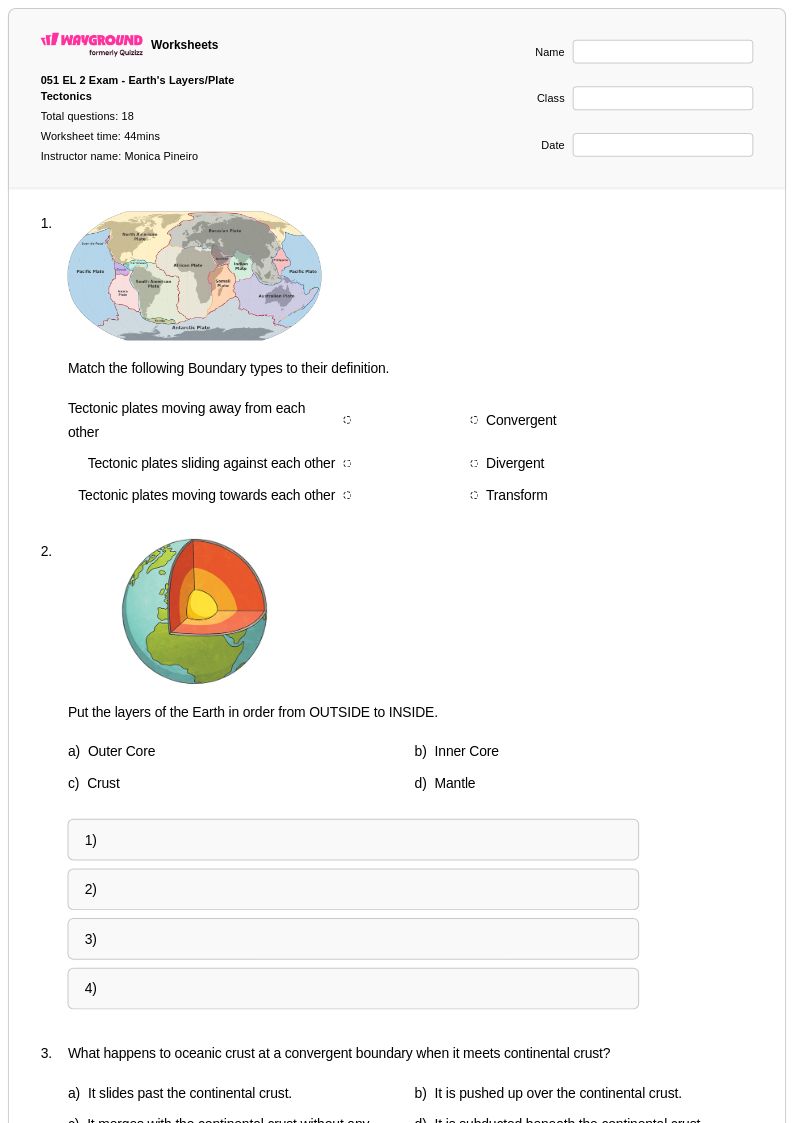
Effective practice involves matching zones to their defining physical characteristics — such as light availability, temperature range, and pressure — and identifying which organisms are adapted to each layer. Data interpretation exercises that ask students to read depth-vs-temperature or depth-vs-light graphs reinforce how conditions shift across zones. Ocean layers worksheets that combine labeled diagrams, fill-in-the-blank questions, and short analysis prompts give students multiple entry points for building fluency with the content.
What mistakes do students commonly make when learning about ocean layers?
The most frequent misconception is treating the ocean as a uniform environment rather than a series of dramatically different zones. Students also tend to confuse the mesopelagic and bathypelagic zones, or incorrectly assume that life cannot exist below the photic zone. Another common error is misunderstanding pressure relationships — many students do not intuitively grasp that pressure increases with depth, or that organisms in the deep ocean have specific structural adaptations because of it. Targeted practice on the physical properties of each zone, rather than just their names, helps correct these gaps.
How do I differentiate ocean layers instruction for students at different ability levels?
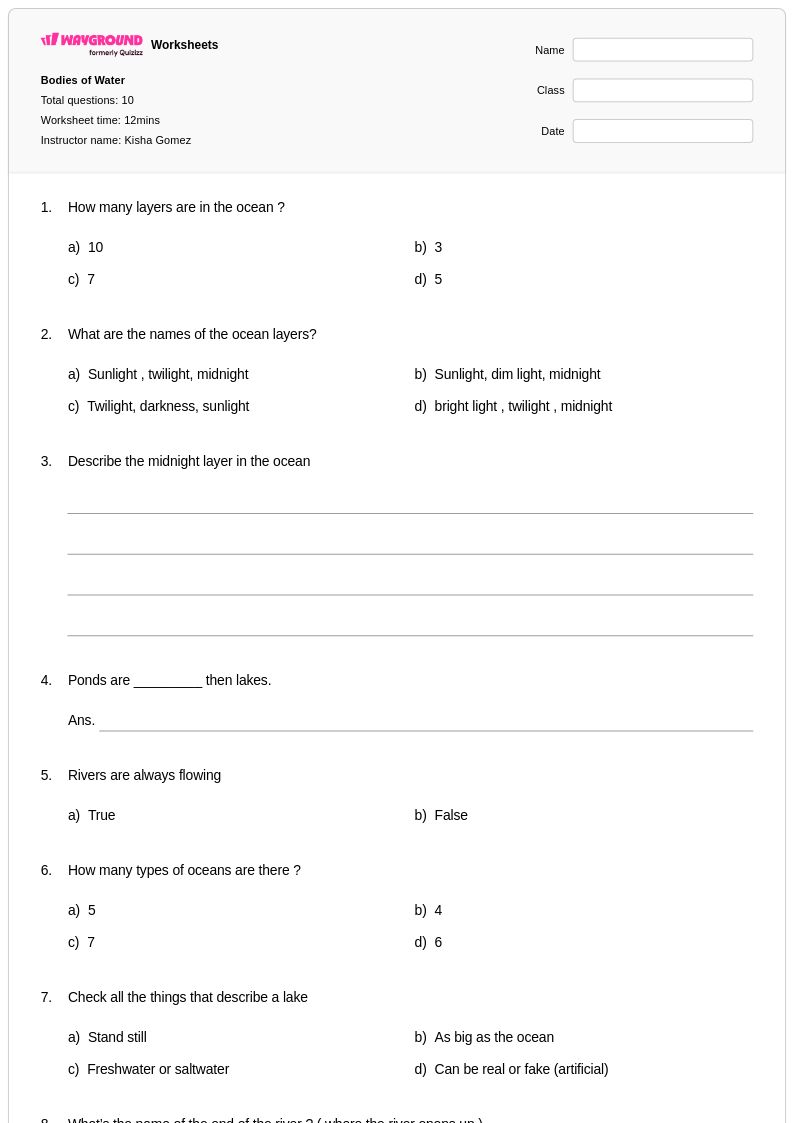
For students who need additional support, simplify by focusing on the three broad zones — sunlight, twilight, and midnight — before introducing the full five- or six-zone model. Advanced learners can explore the physiological adaptations of deep-sea organisms or analyze real oceanographic data sets. On Wayground, teachers can apply accommodations such as reduced answer choices to lower cognitive load for struggling students, or enable Read Aloud for students who benefit from audio support — while other students complete the same worksheet without any disruption to their experience.
How can I use Wayground's ocean layers worksheets in my classroom?
Wayground's ocean layers worksheets are available as printable PDFs for traditional classroom use and in digital formats for technology-integrated environments, including the option to host them as a quiz directly on Wayground. Teachers can use the printable versions for guided note-taking or lab follow-up activities, while the digital format works well for homework assignments, remote learning, or formative assessment. All worksheets include complete answer keys, so grading and review can be done efficiently whether you are working with the whole class or supporting independent study.
How do I assess whether students understand ocean stratification?
A reliable assessment approach is to give students an unlabeled depth diagram and ask them to place each ocean zone, describe the physical conditions present, and identify at least one organism adapted to that zone. This format reveals whether students understand the relationship between depth and environmental conditions or have simply memorized zone names. Short-answer questions that ask students to explain why certain organisms cannot survive outside their zone are particularly effective at surfacing surface-level versus deeper conceptual understanding.