Free Printable Oscillations and Mechanical Waves worksheets
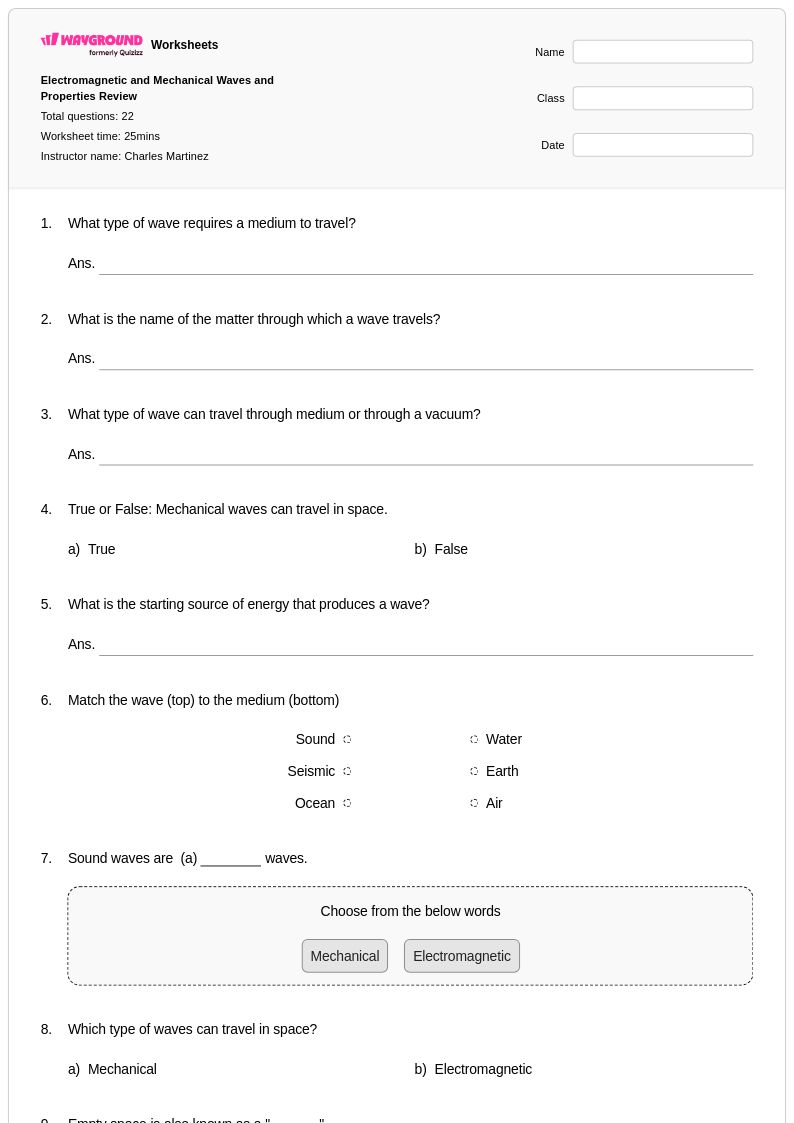
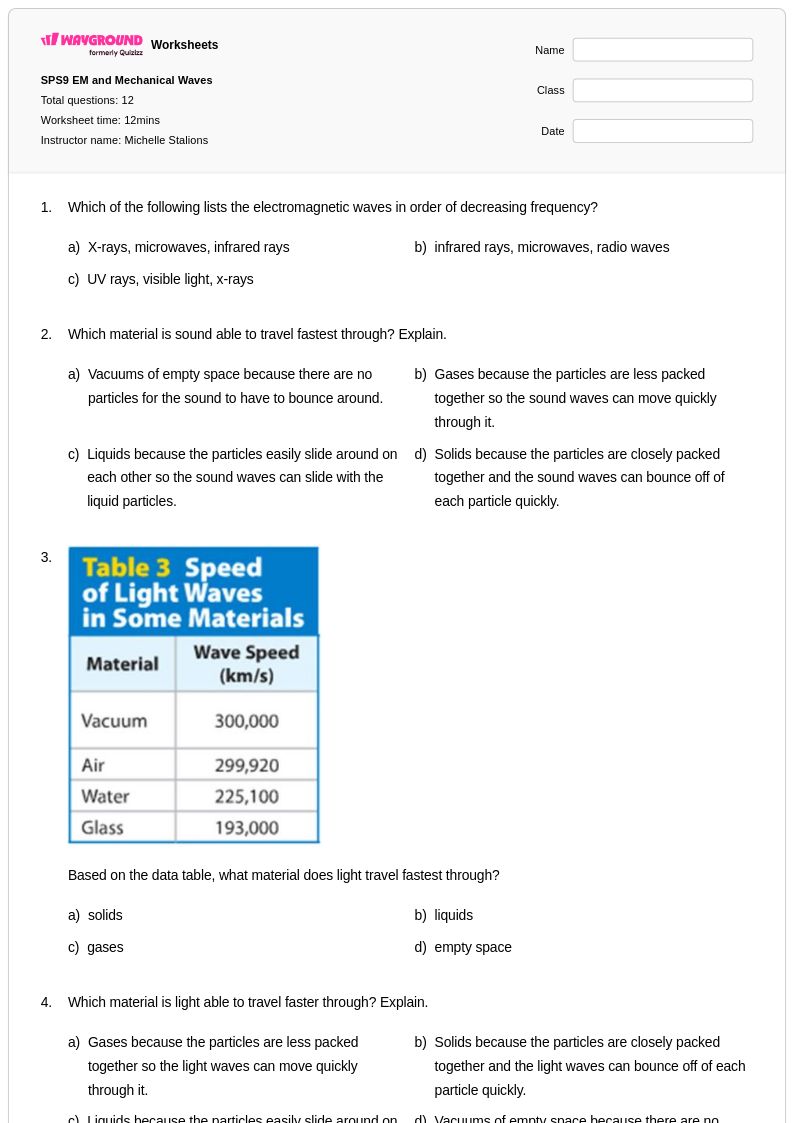
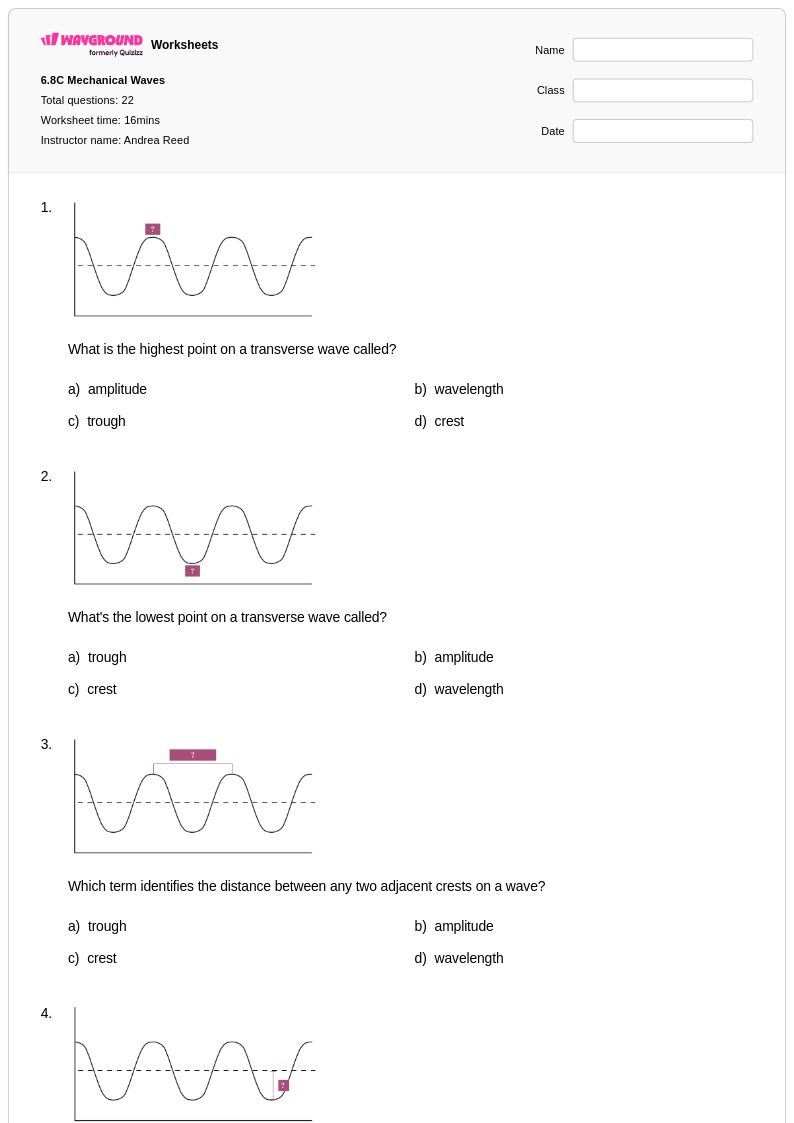
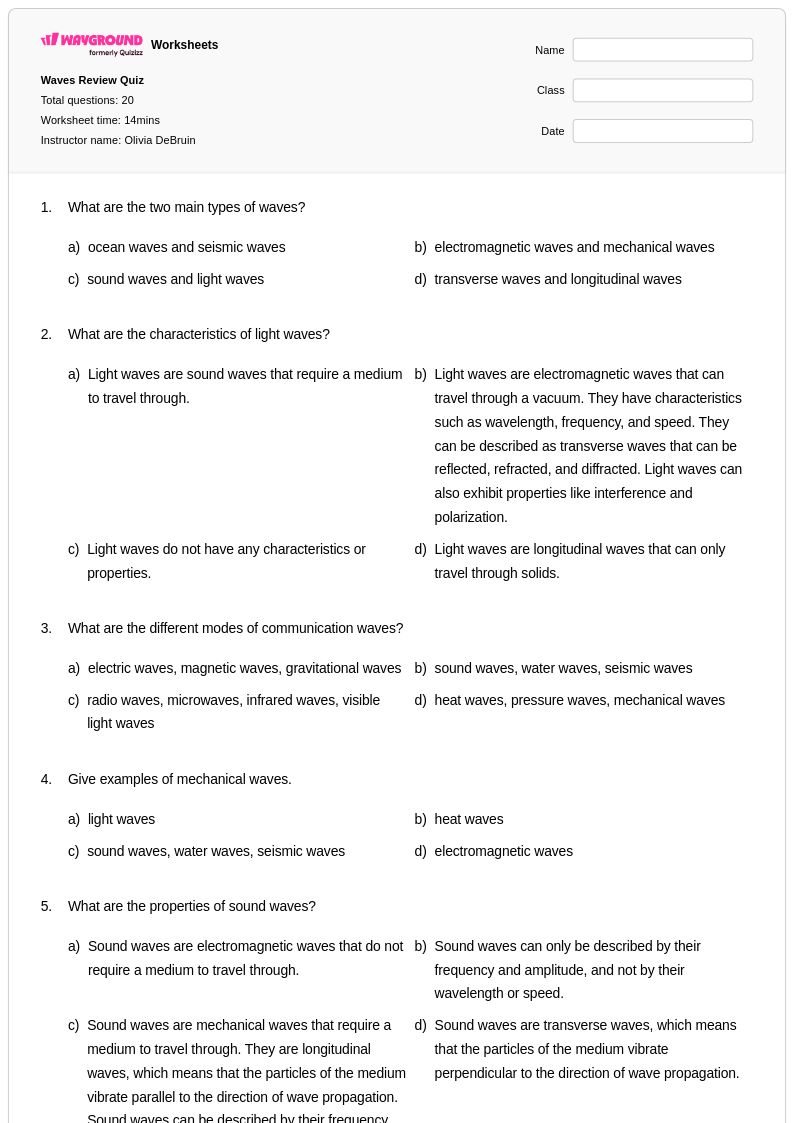
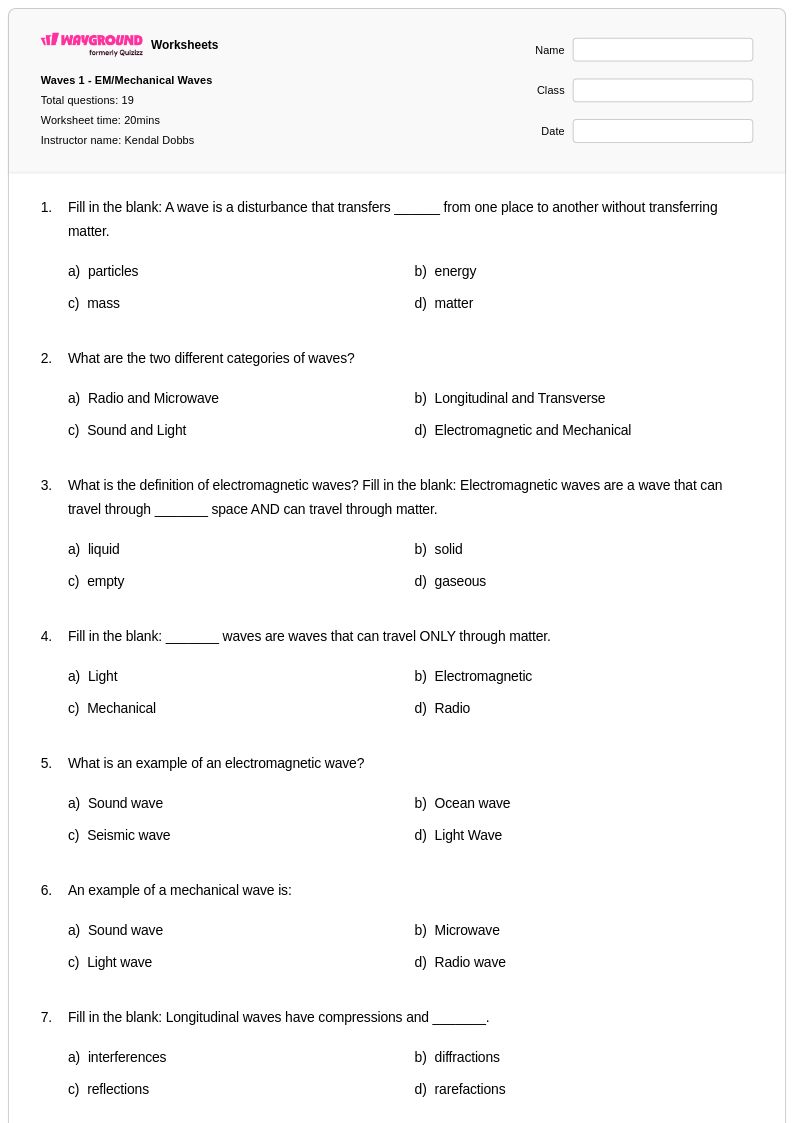
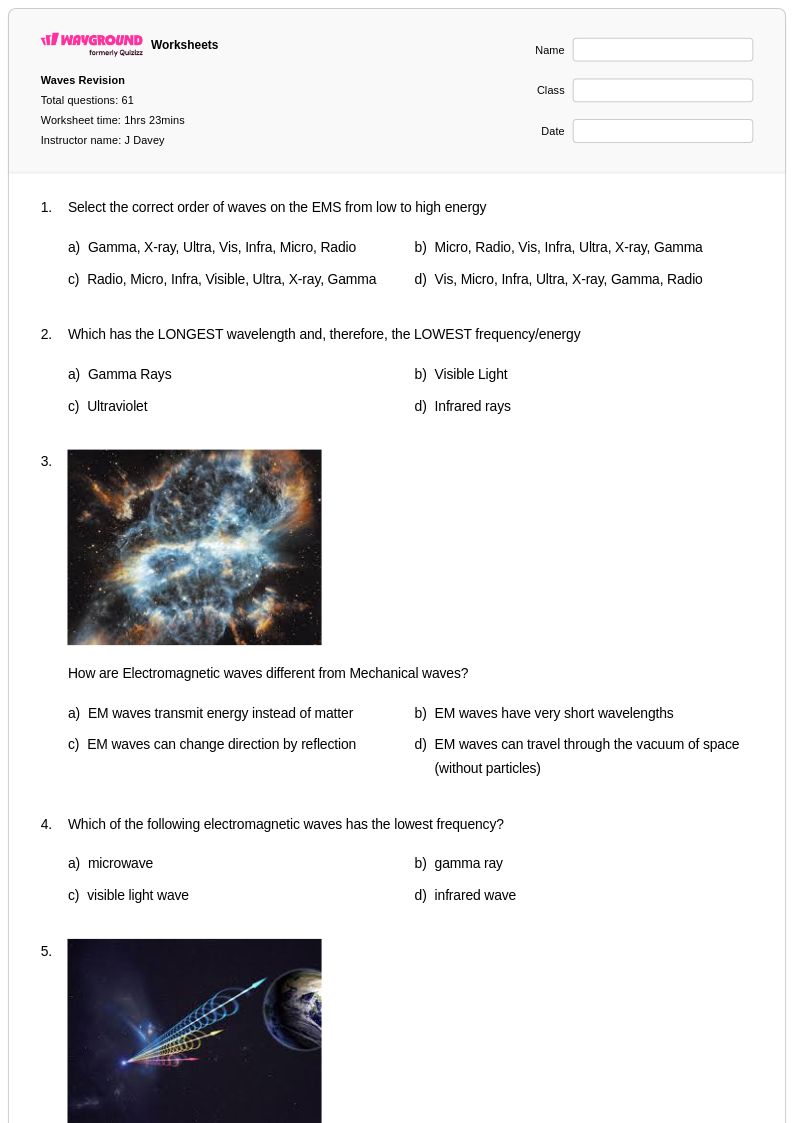
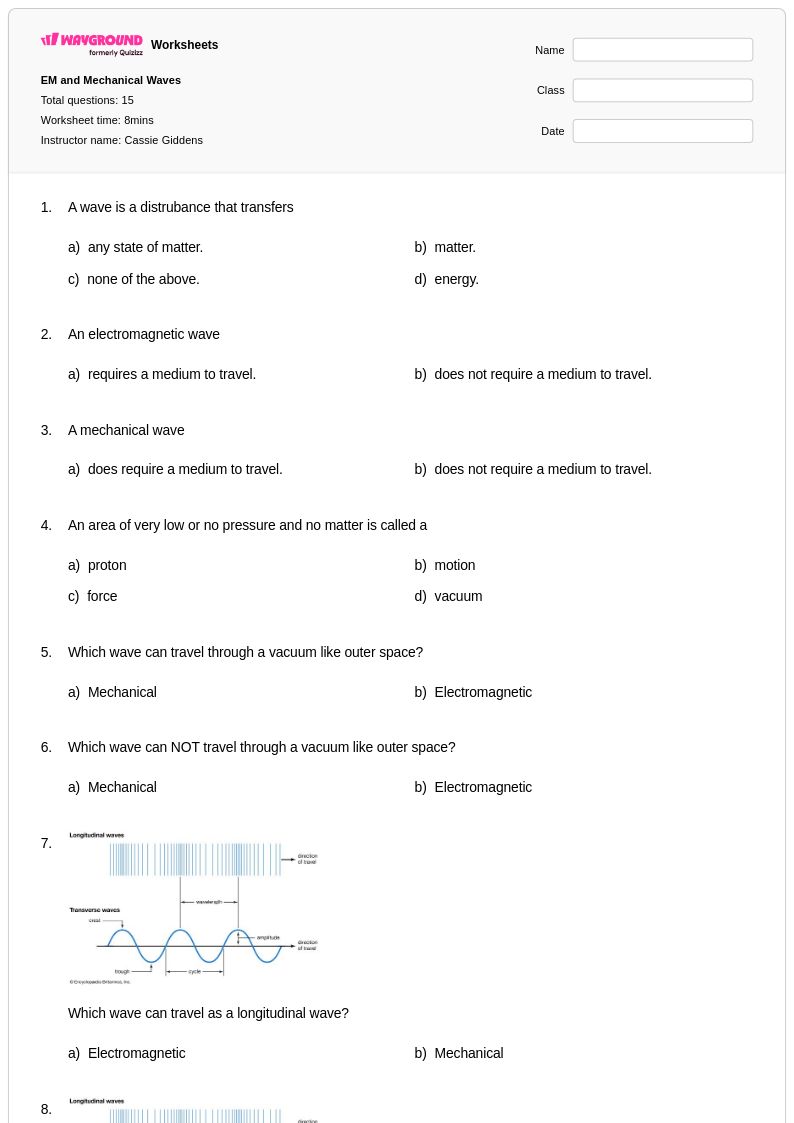
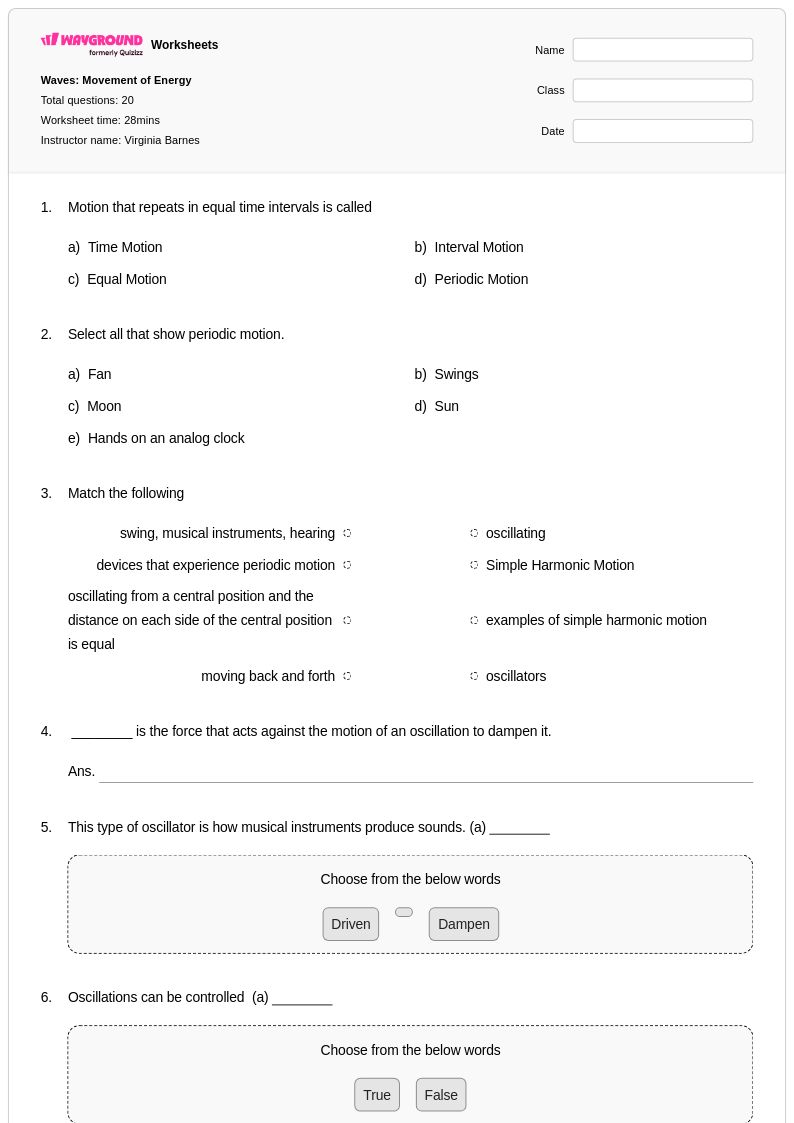
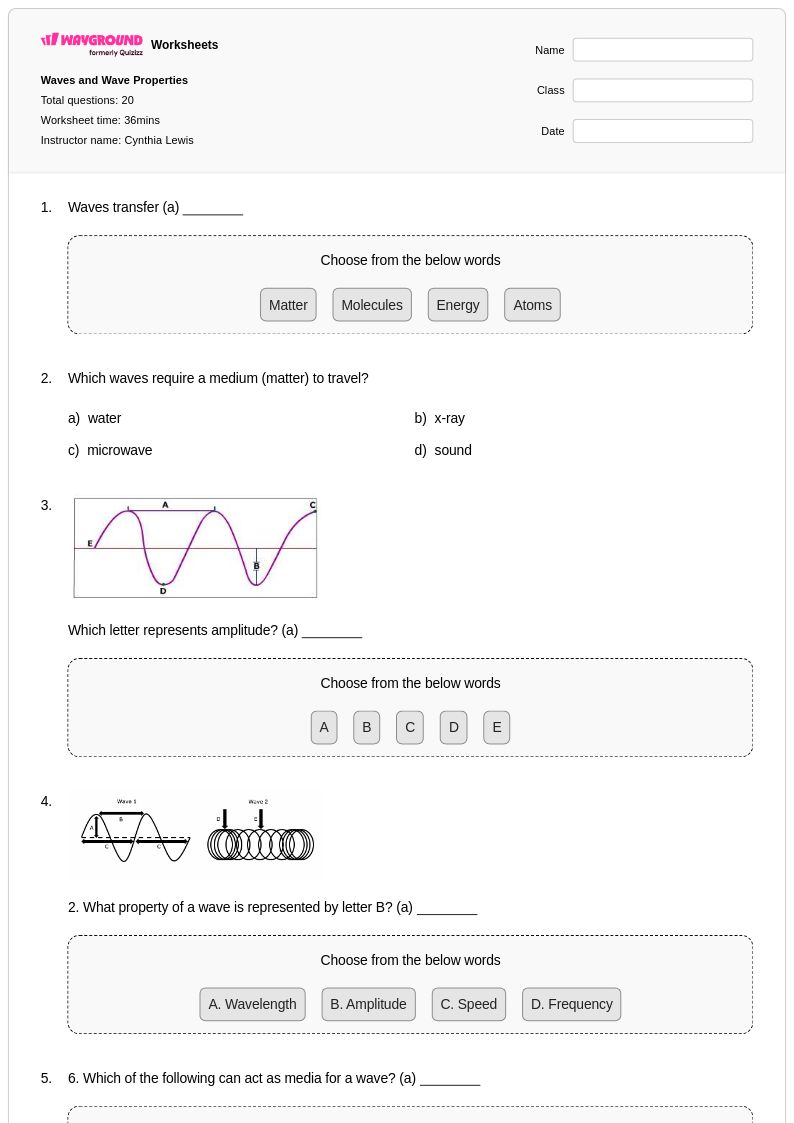
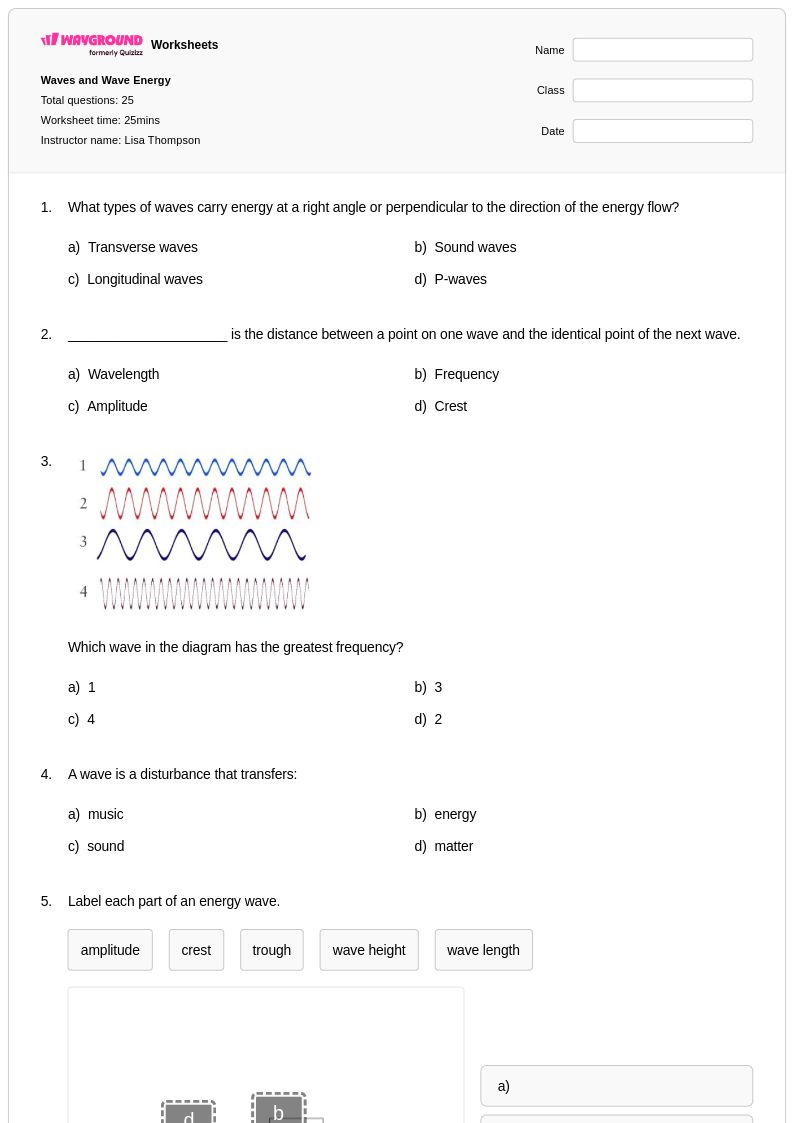
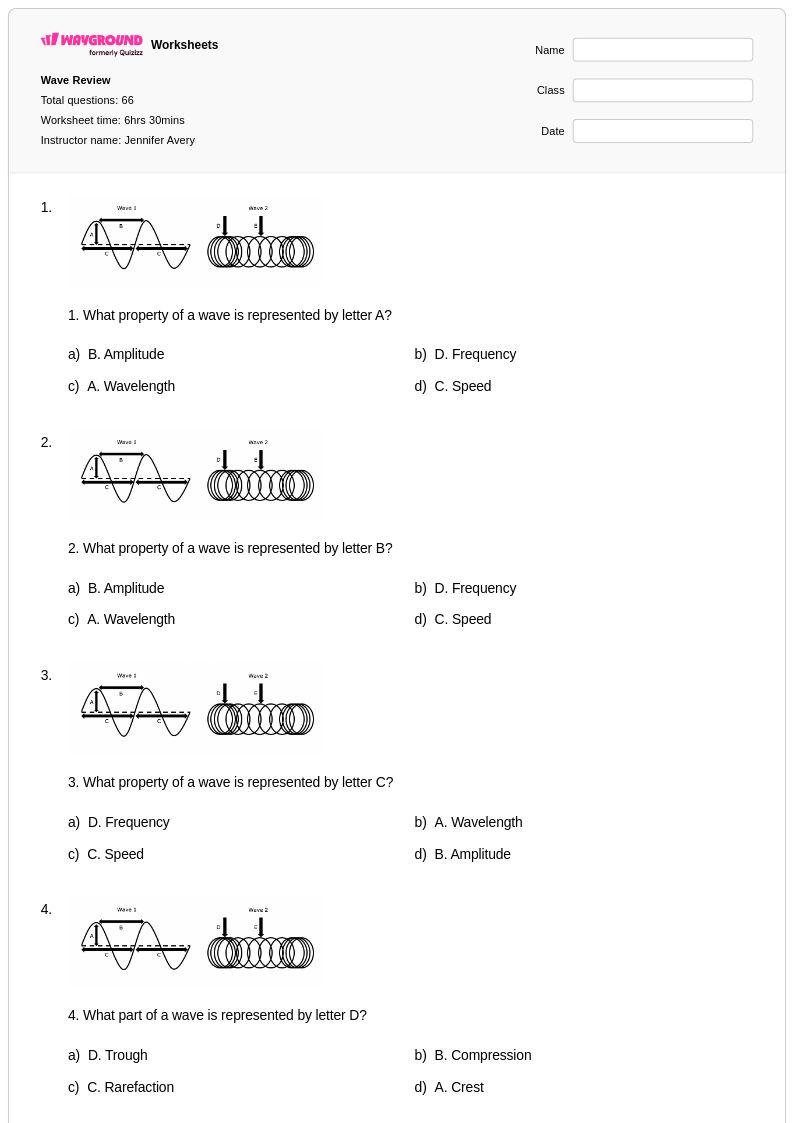
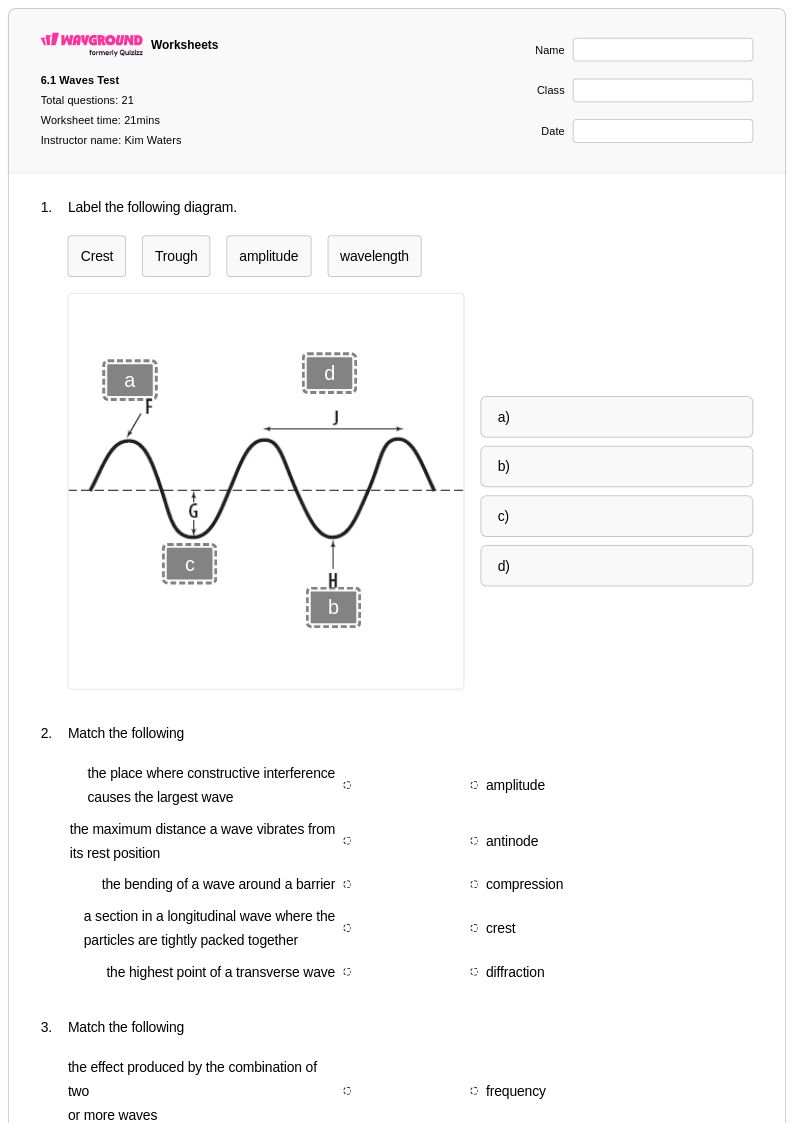
Free oscillations and mechanical waves worksheets with printables and answer keys help students master wave properties, frequency, amplitude, and periodic motion through comprehensive practice problems and PDF resources.
Explore printable Oscillations and Mechanical Waves worksheets
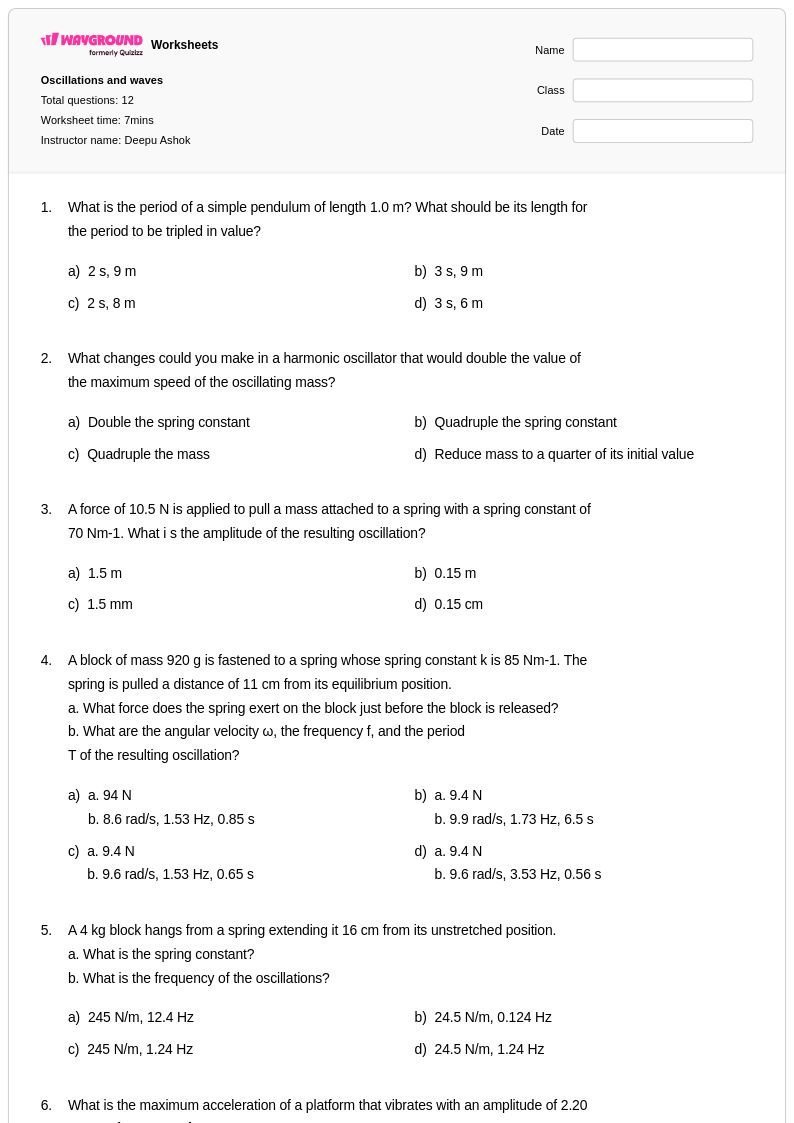
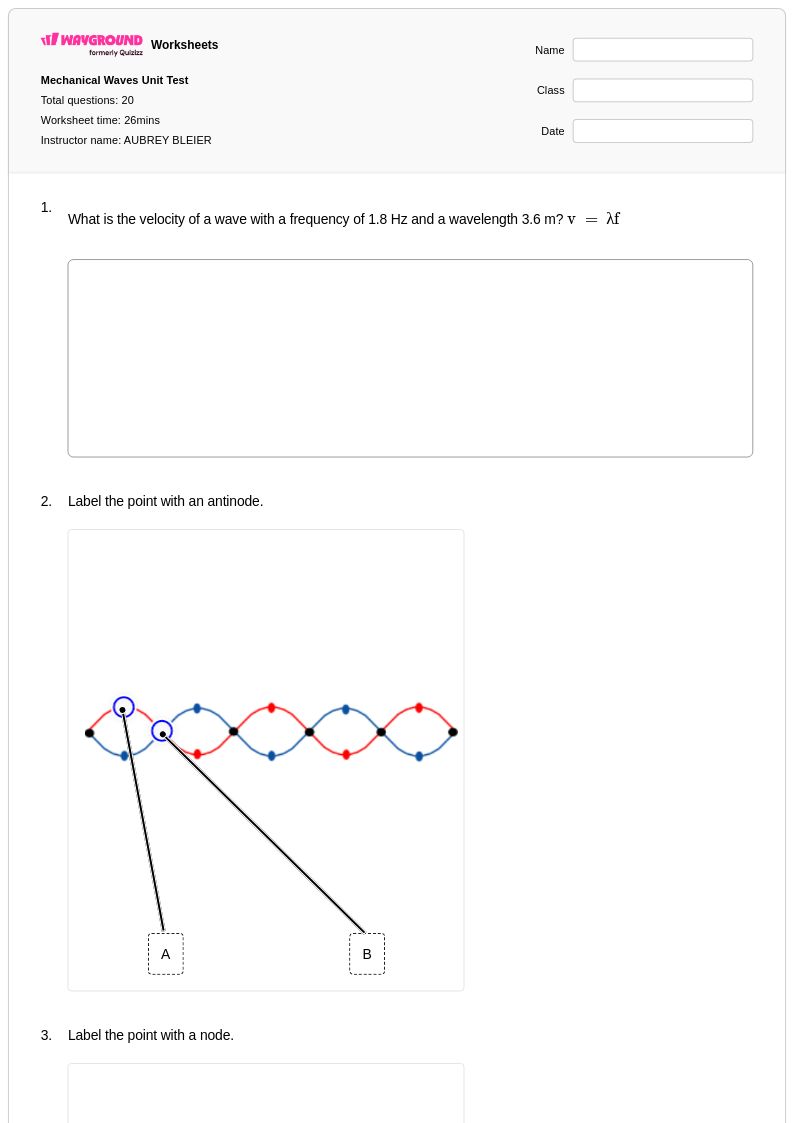
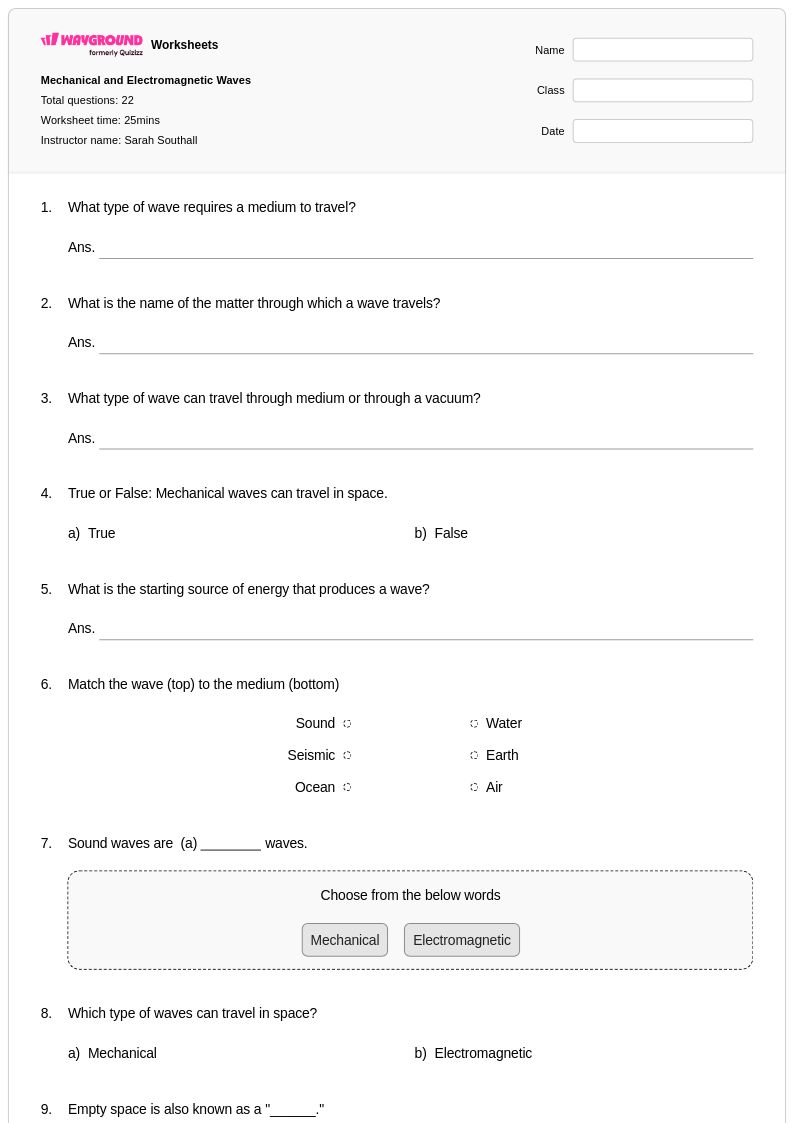
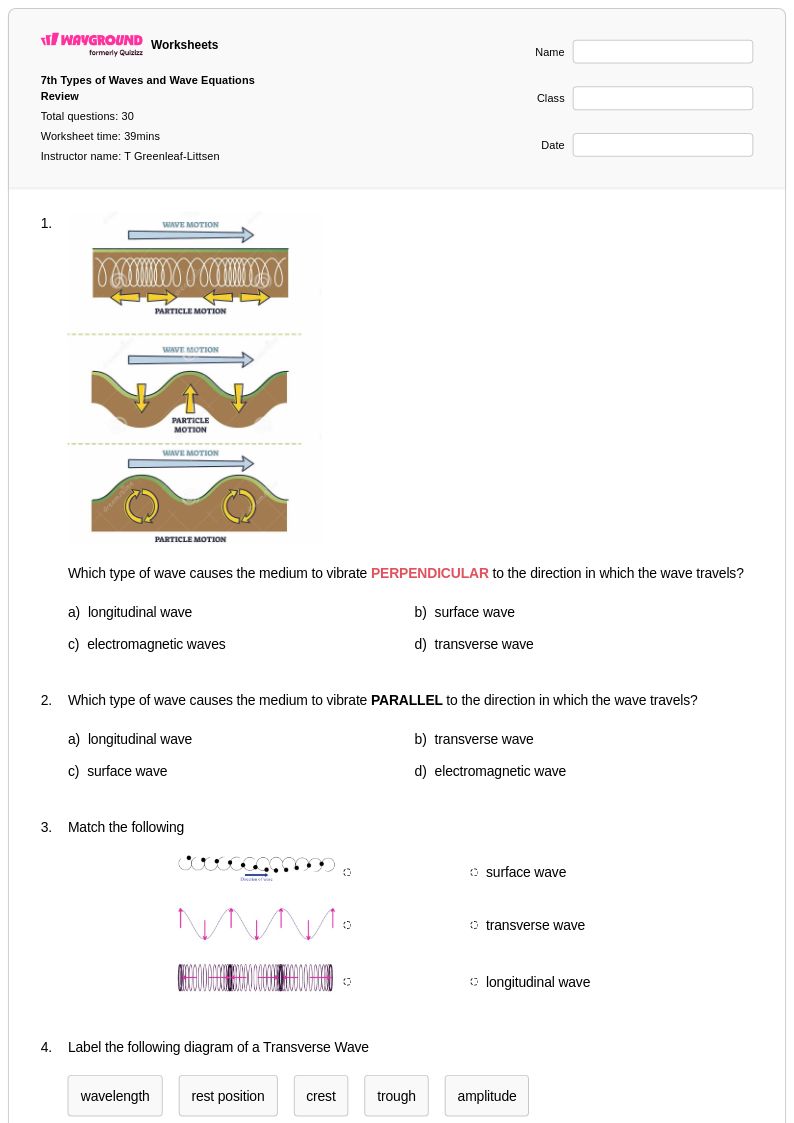
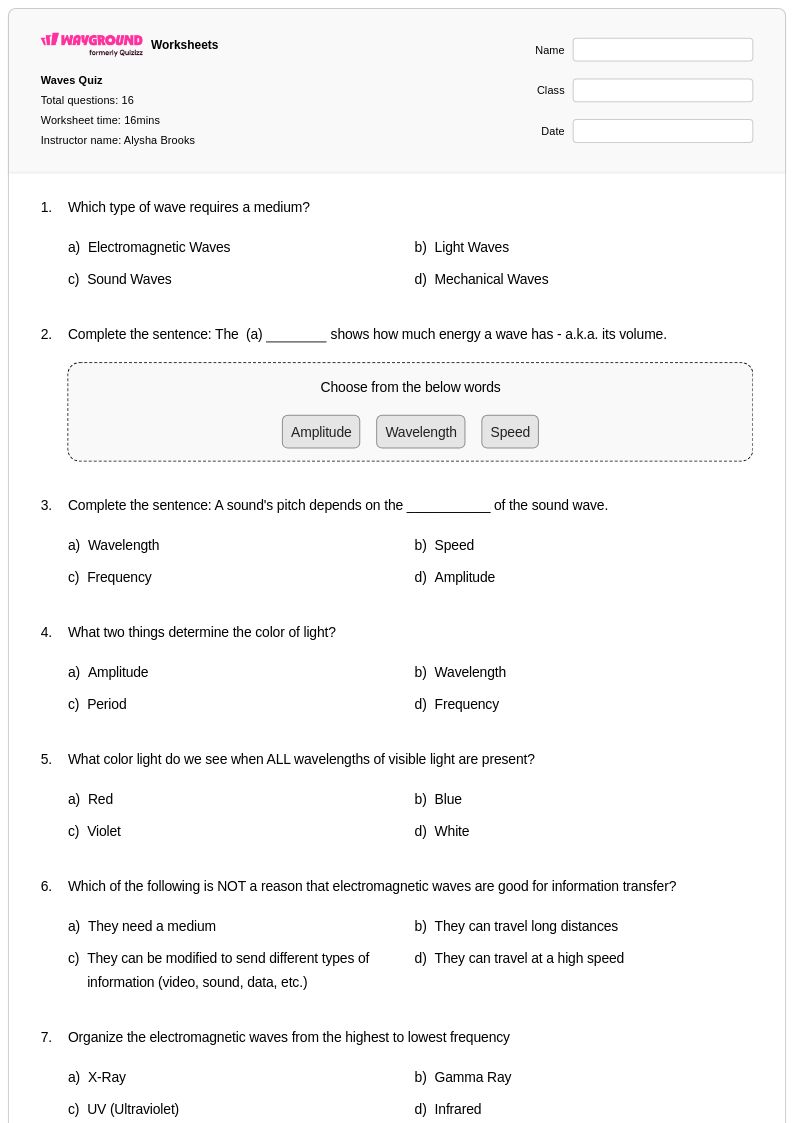
Oscillations and mechanical waves worksheets available through Wayground (formerly Quizizz) provide comprehensive coverage of fundamental wave phenomena and periodic motion concepts essential for physics mastery. These expertly crafted resources strengthen students' understanding of simple harmonic motion, wave properties including amplitude, frequency, and wavelength, as well as wave behaviors such as reflection, refraction, and interference. The practice problems systematically guide learners through mathematical relationships governing pendulums, springs, and wave propagation, while answer keys enable independent study and immediate feedback. Each printable worksheet targets specific learning objectives, from calculating wave speed using the fundamental wave equation to analyzing energy transformations in oscillating systems, ensuring students develop both conceptual understanding and problem-solving proficiency in this challenging physics domain.
Wayground (formerly Quizizz) empowers educators with an extensive collection of millions of teacher-created oscillations and mechanical waves resources, featuring robust search and filtering capabilities that allow quick identification of materials aligned to specific physics standards and learning objectives. The platform's differentiation tools enable teachers to customize worksheets for varying skill levels, supporting both remediation for struggling students and enrichment challenges for advanced learners. These versatile resources are available in both printable pdf formats for traditional classroom use and digital formats for interactive learning experiences, facilitating seamless integration into diverse instructional approaches. Teachers can efficiently plan comprehensive wave physics units, create targeted practice sessions for specific concepts like resonance or standing waves, and provide students with varied opportunities to master the mathematical and conceptual foundations of oscillatory motion and wave mechanics.
FAQs
How do I teach oscillations and mechanical waves to physics students?
Start with simple harmonic motion using concrete examples like pendulums and spring-mass systems before moving to wave propagation. Build the conceptual framework first — period, frequency, amplitude, and restoring force — then introduce the mathematical relationships. Once students can describe oscillatory motion qualitatively, transition to wave behavior including reflection, refraction, and interference, using demonstrations or simulations to make abstract phenomena visible.
What practice problems help students master wave properties like frequency, wavelength, and wave speed?
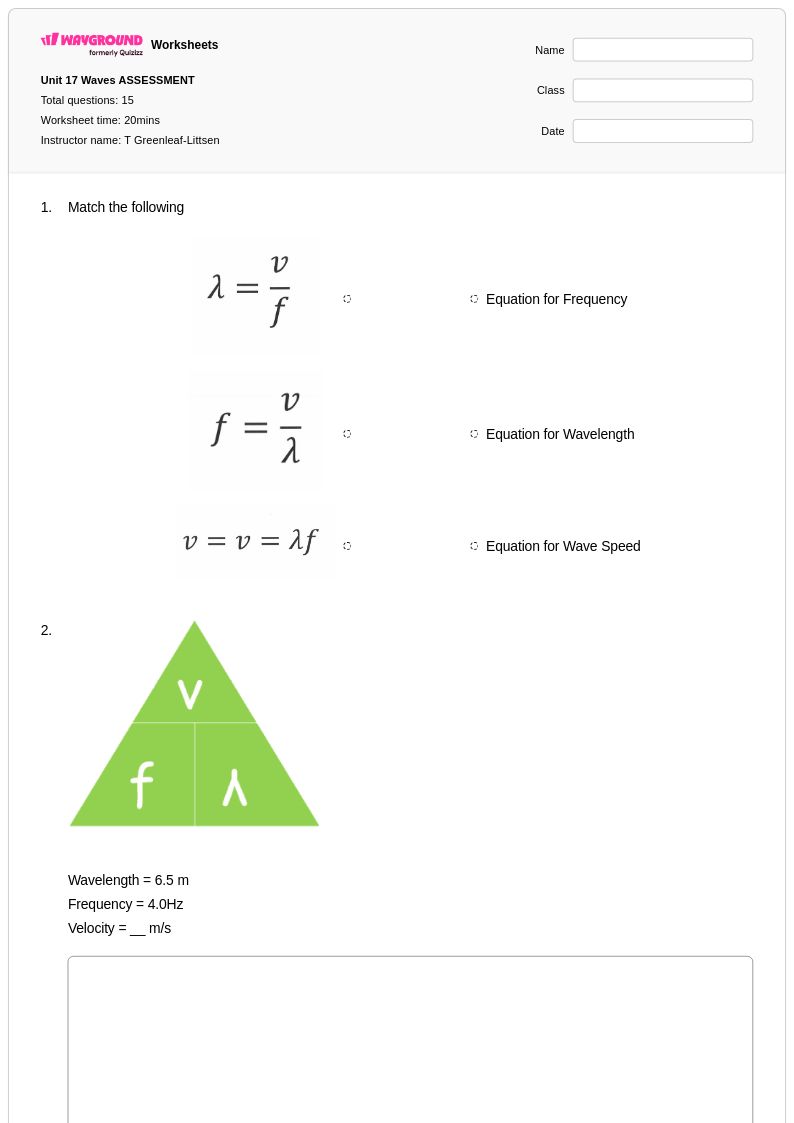
Students benefit most from problems that require them to apply the fundamental wave equation (v = fλ) across varied contexts, such as calculating wave speed in different media or determining frequency from a wave diagram. Layering problem types — from reading wave diagrams to solving multi-step calculations involving energy in oscillating systems — builds both procedural fluency and conceptual understanding. Worksheets that pair mathematical problems with diagram interpretation are especially effective for reinforcing the relationship between wave properties.
What mistakes do students commonly make when solving oscillations and waves problems?
One of the most frequent errors is confusing period and frequency — students often invert the relationship (T = 1/f) or apply them interchangeably without attention to units. Another common misconception is treating amplitude as related to wave speed; students need repeated reinforcement that amplitude affects energy, not propagation speed. In problems involving pendulums, students frequently assume that mass affects the period, when in fact period depends only on length and gravitational acceleration.
How do I differentiate oscillations and waves instruction for students at different skill levels?
For students who are struggling, focus on single-variable problems using the wave equation before introducing combined calculations, and use Wayground's reduced answer choices accommodation to lower cognitive load on digital assignments. Advanced learners can be challenged with problems involving standing waves, resonance conditions, and energy analysis in damped oscillations. Wayground also supports read aloud and extended time accommodations for individual students, which can be configured without disrupting the rest of the class.
How do I use Wayground's oscillations and mechanical waves worksheets in my classroom?
Wayground's oscillations and mechanical waves worksheets are available as printable PDFs for traditional classroom use and in digital formats for technology-integrated environments, including the option to host them as a quiz directly on Wayground. Teachers can use the search and filtering tools to quickly find materials aligned to specific physics standards, whether targeting simple harmonic motion, wave equations, or interference patterns. The included answer keys support independent student practice and allow for immediate feedback during self-study or review sessions.
How do I assess whether students truly understand wave behavior versus just memorizing formulas?
Conceptual understanding becomes visible when students can explain why a wave slows down when entering a denser medium, or predict what happens to wavelength when frequency increases at constant speed. Assessment tasks that ask students to sketch wave diagrams from given parameters — or interpret superposition in interference scenarios — reveal whether they are reasoning physically or just pattern-matching. Including problems that require written justification alongside calculations is one of the most reliable ways to distinguish procedural recall from genuine understanding.