Free Printable Personal Financial Planning worksheets
Explore Wayground's free personal financial planning worksheets and printables that help students master budgeting, saving, and money management skills through engaging practice problems and comprehensive answer keys.
Explore printable Personal Financial Planning worksheets
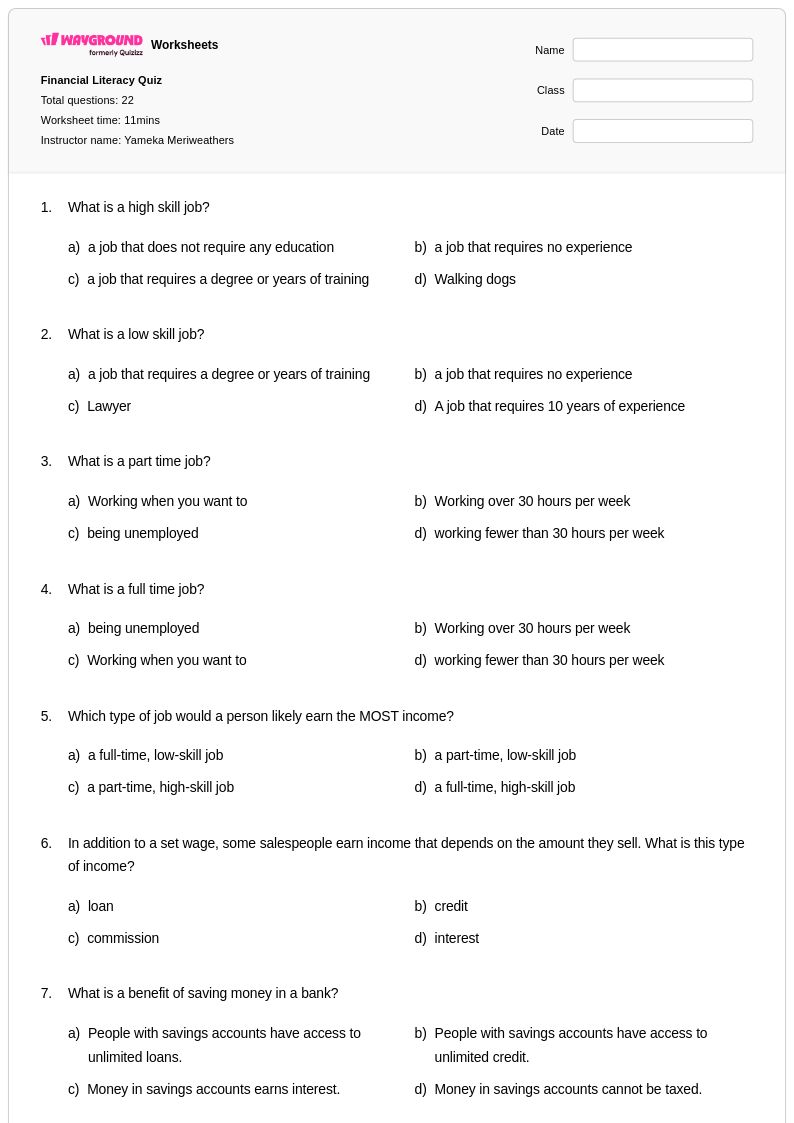
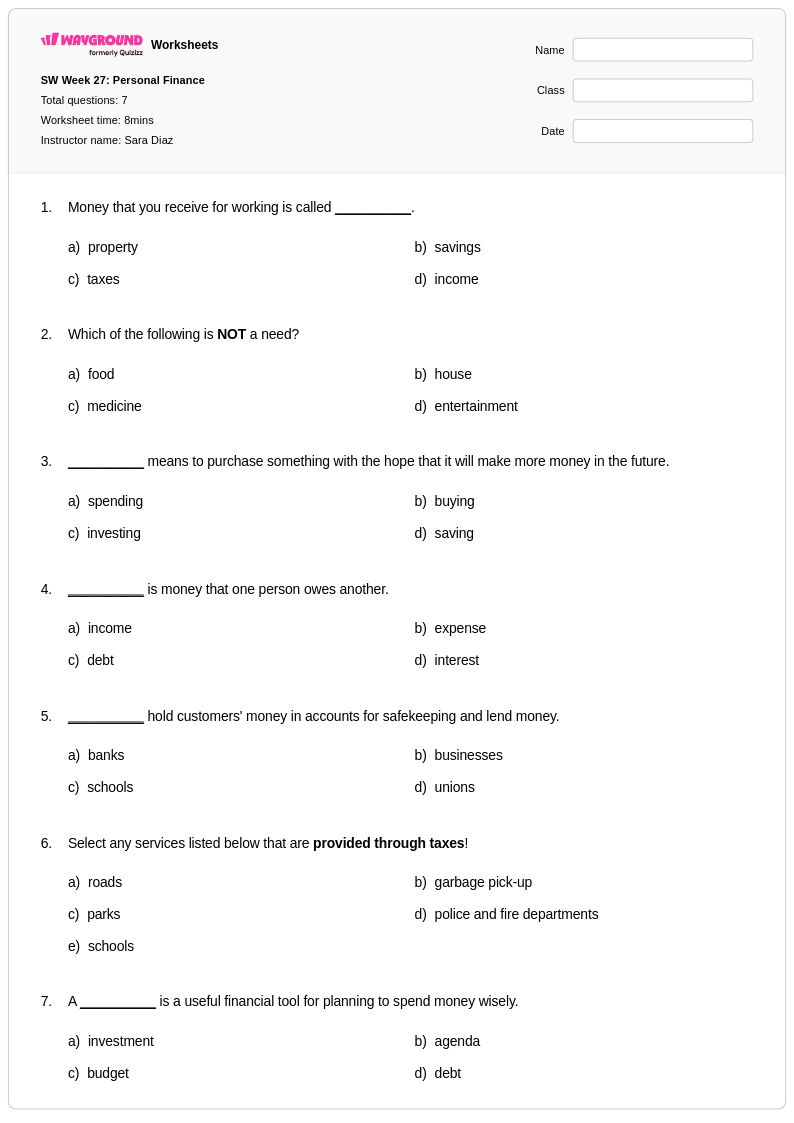
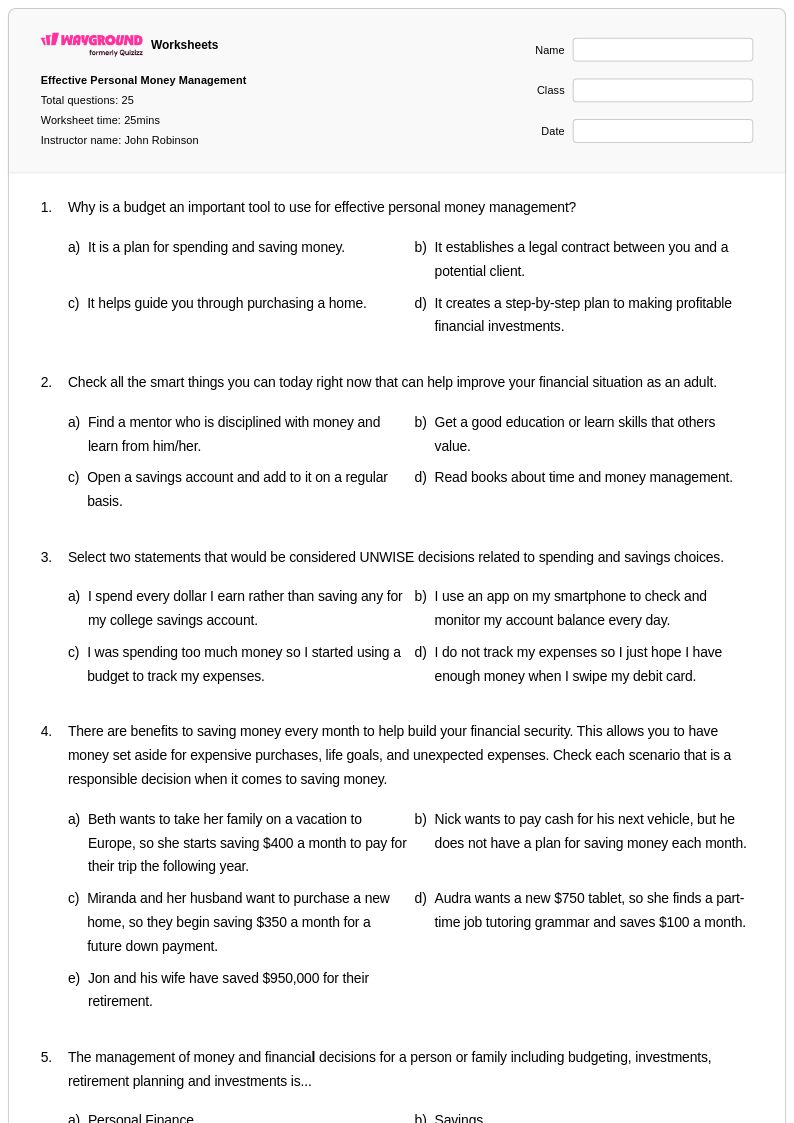
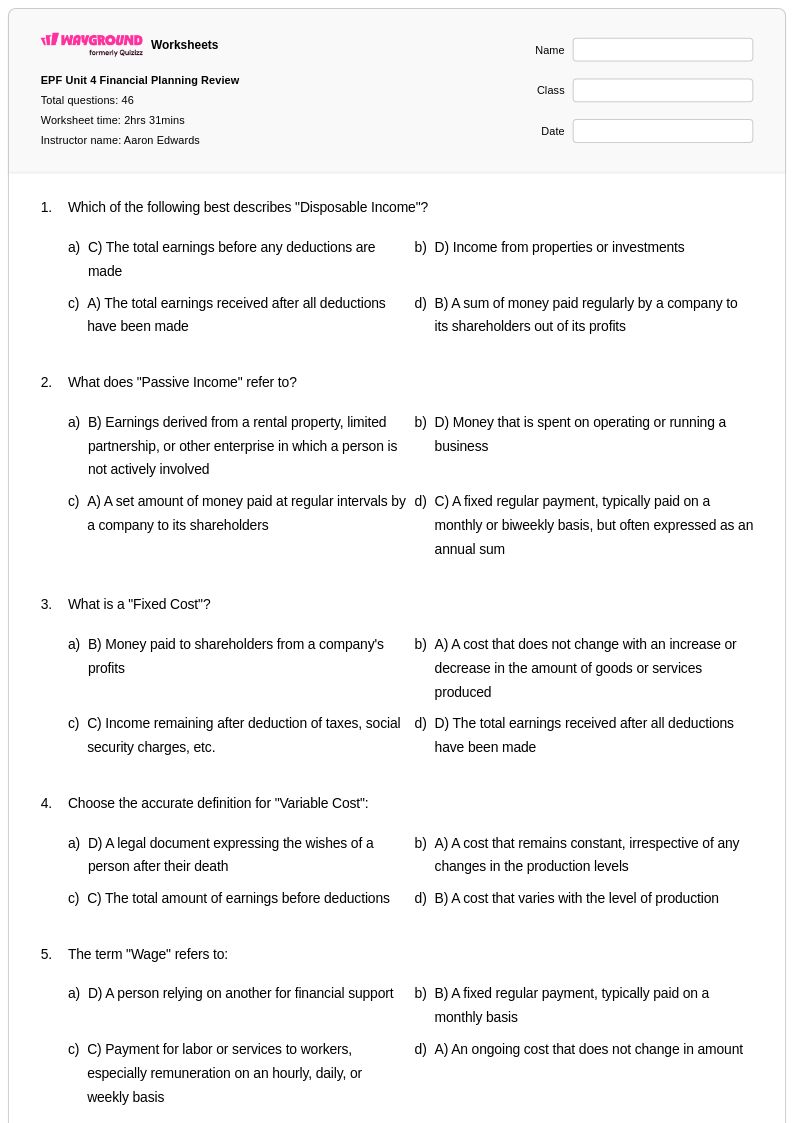
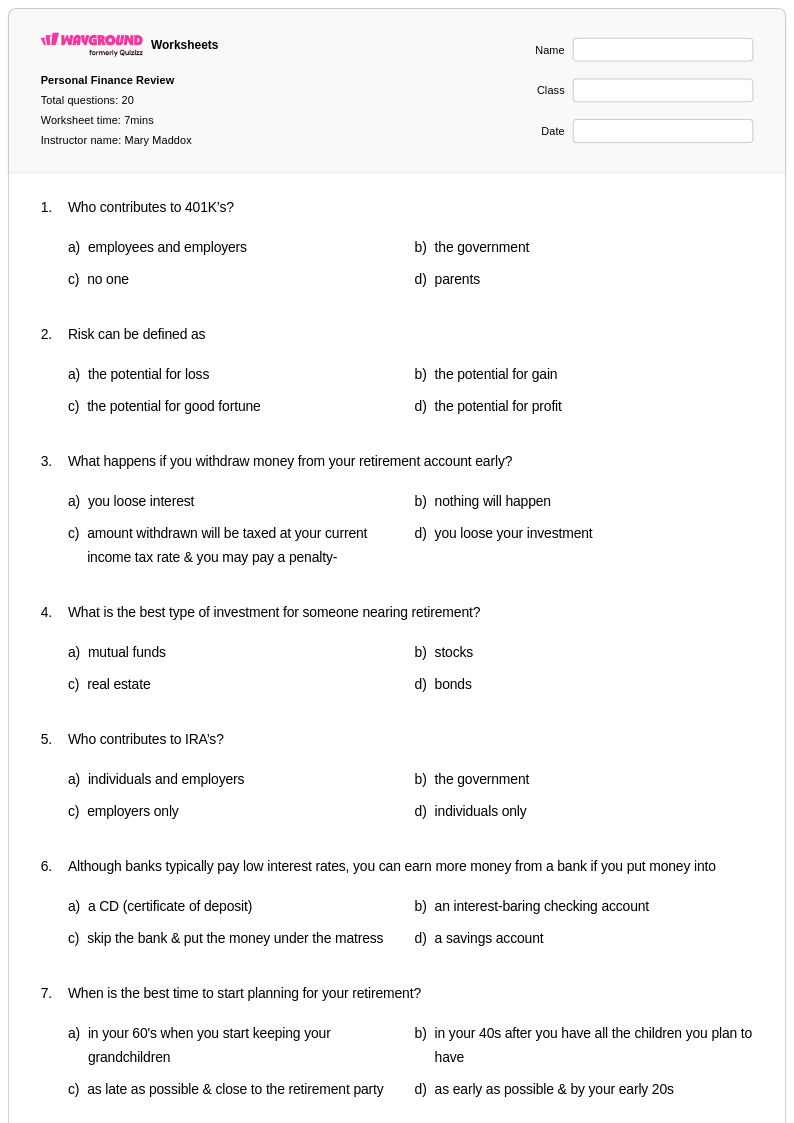
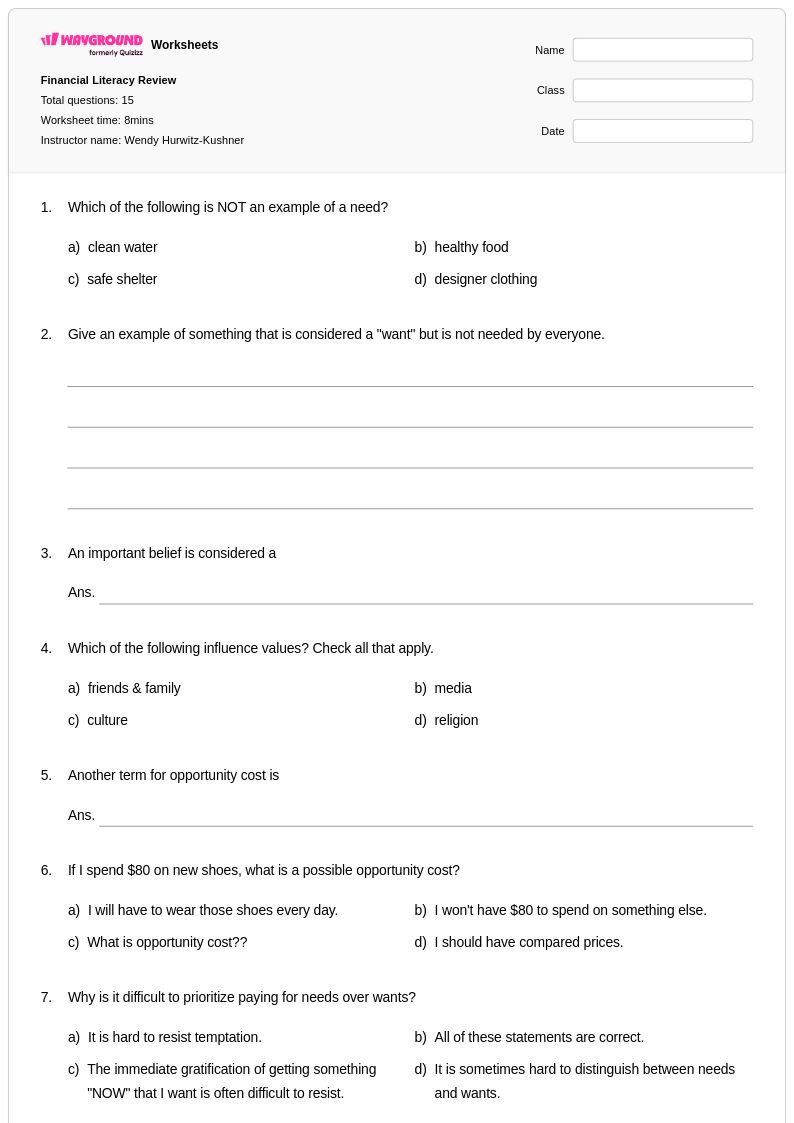
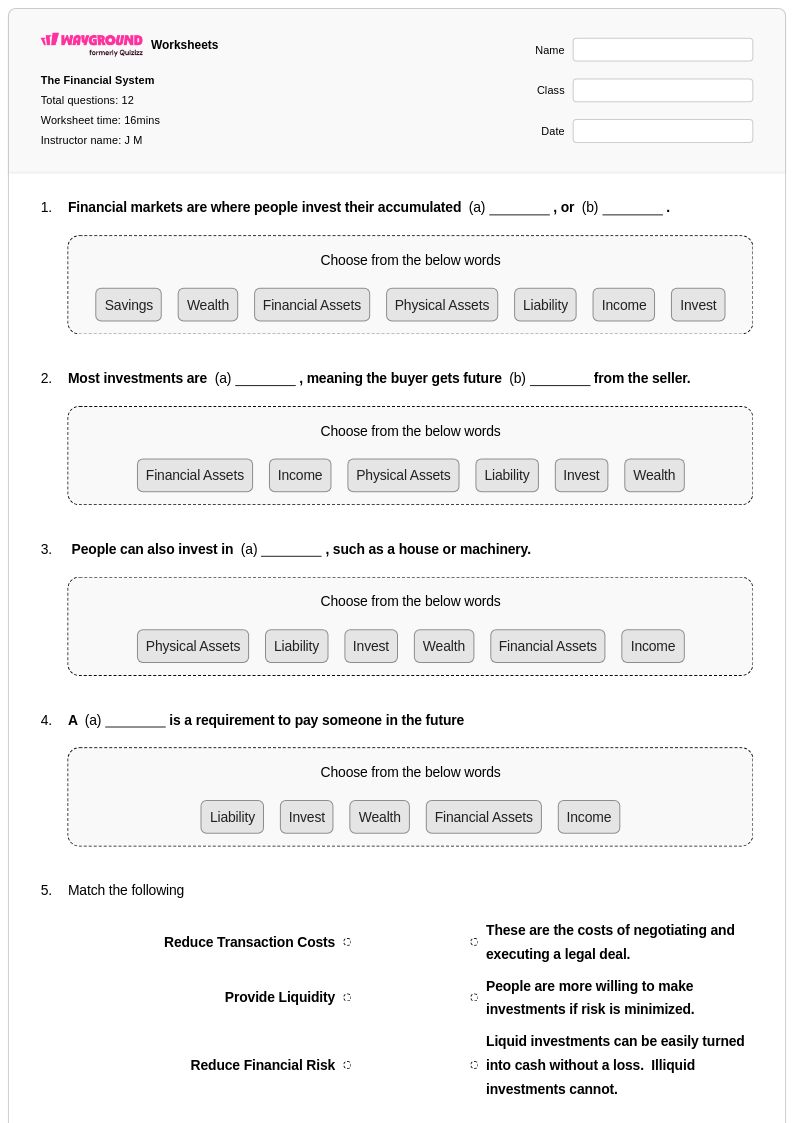
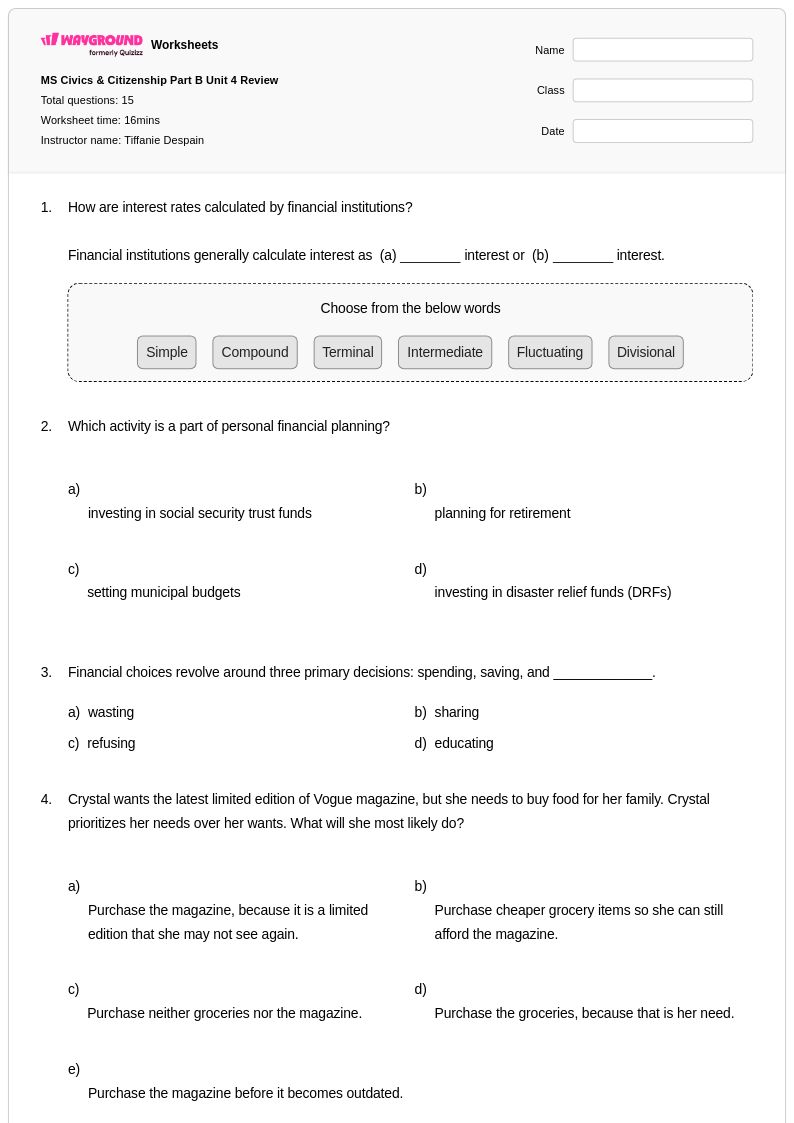
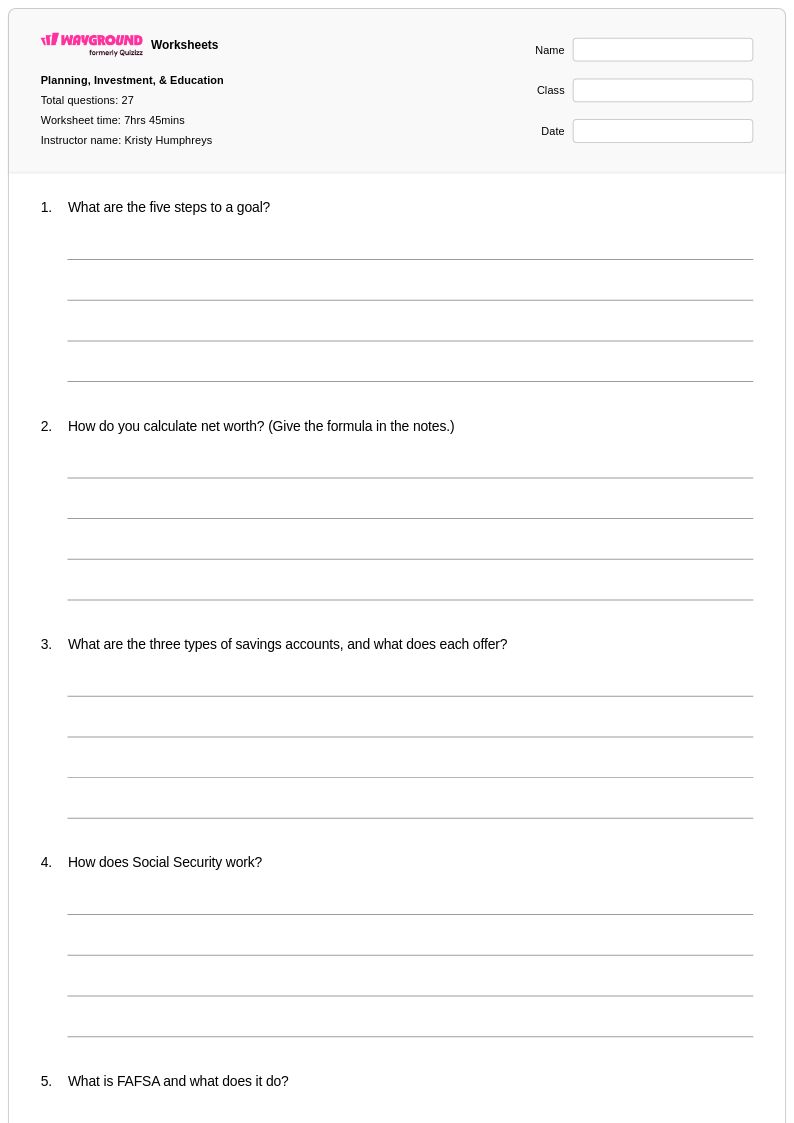
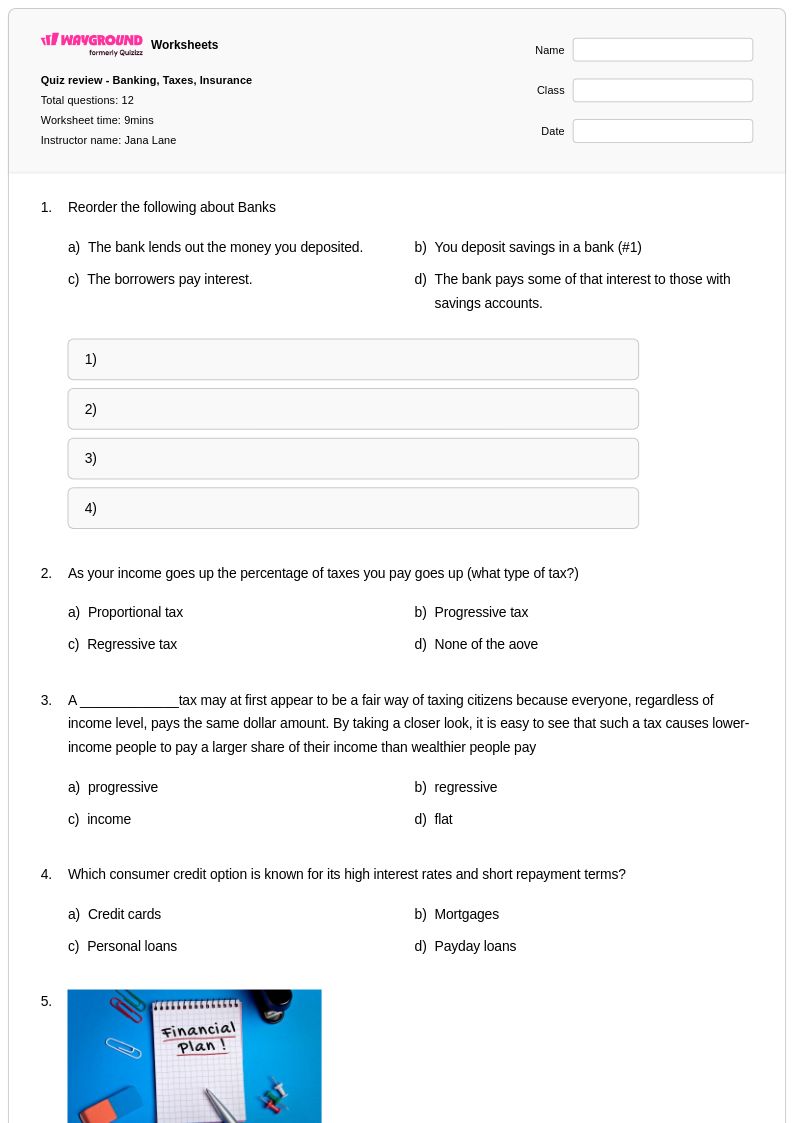
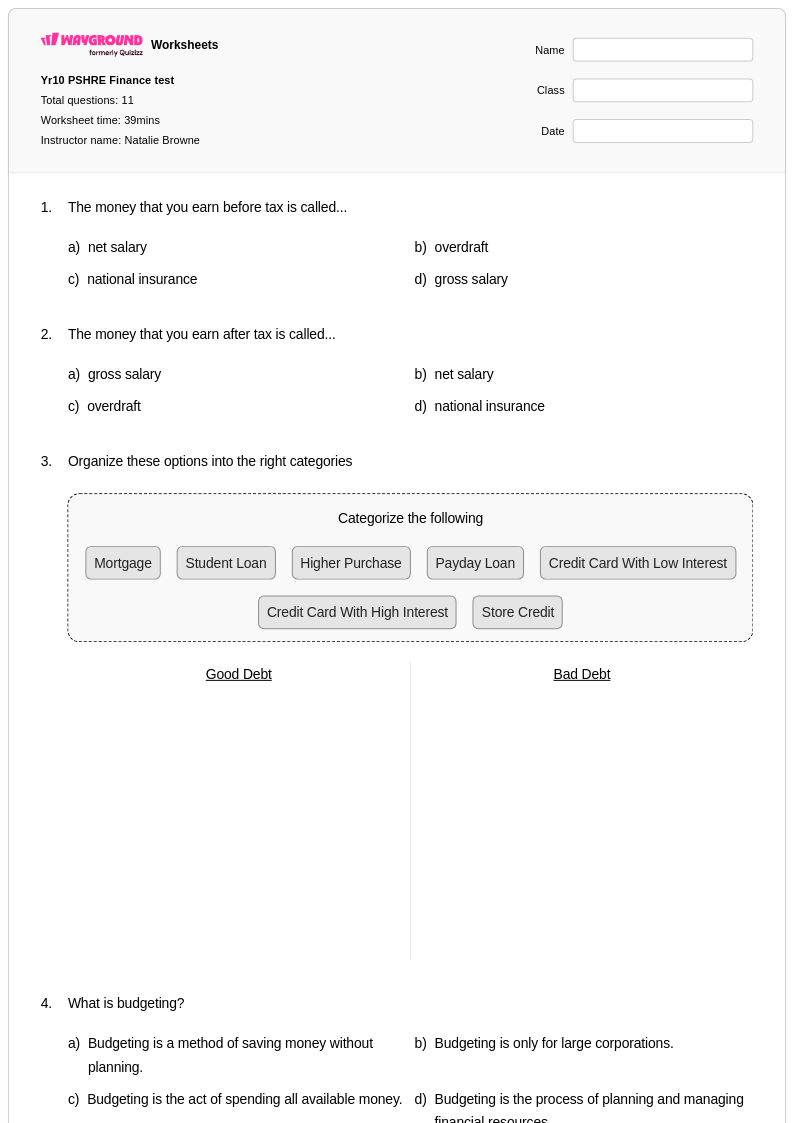
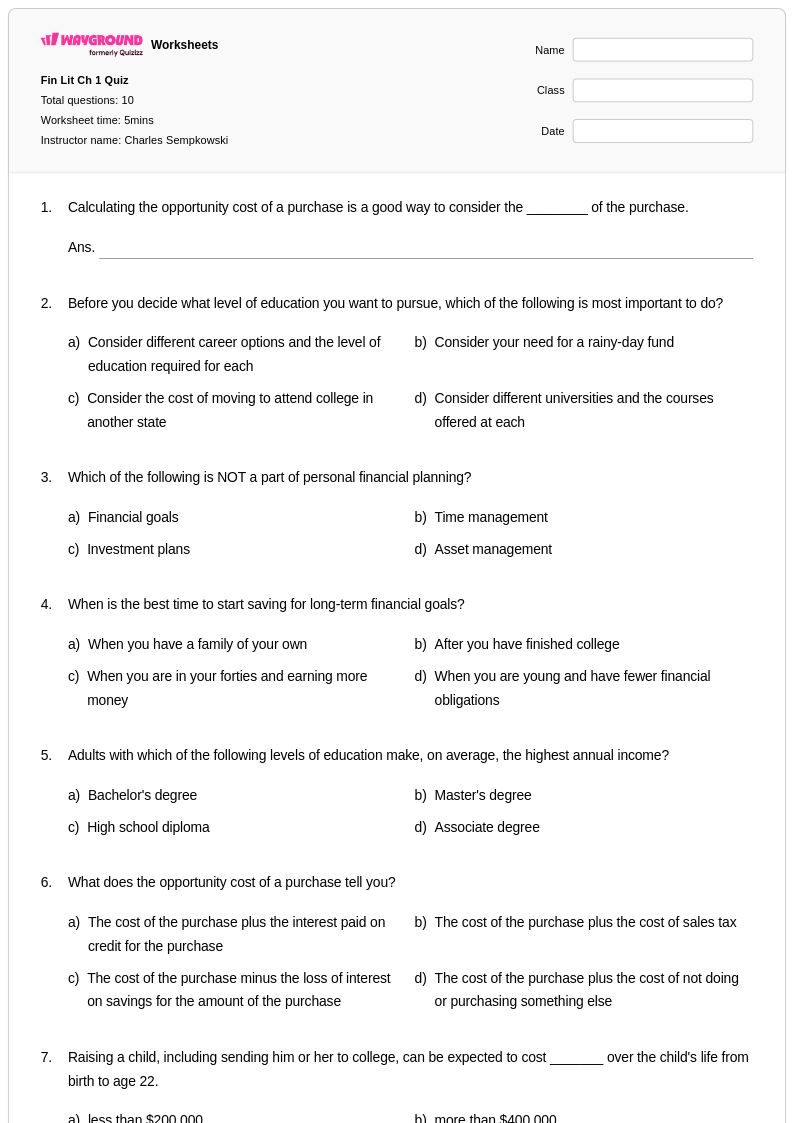
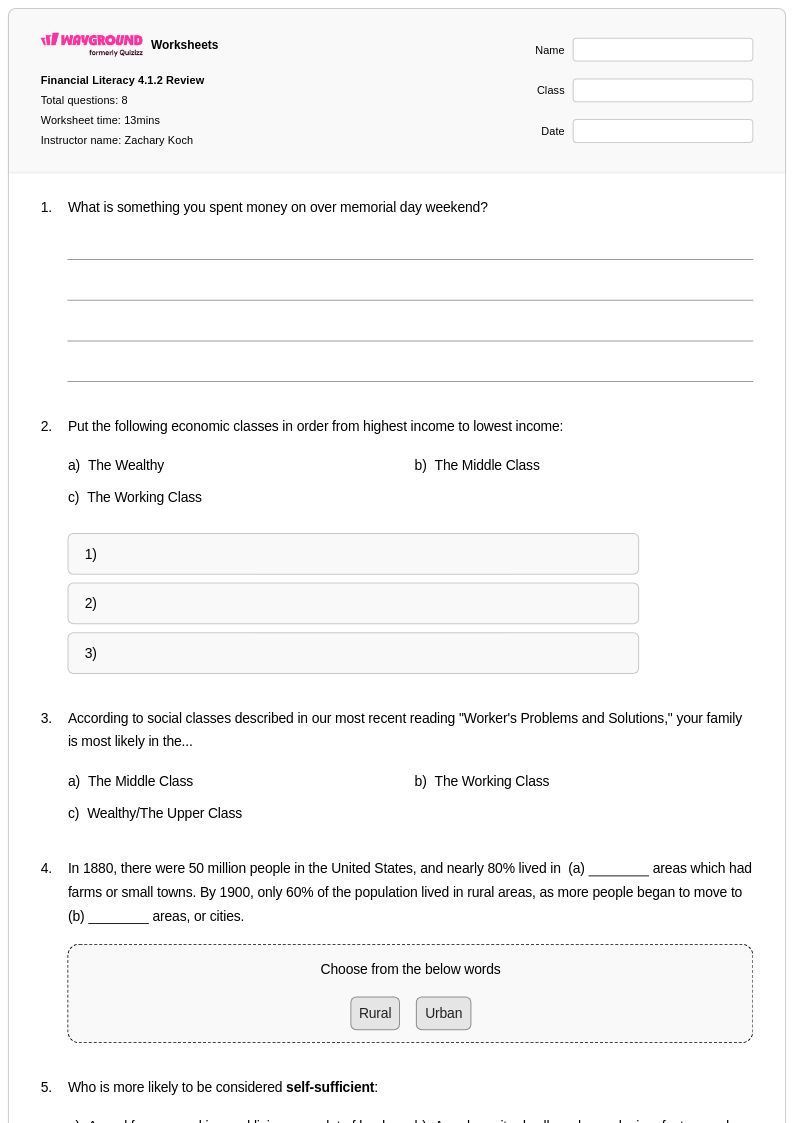
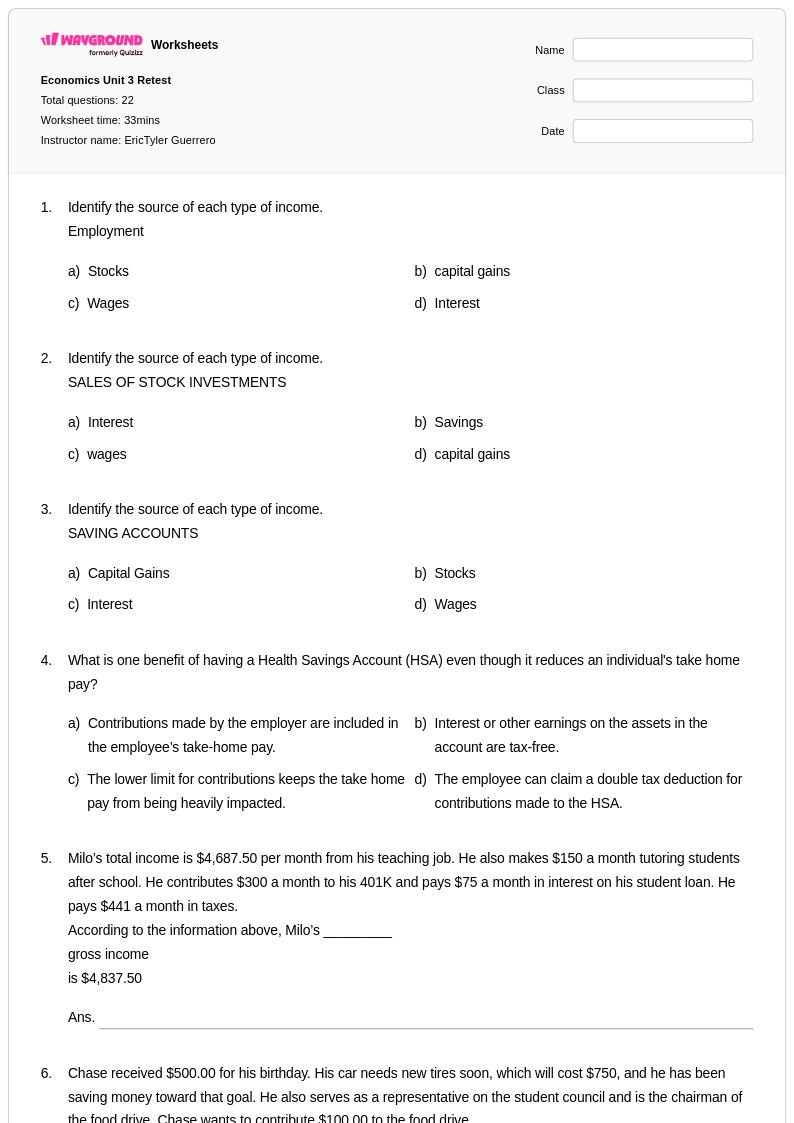
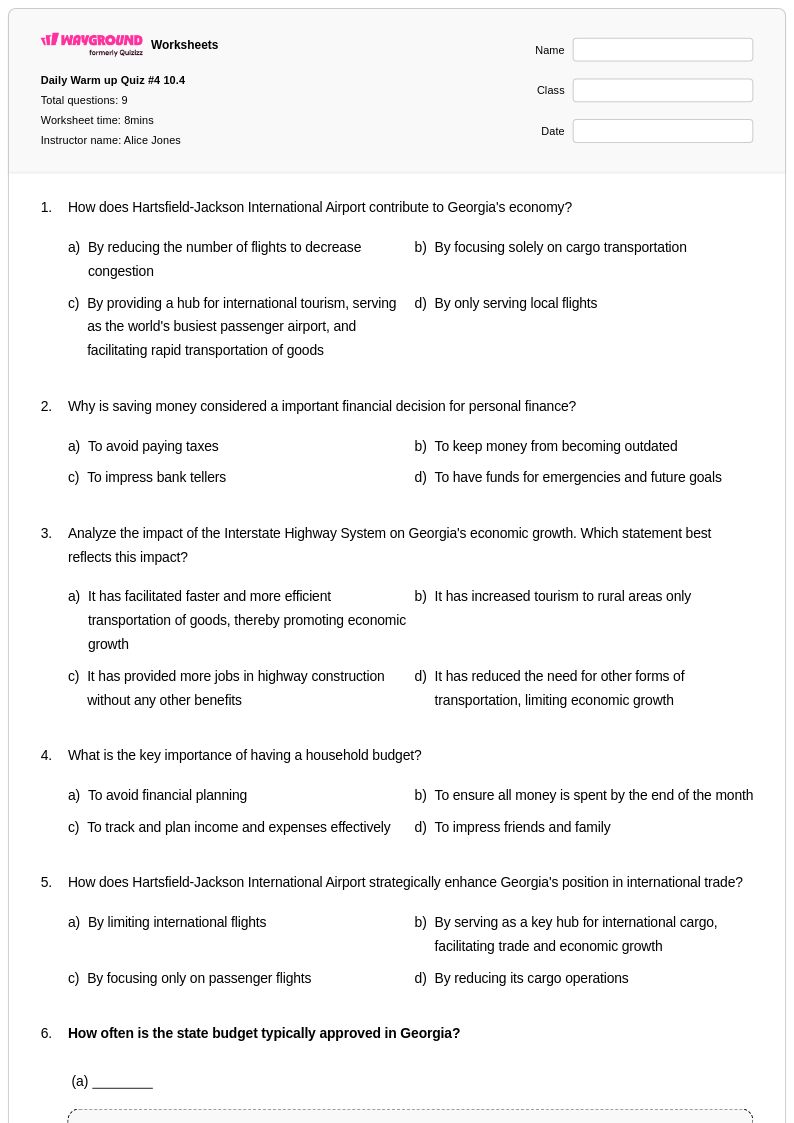
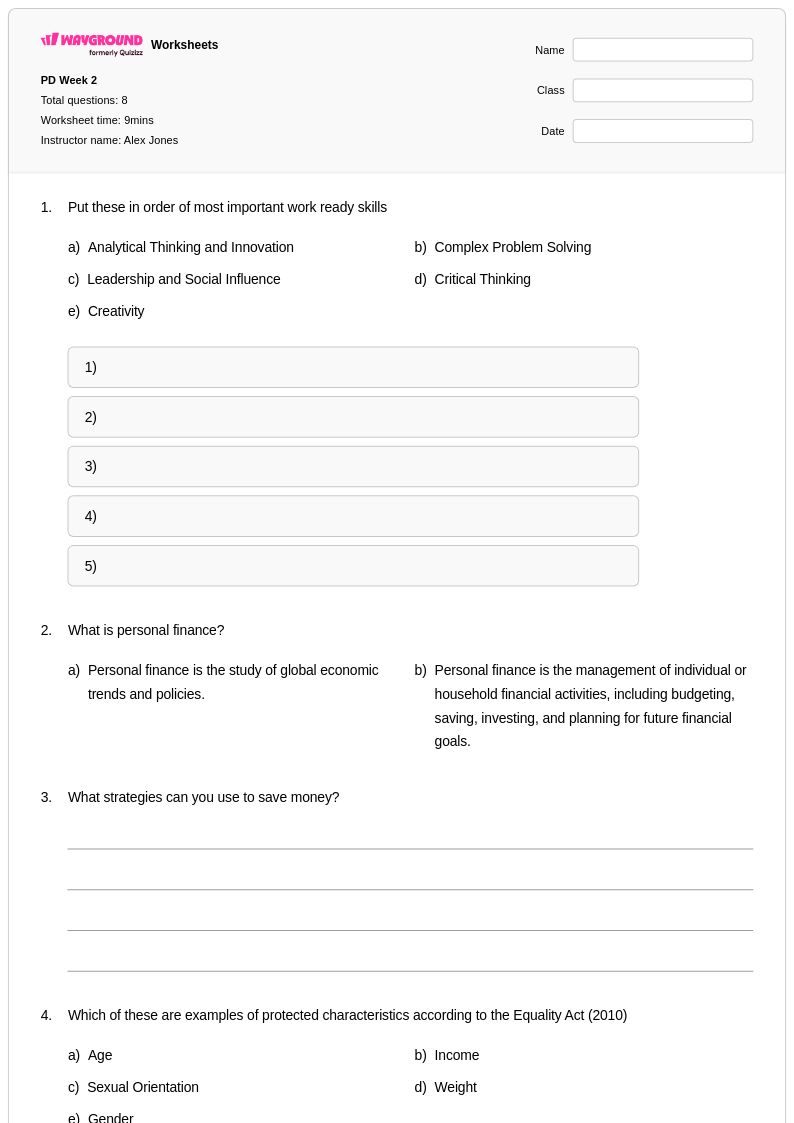
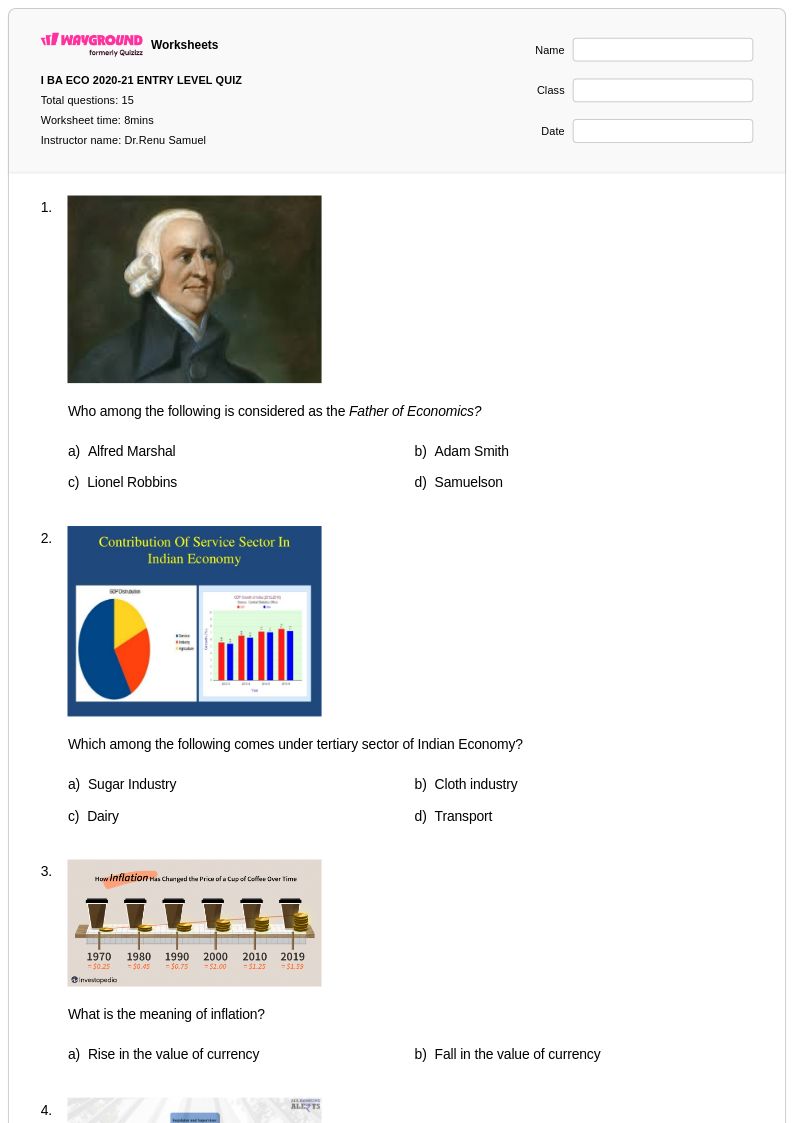
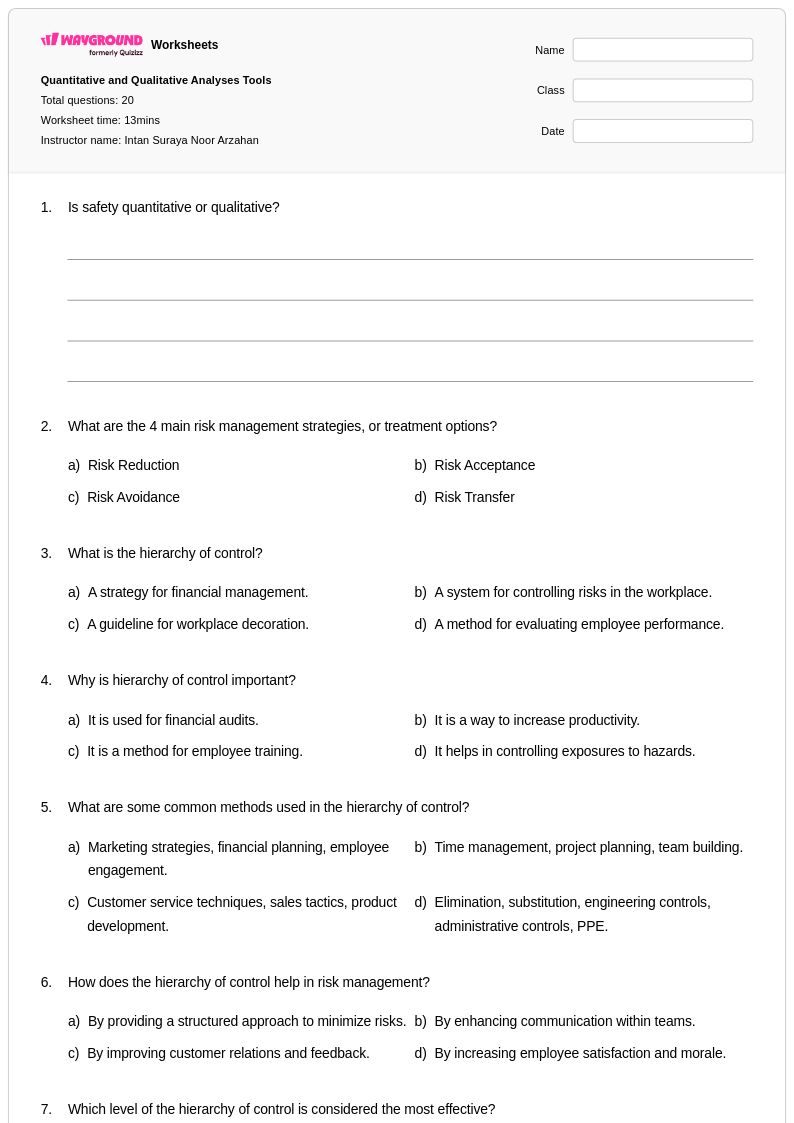
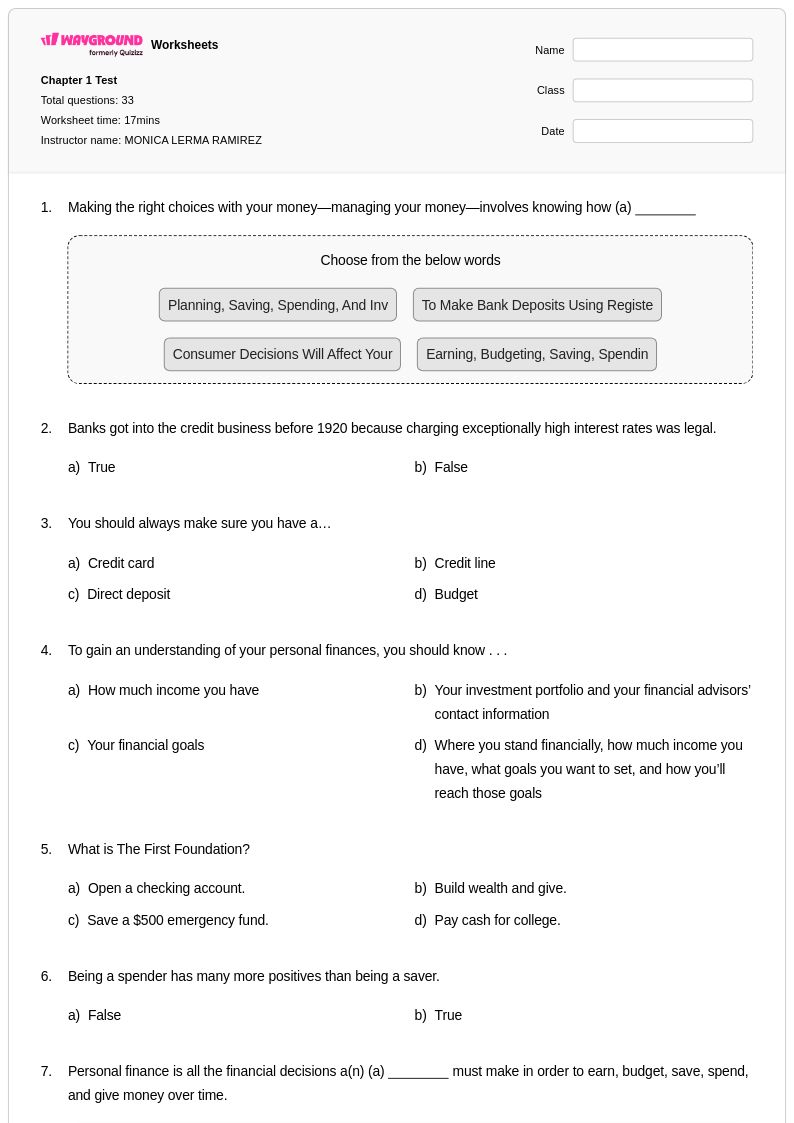
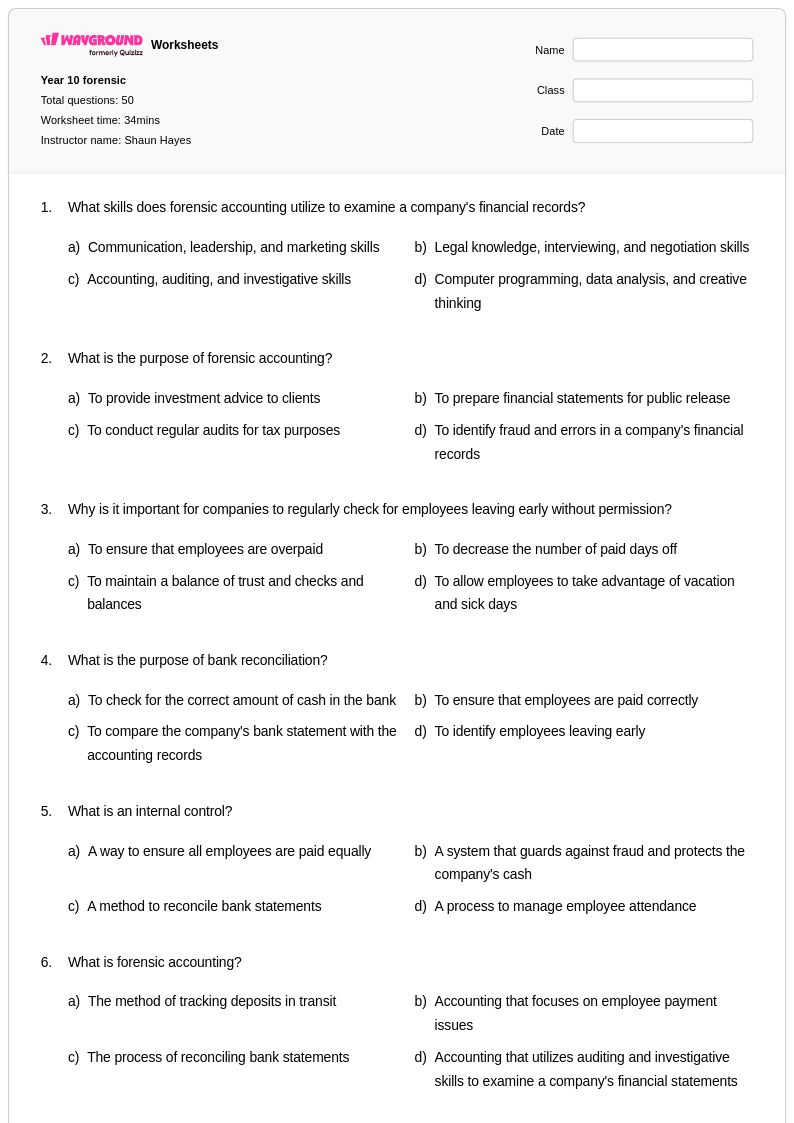
Personal financial planning worksheets available through Wayground (formerly Quizizz) provide students with essential hands-on experience in managing money, budgeting, and making informed financial decisions that will serve them throughout their lives. These comprehensive educational resources strengthen critical thinking skills around income management, expense tracking, savings goal setting, and understanding basic investment principles through realistic scenarios and practice problems. Students work through authentic situations involving creating monthly budgets, comparing banking options, calculating interest rates, and evaluating major purchases, with each worksheet including a detailed answer key to support independent learning. The free printable materials cover fundamental concepts such as distinguishing between needs and wants, understanding credit and debt, planning for emergencies, and setting long-term financial goals, making complex economic principles accessible through structured practice and real-world applications.
Wayground (formerly Quizizz) empowers educators with millions of teacher-created personal financial planning resources that seamlessly integrate into social studies curricula and support diverse learning needs across all grade levels. The platform's robust search and filtering capabilities allow teachers to quickly locate materials aligned with specific standards and learning objectives, while differentiation tools enable customization for students requiring remediation or enrichment in financial literacy concepts. These versatile worksheet collections are available in both printable pdf formats for traditional classroom use and digital formats for technology-enhanced learning environments, providing flexibility for various teaching situations. Teachers can efficiently plan comprehensive financial literacy units, address individual student needs through targeted skill practice, and assess understanding using materials that range from basic money management concepts to advanced topics like investment planning and retirement savings, ensuring students develop the financial competency essential for economic success.
FAQs
How do I teach personal financial planning to students who have no prior money management experience?
Start with the foundational distinction between needs and wants, then build toward budgeting by having students track hypothetical income and expenses using realistic monthly scenarios. Introducing concepts like savings goals and emergency funds early gives students a framework before moving into more complex topics like interest rates, credit, and investment principles. Grounding every lesson in authentic situations, such as comparing banking options or evaluating a major purchase, makes abstract financial concepts concrete and actionable.
What exercises help students practice budgeting and money management skills?
Effective practice exercises include creating monthly budgets from a fixed hypothetical income, calculating the true cost of credit card debt using interest rate formulas, and comparing checking and savings account options across different banks. Scenario-based problems that require students to make trade-off decisions, such as choosing between saving for an emergency fund versus a discretionary purchase, build the critical thinking skills that transfer to real financial decisions. Worksheets that include expense tracking, savings goal timelines, and major purchase evaluations give students structured repetition across multiple skill areas.
What mistakes do students commonly make when learning personal financial planning?
One of the most common errors is treating all expenses as equally flexible, failing to distinguish fixed costs like rent from variable ones like entertainment. Students also frequently underestimate the compounding effect of interest on debt, which leads to poor credit decisions when modeled in practice problems. Another recurring misconception is conflating saving with investing, or assuming that avoiding debt entirely is the same as building long-term financial security.
How do I differentiate personal financial planning instruction for students at different skill levels?
For students who need remediation, focus on concrete one-step problems such as calculating how much of a weekly paycheck to save to reach a specific goal. For students ready for enrichment, introduce multi-step scenarios that involve comparing loan terms, projecting compound interest over time, or building a retirement savings estimate. On Wayground, teachers can apply accommodations like reduced answer choices or read-aloud support to individual students, ensuring that all learners can access financial literacy content without disrupting the rest of the class.
How can I use personal financial planning worksheets from Wayground in my classroom?
Wayground's personal financial planning worksheets are available as printable PDFs for traditional classroom use and in digital formats for technology-integrated environments, giving teachers flexibility depending on their setup. Teachers can also host these worksheets as a live or assigned quiz directly on Wayground, making it easy to collect student responses and monitor progress. Each worksheet includes a detailed answer key, which supports both teacher-led review and independent student practice.
How do I assess whether students actually understand financial planning concepts, not just memorized procedures?
Assessments that go beyond computation, such as asking students to justify a budgeting decision or identify the flaw in a fictional person's financial plan, reveal whether understanding is conceptual or procedural. Look for whether students can apply concepts like opportunity cost or interest calculation to unfamiliar scenarios, not just the ones practiced in class. Common red flags include students who can calculate interest correctly but cannot explain why a high-interest loan is risky, or who set savings goals without accounting for fixed monthly expenses.