Free Printable Physics Calculations Worksheets for Year 10
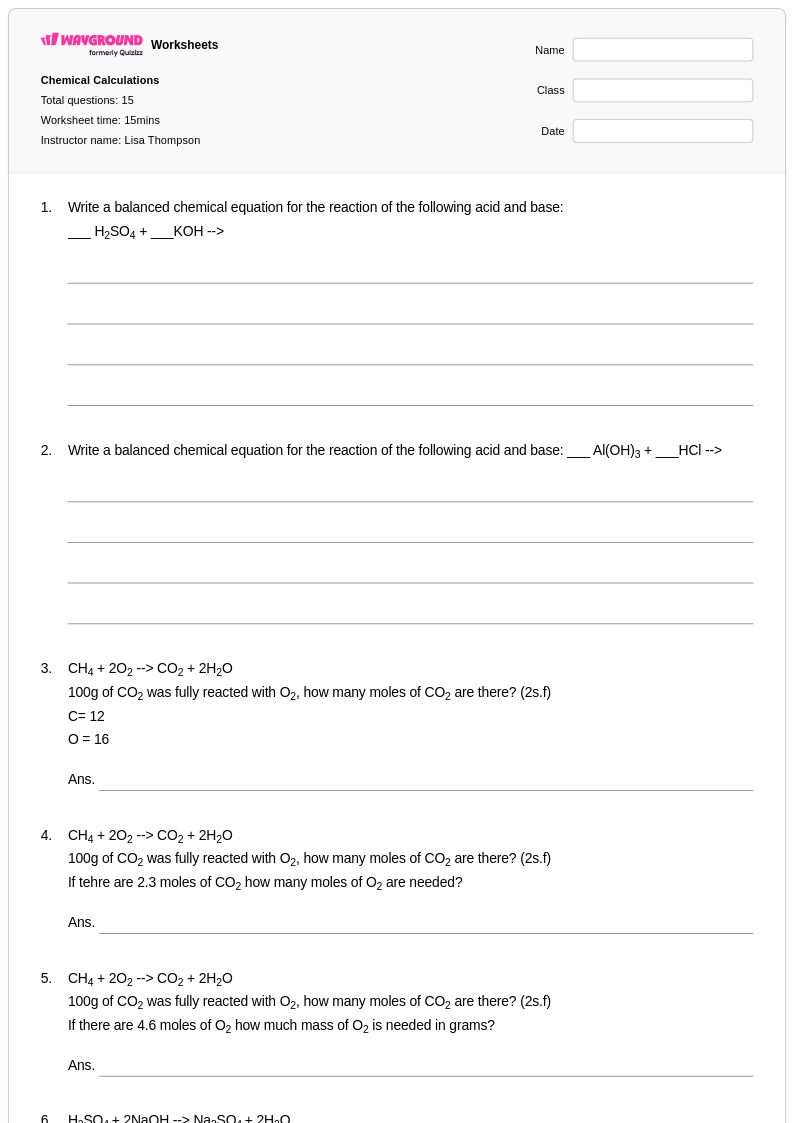
Year 10 physics calculations worksheets from Wayground provide comprehensive printables and practice problems with answer keys, helping students master essential computational skills in mechanics, waves, electricity, and thermodynamics through structured PDF exercises.
Explore printable Physics Calculations worksheets for Year 10
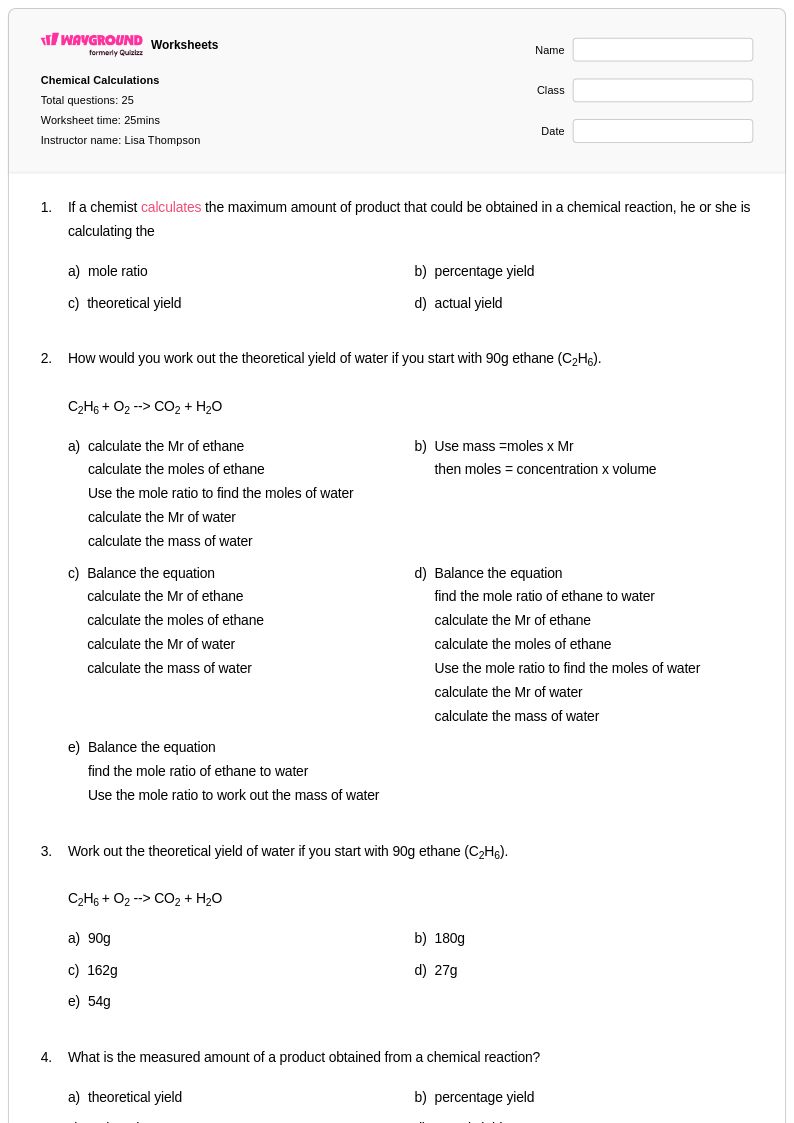
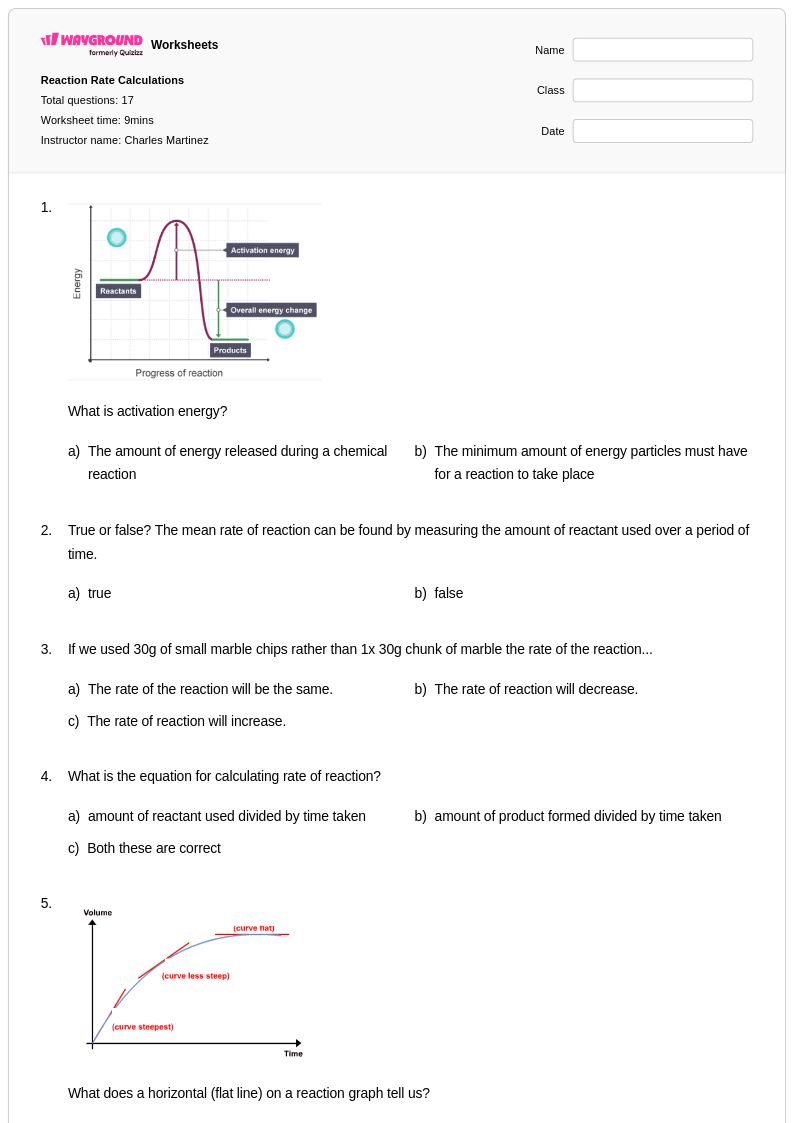
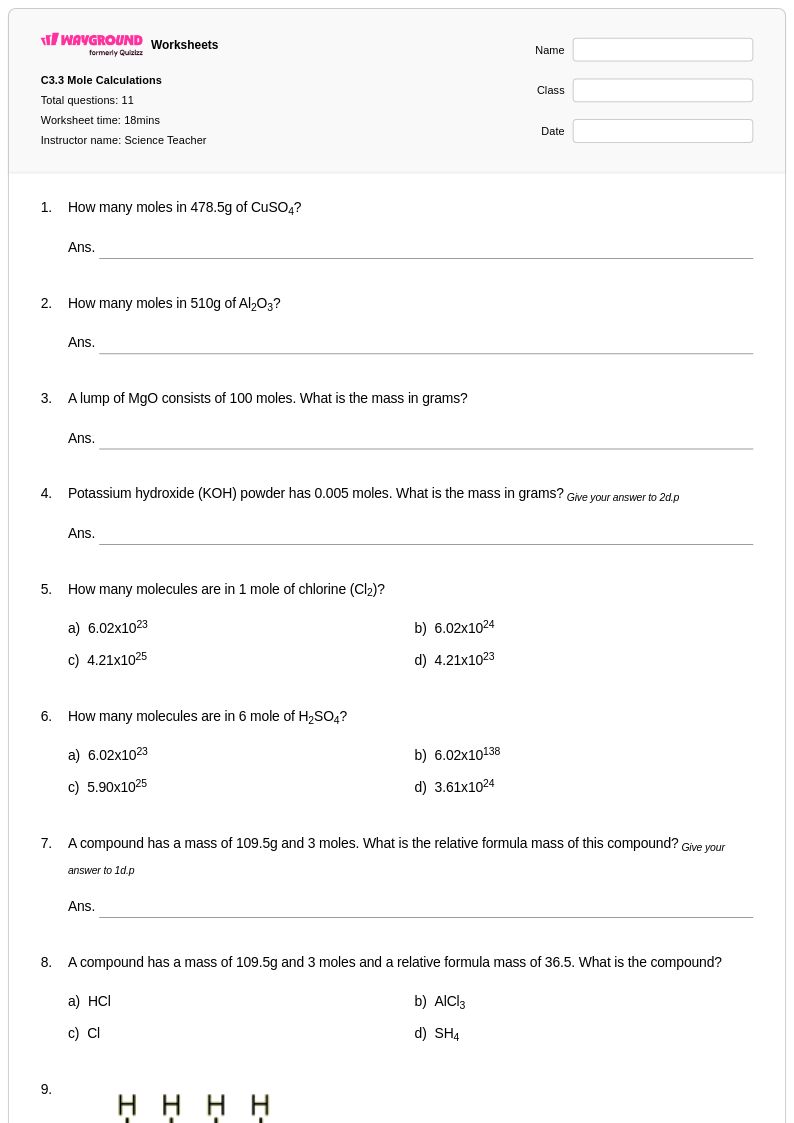
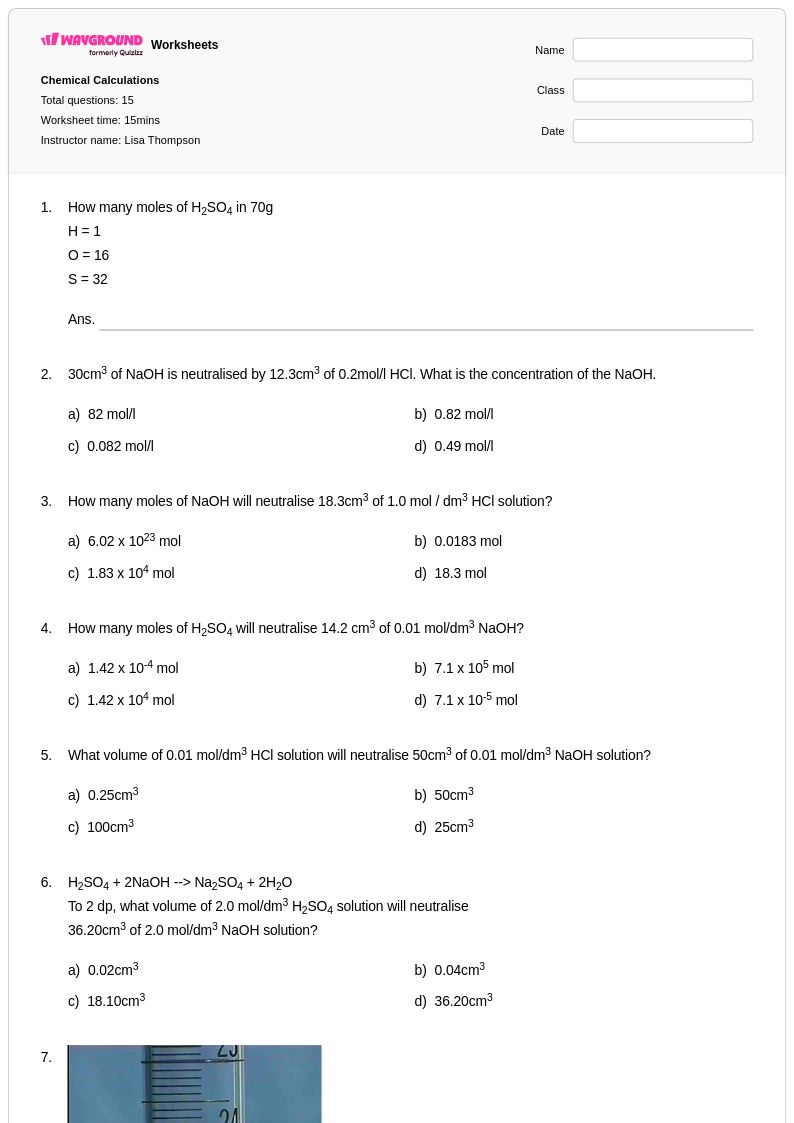
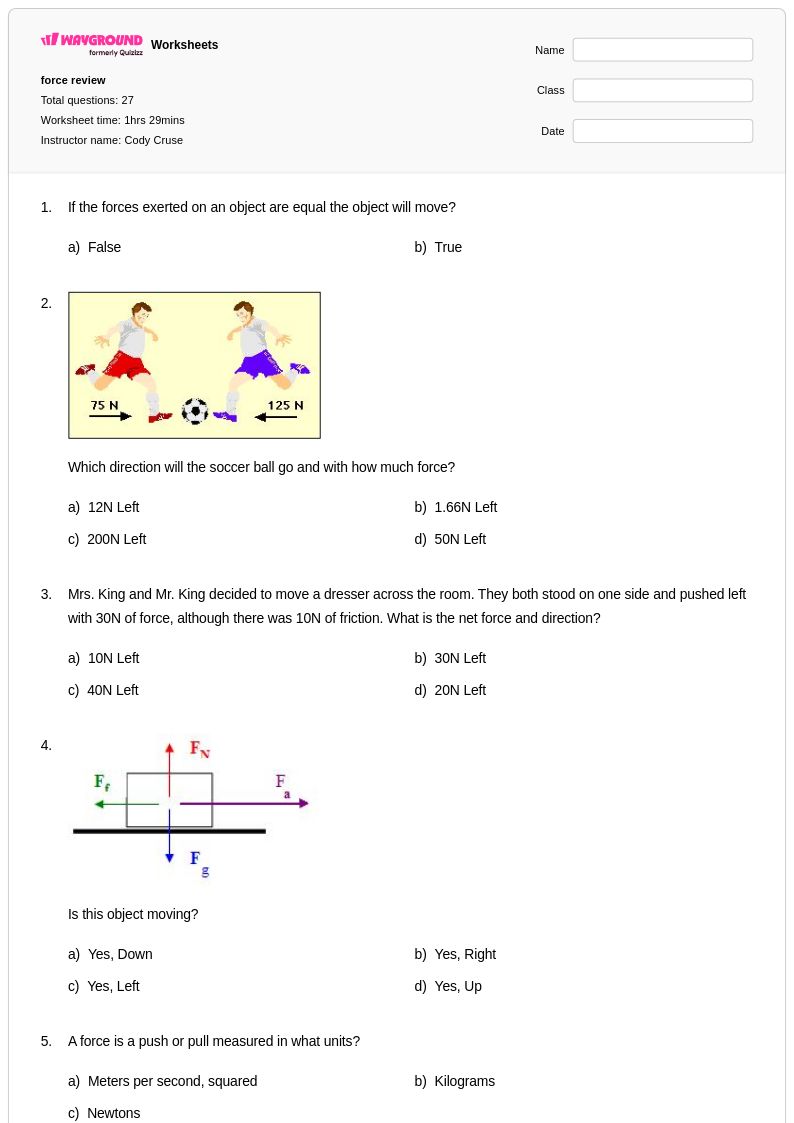
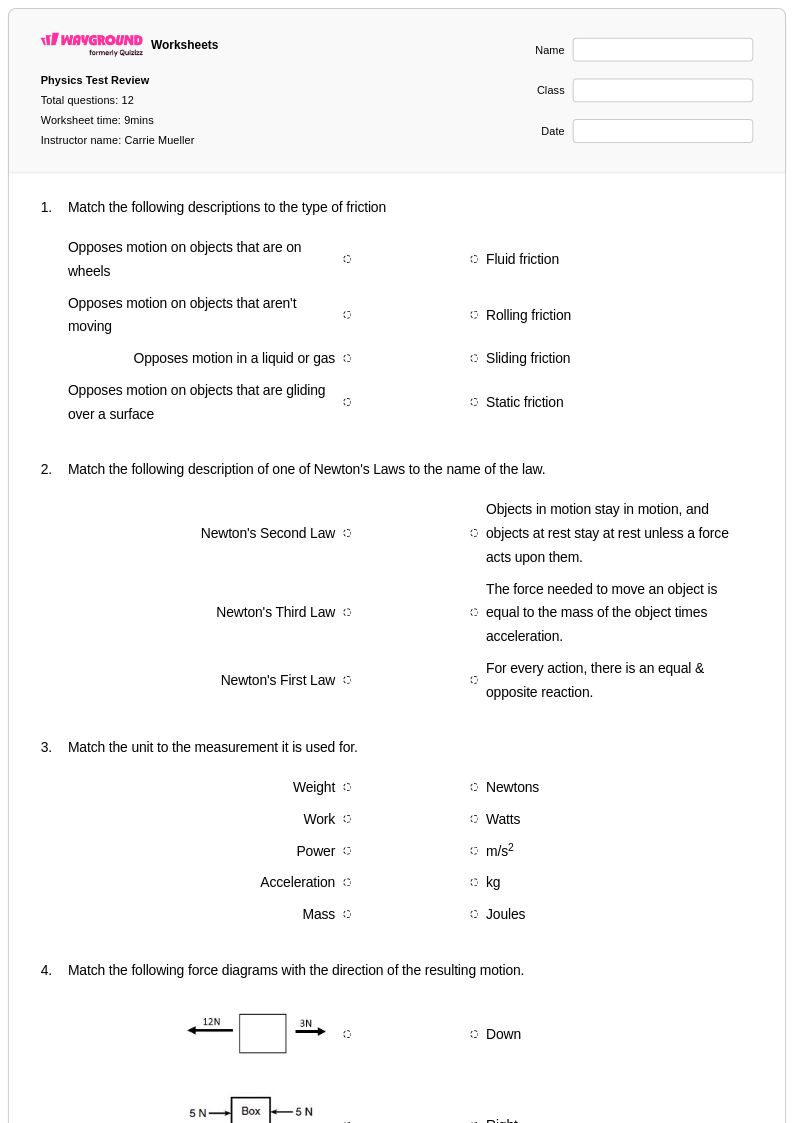
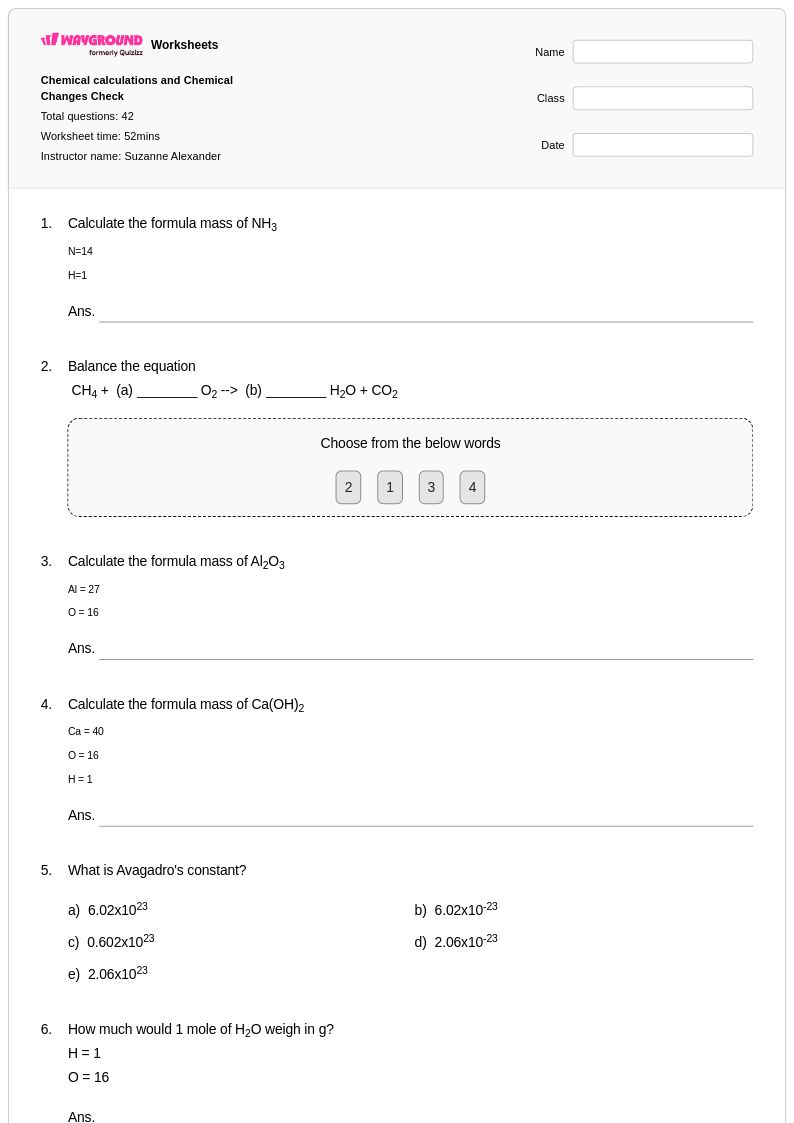
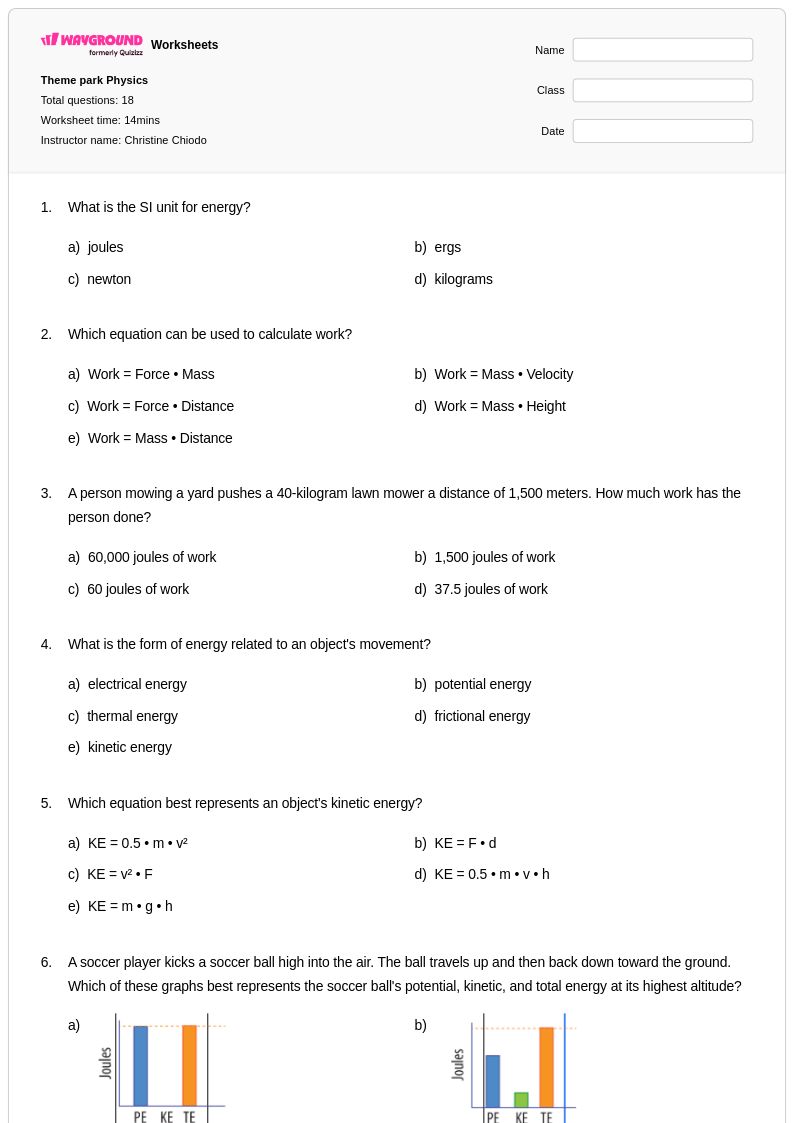
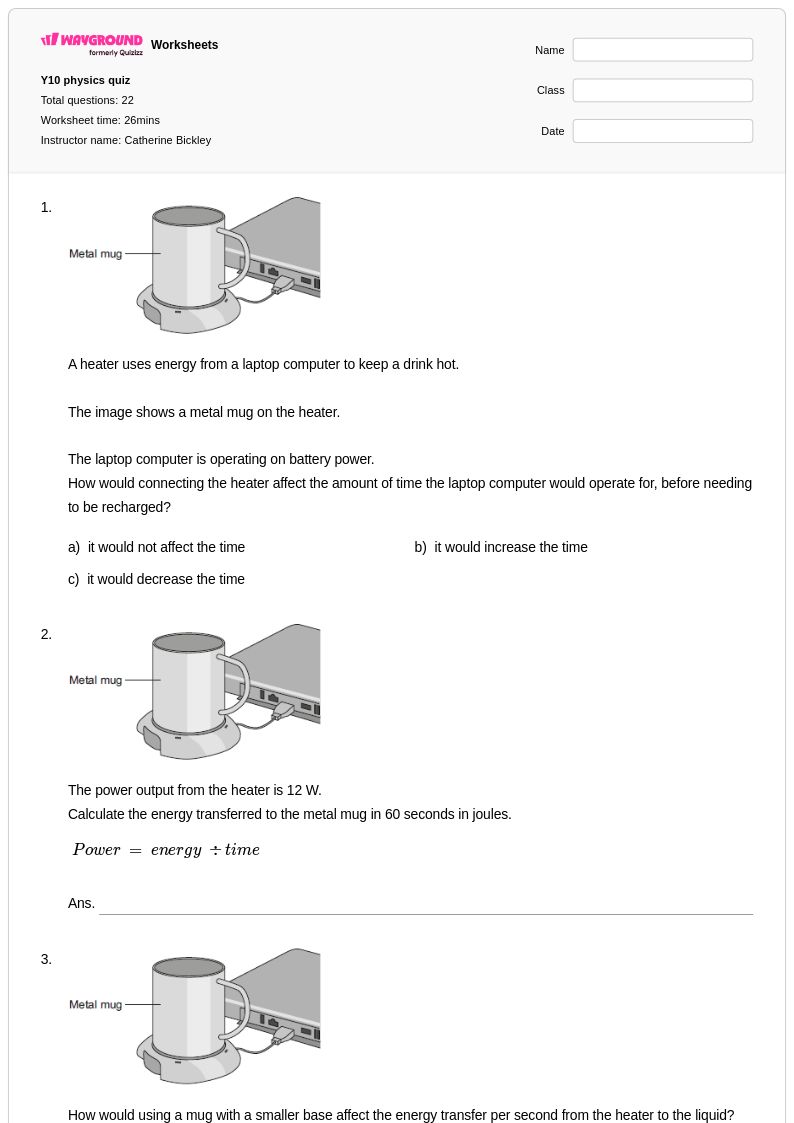
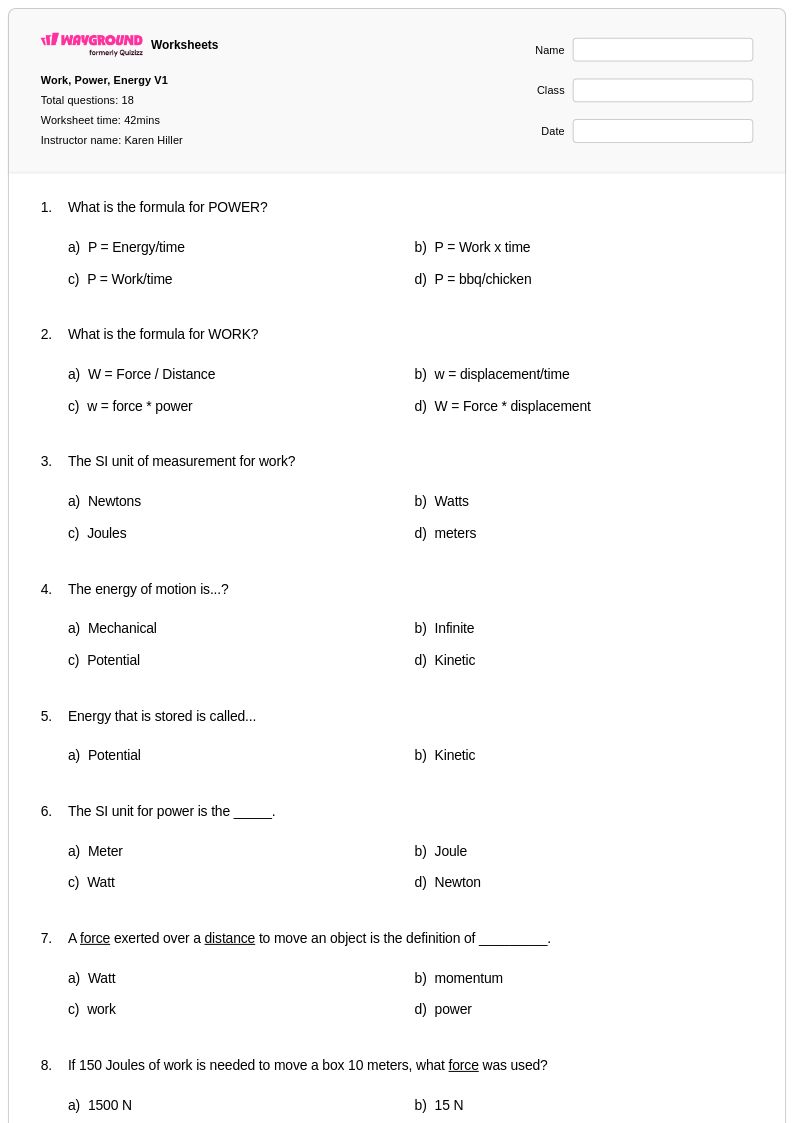
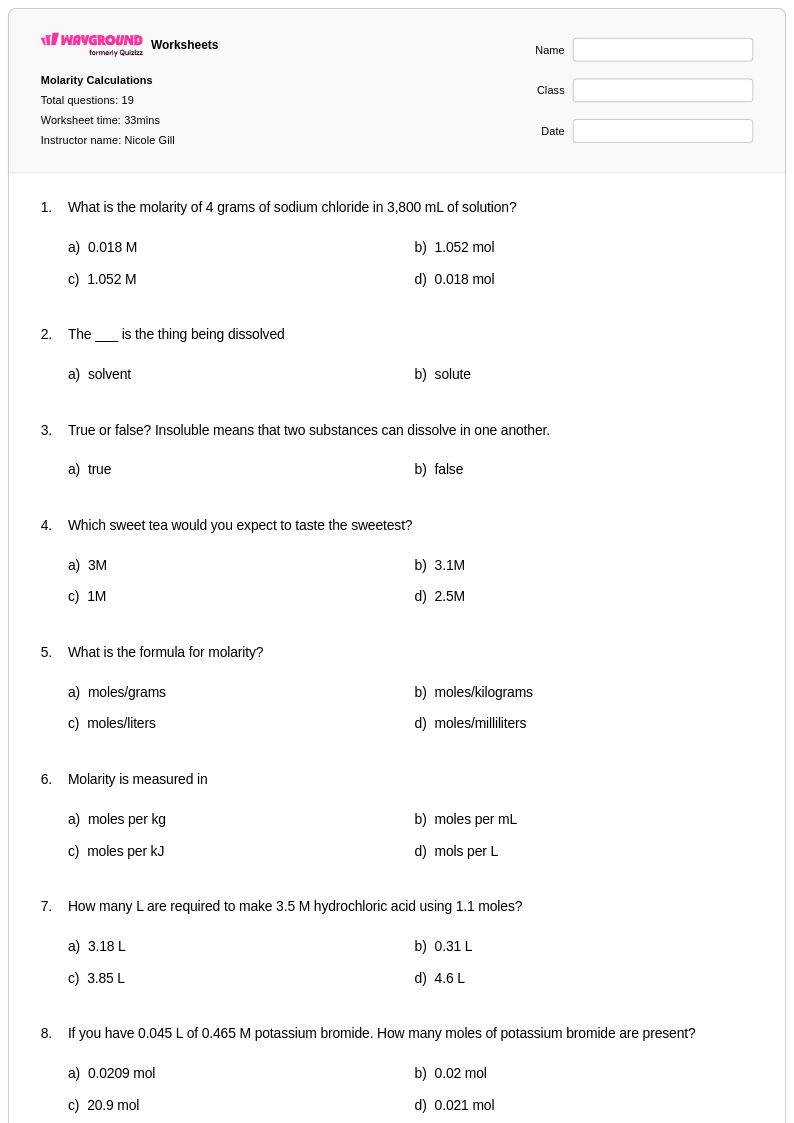
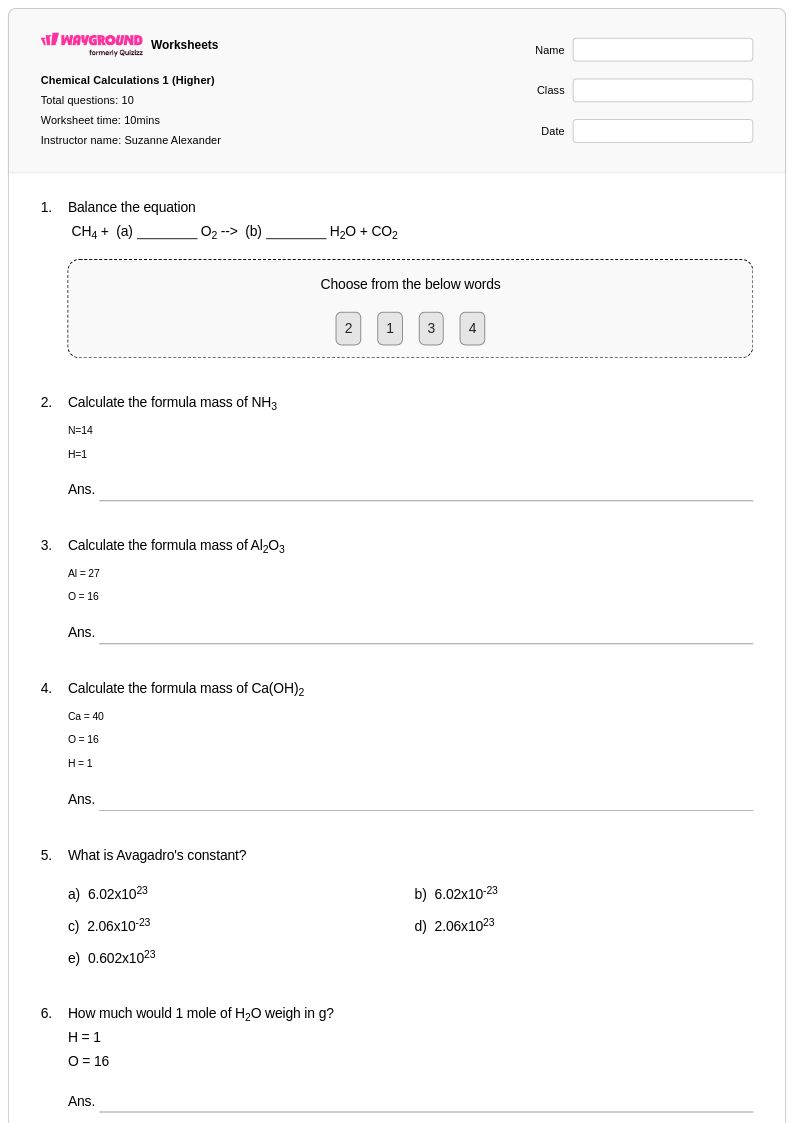
Year 10 physics calculations worksheets available through Wayground (formerly Quizizz) provide comprehensive practice opportunities for students mastering essential mathematical applications in physics. These carefully designed worksheets focus on core calculation skills including kinematic equations, force and motion problems, energy transformations, wave properties, and circuit analysis. Students develop proficiency in dimensional analysis, unit conversions, scientific notation, and multi-step problem solving through structured practice problems that mirror real-world physics scenarios. Each worksheet collection includes detailed answer keys and is available as free printable PDF resources, allowing educators to seamlessly integrate calculation practice into their physics curriculum while helping students build confidence in quantitative reasoning.
Wayground's extensive collection of teacher-created physics calculation worksheets offers educators access to millions of high-quality resources specifically aligned with Year 10 physics standards and learning objectives. The platform's robust search and filtering capabilities enable teachers to quickly locate worksheets targeting specific calculation types, difficulty levels, or physics concepts, making lesson planning and differentiation more efficient. These customizable resources are available in both printable PDF format and interactive digital versions, allowing for flexible implementation across diverse learning environments. Teachers can easily modify worksheets to address individual student needs, create targeted remediation activities, or develop enrichment challenges, ensuring that all students receive appropriate support in developing their physics calculation skills through systematic practice and application.
FAQs
How do I teach physics calculations to students who struggle with math?
Start by isolating the algebraic skill from the physics context — have students practice rearranging formulas before applying them to word problems. Once students are comfortable with formula manipulation, reintroduce the physics scenario so they can focus on reasoning rather than arithmetic. Breaking multi-step problems into labeled steps (identify knowns, choose formula, solve, check units) gives struggling students a repeatable structure to lean on.
What types of practice problems help students get better at physics calculations?
Students benefit most from a sequenced mix of single-formula problems, unit conversion exercises, and multi-step calculations that require selecting the correct equation from context. Problems that mirror real-world scenarios — such as calculating force on an inclined plane or voltage in a circuit — build transferable reasoning skills beyond rote formula recall. Timed practice sets also help students develop the fluency needed for exams.
What are the most common mistakes students make in physics calculations?
The most frequent errors include unit inconsistency (mixing meters and centimeters within the same problem), incorrect formula rearrangement when solving for a non-isolated variable, and skipping significant figures. Students also commonly apply the right formula to the wrong scenario by misreading what the problem is actually asking. Explicitly teaching unit analysis and having students label every variable before calculating significantly reduces these errors.
How can I differentiate physics calculation worksheets for students at different skill levels?
For students who need additional support, reduce the number of answer choices on formula-selection problems and pair calculations with a reference sheet of key equations. Advanced students benefit from problems that omit given formulas entirely or require deriving a relationship from first principles. On Wayground, teachers can apply individual accommodations such as reduced answer choices, extended time, and read-aloud support to specific students without disrupting the experience for the rest of the class.
How do I use Wayground's physics calculations worksheets in my classroom?
Wayground's physics calculations worksheets are available as printable PDFs for traditional classroom use and in digital formats for technology-integrated or remote learning environments. Teachers can also host the worksheet as a live quiz on Wayground, enabling real-time tracking of student responses and immediate identification of computational gaps. Answer keys are included with every worksheet, so students can self-check their work during independent practice or homework review.
How do I help students with unit conversions in physics problems?
Teach unit conversions as a standalone skill using dimensional analysis — have students write out the conversion factor as a fraction and cancel units explicitly before touching the numbers. Applying this method consistently across mechanics, thermodynamics, and electricity problems helps students see it as a universal tool rather than a topic-specific trick. Regular short conversion drills embedded in warm-ups build the automaticity students need to avoid errors mid-calculation.