Free Printable Predicate Nominative Worksheets for Year 12
Master predicate nominatives with Wayground's comprehensive Year 12 English worksheets featuring targeted practice problems, printable PDFs, and detailed answer keys to strengthen grammar and sentence structure skills.
Explore printable Predicate Nominative worksheets for Year 12
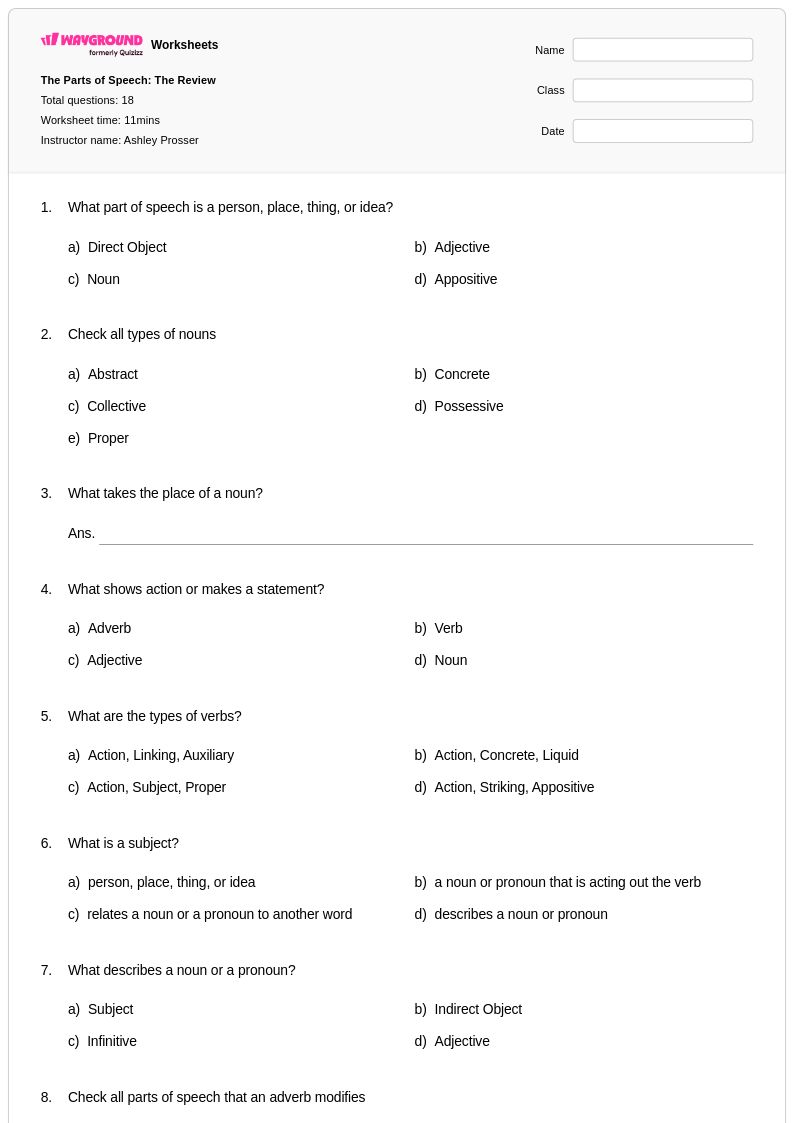
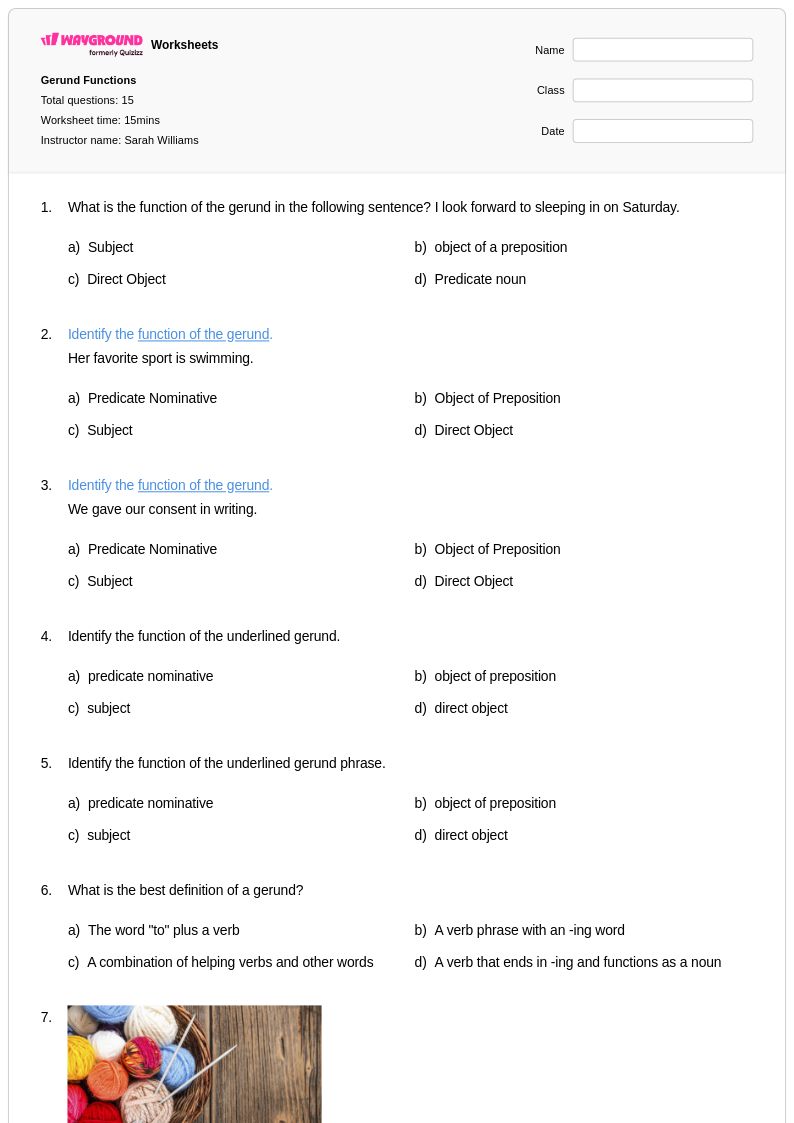
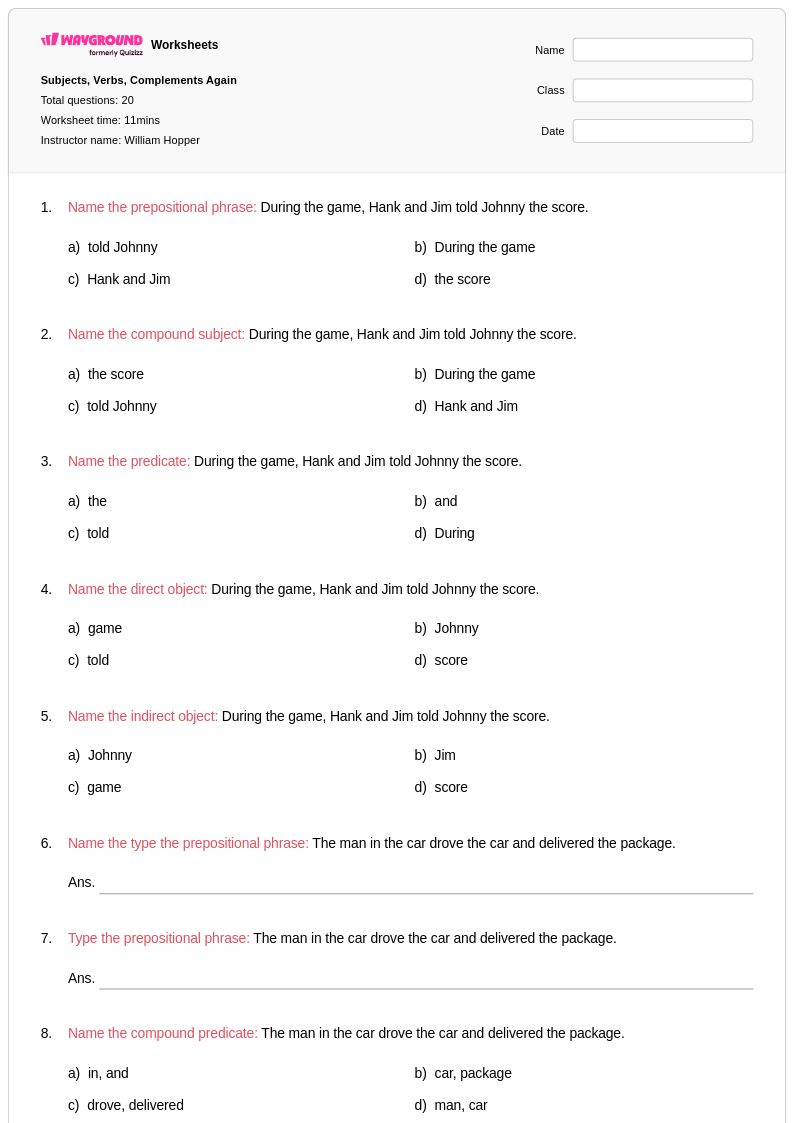
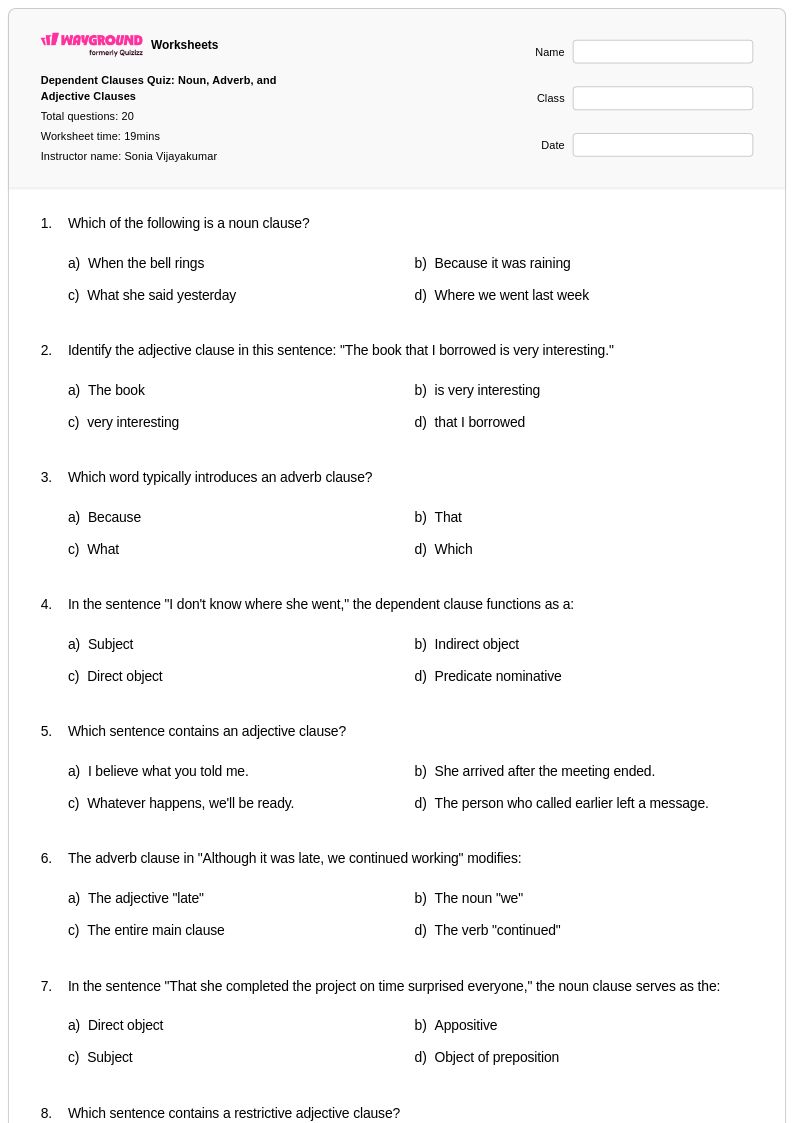
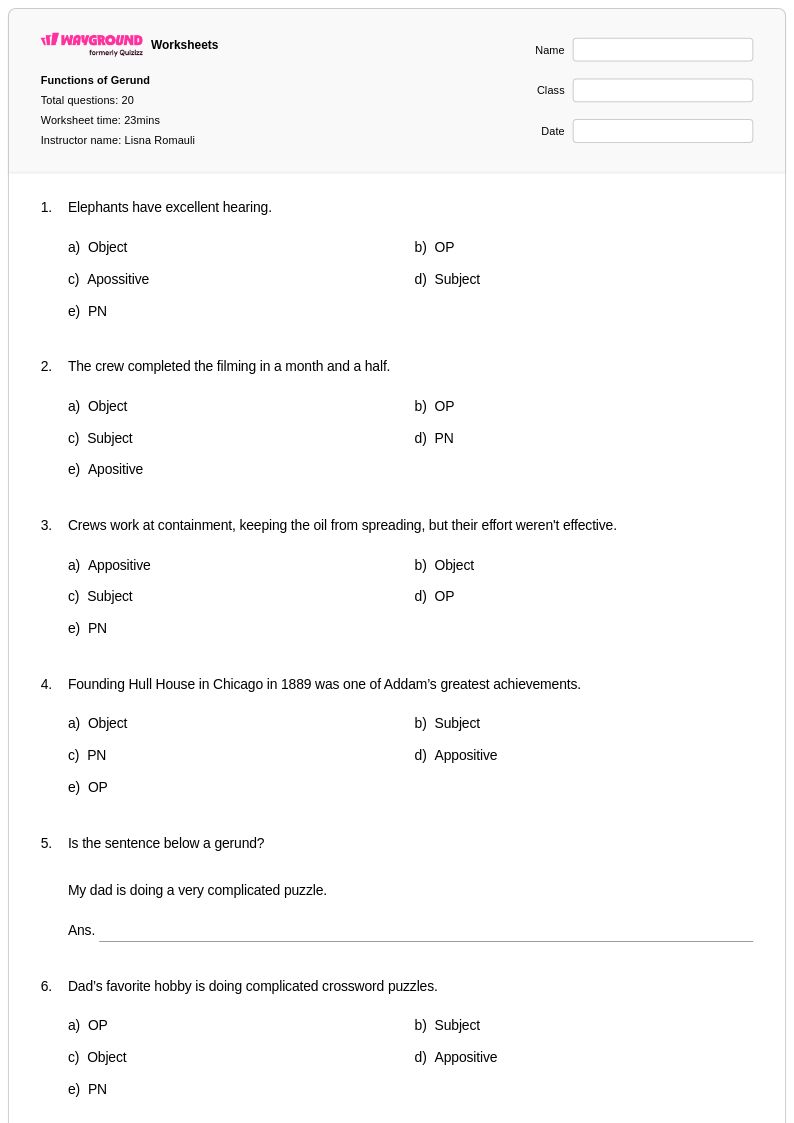
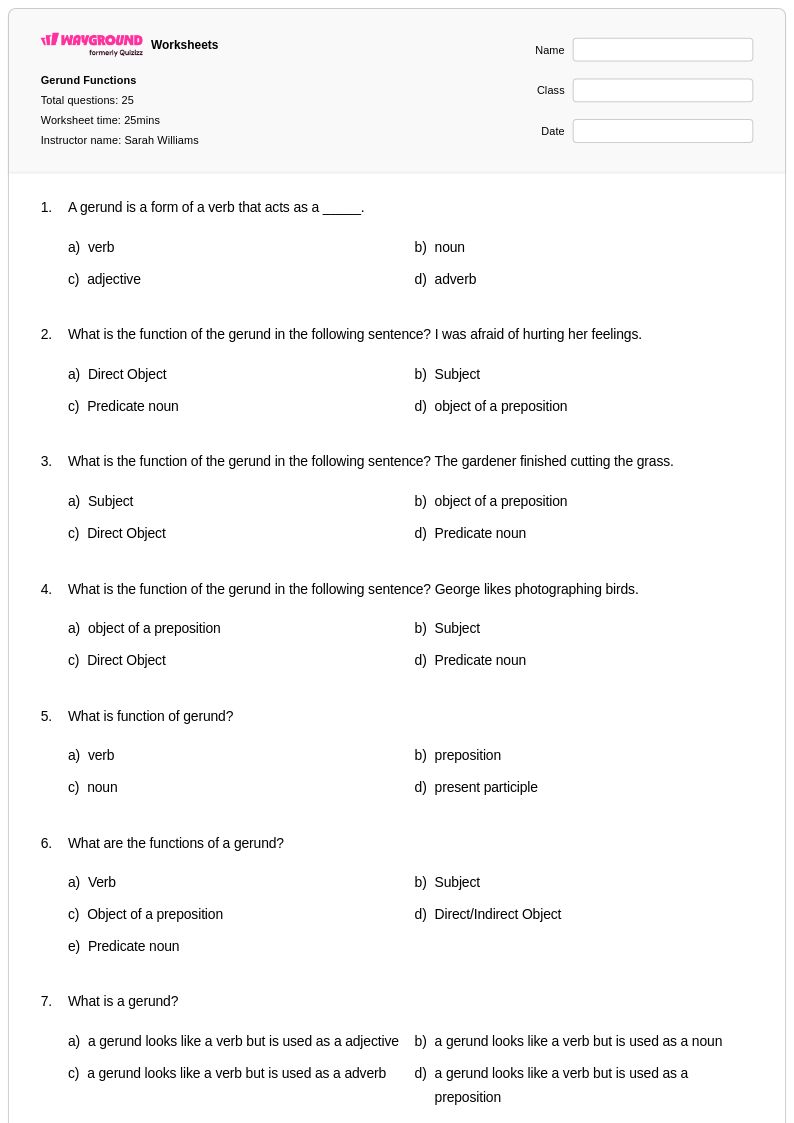
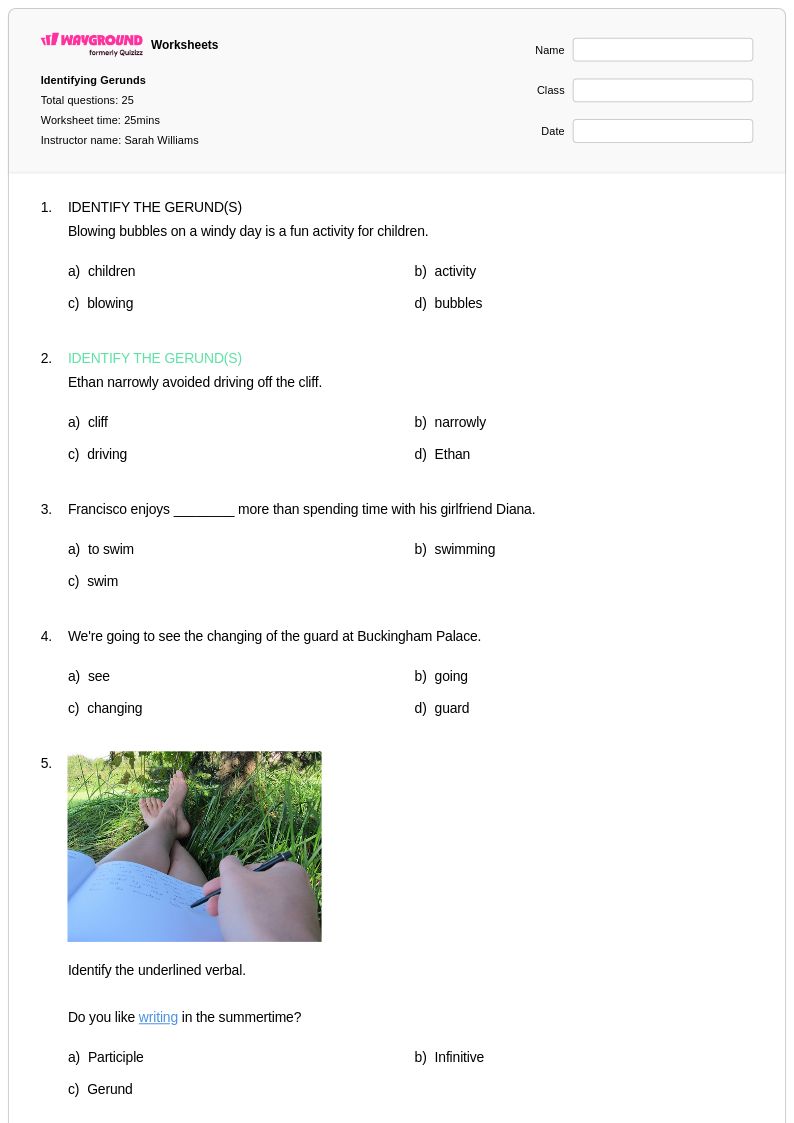
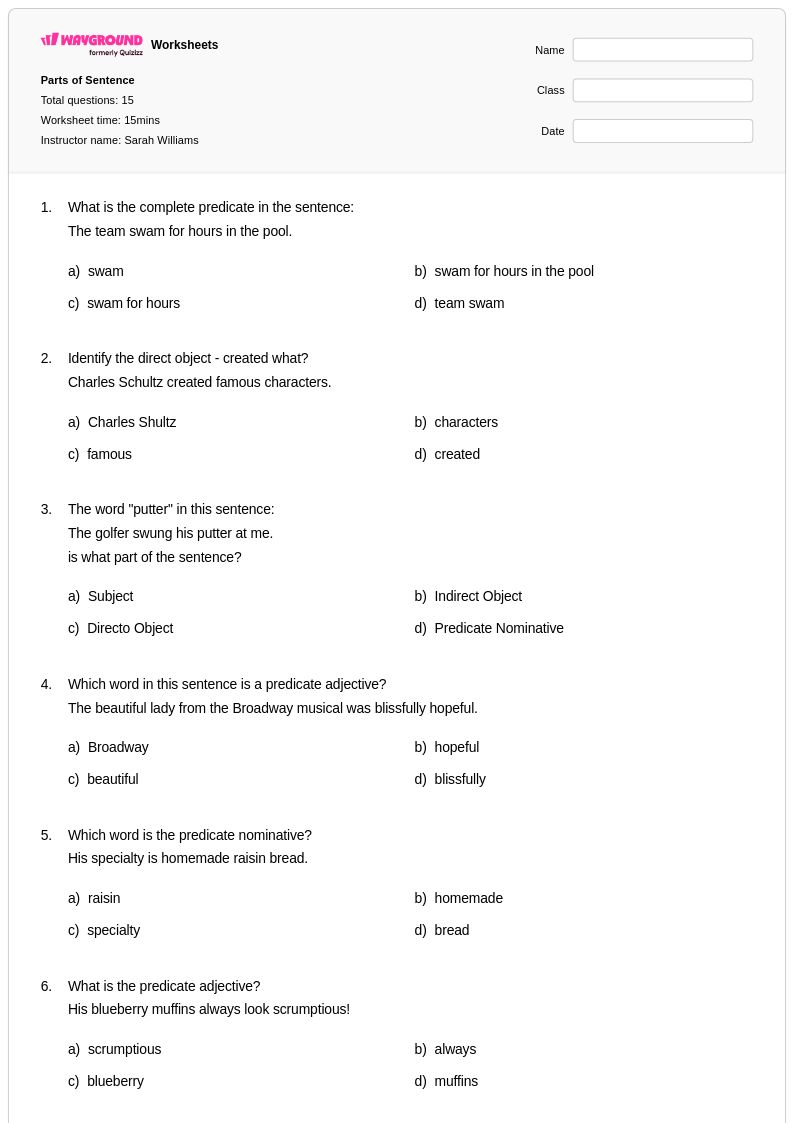
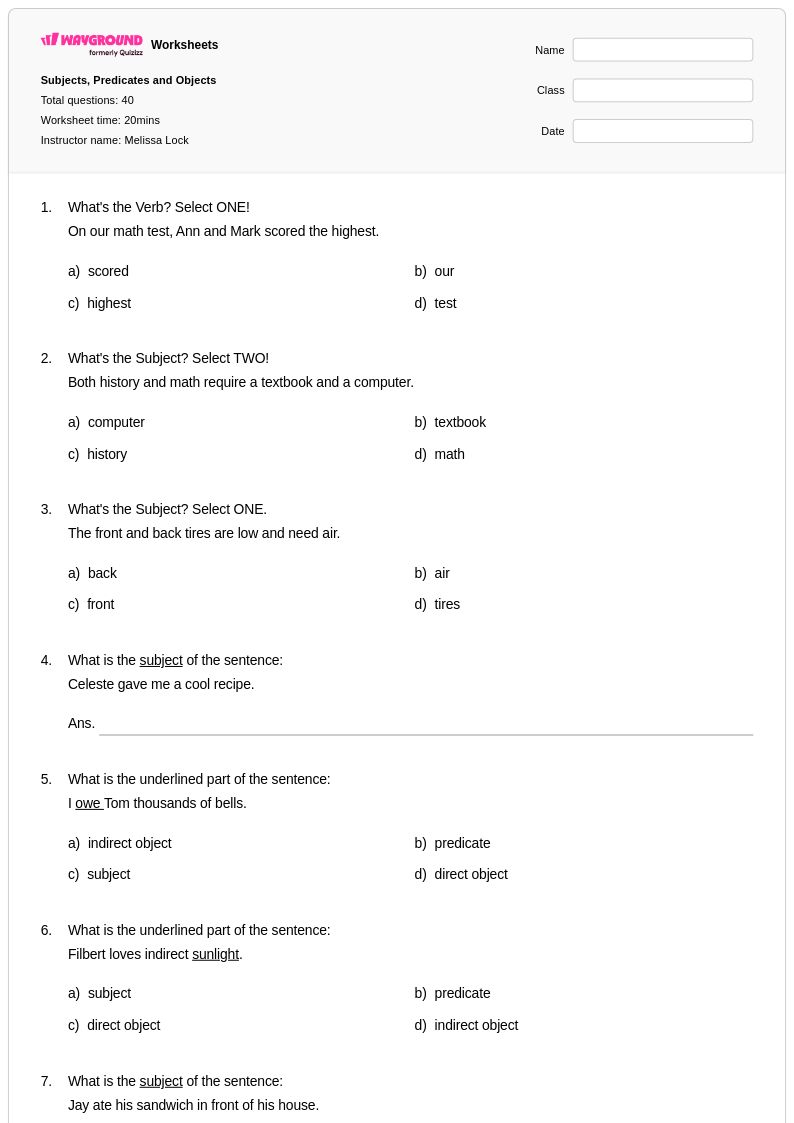
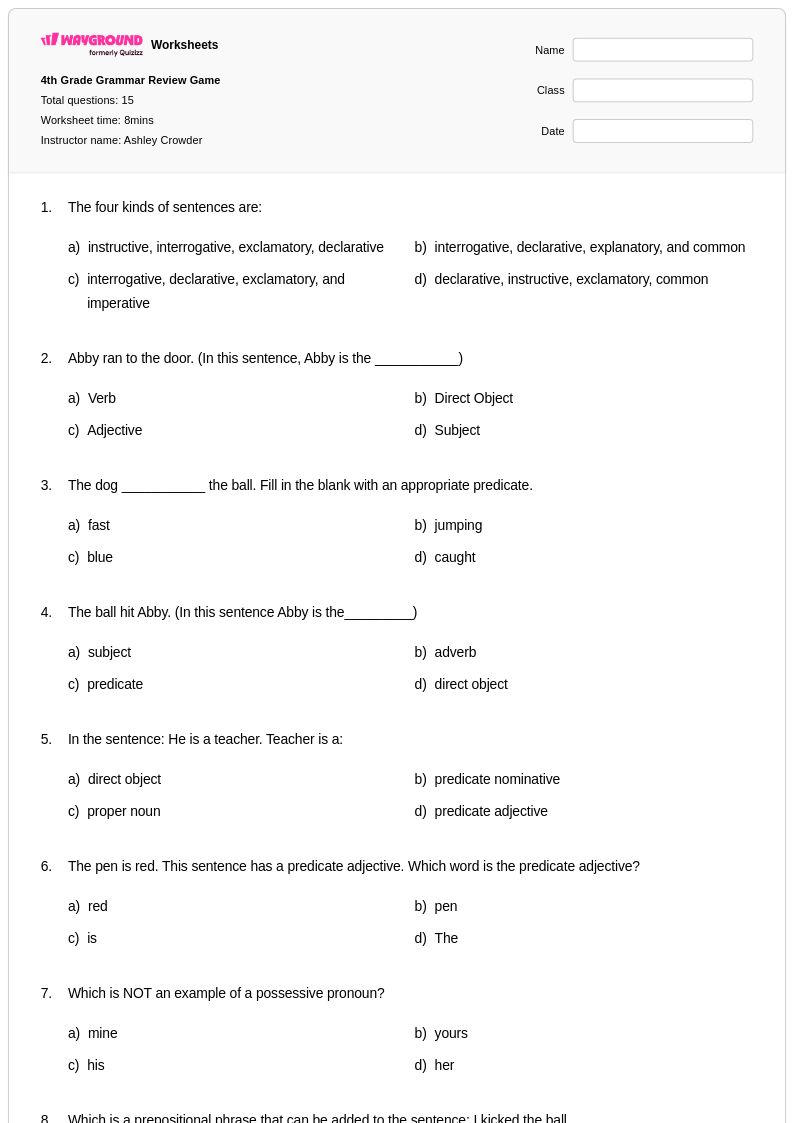
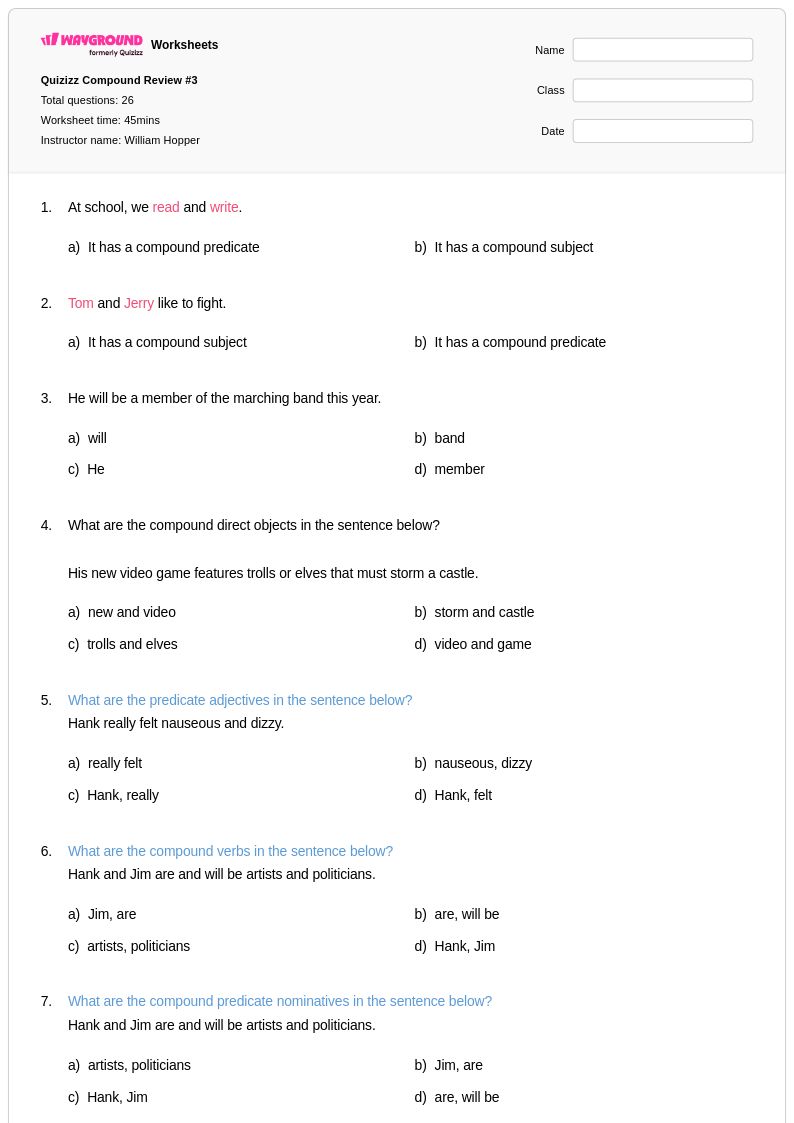
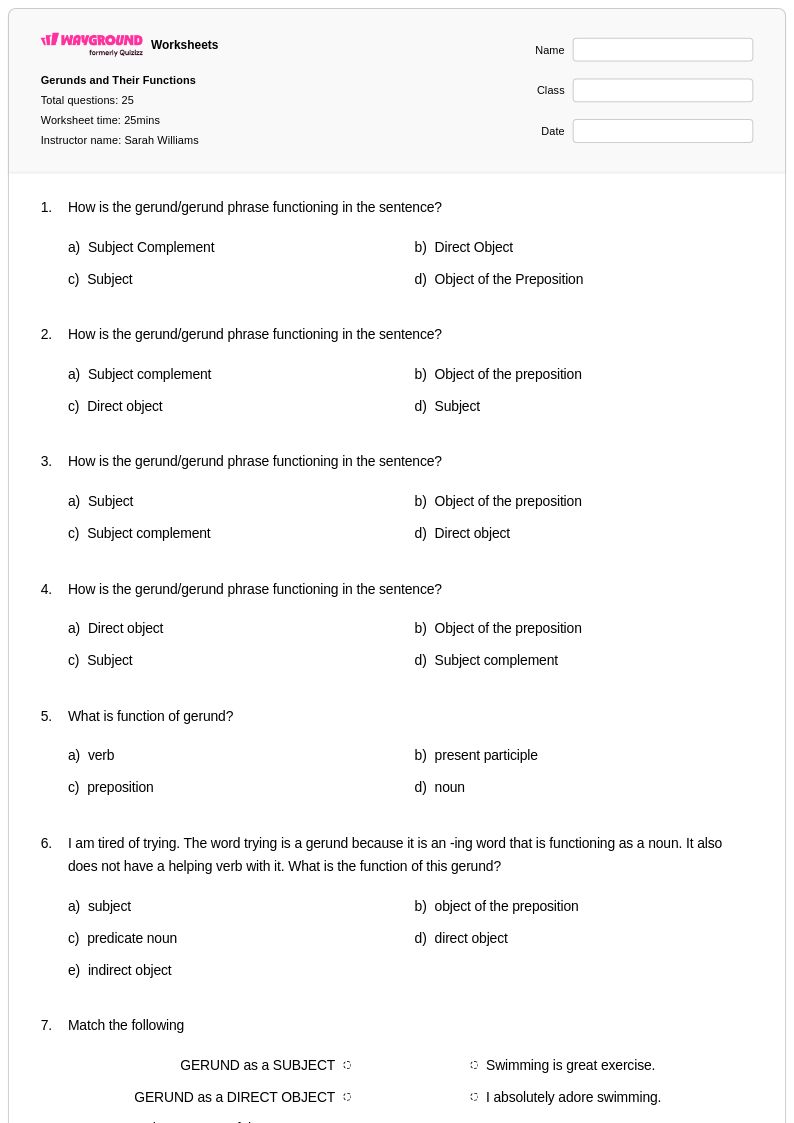
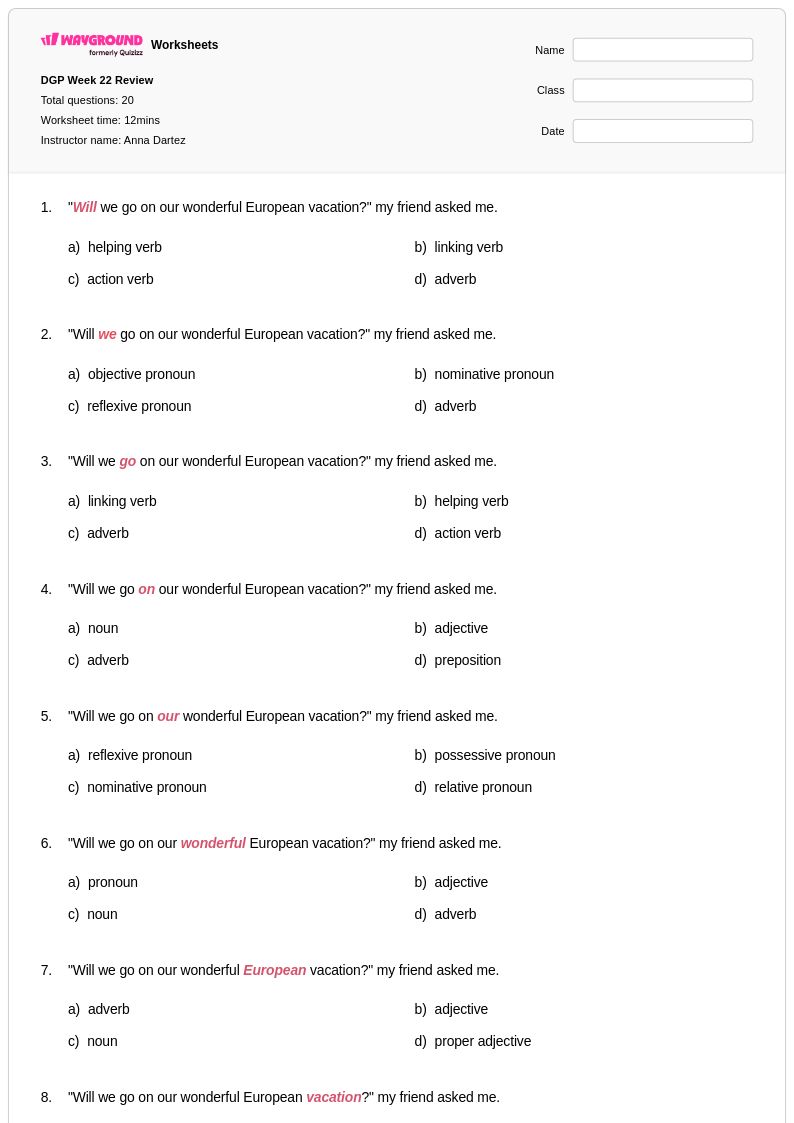
Predicate nominative worksheets for Year 12 students available through Wayground (formerly Quizizz) provide comprehensive practice in identifying and using this essential grammatical structure that renames or identifies the subject through linking verbs. These advanced grammar resources help students master the distinction between predicate nominatives and other sentence components like direct objects and predicate adjectives, strengthening their analytical skills in sentence parsing and construction. The collection includes diverse practice problems that challenge students to recognize predicate nominatives in complex sentences, understand their role in formal writing, and apply this knowledge in their own composition work. Each worksheet comes with a detailed answer key and is available as a free printable pdf, making them accessible for classroom instruction, homework assignments, and independent study sessions.
Wayground's extensive library supports teachers with millions of educator-created resources specifically designed for advanced grammar instruction, featuring robust search and filtering capabilities that allow educators to locate predicate nominative materials aligned with Year 12 standards and learning objectives. The platform's differentiation tools enable teachers to customize worksheets for varying skill levels within their classrooms, while the flexible format options provide both printable pdf versions for traditional paper-and-pencil work and digital formats for online learning environments. These comprehensive features streamline lesson planning by offering ready-to-use materials for initial instruction, targeted remediation for students struggling with sentence analysis, and enrichment activities for advanced learners who need additional challenges in identifying complex grammatical relationships within sophisticated sentence structures.
FAQs
How do I teach predicate nominatives to middle school students?
Start by ensuring students are confident identifying linking verbs, since predicate nominatives only follow linking verbs like 'is', 'are', 'was', 'become', and 'seem'. Once students can isolate the linking verb, teach them to ask 'who or what is the subject?' after the verb — the answer is the predicate nominative. Use sentence pairs that contrast linking verbs with action verbs to help students see why the same noun after an action verb would be a direct object instead.
What exercises help students practice identifying predicate nominatives?
Exercises that ask students to underline the linking verb and then circle the predicate nominative build the skill systematically. Sentence-sorting tasks — where students categorize sentences by whether they contain a predicate nominative, predicate adjective, or direct object — are especially effective at reinforcing the distinctions. Rewriting exercises, where students construct their own sentences using predicate nominatives, move practice from recognition to production.
What mistakes do students commonly make with predicate nominatives?
The most common error is confusing predicate nominatives with direct objects — students often assume any noun after a verb is a direct object, without checking whether the verb is a linking verb or an action verb. A second frequent mistake is misidentifying predicate adjectives as predicate nominatives, since both follow linking verbs; remind students that predicate nominatives are always nouns or pronouns, never adjectives. Students also struggle with sentences where the predicate nominative precedes the subject in inverted constructions.
How do I help students tell the difference between a predicate nominative and a direct object?
The key test is the verb: linking verbs connect the subject to a word that renames or identifies it, while action verbs transfer action to a direct object. Teach students to substitute a form of 'to be' — if the sentence still makes logical sense, the verb is likely a linking verb and the following noun is a predicate nominative. For example, 'She became the captain' passes this test, while 'She kicked the ball' does not.
How can I use predicate nominative worksheets in my classroom?
Predicate nominative worksheets on Wayground are available as printable PDFs for traditional classroom use and in digital formats for technology-integrated environments, and teachers can also host them as a quiz directly on Wayground. Printable versions work well for guided practice, grammar stations, or homework assignments, while digital formats allow for immediate student feedback. For students who need additional support, Wayground's built-in accommodation tools — including read aloud and reduced answer choices — can be applied individually without disrupting the rest of the class.
How do I differentiate predicate nominative instruction for students at different levels?
For struggling students, begin with simple subject-linking verb-predicate nominative sentences before introducing compound or complex structures. Advanced learners can be challenged to write original paragraphs that deliberately include predicate nominatives and then peer-edit to verify correct usage. On Wayground, teachers can apply individual accommodations such as extended time or read aloud to specific students, so differentiation happens within a single shared assignment without singling anyone out.