
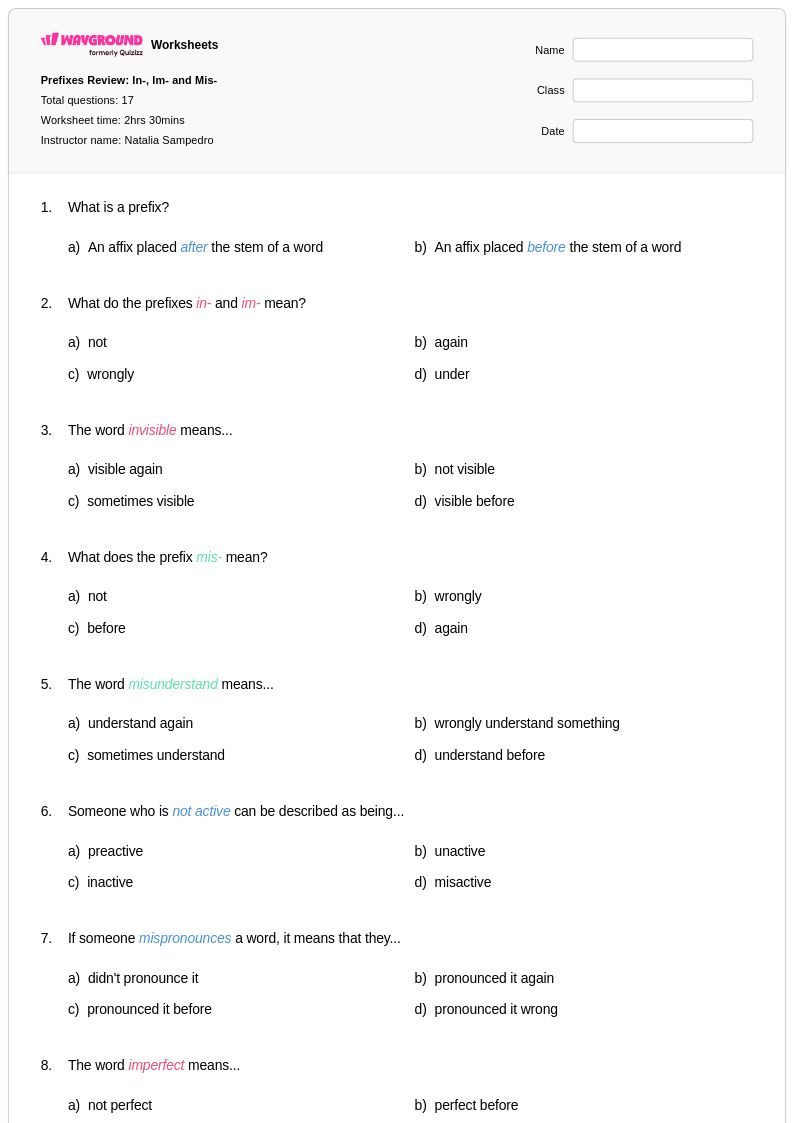
17 Q
2nd - 4th
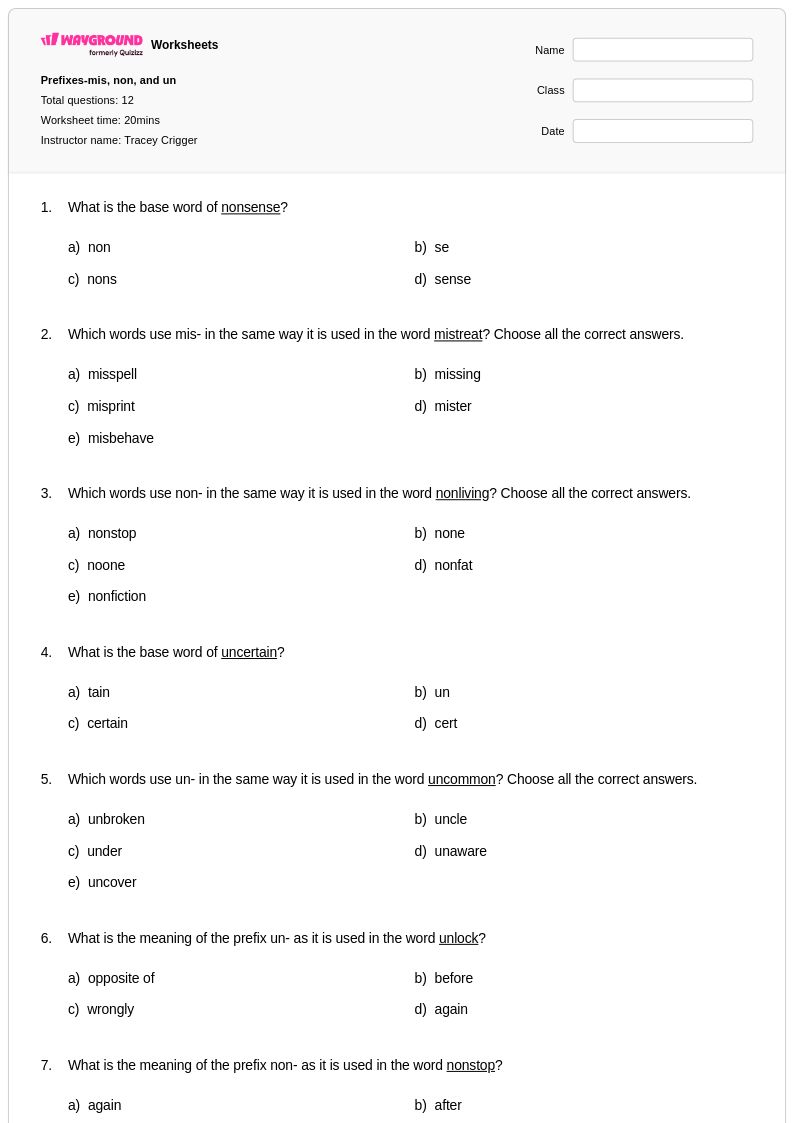
12 Q
3rd - 4th
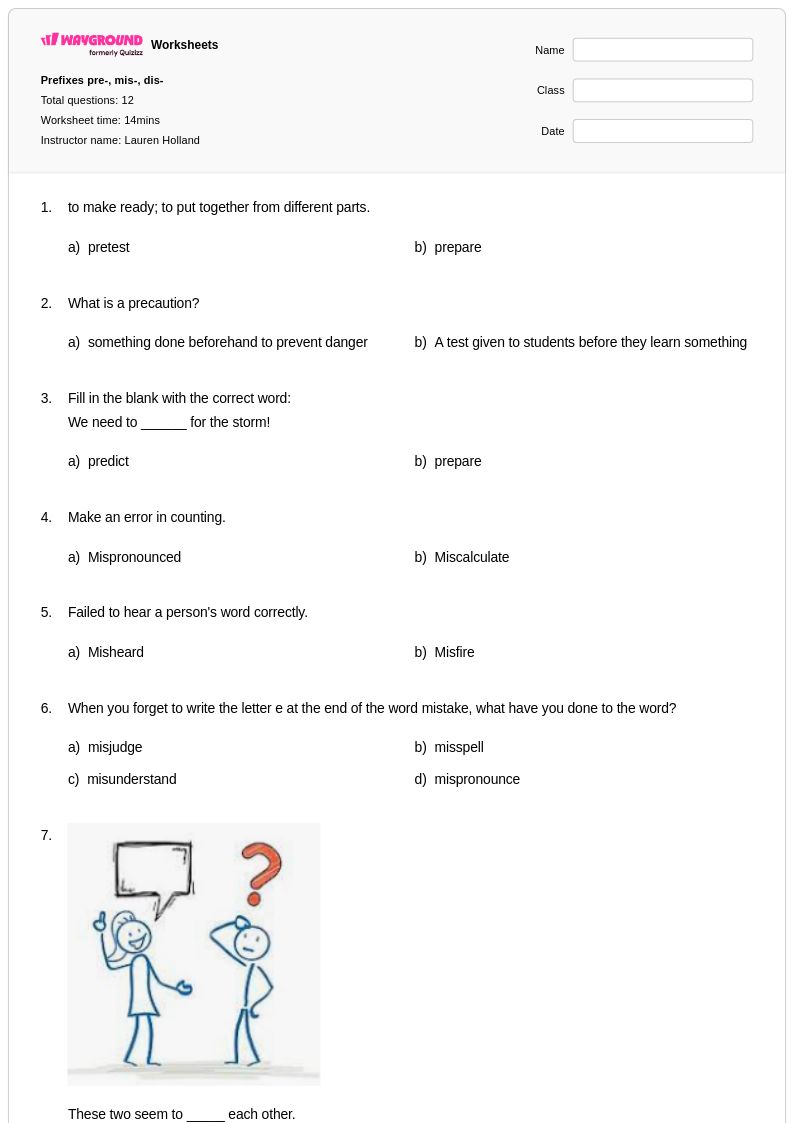
12 Q
3rd
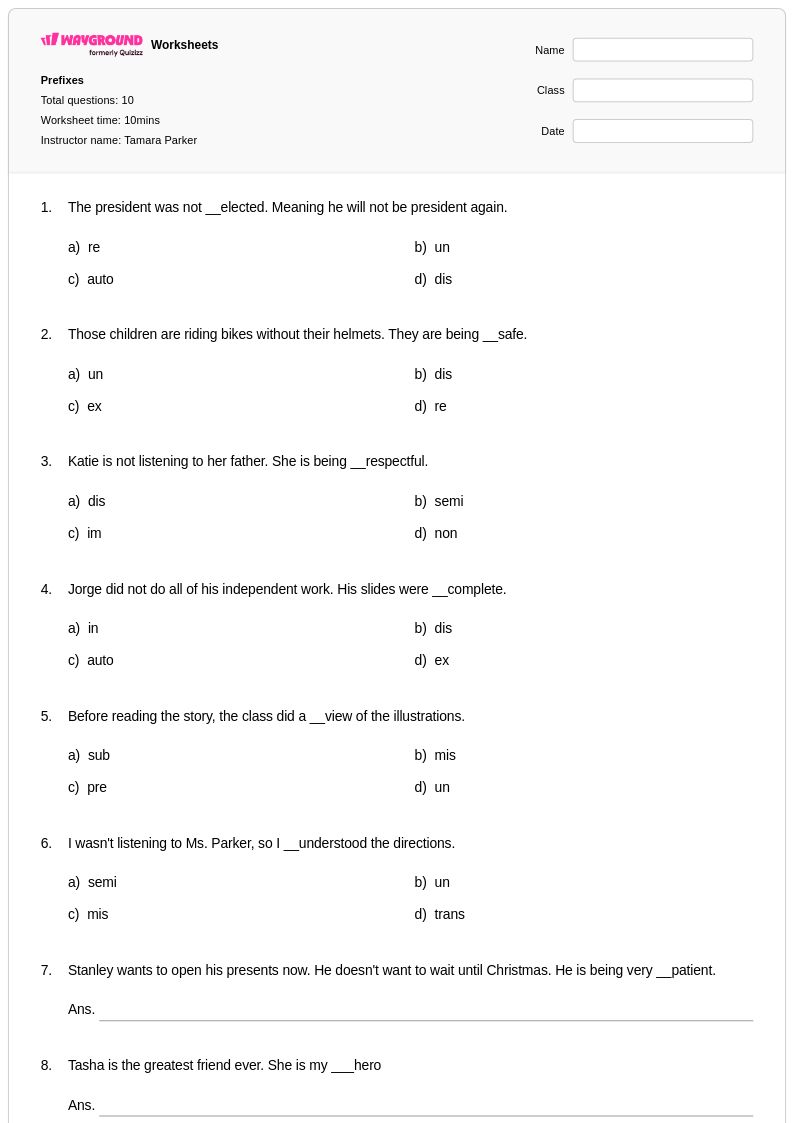
10 Q
3rd
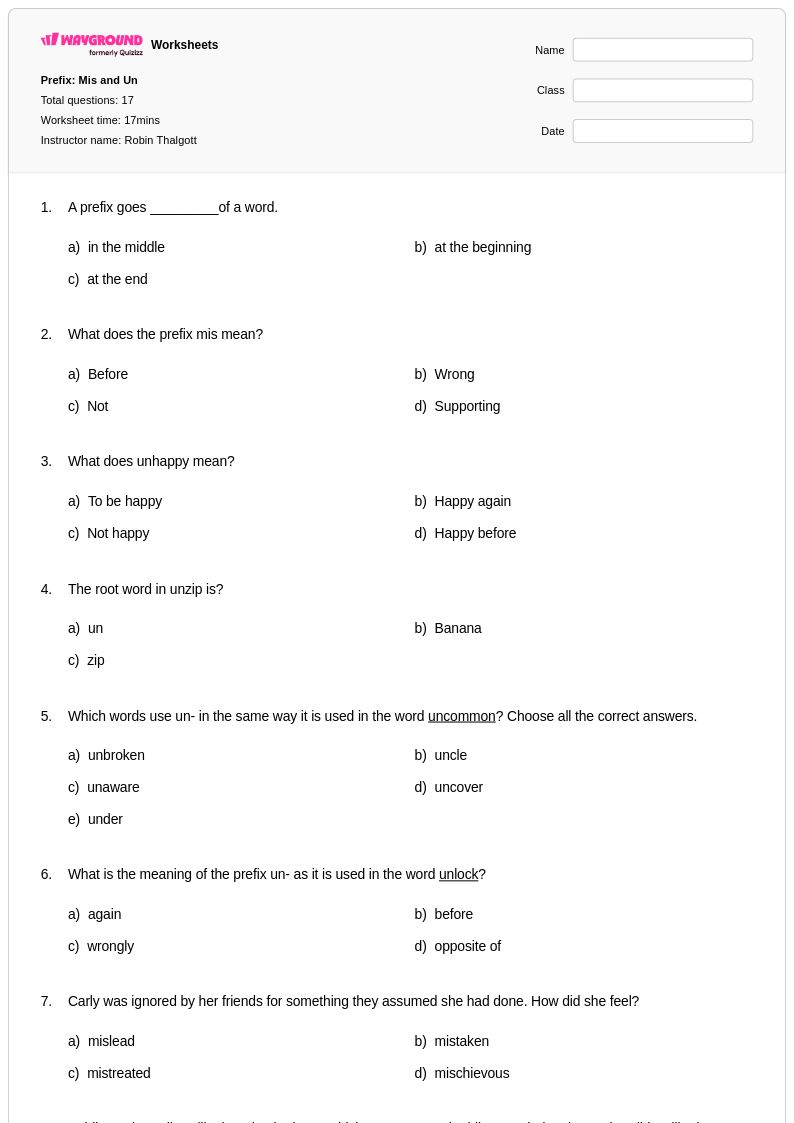
17 Q
2nd - 3rd
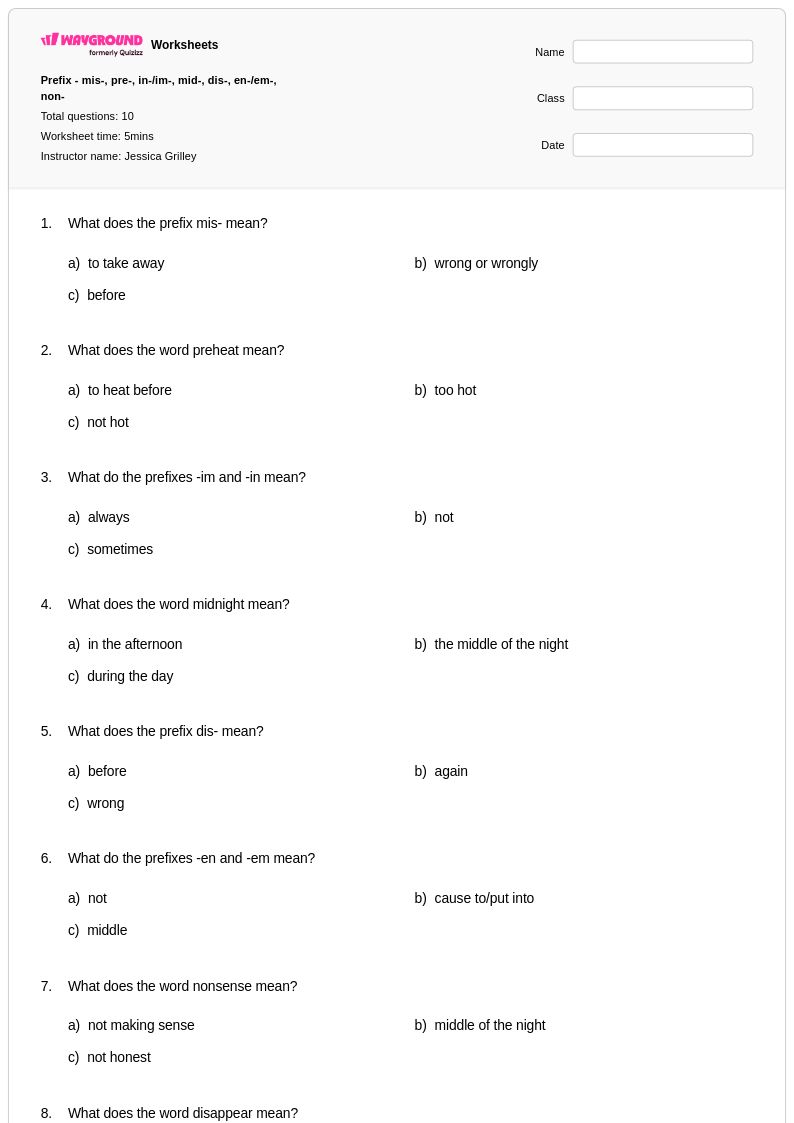
10 Q
3rd
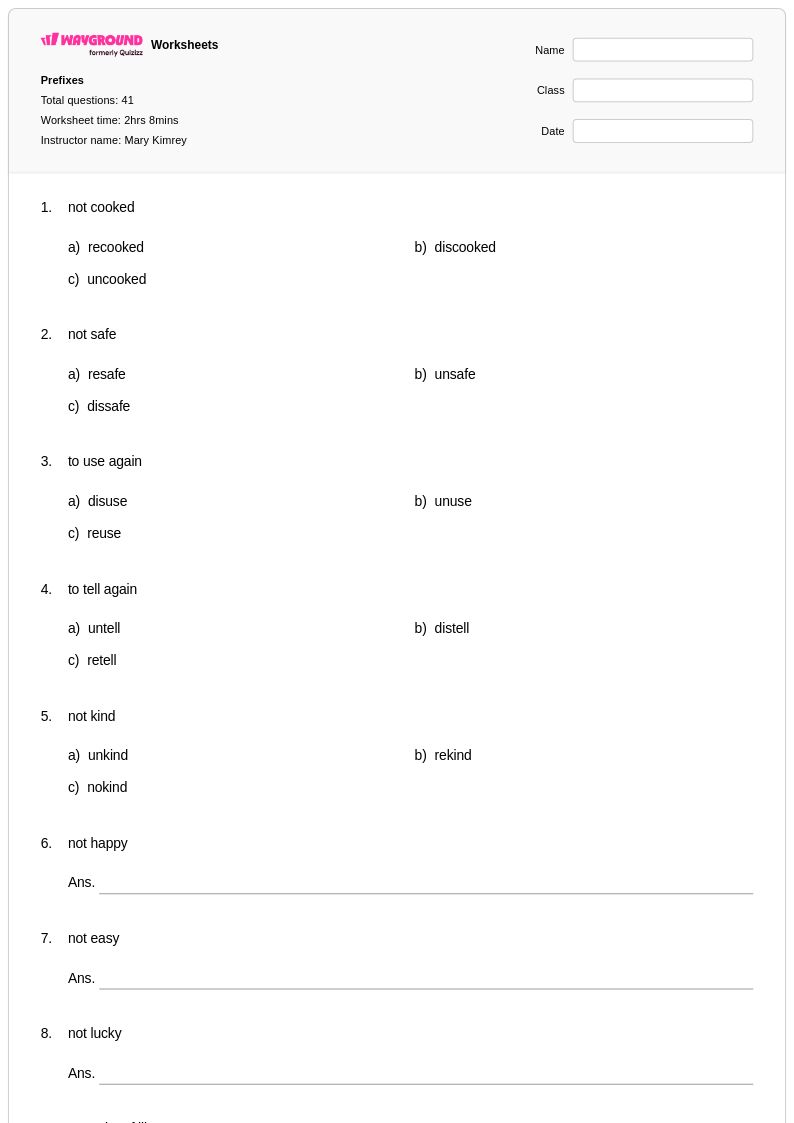
41 Q
3rd
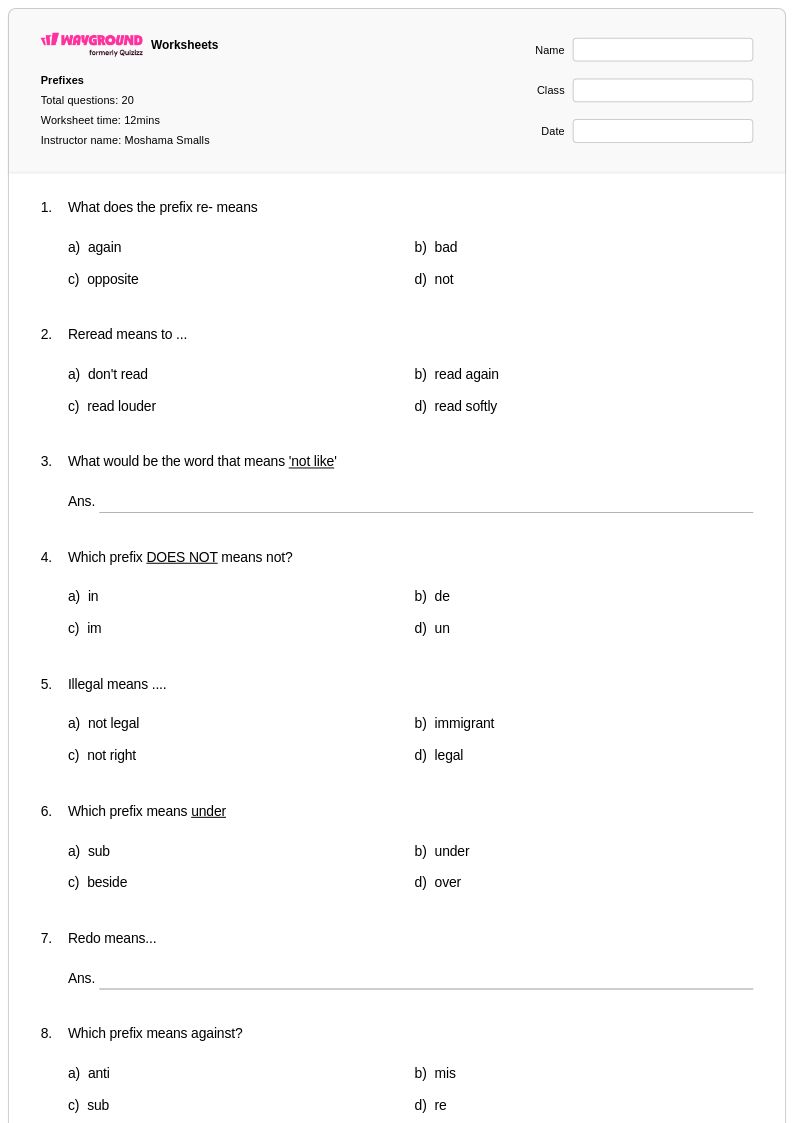
20 Q
3rd - 5th
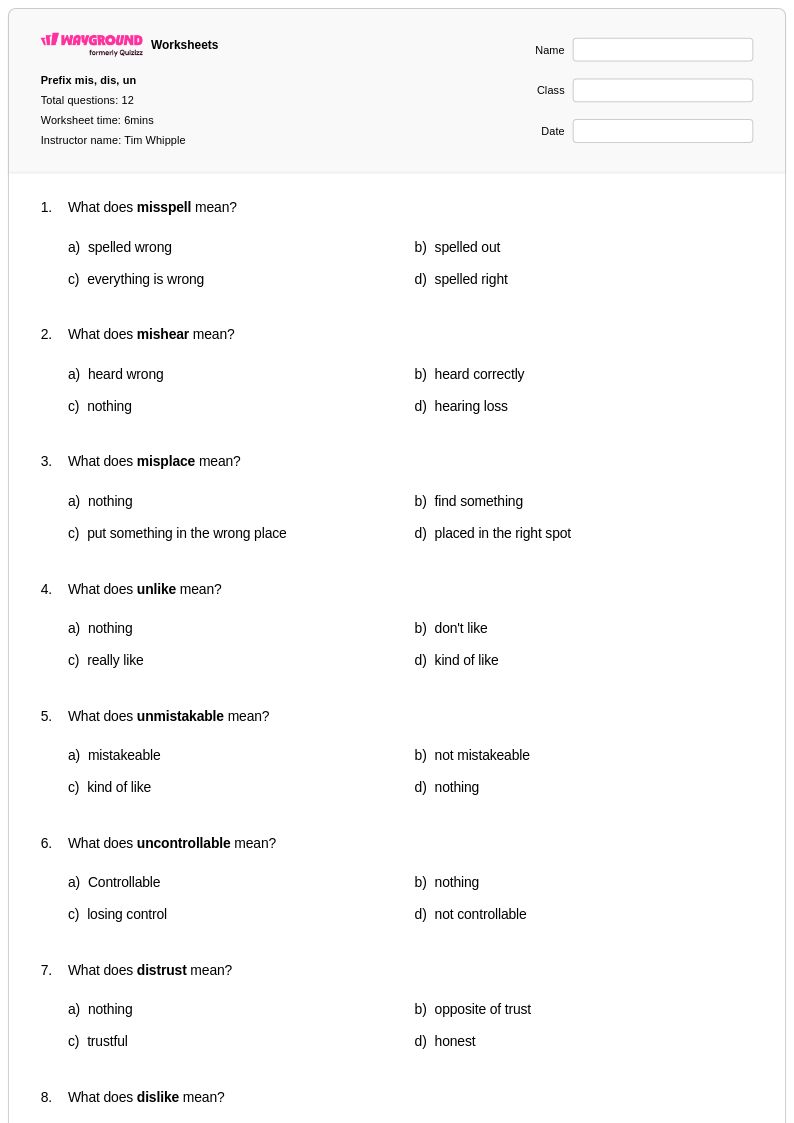
12 Q
3rd
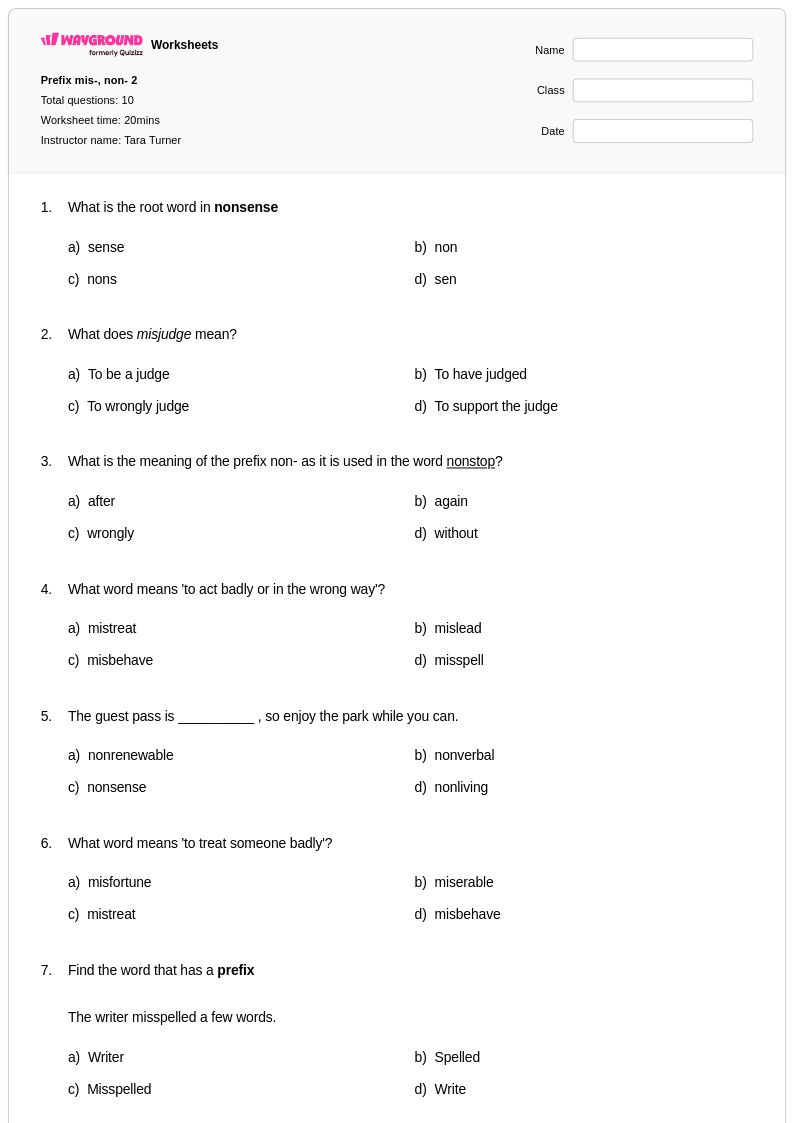
10 Q
3rd
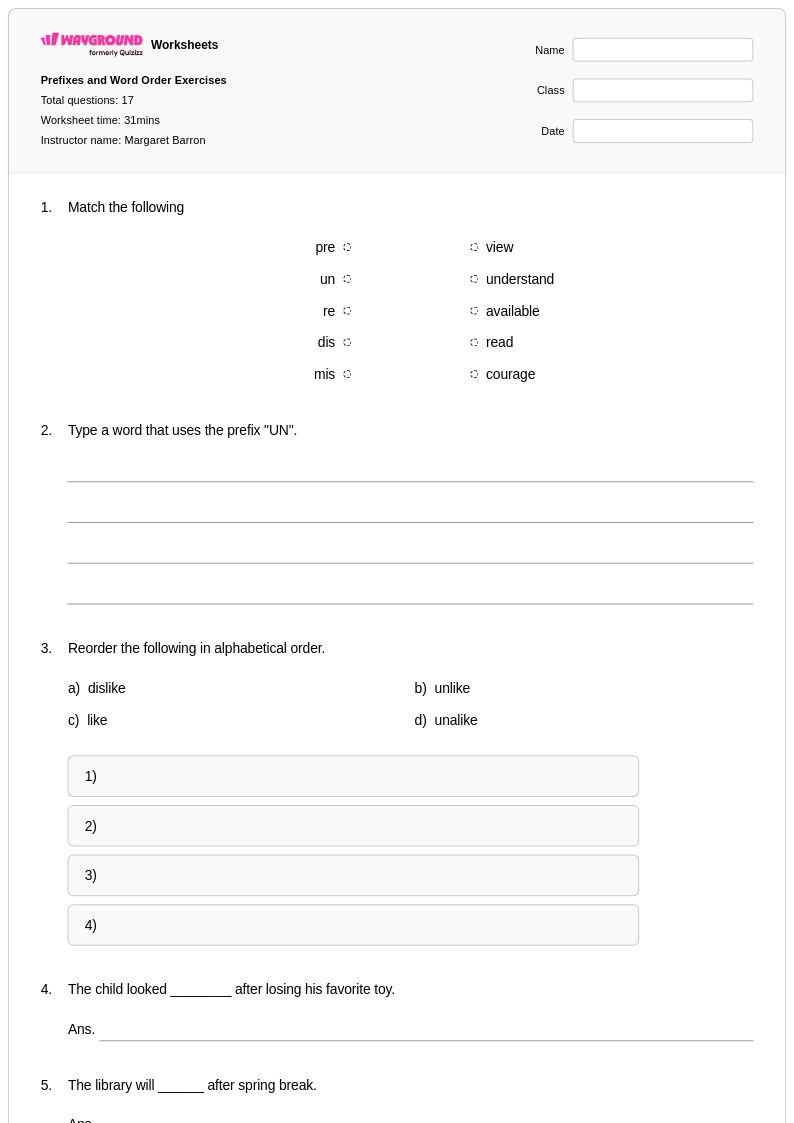
20 Q
3rd
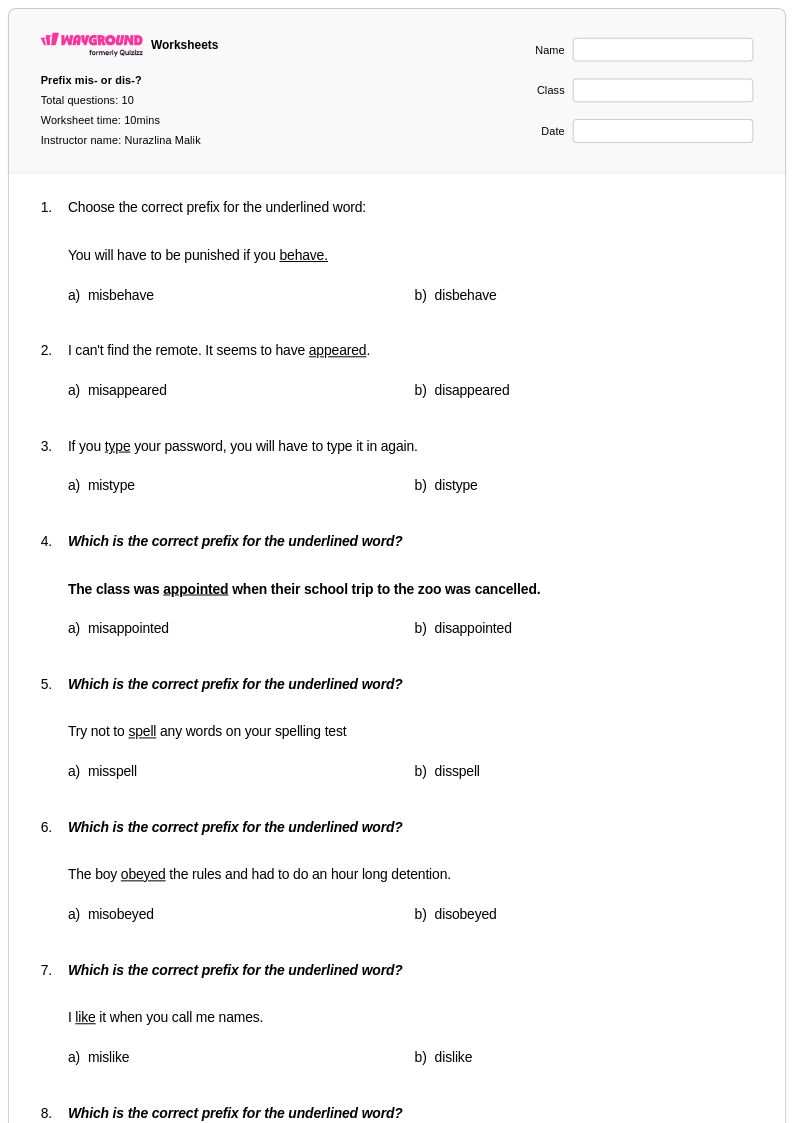
10 Q
1st - 7th
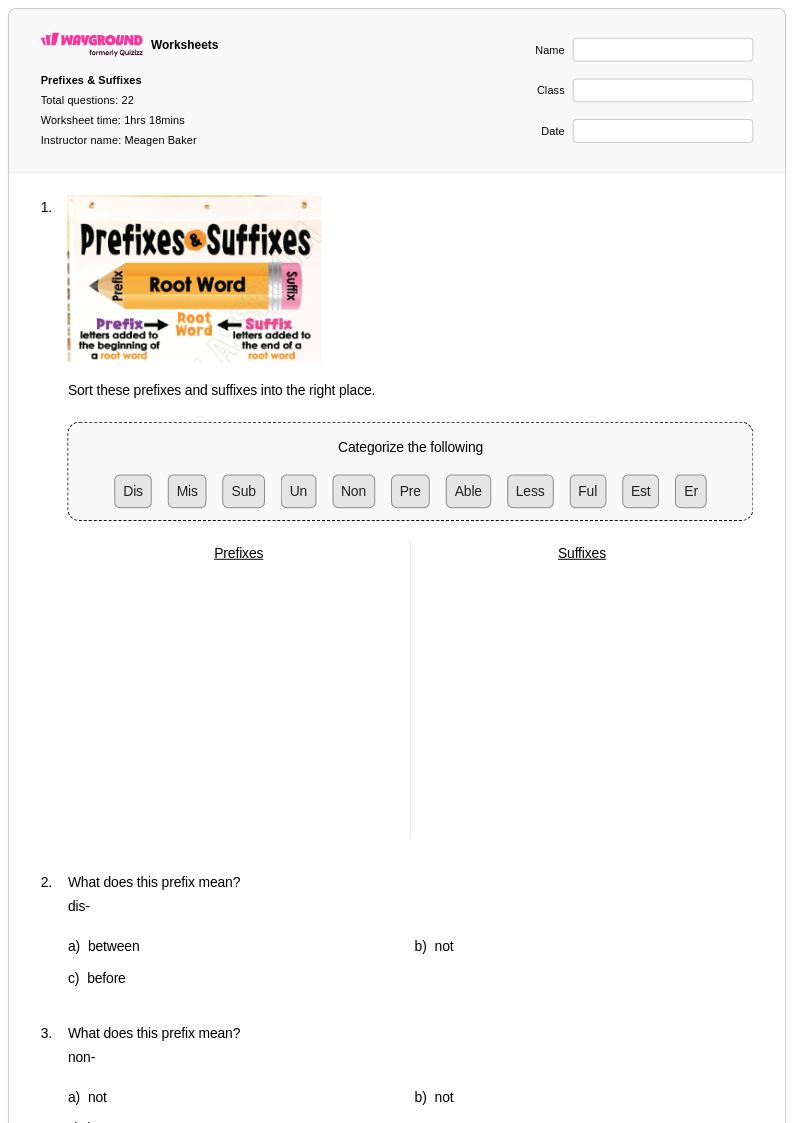
22 Q
3rd
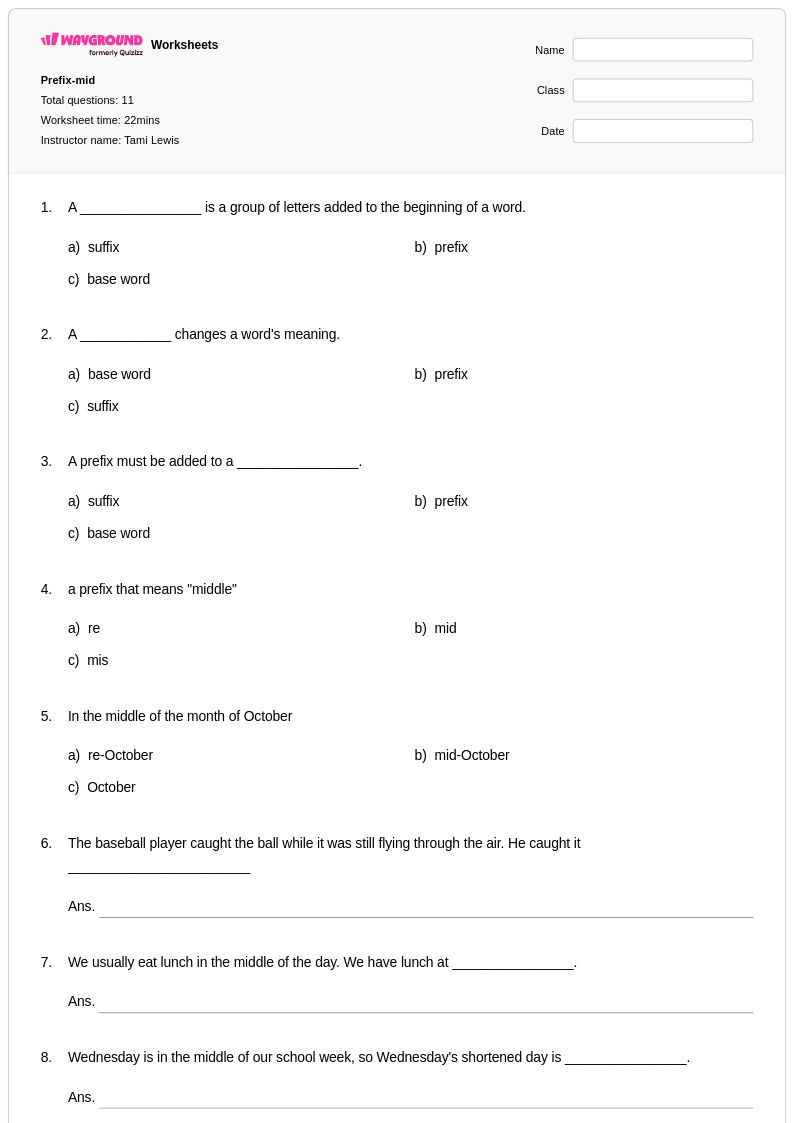
11 Q
3rd
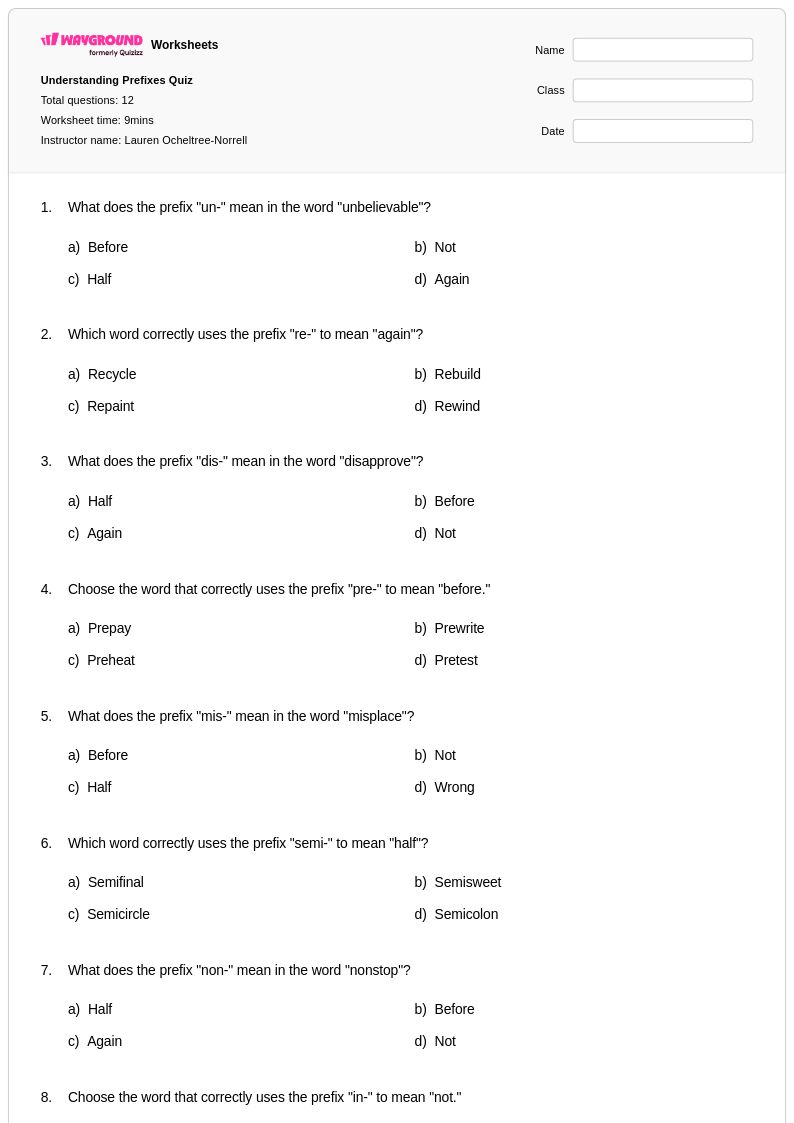
12 Q
3rd - Uni
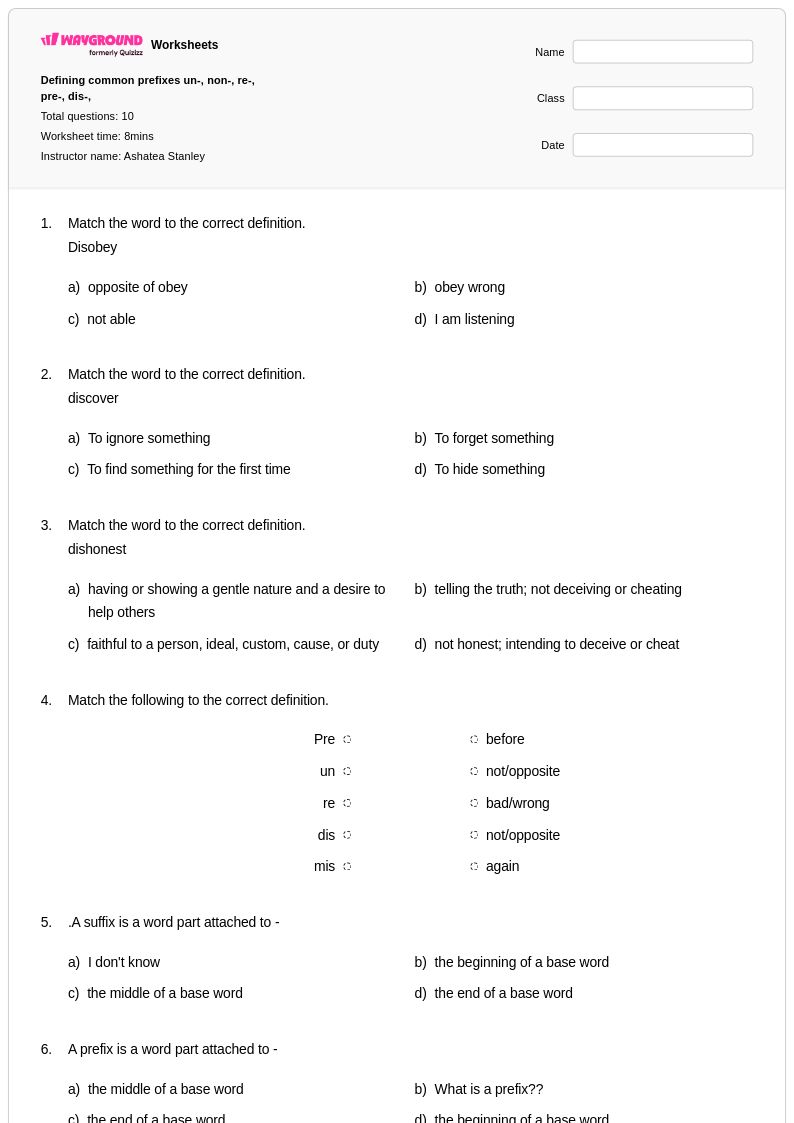
10 Q
3rd
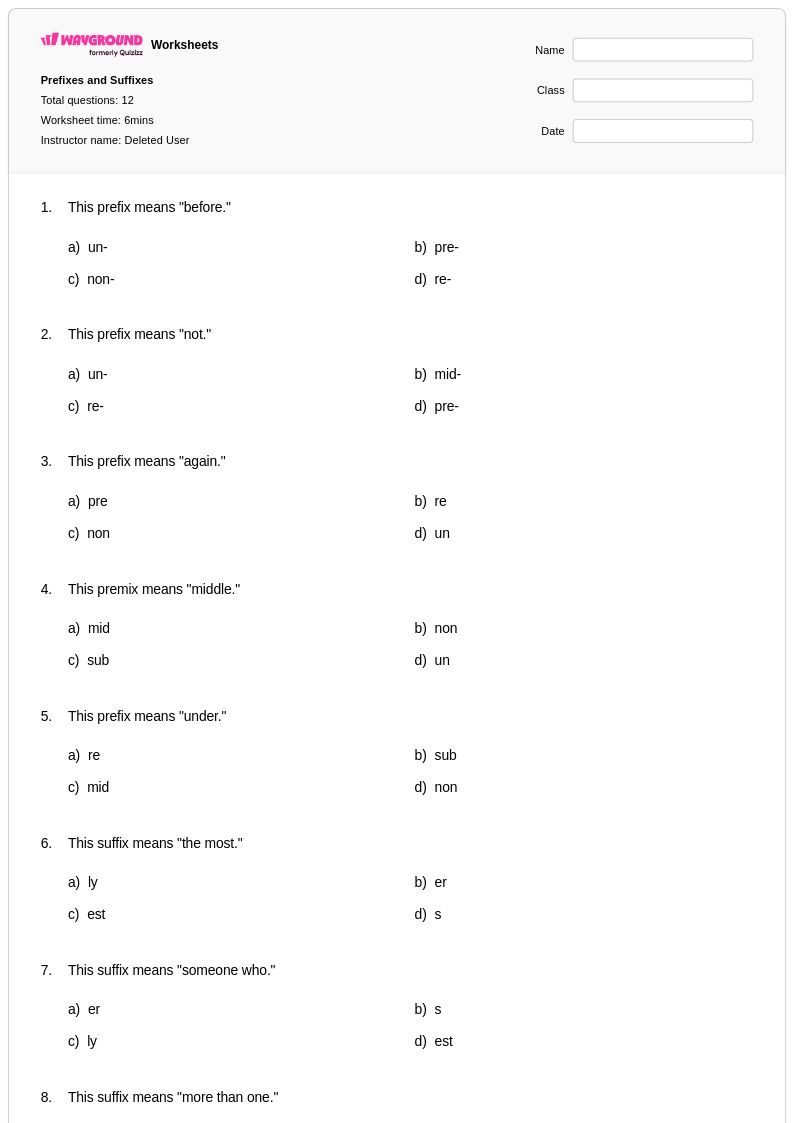
12 Q
2nd - 3rd
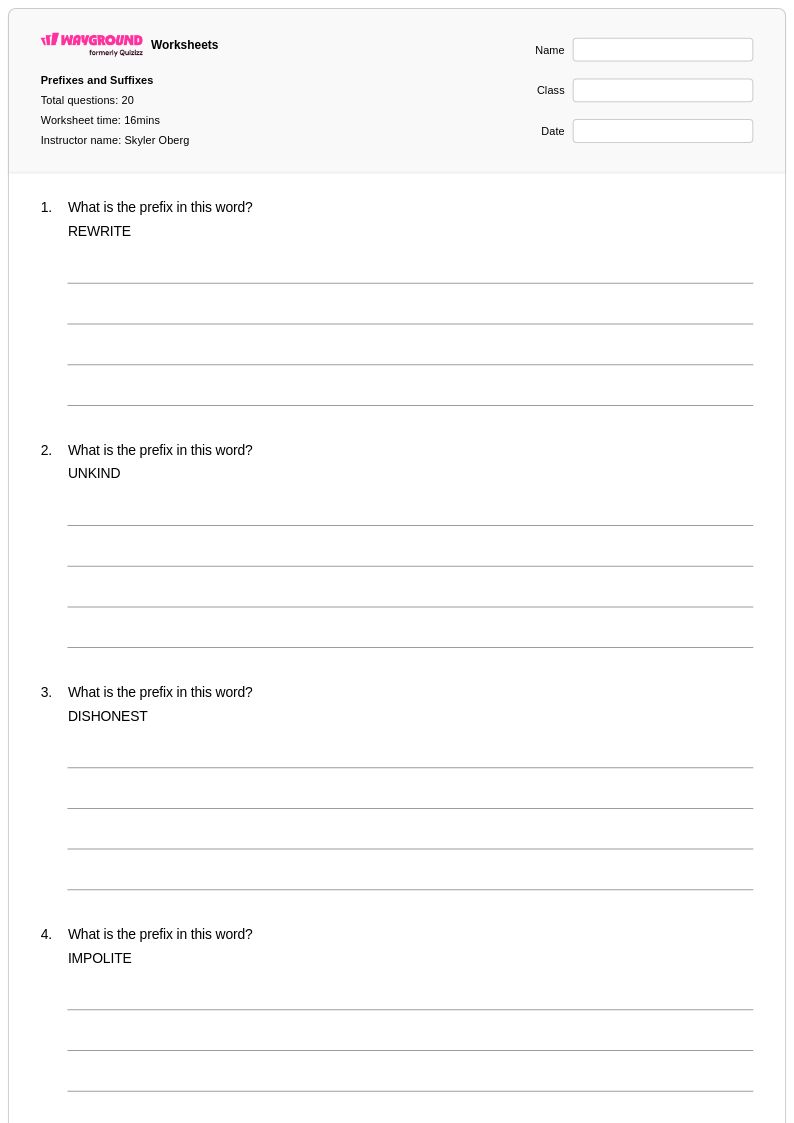
20 Q
3rd
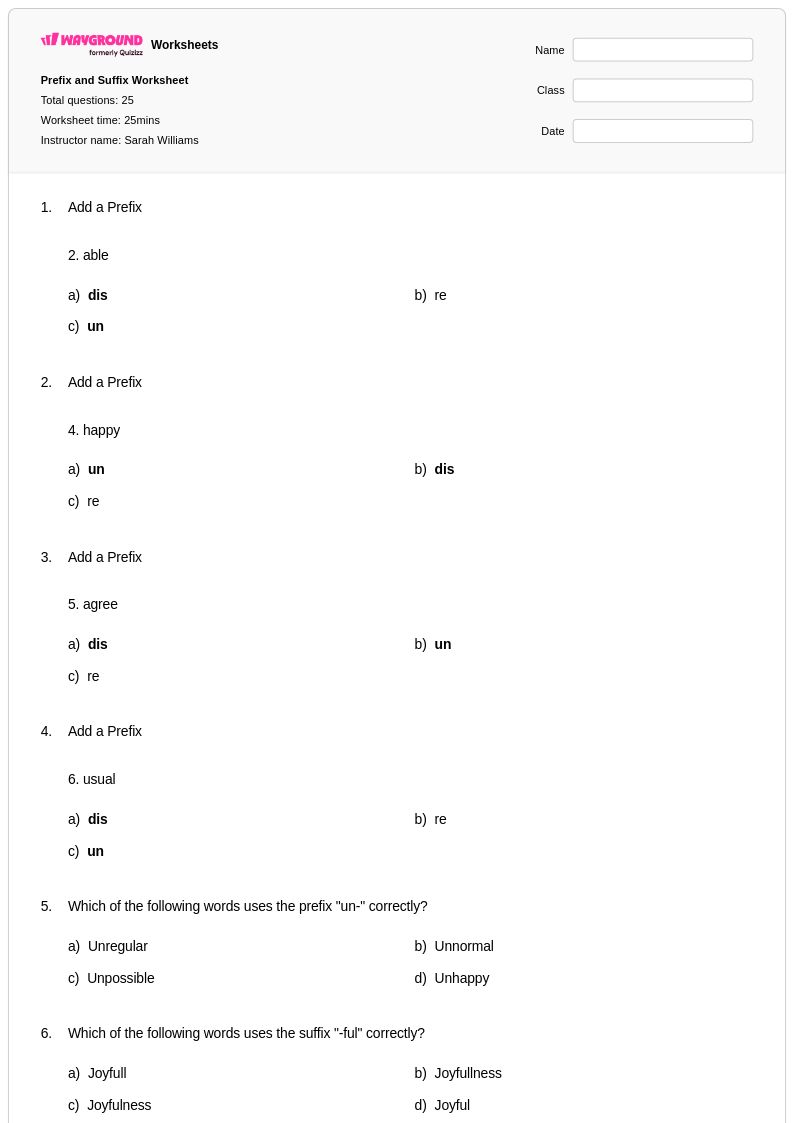
25 Q
3rd - Uni
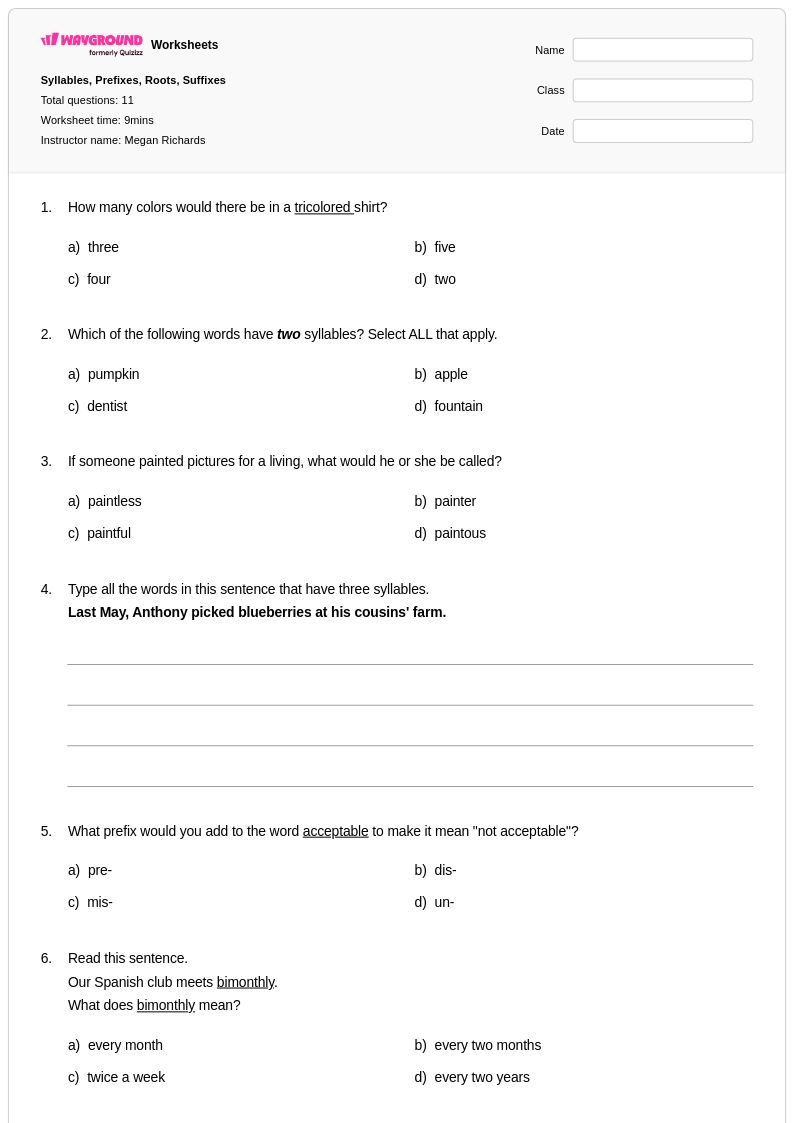
11 Q
3rd
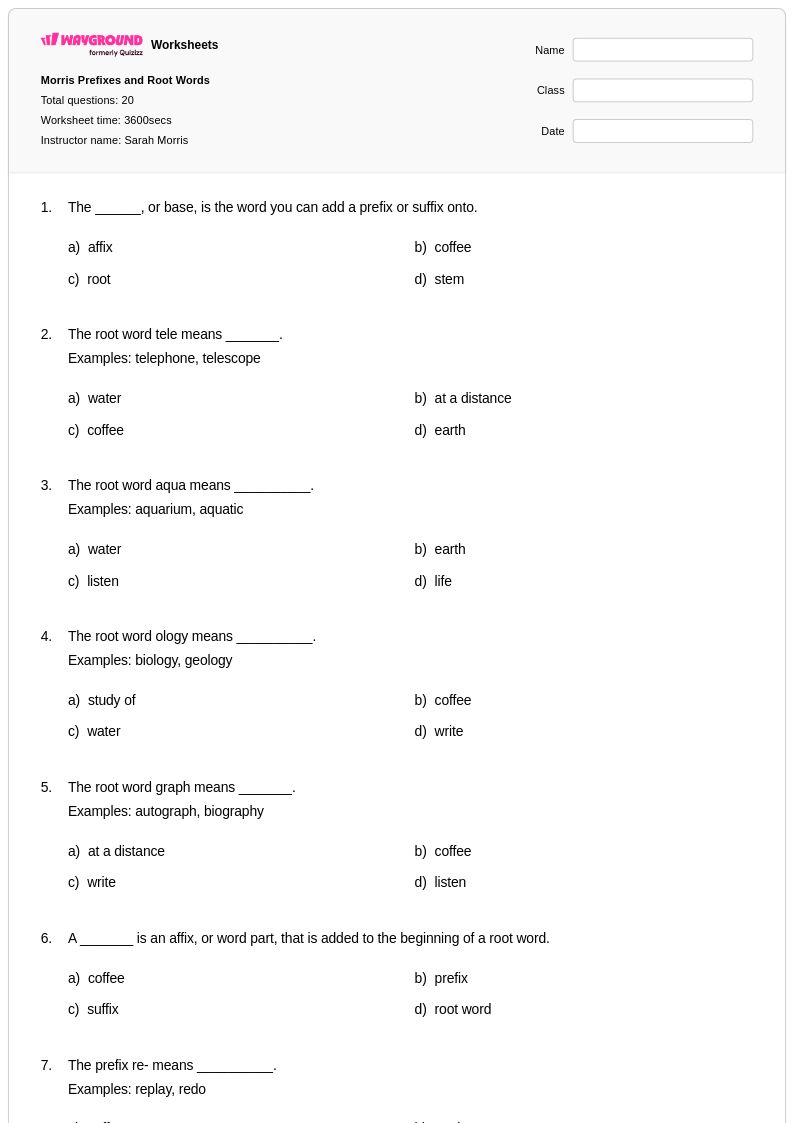
20 Q
3rd
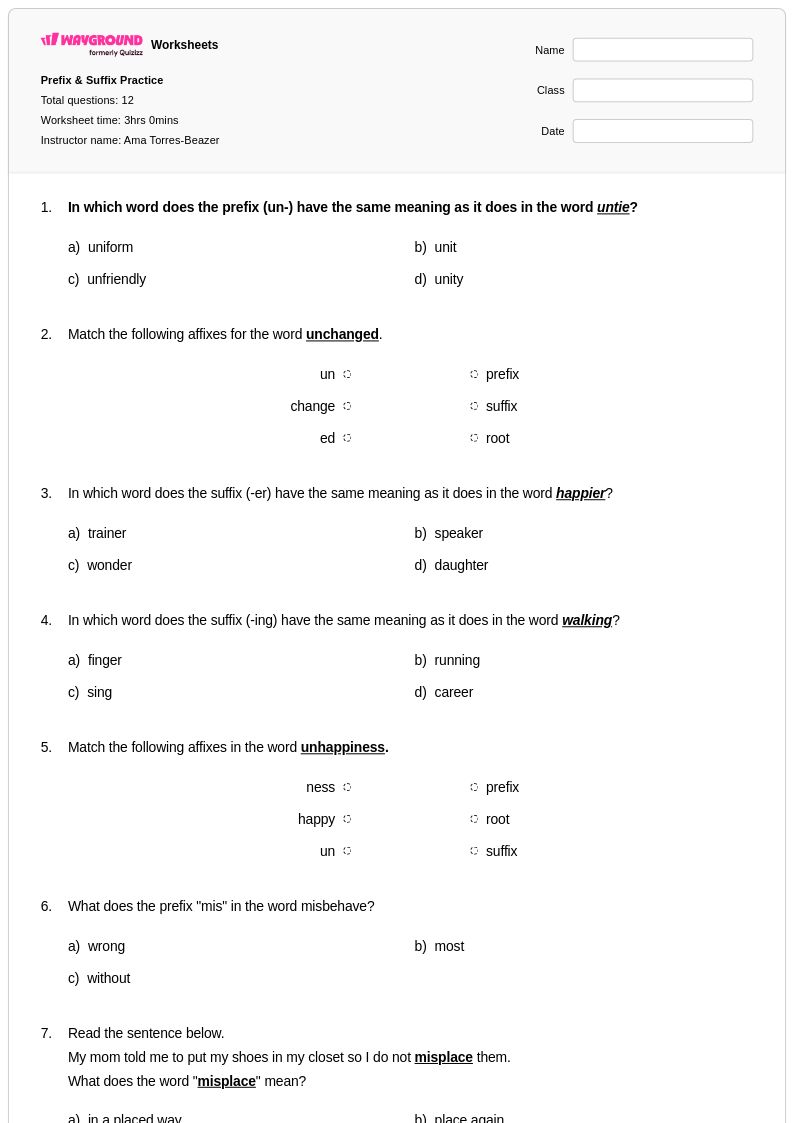
12 Q
3rd
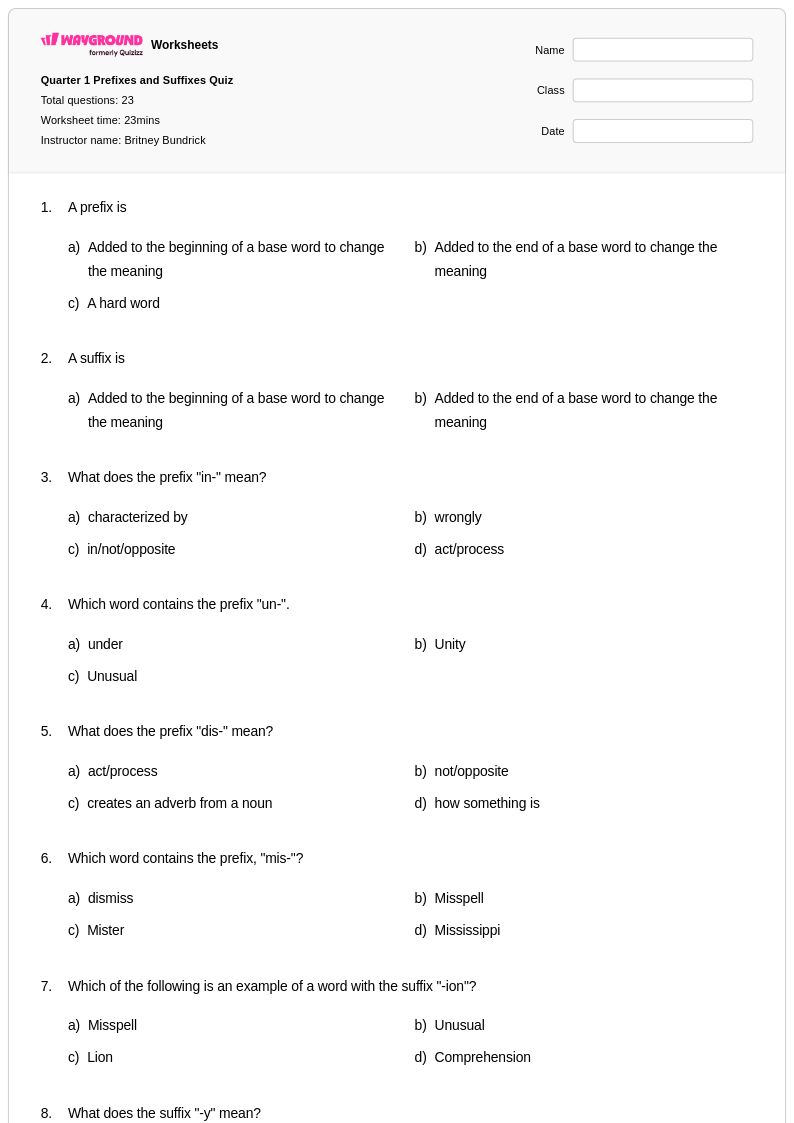
23 Q
3rd
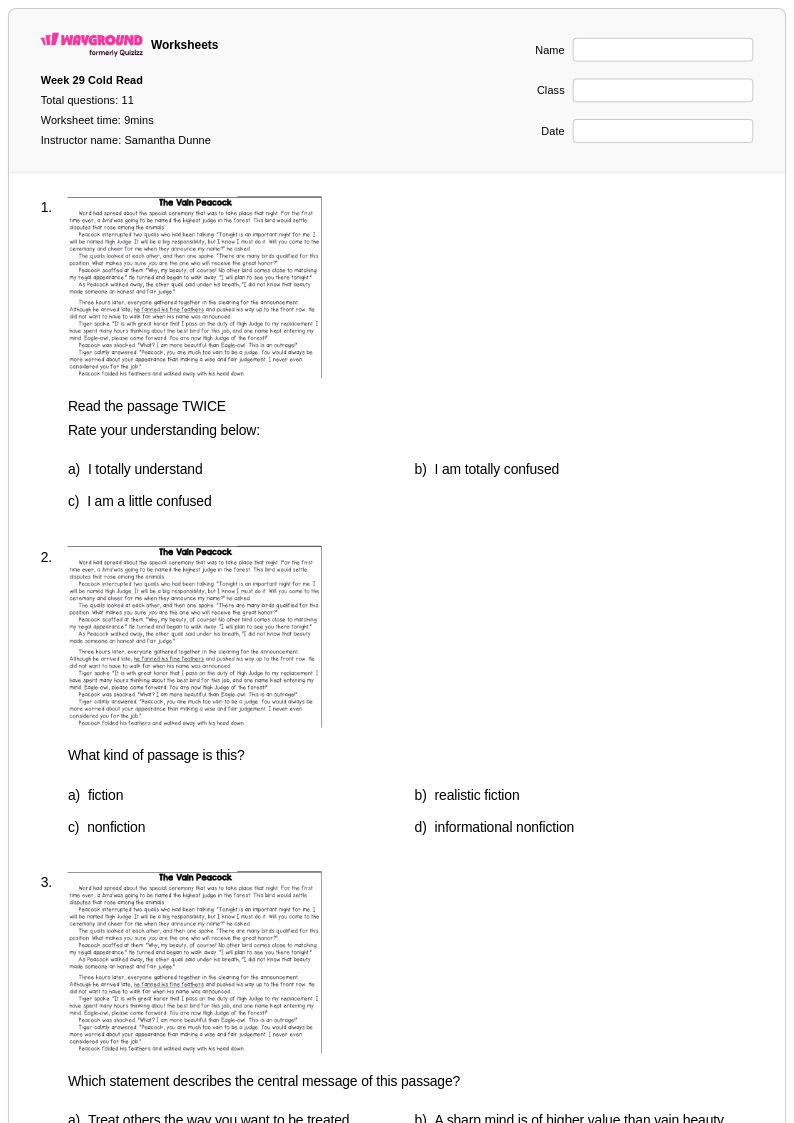
11 Q
3rd
Explore Other Subject Worksheets for year 3
Explore printable Prefix: Mis- worksheets for Year 3
Prefix "Mis-" worksheets for Year 3 students available through Wayground (formerly Quizizz) provide essential practice in understanding how this common prefix transforms word meanings. These comprehensive resources help third-grade learners recognize that adding "mis-" to base words creates new words with meanings related to "wrong," "bad," or "incorrectly," such as misbehave, mistake, and misplace. The worksheets strengthen foundational word analysis skills by guiding students through systematic exploration of prefix patterns, enabling them to decode unfamiliar words independently and expand their vocabulary. Each printable resource includes carefully structured practice problems that progress from simple word identification to more complex application exercises, with answer keys provided to support both independent learning and teacher assessment. These free materials offer multiple opportunities for students to practice recognizing the prefix "mis-" in context, building the phonics and morphology skills essential for reading comprehension and spelling proficiency.
Wayground (formerly Quizizz) empowers educators with millions of teacher-created prefix worksheets that can be easily customized to meet diverse classroom needs and learning objectives. The platform's robust search and filtering capabilities allow teachers to quickly locate Year 3 appropriate materials that align with state literacy standards and curriculum requirements. These differentiation tools enable instructors to modify worksheets for various skill levels, providing remediation support for struggling readers while offering enrichment opportunities for advanced students. Available in both printable PDF formats and interactive digital versions, these prefix "mis-" resources seamlessly integrate into lesson planning, homework assignments, literacy centers, and assessment preparation. Teachers can efficiently organize skill-building practice sessions, track student progress, and ensure comprehensive coverage of essential word pattern concepts that serve as building blocks for more advanced vocabulary development throughout elementary education.
FAQs
How do I teach the prefix mis- to students?
What exercises help students practice the prefix mis-?
What mistakes do students commonly make with the prefix mis-?
How can I differentiate prefix mis- instruction for struggling readers?
How do I use Wayground's prefix mis- worksheets in my classroom?