
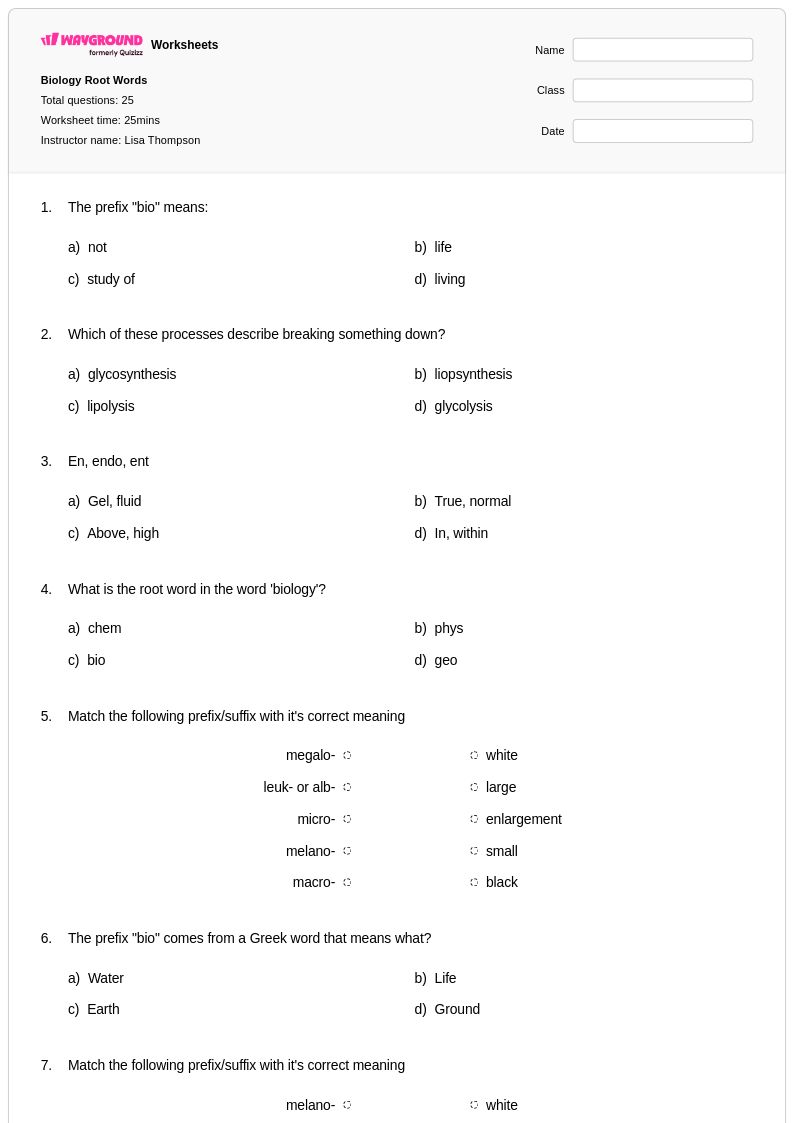
25 Q
8th - Uni
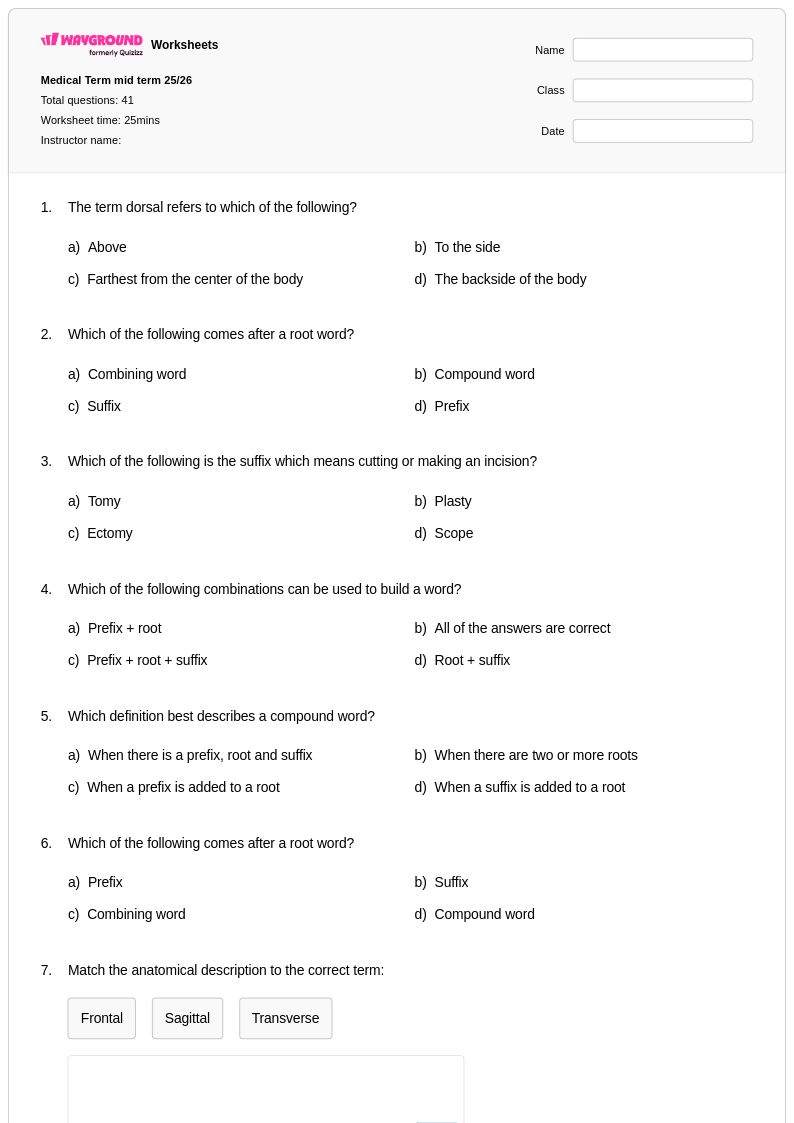
41 Q
12th
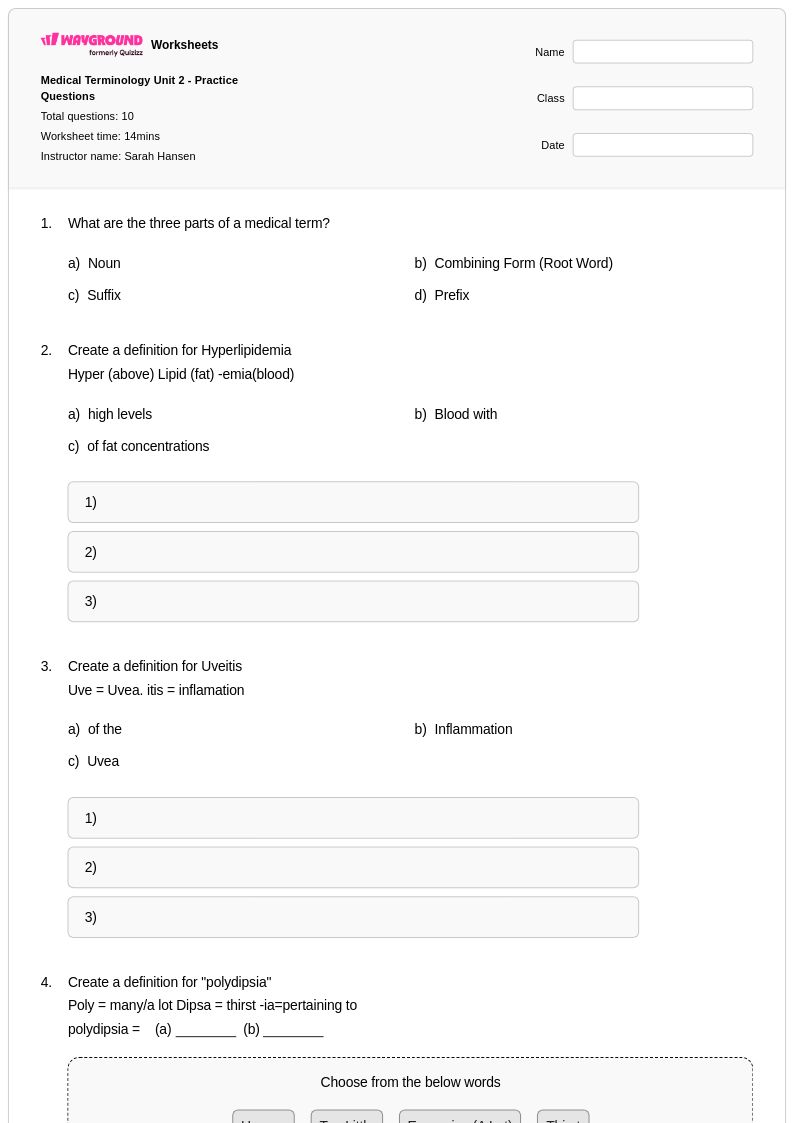
10 Q
12th
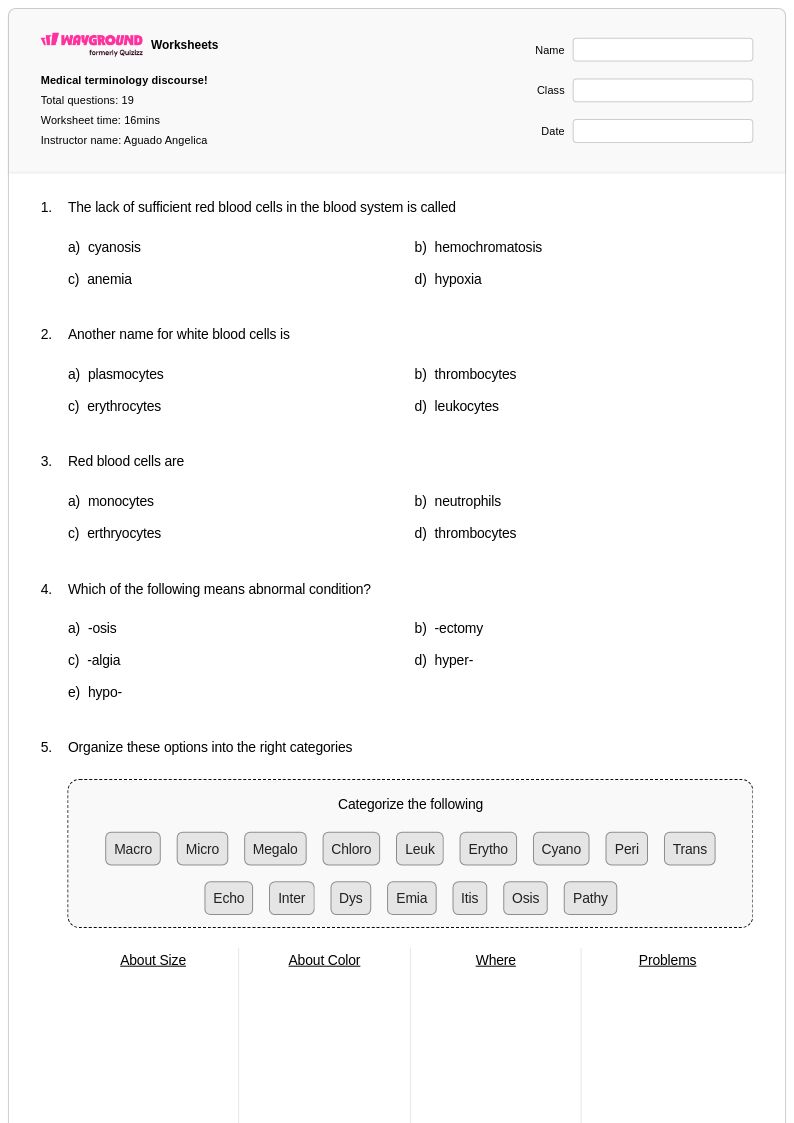
19 Q
12th
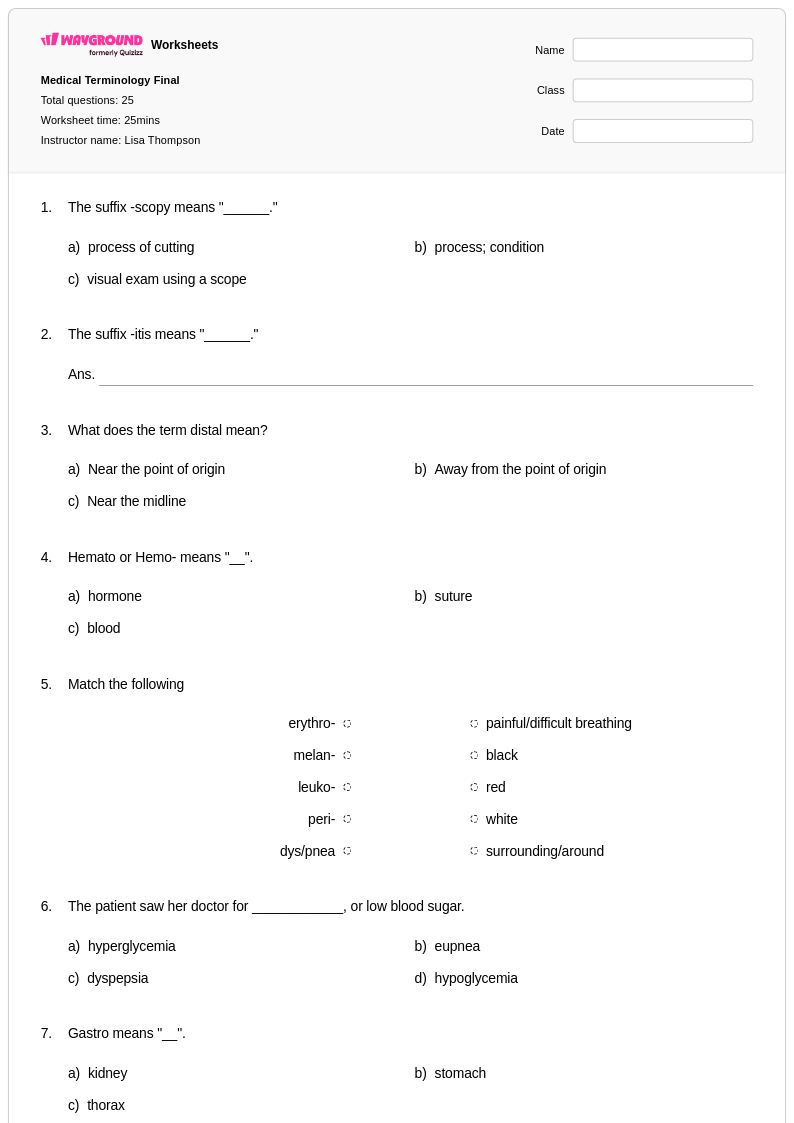
25 Q
10th - Uni
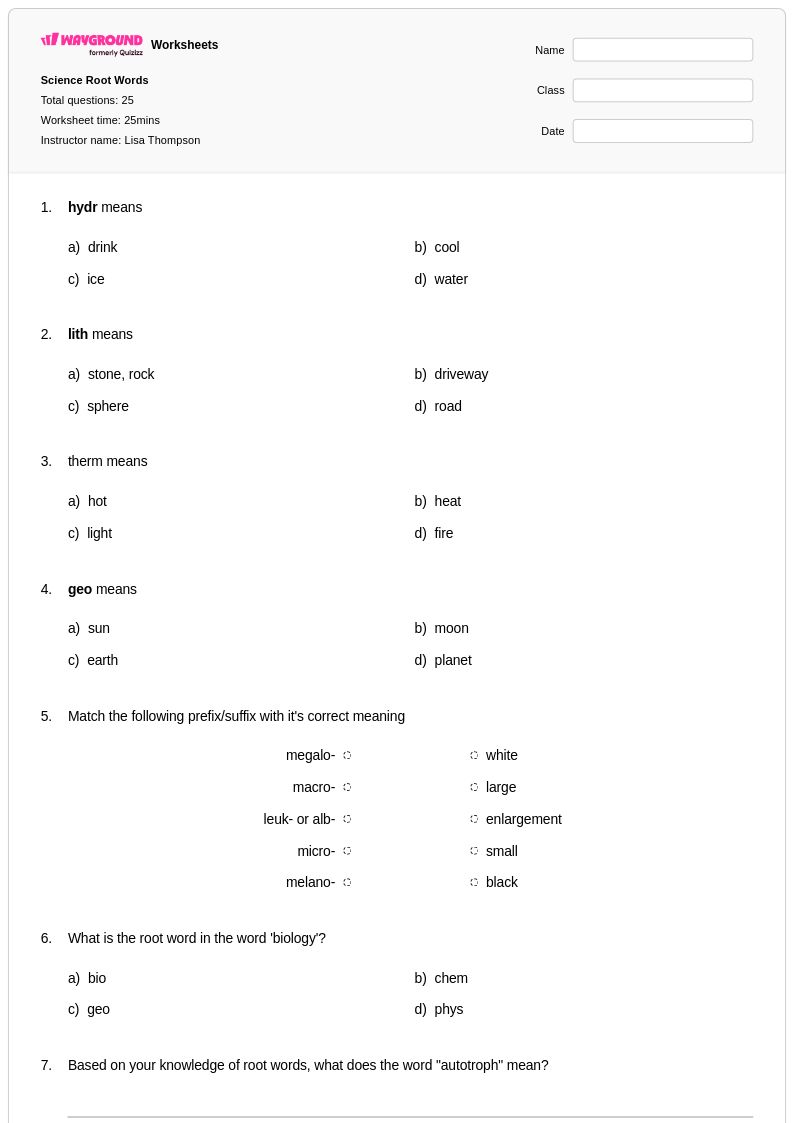
25 Q
8th - Uni
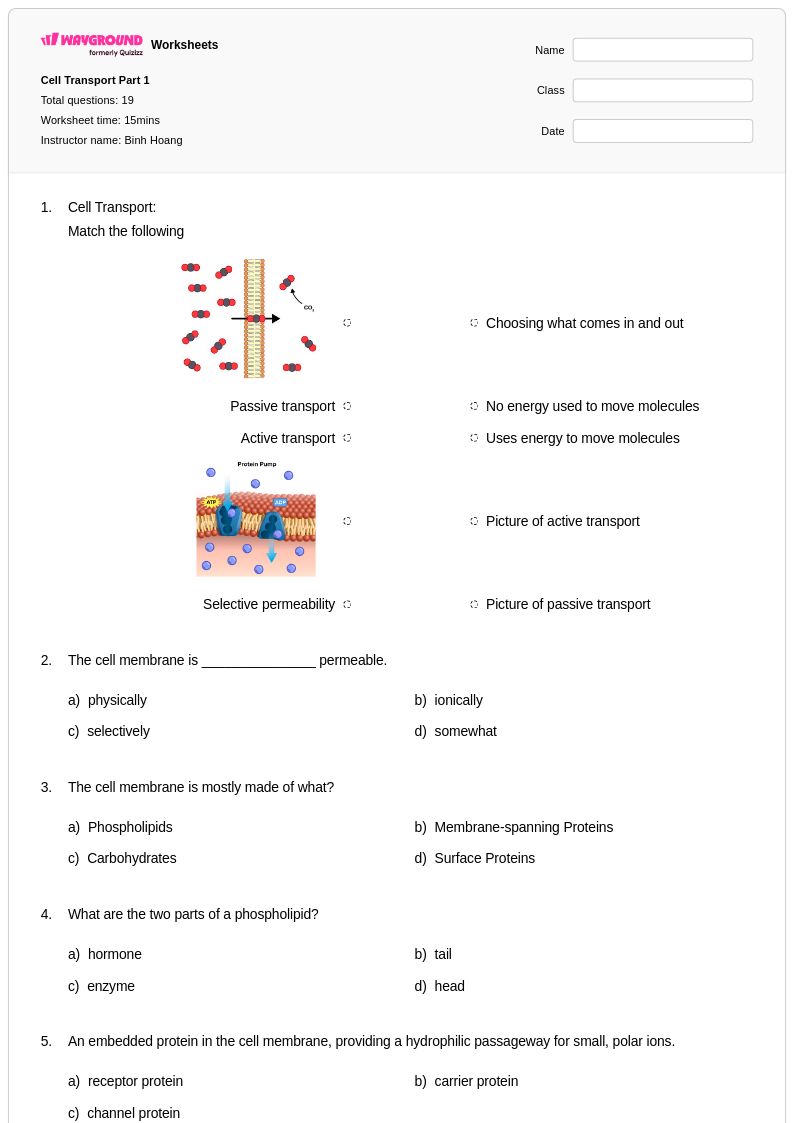
19 Q
12th
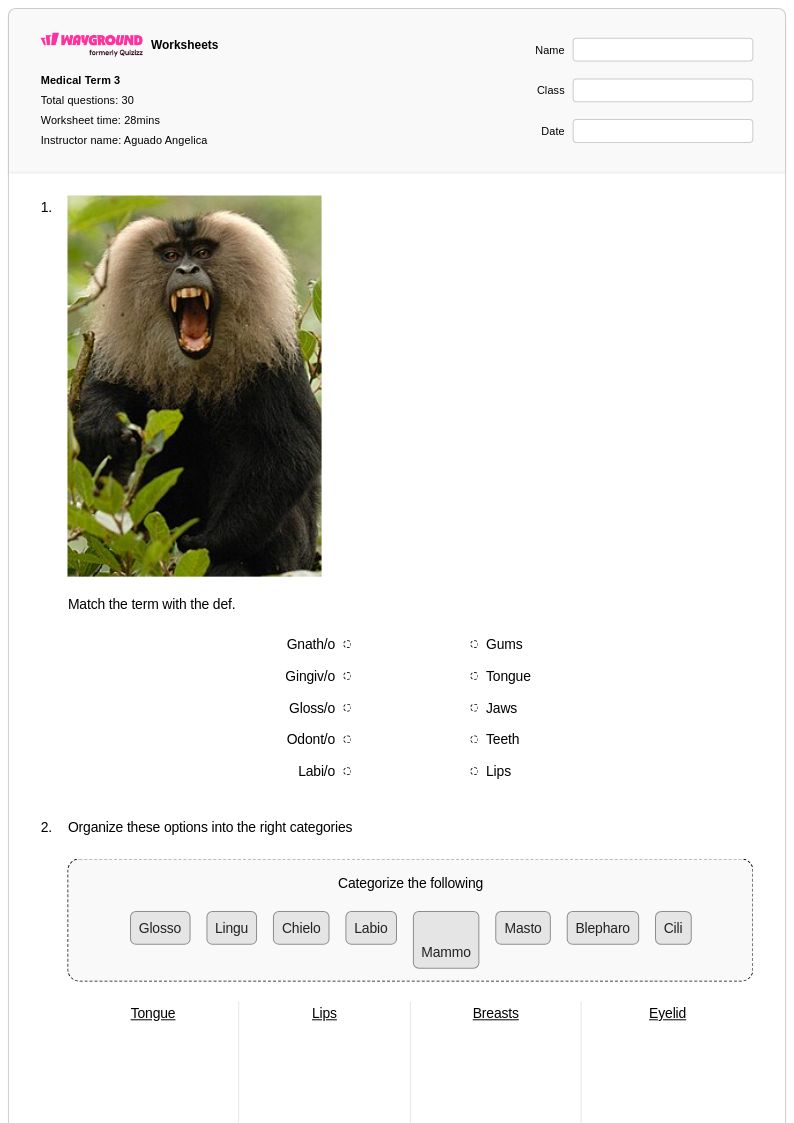
30 Q
12th
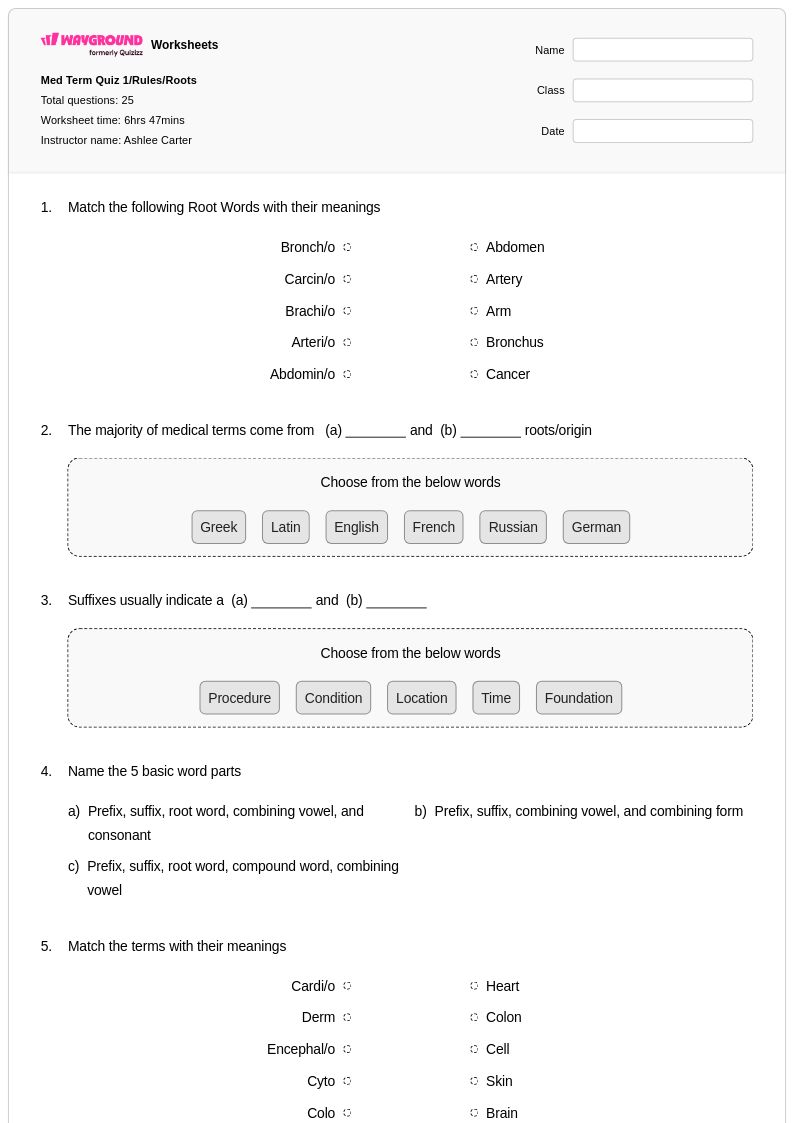
25 Q
9th - 12th
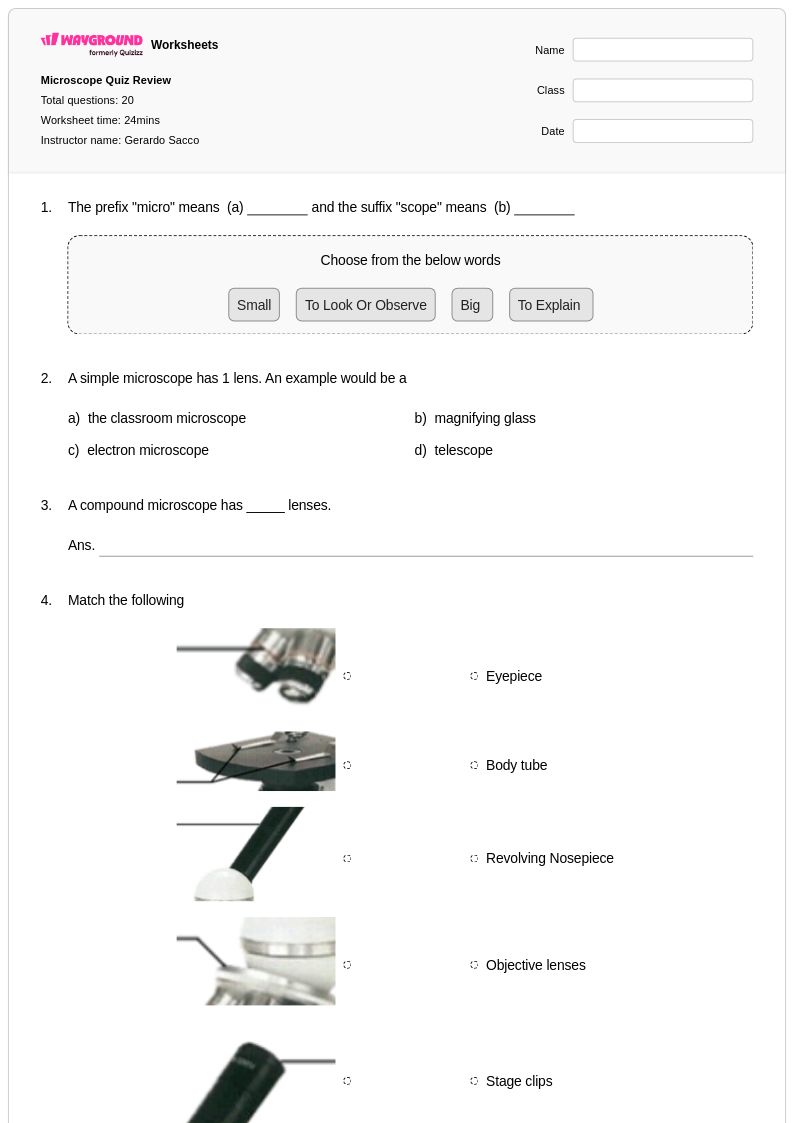
20 Q
7th - Uni
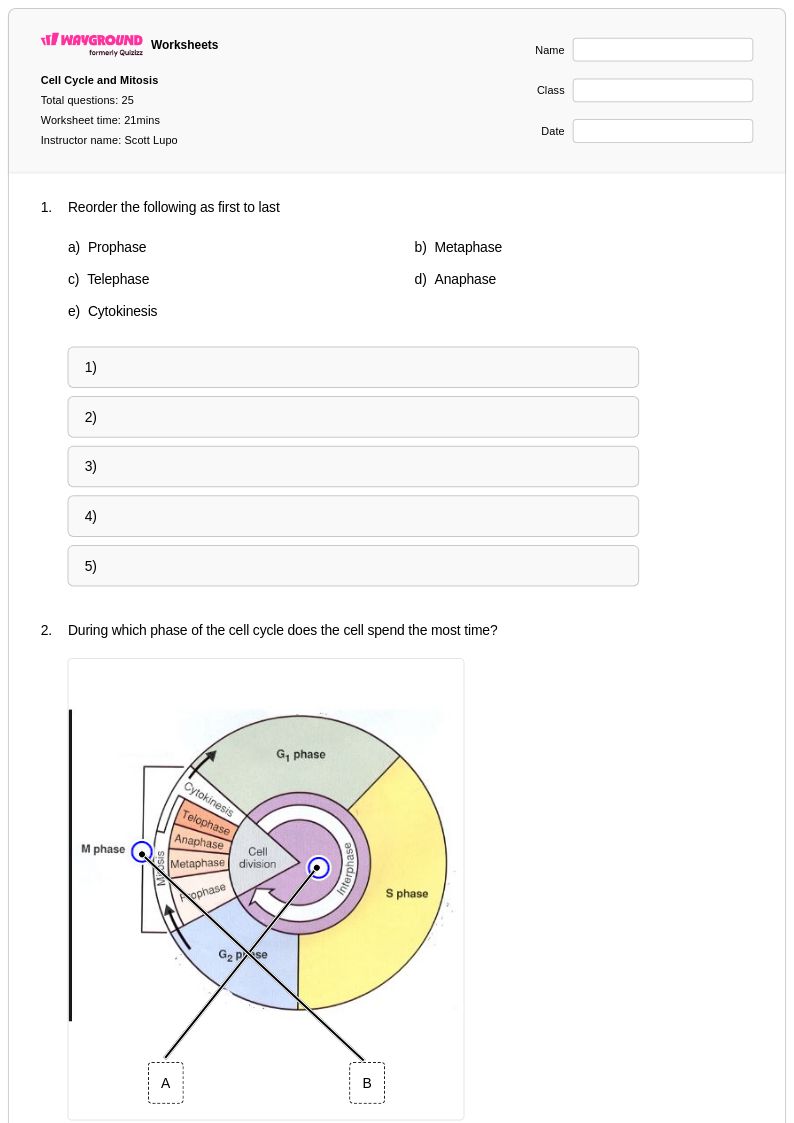
25 Q
9th - Uni
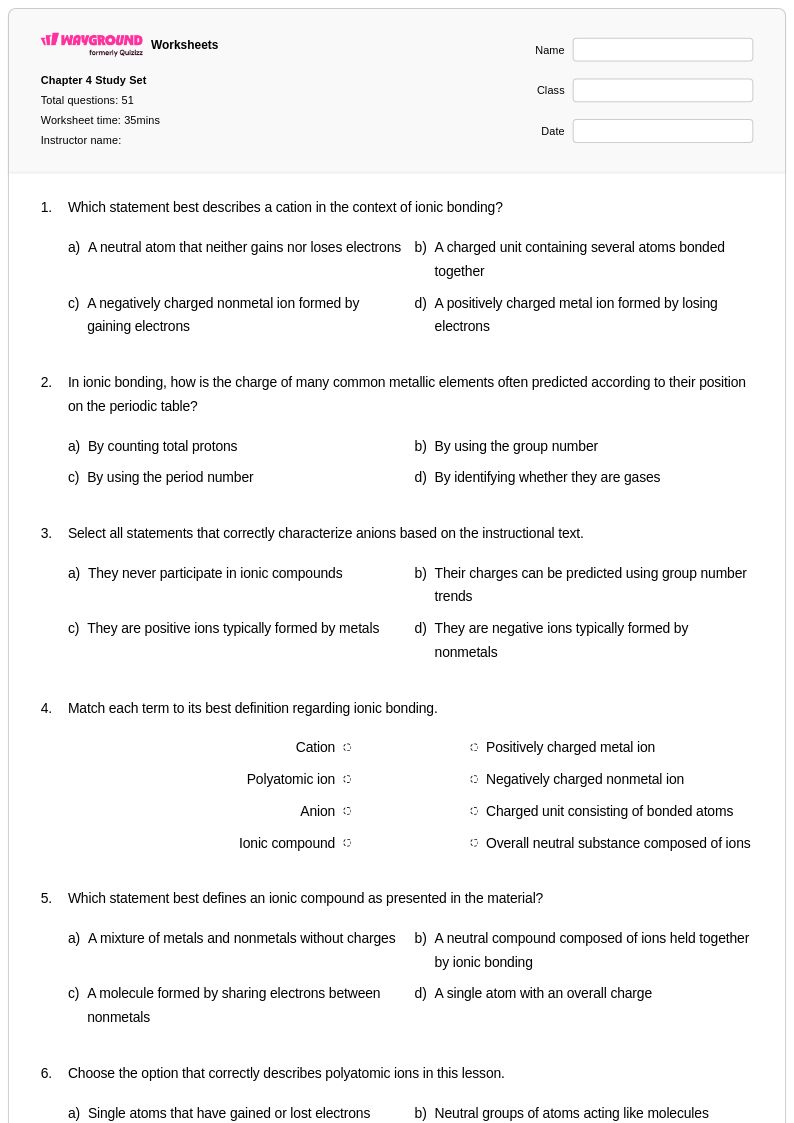
51 Q
9th - 12th
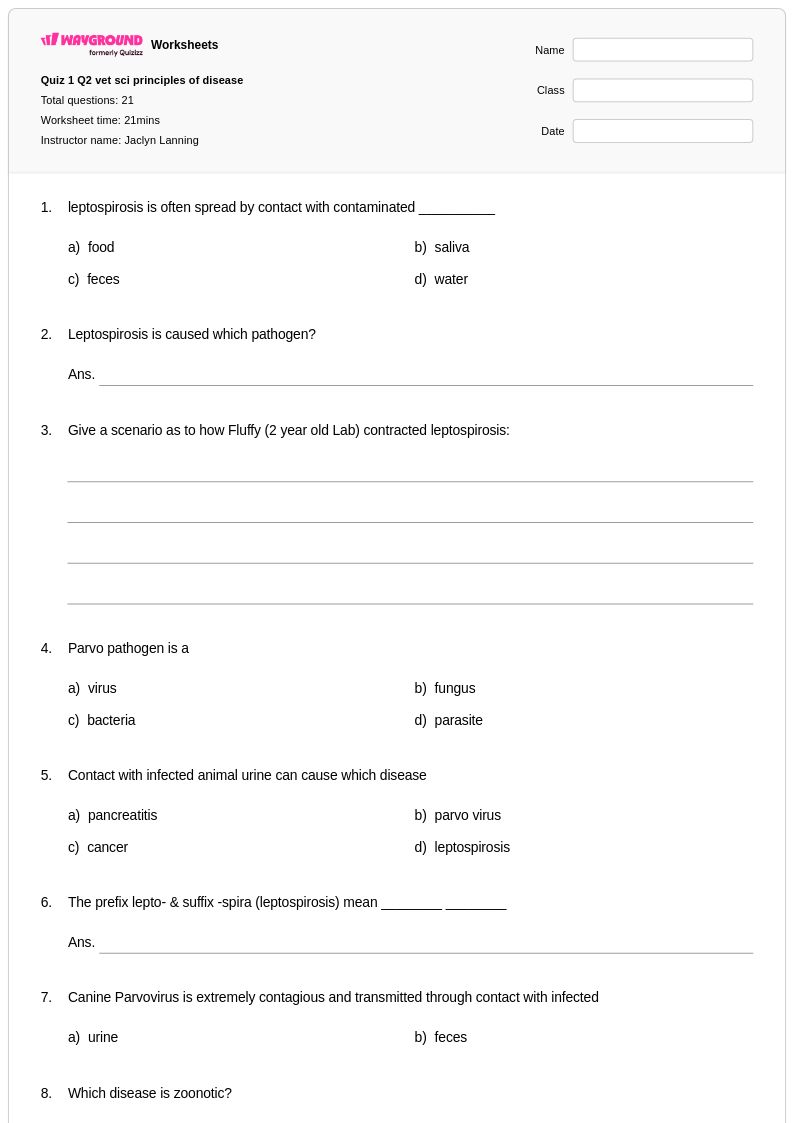
21 Q
11th - 12th
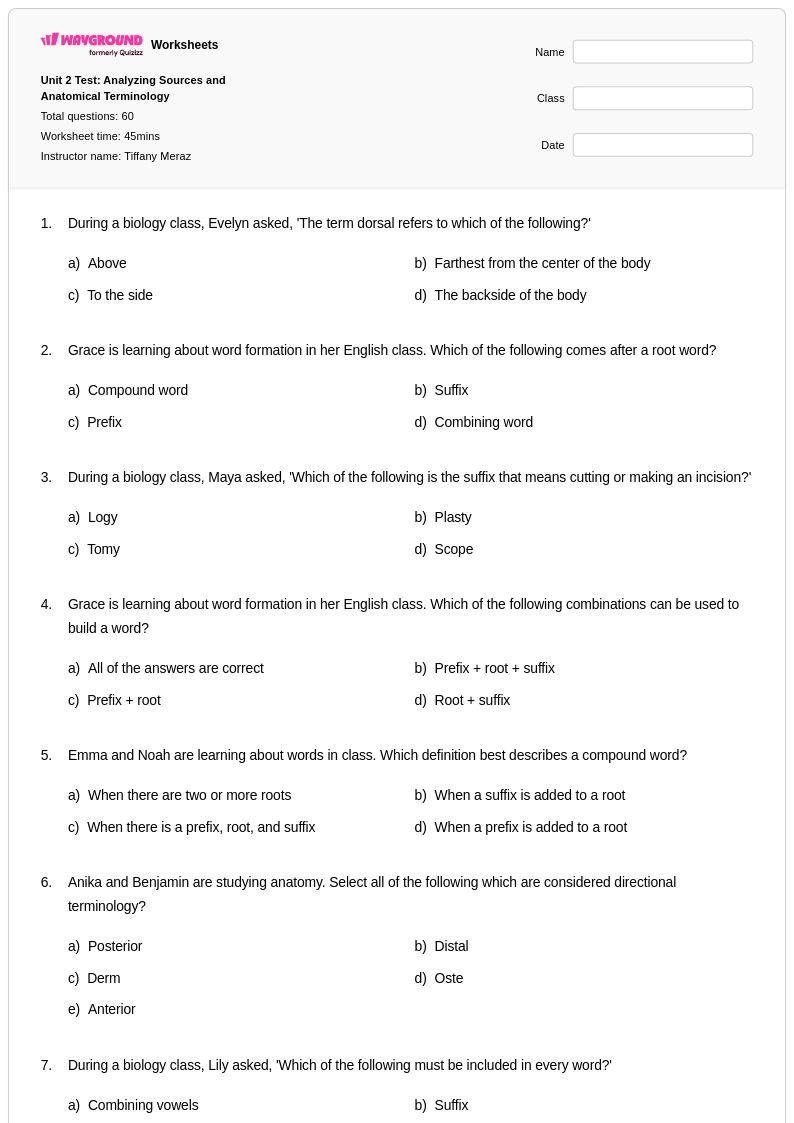
60 Q
10th - Uni
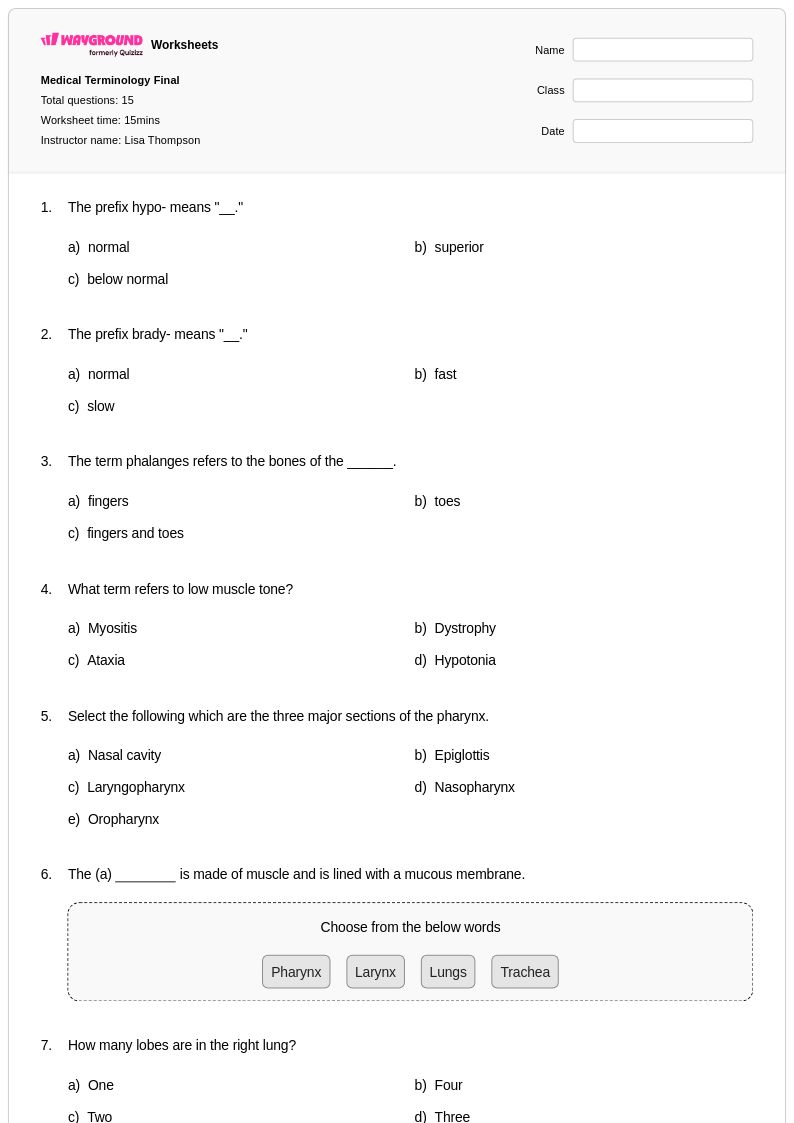
15 Q
10th - Uni
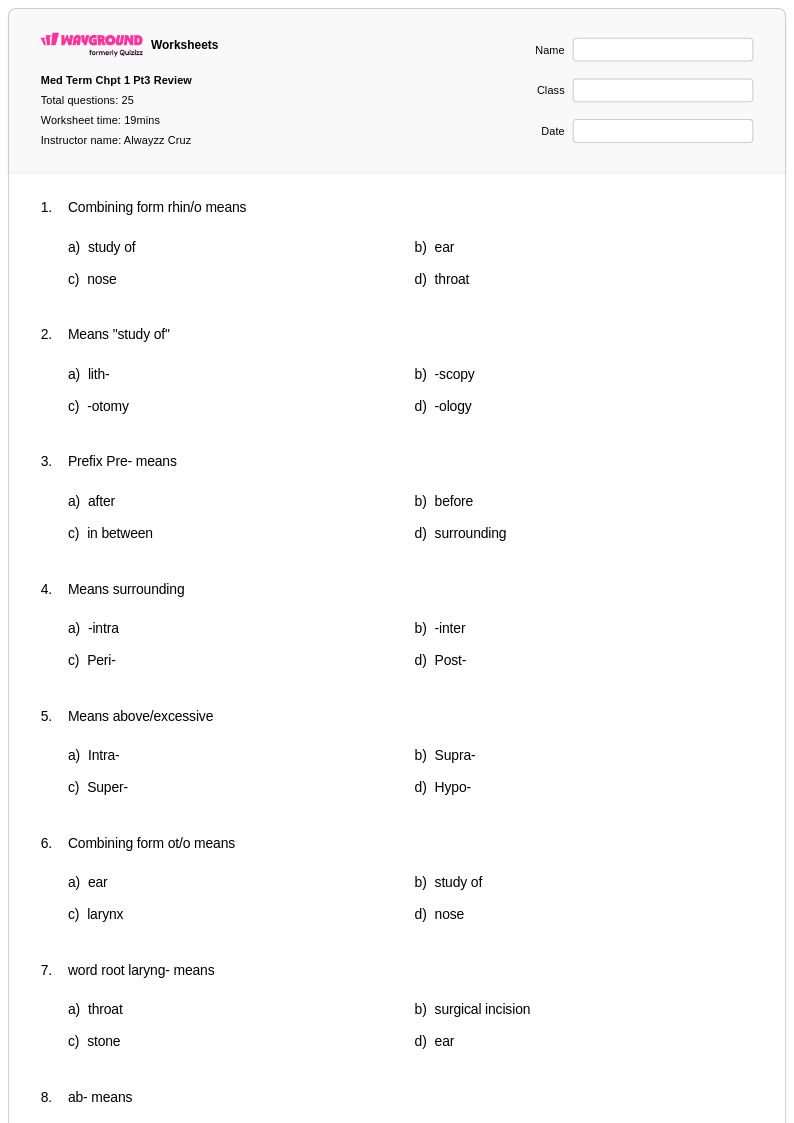
25 Q
12th
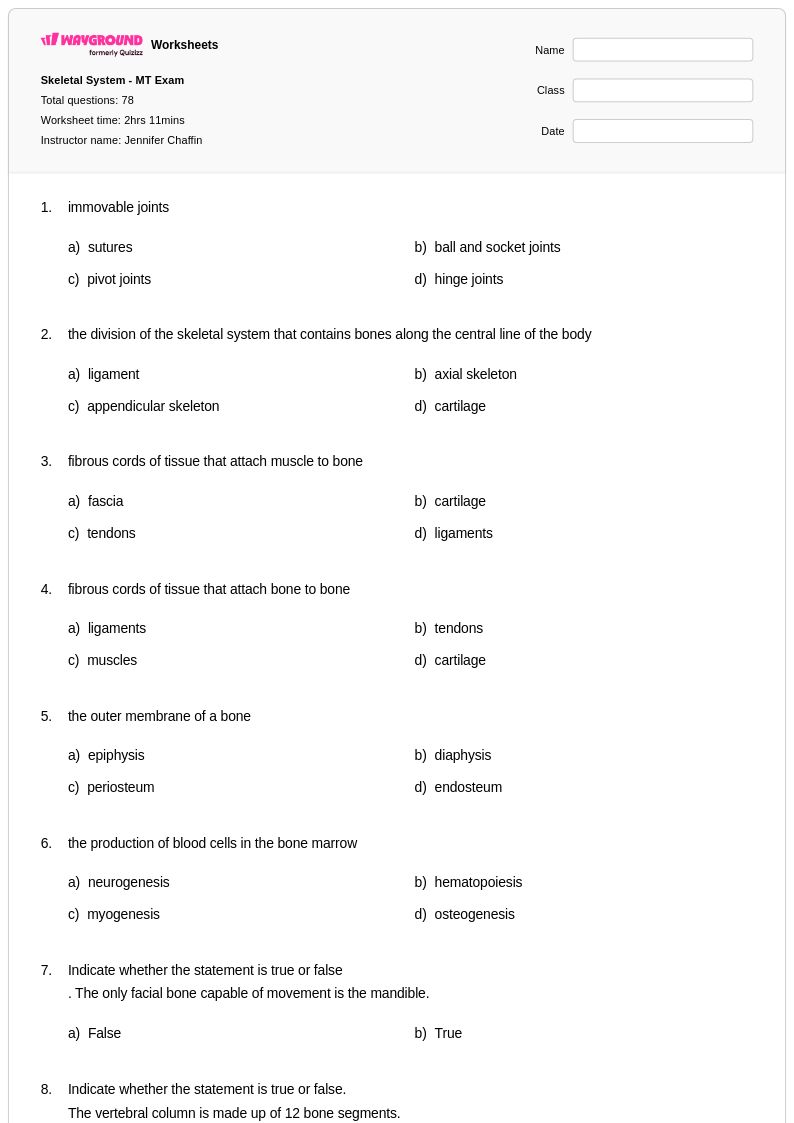
78 Q
9th - Uni
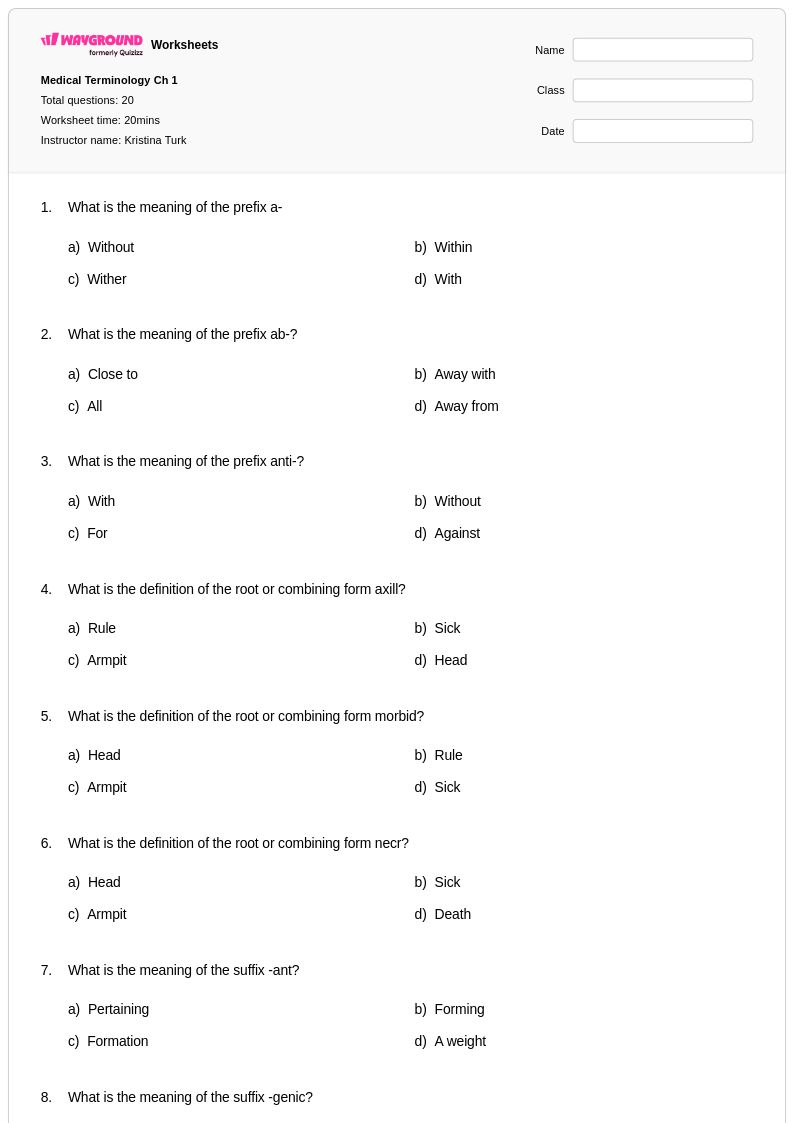
20 Q
9th - 12th
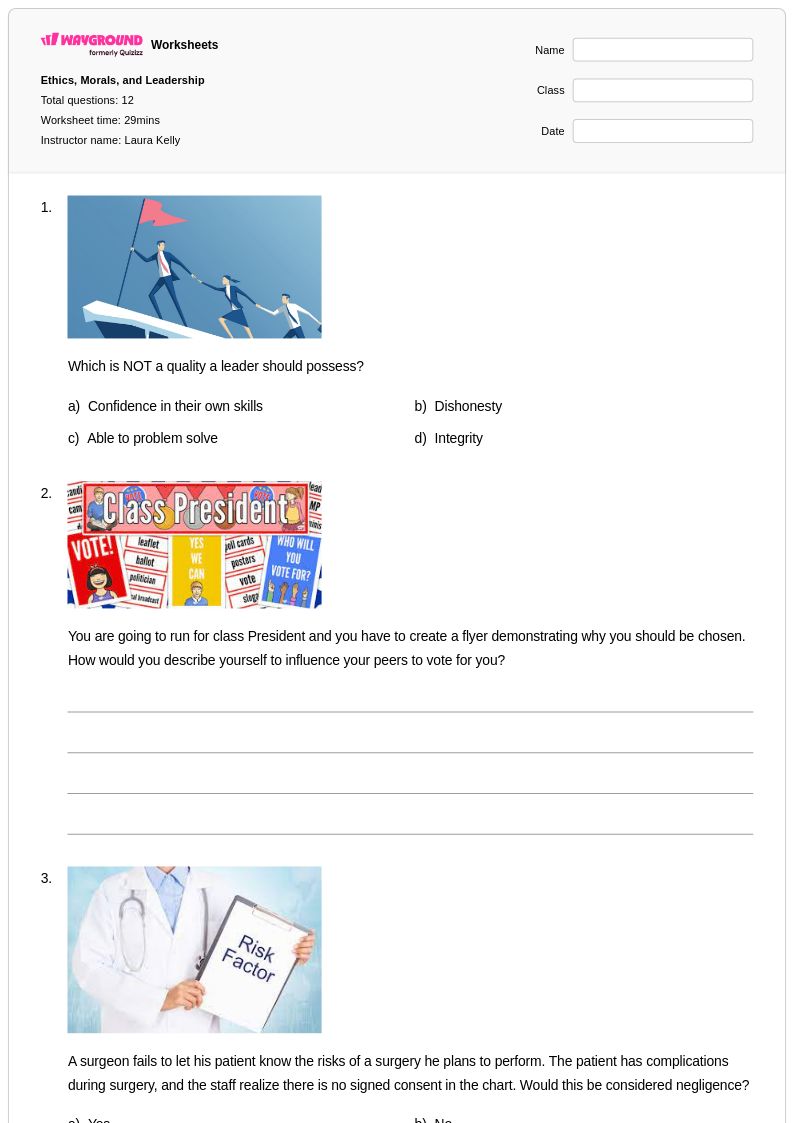
12 Q
9th - 12th
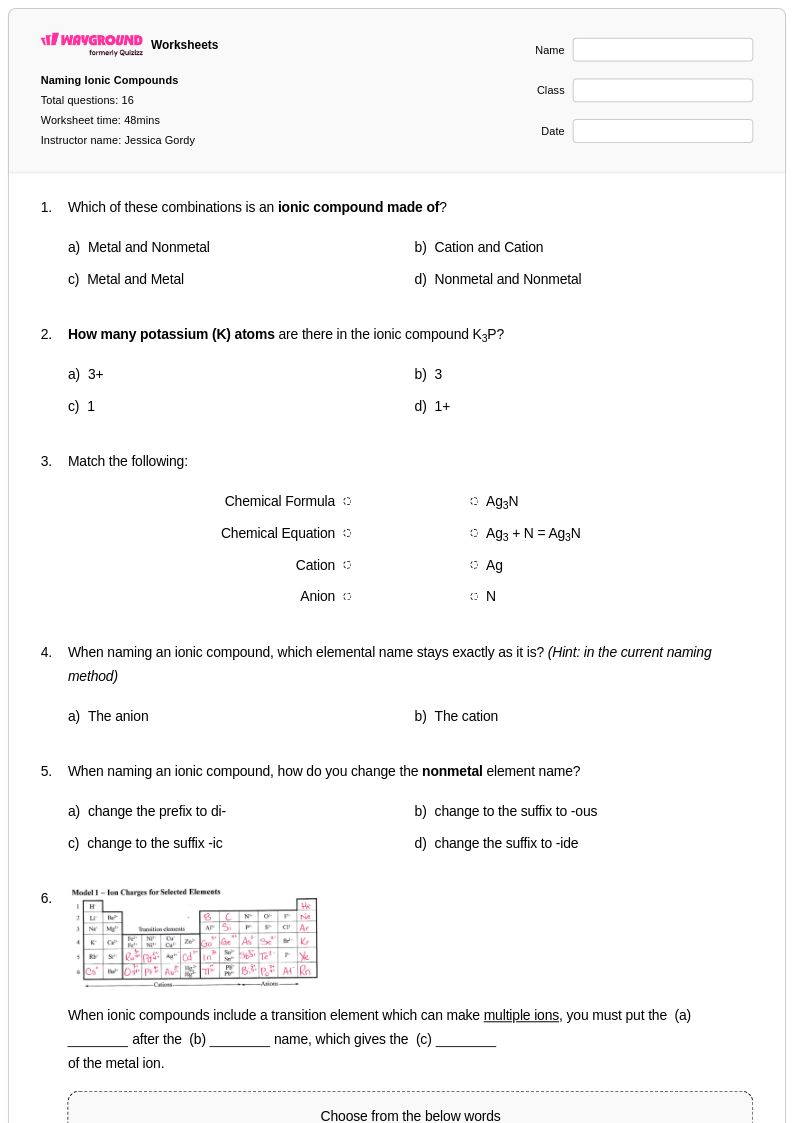
16 Q
9th - 12th
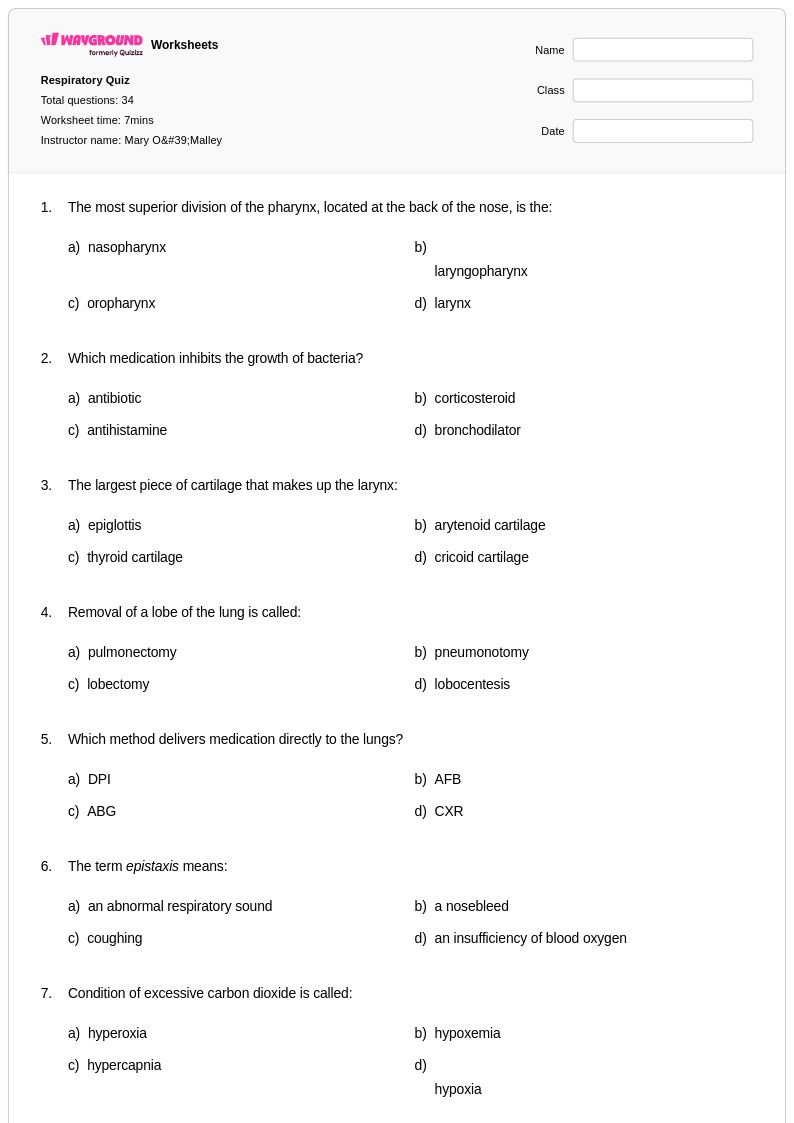
34 Q
12th
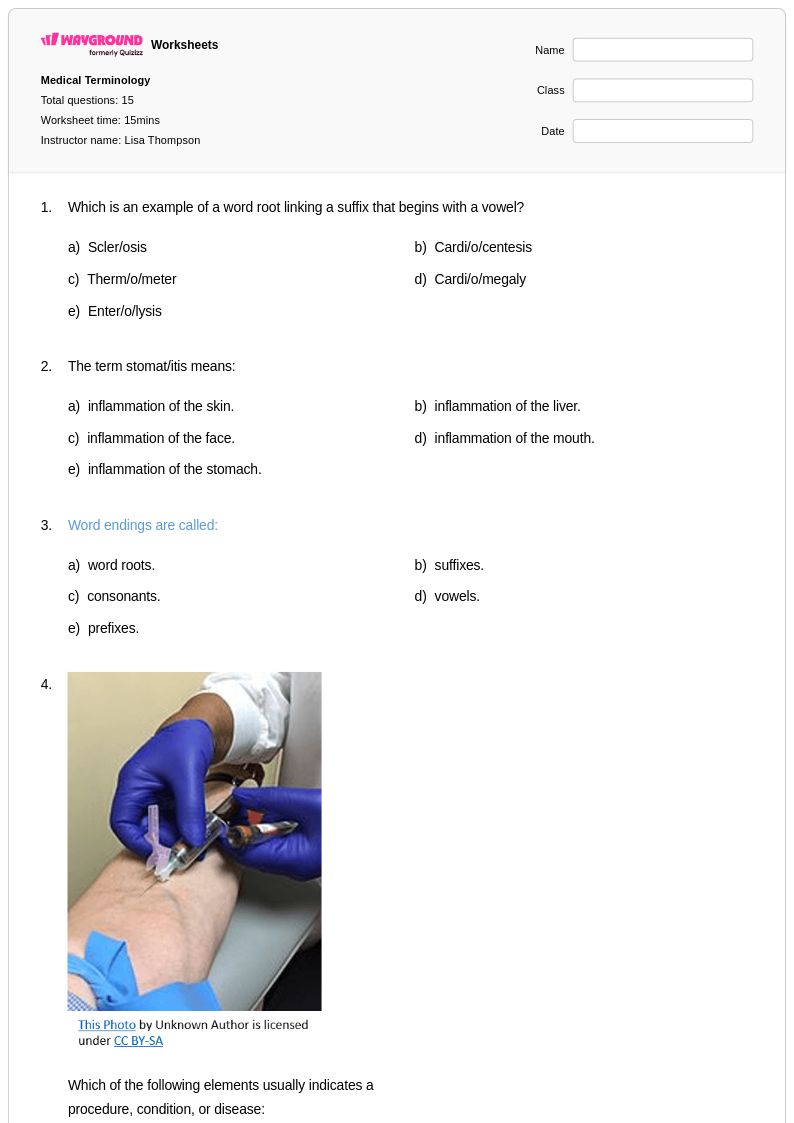
15 Q
11th - Uni
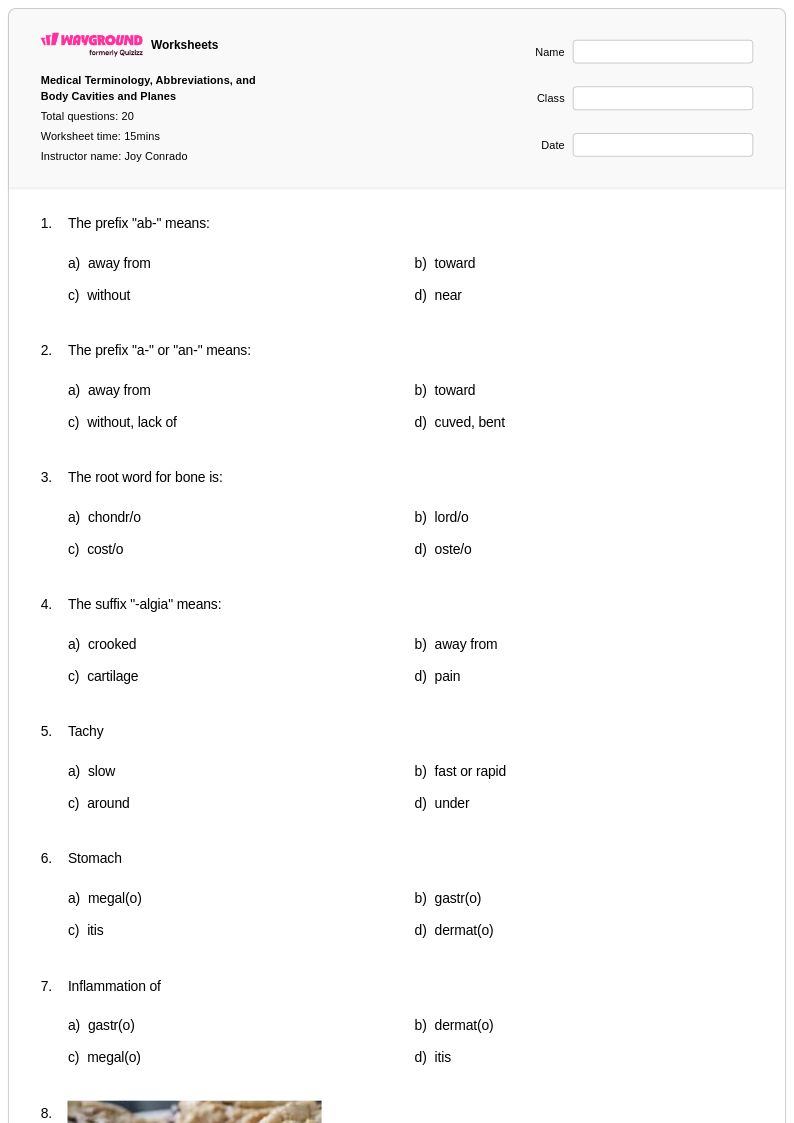
20 Q
12th
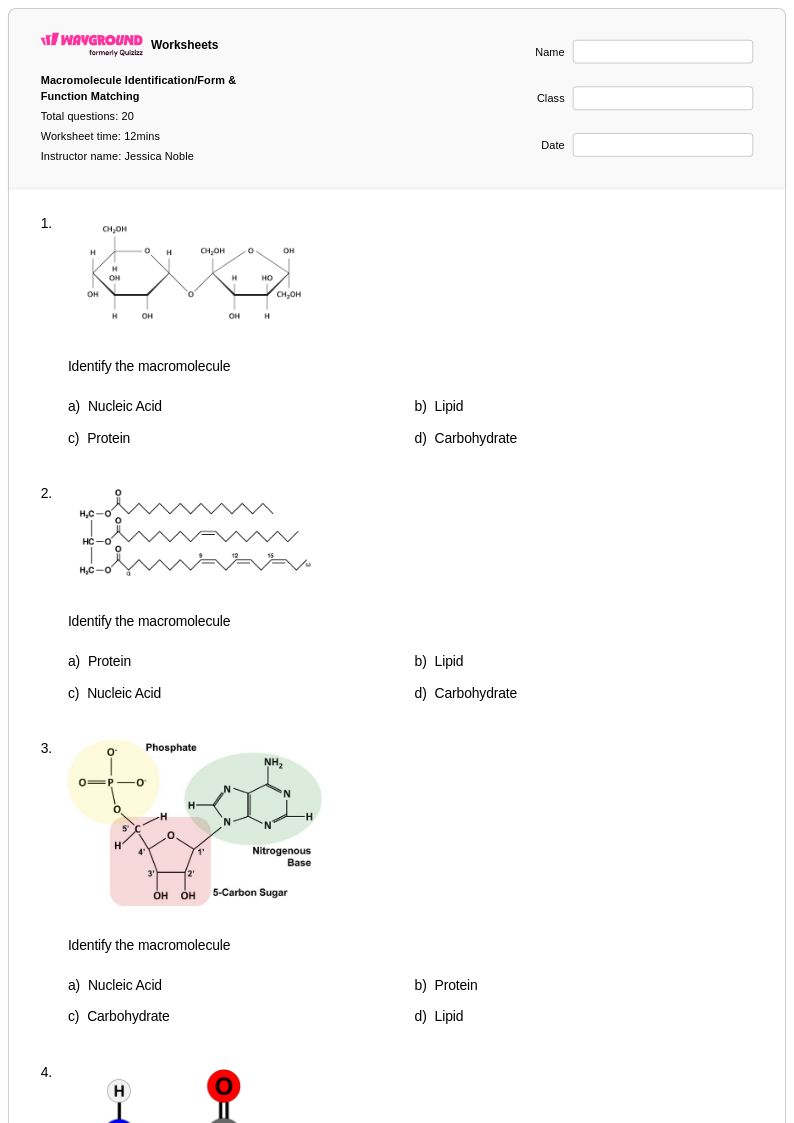
20 Q
9th - 12th
Explore Prefix Suffix Worksheets by Grades
Explore Other Subject Worksheets for year 12
Explore printable Prefix Suffix worksheets for Year 12
Prefix and suffix worksheets for Year 12 biology students available through Wayground (formerly Quizizz) provide essential practice in understanding the morphological components that form complex scientific terminology. These comprehensive resources strengthen students' ability to decode unfamiliar biological terms by breaking them down into their constituent parts, enabling more effective comprehension of advanced concepts in cellular biology, genetics, ecology, and human anatomy. The worksheets feature systematic practice problems that guide students through the analysis of terms like "mitochondria," "photosynthesis," and "deoxyribonucleic acid," helping them recognize common prefixes such as "photo-," "auto-," and "hetero-" alongside suffixes like "-osis," "-phage," and "-genesis." Each printable resource includes detailed answer keys that explain the etymology and meaning of biological terminology, making these free materials invaluable for both independent study and classroom instruction as students prepare for college-level coursework.
Wayground's extensive collection of teacher-created prefix and suffix worksheets draws from millions of educational resources specifically designed to support Year 12 biology instruction across diverse learning environments. The platform's advanced search and filtering capabilities allow educators to quickly locate materials aligned with specific curriculum standards while accessing differentiation tools that accommodate varying student proficiency levels. Teachers can customize these worksheets to focus on particular biological systems or terminology groups, with resources available in both printable pdf formats for traditional classroom use and digital versions for online learning platforms. This flexibility proves invaluable for lesson planning, targeted remediation of students struggling with scientific vocabulary, enrichment activities for advanced learners, and ongoing skill practice that builds the linguistic foundation necessary for success in advanced biological sciences and related fields.
FAQs
How do I teach biology prefixes and suffixes effectively?
What exercises help students practice biology prefix and suffix recognition?
What mistakes do students commonly make when learning biological prefixes and suffixes?
How do I differentiate prefix and suffix instruction for students at different levels?
How can I use Wayground's prefix and suffix worksheets in my classroom?