
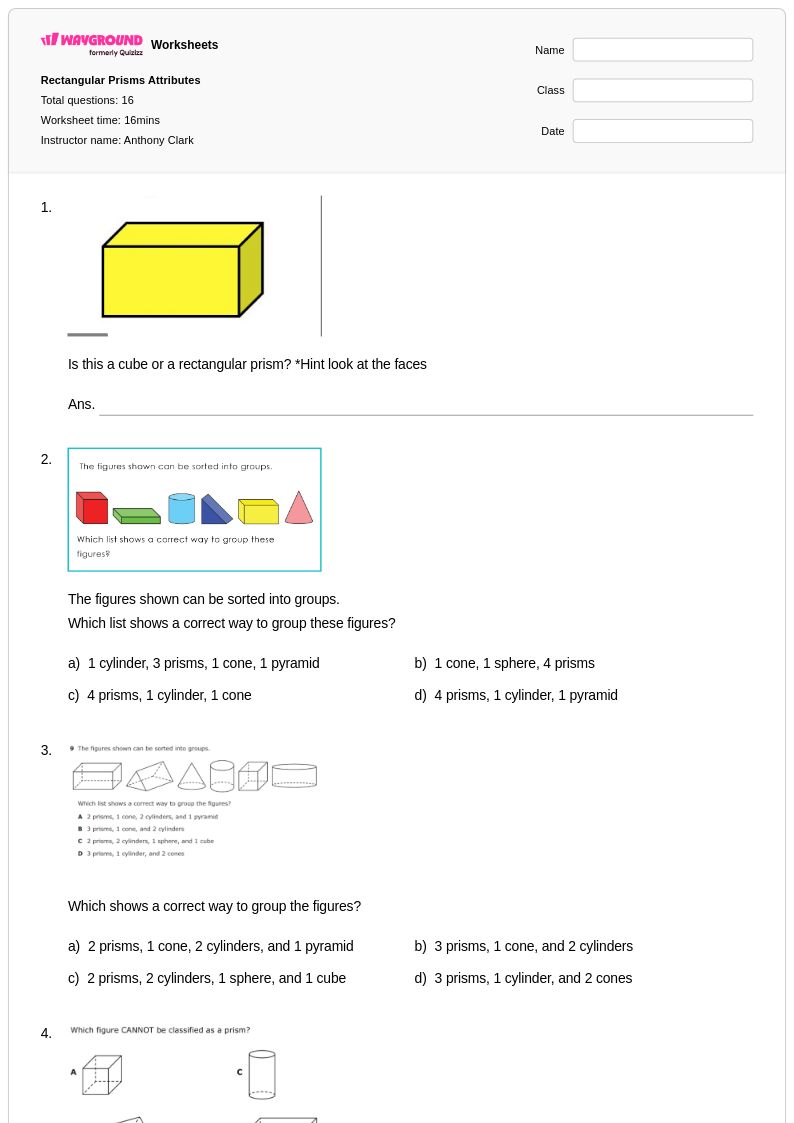
16 Q
3rd - Uni
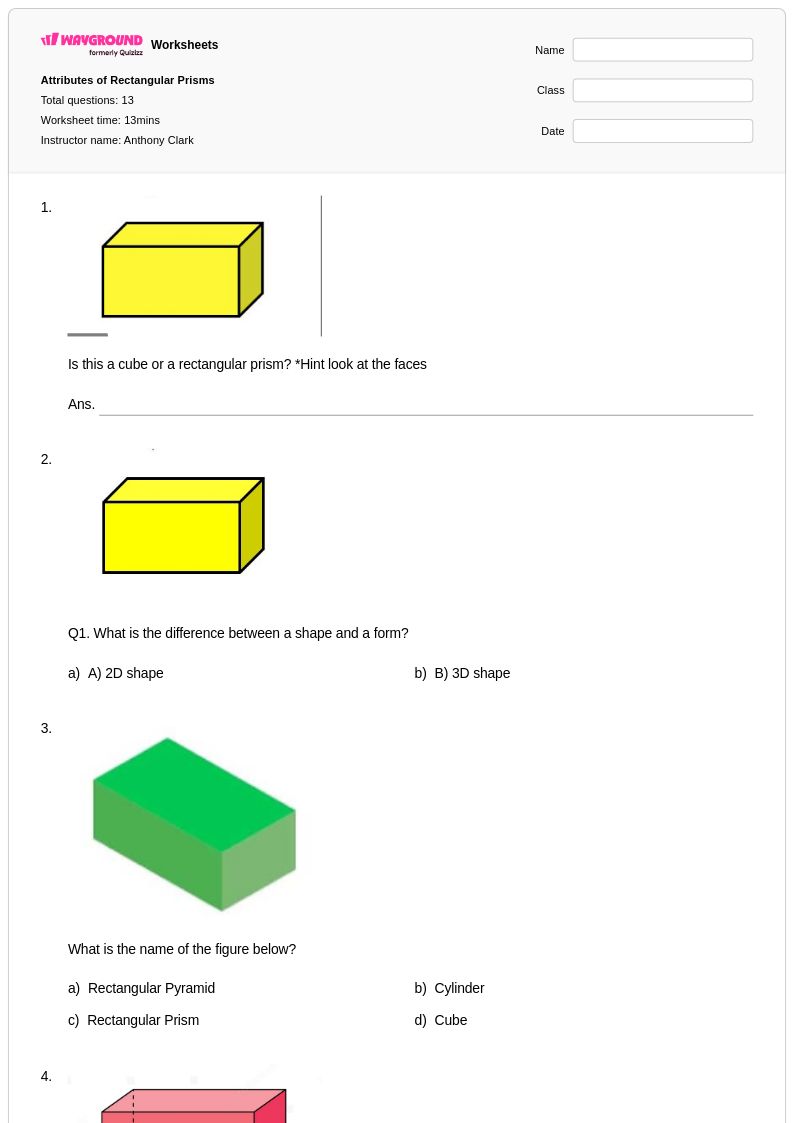
13 Q
3rd - Uni
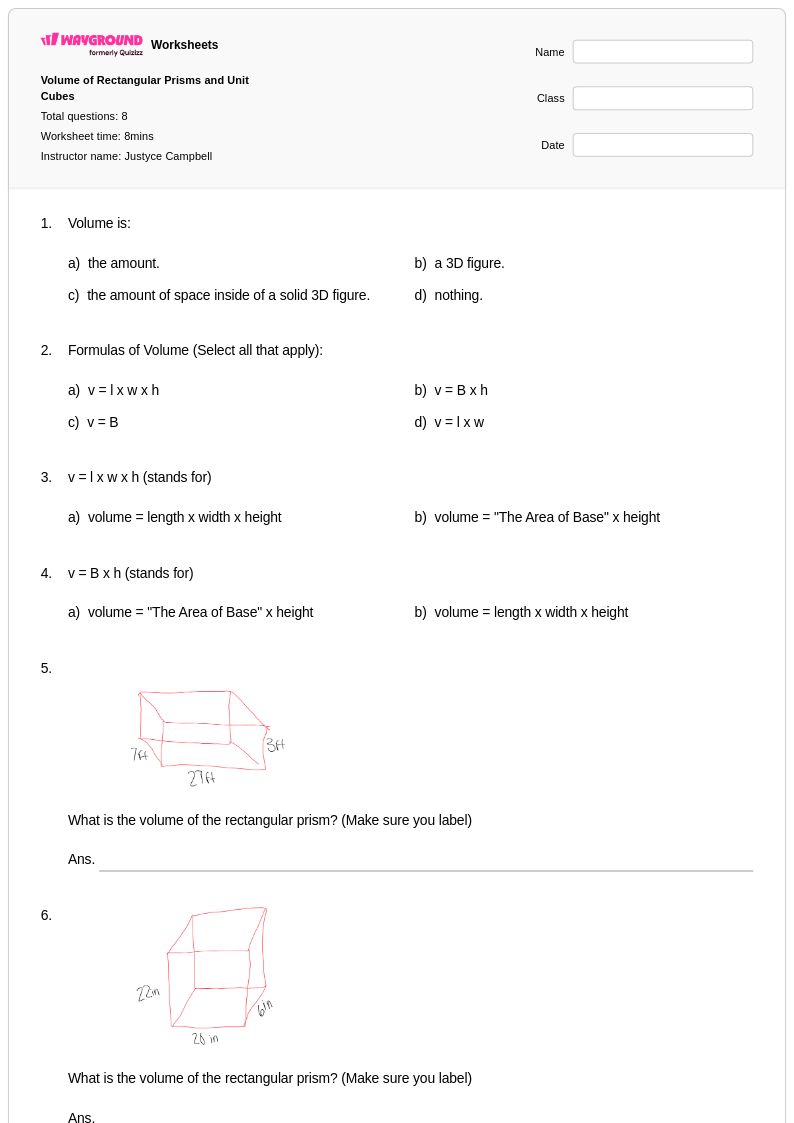
8 Q
3rd - 6th
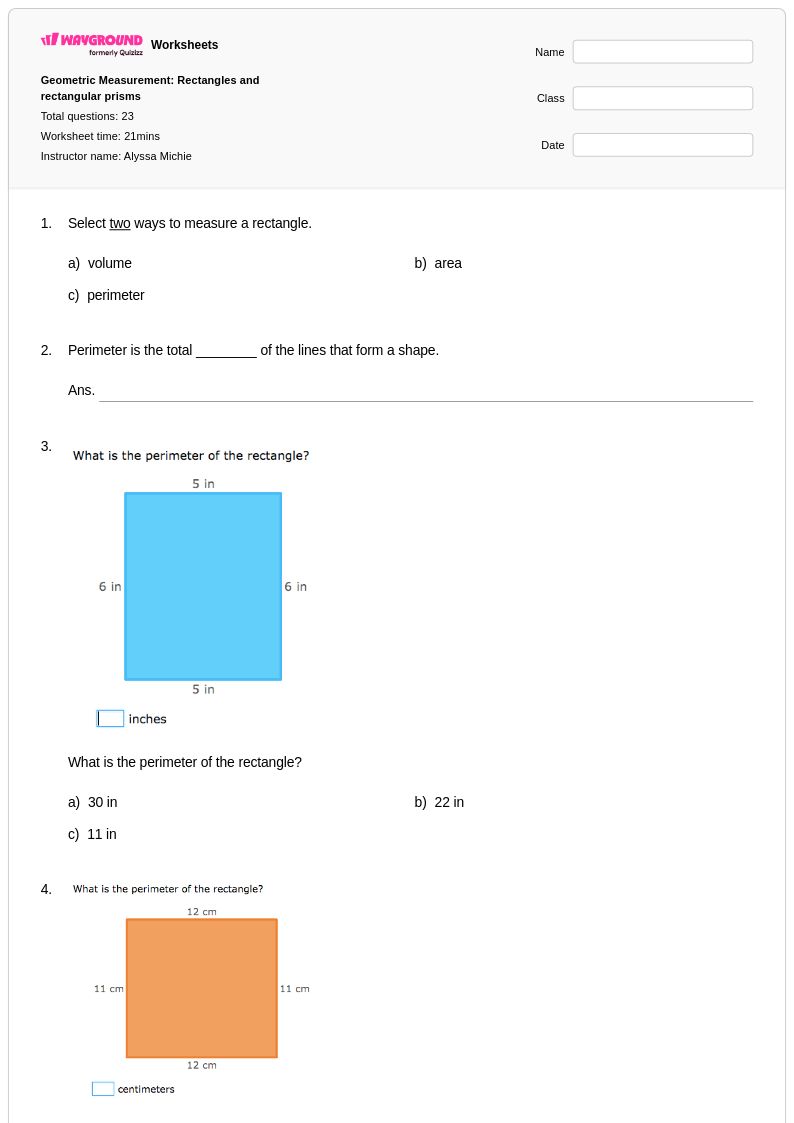
23 Q
3rd - 5th
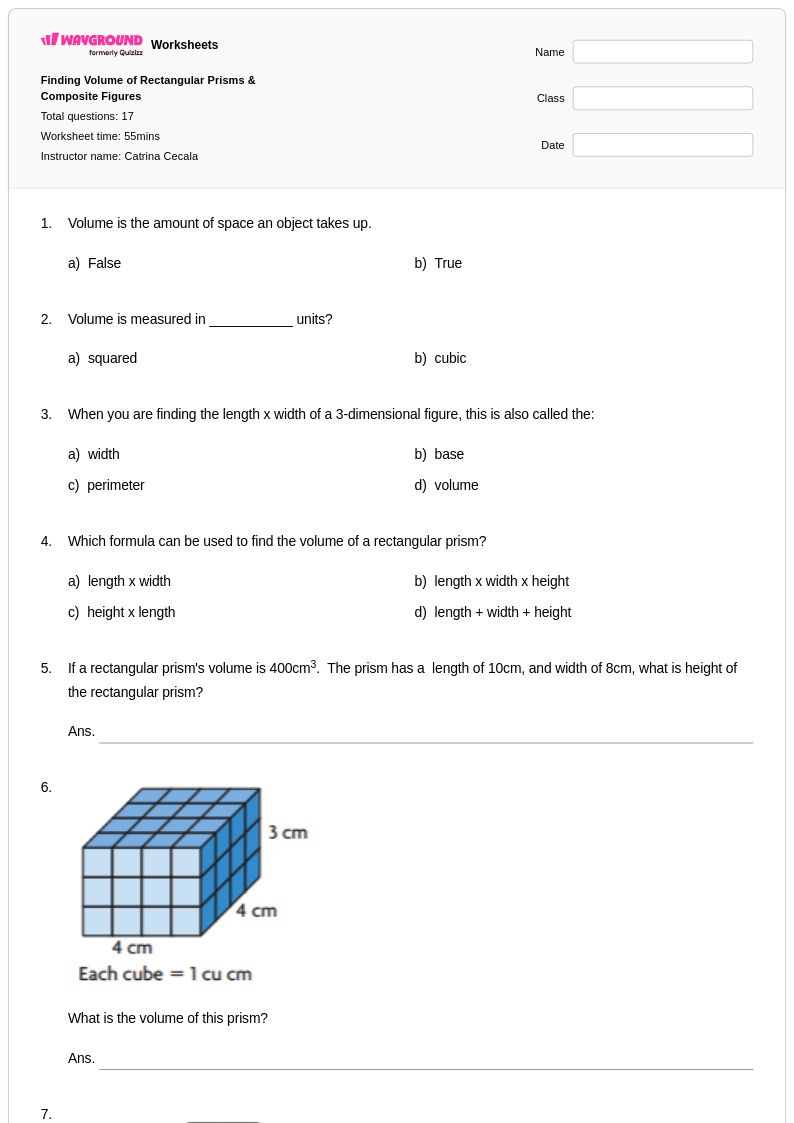
17 Q
1st - 5th
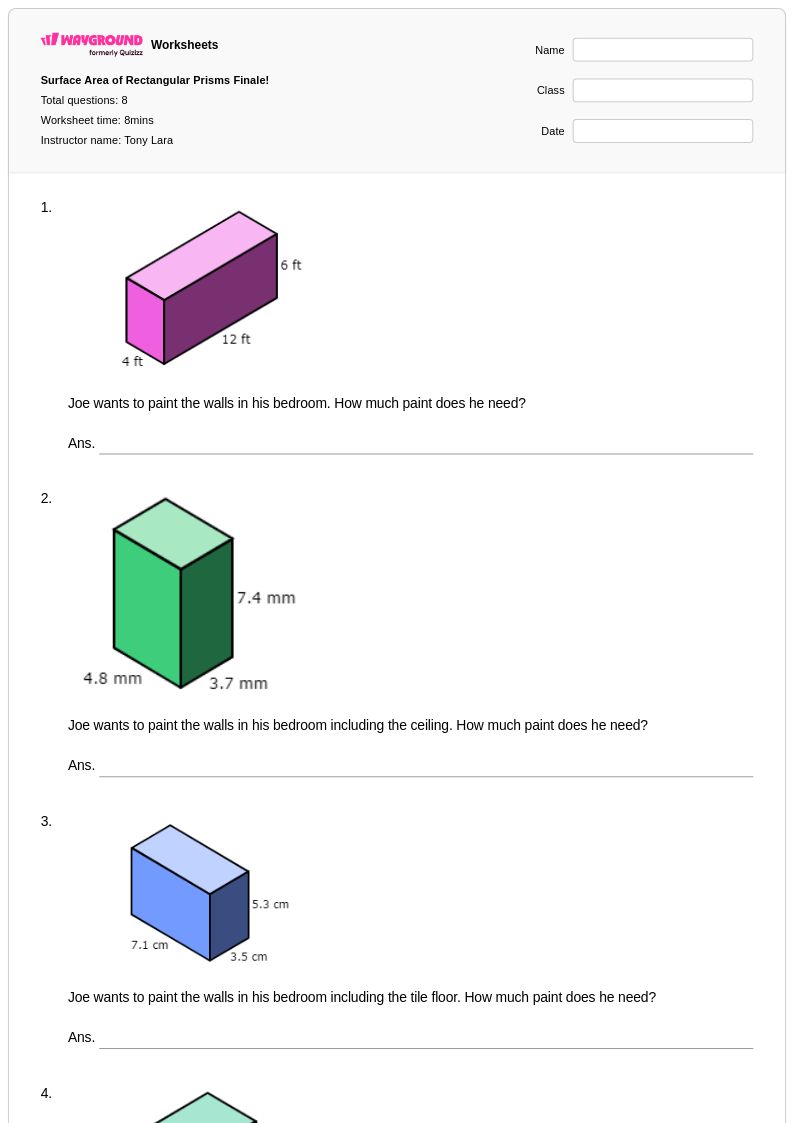
8 Q
3rd
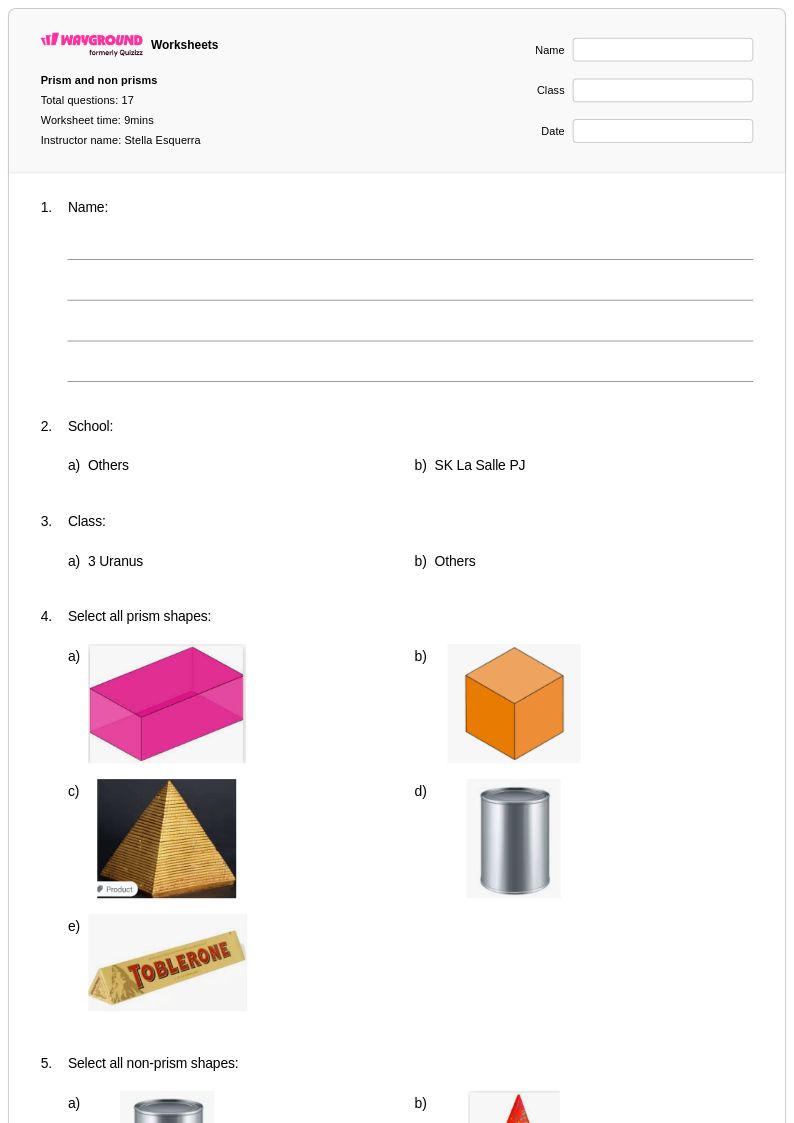
17 Q
3rd
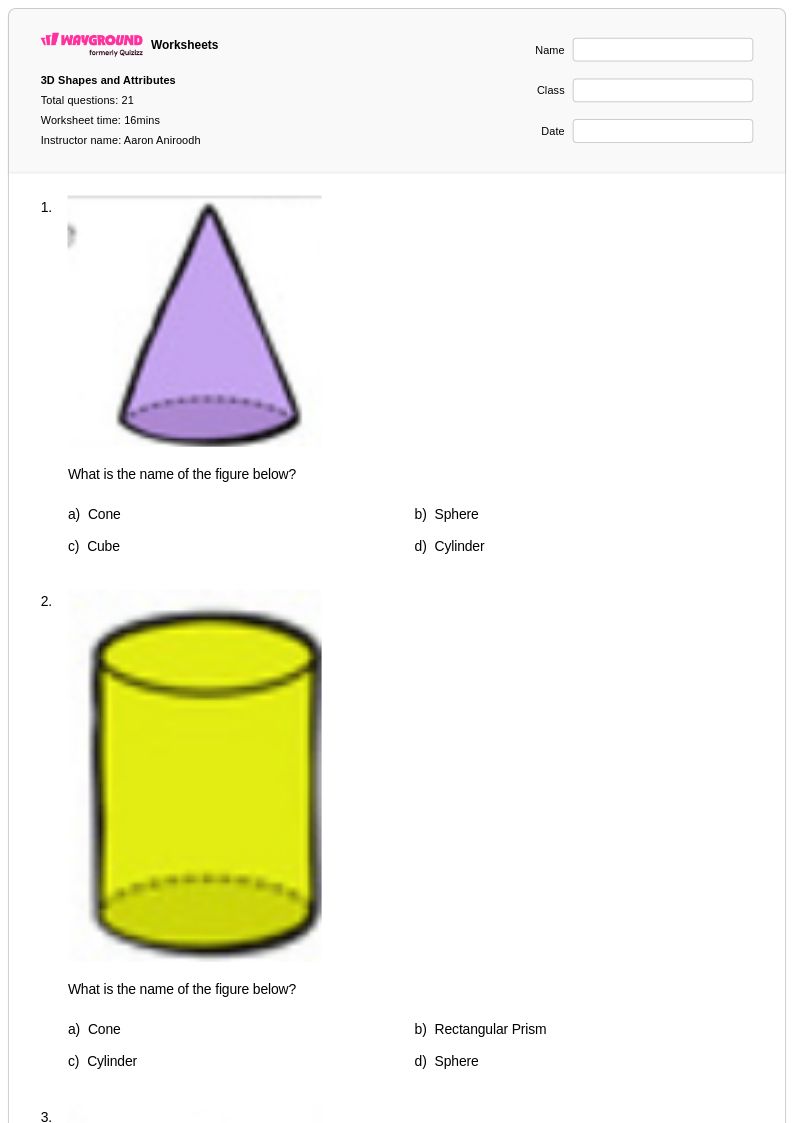
21 Q
3rd
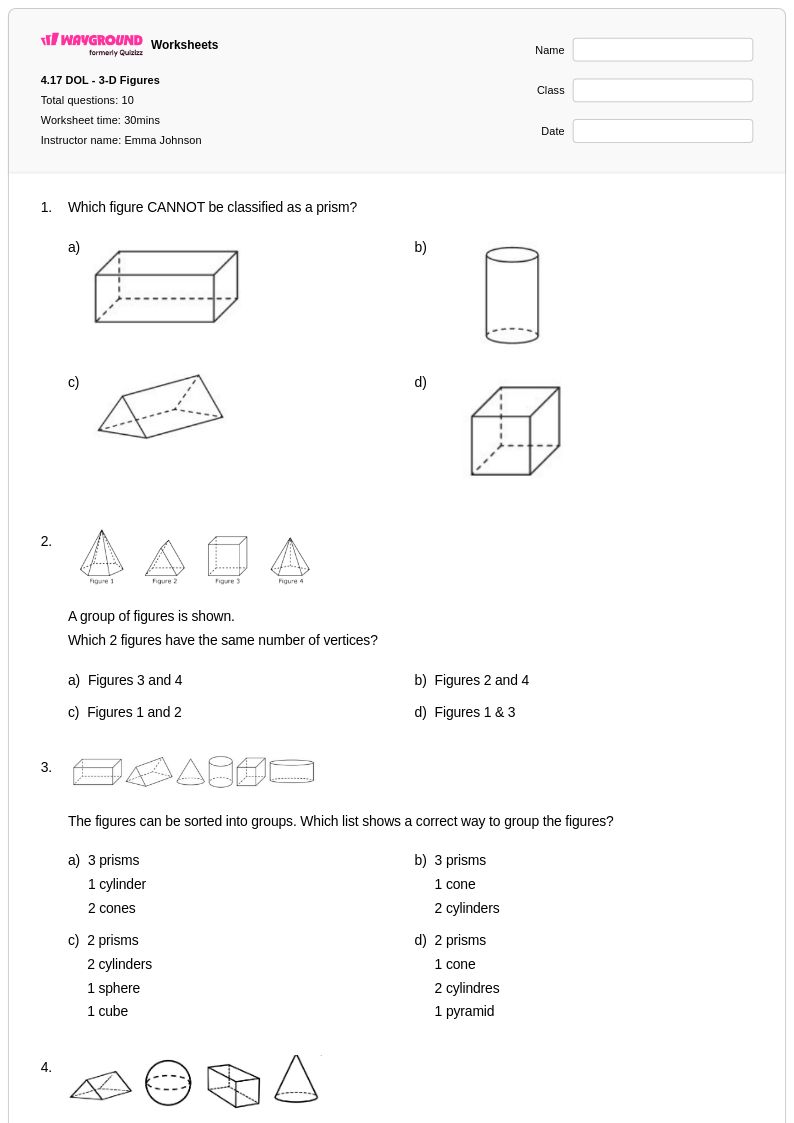
10 Q
3rd
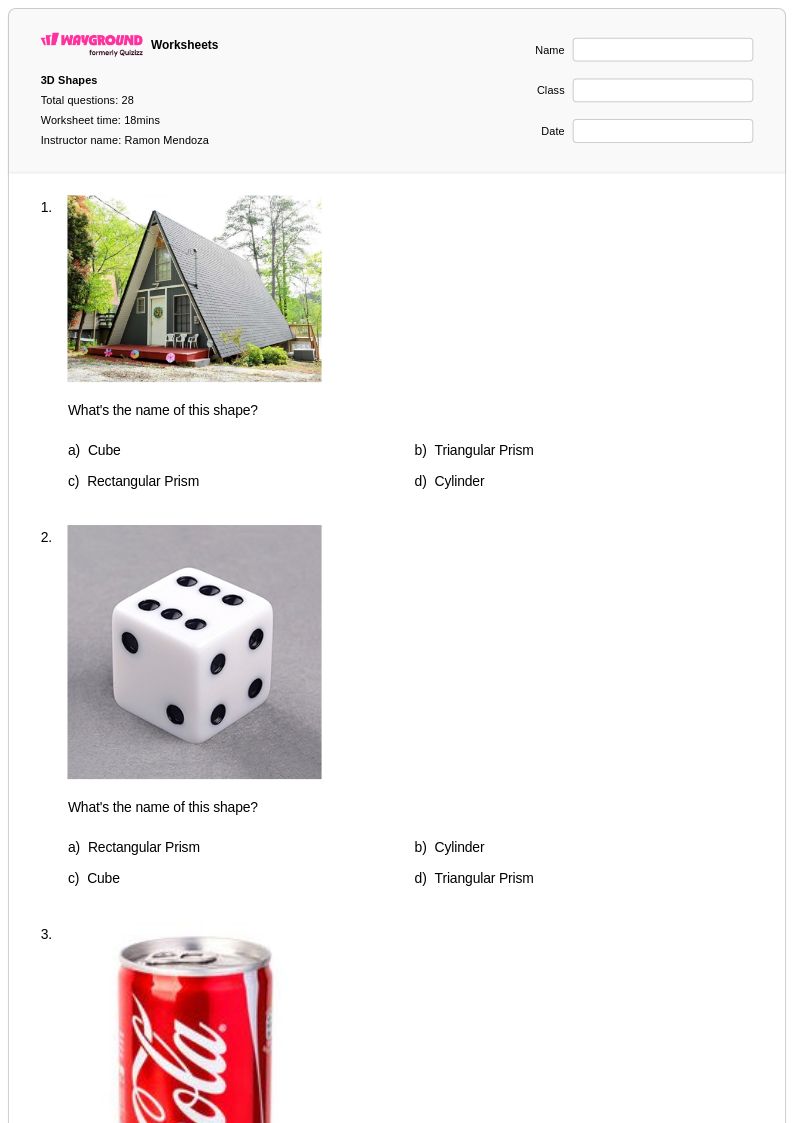
28 Q
3rd
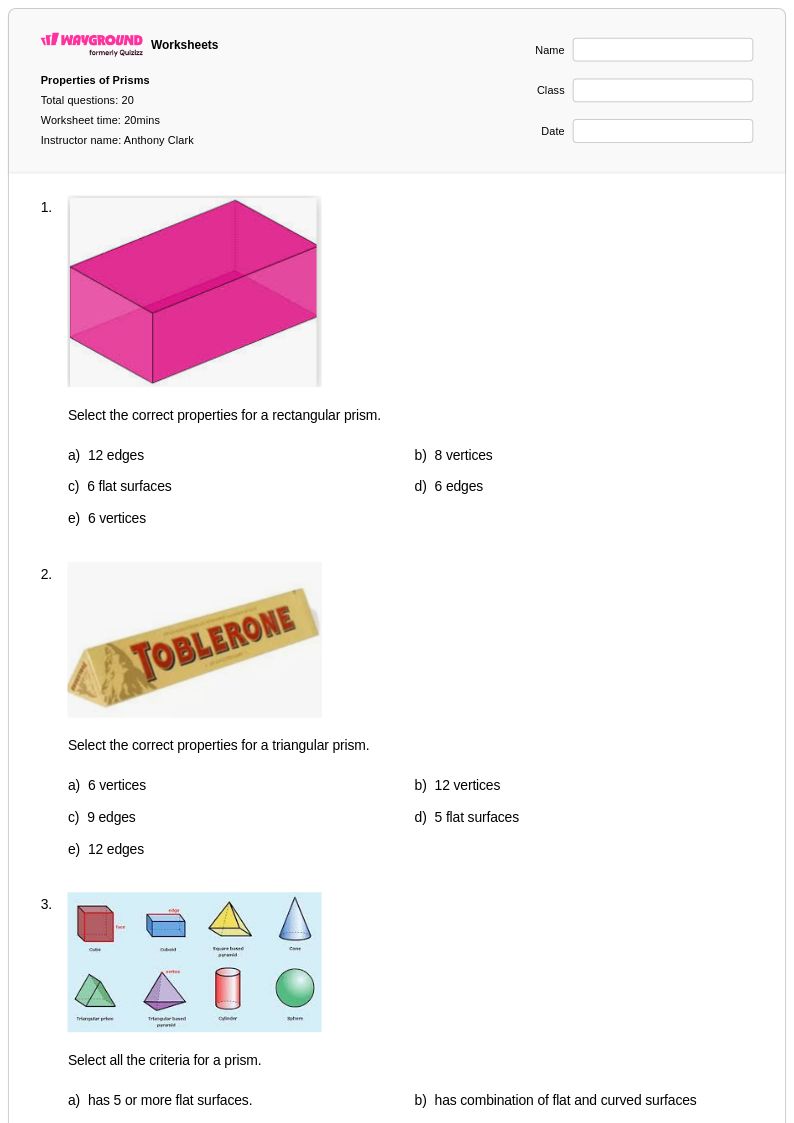
20 Q
3rd - Uni
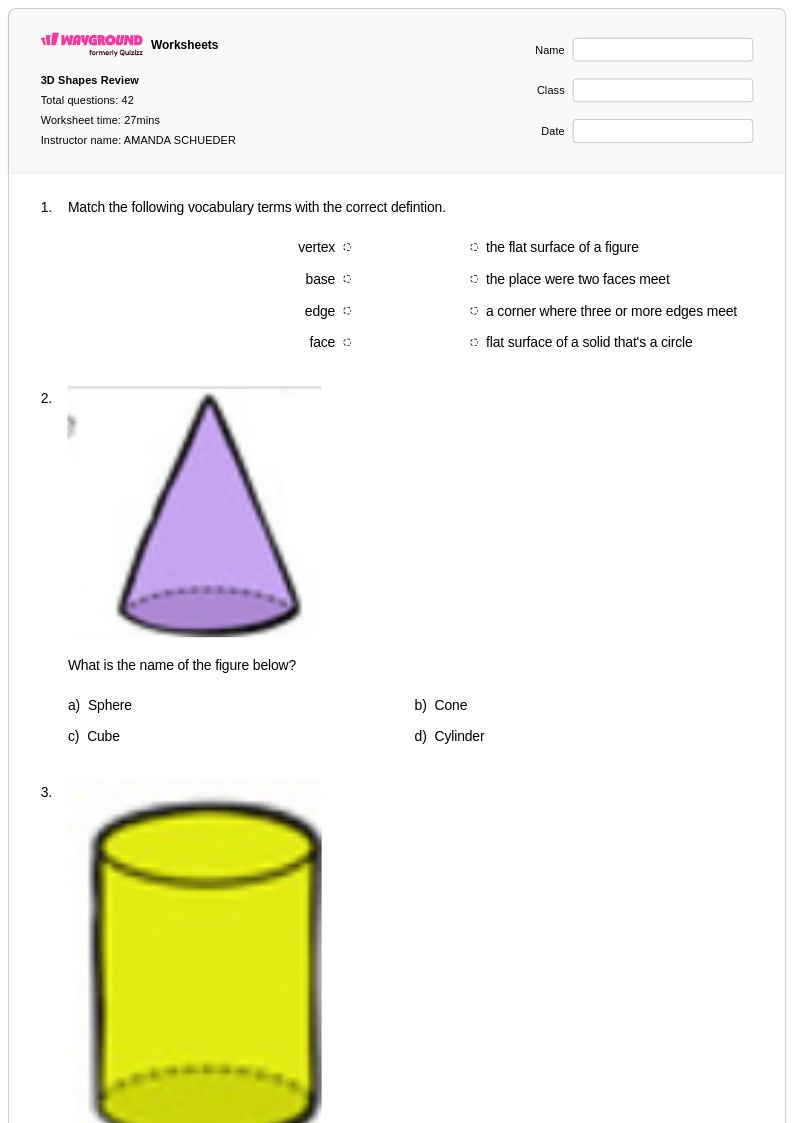
42 Q
3rd
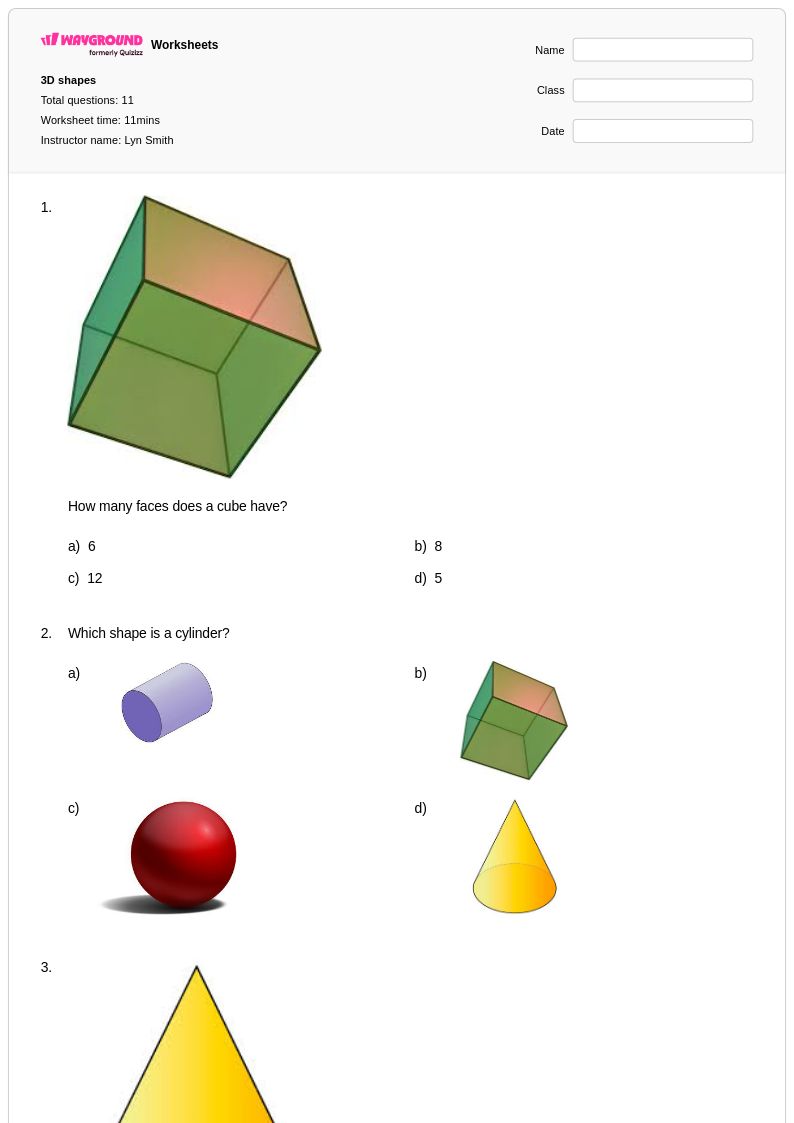
11 Q
3rd
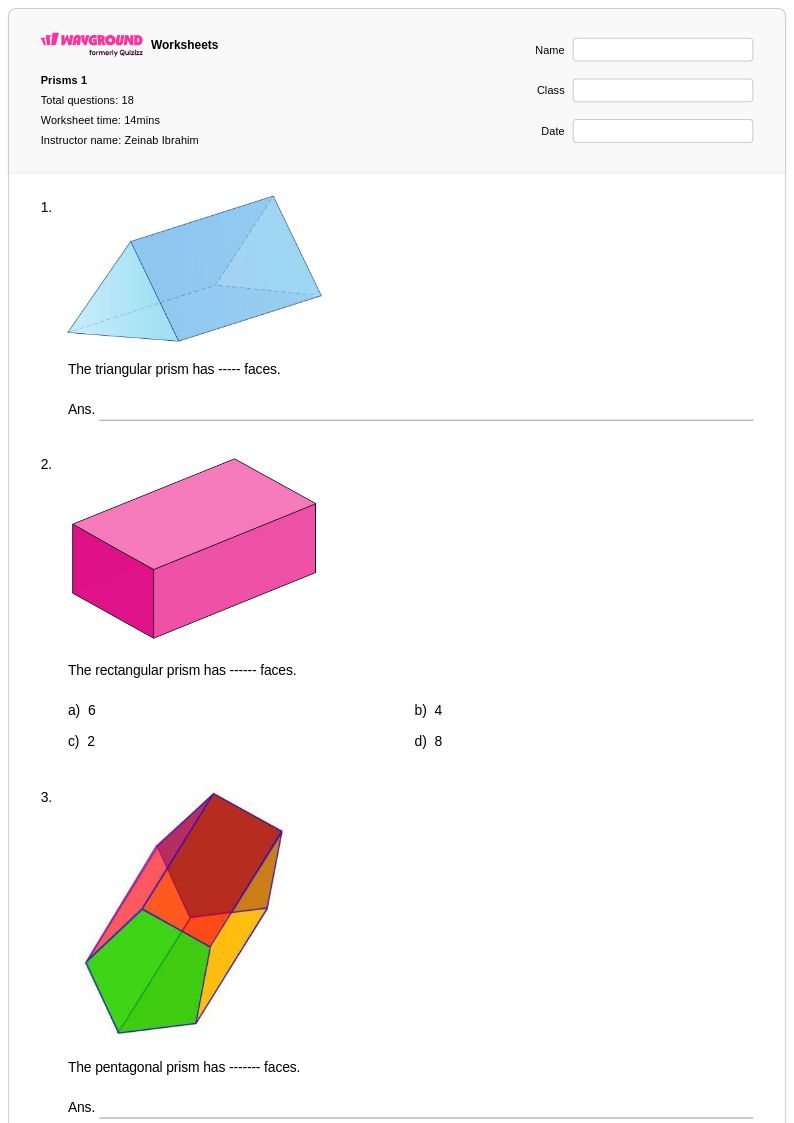
18 Q
3rd
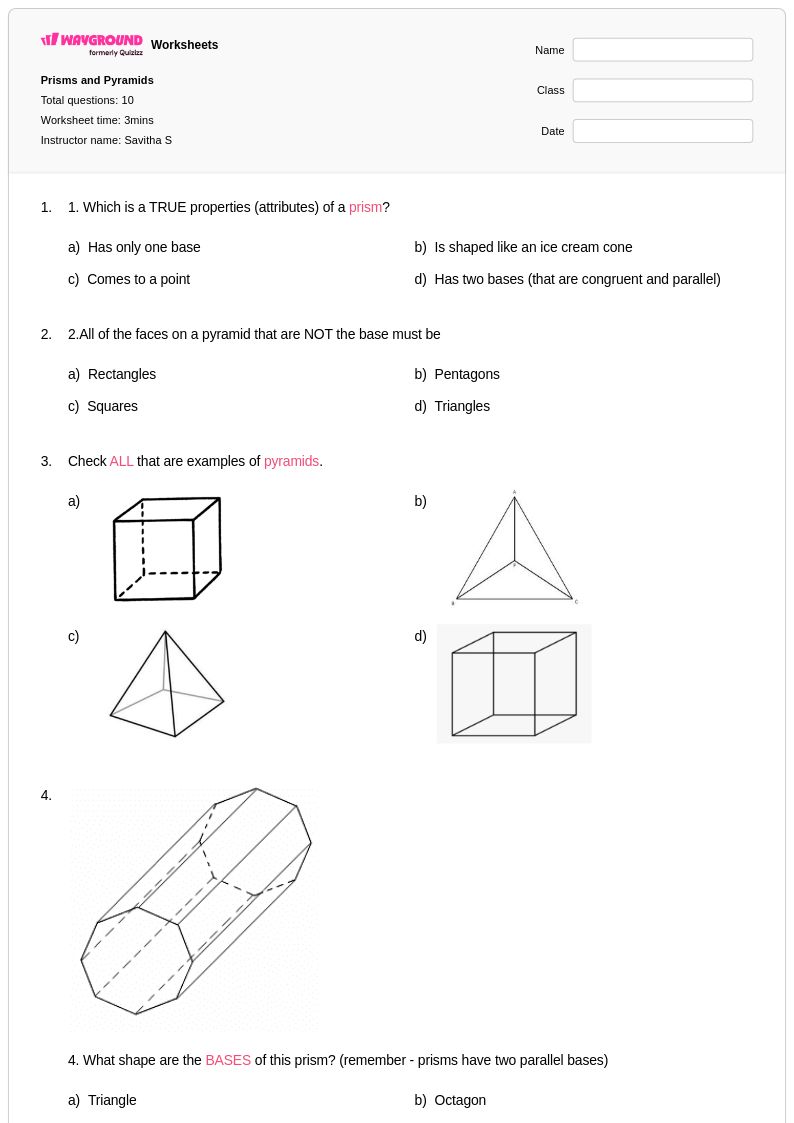
10 Q
3rd - 5th
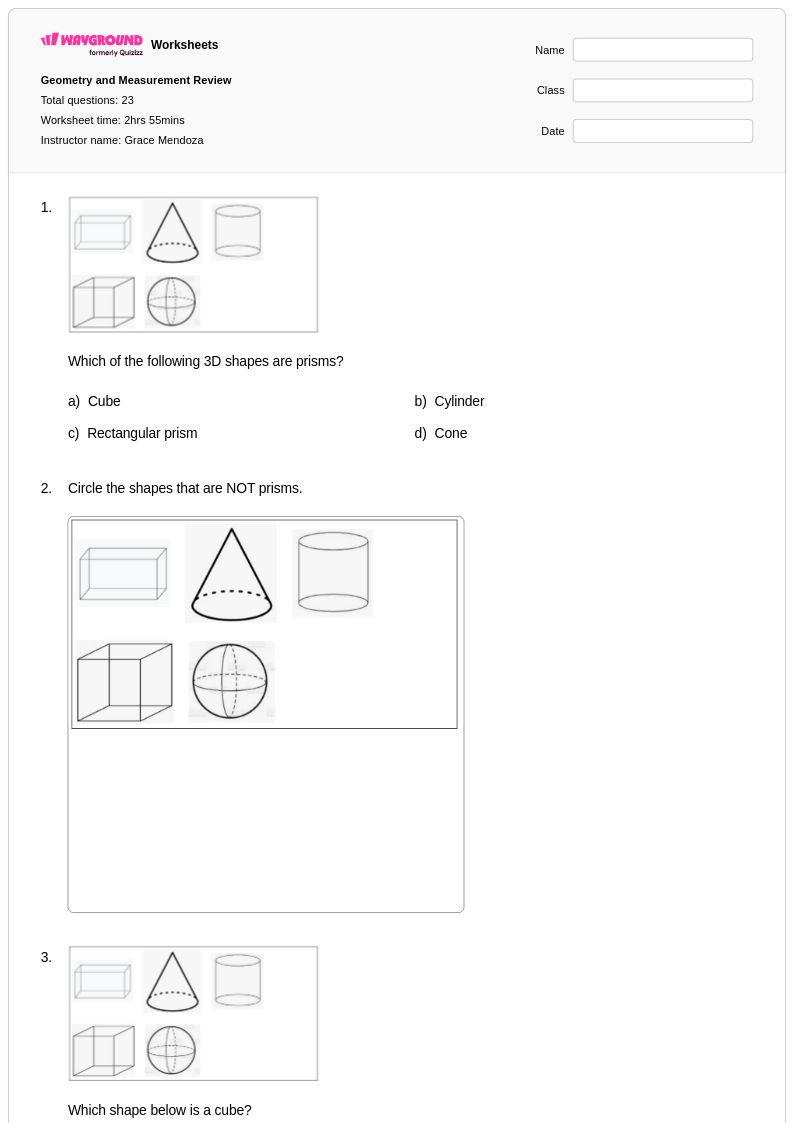
23 Q
2nd - Uni
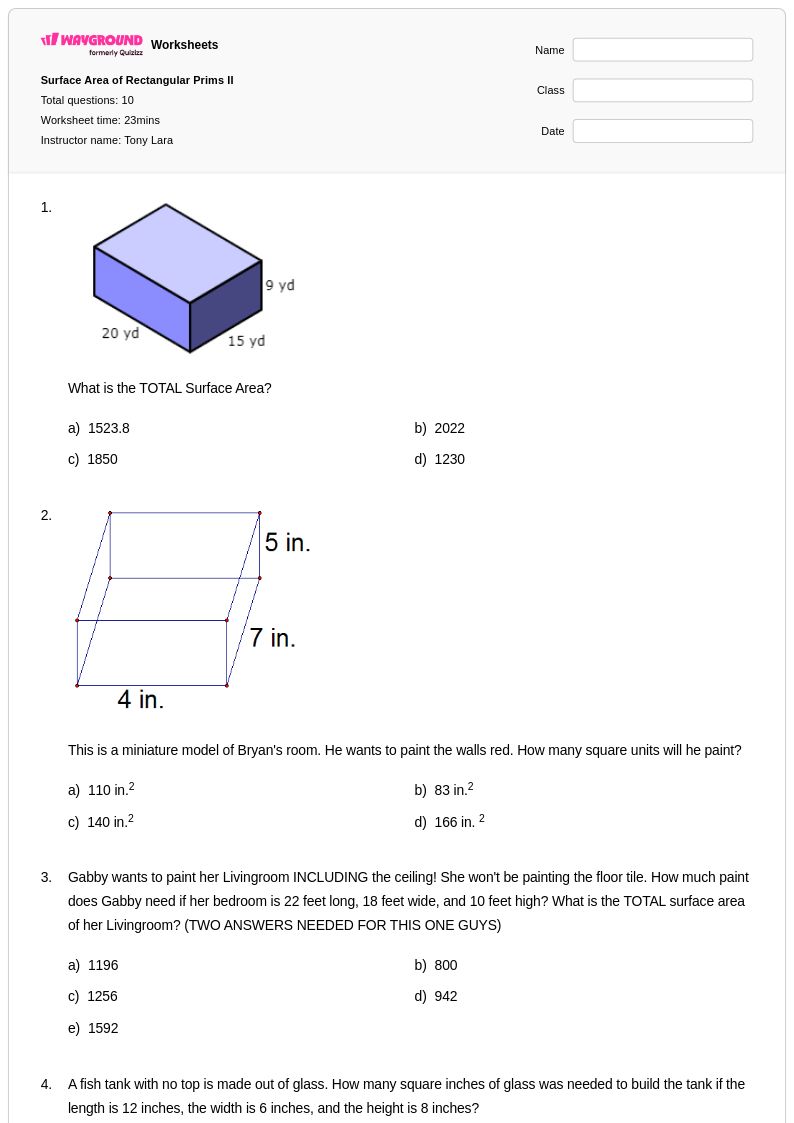
10 Q
3rd
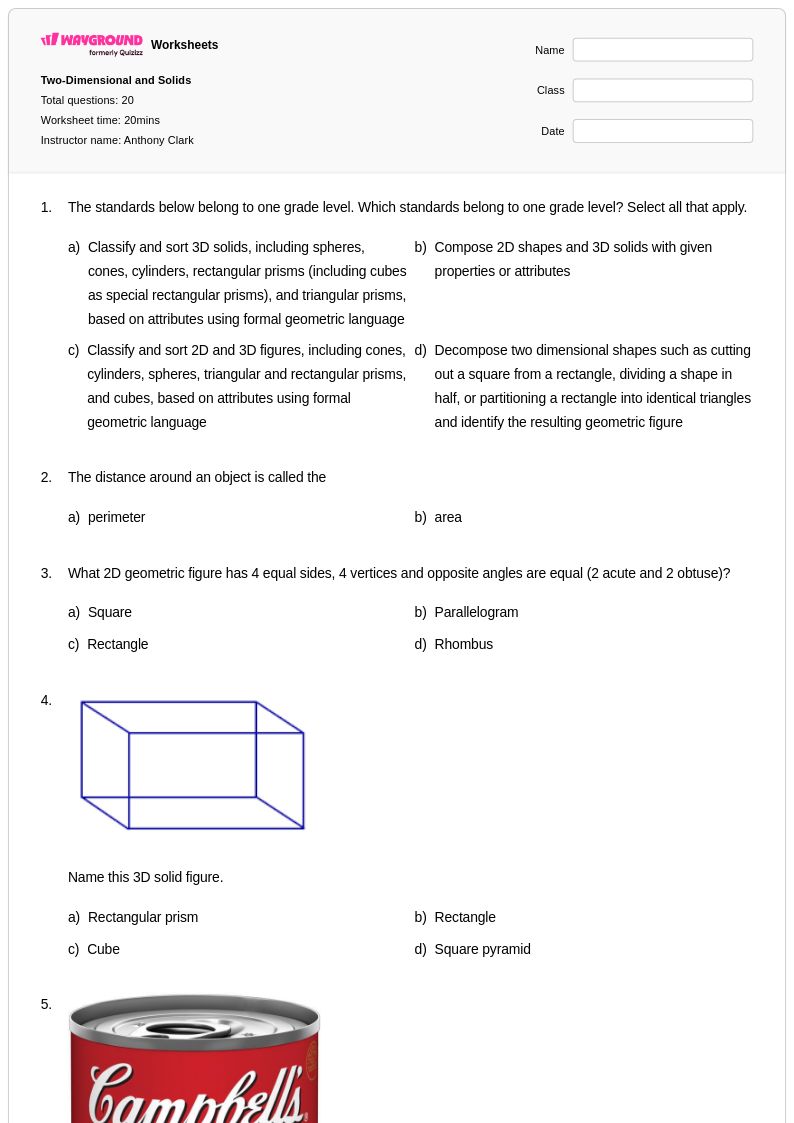
20 Q
3rd - Uni
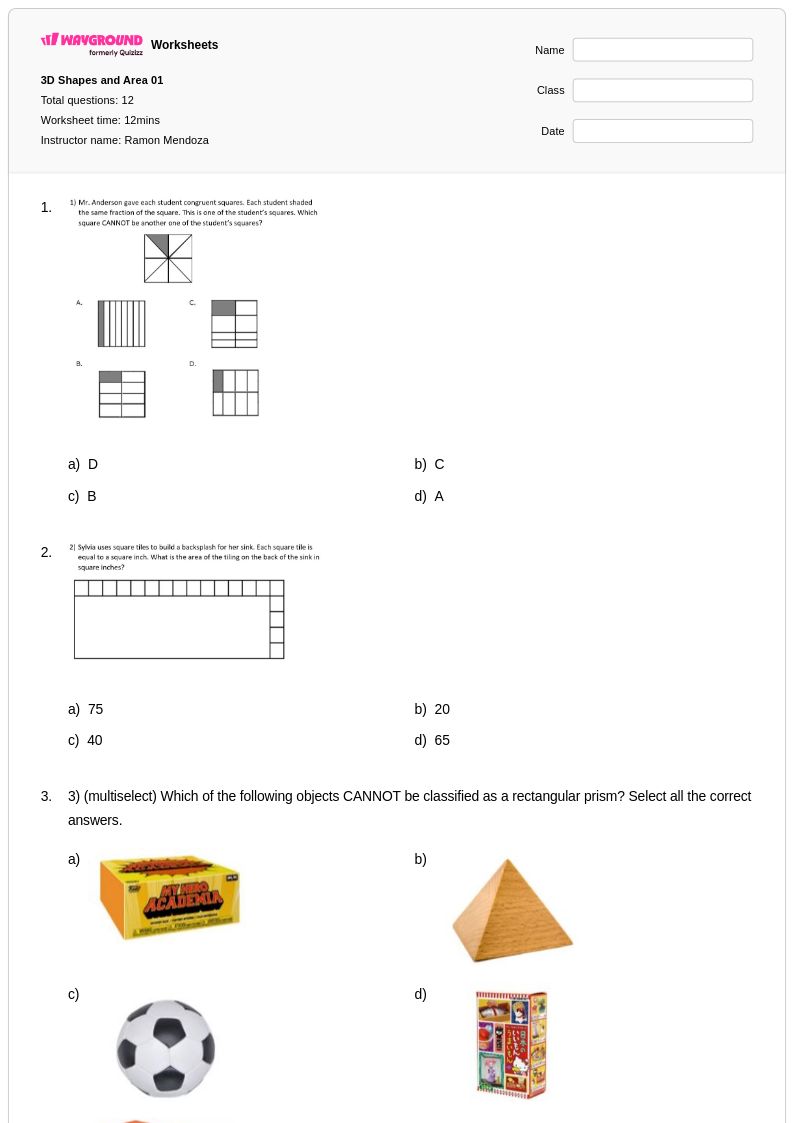
12 Q
3rd
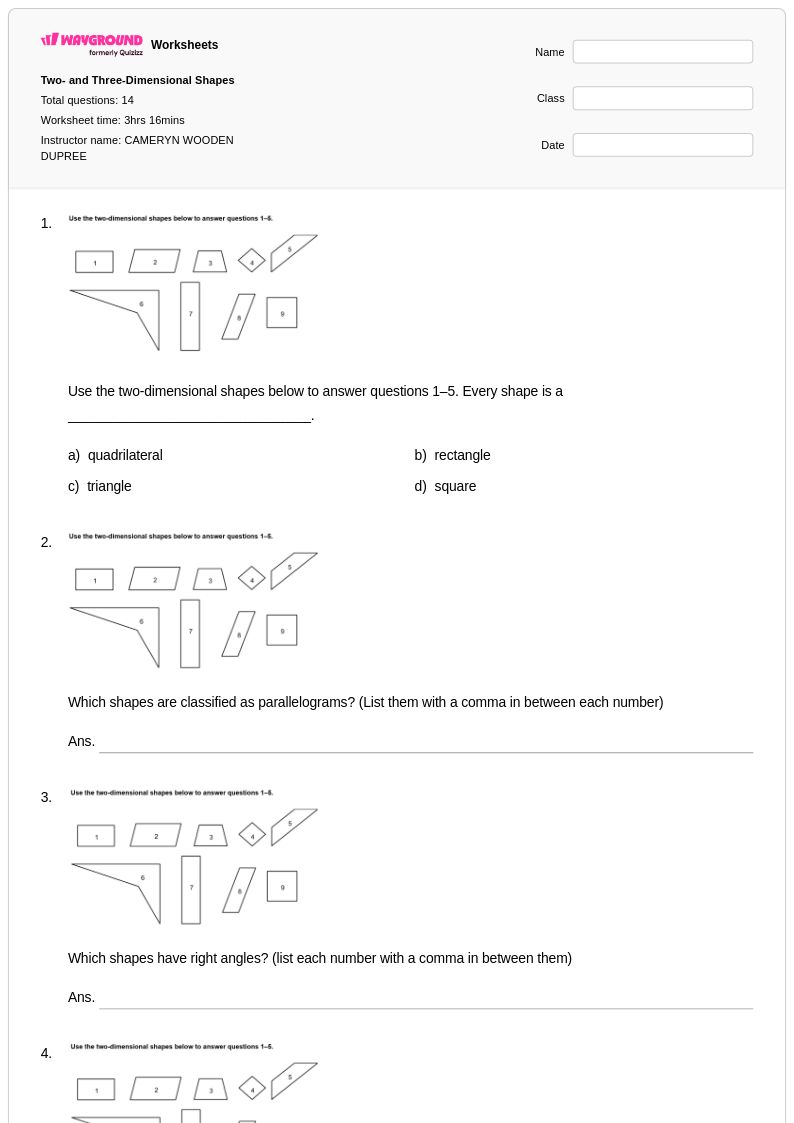
14 Q
3rd
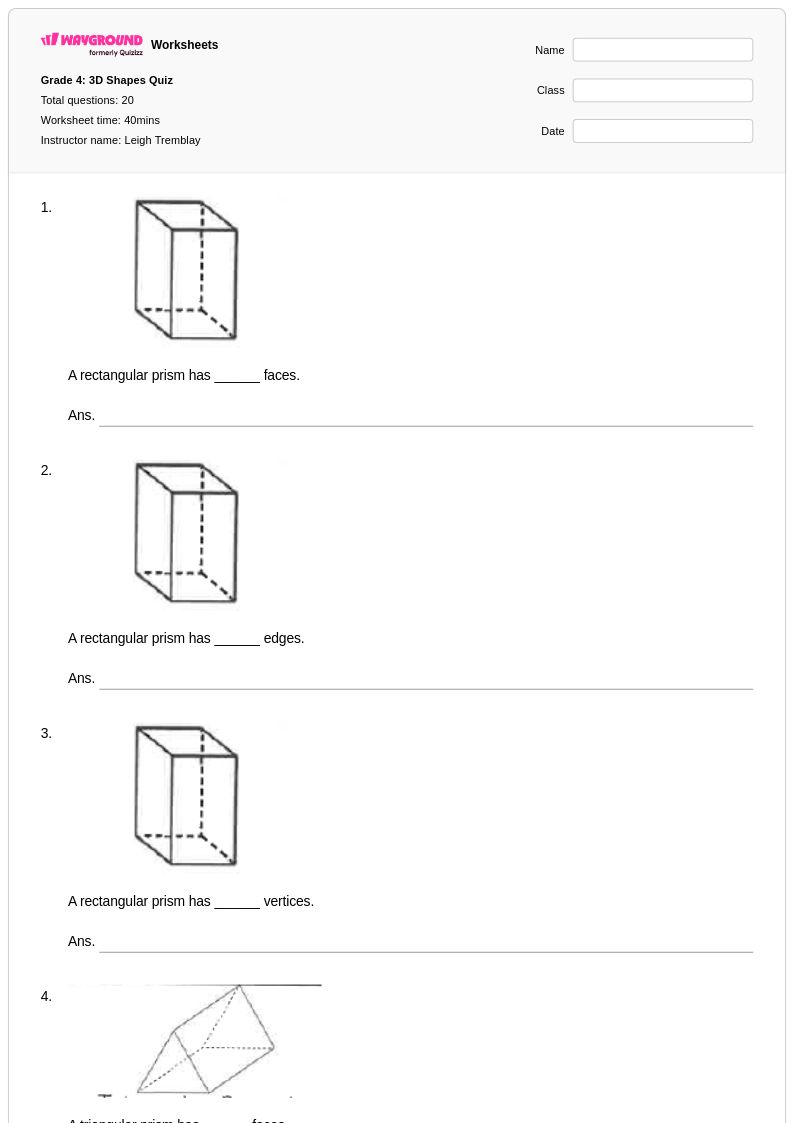
20 Q
3rd - 5th
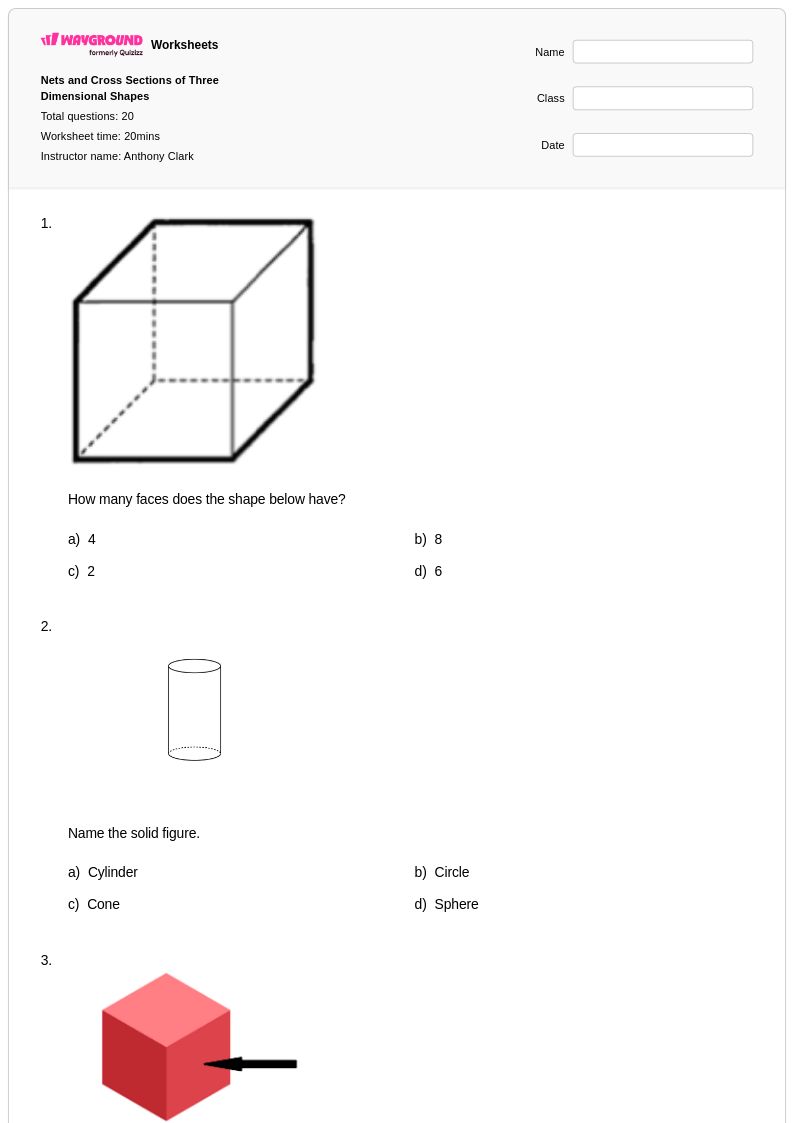
20 Q
3rd - Uni
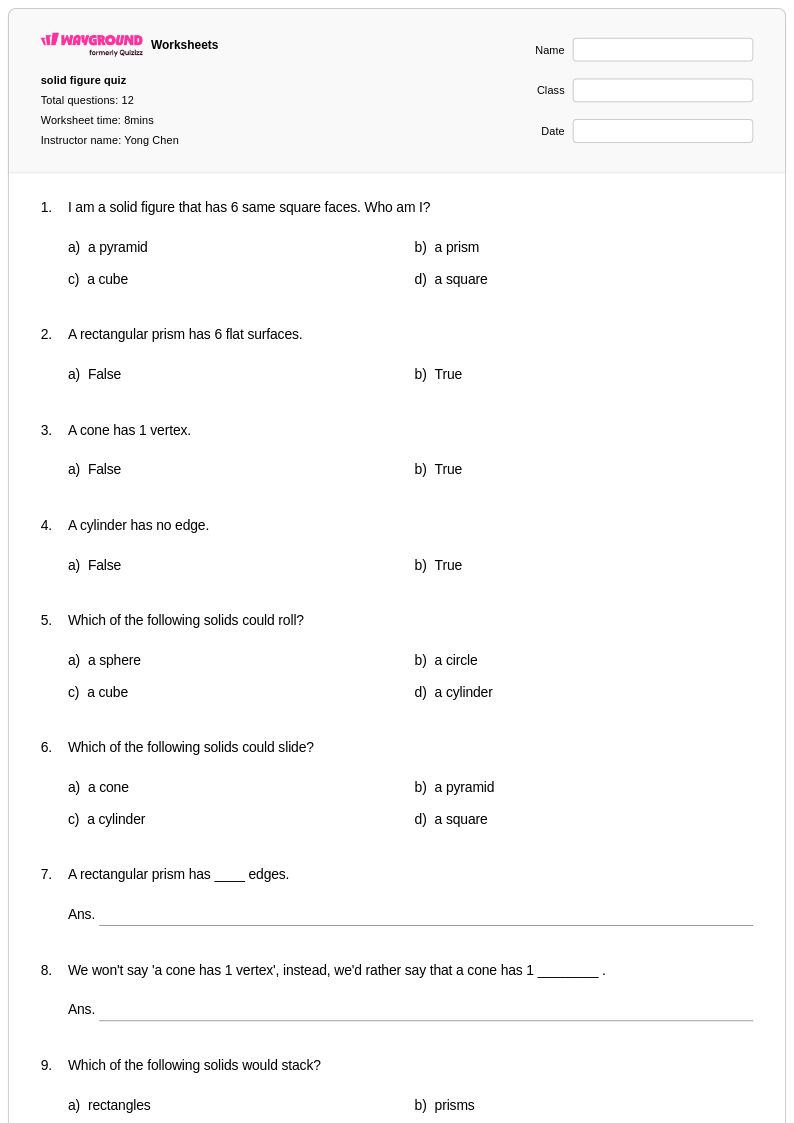
12 Q
3rd
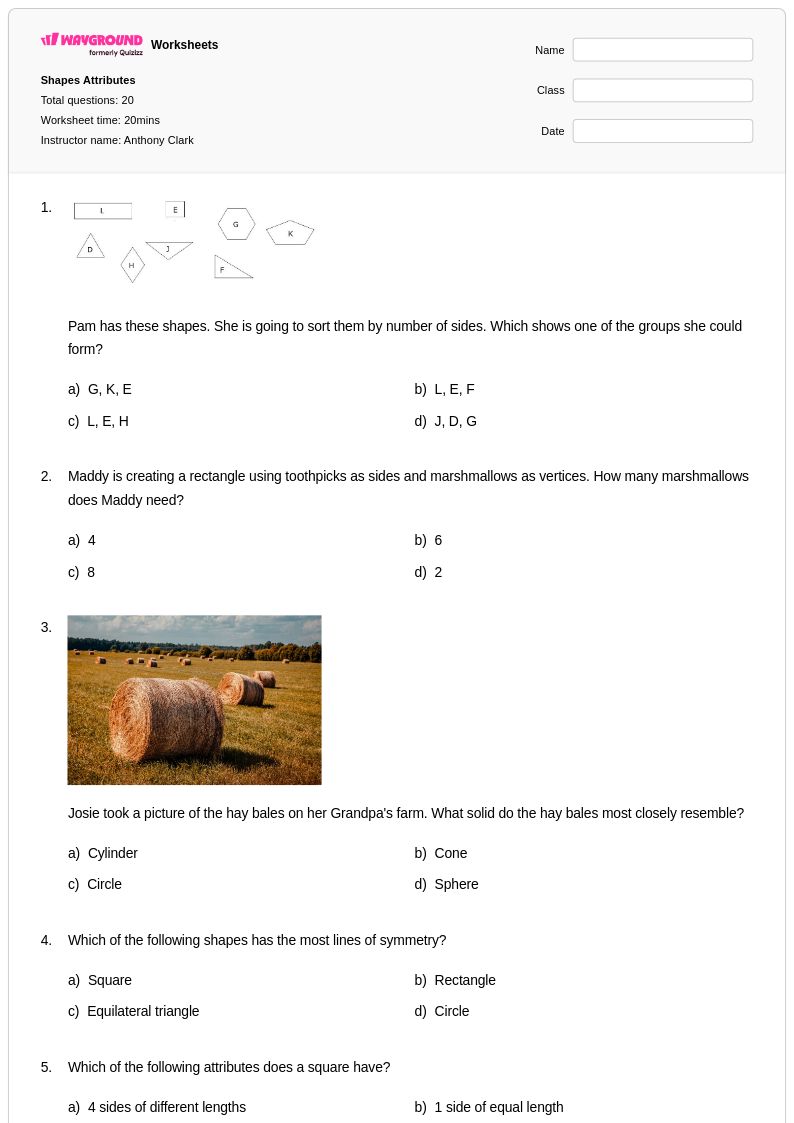
20 Q
3rd - Uni
Explore Rectangular Prisms Worksheets by Grades
Explore Other Subject Worksheets for year 3
Explore printable Rectangular Prisms worksheets for Year 3
Rectangular prisms represent a fundamental concept in Year 3 geometry that bridges two-dimensional understanding with three-dimensional spatial reasoning. Wayground's comprehensive collection of rectangular prism worksheets provides students with engaging practice problems that develop critical skills in identifying faces, edges, and vertices while building conceptual understanding of volume and surface area foundations. These free printable resources feature carefully structured activities that guide third-grade learners through hands-on exploration of rectangular prisms in real-world contexts, from building blocks to cereal boxes. Each worksheet includes detailed answer keys that support both independent learning and guided instruction, with pdf formats ensuring easy classroom distribution and home practice accessibility.
Wayground's extensive library draws from millions of teacher-created resources specifically designed to meet diverse classroom needs in elementary geometry instruction. The platform's robust search and filtering capabilities allow educators to quickly locate rectangular prism worksheets aligned with state standards and differentiated for various skill levels within Year 3 mathematics curricula. Teachers benefit from flexible customization tools that enable modification of existing materials for remediation or enrichment purposes, while the dual availability of printable pdf versions and interactive digital formats accommodates different learning environments and technology access levels. This comprehensive approach supports strategic lesson planning and targeted skill practice, ensuring students develop solid foundational understanding of three-dimensional shapes that prepares them for advanced geometric concepts in subsequent grade levels.
FAQs
What do third graders learn about rectangular prisms?
How should I introduce the concept of volume to my third graders?
What is a common mistake students make when finding volume by counting cubes?
What kind of practice problems are best for this topic?
How does this topic align with Grade 3 math standards?
How can I use this Wayground worksheet in my classroom?
How can I differentiate this topic for my students?