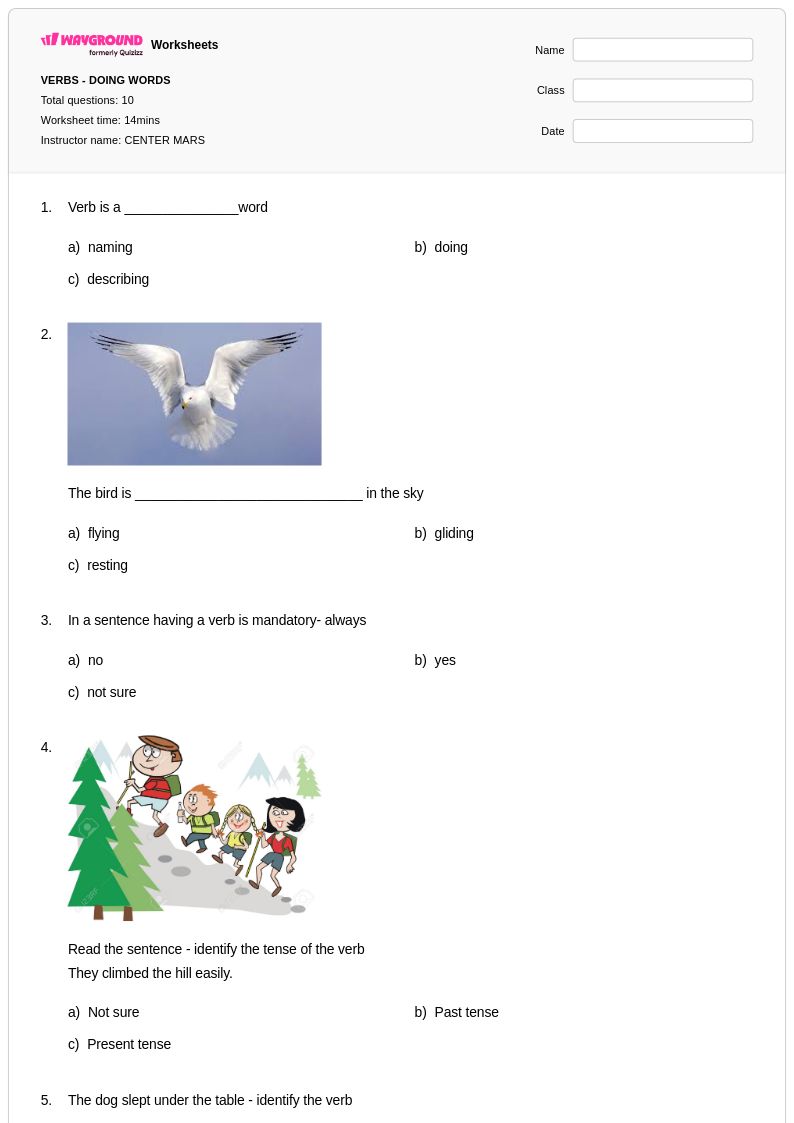
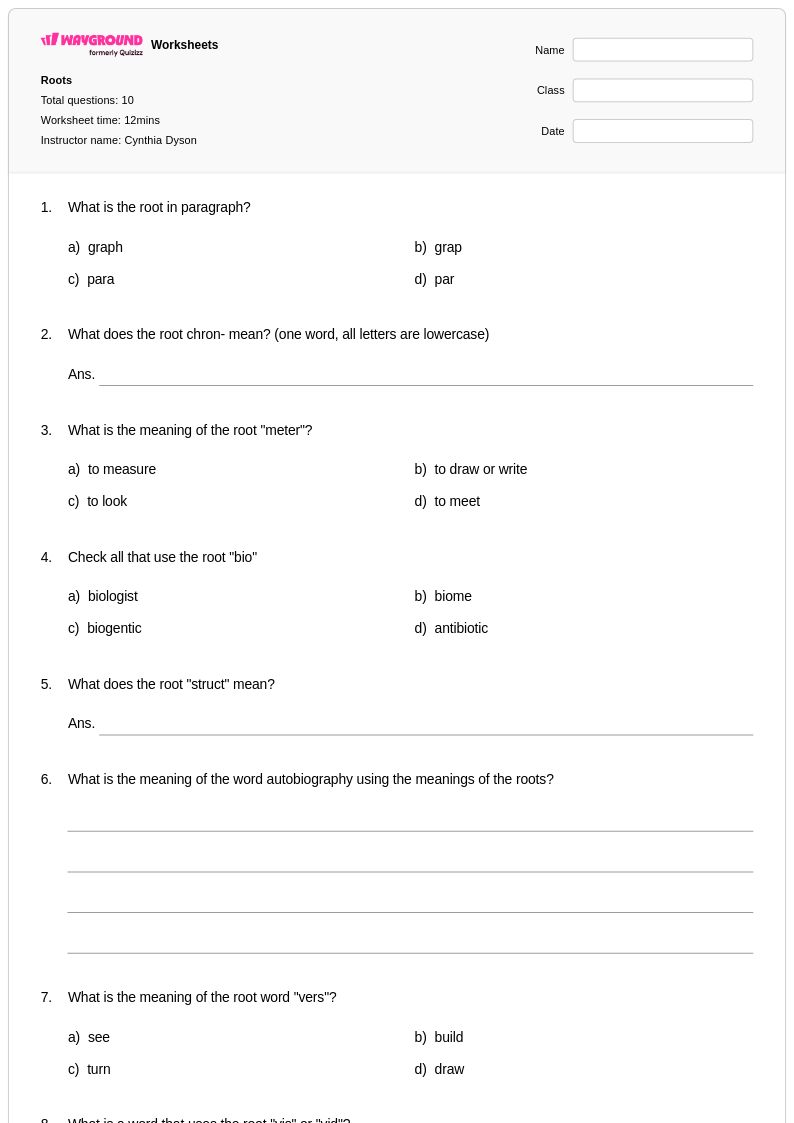
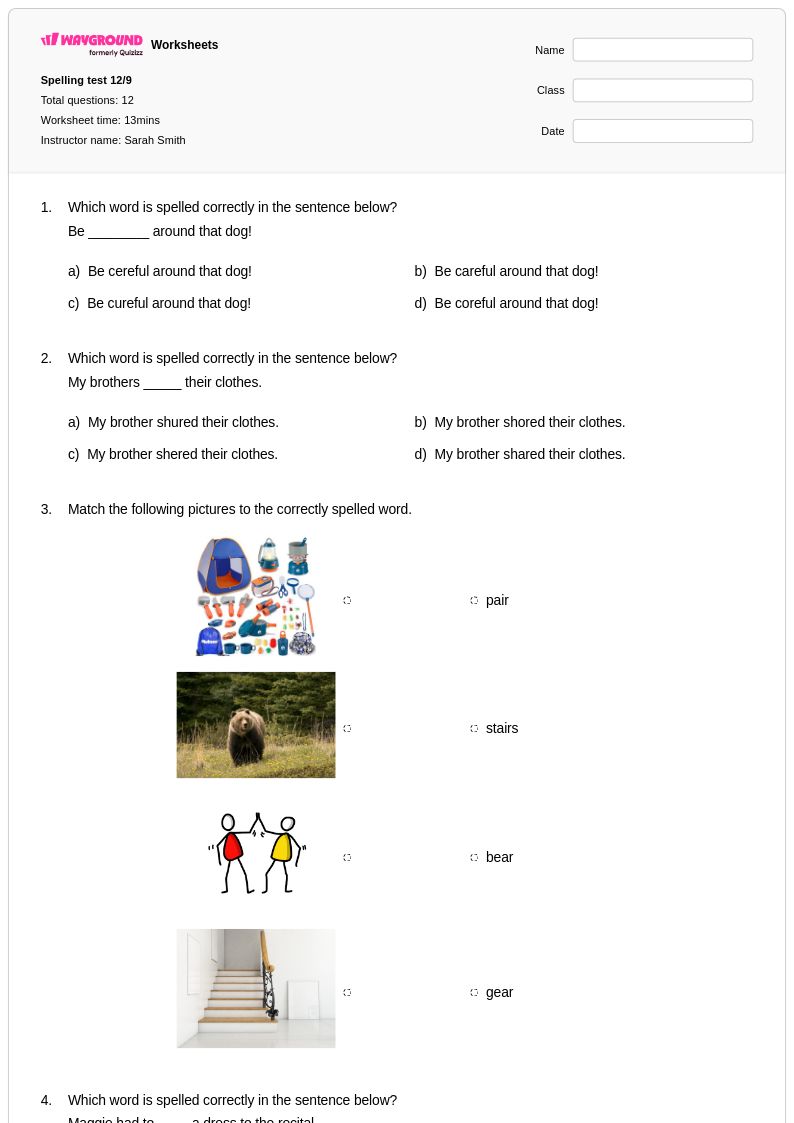
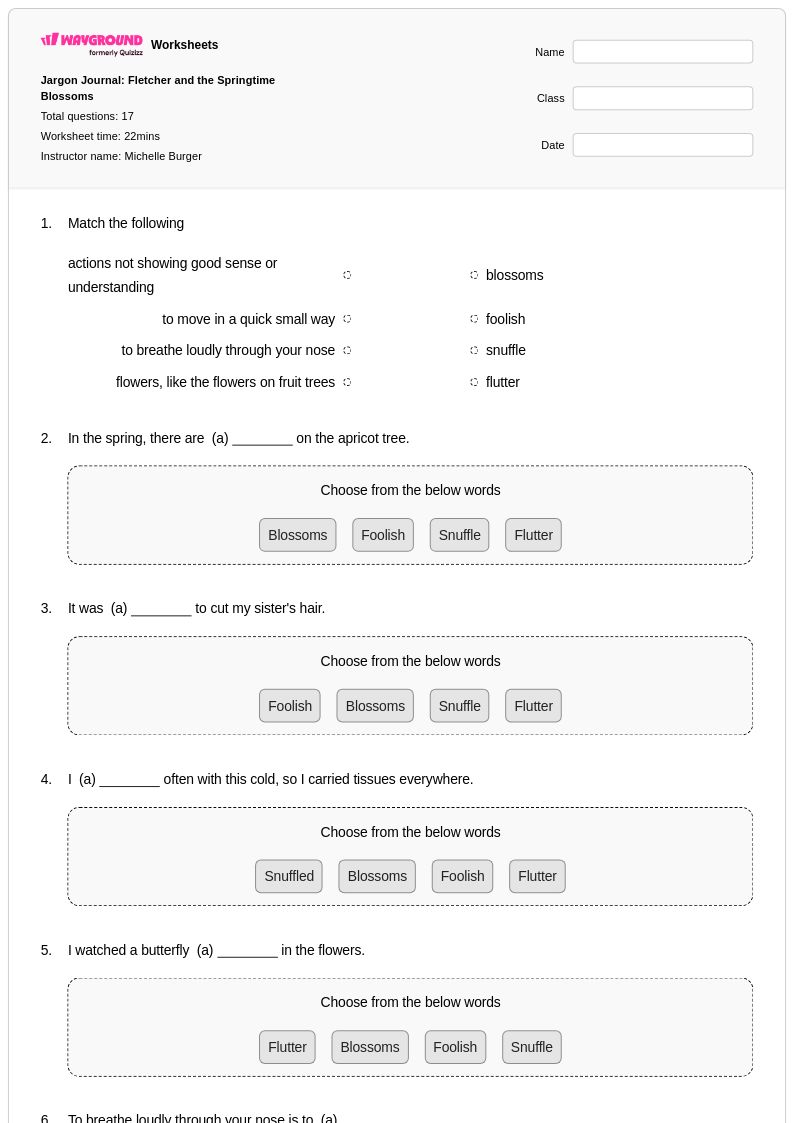
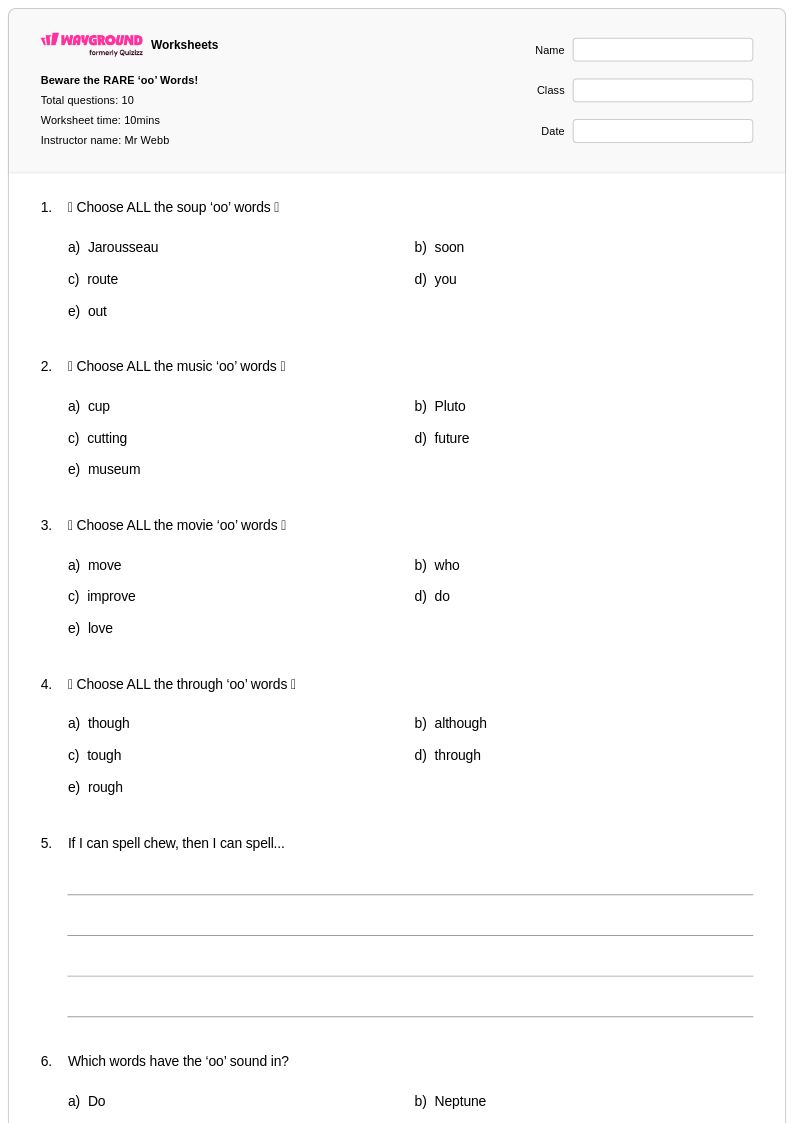
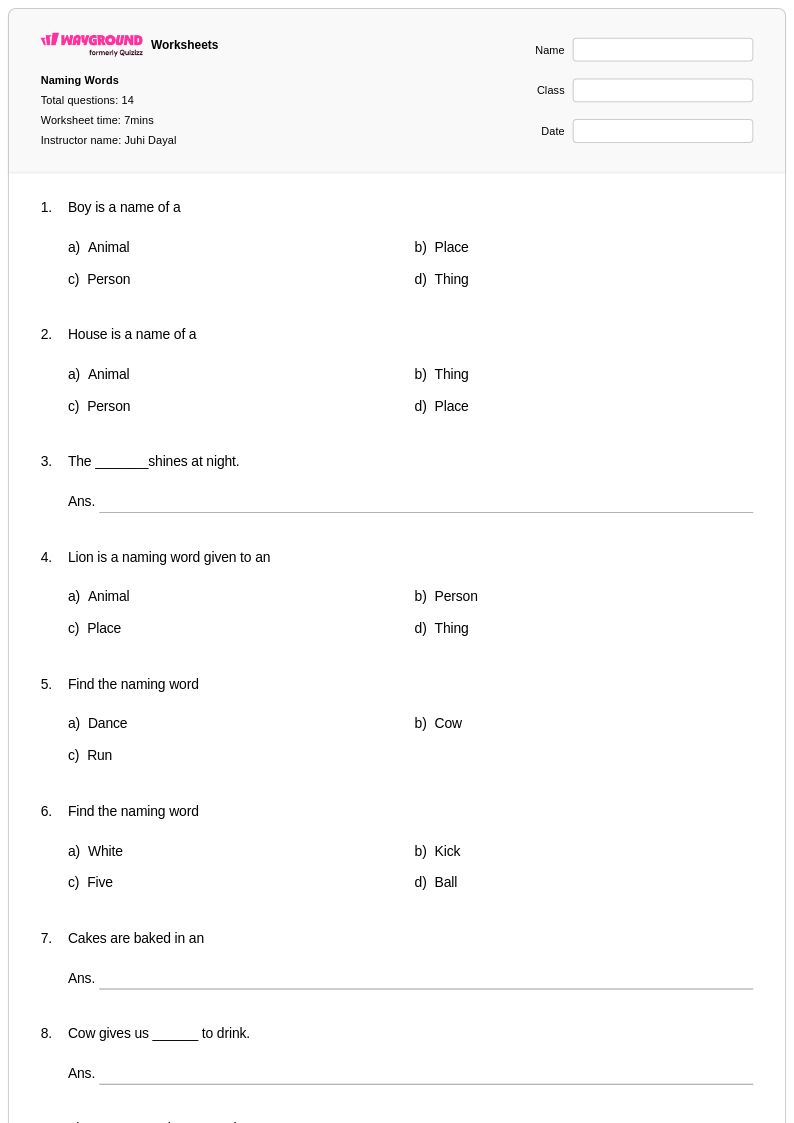
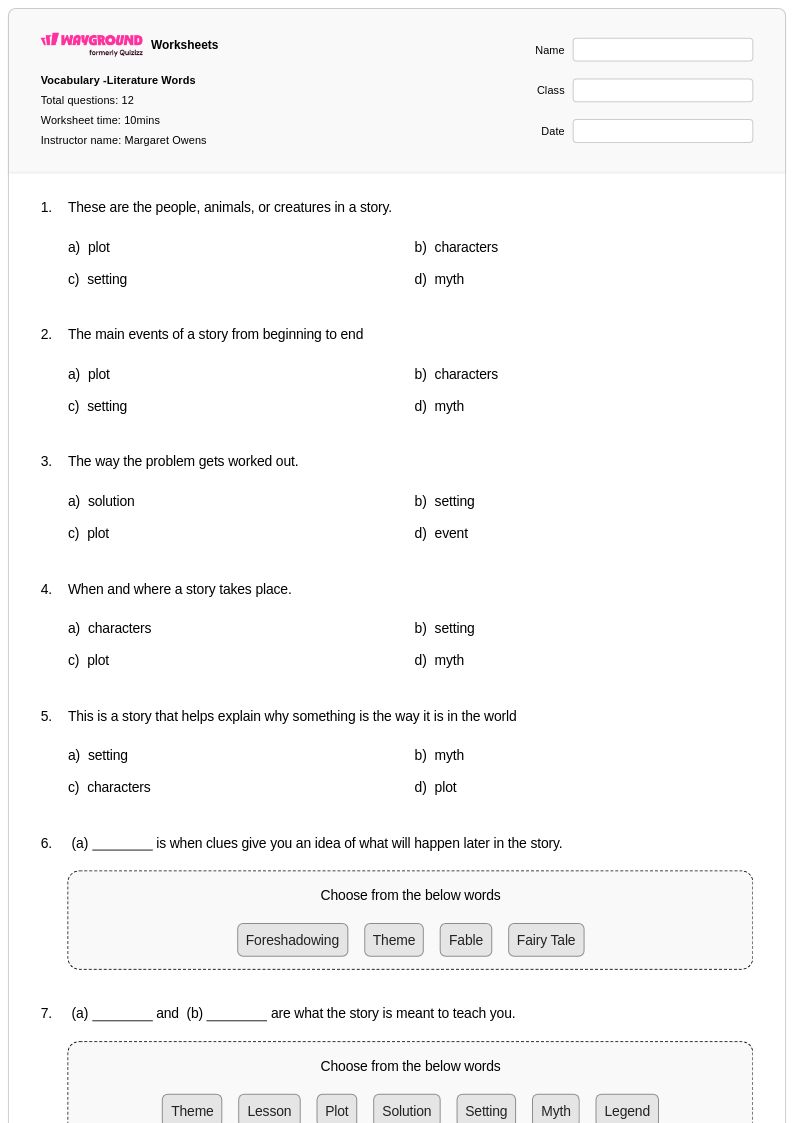
Free Printable Segmenting Words Worksheets for Year 3
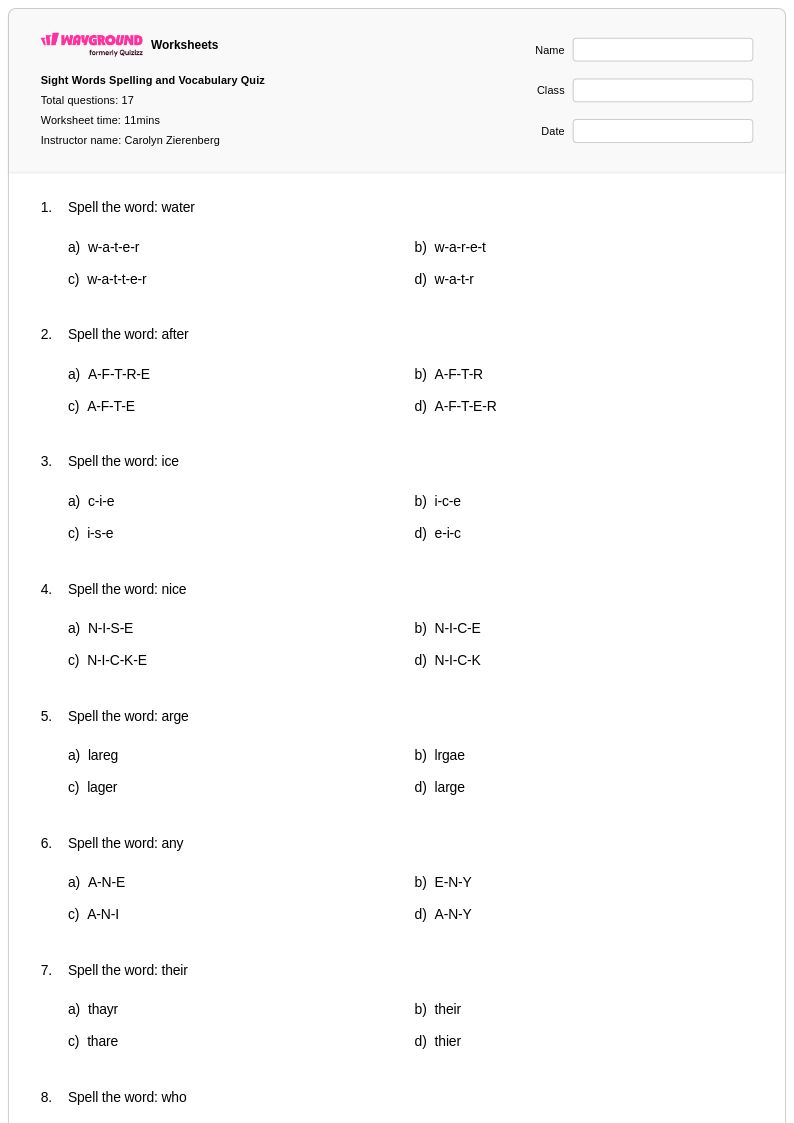
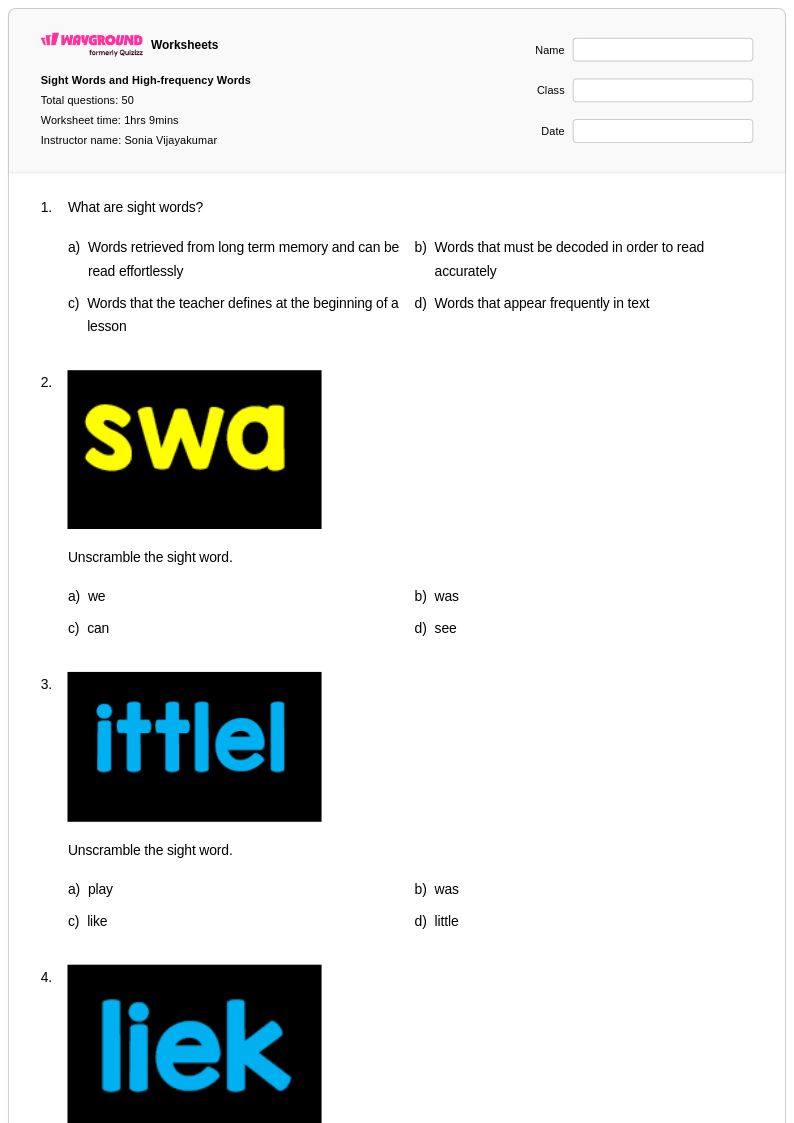
Year 3 segmenting words phonics worksheets from Wayground help students practice breaking words into individual sounds through engaging printables with answer keys and free PDF activities.
Explore printable Segmenting Words worksheets for Year 3
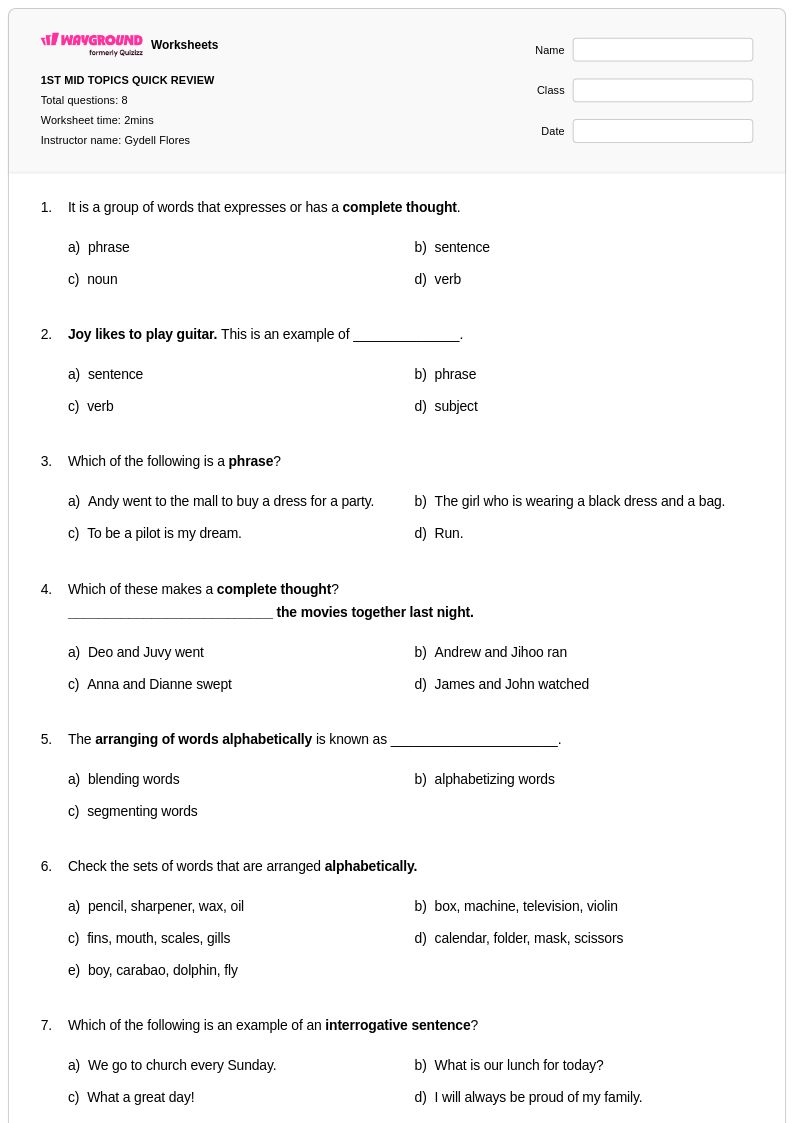
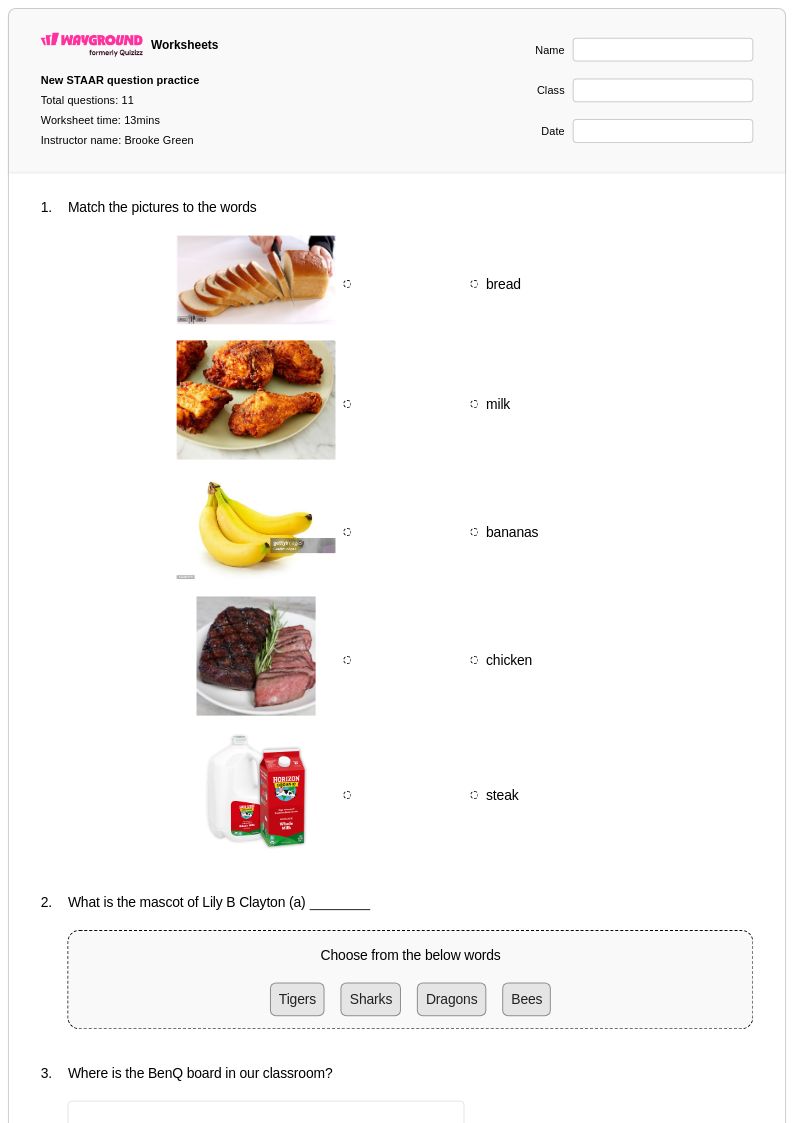
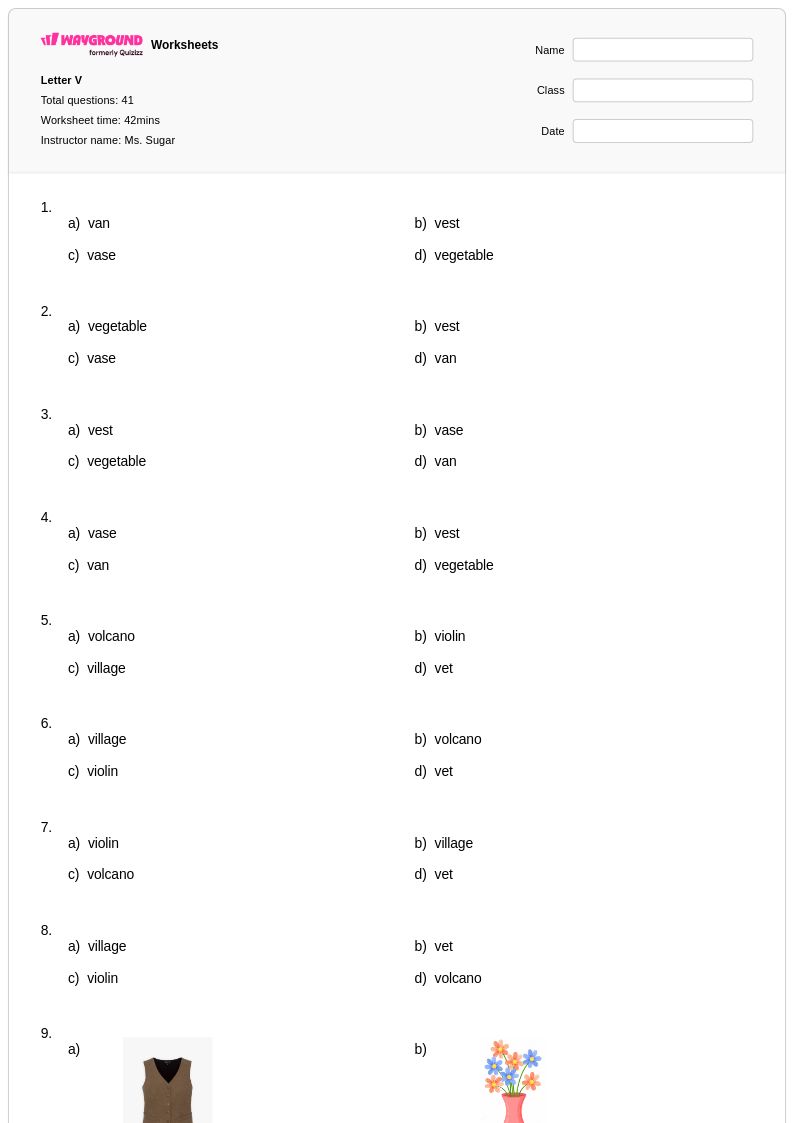
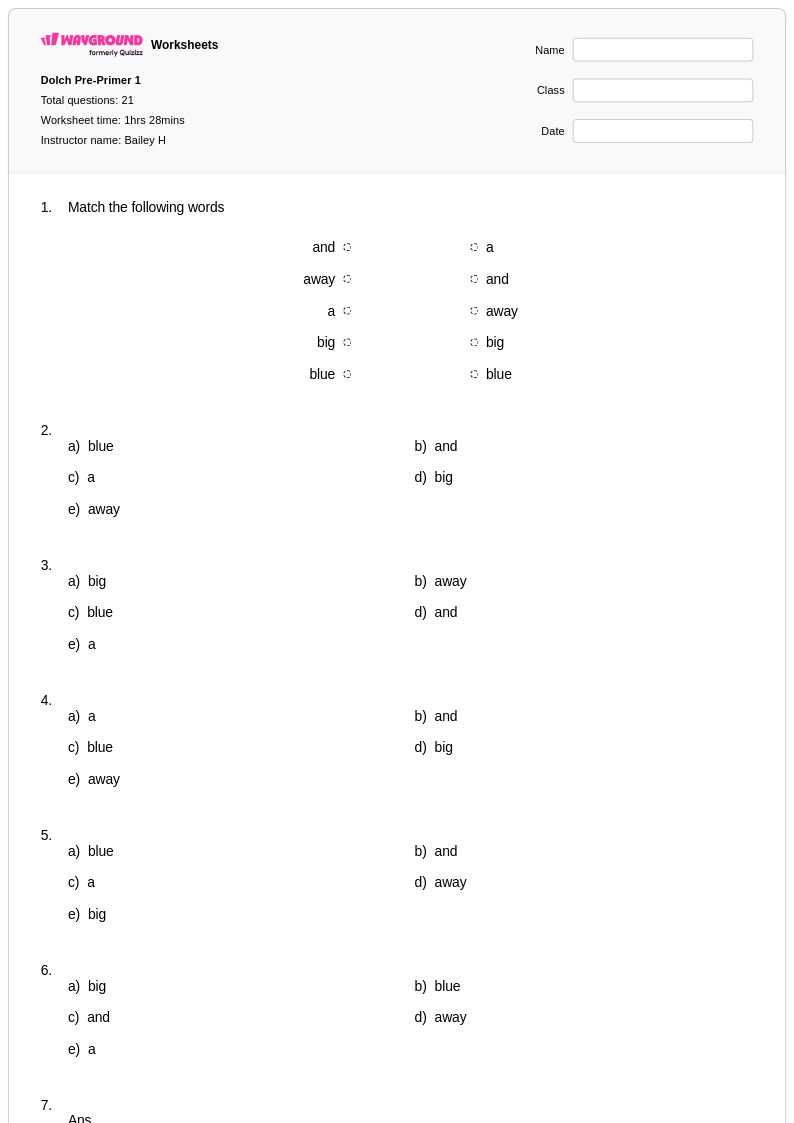
Segmenting words worksheets for Year 3 students available through Wayground (formerly Quizizz) provide essential phonics practice that builds foundational reading and spelling skills. These comprehensive resources help third-grade learners develop the critical ability to break words into their individual sounds or phonemes, a key component of phonological awareness that directly supports decoding unfamiliar words and improving overall reading fluency. The collection includes free printables with detailed answer keys, practice problems that progress from simple consonant-vowel-consonant patterns to more complex multisyllabic words, and pdf worksheets that systematically guide students through the process of identifying and separating each sound within spoken and written words.
Wayground (formerly Quizizz) empowers teachers with millions of educator-created segmenting words resources that streamline lesson planning and provide targeted phonics instruction. The platform's robust search and filtering capabilities allow teachers to quickly locate materials aligned with specific learning standards and customize worksheets to match individual student needs and reading levels. These differentiation tools enable effective remediation for struggling readers while offering enrichment opportunities for advanced learners, with resources available in both printable pdf format for traditional classroom use and digital formats for interactive learning experiences. Teachers can efficiently plan skill practice sessions, track student progress through systematic phoneme segmentation activities, and ensure that every third-grade student receives appropriate support in developing this fundamental literacy skill.
FAQs
How do I teach students to segment words into sounds?
Start with short consonant-vowel-consonant (CVC) words like 'cat' or 'hop' and model segmenting aloud by stretching each phoneme slowly. Use manipulatives like counters or Elkonin boxes so students can physically represent each sound as they say it. Once students can segment three-phoneme words consistently, introduce blends and digraphs before moving to multisyllabic words. Connecting segmentation practice to spelling and decoding activities reinforces why the skill matters.
What exercises help students practice segmenting words?
Effective practice exercises include phoneme counting tasks, Elkonin box activities, segmenting-and-spelling drills, and oral segmentation with tapping or clapping for each sound. Worksheets that progress from simple CVC patterns to blends and multisyllabic words give students scaffolded exposure to increasingly complex segmentation challenges. Regular, brief practice sessions are more effective than infrequent long ones, as phonemic awareness develops through repeated retrieval.
What mistakes do students commonly make when segmenting words?
A frequent error is segmenting by syllable rather than individual phoneme, so students say 'bas-ket' instead of '/b/-/a/-/s/-/k/-/e/-/t/.' Another common mistake is blending adjacent consonants into a single unit, treating 'bl' as one sound instead of two. Students also tend to omit unstressed vowel sounds in multisyllabic words. Targeted practice that isolates these specific patterns helps students self-correct before errors become habitual.
How can I differentiate segmenting words practice for students at different skill levels?
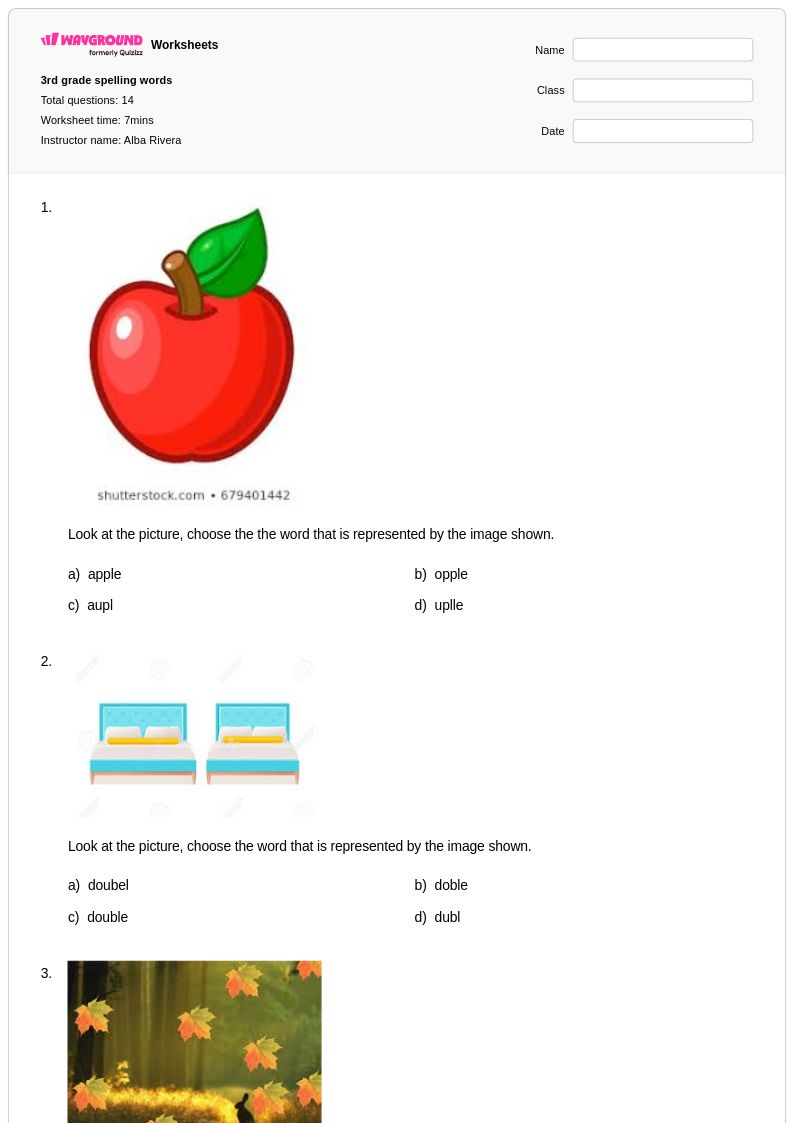
For students who are still developing foundational phonemic awareness, begin with two-phoneme words and provide visual support like picture cards before moving to print. More advanced students can practice segmenting words with blends, digraphs, and multiple syllables. On Wayground, teachers can apply accommodations such as Read Aloud support for students who need audio assistance, or reduced answer choices to lower cognitive load for students who find multiple-option tasks overwhelming.
How do I use Wayground's segmenting words worksheets in my classroom?
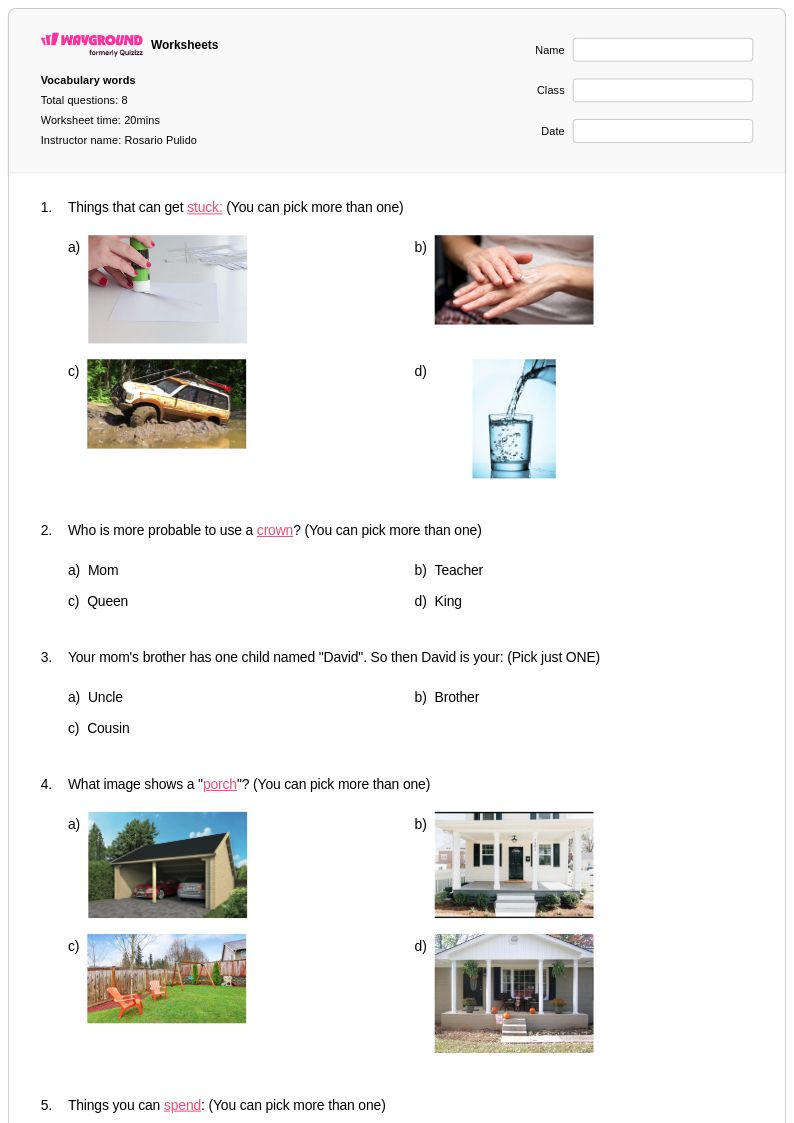
Wayground's segmenting words worksheets are available as printable PDFs for direct classroom use and in digital formats for technology-integrated instruction. Teachers can assign them as independent practice, guided group work, or homework, and can host them as a quiz directly on Wayground for real-time student responses. Each worksheet includes a complete answer key, making them efficient for both self-paced student work and teacher-led review.