
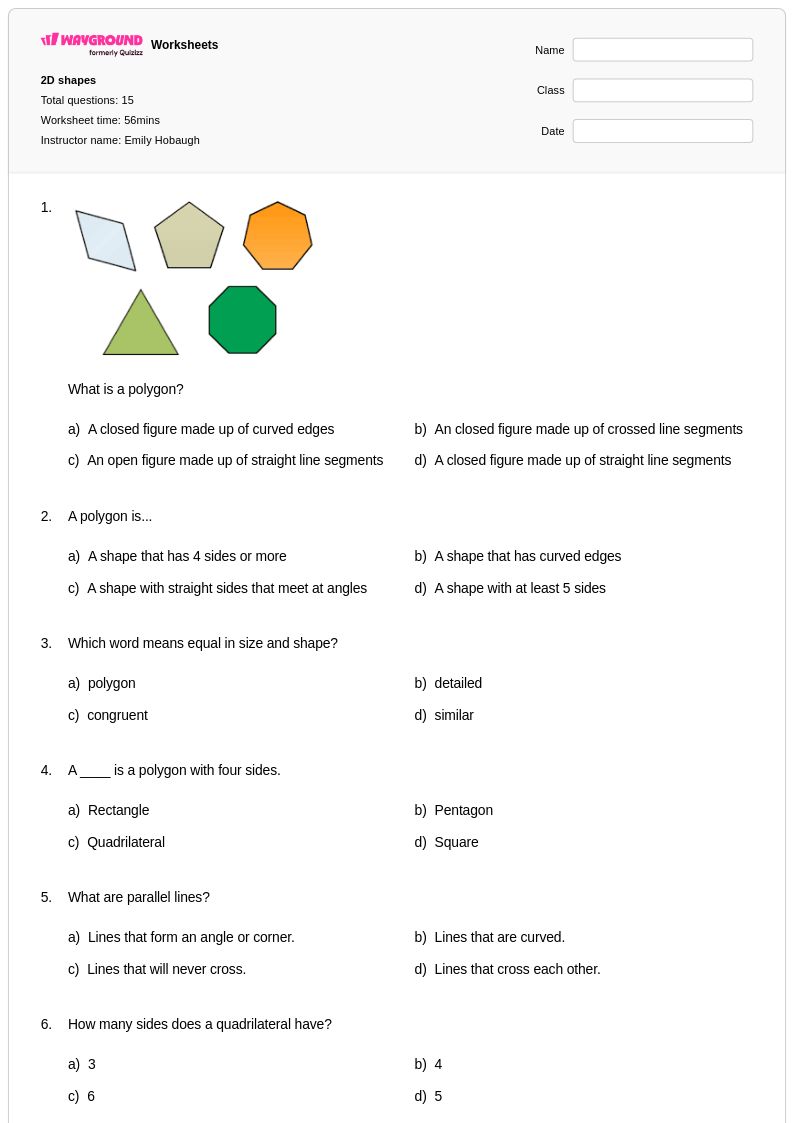
15 Hỏi
4th
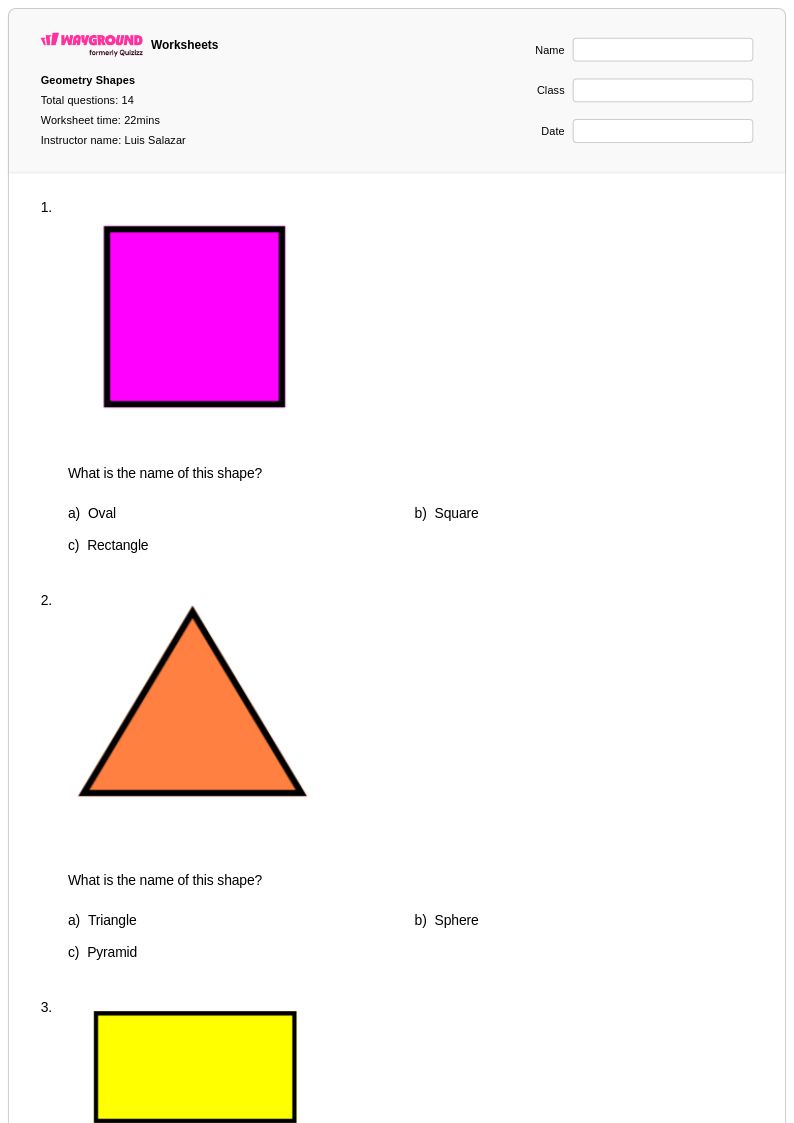
14 Hỏi
1st - 5th
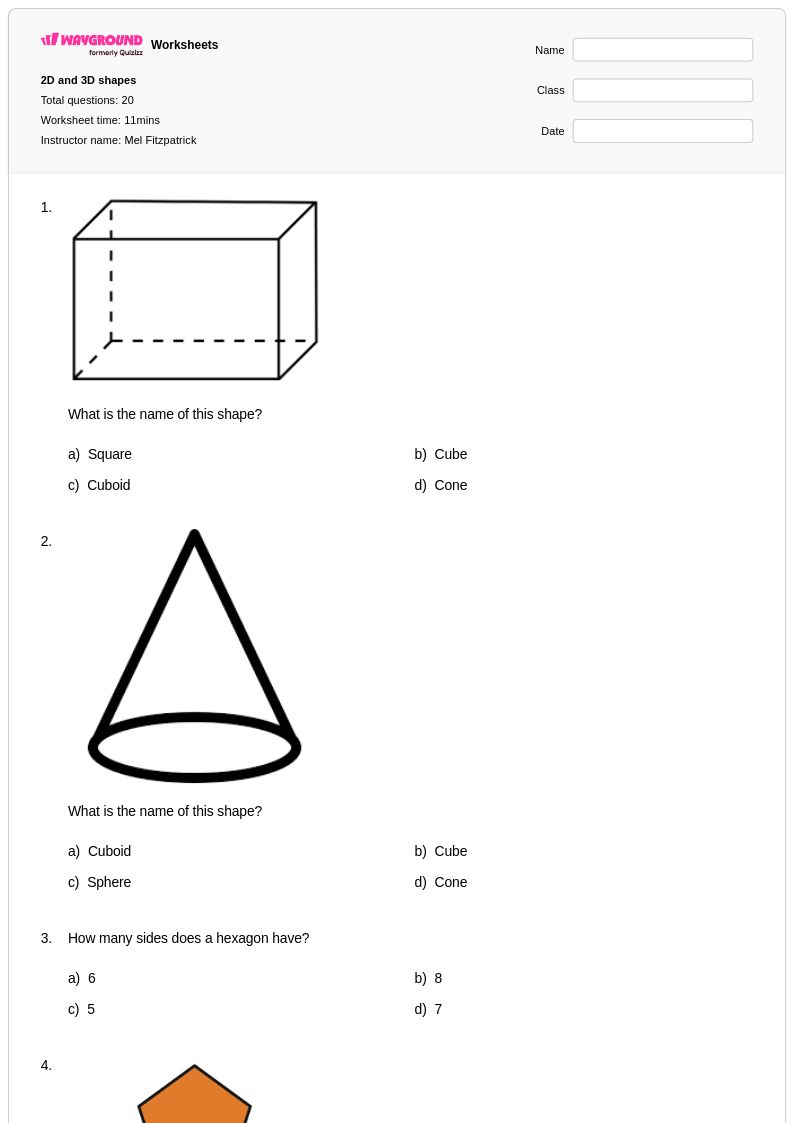
20 Hỏi
3rd - 7th
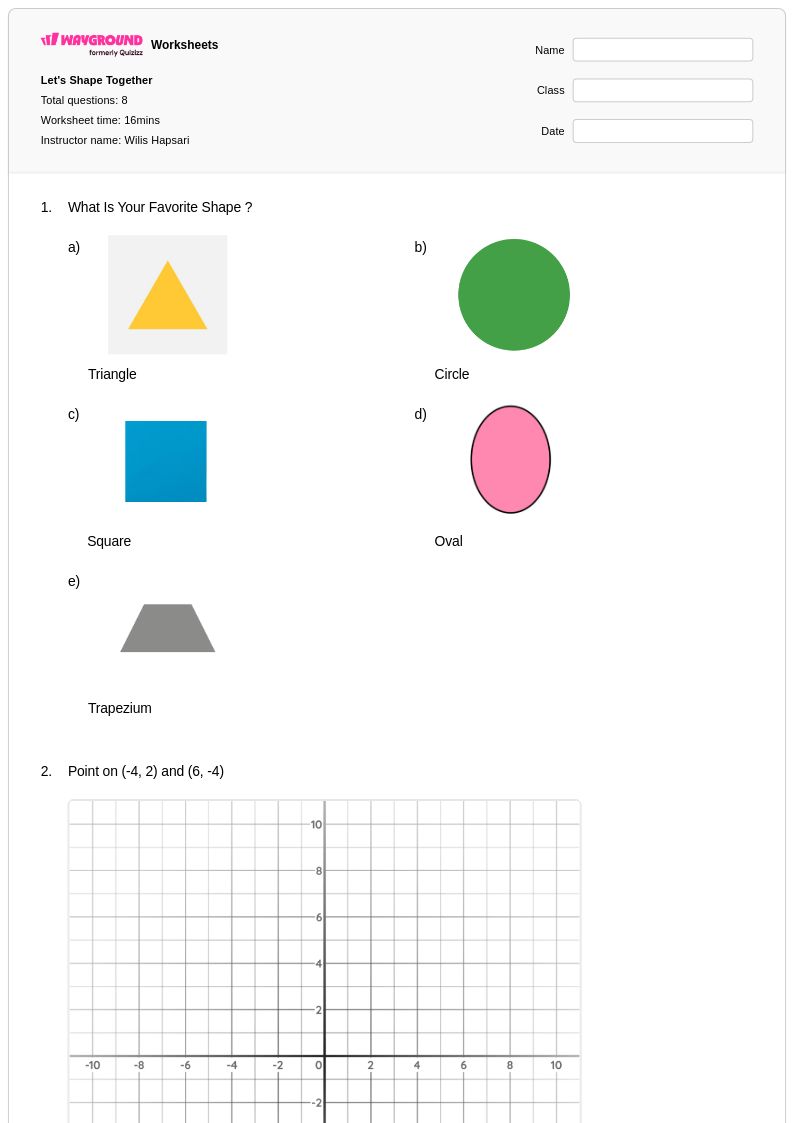
8 Hỏi
1st - 5th
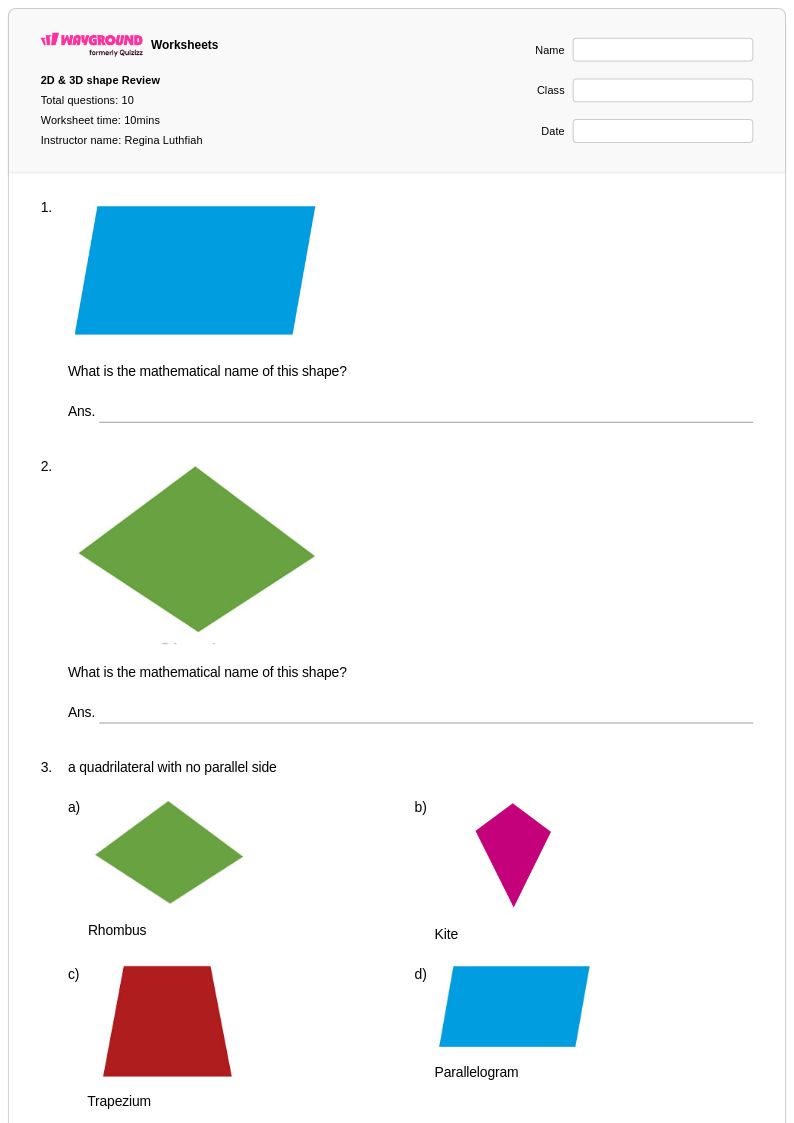
10 Hỏi
4th
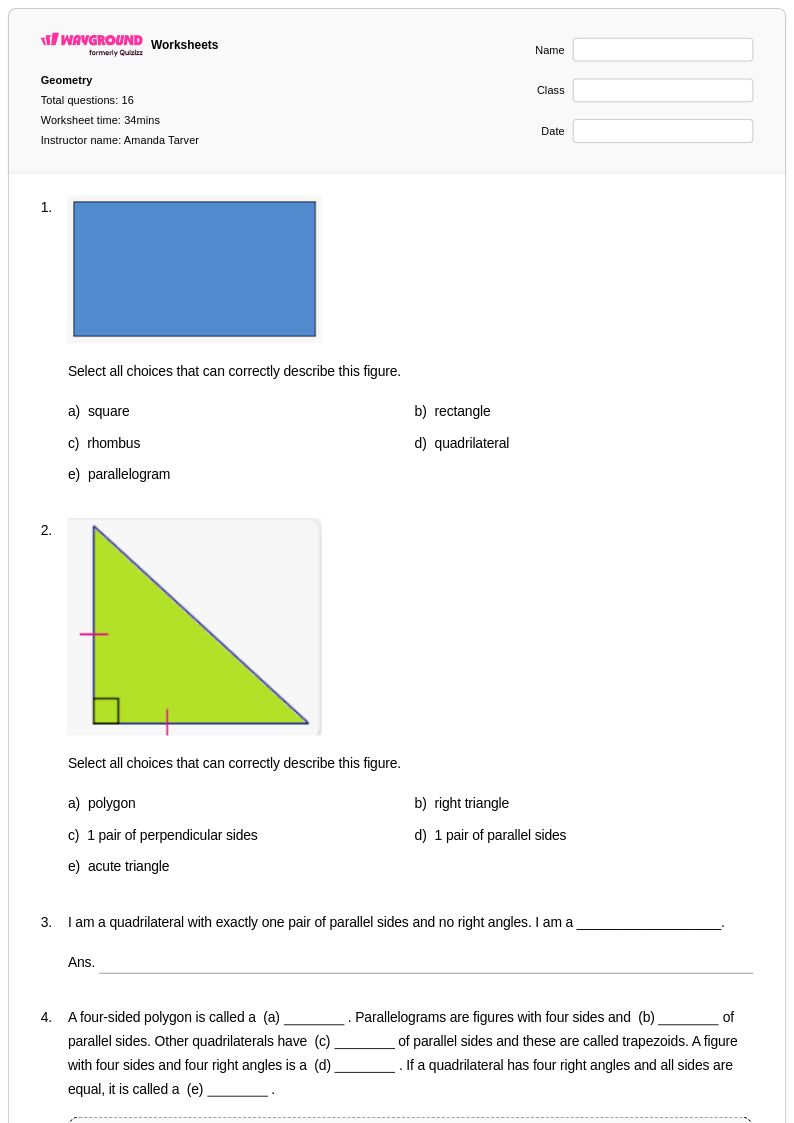
16 Hỏi
4th
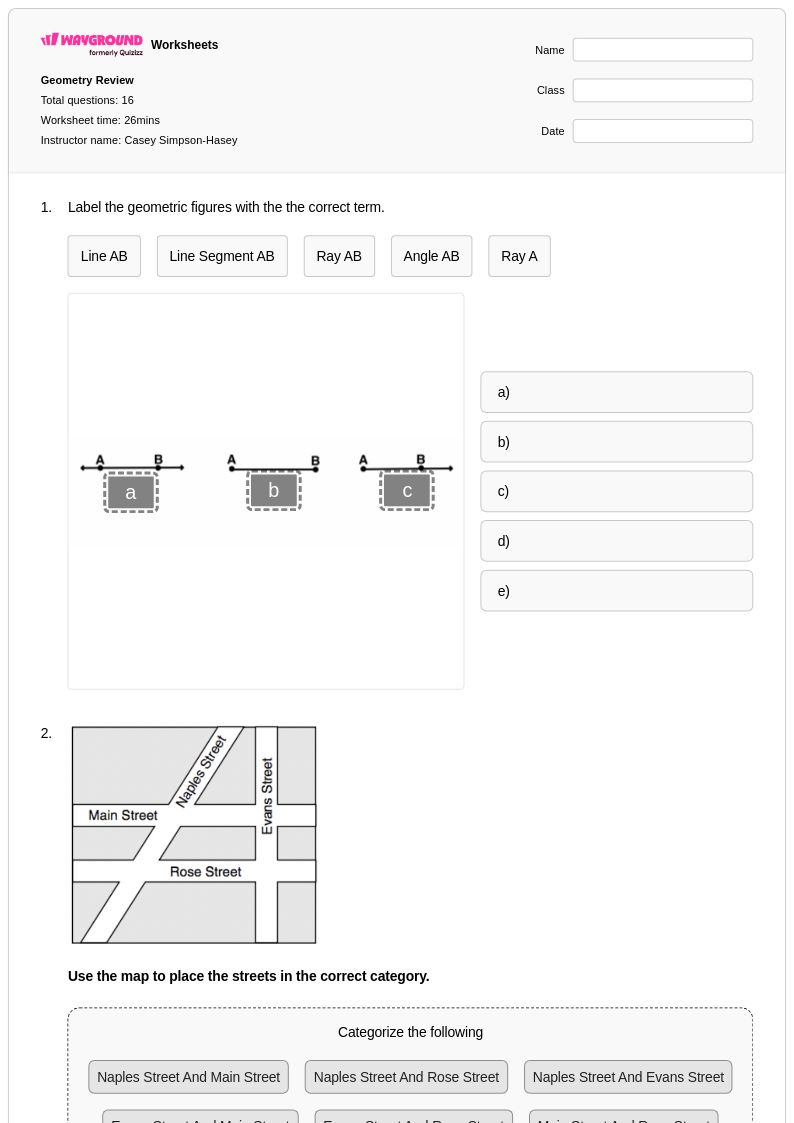
16 Hỏi
4th
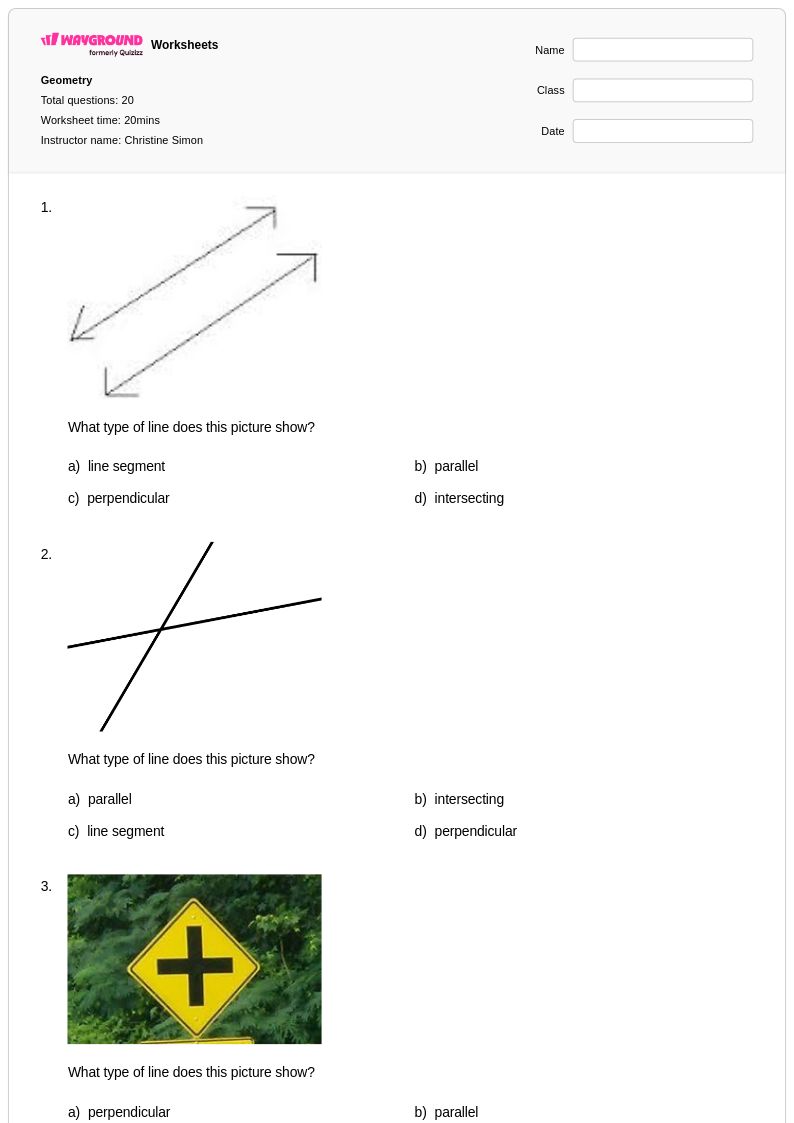
20 Hỏi
4th - 5th
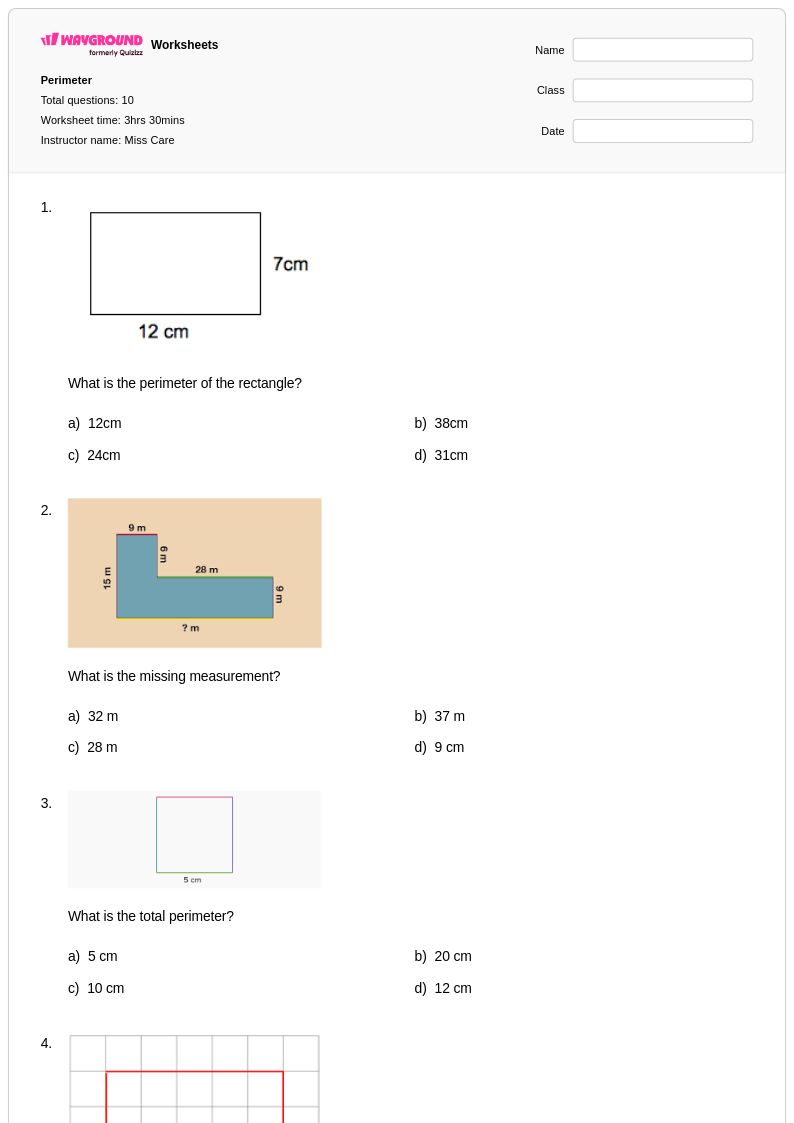
10 Hỏi
4th
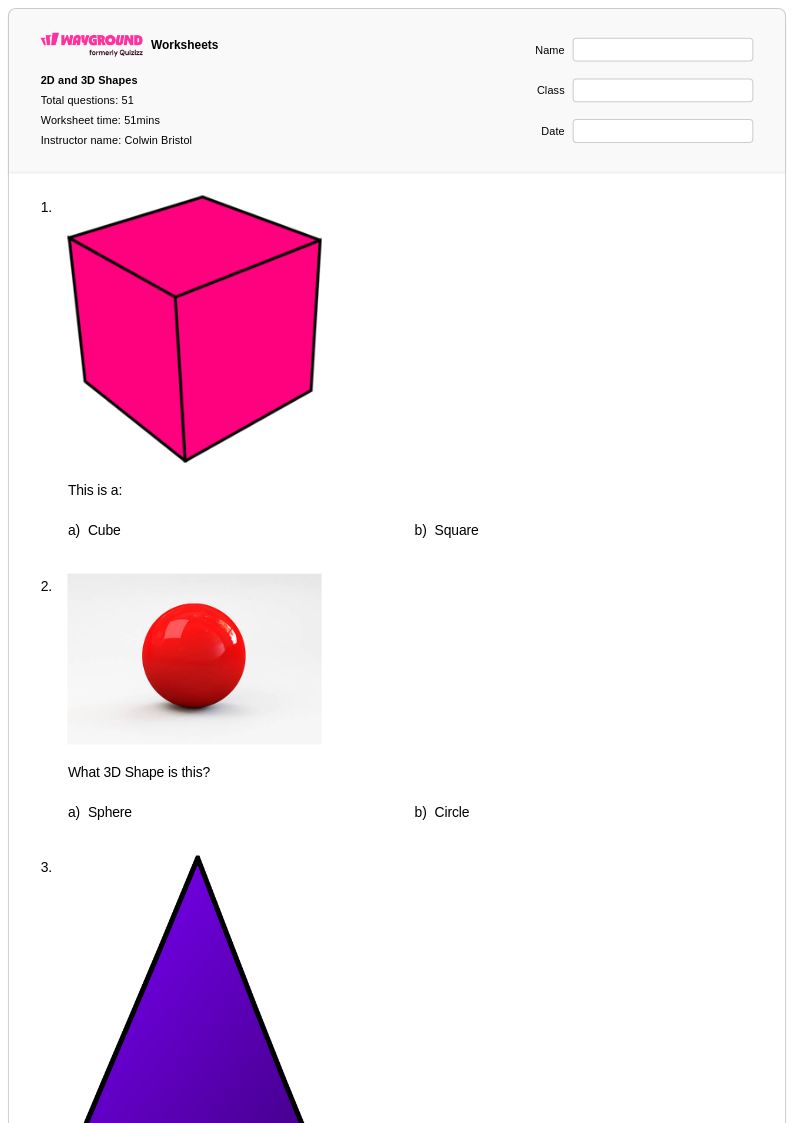
51 Hỏi
4th
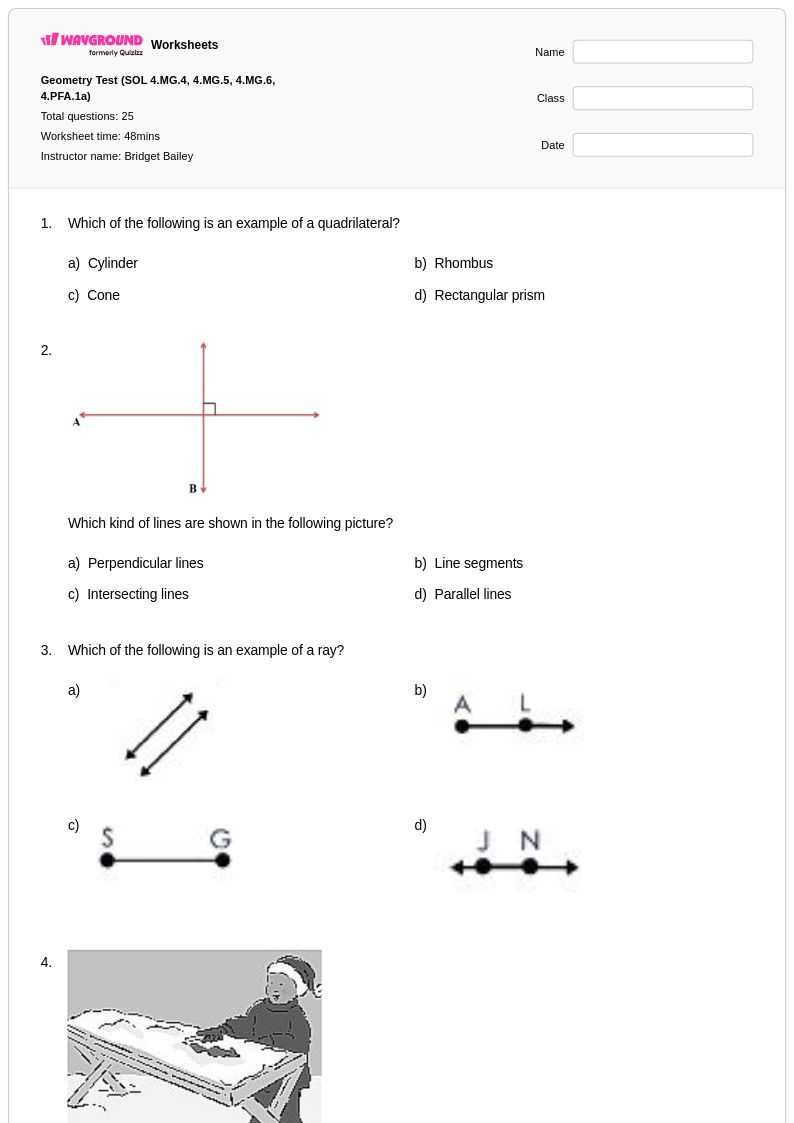
28 Hỏi
4th
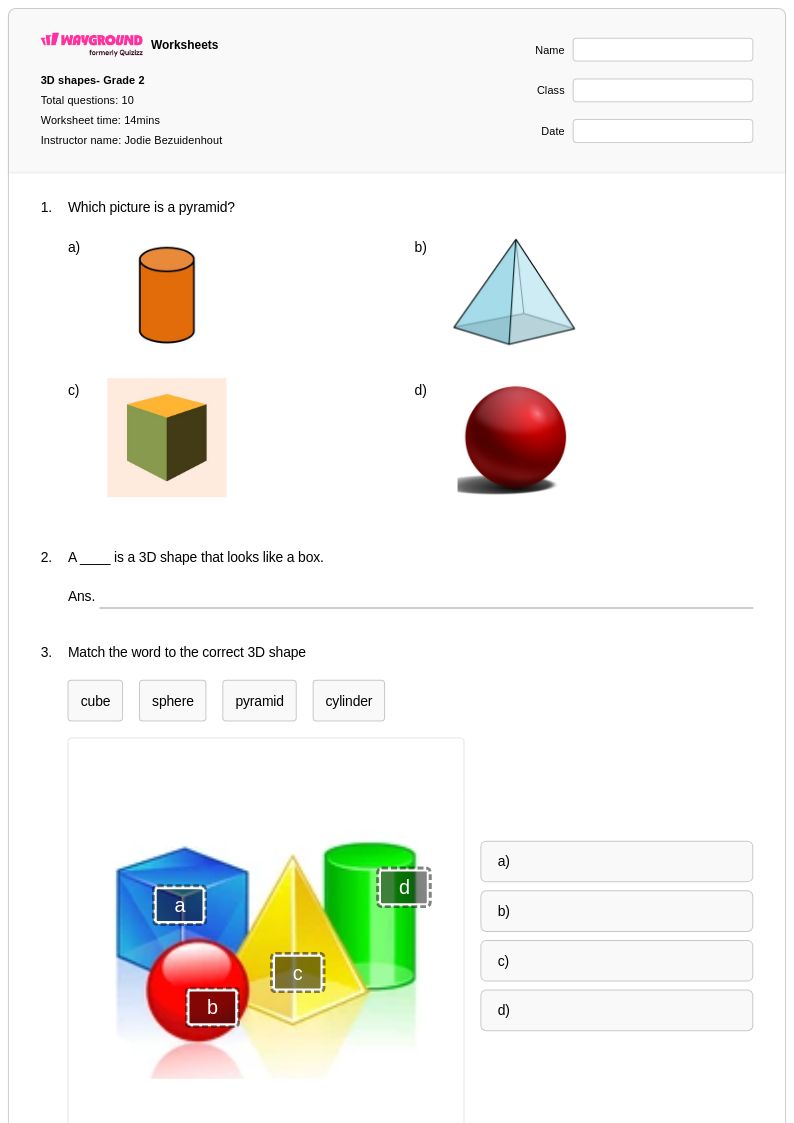
10 Hỏi
2nd - Uni
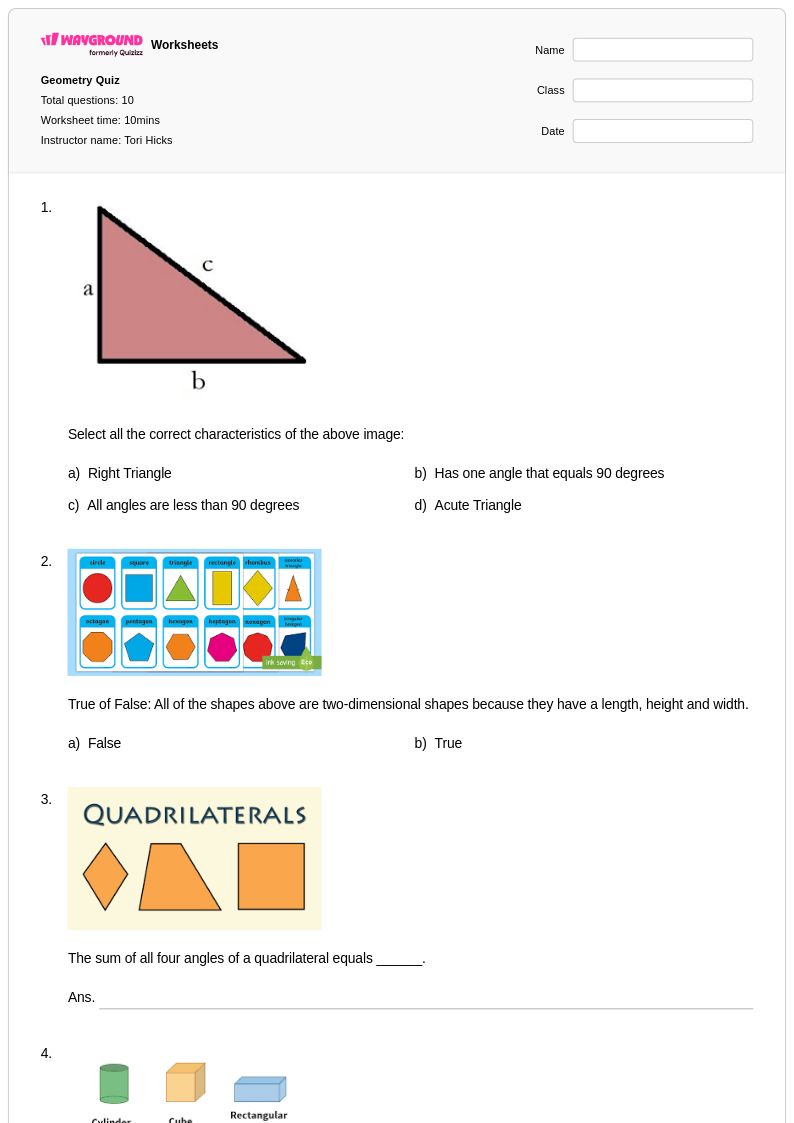
10 Hỏi
3rd - 5th
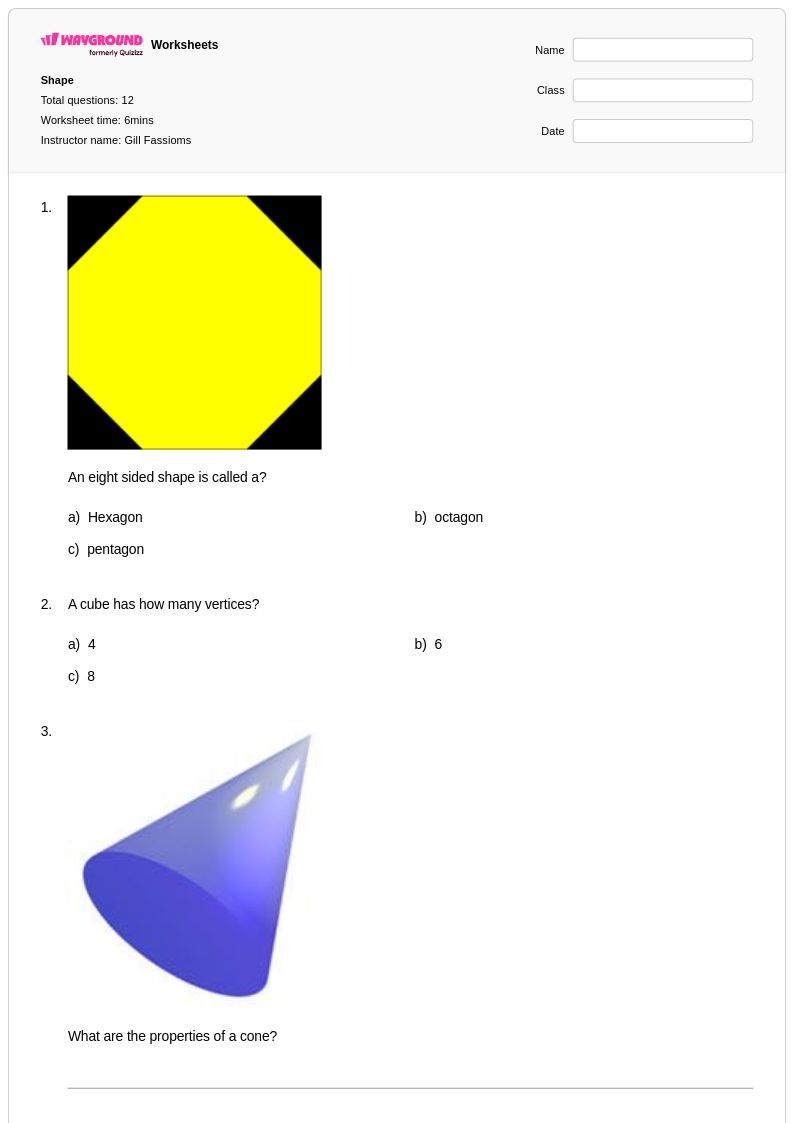
12 Hỏi
4th
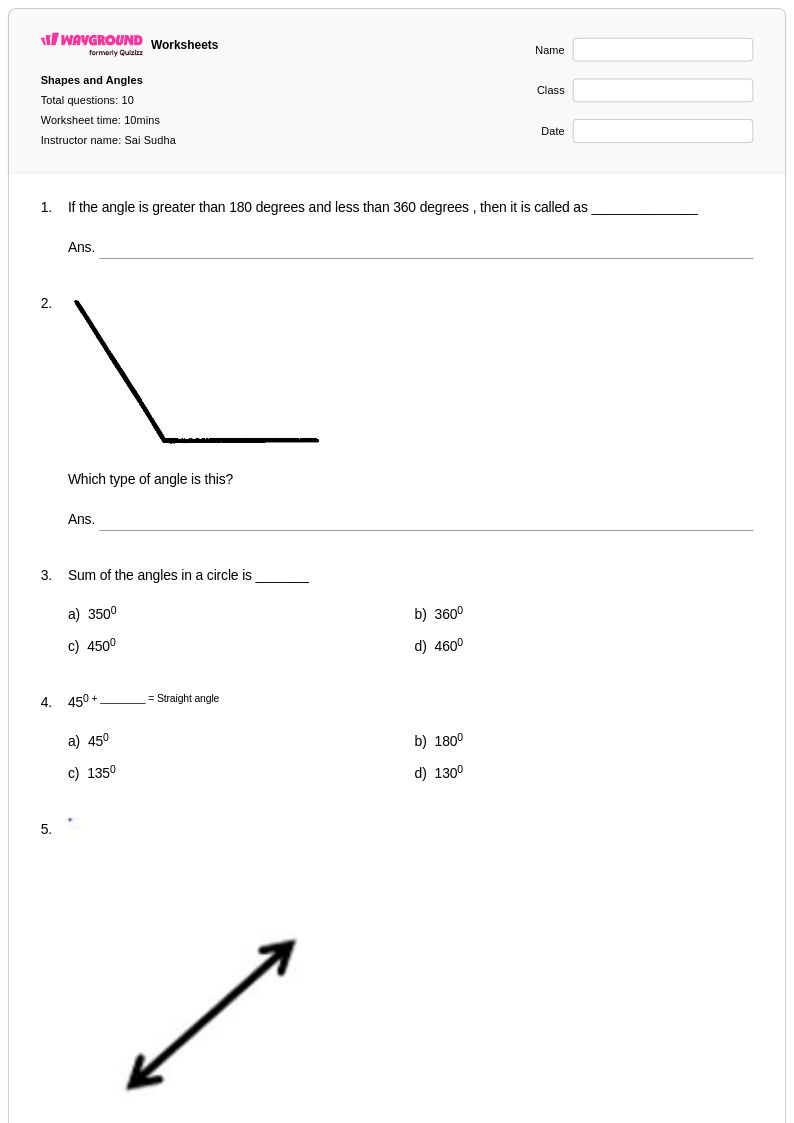
10 Hỏi
3rd - 6th
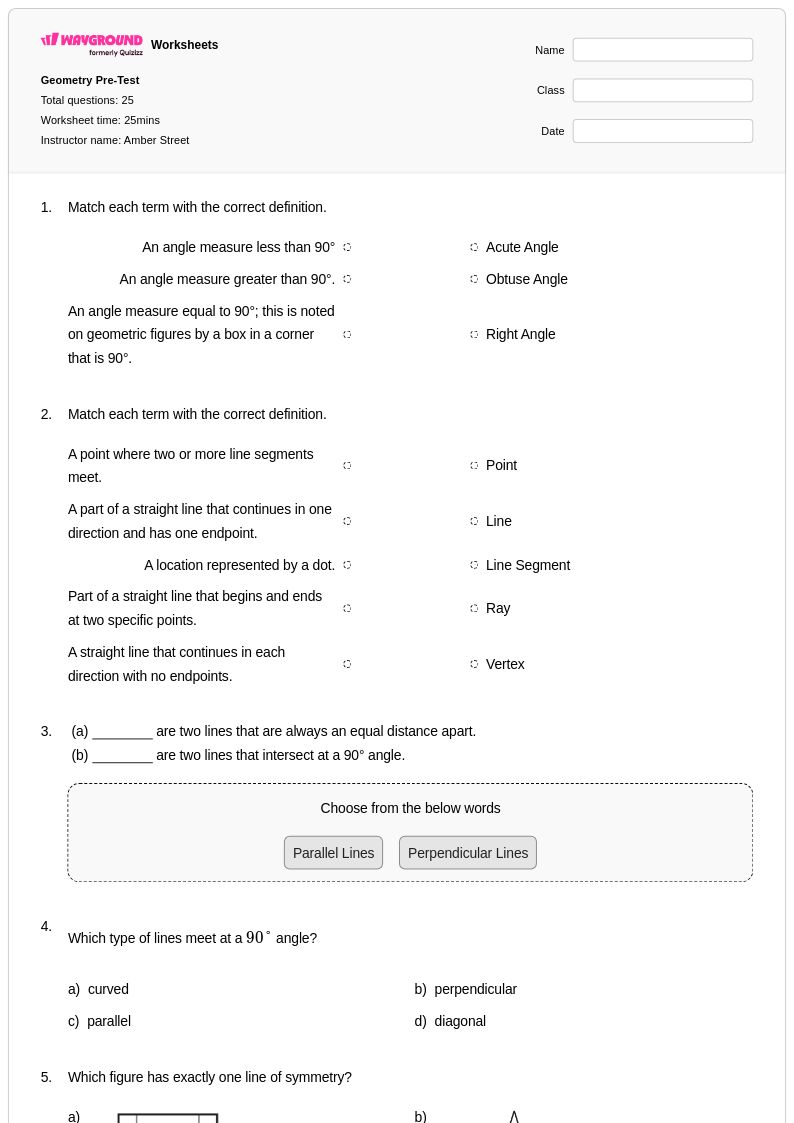
25 Hỏi
4th
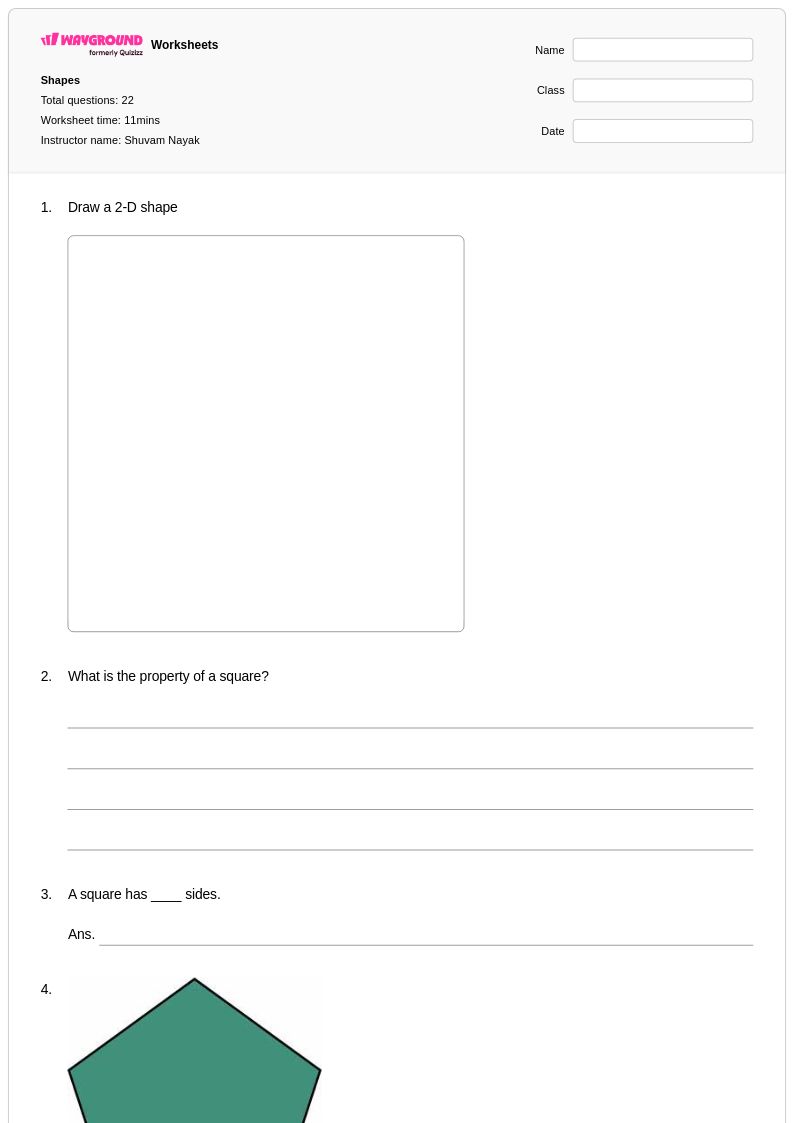
22 Hỏi
1st - 5th
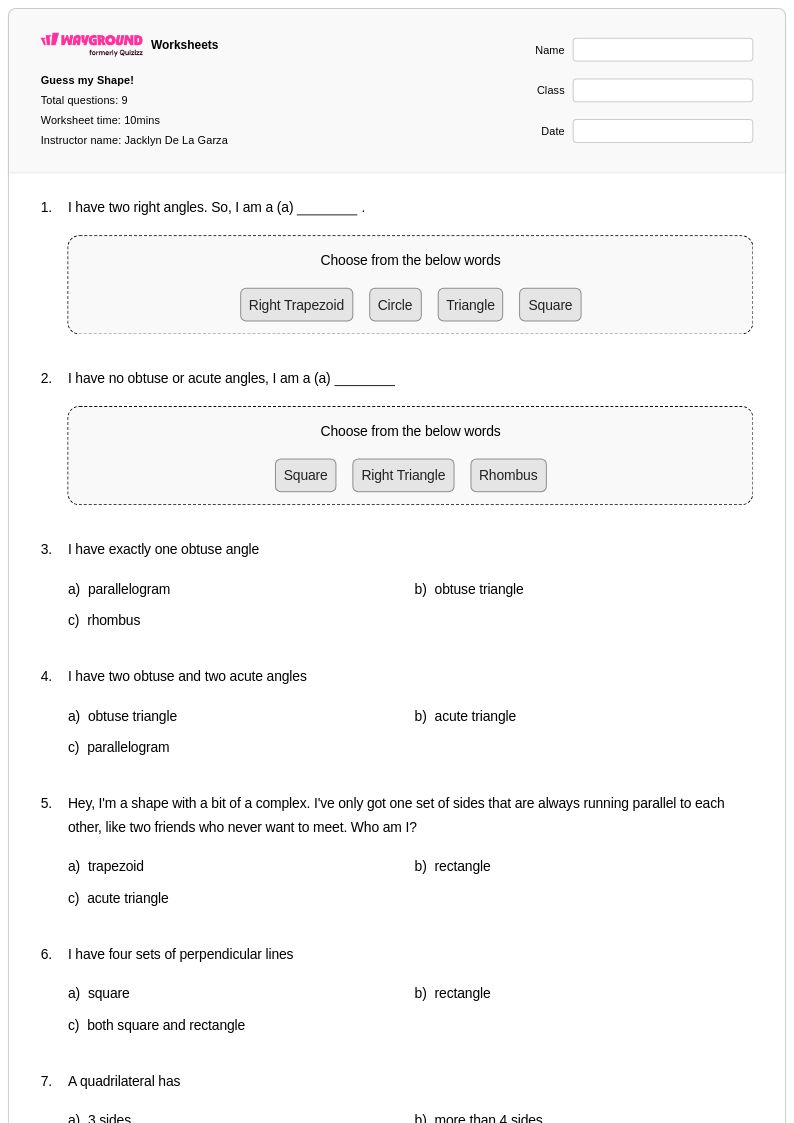
9 Hỏi
4th
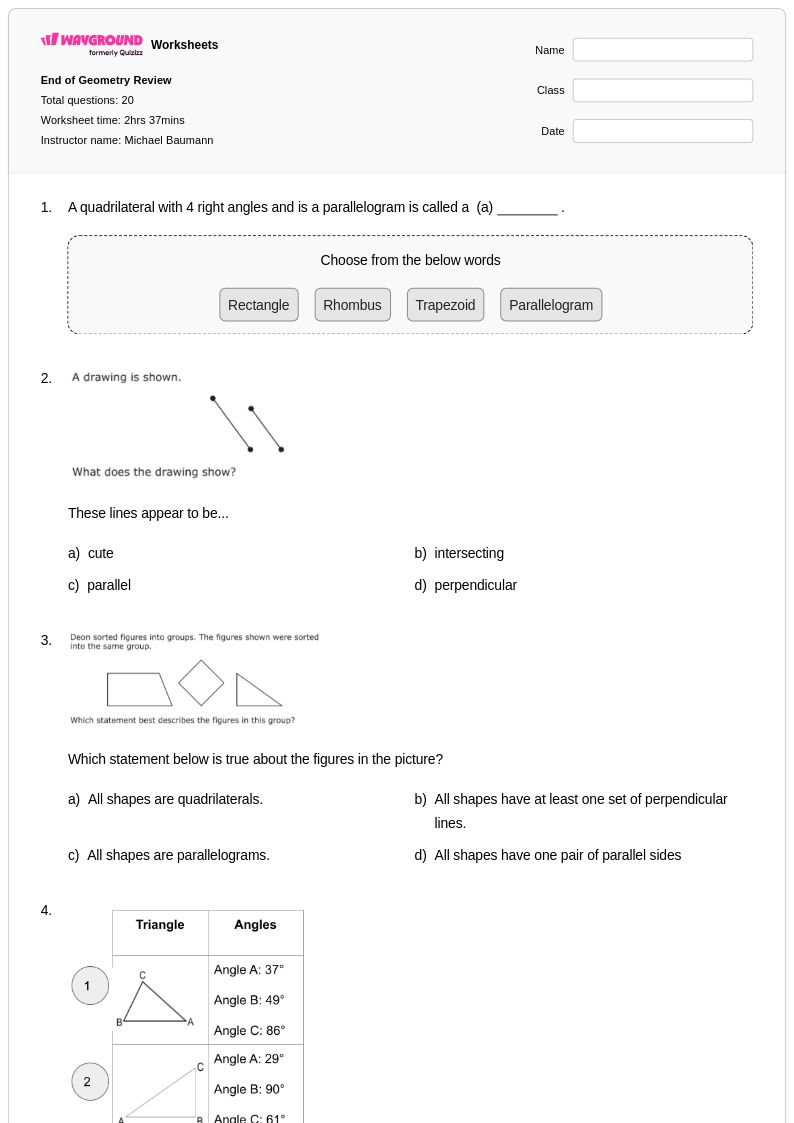
20 Hỏi
4th
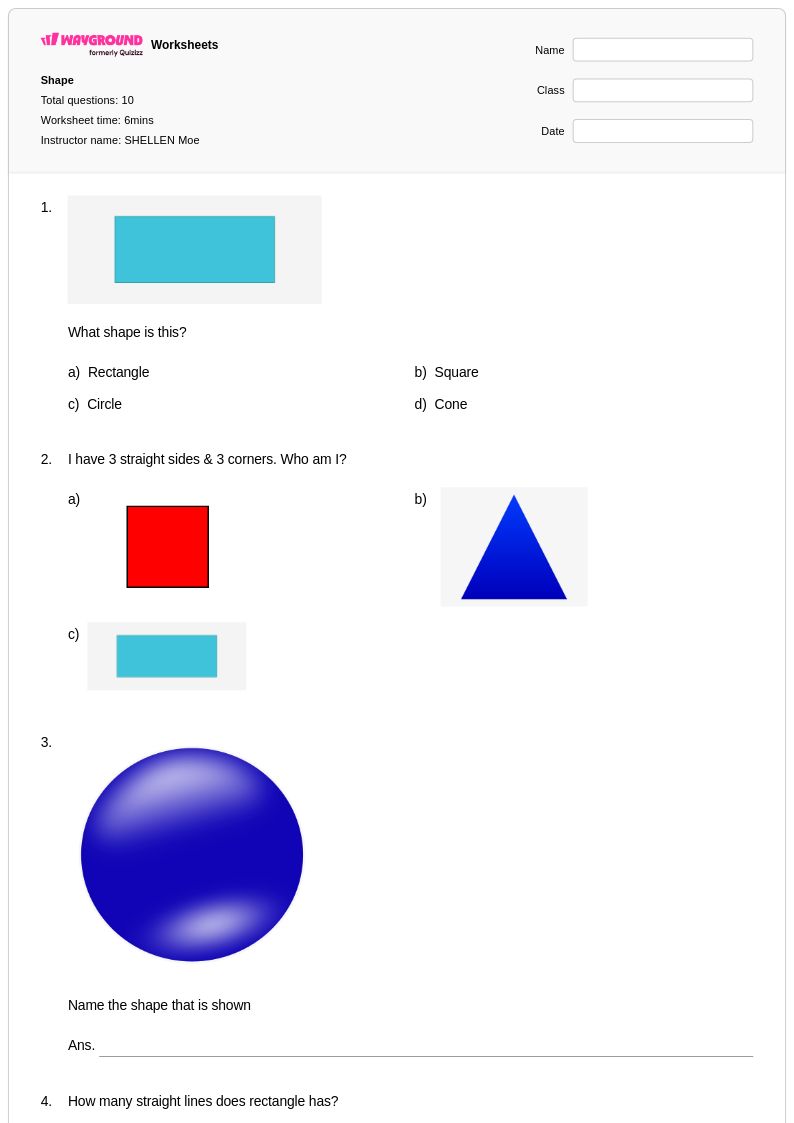
10 Hỏi
4th
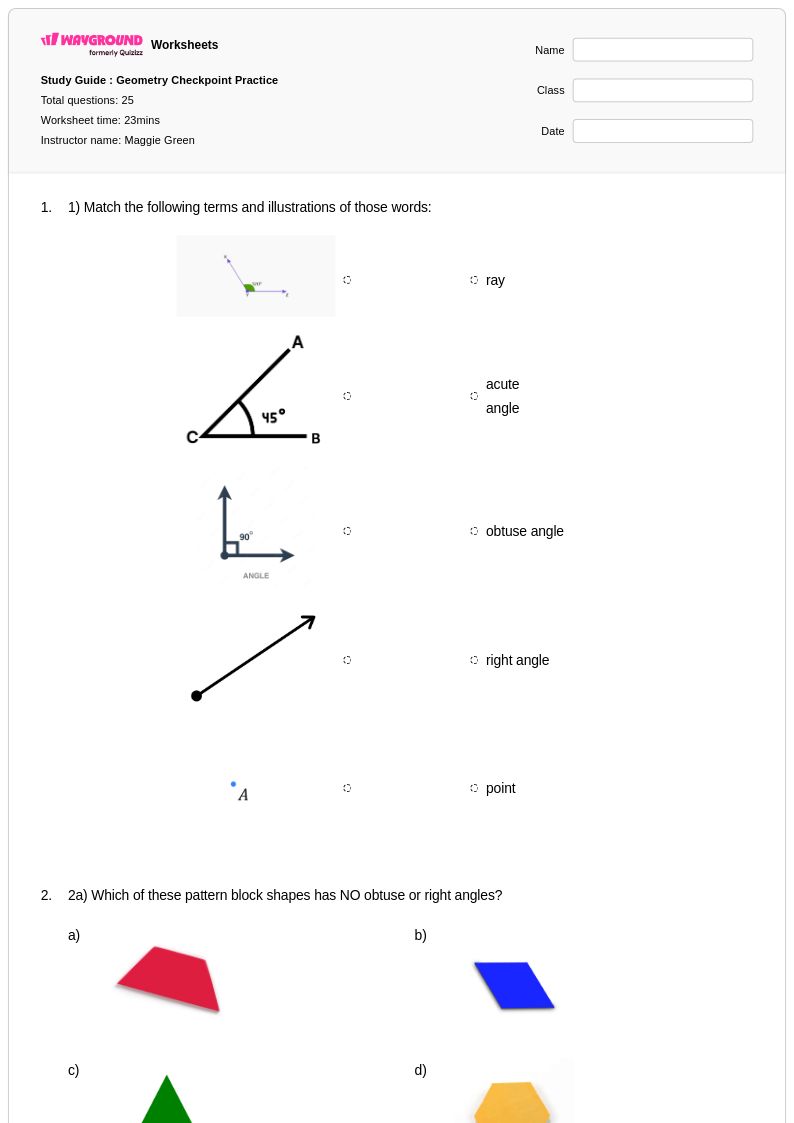
25 Hỏi
4th
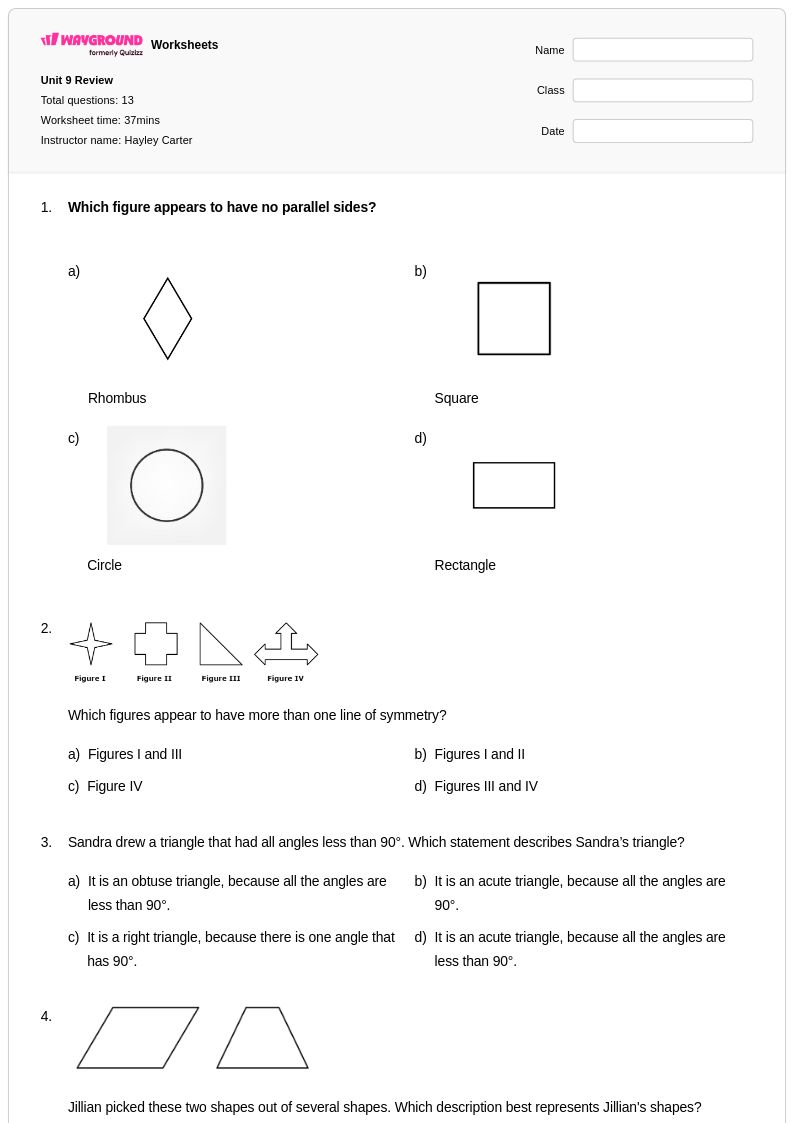
13 Hỏi
4th
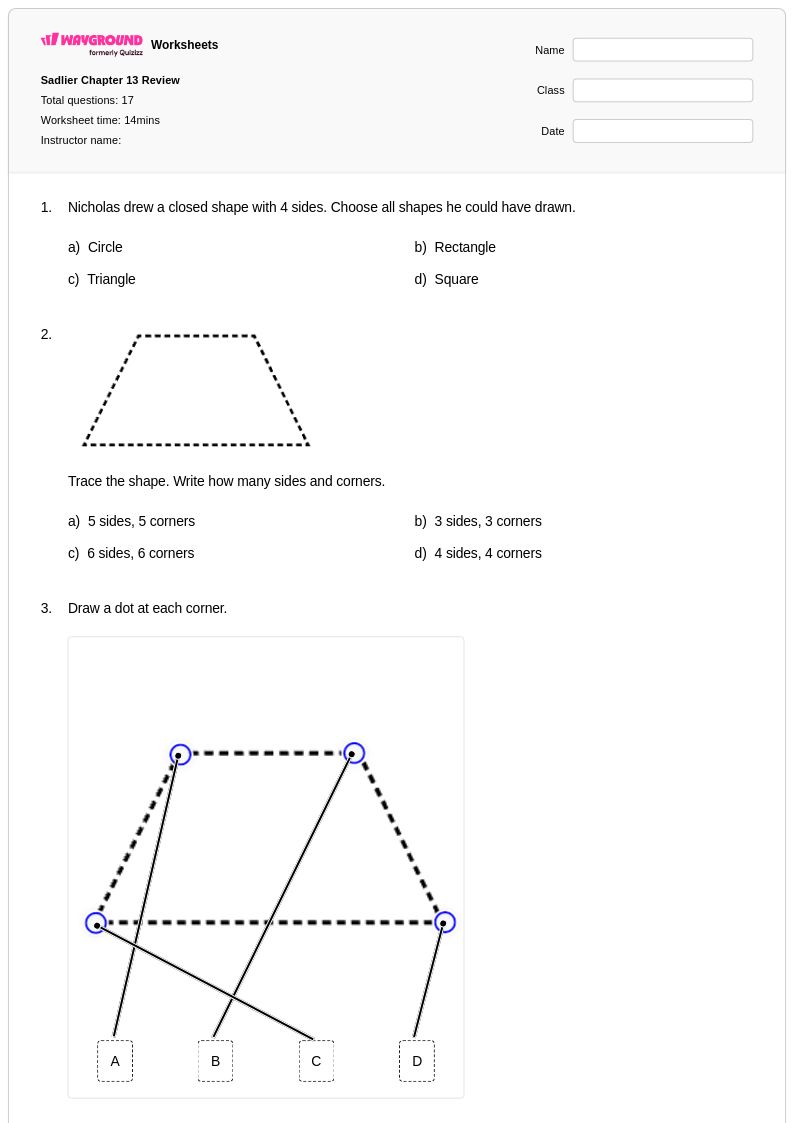
17 Hỏi
1st - Uni
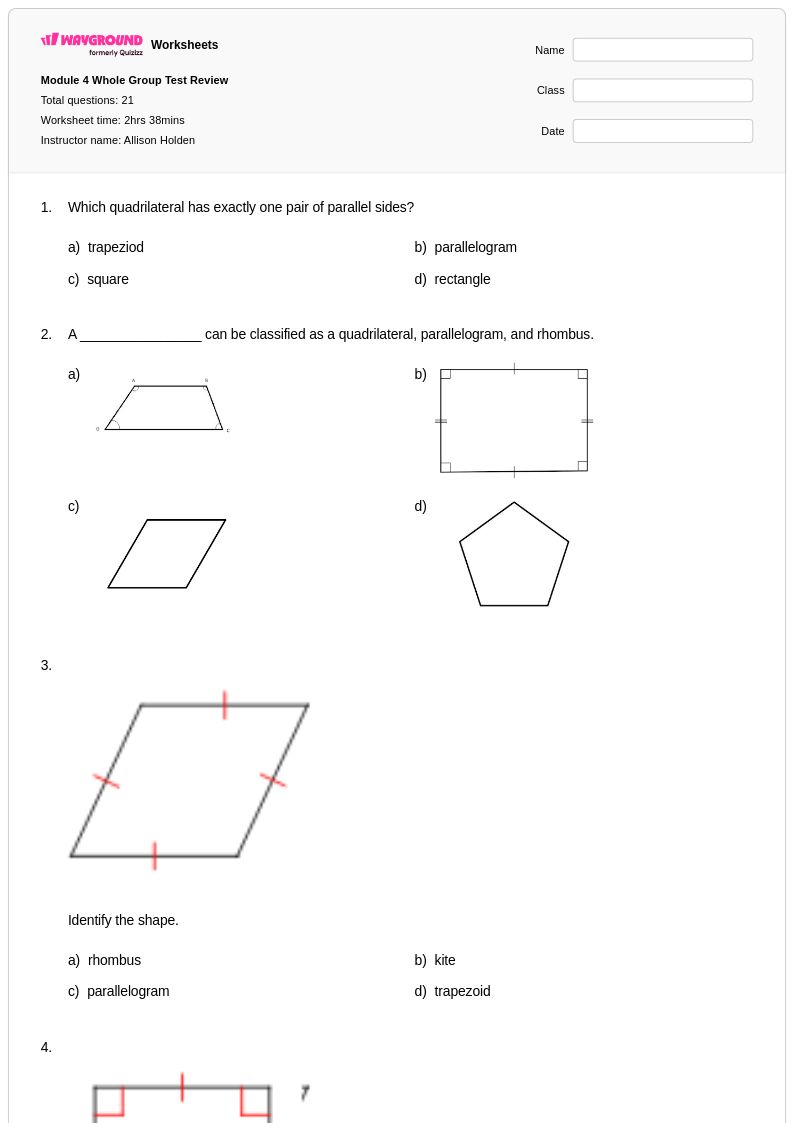
21 Hỏi
4th
Khám phá Shape Sorting and Classification Bảng tính theo cấp độ
Khám phá các bảng tính chủ đề khác cho year 4
Explore printable Shape Sorting and Classification worksheets for Year 4
Shape sorting and classification worksheets for Year 4 provide essential practice in recognizing, categorizing, and analyzing geometric forms based on their distinct properties and characteristics. These comprehensive printables available through Wayground help students develop critical spatial reasoning skills by working with two-dimensional and three-dimensional shapes, identifying attributes such as number of sides, angles, and symmetry lines. The practice problems guide fourth graders through systematic approaches to grouping shapes by shared characteristics, distinguishing between polygons and non-polygons, and understanding the relationships between different geometric figures. Each worksheet includes a detailed answer key to support independent learning and self-assessment, with free pdf downloads ensuring accessibility for both classroom instruction and home practice.
Wayground's extensive collection of teacher-created shape sorting and classification resources empowers educators with millions of high-quality materials specifically designed for Year 4 geometry instruction. The platform's robust search and filtering capabilities allow teachers to quickly locate worksheets aligned with state mathematics standards, while differentiation tools enable customization based on individual student needs and learning levels. These versatile resources are available in both printable pdf format and interactive digital versions, providing flexibility for various teaching environments and learning preferences. Teachers can effectively use these materials for initial skill introduction, targeted remediation for struggling learners, enrichment activities for advanced students, and regular practice sessions that reinforce geometric vocabulary and classification strategies throughout the academic year.