
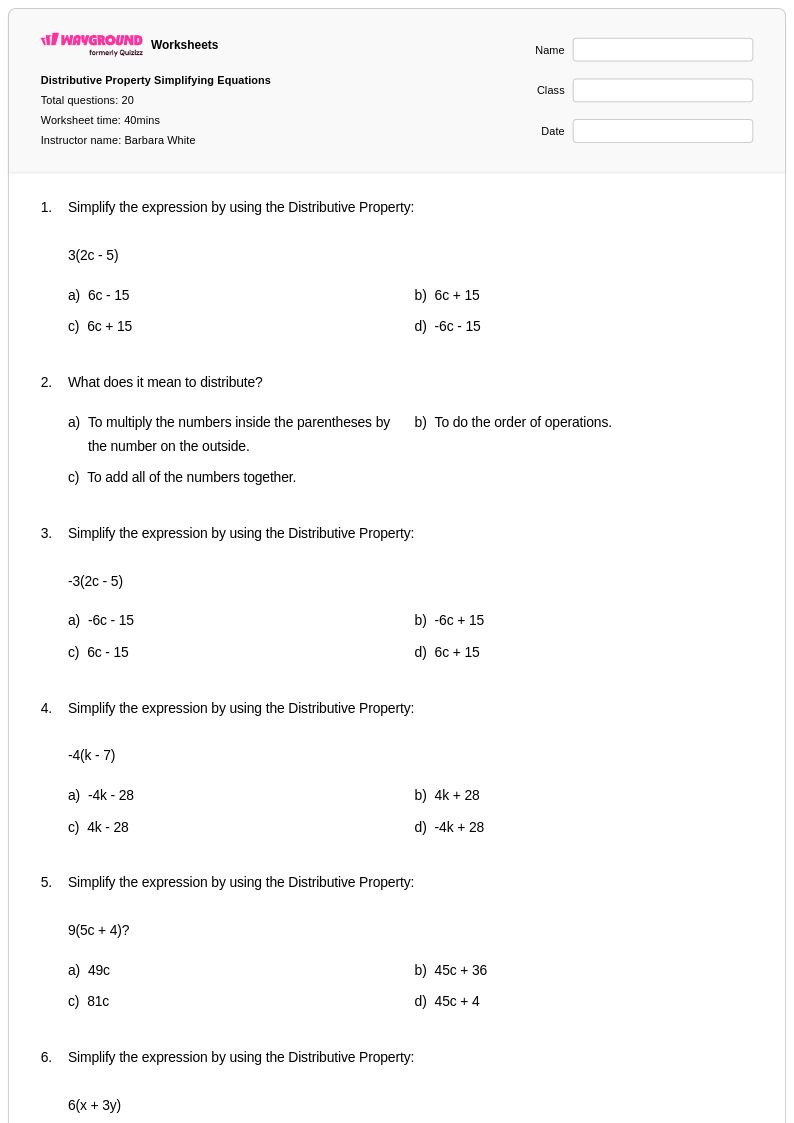
20 Q
6th - 8th
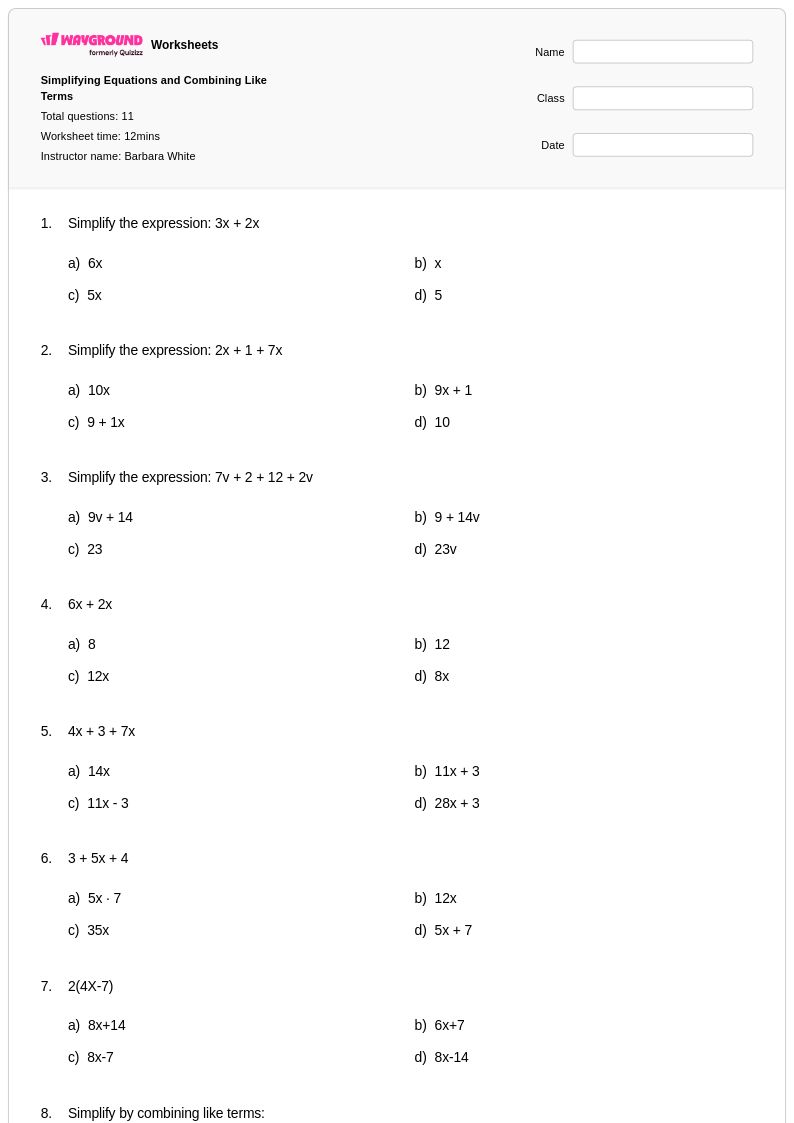
11 Q
6th - 7th
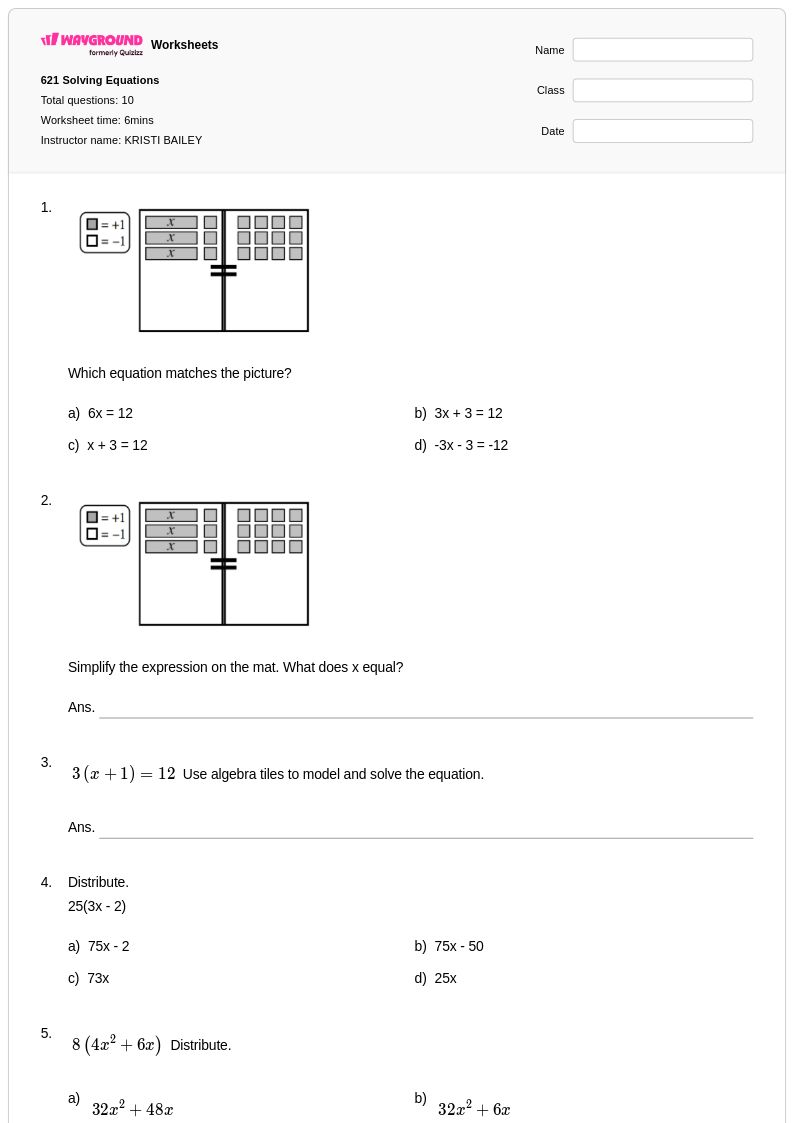
10 Q
7th
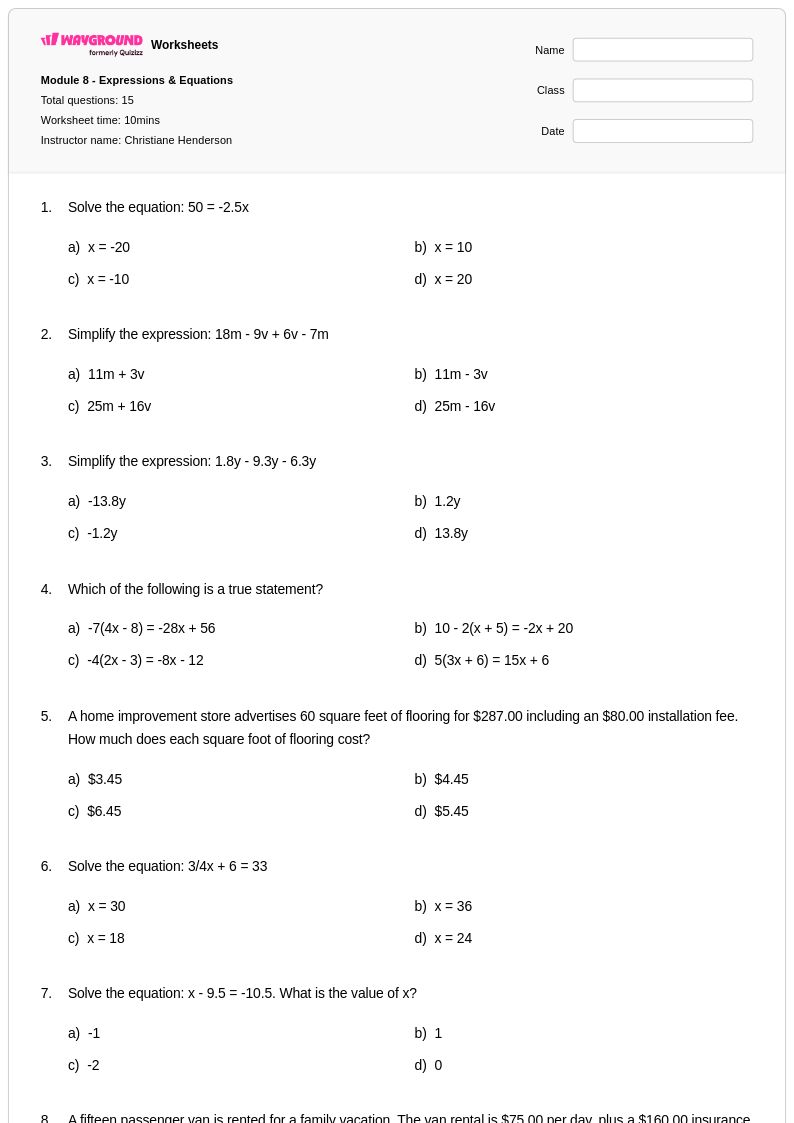
15 Q
7th
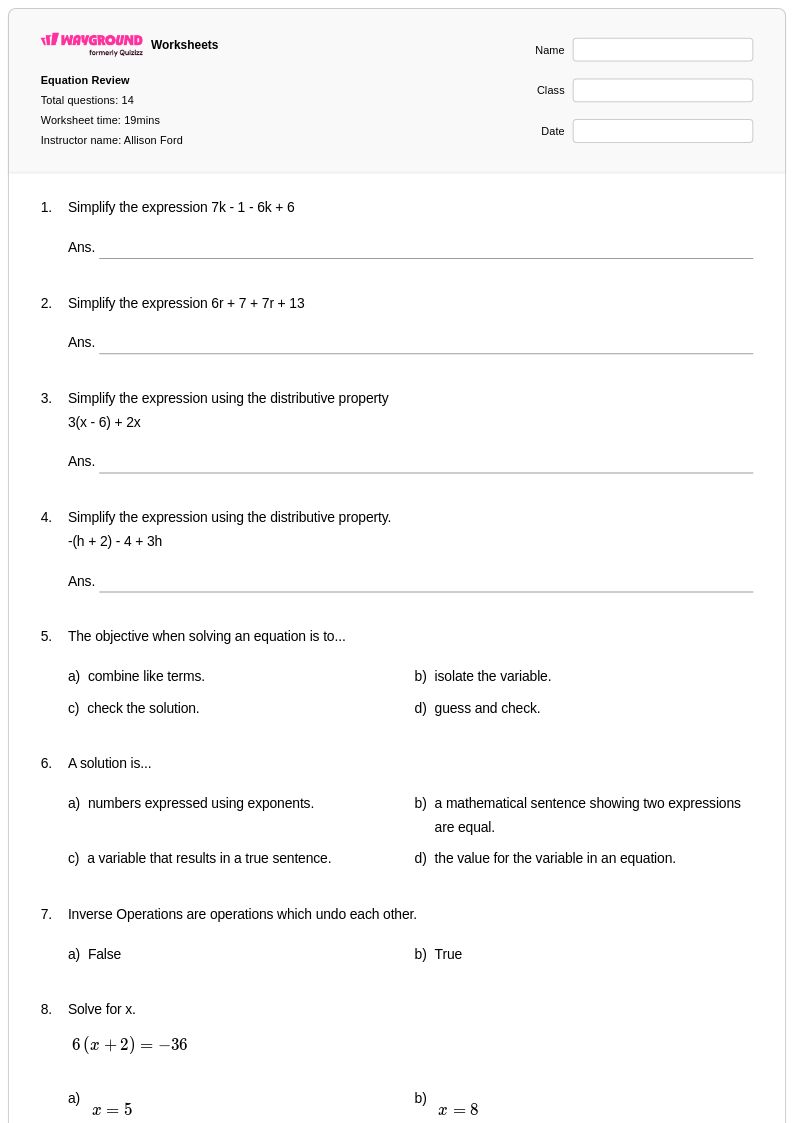
14 Q
7th - 8th
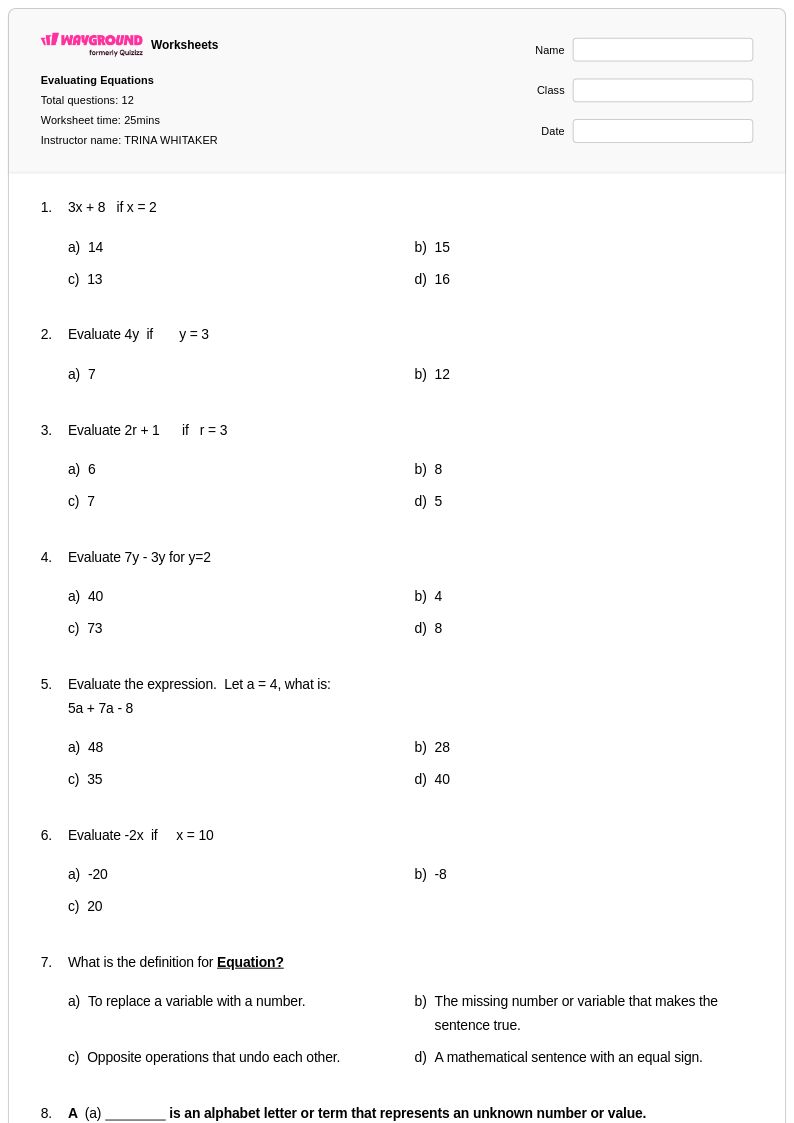
12 Q
7th
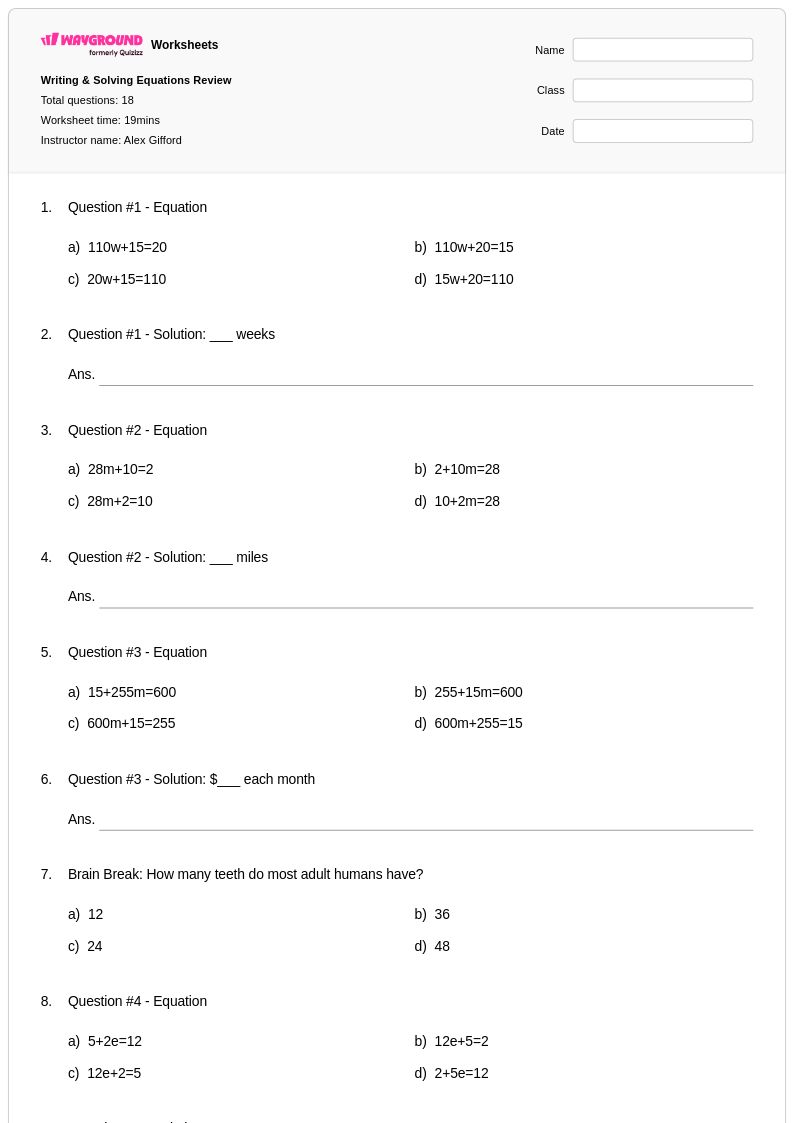
18 Q
7th
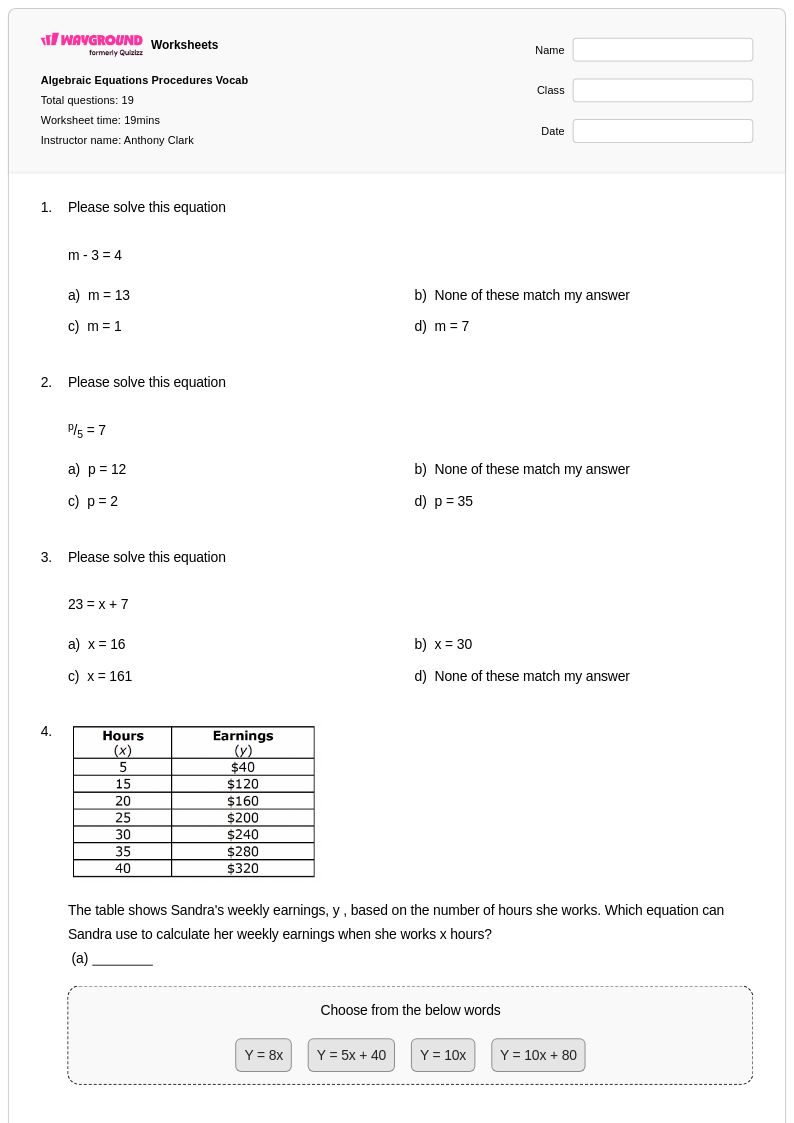
19 Q
6th - Uni
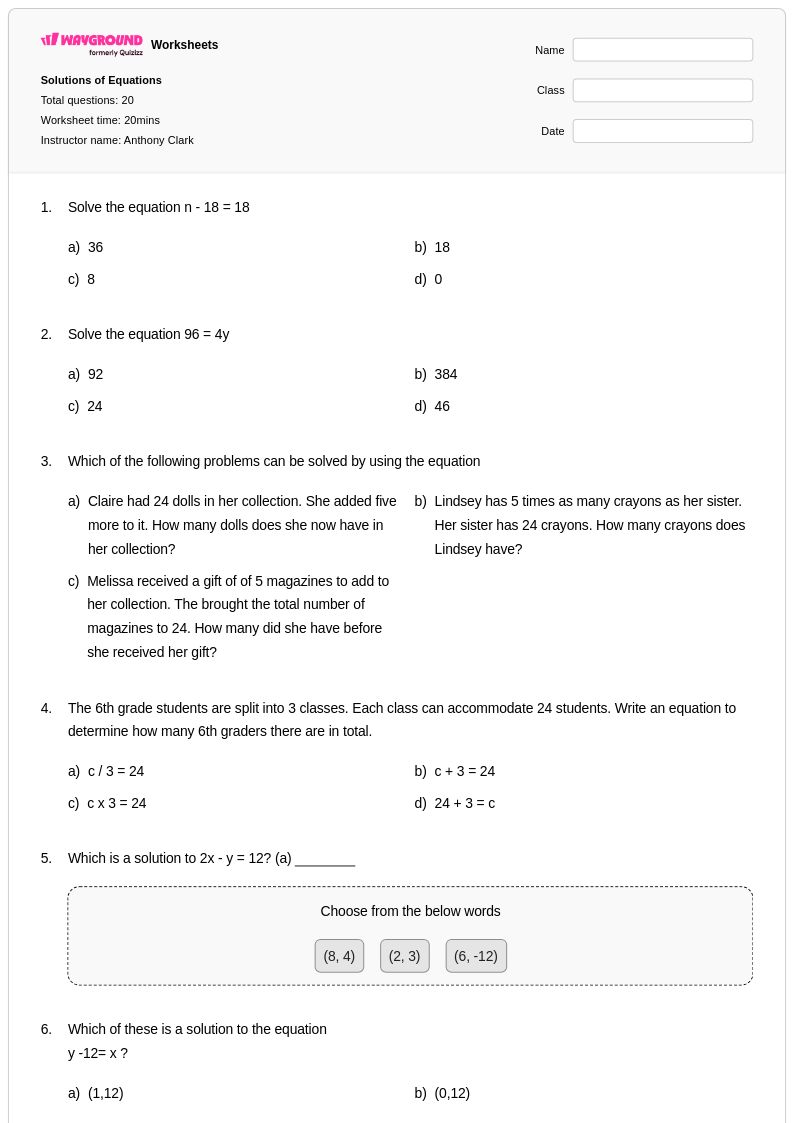
20 Q
6th - Uni
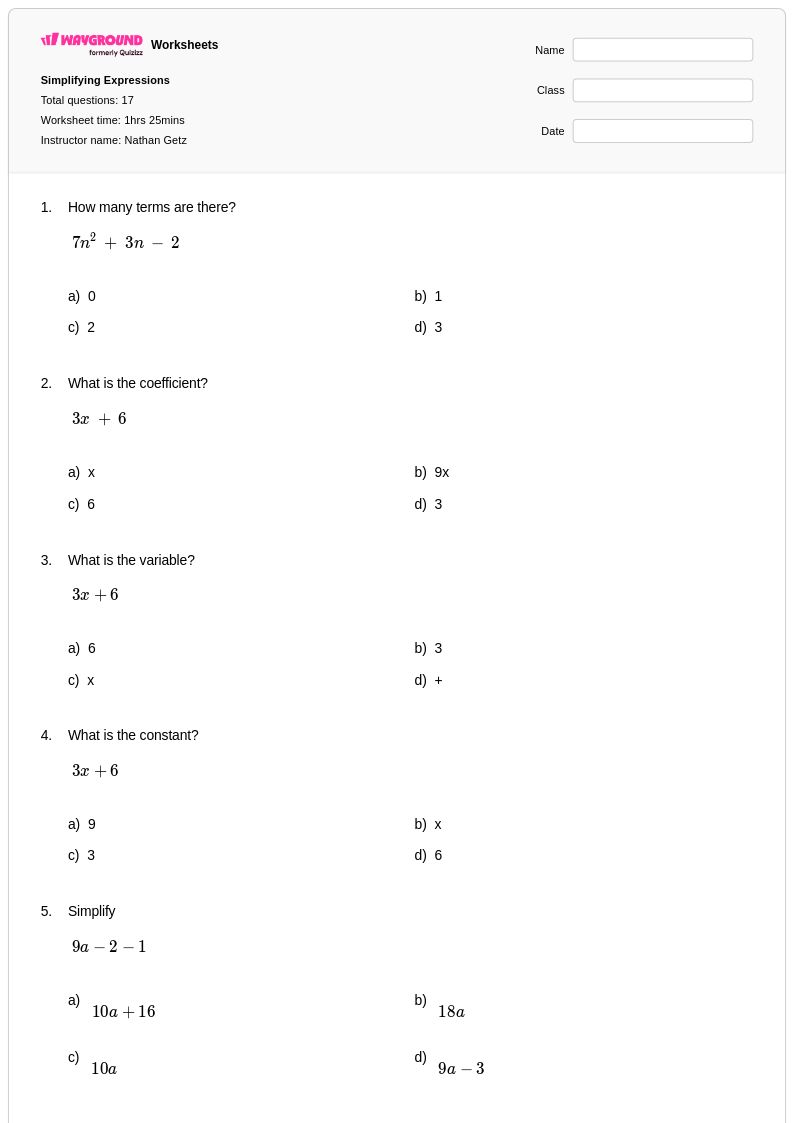
17 Q
7th
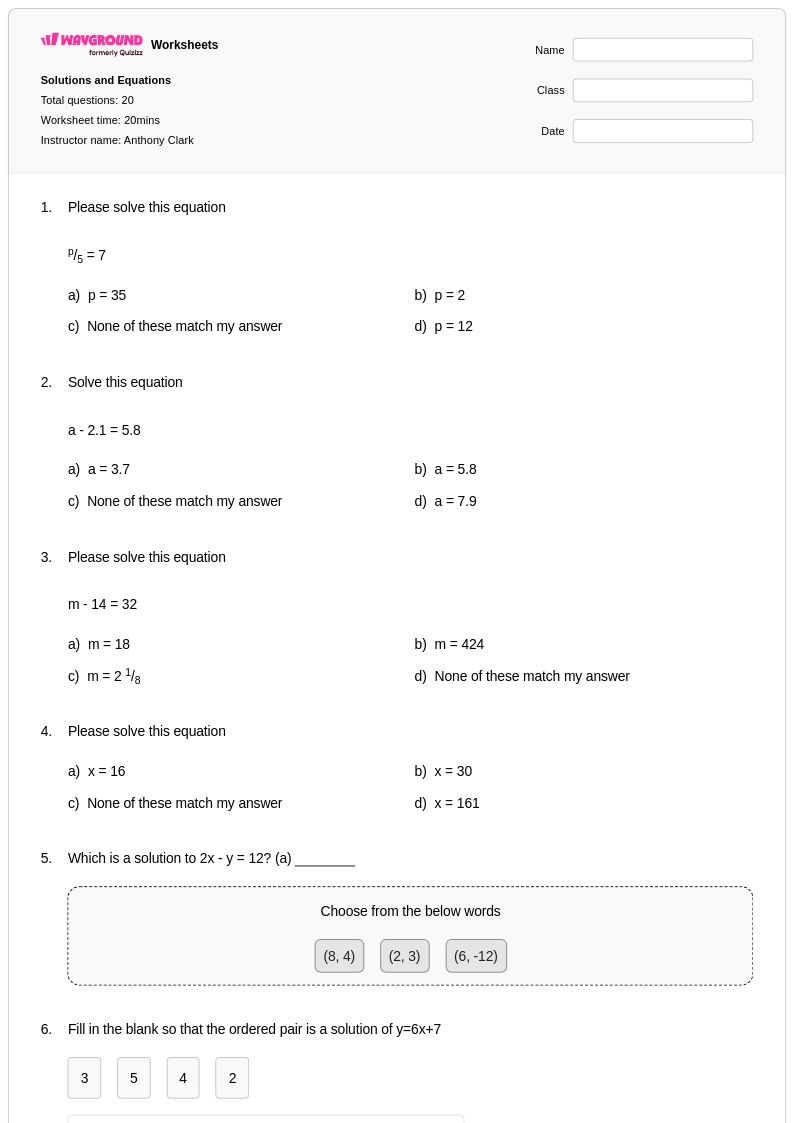
20 Q
6th - Uni
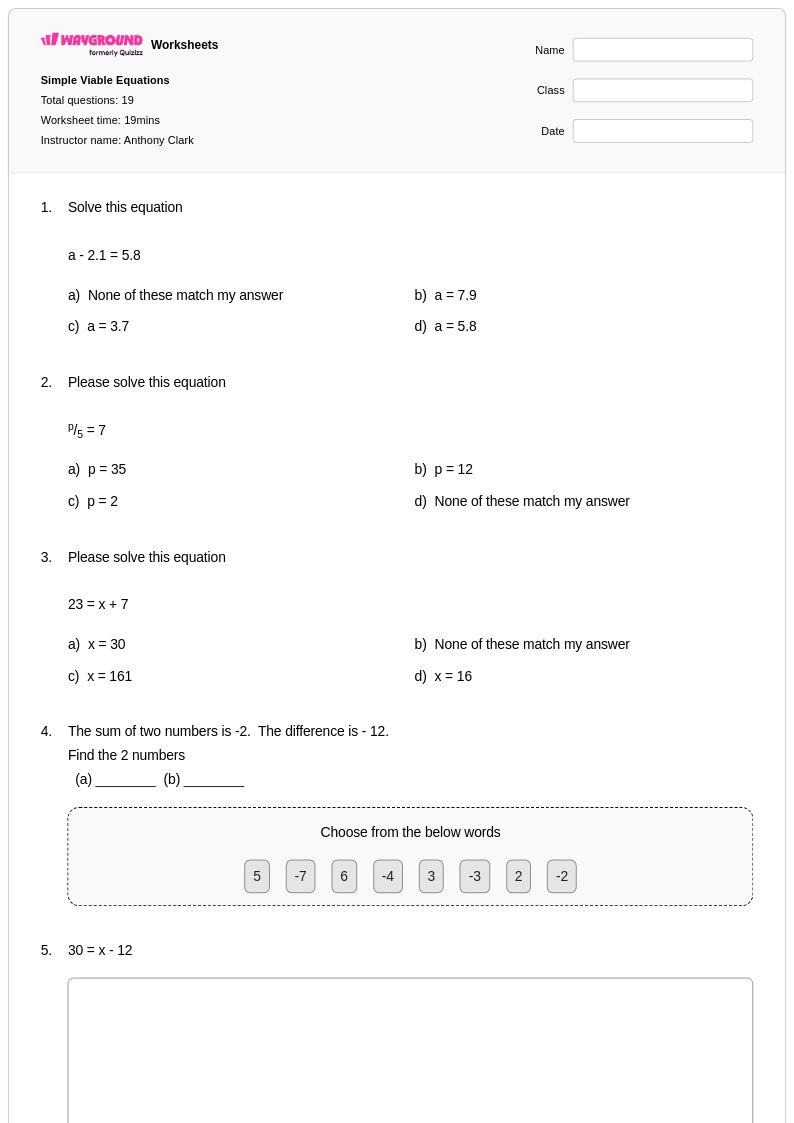
19 Q
7th - Uni
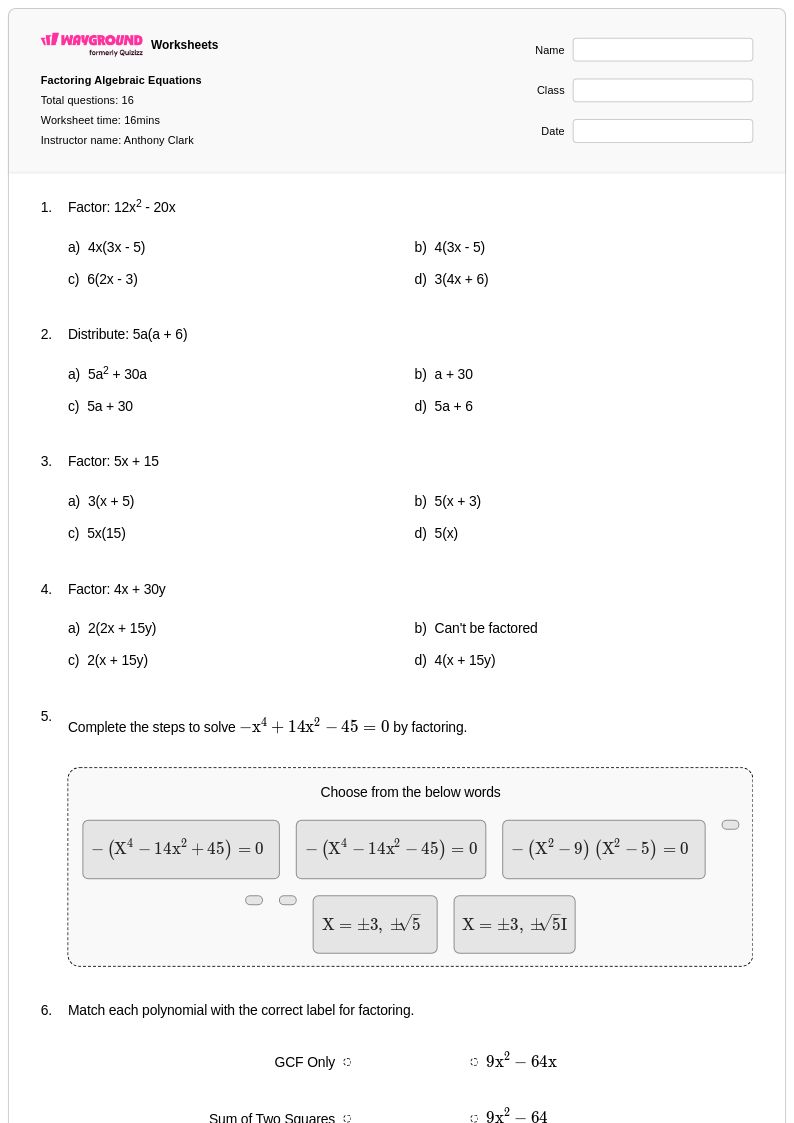
16 Q
7th - Uni
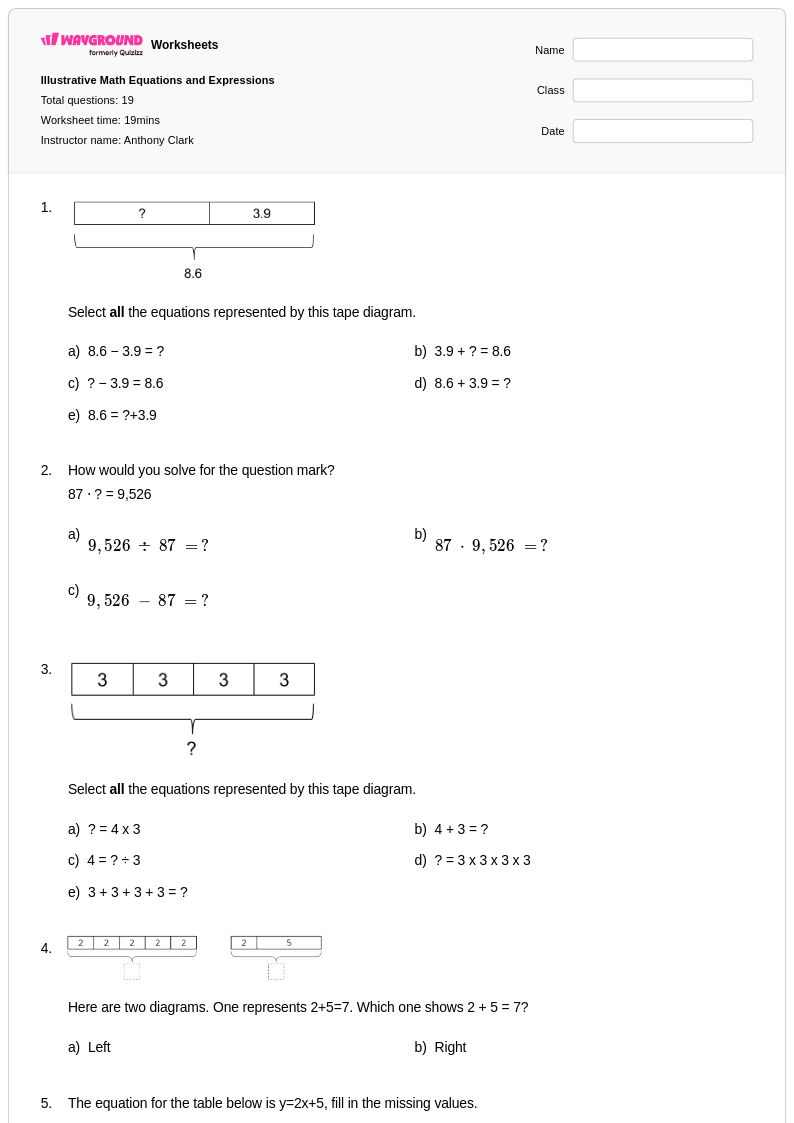
19 Q
6th - Uni
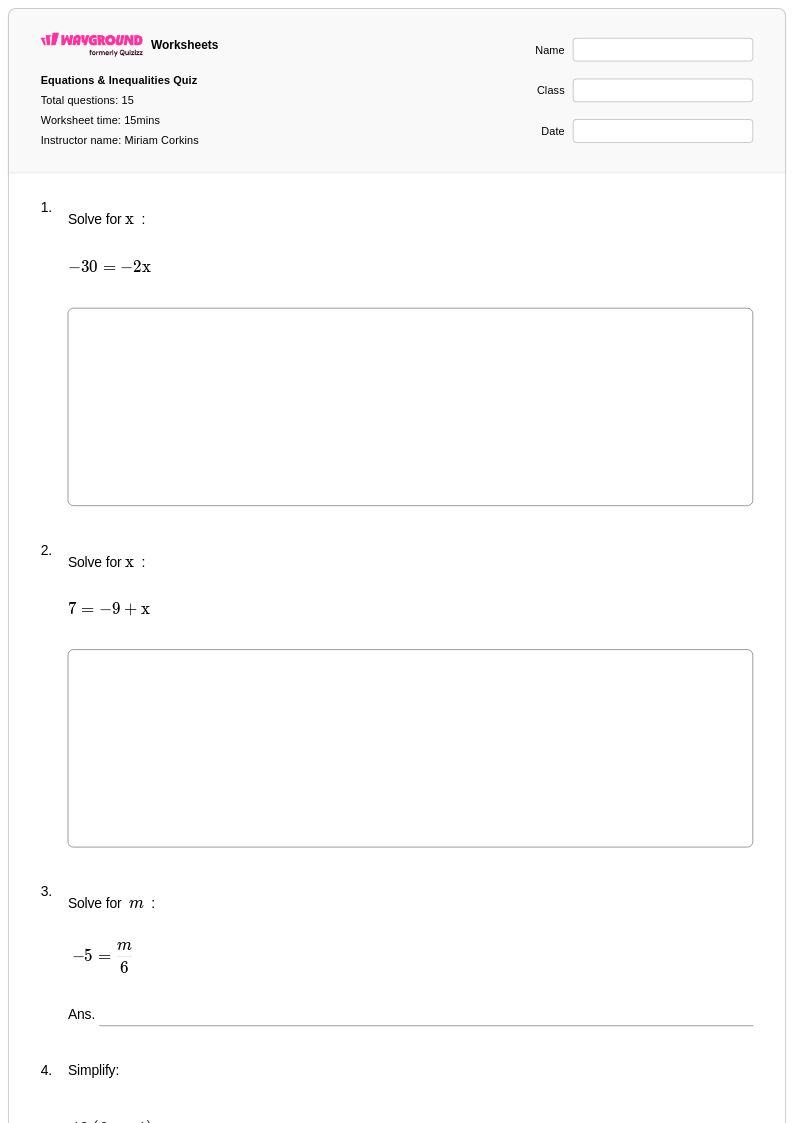
15 Q
6th - 8th
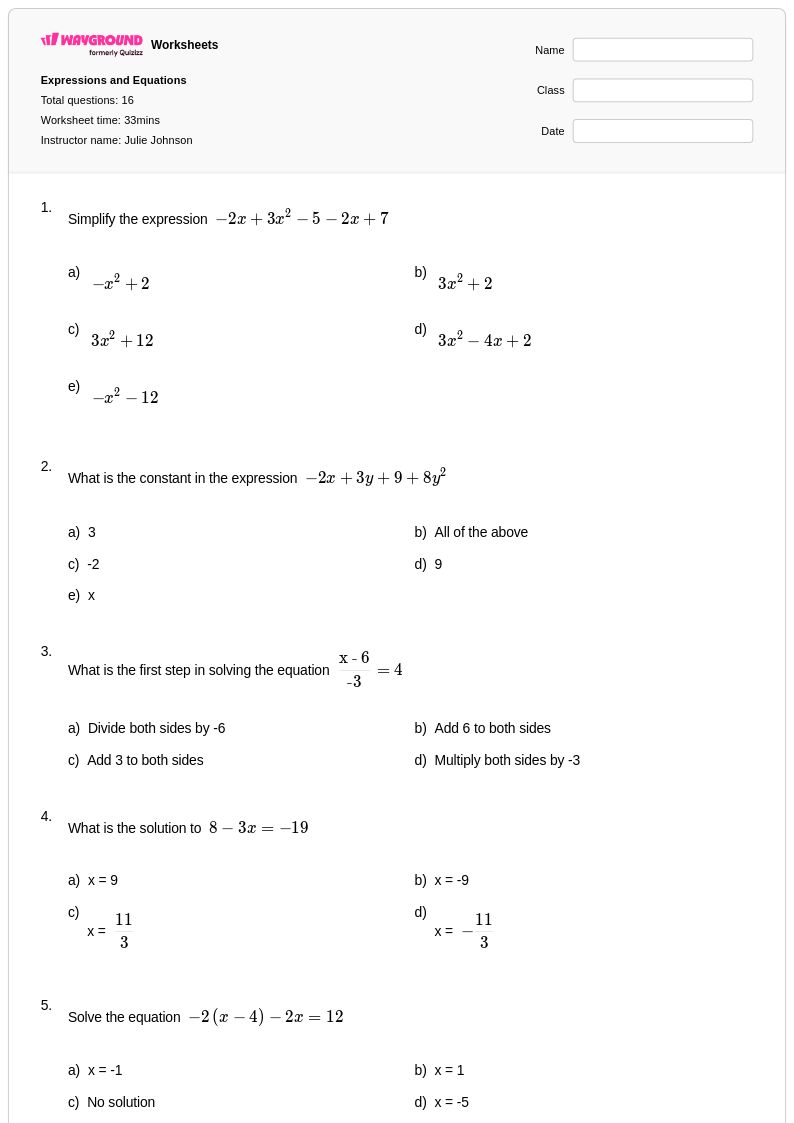
16 Q
7th
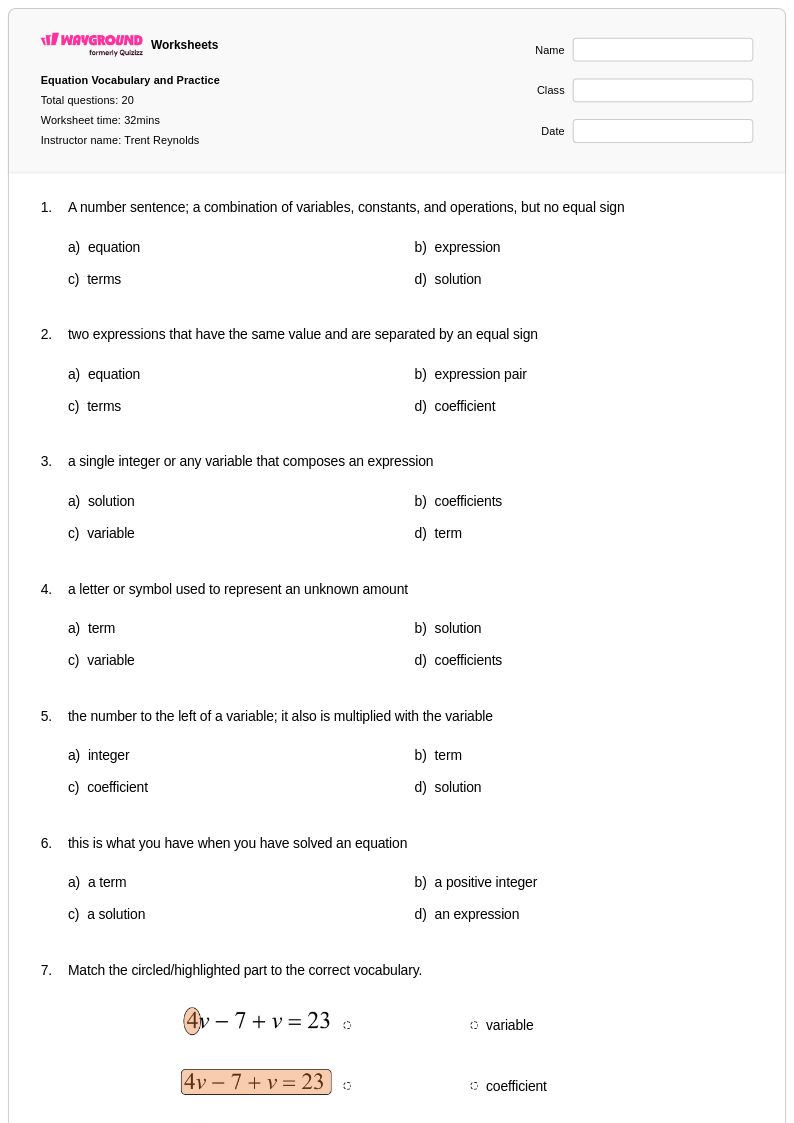
20 Q
7th
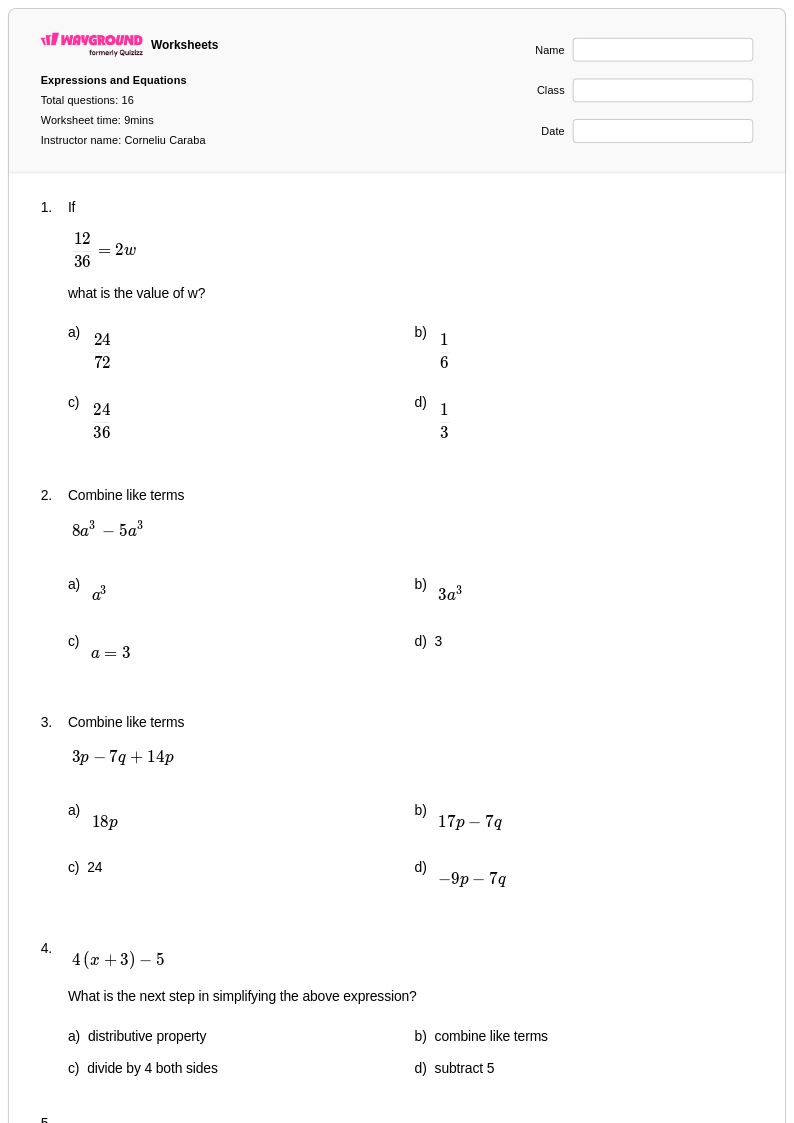
16 Q
7th - 8th
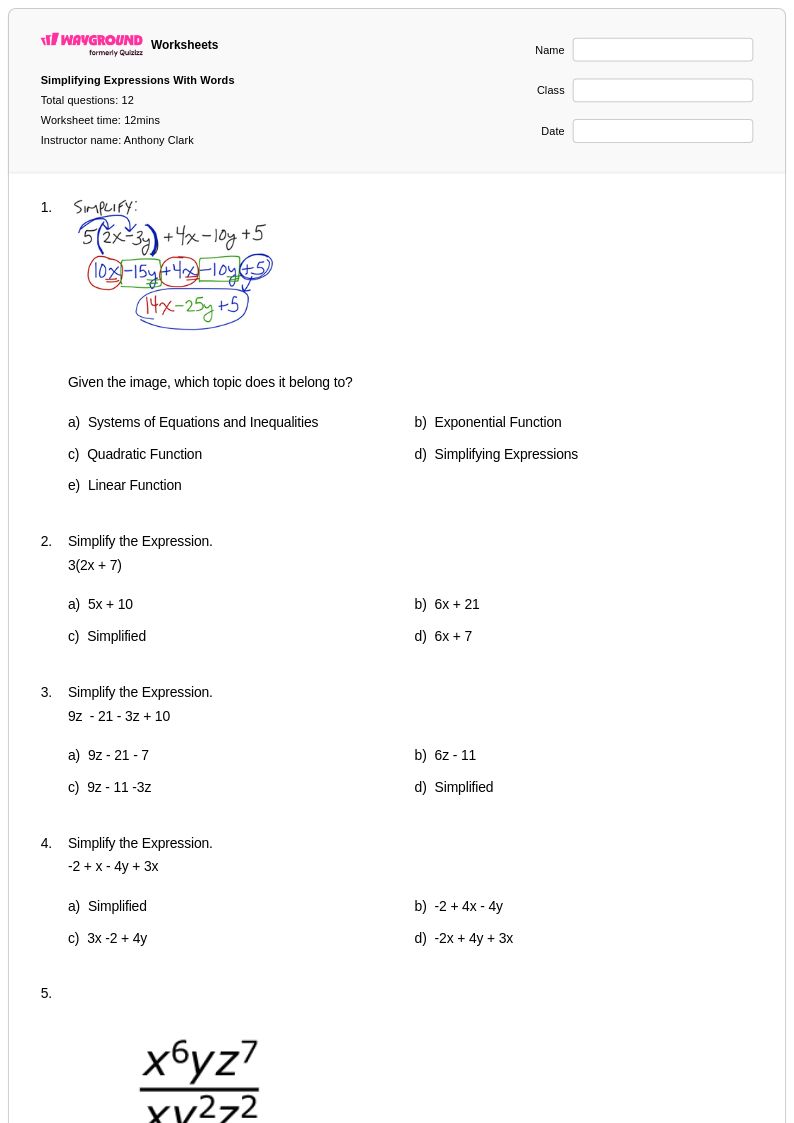
12 Q
7th - Uni
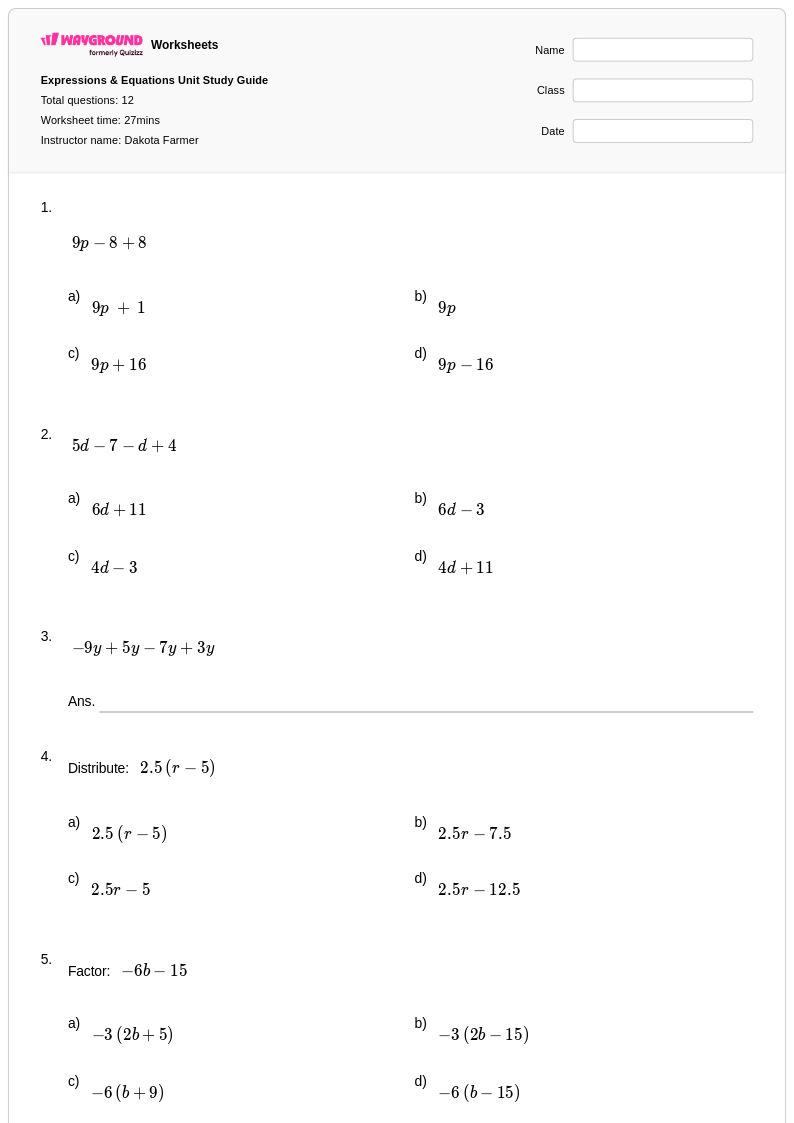
12 Q
6th - 8th
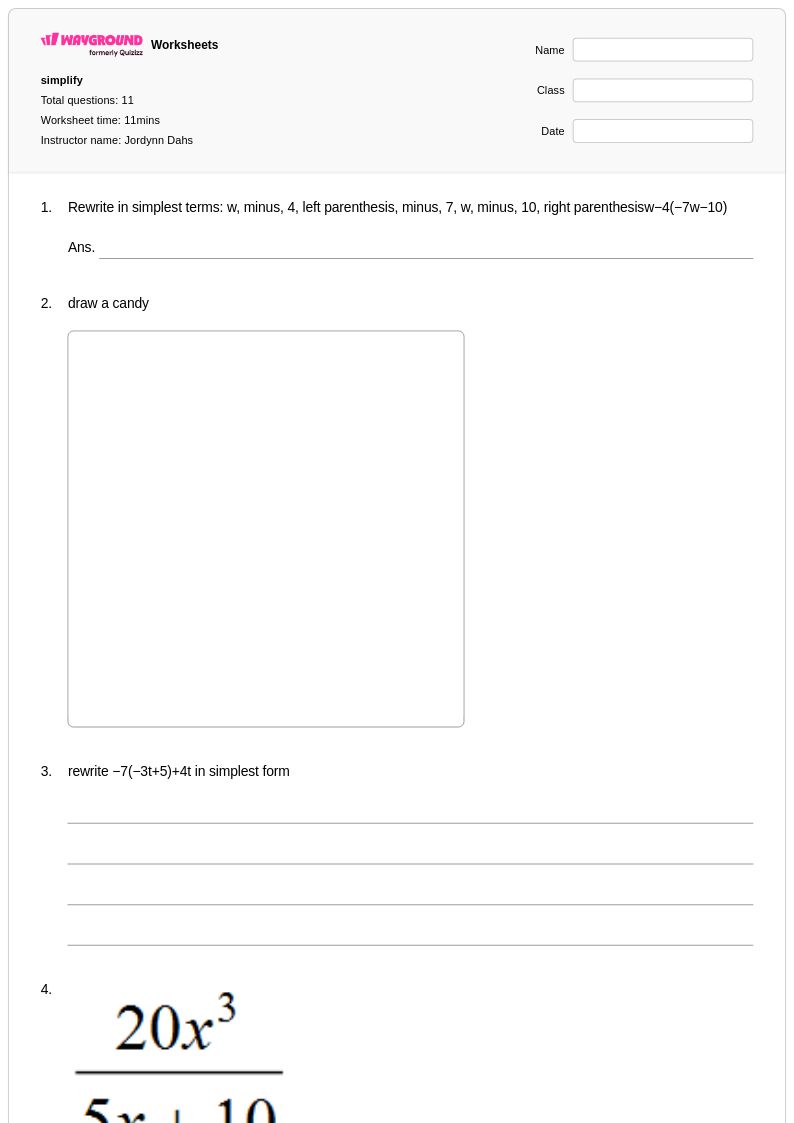
11 Q
7th
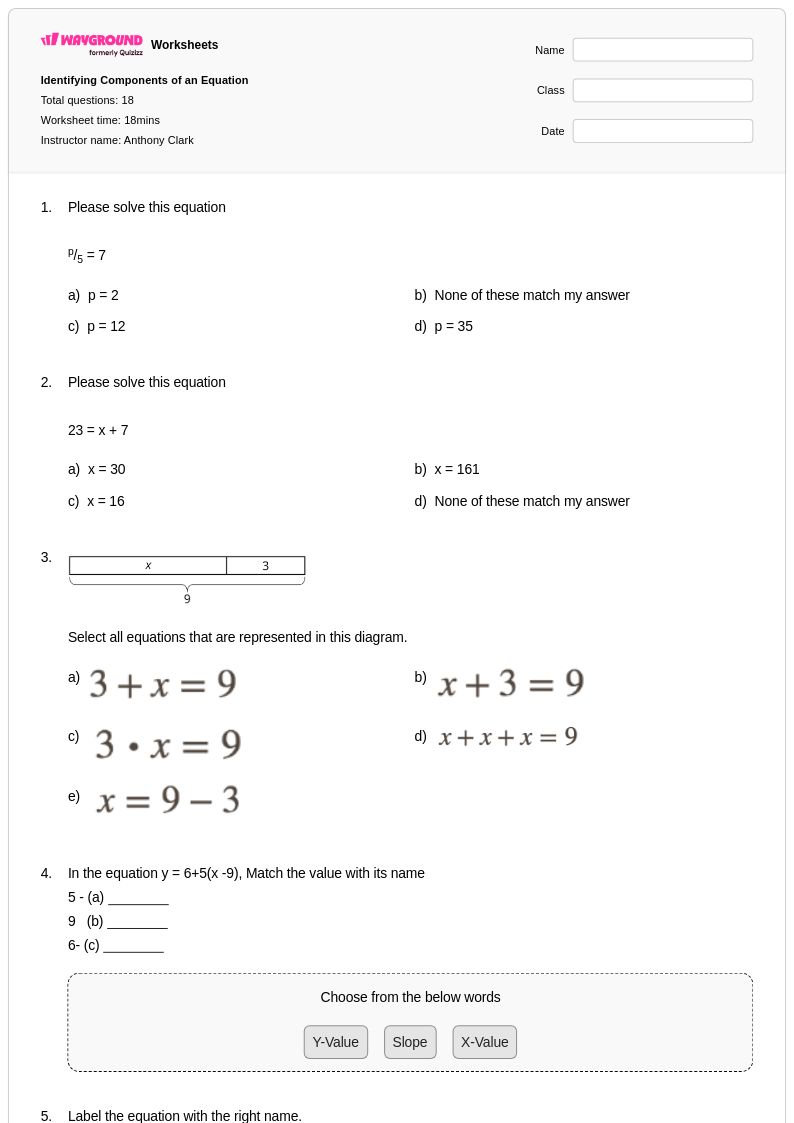
18 Q
6th - Uni
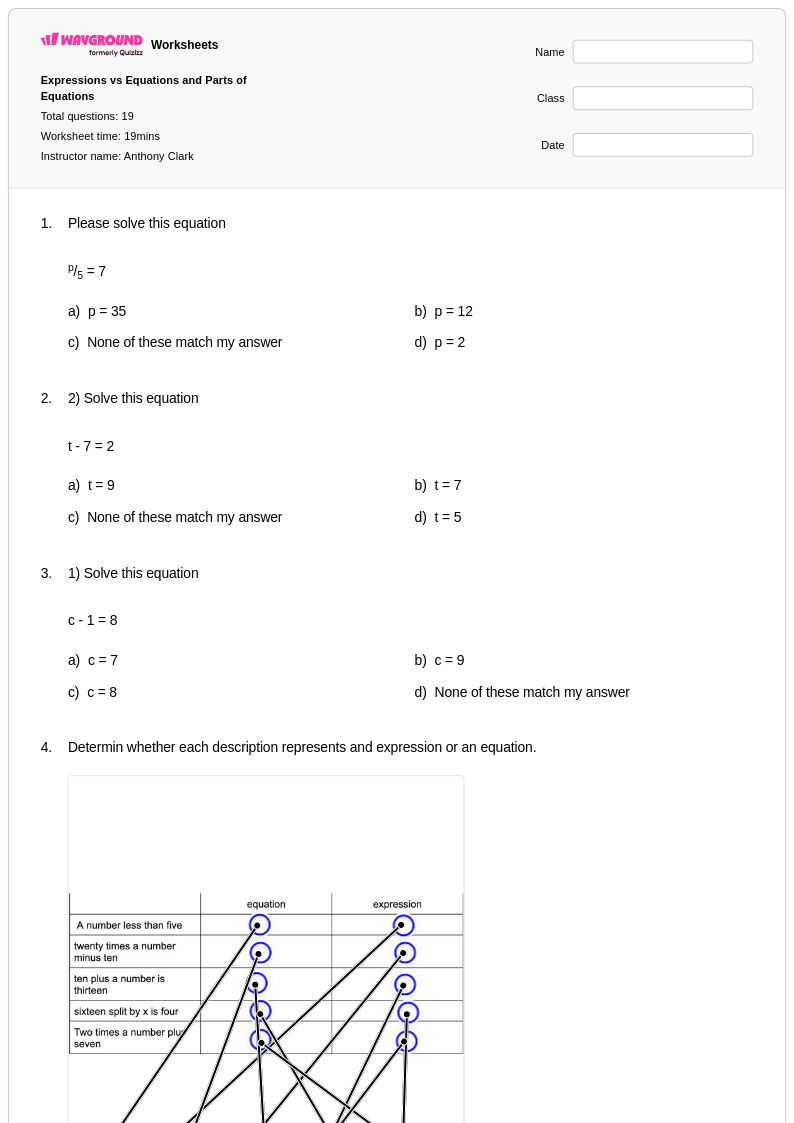
19 Q
6th - Uni
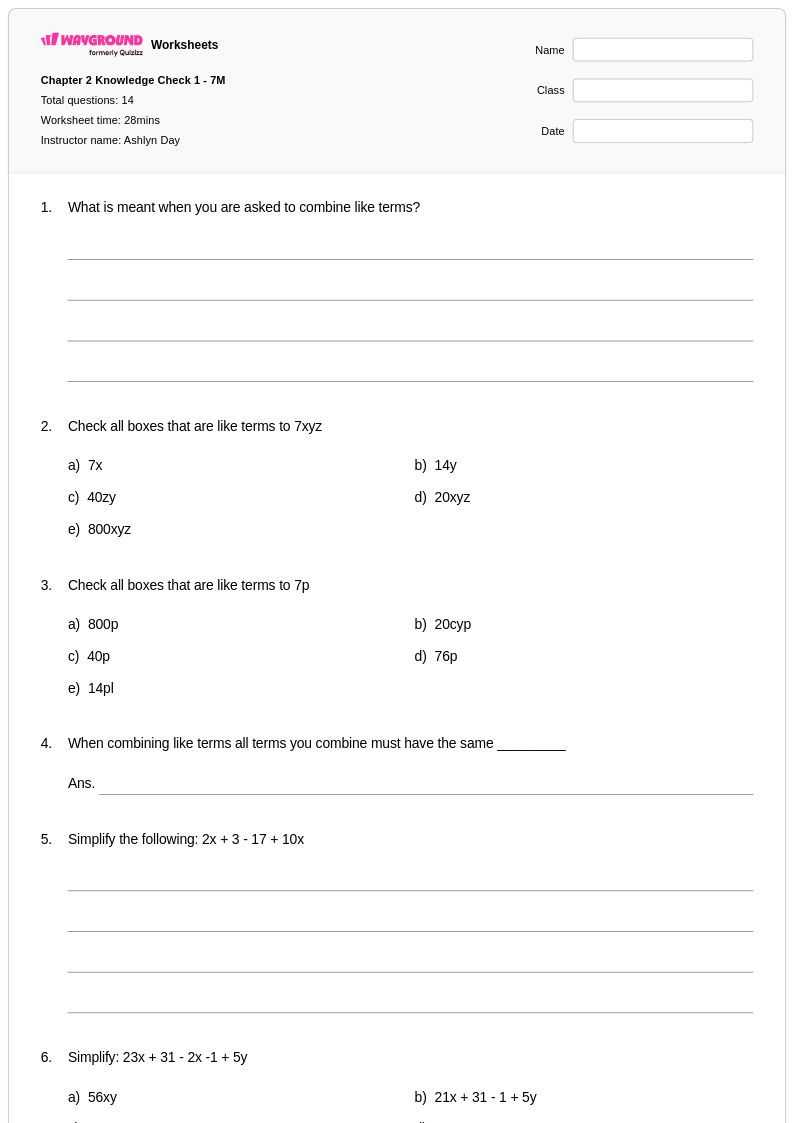
14 Q
7th
Explore Other Subject Worksheets for year 7
Explore printable Simplifying Equations worksheets for Year 7
Simplifying equations represents a fundamental algebraic skill that Year 7 students must master as they transition from basic arithmetic to more complex mathematical reasoning. Wayground's comprehensive collection of simplifying equations worksheets provides targeted practice opportunities that help students develop systematic approaches to isolating variables, combining like terms, and applying inverse operations. These carefully structured practice problems progress from single-step equations to multi-step challenges, ensuring students build confidence while strengthening their algebraic manipulation skills. Each worksheet collection includes detailed answer keys that support both independent study and classroom instruction, with free printable resources available in convenient pdf formats that teachers can easily distribute and students can reference during homework sessions.
Wayground's robust platform, formerly known as Quizizz, empowers educators with millions of teacher-created resources specifically designed to support algebra instruction at the seventh-grade level. The platform's advanced search and filtering capabilities allow teachers to quickly locate worksheets that align with specific curriculum standards and match their students' current skill levels. Differentiation tools enable educators to customize practice problems for remediation or enrichment purposes, while the flexible format options support both traditional printable worksheets and interactive digital assignments. This comprehensive approach to resource management streamlines lesson planning and provides teachers with the assessment data needed to identify students who require additional support with equation-solving strategies, ultimately ensuring that all learners develop the algebraic foundation necessary for advanced mathematics courses.
FAQs
What is the focus of simplifying equations in 7th grade?
What's a good strategy for teaching multi-step simplification in 7th grade?
What types of problems should 7th graders practice for simplifying equations?
What new mistakes appear when 7th graders simplify complex expressions?
How can I use this 7th-grade simplifying equations worksheet?
How does this topic connect to 7th-grade Common Core math standards?