Free Printable Syllable Counting Worksheets for Year 3
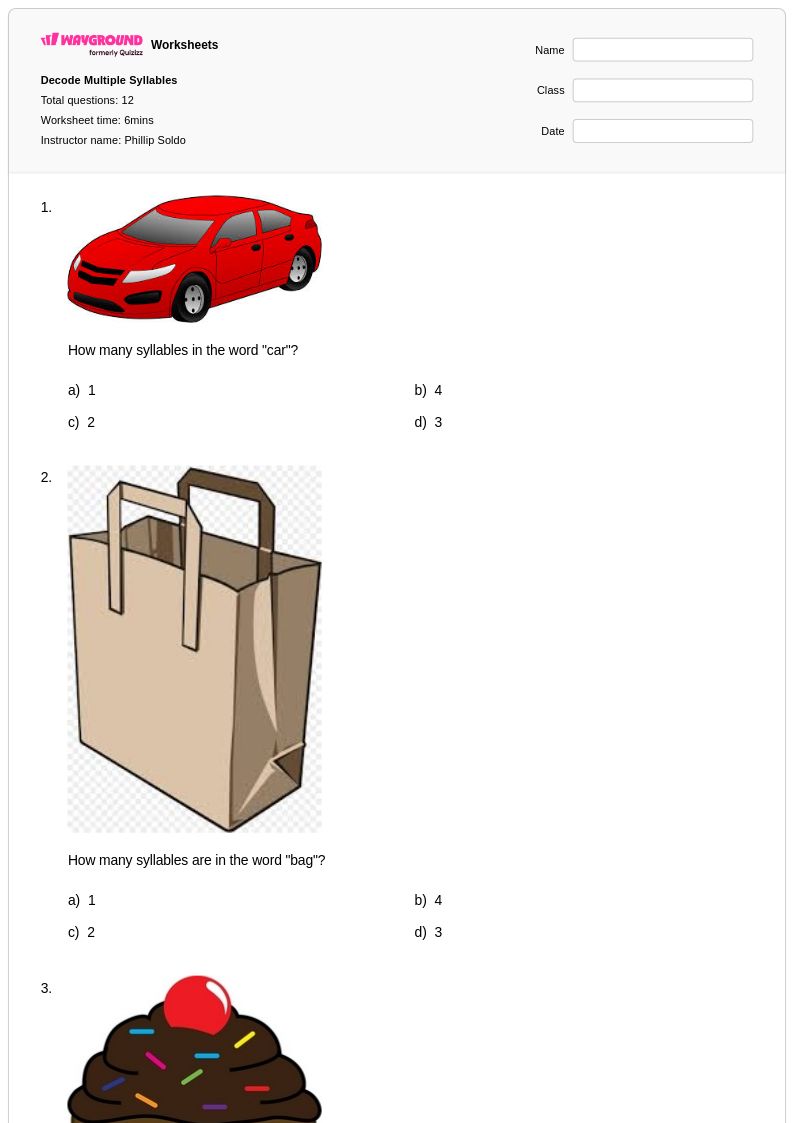
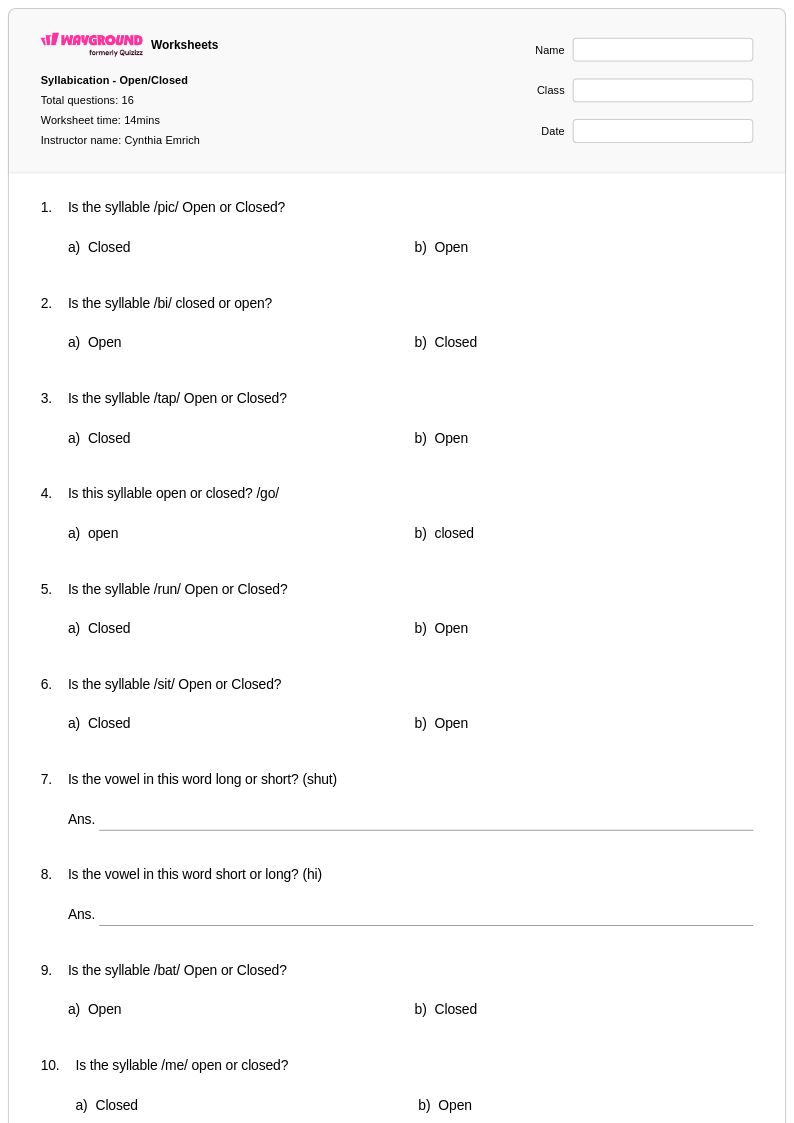
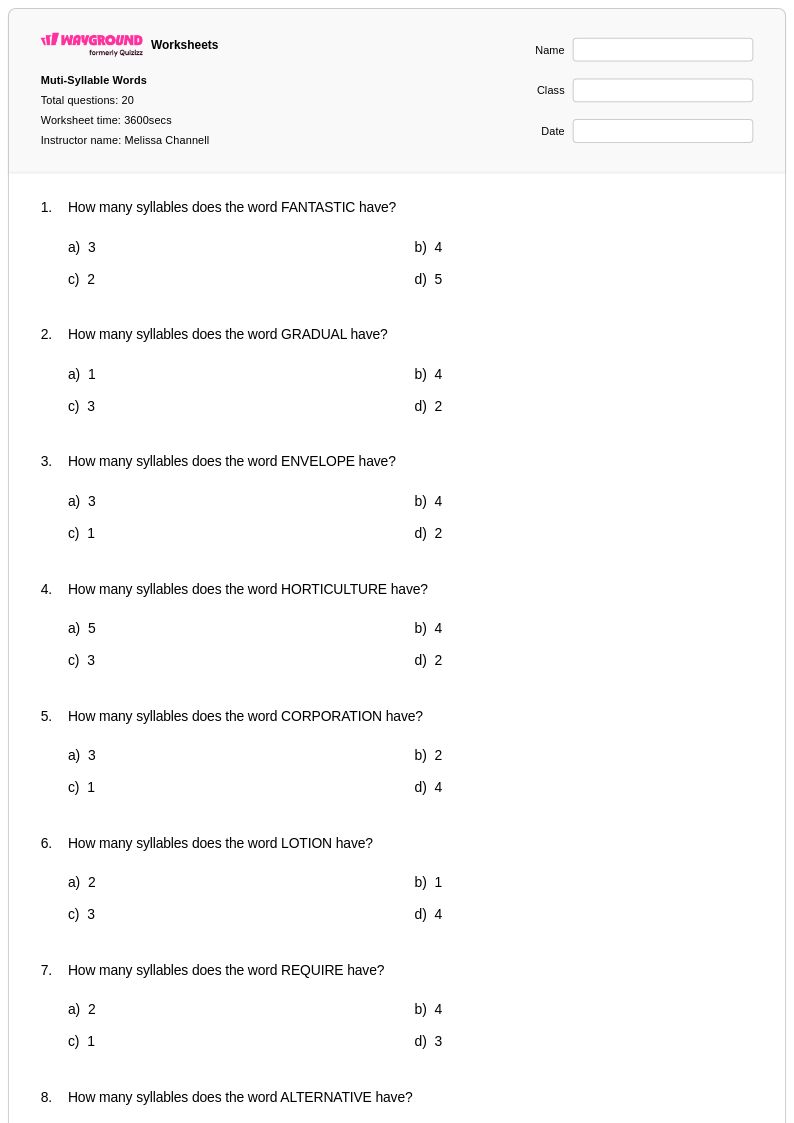
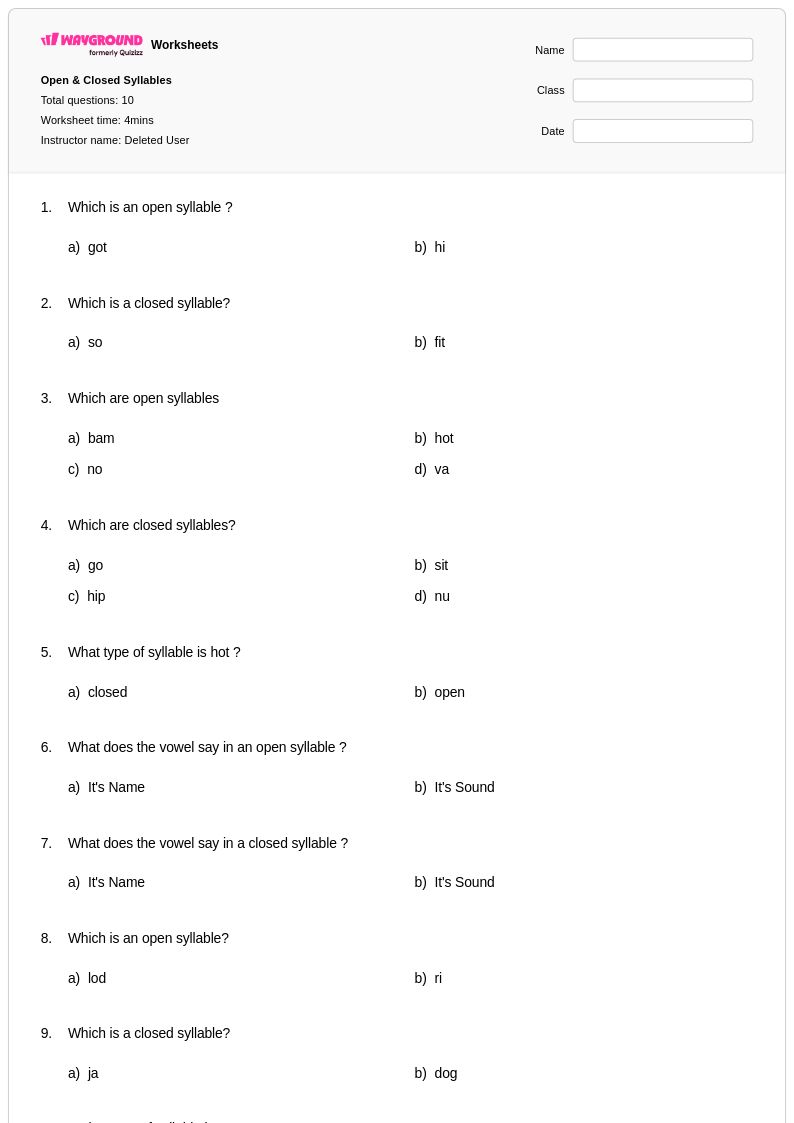
Year 3 syllable counting worksheets and printables help students master phonics skills through engaging practice problems, with free PDF downloads and answer keys available for effective learning.
Explore printable Syllable Counting worksheets for Year 3
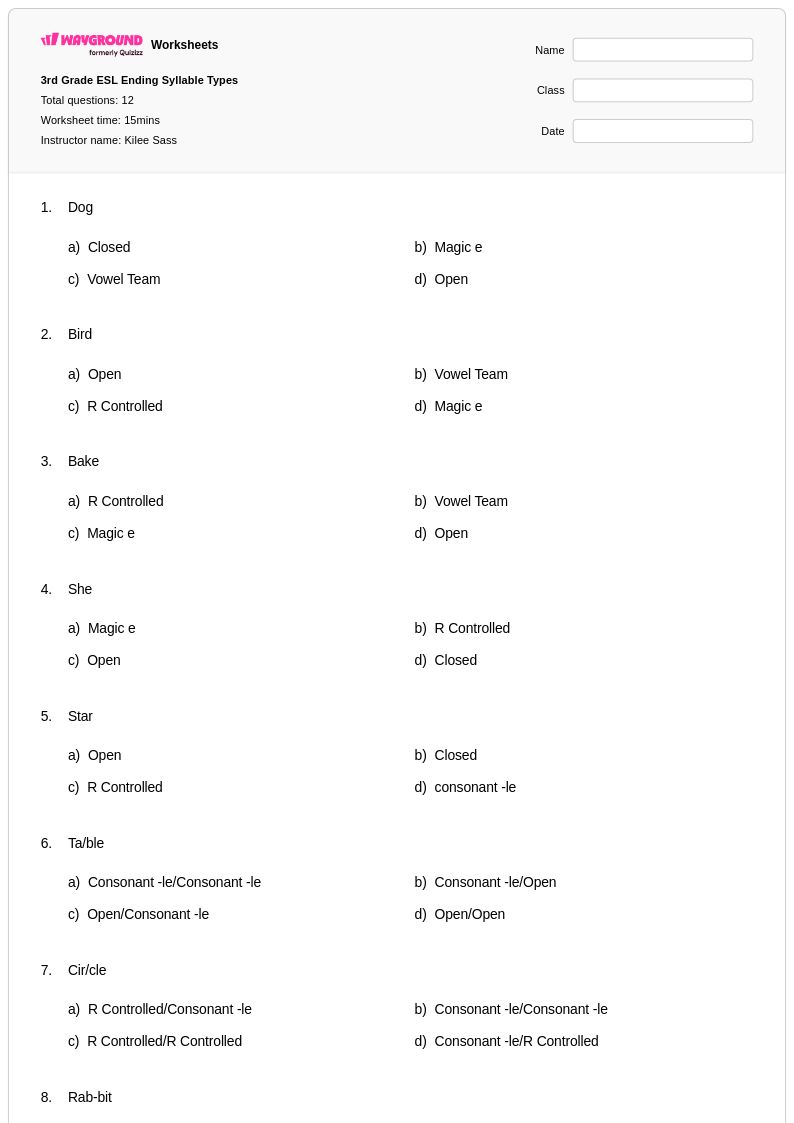
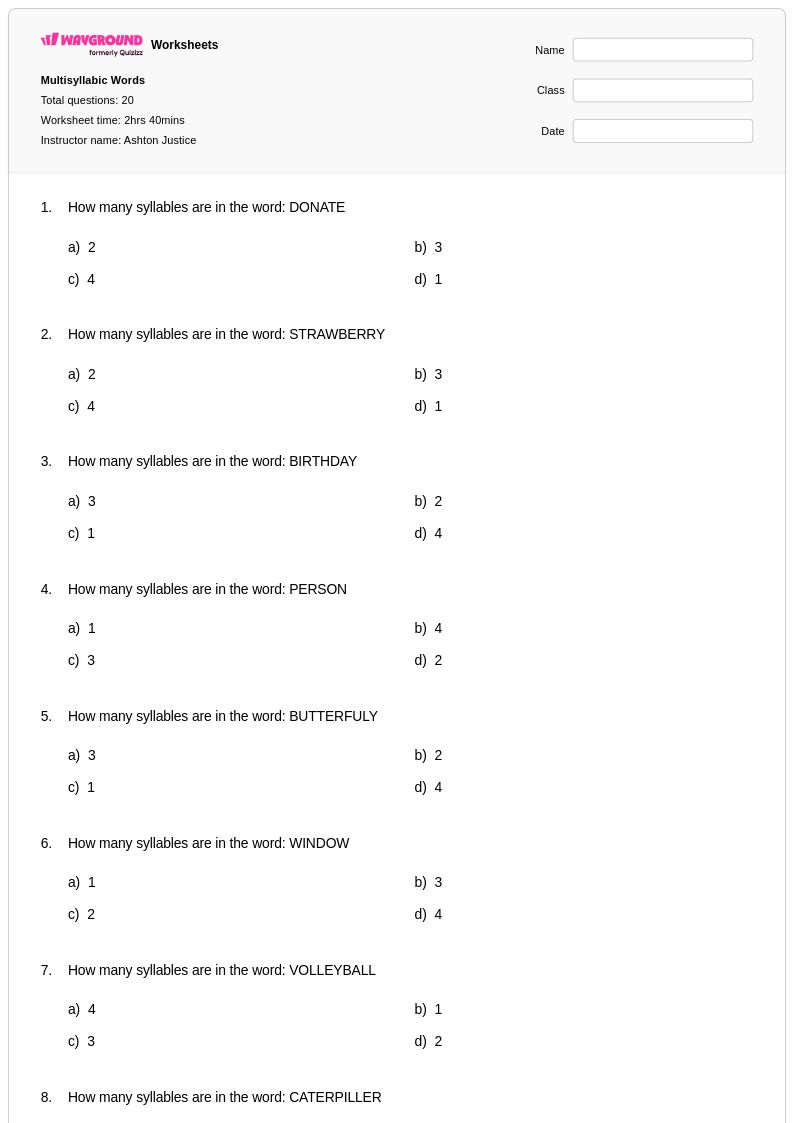
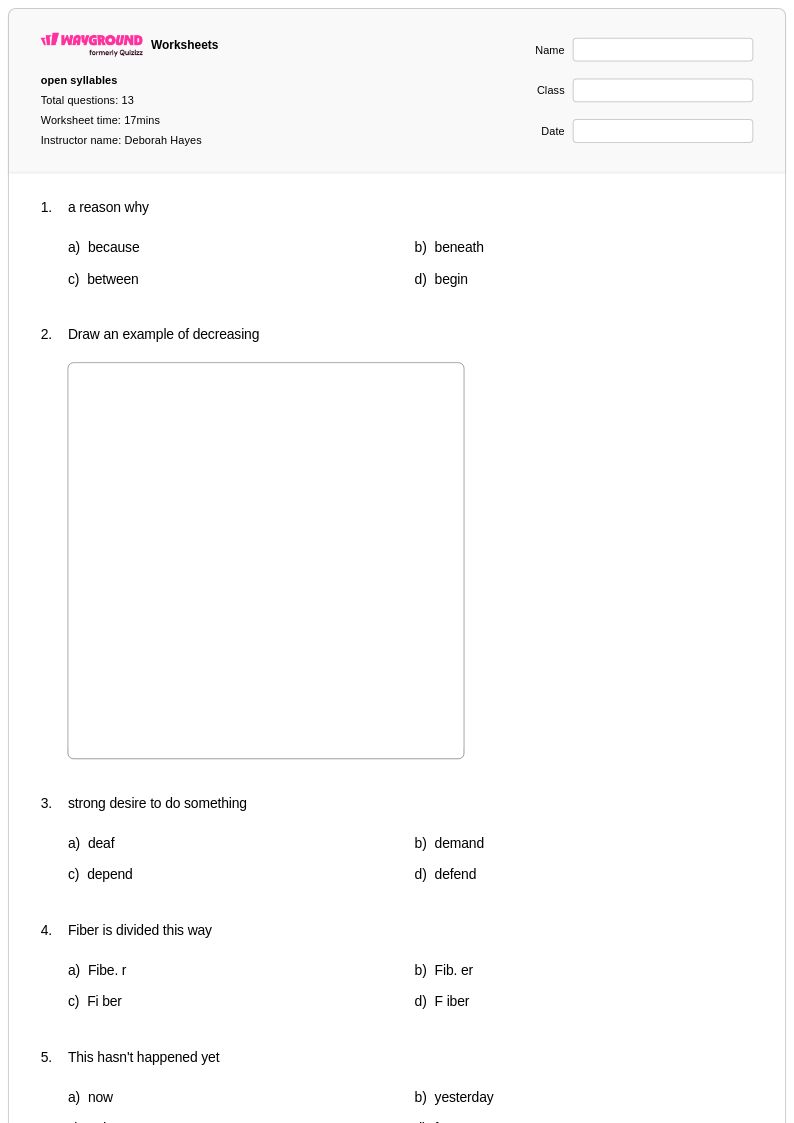
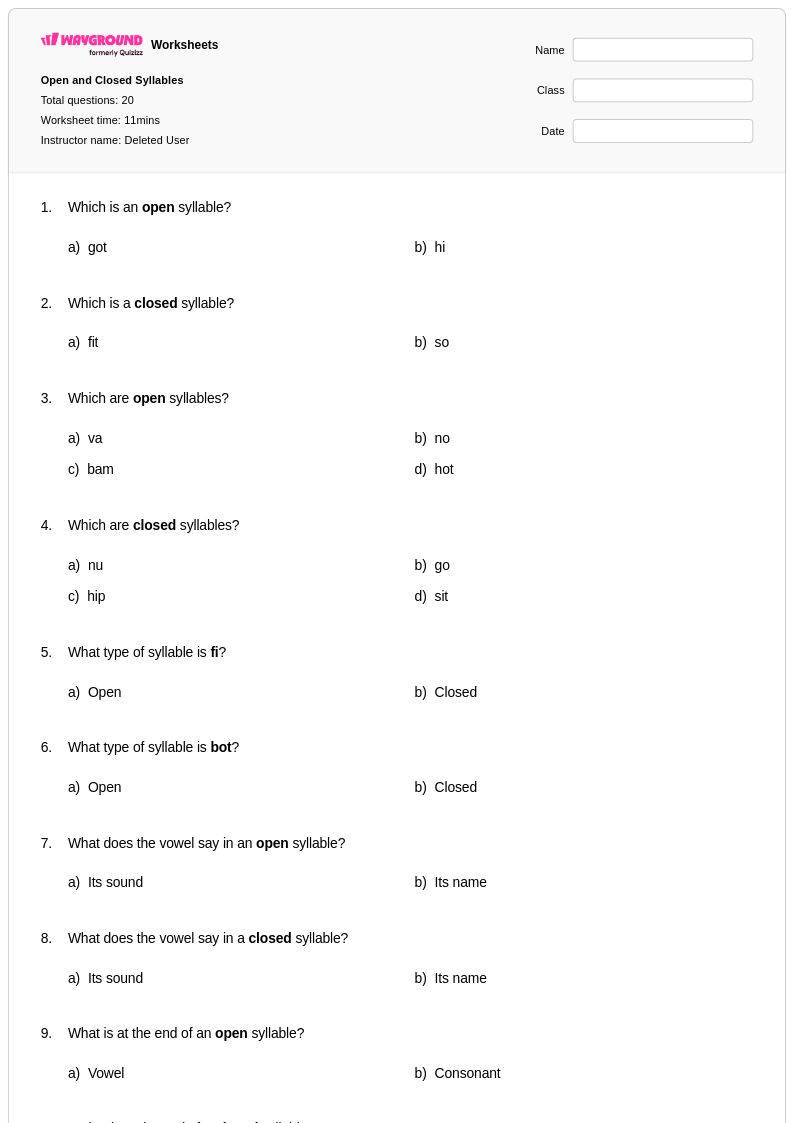
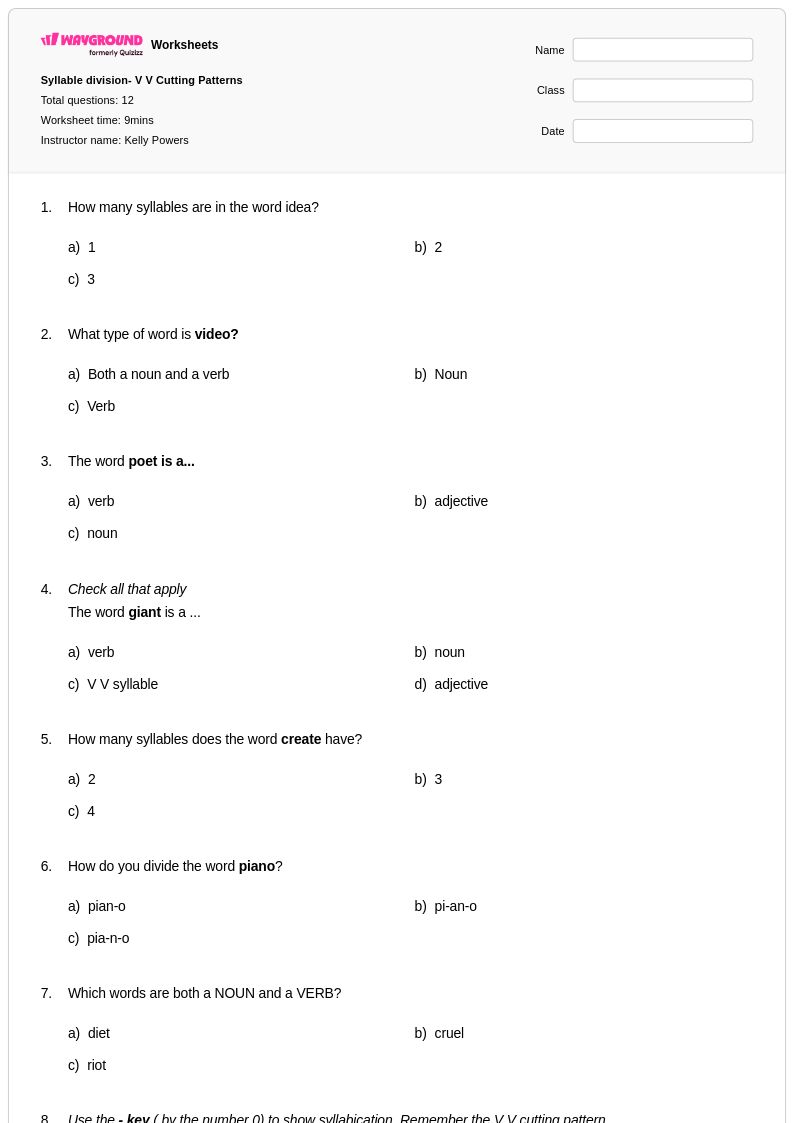
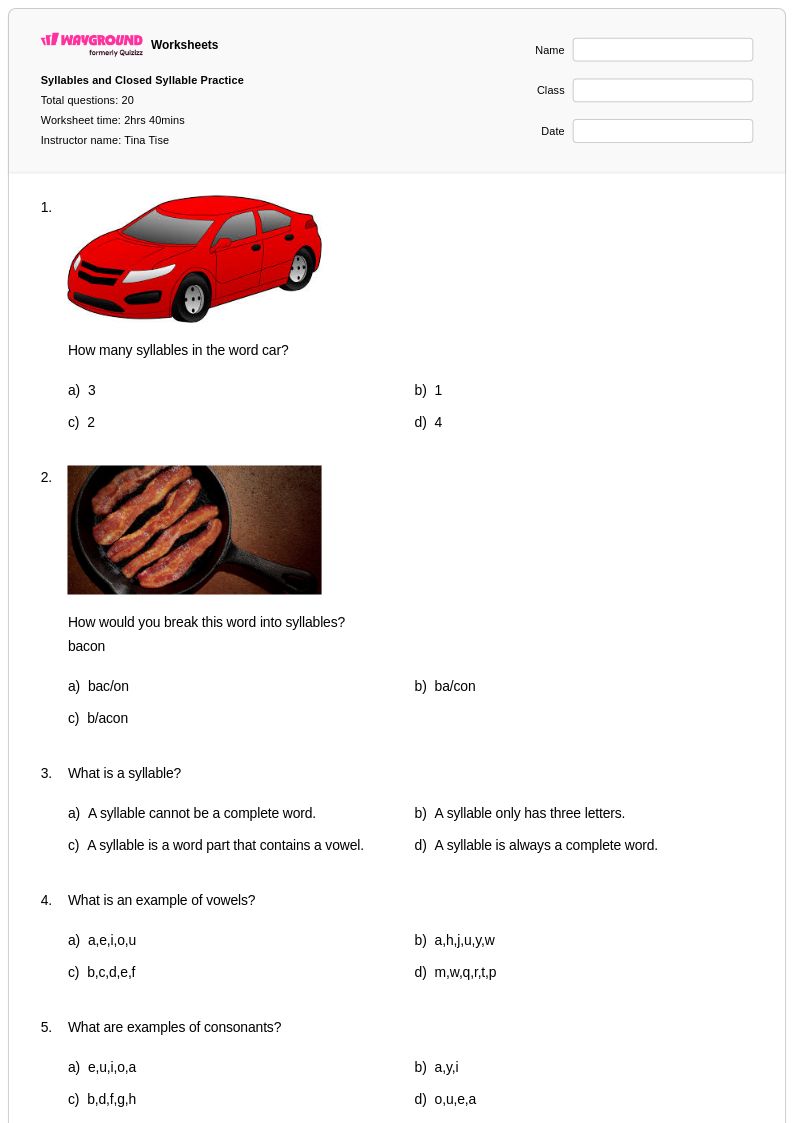
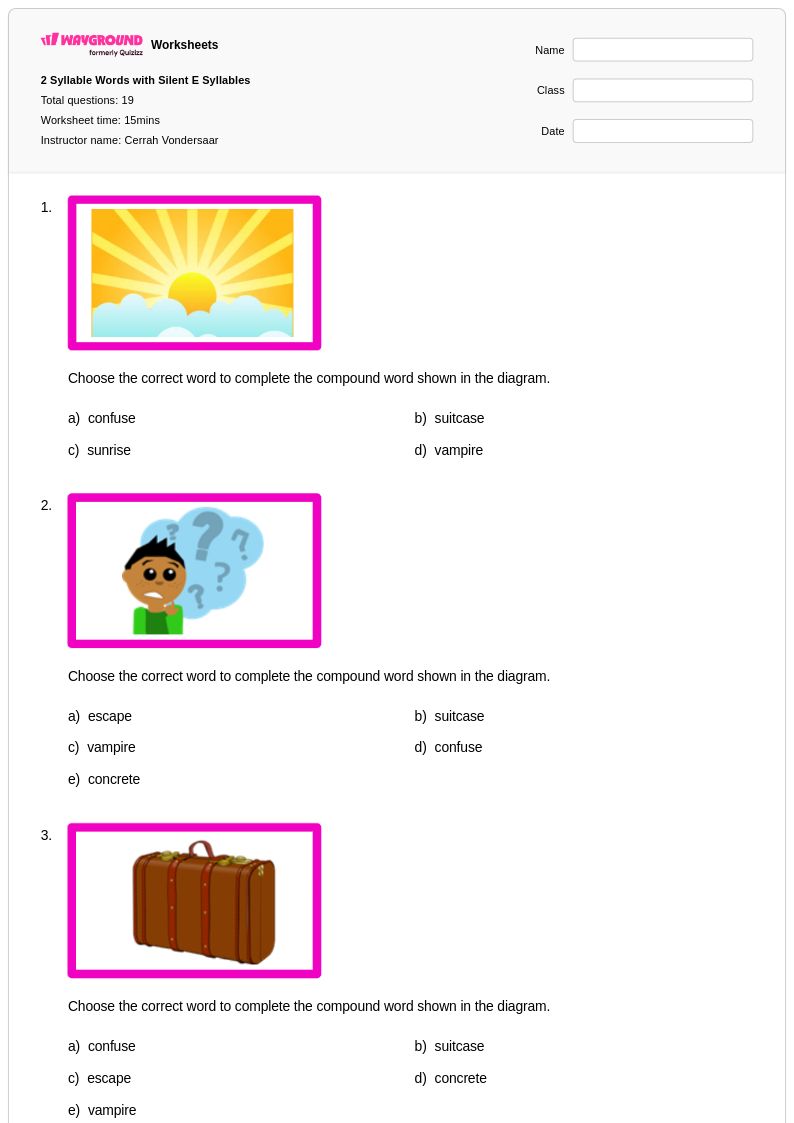
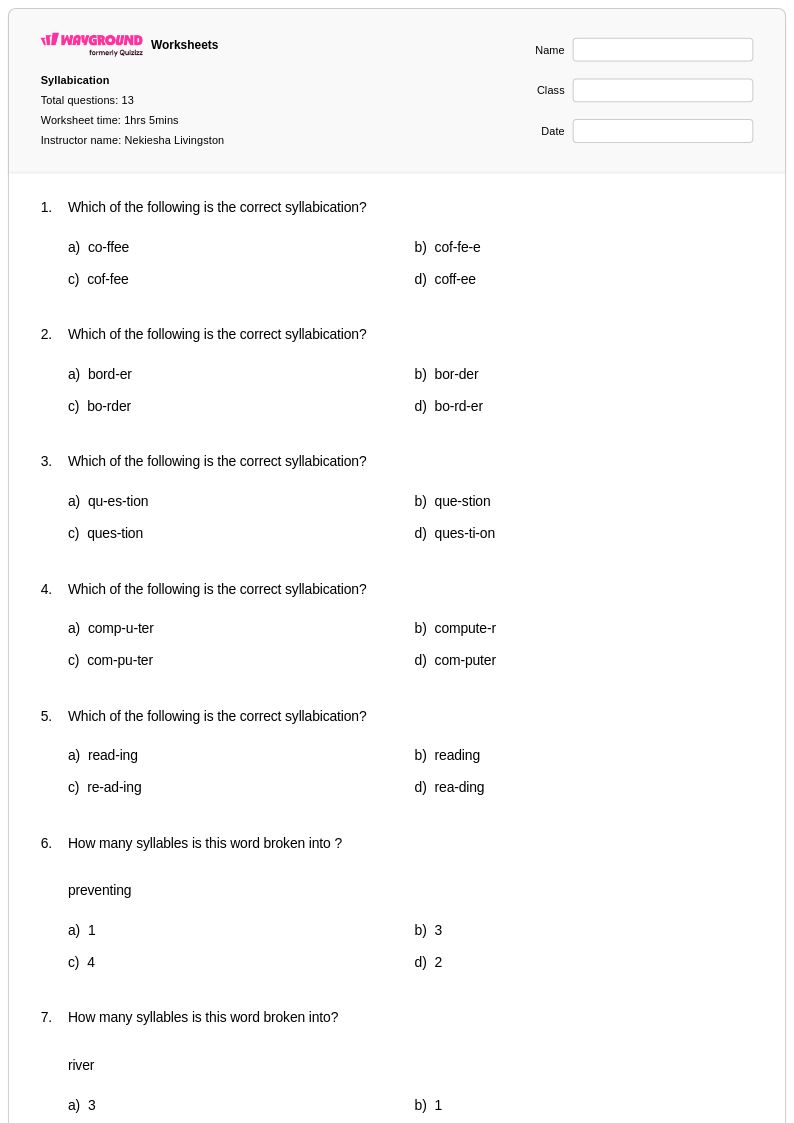
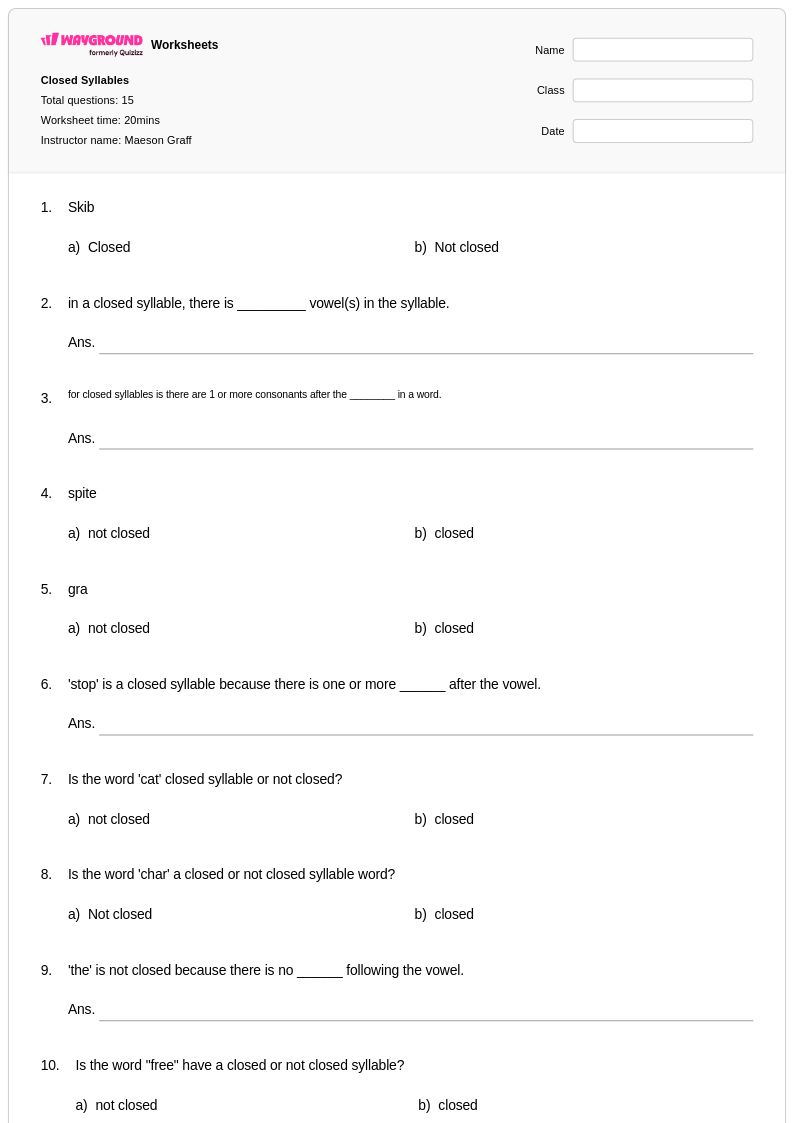
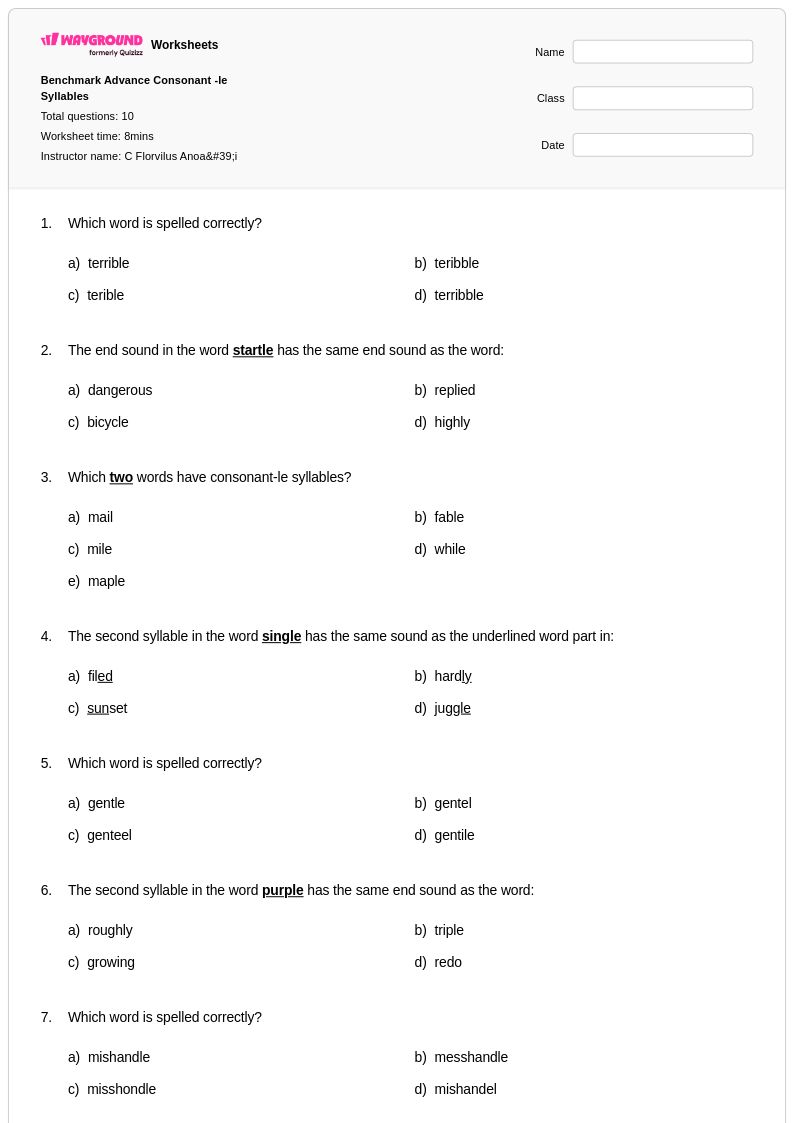
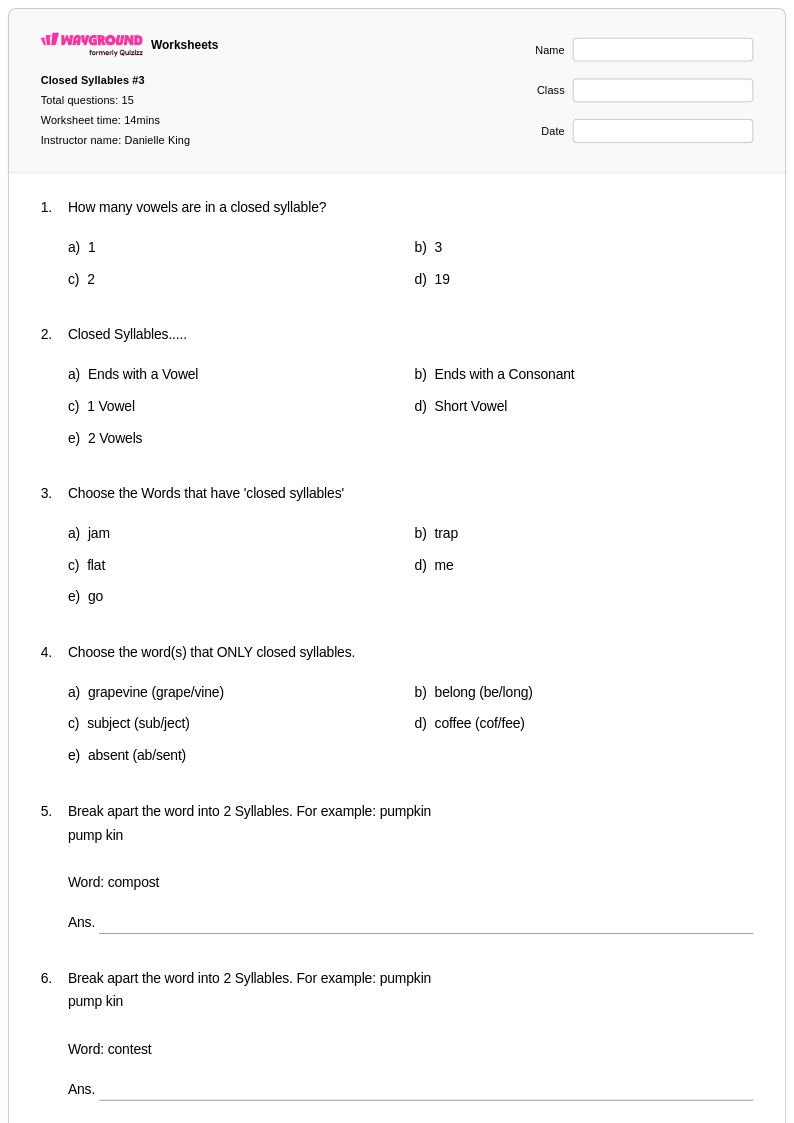
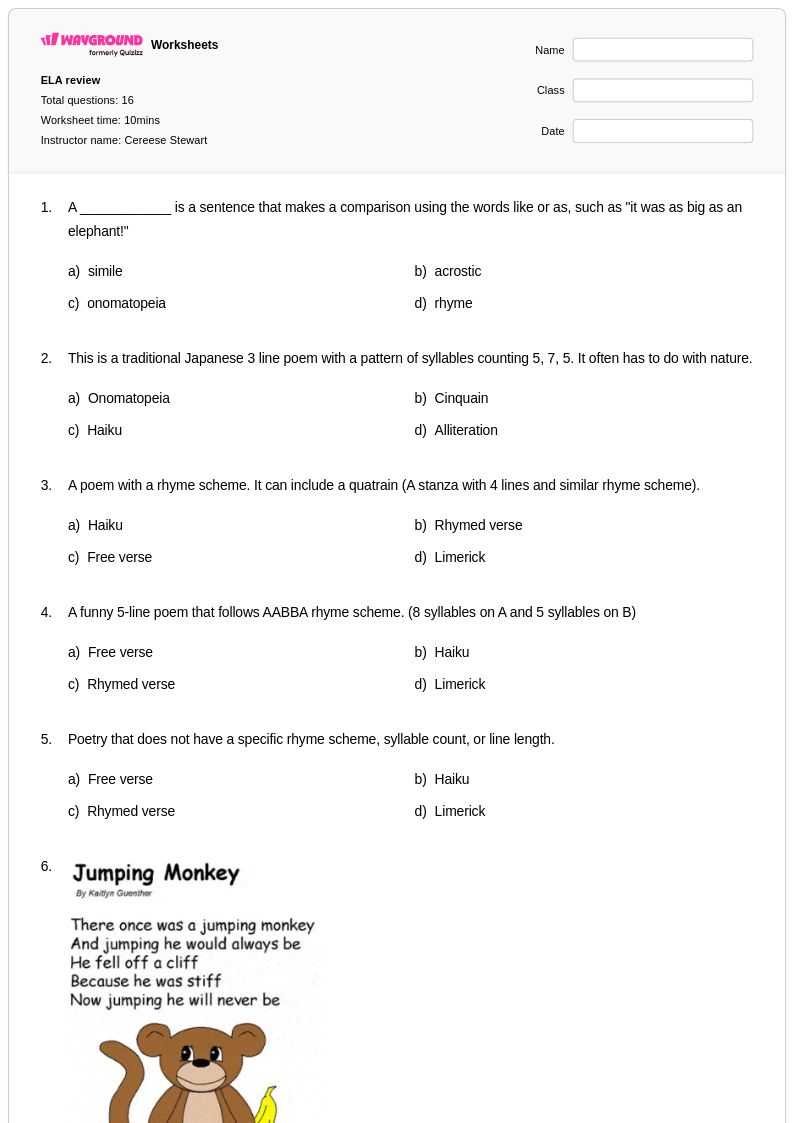
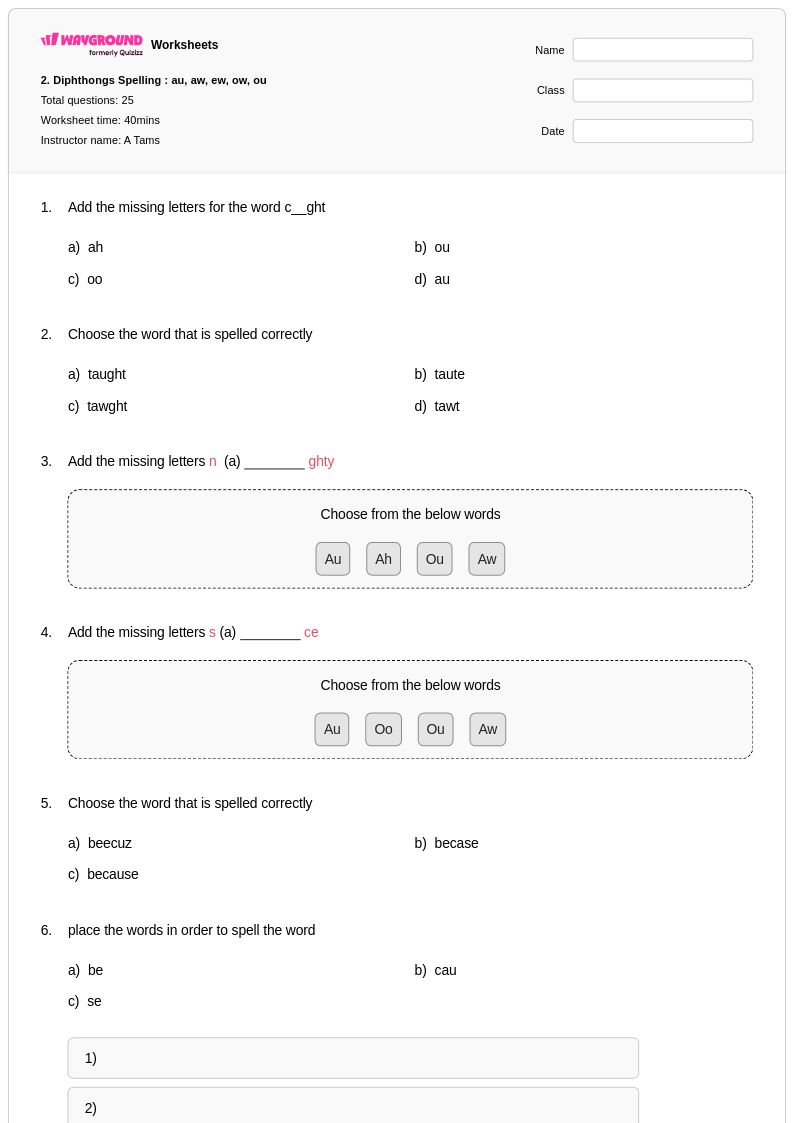
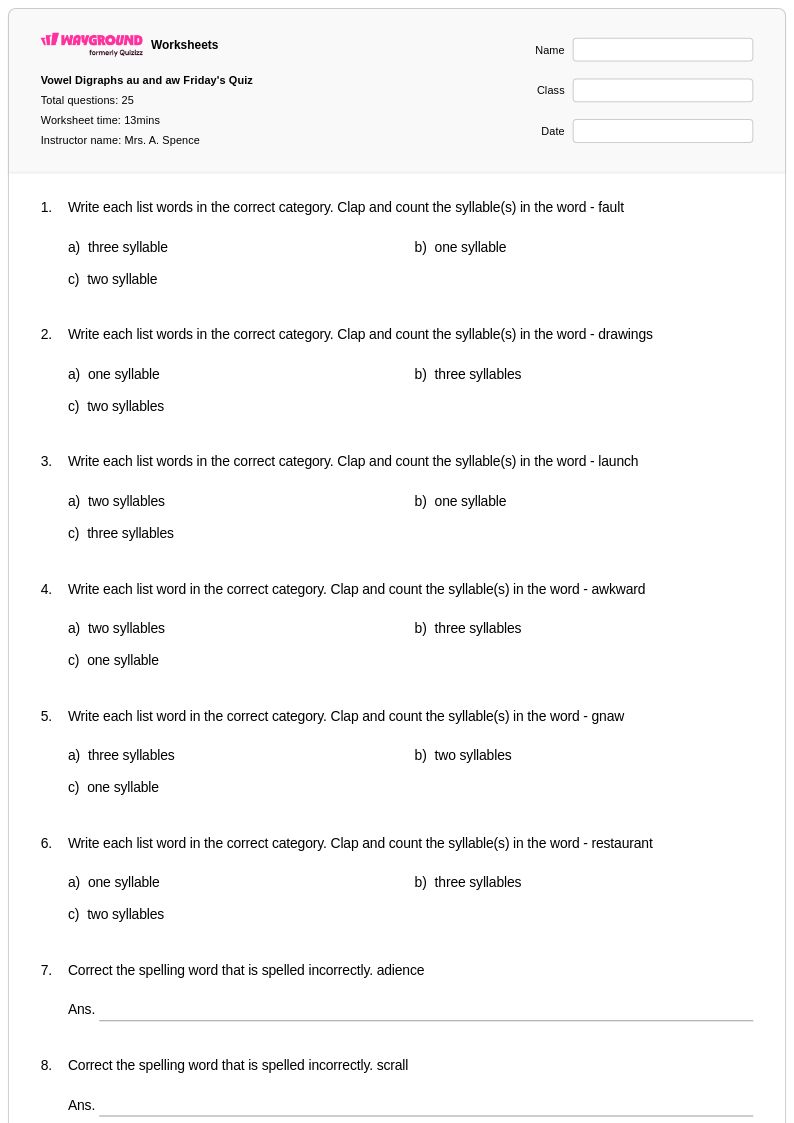
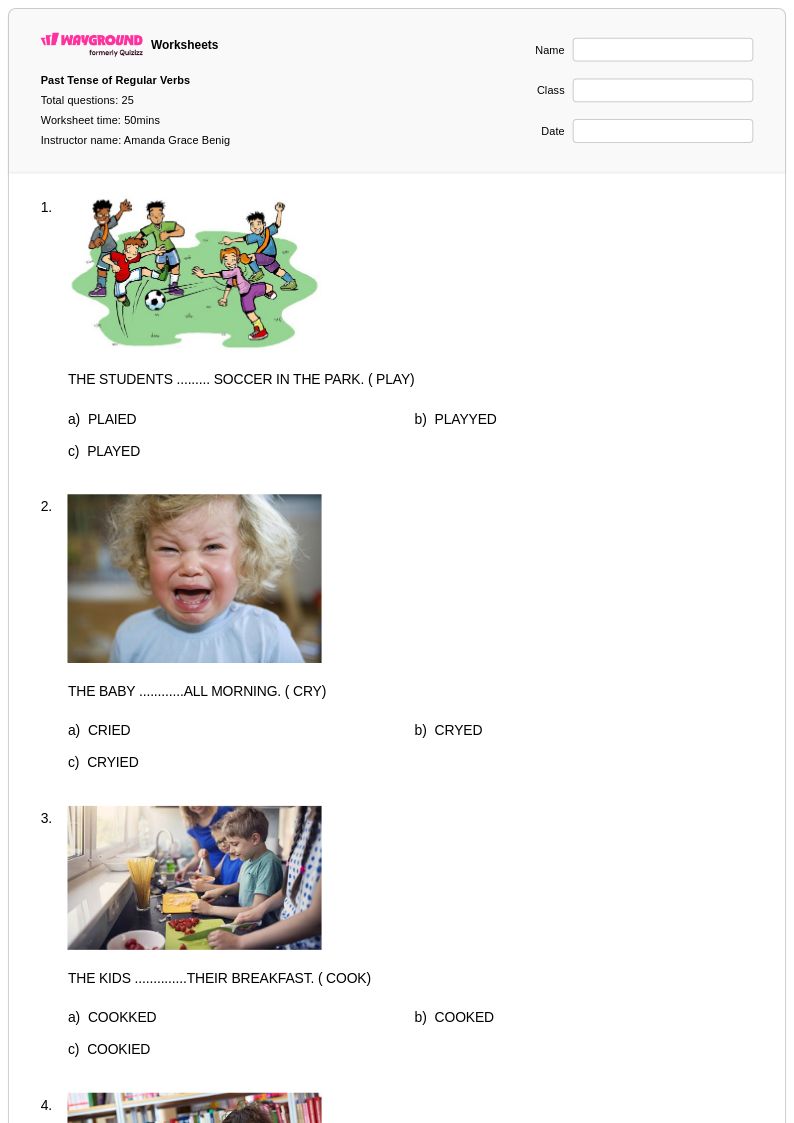
Syllable counting worksheets for Year 3 students available through Wayground (formerly Quizizz) provide essential phonics practice that builds foundational reading and spelling skills. These comprehensive printables guide third-grade learners through systematic exercises in breaking words into their component syllables, strengthening their ability to decode unfamiliar words and improve reading fluency. The worksheets feature age-appropriate vocabulary and engaging activities that help students recognize syllable patterns, understand vowel sounds within syllables, and apply syllable division rules. Each worksheet collection includes detailed answer keys and offers varied practice problems that progress from simple two-syllable words to more complex multisyllabic terms, ensuring students develop confidence in this critical phonics skill through structured, incremental learning.
Wayground (formerly Quizizz) empowers educators with millions of teacher-created syllable counting resources specifically designed for Year 3 phonics instruction. The platform's robust search and filtering capabilities allow teachers to quickly locate worksheets that align with curriculum standards and match their students' specific learning needs. These versatile materials support effective differentiation through customizable features that accommodate various skill levels within the classroom, while the availability of both printable pdf formats and digital versions provides flexibility for diverse learning environments. Teachers can seamlessly integrate these syllable counting worksheets into lesson planning for initial instruction, targeted remediation for struggling readers, or enrichment activities for advanced students, creating comprehensive phonics practice opportunities that strengthen fundamental literacy skills across all learner profiles.
FAQs
How do I teach syllable counting to early readers?
Teach syllable counting by connecting it to physical movement first — have students clap, tap, or stomp each syllable as they say a word aloud before introducing written tasks. Start with compound words and two-syllable words where the breaks are obvious, then gradually introduce three- and four-syllable words. Anchor the skill with consistent rules such as the vowel-per-syllable principle, which gives students a reliable strategy they can apply independently.
What exercises help students practice counting syllables in words?
Effective syllable counting practice combines auditory, kinesthetic, and visual approaches so students build the skill across multiple channels. Clapping exercises, visual word-division tasks where students physically mark syllable breaks, and sorting activities that group words by syllable count are all high-value formats. Worksheets that mix single-syllable and multi-syllabic words within the same exercise are particularly useful because they require students to actively discriminate rather than apply a single rote pattern.
What mistakes do students commonly make when counting syllables?
The most common error is undercounting syllables in multi-syllabic words, especially when adjacent vowels or unstressed syllables are involved — students often treat 'every' as two syllables instead of three, for example. Students also frequently miscategorize words with silent vowels, incorrectly adding a syllable for letters that carry no sound. Targeted practice with words that include these tricky patterns, paired with immediate corrective feedback from an answer key, helps address both error types efficiently.
How can I use syllable counting worksheets to support struggling readers?
For struggling readers, syllable counting builds the phonological awareness foundation that directly supports decoding longer words, making it a high-leverage intervention skill. Use worksheets that begin with high-frequency, familiar words so students focus on the syllable task rather than word recognition. On Wayground, teachers can enable Read Aloud support so audio reads the words aloud for students who need it, and Reduced Answer Choices can lower cognitive load for students working on syllable-count identification tasks in digital formats.
How do I use Wayground's syllable counting worksheets in my classroom?
Wayground's syllable counting worksheets are available as printable PDFs for traditional classroom use and in interactive digital formats for technology-integrated instruction, giving teachers flexibility across settings. Each worksheet includes a complete answer key, reducing prep time for independent practice, centers, or homework assignments. Teachers can also host the digital version as a quiz directly on Wayground, allowing them to track student responses and identify which syllable patterns need additional reinforcement.
How does syllable counting connect to spelling and reading development?
Syllable counting is a core component of phonological awareness, and students who can accurately segment words by syllable consistently perform better on both decoding and spelling assessments. Breaking words into syllables gives readers a manageable unit to decode, and gives spellers a structural scaffold for placing vowels and affixes correctly. This is why syllable instruction is embedded in most systematic phonics programs as a transitional skill between basic phonemic awareness and multisyllabic word reading.