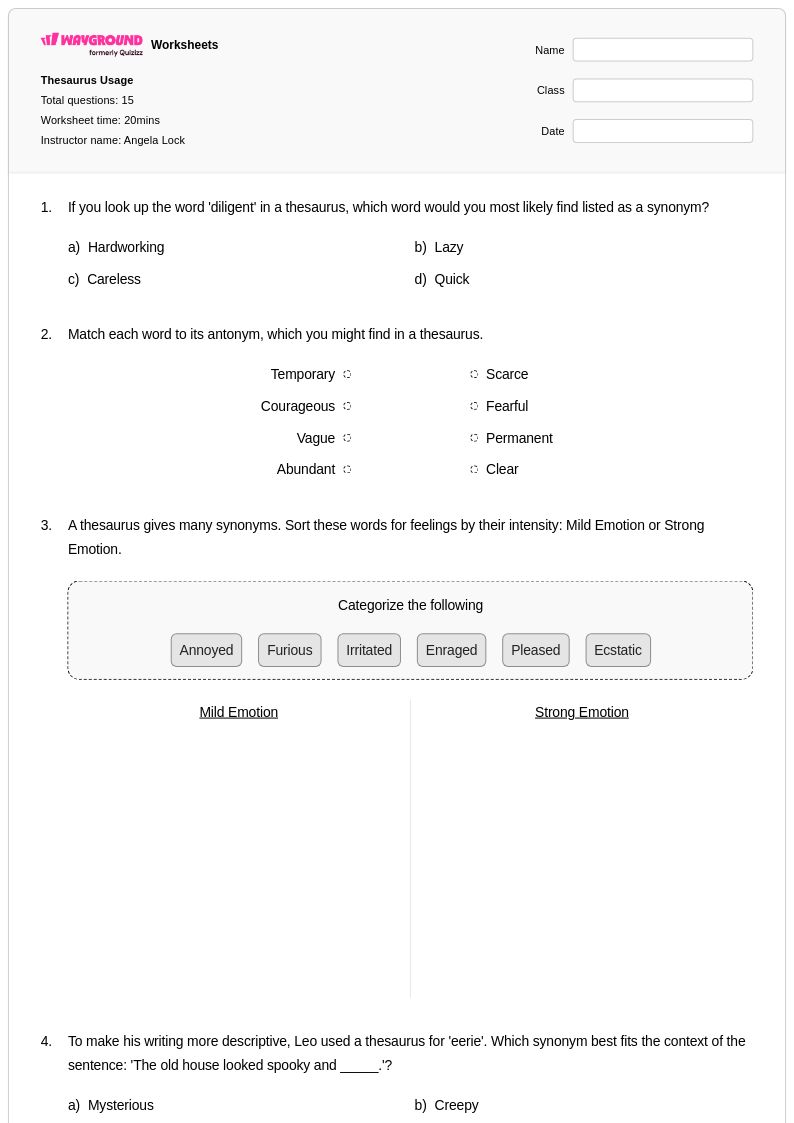
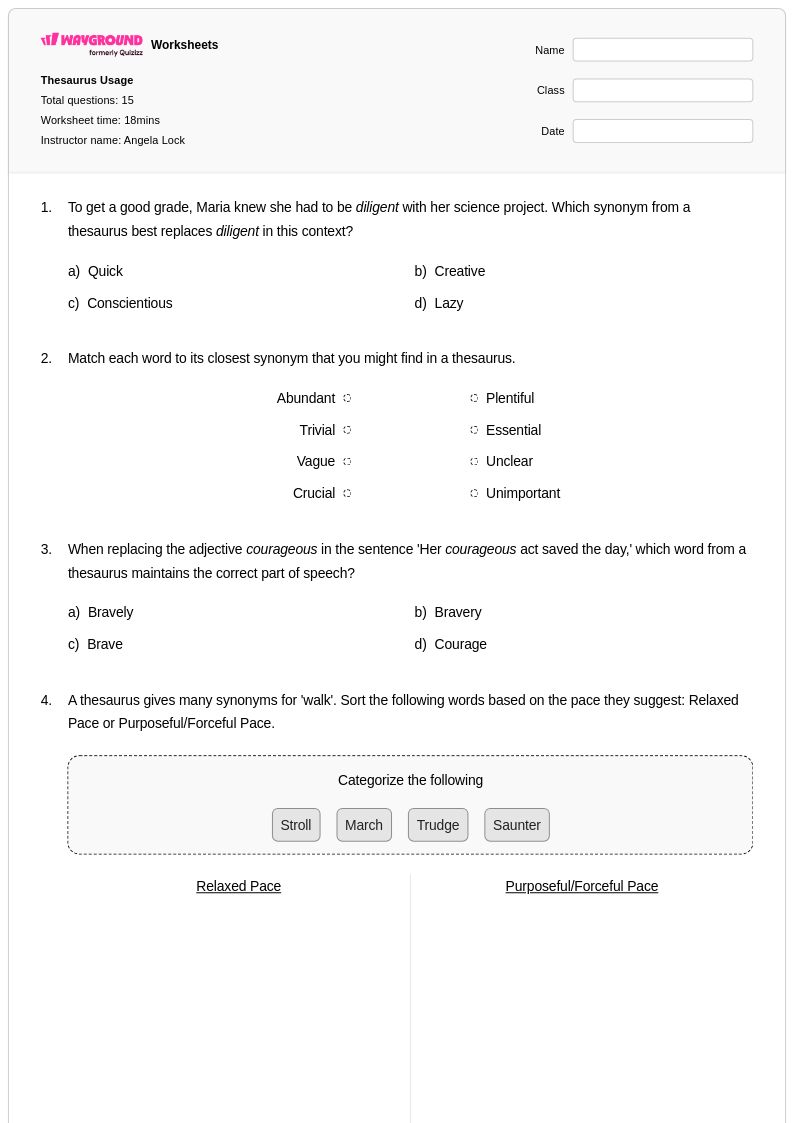
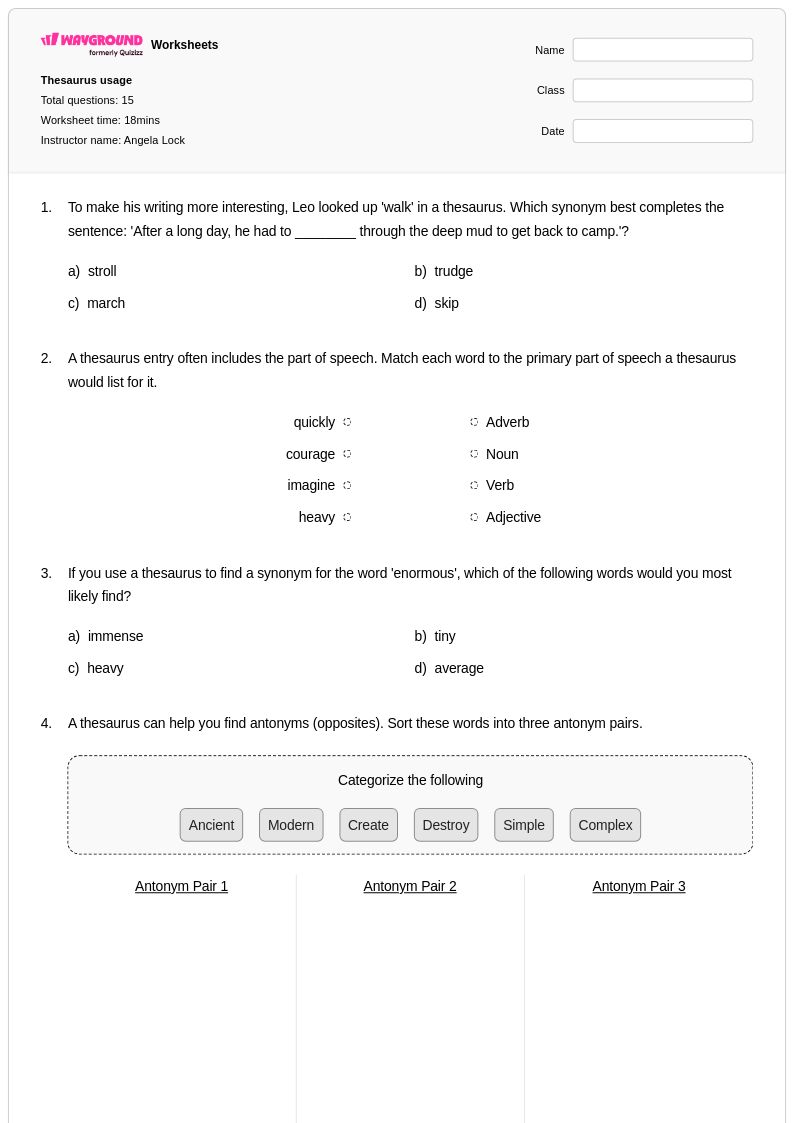
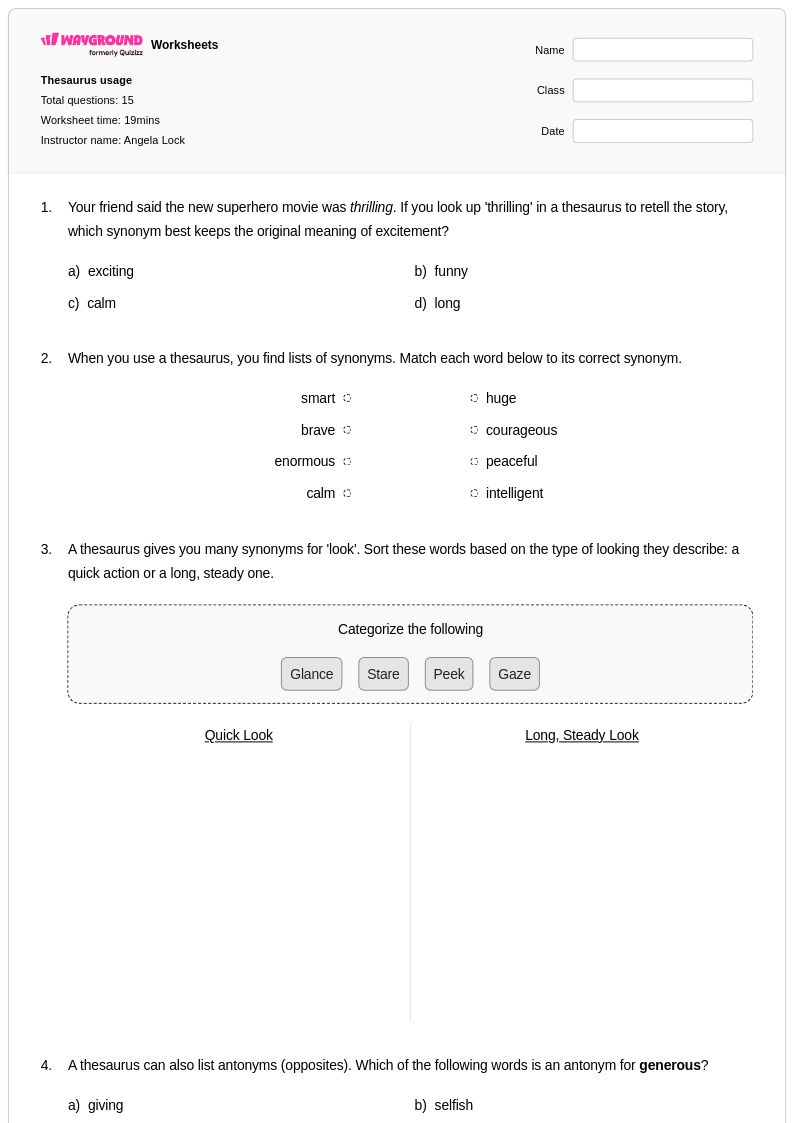
Master Year 12 verb usage with Wayground's comprehensive collection of free worksheets and printables, featuring targeted practice problems and answer keys to strengthen advanced English grammar skills.
Explore printable Verb Usage worksheets for Year 12
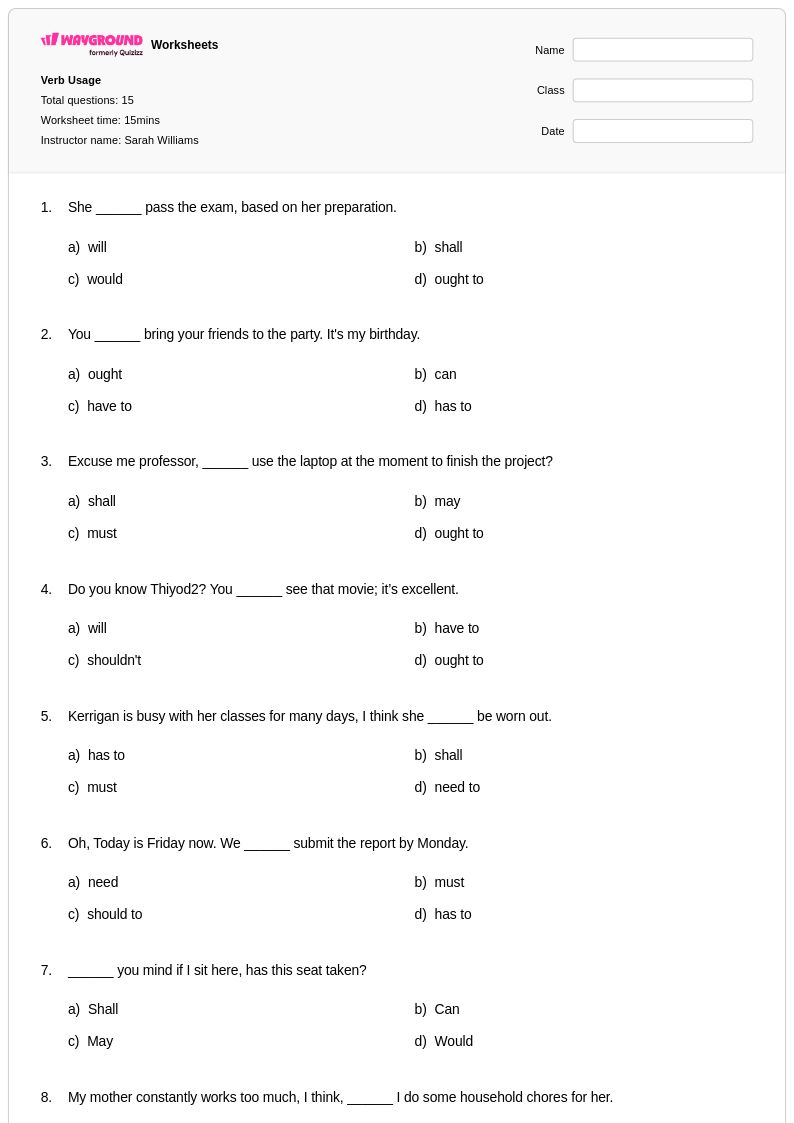
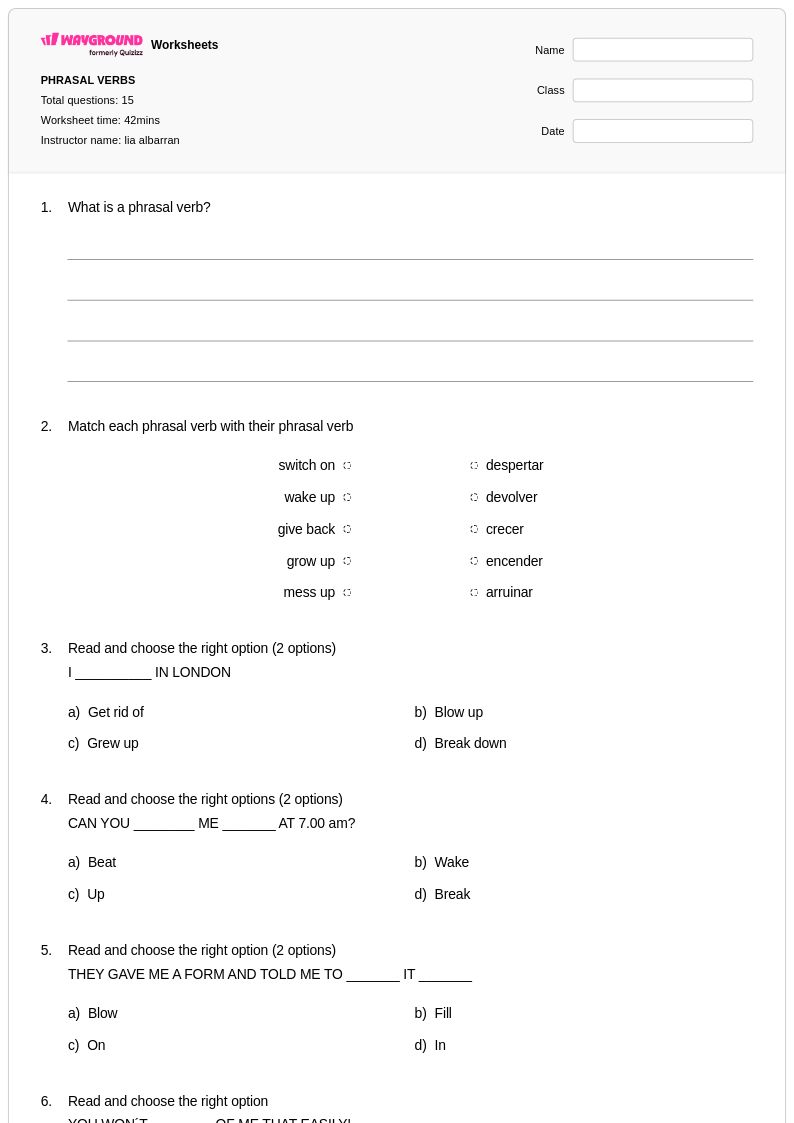
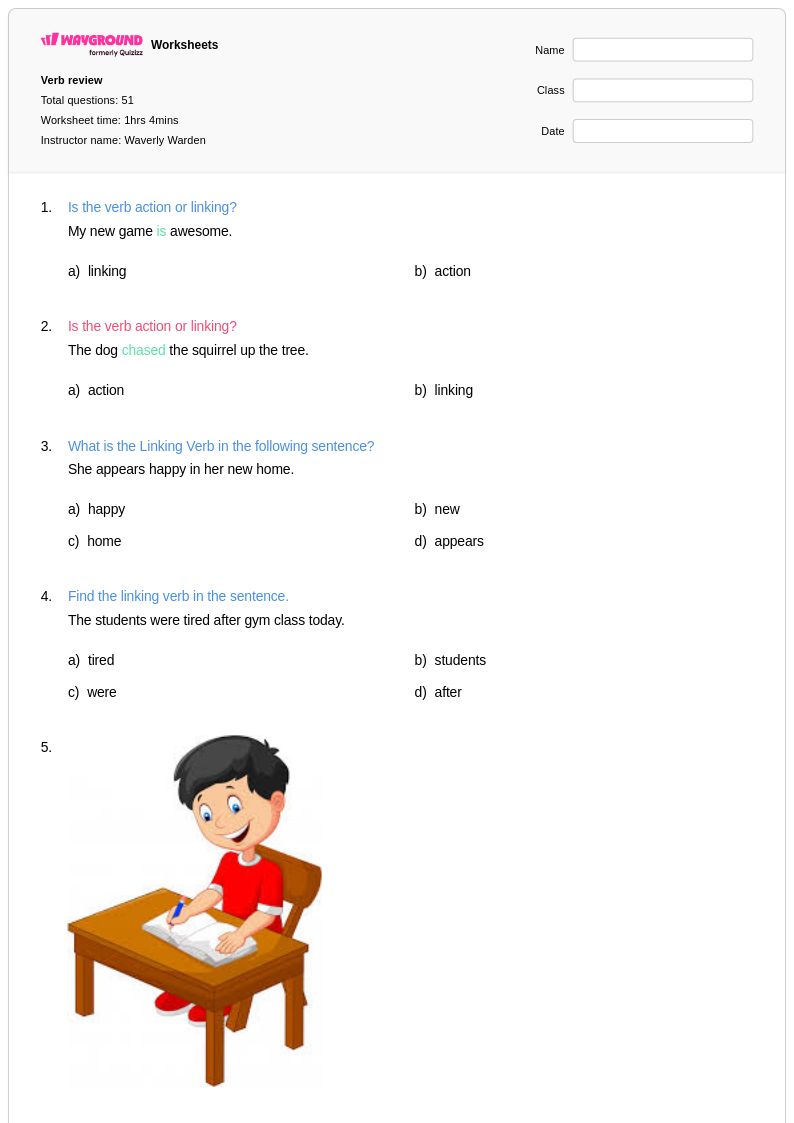
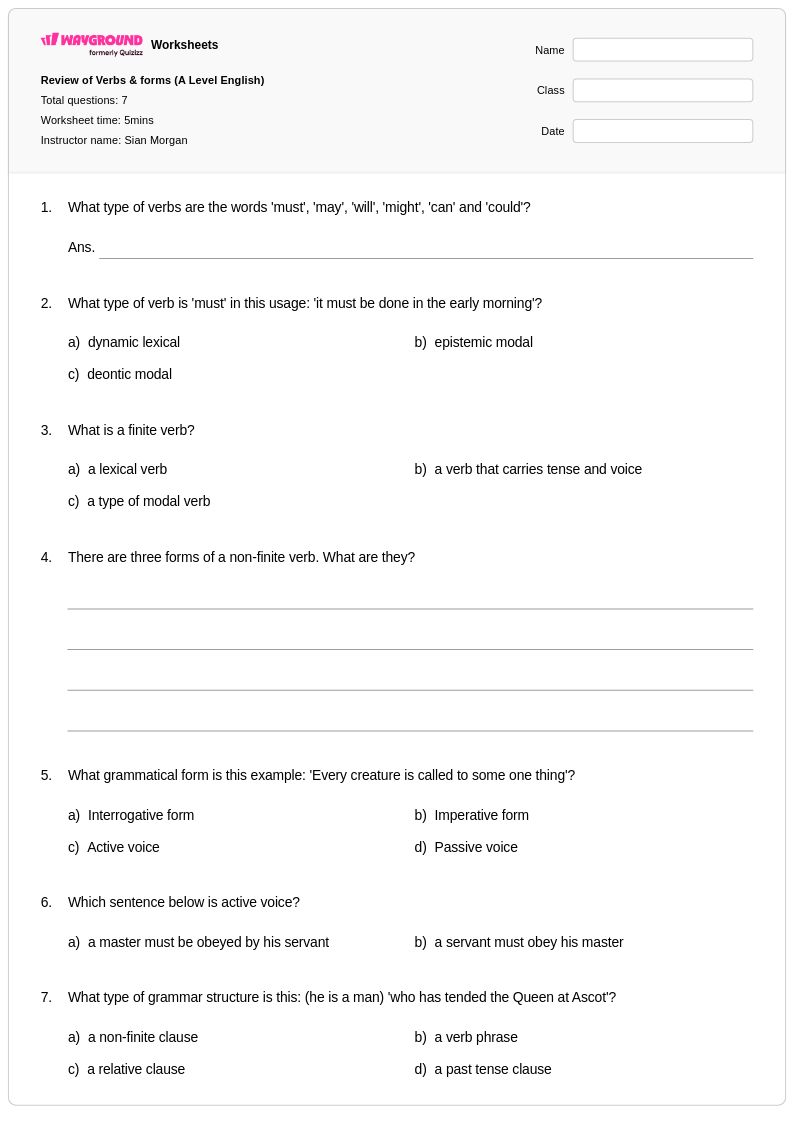
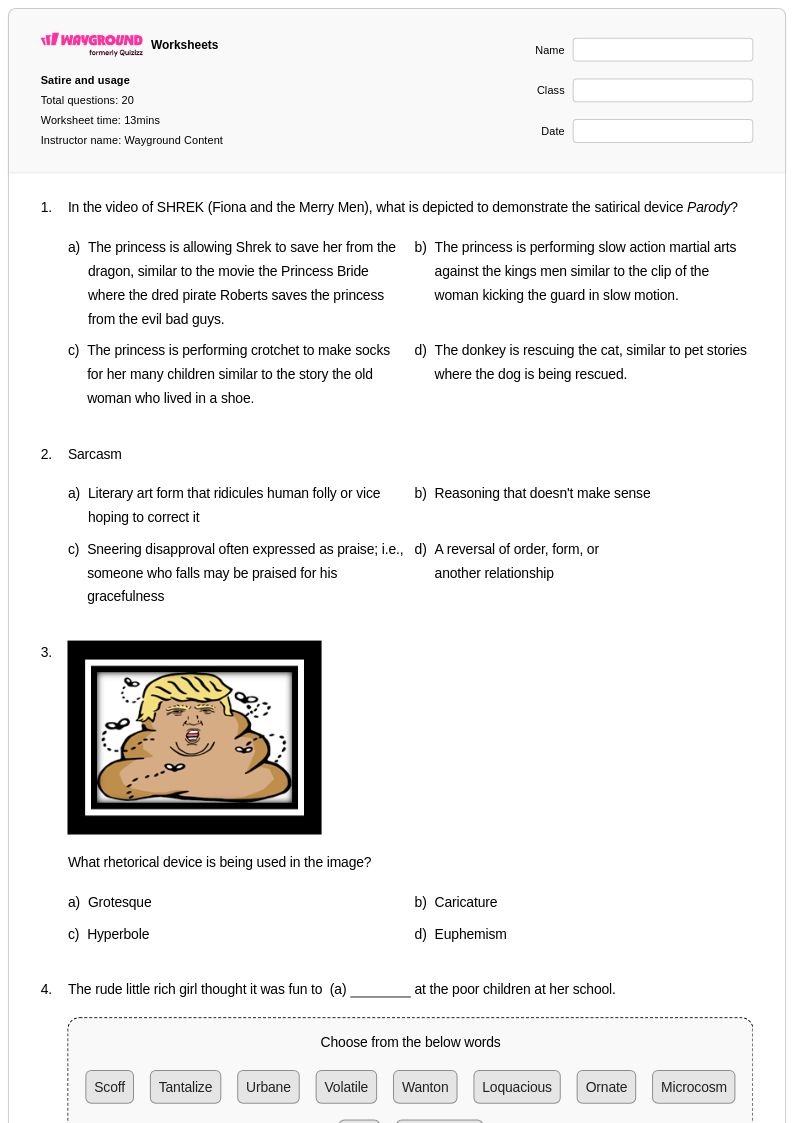
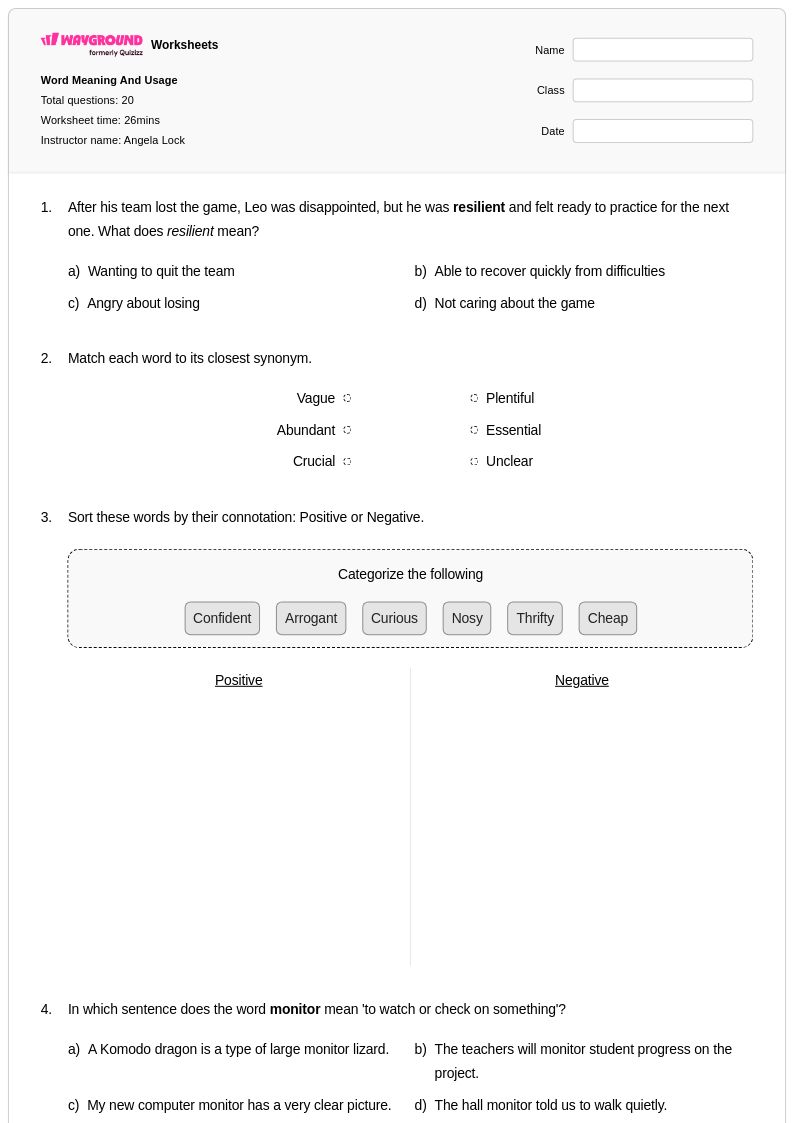
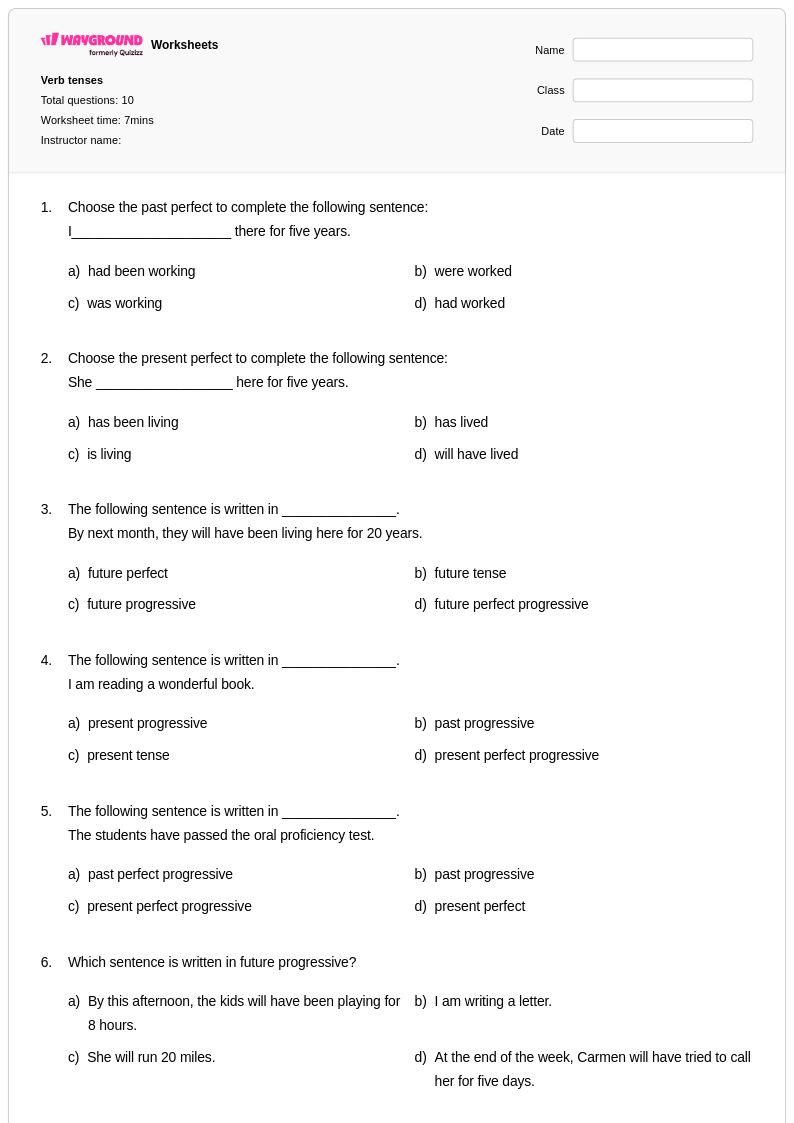
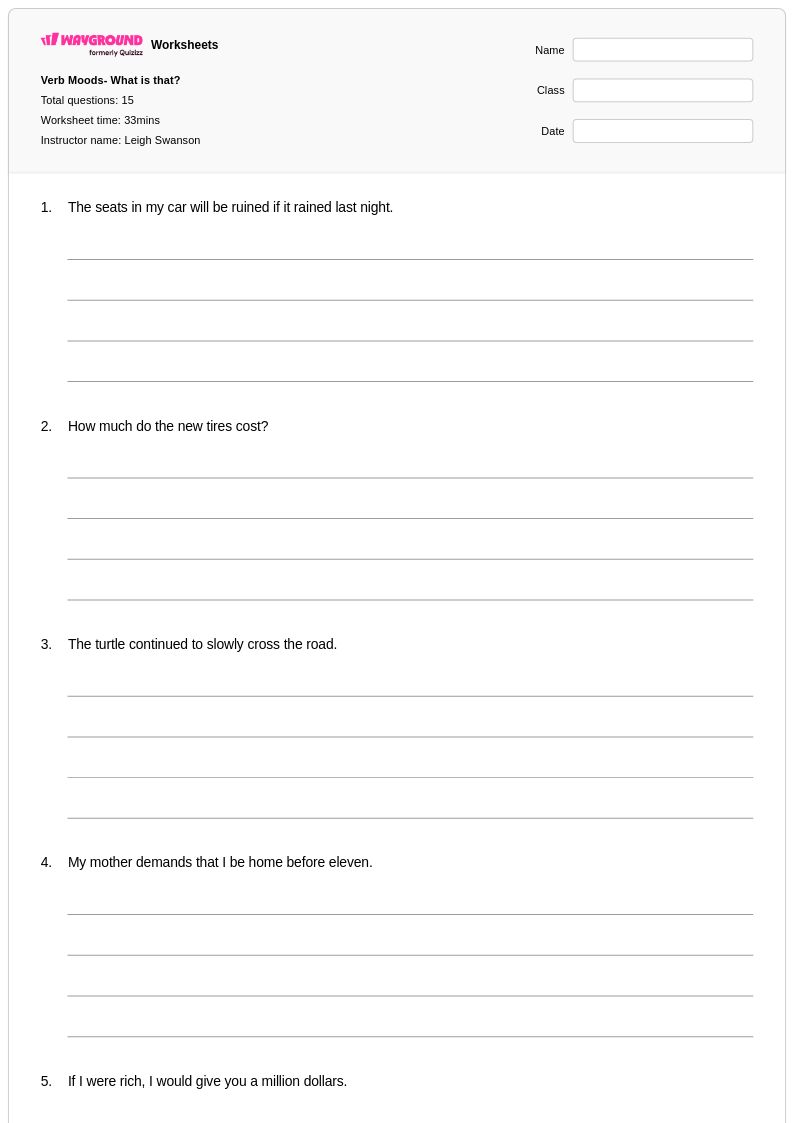
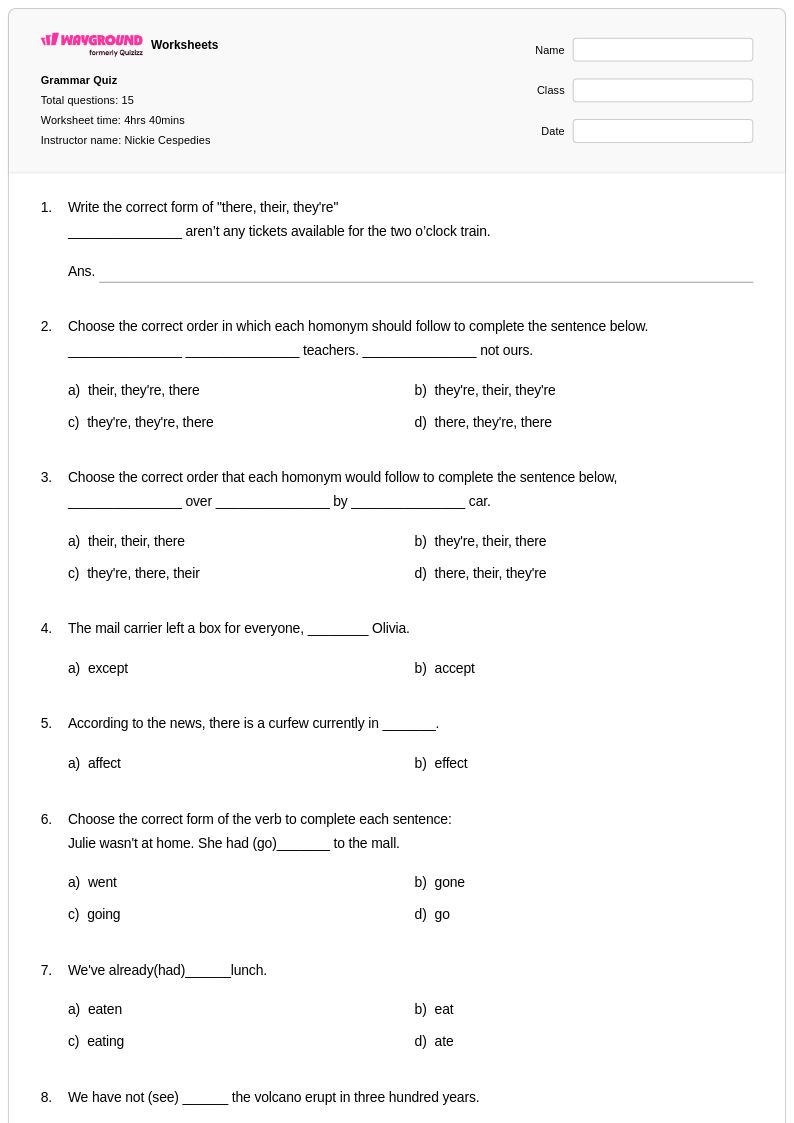
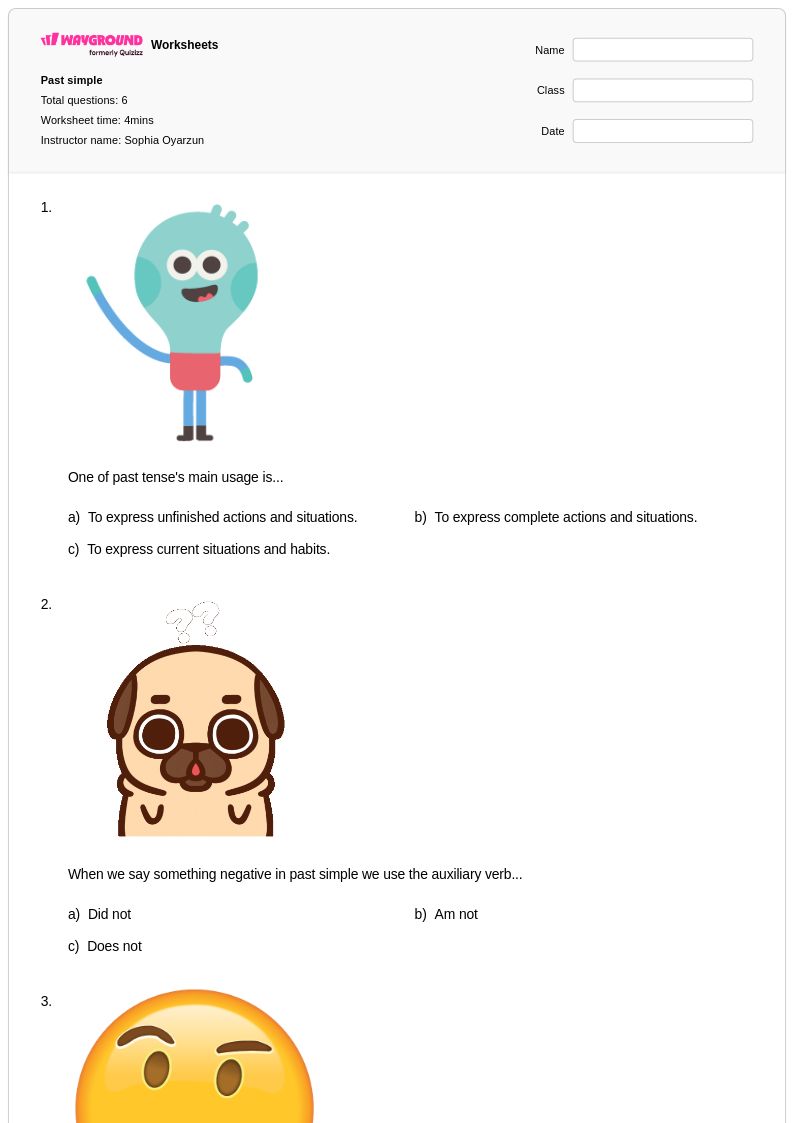
Verb usage worksheets for Year 12 students available through Wayground (formerly Quizizz) provide comprehensive practice with advanced grammatical concepts essential for college readiness and professional communication. These expertly designed resources focus on sophisticated verb applications including subjunctive mood, complex tense sequences, conditional constructions, and nuanced voice distinctions that challenge students to refine their command of English grammar. Each worksheet collection includes detailed answer keys and practice problems that guide students through intricate verb forms, helping them master concepts like perfect progressive tenses, modal verb combinations, and appropriate register selection. Available as free printables in convenient pdf format, these materials strengthen students' ability to recognize and correctly employ advanced verb structures in both academic and professional writing contexts.
Wayground (formerly Quizizz) empowers educators with millions of teacher-created verb usage resources specifically curated for Year 12 instruction, featuring robust search and filtering capabilities that allow quick identification of materials aligned with state and national language arts standards. The platform's differentiation tools enable teachers to customize worksheets based on individual student needs, whether providing remediation for struggling learners or enrichment challenges for advanced students. Available in both printable and digital formats including downloadable pdfs, these comprehensive collections support flexible lesson planning and targeted skill practice across diverse learning environments. Teachers can seamlessly integrate these verb usage materials into grammar units, writing workshops, or test preparation sessions, ensuring students develop the sophisticated language skills necessary for success in college coursework and professional communication.
FAQs
How do I teach verb usage to students who keep mixing up tenses?
Start by anchoring each tense to a concrete time reference — a timeline visual works well — so students can see why tense selection matters before practicing in isolation. From there, move students through controlled exercises where they identify the correct tense in context, then into guided writing tasks where they apply tenses purposefully. Consistent exposure to mentor sentences and immediate corrective feedback helps internalize the rules over time.
What exercises help students practice subject-verb agreement?
Effective practice moves from identification to application: start with exercises where students circle the correct verb form in a sentence, then progress to fill-in-the-blank tasks with irregular subjects, and finally to editing passages for agreement errors. Including sentences with tricky structures — collective nouns, indefinite pronouns, and inverted word order — ensures students encounter the patterns that most commonly cause errors in their own writing.
What are the most common mistakes students make with verb usage?
The most persistent errors involve irregular past tense forms (writing 'goed' instead of 'went'), subject-verb agreement with collective nouns or compound subjects, and tense inconsistency within a paragraph. Students also frequently confuse lie/lay and sit/set because the forms overlap across tenses. Targeting these specific patterns in practice problems — rather than drilling all verb rules at once — leads to faster, more durable correction.
How can I differentiate verb usage practice for students at different skill levels?
For students who are still building foundational skills, reduce the cognitive load by focusing on one verb concept at a time — such as just present vs. past tense — before layering in irregular forms or agreement rules. Advanced students benefit from open-ended tasks like rewriting paragraphs across multiple tenses or identifying verb errors in authentic texts. On Wayground, teachers can apply accommodations such as reduced answer choices and read-aloud support to individual students, so differentiation happens at the assignment level without requiring separate worksheets for each tier.
How do I use Wayground's verb usage worksheets in my classroom?
Wayground's verb usage worksheets are available as printable PDFs for traditional classroom use and in digital formats for technology-integrated environments, and can also be hosted as a quiz directly on the Wayground platform. Teachers can use them for direct instruction warm-ups, independent practice, or targeted remediation by selecting worksheets that match the specific verb concept students are working on. The included answer keys make self-grading and quick formative checks straightforward for both teacher-led and student-paced settings.
How do I help students master irregular verb forms?
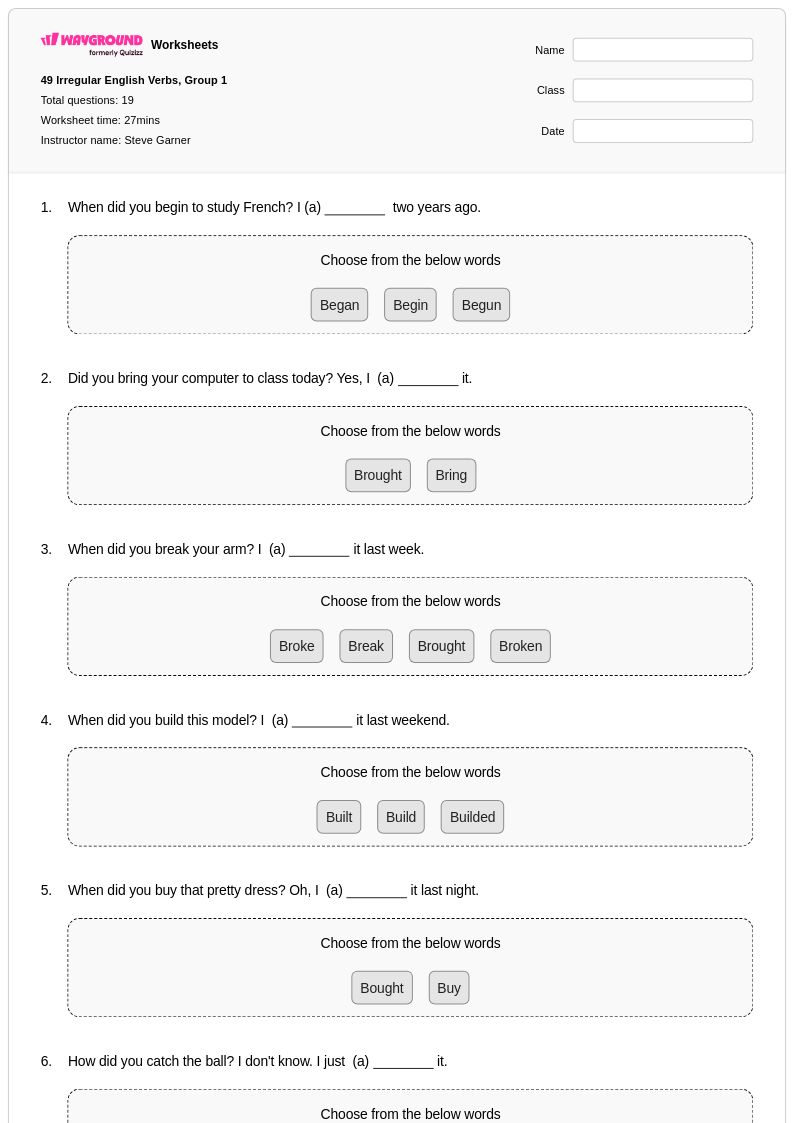
Irregular verbs require repeated, varied exposure rather than one-time memorization — students need to see and use forms like 'wrote,' 'broken,' and 'chose' in multiple sentence contexts before the patterns stick. Practice that moves from recognition (identifying the correct form) to production (completing sentences or writing original ones) builds both accuracy and automaticity. Grouping irregular verbs by pattern — such as verbs that change the vowel in the past tense — can also reduce the cognitive load of learning each form individually.