
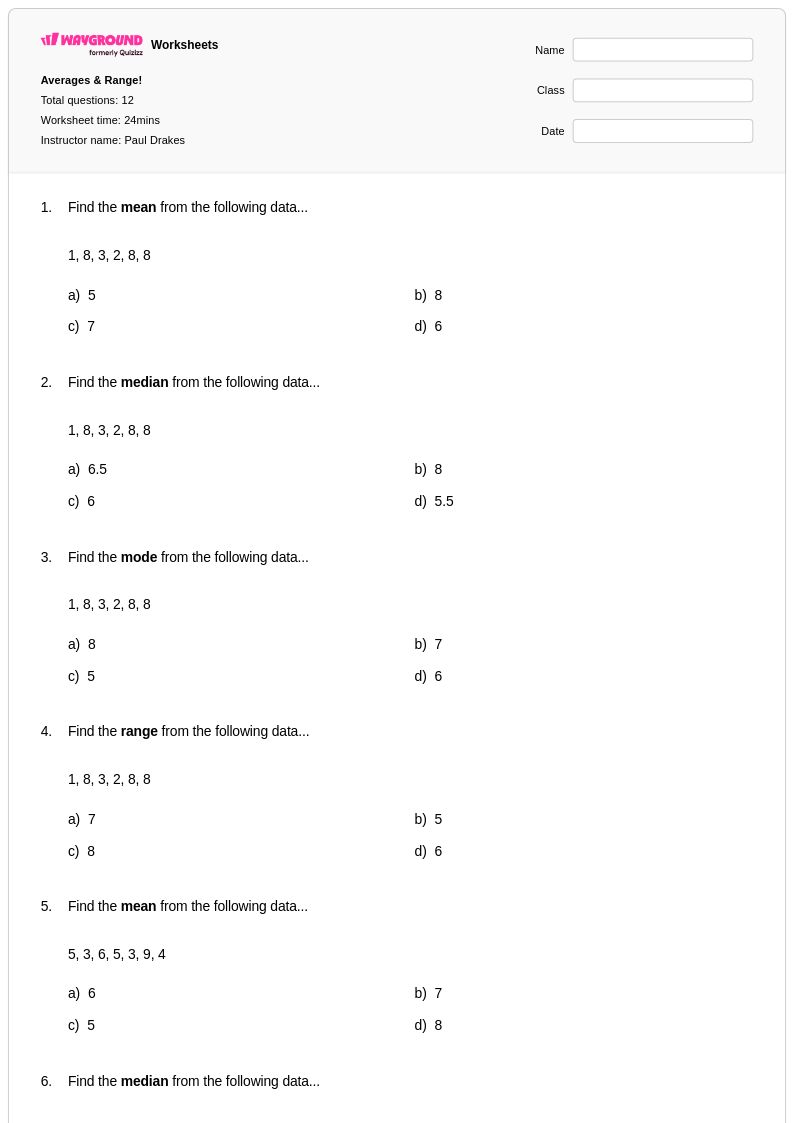
12 Q
5th - 10th
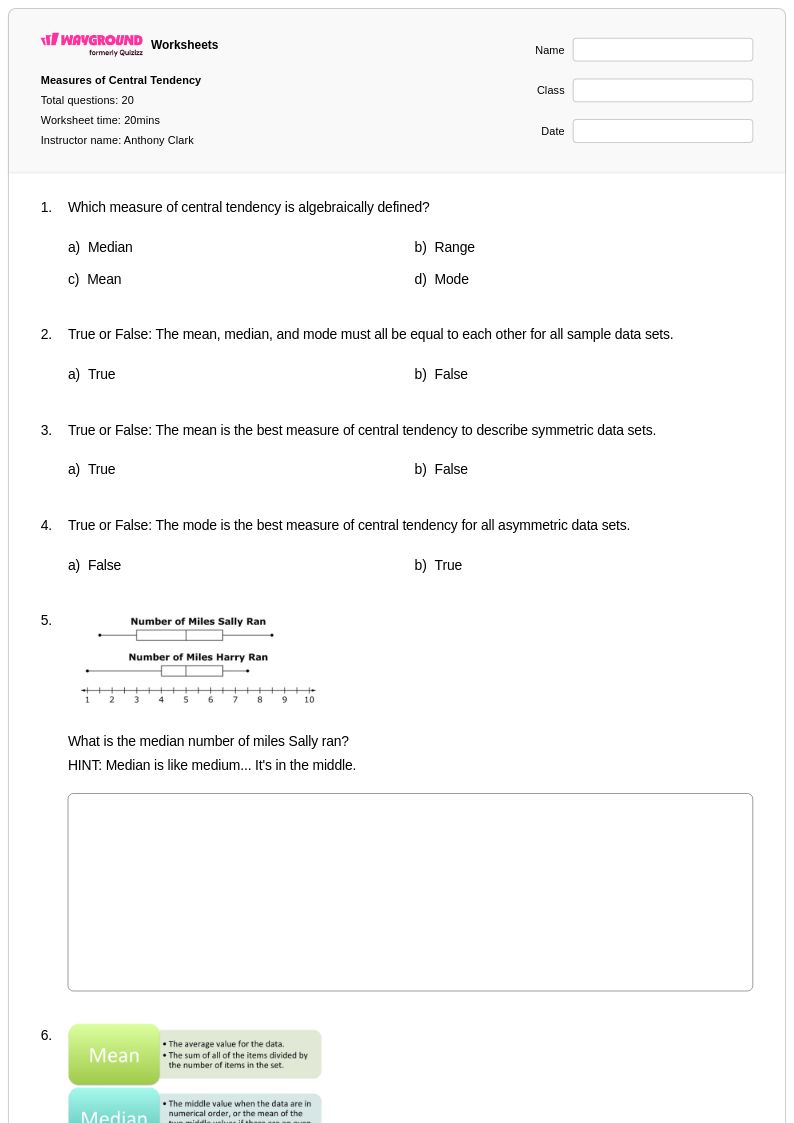
20 Q
8th - Uni
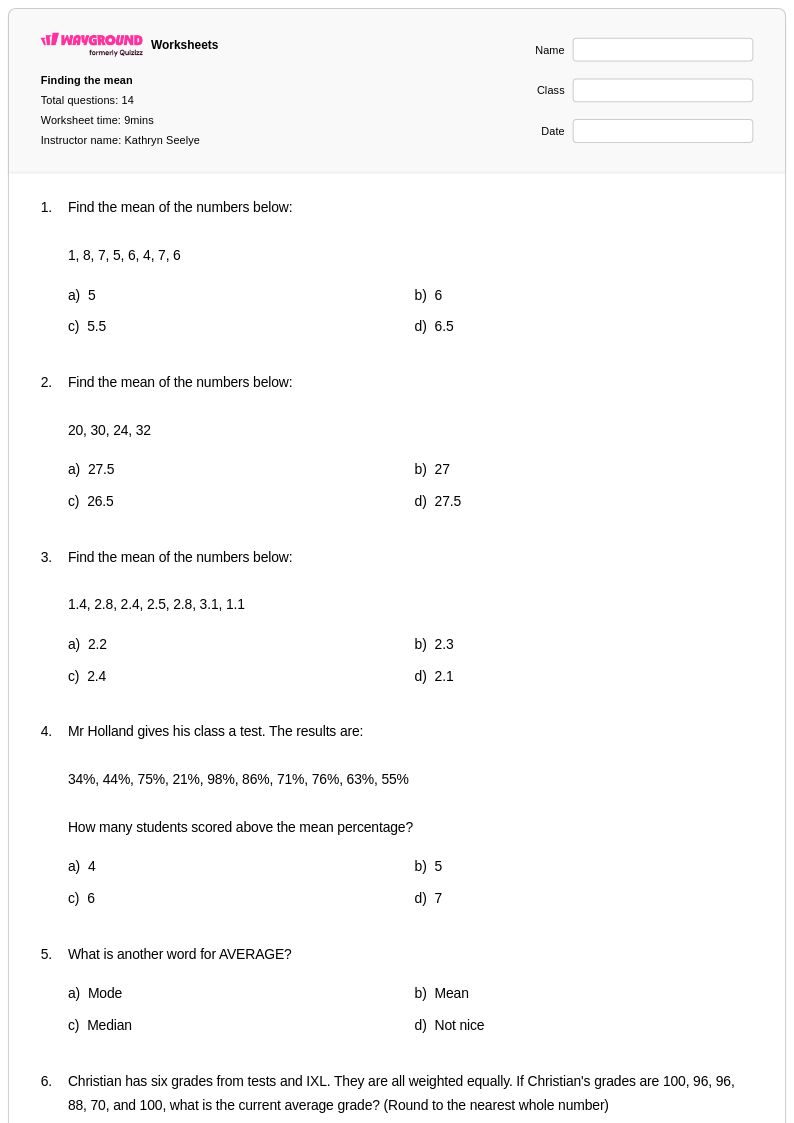
14 Q
8th
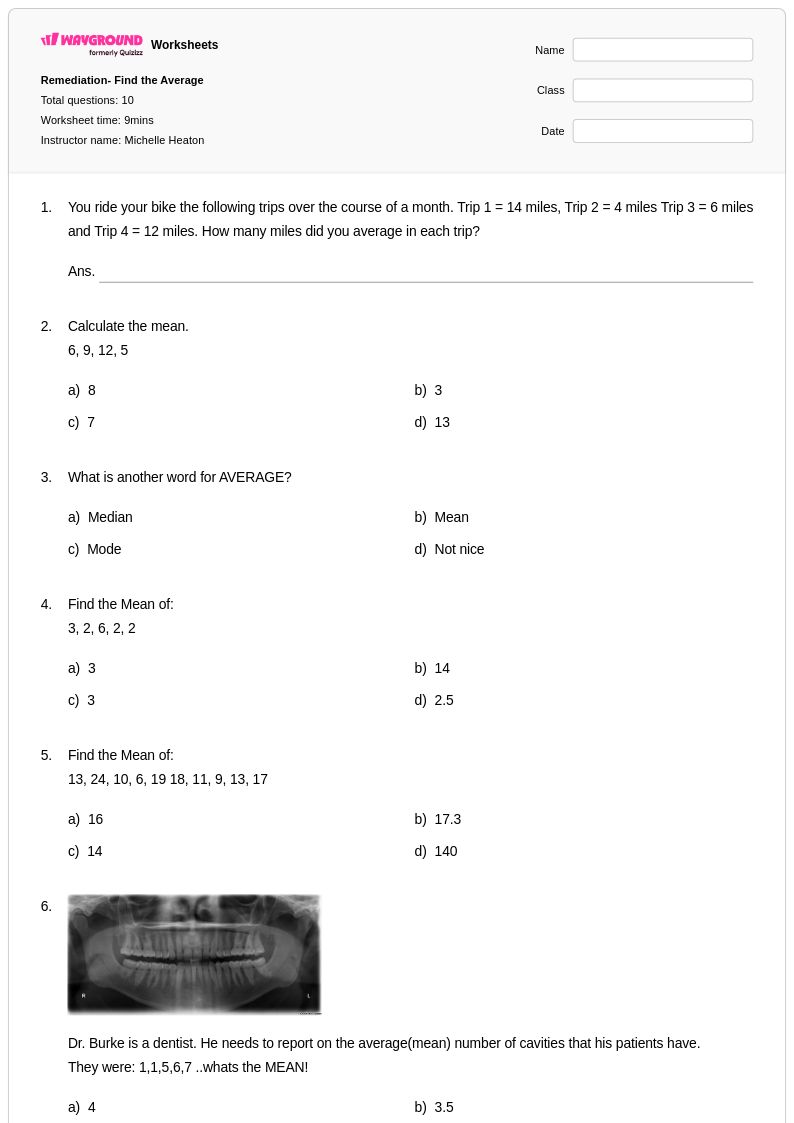
10 Q
8th
20 Q
8th - Uni
20 Q
6th - Uni
15 Q
6th - Uni
20 Q
6th - Uni
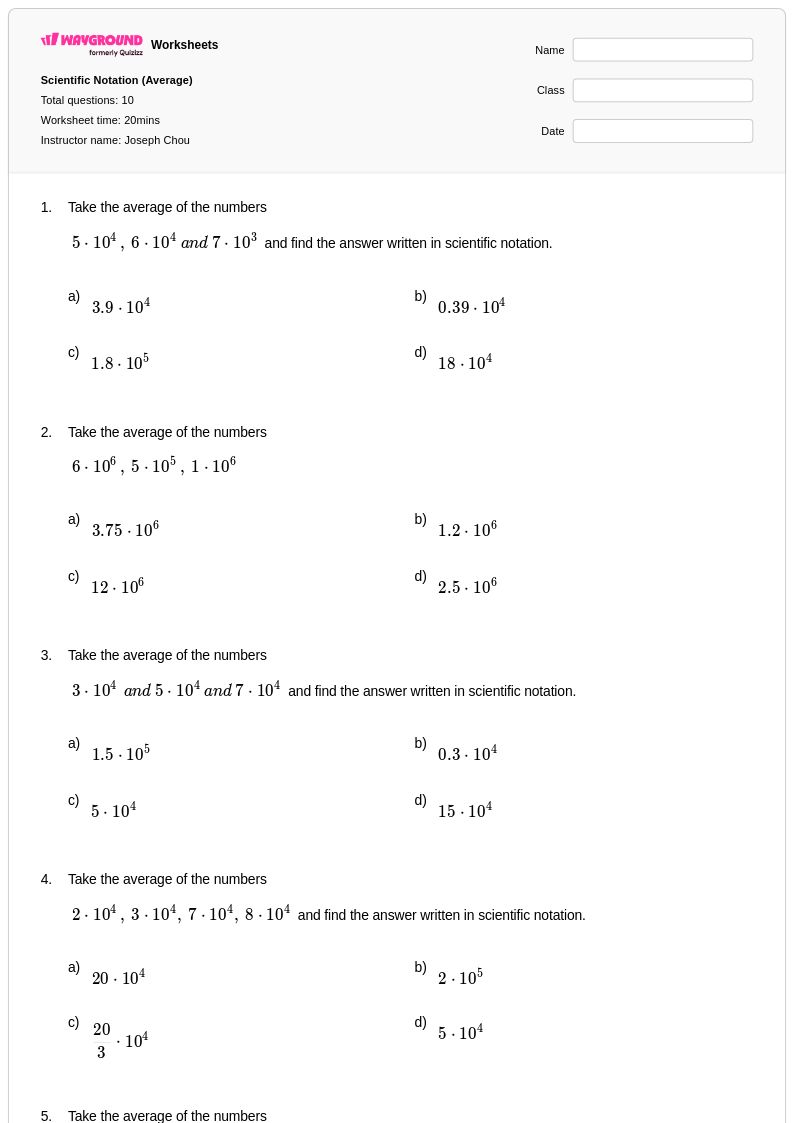
10 Q
8th
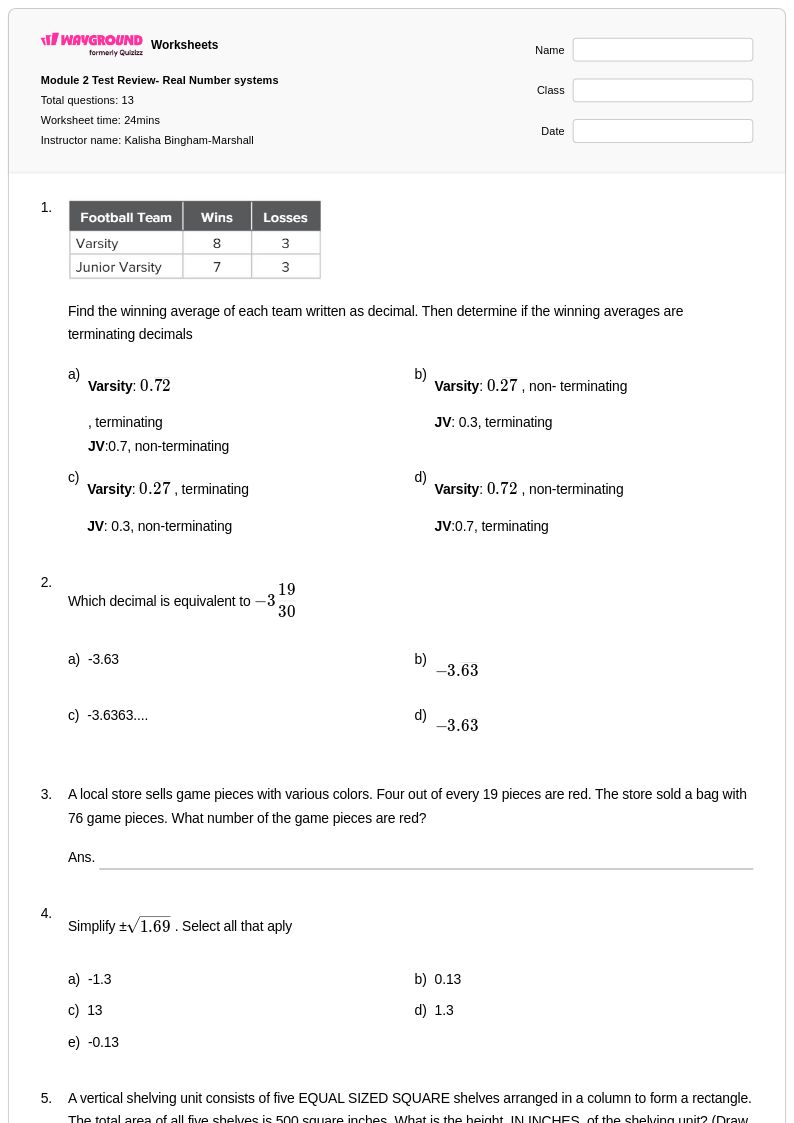
13 Q
8th
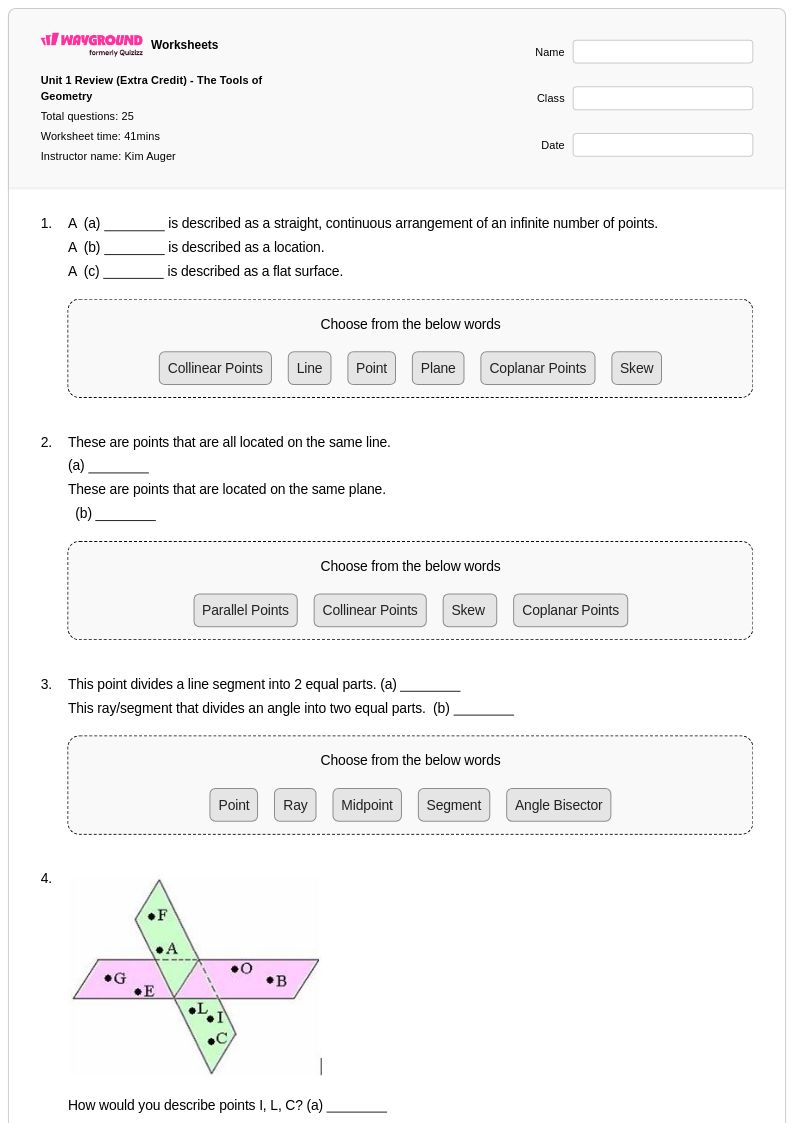
23 Q
8th - 10th
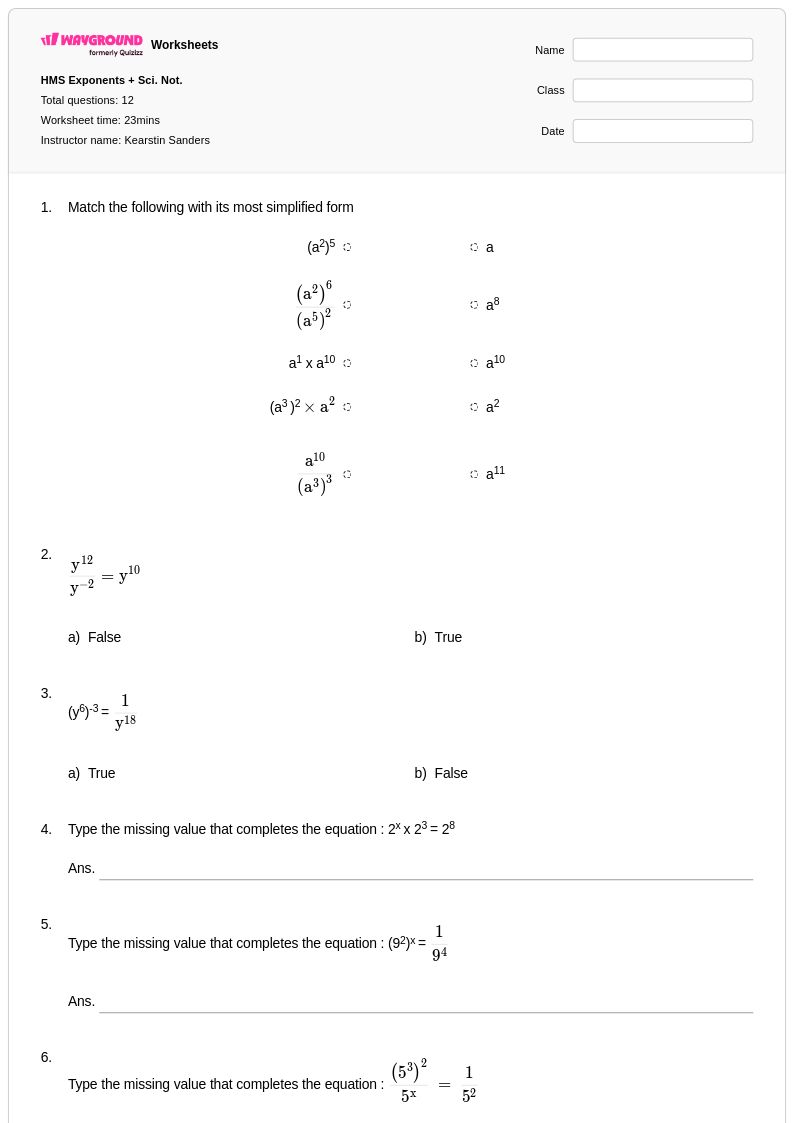
12 Q
8th
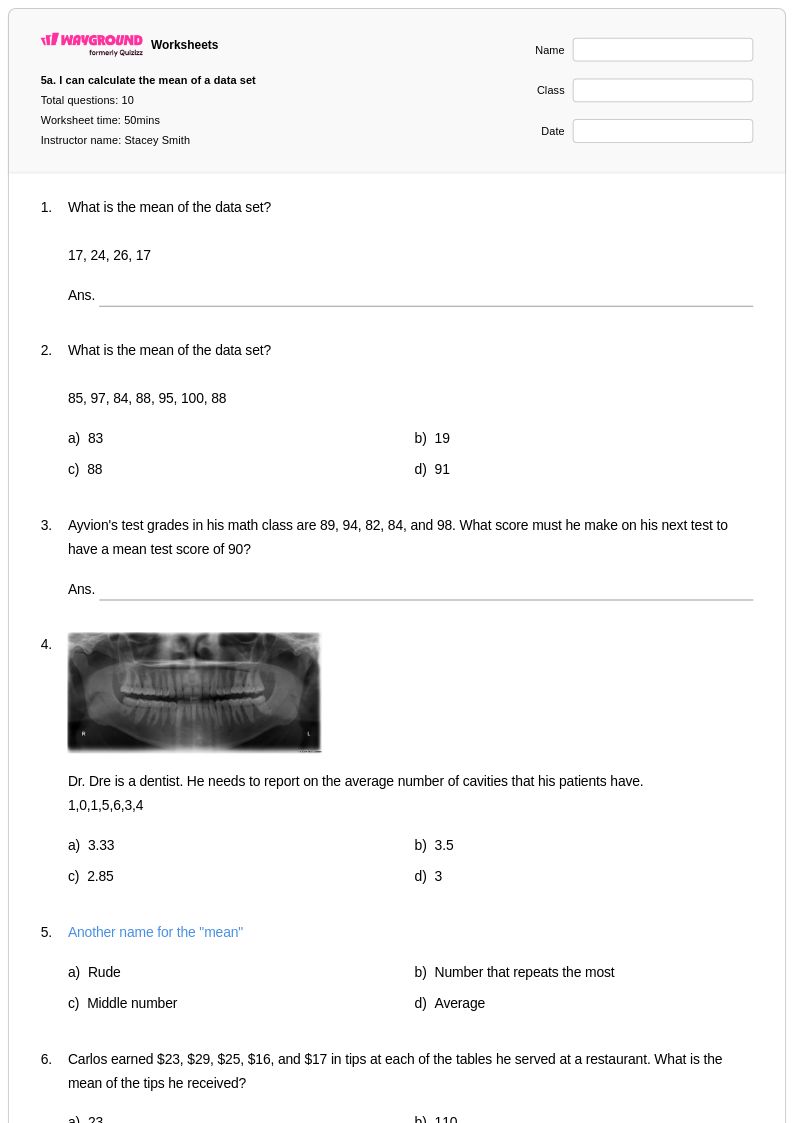
10 Q
6th - 8th
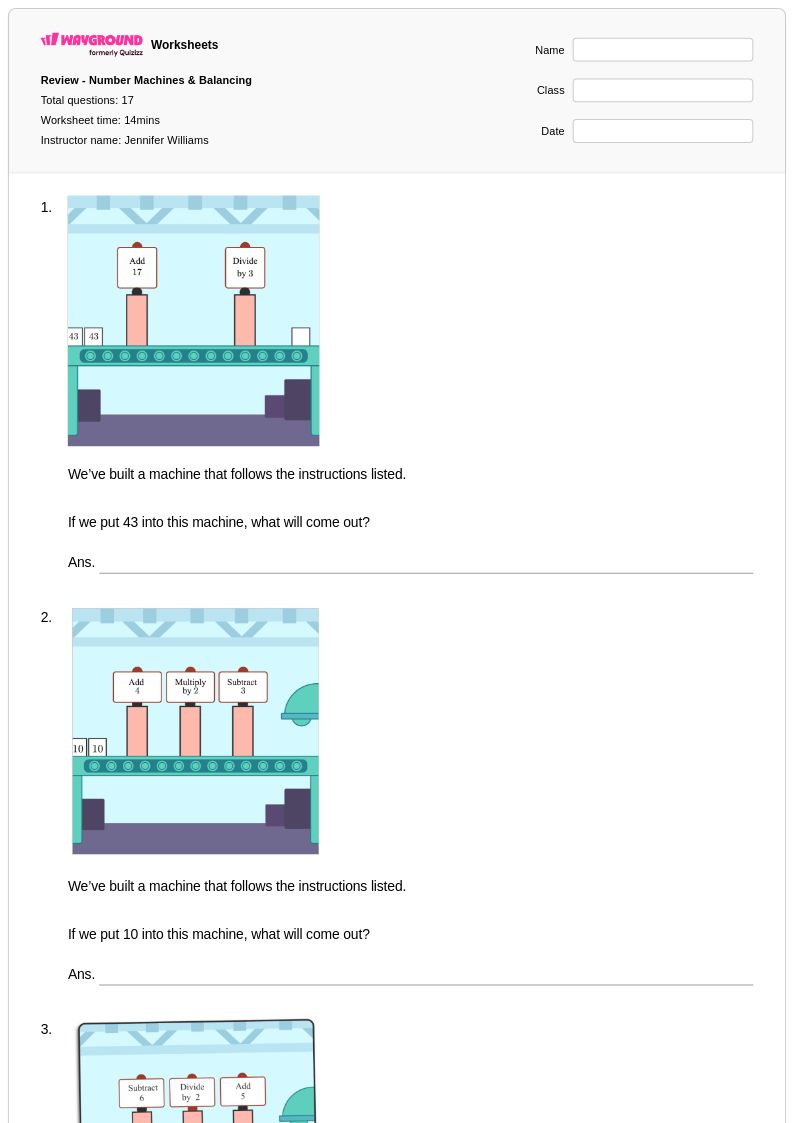
17 Q
7th - 8th
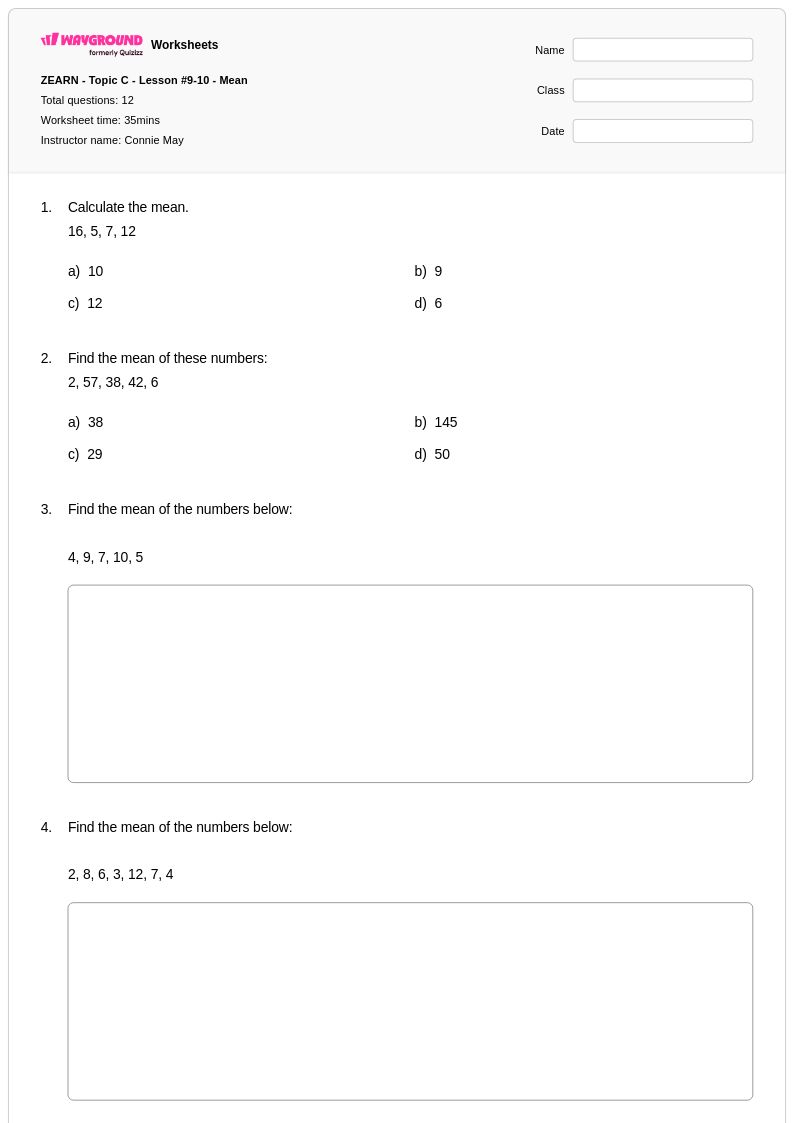
12 Q
6th - 8th
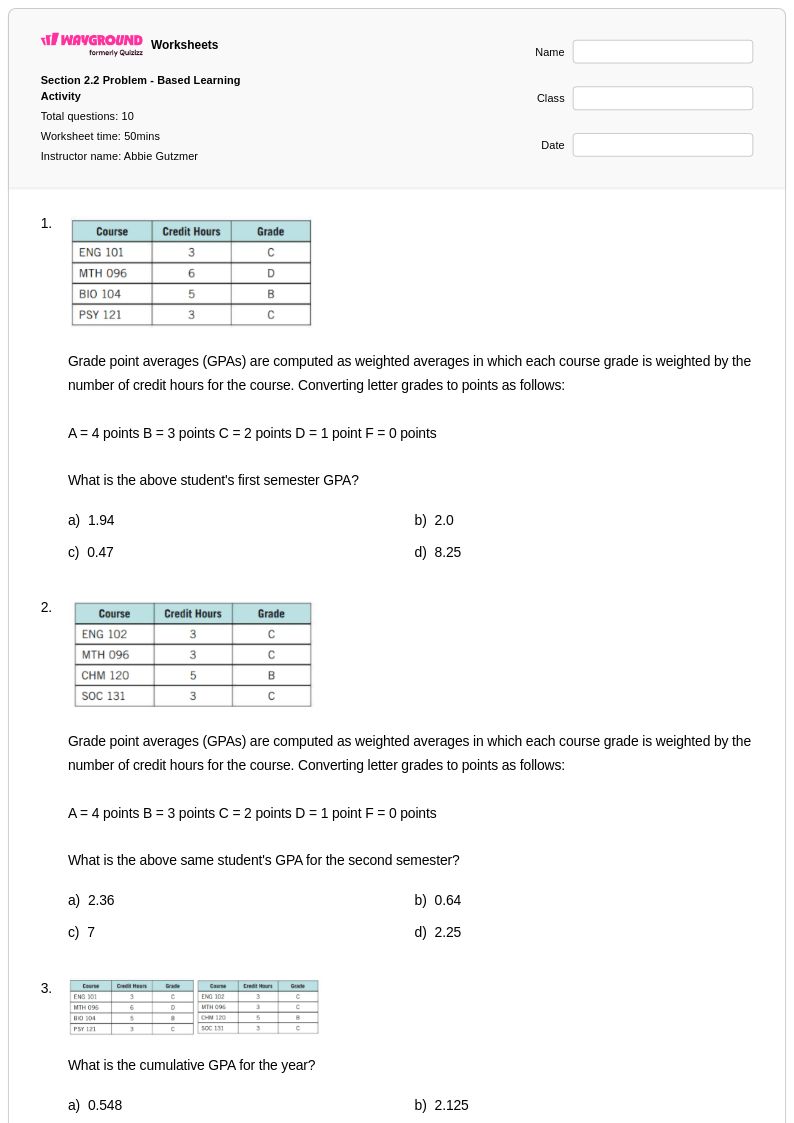
10 Q
7th - 12th
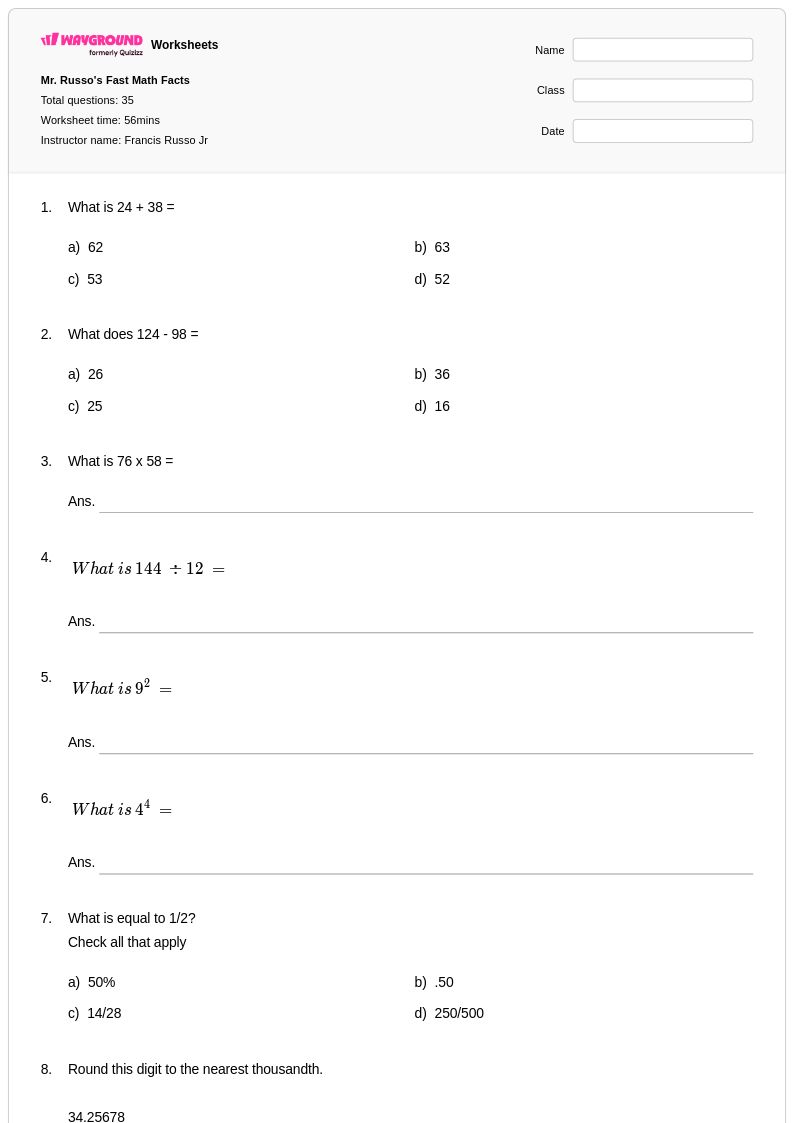
35 Q
6th - 8th
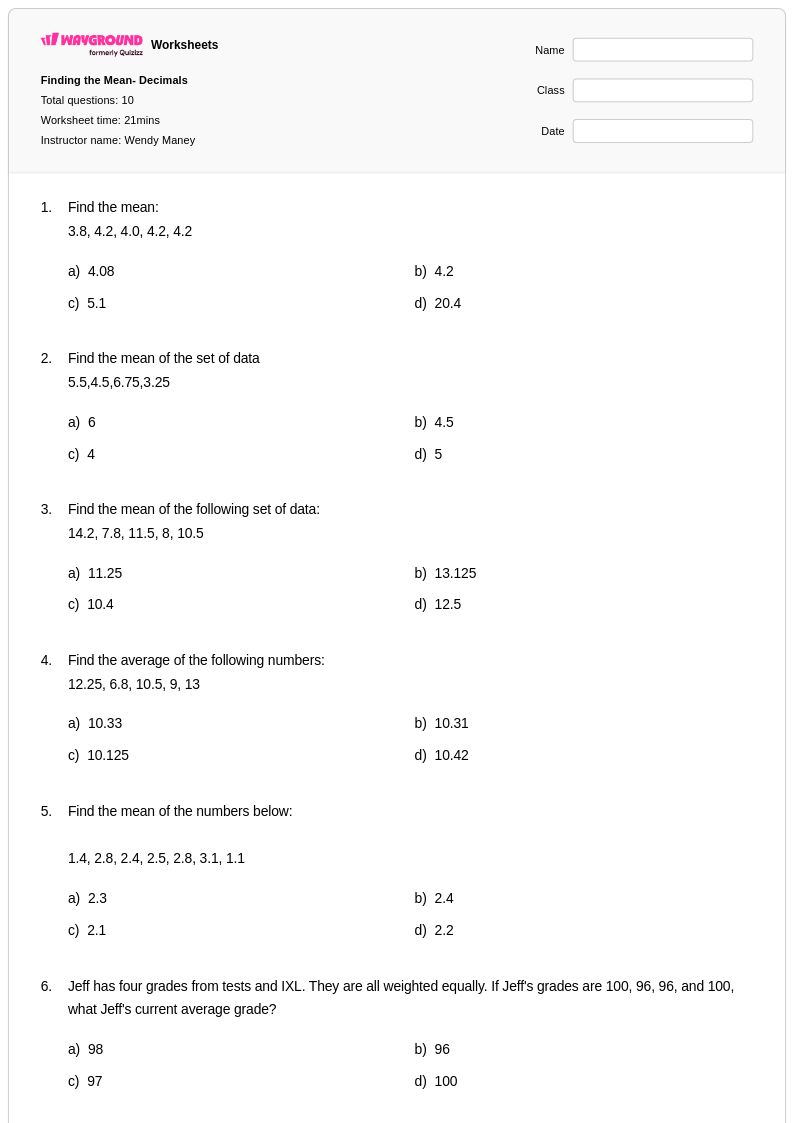
10 Q
7th - 8th
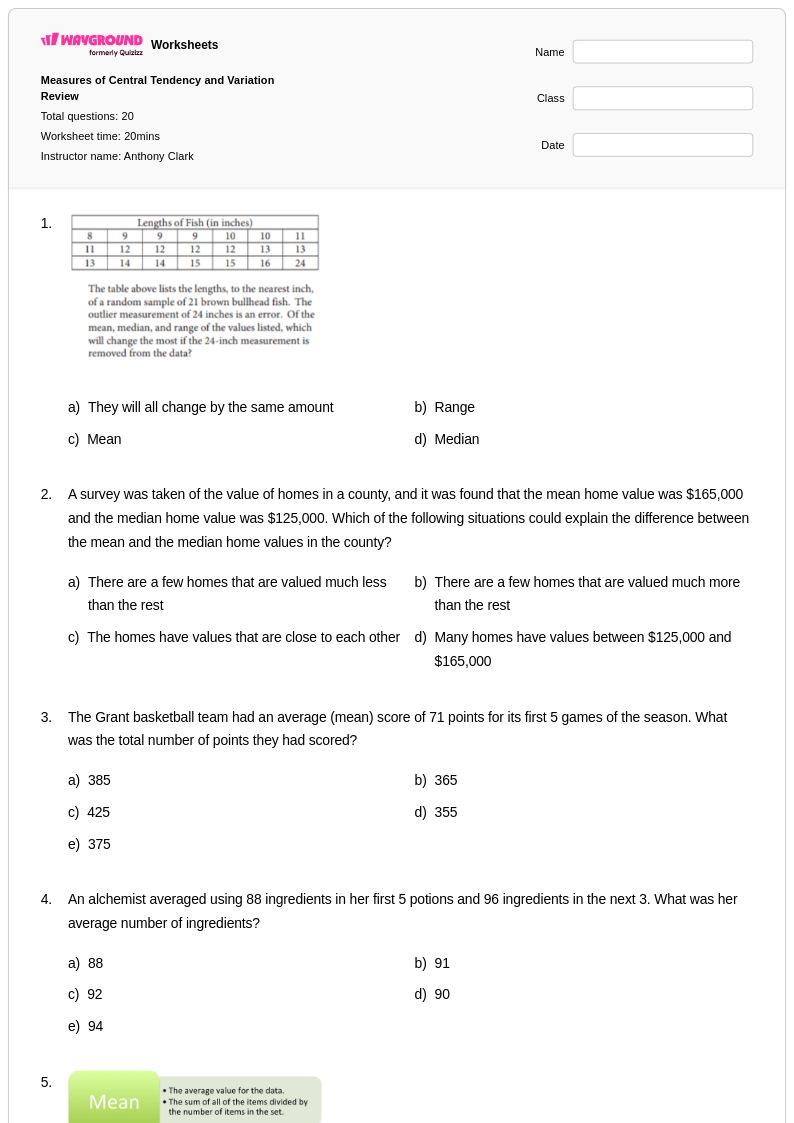
20 Q
7th - Uni
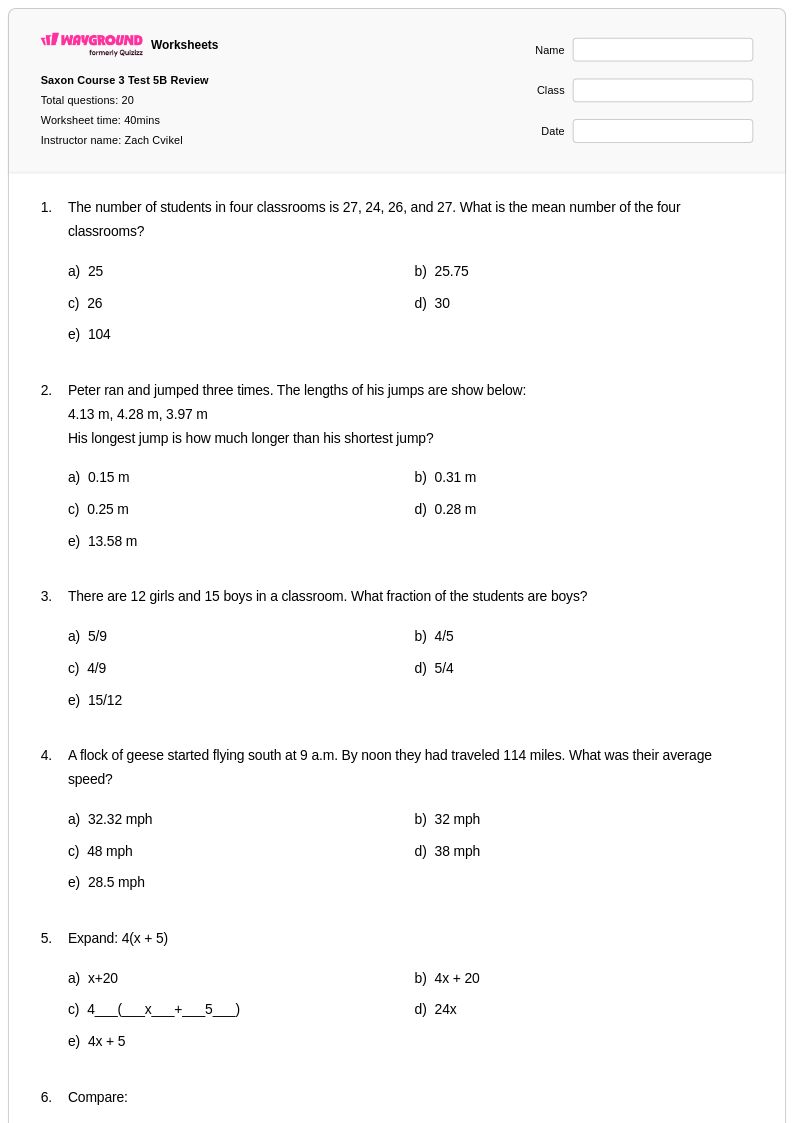
20 Q
8th
14 Q
8th - 10th
10 Q
8th
15 Q
6th - Uni
15 Q
4th - Uni
Explore Other Subject Worksheets for year 8
Explore printable Weighted Averages worksheets for Year 8
Weighted averages represent a fundamental concept in Year 8 probability and statistics that extends students' understanding beyond simple arithmetic means to incorporate the relative importance of different data values. Wayground's comprehensive collection of weighted averages worksheets provides Year 8 students with systematic practice in calculating averages where certain values carry more significance than others, such as computing final grades with different weights for tests, homework, and projects. These carefully designed practice problems strengthen students' analytical thinking skills while building proficiency in real-world mathematical applications. Each worksheet includes detailed answer keys and step-by-step solutions, making them valuable resources for both independent study and classroom instruction. Available as free printable materials and downloadable PDF files, these worksheets cover essential topics including identifying weights, setting up weighted calculations, and interpreting results in practical contexts.
Wayground, formerly Quizizz, empowers educators with an extensive library of millions of teacher-created weighted averages resources specifically designed for Year 8 mathematics instruction. The platform's robust search and filtering capabilities enable teachers to quickly locate worksheets that align with curriculum standards and match their students' specific learning needs. Advanced differentiation tools allow educators to customize difficulty levels and problem types, ensuring appropriate challenge levels for diverse learners while supporting both remediation and enrichment goals. Teachers can seamlessly integrate these resources into their lesson planning, utilizing both printable formats for traditional classroom activities and digital versions for technology-enhanced learning environments. This flexibility supports comprehensive skill practice across multiple learning modalities, helping students master weighted averages through repeated exposure to varied problem-solving scenarios that prepare them for advanced statistical concepts in higher-grade mathematics.