Free Printable Analyzing Text Structure Worksheets for Class 11
Class 11 analyzing text structure worksheets and printables help students master identifying organizational patterns, structural elements, and rhetorical frameworks in complex texts through comprehensive practice problems with detailed answer keys.
Explore printable Analyzing Text Structure worksheets for Class 11
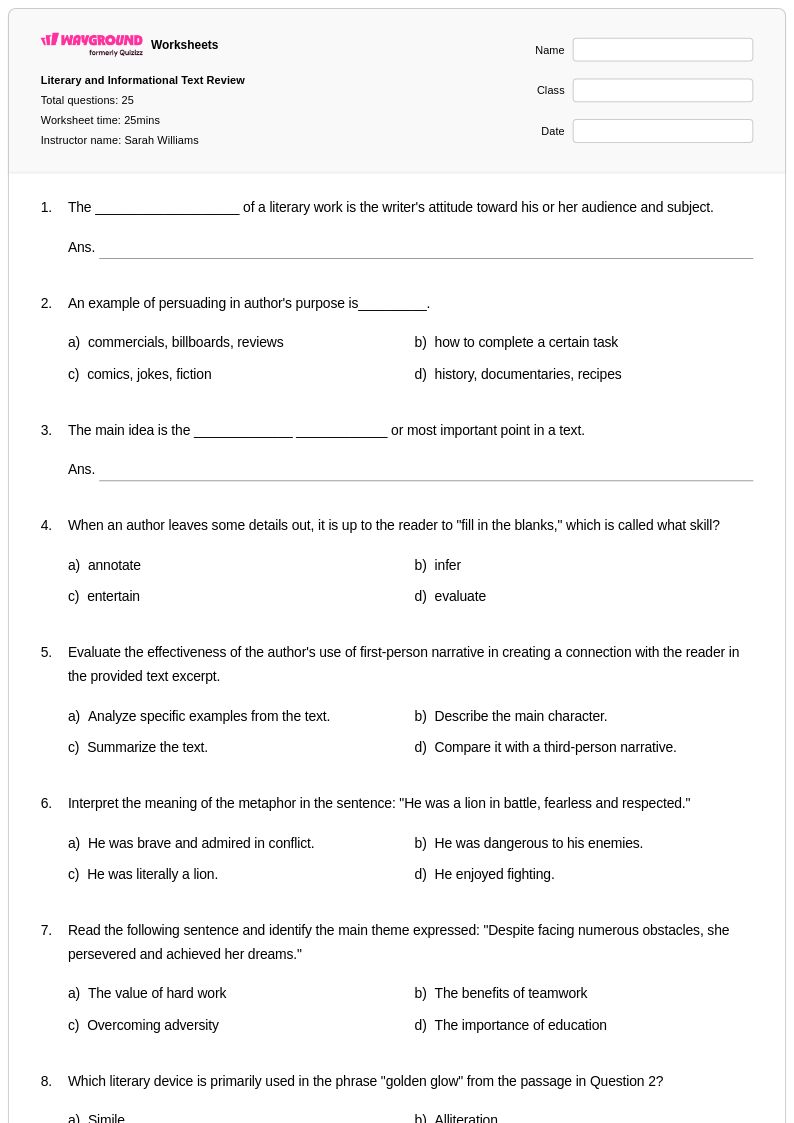
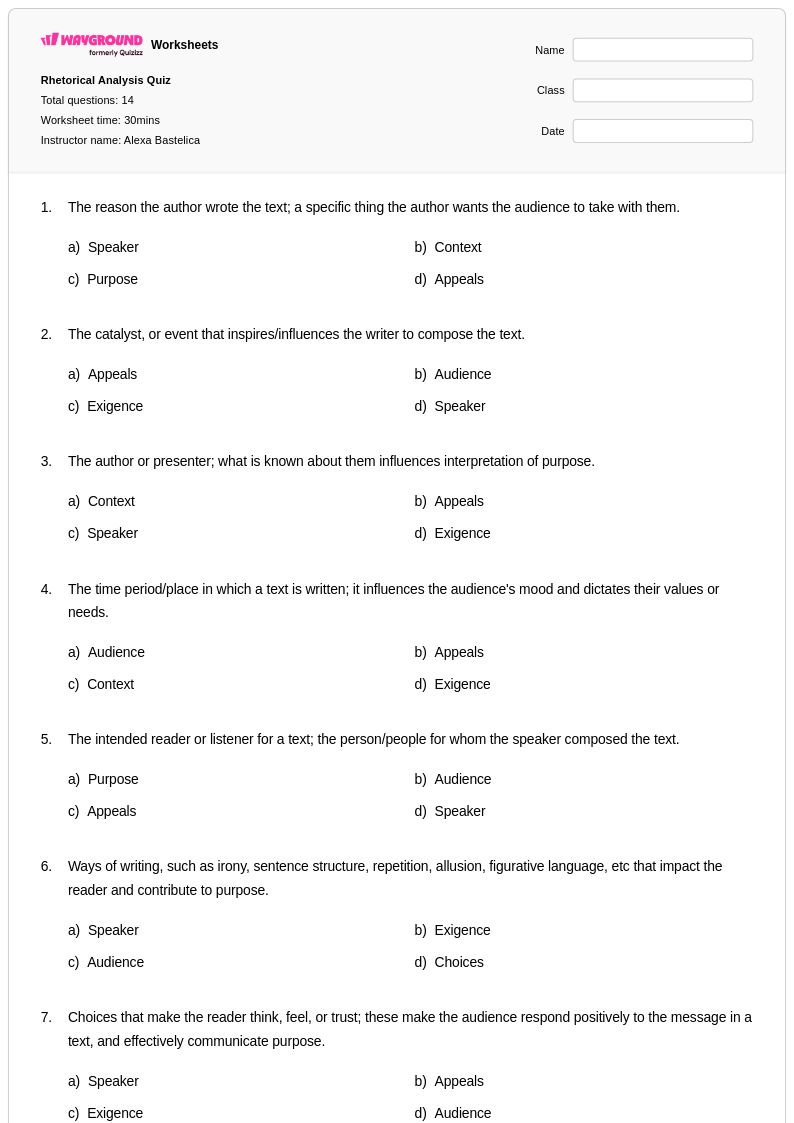
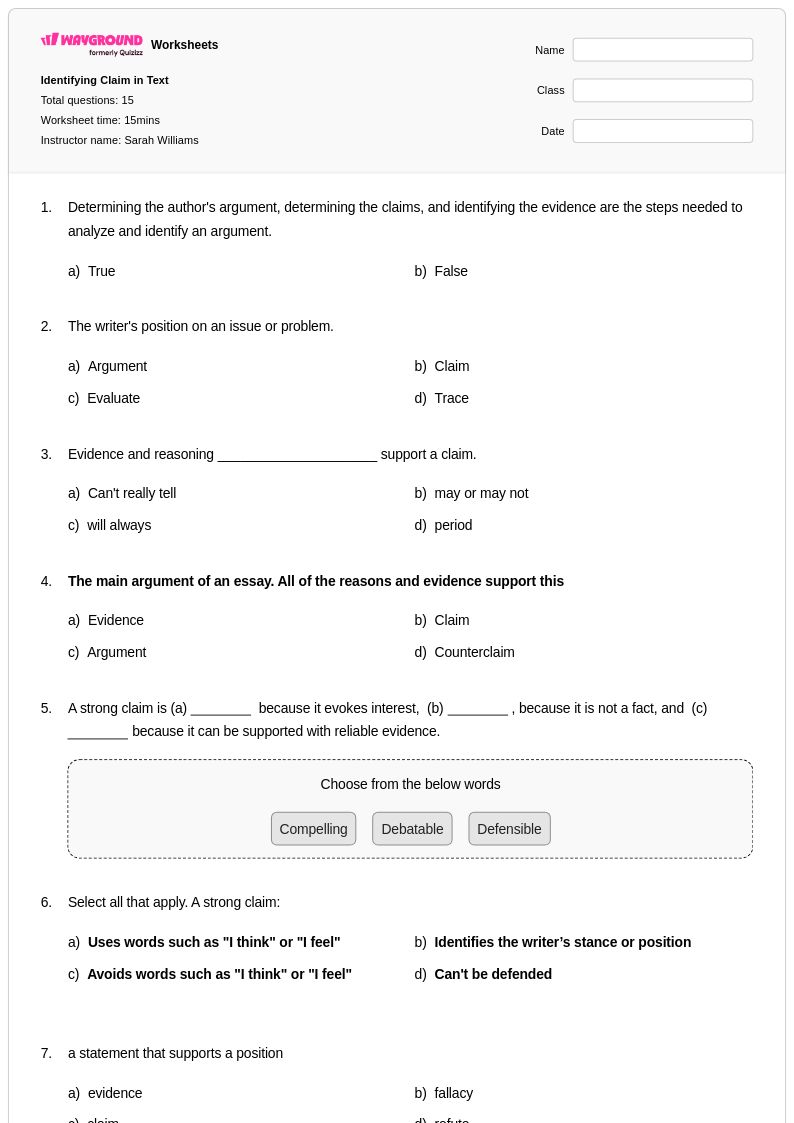
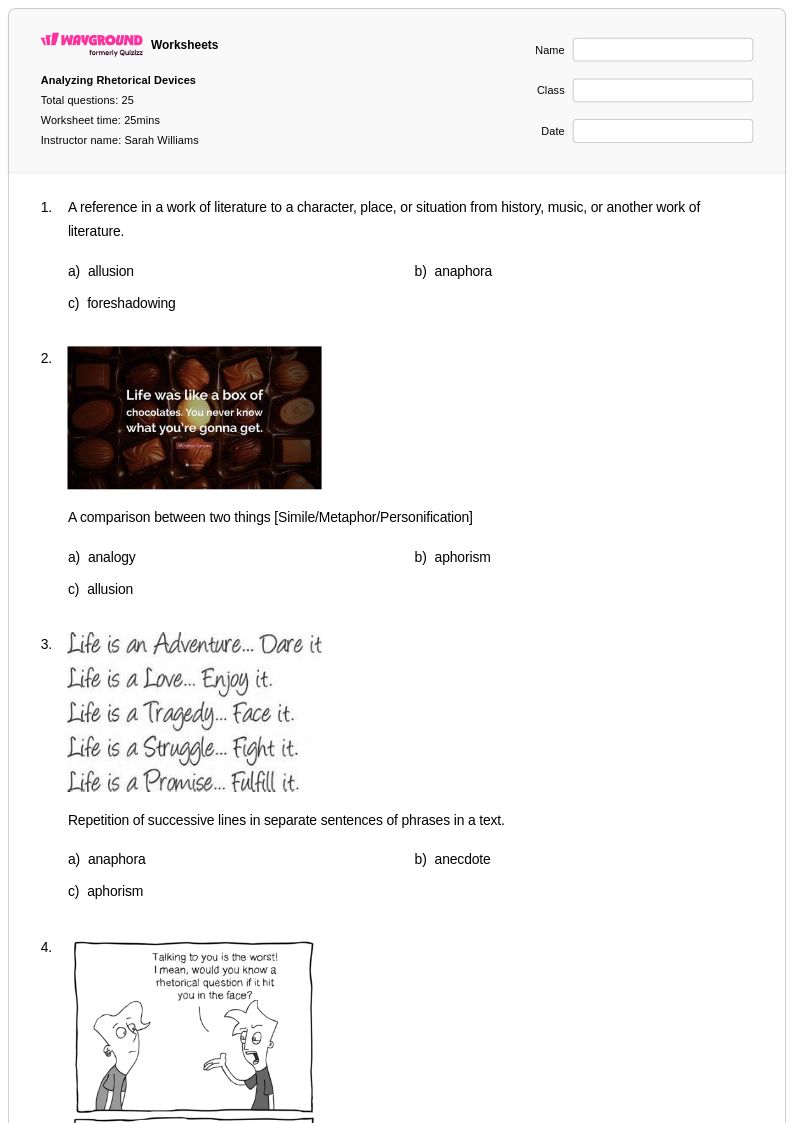
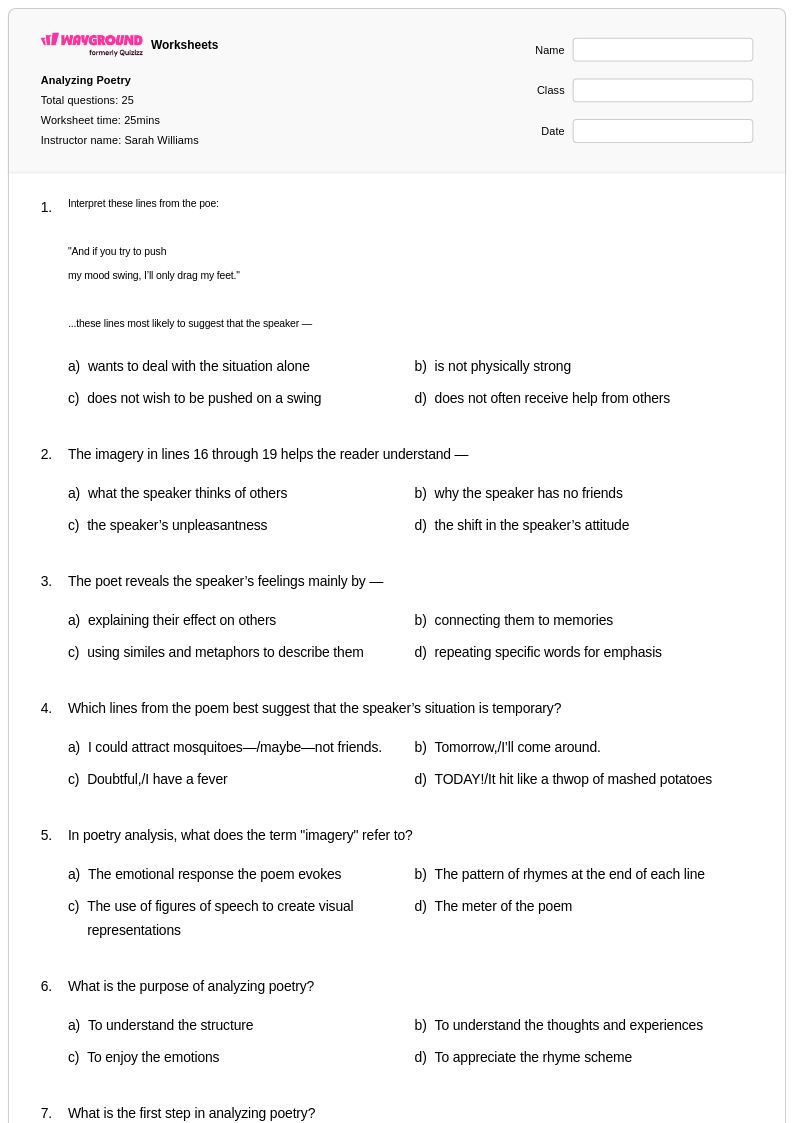
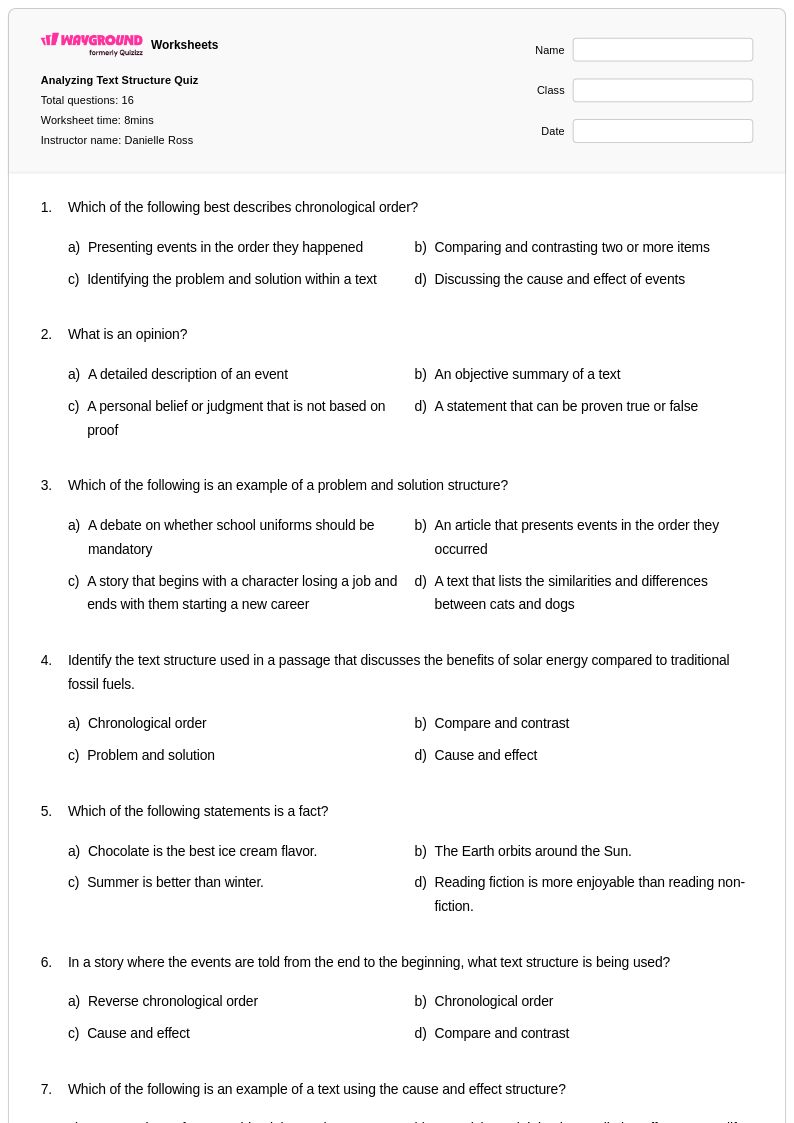
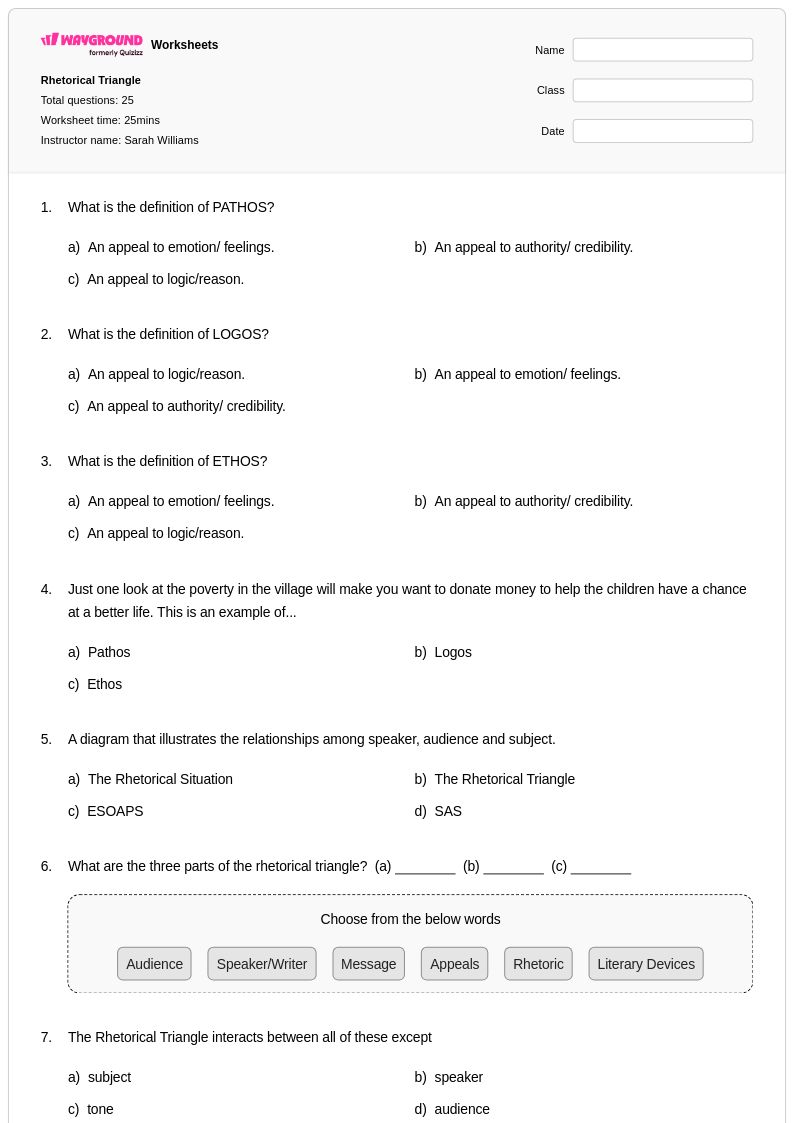
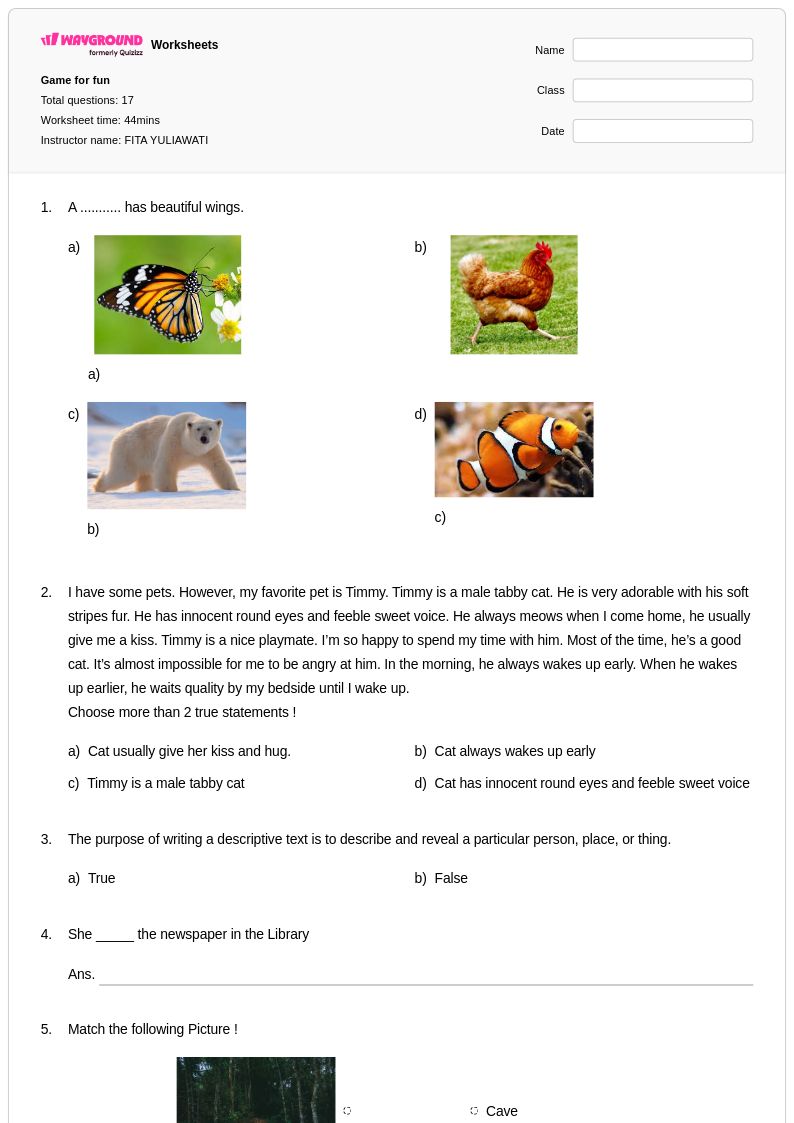
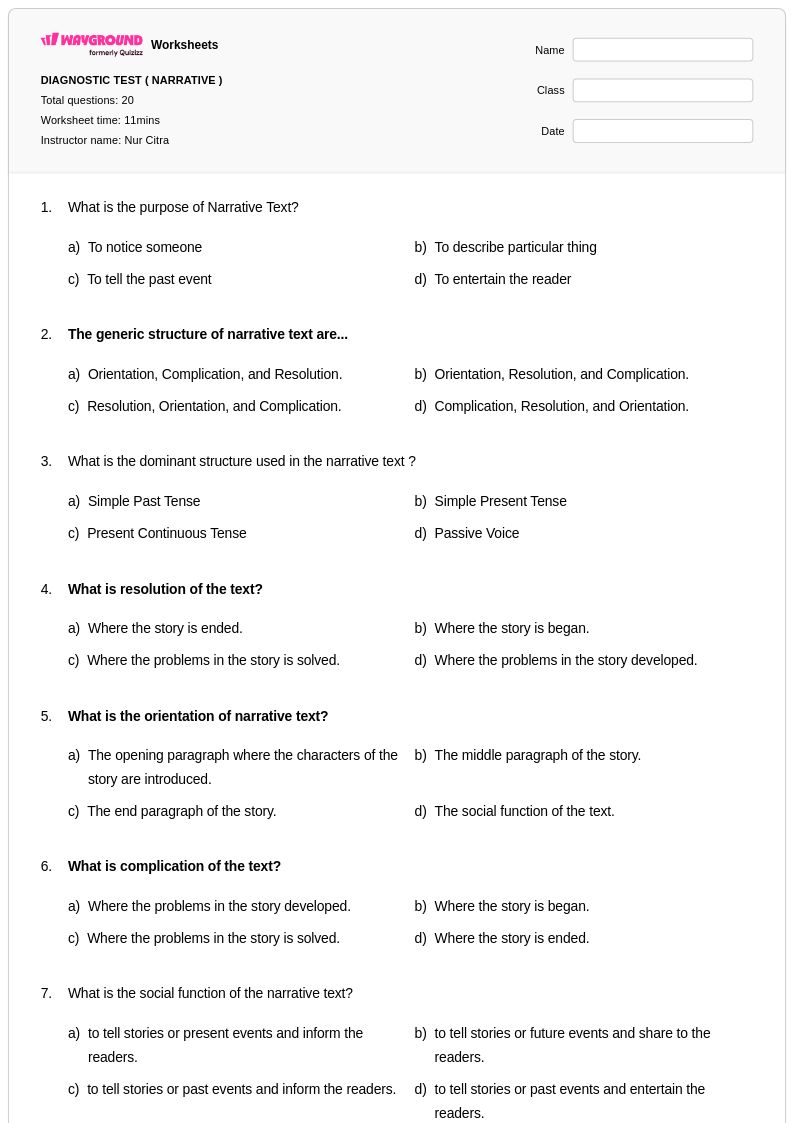
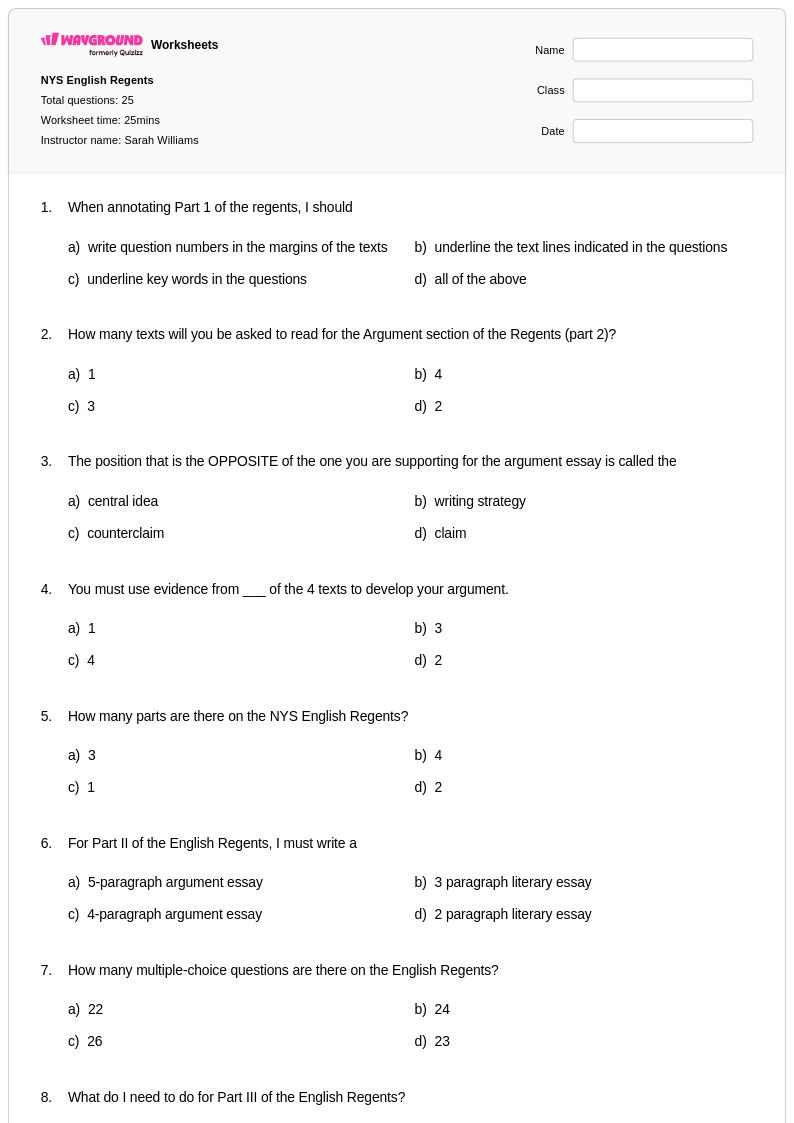
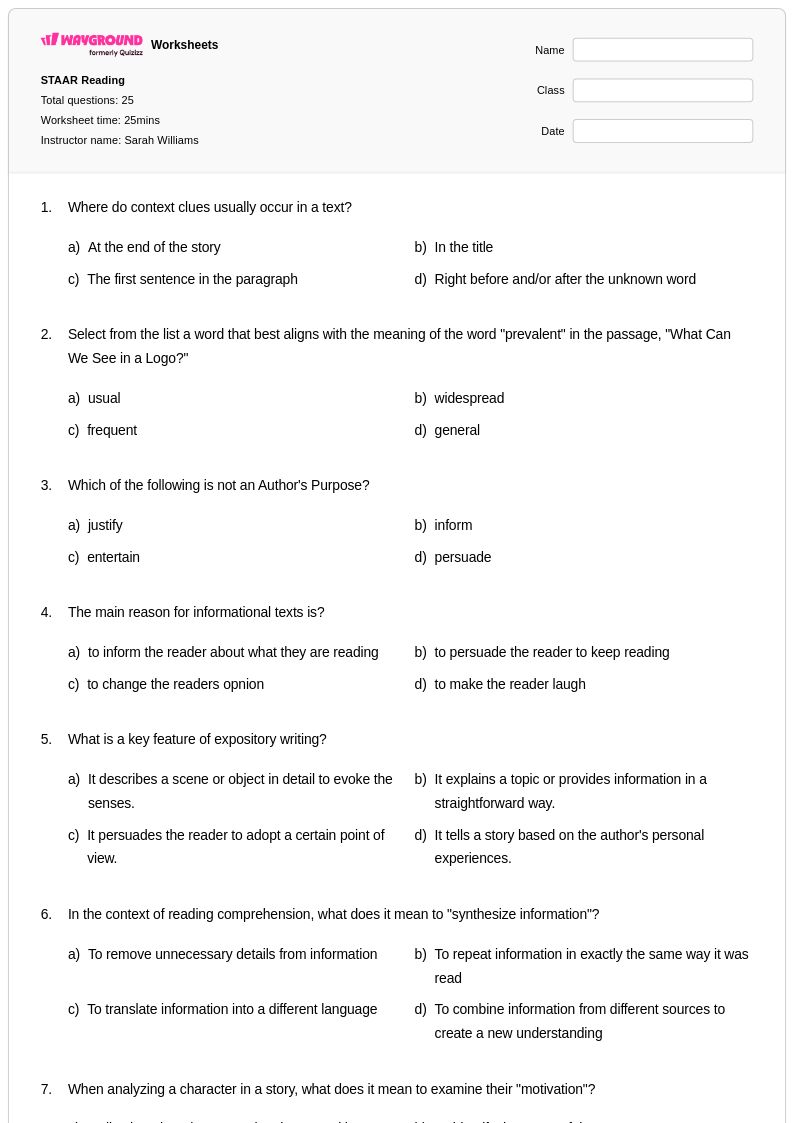
Analyzing text structure worksheets for Class 11 students available through Wayground (formerly Quizizz) provide comprehensive practice in identifying and understanding how authors organize information to achieve specific purposes. These expertly crafted resources strengthen critical reading skills by guiding students through the recognition of common organizational patterns such as chronological order, cause and effect, compare and contrast, problem and solution, and description. Each worksheet includes detailed practice problems that challenge students to examine how structural elements like headings, transitions, and paragraph organization contribute to meaning and author's intent. The free printables come complete with answer keys that support both independent study and classroom instruction, while pdf formats ensure consistent formatting across different devices and printing needs.
Wayground (formerly Quizizz) empowers educators with millions of teacher-created resources specifically designed for analyzing text structure at the Class 11 level, featuring robust search and filtering capabilities that allow quick access to materials aligned with state and national standards. The platform's differentiation tools enable teachers to customize worksheets based on individual student needs, whether for remediation of foundational concepts or enrichment of advanced analytical skills. Available in both printable and digital formats including downloadable pdfs, these resources support flexible lesson planning and can be seamlessly integrated into various instructional approaches. Teachers benefit from the extensive collection's alignment with curriculum standards, making it easier to design targeted skill practice sessions that prepare students for complex textual analysis required in advanced coursework and standardized assessments.
FAQs
How do I teach text structure to students who struggle to identify organizational patterns?
Start by introducing one text structure at a time, using mentor texts with clear, unmistakable patterns before asking students to identify structures independently. Teach signal words explicitly — words like 'first,' 'as a result,' 'however,' and 'for example' are strong indicators of chronological order, cause and effect, compare and contrast, and description, respectively. Anchor charts displaying each structure alongside its common signal words give students a reference tool they can use during guided and independent practice before transitioning to analysis without support.
What are the five main text structures students need to know for reading comprehension?
The five core text structures are chronological order, cause and effect, compare and contrast, problem and solution, and description. Each structure reflects a different way authors organize information to support their purpose — for example, a science article explaining why ecosystems collapse uses cause and effect, while a history passage sequencing events uses chronological order. Teaching students to recognize these structures helps them anticipate how information is arranged, which improves both comprehension and retention.
What exercises help students practice identifying text structure?
Effective practice exercises include matching passages to their organizational pattern, underlining signal words and labeling the structure they indicate, and completing graphic organizers designed for each text type. Students also benefit from sorting sentences or paragraphs into structural categories and rewriting a passage in a different structure to deepen understanding of how organization affects meaning. Worksheets that use both informational articles and narrative passages ensure students can apply pattern recognition across multiple genres.
What mistakes do students commonly make when analyzing text structure?
The most frequent error is confusing cause and effect with chronological order — students often assume that because Event A happened before Event B, A caused B. Another common mistake is identifying the topic of a passage rather than its organizational pattern, for example labeling a passage as 'about animals' instead of recognizing it uses compare and contrast structure. Students also tend to overlook signal words entirely, focusing on content meaning rather than the structural cues authors embed to guide readers.
How can I use text structure worksheets to differentiate instruction for varied reading levels?
Differentiation works best when lower-proficiency students receive passages with prominent signal words and a single dominant structure, while more advanced students work with complex texts that blend multiple structures or require inferring structure without explicit signal words. Scaffolded worksheets that provide a word bank of signal words support struggling readers without removing the analytical challenge. On Wayground, teachers can also apply accommodations such as Read Aloud and reduced answer choices for individual students, allowing everyone to work on the same skill at an appropriate access point.
How do I use Wayground's analyzing text structure worksheets in my classroom?
Wayground's text structure worksheets are available as printable PDFs for traditional classroom use and in digital formats for technology-integrated instruction, so they fit seamlessly into both paper-based and device-based lessons. Each worksheet includes a complete answer key, enabling teachers to use them for guided practice, independent work, or self-assessment. Teachers can also host worksheets as a quiz directly on Wayground, making it easy to assign, collect, and review student responses in one place.