Free Printable Animal Offspring Worksheets for Class 4
Explore free Class 4 animal offspring worksheets and printables that help students learn how baby animals grow, develop, and resemble their parents through engaging practice problems with answer keys.
Explore printable Animal Offspring worksheets for Class 4
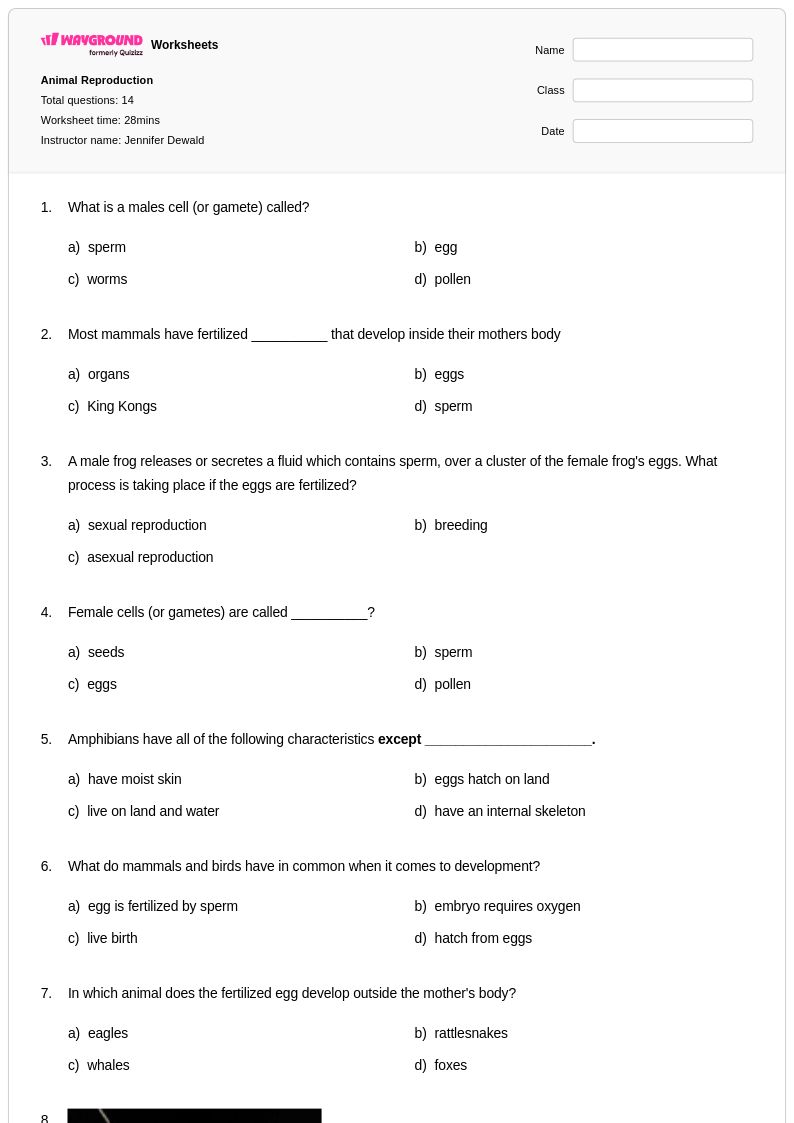
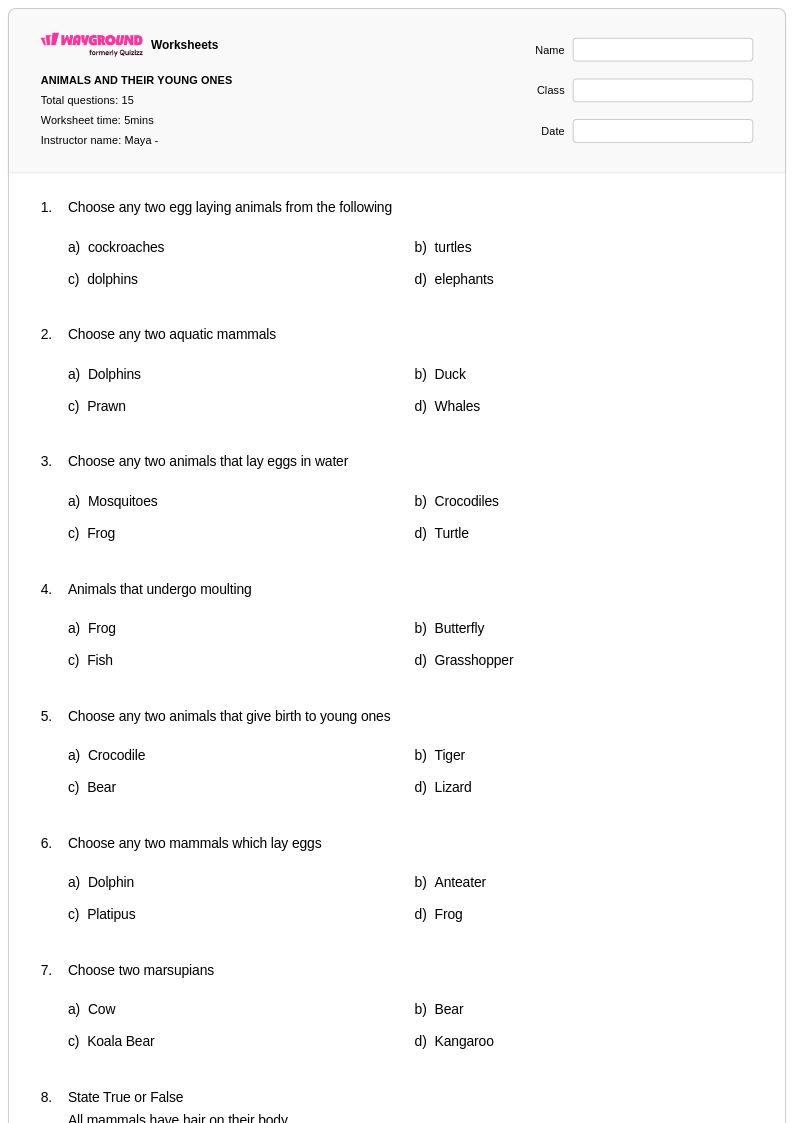
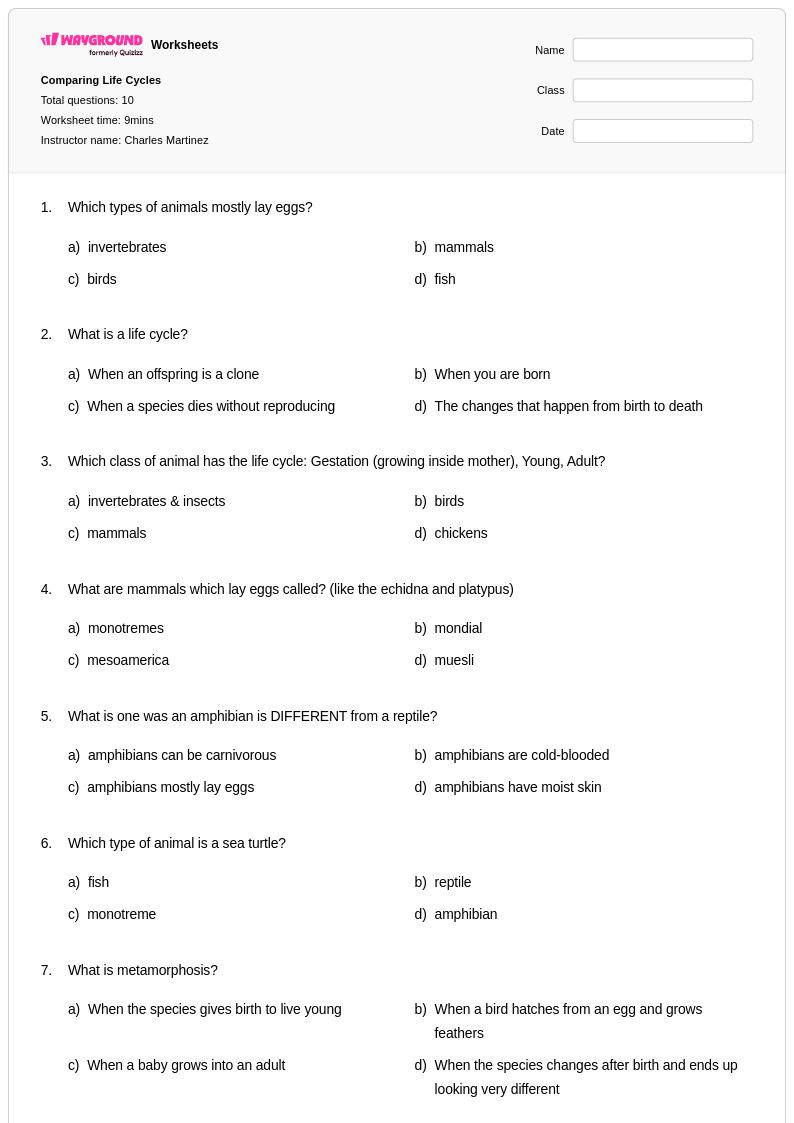
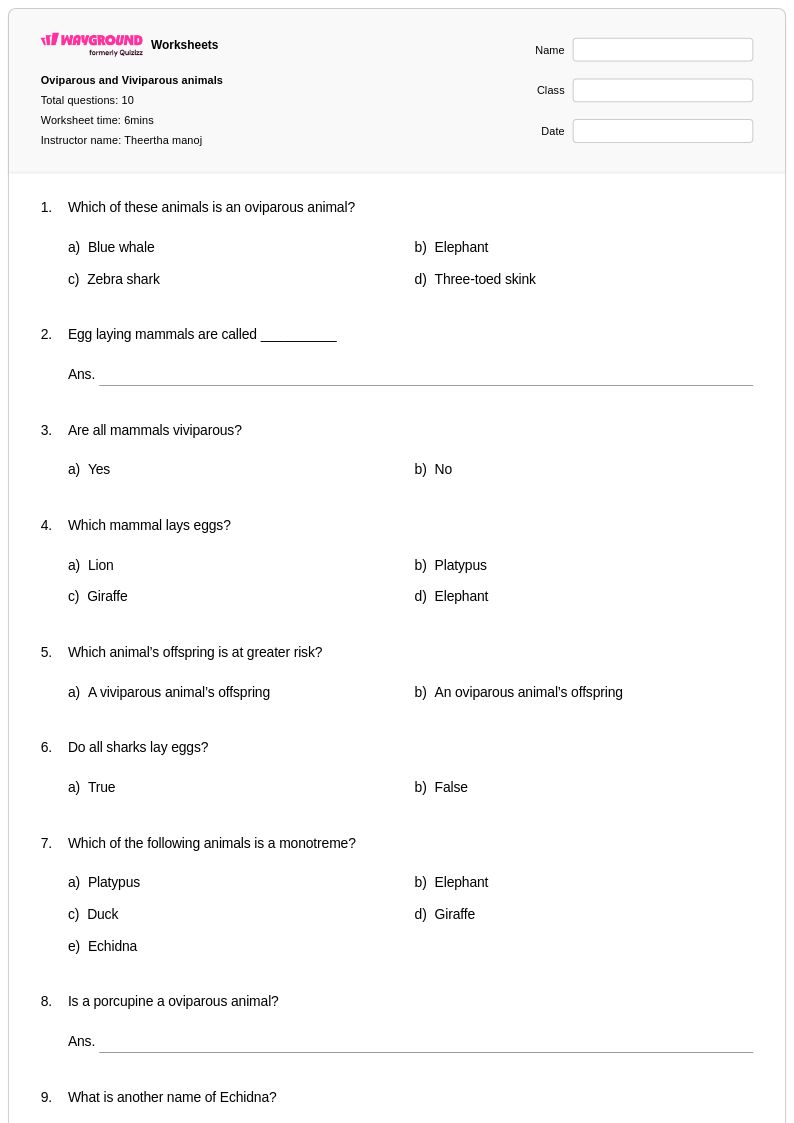
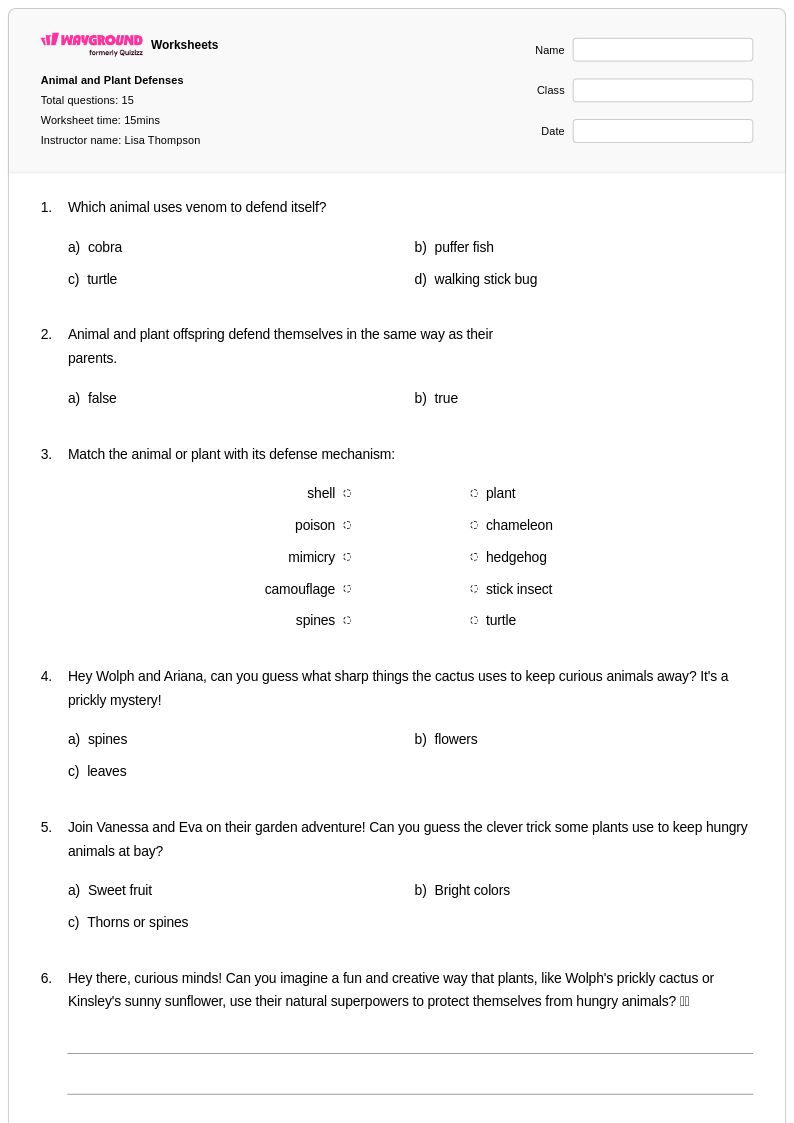
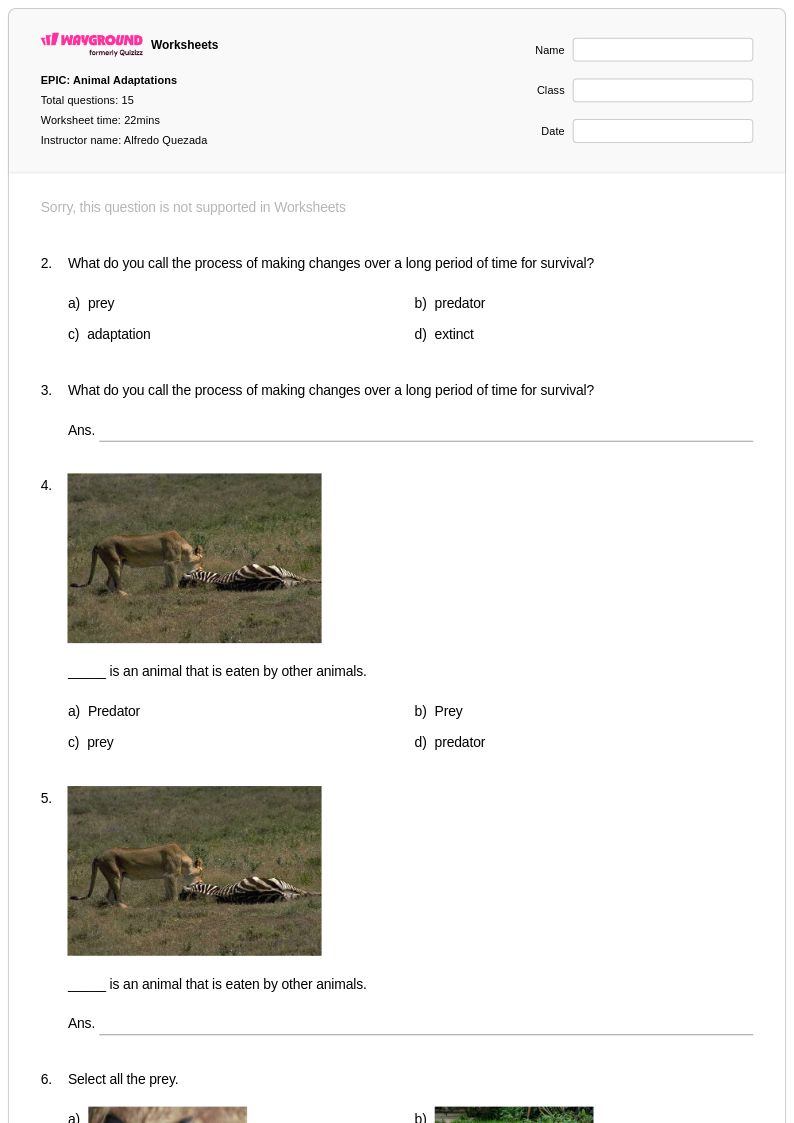
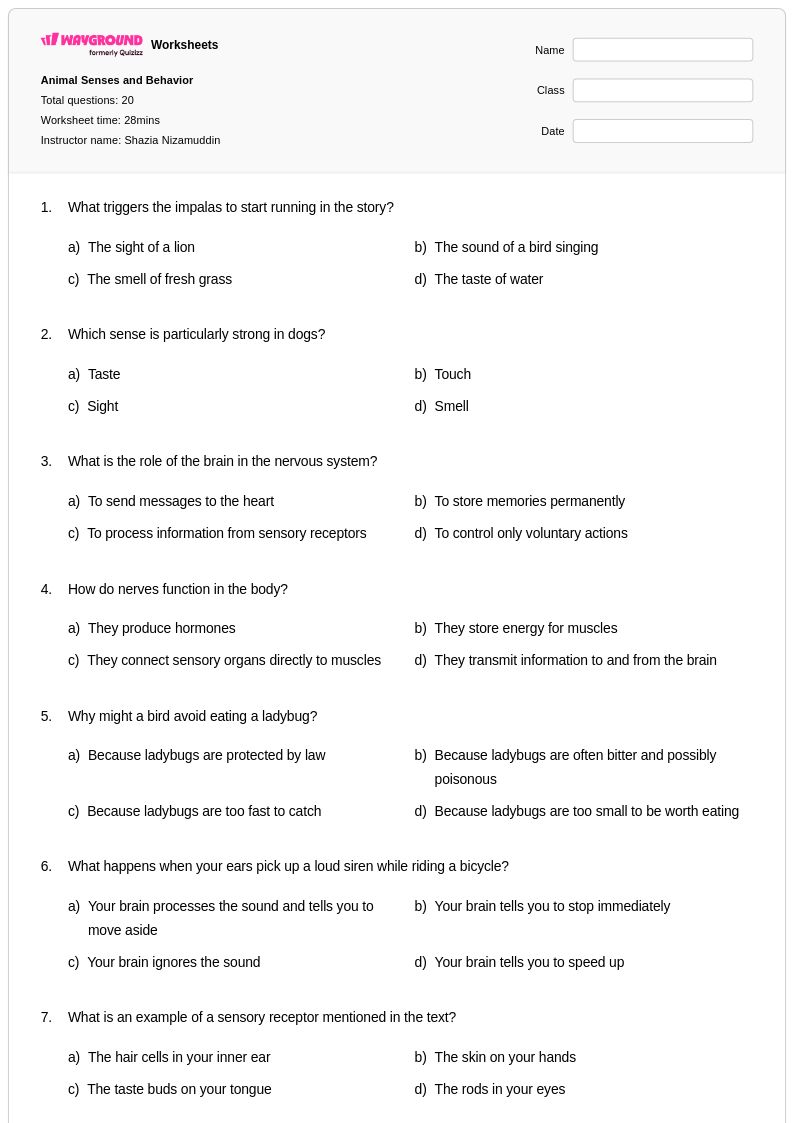
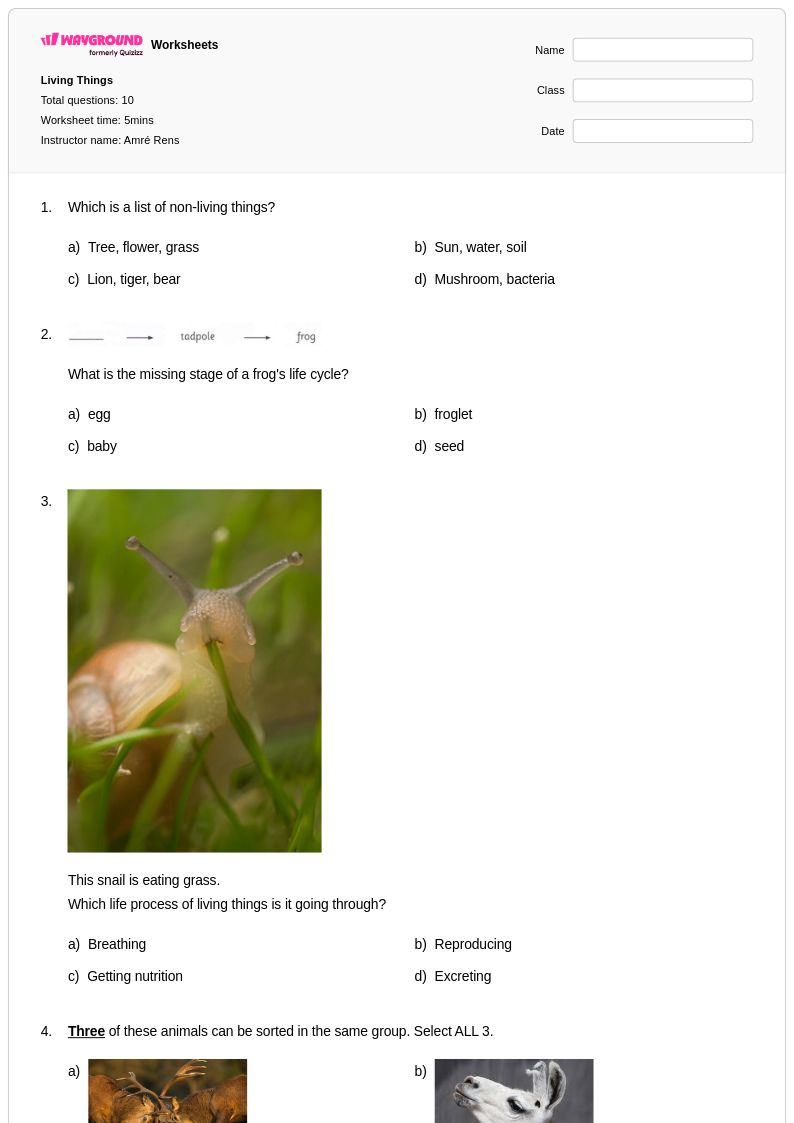
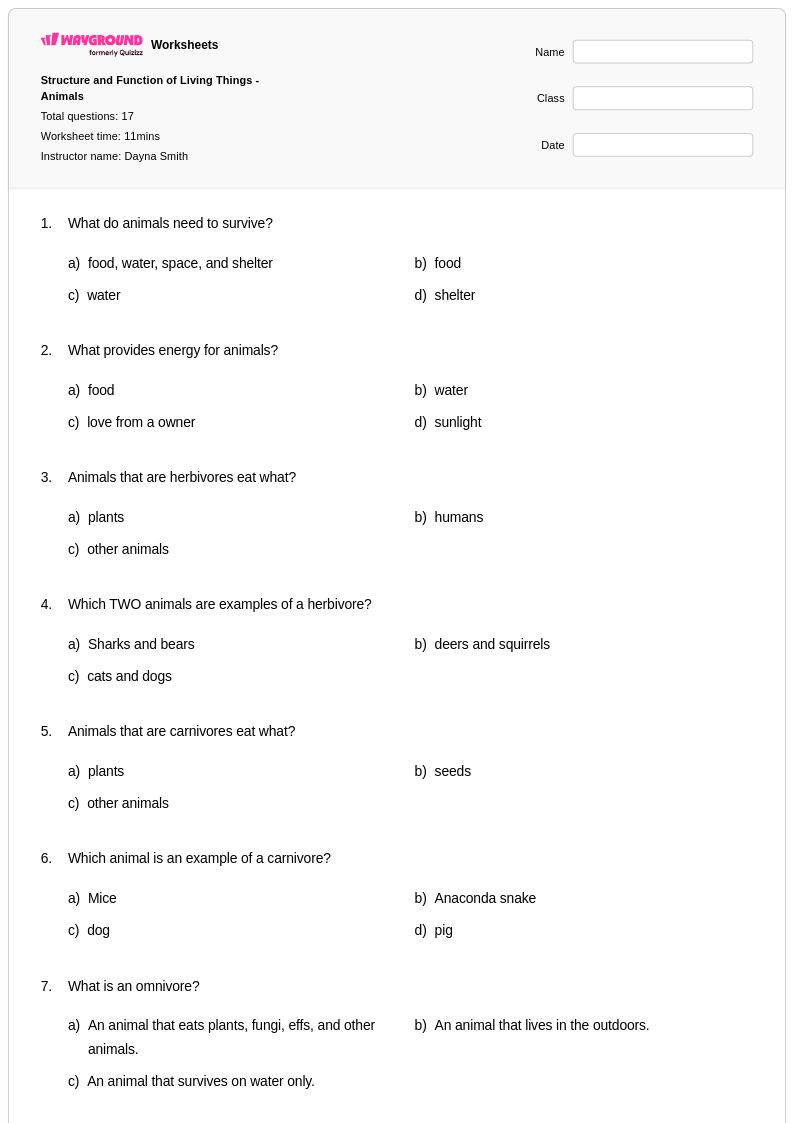
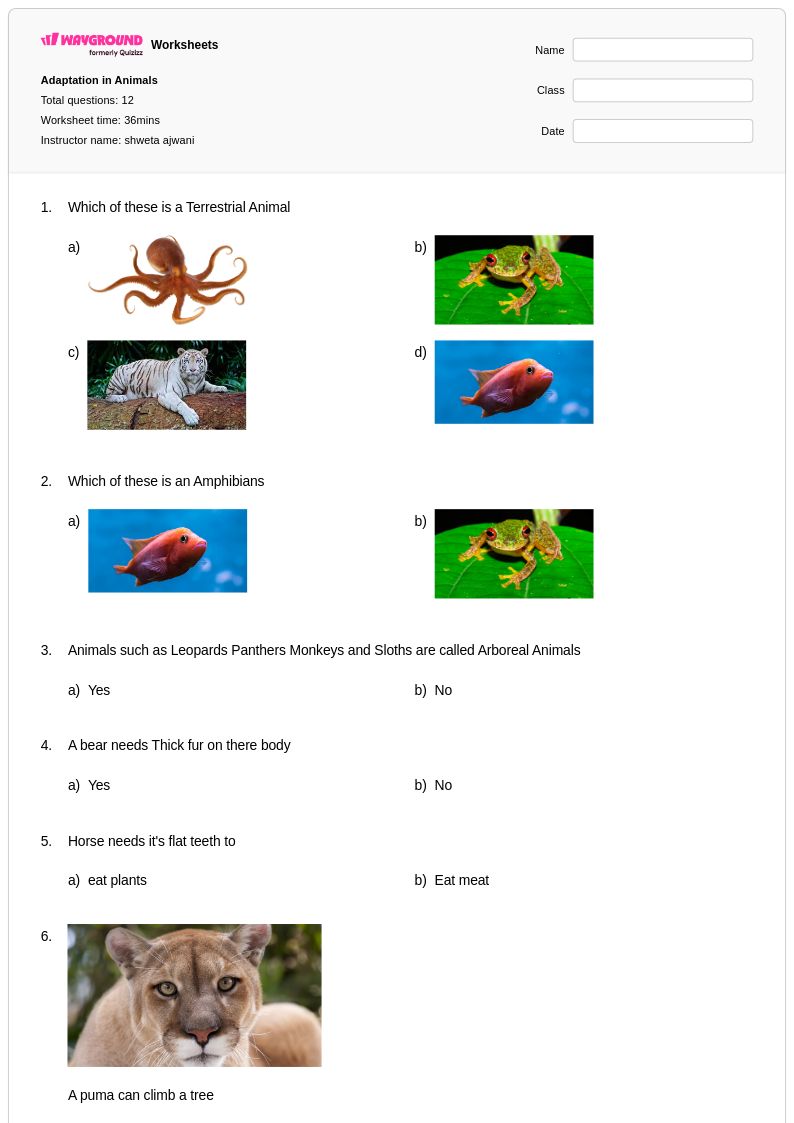
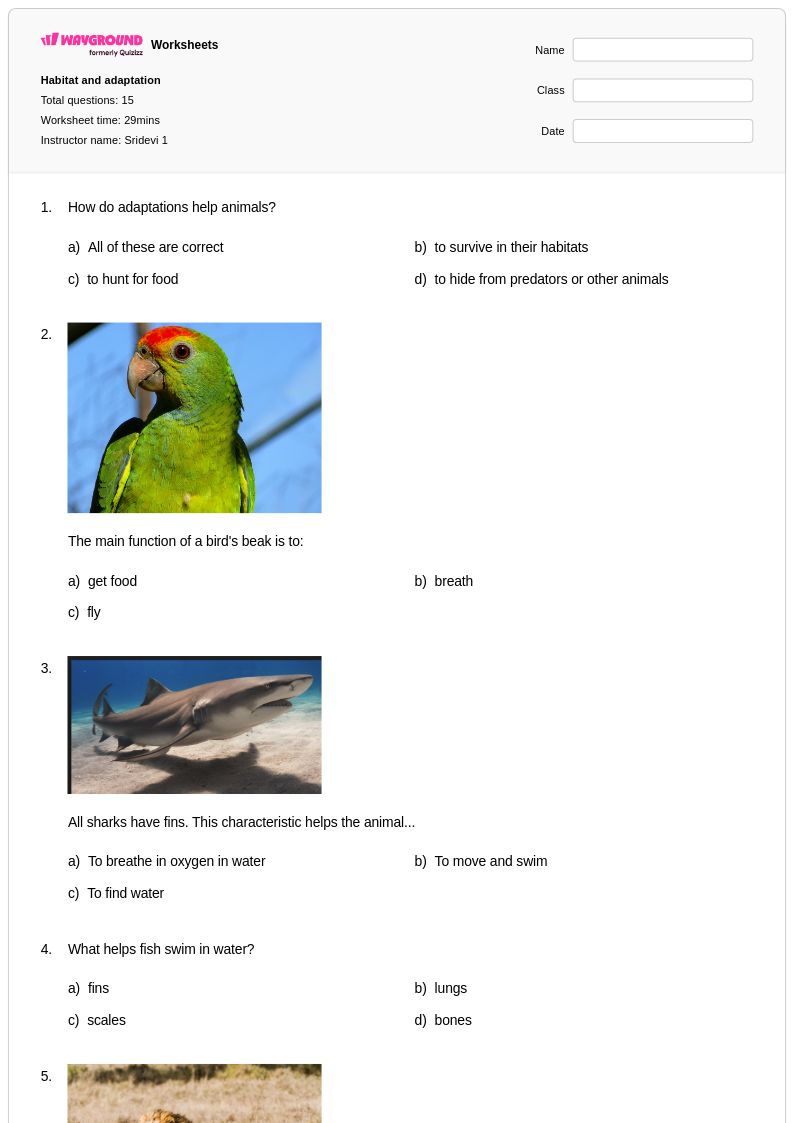
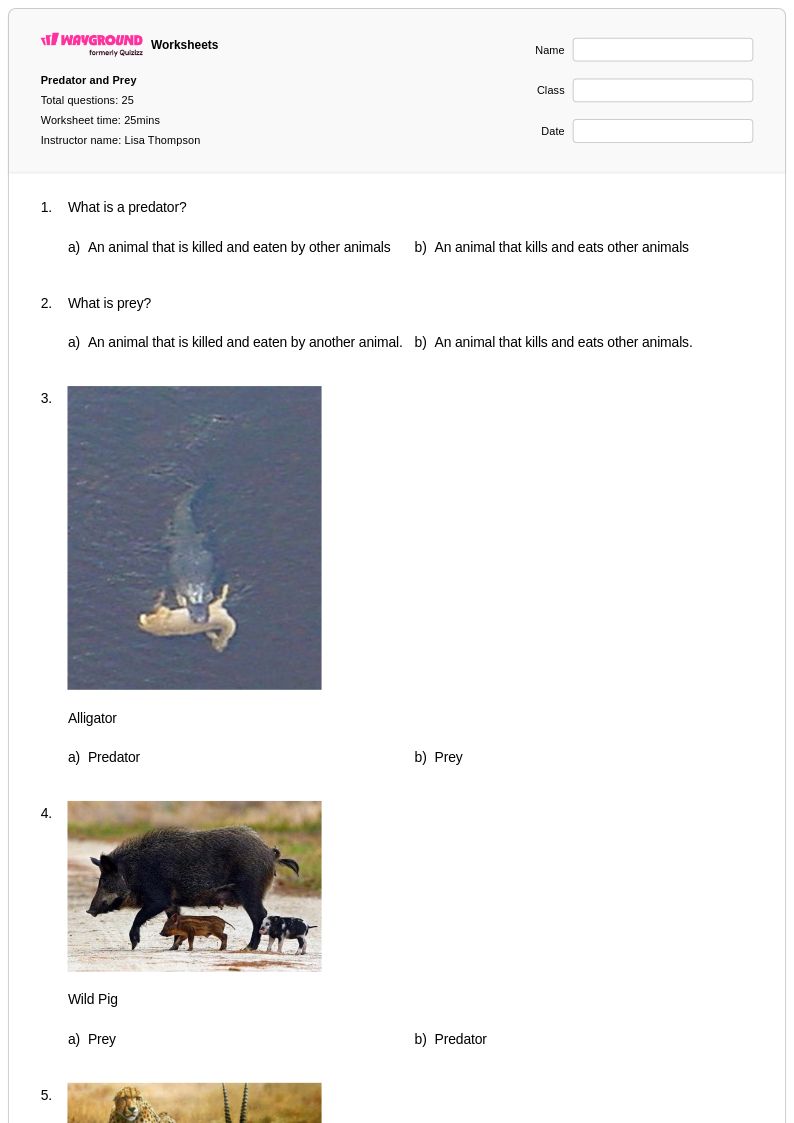
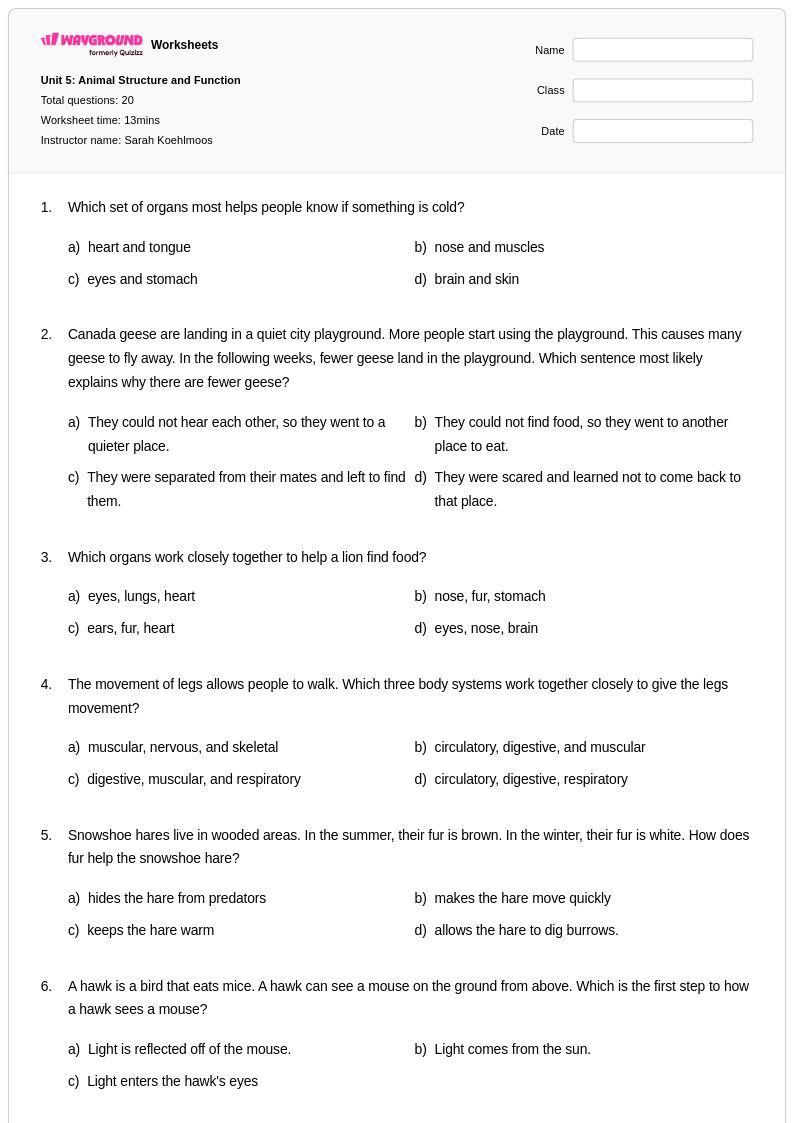
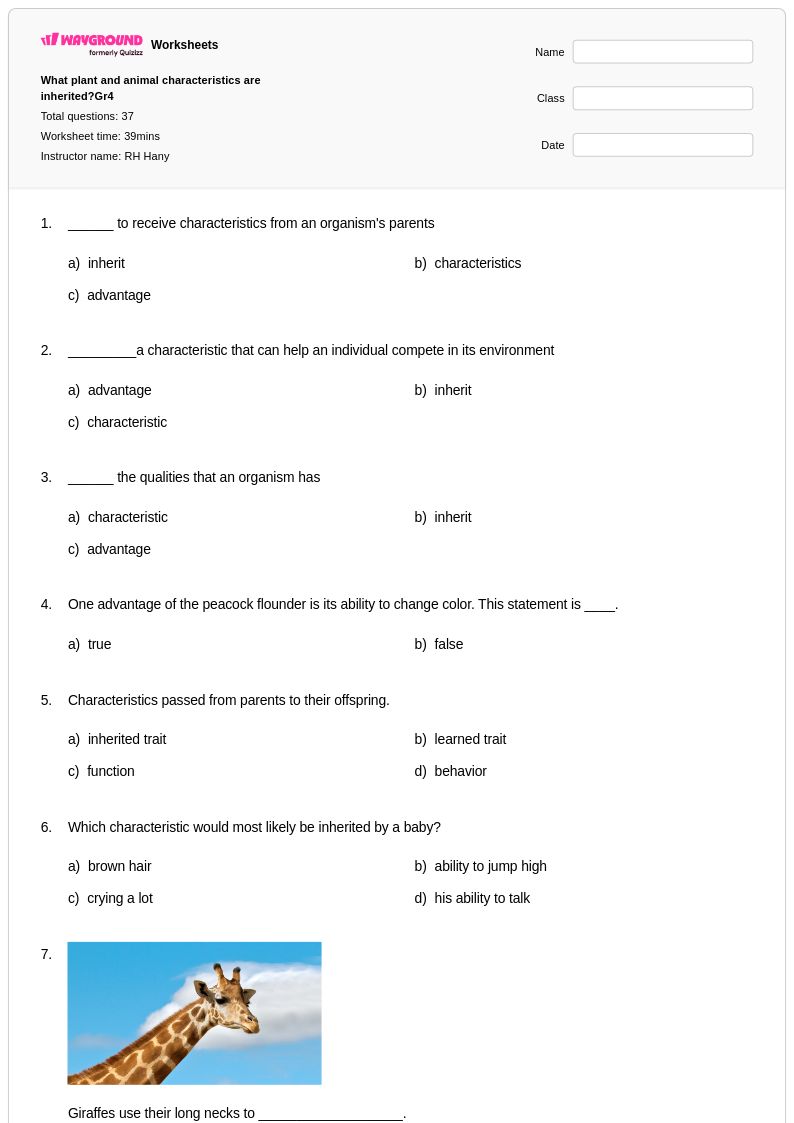
Animal offspring worksheets for Class 4 students available through Wayground provide comprehensive exploration of how young animals develop, survive, and inherit traits from their parents. These carefully designed printables strengthen students' understanding of life cycles, heredity patterns, and the diverse ways different species care for their young, from mammals nursing their babies to birds teaching flight skills. The practice problems guide fourth graders through comparing offspring characteristics with parent animals, analyzing survival strategies across species, and identifying inherited versus learned behaviors. Each worksheet includes a detailed answer key and is available as a free pdf download, making it simple for educators to incorporate hands-on learning activities that align with life science curriculum standards.
Wayground's extensive collection of animal offspring resources draws from millions of teacher-created materials, offering robust search and filtering capabilities that help educators quickly locate age-appropriate content for their Class 4 classrooms. The platform's standards alignment ensures these worksheets support curriculum objectives while providing differentiation tools that accommodate varying student ability levels within the same lesson. Teachers can easily customize these printable and digital materials to focus on specific animal groups, emphasize particular inheritance patterns, or adjust complexity for remediation and enrichment purposes. Whether used for introducing new concepts, reinforcing classroom instruction, or providing additional skill practice, these flexible resources streamline lesson planning while delivering engaging content that helps students master fundamental life science principles about how animals reproduce and care for their young.
FAQs
How do I teach animal offspring and reproduction to elementary students?
Start by grounding students in concrete, observable examples — matching familiar baby animals to their parents before introducing vocabulary like offspring, traits, and life cycles. Hands-on sorting activities and visual comparisons help students recognize patterns in how animals reproduce and care for their young. From there, you can scaffold toward more abstract concepts like inherited traits and survival strategies, using animal life cycle diagrams to connect stages across time.
What activities help students practice identifying baby animals and their parents?
Matching activities that pair baby animals with their parents are one of the most effective formats for building this skill, as they require students to apply visual pattern recognition and prior knowledge simultaneously. Sorting tasks organized by animal group — mammals, birds, reptiles, insects — help students recognize that offspring typically resemble the parent species while reinforcing classification skills. Adding a written explanation component, where students justify their matches, pushes toward deeper scientific reasoning.
What common misconceptions do students have about animal offspring and inherited traits?
A frequent misconception is that offspring look identical to their parents — students often struggle to understand that traits are inherited in combinations, meaning siblings from the same parents can look different from one another. Another common error is confusing learned behaviors with inherited traits; students may believe that a bird building a nest is a taught skill rather than an instinctual, inherited behavior. Directly addressing these errors with contrasting examples during instruction prevents them from solidifying into lasting misunderstandings.
How do I differentiate animal offspring worksheets for students at different skill levels?
For struggling learners, reduce the number of answer choices on matching or multiple-choice tasks so students can focus on core comparisons without cognitive overload. Advanced students benefit from open-ended questions that ask them to explain why certain traits improve offspring survival, pushing from recall into analysis. On Wayground, teachers can apply accommodations like reduced answer choices or read-aloud support to individual students while the rest of the class works with default settings, keeping differentiation seamless and unobtrusive.
How can I use animal offspring worksheets from Wayground in my classroom?
Wayground's animal offspring worksheets are available as printable PDFs for traditional classroom use and in digital formats for technology-integrated learning environments. Teachers can assign them as independent practice, guided review, or homework, and can also host them as a live quiz directly on Wayground. All worksheets include answer keys, making them practical for self-paced work, centers, or substitute lesson plans.
How do parental behaviors connect to offspring survival in the animal kingdom?
Parental behaviors directly influence offspring survival rates — species that invest heavily in nurturing young, like mammals and many birds, tend to have fewer offspring but higher survival rates per individual. In contrast, many fish and insects produce large numbers of offspring with little to no parental care, relying on quantity as a survival strategy. Teaching students to compare these strategies helps them understand the relationship between reproduction, parental behavior, and long-term species survival.