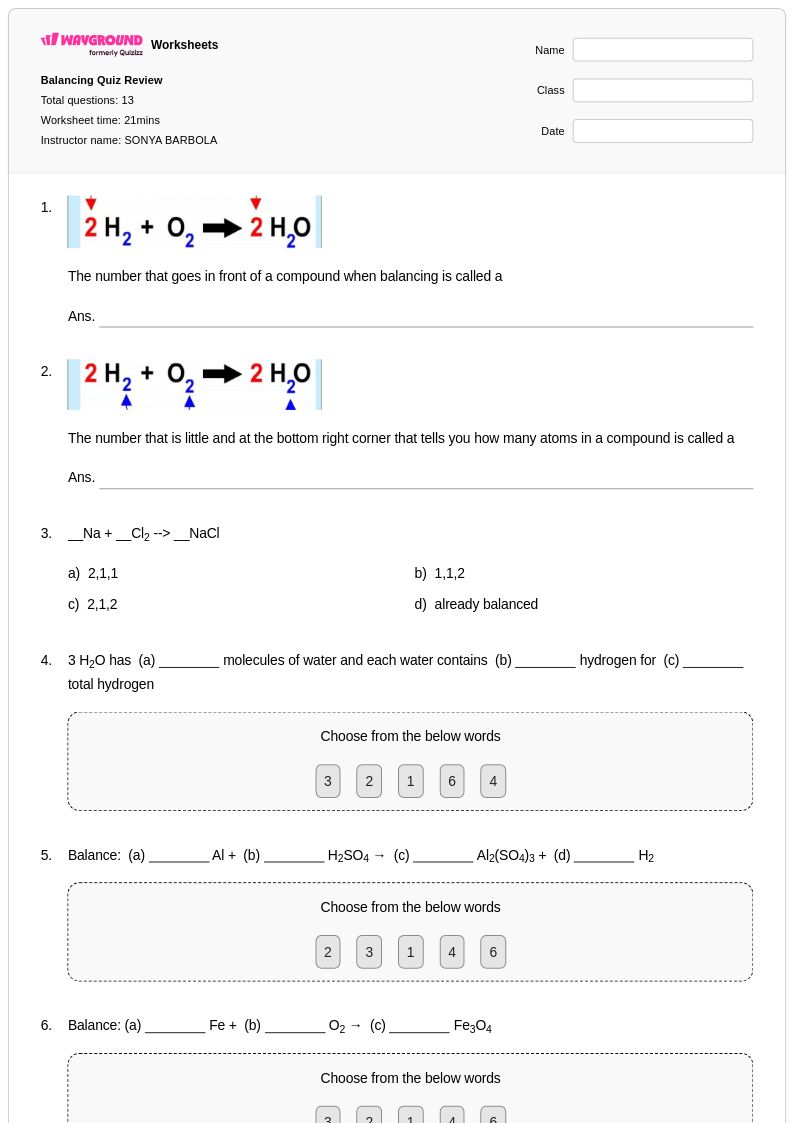
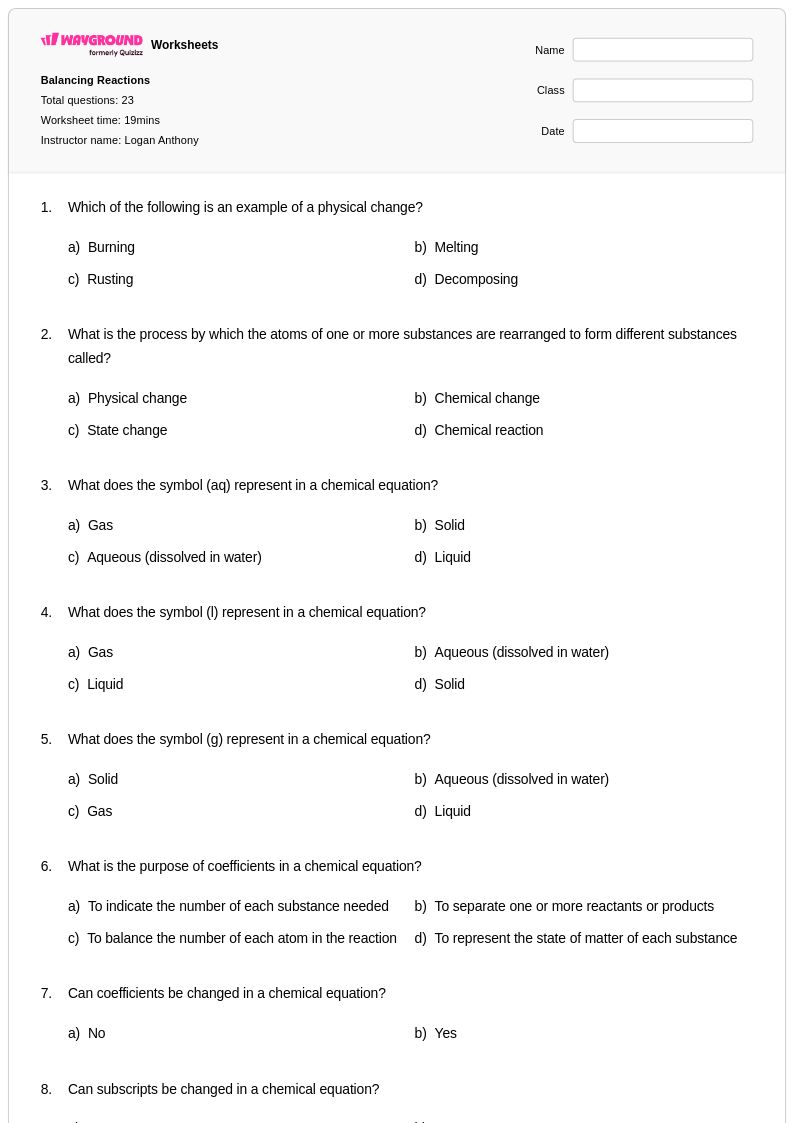
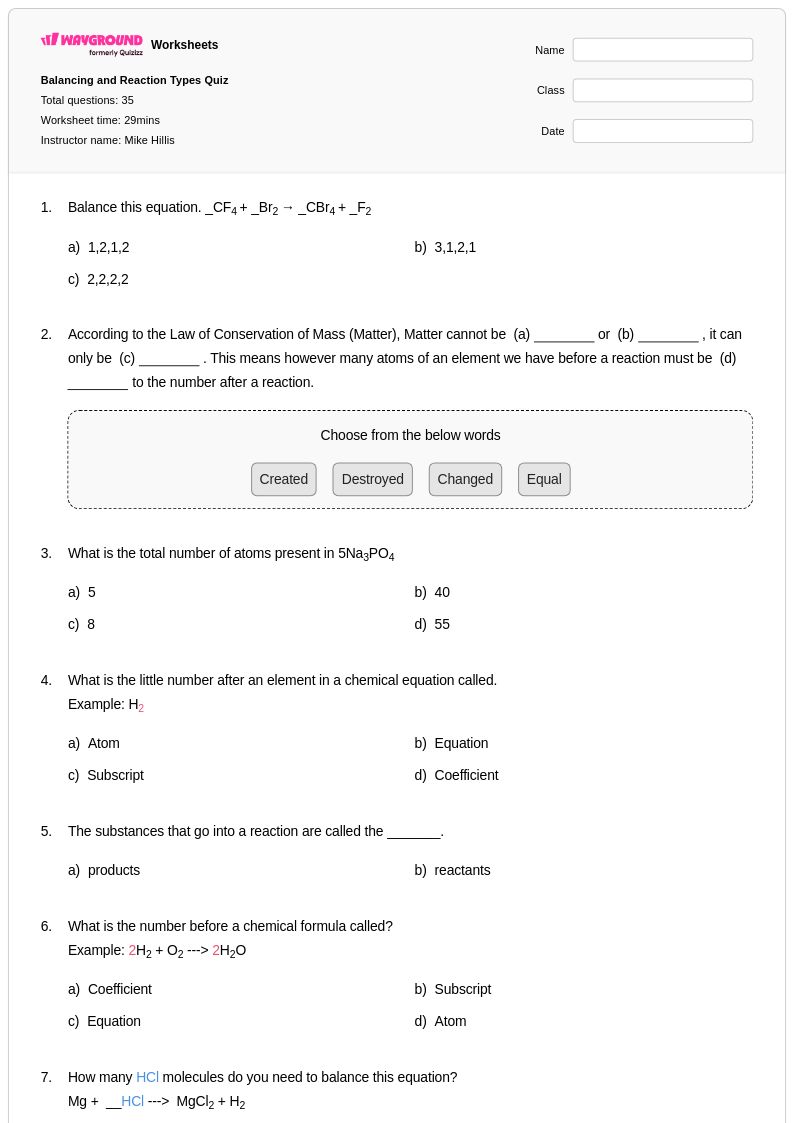
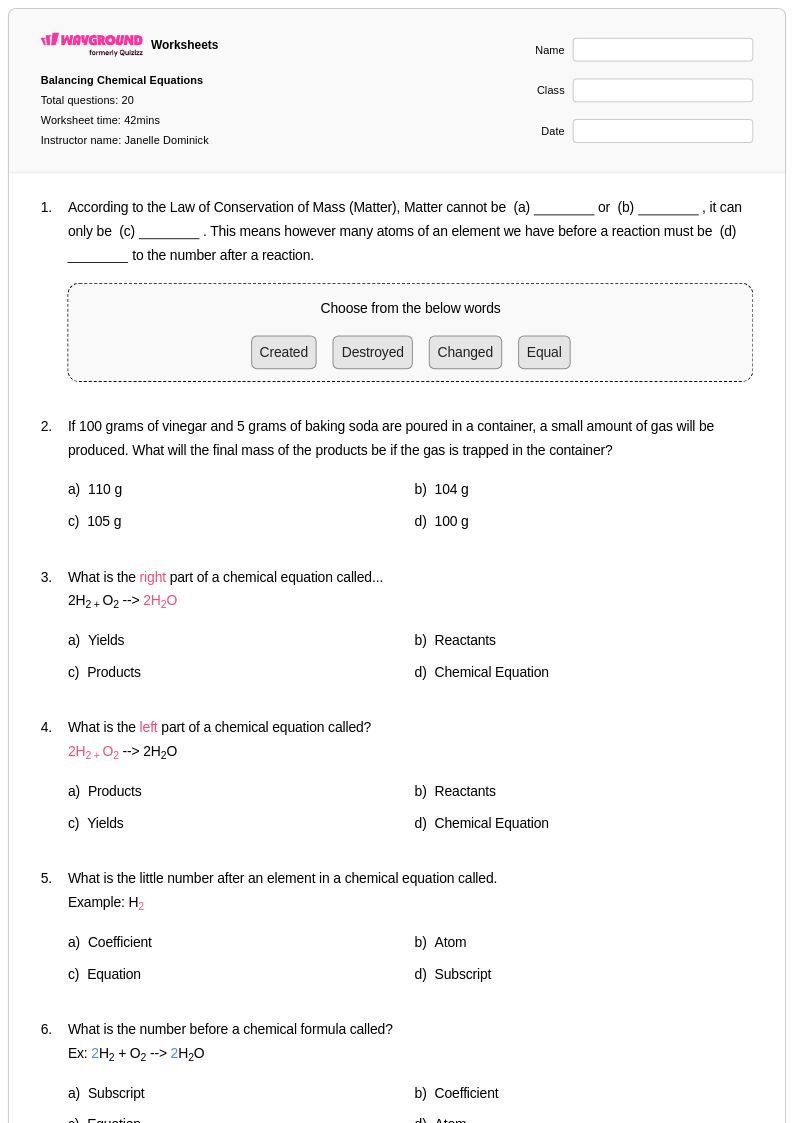
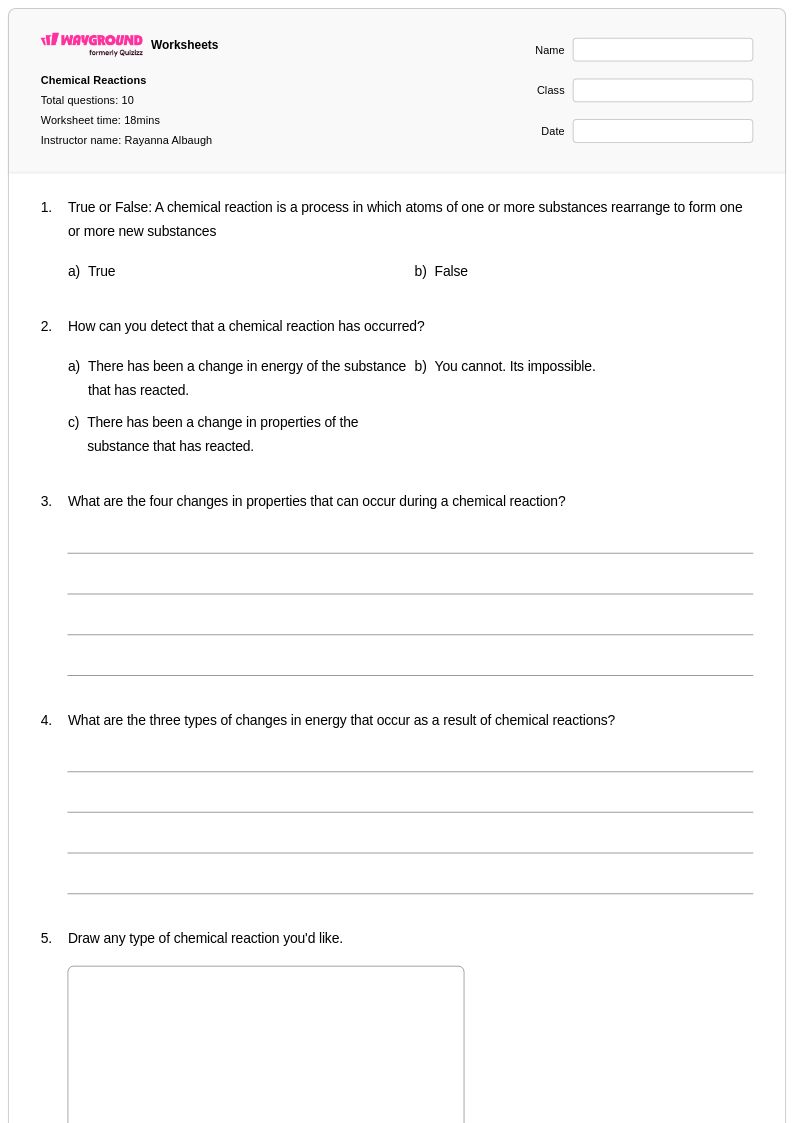
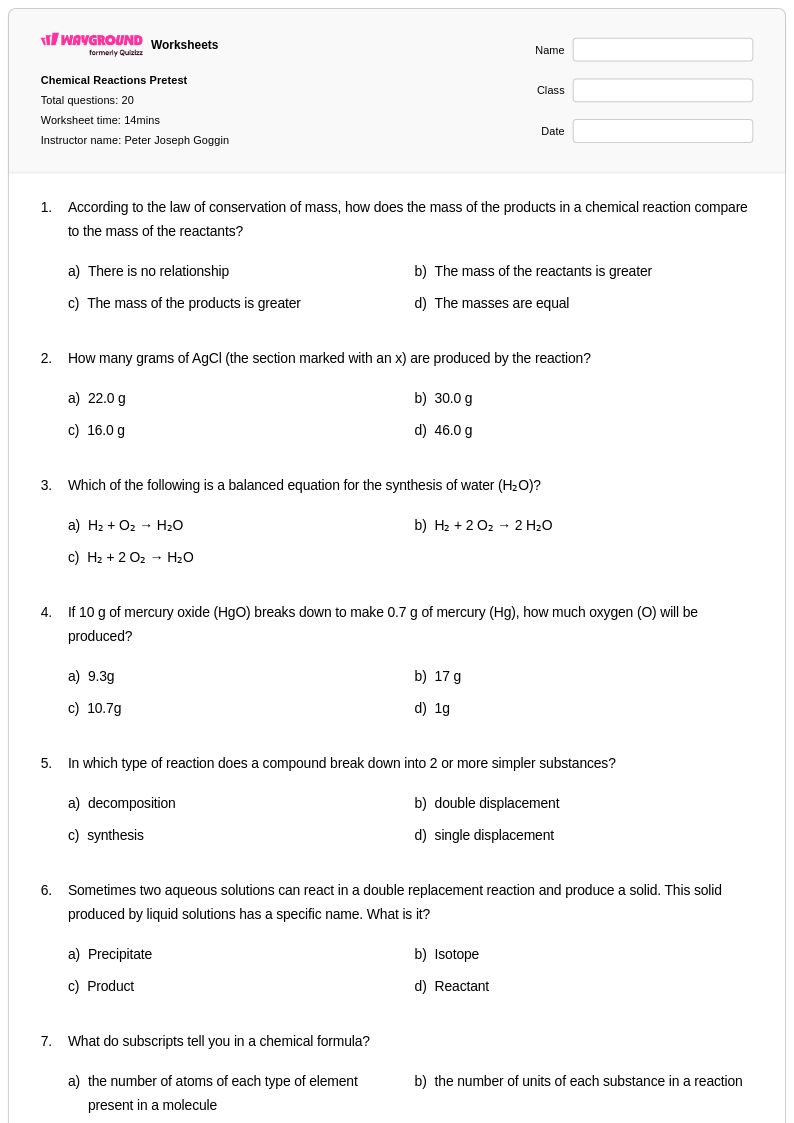
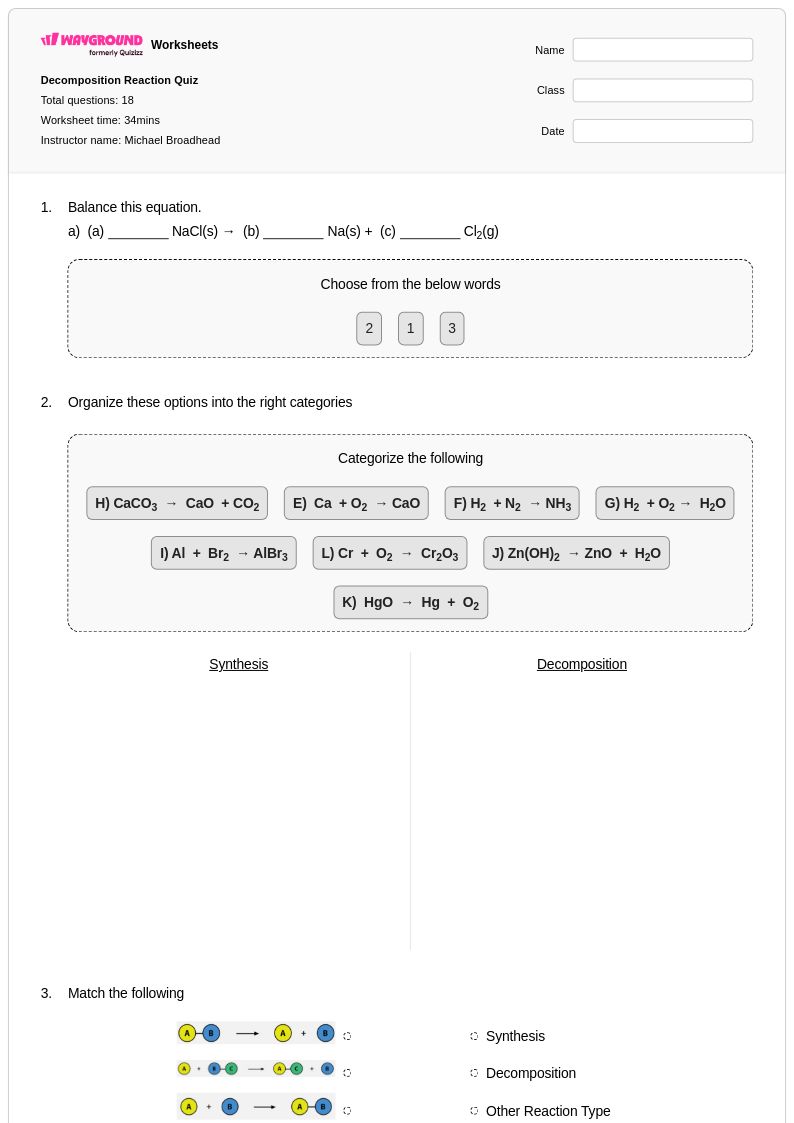
Master balancing redox reactions with Wayground's comprehensive collection of free worksheets, featuring step-by-step practice problems, printable PDFs, and detailed answer keys to strengthen electrochemistry skills.
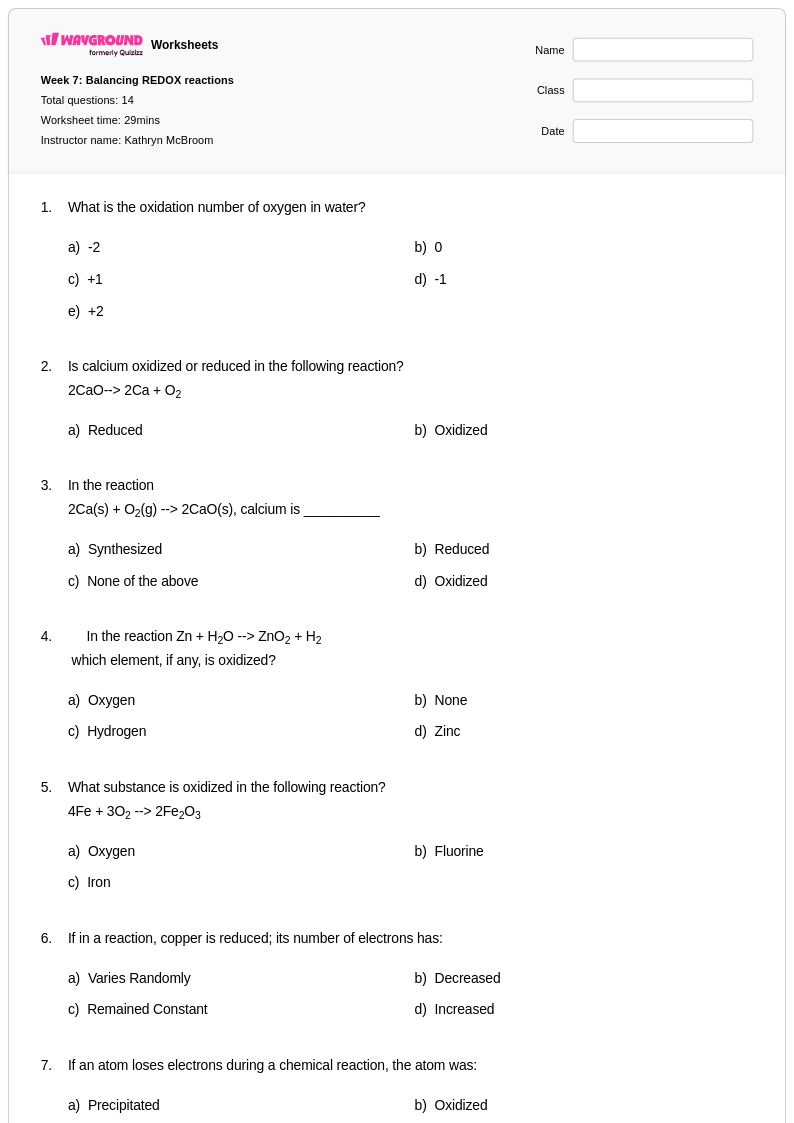
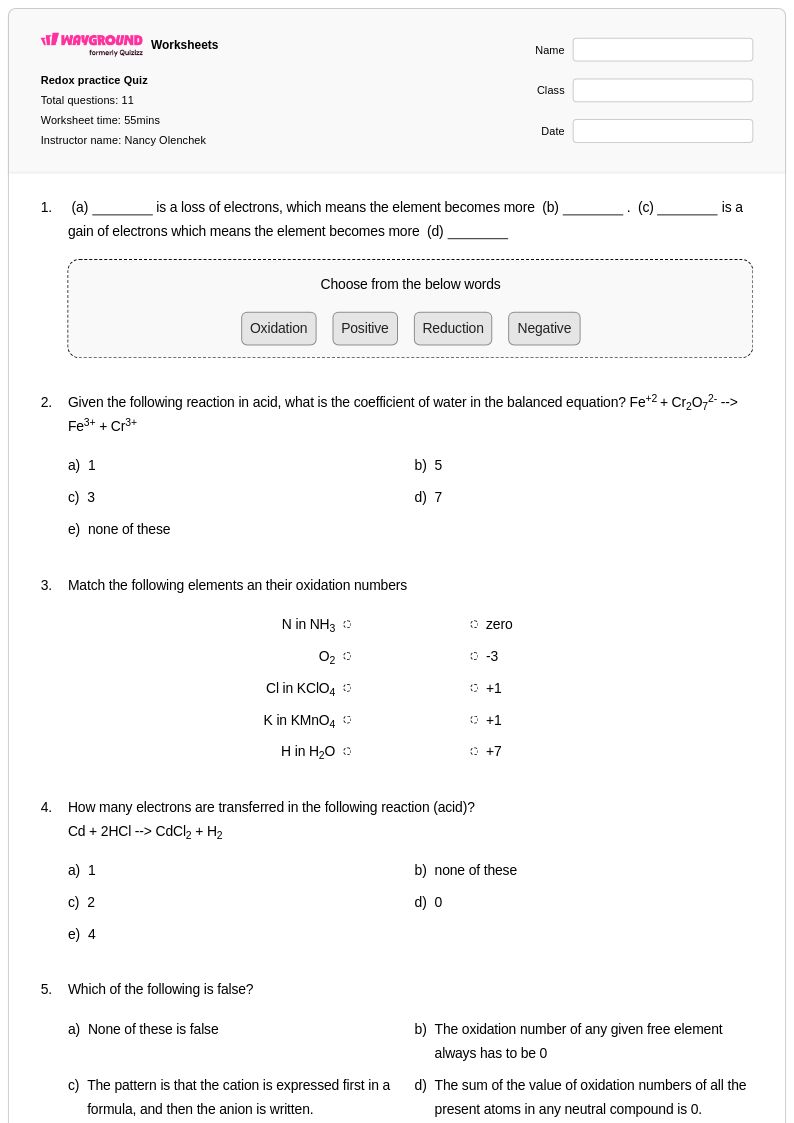
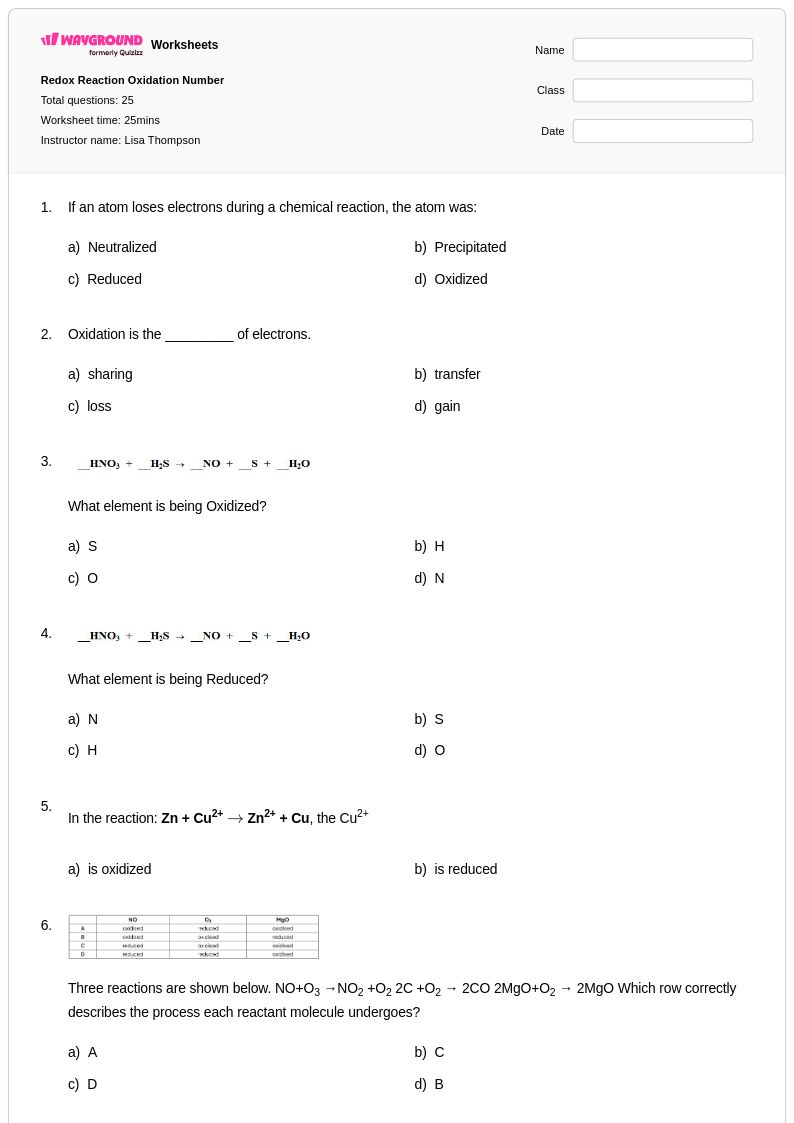
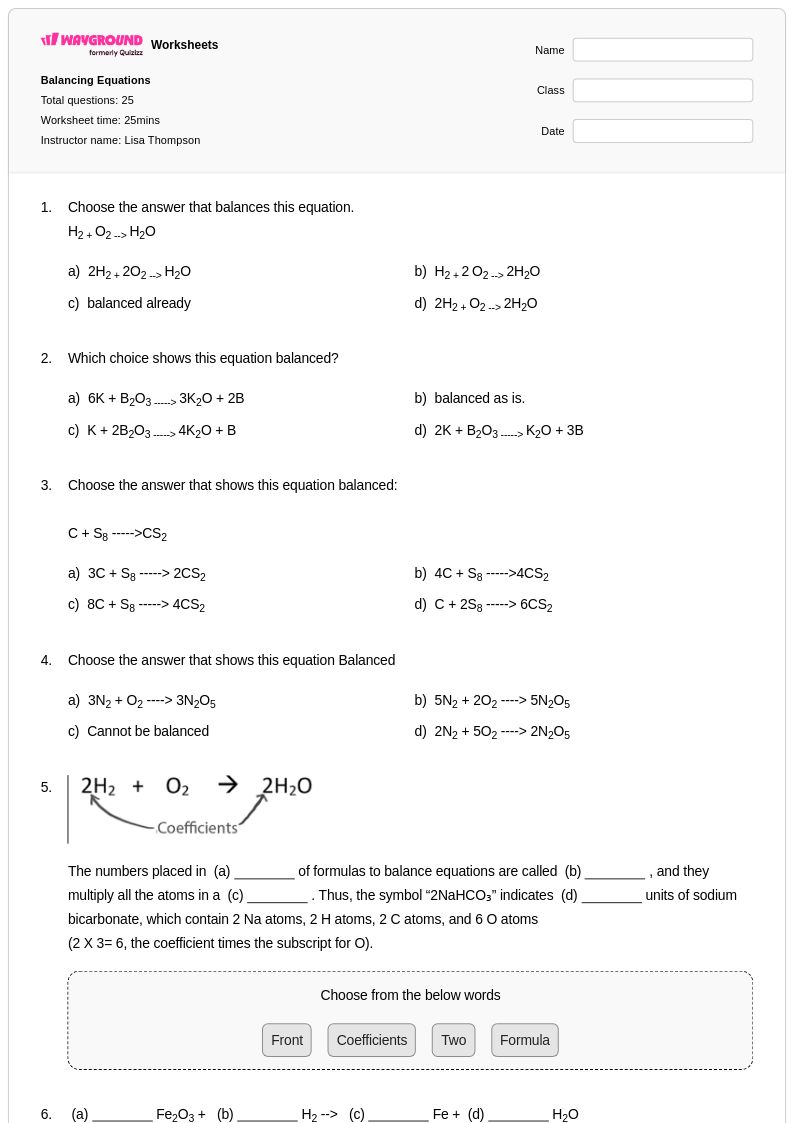
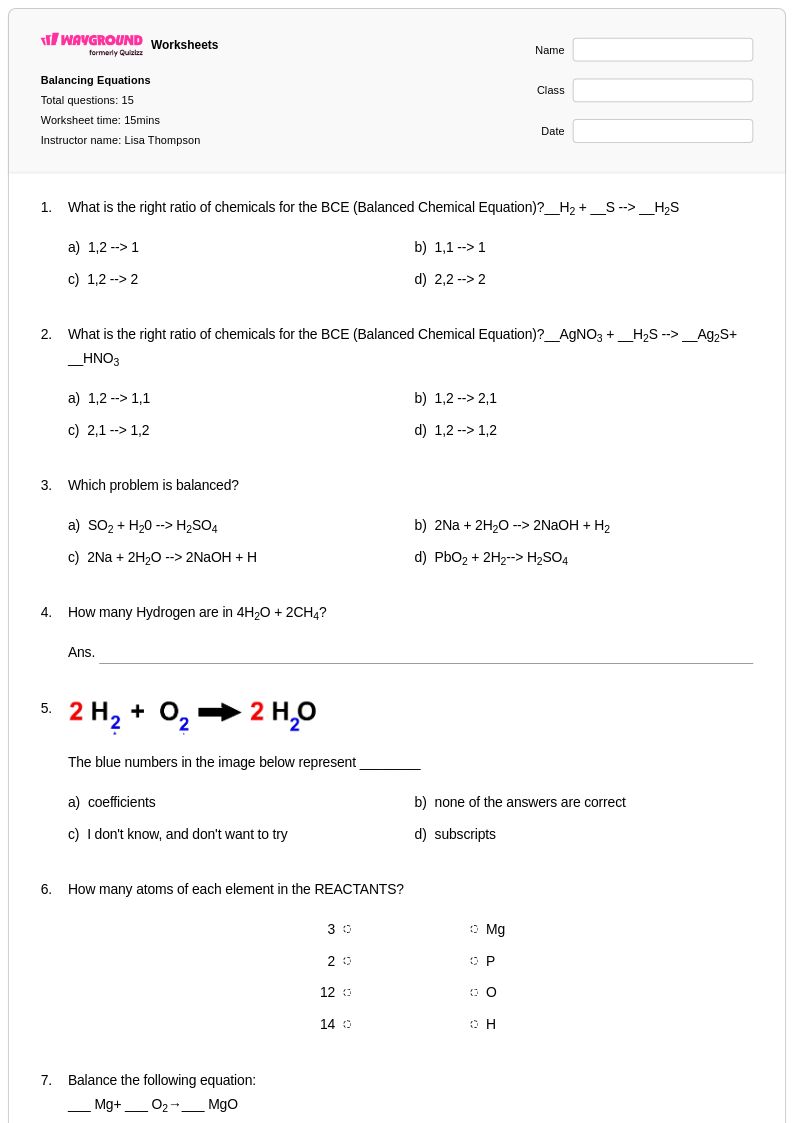
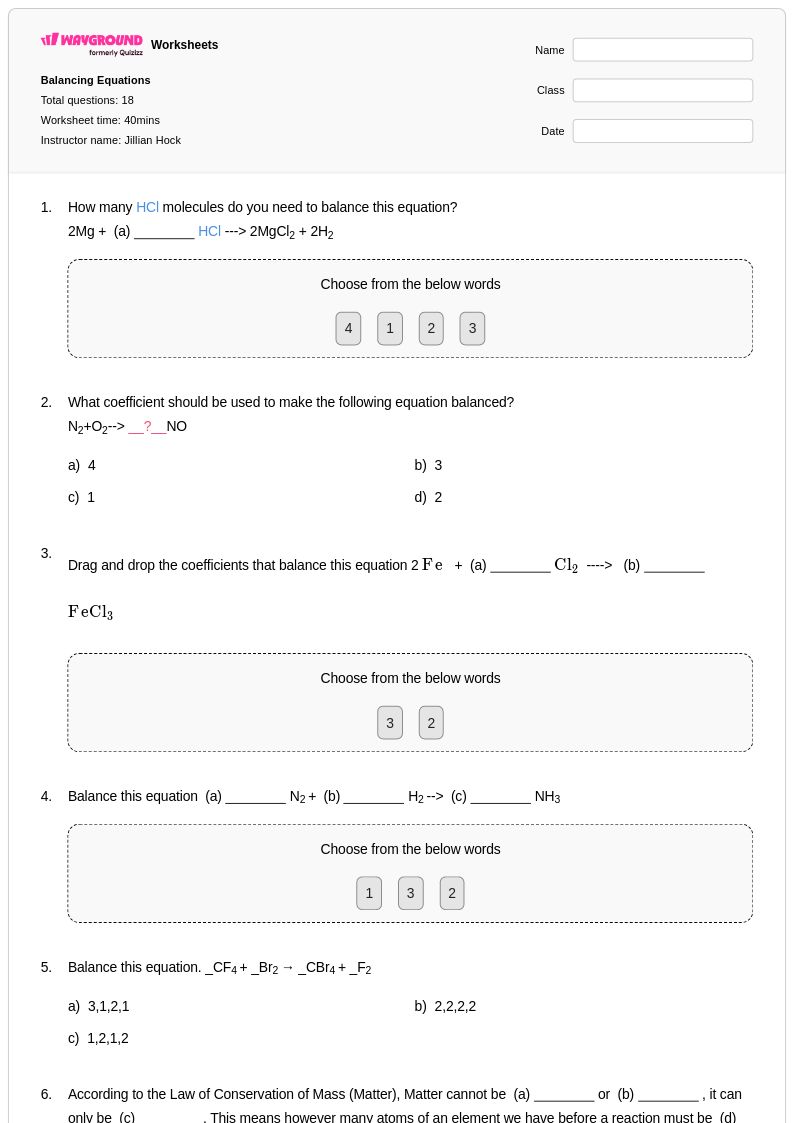
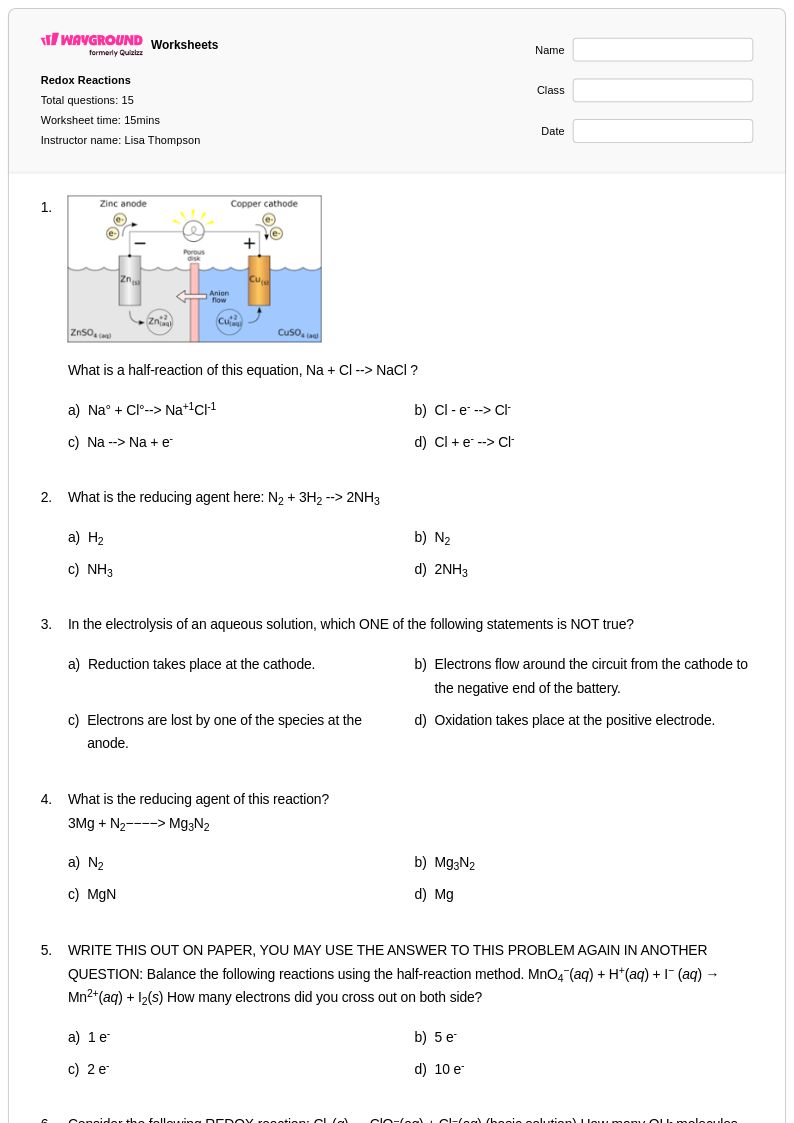
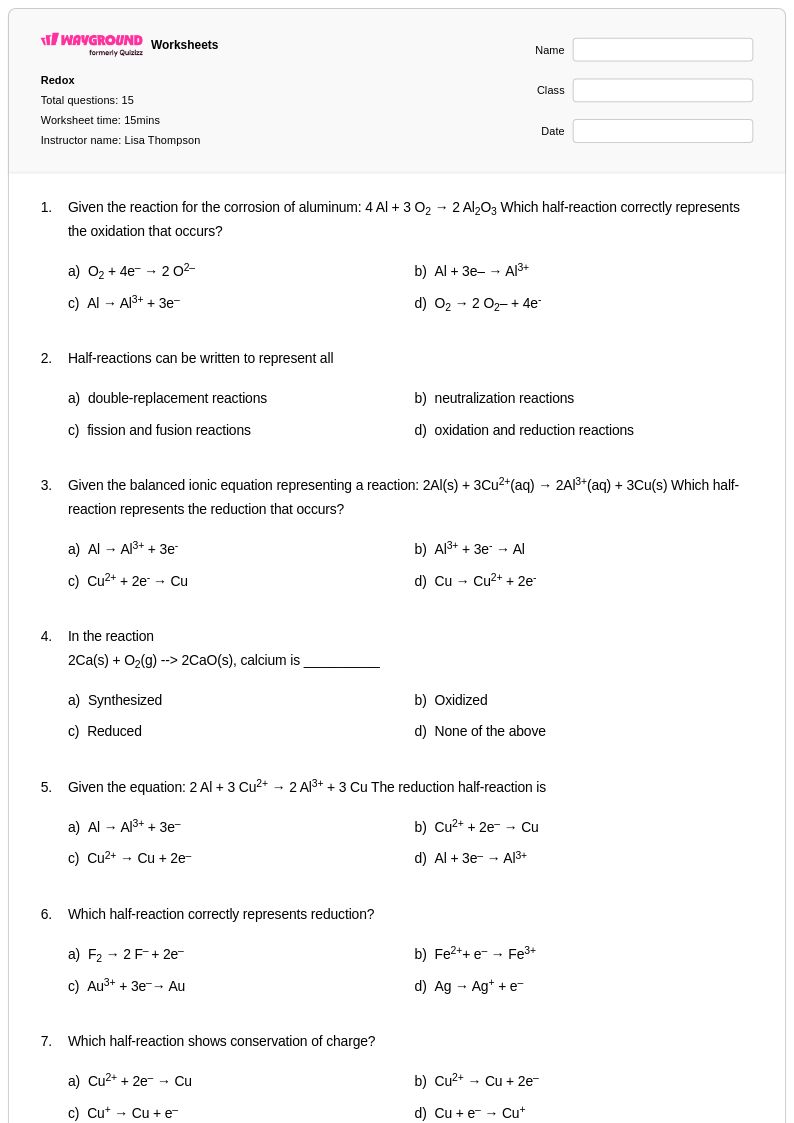
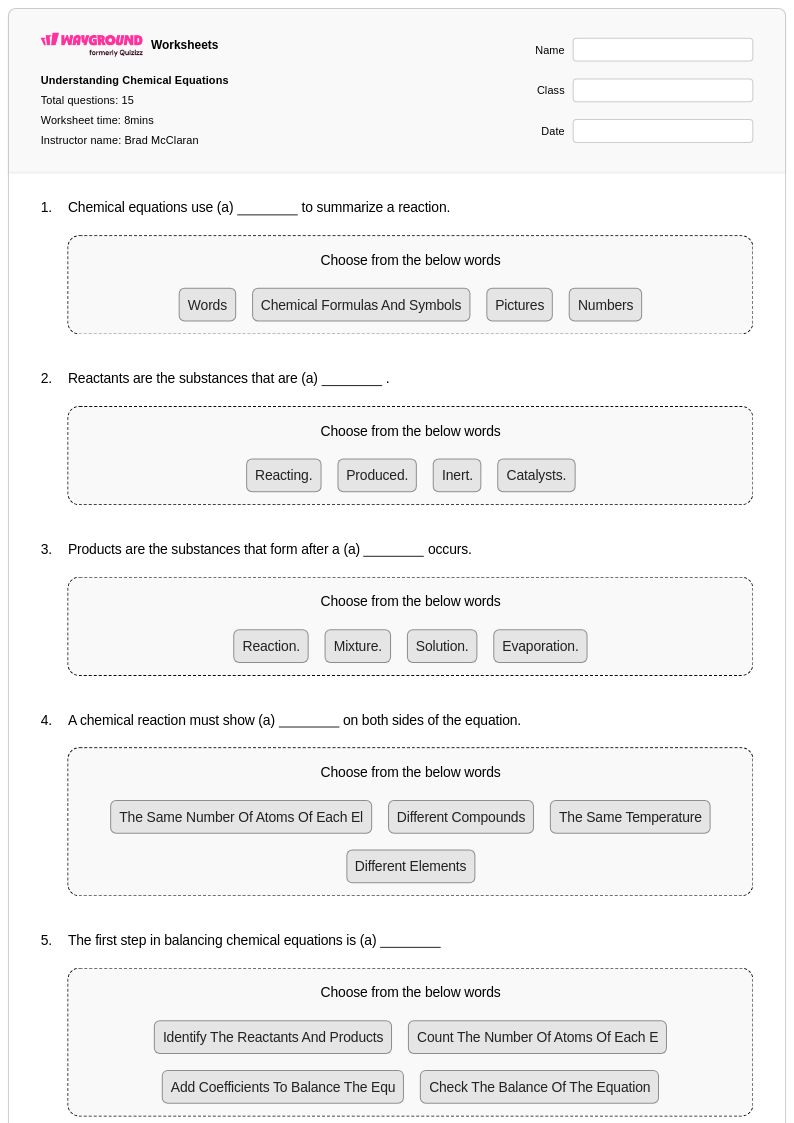
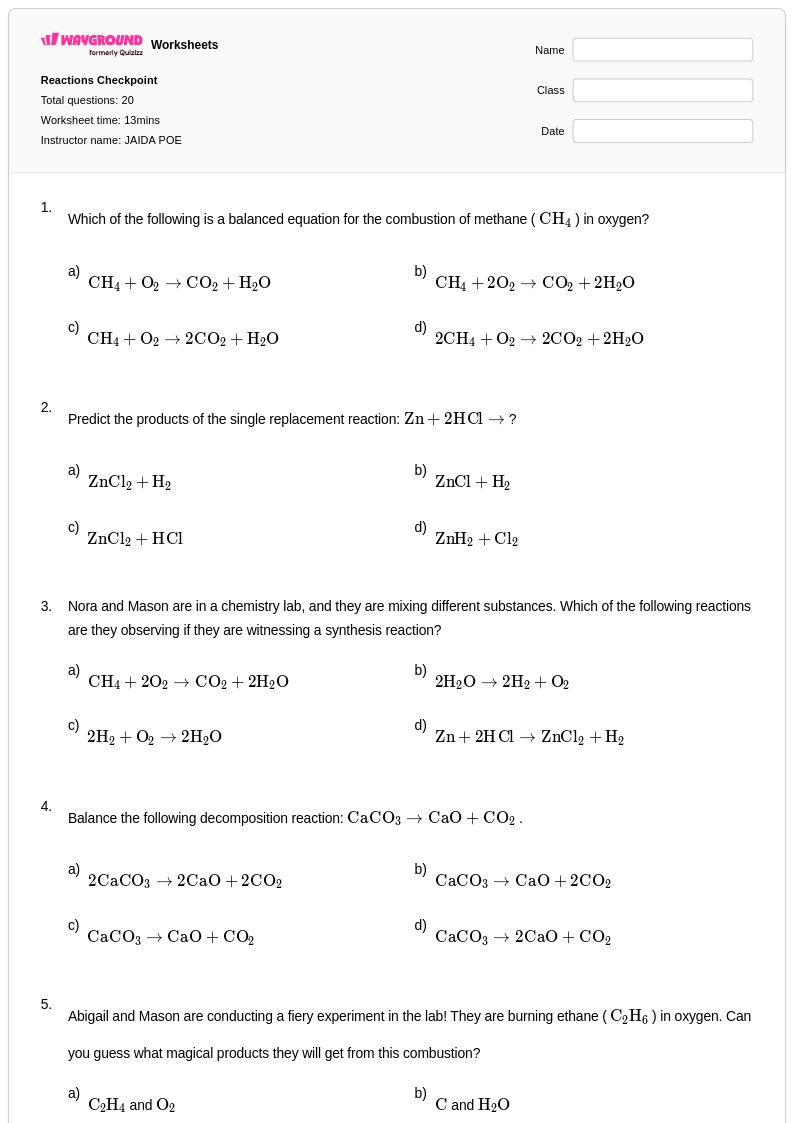
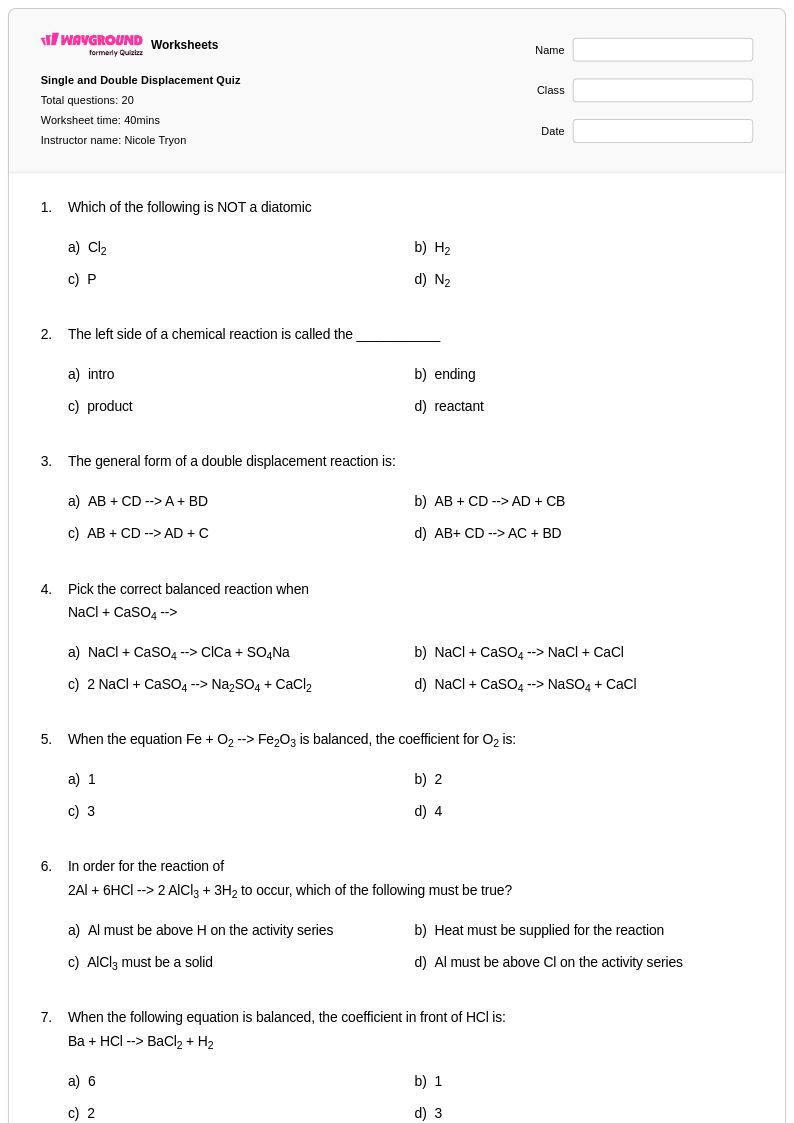
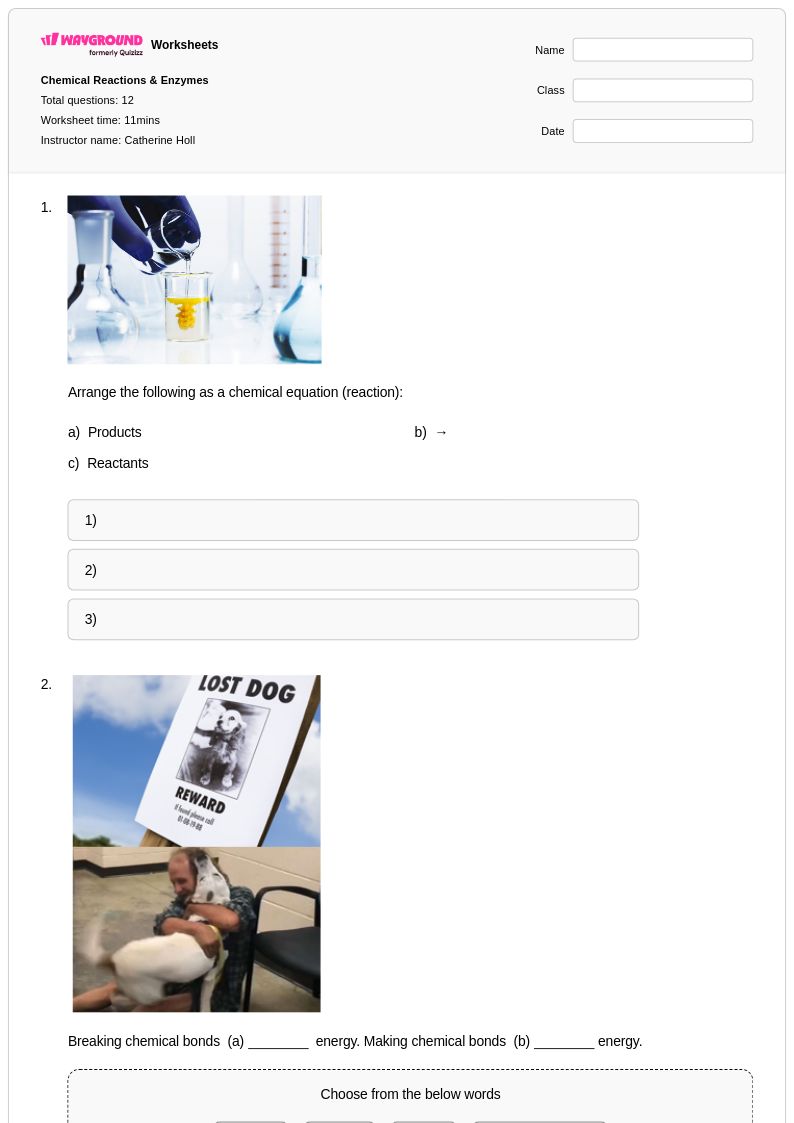
Balancing redox reactions represents a fundamental skill in chemistry that requires students to master the intricate relationship between oxidation and reduction processes while maintaining both mass and charge conservation. Wayground's comprehensive collection of balancing redox reactions worksheets provides students with systematic practice in identifying oxidation states, recognizing electron transfer patterns, and applying both the half-reaction method and oxidation number approach to achieve balanced equations. These printable resources feature carefully structured practice problems that progress from simple single-step reactions to complex multi-electron transfers, complete with detailed answer keys that guide students through each balancing step. The free pdf worksheets incorporate diverse reaction types including combustion, decomposition, and synthesis reactions, ensuring students develop proficiency across the full spectrum of redox chemistry while building confidence in this challenging yet essential chemical skill.
Wayground, formerly Quizizz, empowers educators with an extensive library of millions of teacher-created resources specifically designed to support effective instruction in balancing redox reactions and broader electrochemistry concepts. The platform's robust search and filtering capabilities allow teachers to quickly locate worksheets that align with specific curriculum standards and match their students' skill levels, while built-in differentiation tools enable seamless customization for varying academic needs. Teachers can access these materials in both printable and digital formats, including convenient pdf downloads, making it effortless to incorporate targeted practice into lesson planning, provide remediation for struggling students, or offer enrichment opportunities for advanced learners. The flexibility to modify existing worksheets or combine multiple resources ensures that educators can create precisely tailored learning experiences that address individual student needs while maintaining alignment with rigorous chemistry standards and learning objectives.
FAQs
How do I teach students to balance redox reactions step by step?
The most effective approach is to teach two distinct methods sequentially: the half-reaction method and the oxidation number method. Start by ensuring students can assign oxidation states confidently before introducing electron transfer, then walk through the half-reaction method by separating the reaction into oxidation and reduction halves, balancing atoms and charges separately, and combining them so electrons cancel. Once students are comfortable with half-reactions, introduce the oxidation number method as an alternative, showing how changes in oxidation numbers correspond directly to electron gain and loss. Building from simple one-electron transfers to complex multi-electron reactions helps prevent cognitive overload.
What exercises help students practice balancing redox reactions?
Structured practice problems that increase in complexity are the most effective tool for building redox balancing skills. Students benefit from working through reactions in acidic and basic solutions separately, since the balancing steps differ and conflating them is a common source of confusion. Exercises that require students to first identify the oxidizing and reducing agents before balancing reinforce conceptual understanding alongside procedural fluency. Wayground's balancing redox reactions worksheets provide free, printable PDF practice problems that progress from simple single-step reactions to complex multi-electron transfers, with detailed answer keys guiding students through every step.
What mistakes do students commonly make when balancing redox reactions?
The most frequent errors include incorrectly assigning oxidation states, especially in polyatomic ions and compounds where students misapply oxidation state rules. Students also commonly forget to balance charge in addition to mass, producing equations where atoms balance but electrons do not. When using the half-reaction method, a persistent mistake is failing to multiply each half-reaction by the appropriate factor before combining, so electrons do not fully cancel. In basic solution problems, students often omit or misplace the hydroxide ions needed to neutralize the hydrogen ions added during balancing.
How do I differentiate redox balancing practice for students at different skill levels?
For struggling students, begin with reactions in acidic solution only and provide a structured step-by-step template they must fill in rather than starting from a blank equation. Advanced students can tackle balancing in basic solution, multi-step reactions, or disproportionation reactions where the same element is both oxidized and reduced. On Wayground, teachers can apply per-student accommodations such as reduced answer choices to lower cognitive load for students who need support, or enable Read Aloud for accessibility, while the rest of the class works with standard settings. These accommodations are saved and reusable, so differentiation does not require rebuilding settings each session.
How do I use Wayground's balancing redox reactions worksheets in my classroom?
Wayground's balancing redox reactions worksheets are available as printable PDFs for traditional classroom use and in digital formats for technology-integrated environments, including the option to host them as a quiz directly on Wayground. Teachers can use the printable versions for in-class practice, homework, or remediation, while the digital format works well for self-paced practice or formative assessment with immediate feedback. Wayground's search and filtering tools allow teachers to quickly find worksheets aligned to specific curriculum standards and student skill levels, and existing worksheets can be modified or combined to create tailored assignments.
Should I teach the half-reaction method or the oxidation number method first?
Most chemistry educators recommend introducing the oxidation number method first because it builds directly on students' existing understanding of oxidation states and provides a clear visual link between electron gain and loss. The half-reaction method is typically introduced second because it requires students to manage two separate equations simultaneously, adding procedural complexity. However, the half-reaction method is generally considered more powerful for balancing reactions in solution, particularly in acidic or basic conditions, so students ultimately need fluency with both. Teaching the methods as complementary tools rather than alternatives helps students select the right approach for each reaction type.