Free Printable Characterization Worksheets for Class 11
Class 11 characterization worksheets and printables help students analyze how authors develop complex characters through direct and indirect methods, featuring free PDF practice problems with answer keys.
Explore printable Characterization worksheets for Class 11
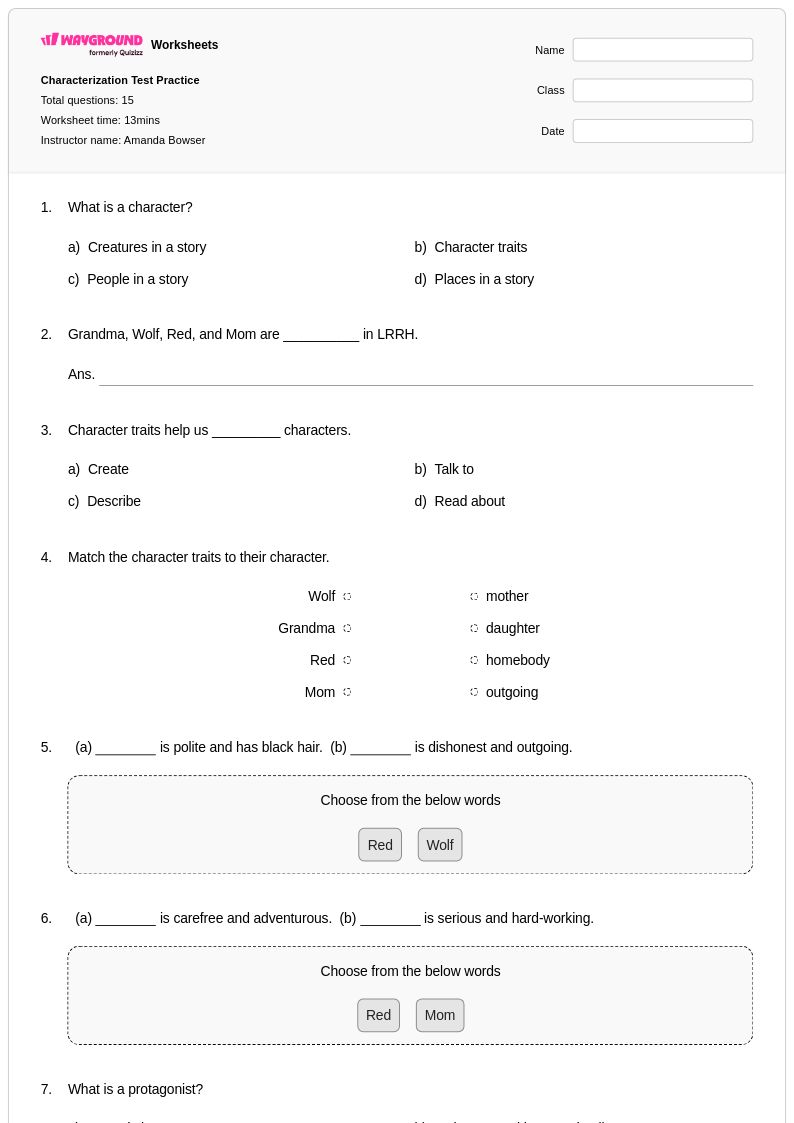
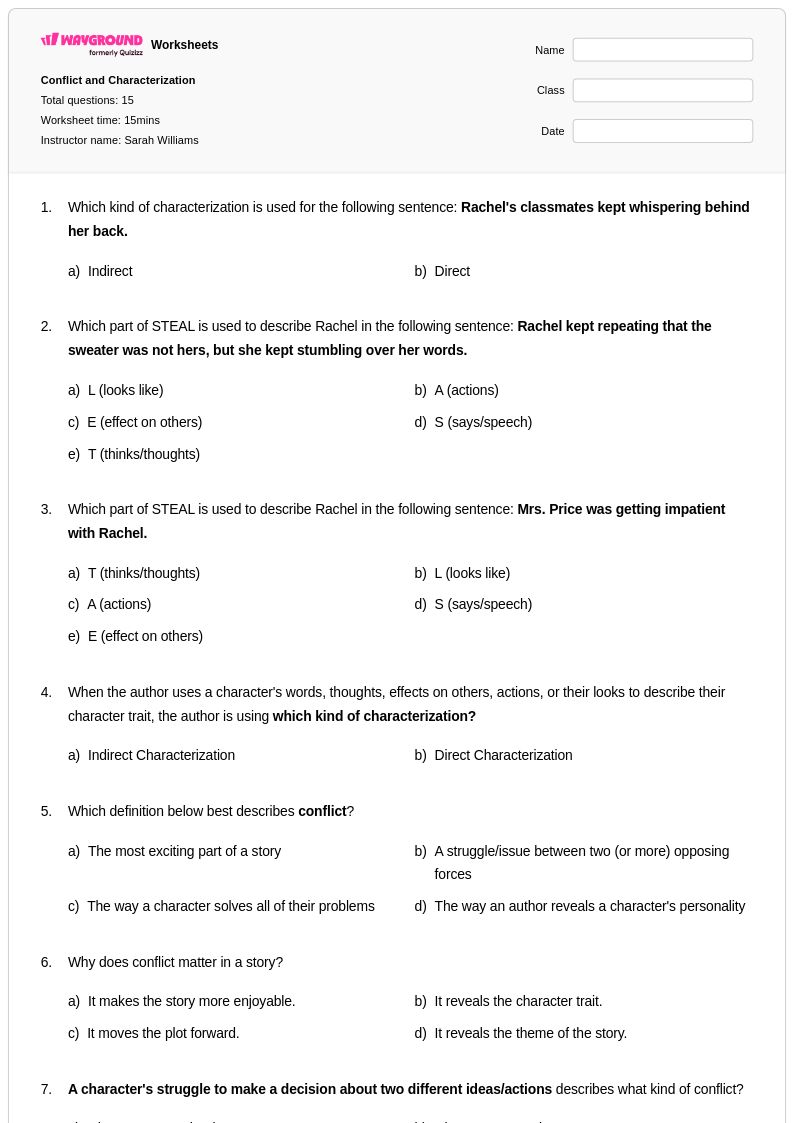
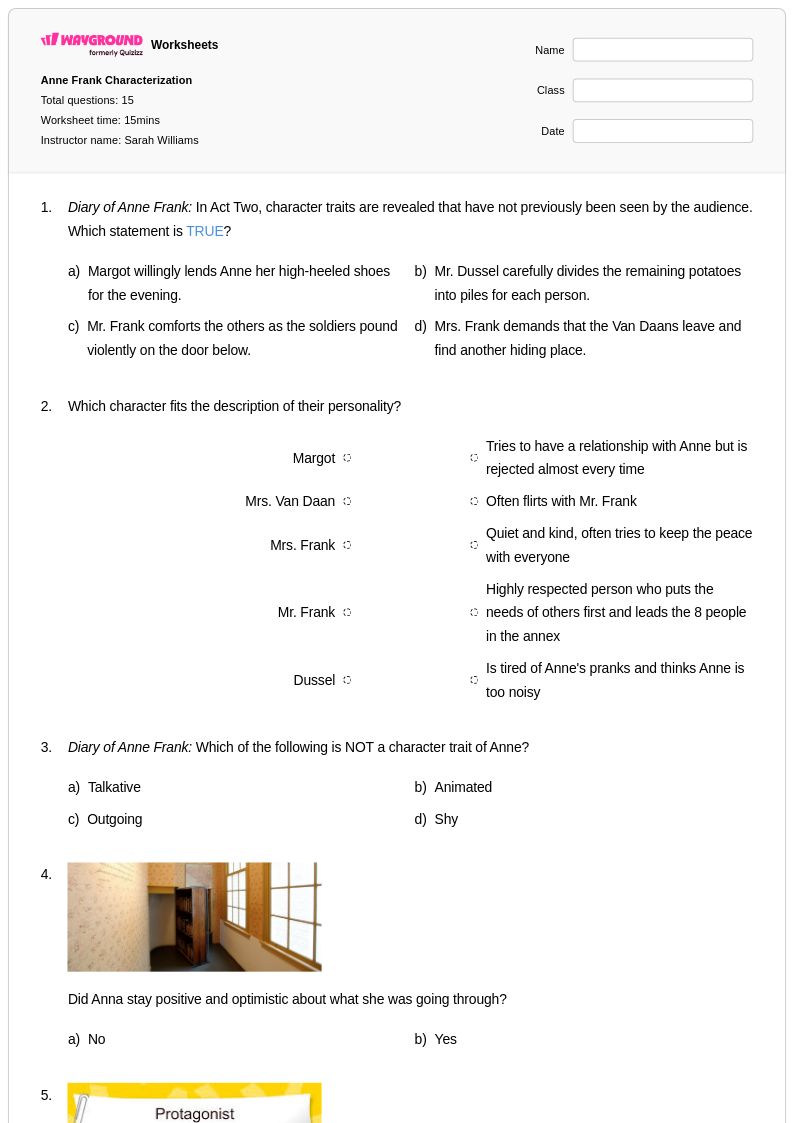
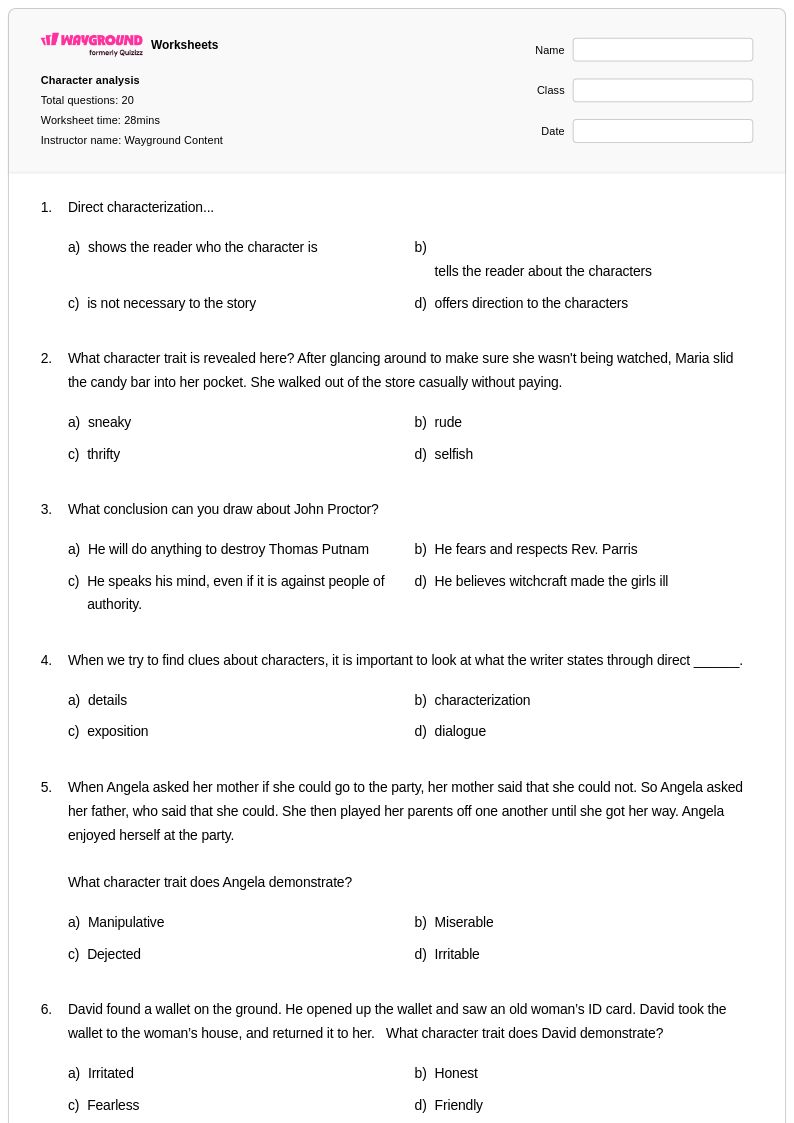
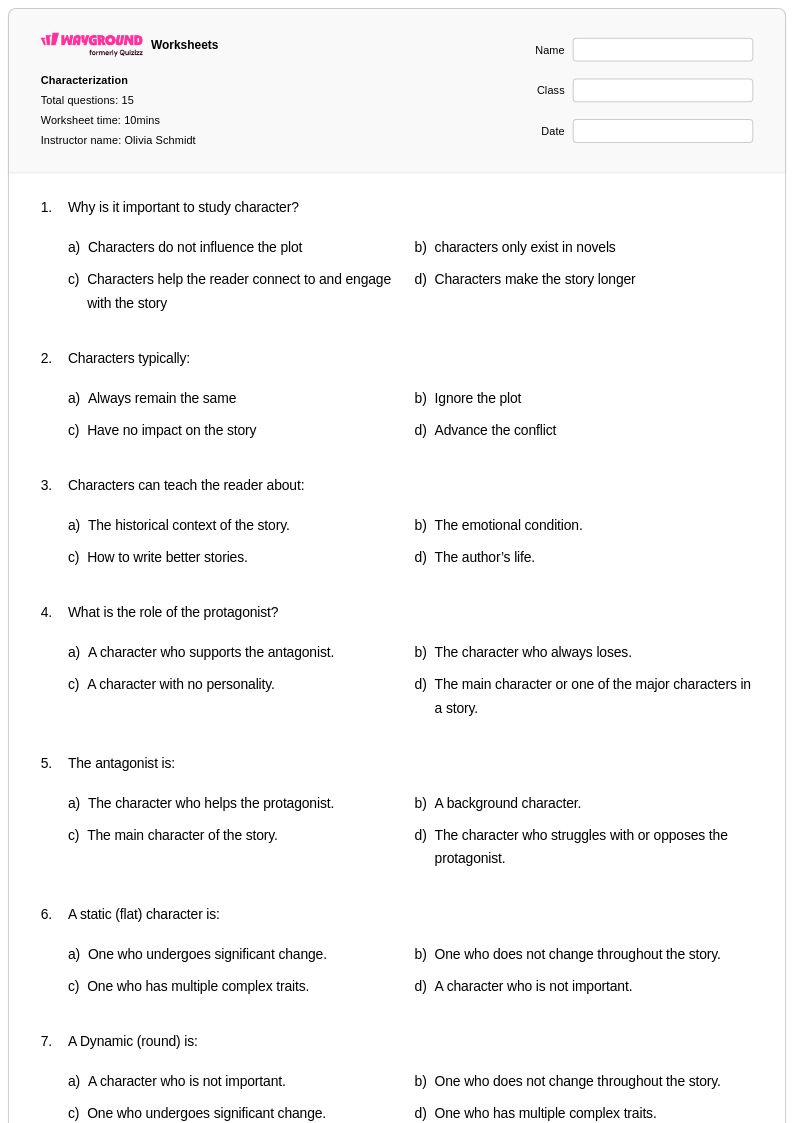
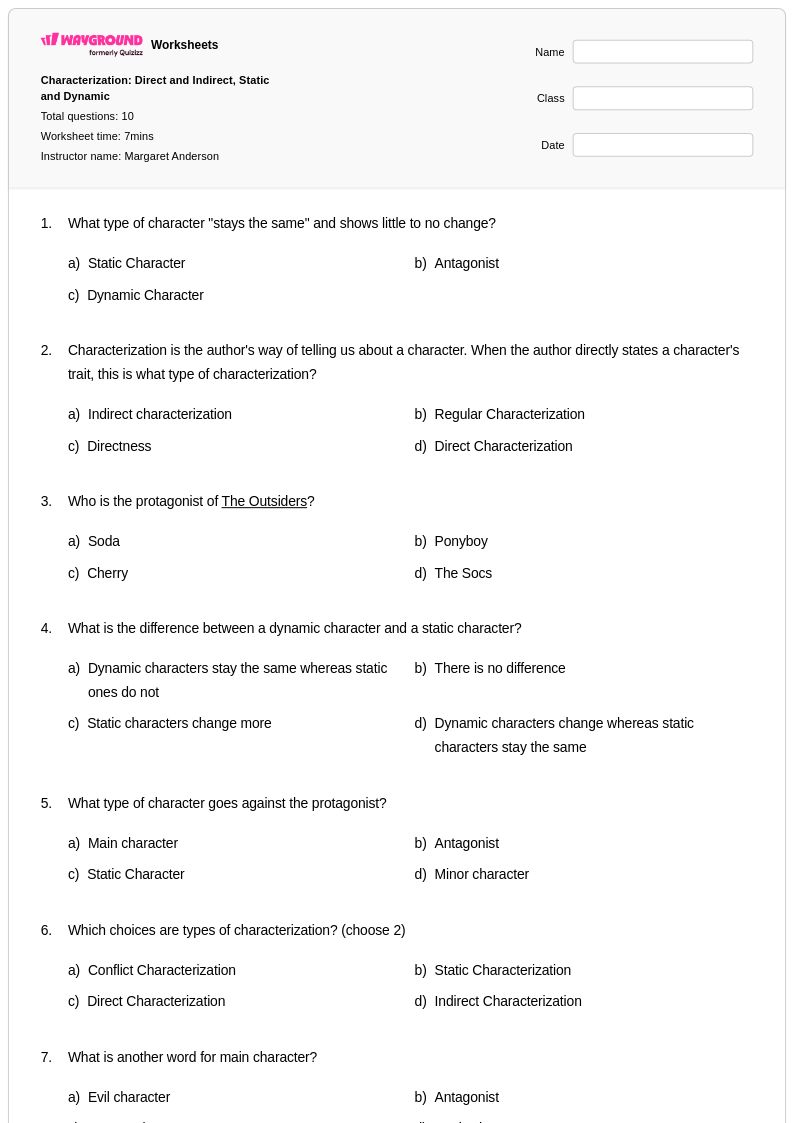
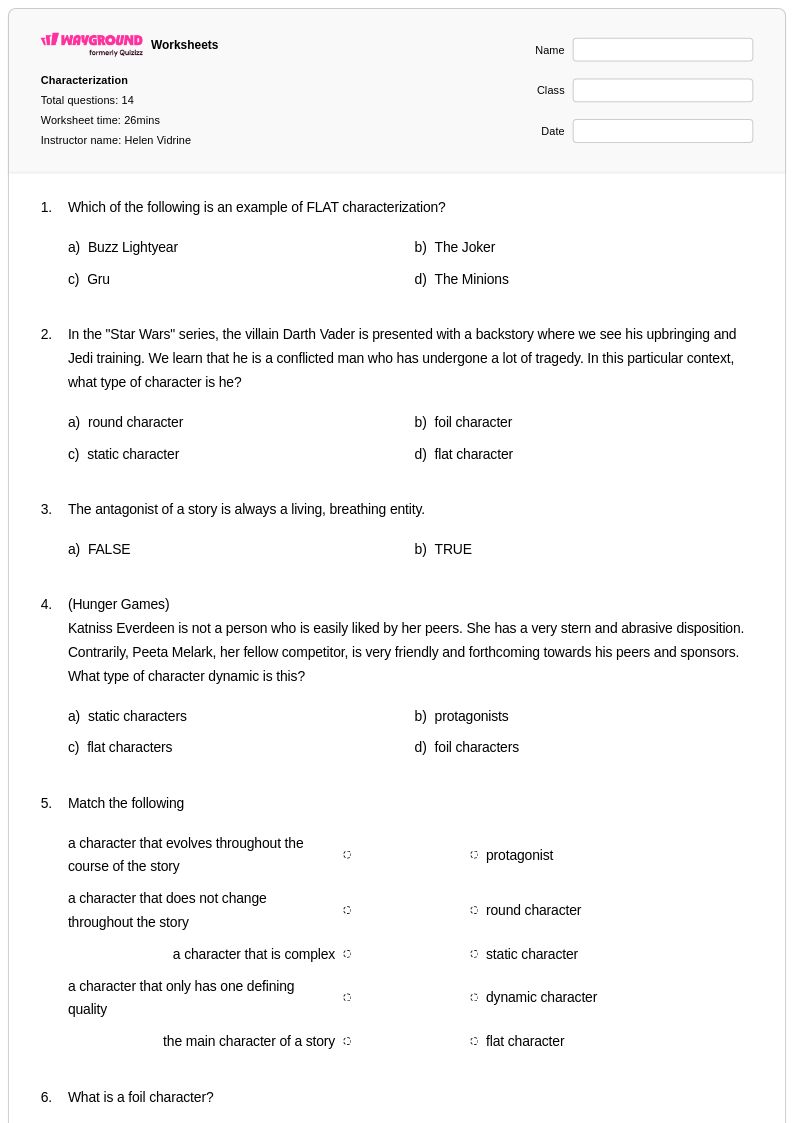
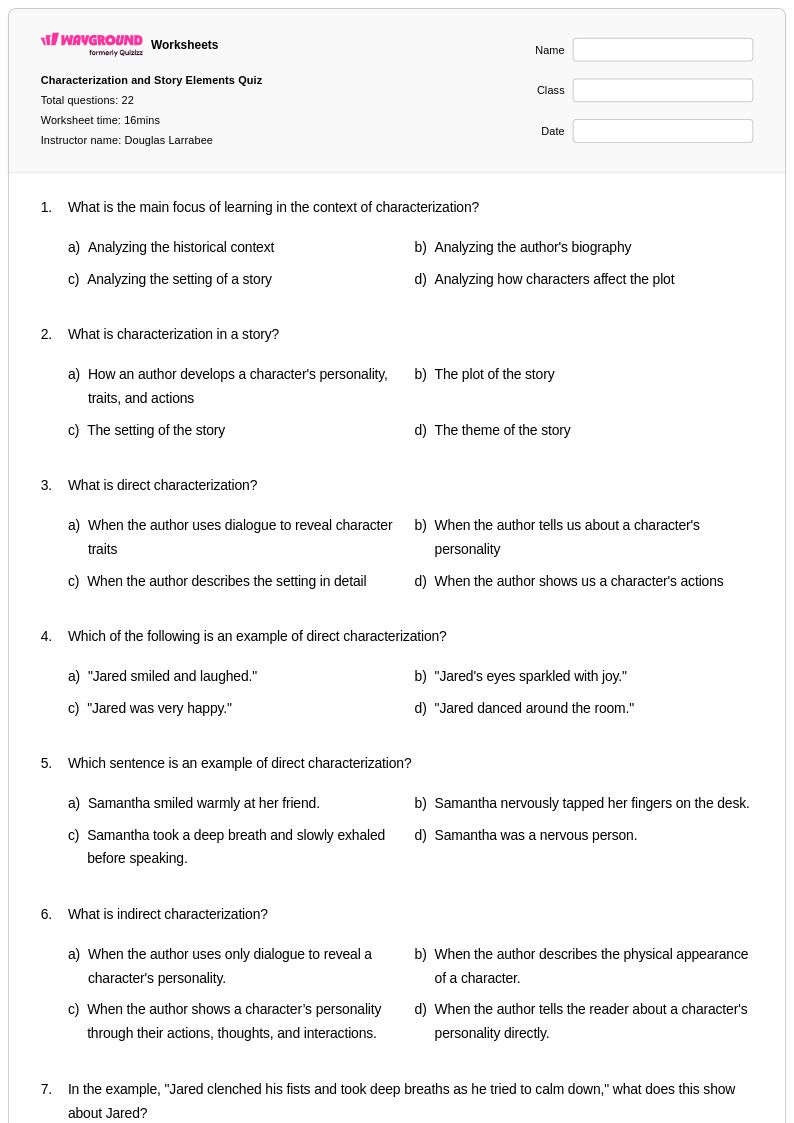
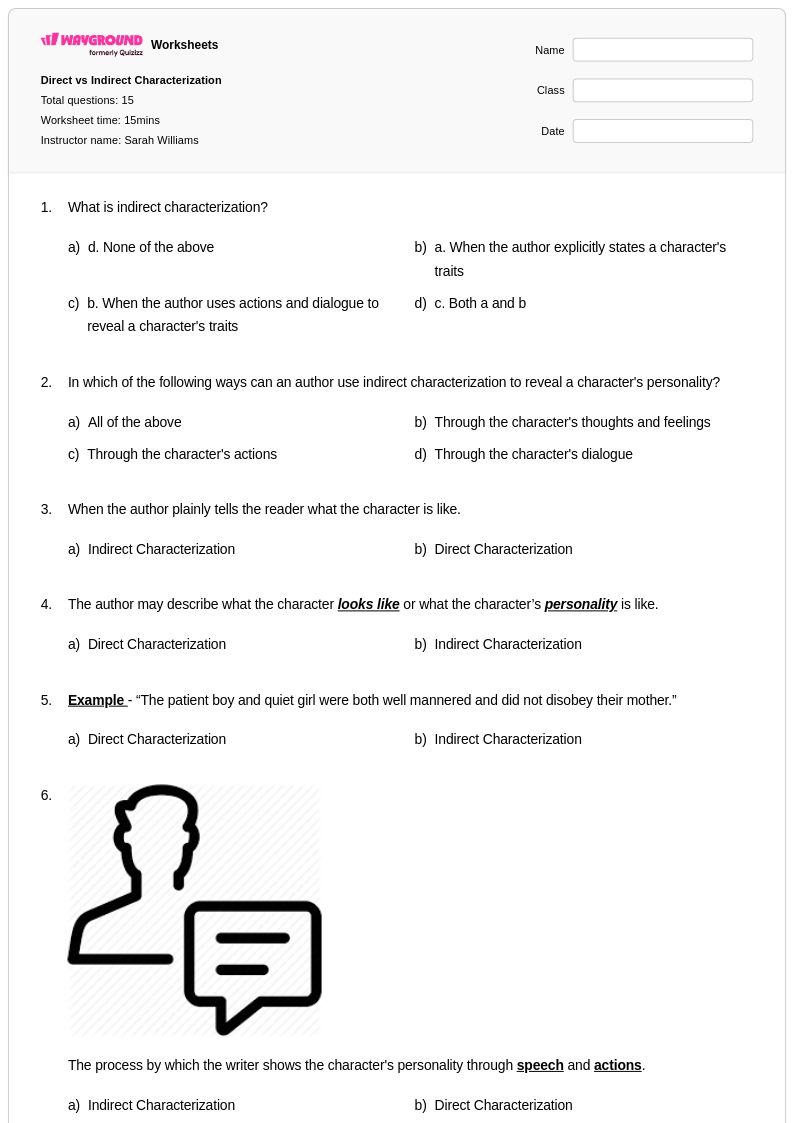
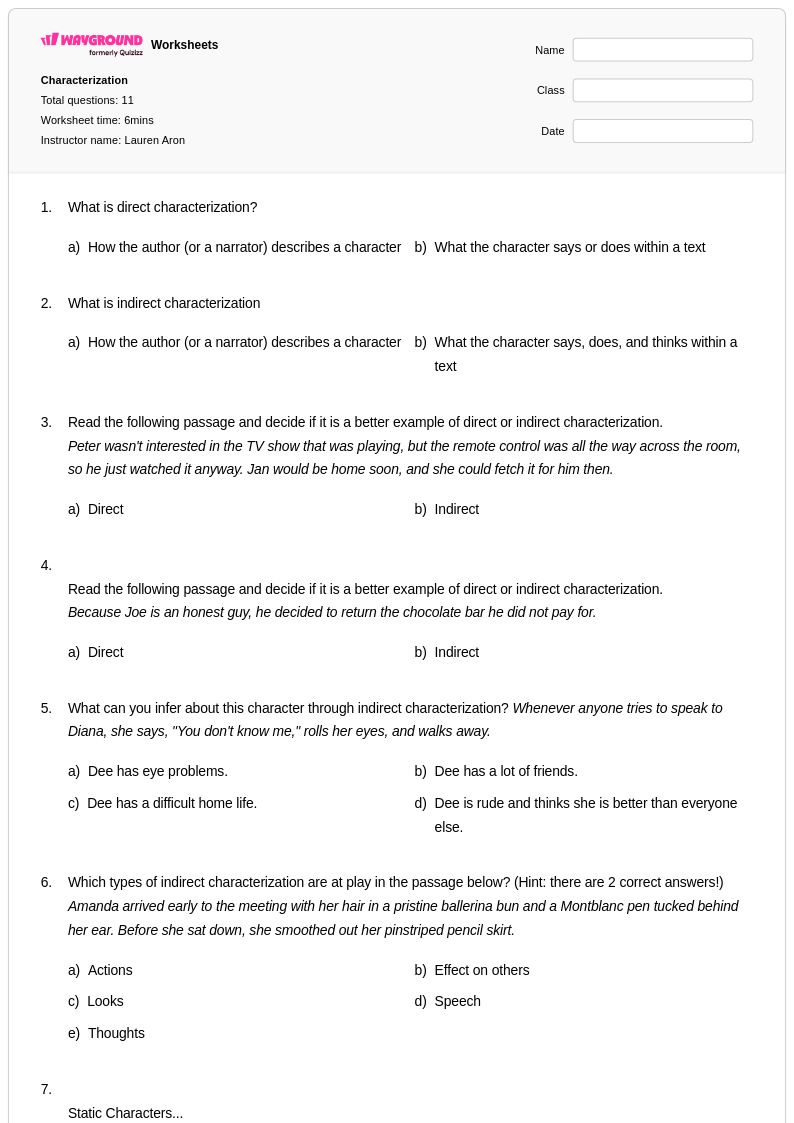
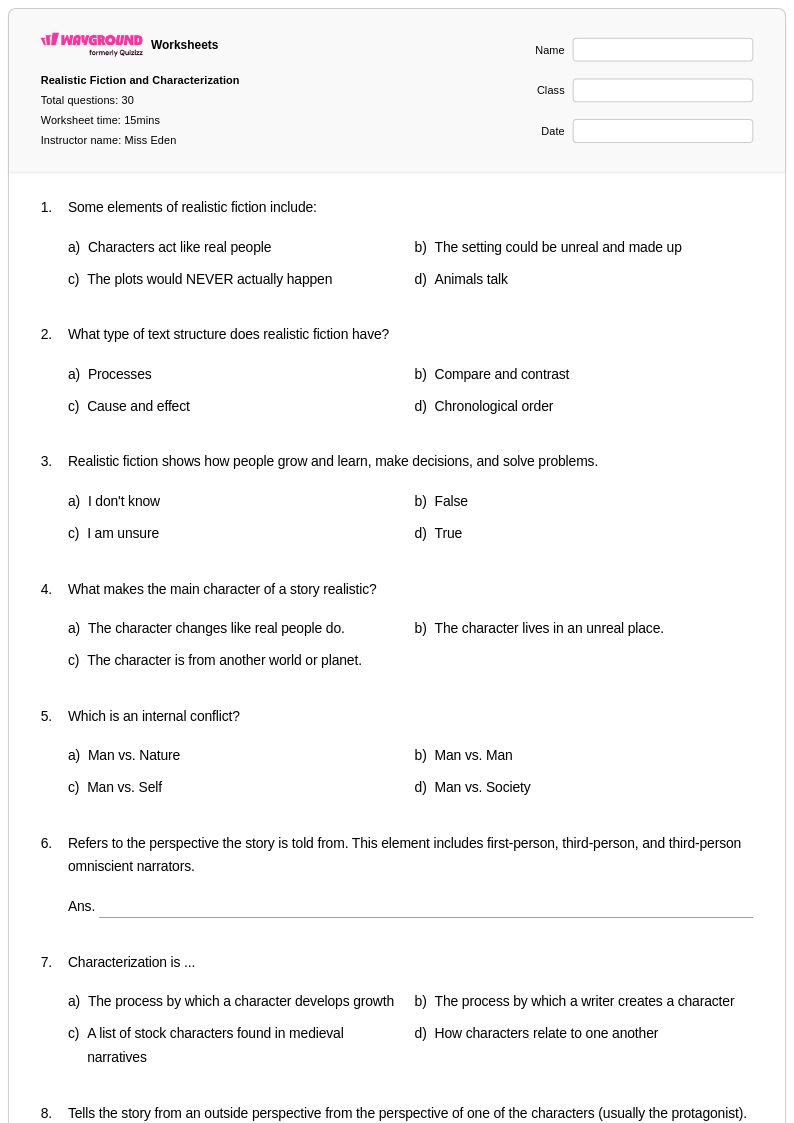
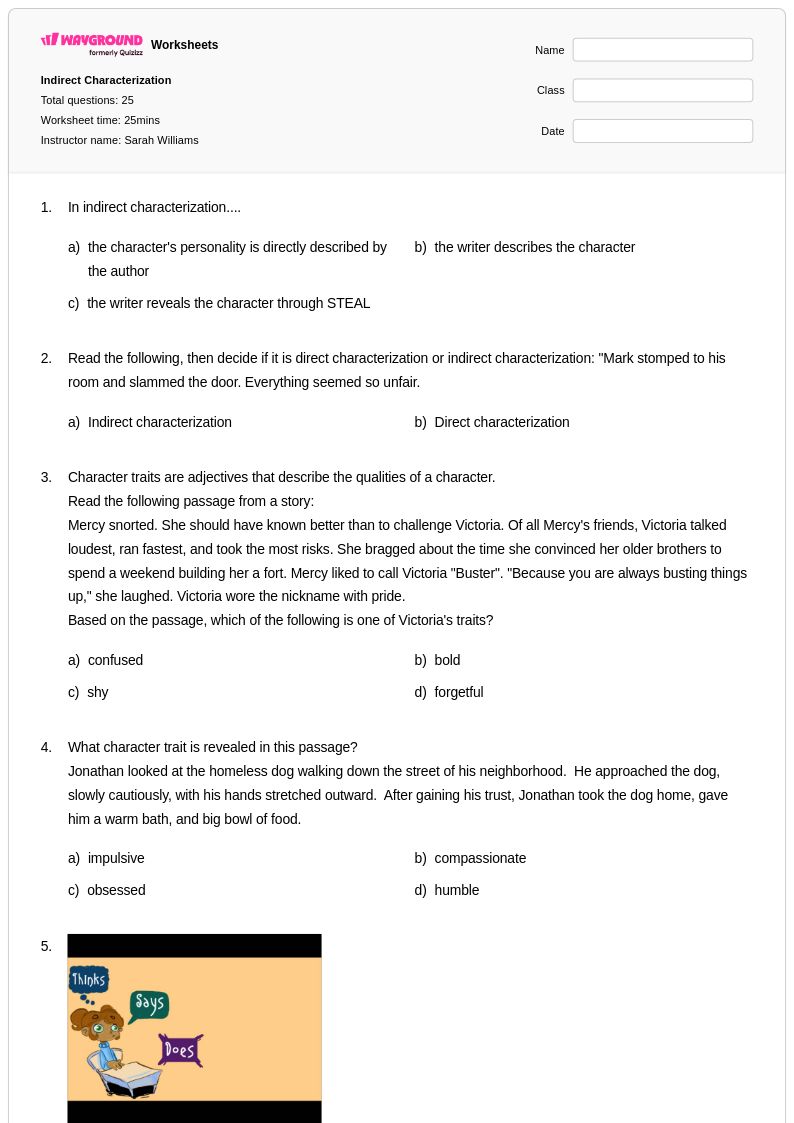
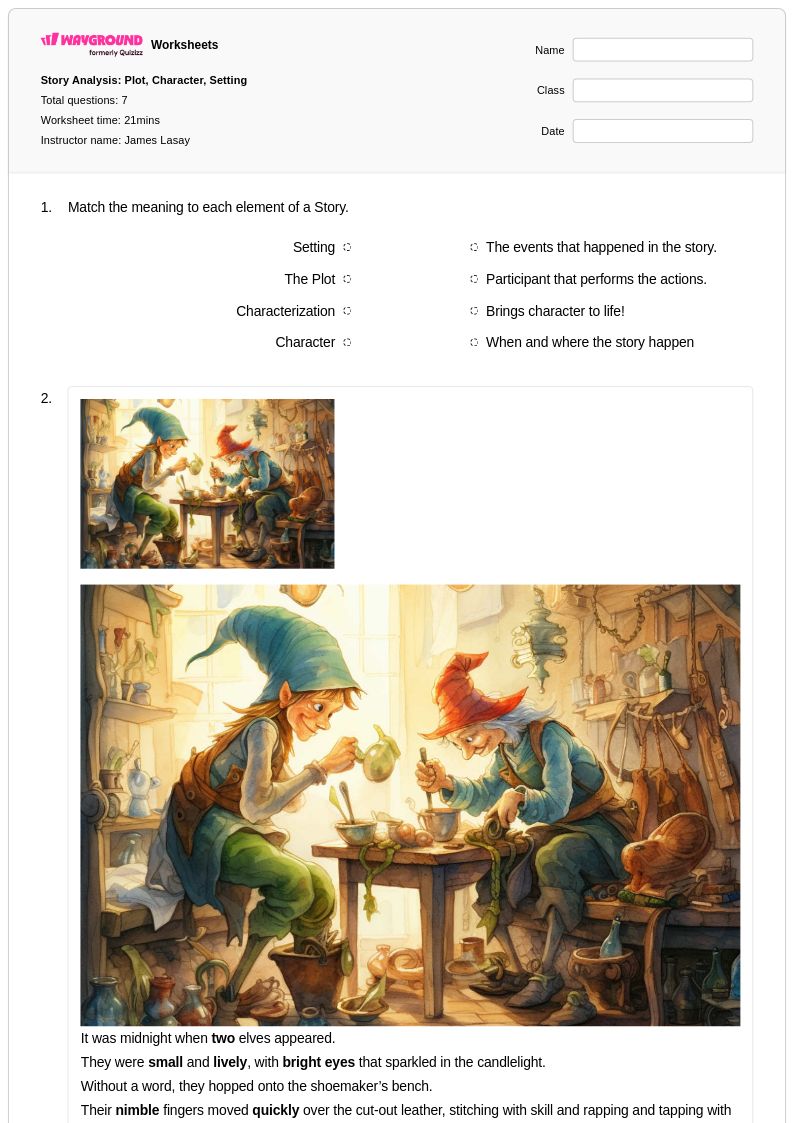
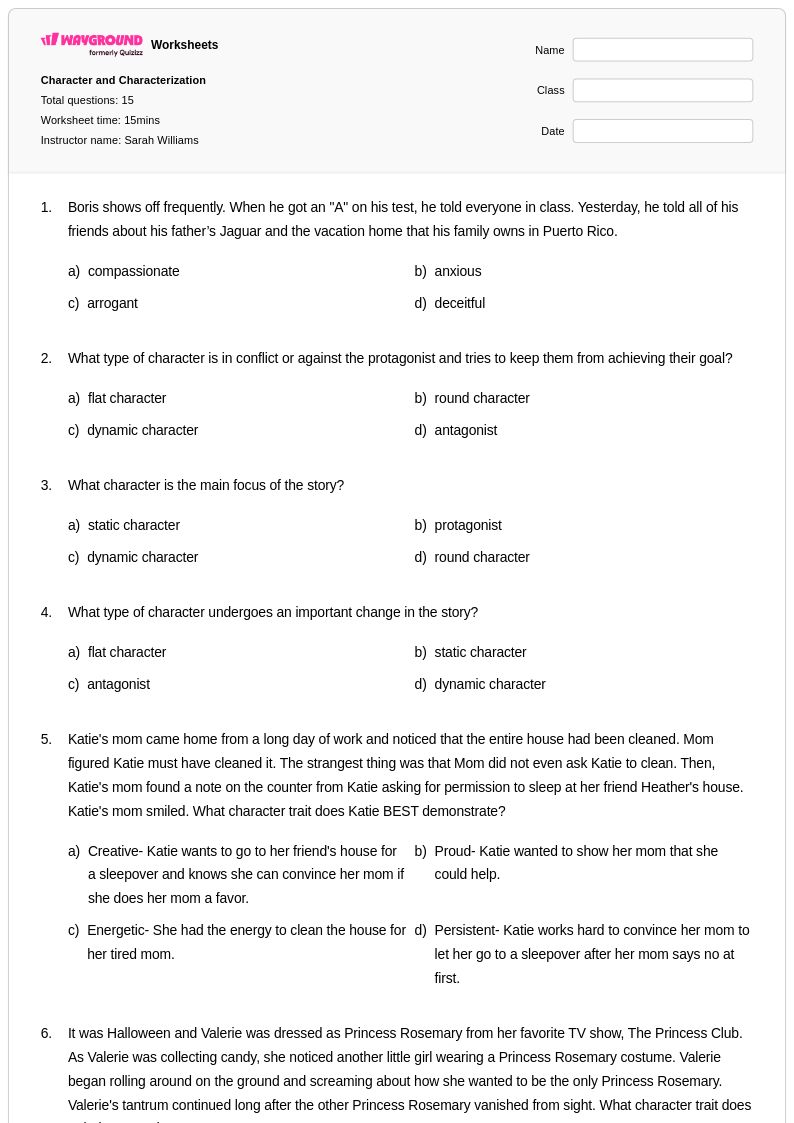
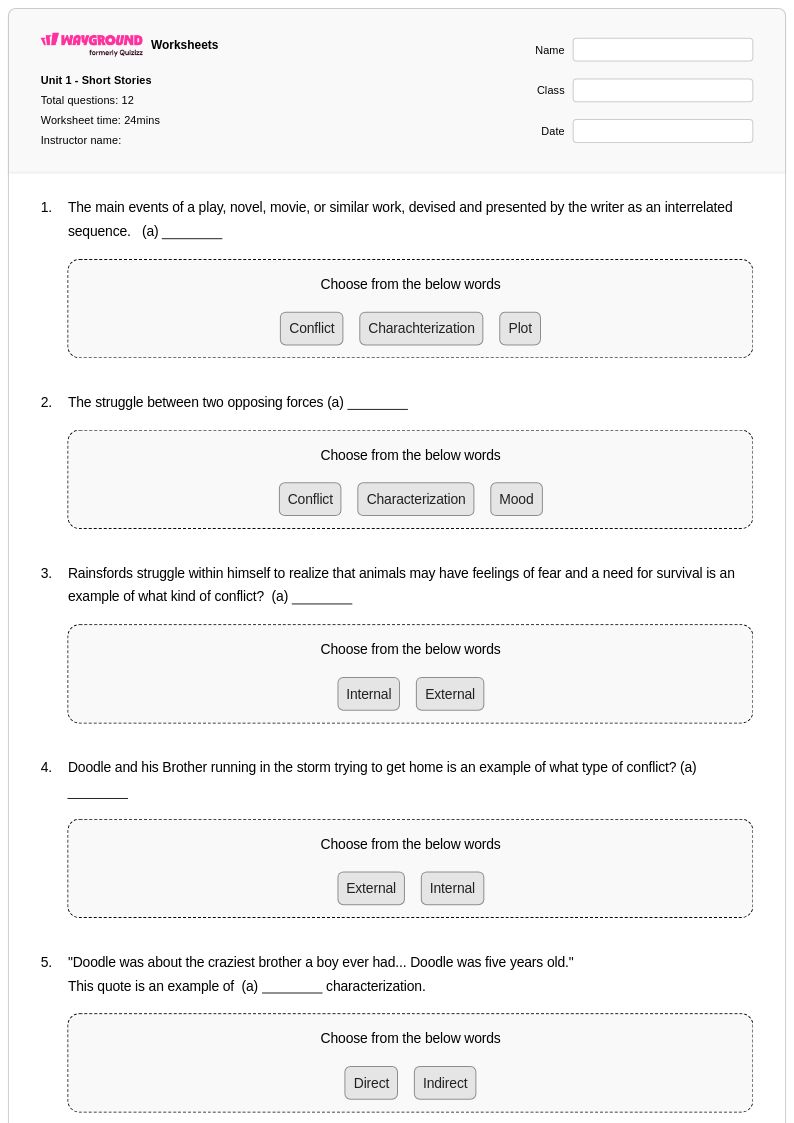
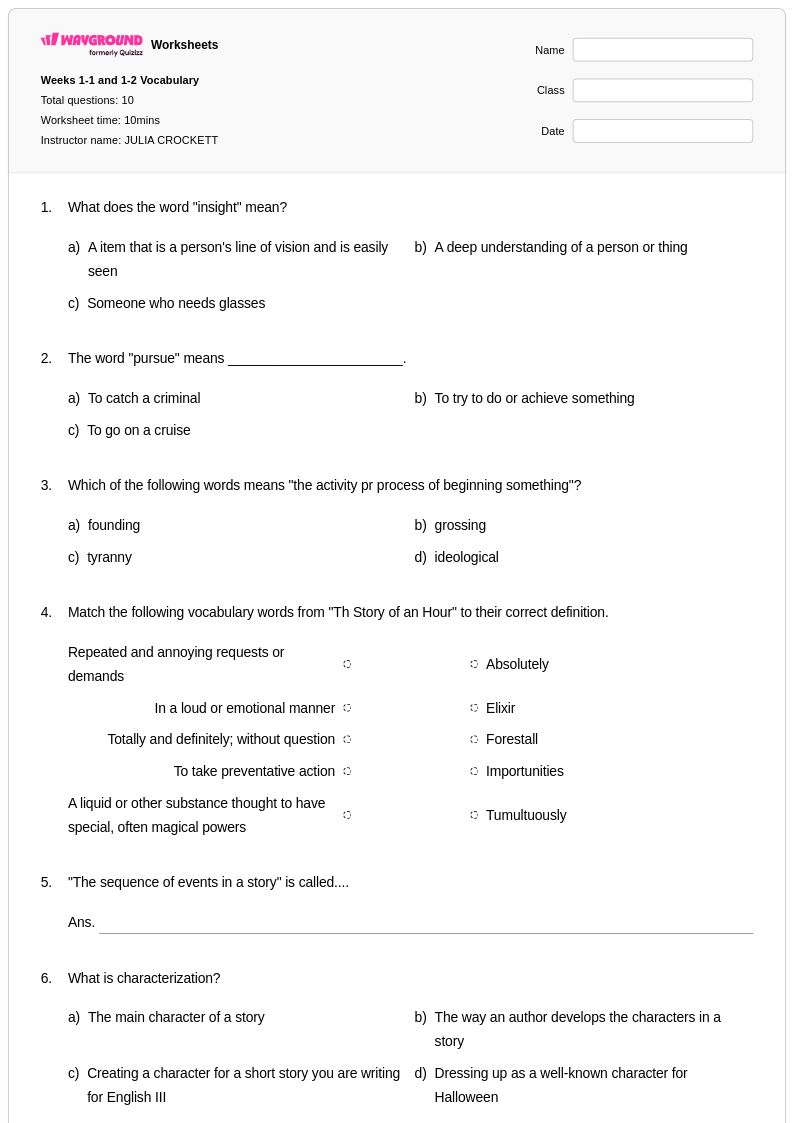
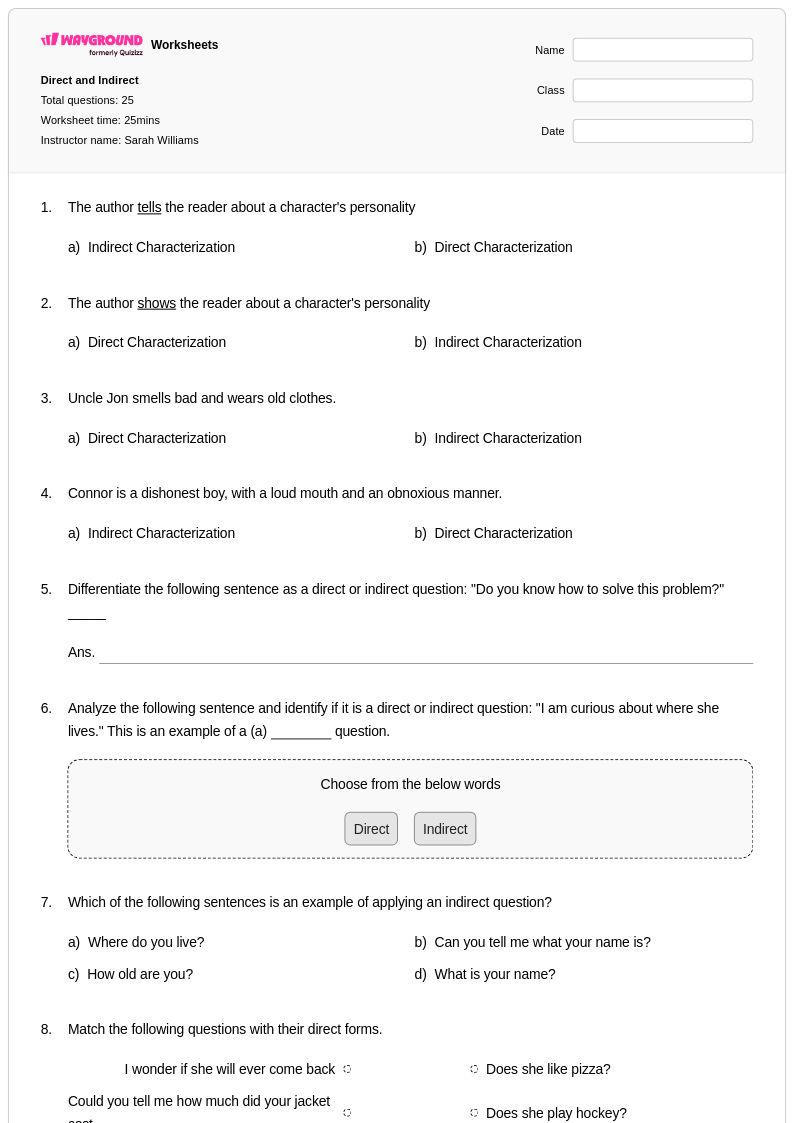
Characterization worksheets for Class 11 students available through Wayground (formerly Quizizz) provide comprehensive practice in analyzing how authors develop complex characters within narrative structures. These expertly crafted resources guide students through examining direct and indirect characterization techniques, character motivations, psychological depth, and character evolution throughout literary works. Students engage with practice problems that require them to identify characterization methods such as dialogue, actions, thoughts, and physical descriptions while analyzing how these elements contribute to overall story meaning. The worksheets include detailed answer keys that help students understand nuanced character analysis concepts, and all materials are available as free printables in convenient PDF format for both classroom instruction and independent study.
Wayground (formerly Quizizz) empowers educators with millions of teacher-created characterization resources that streamline lesson planning and enhance student comprehension of literary analysis skills. The platform's robust search and filtering capabilities allow teachers to quickly locate Class 11 appropriate materials that align with curriculum standards and specific learning objectives for character analysis within story structure units. Teachers can easily differentiate instruction by selecting from various complexity levels and customizing worksheets to meet individual student needs, whether for remediation of foundational concepts or enrichment of advanced analytical skills. The flexible format options, including both printable PDFs and interactive digital versions, accommodate diverse classroom environments and learning preferences while providing consistent access to high-quality characterization practice materials that develop critical thinking and textual analysis competencies.
FAQs
How do I teach direct vs. indirect characterization in the classroom?
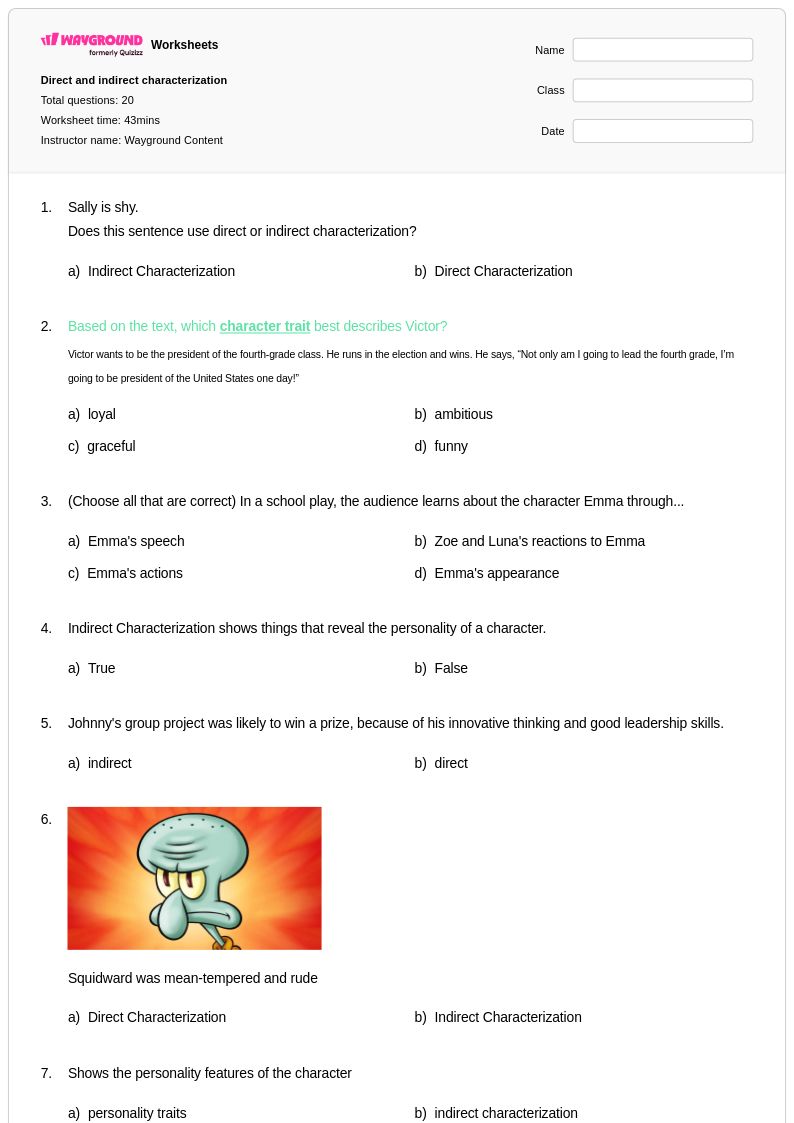
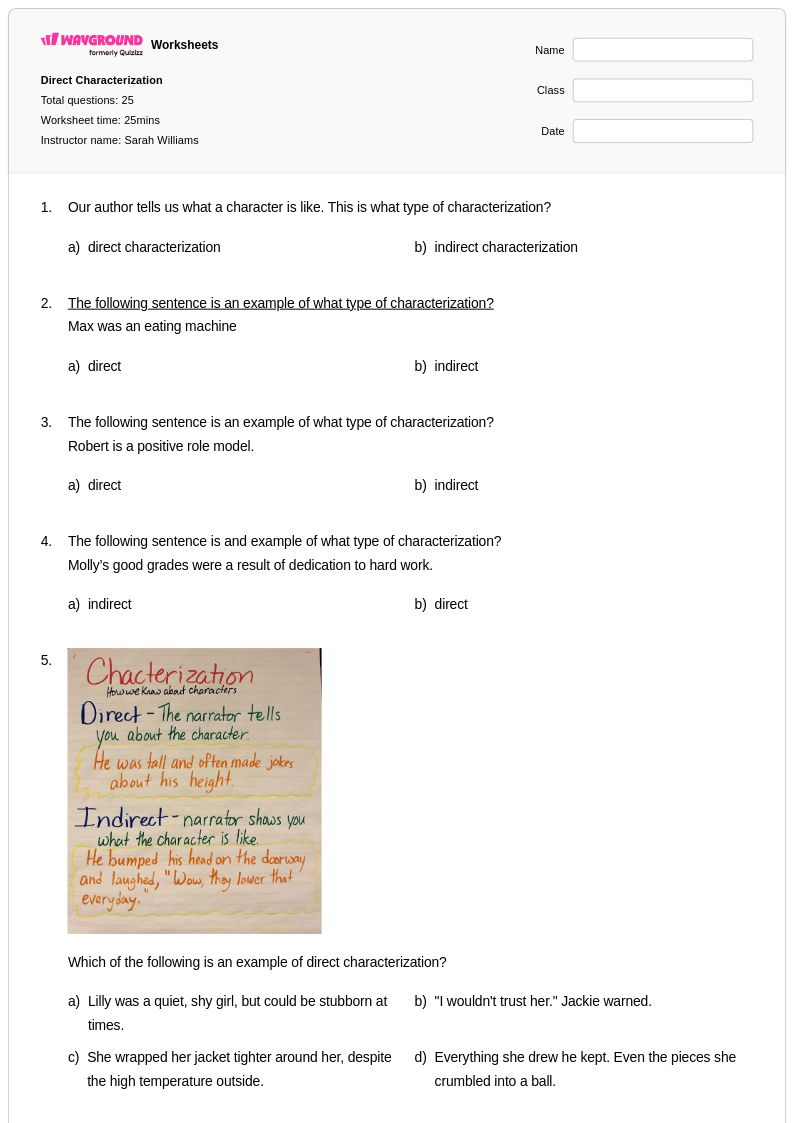
Start by distinguishing the two methods explicitly: direct characterization is when the author states a character's traits outright, while indirect characterization requires the reader to infer traits through dialogue, actions, thoughts, appearance, and other characters' reactions. A reliable classroom approach is to use a mentor text and annotate it together, labeling each technique as it appears. Once students can identify both methods in a guided context, move them toward independent analysis using structured graphic organizers that ask them to cite textual evidence for each characterization type.
What exercises help students practice analyzing characterization in a text?
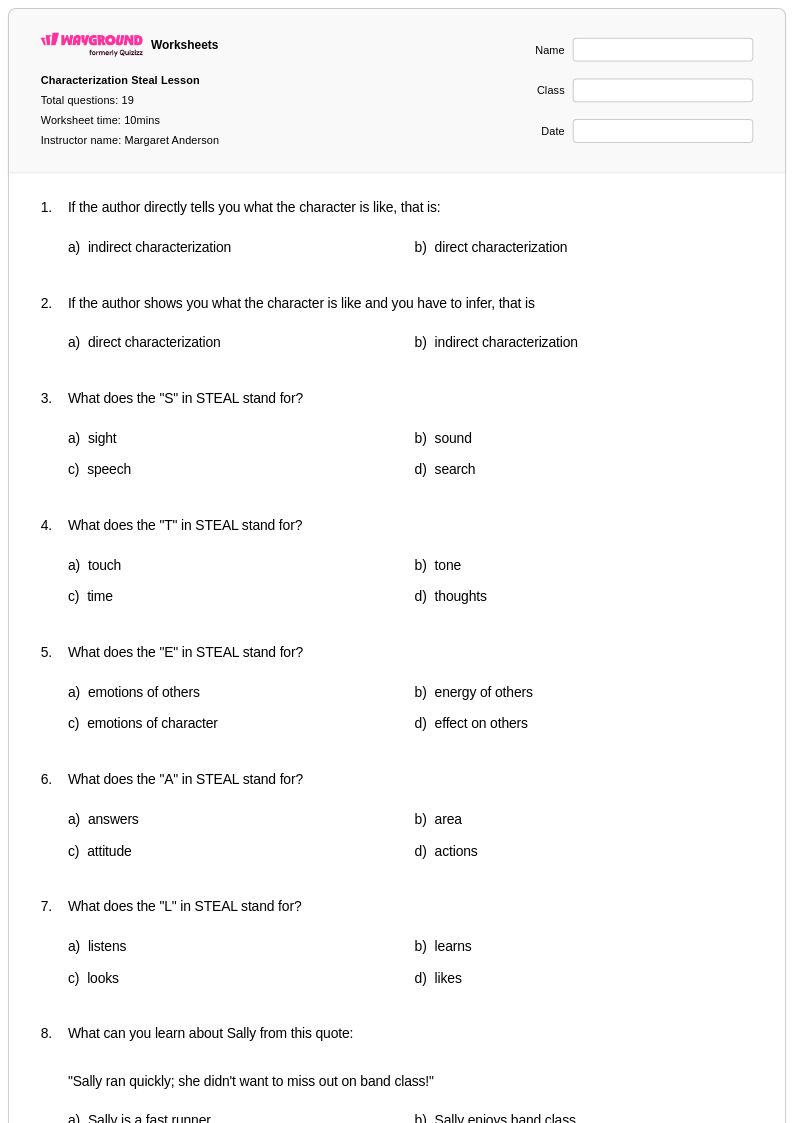
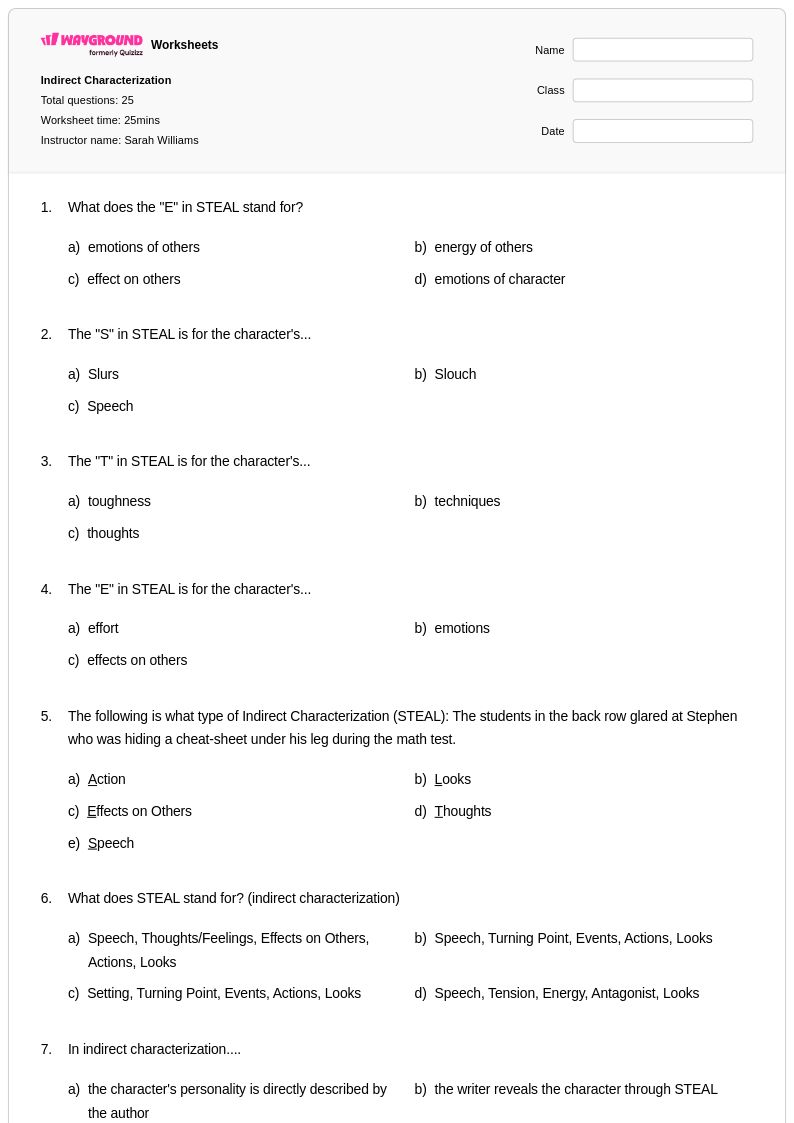
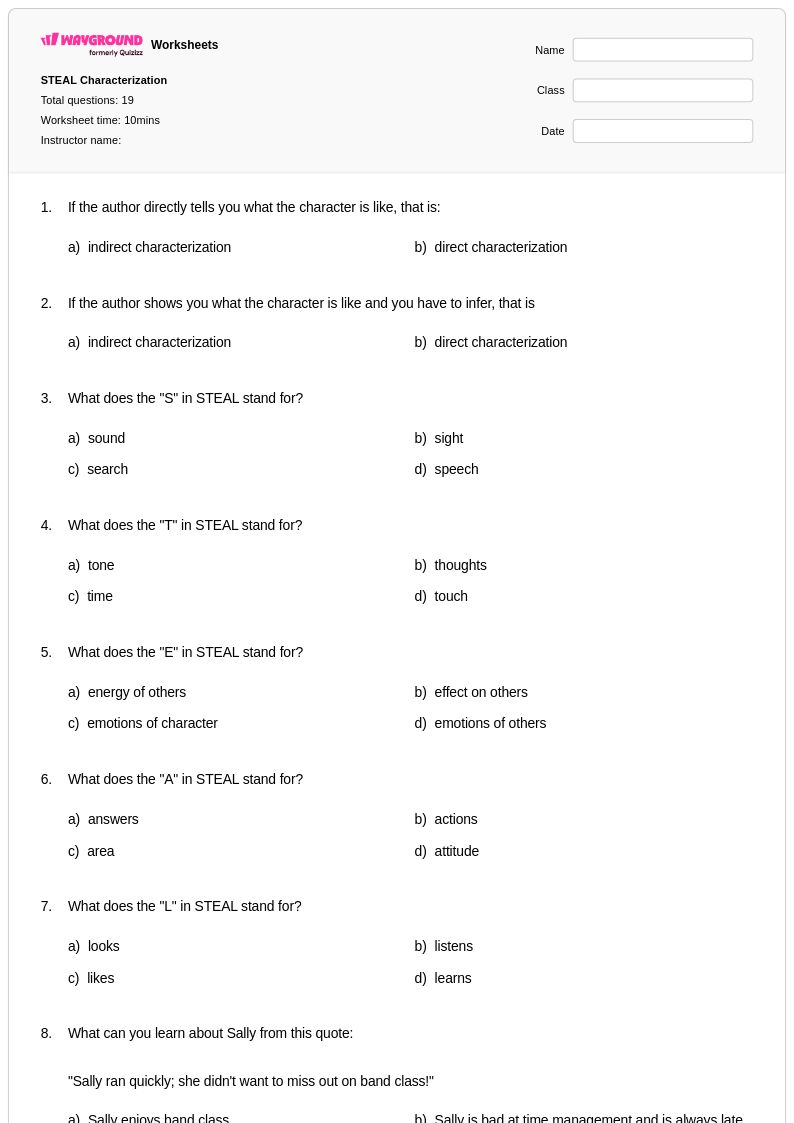
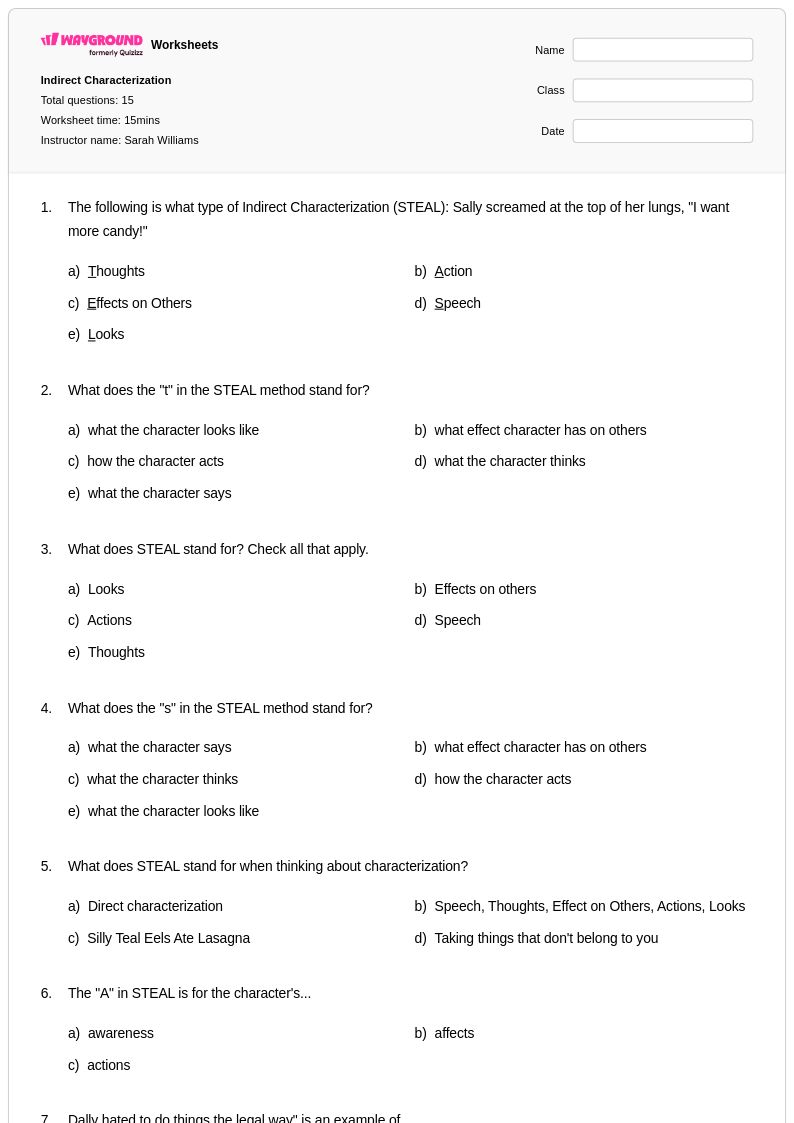
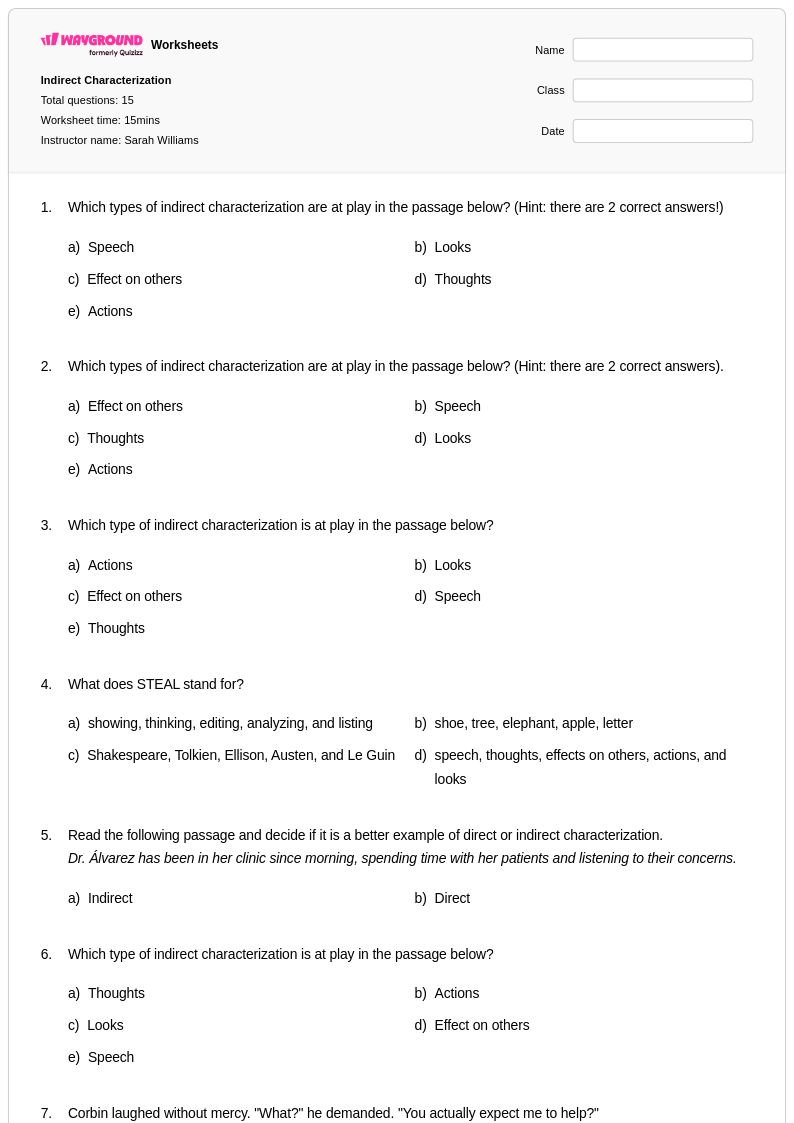
Effective practice exercises include textual analysis tasks where students identify specific lines of dialogue or description and explain what they reveal about a character, as well as comparative character studies that ask students to contrast how two characters are developed across a passage. Graphic organizers that map the five STEAL categories (Speech, Thoughts, Effect on others, Actions, Looks) are particularly useful for helping students organize evidence systematically. These structured approaches build the habit of returning to the text to support analytical claims rather than relying on surface-level impressions.
What are the most common mistakes students make when analyzing characterization?
The most frequent error is confusing plot summary with character analysis — students describe what a character does without explaining what it reveals about who they are. A related misconception is treating characterization as static, failing to track how a character's traits shift across a narrative arc. Students also tend to rely on direct characterization and overlook the subtler signals of indirect methods, particularly the reactions of other characters as a window into the subject's personality. Targeted practice that asks students to justify every claim with a specific textual citation helps address all three patterns.
How can I differentiate characterization instruction for students at different reading levels?
For students who need additional support, reduce the complexity of the source text while keeping the analytical task intact, and use graphic organizers that provide sentence starters or labeled categories to scaffold their thinking. More advanced students benefit from comparative tasks that require them to evaluate how characterization techniques shift across genres or time periods. On Wayground, teachers can apply accommodations including reduced answer choices to lower cognitive load for select students, read-aloud support for those who need text-to-speech access, and extended time settings — all configurable per individual student without disrupting the rest of the class.
How do I use Wayground's characterization worksheets in my classroom?
Wayground's characterization worksheets are available as printable PDFs for traditional classroom use and in digital formats for technology-integrated learning environments, giving teachers flexibility across in-person, hybrid, and remote settings. Teachers can also host the worksheets as a live or asynchronous quiz directly on Wayground, which enables real-time visibility into student responses and makes it easier to identify which characterization concepts need reteaching. Each worksheet includes a complete answer key, so they work equally well for independent practice, small group instruction, or homework assignments.
How do characterization worksheets support students in understanding character motivation and development arcs?
Well-designed characterization worksheets move students beyond identifying surface traits and push them to connect those traits to motivation — asking why a character acts as they do, not just what they do. Exercises that trace a character's decisions across multiple scenes help students see development arcs as a product of consistent internal traits responding to external pressures. This kind of analytical sequencing builds the deeper comprehension skills students need for literary essays and close-reading assessments.