Enhance Class 6 students' understanding of convection with Wayground's comprehensive collection of free worksheets, printable PDFs, and practice problems featuring detailed answer keys to master heat transfer concepts.
Explore printable Convection worksheets for Class 6
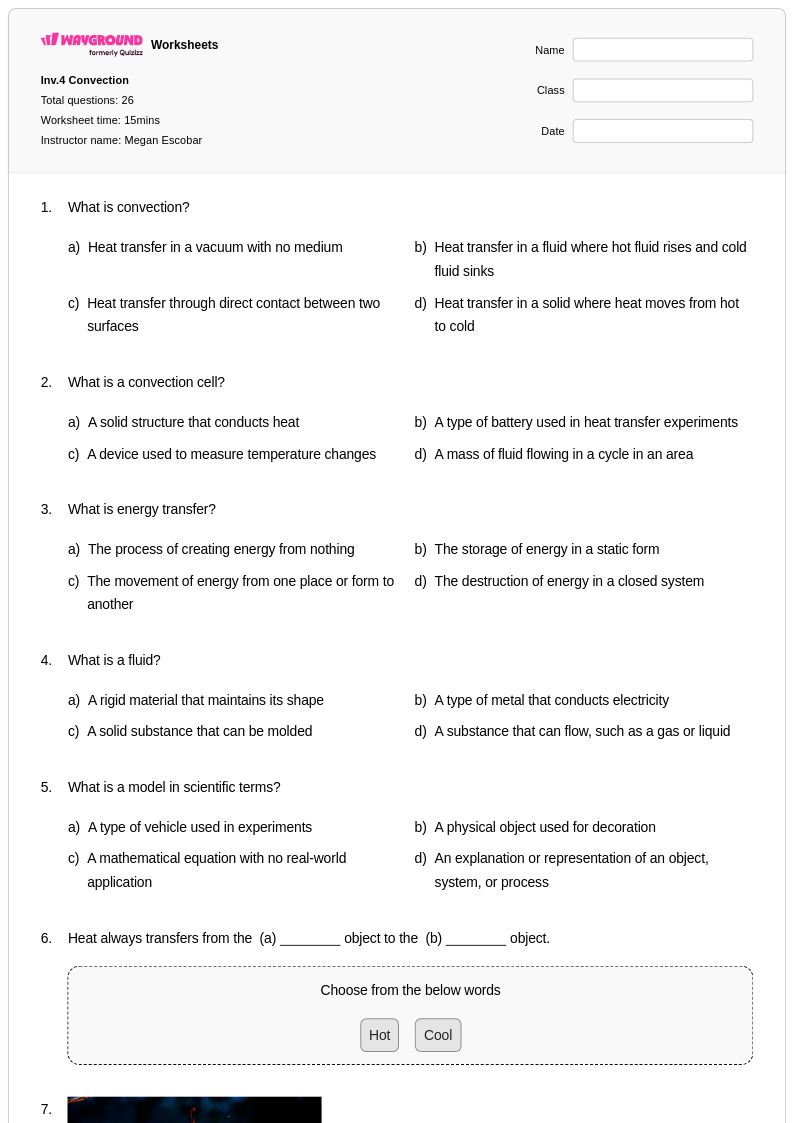
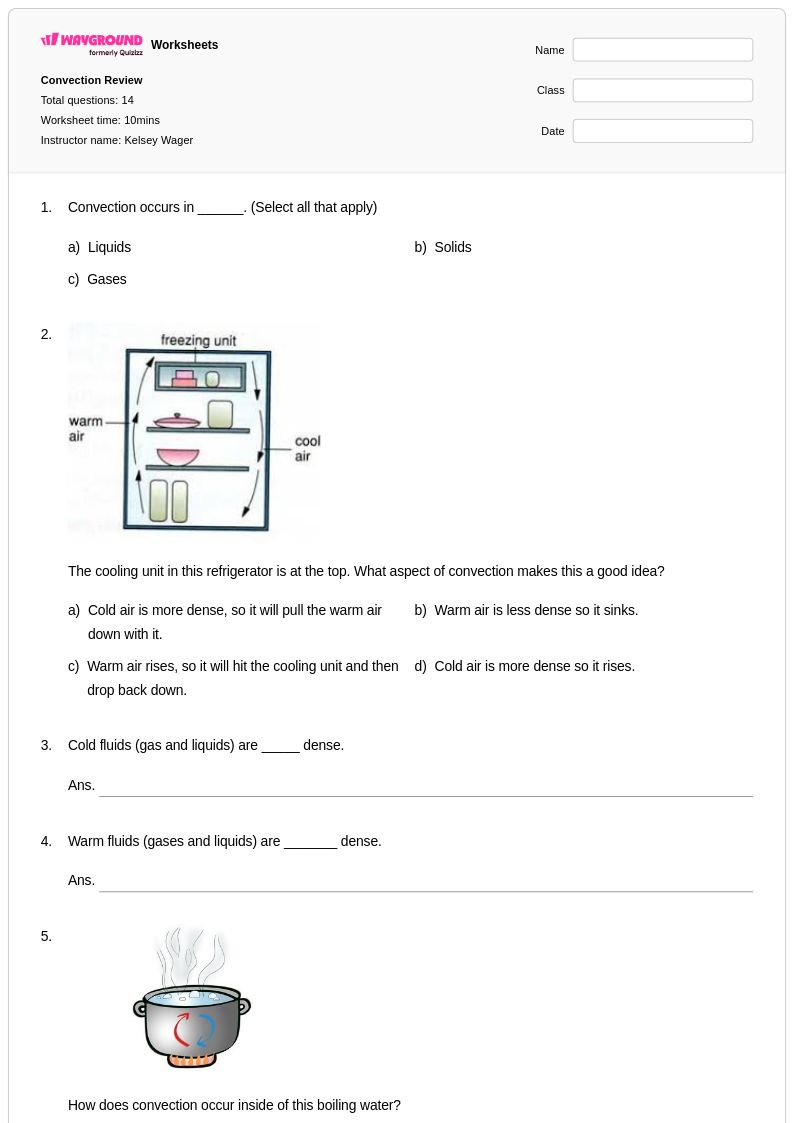
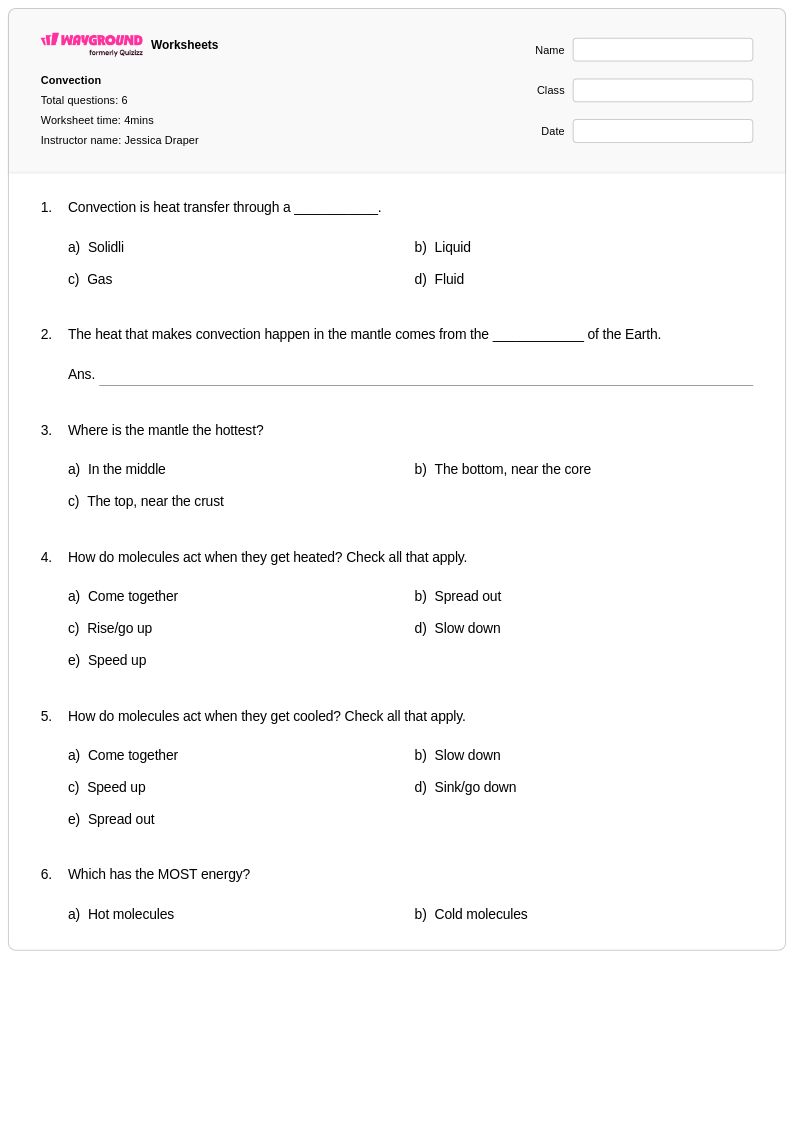
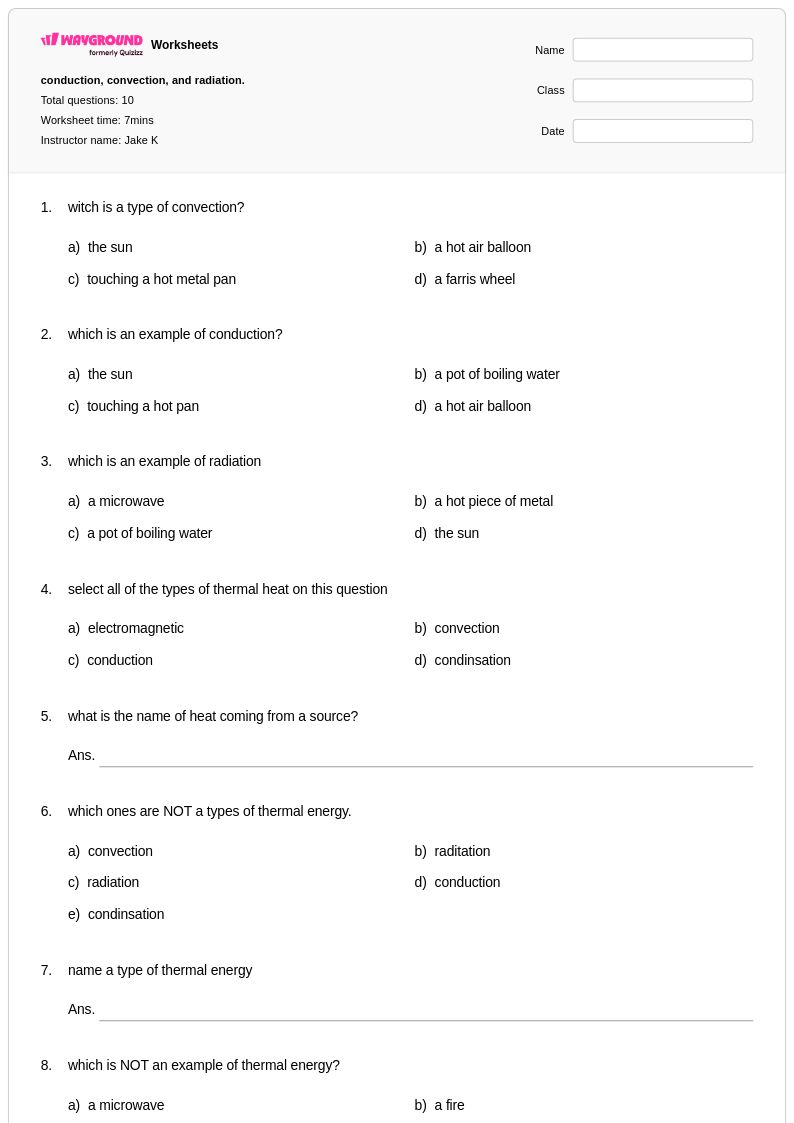
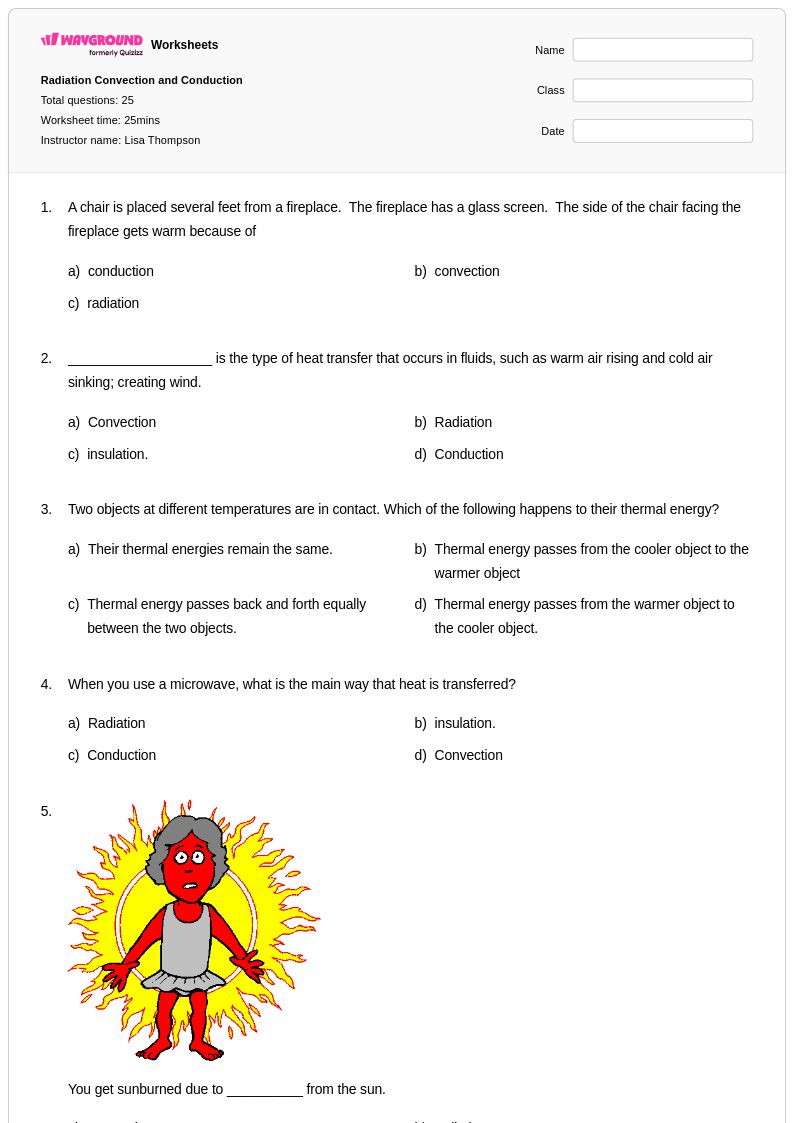
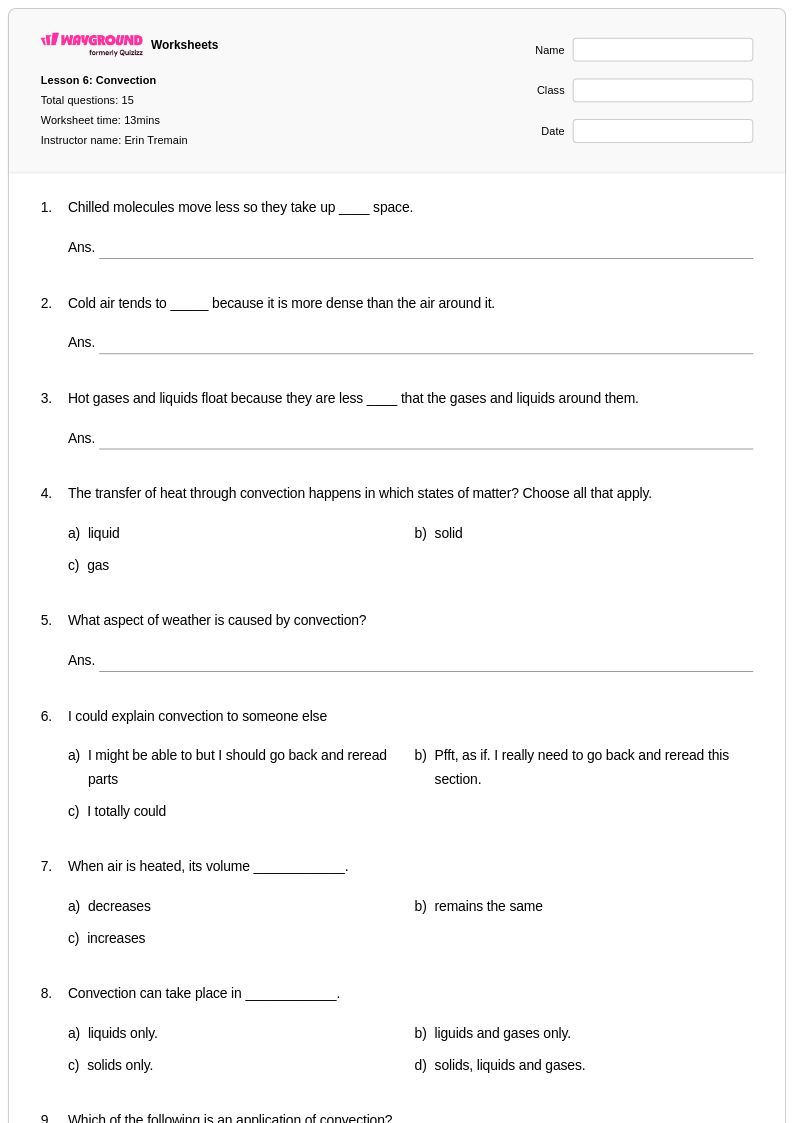
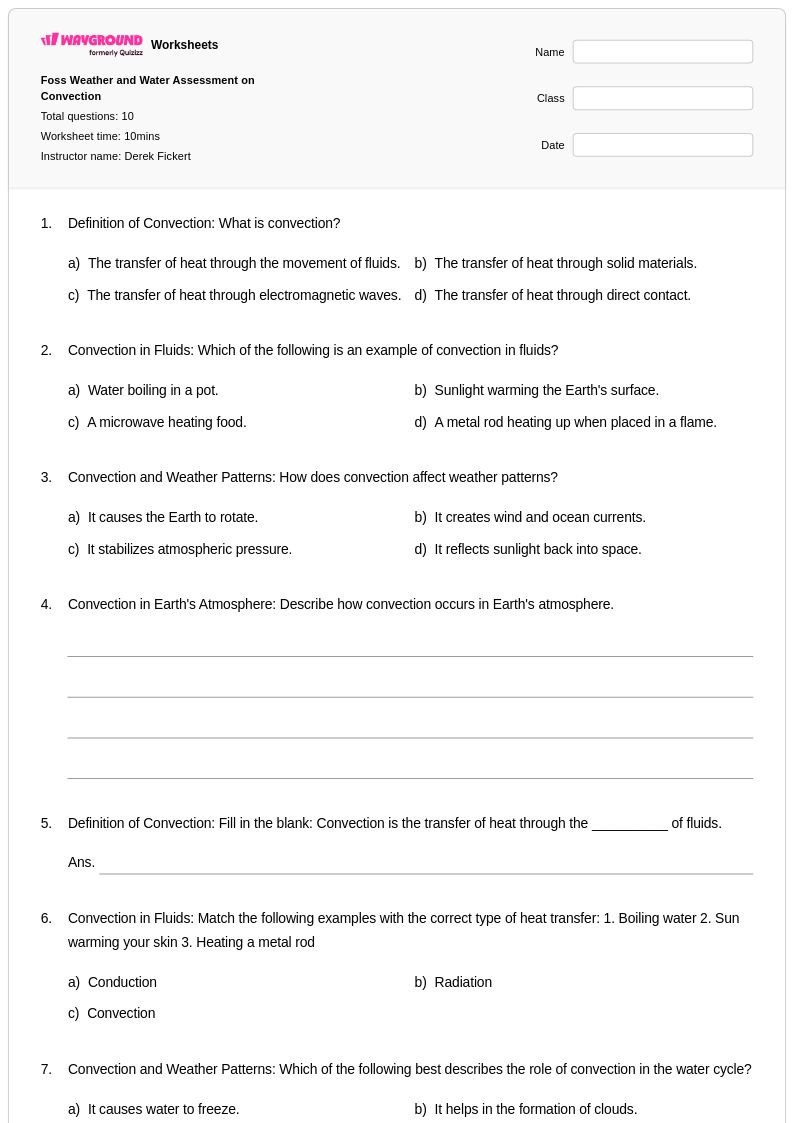
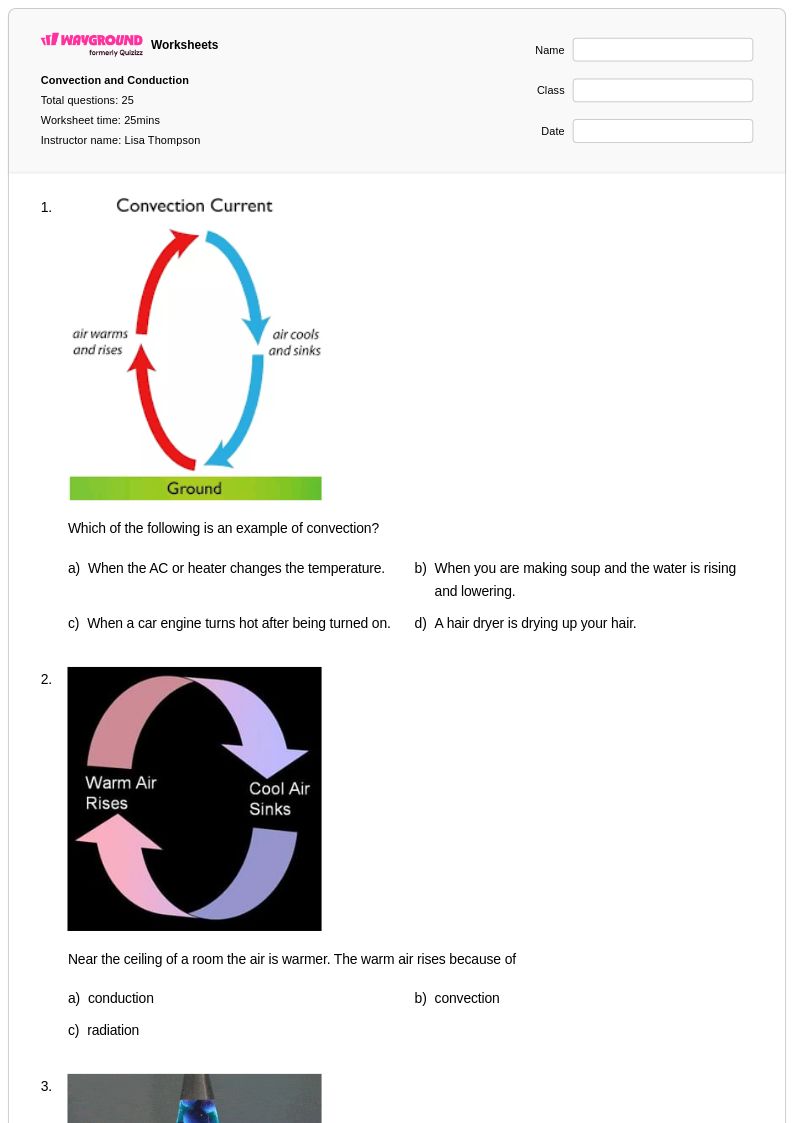
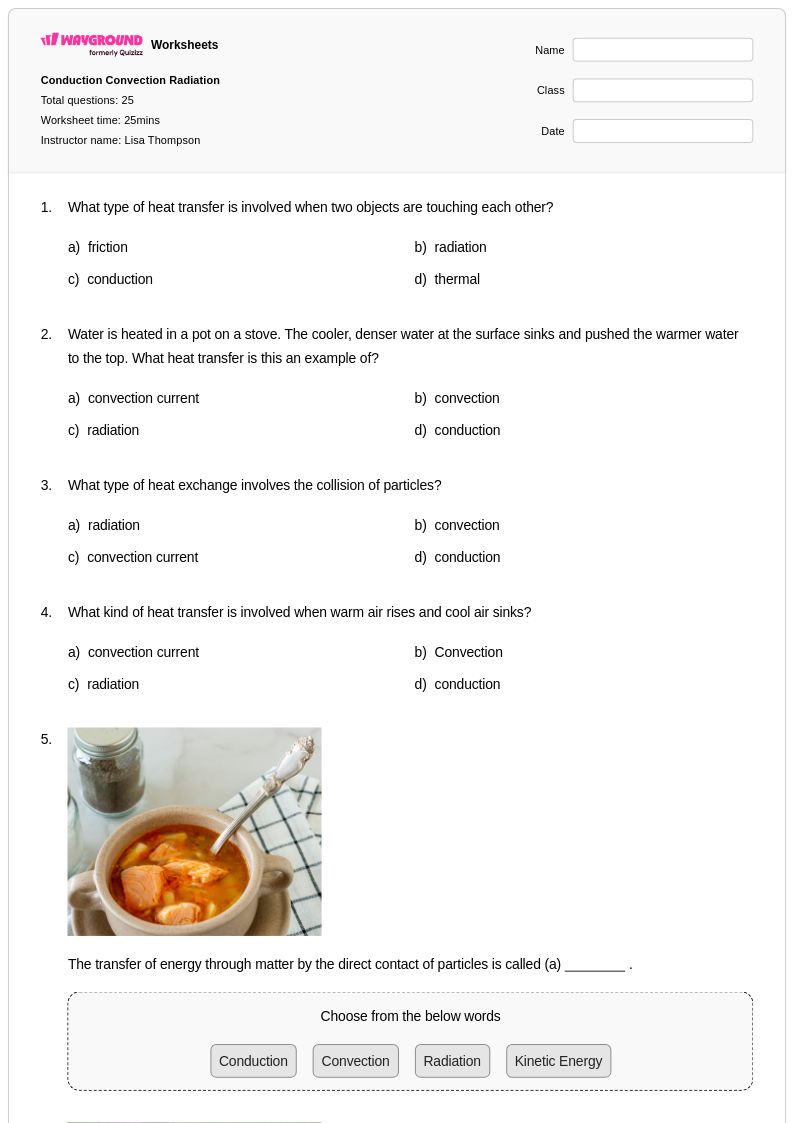
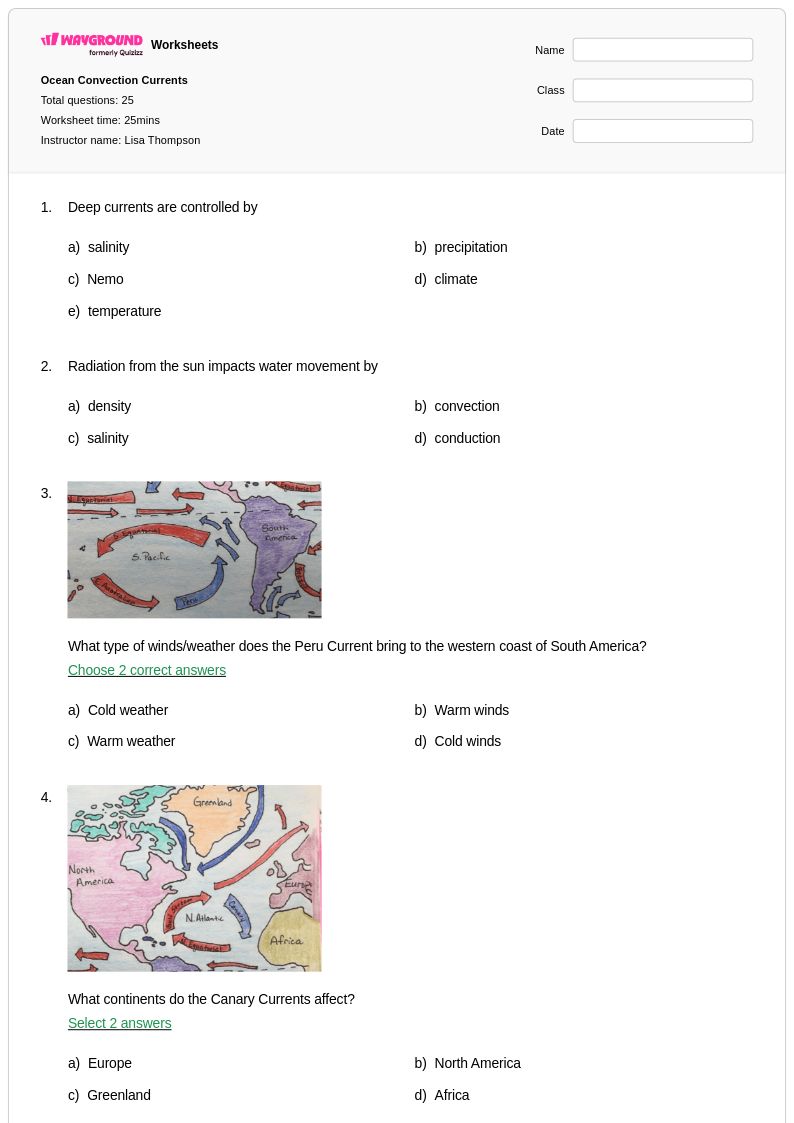
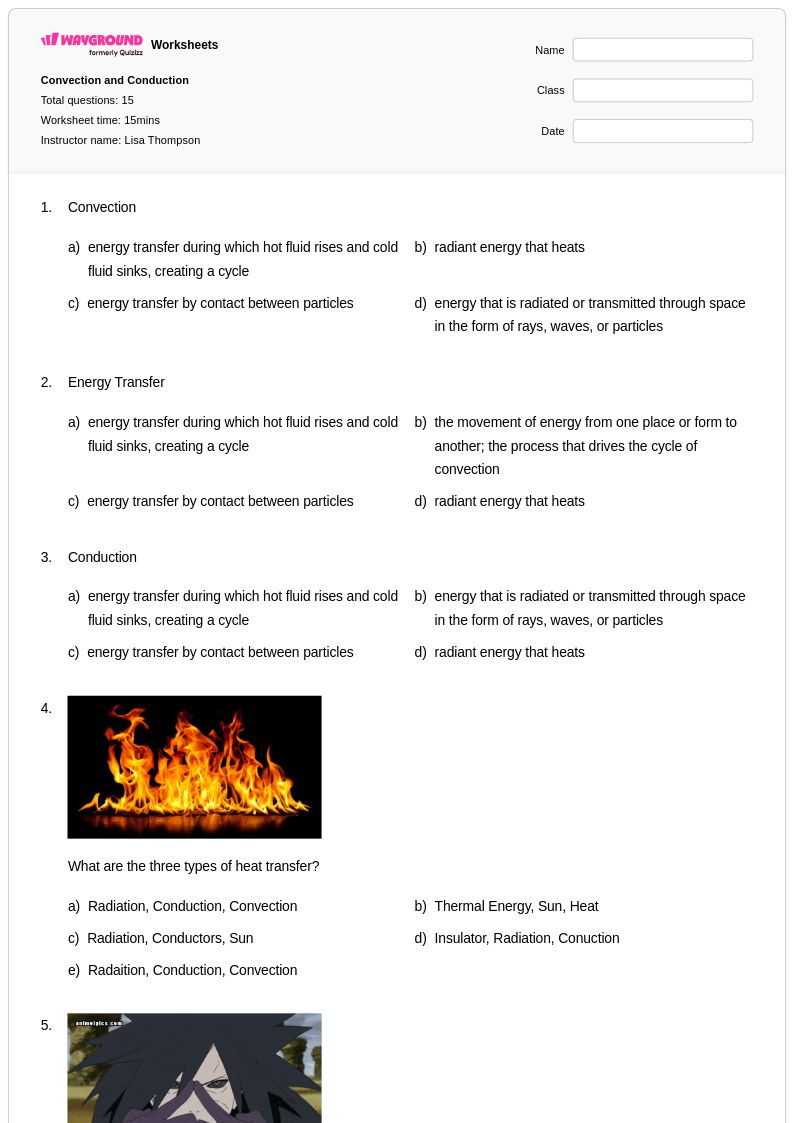
Convection worksheets for Class 6 students available through Wayground (formerly Quizizz) provide comprehensive practice with this fundamental heat transfer process that shapes our daily experiences and natural world. These educational resources help students develop critical thinking skills about how thermal energy moves through liquids and gases, from understanding why hot air rises to explaining ocean currents and weather patterns. Students work through carefully designed practice problems that build conceptual understanding of convection currents, density changes due to temperature variations, and real-world applications in cooking, heating systems, and atmospheric phenomena. Each worksheet includes detailed answer keys that support independent learning and self-assessment, while the free printable format in pdf ensures accessibility for diverse classroom environments and home study needs.
Wayground's extensive collection draws from millions of teacher-created resources specifically designed to support Class 6 convection instruction across various learning objectives and skill levels. The platform's robust search and filtering capabilities allow educators to quickly locate worksheets aligned with state science standards, whether focusing on basic convection principles or more advanced applications in Earth science and environmental systems. Teachers benefit from built-in differentiation tools that accommodate diverse learners, from struggling students who need foundational reinforcement to advanced learners ready for enrichment activities. The flexible customization options enable educators to modify content for specific lesson plans, remediation sessions, or skill practice, while both printable and digital formats ensure seamless integration into any classroom environment or remote learning situation.
FAQs
How do I teach convection to middle or high school students?
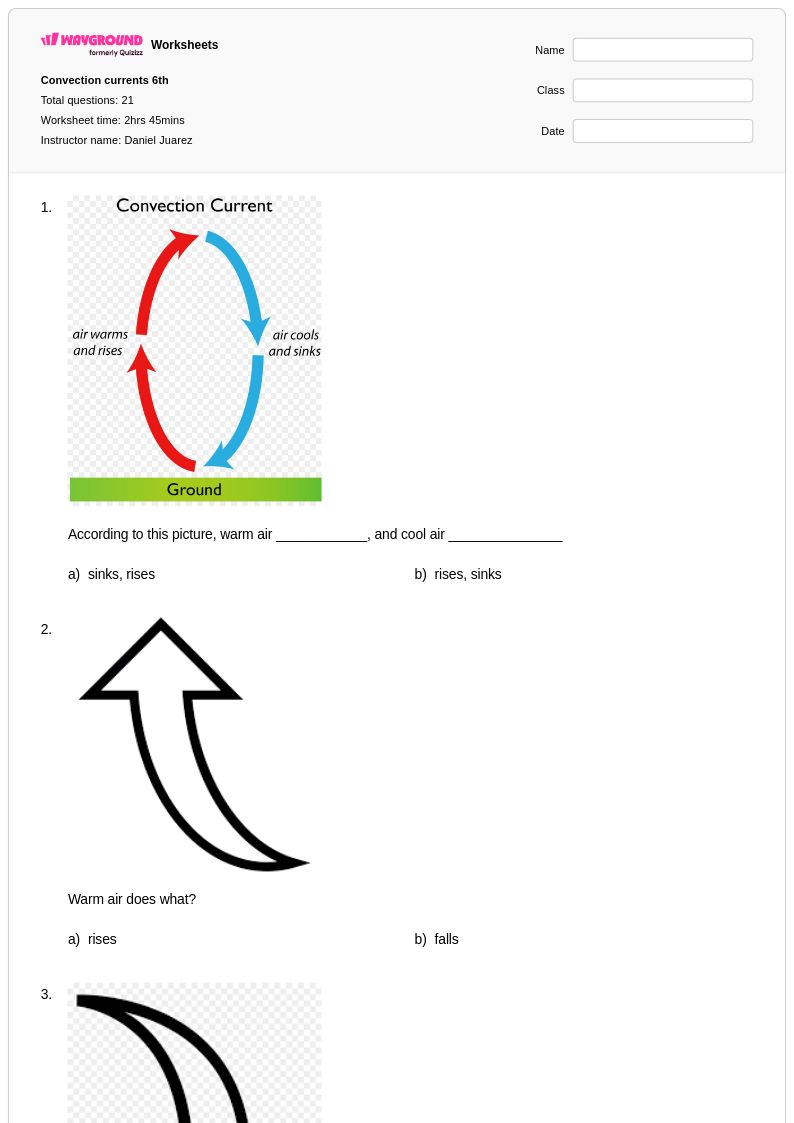
Start by grounding students in the idea that heat causes fluids (liquids and gases) to become less dense and rise, while cooler fluid sinks to replace it, creating a continuous loop called a convection current. Concrete, observable examples work best — boiling water, atmospheric weather patterns, and ocean circulation all illustrate the same underlying principle. Once students can identify the mechanism in familiar contexts, move them toward more analytical tasks like explaining why land breezes and sea breezes form or how convection drives plate tectonics.
What exercises help students practice understanding convection currents?
Effective practice tasks include labeling diagrams of convection cells in the atmosphere or mantle, matching everyday phenomena to the convection mechanism, and explaining the direction of fluid movement given a heat source location. Students also benefit from problems that ask them to compare convection with conduction and radiation, since distinguishing between heat transfer methods is a common assessment target. Moving from identification tasks to short explanatory writing helps students consolidate their understanding of why fluids move rather than just knowing that they do.
What misconceptions do students commonly have about convection?
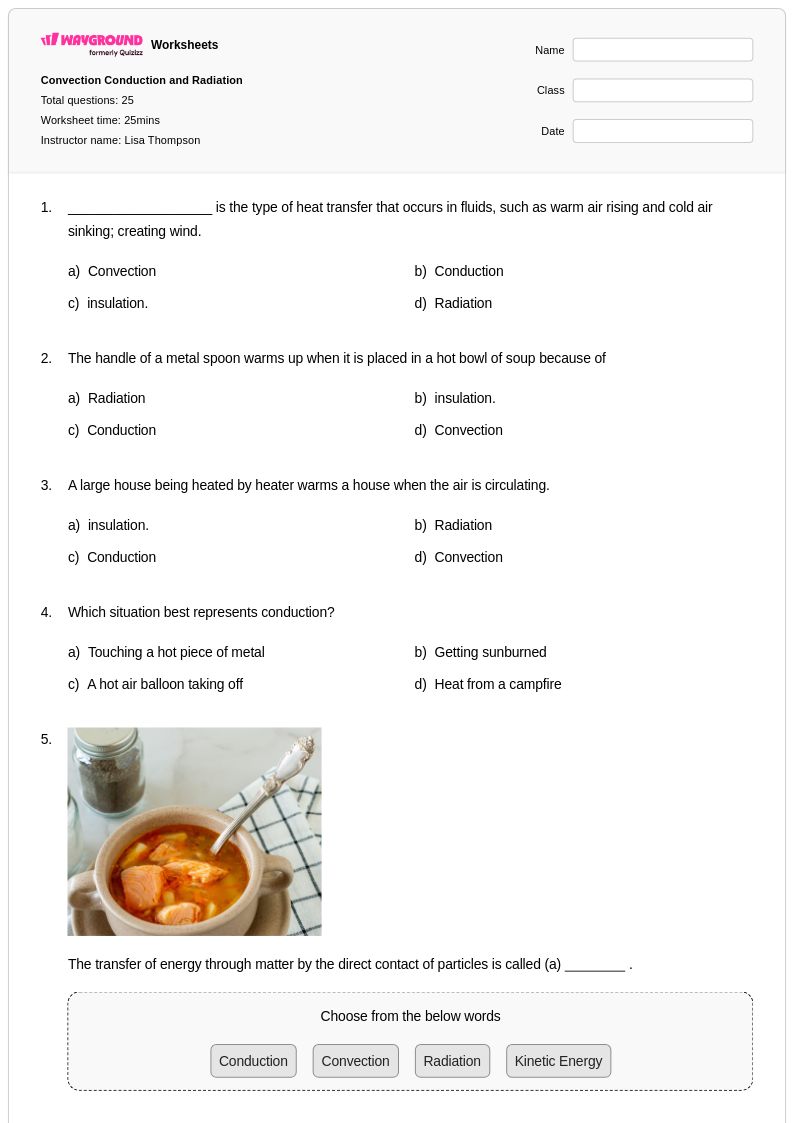
The most persistent misconception is that heat itself rises, rather than that heated fluid becomes less dense and is pushed upward by surrounding cooler, denser fluid. Students also frequently confuse convection with conduction, applying contact-based logic to situations involving fluid movement. Another common error is assuming convection only occurs in liquids, when in fact it occurs in any fluid, including gases like air. Targeted practice that asks students to explain the density mechanism in their own words helps address these errors directly.
How do convection worksheets connect to real-world science topics?
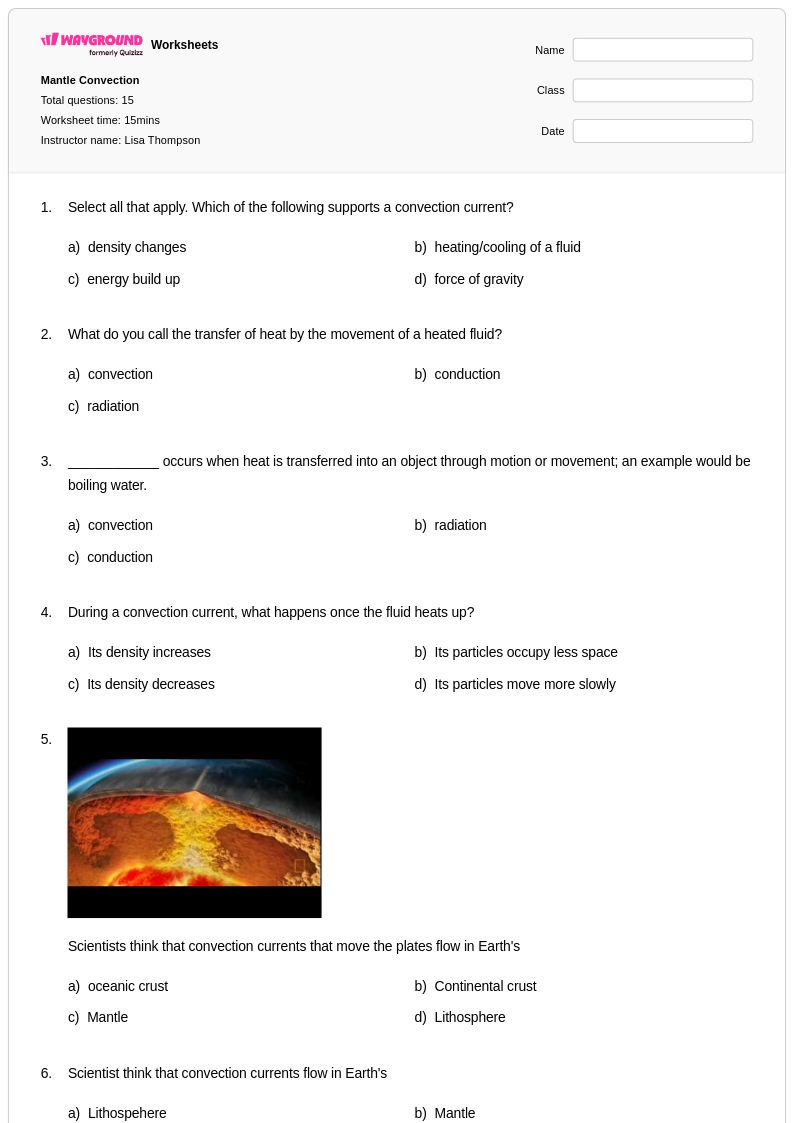
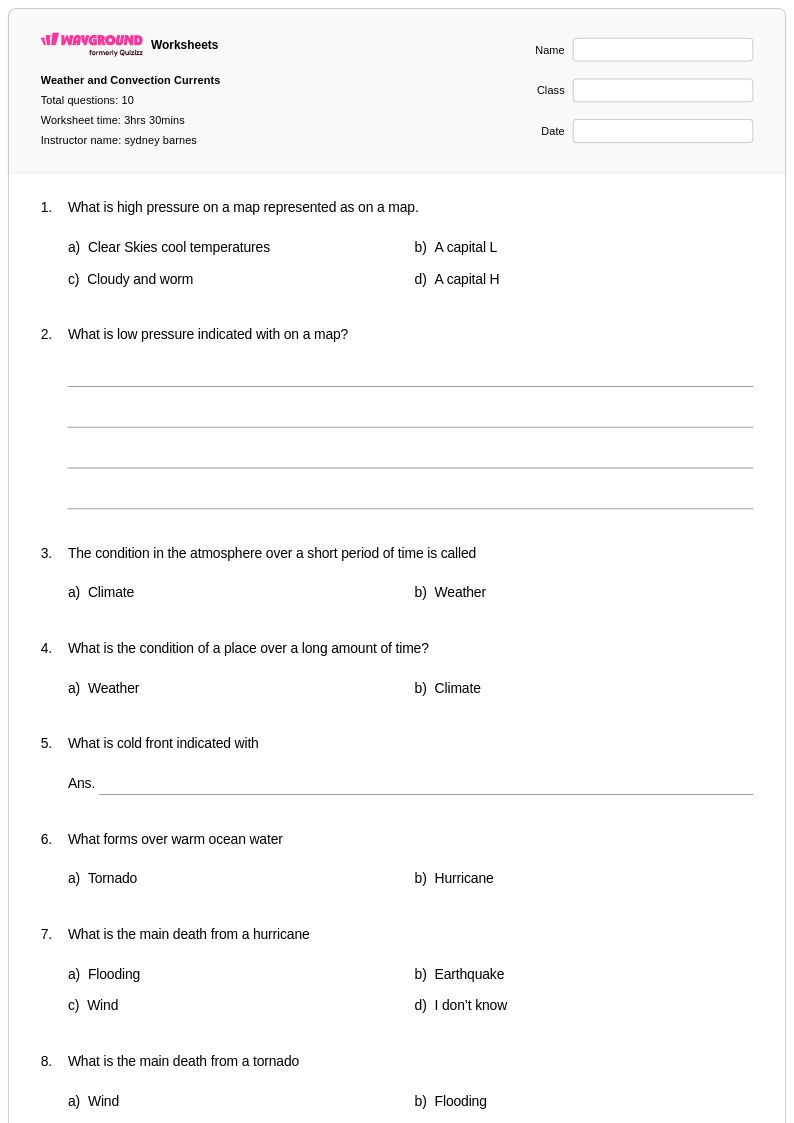
Convection is a foundational mechanism behind several major real-world systems, making it a high-value concept to reinforce across contexts. Weather and climate instruction depends on students understanding atmospheric convection currents, and Earth science units on plate tectonics rely on convection in the mantle to explain continental drift. Ocean circulation, including thermohaline circulation, is another direct application. Worksheets that present convection problems across these different domains help students recognize the same physical principle operating at vastly different scales.
How do I use Wayground's convection worksheets in my classroom?
Wayground's convection worksheets are available as printable PDFs for traditional classroom use and in digital formats for technology-integrated learning environments, giving you flexibility in how you assign and collect work. You can also host worksheets as a live or asynchronous quiz directly on Wayground, which allows you to track student responses in real time. Each worksheet includes a complete answer key, making them practical for independent practice, homework, or formative assessment without additional teacher prep.
How can I differentiate convection instruction for students at different levels?
For students who need additional support, reduce cognitive load by starting with visual diagram-labeling tasks before moving to written explanation or calculation. Wayground's platform supports individual student accommodations including reduced answer choices, read aloud functionality, and extended time, which can be applied to selected students without affecting the rest of the class. For advanced learners, push toward application problems that require students to calculate heat transfer rates or analyze convection patterns in complex systems like ocean gyres or atmospheric cells.