
15 Q
6th - Uni
15 Q
6th - Uni
15 Q
6th - Uni
17 Q
6th - 8th
15 Q
6th - Uni
28 Q
6th
39 Q
6th - 8th
18 Q
6th - 8th
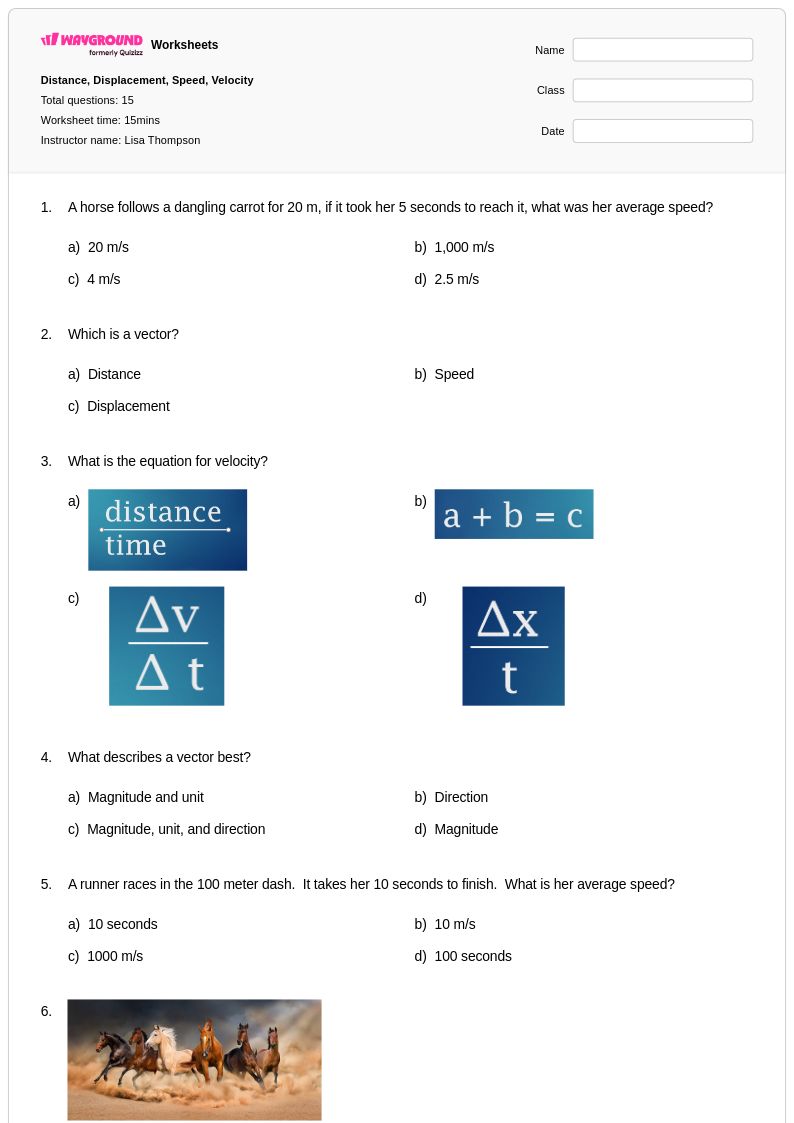
15 Q
6th - Uni
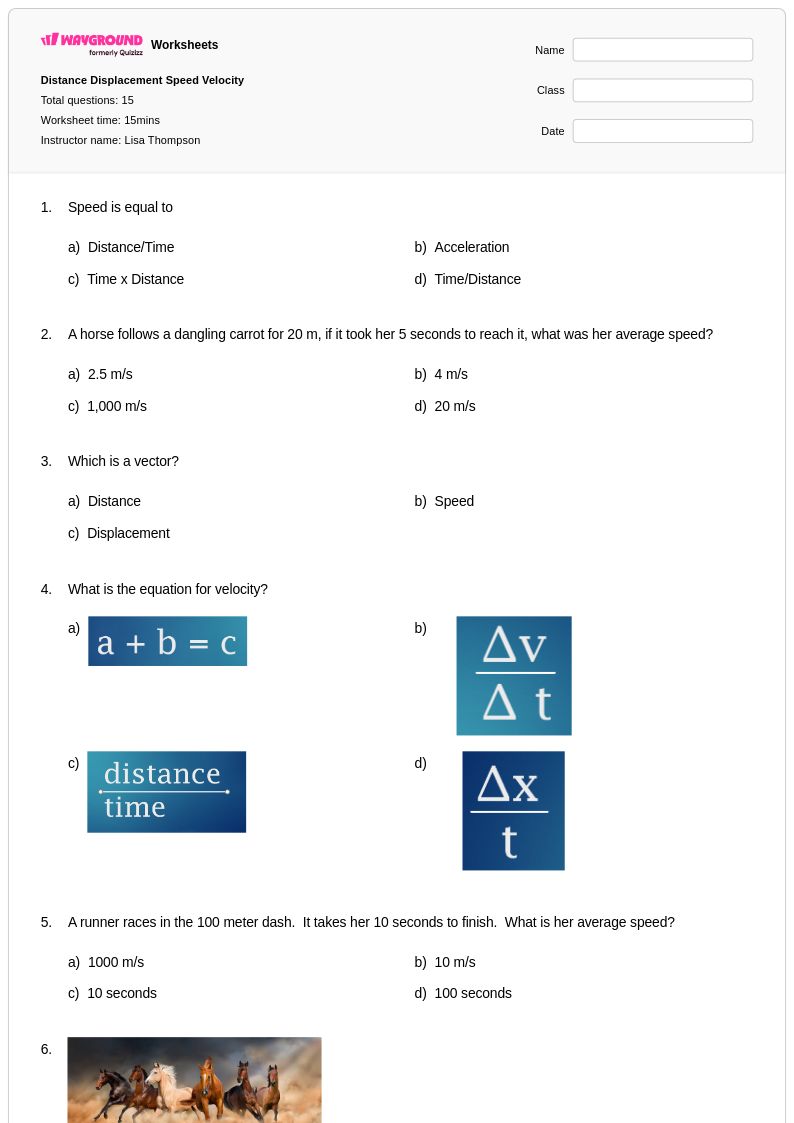
15 Q
6th - Uni
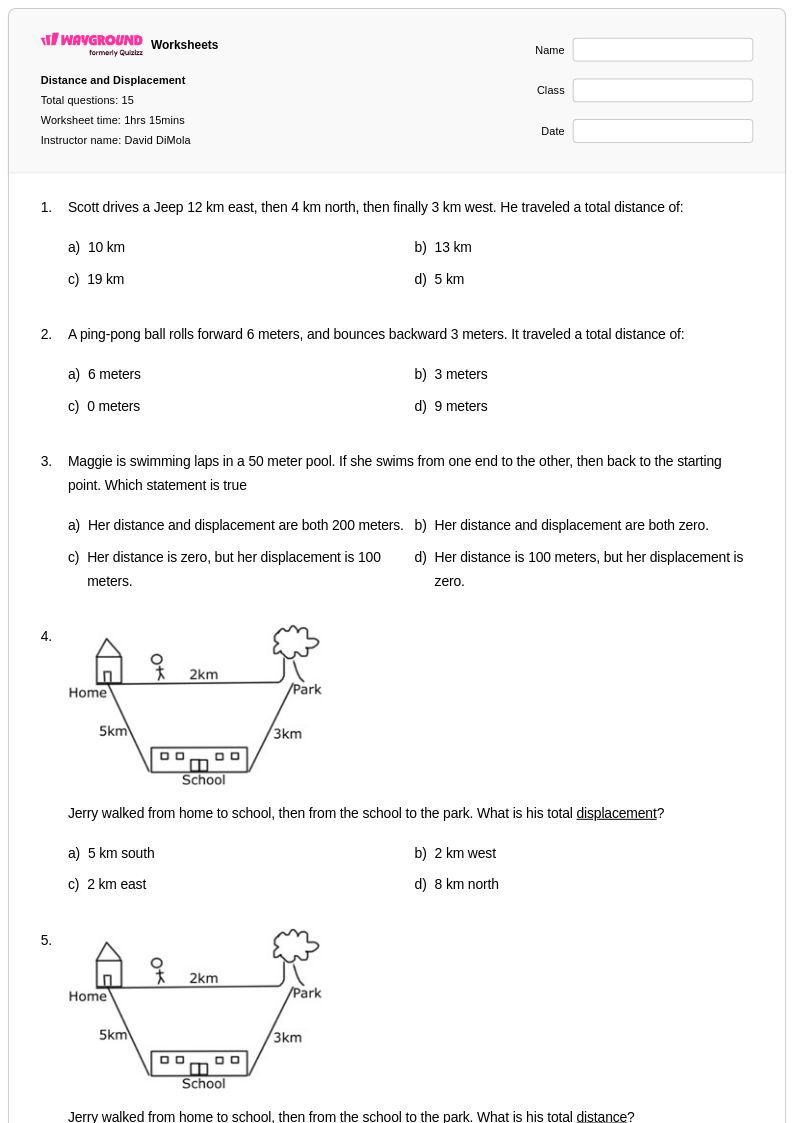
15 Q
6th
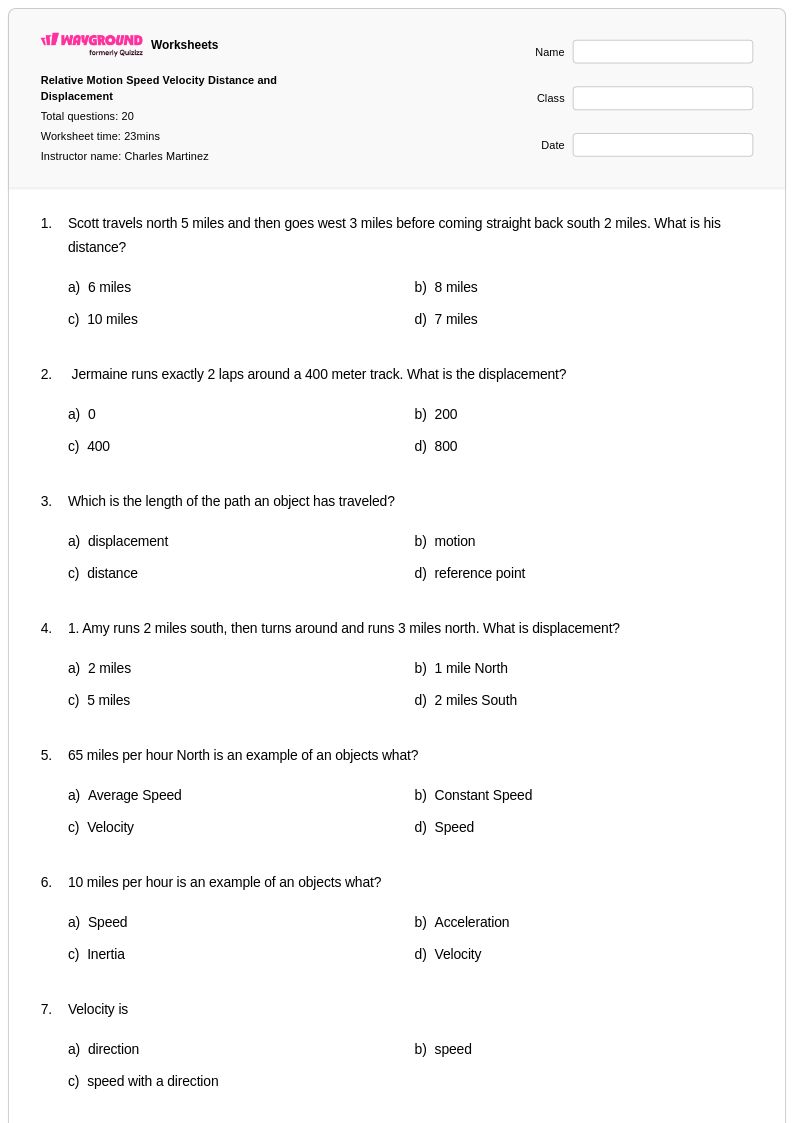
20 Q
6th - 8th
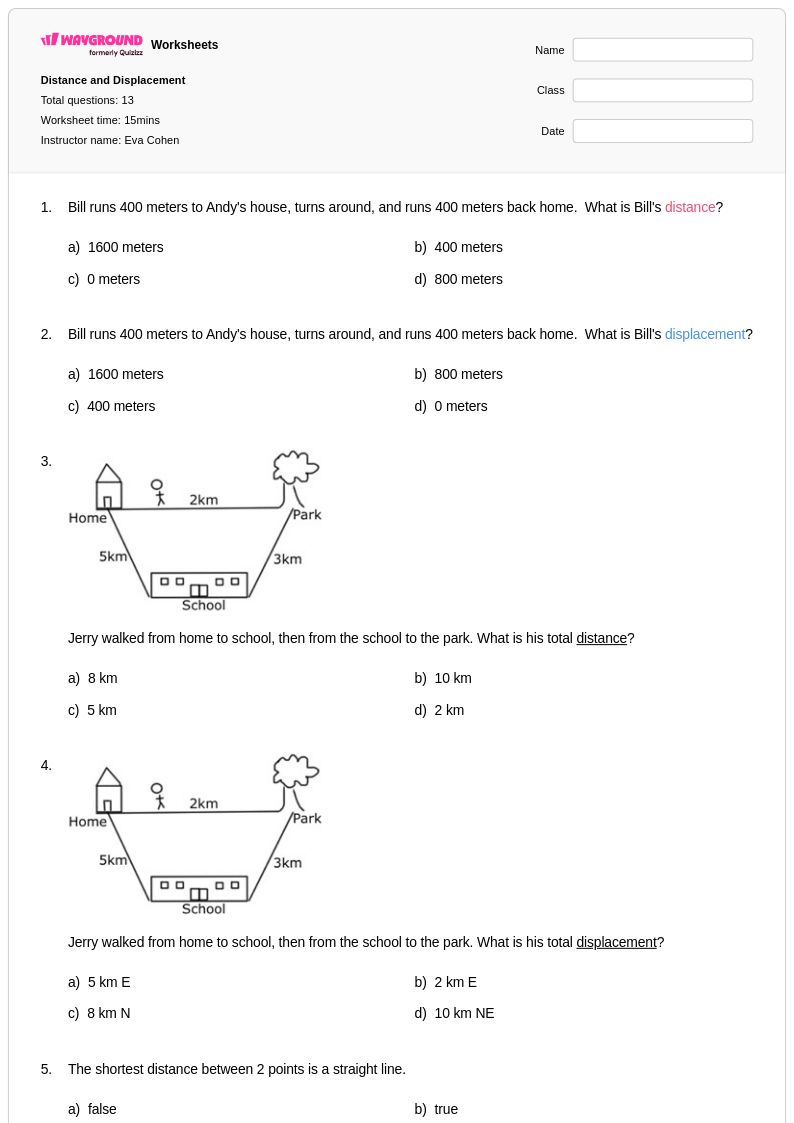
13 Q
6th
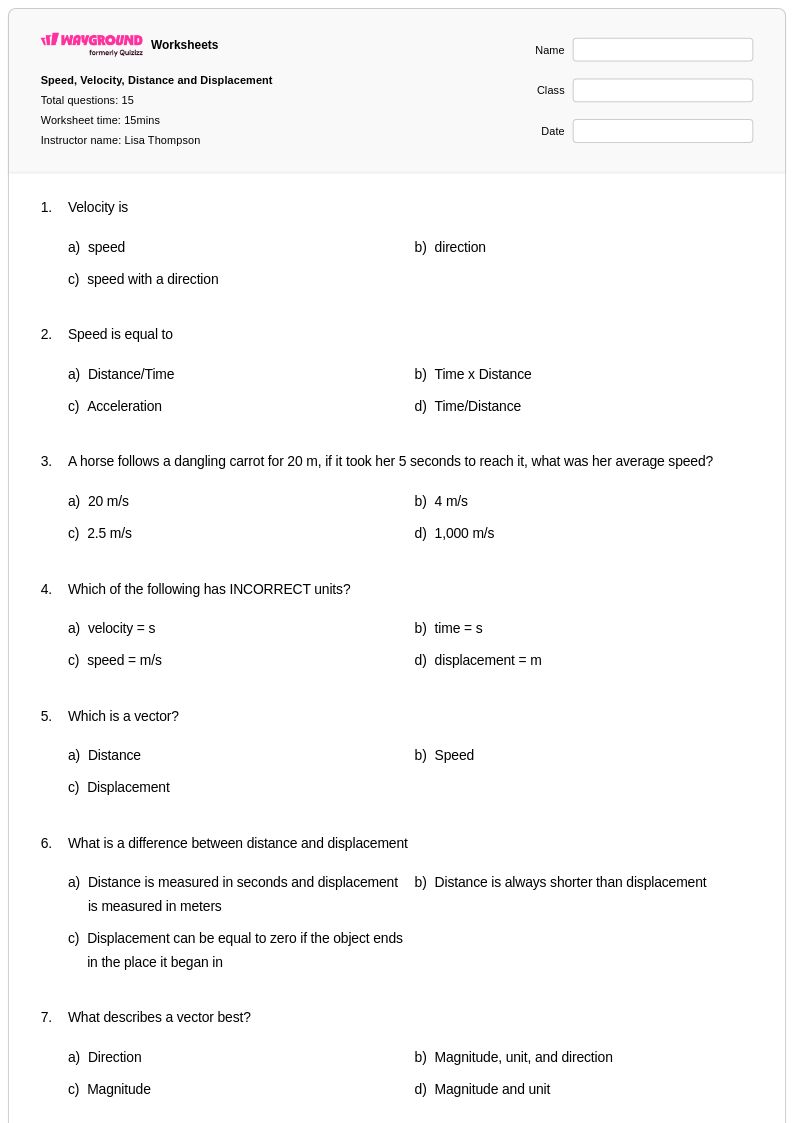
15 Q
6th - Uni
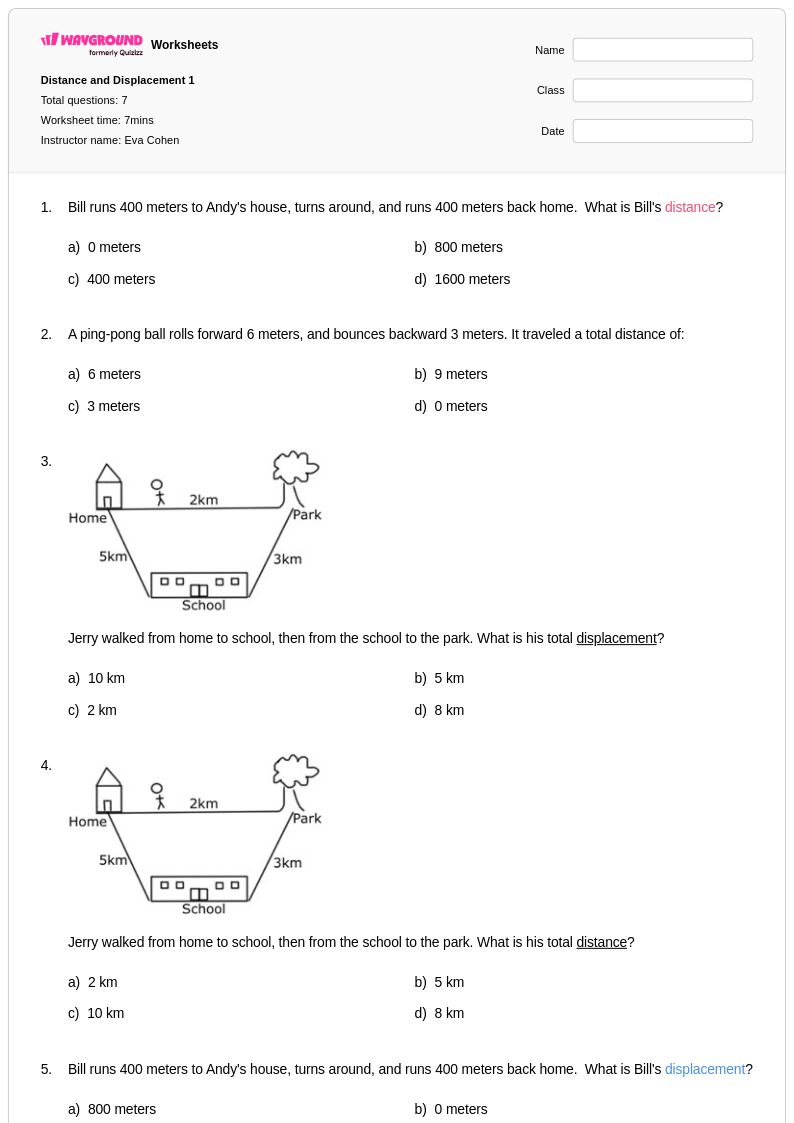
7 Q
6th
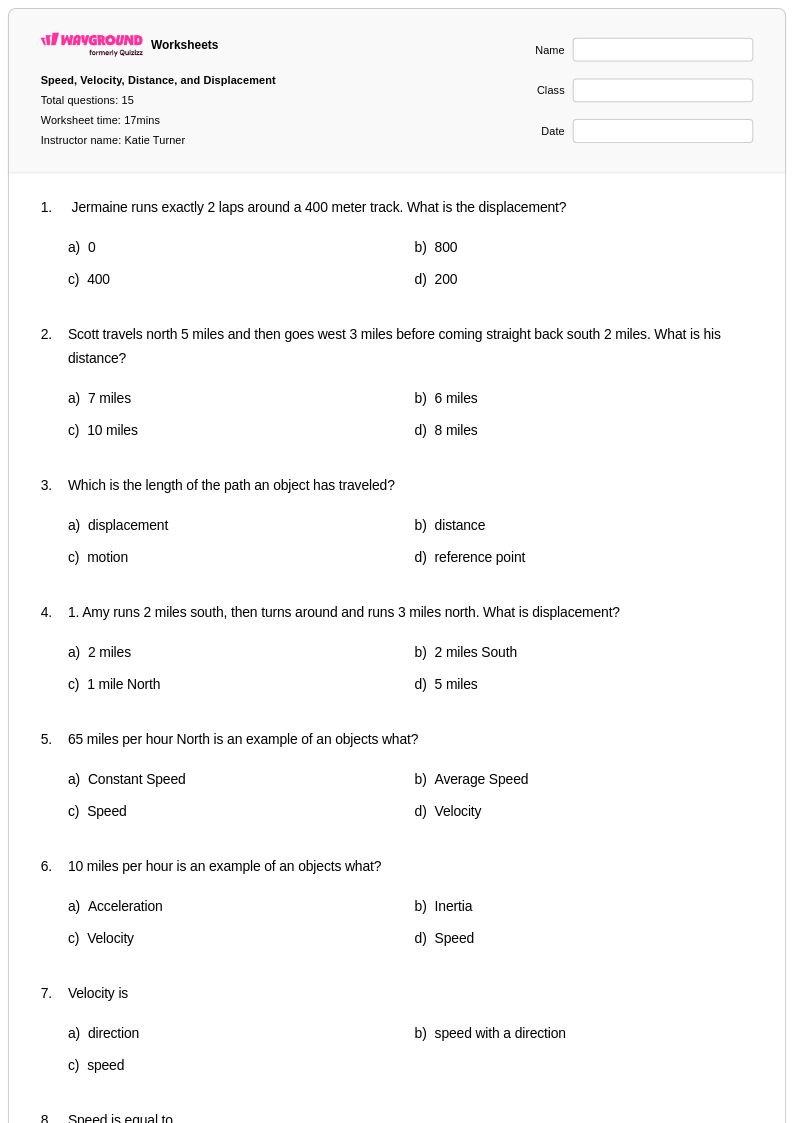
15 Q
6th
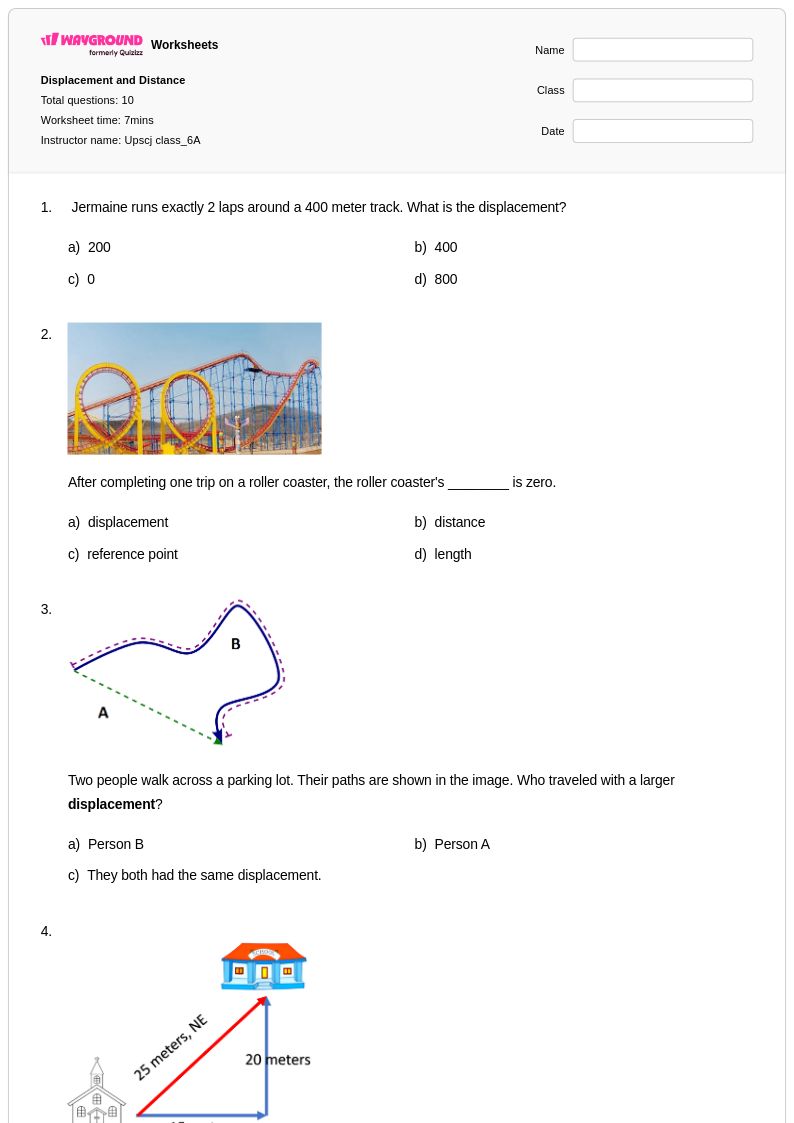
10 Q
6th
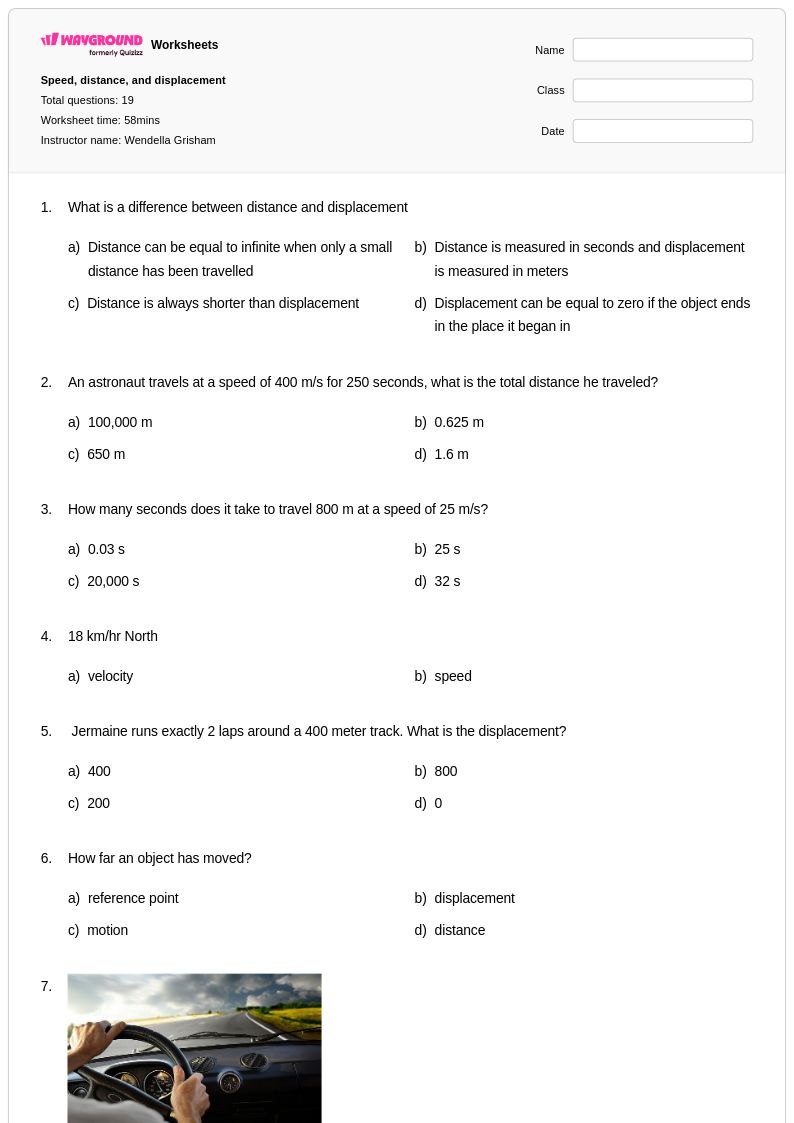
19 Q
6th - 9th
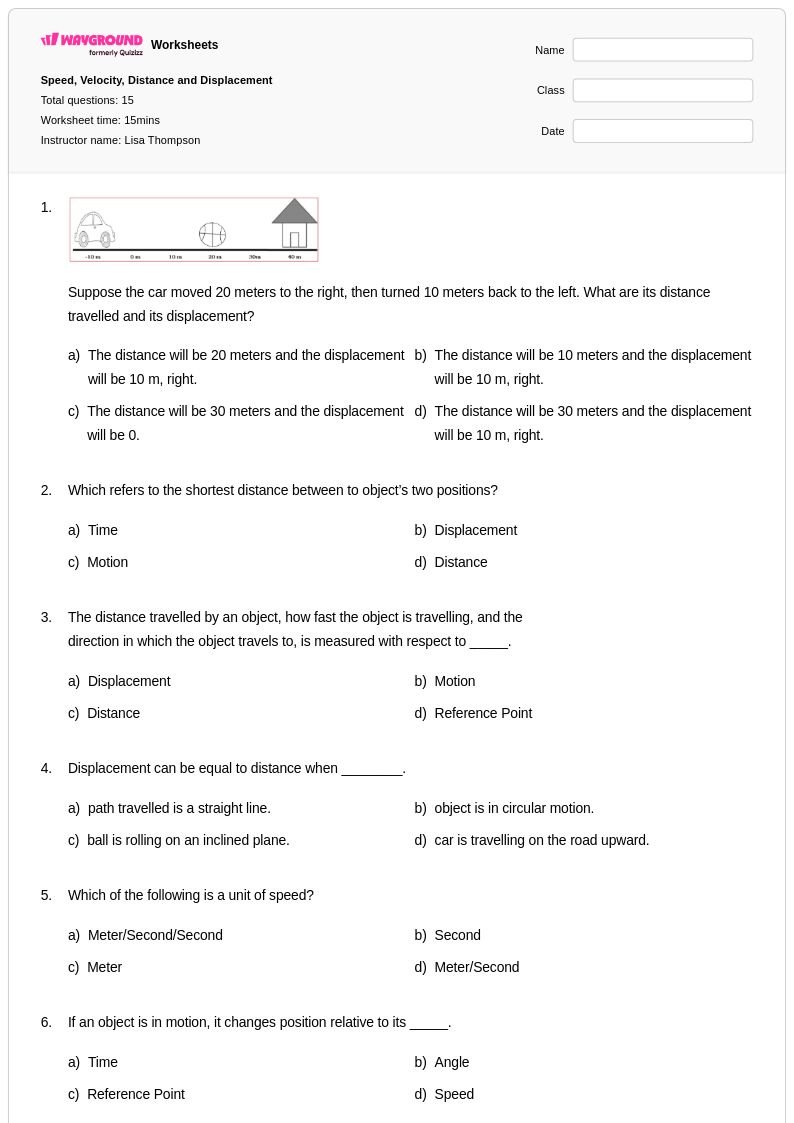
15 Q
6th - Uni
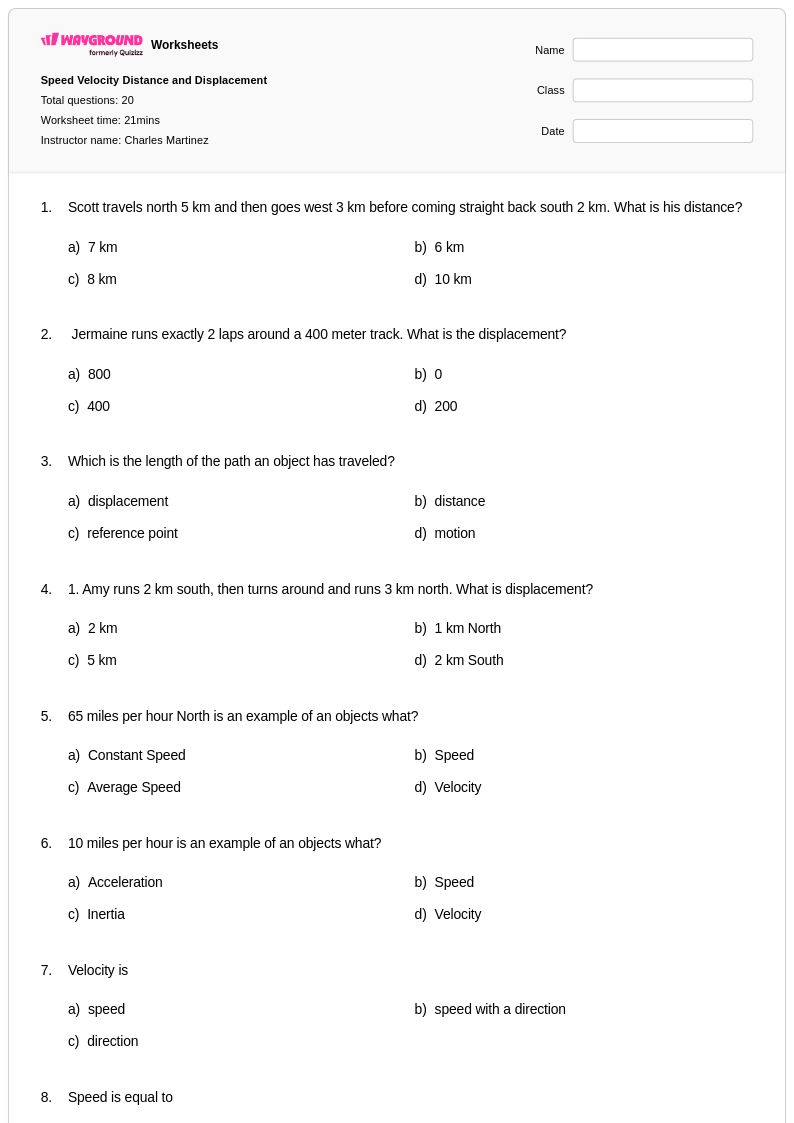
20 Q
6th - 8th
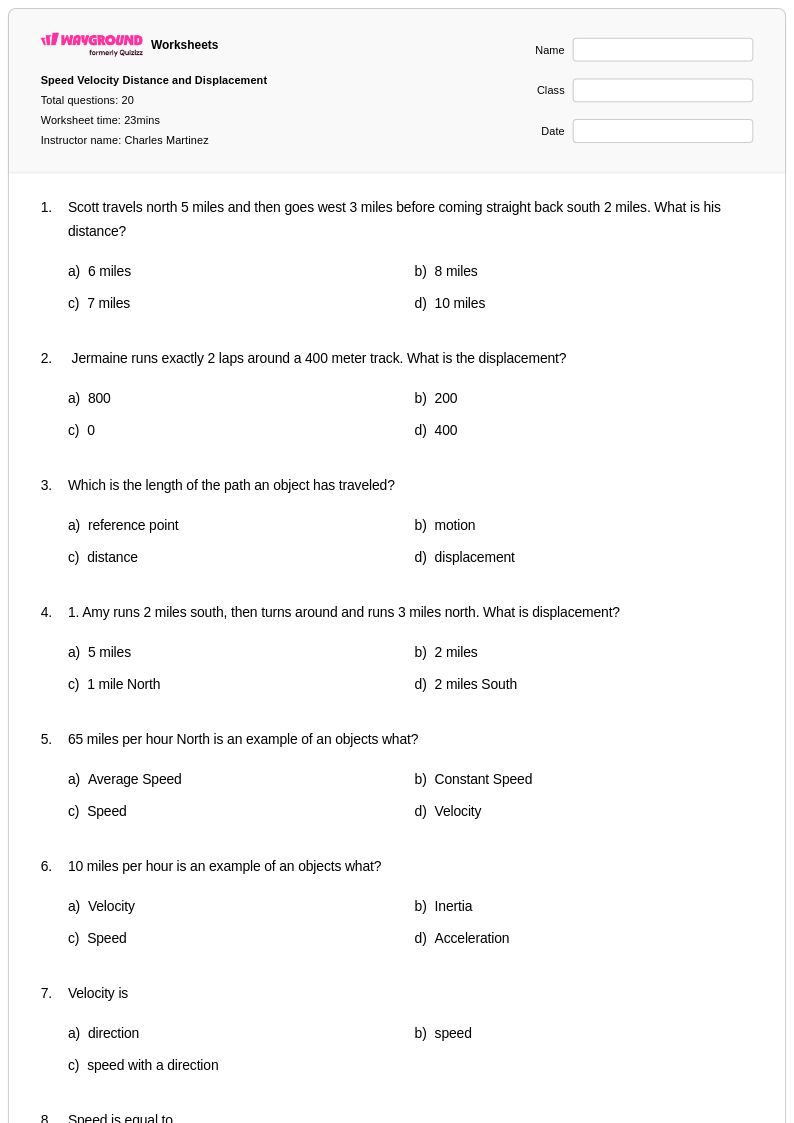
20 Q
6th - 8th
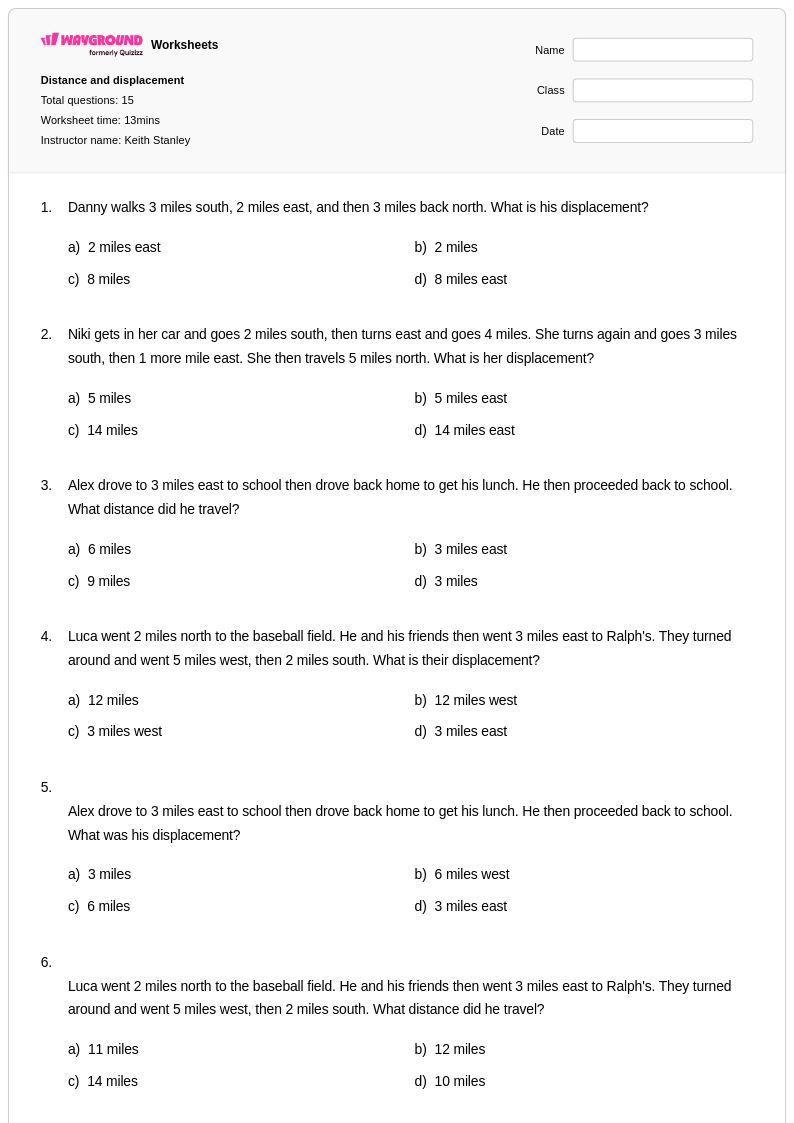
15 Q
6th
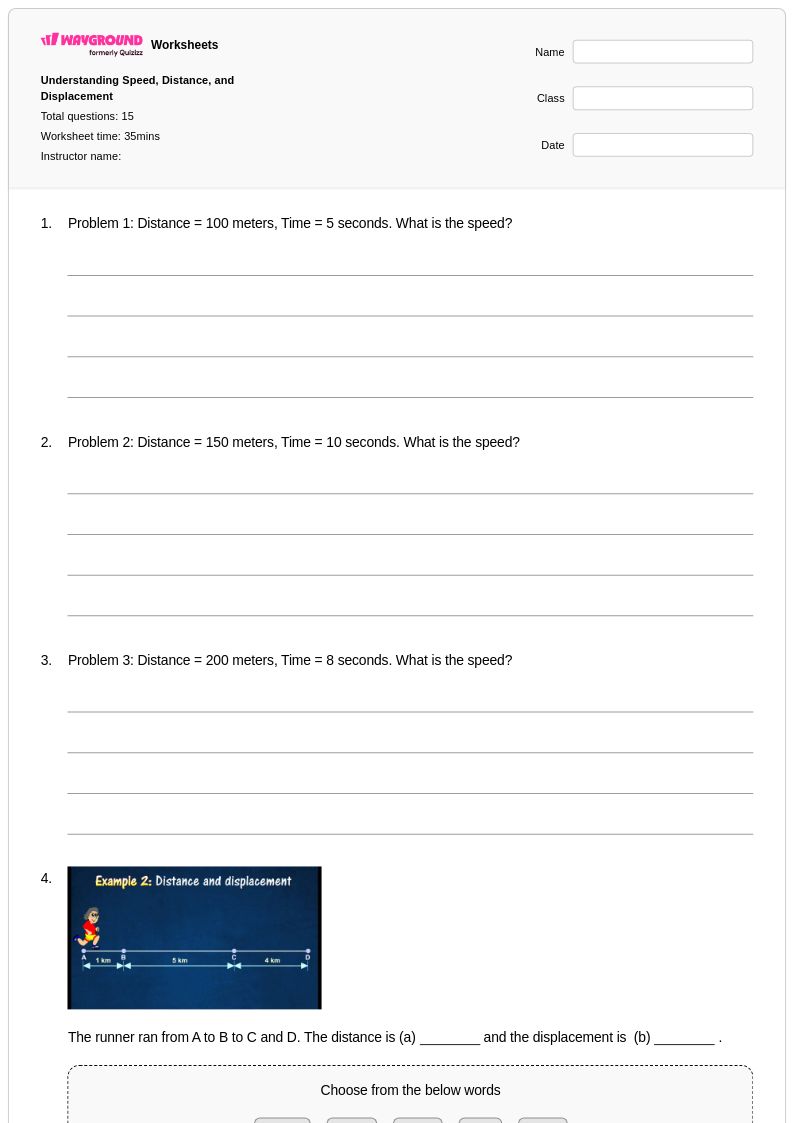
15 Q
6th
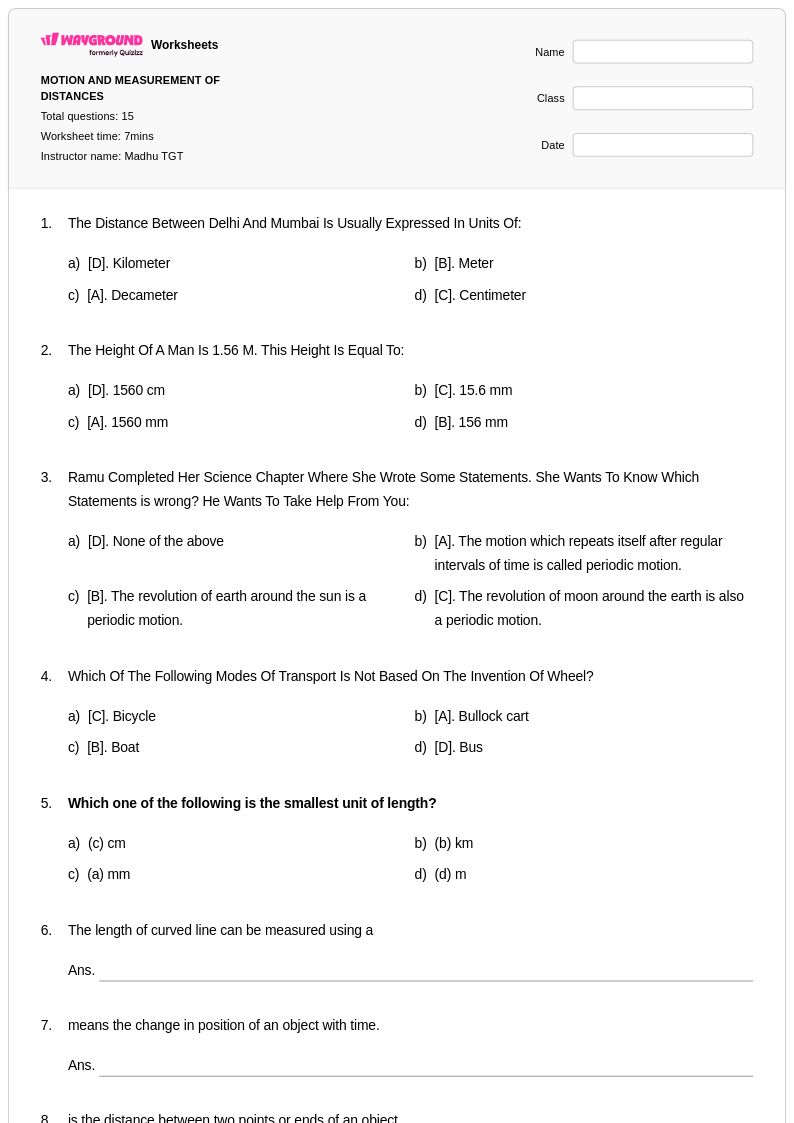
15 Q
6th
Explore Other Subject Worksheets for class 6
Explore printable Distance and Displacement worksheets for Class 6
Distance and displacement worksheets for Class 6 students through Wayground (formerly Quizizz) provide comprehensive practice in understanding these fundamental physics concepts that often challenge young learners. These educational resources focus on helping students distinguish between distance as the total path traveled and displacement as the straight-line measurement from starting point to final position, including direction. The worksheets strengthen critical thinking skills through varied practice problems that require students to calculate both scalar and vector quantities, interpret motion diagrams, and apply mathematical reasoning to real-world scenarios. Each worksheet collection includes detailed answer keys and is available as free printables in pdf format, making it easy for educators to provide targeted practice that builds conceptual understanding of motion and measurement.
Wayground (formerly Quizizz) supports science educators with millions of teacher-created distance and displacement worksheet resources that can be seamlessly integrated into Class 6 physics instruction. The platform's robust search and filtering capabilities allow teachers to quickly locate materials aligned with specific learning standards and differentiated for various ability levels within their classrooms. Teachers can customize existing worksheets or combine multiple resources to create comprehensive practice sets that address individual student needs for remediation or enrichment. These versatile materials are available in both printable pdf format for traditional classroom use and digital formats for interactive learning experiences, giving educators the flexibility to adapt their instruction based on available technology and preferred teaching methods while ensuring consistent skill practice across diverse learning environments.
FAQs
How do I teach students the difference between distance and displacement?
What practice problems help students master distance vs. displacement calculations?
What mistakes do students commonly make when calculating displacement?
How can I use distance and displacement worksheets to differentiate instruction in my physics class?
How do I use Wayground's distance and displacement worksheets in my classroom?
Are distance and displacement worksheets aligned to physics standards?