Free Printable Newton's First Law of Motion Worksheets for Class 6
Class 6 Newton's First Law of Motion worksheets from Wayground help students master inertia concepts through engaging printables, practice problems, and comprehensive answer keys available as free PDF downloads.
Explore printable Newton's First Law of Motion worksheets for Class 6
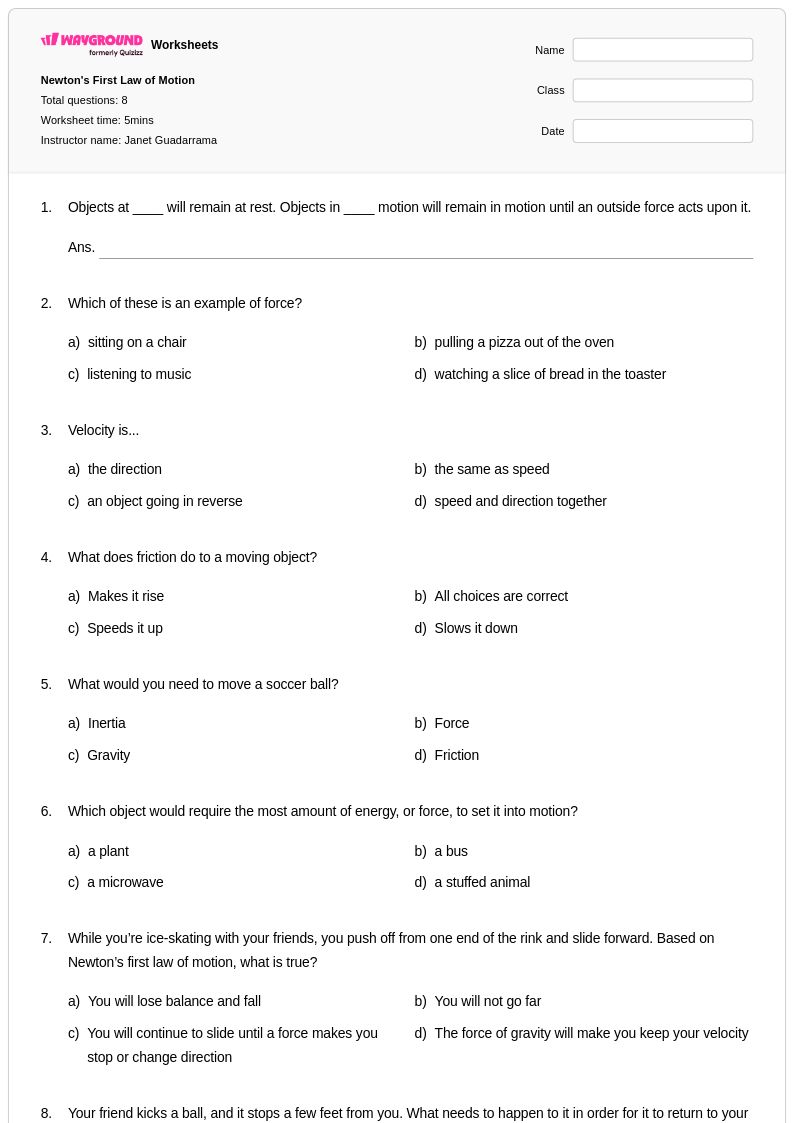
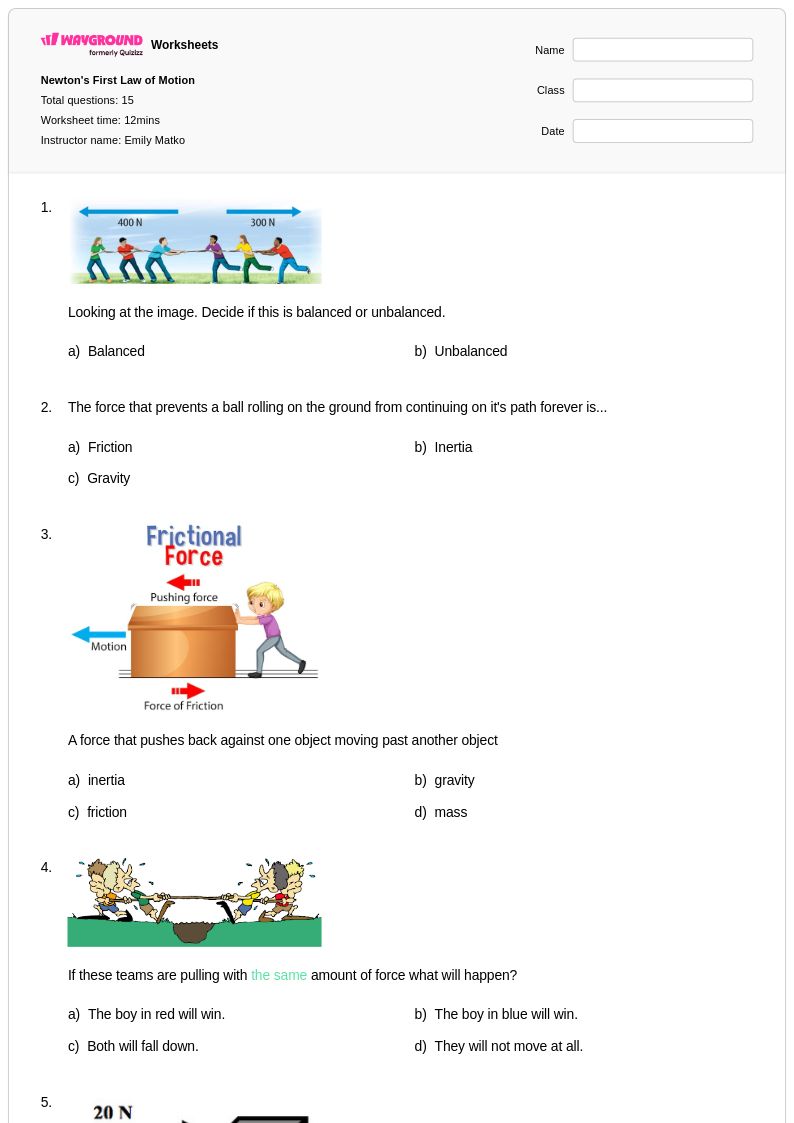
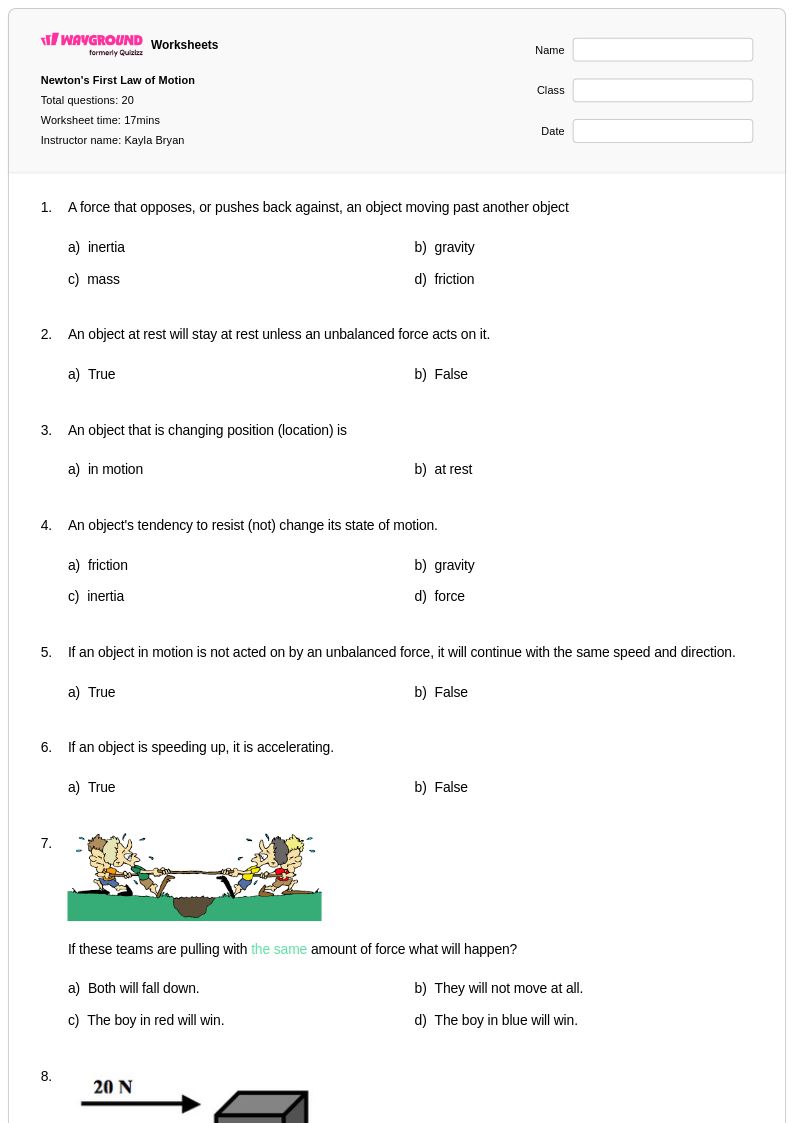
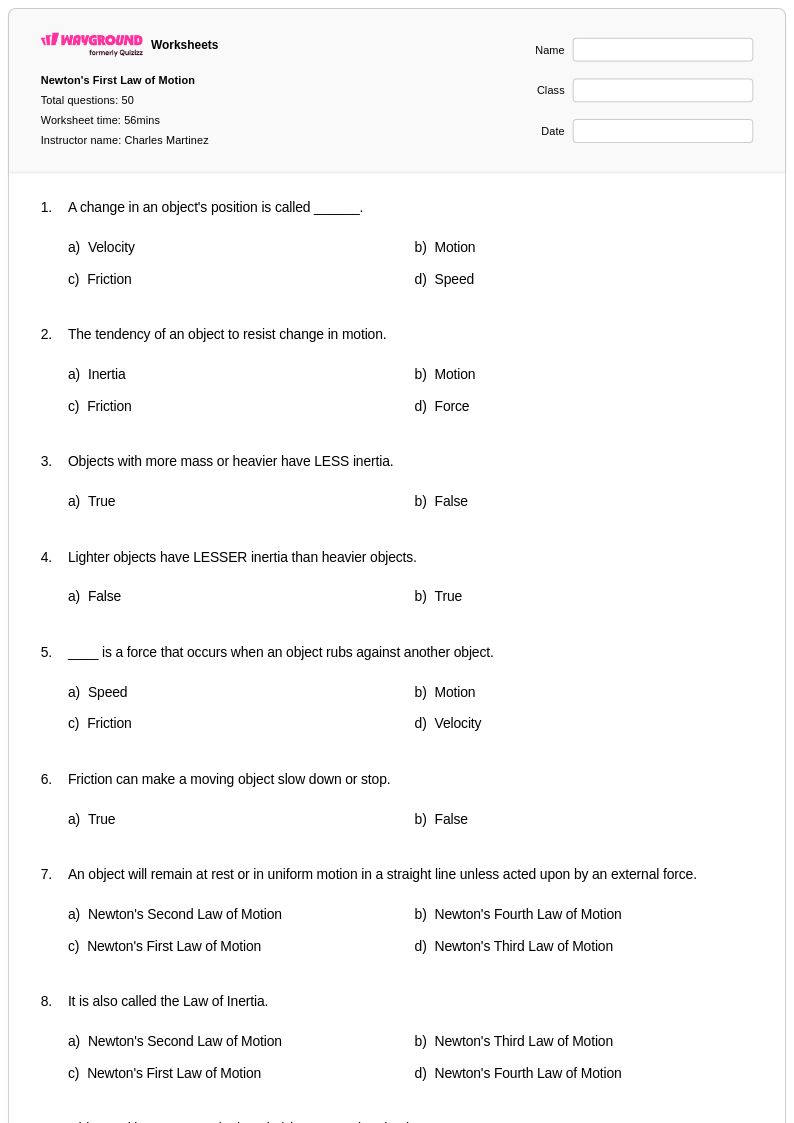
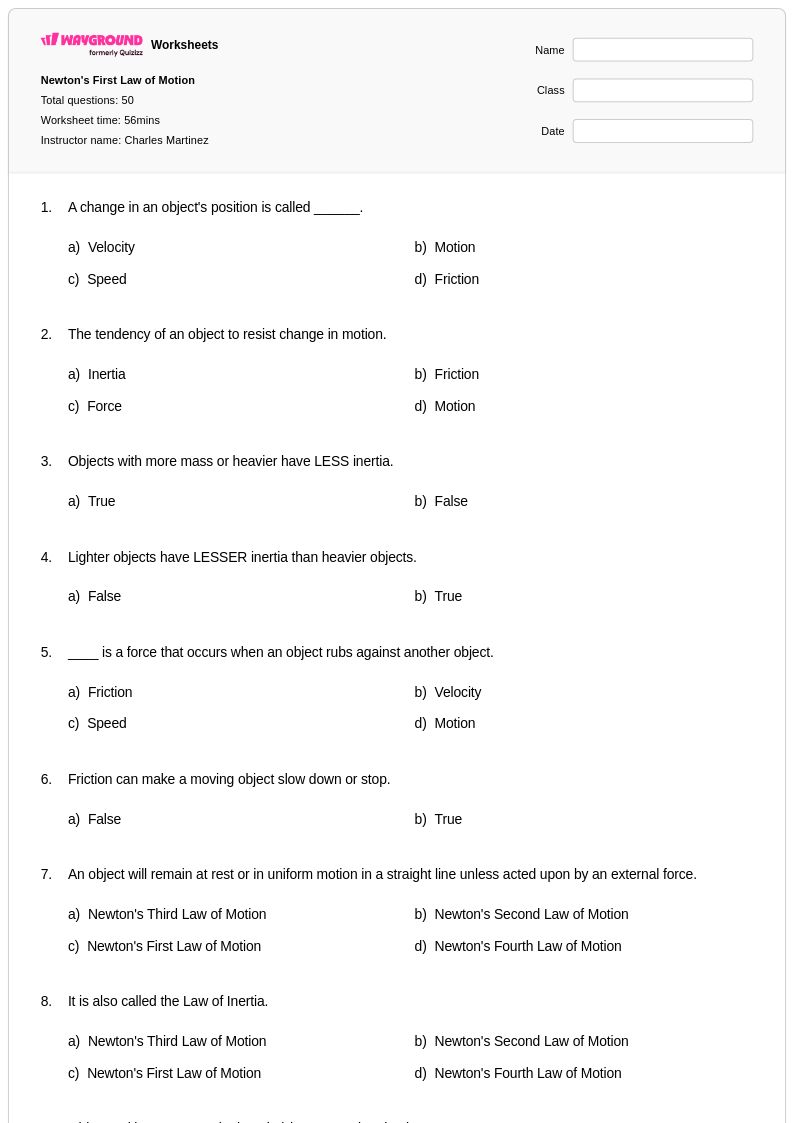
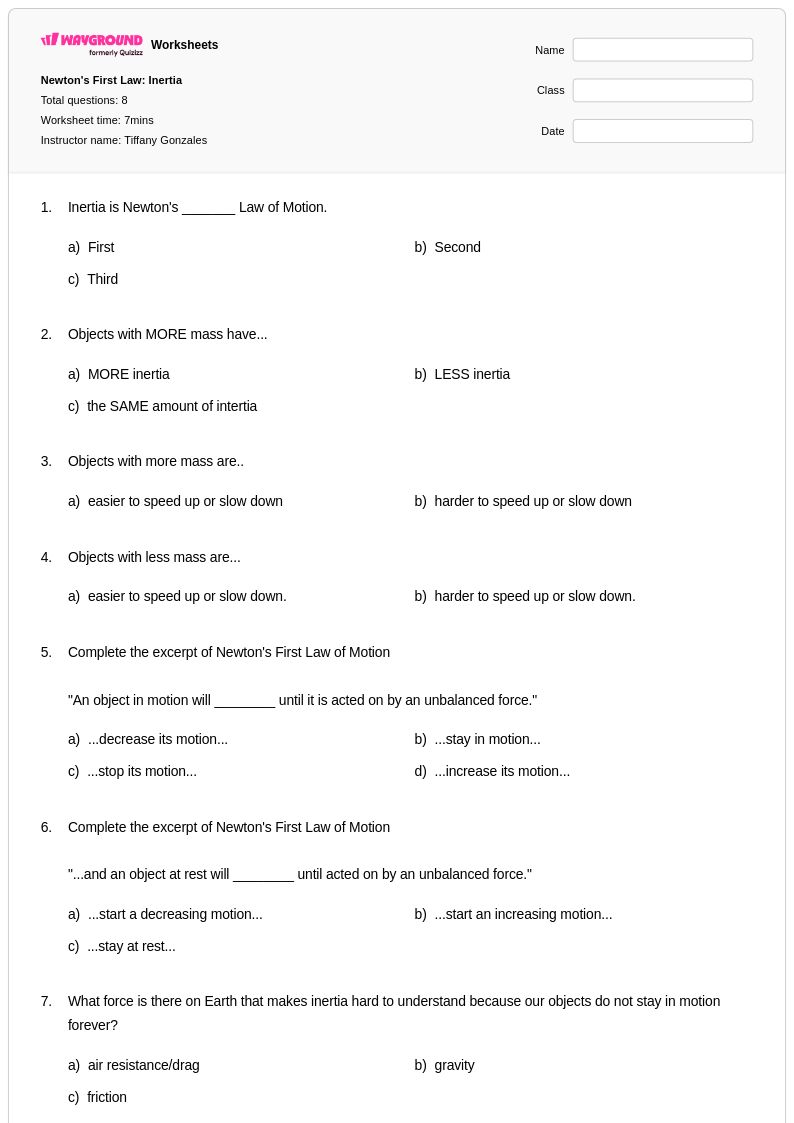
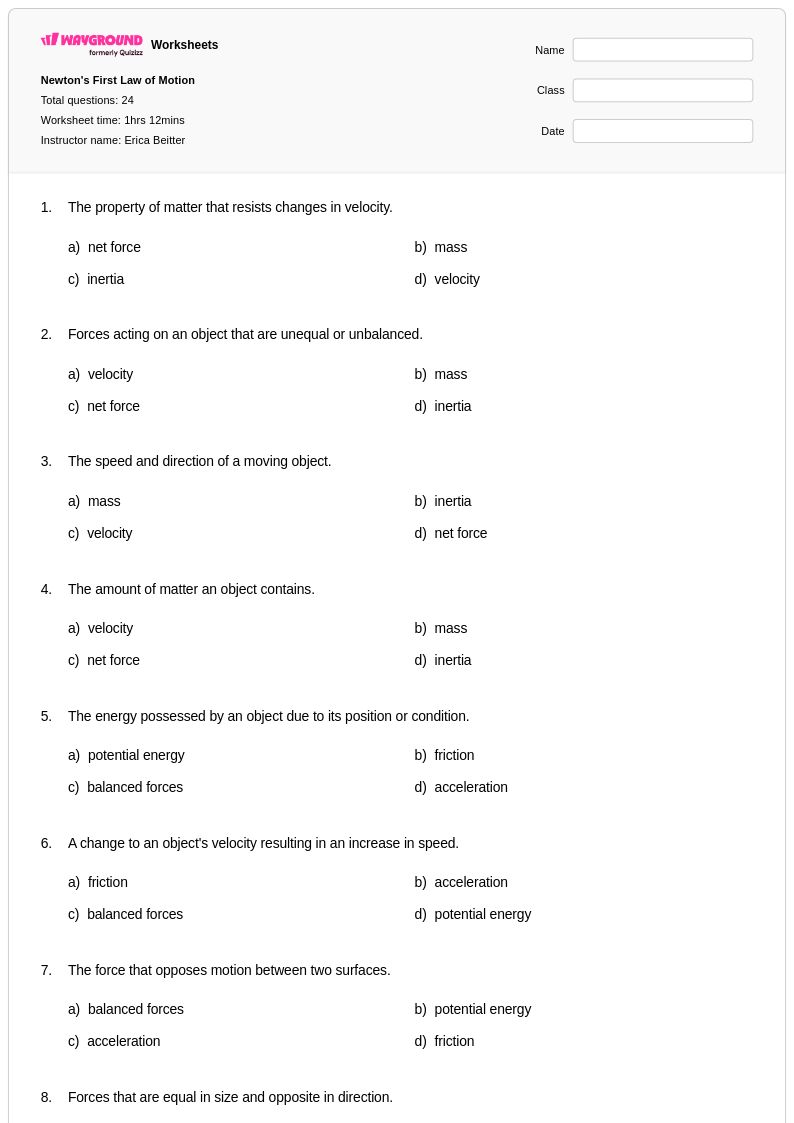
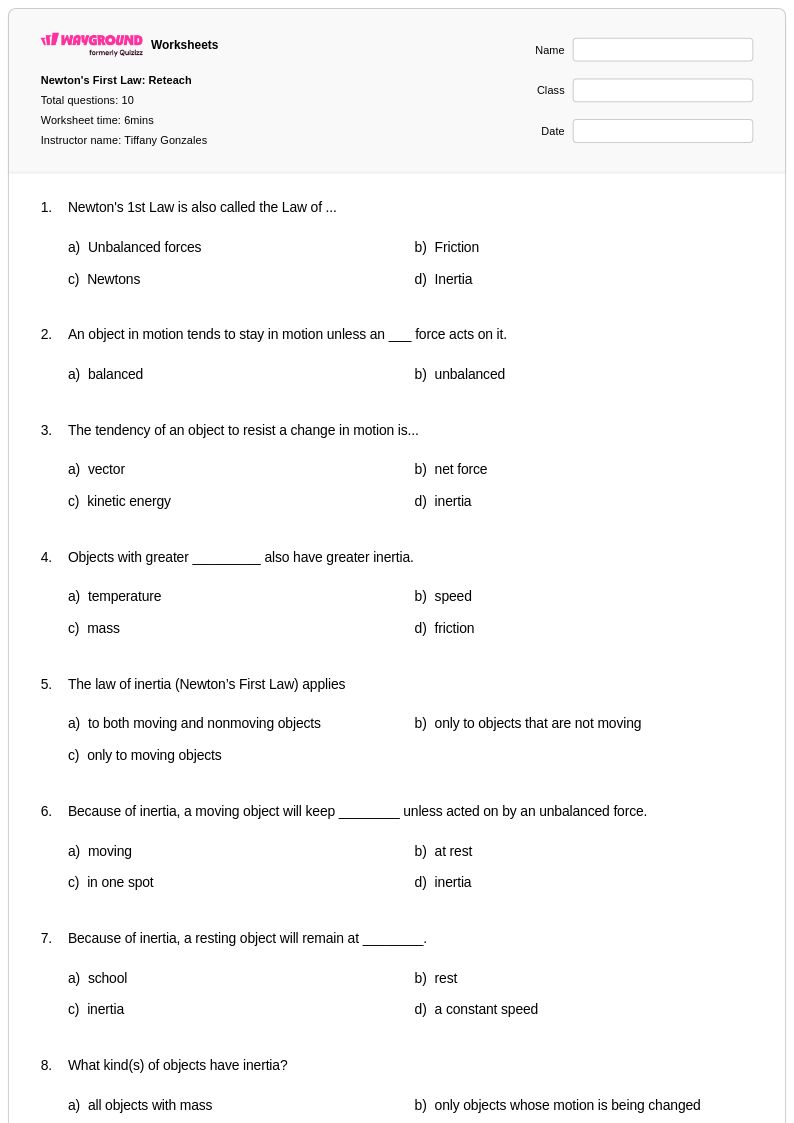
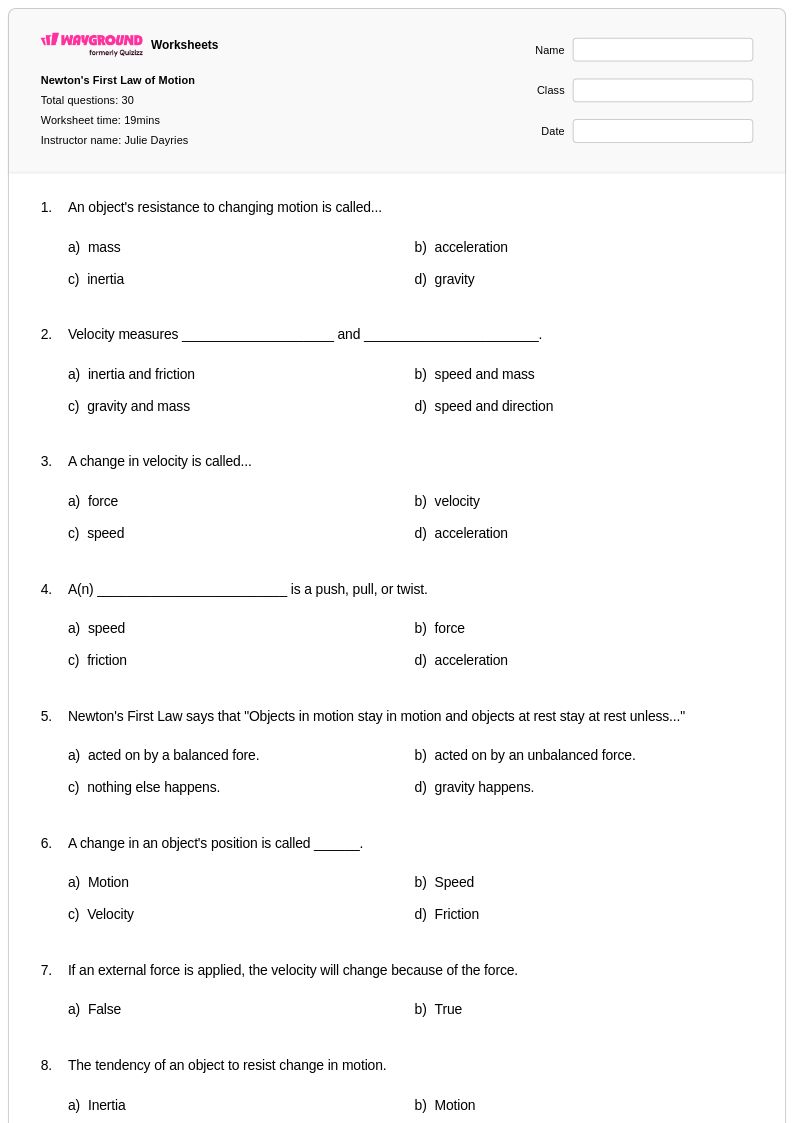
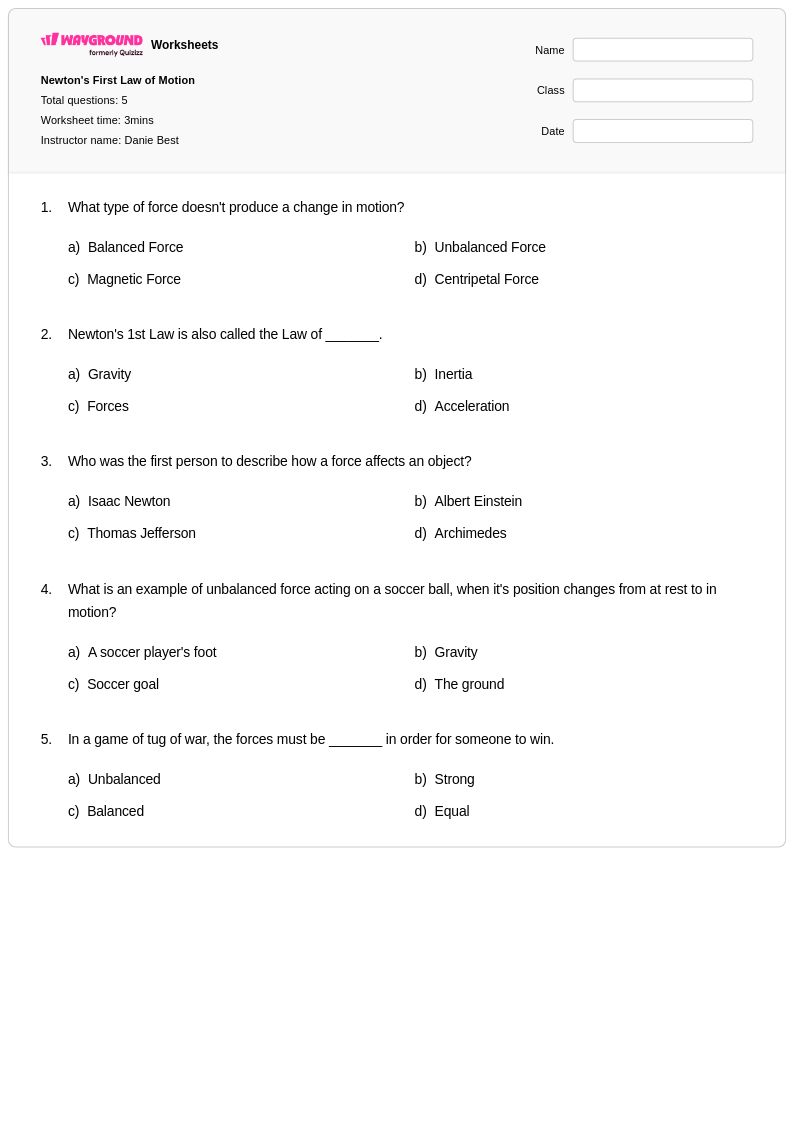
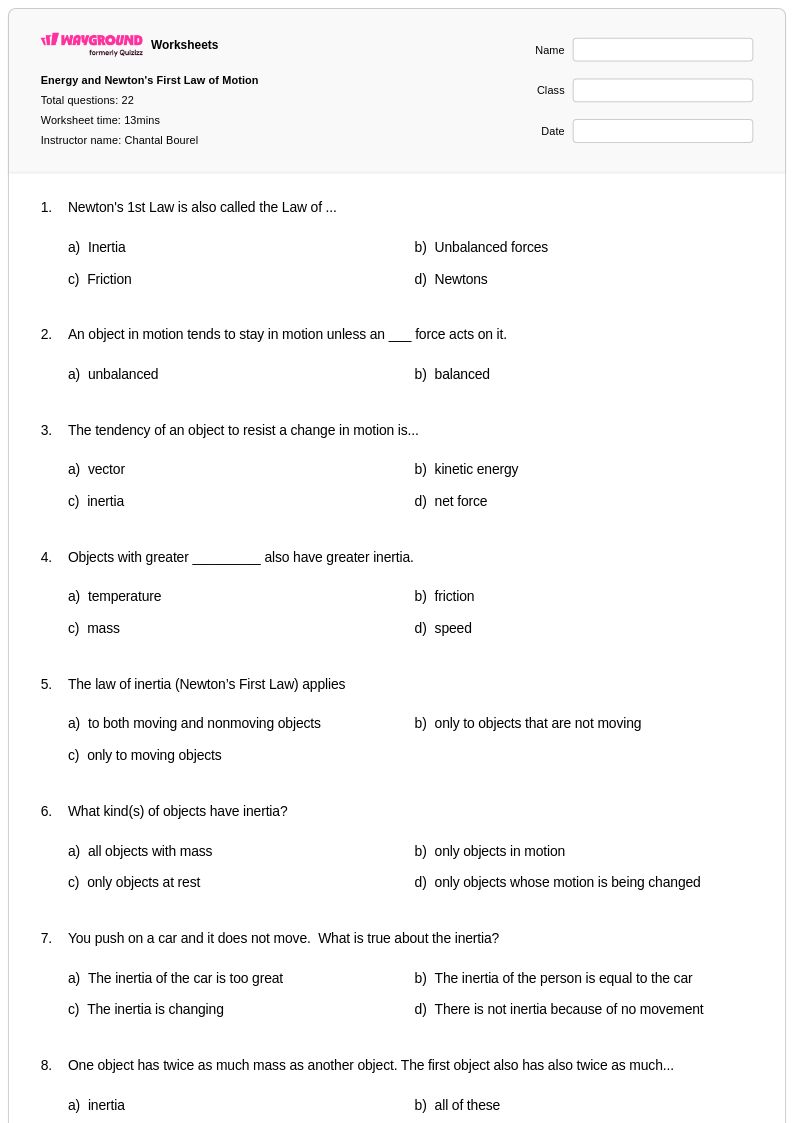
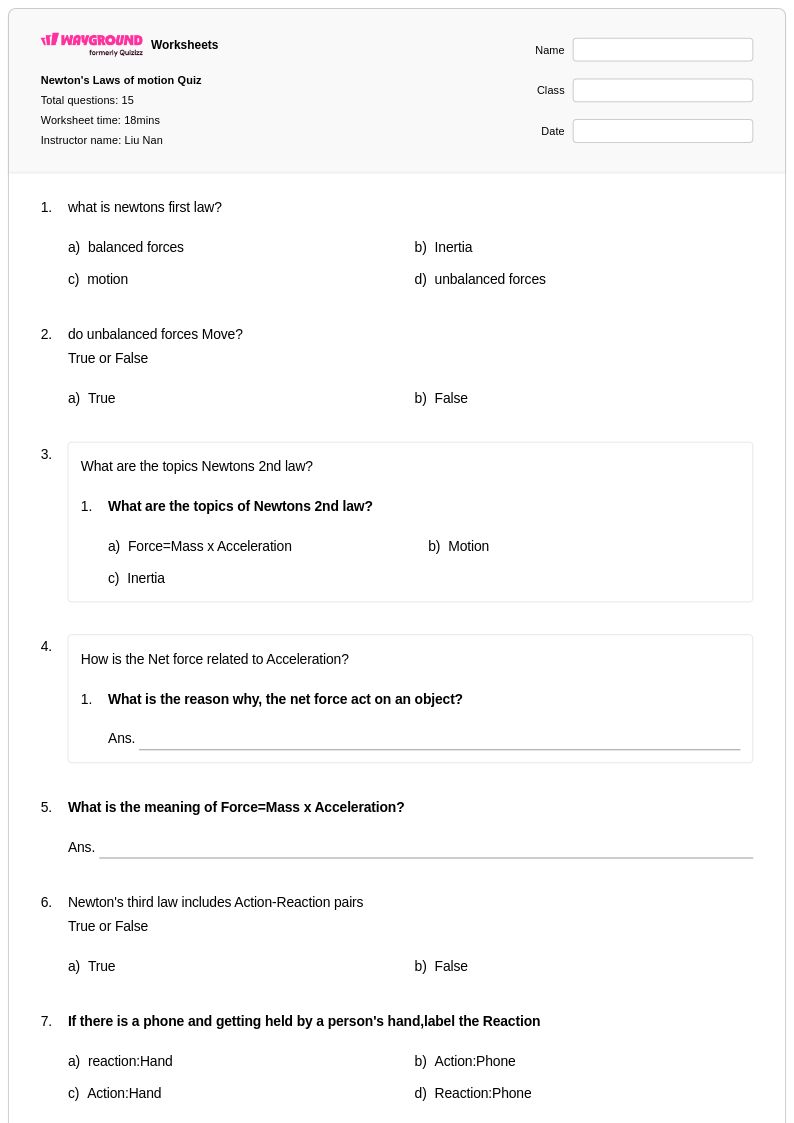
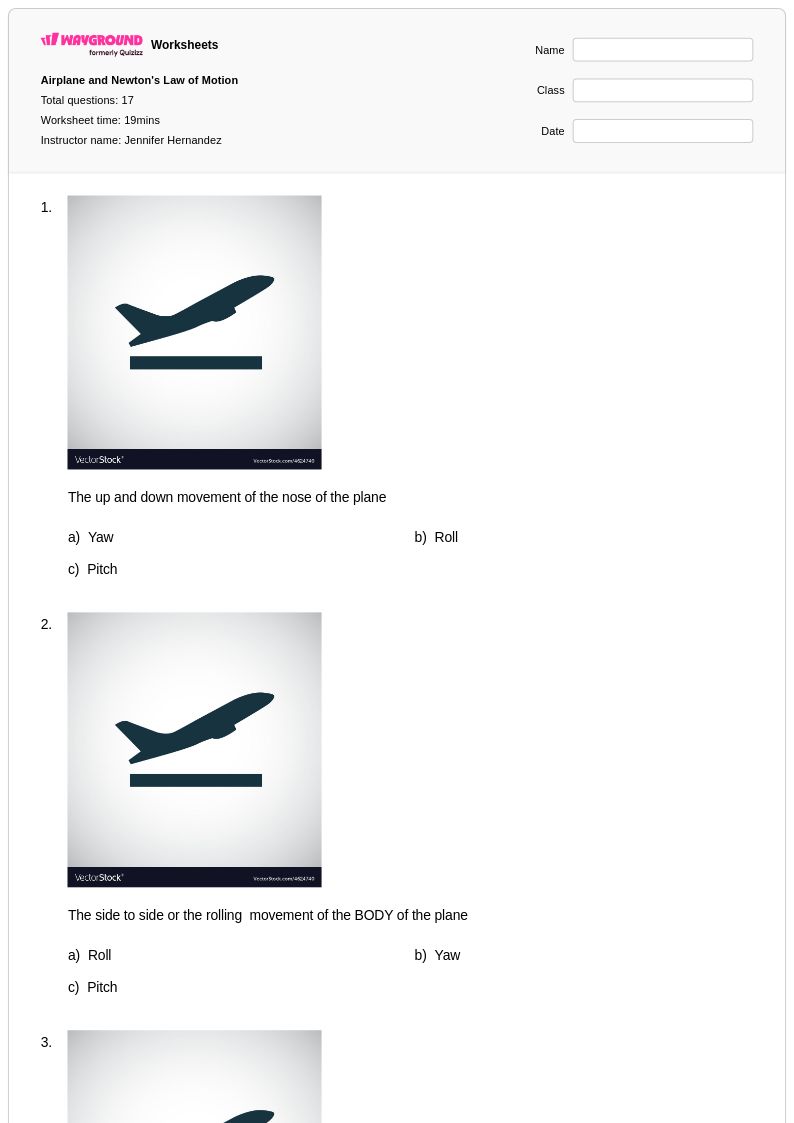
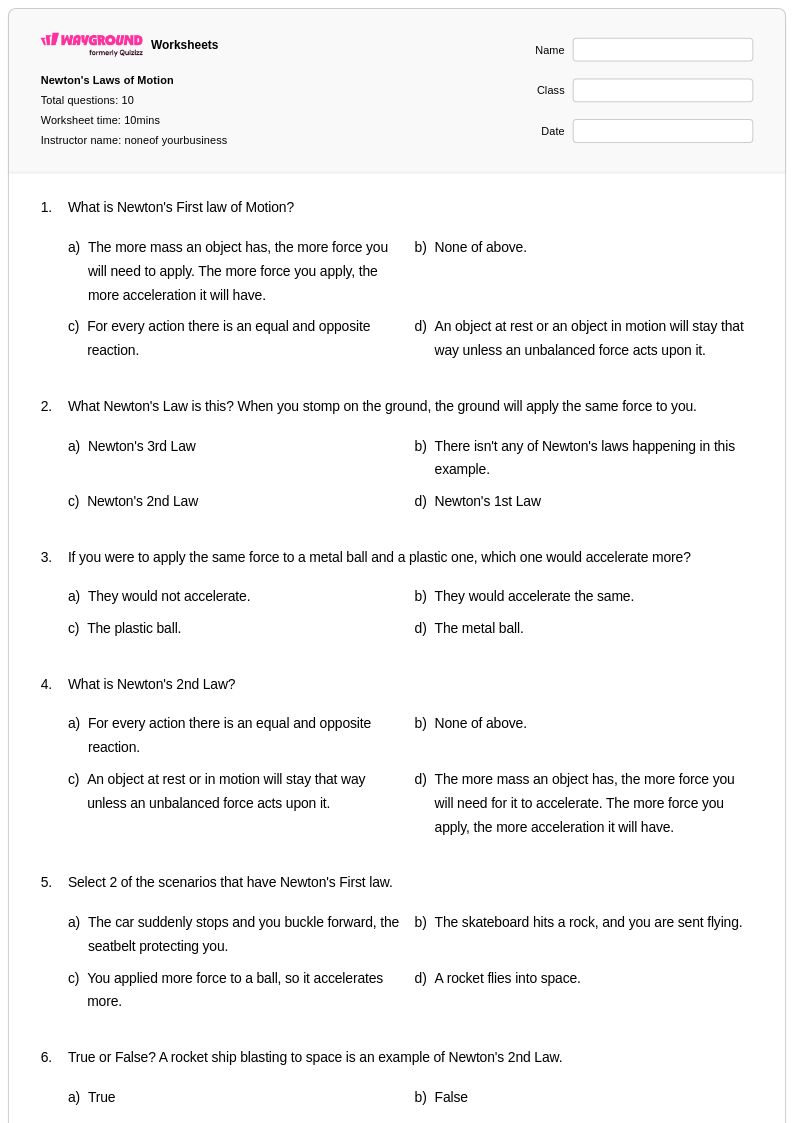
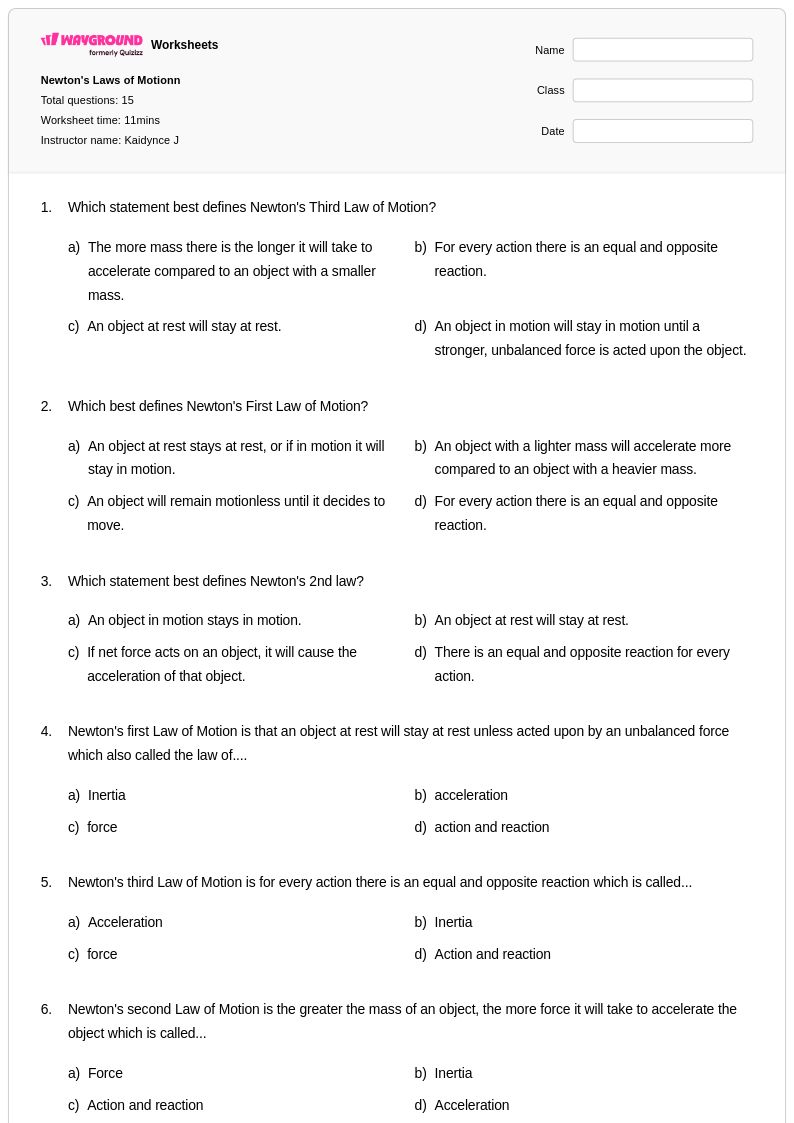
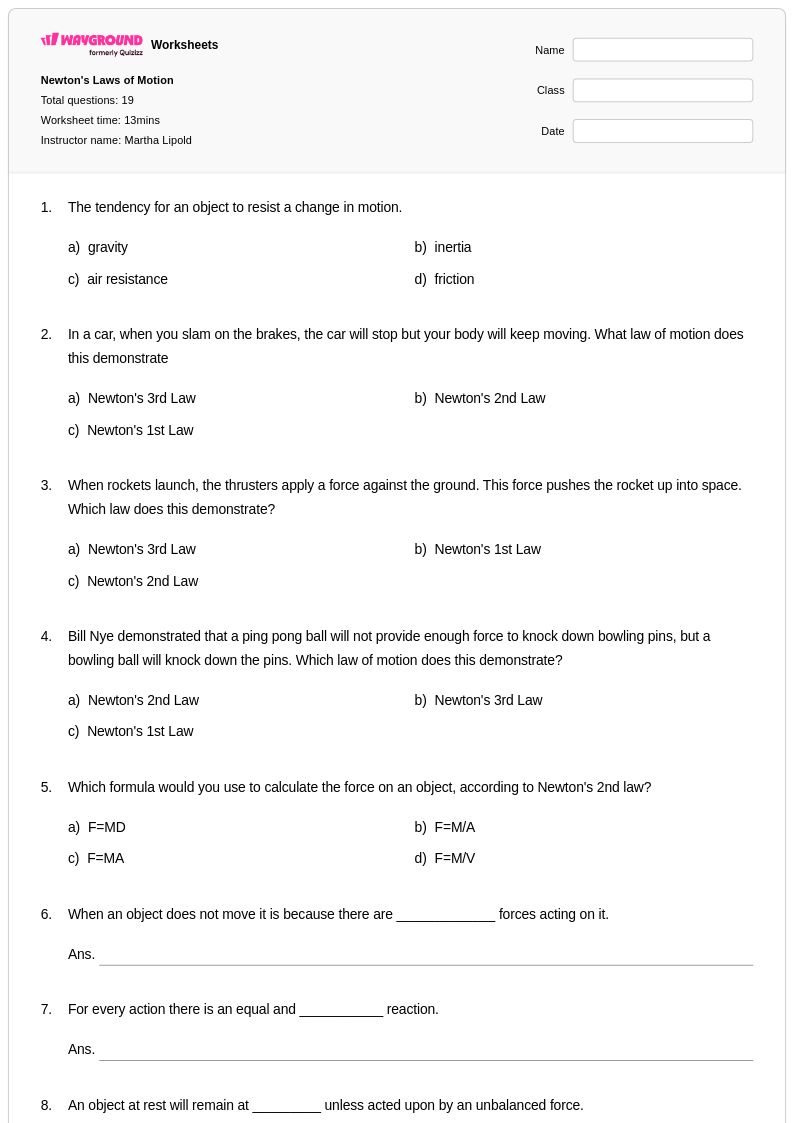
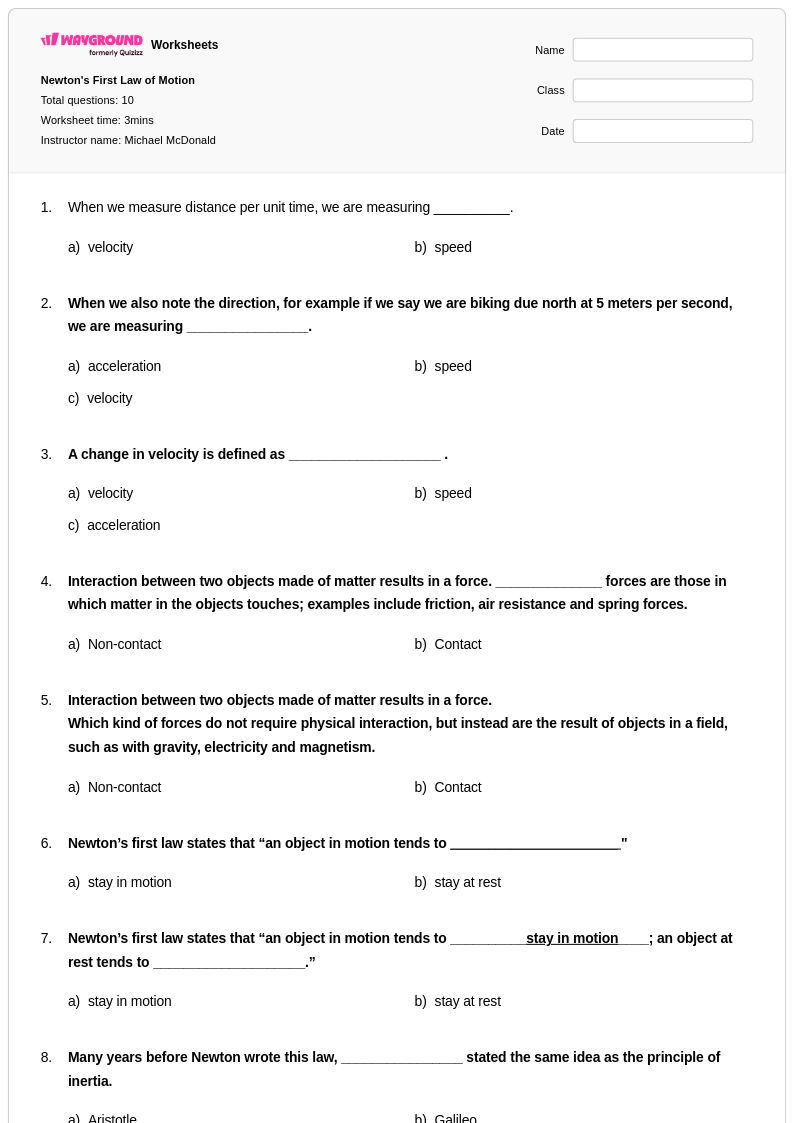
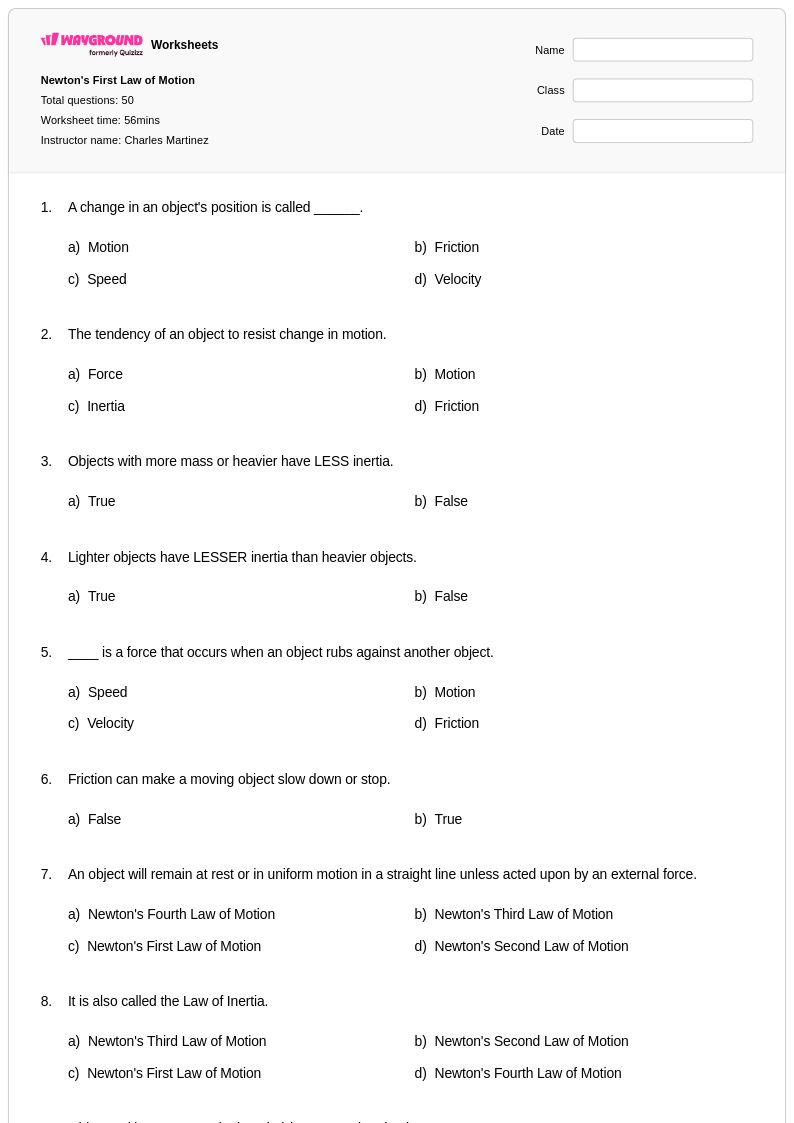
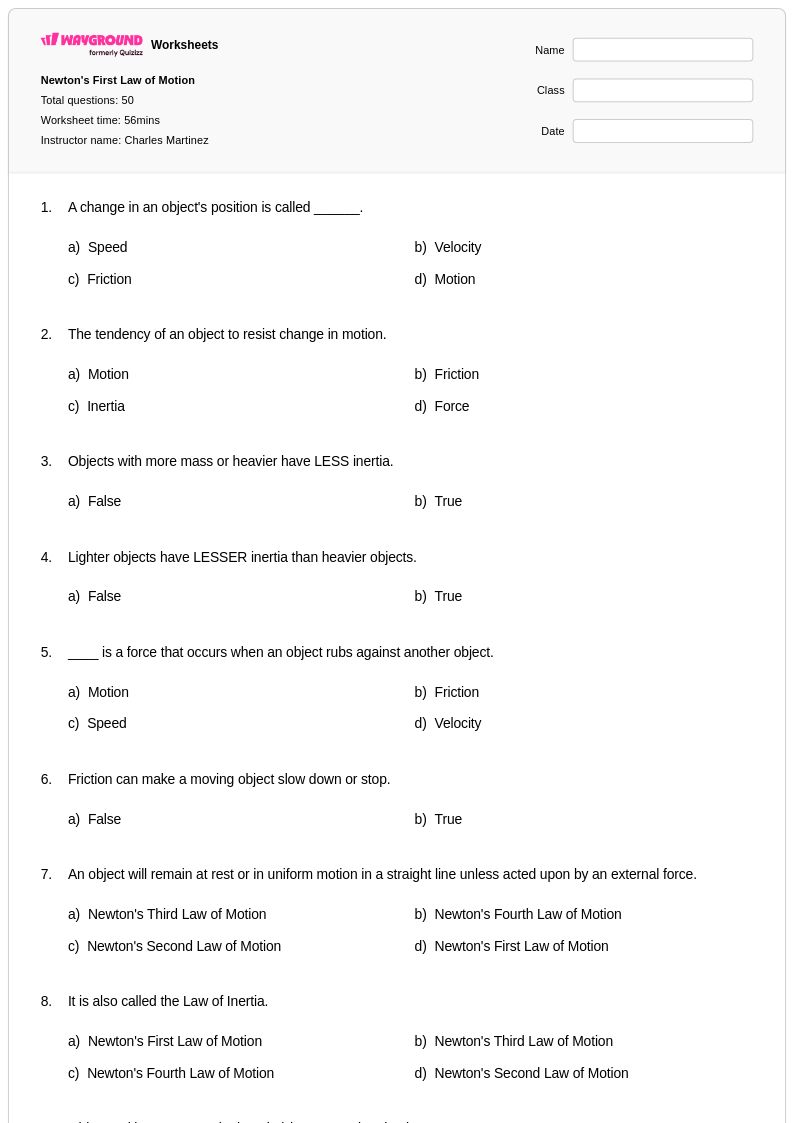
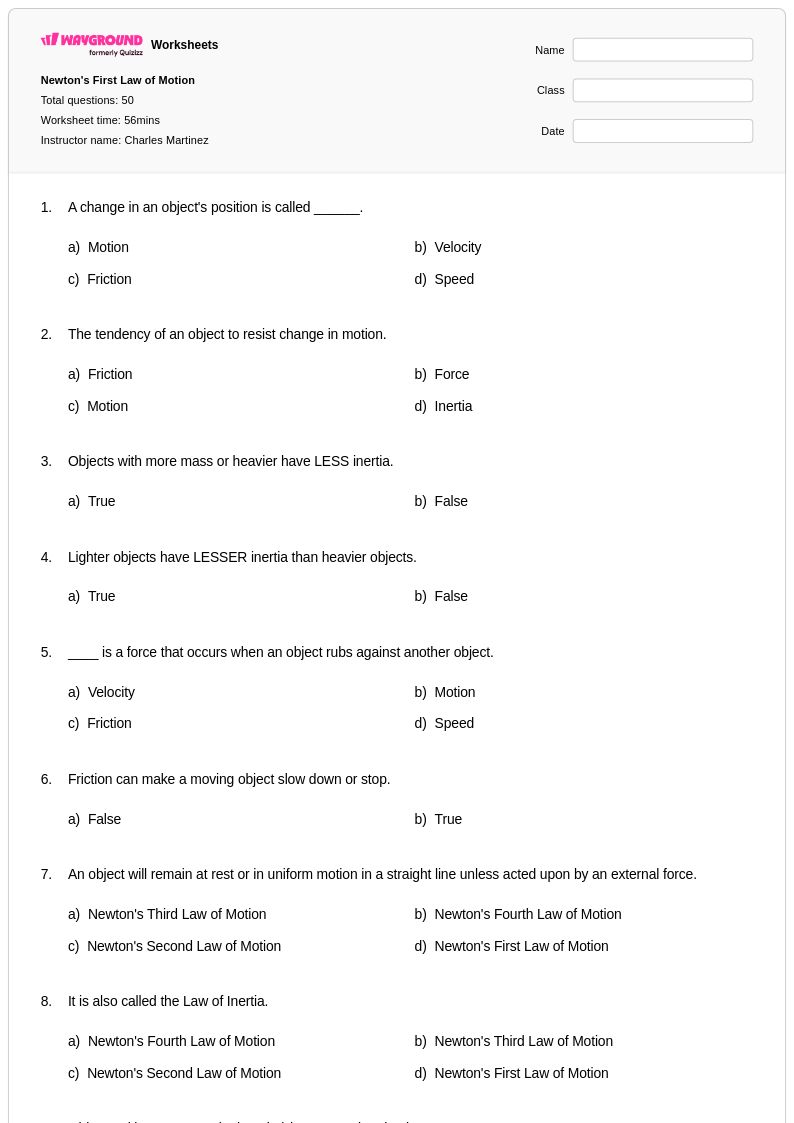
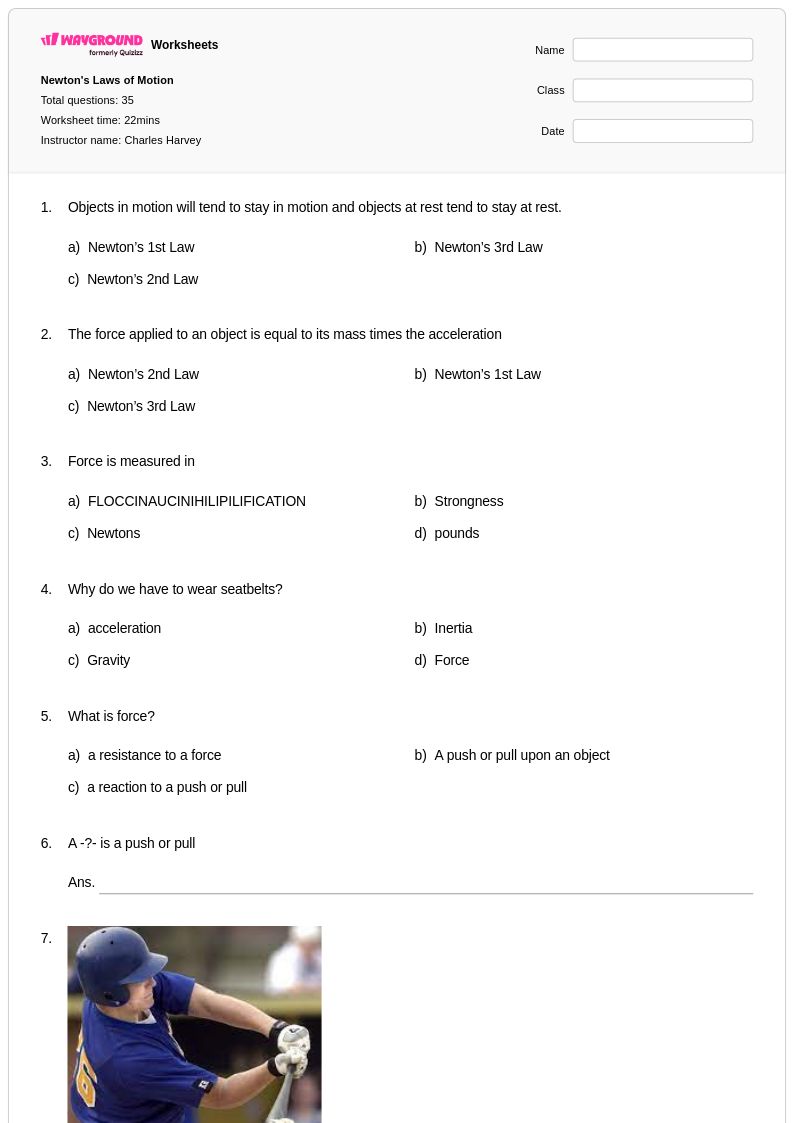
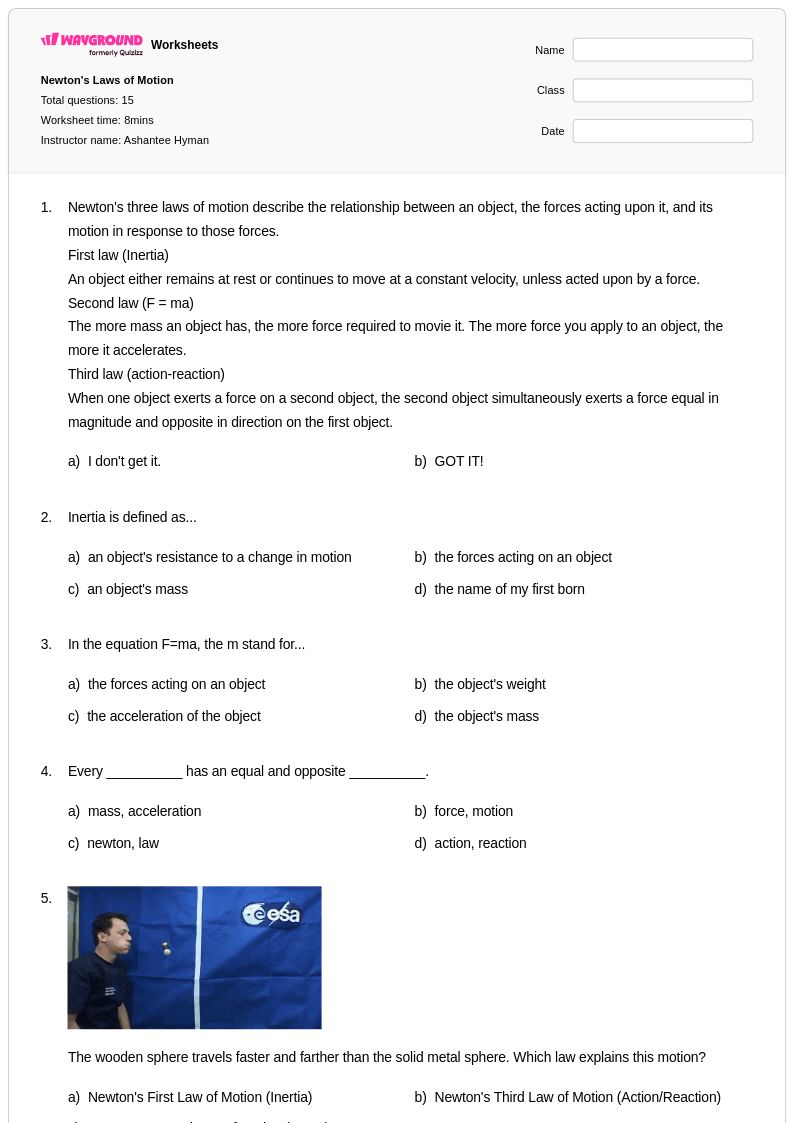
Newton's First Law of Motion worksheets for Class 6 students provide comprehensive practice opportunities to master this fundamental physics concept through Wayground's extensive collection of educational resources. These carefully crafted worksheets help students understand that objects at rest stay at rest and objects in motion stay in motion unless acted upon by an unbalanced force, building critical scientific reasoning skills through hands-on practice problems and real-world applications. Students work through scenarios involving everyday situations like rolling balls, sliding books, and moving vehicles to reinforce their understanding of inertia and balanced forces. Each worksheet includes detailed answer keys that support independent learning and self-assessment, while the free printable format ensures accessibility for all classroom environments and home study sessions.
Wayground, formerly Quizizz, empowers educators with millions of teacher-created Newton's First Law of Motion resources that streamline lesson planning and enhance student engagement across diverse learning needs. The platform's robust search and filtering capabilities allow teachers to quickly locate worksheets that align with specific curriculum standards and learning objectives, while built-in differentiation tools enable seamless customization for various skill levels within the same Class 6 classroom. Teachers can access these resources in both printable PDF formats for traditional paper-based activities and digital formats for interactive learning experiences, making it effortless to provide targeted remediation for struggling students or enrichment opportunities for advanced learners. This flexibility supports comprehensive skill practice and assessment, allowing educators to monitor student progress while reinforcing essential physics concepts through varied problem-solving approaches.
FAQs
How do I teach Newton's First Law of Motion to students who struggle with the concept of inertia?
Start with tangible, everyday examples students already know: a book sitting still on a desk, a soccer ball rolling across a field, or a passenger lurching forward when a car brakes suddenly. These scenarios make inertia concrete before introducing formal definitions. Once students can predict outcomes in familiar contexts, move to force diagrams and more abstract applications to build conceptual depth.
What kinds of practice problems help students understand Newton's First Law?
Effective practice for Newton's First Law combines conceptual questions about inertia with scenario-based problems where students identify whether forces are balanced or unbalanced and predict how an object will respond. Force diagram exercises are particularly valuable because they require students to visualize and apply the law rather than simply recall it. Mixing real-world contexts, such as car crashes, sports, and space travel, keeps practice meaningful and varied.
What misconceptions do students commonly have about Newton's First Law?
The most persistent misconception is that a moving object requires a continuous force to keep moving. Students often confuse friction as a necessary driver of motion rather than a force that opposes it. Another common error is conflating balanced forces with no forces at all, leading students to incorrectly conclude that a stationary object has nothing acting on it. Targeted practice with force diagrams and real-world scenarios helps address both of these errors directly.
How do I use Newton's First Law worksheets in my physics classroom?
Newton's First Law worksheets on Wayground are available as printable PDFs for traditional classroom use and in digital formats for technology-integrated or remote learning environments, including the option to host them as a quiz on Wayground. Teachers can use them for direct instruction support, independent practice, exit tickets, or formative assessment. Each worksheet includes a detailed answer key, making them equally useful for student self-assessment and teacher-led review.
How can I differentiate Newton's First Law instruction for students at different ability levels?
For students who need additional support, begin with conceptual questions that rely on everyday examples and limit the number of variables in each problem. For more advanced learners, introduce mathematical applications involving net force calculations and multi-force diagrams. On Wayground, teachers can apply accommodations such as read aloud, reduced answer choices, or extended time at the individual student level, so every learner engages with the same core content at an appropriate level of challenge.
How does Newton's First Law connect to other physics concepts students will encounter later?
Newton's First Law is the conceptual foundation for all of classical mechanics. Students who solidly understand inertia and the role of net force are better prepared to work with Newton's Second Law, momentum, and eventually energy and work. Without this grounding, students often misapply formulas in later units because they lack a clear mental model of how and why objects change or maintain their state of motion.