Free Printable Parallel Circuits Worksheets for Class 6
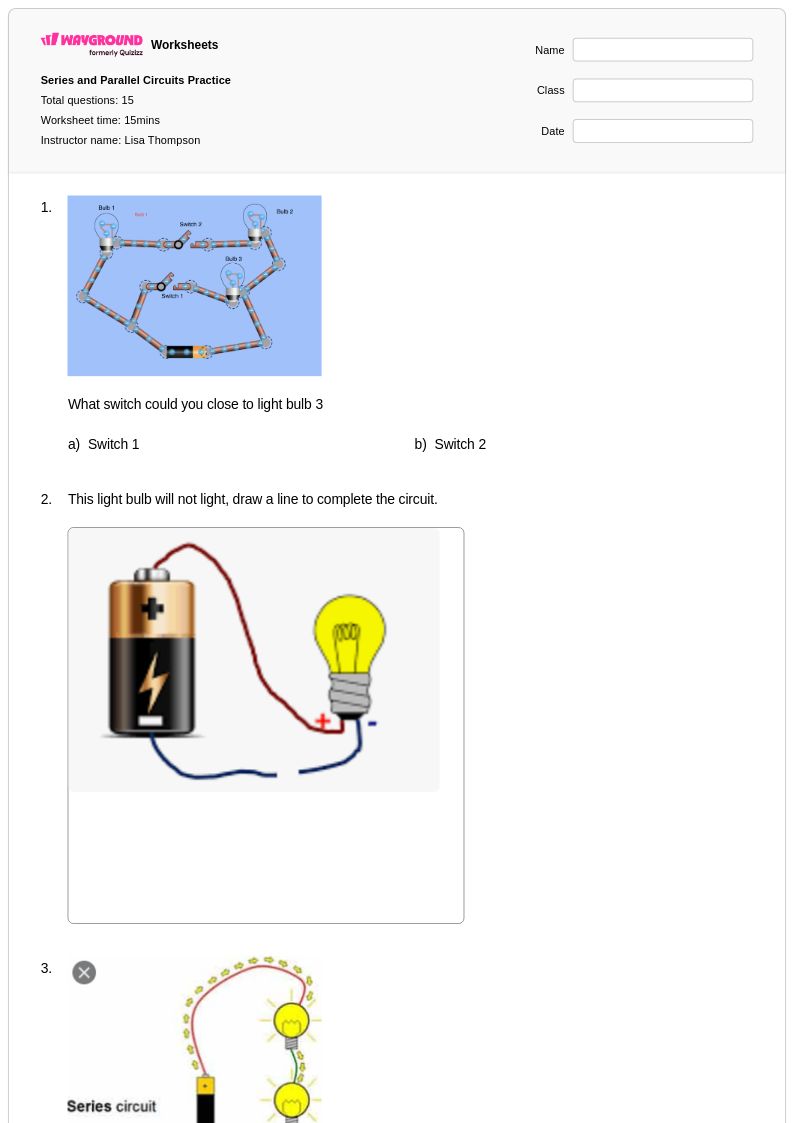
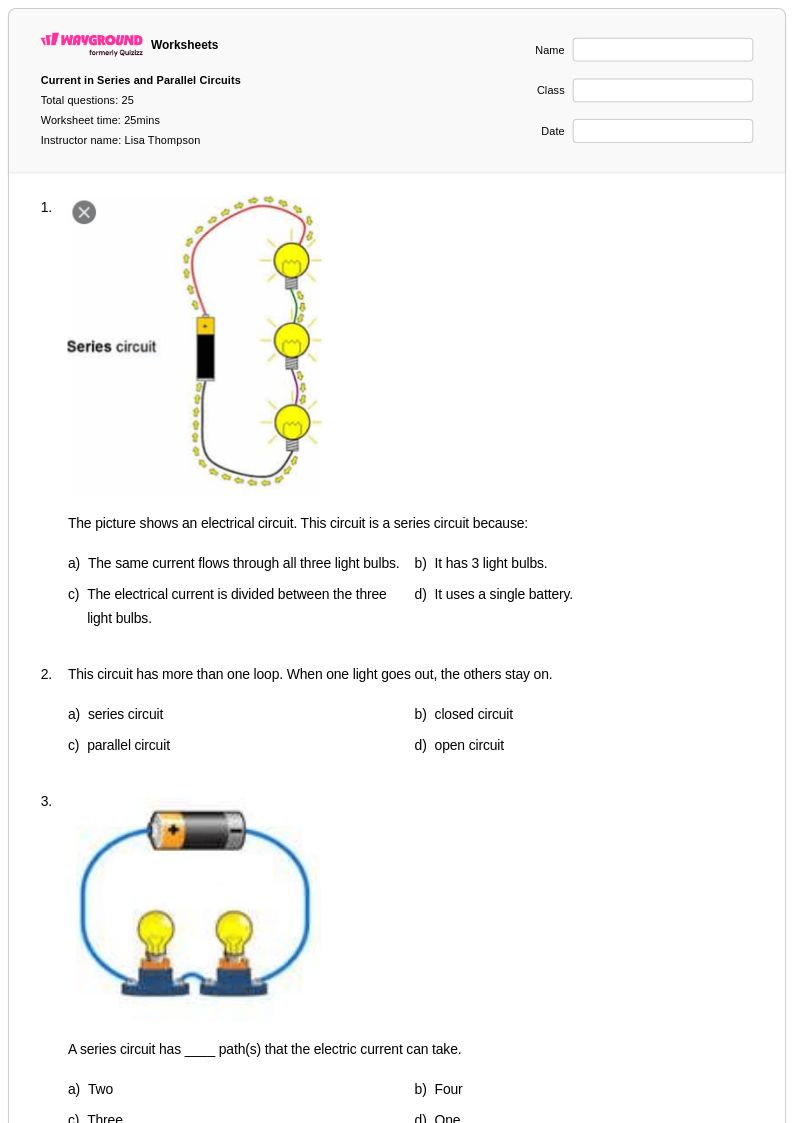
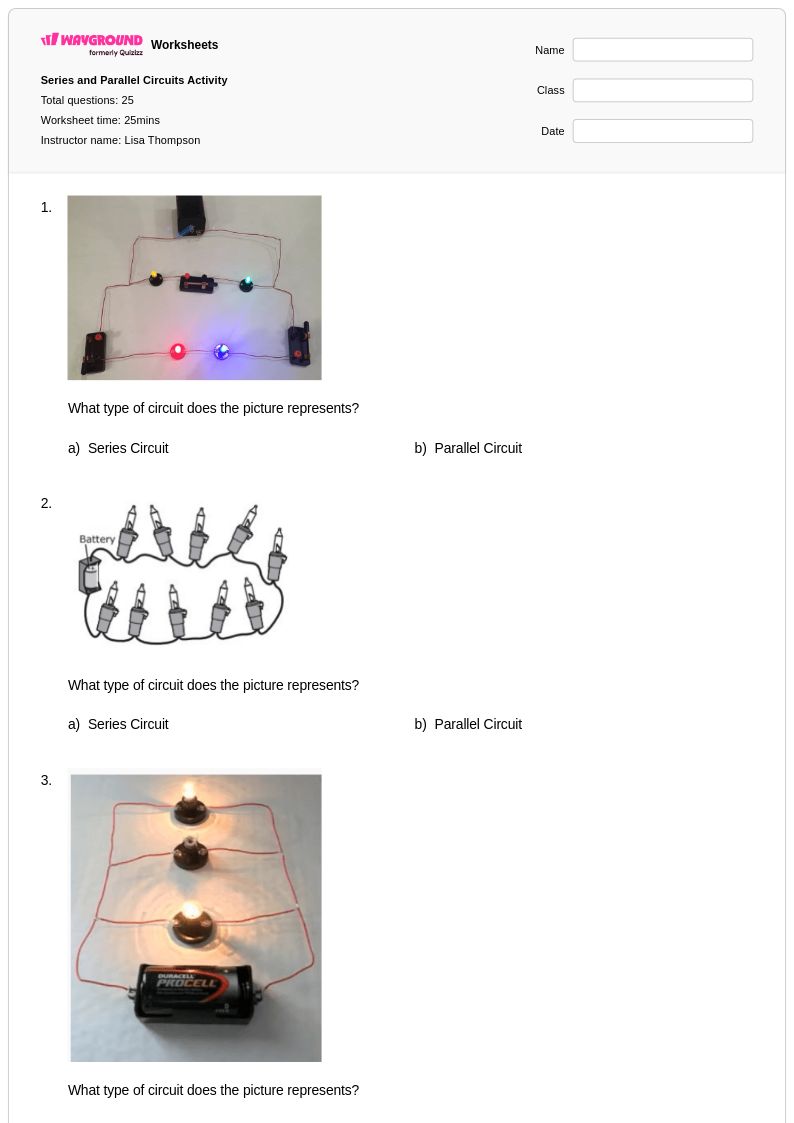
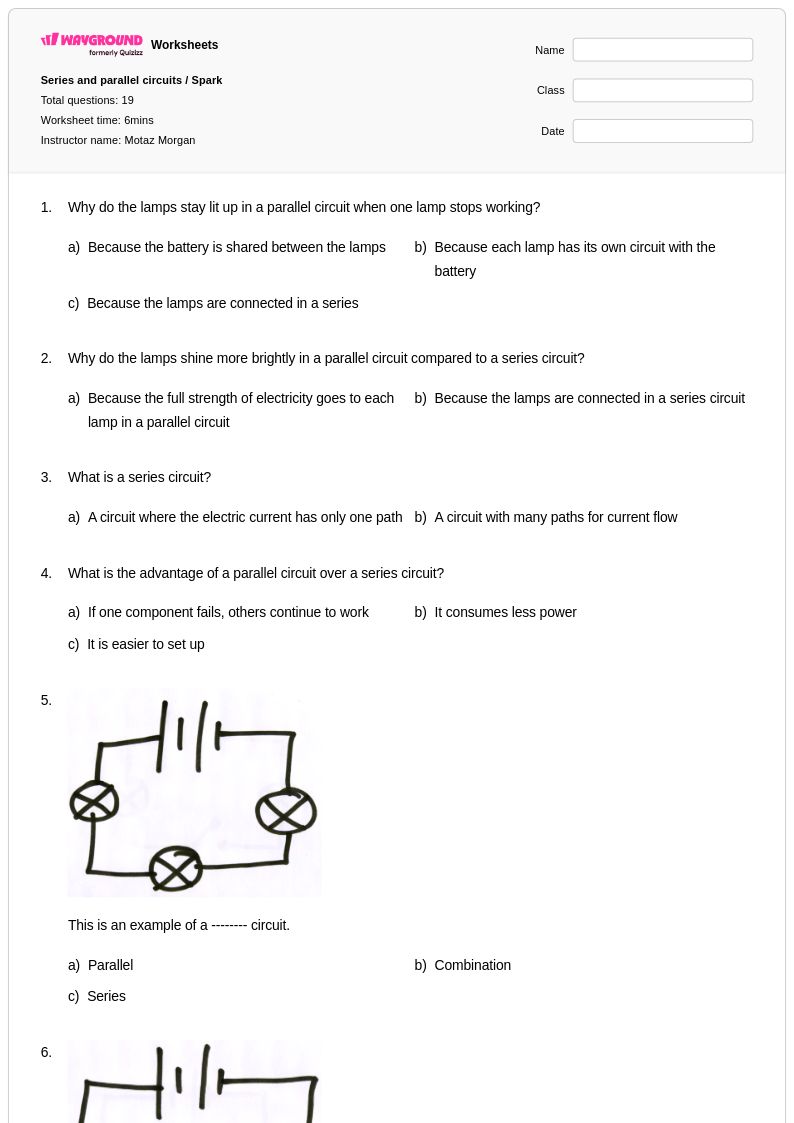
Class 6 parallel circuits worksheets from Wayground help students master electrical circuit concepts through engaging printables, practice problems, and comprehensive answer keys for effective physics learning.
Explore printable Parallel Circuits worksheets for Class 6
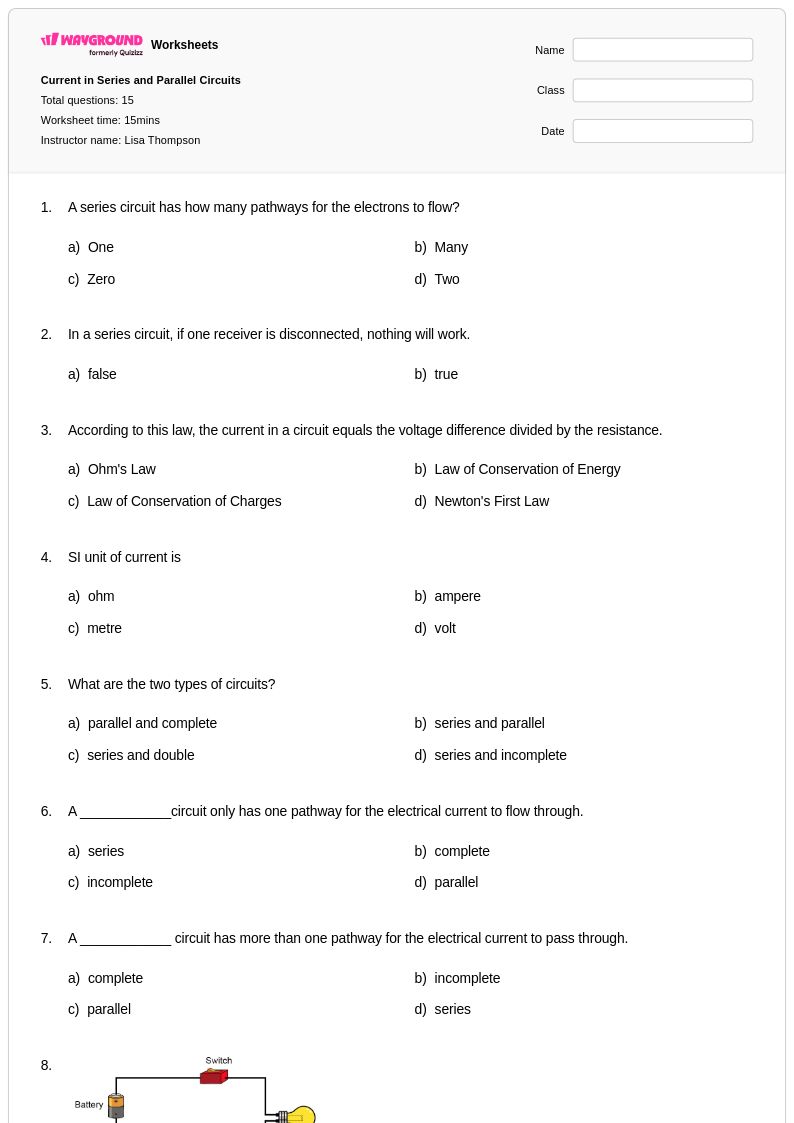
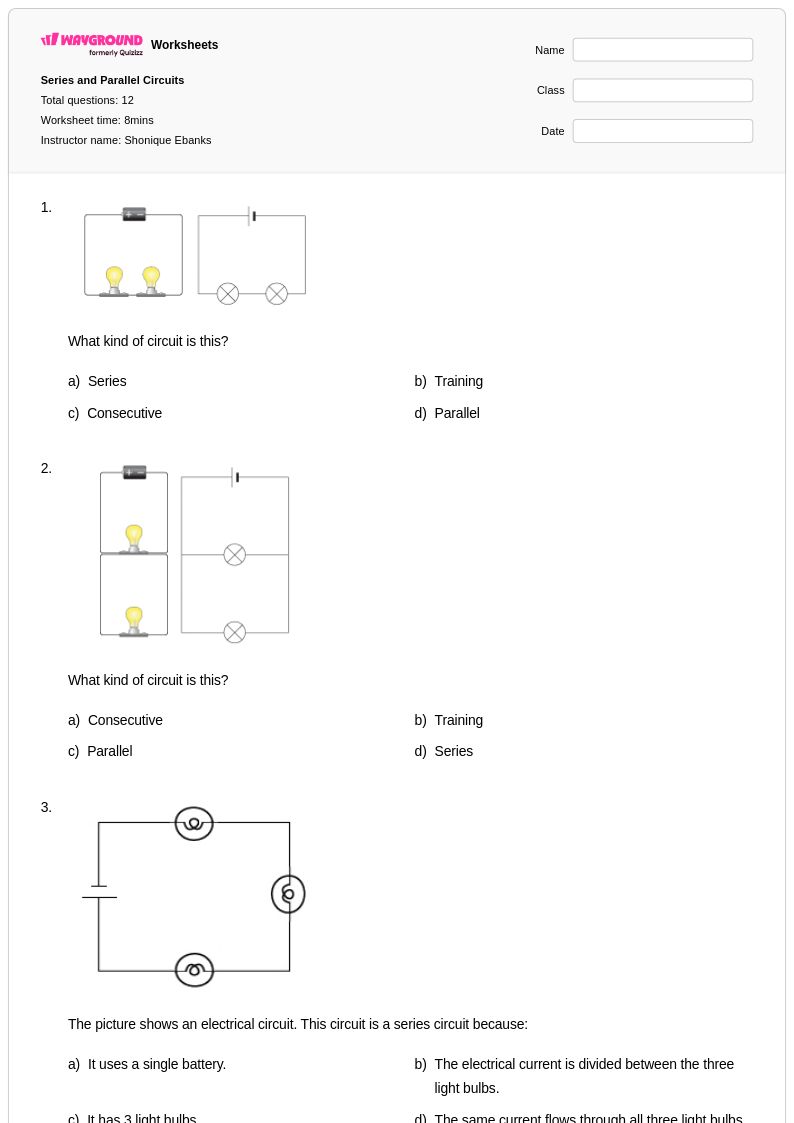
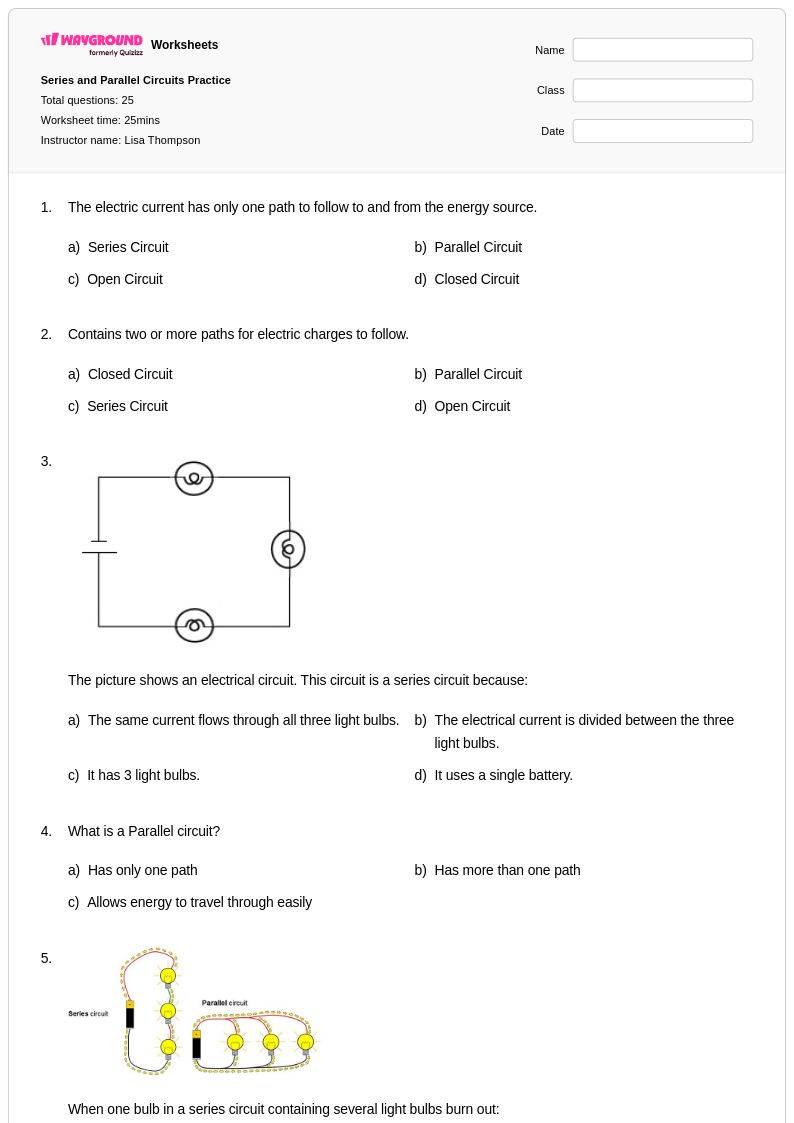
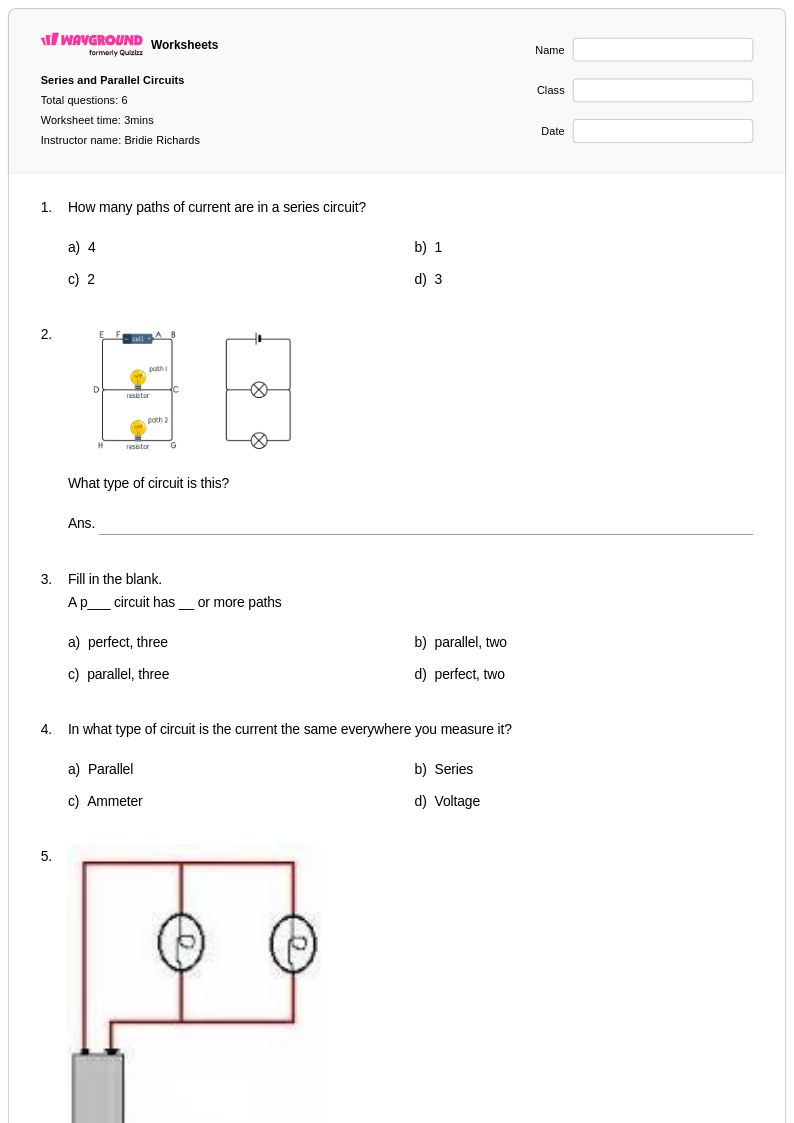
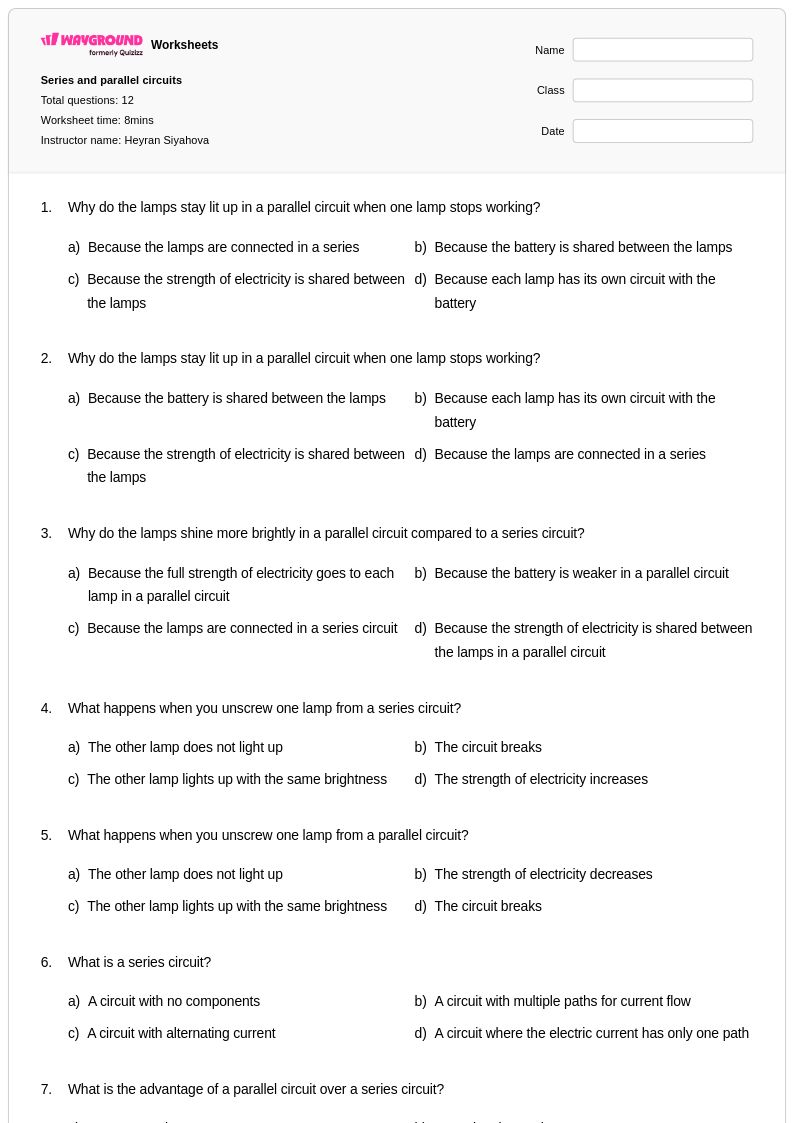
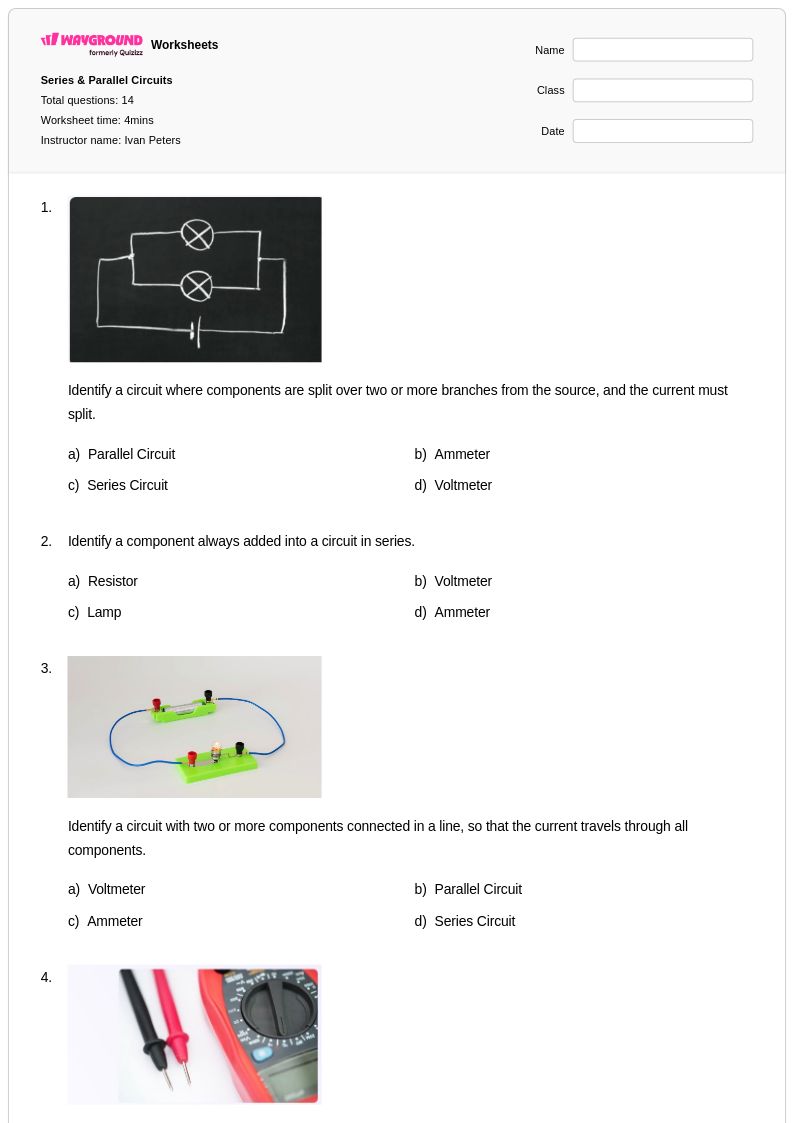
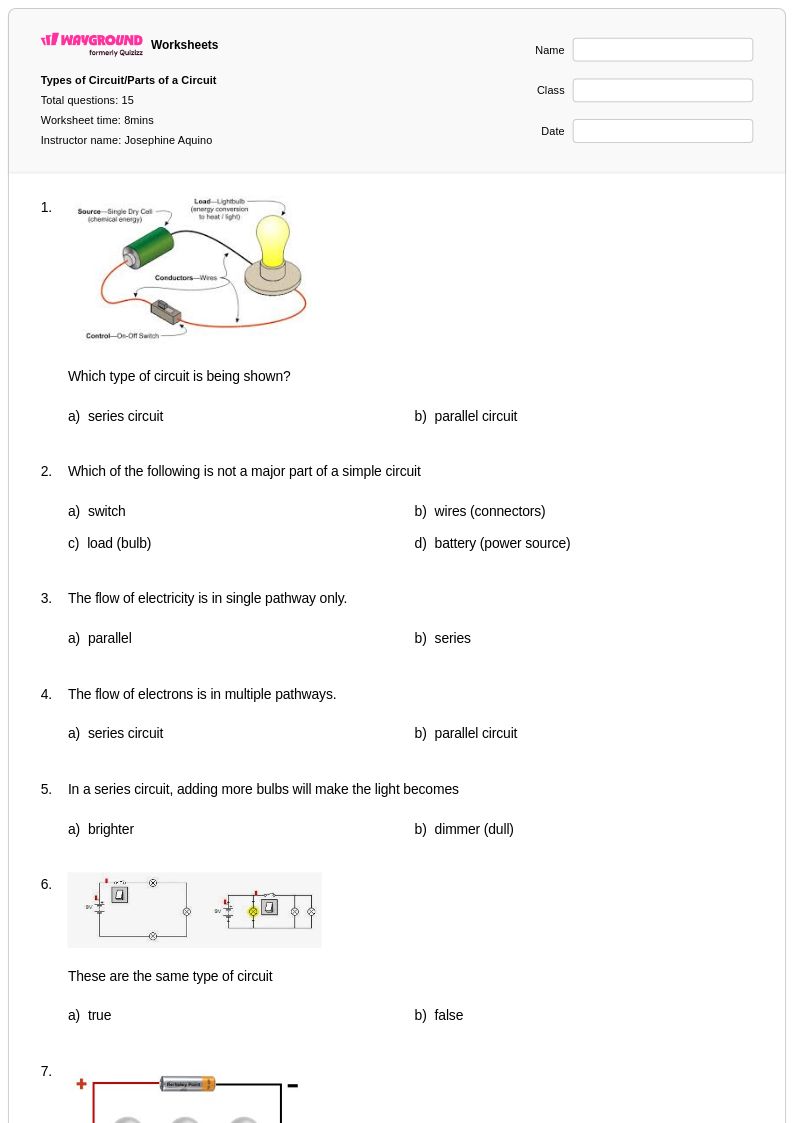
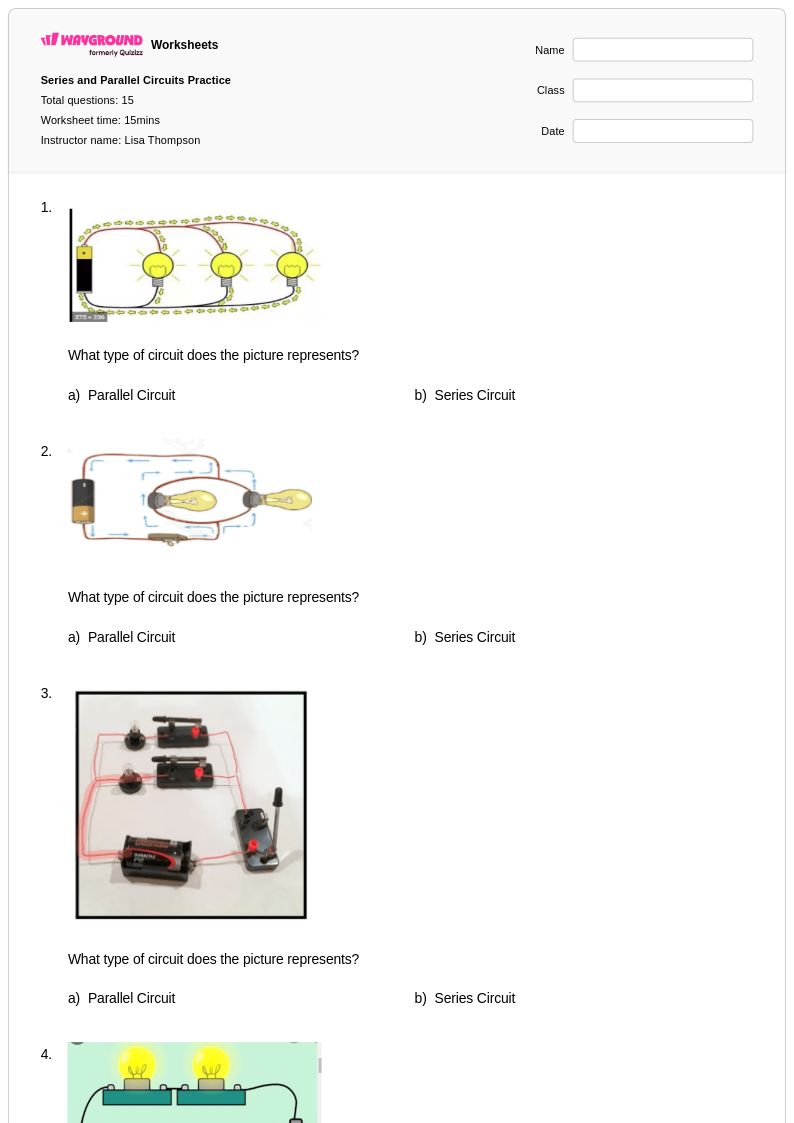
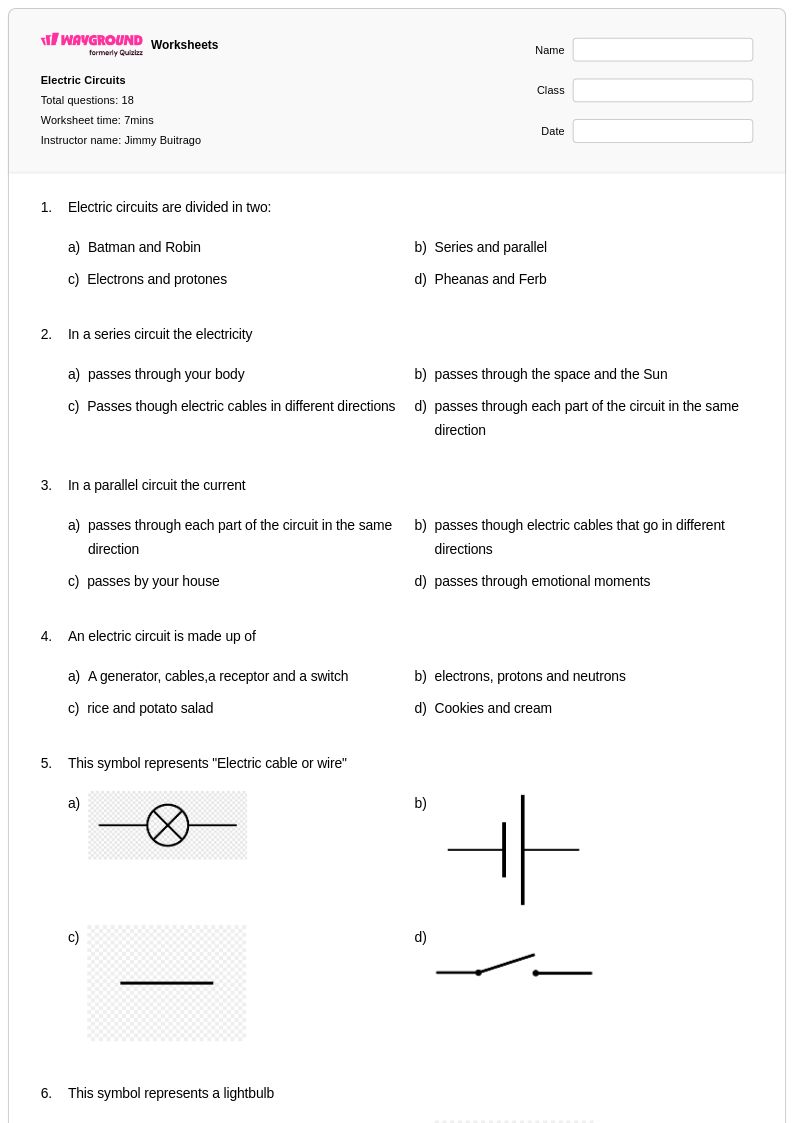
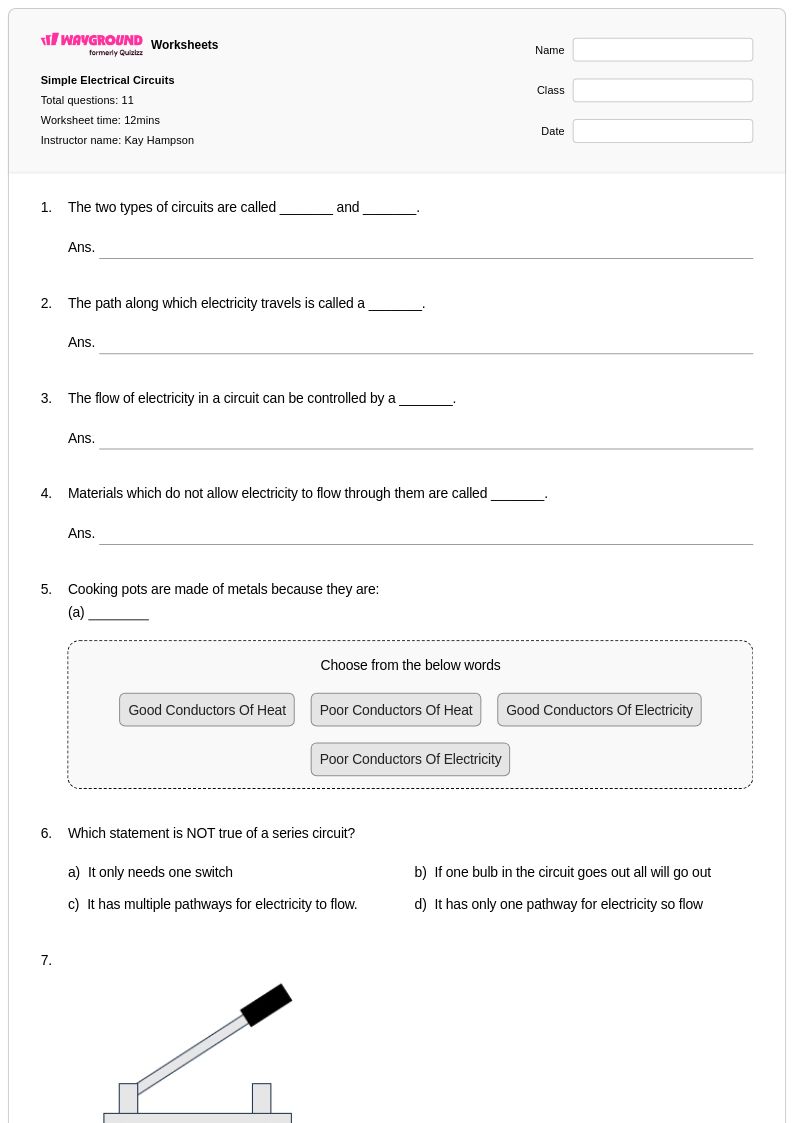
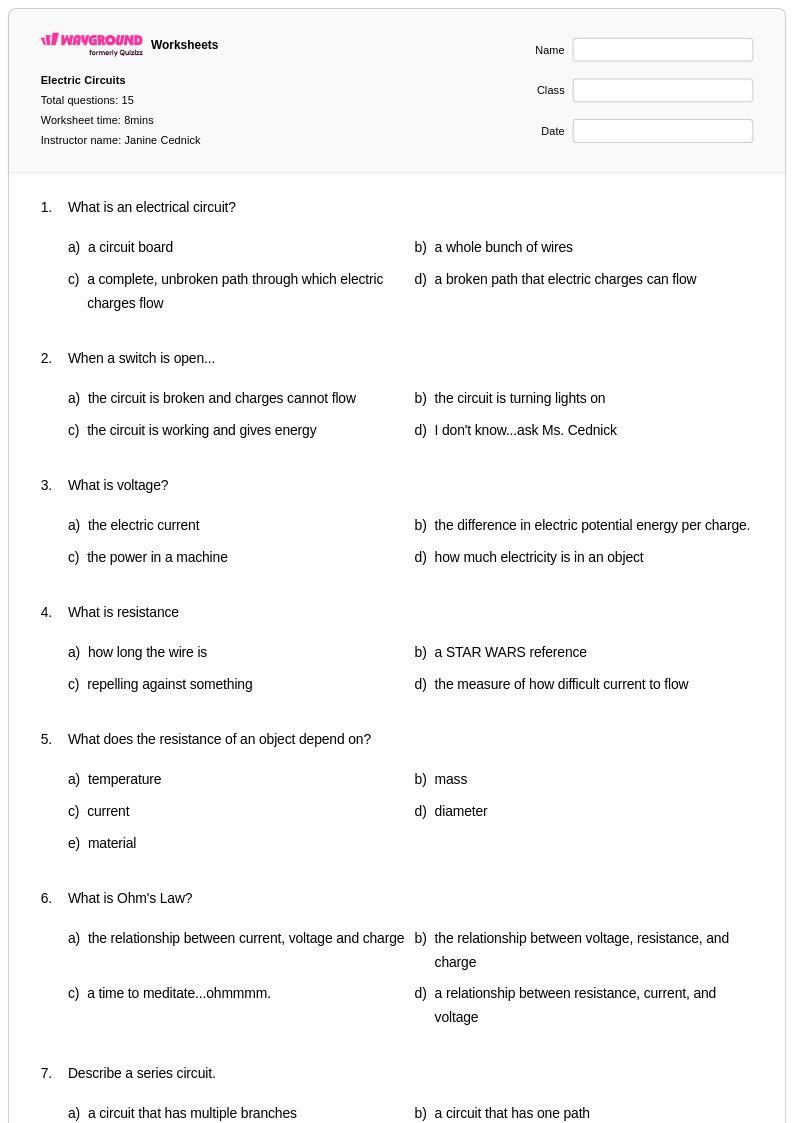
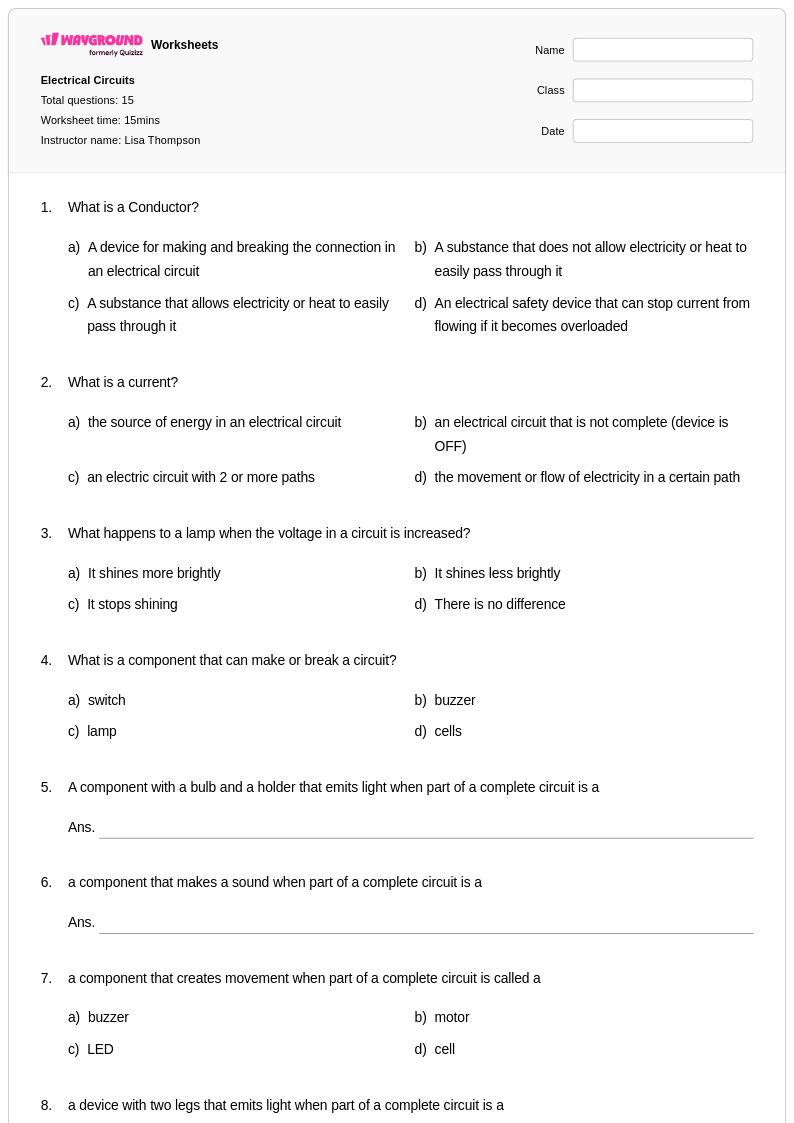
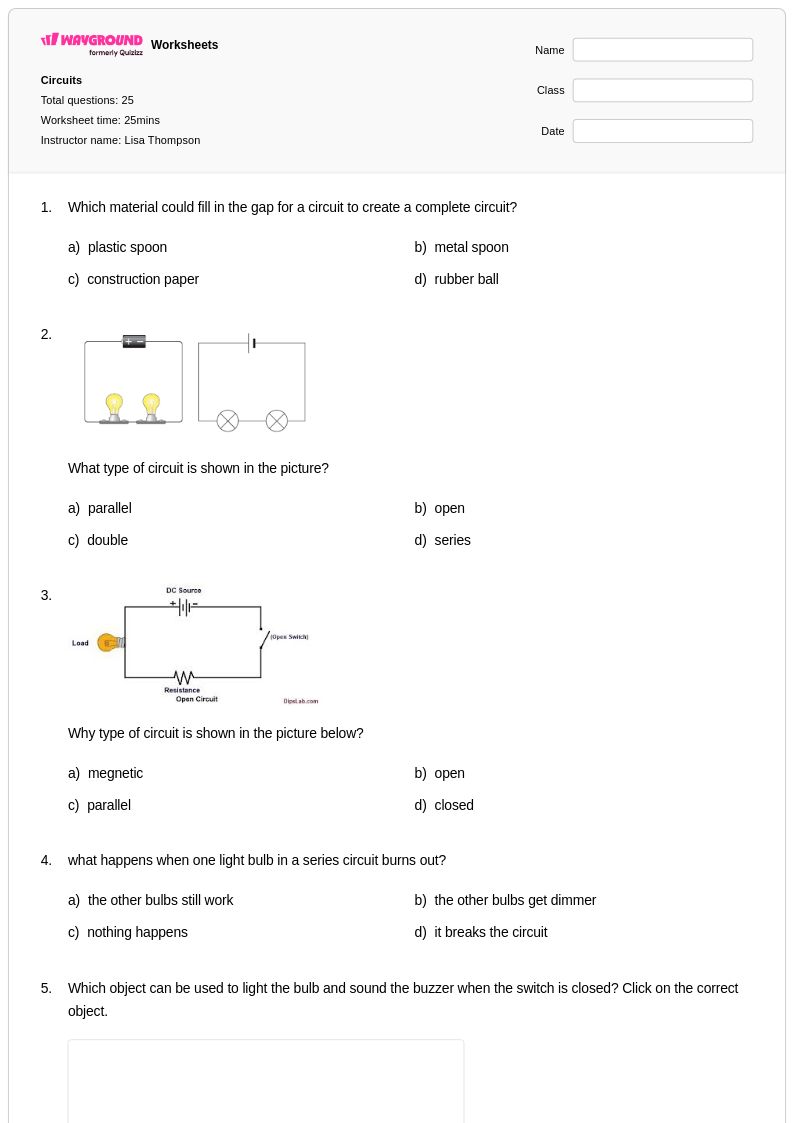
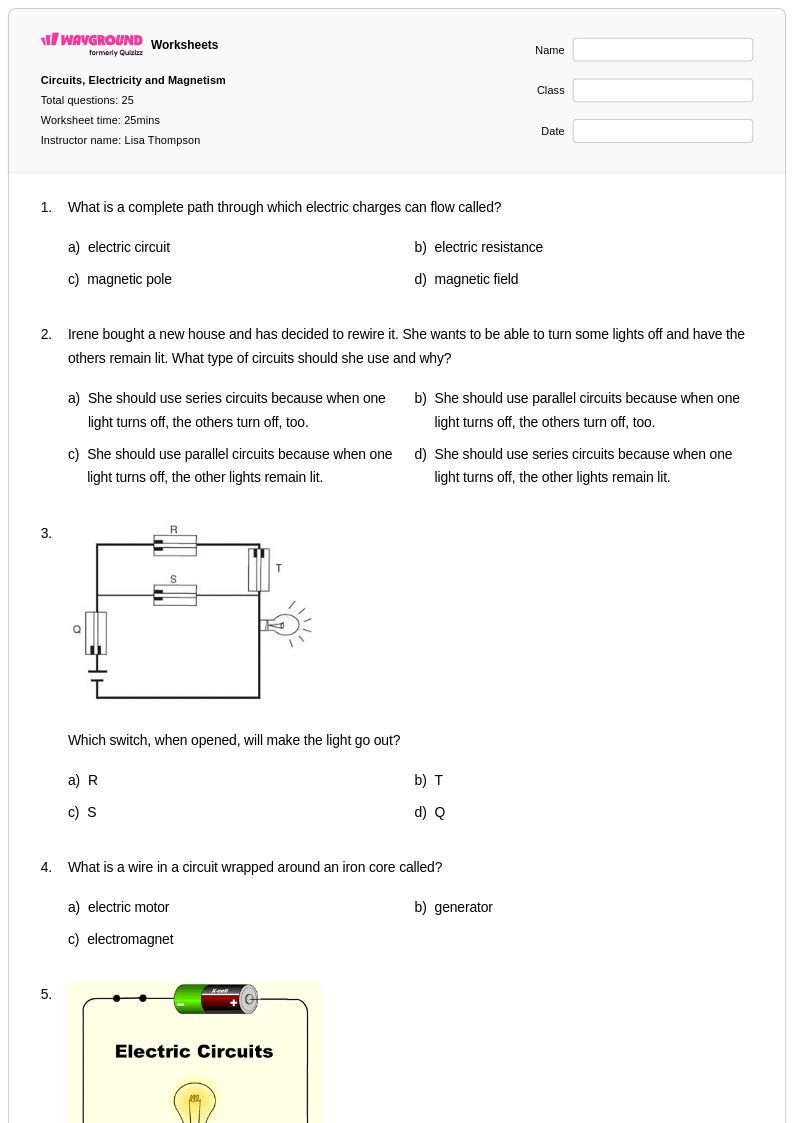
Parallel circuits worksheets for Class 6 students available through Wayground (formerly Quizizz) provide comprehensive practice in understanding how electrical components connect and function when arranged in parallel configurations. These expertly designed worksheets strengthen essential physics skills including circuit diagram analysis, current flow prediction, voltage distribution understanding, and component behavior identification. Students develop critical thinking abilities as they work through practice problems that challenge them to distinguish between parallel and series circuits, calculate electrical properties, and predict what happens when components are added or removed from parallel pathways. Each worksheet comes with a detailed answer key to support independent learning and self-assessment, while the free printable format ensures accessibility for all classroom environments and homework assignments.
Wayground (formerly Quizizz) supports educators with an extensive collection of parallel circuits worksheets created by millions of teachers who understand the specific learning needs of Class 6 physics students. The platform's robust search and filtering capabilities allow teachers to quickly locate resources that align with curriculum standards and match their students' skill levels, while differentiation tools enable customization for diverse learning needs and abilities. These versatile worksheets are available in both printable pdf formats for traditional classroom use and digital formats for technology-integrated instruction, making them ideal for lesson planning, targeted remediation sessions, enrichment activities, and regular skill practice. Teachers can easily modify existing worksheets or combine multiple resources to create comprehensive learning experiences that reinforce parallel circuit concepts through varied problem-solving approaches and real-world applications.
FAQs
How do I teach parallel circuits to students who are new to circuit analysis?
Start by contrasting parallel circuits with series circuits so students understand that in a parallel circuit, each branch has its own independent path for current flow and shares the same voltage across all branches. Use circuit diagrams to show how adding more branches increases total current while voltage remains constant. Physical demonstrations with simple bulb circuits help students see that removing one component does not interrupt the rest of the circuit, which builds intuition before moving to calculations.
What practice problems best help students understand parallel circuit calculations?
Students benefit most from problems that progress in complexity: begin with identifying parallel configurations in diagrams, then move to calculating equivalent resistance using the reciprocal formula, and finally solve for branch currents using Ohm's law. Problems that require students to find total current from individual branch currents reinforce the additive nature of current in parallel circuits. Mixing conceptual questions with quantitative problems ensures students understand the principles behind the math, not just the procedure.
What mistakes do students most commonly make when working with parallel circuits?
The most frequent error is applying the series resistance formula (adding resistors directly) to parallel circuits instead of using the reciprocal formula, which always produces an equivalent resistance lower than the smallest individual resistor. Students also commonly confuse which quantity stays constant: in parallel circuits, voltage is the same across all branches while current divides, which is the opposite of series circuits. Requiring students to label voltage and current values on a circuit diagram before solving forces them to confront these relationships explicitly.
How does voltage behave differently in parallel circuits compared to series circuits?
In a parallel circuit, all branches connected between the same two nodes share the same voltage, regardless of the resistance or components in each branch. This contrasts with series circuits, where voltage is distributed across components proportionally to their resistance. Because voltage is constant across each branch, students can use Ohm's law directly for each branch independently without needing to account for the other branches first.
How do I use Wayground's parallel circuits worksheets in my classroom?
Wayground's parallel circuits worksheets are available as printable PDFs for traditional classroom use and in digital formats for technology-integrated environments, giving teachers flexibility across different instructional settings. Teachers can also host worksheets as a quiz directly on Wayground, enabling real-time student responses and immediate feedback. All worksheets include complete answer keys, supporting both teacher-led review and independent student self-assessment. For students who need additional support, Wayground's accommodation settings allow teachers to enable features such as read aloud, extended time, or reduced answer choices on an individual basis.
How can I differentiate parallel circuits instruction for students at different skill levels?
Differentiation in parallel circuits instruction works well when foundational students focus on circuit diagram interpretation and single-branch Ohm's law problems before attempting multi-branch calculations, while advanced students tackle complex multi-branch networks or real-world application problems. On Wayground, teachers can apply individual accommodations such as read aloud for students who struggle with technical vocabulary, reduced answer choices to lower cognitive load, or extended time per question, all without other students being notified. These settings are saved per student and carry over to future sessions, reducing the administrative burden of re-entering accommodations each time.