Free Printable Coulombic Attraction Worksheets for Class 12
Explore free Class 12 Coulombic Attraction worksheets and printables from Wayground that help students master electrostatic forces between charged particles through guided practice problems and comprehensive answer keys.
Explore printable Coulombic Attraction worksheets for Class 12
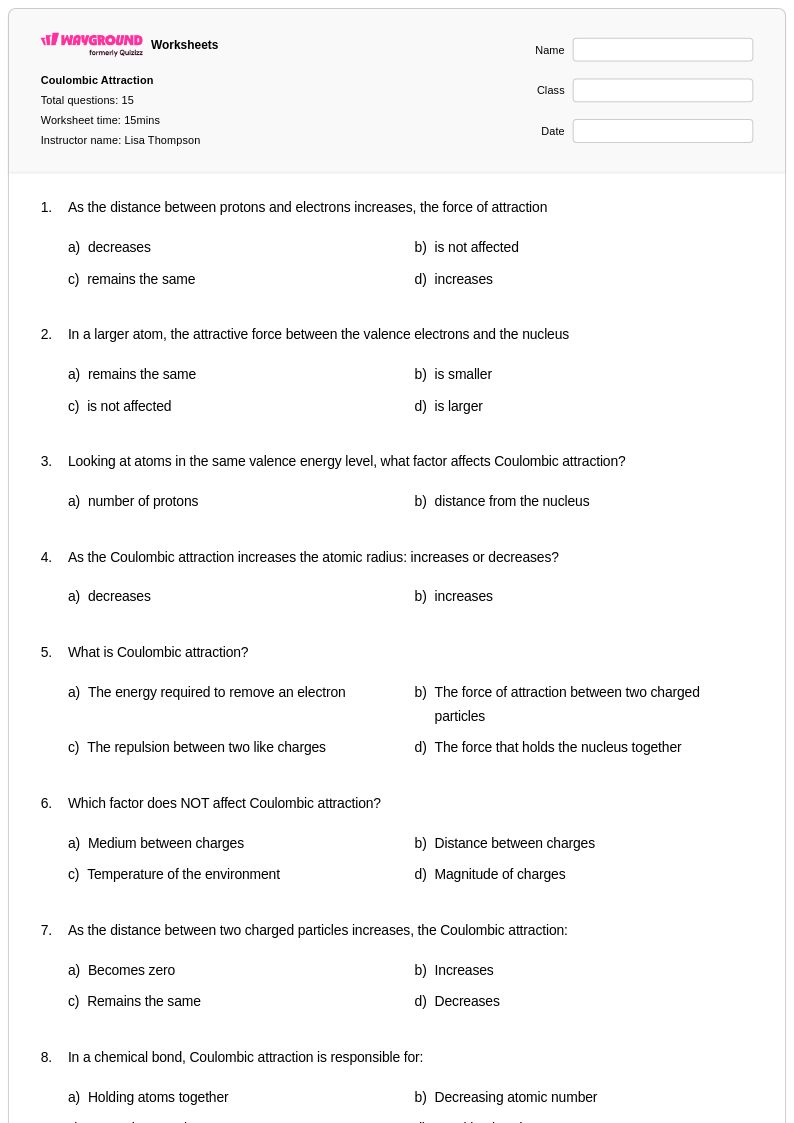
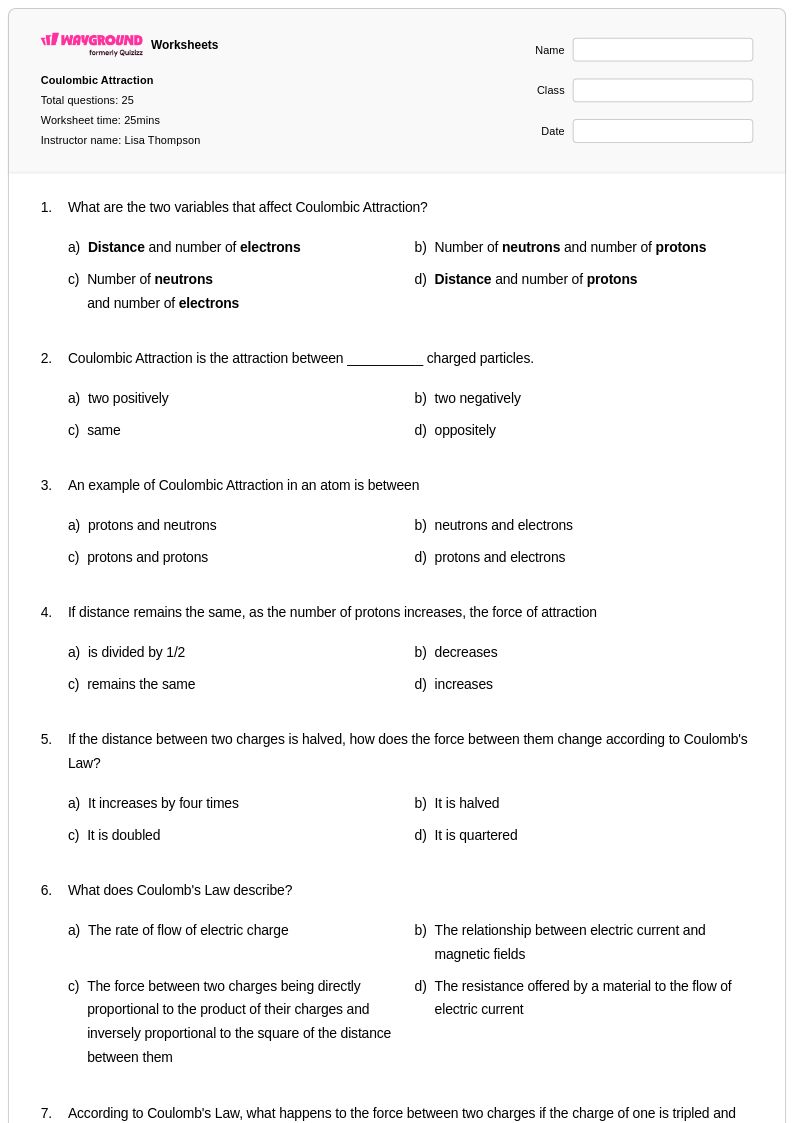
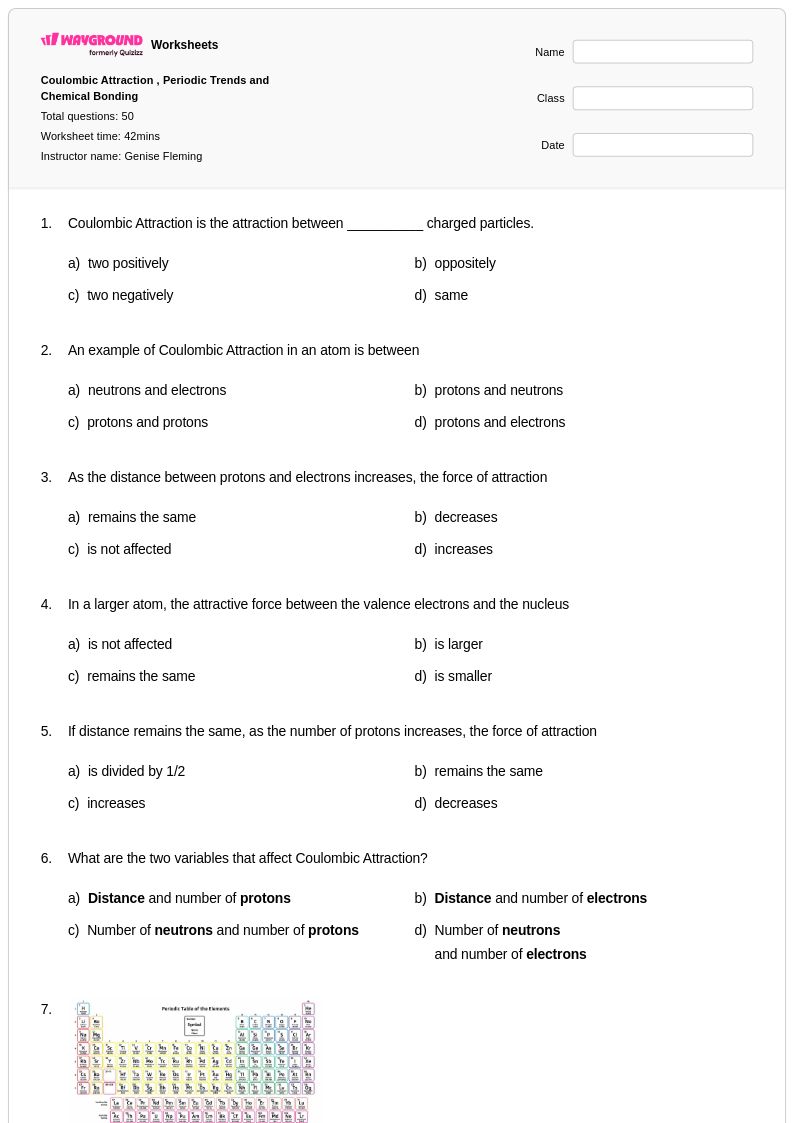
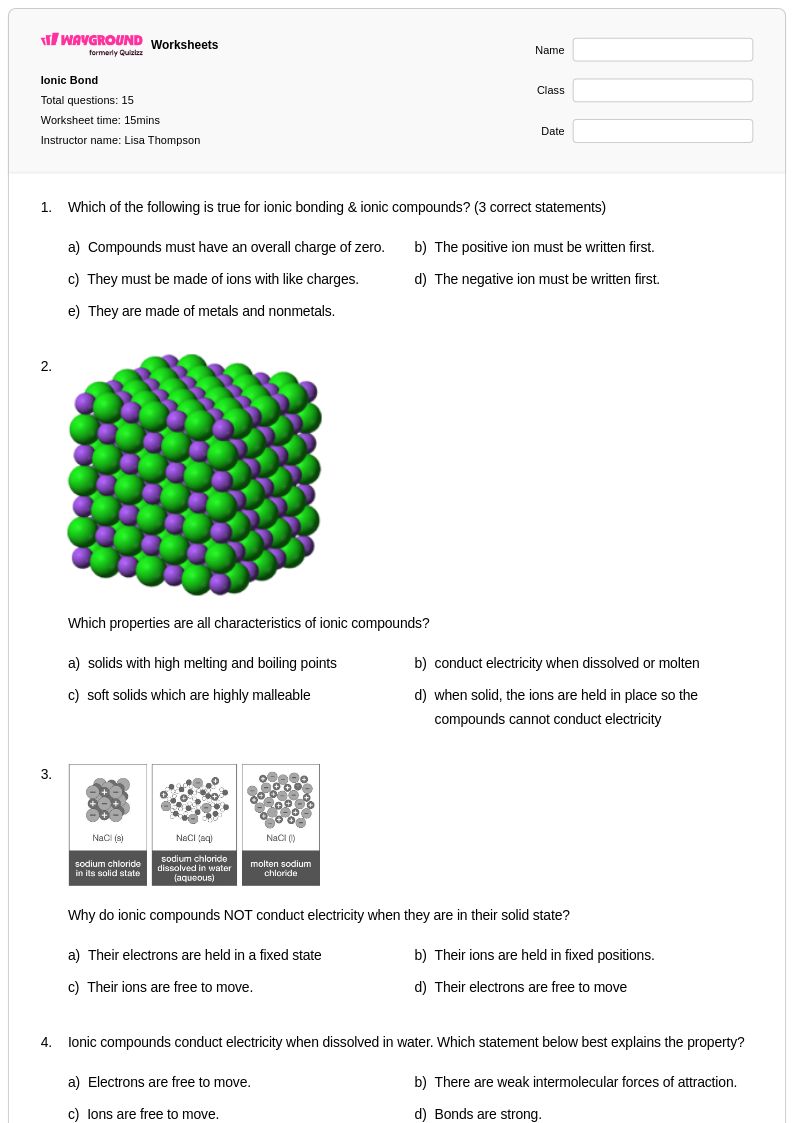
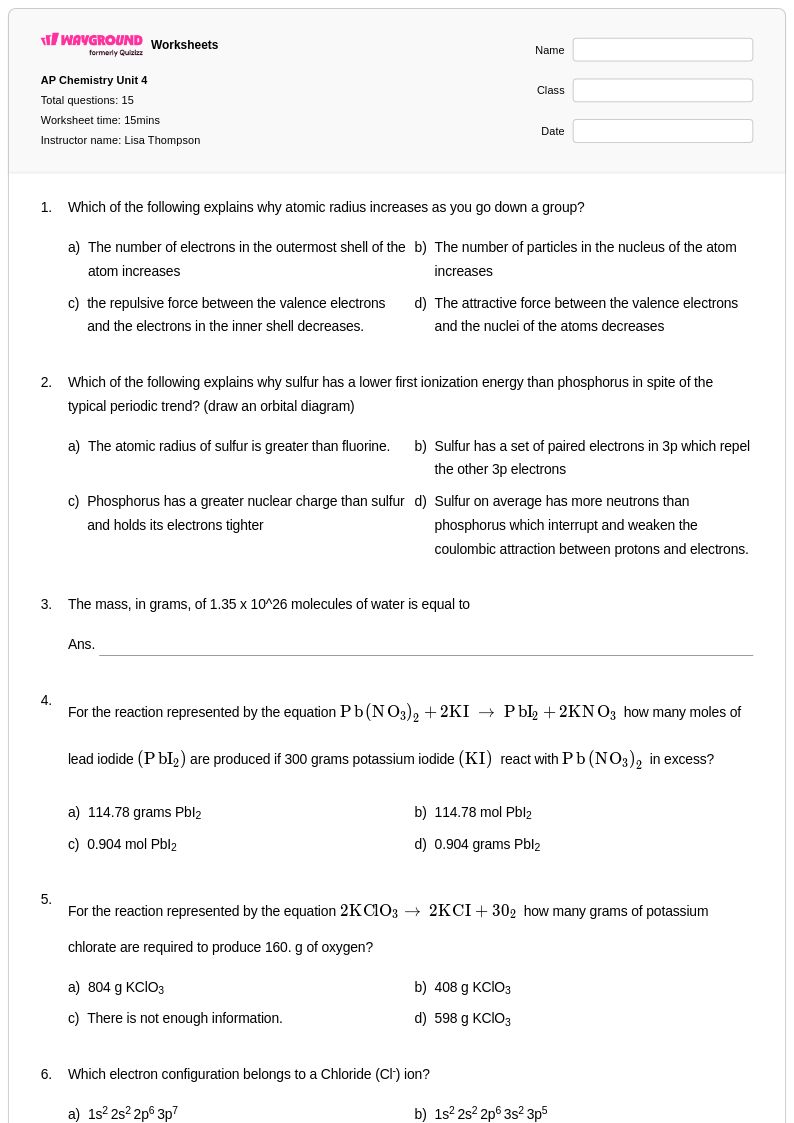
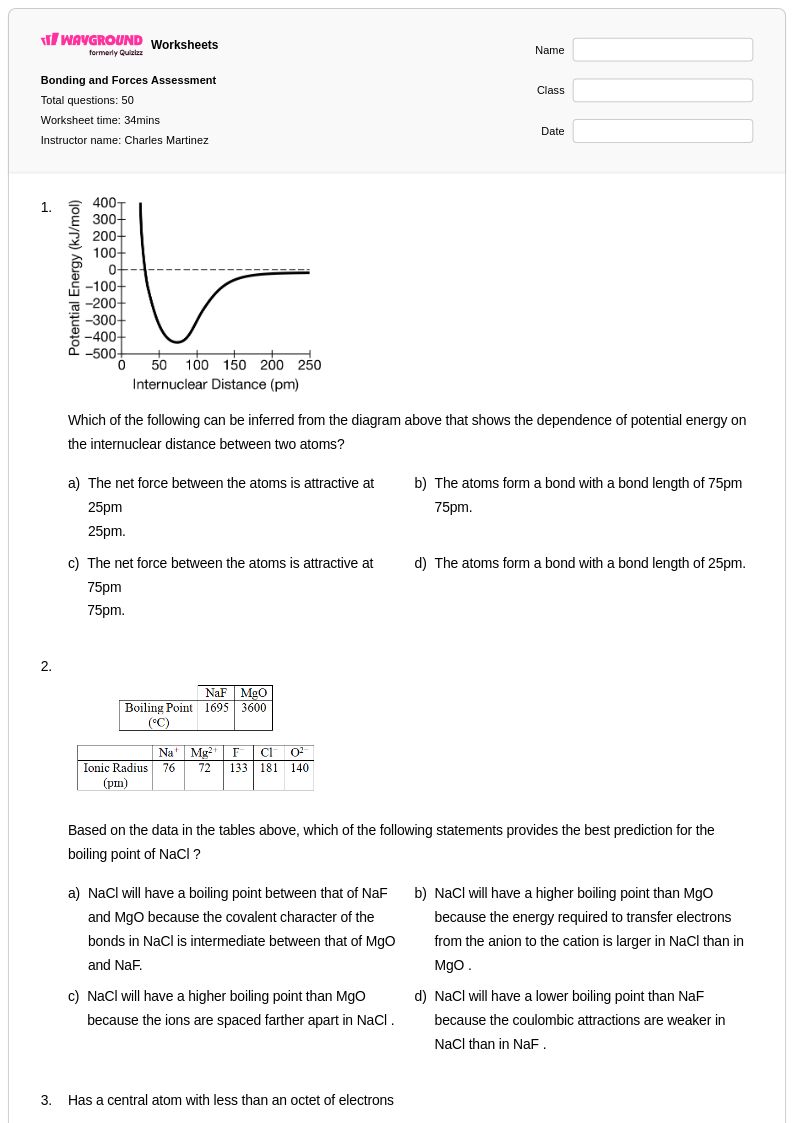
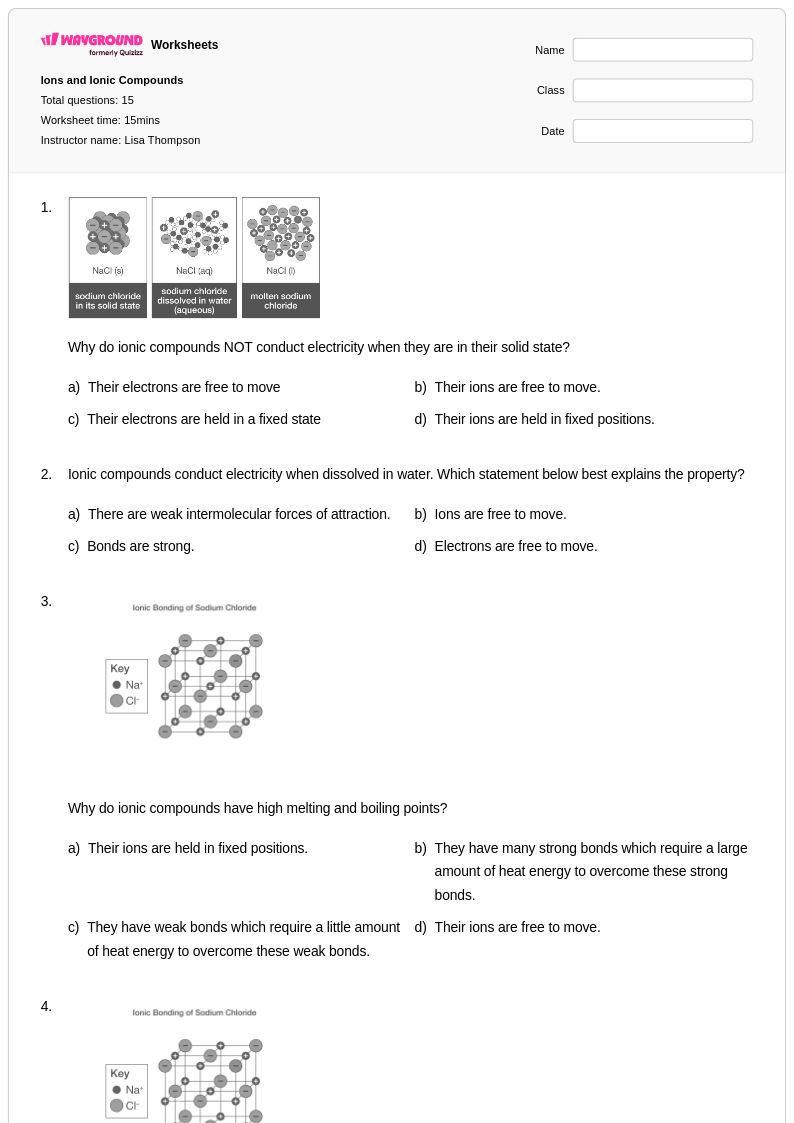
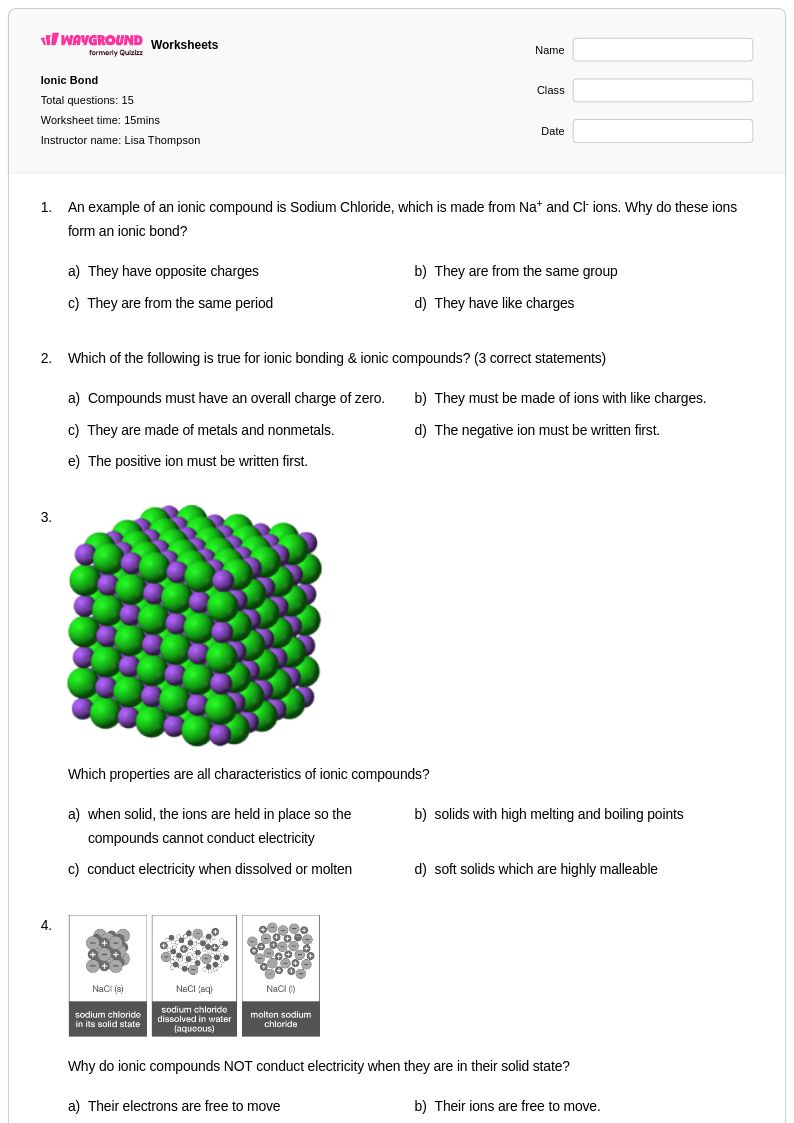
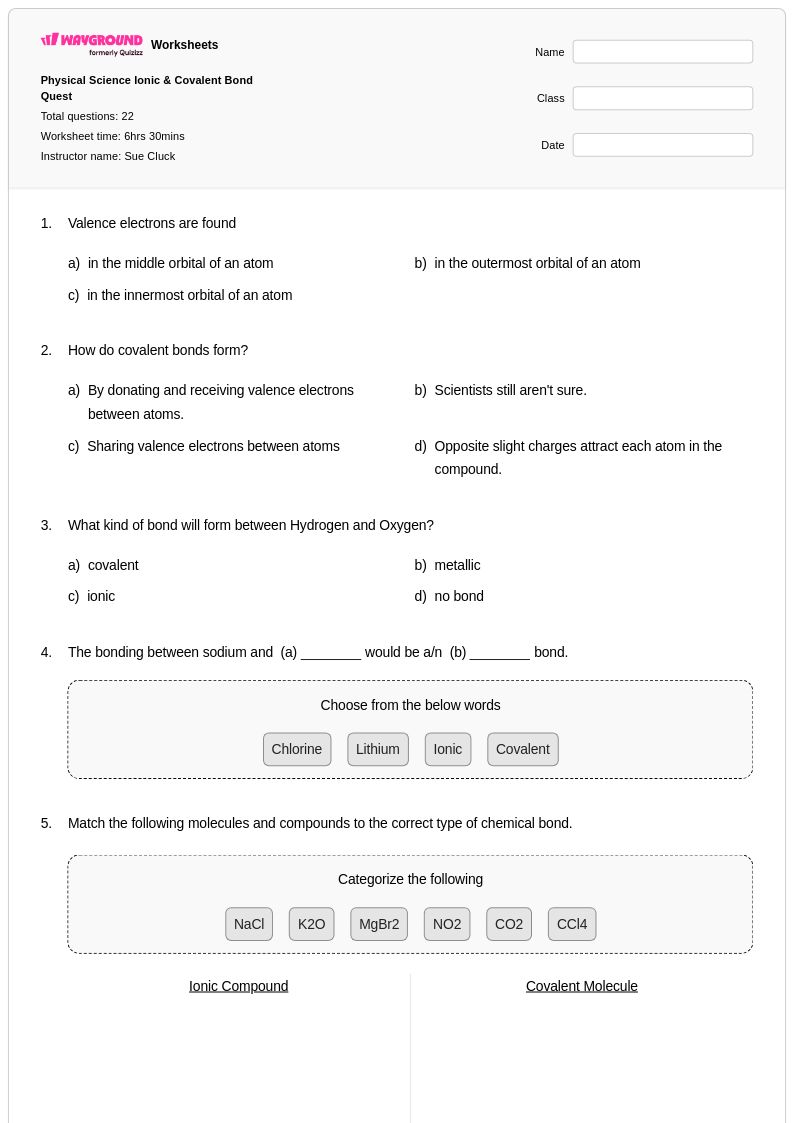
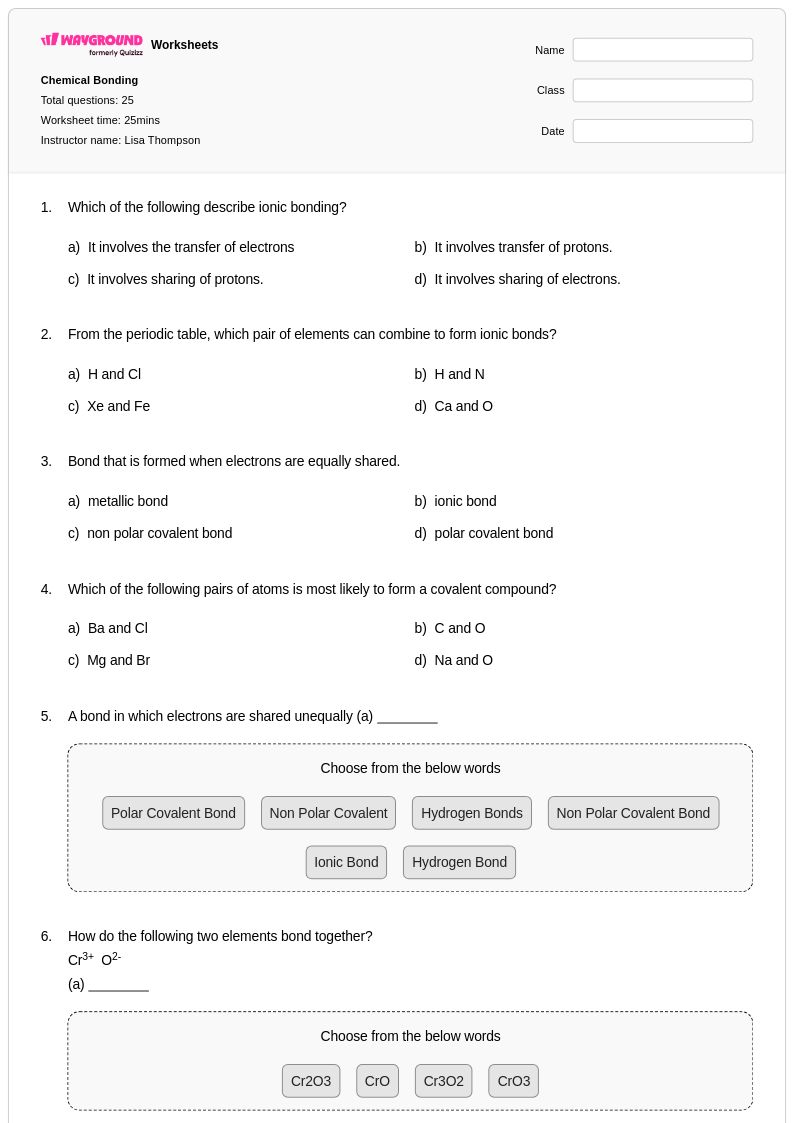
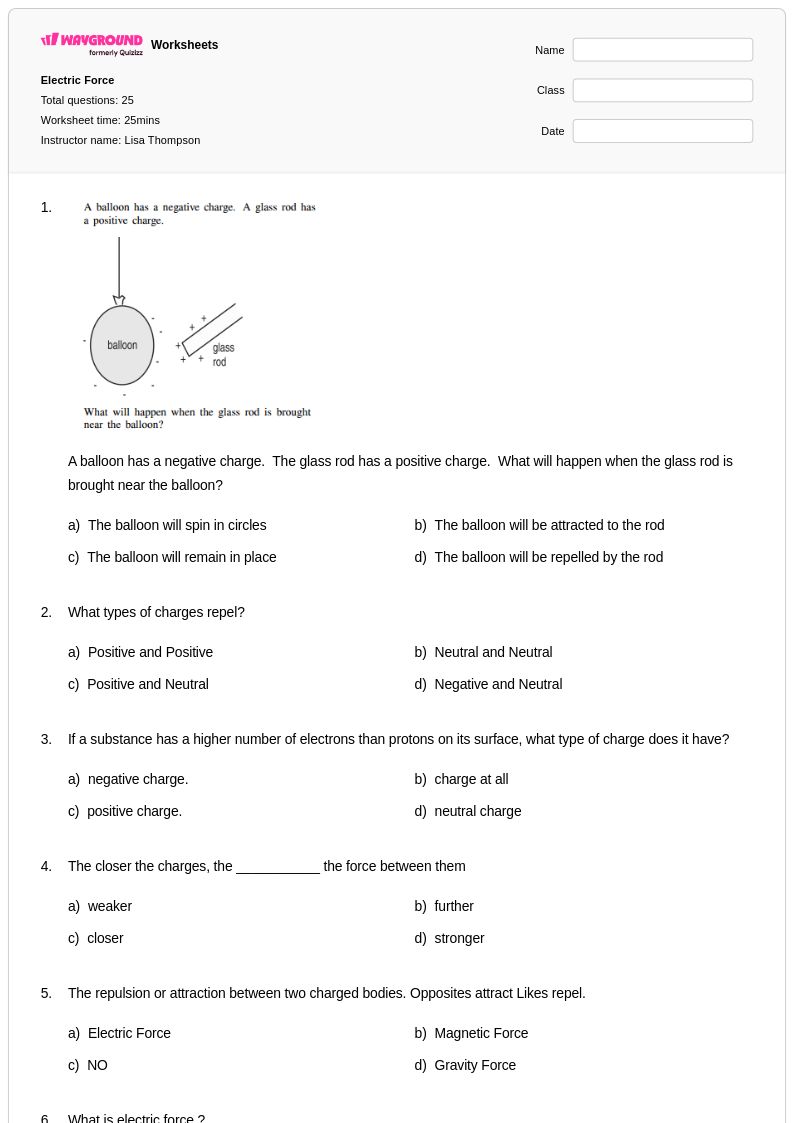
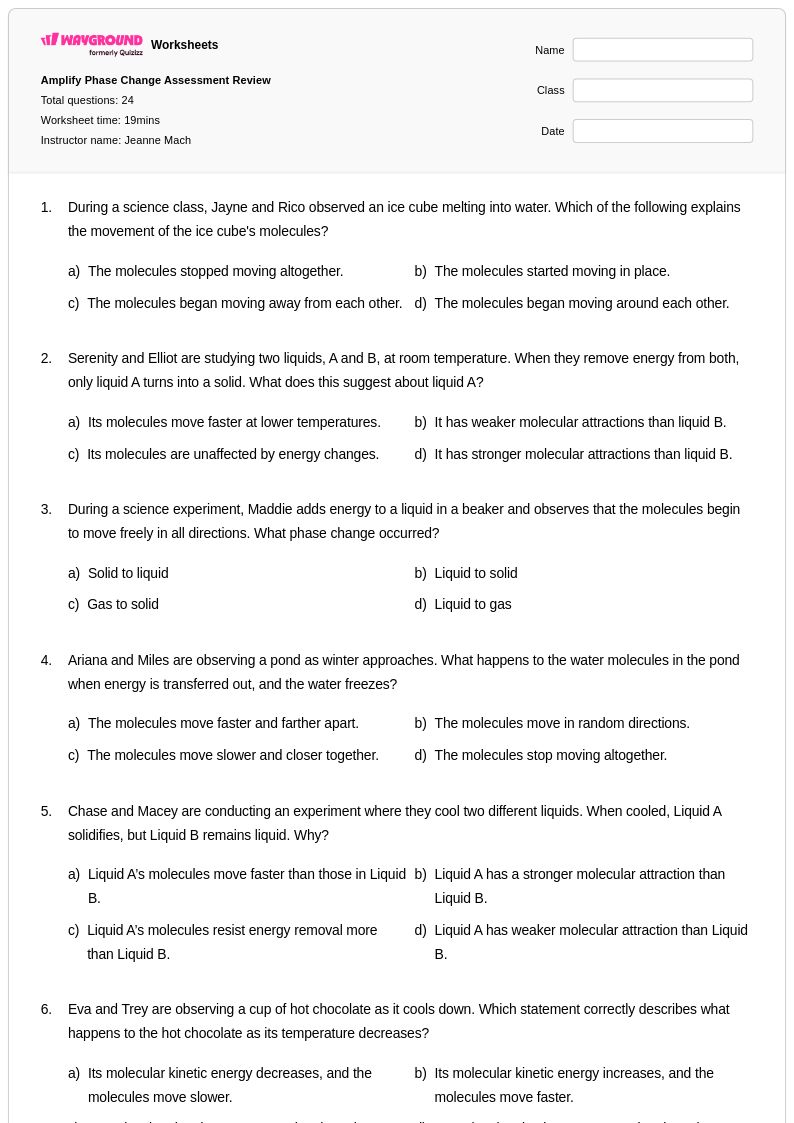
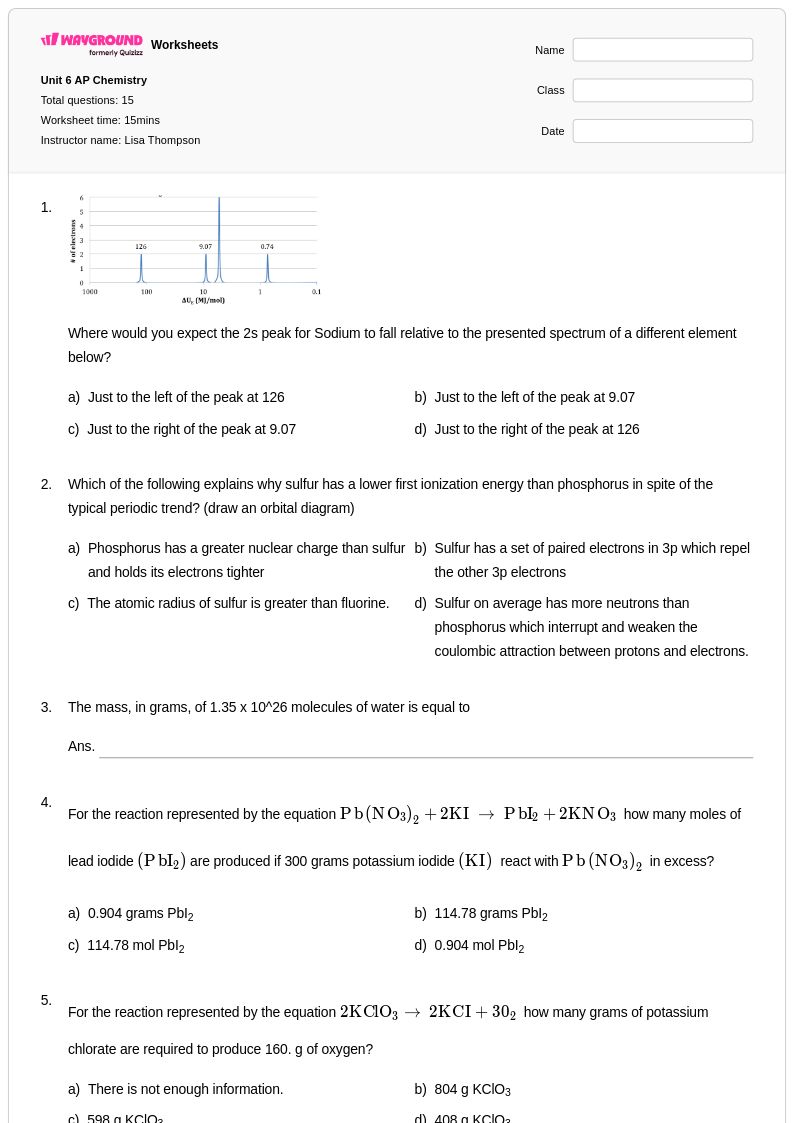
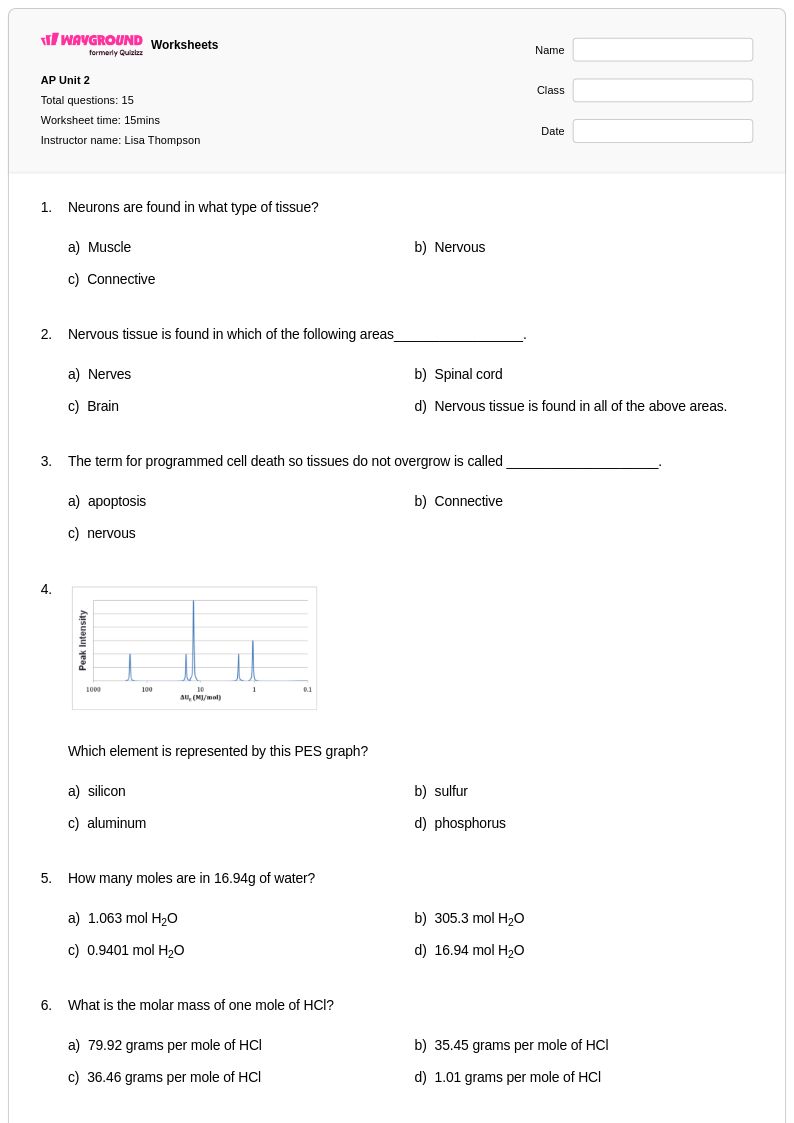
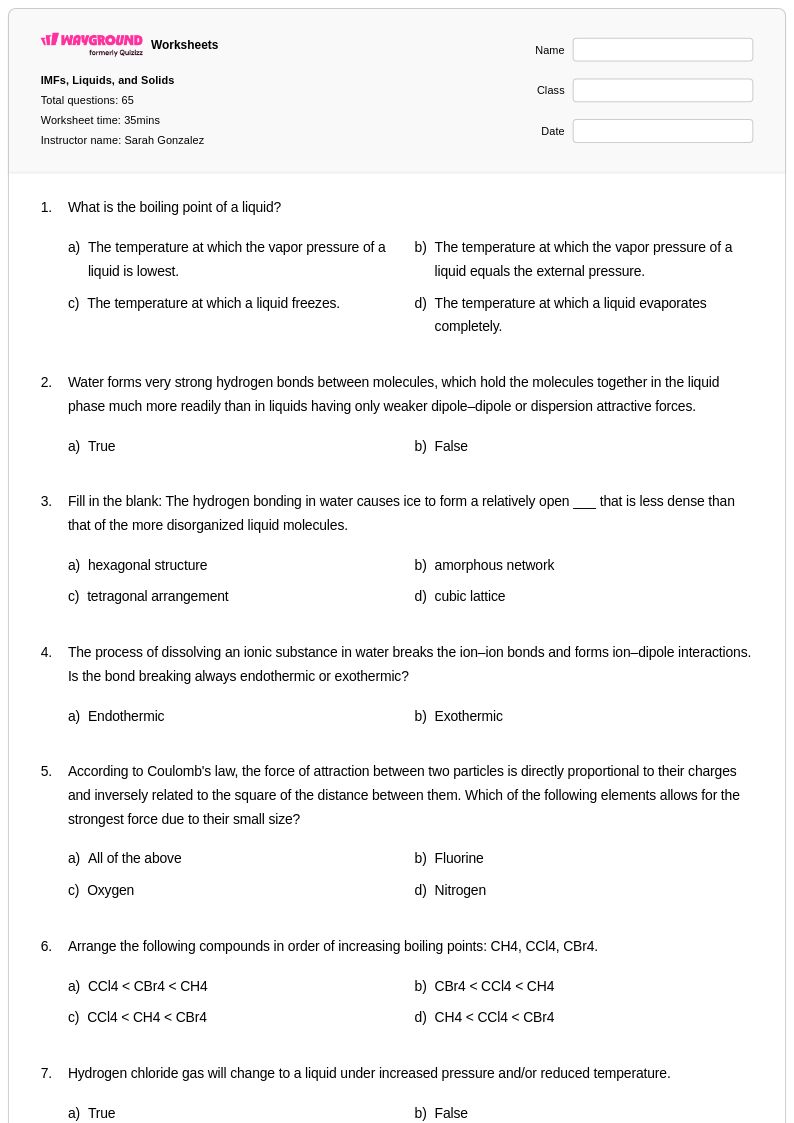
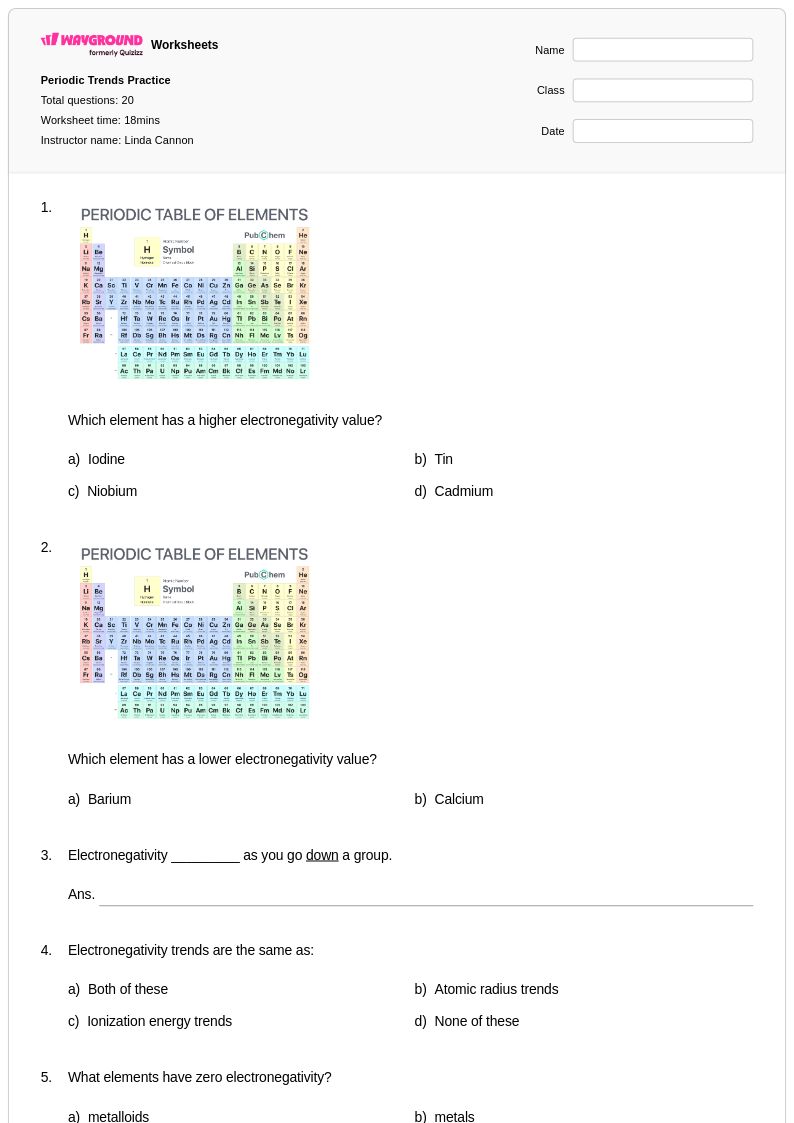
Coulombic attraction worksheets for Class 12 students available through Wayground (formerly Quizizz) provide comprehensive practice with the fundamental electrostatic forces that govern atomic and molecular behavior. These expertly designed resources help students master critical concepts including the relationship between charge magnitude and distance in determining attractive and repulsive forces, the role of Coulombic attraction in ionic bonding, and how these forces influence periodic trends such as atomic radius and ionization energy. The collection includes detailed practice problems that challenge students to calculate electrostatic potential energy, analyze lattice energy trends, and predict molecular geometry based on charge distribution. Each worksheet comes with a complete answer key and is available as a free printable pdf, making it easy for educators to incorporate targeted skill-building exercises into their advanced chemistry curriculum.
Wayground (formerly Quizizz) empowers chemistry teachers with millions of educator-created Coulombic attraction resources that streamline lesson planning and enhance student learning outcomes. The platform's robust search and filtering capabilities allow instructors to quickly locate worksheets aligned with specific chemistry standards and learning objectives, while built-in differentiation tools enable seamless customization for varying ability levels within the classroom. Teachers can easily modify existing content or create entirely new practice sets, with all materials available in both digital and printable pdf formats to accommodate diverse teaching environments. This extensive worksheet collection supports effective remediation for students struggling with electrostatic concepts, provides enrichment opportunities for advanced learners ready to explore complex ionic interactions, and offers consistent skill practice essential for mastering the quantitative aspects of Coulombic forces that form the foundation of chemical bonding theory.
FAQs
How do I teach Coulombic attraction in chemistry class?
Start by grounding students in the two variables that govern electrostatic force: charge magnitude and distance between ions. Use concrete ion pair comparisons (e.g., Na⁺/Cl⁻ vs. Mg²⁺/O²⁻) to show how increasing charge strengthens attraction, then introduce distance by comparing ionic radii across a period. Connecting Coulombic attraction to observable trends like lattice energy, melting point, and ionic radius gives students a conceptual anchor before they attempt calculations.
What practice problems help students master Coulombic attraction?
Effective practice moves students from qualitative comparisons to quantitative reasoning. Begin with exercises that ask students to rank ion pairs by attraction strength based on charge and radius alone, then progress to problems applying Coulomb's law with numerical values. Including lattice energy calculations and periodic trend questions ensures students can connect the mathematical relationship to real chemical behavior.
What mistakes do students commonly make when learning Coulombic attraction?
The most frequent error is treating charge and distance as equally weighted factors without recognizing that both affect attraction in inverse and direct ways respectively. Students also confuse ionic radius trends, particularly forgetting that cations are smaller than their parent atoms and anions are larger, which leads to incorrect distance comparisons. Another common misconception is equating stronger Coulombic attraction with higher reactivity rather than higher lattice energy or melting point.
How does Coulombic attraction relate to periodic trends?
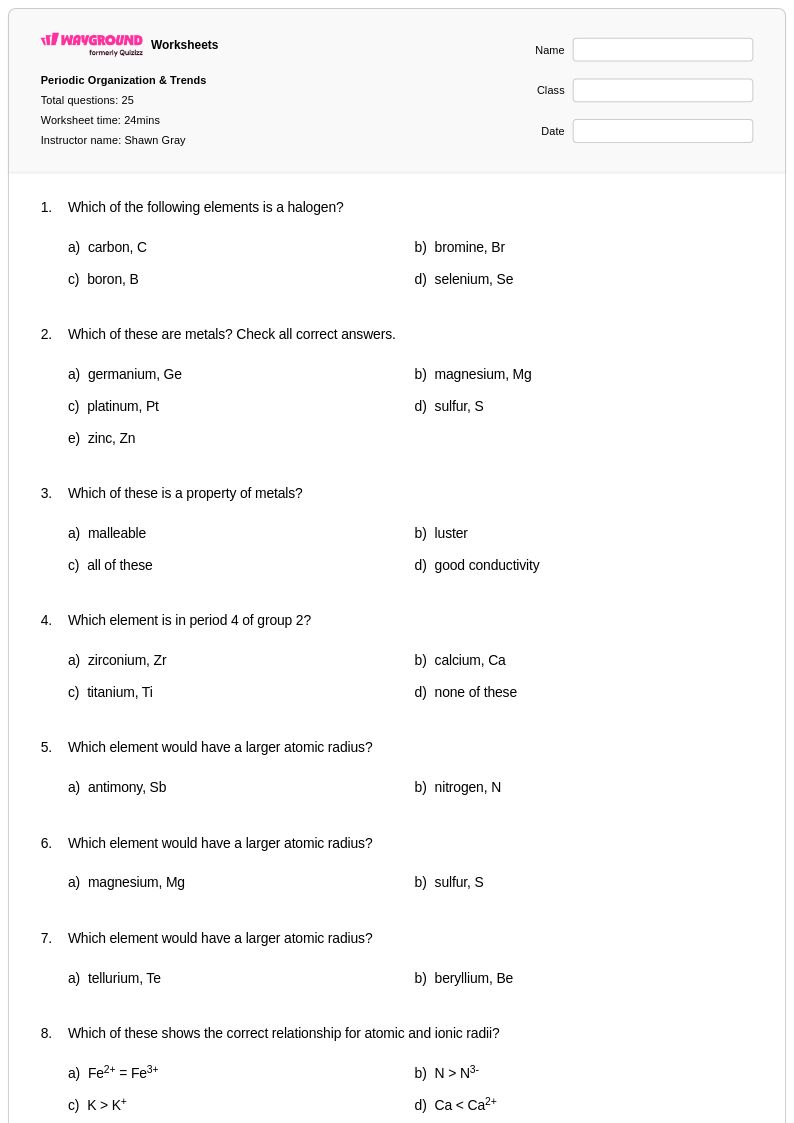
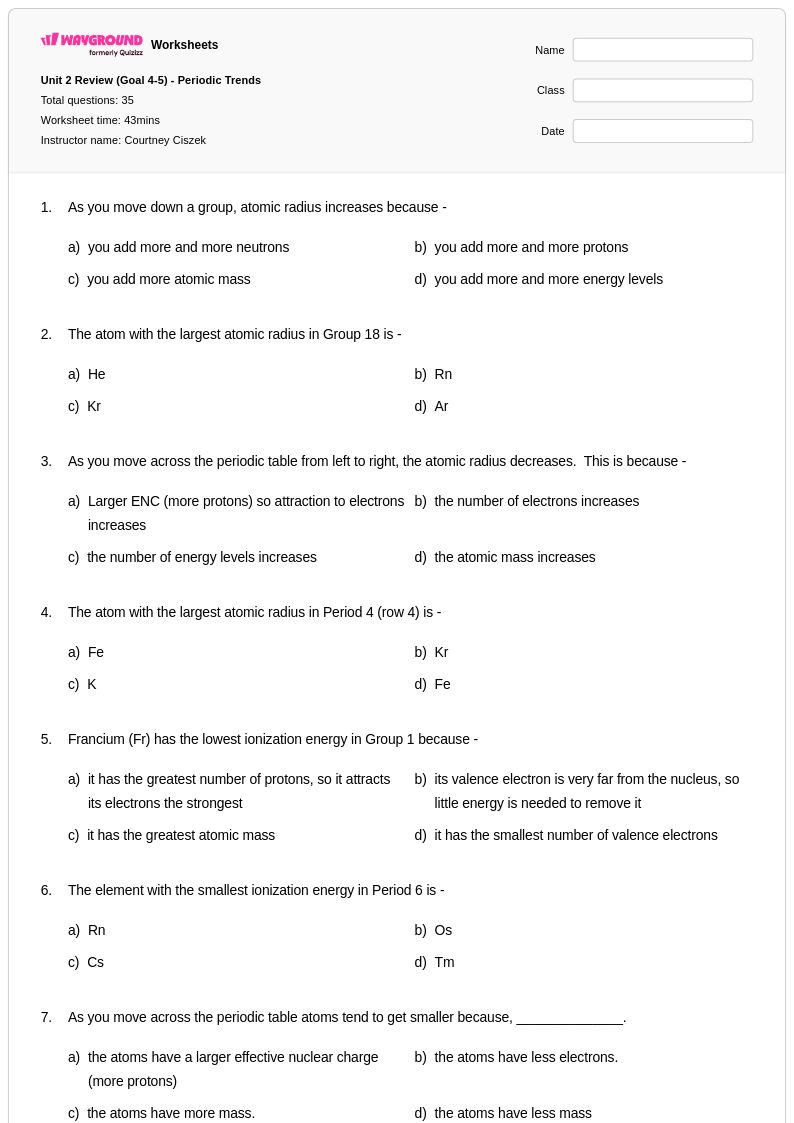
Coulombic attraction is the underlying force driving several periodic trends. Across a period, increasing nuclear charge (Zeff) pulls electrons closer, reducing atomic radius and strengthening the nucleus-electron attraction. Down a group, greater atomic radius and increased electron shielding weaken this attraction, which explains trends in ionization energy, electronegativity, and ionic compound stability. Teaching Coulombic attraction as the engine behind periodic trends helps students see these patterns as connected rather than isolated facts.
How can I use Coulombic attraction worksheets in my chemistry class?
Coulombic attraction worksheets on Wayground are available as printable PDFs for traditional classroom use and in digital formats for technology-integrated environments, and can also be hosted as a quiz directly on the Wayground platform. Printable versions work well for guided practice, note-taking alongside problems, or homework assignments, while digital versions allow for immediate feedback and easy assignment tracking. Both formats include answer keys, making them suitable for independent practice, small-group work, or formative assessment.
How do I differentiate Coulombic attraction instruction for students at different levels?
For students who need additional support, begin with visual models comparing ion sizes and charge labels before introducing any numerical work, and consider reducing answer choices to lower cognitive load during initial practice. For advanced learners, extend problems into lattice energy calculations, Born-Haber cycle components, or comparisons between ionic and covalent bonding strength. On Wayground, individual accommodation settings such as extended time and read aloud can be applied per student without notifying the rest of the class, making differentiation manageable within a single assignment.