Free Printable Mole to Mass Conversion Worksheets for Class 12
Master Class 12 mole to mass conversion with Wayground's comprehensive collection of free worksheets, printable PDFs, and practice problems complete with answer keys to strengthen chemistry calculations.
Explore printable Mole to Mass Conversion worksheets for Class 12
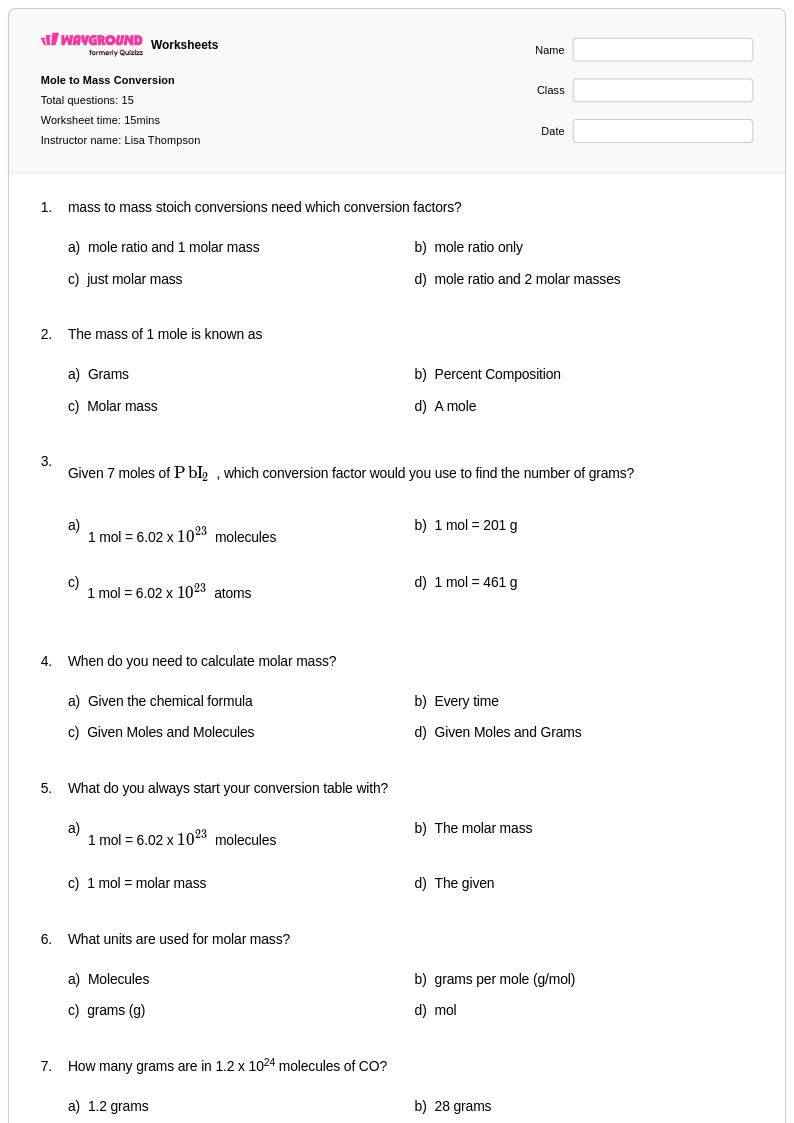
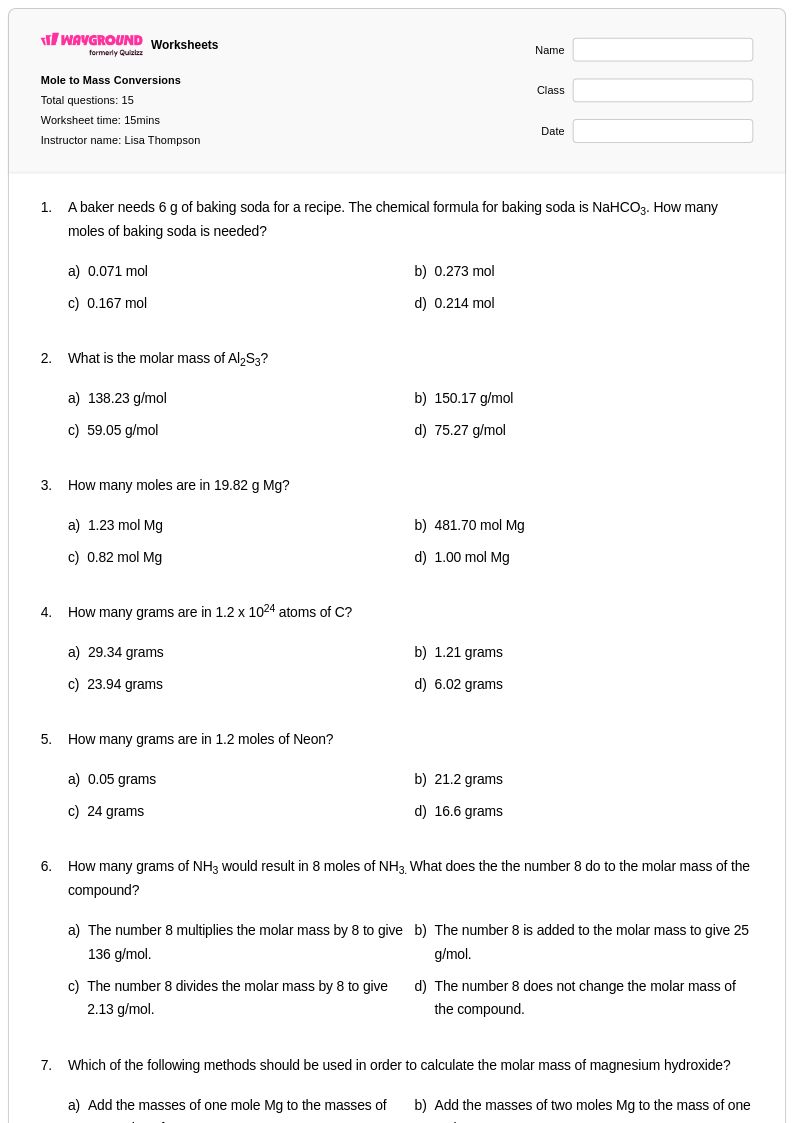
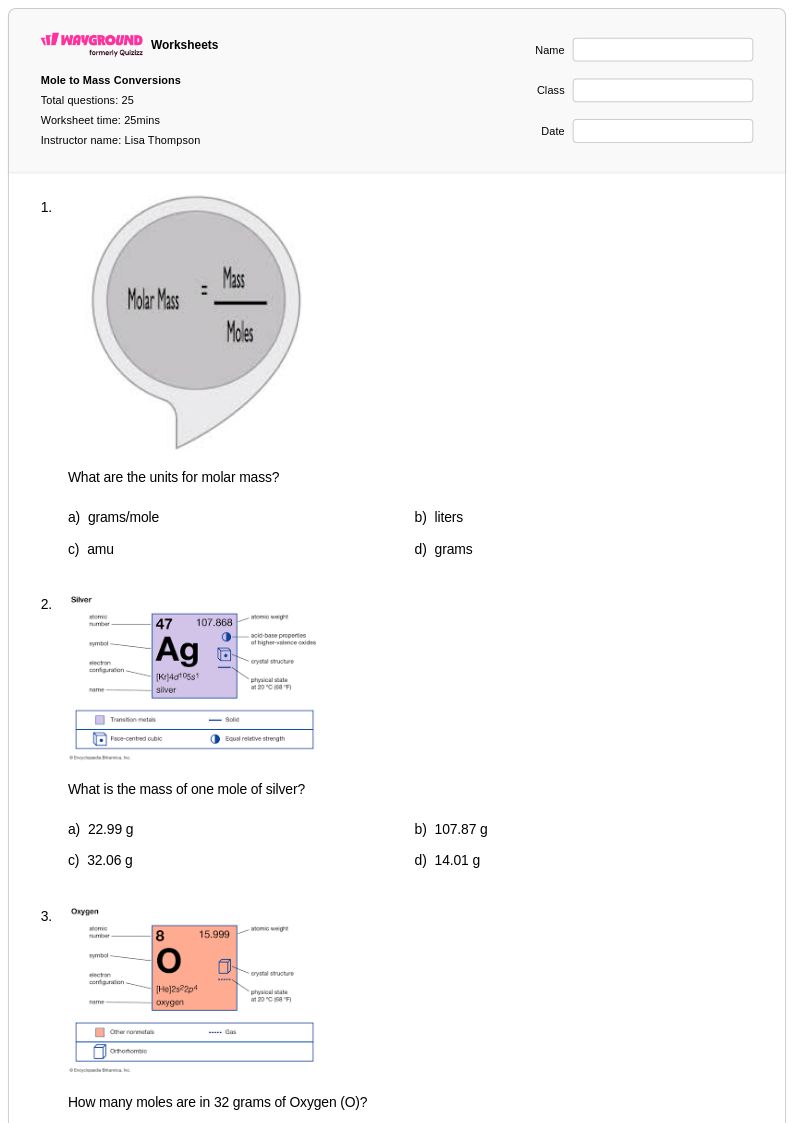
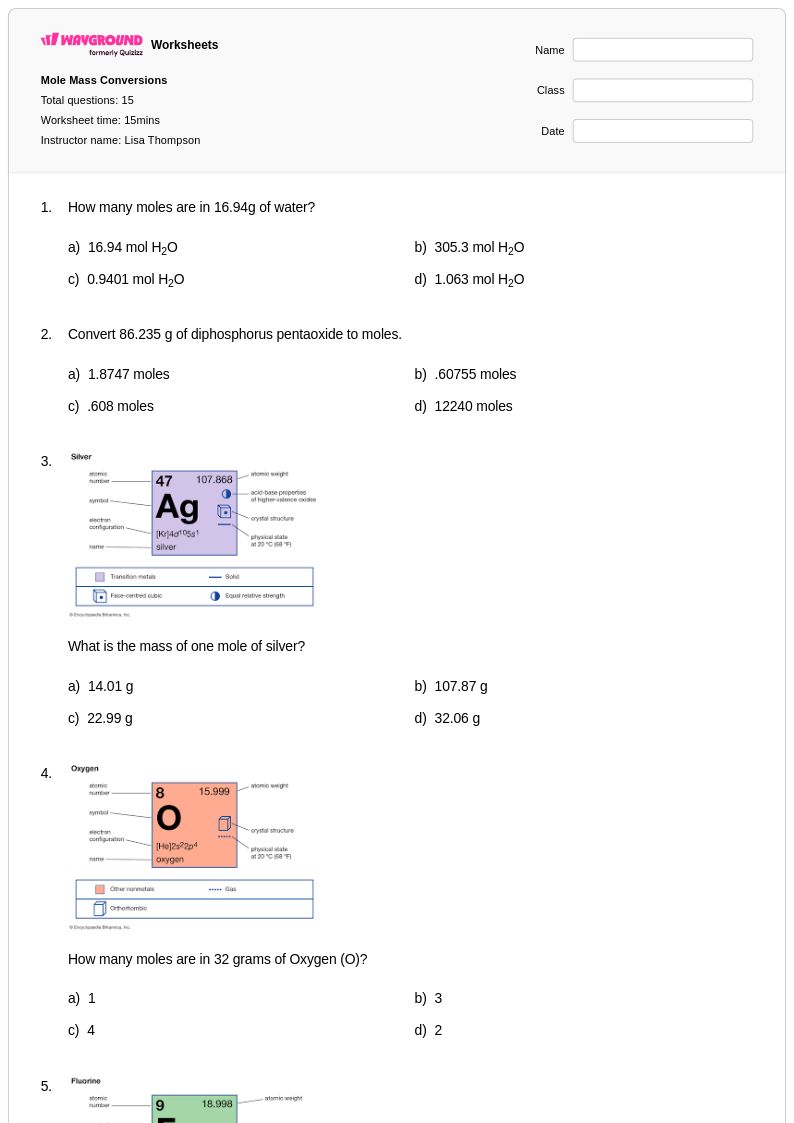
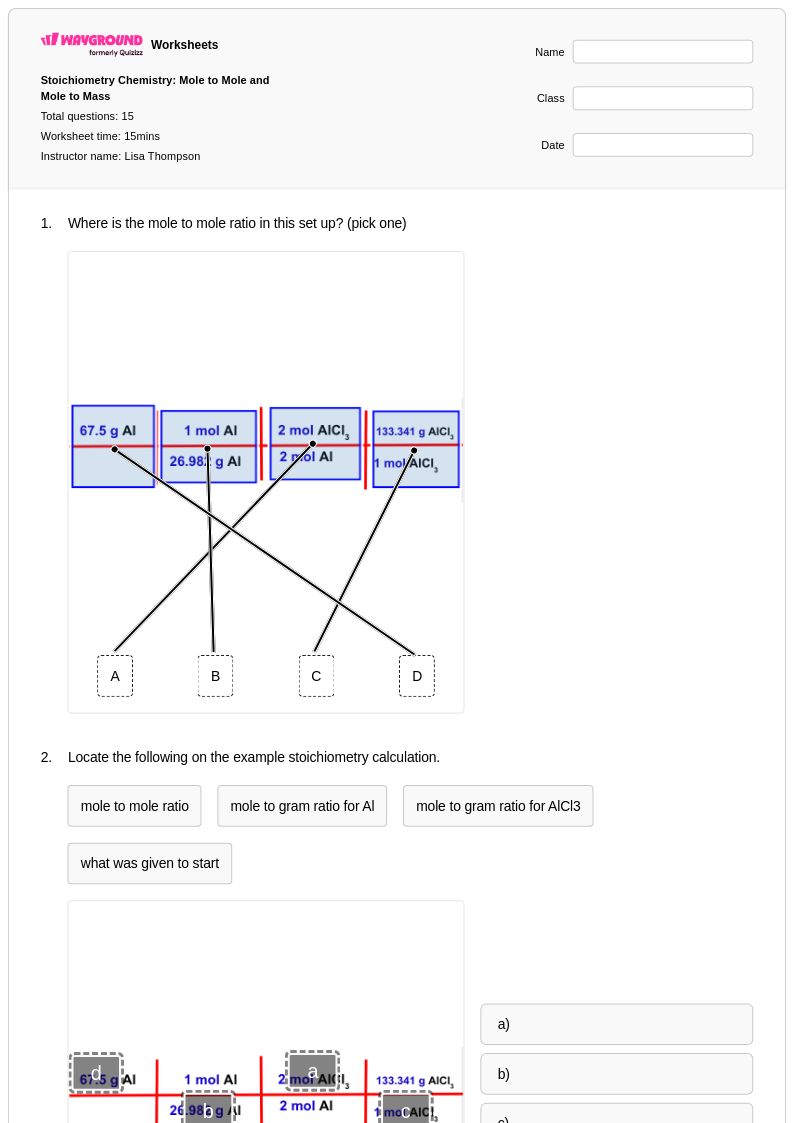
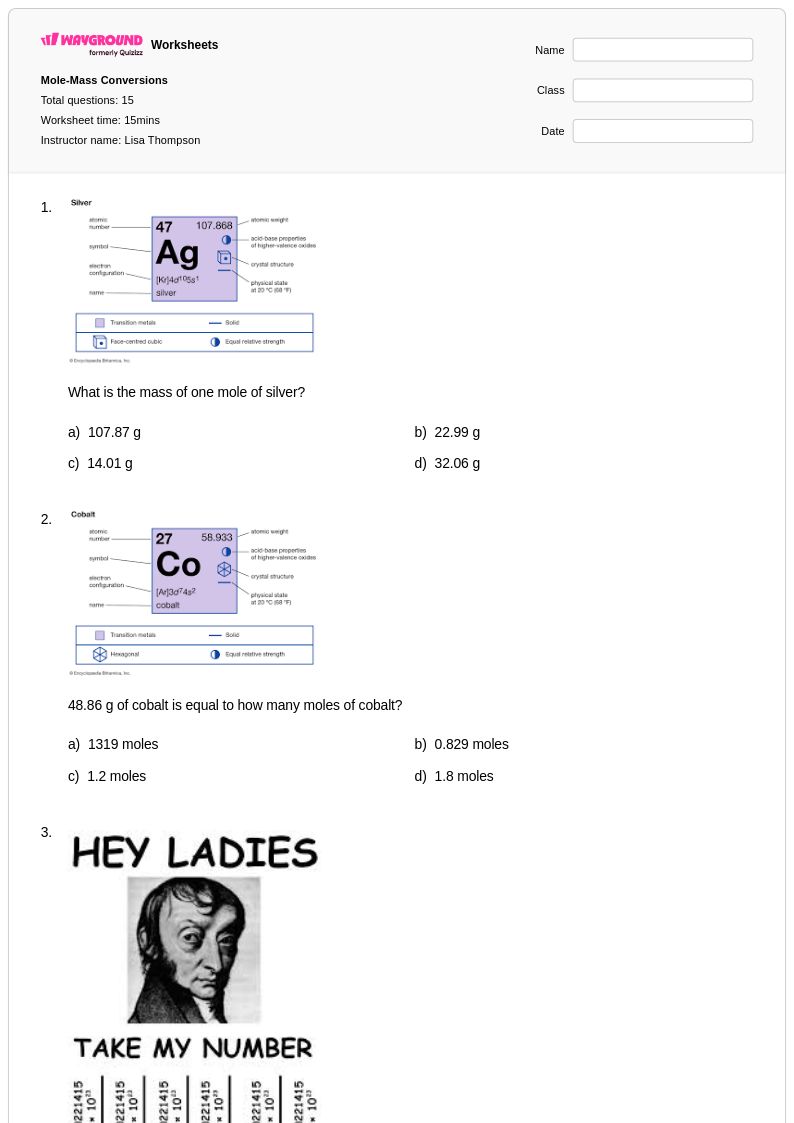
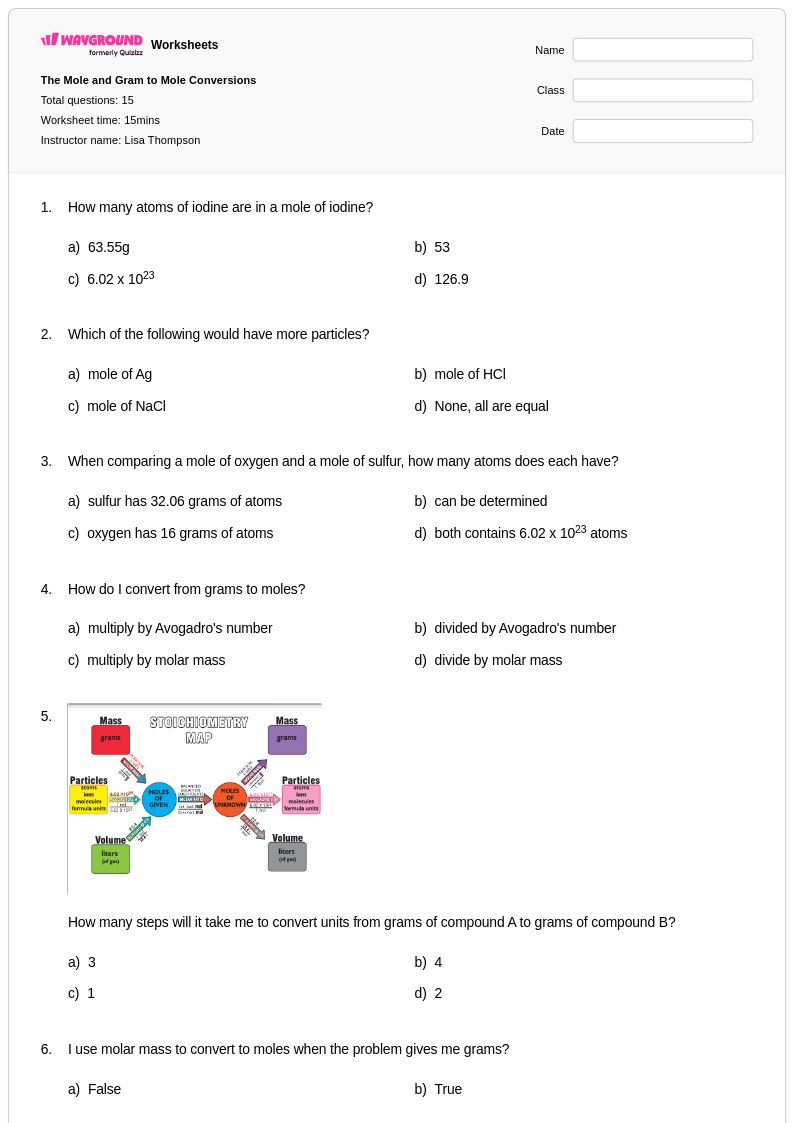
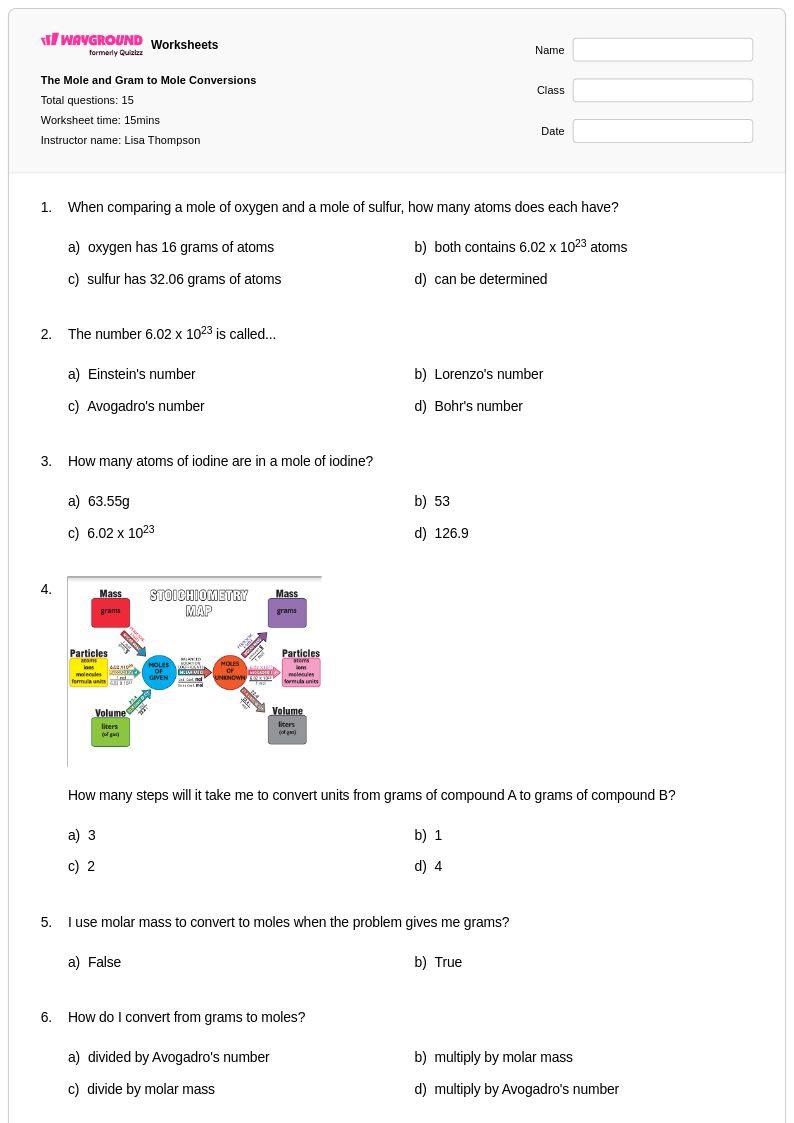
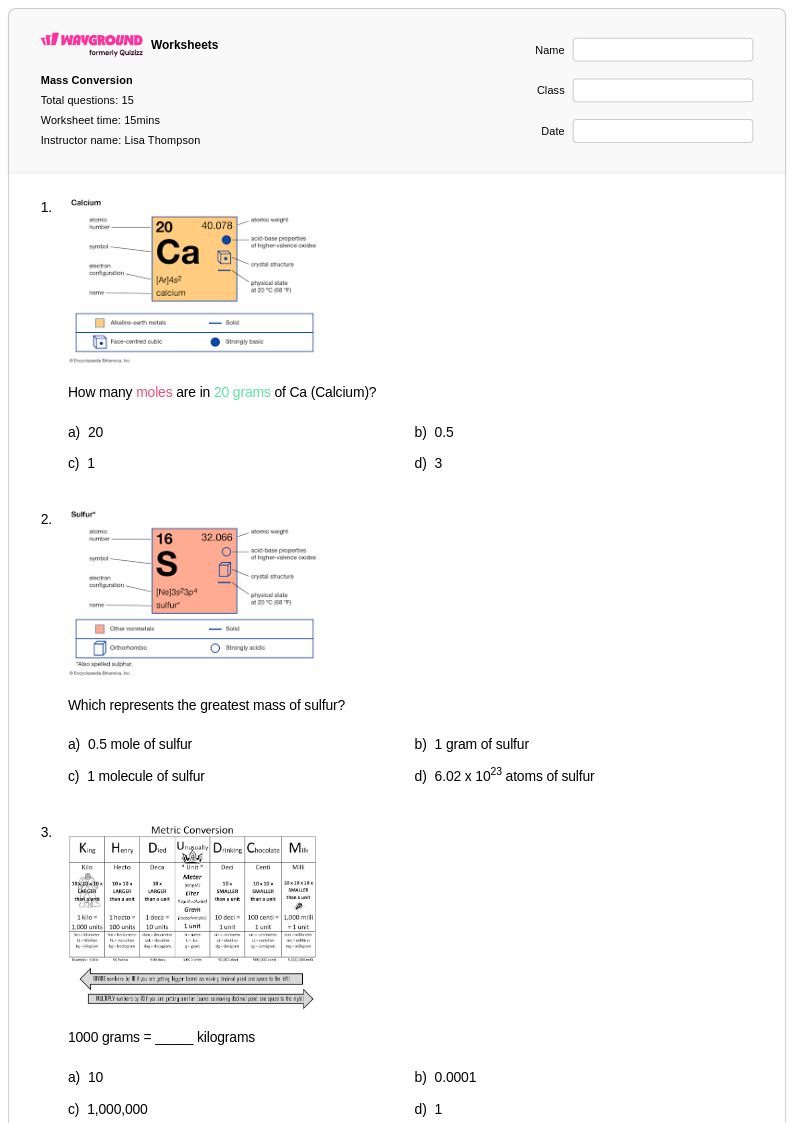
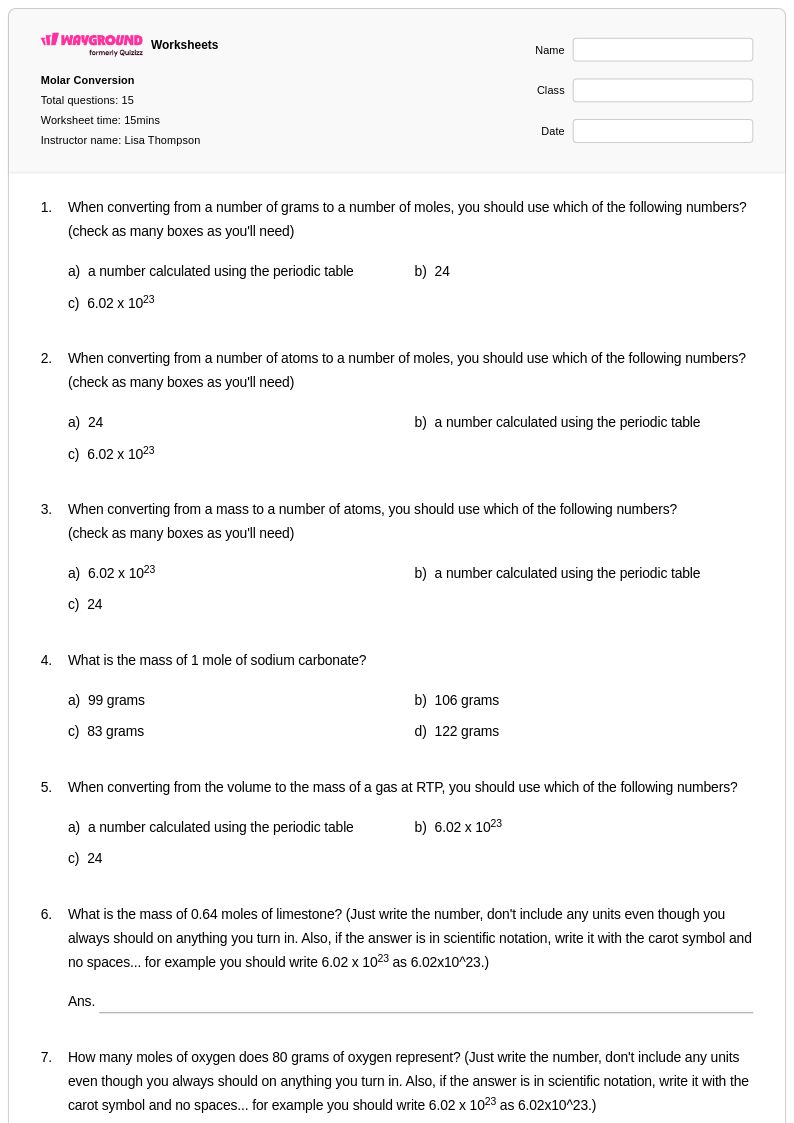
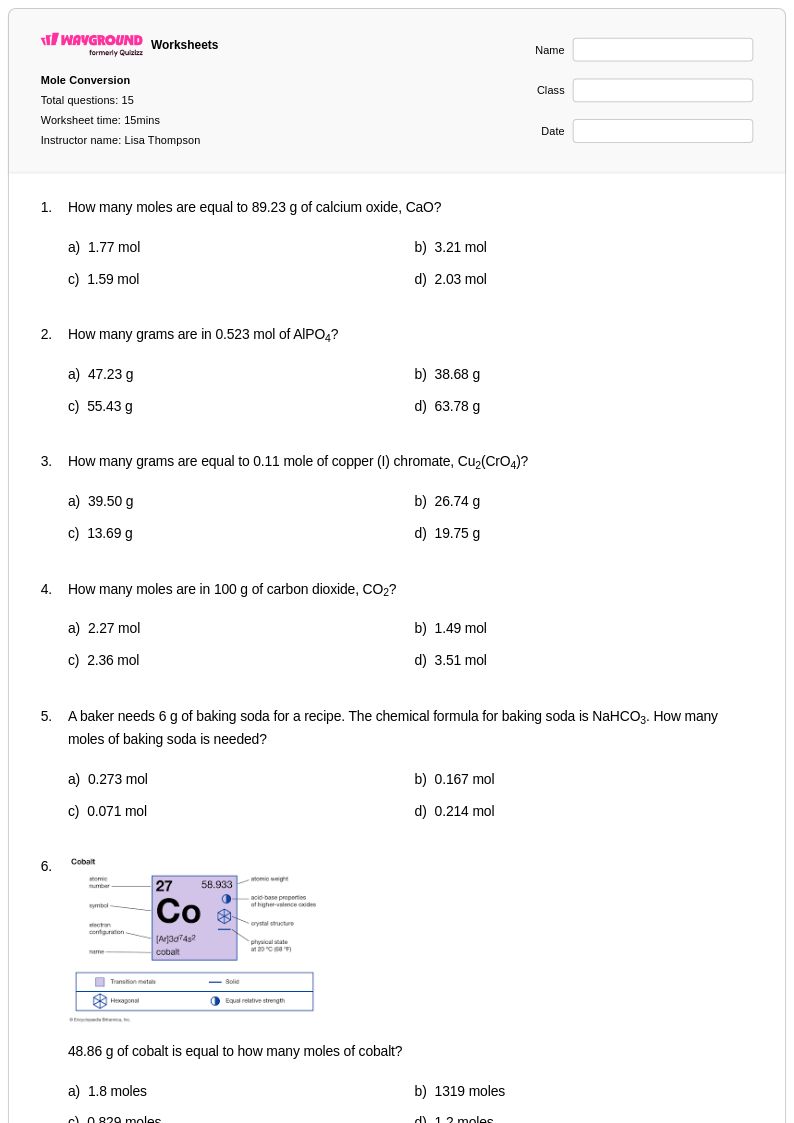
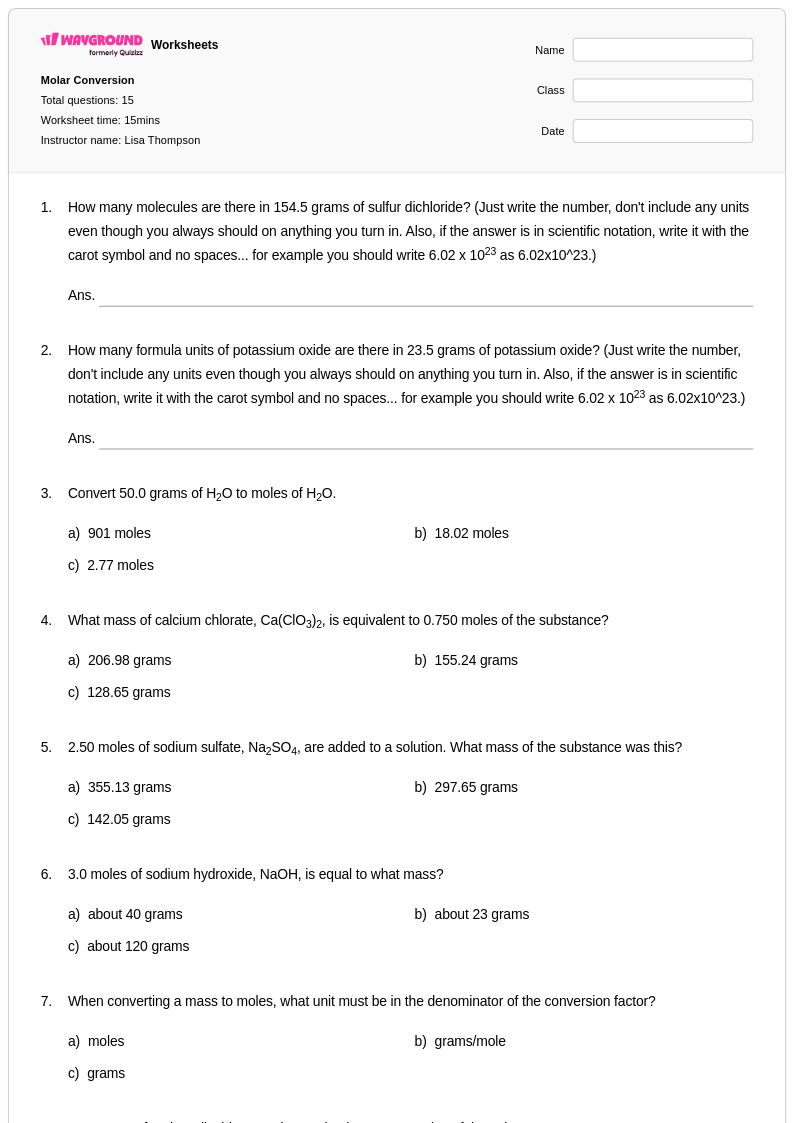
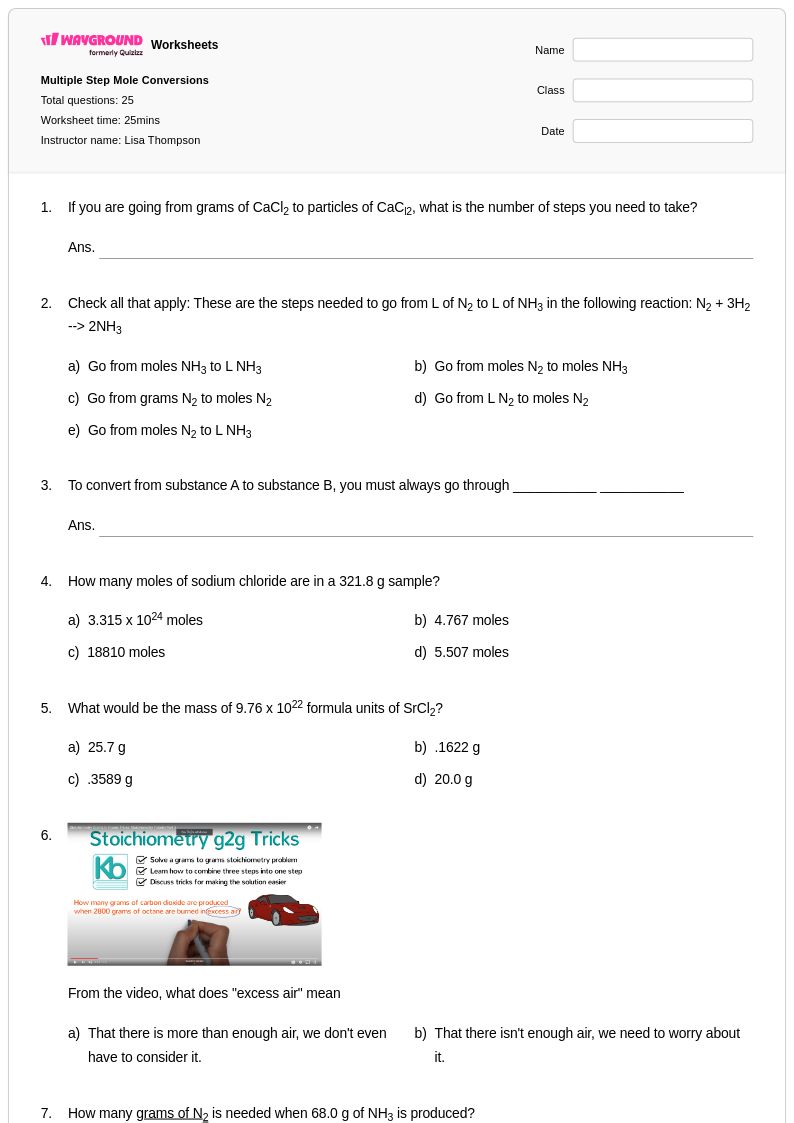
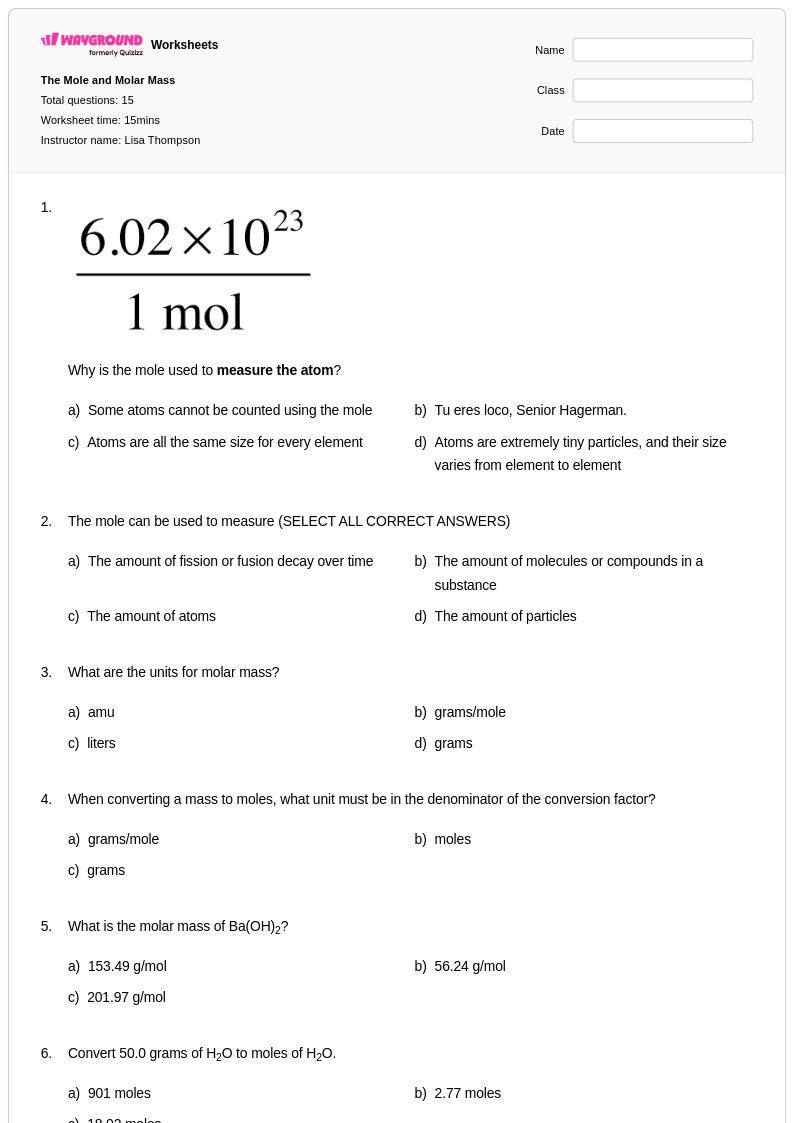
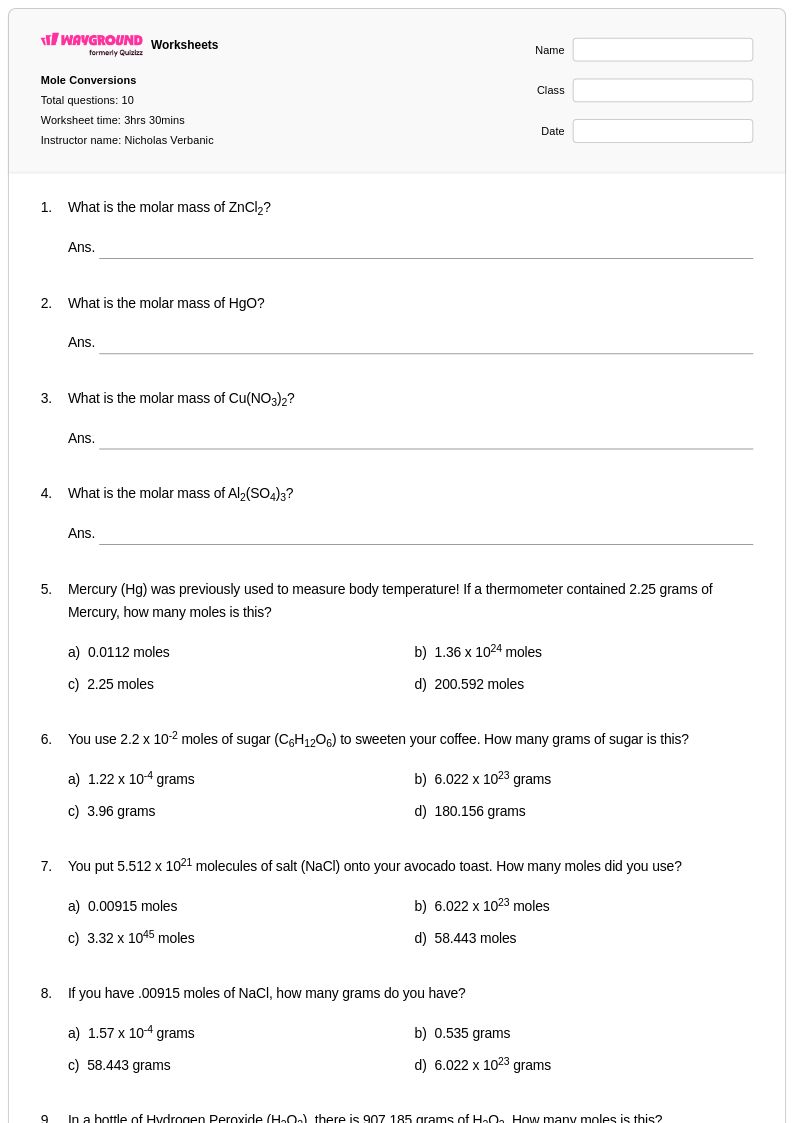
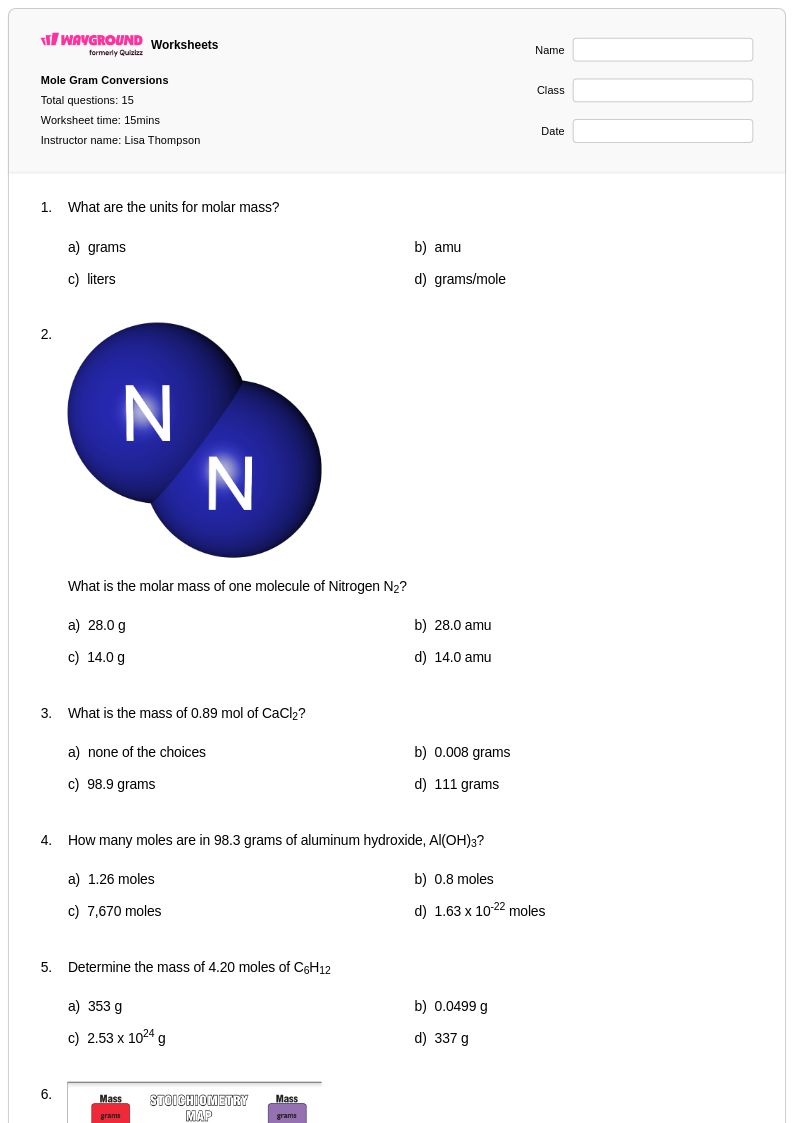
Mole to mass conversion worksheets for Class 12 students available through Wayground (formerly Quizizz) provide comprehensive practice in one of chemistry's most fundamental quantitative concepts. These expertly crafted resources strengthen students' ability to convert between moles and grams using molar mass, a critical skill for stoichiometric calculations and chemical equation balancing. The worksheets feature progressively challenging practice problems that guide students through dimensional analysis techniques, help them master the relationship between atomic mass units and molar mass, and develop proficiency in using the periodic table as a reference tool. Each worksheet collection includes detailed answer keys and is available as free printables in pdf format, making them accessible for both classroom instruction and independent study sessions.
Wayground's extensive library contains millions of teacher-created mole to mass conversion resources that support educators in delivering effective Class 12 chemistry instruction. The platform's advanced search and filtering capabilities allow teachers to quickly locate worksheets aligned with specific curriculum standards and differentiate instruction based on individual student needs. These flexible tools enable seamless customization of problem sets, from basic single-step conversions to complex multi-step calculations involving compounds and molecular formulas. Available in both printable pdf and interactive digital formats, these resources facilitate targeted skill practice, remediation for struggling learners, and enrichment opportunities for advanced students, while streamlining lesson planning through organized collections that can be easily integrated into existing chemistry curricula.
FAQs
How do I teach mole to mass conversion in chemistry?
Start by ensuring students are comfortable reading the periodic table to identify molar mass before introducing conversion calculations. Teach mole to mass conversion as a direct application of dimensional analysis: moles multiplied by molar mass (in g/mol) yields grams. Using worked examples with clear unit labeling helps students see how units cancel, which reinforces why the calculation works rather than just how to execute it.
What practice problems help students get better at mole to mass conversion?
Students benefit most from problems that progress in complexity: starting with single-element substances (e.g., converting moles of iron to grams), then moving to molecular compounds where they must first calculate molar mass from a formula. Mixing conversion direction — sometimes giving moles and asking for grams, other times giving grams and asking for moles — prevents rote memorization and builds genuine fluency with the mathematical relationship.
What mistakes do students commonly make when converting moles to grams?
The most common error is using atomic mass units directly as if they were grams without recognizing the molar mass bridge. Students also frequently miscalculate molar mass for compounds by adding only some of the atoms in a formula or ignoring subscripts. A third common mistake is inverting the conversion factor, which produces an answer in mol²/g instead of grams — reinforcing dimensional analysis unit-tracking helps catch this before it becomes habitual.
How do I use mole to mass conversion worksheets effectively in my chemistry class?
These worksheets are available as printable PDFs for traditional classroom use and in digital formats for technology-integrated or hybrid learning environments, and can also be hosted as a quiz on Wayground. In practice, printable versions work well for guided notes or in-class problem sets, while digital formats allow for immediate self-checking. Use them after initial instruction to consolidate understanding, or assign them as pre-assessment tools to identify which students still confuse molar mass with atomic mass.
How does mole to mass conversion connect to broader stoichiometry skills?
Mole to mass conversion is a foundational step in nearly every stoichiometry calculation, including limiting reagent problems, percent yield, and solution concentration problems. Students who cannot fluently convert between moles and grams will struggle at each subsequent stage of stoichiometry because the mole is the currency connecting balanced equations to measurable lab quantities. Building accuracy here early prevents compounding errors throughout the chemistry curriculum.
How can I support struggling students with mole to mass conversion?
Struggling students often benefit from a structured conversion template — a visible "given × (g/mol) = grams" scaffold they fill in before solving — so they are not simultaneously managing both the procedure and the arithmetic. On Wayground, teachers can apply accommodations such as read aloud support for students who need questions read to them, reduced answer choices to lower cognitive load, and extended time settings configured per student, all without signaling differences to the rest of the class.